

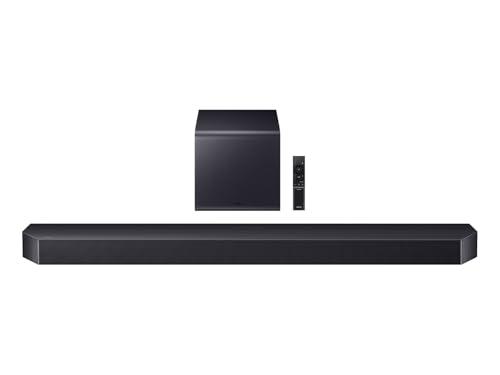
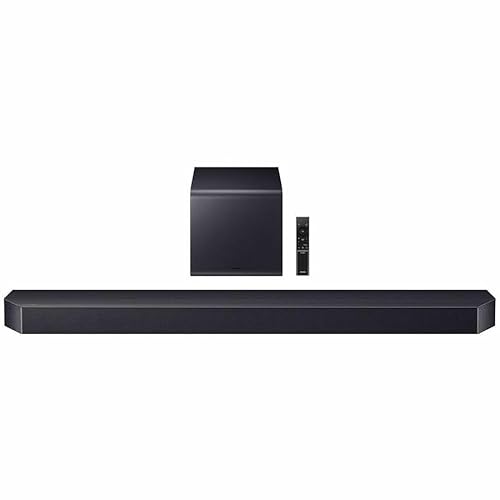



When your TV's built-in speakers just aren't cutting it anymore, jumping into the premium soundbar world can feel overwhelming. Two standout options represent completely different philosophies: Samsung's flagship HW-Q990F delivers everything you need in one expensive package, while the Klipsch Flexus Core 200 offers audiophile sound quality at a more accessible starting price with room to grow.
After diving deep into both systems through expert reviews and user feedback, the choice comes down to whether you want maximum immersion immediately or prefer building your ideal setup over time. Let's break down exactly what each approach offers and who should consider which path.
Premium soundbars have evolved far beyond simple TV audio upgrades. Today's high-end models compete directly with traditional surround sound systems while maintaining the convenience of simpler setup. The key differentiators include channel configuration (how many speakers and where they're positioned), included components, connectivity options, and smart features like room calibration.
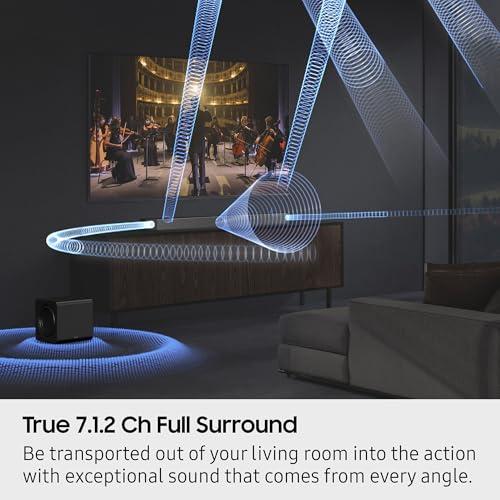
Channel configuration uses a numbering system that initially seems confusing but makes sense once explained. A 3.1.2 system like the Klipsch Flexus Core 200 has three main channels (left, center, right), one subwoofer channel, and two height channels for overhead effects. Samsung's HW-Q990F boasts an 11.1.4 configuration - eleven main channels surrounding you, one subwoofer channel, and four height channels creating a complete sound dome.
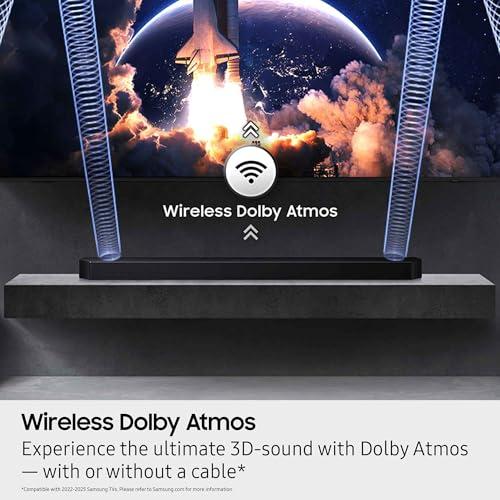
The technology behind these systems centers on Dolby Atmos, which treats sound as individual objects that can be placed anywhere in three-dimensional space rather than just specific channels. This creates the sensation of helicopters flying overhead or rain falling around you. However, achieving convincing Atmos effects requires either physical speakers positioned throughout your room or clever acoustic tricks using upward-firing drivers that bounce sound off your ceiling.
These two soundbars represent fundamentally different philosophies that reflect how you might want to approach upgrading your home theater audio.
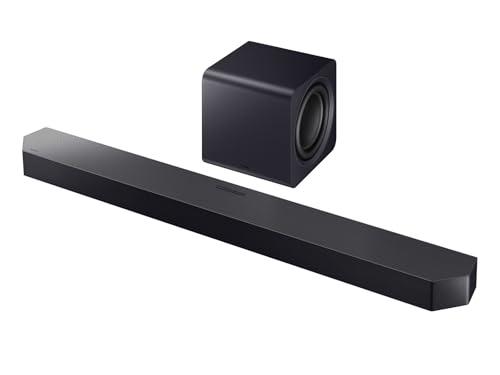
Samsung released the HW-Q990F in 2025 as their flagship model, positioning it as a complete home theater solution. At roughly three times the price of the Klipsch (at the time of writing), you receive everything needed for a full surround experience: the main soundbar packed with 15 speakers, a wireless subwoofer with dual 8-inch drivers, and wireless rear speakers that also fire sound upward for height effects. The total speaker count reaches 23 individual drivers working together.
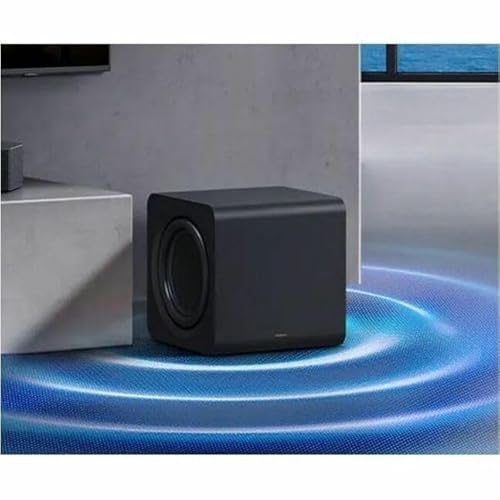
The engineering approach here focuses on eliminating compromises. Samsung's engineers could design each component specifically for its role without worrying about cost constraints on individual pieces. The subwoofer, for example, uses force-canceling technology where two drivers work in opposition to minimize vibrations that could rattle your room while maximizing clean bass output.
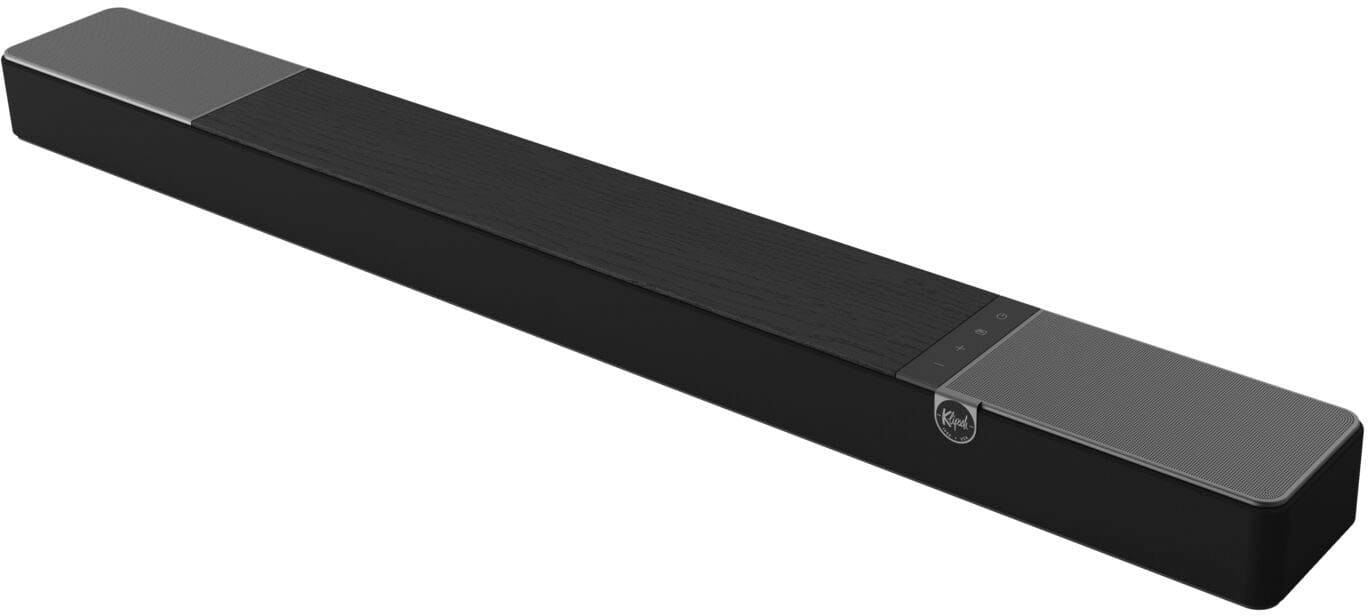
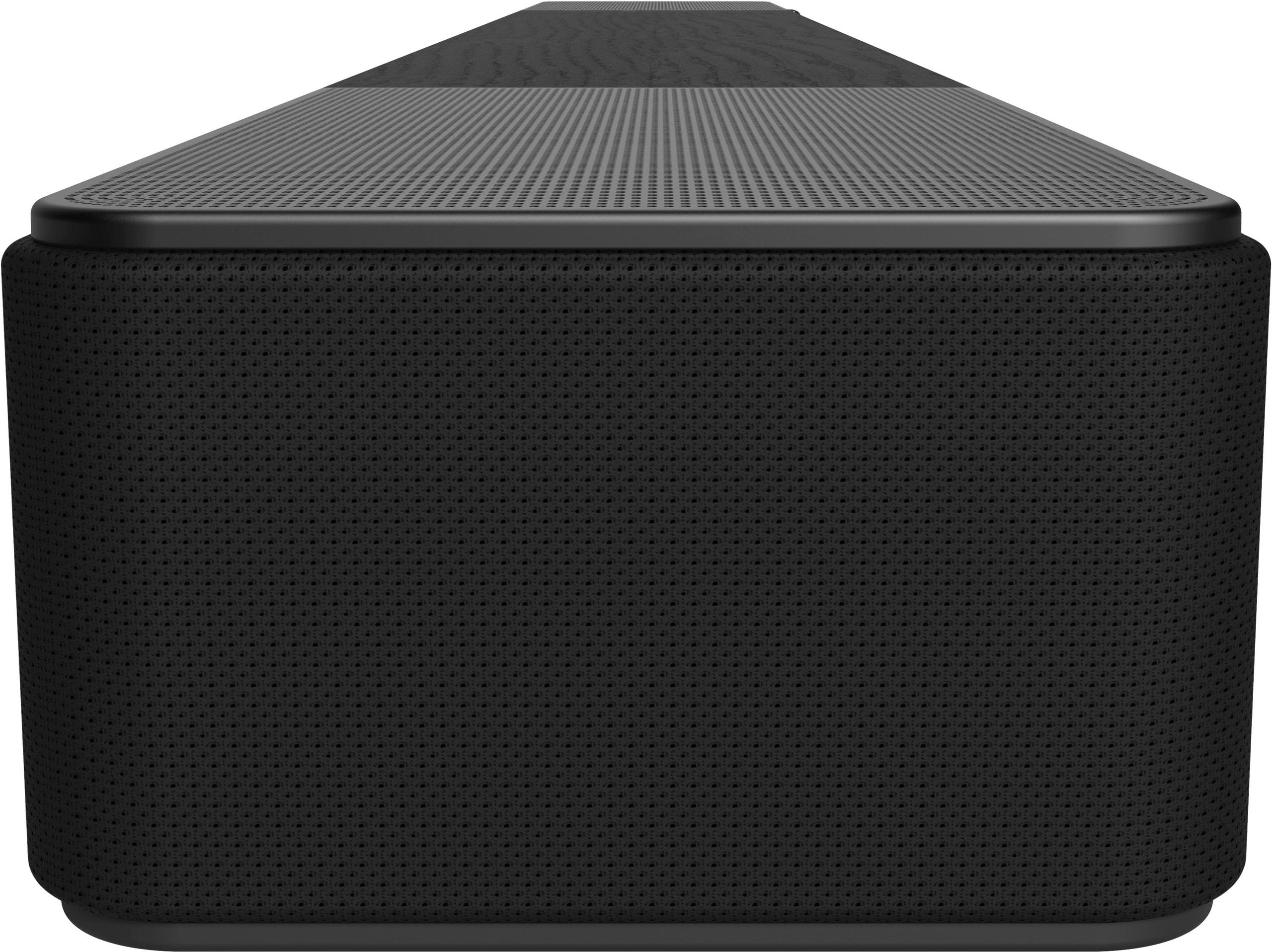
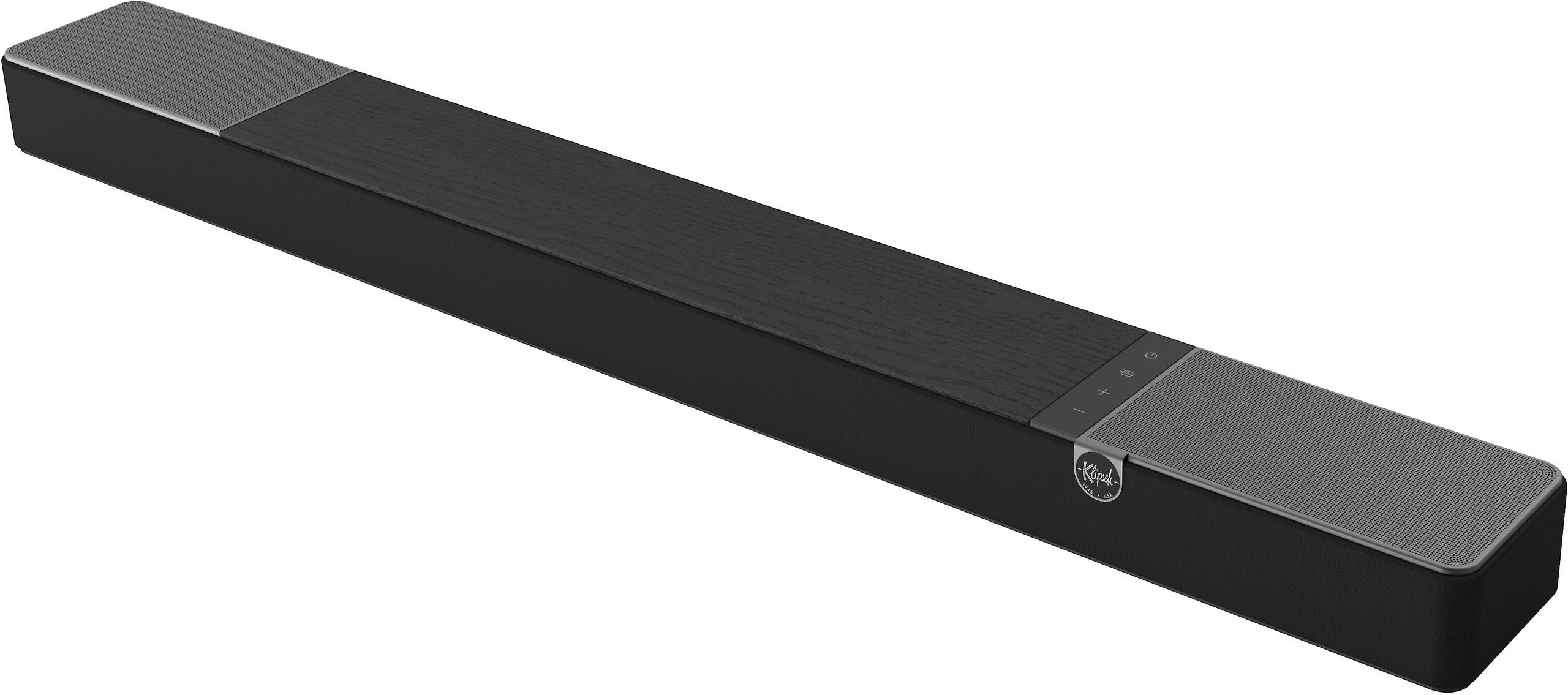
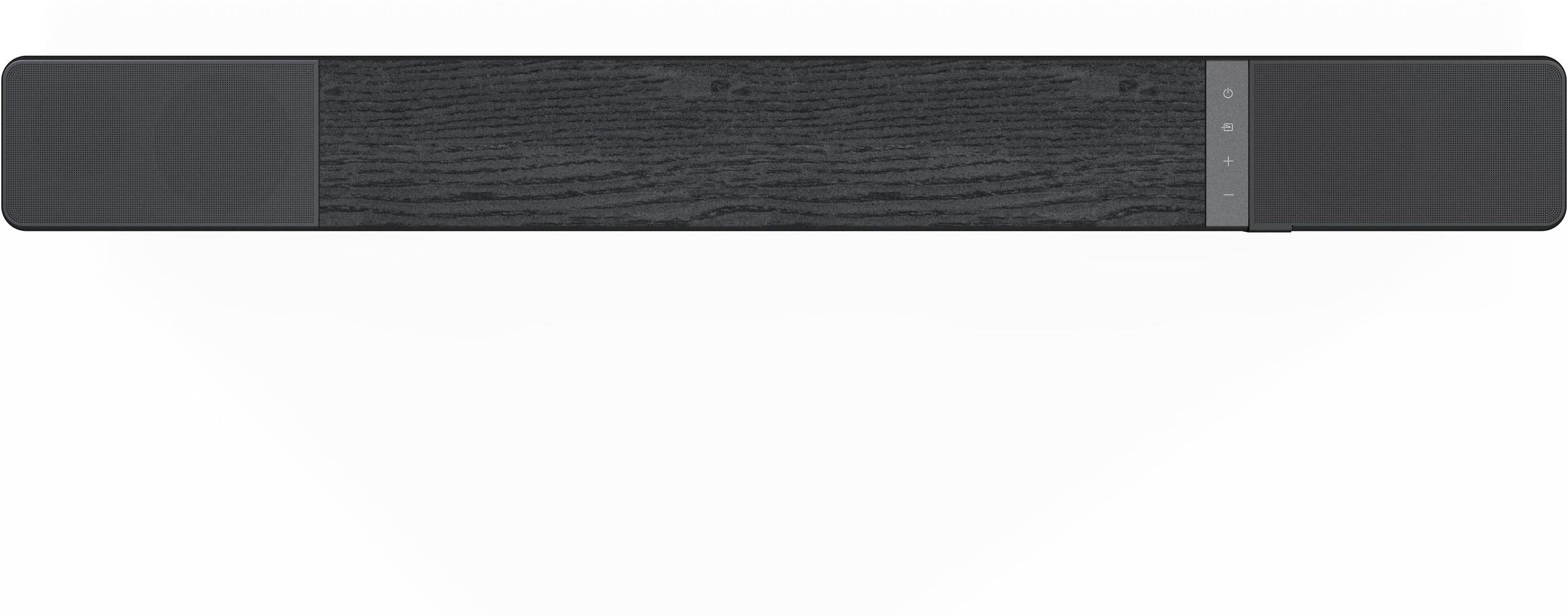
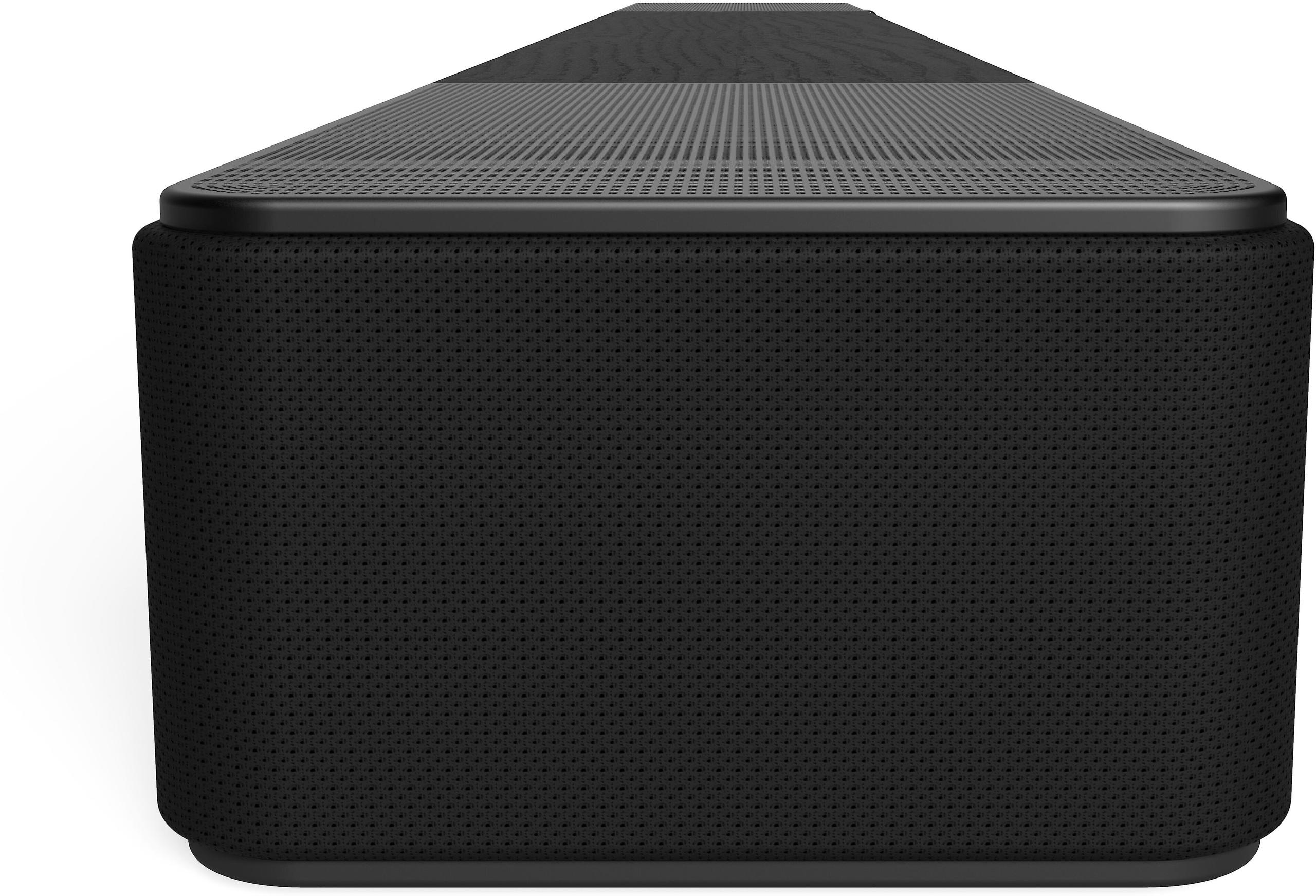
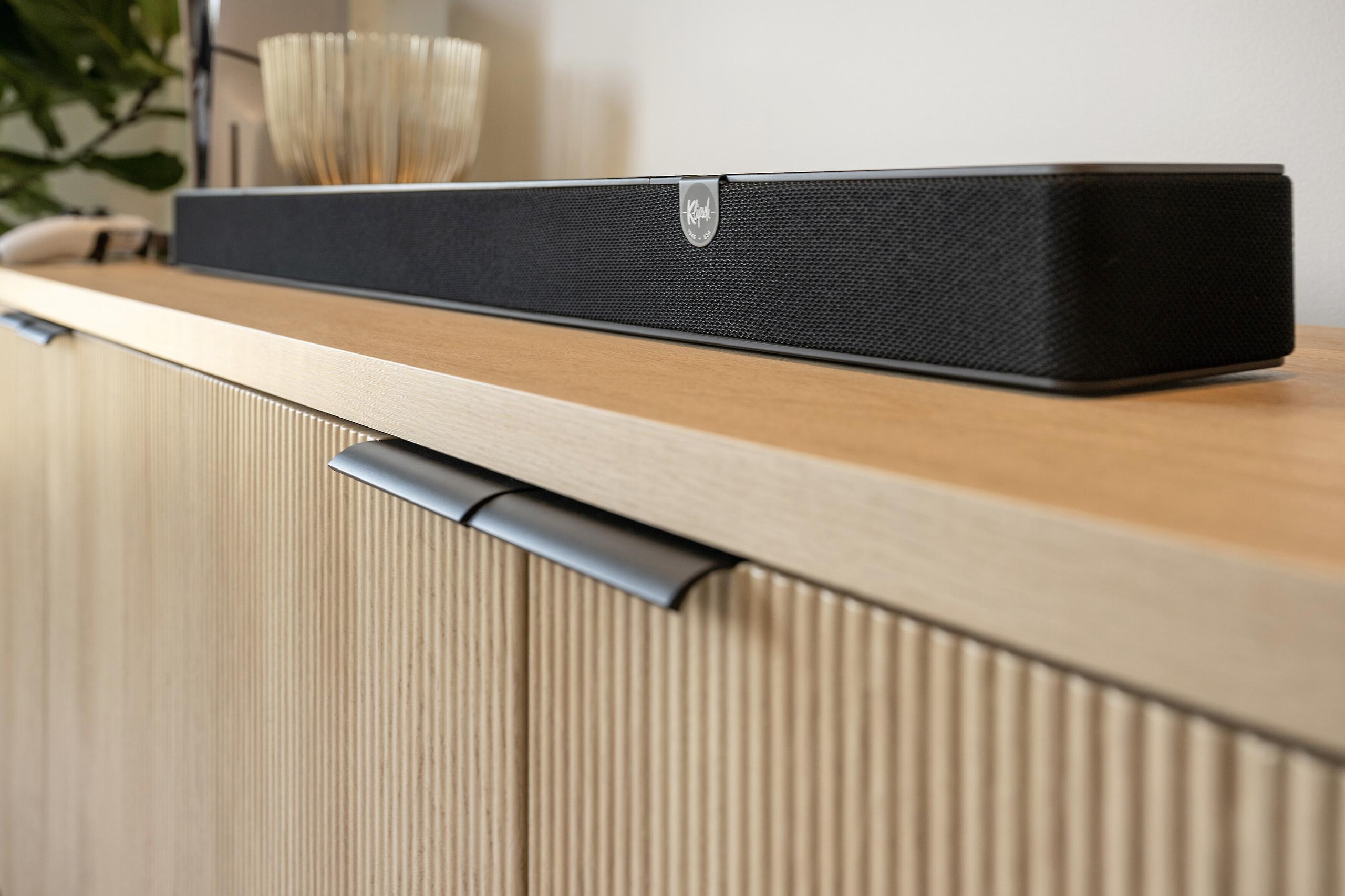
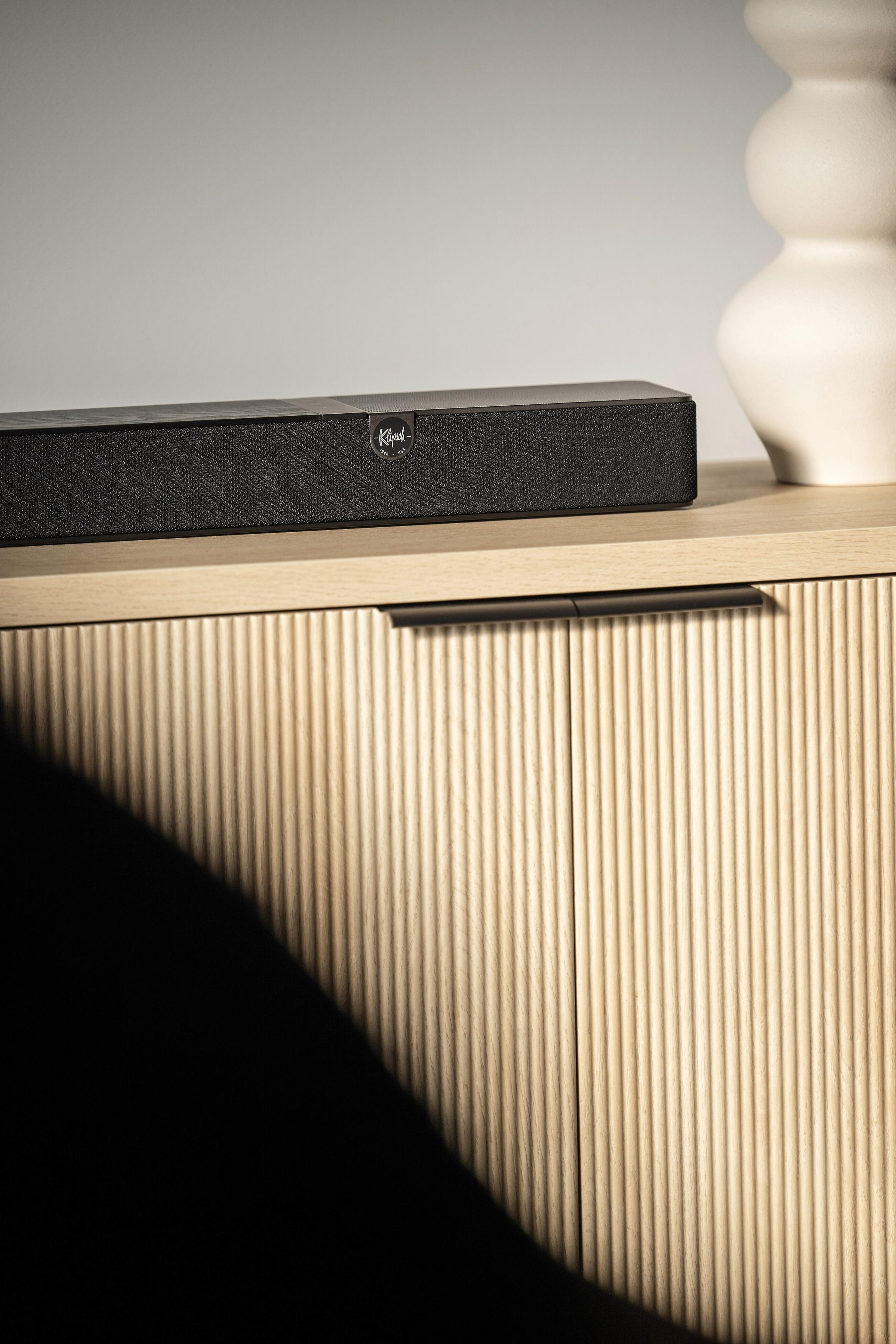
Klipsch took a different path with their Flexus Core 200, released in 2024 through a collaboration with Onkyo. Rather than including everything upfront, they created what's essentially a premium all-in-one soundbar that can grow into a full system. The single unit houses everything needed for 3.1.2 audio: front-firing speakers, dual 4-inch subwoofers built right in, upward-firing drivers for height effects, and Klipsch's signature horn-loaded tweeter for crystal-clear dialogue.
This modular philosophy appeals to different buyers. Maybe you want to start with great sound now and add a dedicated subwoofer later when your budget or living situation allows. Or perhaps you're testing the waters with premium audio before committing to a full surround setup. The Flexus Core 200 performs impressively as a standalone unit while leaving upgrade paths open.
Bass performance reveals the most significant practical difference between these approaches. The Samsung HW-Q990F extends down to 32Hz - deep enough to reproduce the lowest frequencies in most movie soundtracks and music. Those dual 8-inch drivers in the dedicated subwoofer move serious air, creating the kind of room-pressurizing bass that makes action movies genuinely thrilling.
Samsung's implementation includes AI-based processing that learns your room's characteristics and adjusts the subwoofer's output to prevent distortion and rattling. This matters more than you might expect - many subwoofers sound great at moderate volumes but become boomy or lose definition when pushed hard. The HW-Q990F maintains tight, controlled bass even during the most demanding movie sequences.
The Klipsch Flexus Core 200 takes a different approach with dual 4-inch drivers integrated directly into the soundbar. These reach down to 43Hz, which covers most content effectively but lacks the deepest bass extension. However, reviewers consistently praise how much bass impact Klipsch achieved from these built-in drivers. For a soundbar without a separate subwoofer, the low-end performance genuinely impresses.
This difference becomes crucial depending on your content preferences and room size. Large rooms and bass-heavy content (action movies, electronic music, gaming) benefit significantly from the Samsung's dedicated subwoofer. Smaller rooms or primarily dialogue-focused viewing might find the Klipsch's integrated approach perfectly adequate, especially considering the upgrade path to their separate Flexus Sub 100.
Nothing ruins a movie night faster than constantly rewinding because you missed important dialogue. Both systems prioritize speech clarity but use different techniques.
The Samsung HW-Q990F includes Active Voice Amplifier Pro technology that analyzes external noise in real-time and adjusts dialogue frequencies accordingly. If your air conditioning kicks on or someone starts cooking in the kitchen, the system automatically boosts speech clarity to cut through the interference. Combined with a discrete center channel in the 11.1 configuration, dialogue positioning feels natural and prominent.
Klipsch built their reputation on horn-loaded tweeters, and the Flexus Core 200 features one dedicated specifically to vocal reproduction. Horn loading increases efficiency and directionality, meaning dialogue cuts through complex soundtracks more effectively. However, some reviews noted that certain frequency ranges can sound slightly veiled, though the dedicated center tweeter helps compensate.
In practical terms, both systems excel at dialogue clarity compared to basic soundbars, but the Samsung offers more adaptive intelligence while the Klipsch provides that classic horn-loaded immediacy that some prefer for speech.
Here's where the channel count difference becomes most apparent. The Samsung HW-Q990F creates what reviewers describe as a "dome of sound" that genuinely surrounds you. Those wireless rear speakers don't just add ambient effects - they contain their own upward-firing drivers, creating height effects behind you as well as in front.
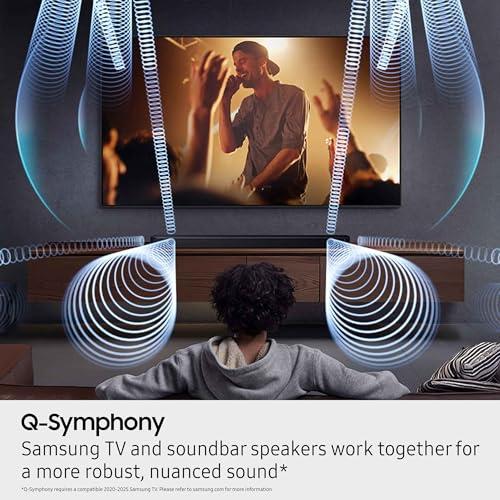
When watching movies with good Dolby Atmos mixes, the difference is remarkable. Sounds move seamlessly around the room, overhead effects feel convincing, and you lose that sense of audio coming from specific speaker locations. The system also supports Samsung's Q-Symphony technology, which can synchronize with compatible Samsung TVs to use the TV's speakers alongside the soundbar for an even fuller presentation.
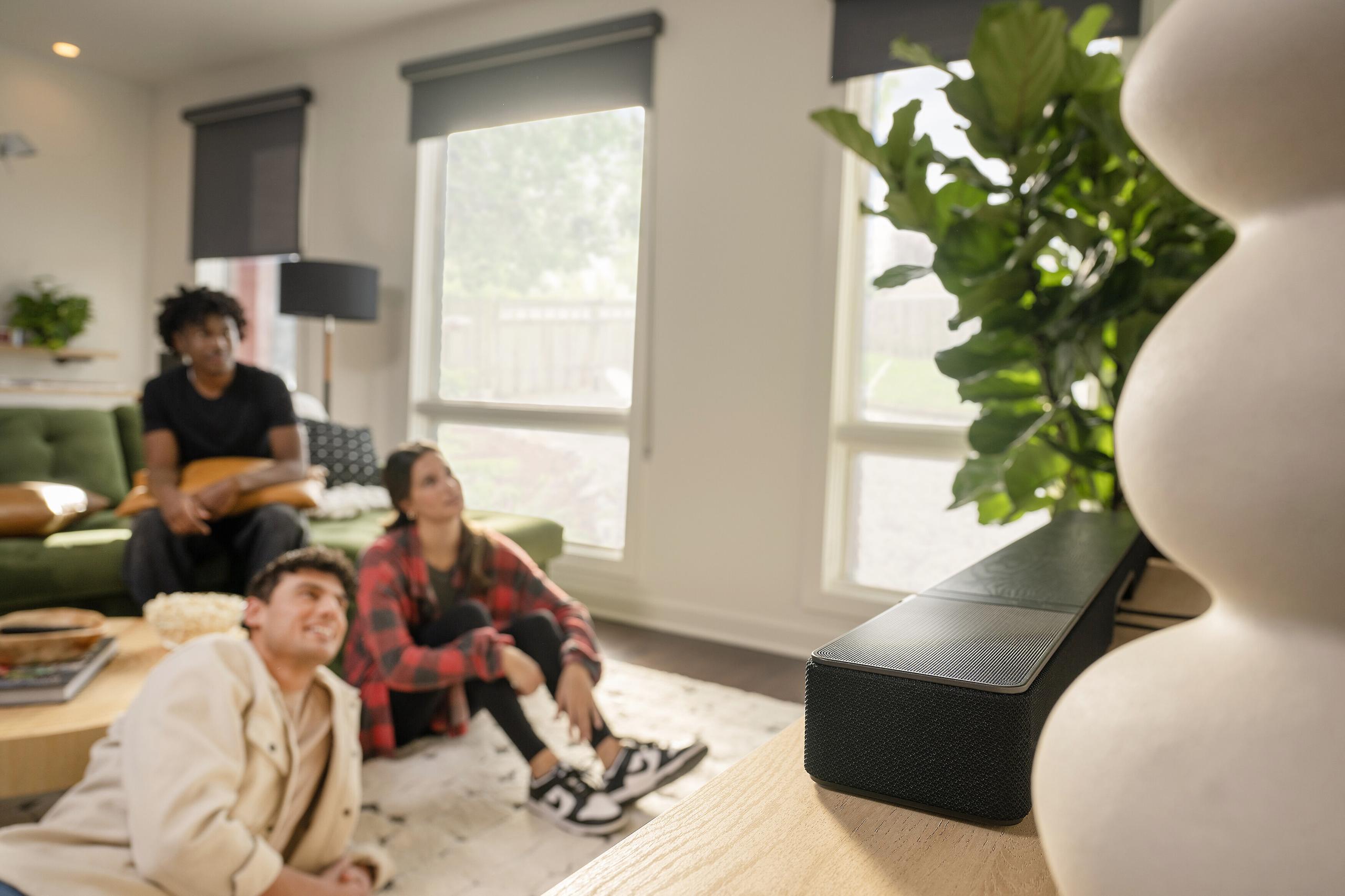
The Klipsch Flexus Core 200 creates impressive width and height effects from its front-mounted position. Those upward-firing drivers do effectively bounce sound off your ceiling for overhead effects, and the overall soundstage extends well beyond the physical soundbar. However, without rear speakers, you're missing that complete surround envelope that makes modern movie soundtracks truly immersive.
This limitation isn't necessarily a dealbreaker. Many listeners find front-focused surround perfectly engaging, especially in smaller rooms where rear speakers might be impractical to position properly. Plus, the Flexus Core 200 can be expanded with wireless rear speakers when your setup or budget allows.
Music playback reveals each system's character distinctly. The Samsung HW-Q990F leverages its 11.1 channel configuration to create an expansive stereo image with excellent instrument separation. The seven-band equalizer and multiple sound modes let you customize the presentation for different music genres. High-resolution streaming support through services like TIDAL and Spotify Connect ensures you're hearing music at its best quality.
The Klipsch Flexus Core 200 approaches music with more traditional stereo sensibilities. Reviews consistently praise how it performs "like mini bookshelf speakers," delivering detailed layering and balanced frequency response. Klipsch's acoustic tuning emphasizes clarity and dynamics over pure channel count, which many music enthusiasts prefer.
If you primarily stream music and watch movies in equal measure, the Samsung offers more versatility through its extensive channel count and processing options. Pure music lovers might actually prefer the Klipsch's more focused approach, especially in Music mode which provides a centered stereo presentation.
Modern soundbars must handle far more than just TV audio. Gaming consoles, streaming devices, Blu-ray players, and various smart home integrations all compete for connections.
The Samsung HW-Q990F includes two HDMI inputs plus eARC output, supporting 4K video passthrough at 120Hz with HDR10+. This matters enormously for PlayStation 5 and Xbox Series X owners who want to maintain full gaming performance while routing audio through the soundbar. Game Pro mode specifically optimizes audio for directional cues and environmental effects that give competitive advantages in online gaming.
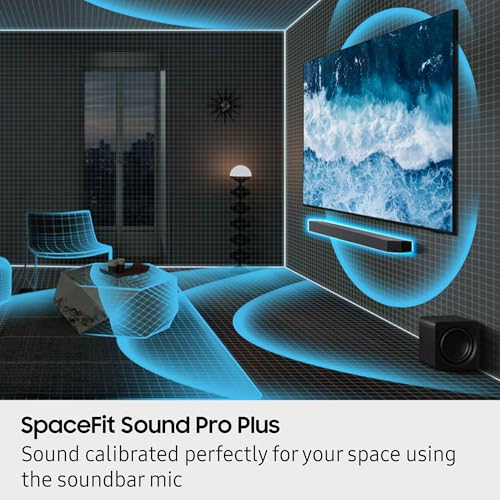
Smart features extend to comprehensive streaming support including AirPlay 2, Google Cast, and built-in Alexa voice control. The SpaceFit Sound Pro Plus room calibration uses microphones to analyze your room's acoustics and automatically optimize the sound profile - a feature typically found only on high-end AV receivers.
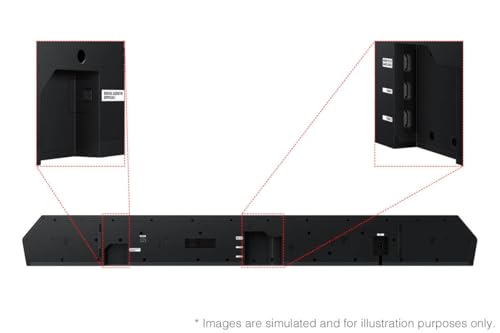
The Klipsch Flexus Core 200 offers more limited connectivity with only eARC, optical, and USB-C inputs. Critically, it lacks HDMI 2.1 passthrough capability, which prevents full utilization of next-generation gaming consoles' advanced features. This limitation particularly affects gaming enthusiasts who need to choose between optimal video performance and integrated audio.
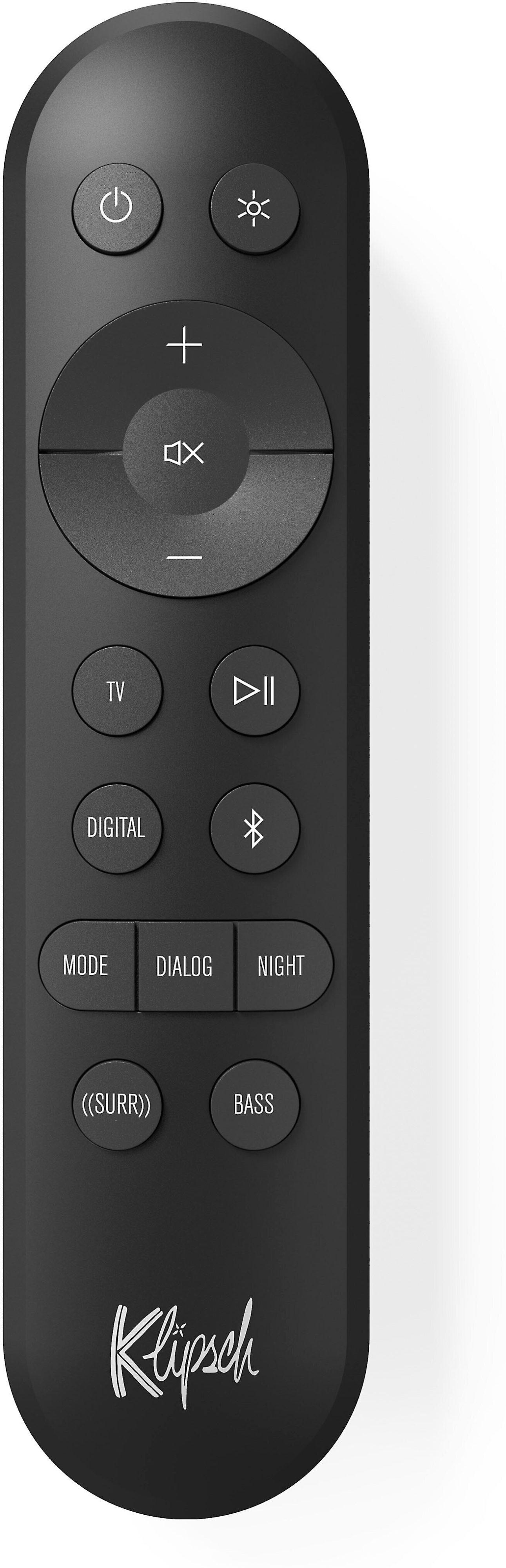
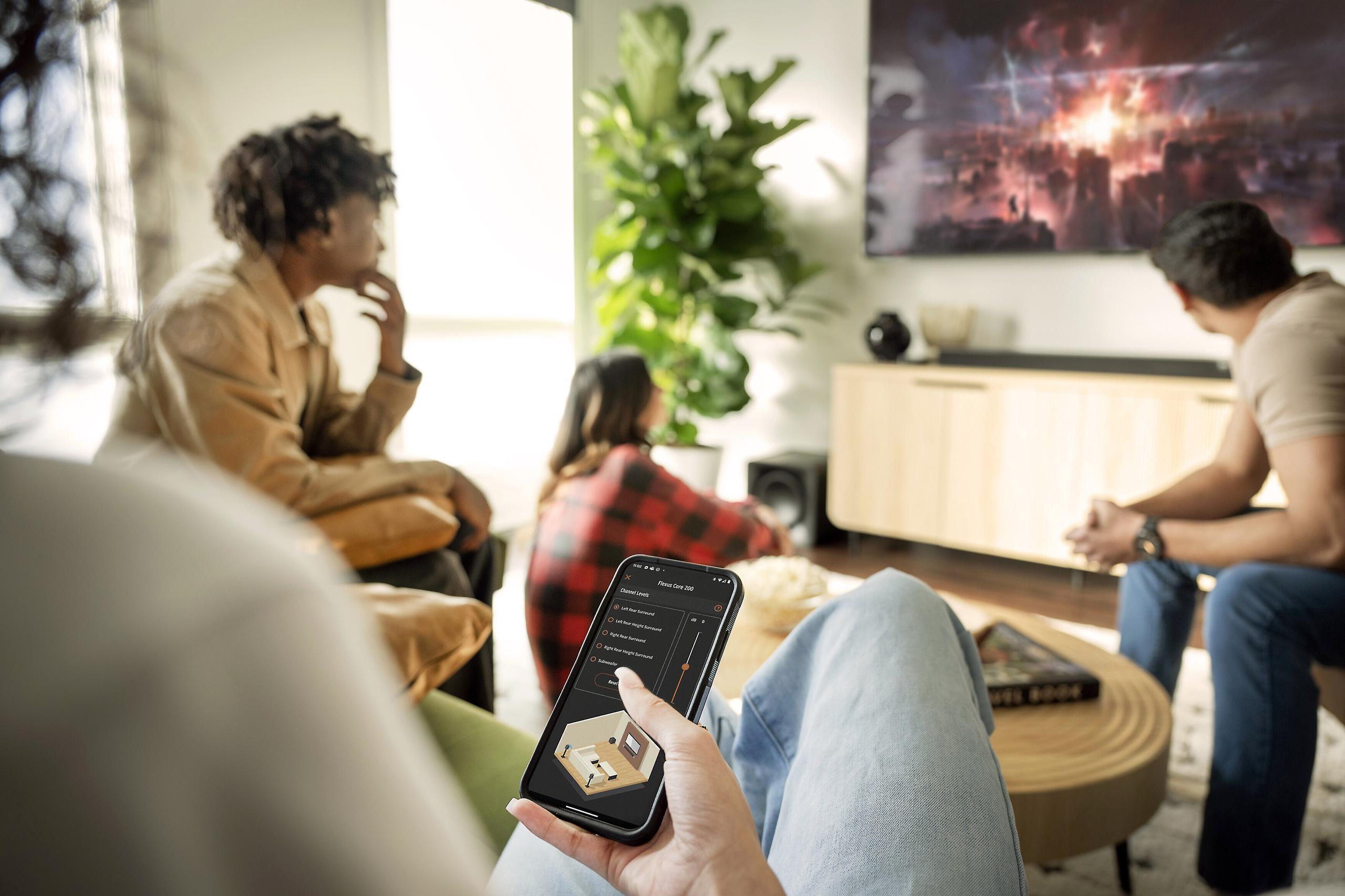
However, for users focused primarily on streaming content through their TV's built-in apps, the Klipsch's connectivity proves adequate. The Klipsch Connect Plus app provides EQ adjustments, sound modes, and system control through your smartphone.
Audio format compatibility reveals another significant difference that affects real-world usage. The Samsung HW-Q990F supports virtually every audio format you'll encounter: Dolby Atmos, Dolby TrueHD, DTS:X, DTS-HD Master Audio, and all standard formats.
The Klipsch Flexus Core 200 notably lacks DTS support entirely. While this might seem like technical minutiae, it creates practical limitations. Many Blu-ray movies use DTS audio tracks, and some streaming services offer DTS content. Without DTS support, these sources either won't play audio or will fall back to basic stereo, defeating the purpose of a premium soundbar.
This omission particularly affects movie enthusiasts with physical media collections. If you primarily stream content through Netflix, Disney+, or similar services that use Dolby formats, the limitation might not affect you. But Blu-ray collectors should strongly consider this restriction before choosing the Klipsch.
At the time of writing, the price difference between these systems reflects their different approaches rather than simple quality gaps. The Samsung HW-Q990F costs roughly three times more than the Klipsch Flexus Core 200, but that comparison becomes more complex when considering what each includes.
Samsung's pricing includes everything needed for 11.1.4 surround sound. No additional purchases required, no compatibility concerns between components, and no setup complexity beyond positioning three wireless units. When calculated per channel or per speaker driver, the value proposition becomes more reasonable for the performance delivered.
The Klipsch Flexus Core 200 offers exceptional value as a standalone soundbar, delivering performance that rivals much more expensive alternatives. However, building toward a complete surround system requires additional investments. The Flexus Sub 100 and Flexus Surr 100 speakers add significantly to the total cost, potentially approaching the Samsung's price point for comparable functionality.
The modular approach does offer advantages beyond just spreading costs over time. You can evaluate how much improvement each component adds and stop when you reach your satisfaction point. Maybe the soundbar alone provides enough enhancement for your needs, or perhaps adding just the subwoofer creates your ideal balance.
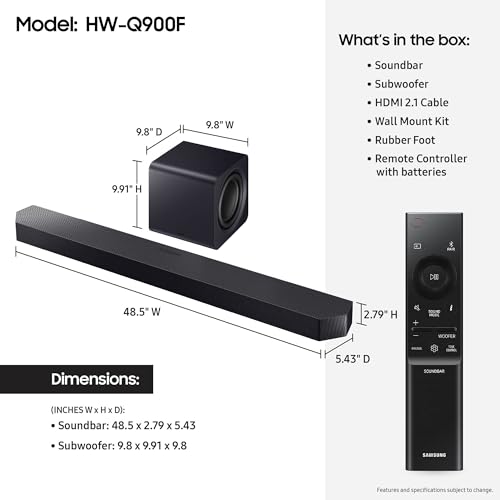
Physical space significantly influences which approach works better. The Samsung HW-Q990F requires positioning for three separate components: the 48-inch soundbar, a fairly large subwoofer, and rear speakers that need power outlets and clear wireless connectivity. Larger rooms benefit from this distributed approach and can handle the higher power output without overwhelming the space.
The Klipsch Flexus Core 200 simplifies placement to a single soundbar, making it ideal for smaller rooms, apartments, or situations where running multiple components isn't practical. The 44-inch width fits under most TVs without overhang issues, and the integrated subwoofers eliminate the need for floor space dedicated to a separate box.
However, room acoustics affect each system differently. The Samsung's room calibration technology adapts to various spaces automatically, while the Klipsch relies on manual EQ adjustments through its app. Rooms with challenging acoustics - high ceilings, open floor plans, hard surfaces - might benefit more from the adaptive processing and distributed speaker placement of the Samsung.
After evaluating both systems thoroughly, clear use cases emerge for each approach.
Choose the Samsung HW-Q990F if you want maximum performance immediately and can justify the higher upfront investment. This makes sense for dedicated home theater rooms, large living spaces, gaming enthusiasts who need HDMI 2.1 features, or anyone who prefers avoiding future upgrade decisions. The complete system eliminates guesswork and delivers flagship performance from day one.
The Samsung particularly suits households that consume diverse content - movies, music, gaming, streaming - and want one system optimized for everything. Samsung TV owners gain additional benefits through Q-Symphony integration, though the soundbar works excellently with any TV brand.
Choose the Klipsch Flexus Core 200 if you prioritize audio quality over channel count and prefer building your system gradually. This approach works well for smaller rooms, budget-conscious buyers who still want premium performance, or anyone who values Klipsch's distinctive sound signature. The modular philosophy lets you start strong and expand based on actual experience rather than theoretical needs.
The Klipsch makes particular sense for music-focused listeners who watch movies occasionally, or anyone whose content consumption centers on streaming services rather than physical media with DTS tracks.
Consider your dealbreakers carefully. If gaming with next-gen consoles matters, the Klipsch's connectivity limitations might eliminate it from consideration. If you have an extensive Blu-ray collection with DTS audio, the format support issue could be decisive. Conversely, if you're primarily streaming Netflix and Spotify in a smaller space, paying three times more for features you won't use doesn't make financial sense.
Both systems represent significant upgrades over basic TV audio and entry-level soundbars. The choice ultimately depends on whether you want the convenience and performance ceiling of a complete system or the flexibility and value proposition of starting with exceptional audio quality and expanding as needed. Either path leads to dramatically better home entertainment - just through different routes that suit different priorities and lifestyles.
| Samsung Q-Series HW-Q990F Soundbar | Klipsch Flexus Core 200 3.1.2 Soundbar |
|---|---|
| Channel Configuration - Determines surround sound immersion level | |
| 11.1.4 channels with 23 total speakers | 3.1.2 channels with 8-9 total drivers |
| Included Components - What you get in the box affects total value | |
| Complete system: soundbar + wireless subwoofer + wireless rear speakers | Soundbar only (subwoofer and rear speakers sold separately) |
| Total System Power - Higher wattage means louder, more dynamic sound | |
| 756W RMS across all components | 185W RMS from soundbar alone |
| Bass Extension - Lower frequencies create more impactful movie and music experience | |
| 32Hz (with dual 8" subwoofer drivers) | 43Hz (with integrated dual 4" drivers) |
| HDMI Connectivity - Critical for gaming consoles and multiple devices | |
| 2 HDMI inputs + eARC output with 4K/120Hz passthrough | eARC only (no HDMI inputs, no 4K/120Hz passthrough) |
| Audio Format Support - Determines compatibility with Blu-ray discs and streaming | |
| Full support: Dolby Atmos, DTS:X, all major formats | Limited: Dolby Atmos only, no DTS support |
| Room Calibration - Automatic optimization saves setup time and improves sound | |
| SpaceFit Sound Pro Plus with automatic acoustic analysis | Manual EQ adjustments only through app |
| Smart Features - Convenience and streaming capabilities | |
| Built-in Alexa, Q-Symphony, AirPlay 2, Google Cast, multiple streaming services | Klipsch Connect Plus app, Bluetooth, basic streaming |
| Expandability - Future upgrade options and flexibility | |
| Complete system (no expansion needed or possible) | Modular: add Flexus Sub 100 and Flexus Surr 100 speakers |
| Best Use Cases - Who should consider each option | |
| Large rooms, gaming, complete home theater setups, Samsung TV owners | Smaller rooms, gradual system building, music-focused listening, budget-conscious buyers |
The Samsung Q-Series HW-Q990F Soundbar delivers superior surround sound with its 11.1.4 channel configuration and 23 total speakers, including wireless rear speakers that create a complete sound dome around you. The Klipsch Flexus Core 200 3.1.2 Soundbar offers good surround effects from its front-positioned drivers but lacks the immersive rear channel experience of the Samsung HW-Q990F.
The biggest difference is system completeness. The Samsung Q-Series HW-Q990F Soundbar includes everything needed for full surround sound: main soundbar, wireless subwoofer, and rear speakers. The Klipsch Flexus Core 200 3.1.2 Soundbar is a standalone soundbar with built-in subwoofers that can be expanded later with separate components.
The Samsung Q-Series HW-Q990F Soundbar is significantly better for gaming, featuring two HDMI inputs with 4K/120Hz passthrough and Game Pro mode optimized for directional audio cues. The Klipsch Flexus Core 200 lacks HDMI inputs and 4K/120Hz passthrough, limiting its gaming capabilities with next-gen consoles.
Yes, both the Samsung Q-Series HW-Q990F Soundbar and Klipsch Flexus Core 200 3.1.2 Soundbar support Dolby Atmos for overhead sound effects. However, the Samsung HW-Q990F also supports DTS:X and other formats, while the Klipsch Flexus Core 200 doesn't support DTS formats commonly found on Blu-ray discs.
The Samsung Q-Series HW-Q990F Soundbar has superior bass with its dedicated wireless subwoofer featuring dual 8-inch drivers that extend down to 32Hz. The Klipsch Flexus Core 200 has impressive built-in bass from dual 4-inch drivers reaching 43Hz, but can't match the depth and power of the Samsung's dedicated subwoofer.
Yes, the Klipsch Flexus Core 200 3.1.2 Soundbar is designed to be modular, allowing you to add the Flexus Sub 100 subwoofer and Flexus Surr 100 rear speakers separately. The Samsung Q-Series HW-Q990F Soundbar comes complete and doesn't require or support additional expansion.
The Klipsch Flexus Core 200 3.1.2 Soundbar works better in smaller rooms due to its single-unit design and integrated subwoofers that don't require additional floor space. The Samsung Q-Series HW-Q990F Soundbar requires positioning three separate components and may overwhelm smaller spaces with its higher power output.
Both the Samsung Q-Series HW-Q990F Soundbar and Klipsch Flexus Core 200 work with any TV brand through HDMI eARC or optical connections. However, the Samsung HW-Q990F offers additional features like Q-Symphony when paired with compatible Samsung TVs.
Both soundbars excel at dialogue clarity but use different approaches. The Samsung Q-Series HW-Q990F Soundbar features Active Voice Amplifier Pro that automatically adjusts for background noise, while the Klipsch Flexus Core 200 uses a dedicated horn-loaded tweeter for vocal reproduction. Both deliver clear speech, with the Samsung offering more adaptive intelligence.
The Samsung Q-Series HW-Q990F Soundbar includes 23 individual speakers across all components (15 in the soundbar, plus subwoofer and rear speaker drivers). The Klipsch Flexus Core 200 3.1.2 Soundbar contains approximately 8-9 drivers within the single soundbar unit.
Value depends on your needs. The Klipsch Flexus Core 200 3.1.2 Soundbar offers excellent standalone performance at its entry price point. The Samsung Q-Series HW-Q990F Soundbar costs significantly more but includes a complete surround system that would require multiple separate purchases with the Klipsch system.
Both soundbars perform well for music. The Samsung Q-Series HW-Q990F Soundbar creates an expansive stereo image with its 11.1 channel configuration and supports high-resolution streaming. The Klipsch Flexus Core 200 offers more traditional stereo presentation that many music enthusiasts prefer, with reviewers comparing it to quality bookshelf speakers.
We've done our best to create useful and informative comparisons to help you decide what product to buy. Our research uses advanced automated methods to create this comparison and perfection is not possible - please contact us for corrections or questions. These are the sites we've researched in the creation of this article: rtings.com - crutchfield.com - sound-advice.online - samsung.com - soundandvision.com - samsung.com - whathifi.com - youtube.com - youtube.com - bestbuy.com - avsforum.com - content.syndigo.com - samsung.com - businessinsider.com - dolby.com - youtube.com - abcwarehouse.com - soundandvision.com - avnirvana.com - avsforum.com - cnet.com - klipsch.com - klipsch.com - youtube.com - assets.klipsch.com - klipsch.com - worldwidestereo.com - klipsch.com - crutchfield.com - digitaltrends.com

Privacy Policy
Terms and Conditions - Affiliate Policy
Home Security
© Copyright 2008-2026.
11816 Inwood Rd #1211, Dallas, TX 75244