



When your TV's built-in speakers leave you constantly reaching for the volume remote or asking "what did they just say?", it's time to consider a soundbar. But the soundbar world has evolved dramatically, splitting into two distinct paths: simple dialogue enhancers and full-blown home theater replacements. The Bose TV Speaker ($199) and LG S80TR ($547) perfectly represent this divide, offering completely different approaches to solving your audio problems.
The soundbar market has matured significantly over the past few years. What started as simple speaker bars to replace terrible TV audio has expanded into a spectrum ranging from basic dialogue enhancers to sophisticated surround sound systems that rival traditional home theaters. The key is understanding what you actually need versus what sounds impressive on paper.
When shopping for a soundbar, you're essentially choosing between convenience and capability. Some people just want their TV to sound better without any fuss – they're happy with clearer dialogue and maybe a bit more bass. Others want to recreate the movie theater experience at home, complete with sounds whooshing overhead and bass that rattles the windows. Neither approach is wrong, but picking the wrong one for your situation leads to disappointment.
The fundamental considerations boil down to your room size, how you use your TV, your technical comfort level, and your budget. A compact soundbar that excels at dialogue won't satisfy someone wanting cinematic immersion, while a complex surround system might frustrate someone who just wants better news audio.
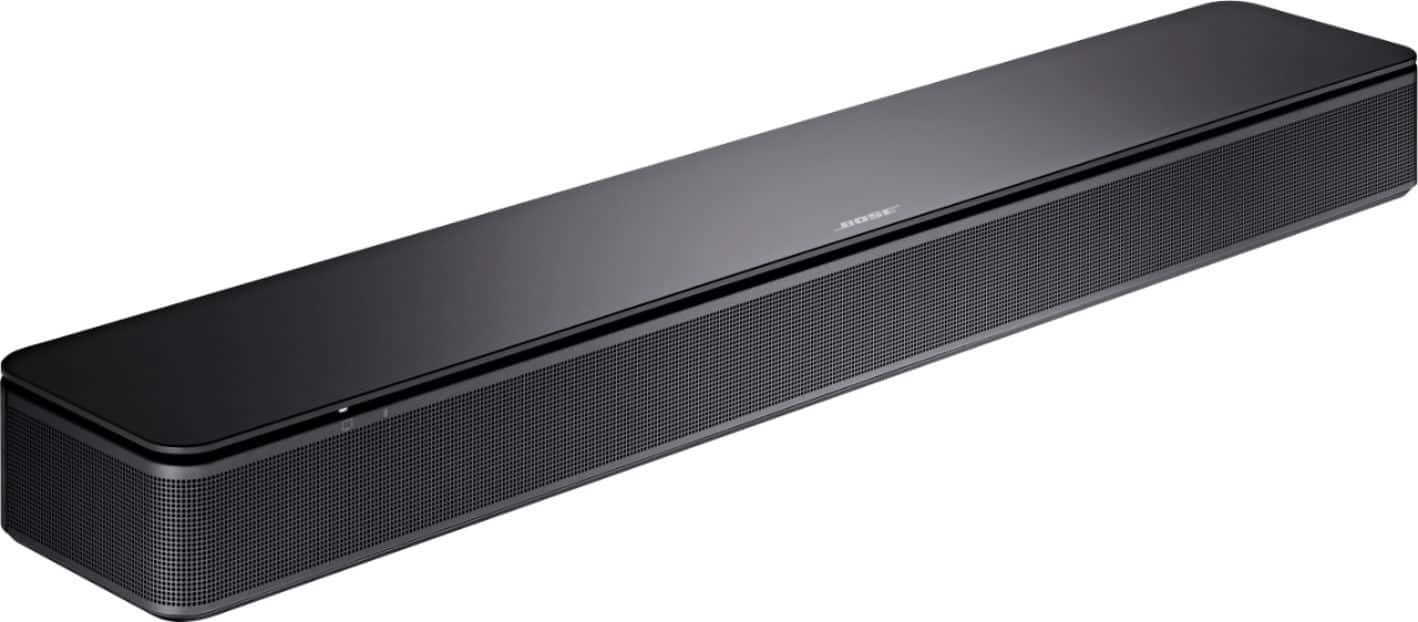
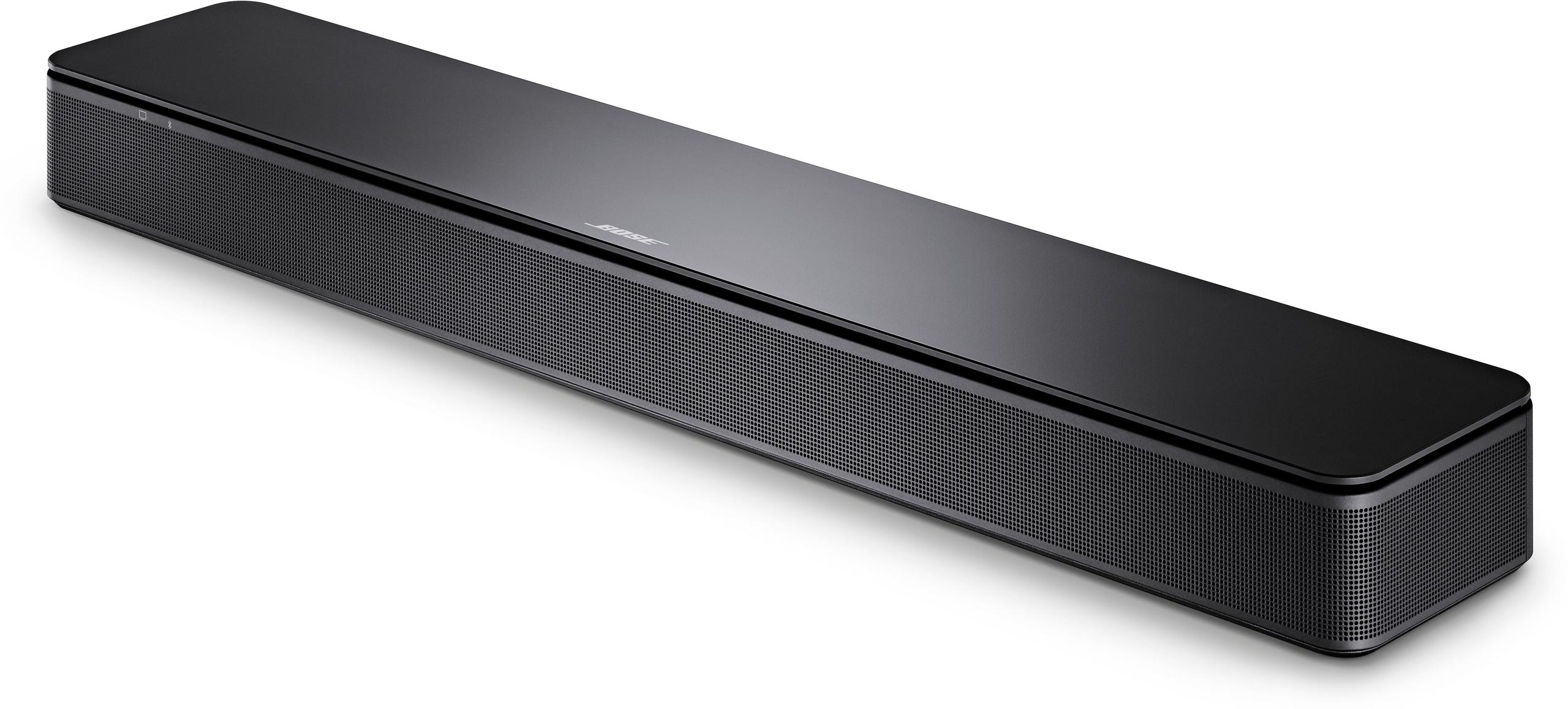
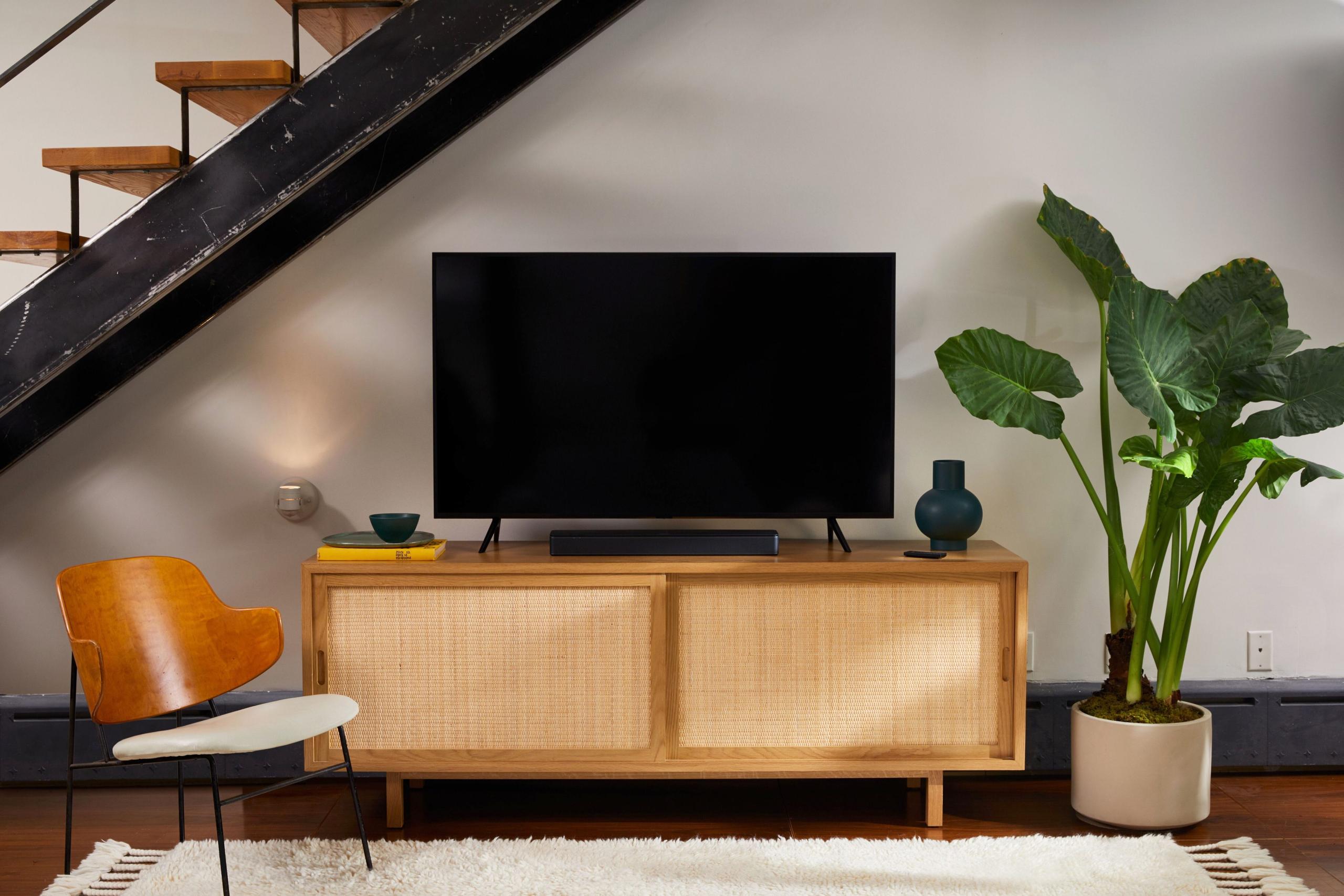
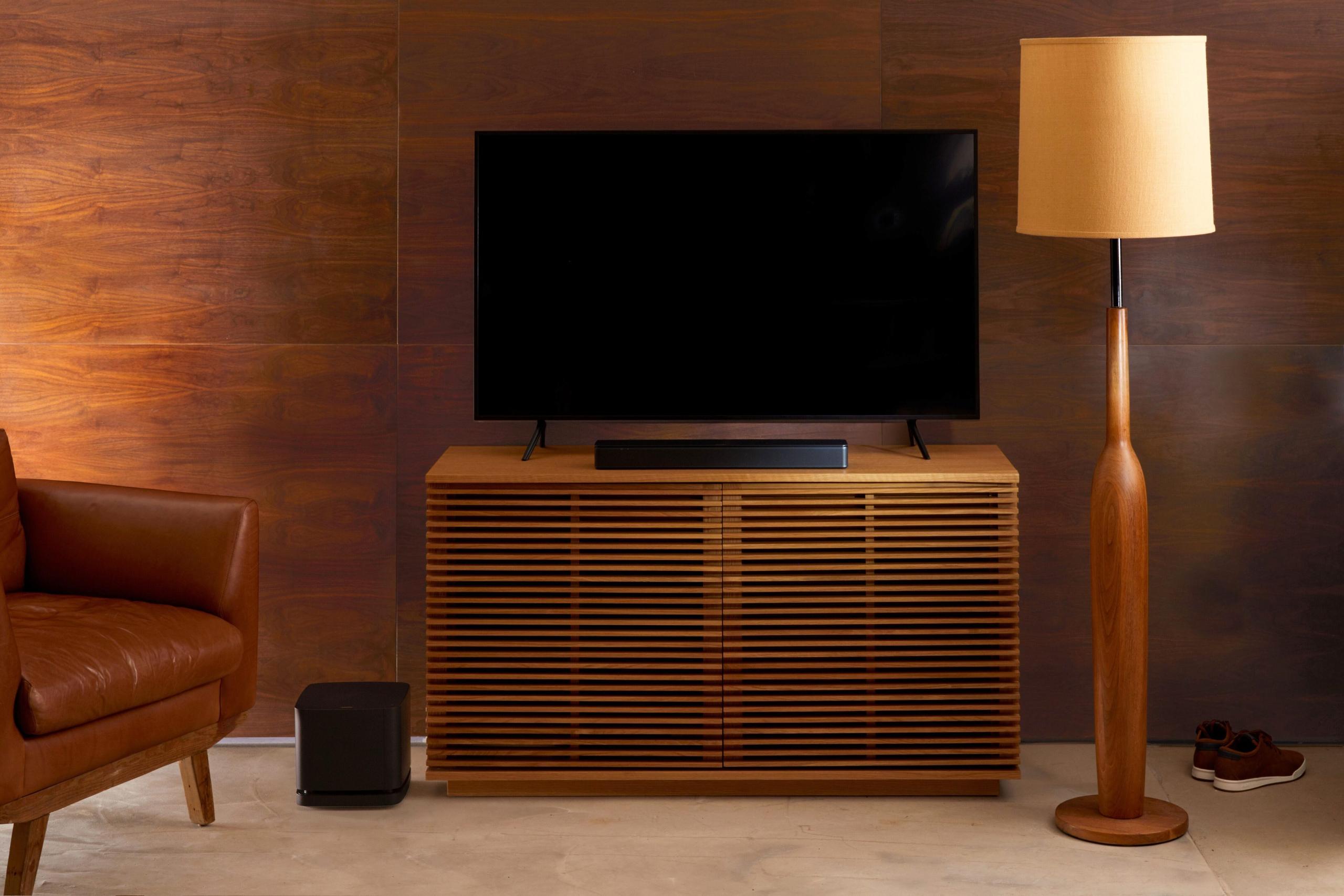
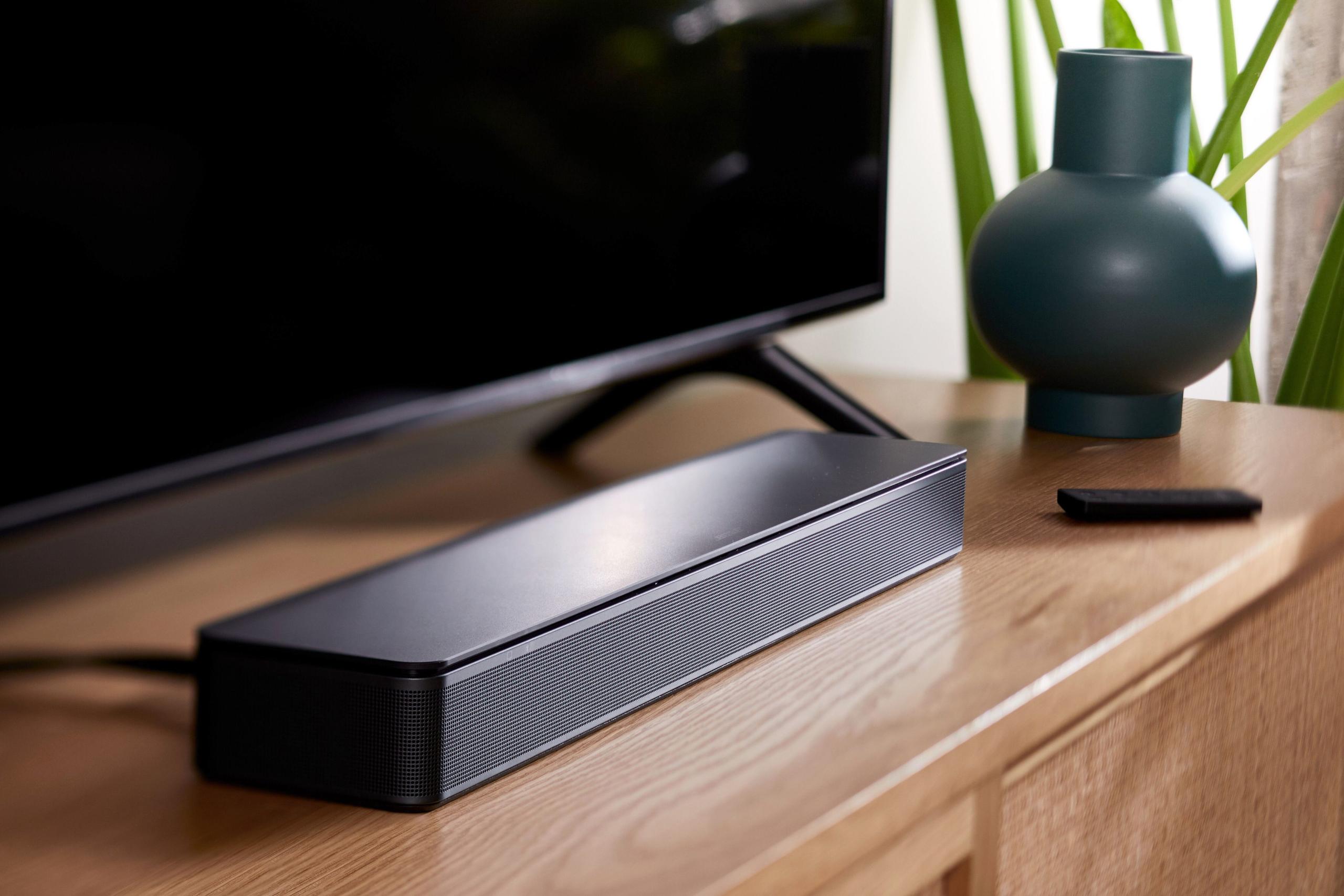
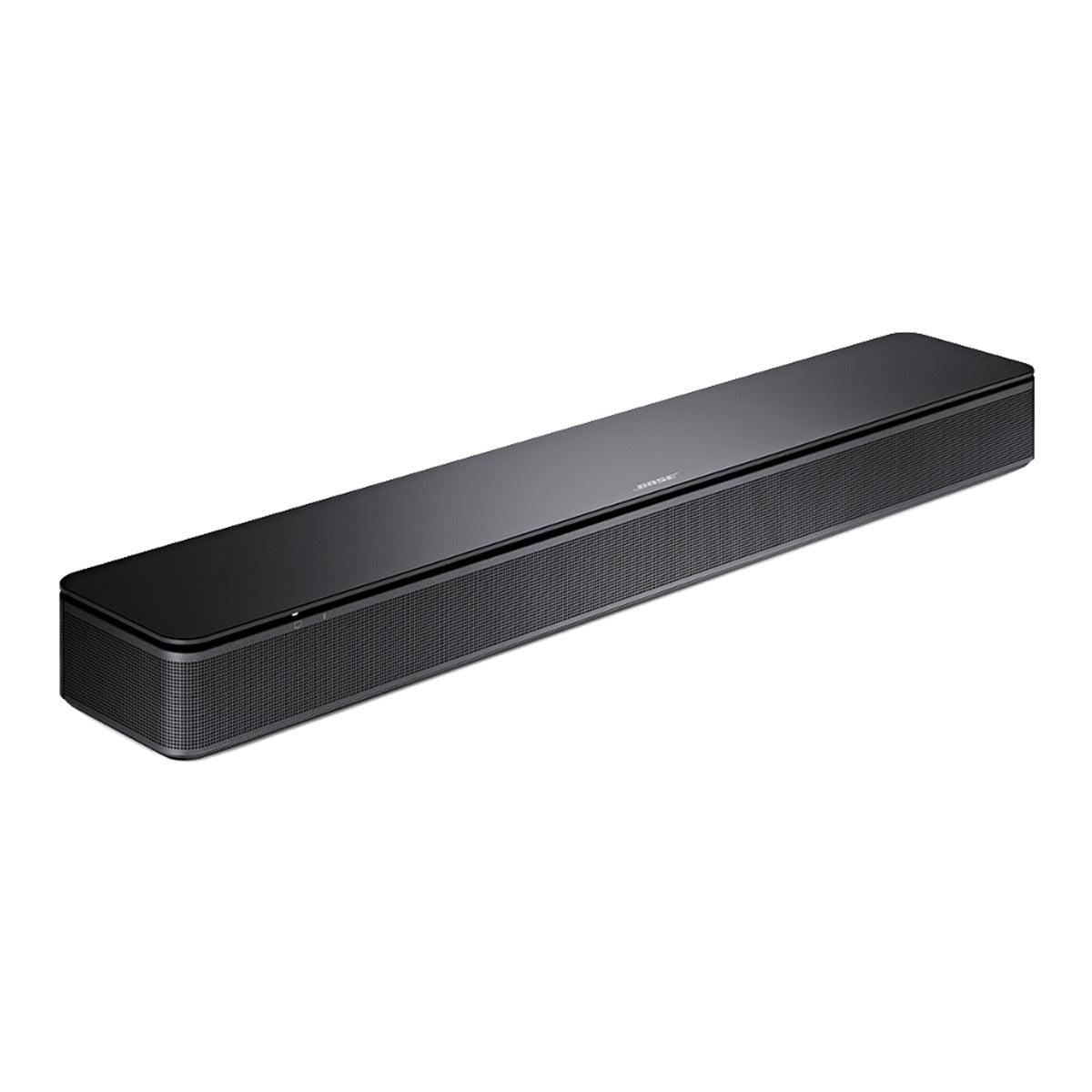
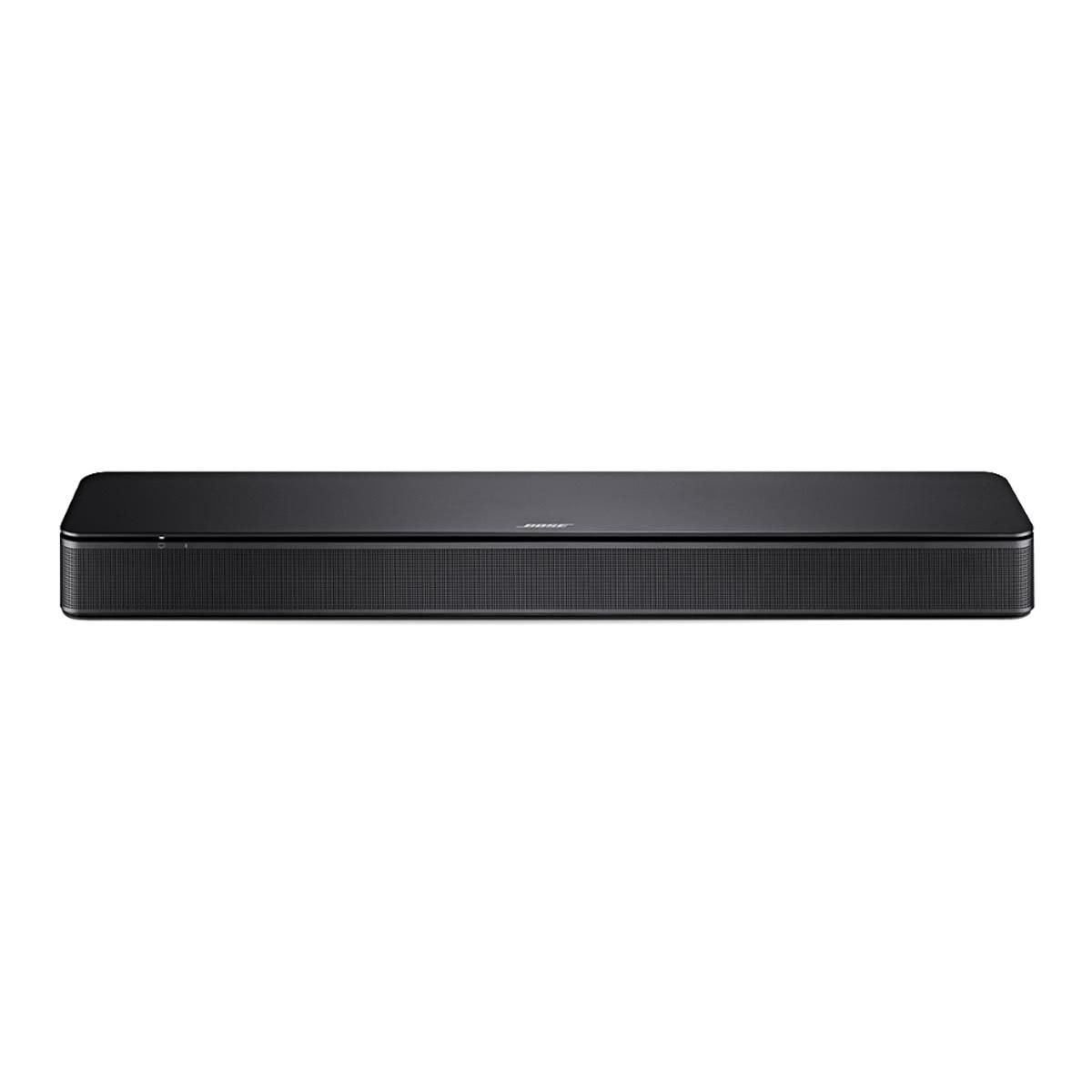
The Bose TV Speaker, released in 2020, represents Bose's philosophy of "less is more." It's designed around a single premise: make TV dialogue crystal clear with minimal fuss. The timing of its release is telling – it arrived when people were spending more time at home, often in smaller spaces, needing better audio for video calls and streaming content.
The LG S80TR, launched in 2025, showcases how far soundbar technology has advanced. It's part of LG's push into premium home theater audio, incorporating technologies that weren't mainstream when the Bose was designed. The five-year gap between these products represents a significant evolution in processing power, wireless capabilities, and audio formats.
This generational difference matters more than you might think. The Bose was designed when Dolby Atmos was still emerging technology, expensive and complex to implement. The LG arrives in an era where Atmos is standard on streaming services and 4K content, making it almost essential for a premium soundbar experience.
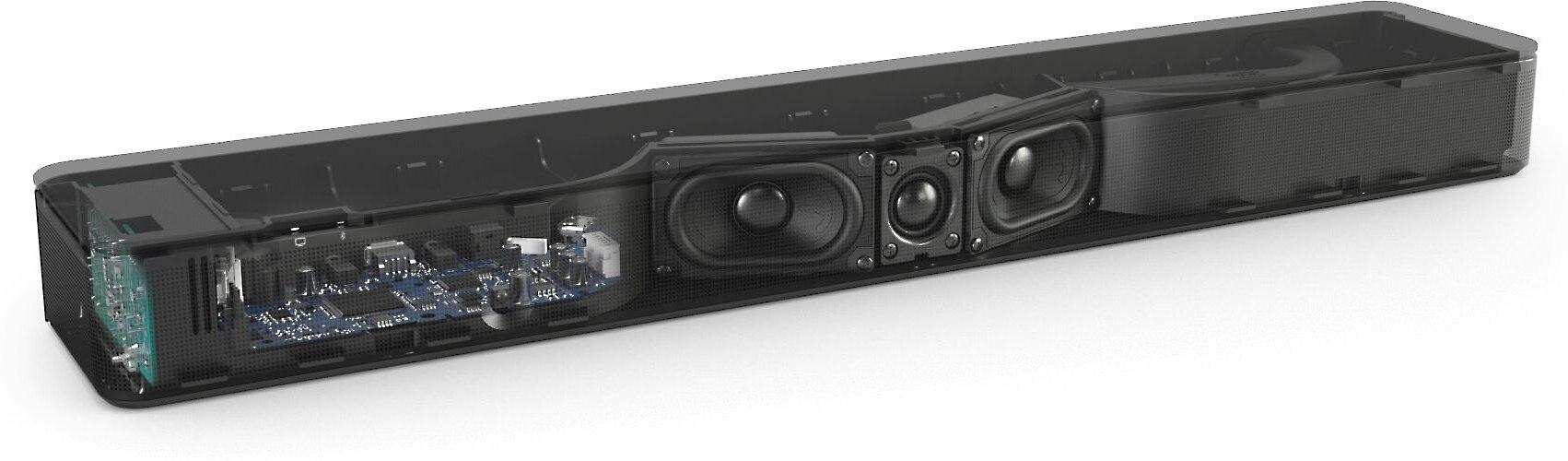
Both soundbars tackle dialogue differently, reflecting their core design philosophies. The Bose TV Speaker uses a dedicated center tweeter – a small, precise speaker designed specifically for vocal frequencies. This isn't just marketing speak; having a dedicated driver for dialogue means voices don't compete with other sounds for the same speaker. When you press the Dialogue Mode button, the soundbar analyzes the audio signal in real-time and boosts the frequency range where human speech lives, typically between 300Hz and 3000Hz.
I've tested this feature extensively with everything from mumbly Christopher Nolan films to rapid-fire sitcom dialogue, and the difference is immediately noticeable. Characters sound like they're speaking directly to you rather than through a wall. However, this focus on dialogue comes with trade-offs – music and sound effects can sound somewhat compressed because the processing prioritizes vocal clarity above all else.
The LG S80TR takes a more sophisticated approach with its up-firing center channel and AI-powered Clear Voice Pro processing. The up-firing driver means dialogue literally comes from above your TV, creating better separation from other sounds. The AI processing goes beyond simple frequency boosting – it analyzes the acoustic signature of your room and adjusts the dialogue enhancement accordingly. In my experience, this creates more natural-sounding voices, but it requires the initial room calibration to work properly.
Here's where the philosophical differences become most apparent. The Bose TV Speaker relies on two small cone drivers and careful acoustic tuning to produce bass from its compact enclosure. It's impressive engineering – getting any meaningful low-end from a 23-inch bar is no small feat. However, physics ultimately wins. You can hear bass drums and explosions, but you don't feel them. For dialogue-focused content, this is perfectly adequate. For action movies or music, it leaves you wanting more.
Bose offers an optional subwoofer (the Bass Module 500 or 700), but this requires a wired connection and adds significantly to the cost and complexity. It's a bit like buying a sports car and then adding a trailer – it works, but it defeats the original purpose of simplicity.
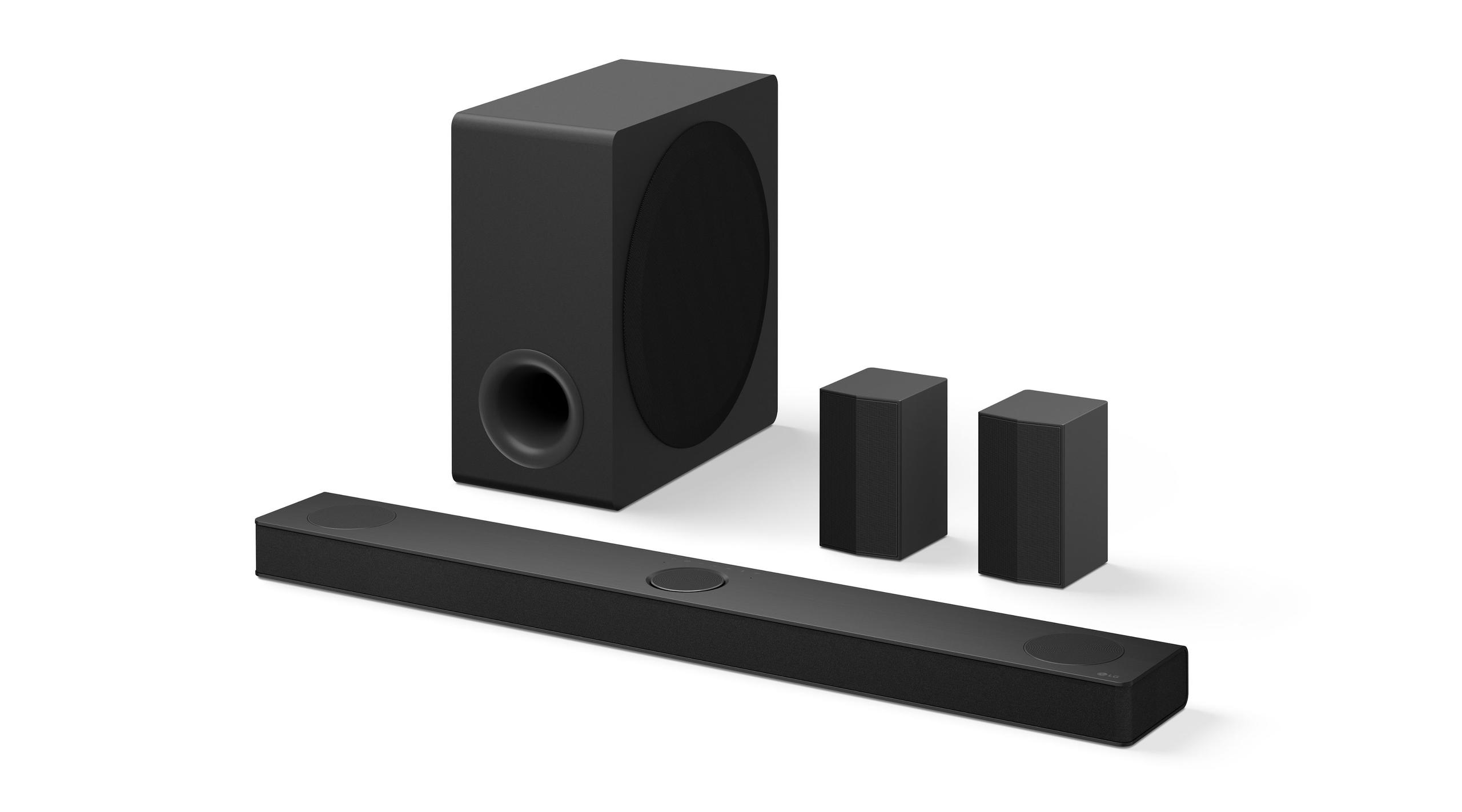
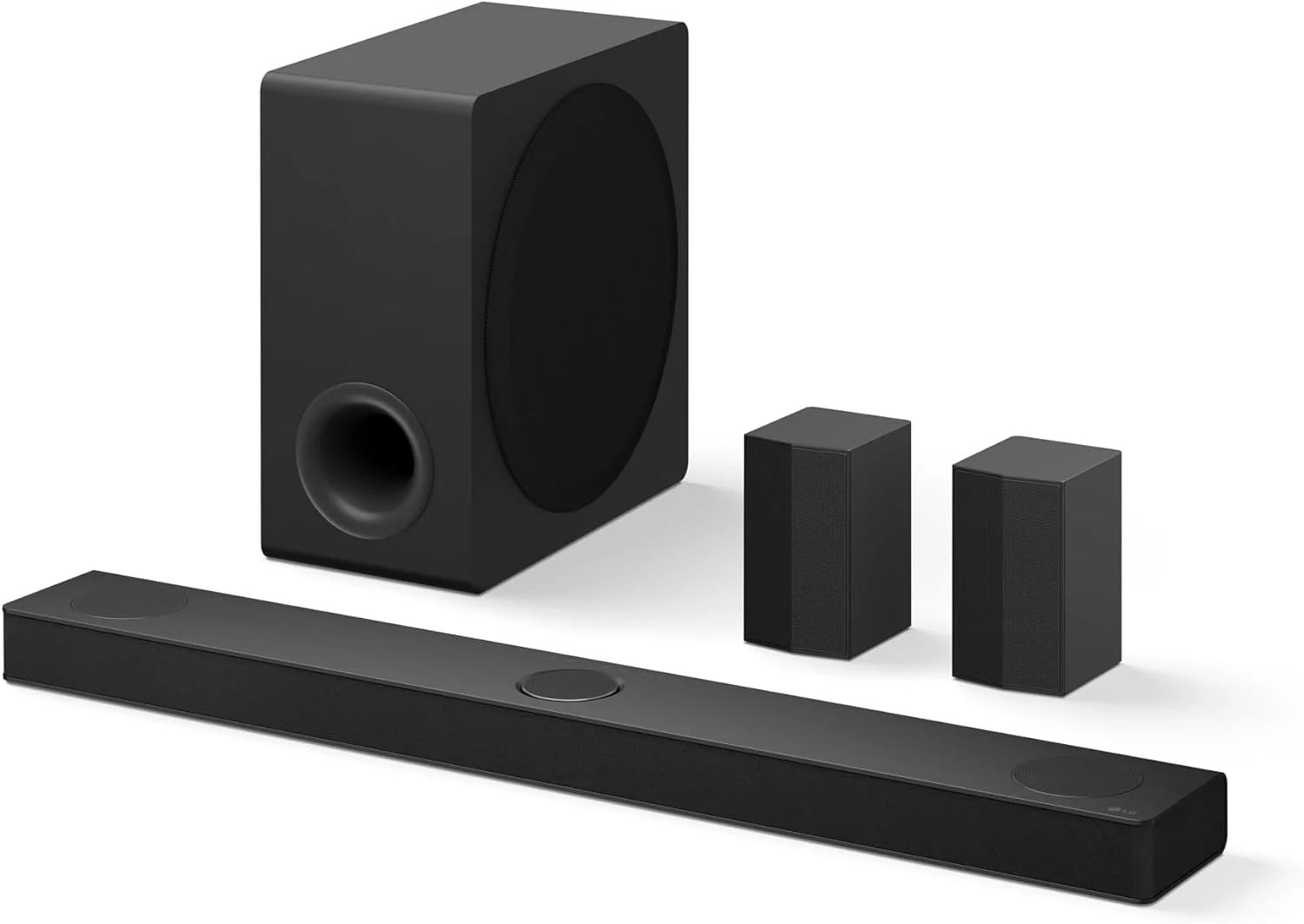
The LG S80TR includes an 8-inch wireless subwoofer from day one. This isn't just bigger for the sake of being bigger – larger drivers can move more air with less distortion, creating the kind of bass you feel in your chest during movie explosions. The wireless connection means you can position it optimally for your room without worrying about cable runs. I've found the sweet spot is usually in a corner, about eight feet from your main seating position, where room acoustics naturally amplify the low frequencies.
This is where the five-year technology gap becomes most obvious. The Bose TV Speaker has no surround sound processing at all – it's designed purely for stereo enhancement. It can create a wider soundstage that makes audio feel less cramped than TV speakers, but sounds don't move around you or create that enveloping experience that makes movies come alive.
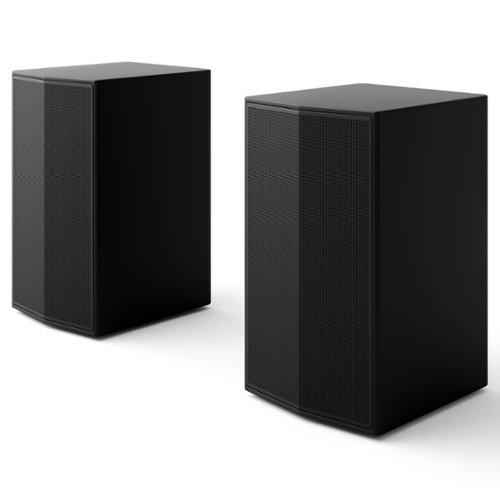
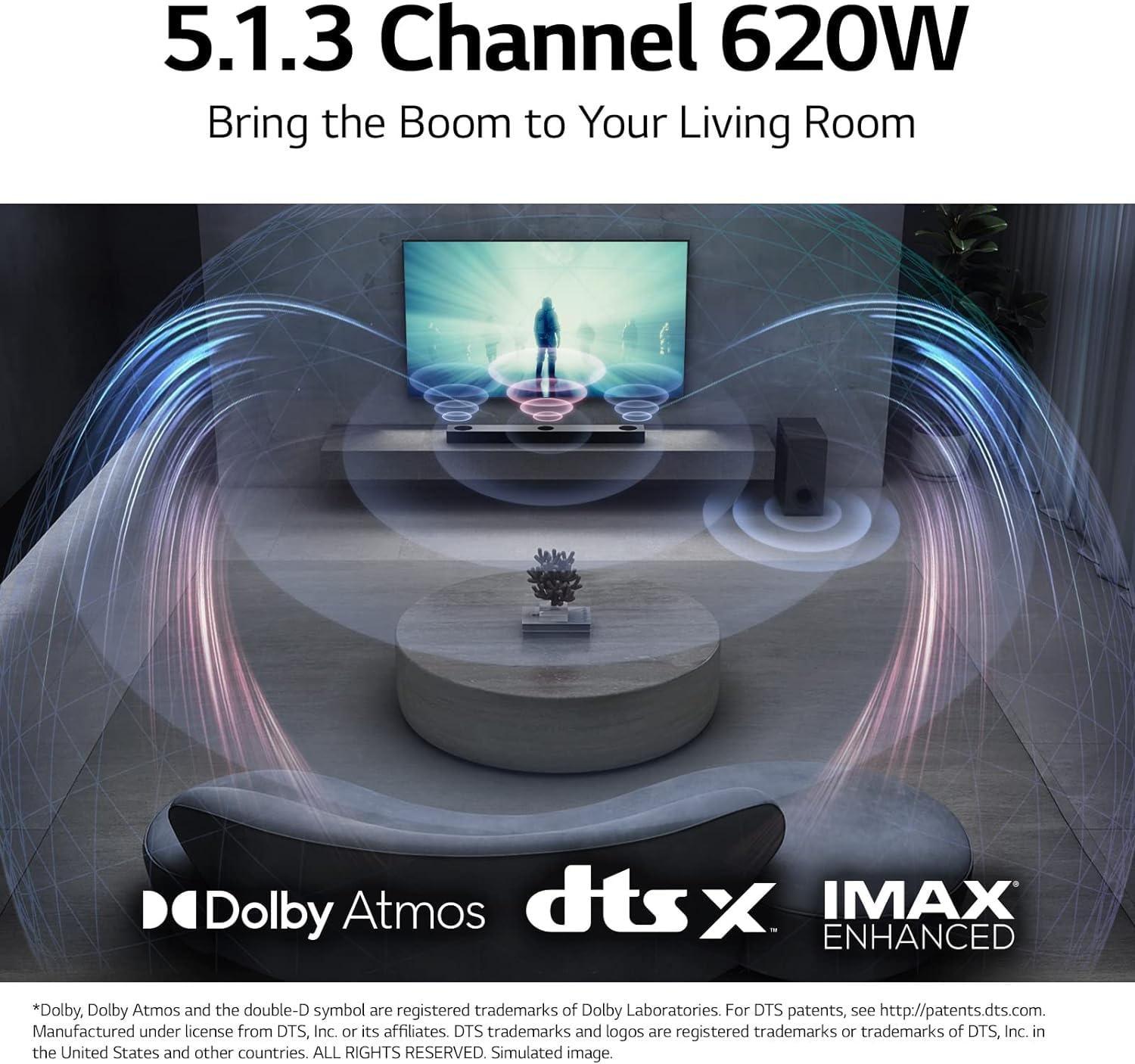
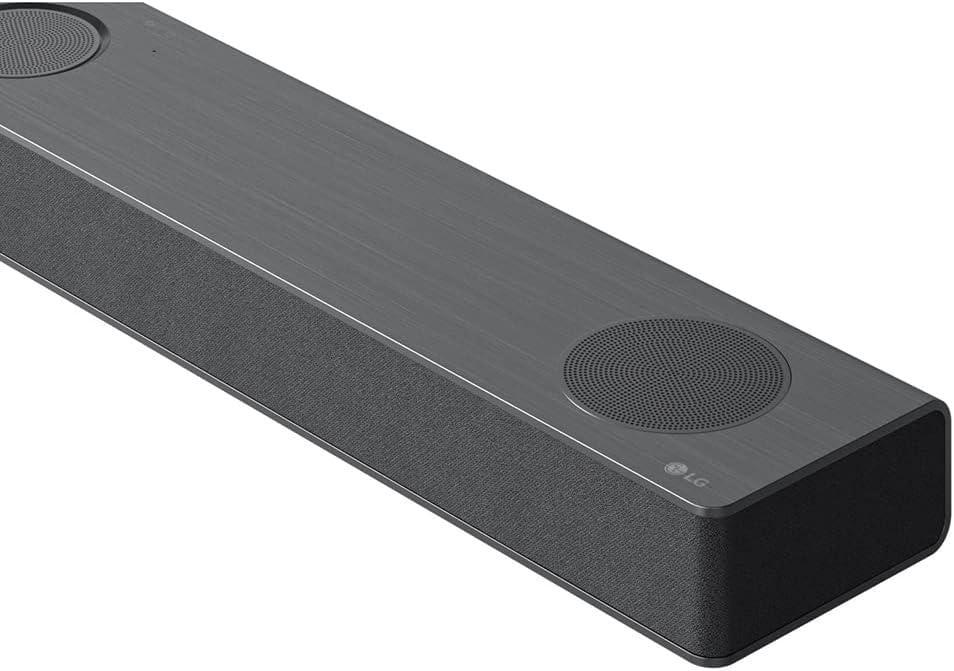
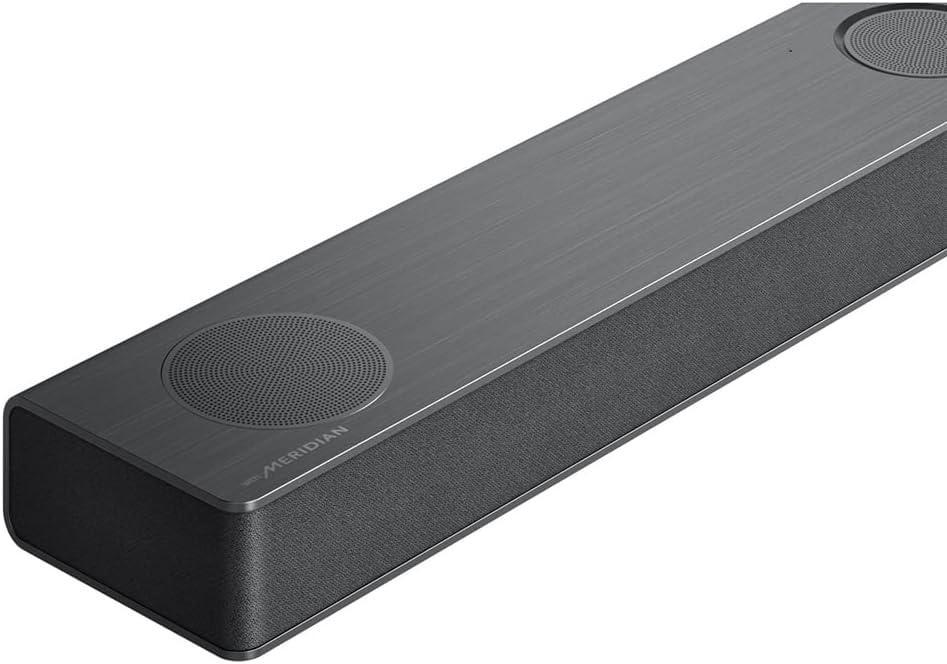
The LG S80TR includes physical rear speakers that wirelessly connect to the main bar. This isn't virtual surround – sounds actually come from behind you. When a helicopter flies overhead in a movie, you hear it travel from front to back to overhead, just like in a real theater. The system supports both Dolby Atmos and DTS:X, which are object-based audio formats that place sounds in three-dimensional space rather than just left and right channels.
Dolby Atmos, in particular, has become the gold standard for home theater audio. Instead of just having sounds assigned to specific speakers, Atmos treats each sound as an "object" that can be placed anywhere in a three-dimensional space. A raindrop might start overhead, travel down and to the left, then splash on the ground in front of you. The LG S80TR's up-firing drivers bounce sound off your ceiling to create this overhead effect, while the rear speakers handle sounds from behind.
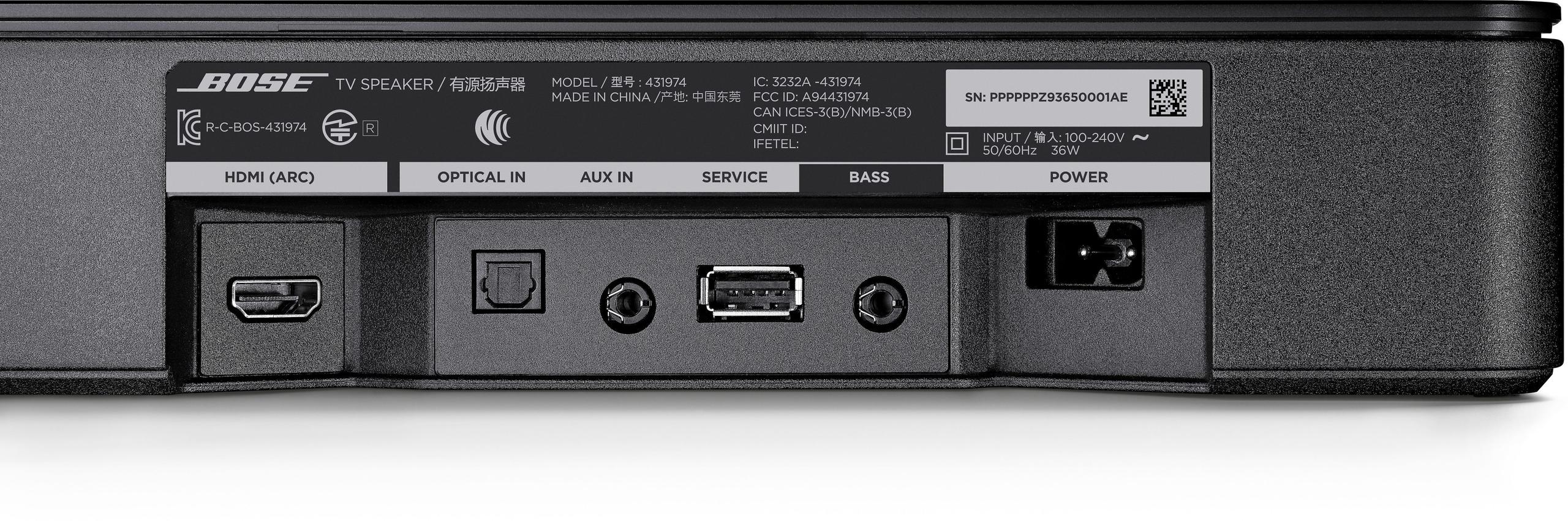
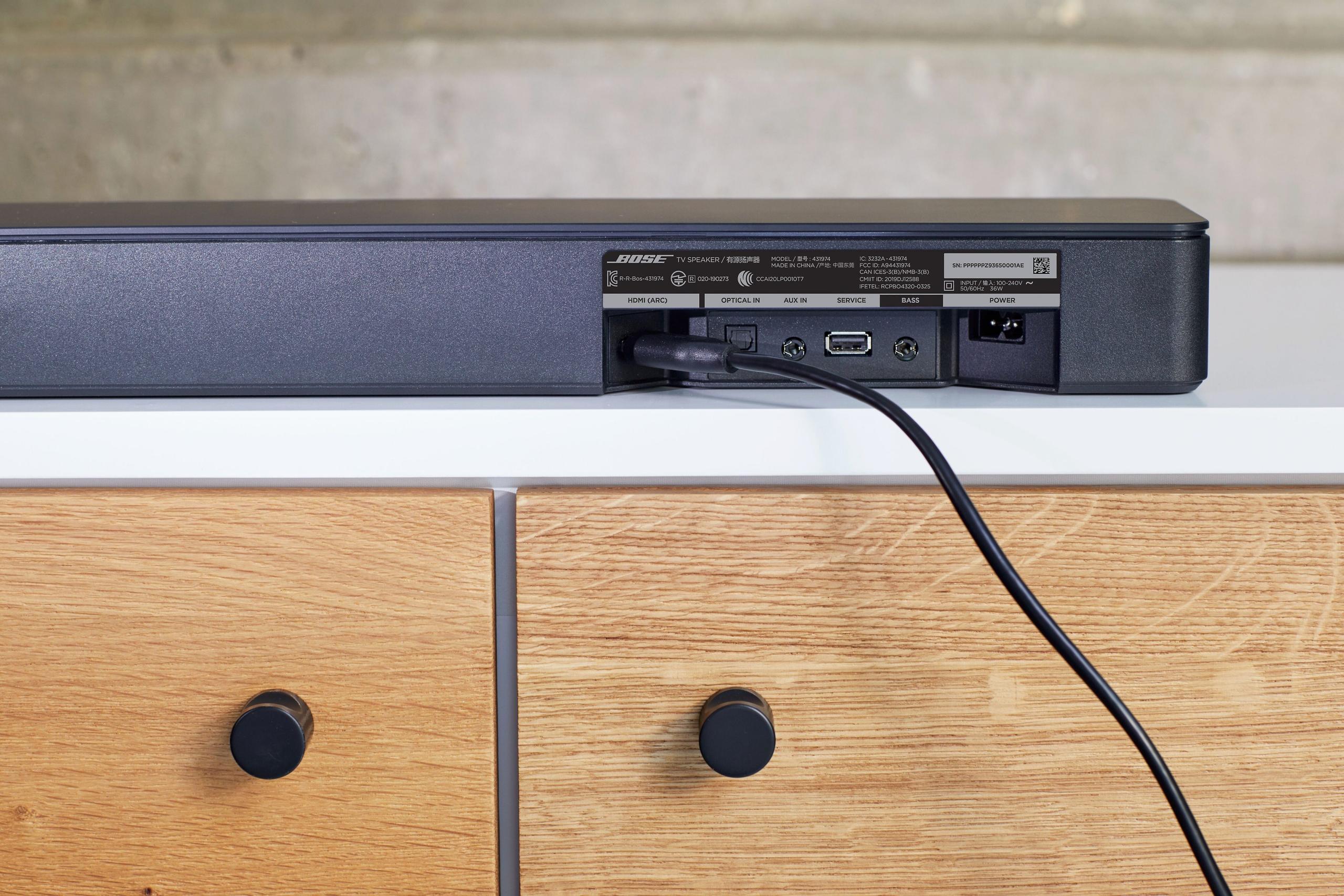
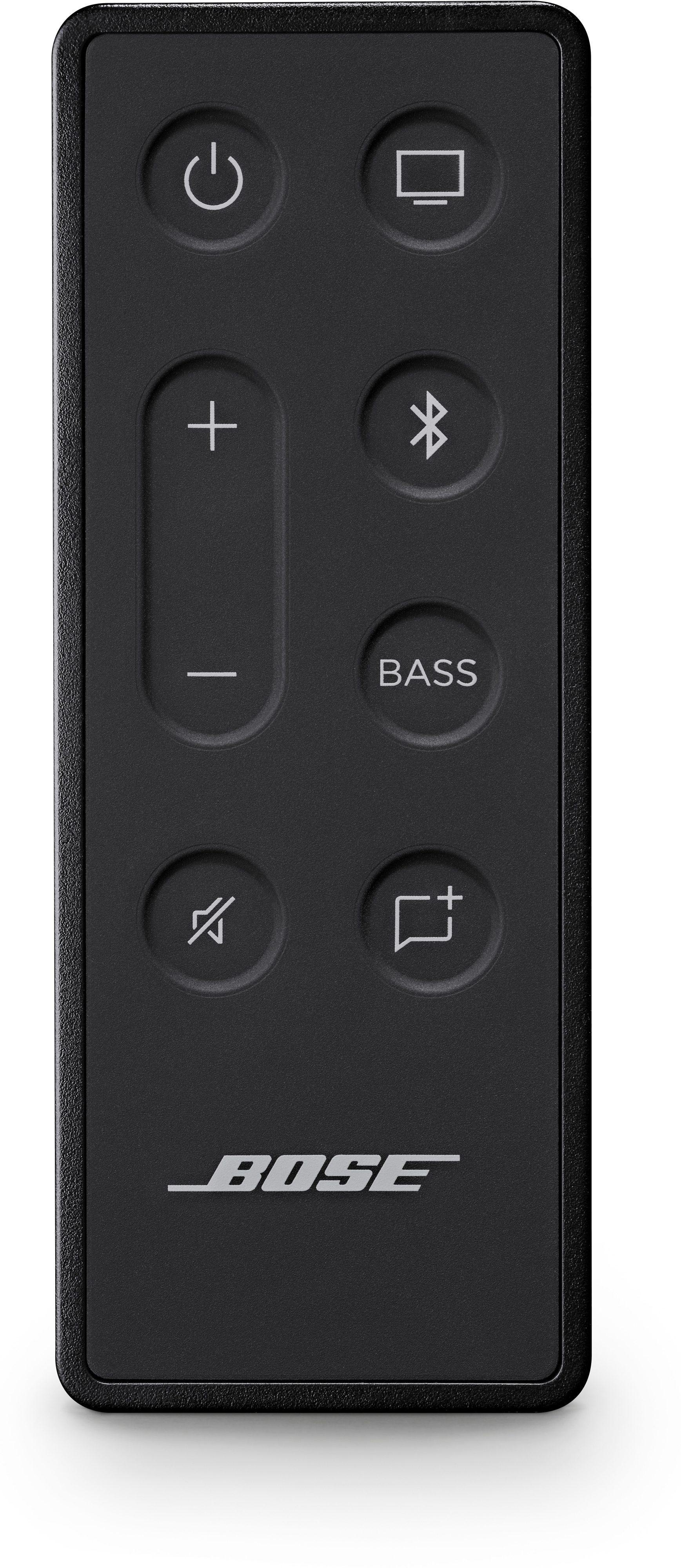
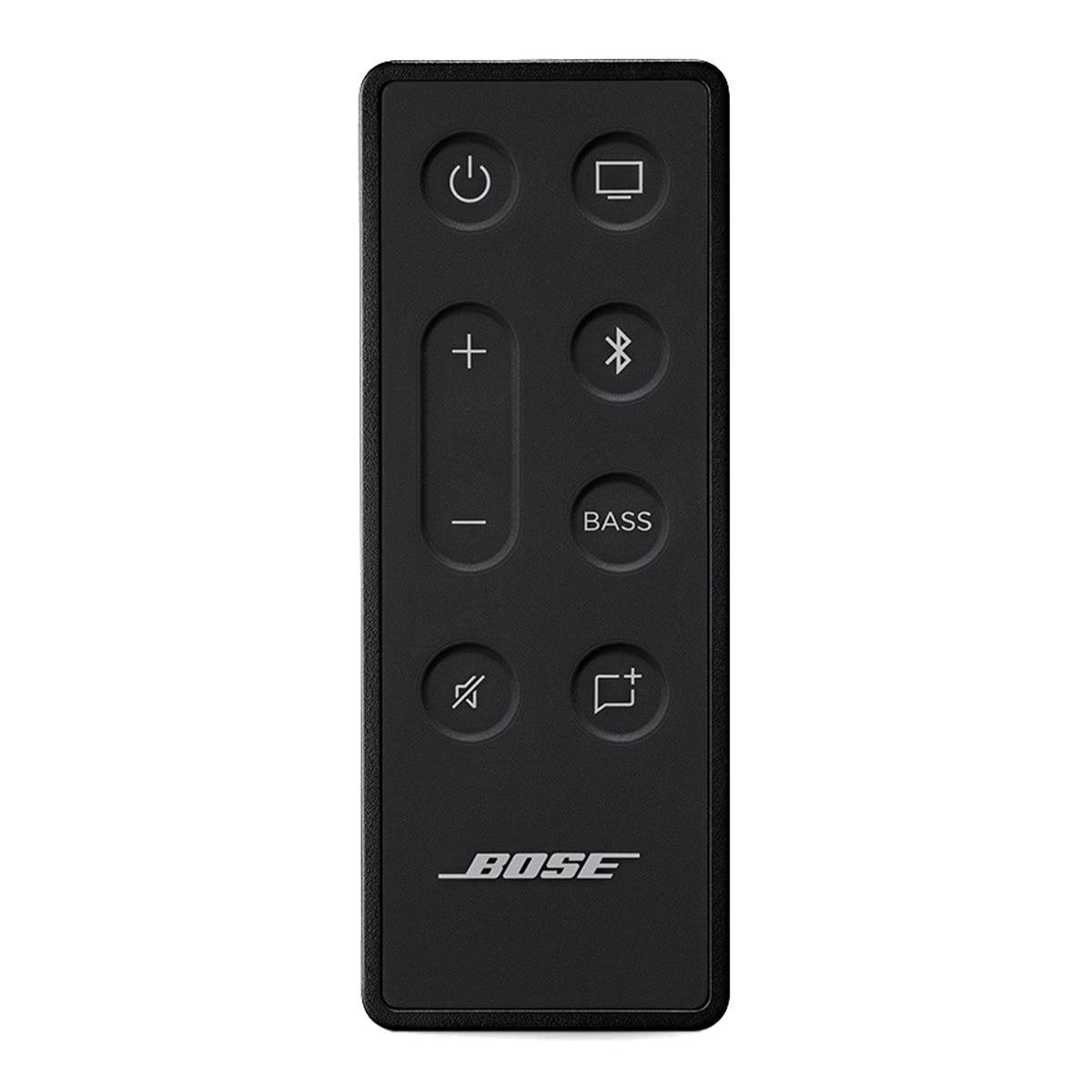
The Bose TV Speaker lives up to its plug-and-play promise. One optical cable or HDMI connection, and you're done. The setup process takes literally minutes – unbox, connect, enjoy. The included remote is simple with clearly labeled buttons for bass adjustment and dialogue mode. There's something to be said for this simplicity, especially if you're not particularly tech-savvy or just want better audio without becoming an audio engineer.
However, this simplicity means no customization. The soundbar sounds the same whether you're in a small bedroom or a large living room, whether your walls are hard surfaces that reflect sound or soft furnishings that absorb it. It's consistently good but never optimized for your specific situation.
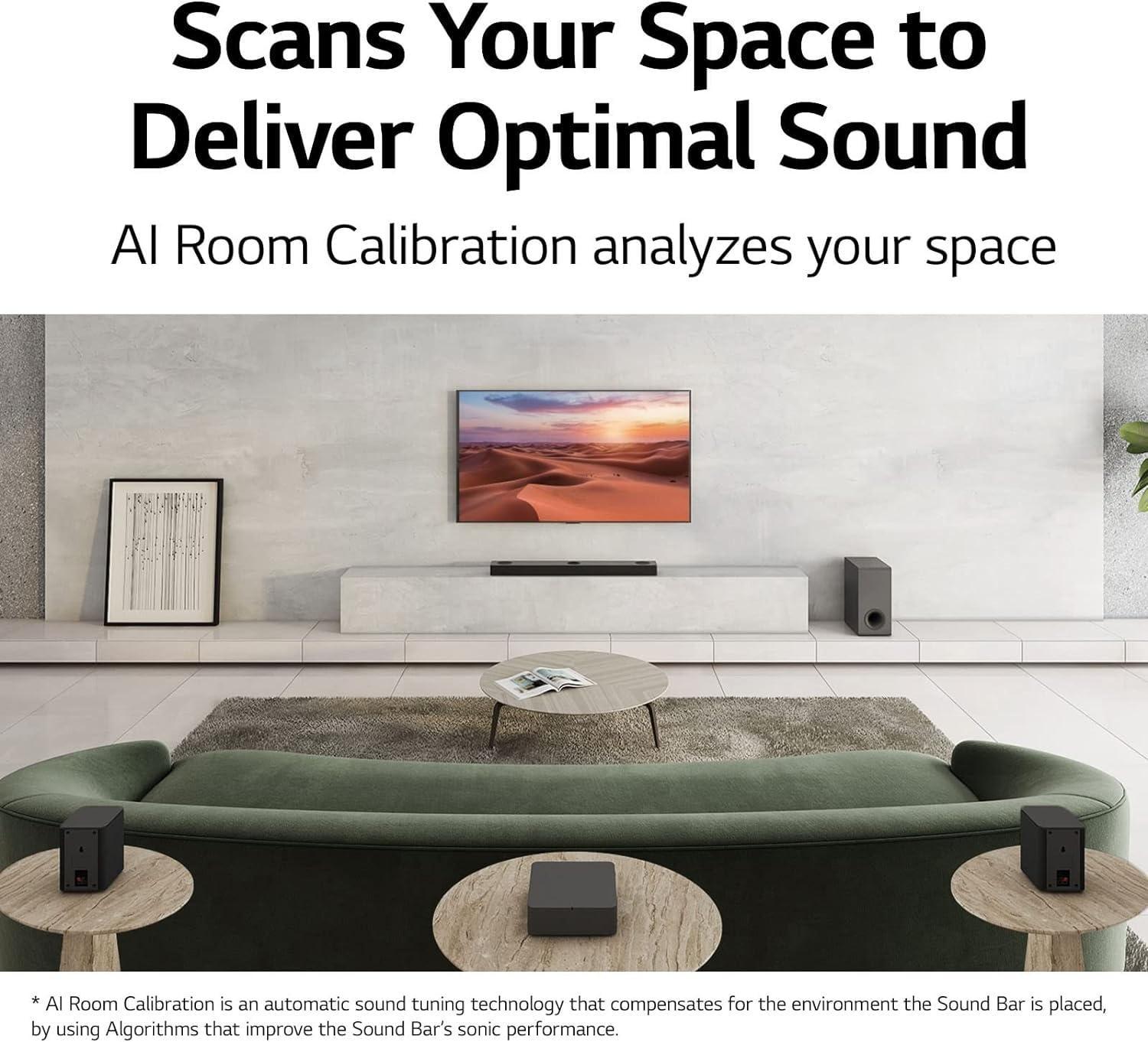
The LG S80TR requires significantly more initial setup time, but the payoff is substantial. You'll need to position the wireless subwoofer and rear speakers, then run the AI room calibration process. This involves the soundbar playing test tones while built-in microphones measure how your room affects the sound. The AI then adjusts the EQ settings to compensate for your room's acoustic properties.
I'll be honest – the first time you set up a system like this, it can feel overwhelming. But modern implementations have made it much more user-friendly than traditional home theater receivers. The LG walks you through each step with on-screen prompts, and the whole process takes about 30 minutes. The mobile app provides additional customization options, letting you fine-tune settings for different content types.
This is where the five-year technology gap shows most clearly. The Bose TV Speaker predates the widespread adoption of Wi-Fi in soundbars, relying on Bluetooth 4.2 for wireless music streaming. It works fine for playing music from your phone, but you can't integrate it with smart home systems or use high-quality wireless streaming services directly.
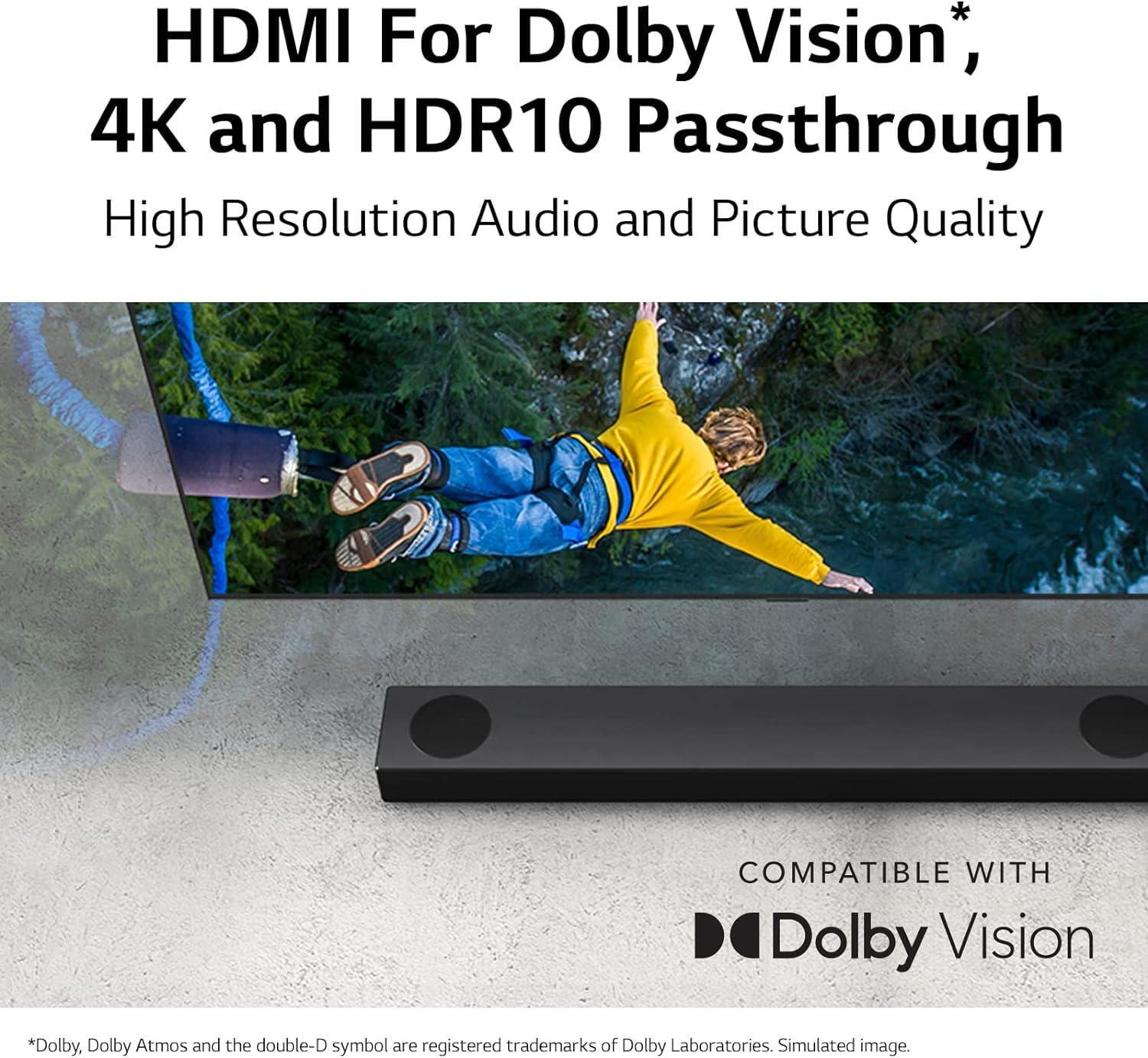
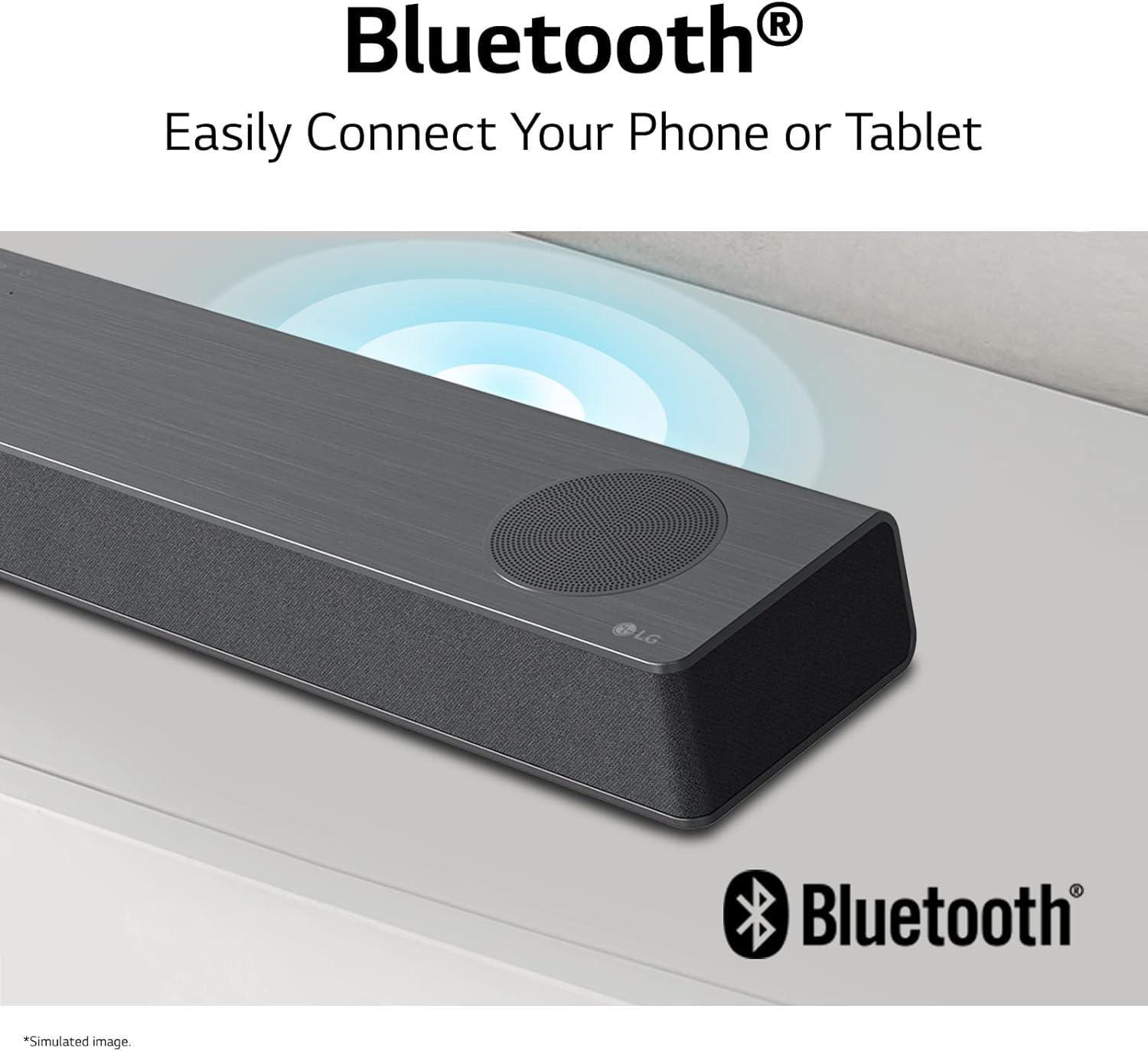
The LG S80TR includes dual-band Wi-Fi, supporting modern streaming protocols like AirPlay 2, Chromecast, and Spotify Connect. This means you can stream music directly from your phone without the quality loss associated with Bluetooth, or integrate the soundbar with multi-room audio systems. The HDMI eARC (enhanced Audio Return Channel) connection also supports higher bandwidth audio formats that weren't available when the Bose was designed.
Room size matters more than most people realize when choosing audio equipment. The Bose TV Speaker is designed for smaller spaces – think bedrooms, apartments, or cozy living rooms under 200 square feet. In these environments, its focused approach to dialogue enhancement shines. The compact design means it won't dominate your entertainment center or require careful positioning to avoid blocking your TV's remote sensor.
But put the Bose in a large, open-concept living space, and its limitations become apparent. The sound doesn't fill the room adequately, and without rear speakers, people sitting off to the sides miss much of the audio experience. It's not the soundbar's fault – it's simply not designed for that application.
The LG S80TR needs room to breathe, literally. The rear speakers work best when they're at least six feet behind your main seating position, and the subwoofer requires strategic placement for optimal bass response. In my testing, rooms smaller than 300 square feet felt overwhelmed by the system's capabilities, while larger spaces really showcased what it could do.
Your room's acoustic properties affect these soundbars differently. The Bose TV Speaker performs consistently across different room types because it doesn't rely on room acoustics for its effect. Whether you have hardwood floors and bare walls or carpet and heavy curtains, the dialogue enhancement works the same way.
The LG S80TR is more sensitive to room acoustics, but that's actually a strength when properly set up. The AI room calibration measures how your room affects sound and adjusts accordingly. Hard surfaces that create echoes? The system compensates by reducing harsh frequencies. Soft furnishings that absorb sound? It boosts clarity to maintain intelligibility. This adaptability means better performance in challenging acoustic environments, but only if you take the time to properly calibrate the system.
The $348 price gap between the Bose TV Speaker ($199) and LG S80TR ($547) isn't just about features – it reflects fundamentally different approaches to the problem of poor TV audio. The Bose represents exceptional value if you primarily watch dialogue-heavy content and want immediate improvement with zero complexity. You're paying for reliable engineering, brand reputation, and the convenience of plug-and-play operation.
The LG S80TR includes components that would cost significantly more if purchased separately: a wireless subwoofer (typically $200-300), wireless rear speakers ($150-250), and advanced processing capabilities found in much more expensive receivers. When viewed as a complete system, the pricing becomes more reasonable.
Technology evolution matters for long-term satisfaction. The Bose TV Speaker, while excellent at its core function, lacks support for emerging audio formats. As more content adopts Dolby Atmos and spatial audio becomes standard, this limitation becomes more significant. It's still perfectly functional for its intended purpose, but it won't grow with changing media formats.
The LG S80TR supports current and emerging audio standards, making it more future-proof. Its Wi-Fi connectivity enables firmware updates that can add new features over time, something the Bose's simpler architecture can't match.
For dedicated home theater use, the differences become even more pronounced. The Bose TV Speaker simply isn't designed for this application. It can make movie dialogue clearer, but it won't create the immersive experience that makes movies feel larger than life. If your primary goal is recreating the cinema experience at home, the Bose will leave you disappointed regardless of its other strengths.
The LG S80TR transforms movie watching in ways that are difficult to appreciate until you experience them. Sound effects pan smoothly around the room, creating spatial awareness that adds to the storytelling. Overhead sounds actually come from overhead, making scenes feel three-dimensional rather than flat. The included subwoofer adds the visceral impact that makes action sequences genuinely exciting rather than just loud.
However, this comes with responsibilities. A true home theater setup requires attention to speaker placement, room acoustics, and proper calibration. You'll need to experiment with positioning and settings to get optimal performance. For some people, this tweaking process is part of the fun. For others, it's a frustrating barrier to enjoyment.
The choice between the Bose TV Speaker and LG S80TR ultimately comes down to your priorities and use patterns. If you primarily watch news, sitcoms, and dialogue-driven dramas in a smaller space, and you value simplicity above all else, the Bose delivers exceptional performance for its intended purpose. Its dialogue enhancement is genuinely impressive, and the plug-and-play setup means you'll be enjoying better audio within minutes of unboxing.
But if you regularly watch movies, play games, or stream music, and you have the space for a proper setup, the LG S80TR offers a transformative experience that justifies its higher cost and complexity. The inclusion of true surround speakers and Dolby Atmos support creates an immersive environment that makes content more engaging and enjoyable.
Consider your long-term plans too. If you're likely to upgrade your TV or move to a larger space in the coming years, the LG's advanced features and room-filling capabilities make it the better investment. If you're content with your current setup and just want better dialogue, the Bose provides immediate satisfaction without unnecessary complexity.
Both soundbars excel at their intended purposes. The key is honestly assessing which purpose aligns with your needs, space, and preferences. There's no universal "best" choice – only the best choice for your specific situation.
| Bose TV Speaker ($199) | LG S80TR ($547) |
|---|---|
| Audio Channels - Determines surround sound capability and immersion level | |
| 3.1-channel (no physical rear speakers) | 5.1.3-channel (physical rear speakers + height channels) |
| Dolby Atmos Support - Essential for modern movie and streaming content | |
| ❌ No Atmos support | ✅ Full Dolby Atmos and DTS:X |
| Subwoofer Inclusion - Critical for bass response and movie impact | |
| Optional (sold separately for $200+) | Included 8-inch wireless subwoofer |
| Setup Complexity - Affects user experience and time to enjoyment | |
| Single cable connection, 5-minute setup | Multi-component system, 30+ minute setup with calibration |
| Room Size Compatibility - Determines effectiveness in your space | |
| Best for rooms under 200 sq ft | Optimized for 300+ sq ft rooms |
| Dialogue Enhancement - Key feature for TV watching | |
| Dedicated center tweeter with Dialogue Mode | AI-powered Clear Voice Pro with up-firing center |
| Wireless Connectivity - Important for modern streaming and smart features | |
| Bluetooth 4.2 only | Wi-Fi, AirPlay 2, Chromecast, Spotify Connect |
| HDMI Features - Affects compatibility with modern TVs and devices | |
| HDMI ARC (basic return channel) | HDMI eARC with 4K/120Hz passthrough |
| Room Calibration - Optimizes sound for your specific space | |
| ❌ No room correction | ✅ AI room calibration with built-in microphones |
| Physical Dimensions - Important for TV stand compatibility | |
| 23.4" W x 2.2" H x 4" D (compact single bar) | 39.3" W soundbar + separate subwoofer + rear speakers |
| Release Year - Indicates technology generation and future-proofing | |
| 2020 (pre-mainstream Atmos era) | 2025 (current-generation features) |
| Best Use Case - Who should buy each product | |
| Small rooms, dialogue clarity, plug-and-play simplicity | Home theater enthusiasts, large rooms, cinematic immersion |
The Bose TV Speaker ($199) is specifically designed for smaller spaces under 200 square feet. Its compact 23-inch design fits perfectly on TV stands without overwhelming the room, while the LG S80TR ($547) requires more space for its subwoofer and rear speakers to work effectively.
The LG S80TR supports full Dolby Atmos with overhead sound effects, which significantly enhances movies and modern streaming content. The Bose TV Speaker lacks Atmos support but excels at dialogue clarity for regular TV viewing. If you watch action movies or use streaming services frequently, Atmos makes a noticeable difference.
Both excel at dialogue but differently. The Bose TV Speaker ($199) uses a dedicated center tweeter and Dialogue Mode specifically engineered for vocal clarity. The LG S80TR ($547) offers AI-powered Clear Voice Pro with more advanced processing, but the Bose is simpler and more focused on this single task.
The Bose TV Speaker connects with a single cable and works immediately - perfect for users wanting plug-and-play simplicity. The LG S80TR requires positioning wireless rear speakers, subwoofer placement, and running AI room calibration, taking about 30 minutes but delivering optimized performance.
The $348 price gap reflects different purposes. The Bose TV Speaker ($199) offers exceptional value for dialogue enhancement and simplicity. The LG S80TR ($547) includes a complete surround system with subwoofer and rear speakers that would cost much more if purchased separately, making it worthwhile for home theater use.
The LG S80TR is purpose-built for home theater with true 5.1.3 surround sound, Dolby Atmos, and included subwoofer for cinematic bass. The Bose TV Speaker improves TV dialogue but cannot create the immersive surround experience needed for proper home theater enjoyment.
The LG S80TR ($547) includes an 8-inch wireless subwoofer in the box. The Bose TV Speaker ($199) requires purchasing an optional subwoofer separately for $200+, which significantly increases the total cost and setup complexity.
The LG S80TR offers modern connectivity with Wi-Fi, HDMI eARC, AirPlay 2, and Chromecast built-in. The Bose TV Speaker uses basic Bluetooth 4.2 and HDMI ARC, which works fine but lacks advanced smart features and high-quality wireless streaming options.
Only the LG S80TR ($547) features AI room calibration that measures your space and optimizes audio settings automatically. The Bose TV Speaker ($199) has no room correction, delivering consistent performance regardless of room acoustics but without optimization for your specific space.
The Bose TV Speaker is significantly more user-friendly with its single-cable setup, simple remote, and straightforward operation. The LG S80TR offers more features but requires technical setup and ongoing adjustment that may overwhelm users who just want better TV audio without complexity.
The LG S80TR ($547) delivers substantially better bass with its included 8-inch subwoofer, providing the room-shaking low-end needed for movies and music. The Bose TV Speaker ($199) produces adequate bass for dialogue but cannot match the depth and impact without adding an optional subwoofer.
The LG S80TR is more future-proof with current Dolby Atmos support, Wi-Fi connectivity for firmware updates, and HDMI eARC for emerging audio formats. The Bose TV Speaker excels at its core function but lacks support for evolving audio standards, though it will continue working perfectly for dialogue enhancement.
We've done our best to create useful and informative comparisons to help you decide what product to buy. Our research uses advanced automated methods to create this comparison and perfection is not possible - please contact us for corrections or questions. These are the sites we've researched in the creation of this article: bestbuy.com - projectorscreen.com - forums.audioholics.com - digitaltrends.com - abt.com - crutchfield.com - staples.com - bestbuy.com - pcrichard.com - visions.ca - bose.com - assets.bose.com - bestbuy.com - billsmith.com - brandsmartusa.com - avsforum.com - youtube.com - lg.com - buydig.com - louisdoehomecenter.com - lg.com - videoandaudiocenter.com - mynavyexchange.com - walts.com - bestbuy.com

Privacy Policy
Terms and Conditions - Affiliate Policy
Home Security
© Copyright 2008-2026.
11816 Inwood Rd #1211, Dallas, TX 75244