

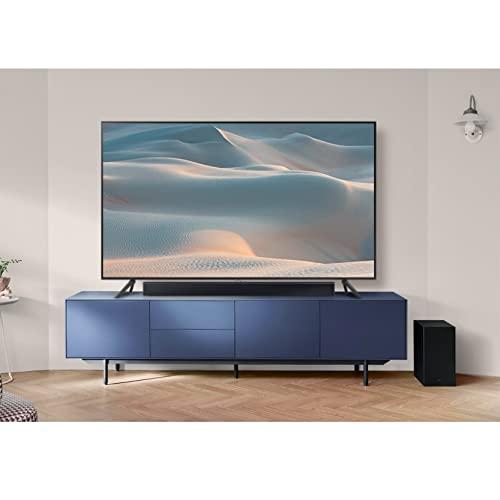
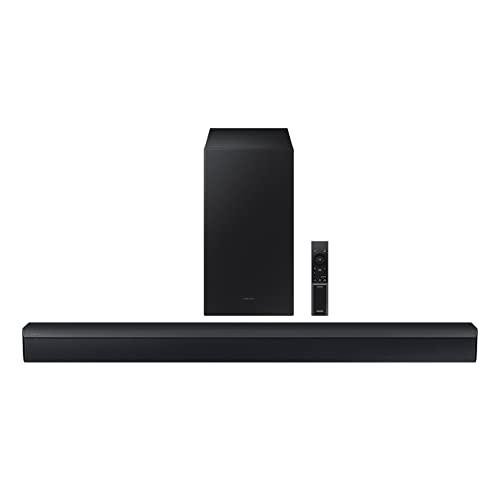
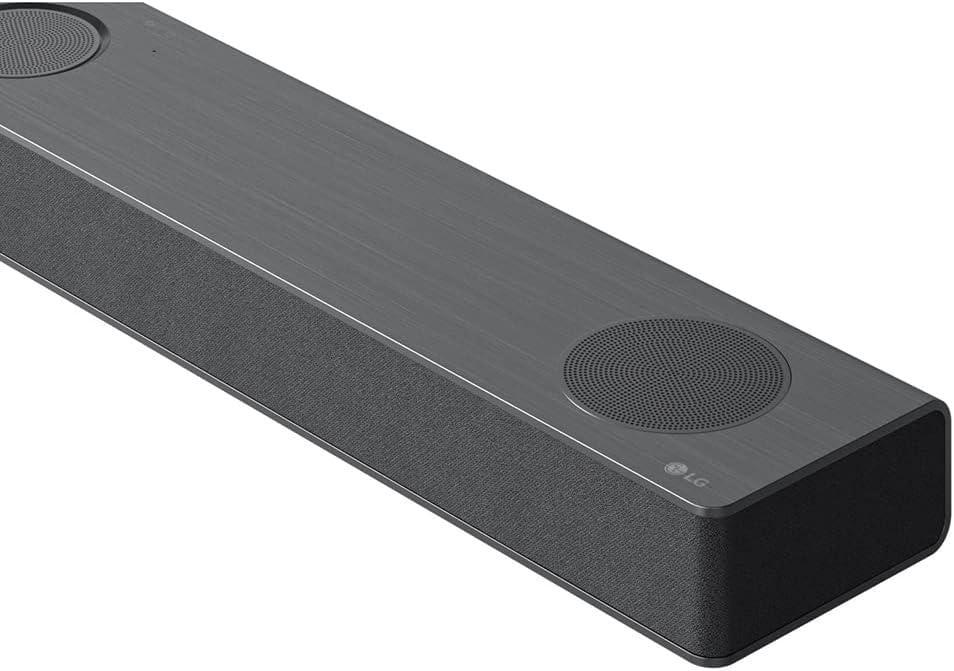
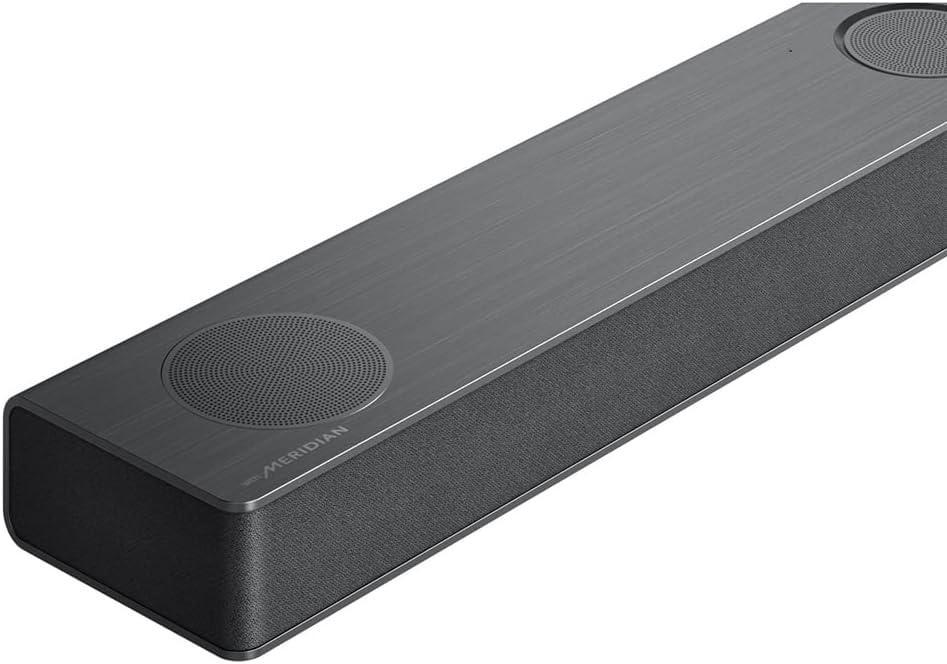

When your TV's built-in speakers make dialogue sound like it's coming from a tin can, it's time for a soundbar upgrade. But the soundbar market can feel overwhelming, stretching from basic $200 stereo improvements to $2,000+ home theater replacements. Today we're comparing two very different approaches to better TV audio: the budget-friendly Samsung HW-C450 and the premium LG S80TR.
These represent fundamentally different philosophies. The Samsung HW-C450, released in 2024, aims to give you the biggest audio improvement for the smallest investment. Meanwhile, the LG S80TR, also from 2024, targets users ready to invest in genuine home theater sound quality. Understanding which approach fits your needs will save you from either overspending or settling for less than you'll be happy with long-term.
Before diving into specifics, let's establish what we're dealing with. Soundbars fall into three main categories: basic stereo bars (2.0 or 2.1 channels), mid-range virtual surround systems (still 2.1 but with processing tricks), and true surround systems (5.1, 7.1, or Atmos configurations with multiple speakers).
The most important performance factors are dialogue clarity, bass impact, soundstage width (how spread out the audio feels), and dynamic range (the difference between quiet and loud sounds). For home theater use, add positional accuracy—your ability to pinpoint where sounds originate in a scene.
The Samsung HW-C450 sits in that second category, using digital signal processing (DSP) to simulate surround effects from just three physical speakers. The LG S80TR belongs firmly in the premium category, using 11 discrete speakers positioned around your room to create authentic three-dimensional audio.
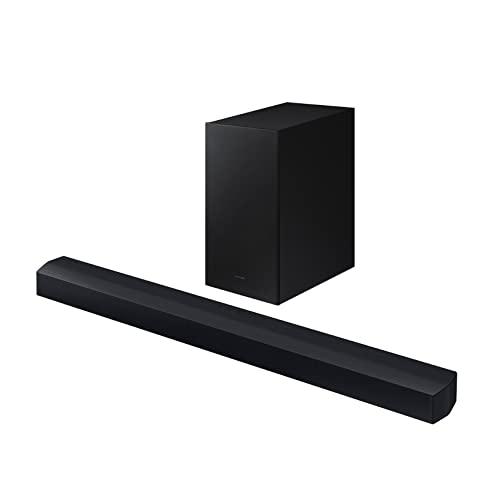
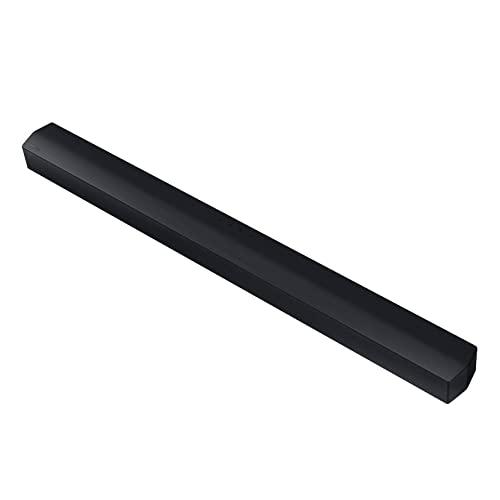
Here's where the fundamental difference becomes clear. The Samsung HW-C450 uses a 2.1-channel setup—that's left and right speakers in the main bar, plus a separate wireless subwoofer for bass. To create surround effects, it relies on DTS Virtual:X, which uses psychoacoustic processing to trick your brain into hearing sounds from directions where no speakers exist.
This works through carefully timed delays and phase adjustments. When a helicopter flies overhead in a movie, the Samsung adjusts the timing between left and right channels to make your brain perceive height, even though both speakers sit at ear level. It's clever technology, but ultimately limited by physics—you can't create what isn't there.
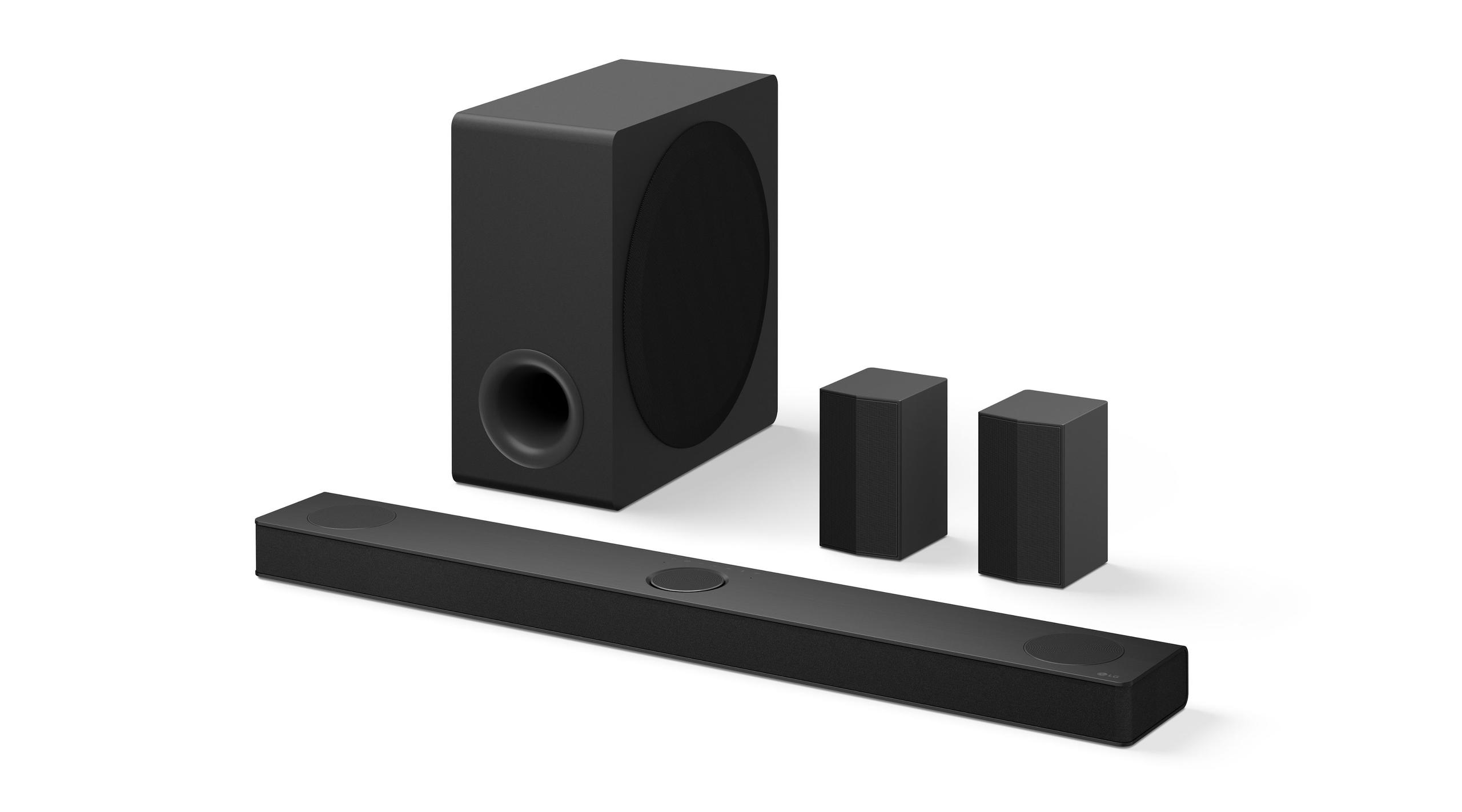
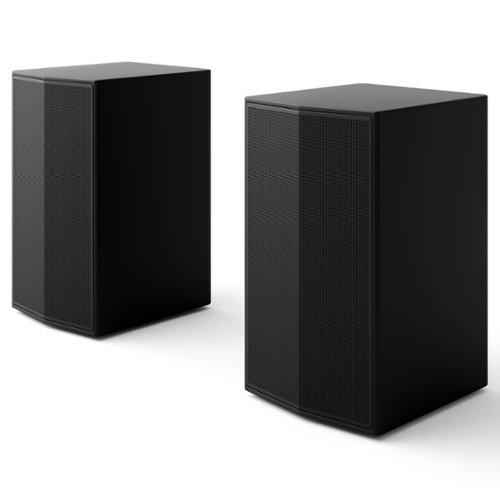
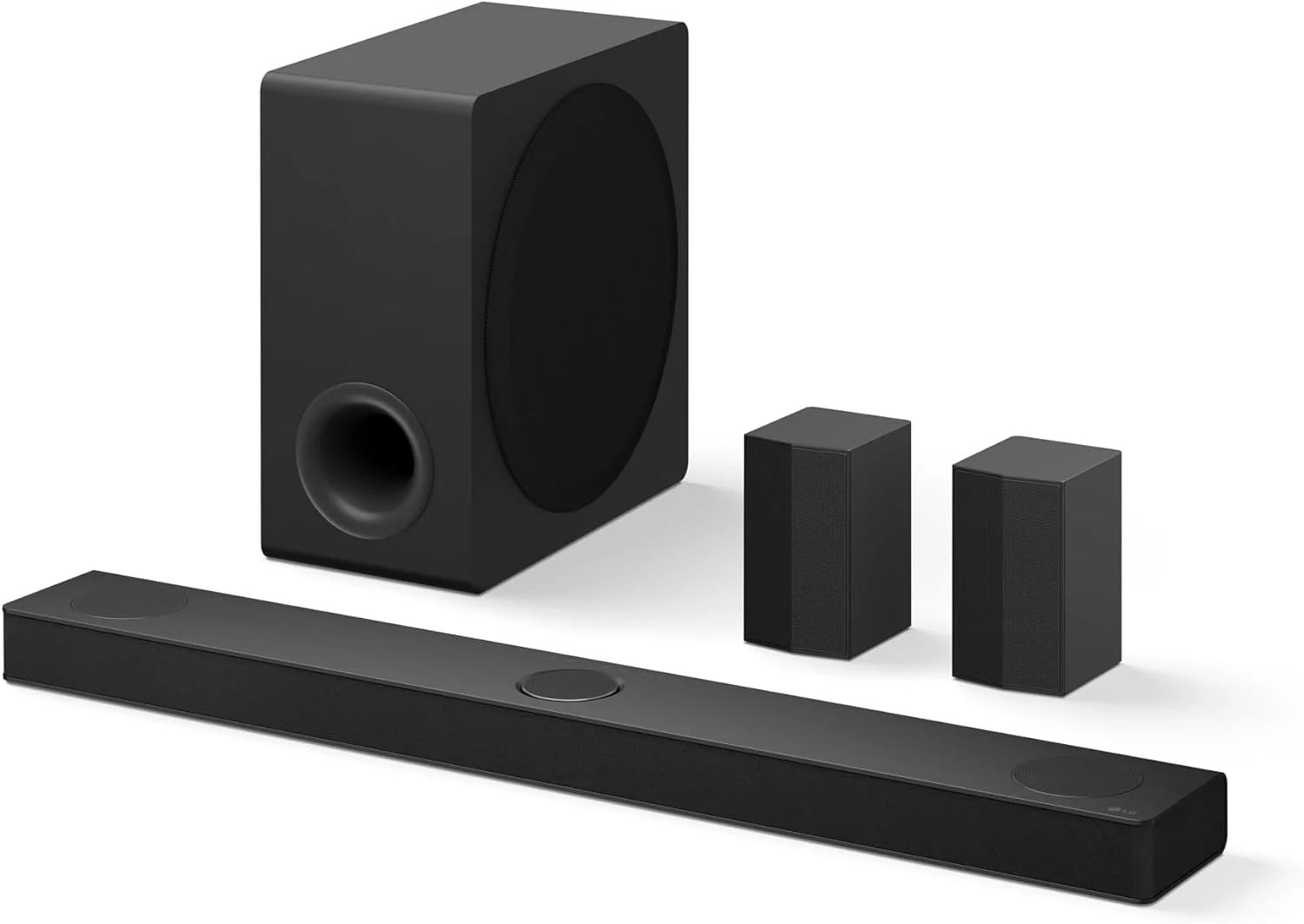
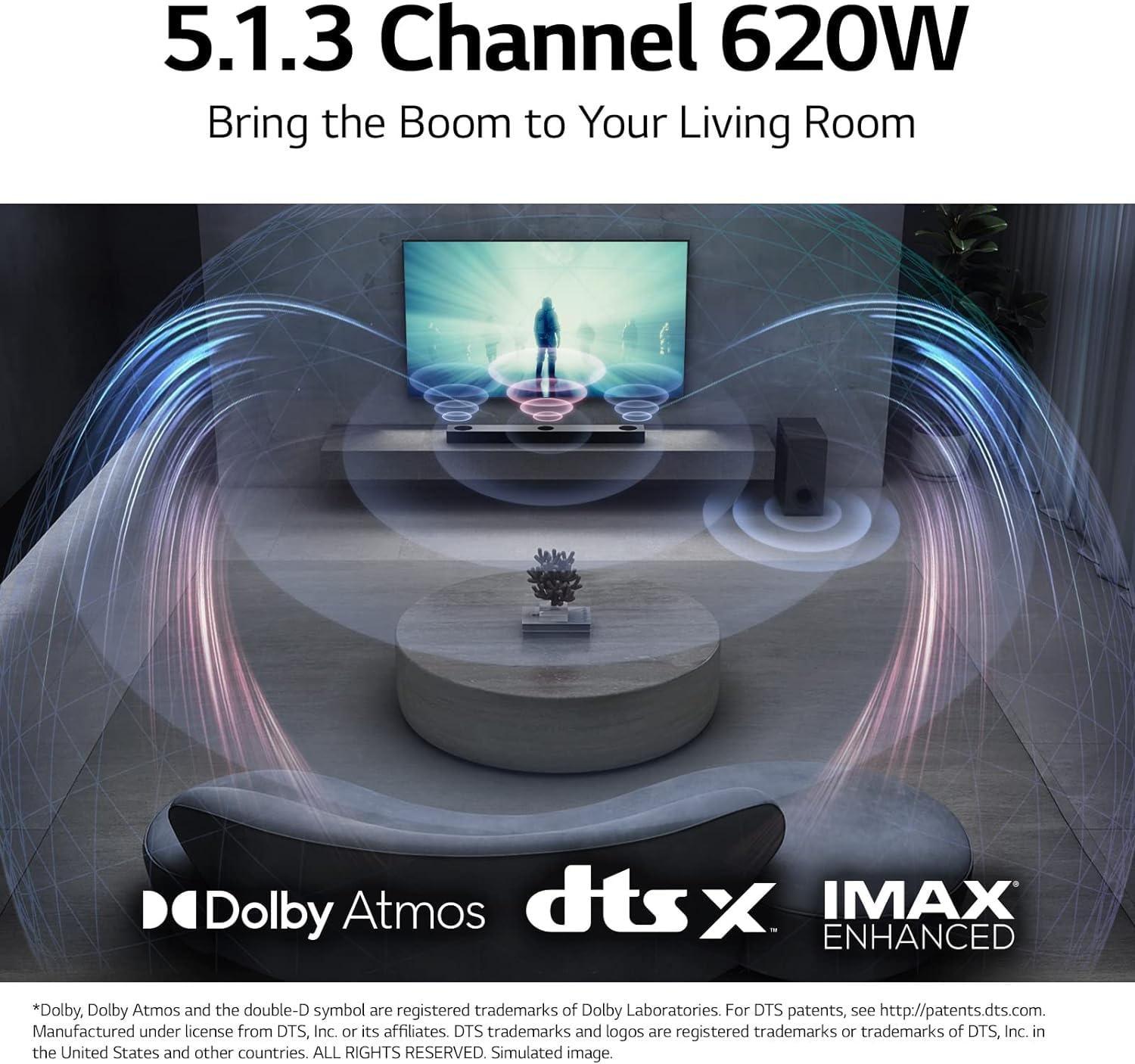
The LG S80TR takes the brute force approach with its 5.1.3 configuration. Those numbers break down to five main channels (left, center, right, and two surrounds), one subwoofer channel, and three height channels that fire upward to bounce sound off your ceiling. That adds up to 11 individual speakers: several in the main bar, two wireless rear speakers you place behind your seating, plus a substantial subwoofer.
This means when that helicopter flies overhead, you hear it from actual speakers positioned above and behind you. The difference in realism is immediately apparent—assuming you have the room layout and budget to support it.
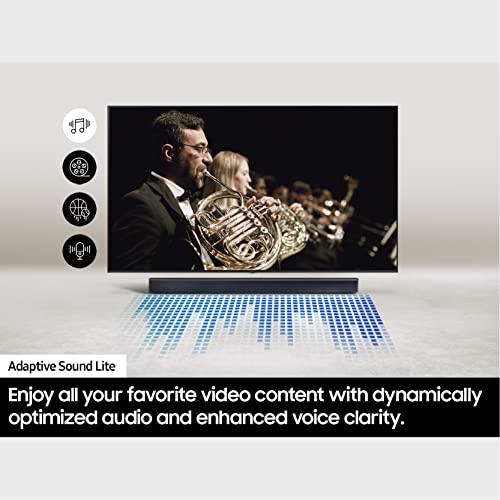
Both systems recognize that clear dialogue is non-negotiable for TV viewing, but they achieve it differently. The Samsung HW-C450 uses its Voice Enhance mode, which boosts midrange frequencies where human speech lives. This works well enough for most TV content, keeping conversations intelligible even when background music or effects get loud.
The LG S80TR goes further with a dedicated up-firing center channel speaker. In traditional home theater setups, the center channel handles most dialogue, anchoring voices to the screen even when other sounds swirl around you. Having this dedicated speaker means dialogue doesn't get muddied by competing with left and right channel effects—it has its own dedicated pathway.
From our research into user experiences, this difference shows up most clearly during complex action scenes. The Samsung can struggle to maintain dialogue clarity when explosions and music compete for attention, while the LG keeps conversations crisp and centered even during the loudest moments.
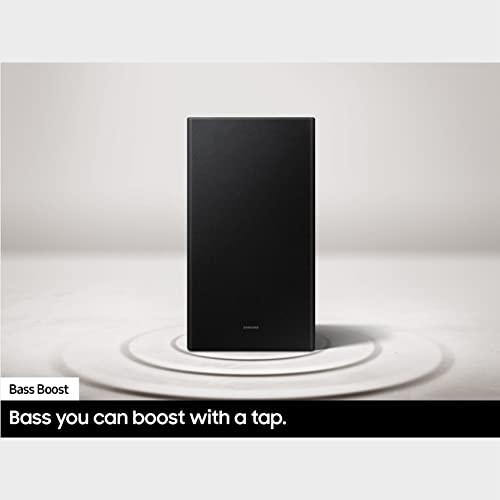
Both systems include wireless subwoofers, but the similarities end there. The Samsung HW-C450 includes a compact 6-inch subwoofer that provides noticeable bass improvement over TV speakers. It's adequate for most content and includes a Bass Boost mode that emphasizes low frequencies for more impact during action scenes.
However, user reviews consistently mention that the bass, while present, lacks the tight control and depth you'd want for serious movie watching. It's more of a general low-end presence than precise, impactful bass that you feel in your chest during explosive movie moments.
The LG S80TR includes a larger, more powerful subwoofer with sophisticated bass management. This isn't just about size—it's about integration with the other speakers and the processing power to handle complex low-frequency effects. The result is bass that doesn't just add rumble, but provides the foundation for a truly immersive audio experience.
This is where the fundamental difference in approach becomes most apparent. The Samsung HW-C450 creates a soundstage that extends somewhat beyond the physical width of your TV, but ultimately remains front-focused. DTS Virtual:X can add some sense of height and depth, but you're still fundamentally listening to audio projected from in front of you.
The LG S80TR creates what audio engineers call a "sound dome"—audio that truly surrounds you. Rain falls from above, footsteps move from left to right and front to back, and ambient effects create a genuine sense of being inside the audio environment rather than observing it from outside.
The difference is most noticeable with Dolby Atmos content, which includes spatial audio information that tells each speaker exactly when and how to play specific sounds. Netflix, Disney+, and most Blu-ray movies now include this metadata, but only the LG can fully decode and reproduce it.
Dynamic range refers to a system's ability to handle both whisper-quiet dialogue and thunderous explosions without compression or distortion. The Samsung HW-C450, with its 300-watt total power rating, performs adequately at moderate volumes but can become compressed and congested when pushed hard.
The LG S80TR, with more sophisticated amplification and processing, maintains clarity and separation even during the most complex audio passages. This means you can follow individual instruments in a movie's orchestral score, or track specific sound effects during chaotic action sequences where the Samsung might blur everything together.
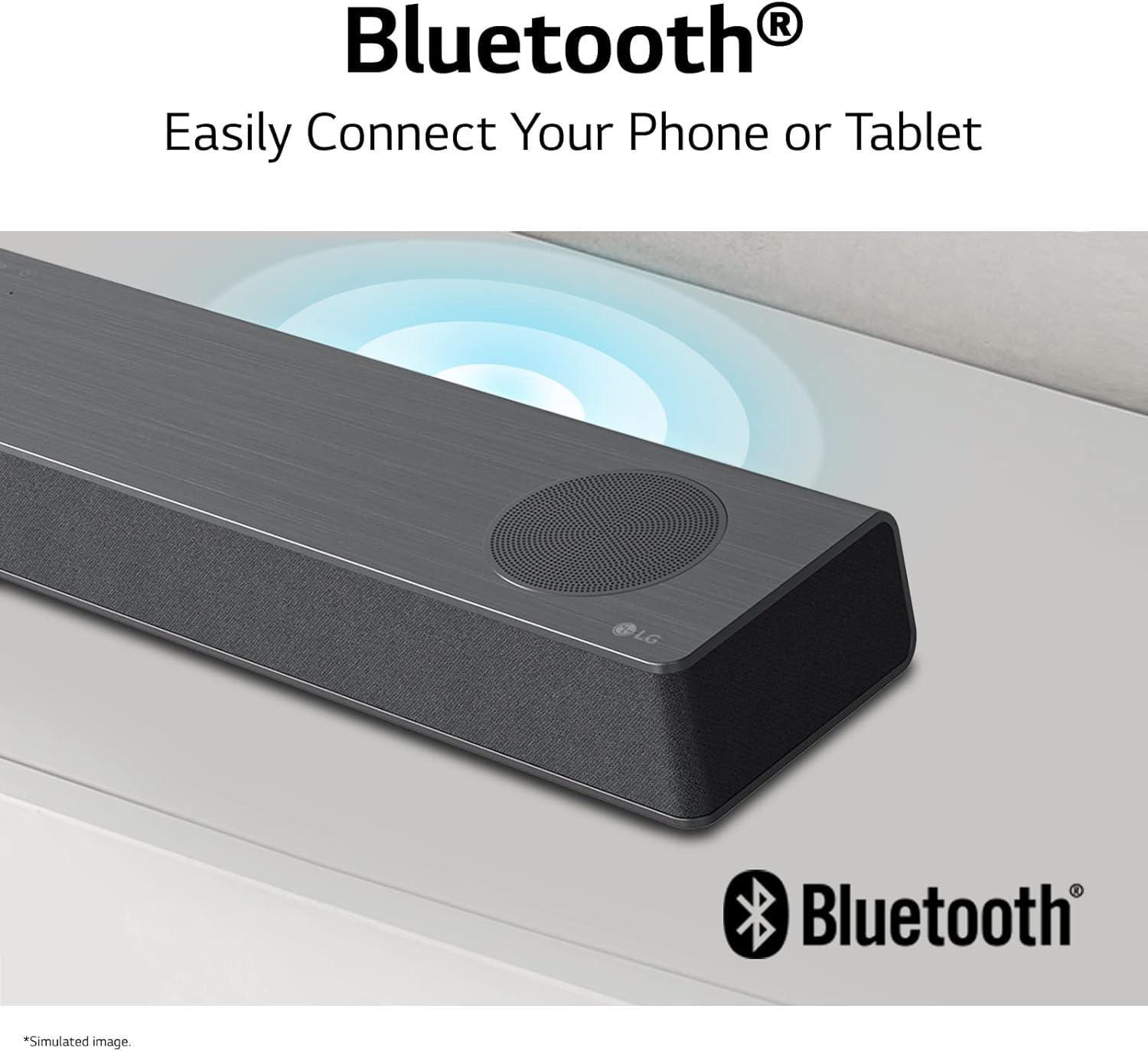
Here's where the Samsung HW-C450 shows its budget-focused design. It connects to your TV via optical cable or Bluetooth, plus includes a USB port for playing music files directly from a thumb drive. No HDMI inputs means you're limited to whatever audio quality your TV can pass through its optical output—typically compressed formats like standard Dolby Digital.
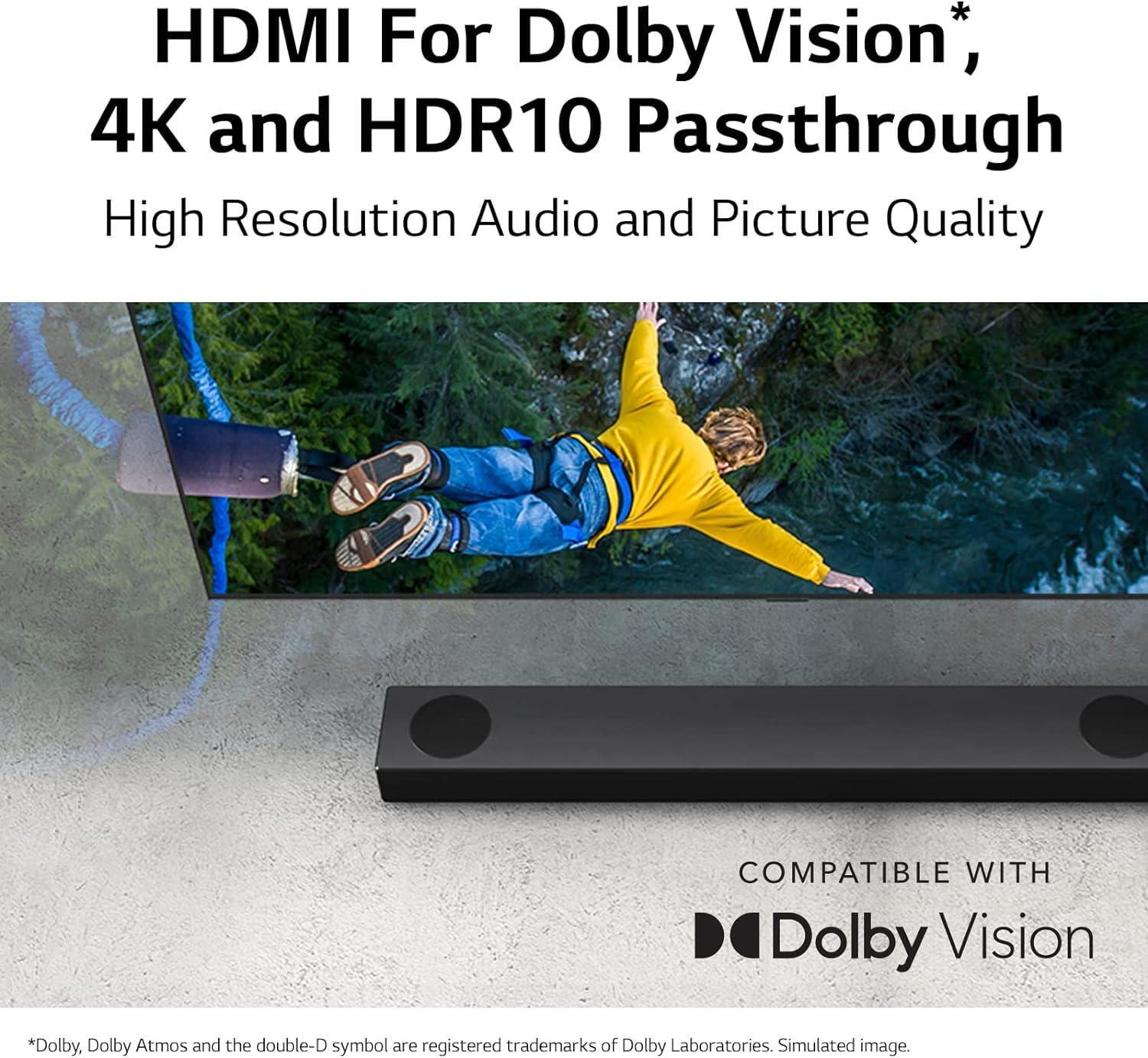
The LG S80TR includes HDMI eARC (enhanced Audio Return Channel), which enables lossless audio transmission between your TV and soundbar. This means uncompressed surround sound from streaming services and Blu-rays, plus simplified control where your TV remote can adjust soundbar volume and settings.
The LG also includes Wi-Fi for direct streaming from services like Spotify and Apple Music, plus Chromecast built-in for easy casting from your phone. These might seem like nice-to-have features, but they significantly improve daily usability.
The Samsung HW-C450 keeps smart features minimal. It includes Samsung's One Remote Control integration for basic operation from your Samsung TV remote, plus automatic power linking so the soundbar turns on and off with your TV. That's about it for intelligence.
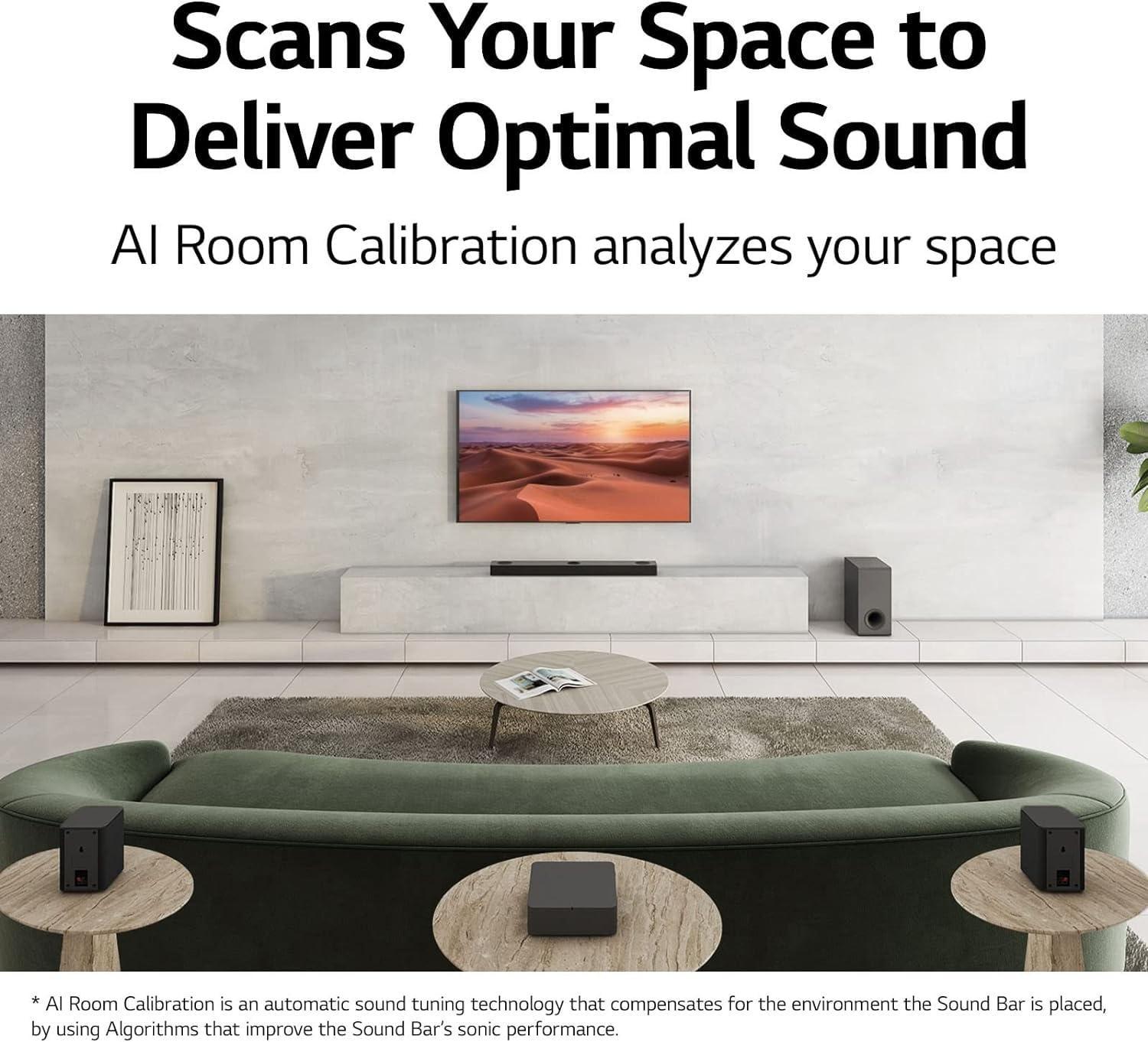
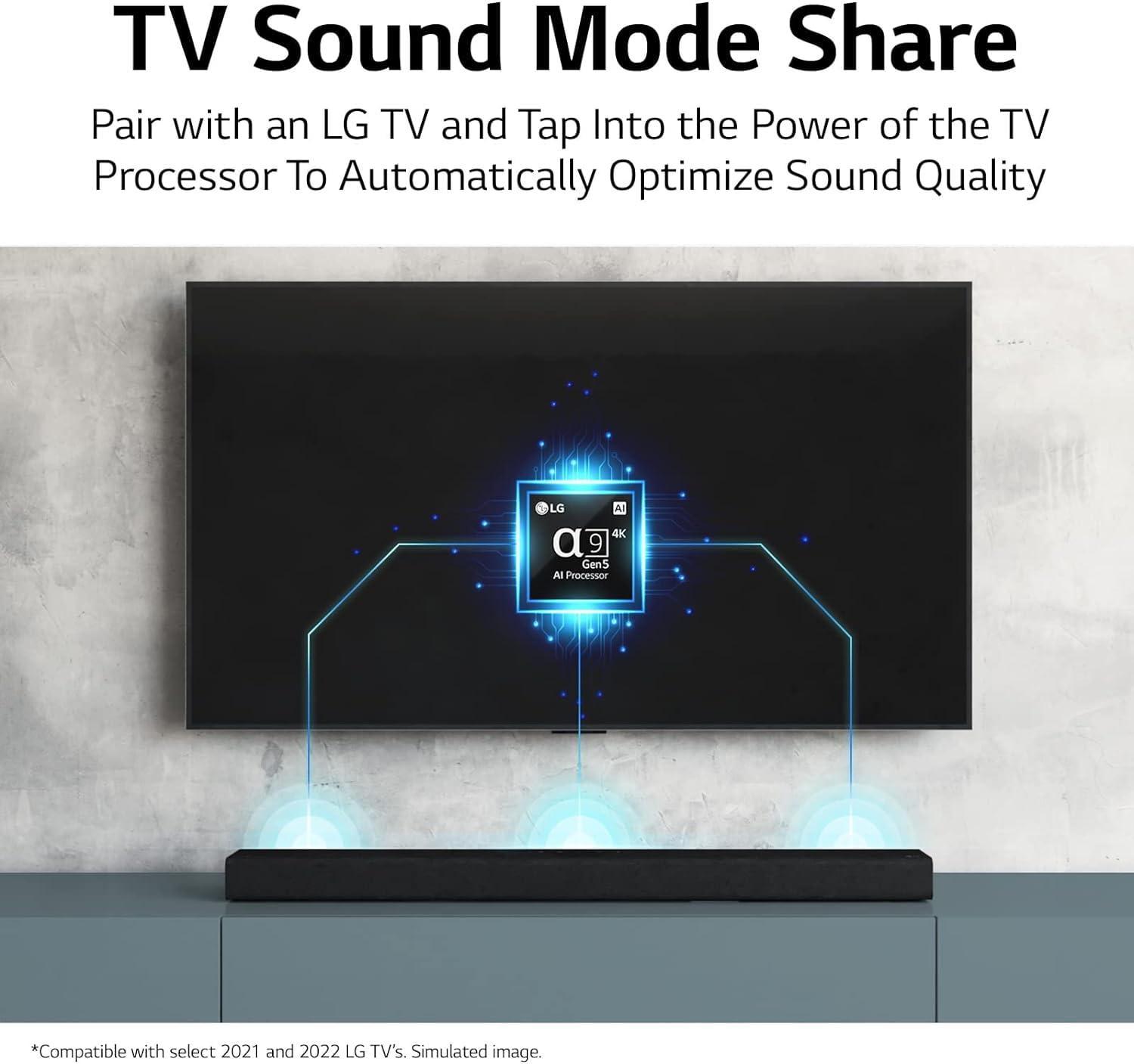
The LG S80TR includes AI Room Calibration, which uses built-in microphones to measure your room's acoustics and automatically adjust audio settings. This optimization can dramatically improve performance, especially in challenging rooms with hard surfaces or unusual layouts. It also supports LG's WOW Orchestra feature, which synchronizes audio between your LG TV's built-in speakers and the soundbar for an even wider soundstage.
Both systems recognize gaming as an important use case. The Samsung HW-C450 includes a dedicated Game Mode that reduces audio processing delay and adjusts the sound profile to emphasize directional cues. This helps with competitive gaming where hearing enemy footsteps or gunfire direction matters.
The LG S80TR takes this further with true 3D audio positioning. In games that support spatial audio, you can pinpoint enemy locations with remarkable precision. The system also supports Variable Refresh Rate (VRR) and Auto Low Latency Mode (ALLM) through its HDMI connection, ensuring smooth gaming performance without audio sync issues.
For casual gaming, the Samsung provides adequate improvements. For serious gamers or those playing competitive multiplayer games, the LG's spatial accuracy offers genuine tactical advantages.
At the time of writing, the Samsung HW-C450 typically sells for under $300, while the LG S80TR commands a premium price around $800-900. That's nearly a 3x price difference, so the value equation depends heavily on your expectations and room setup.
The Samsung delivers excellent value for basic TV audio improvement. If your main goal is making dialogue clearer and adding some bass to streaming content, it accomplishes that mission efficiently. You're paying primarily for the hardware—the soundbar, subwoofer, and basic processing—without premium features or materials.
The LG asks you to pay for genuine home theater capabilities. You're investing in multiple speakers, sophisticated processing, premium amplification, and advanced features like room calibration. For users who will actually utilize these capabilities, the value proposition makes sense.
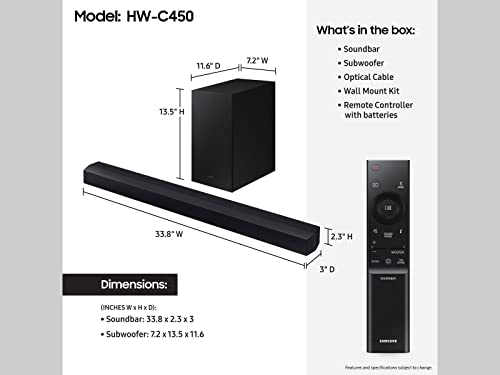
The Samsung HW-C450 works well in small to medium rooms up to about 200 square feet. Its compact soundbar fits under most TVs, and the wireless subwoofer can be tucked beside furniture without much planning. Wall mounting is simple with the included bracket.
The LG S80TR requires more thoughtful placement. The rear speakers need positioning behind your seating area, which means running power cables or placing them near outlets. The larger subwoofer needs adequate floor space. Room size matters too—in spaces smaller than 300 square feet, you might not appreciate the full benefits of the surround system.
Your viewing habits should heavily influence this decision. If you primarily watch news, talk shows, sitcoms, or streaming series, the Samsung HW-C450 handles dialogue and general audio improvement perfectly well. The virtual surround effects add some spatial interest without being essential.
For movie enthusiasts who regularly watch action films, sci-fi, or any content where audio immersion matters, the LG S80TR transforms the experience. The difference between virtual and real surround becomes apparent within minutes of watching something like a Marvel movie or nature documentary.
Music listening also favors the LG, which provides proper stereo imaging and soundstage width that makes music feel live and dimensional rather than coming from a box under your TV.
Both products reflect 2024 technology standards, but they're positioned differently for longevity. The Samsung HW-C450 includes current essentials like Bluetooth and DTS Virtual:X, but lacks advanced features like Wi-Fi streaming or high-resolution audio support.
The LG S80TR includes HDMI 2.1 with eARC, Dolby Atmos, DTS:X, and Wi-Fi streaming—essentially everything available in current audio technology. As streaming services continue expanding their spatial audio content libraries, systems like the LG become more valuable over time.
Choose the Samsung HW-C450 if you want significant audio improvement at minimal investment. It's perfect for first-time soundbar buyers, renters who can't install rear speakers, or anyone who primarily watches TV shows and streaming content. The simple setup and reliable performance make it an excellent entry point into better TV audio.
The LG S80TR justifies its premium price for home theater enthusiasts, movie lovers, and anyone who values immersive audio. If you have a dedicated TV room, regularly watch movies, or play games where audio positioning matters, the investment pays dividends in daily enjoyment.
Consider your room first, then your content, then your budget. A Samsung in a small apartment often provides better value than an LG in a space that can't accommodate proper speaker placement. Conversely, putting a basic 2.1 system in a large family room with a 75-inch TV feels like leaving performance on the table.
The bottom line: the Samsung HW-C450 solves TV audio problems efficiently and affordably, while the LG S80TR creates genuine home theater experiences. Both succeed at their intended purposes—your job is determining which purpose matches your needs, space, and expectations.
| Samsung HW-C450 | LG S80TR |
|---|---|
| Channel Configuration - Determines surround sound authenticity | |
| 2.1 channels with virtual surround processing | 5.1.3 channels with physical rear and height speakers |
| Speaker Count - More speakers enable better spatial audio | |
| 3 speakers total (2 in bar + subwoofer) | 11 speakers total (bar + rear speakers + subwoofer) |
| Surround Sound Technology - Key for immersive movie experience | |
| DTS Virtual:X (simulated from front speakers) | Dolby Atmos & DTS:X (true object-based 3D audio) |
| Total Power Output - Affects maximum volume and clarity | |
| 300W total (adequate for small-medium rooms) | Higher wattage with better amplification (ideal for large rooms) |
| HDMI Connectivity - Essential for high-quality audio formats | |
| No HDMI (optical and Bluetooth only) | HDMI eARC with 4K passthrough and lossless audio |
| Smart Features - Impacts daily usability and convenience | |
| Basic Samsung TV integration only | AI Room Calibration, Wi-Fi streaming, voice assistant support |
| Included Components - Affects setup complexity and performance | |
| Soundbar + wireless subwoofer | Soundbar + wireless subwoofer + wireless rear speakers |
| Room Size Compatibility - Critical for optimal performance | |
| Best for rooms up to 200 sq ft | Designed for 300+ sq ft with rear speaker placement |
| Setup Requirements - Determines installation difficulty | |
| Simple plug-and-play with wall mount option | Requires rear speaker positioning and power access |
| Audio Format Support - Affects streaming and Blu-ray quality | |
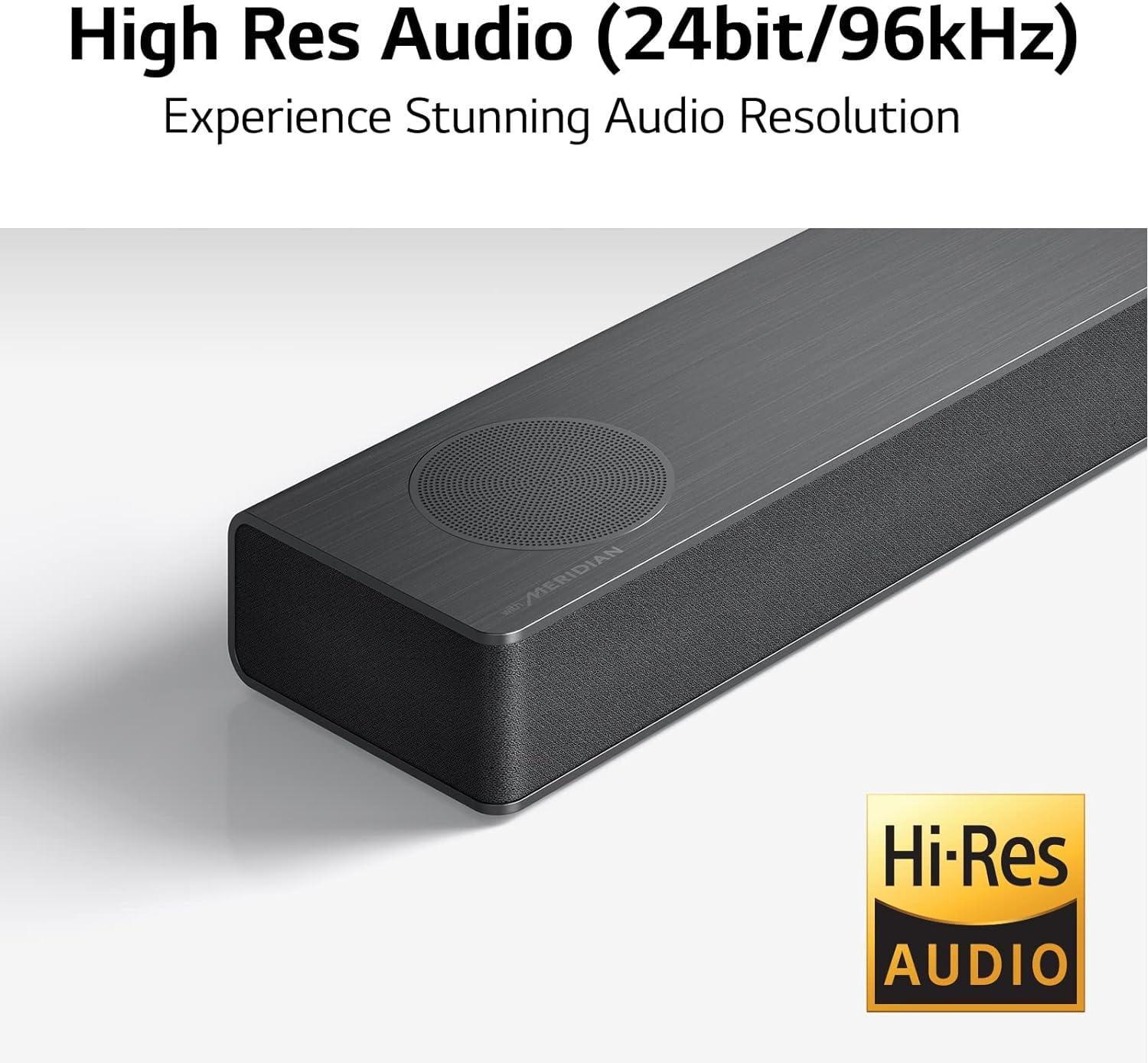
| Standard Dolby Digital, DTS, basic music formats | Full Dolby Atmos, DTS:X, hi-res audio, extensive codec support |
| Target Use Case - Who this product serves best | |
| First-time buyers wanting TV audio upgrade | Home theater enthusiasts seeking immersive surround sound |
The Samsung HW-C450 is ideal for first-time soundbar buyers due to its simple plug-and-play setup and straightforward operation. It provides a significant upgrade over TV speakers without the complexity of positioning multiple speakers or configuring advanced settings that come with the LG S80TR.
The Samsung HW-C450 uses 2.1 channels (left, right, plus subwoofer) with virtual processing to simulate surround sound. The LG S80TR has 5.1.3 channels with physical speakers placed around your room, including rear speakers and height channels that create authentic three-dimensional audio for a true home theater experience.
While the Samsung HW-C450 creates decent surround effects using virtual processing, the LG S80TR with actual rear speakers delivers much more convincing spatial audio. For casual viewing, virtual surround works fine, but for movies and gaming where positional audio matters, physical rear speakers make a noticeable difference.
The Samsung HW-C450 is better suited for small rooms under 200 square feet, as its compact design and virtual surround processing work well in confined spaces. The LG S80TR requires adequate space for rear speaker placement and performs best in rooms over 300 square feet where you can properly position all speakers.
The Samsung HW-C450 connects via optical cable, USB, and Bluetooth, which covers basic needs but limits audio quality to compressed formats. The LG S80TR includes HDMI eARC for lossless audio, plus Wi-Fi streaming, Chromecast, and advanced connectivity options that support higher quality audio formats.
Both offer gaming modes, but the LG S80TR provides superior gaming performance with true 3D audio positioning that helps pinpoint enemy locations and environmental cues. The Samsung HW-C450 improves gaming audio over TV speakers but can't match the spatial accuracy of the LG S80TR for competitive gaming.
The Samsung HW-C450 offers the simplest setup - just connect one optical cable and the wireless subwoofer pairs automatically. The LG S80TR requires more planning to position rear speakers and run power cables, plus initial room calibration, but includes helpful setup guidance and automatic optimization features.
Both prioritize clear dialogue, but the LG S80TR has a dedicated center channel speaker that anchors voices to the screen more effectively than the Samsung HW-C450, which relies on processing enhancements. For complex movie scenes with lots of background noise, the LG S80TR maintains dialogue clarity better.
The Samsung HW-C450 includes a compact wireless subwoofer that provides noticeable bass improvement over TV speakers, suitable for most content. The LG S80TR features a larger, more powerful subwoofer with better integration and control, delivering deeper, more impactful bass that you can feel during action scenes.
The Samsung HW-C450 does not support true Dolby Atmos, using DTS Virtual:X instead to simulate height effects. The LG S80TR fully supports Dolby Atmos and DTS:X with dedicated height channels that fire upward, creating authentic overhead sound effects when watching compatible content.
The Samsung HW-C450 provides excellent value for basic TV audio improvement at a budget-friendly price point. The LG S80TR costs significantly more but delivers genuine home theater performance that justifies the investment for movie enthusiasts and users with larger rooms who want immersive surround sound.
Both support music playback, but with different capabilities. The Samsung HW-C450 handles music via Bluetooth and USB with decent stereo sound for casual listening. The LG S80TR offers Wi-Fi streaming, better stereo imaging, and higher quality audio codecs that make it much better suited for serious music listening and streaming from services like Spotify and Apple Music.
We've done our best to create useful and informative comparisons to help you decide what product to buy. Our research uses advanced automated methods to create this comparison and perfection is not possible - please contact us for corrections or questions. These are the sites we've researched in the creation of this article: e-catalog.com - alibaba.com - smart.dhgate.com - greentoe.com - requiremints.com - versus.com - bhphotovideo.com - rtings.com - soundmachine.com.mt - samsung.com - samsung.com - youtube.com - bhphotovideo.com - newegg.com - images.samsung.com - bestbuy.com - samsung.com - youtube.com - jsappliance.com - gadgetsleo.com - youtube.com - saraappliance.com - walmart.com - bestbuy.com - billsmith.com - brandsmartusa.com - avsforum.com - youtube.com - lg.com - buydig.com - louisdoehomecenter.com - lg.com - videoandaudiocenter.com - mynavyexchange.com - walts.com - bestbuy.com

Privacy Policy
Terms and Conditions - Affiliate Policy
Home Security
© Copyright 2008-2026.
11816 Inwood Rd #1211, Dallas, TX 75244