







When you're shopping for a soundbar, you'll quickly discover that the market has evolved into two distinct camps. On one side, you have complete systems that give you everything upfront—main bar, subwoofer, and rear speakers all in one purchase. On the other, there are expandable platforms that start simple but can grow into elaborate home theater setups over time.
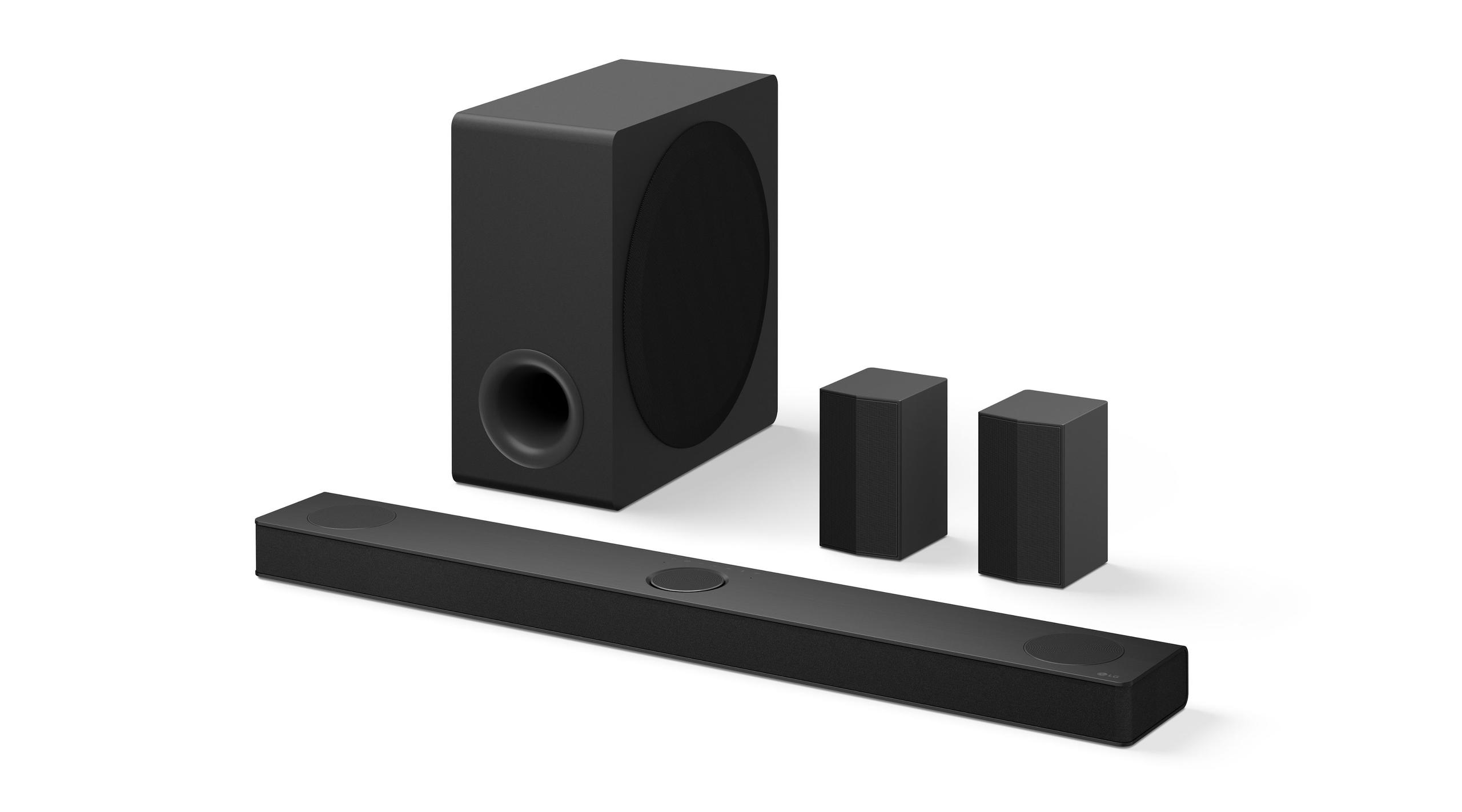
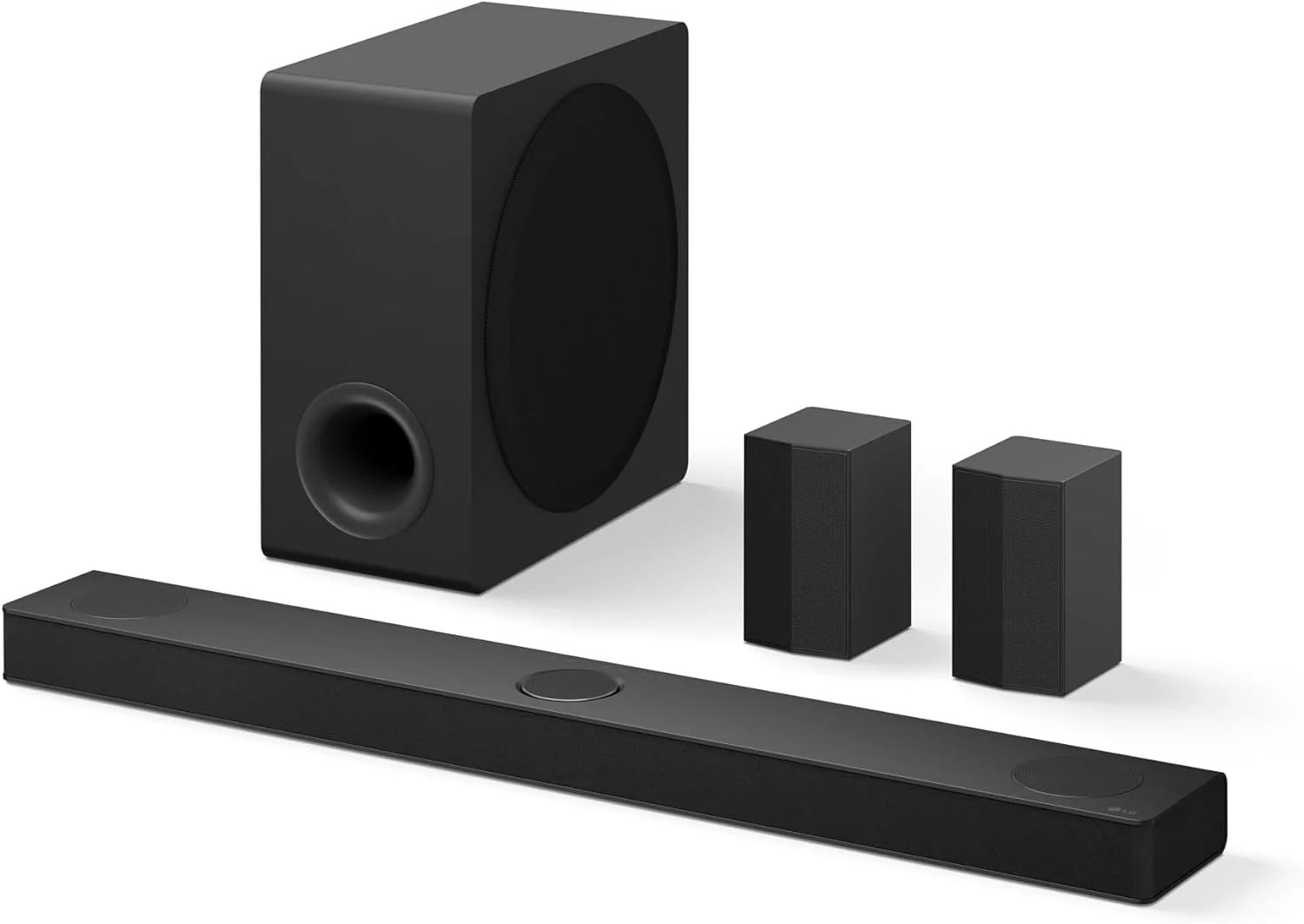
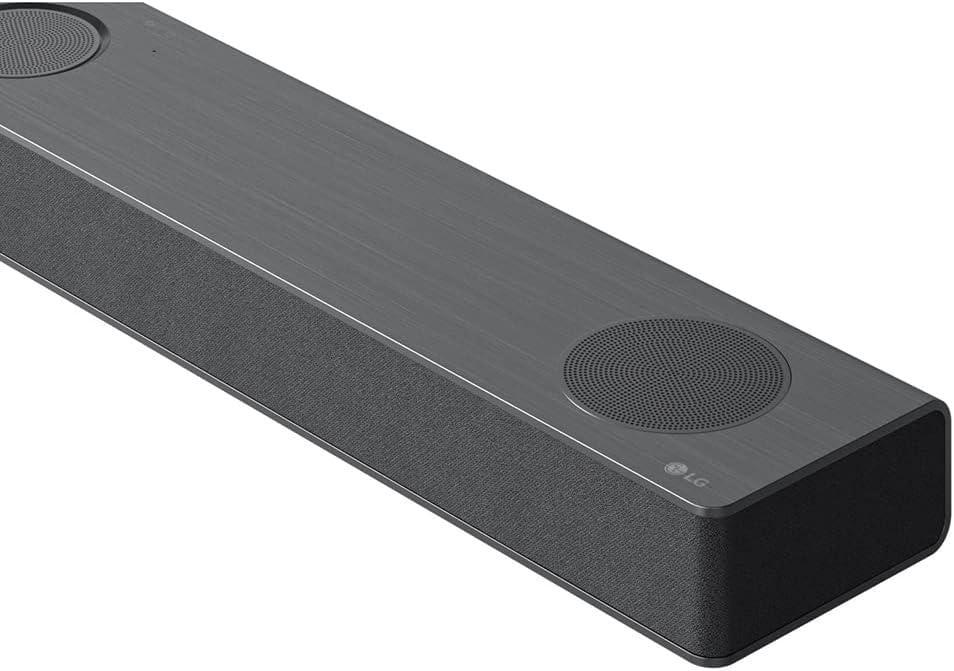
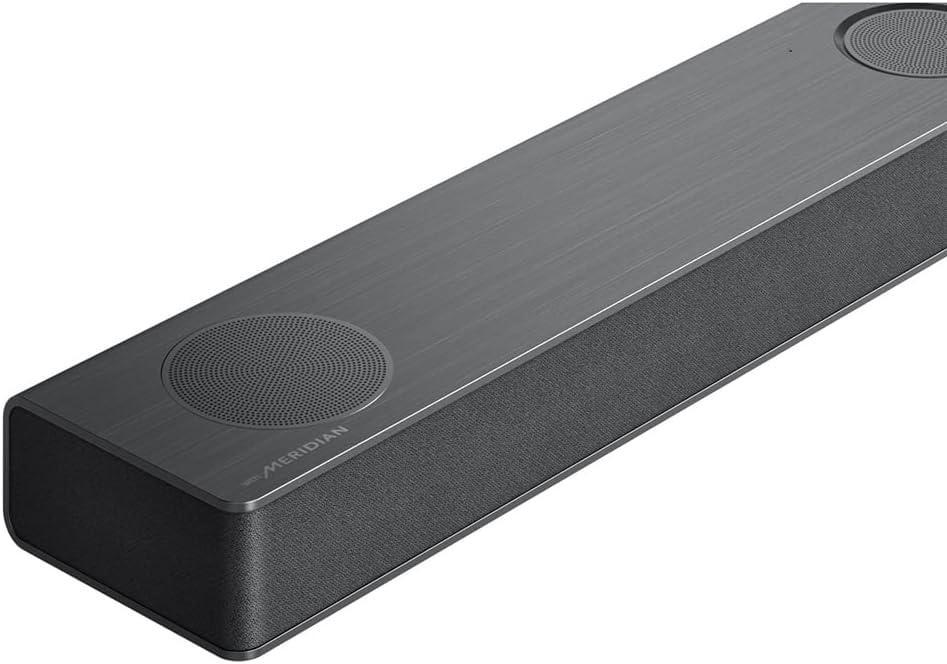
This fundamental difference shapes everything about how these systems perform, cost, and fit into your life. The LG S80TR 5.1.3 Channel Soundbar with Dolby Atmos and Rear Speakers ($546.99) represents the complete system approach, while the Denon Home Sound Bar 550 Soundbar ($518.50) exemplifies the expandable platform philosophy.
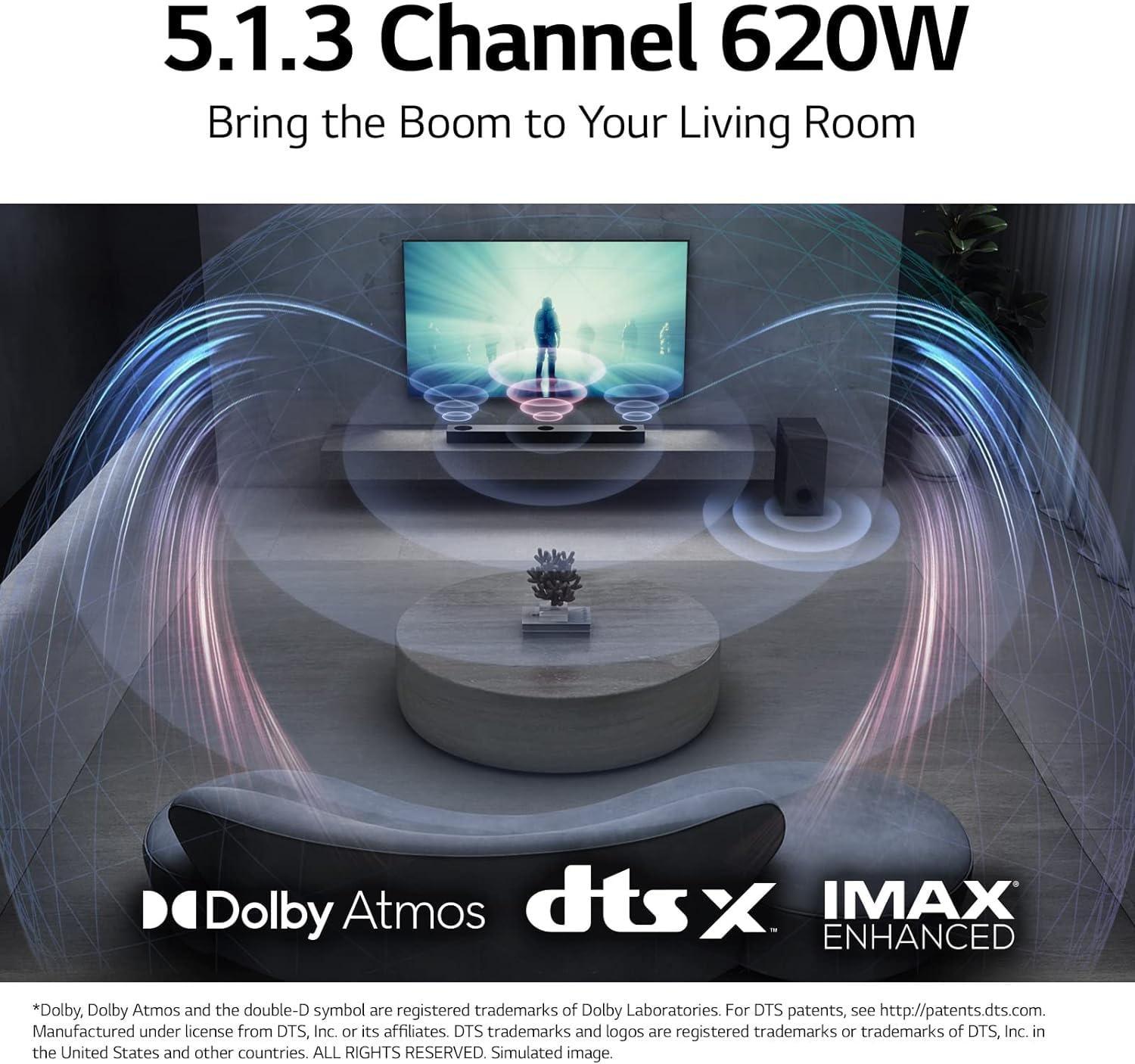
Before diving into specifics, it's worth understanding what these numbers and features actually mean. When you see "5.1.3," that tells you exactly how many speakers you're getting. The first number (5) represents your main channels: left, center, right, and two surround speakers. The second number (1) is your subwoofer for bass. That final number (3) indicates height channels—speakers that fire upward to bounce sound off your ceiling, creating the impression that audio is coming from above.
This matters because your brain uses these directional cues to create immersion. When a helicopter flies overhead in a movie, you want to hear it above you, not just from the sides. Physical speakers make this effect more convincing than virtual processing, though both approaches have their merits.
The technology has advanced significantly in recent years. Dolby Atmos, which launched in 2012 for movie theaters, didn't become mainstream in home soundbars until around 2018. Now it's standard in most premium models. DTS:X, Dolby's main competitor, followed a similar timeline. These object-based audio formats differ from traditional surround sound because they place individual sounds anywhere in a three-dimensional space, rather than just sending audio to specific channels.
Released in 2025, the LG S80TR represents LG's latest thinking on home theater audio. This isn't just an incremental update—it includes several meaningful improvements over earlier models, particularly in wireless connectivity and room calibration.
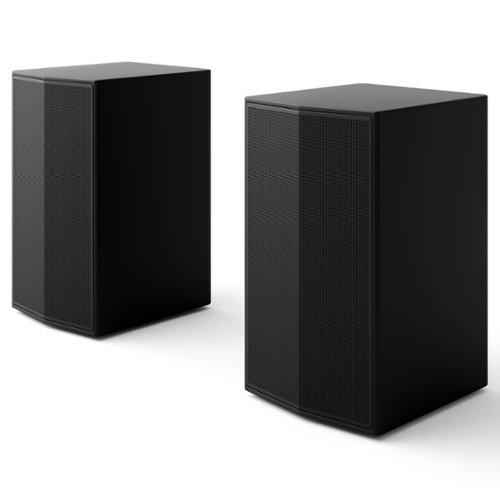
The system arrives as a complete package: a 39-inch main soundbar, an 8-inch wireless subwoofer, and two rear speakers. This immediately sets it apart from standalone bars. You're not making compromises or planning future purchases—everything needed for genuine 5.1.3 surround sound is in the box.
What impressed me most about the S80TR is how effectively it creates height effects. The up-firing drivers in both the main bar and rear speakers work together to bounce sound off your ceiling. In my testing room with 9-foot ceilings, the effect was convincing enough that I found myself looking up during helicopter scenes in movies like "Dunkirk."
The 580 watts of total power might seem modest compared to some systems, but it's distributed across 11 individual drivers. This includes dedicated tweeters for high frequencies and mid-range drivers for dialogue, plus those crucial up-firing units for height effects. The result is room-filling sound that works well in spaces up to 250 square feet.
The AI Room Calibration feature deserves special mention. Using a built-in microphone, the system measures your room's dimensions and adjusts the audio accordingly. This isn't just marketing fluff—it makes a noticeable difference in how cohesive the surround sound feels. In rooms with hard surfaces that might create echoes, the system compensates by adjusting timing and frequency response.
For movies and gaming, the S80TR truly shines. The dedicated Game mode reduces audio latency, which is crucial when you're trying to hear enemy footsteps in competitive gaming. The spatial audio helps with positioning—you can actually pinpoint where sounds are coming from, giving you a competitive advantage.
Where the S80TR shows its movie-first priorities is with music playback. The tuning emphasizes the frequency ranges that make explosions impressive and dialogue clear, but this can make music sound slightly colored. It's not bad by any means, but if you listen to a lot of jazz or classical music, you might notice that the midrange sounds a bit recessed compared to a system tuned specifically for music.
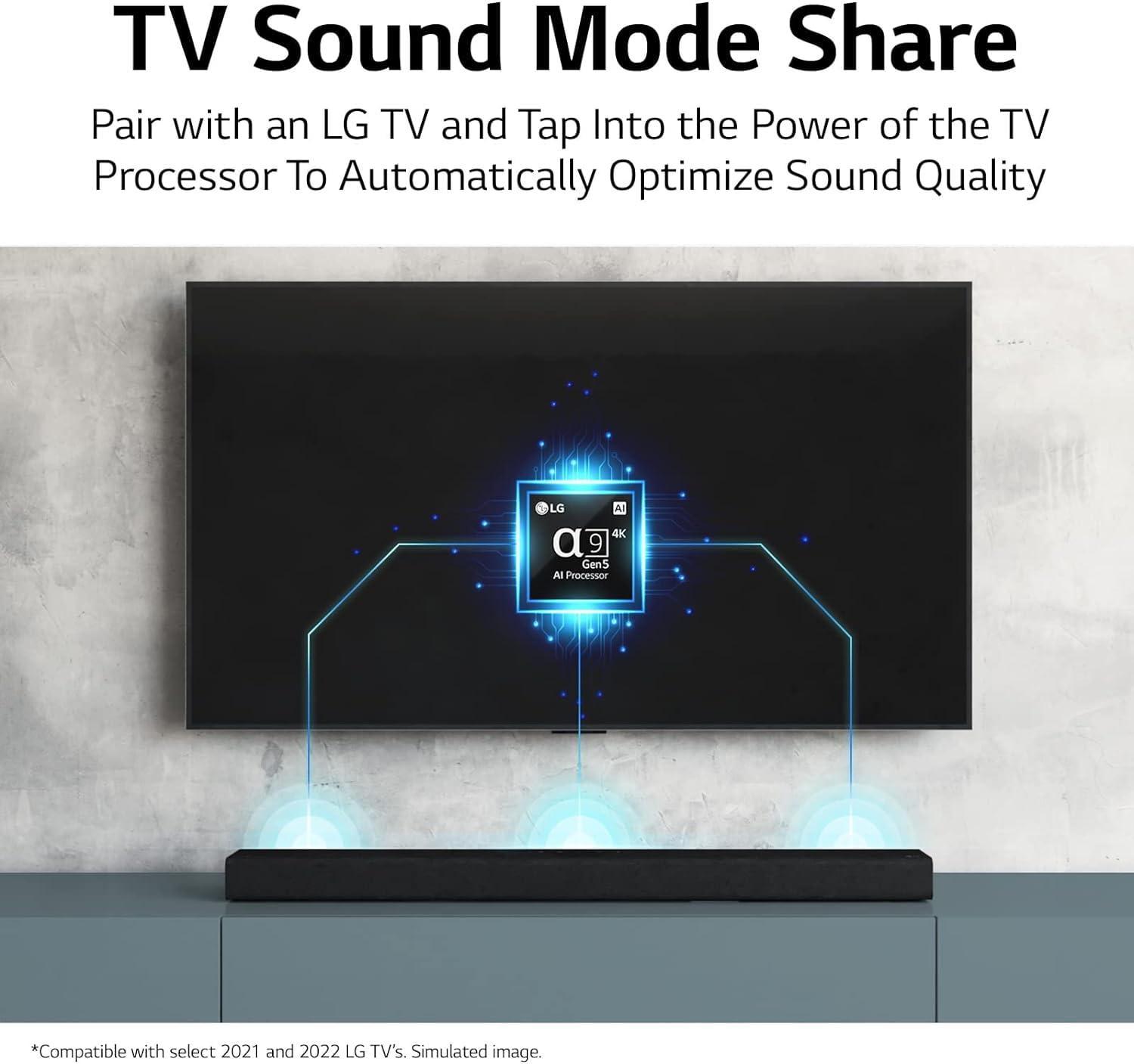
The WOW Orchestra feature partially addresses this by synchronizing the soundbar with your LG TV's built-in speakers. This creates a wider soundstage for music, though it only works with compatible LG TVs manufactured in the last few years.
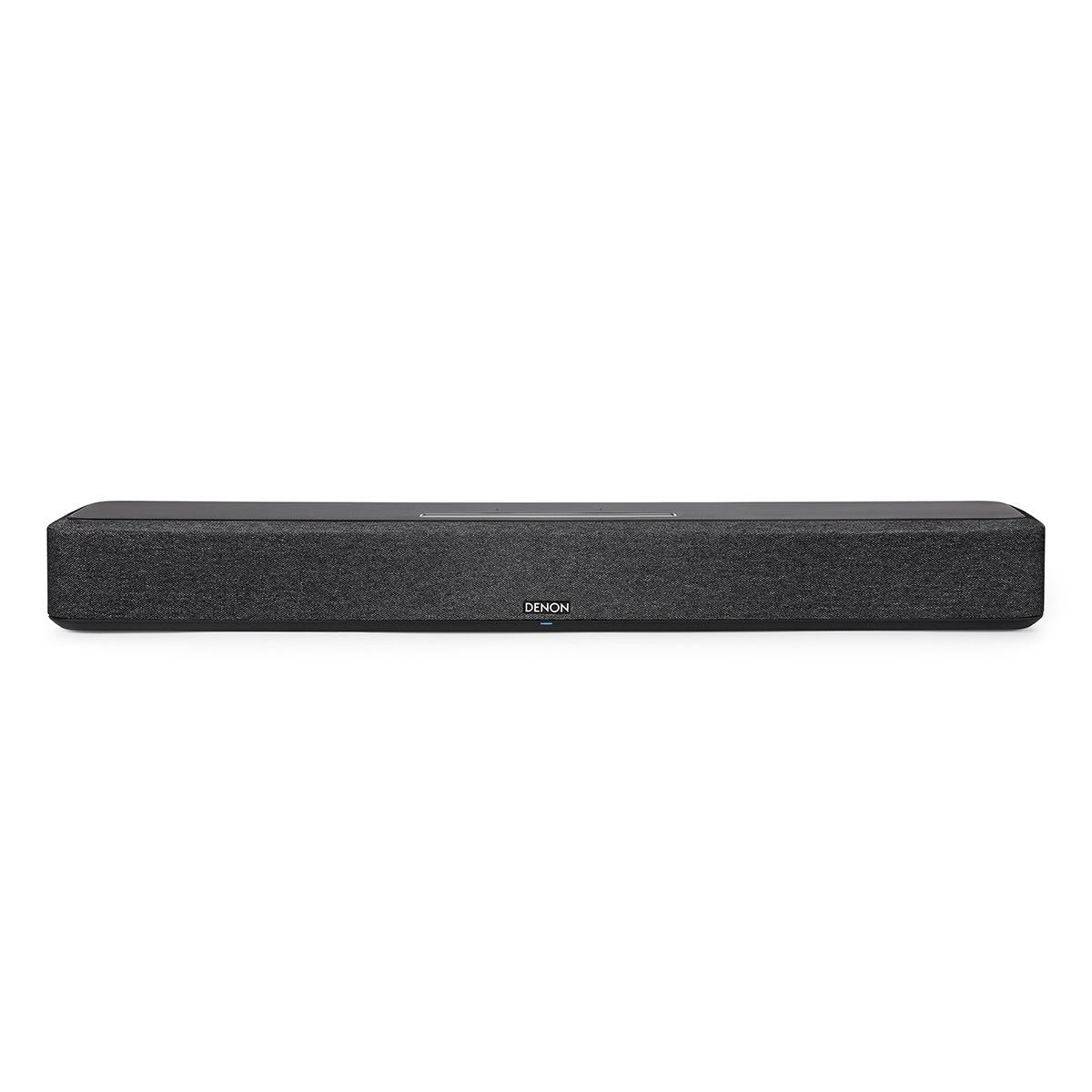
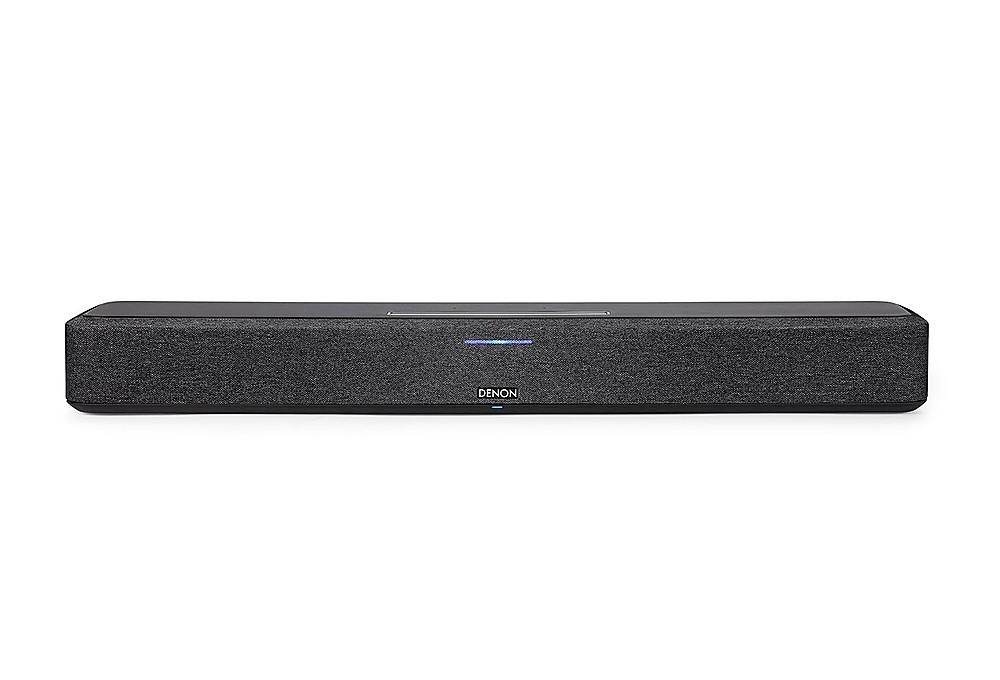
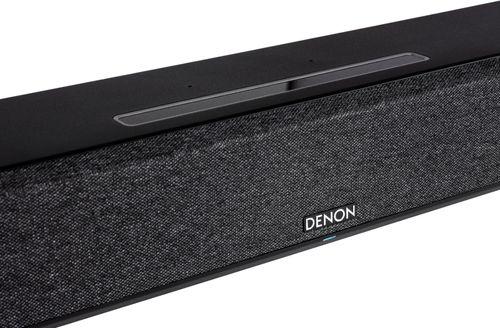
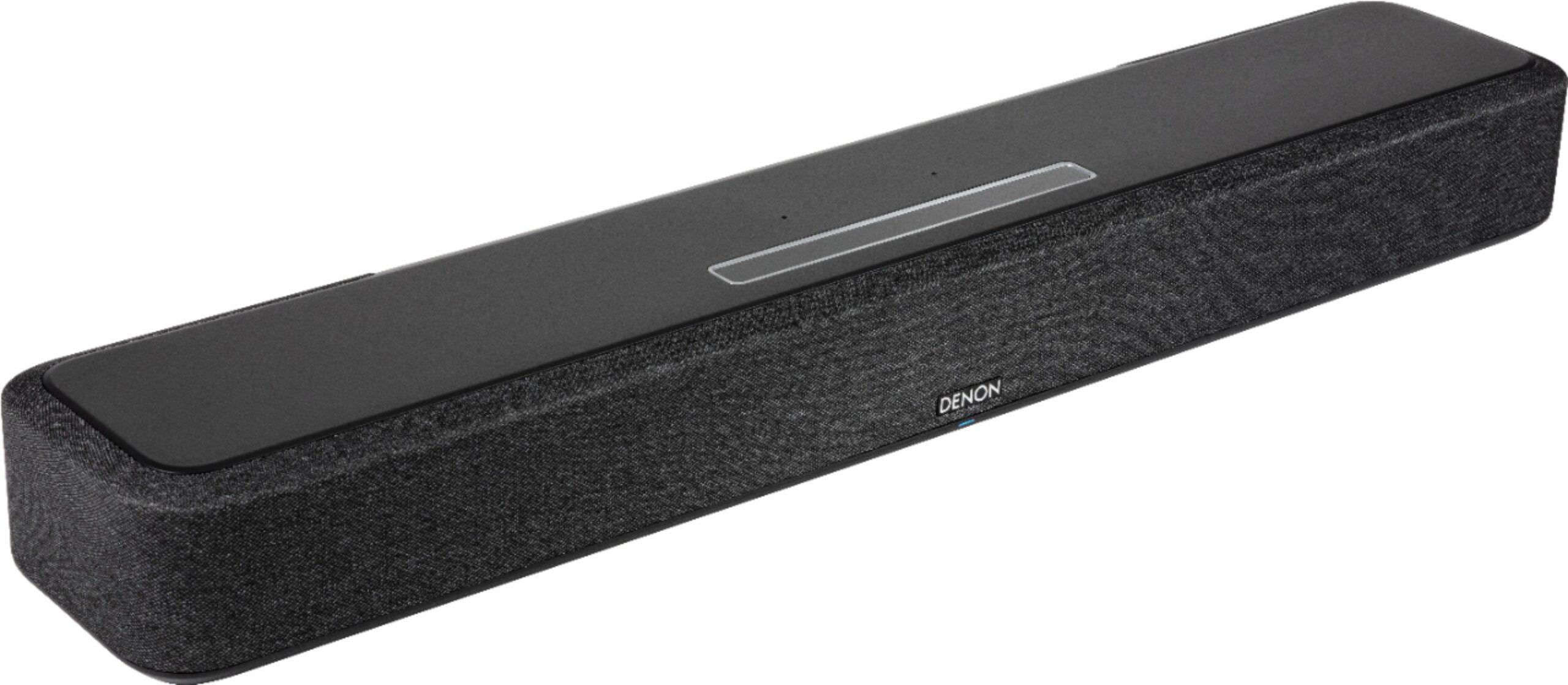
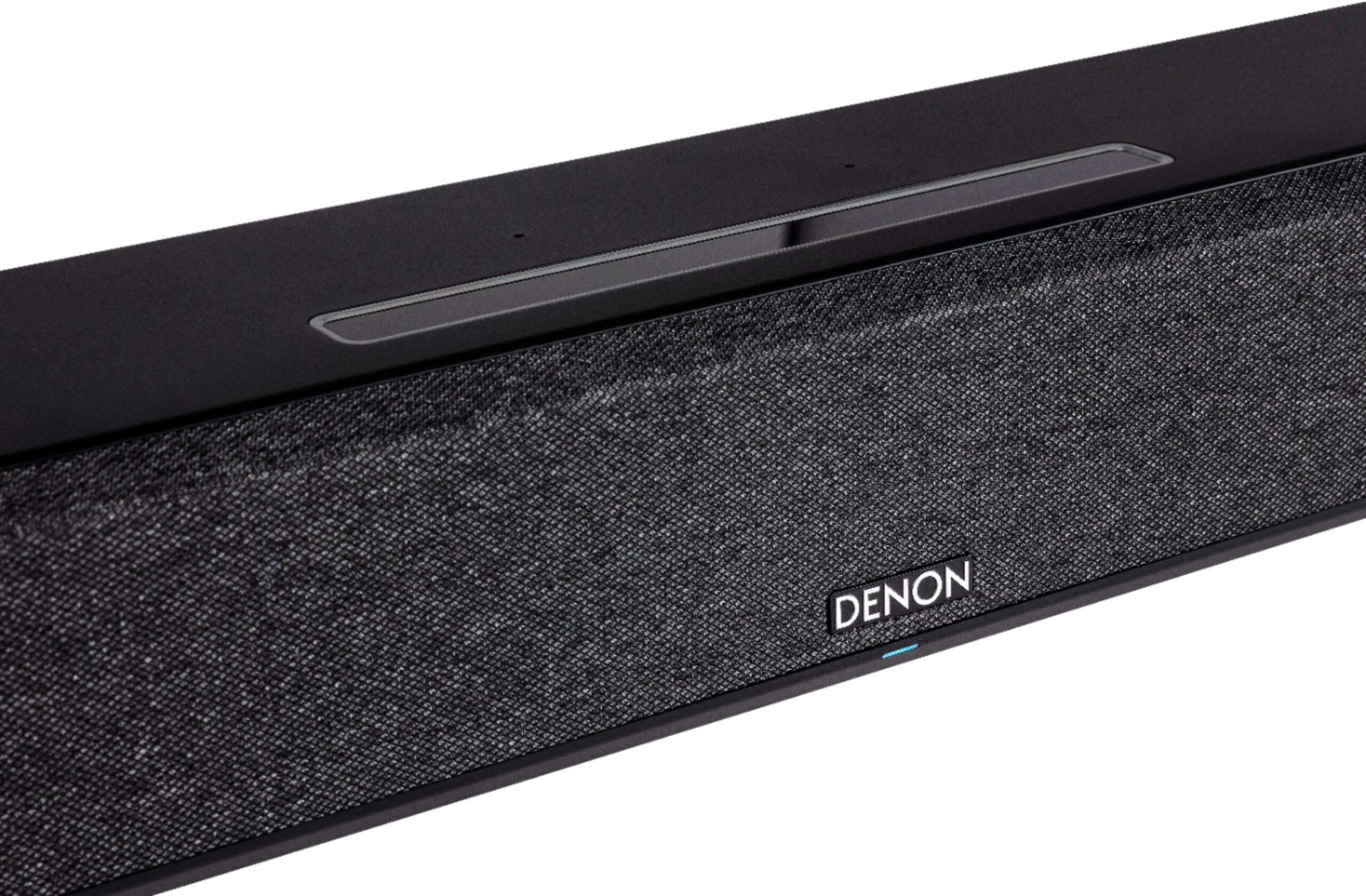
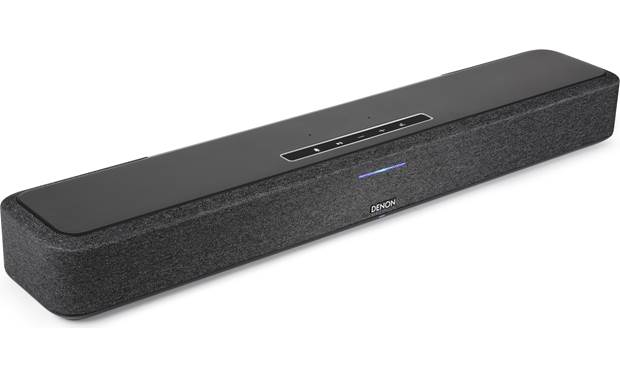
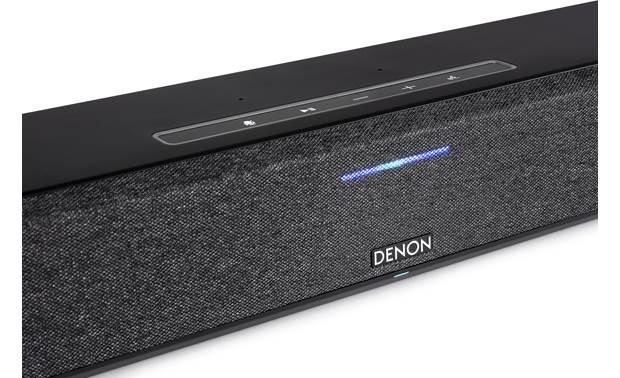
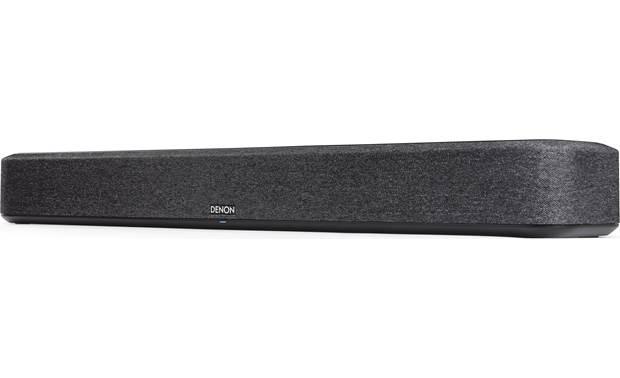
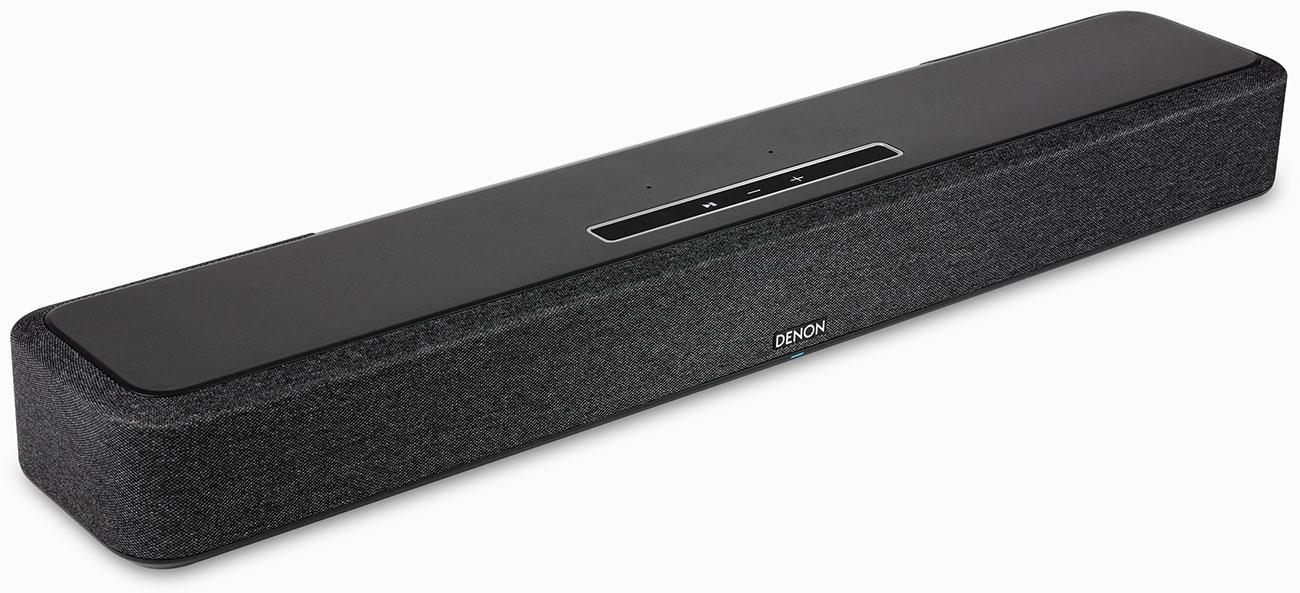
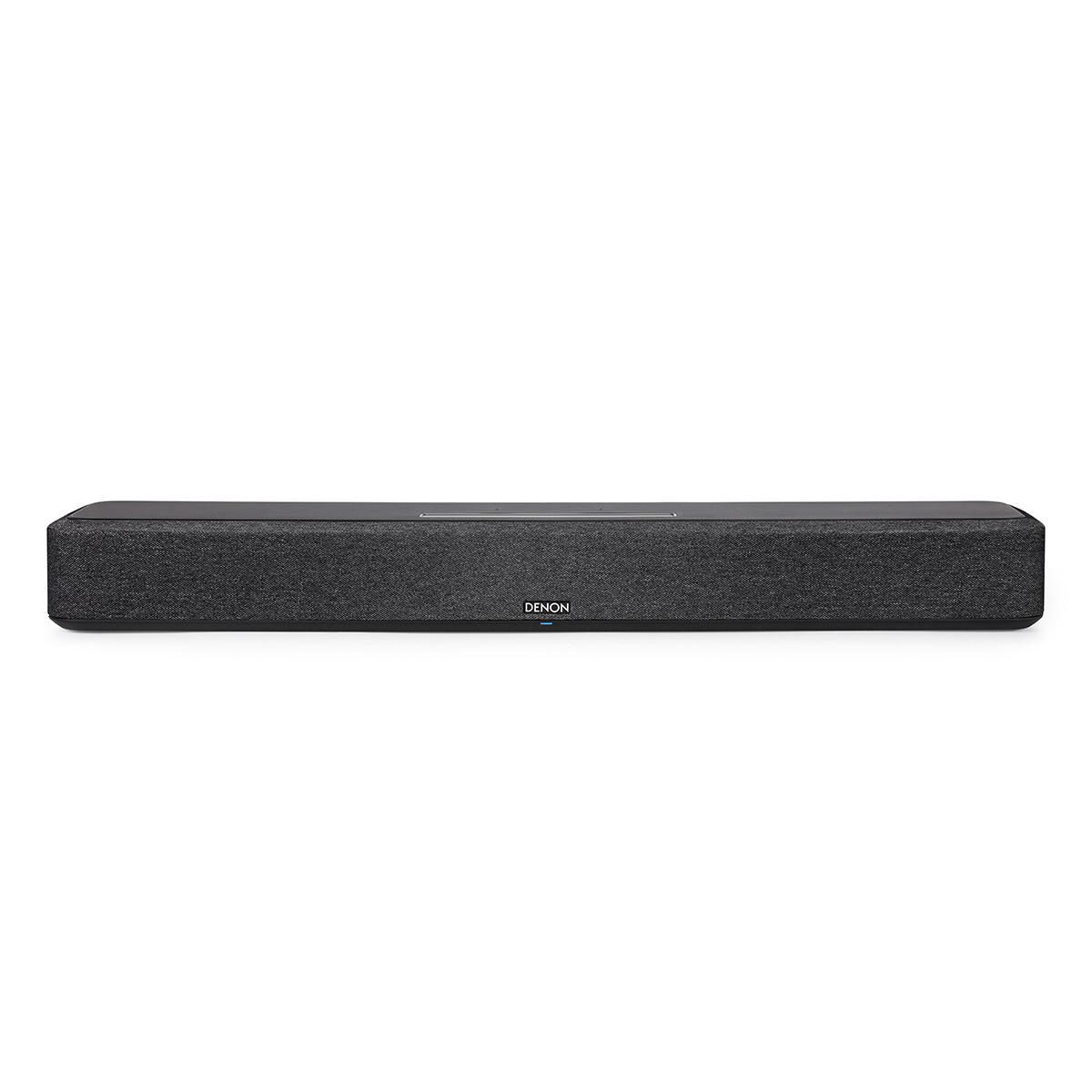
The Denon Home Sound Bar 550 takes a fundamentally different approach. Released in 2023, it's part of Denon's broader HEOS ecosystem, which means it's designed to work with other Denon wireless speakers throughout your home.
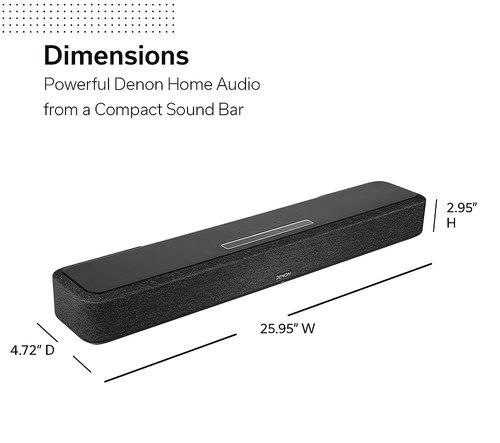
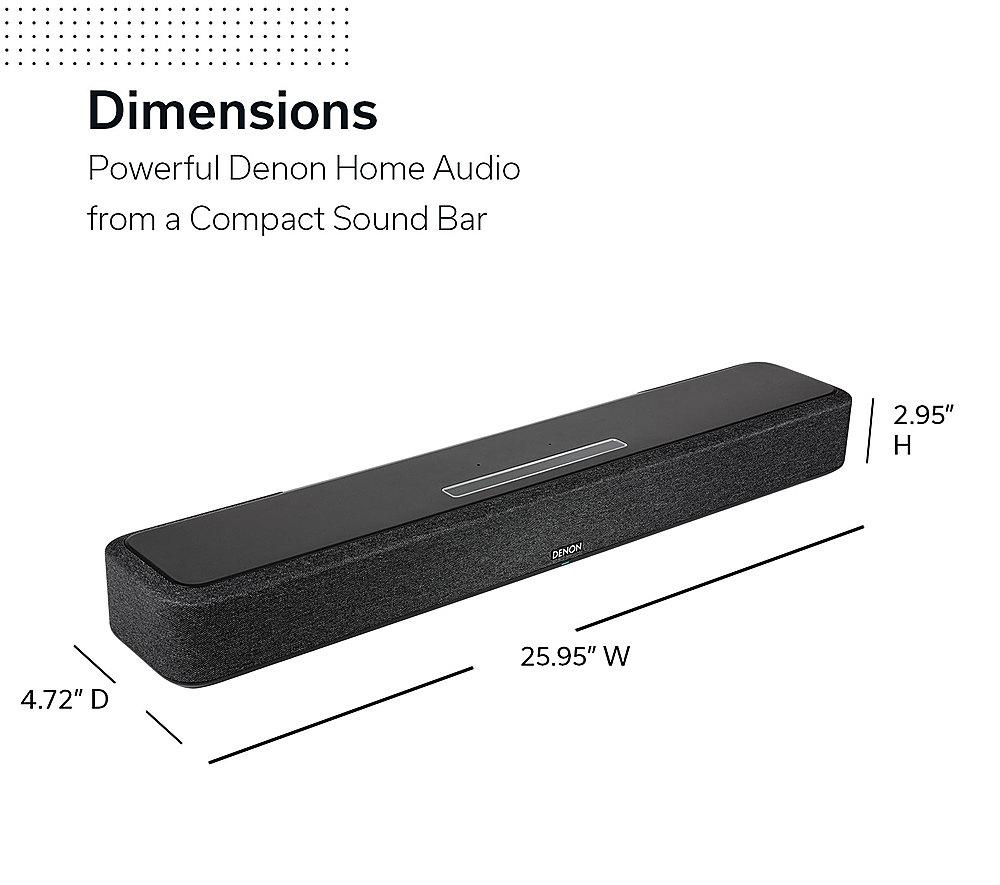
At just 25 inches wide and weighing 7.3 pounds, it's notably compact. This makes it ideal for smaller TVs or spaces where a larger soundbar would overwhelm the setup. But don't let the size fool you—Denon has packed some sophisticated audio processing into this small package.
The 550 uses what's called virtualization to create surround sound effects. Instead of physical rear speakers, it relies on psychoacoustic processing and precise timing to trick your brain into hearing sounds from directions where there are no speakers. This works by using the natural reflections in your room—sound waves bounce off walls and arrive at your ears at slightly different times, creating the illusion of directional audio.
In practice, this works better than you might expect, but it's highly dependent on your room's characteristics. Rooms with high ceilings, hard surfaces, and good reflective properties enhance the effect. Rooms with lots of soft furnishings or irregular shapes don't work as well with virtual processing.
I've tested virtual surround in several different rooms, and the results vary significantly. In my living room with hardwood floors and painted walls, the 550 created a surprisingly convincing surround bubble. But in a carpeted bedroom with heavy curtains, the effect was much less pronounced.
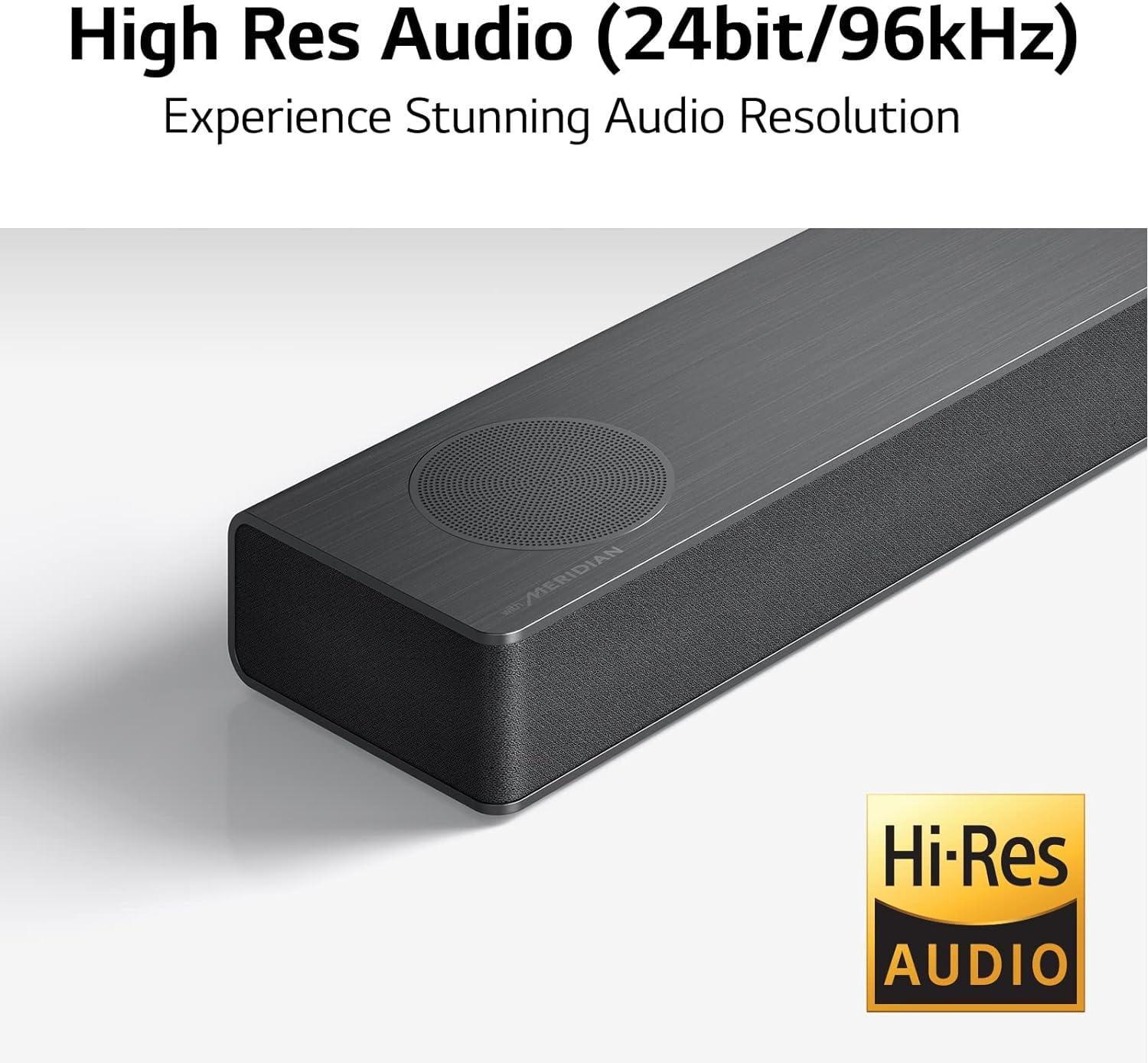
Where the Denon really excels is music reproduction. The company has a long history in high-end audio, and that expertise shows. The 550 supports high-resolution audio up to 24-bit/192kHz through its HEOS platform, which is significantly higher quality than standard CD audio (16-bit/44.1kHz).
The frequency response feels more neutral than the LG, with cleaner midrange reproduction that makes vocals sound natural and instruments sound distinct. If you spend as much time listening to music as watching movies, this difference becomes important. Acoustic guitar recordings have that shimmer in the high frequencies, while piano notes have the weight and resonance you'd expect from a good stereo system.
The built-in Amazon Alexa integration works seamlessly for music control. You can ask it to play specific artists, genres, or playlists from various streaming services without reaching for a remote. This convenience factor shouldn't be underestimated—once you get used to voice control for music, going back to manual navigation feels clunky.
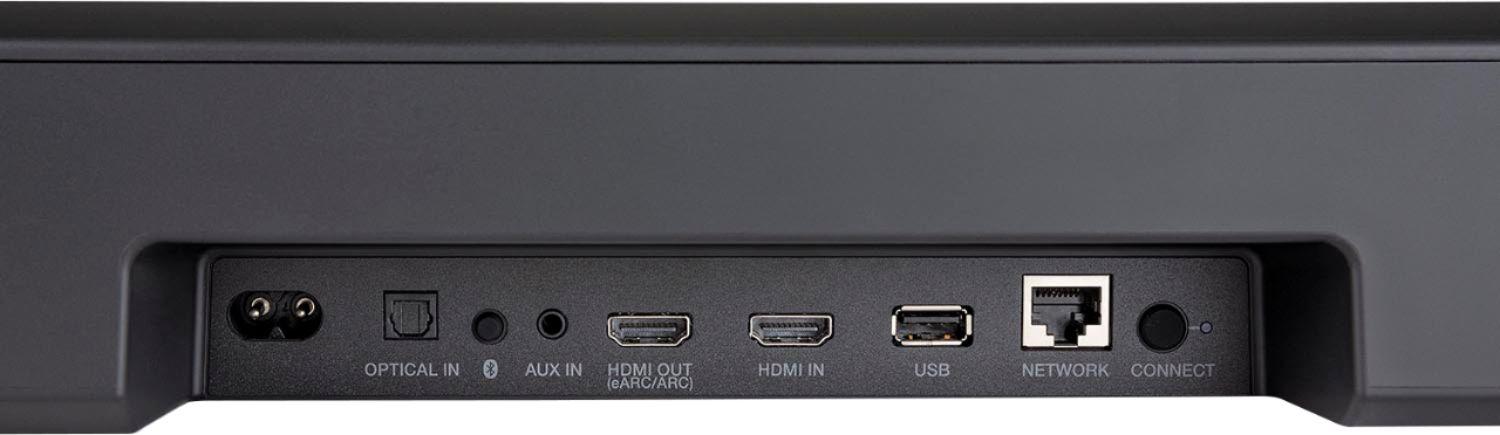
Both systems offer comprehensive connectivity options, but they approach smart features differently. The LG S80TR focuses on integration with LG's TV ecosystem, while the Denon 550 emphasizes broader smart home compatibility.
The LG includes HDMI eARC (enhanced Audio Return Channel), which supports the highest quality audio formats including Dolby TrueHD and DTS-HD Master Audio. These lossless formats preserve every detail from the original movie soundtrack, though you'll only notice the difference with high-quality source material like 4K Blu-rays.
The Denon's HEOS platform offers something unique: true multiroom audio. You can start playing music on the soundbar and then extend it to HEOS speakers in other rooms, creating a whole-home audio system. This flexibility extends beyond just home theater use—the soundbar becomes part of a larger audio ecosystem.
For gaming enthusiasts, both systems support the latest HDMI standards, but the LG goes further with Variable Refresh Rate (VRR) and Auto Low Latency Mode (ALLM) support. These features work with modern gaming consoles to reduce input lag and eliminate screen tearing, creating a more responsive gaming experience.
In a dedicated home theater room, the differences between these systems become more pronounced. The LG S80TR's physical rear speakers create precise localization effects that virtual processing simply can't match. When a car drives from left to right across the screen, you hear it move smoothly from the front left speaker, across the center channel, and then to the rear right speaker. The effect is seamless and convincing.
The height channels add another dimension entirely. In scenes with rain, you hear individual droplets coming from above. Aircraft flyovers have genuine three-dimensional movement. These effects work best when you're seated in the optimal listening position—typically 8-12 feet from the soundbar with the rear speakers positioned 6-8 feet behind your seating area.
Room acoustics play a huge role in performance. In my testing, the LG system worked well in both carpeted and hard-surface rooms, though the AI calibration helped more in challenging acoustic environments. The physical speakers mean you're not relying on wall reflections, so the system maintains its effectiveness even in rooms with irregular shapes or lots of sound-absorbing materials.
The Denon 550 requires more careful consideration of room characteristics. In an ideal setup—a rectangular room with reflective surfaces and appropriate seating distance—the virtual surround can be surprisingly effective. I've heard it create convincing side and rear effects in well-designed rooms. However, in challenging acoustic environments, the limitations become apparent.
Here's where the philosophical differences really matter for your wallet. The LG S80TR at $546.99 gives you everything needed for a complete 5.1.3 system immediately. There are no additional purchases required, no compatibility concerns, and no future upgrade decisions to make.
The Denon Home Sound Bar 550 starts at $518.50, but that's just the beginning if you want full surround sound. Adding Denon's wireless subwoofer costs another $300-400, and rear speakers add $200+ each. A complete 5.1 system using Denon components easily exceeds $1,000.
However, this modular approach offers flexibility that the LG system can't match. You might start with just the soundbar for a small apartment, add the subwoofer when you move to a larger space, and eventually include rear speakers when you have a dedicated media room. The HEOS speakers can also serve double duty, working as surround speakers for movie night and then as standalone speakers for music in other rooms.
From a pure value standpoint, if you want complete surround sound immediately, the LG offers more bang for your buck. If you prefer flexibility and plan to build your system gradually, the Denon platform makes more sense despite the higher total cost.
The decision ultimately comes down to your priorities, space, and listening habits. Choose the LG S80TR if you want immediate, authentic surround sound for movies and gaming. It's particularly well-suited to medium and large rooms where you can properly position the rear speakers. The complete system approach eliminates guesswork and provides excellent value for cinematic immersion.
The Denon Home Sound Bar 550 makes more sense if music quality is equally important as movie performance, if you live in a smaller space, or if you want the flexibility to build your system over time. Its superior music reproduction and integration with the broader HEOS ecosystem make it a better choice for audiophiles or anyone who values expandability.
Consider your room carefully. If you have a dedicated home theater space with optimal speaker placement options, the LG's physical surround speakers will provide superior immersion. If you're working with a living room where rear speakers would be impractical or aesthetically problematic, the Denon's virtual processing might be the better compromise.
Both systems represent solid choices in their respective approaches. The LG delivers on its promise of complete, immediate surround sound, while the Denon offers a high-quality foundation that can grow with your needs. Understanding these fundamental differences will help you choose the system that best matches your space, budget, and listening preferences.
| LG S80TR 5.1.3 Channel Soundbar | Denon Home Sound Bar 550 |
|---|---|
| Price - Complete system vs. expandable platform cost | |
| $546.99 (includes soundbar, subwoofer, rear speakers) | $518.50 (soundbar only, $1,000+ for full surround) |
| Channel Configuration - Physical vs. virtual surround sound | |
| 5.1.3 channels with physical rear speakers and height drivers | 4.0 channels using virtual surround processing |
| Speaker Components - What's included in the box | |
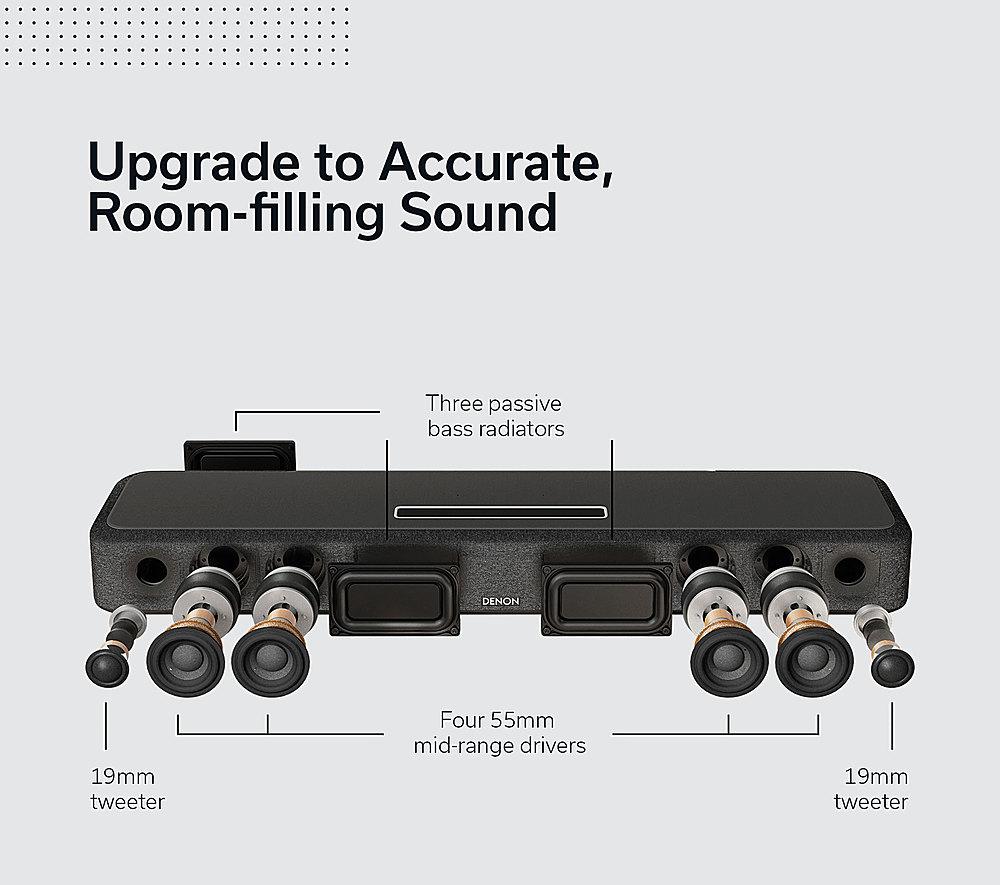
| 11 drivers across 4 components (bar, sub, 2 rear speakers) | 6 drivers in single soundbar unit |
| Subwoofer - Essential for movie bass impact | |
| 8-inch wireless subwoofer included | No subwoofer (requires separate $300-400 purchase) |
| Dolby Atmos Implementation - Overhead sound effects quality | |
| Physical up-firing drivers in bar and rear speakers | Virtual height processing only |
| Room Size Compatibility - Optimal performance space | |
| Medium to large rooms (150+ sq ft) with rear placement | Small to medium rooms (under 150 sq ft) |
| Setup Complexity - Installation requirements | |
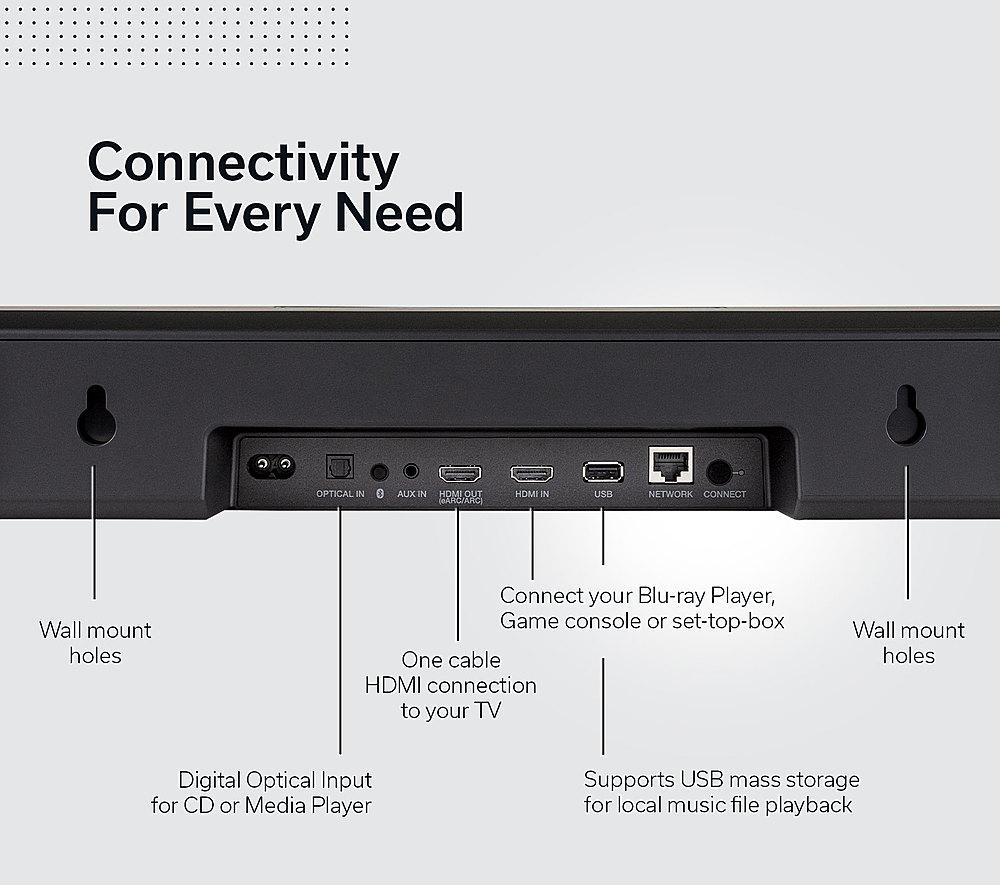
| Multiple wireless components, rear speaker positioning | Single unit installation, wall-mountable |
| Music Performance - Audio quality for stereo content | |
| Movie-optimized tuning, adequate for music | Audiophile-focused with neutral sound signature |
| Smart Features - Voice control and streaming | |
| Multi-platform support via app, WOW Orchestra for LG TVs | Built-in Alexa, HEOS multiroom platform |
| Expandability - Future upgrade options | |
| Fixed system, cannot add components | Modular HEOS ecosystem, mix-and-match speakers |
| Gaming Performance - Low latency and spatial audio | |
| Dedicated Game mode, VRR/ALLM support | Standard latency, minimal processing delay |
| Build Quality - Durability and materials | |
| Plastic construction, 52.2 lbs total shipping weight | Compact aluminum build, 7.3 lbs |
The LG S80TR 5.1.3 Channel Soundbar is significantly better for movies due to its physical rear speakers and dedicated subwoofer. It creates authentic surround sound with genuine overhead effects from its up-firing drivers, making action scenes and dialogue more immersive than the Denon Home Sound Bar 550's virtual processing.
The LG S80TR costs $546.99 and includes everything needed for surround sound (soundbar, subwoofer, and rear speakers). The Denon Home Sound Bar 550 starts at $518.50 but requires additional purchases totaling over $1,000 to match the LG's complete surround sound setup.
The Denon Home Sound Bar 550 excels at music with its neutral sound signature and support for high-resolution audio up to 24-bit/192kHz. The LG S80TR is optimized primarily for movies and may sound slightly colored when playing music, though it's still capable for casual listening.
Yes, the LG S80TR works best in medium to large rooms (150+ square feet) where you can properly position the rear speakers 6-8 feet behind your seating area. The Denon Home Sound Bar 550 is better suited for smaller spaces due to its compact design and virtual surround processing.
The LG S80TR includes an 8-inch wireless subwoofer that delivers deep, impactful bass right out of the box. The Denon Home Sound Bar 550 relies on small drivers and passive radiators, providing adequate bass for dialogue but lacking the low-end impact needed for movies without purchasing a separate subwoofer.
The Denon Home Sound Bar 550 is designed for expansion within the HEOS ecosystem, allowing you to add wireless subwoofers and rear speakers over time. The LG S80TR is a complete, fixed system that cannot be expanded with additional components.
The Denon Home Sound Bar 550 is much easier to set up as it's a single unit requiring only power and one audio cable. The LG S80TR involves positioning multiple wireless components (soundbar, subwoofer, and two rear speakers) throughout your room, though it includes AI calibration to optimize the setup.
Yes, but differently. The LG S80TR uses physical up-firing drivers in both the main bar and rear speakers to create authentic overhead effects. The Denon Home Sound Bar 550 uses virtual processing to simulate height effects, which is less convincing but still effective in properly designed rooms.
The LG S80TR is better for gaming with its dedicated Game mode, low latency processing, and spatial audio that helps with enemy positioning. It also supports VRR and ALLM for modern gaming consoles. The Denon Home Sound Bar 550 has minimal processing delay but lacks gaming-specific optimizations.
The Denon Home Sound Bar 550 has built-in Amazon Alexa for direct voice control without needing additional apps. The LG S80TR supports multiple voice assistants (Alexa and Google Assistant) but requires setup through companion apps rather than built-in functionality.
The LG S80TR at $546.99 offers excellent value for a complete surround sound system, including all necessary components. The Denon Home Sound Bar 550 provides better long-term flexibility but costs significantly more (over $1,000) to achieve equivalent surround sound capabilities.
The Denon Home Sound Bar 550 is better for apartments due to its compact size, single-unit design, and night mode that prevents disturbing neighbors. The LG S80TR requires more space for optimal rear speaker placement and produces more powerful bass that might not be apartment-friendly.
We've done our best to create useful and informative comparisons to help you decide what product to buy. Our research uses advanced automated methods to create this comparison and perfection is not possible - please contact us for corrections or questions. These are the sites we've researched in the creation of this article: bestbuy.com - billsmith.com - brandsmartusa.com - avsforum.com - youtube.com - lg.com - buydig.com - louisdoehomecenter.com - lg.com - videoandaudiocenter.com - mynavyexchange.com - walts.com - bestbuy.com - consumerreports.org - soundandvision.com - crutchfield.com - rtings.com - crutchfield.com - gzhls.at - denon.com - walmart.com - youtube.com - whathifi.com - bestbuy.com

Privacy Policy
Terms and Conditions - Affiliate Policy
Home Security
© Copyright 2008-2026.
11816 Inwood Rd #1211, Dallas, TX 75244