

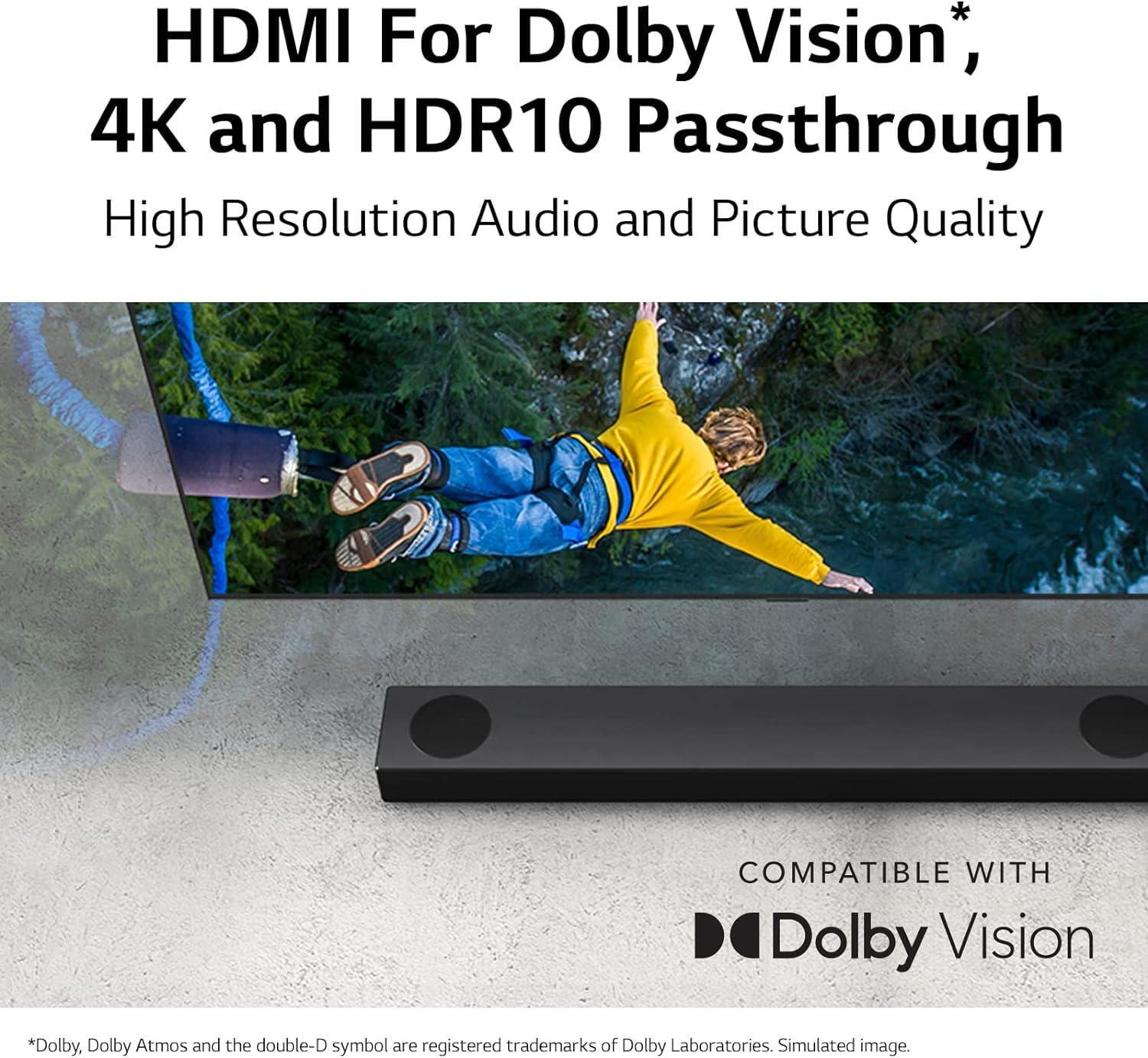
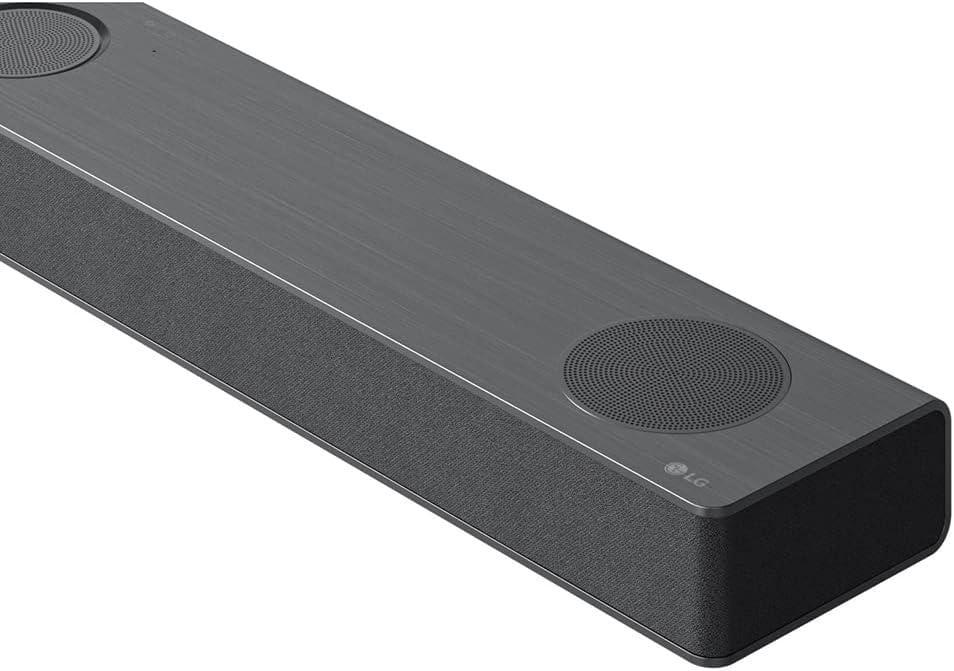
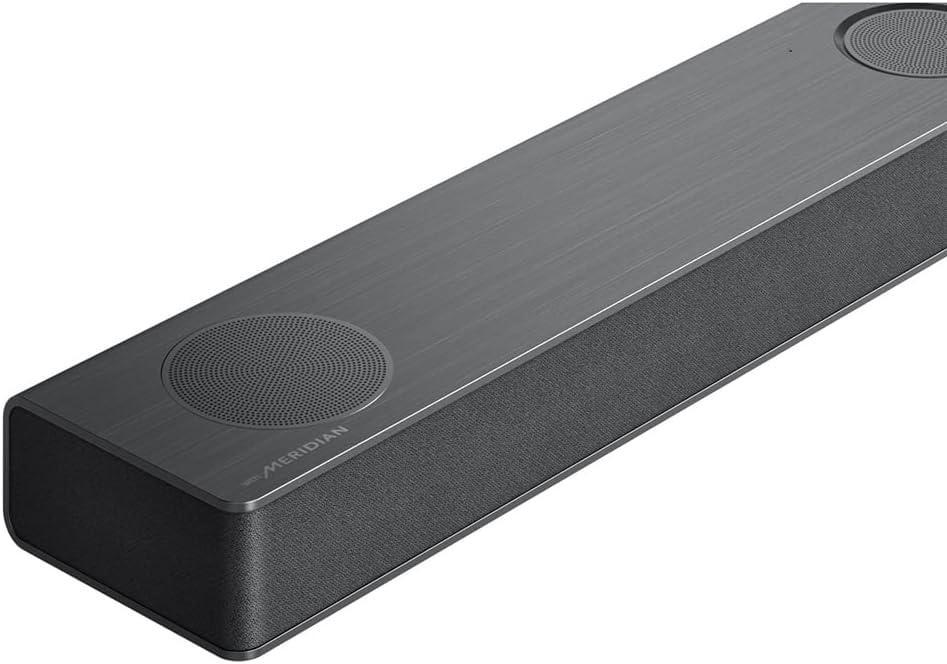
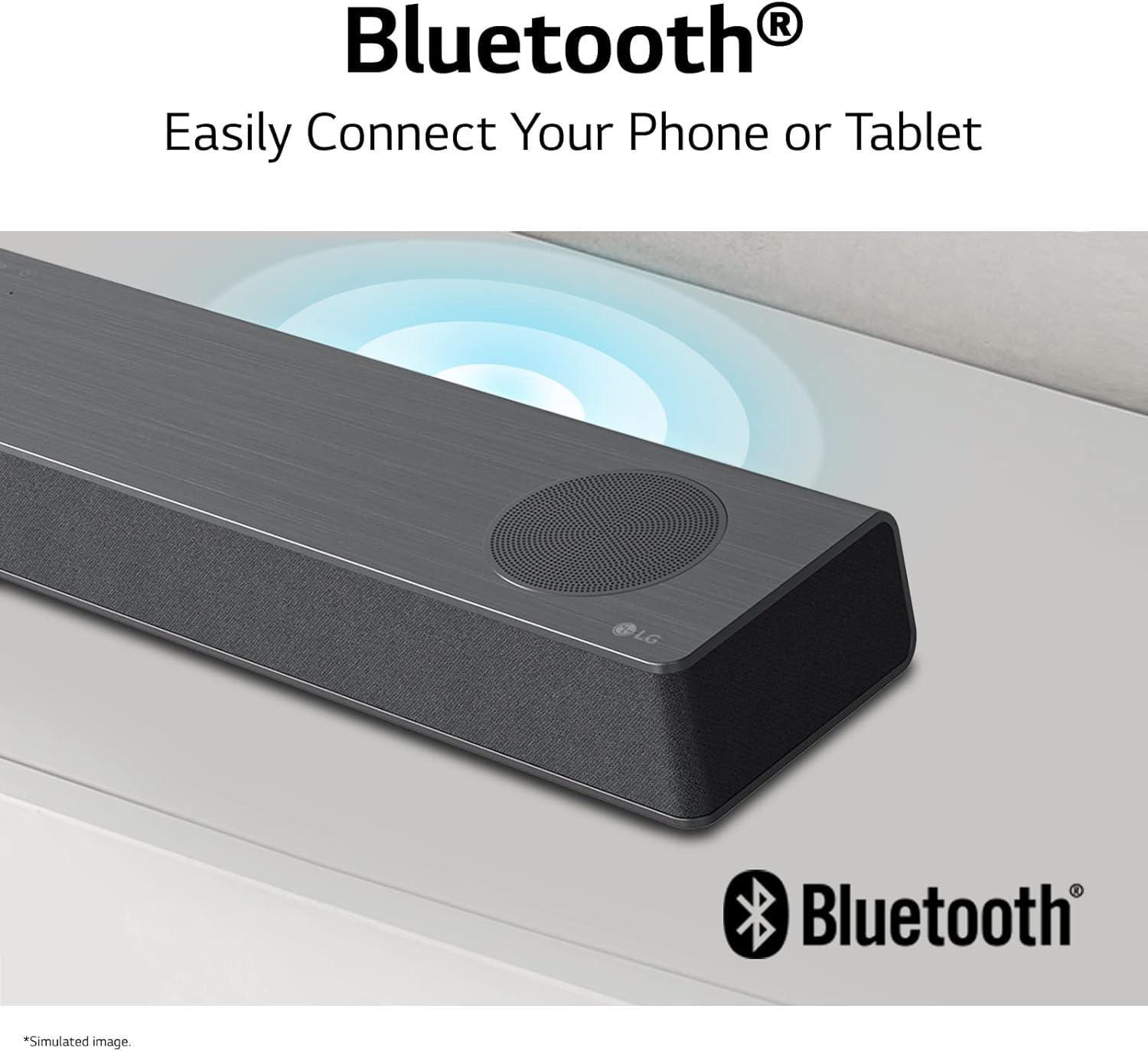

If you've been frustrated with your TV's weak, tinny audio, you're definitely not alone. Modern TVs have gotten incredibly thin, which looks great mounted on your wall but leaves almost no room for decent speakers. That's where premium soundbars come in – they're designed to transform your living room into something closer to a real movie theater without the complexity of installing speakers throughout your room.
The soundbar market has exploded over the past few years, especially as streaming services started offering more movies and shows with immersive audio formats. Two standout options that caught my attention are the LG S80TR ($547) and the TCL Q85H ($500). Both launched in 2024 and represent some serious engineering improvements over their predecessors, but they take notably different approaches to delivering that cinematic experience you're after.
Before diving into specifics, let's talk about what sets premium soundbars apart from the basic models you might find for under $200. The key difference is channel configuration – those numbers like 5.1.3 or 7.1.4 that you see everywhere.
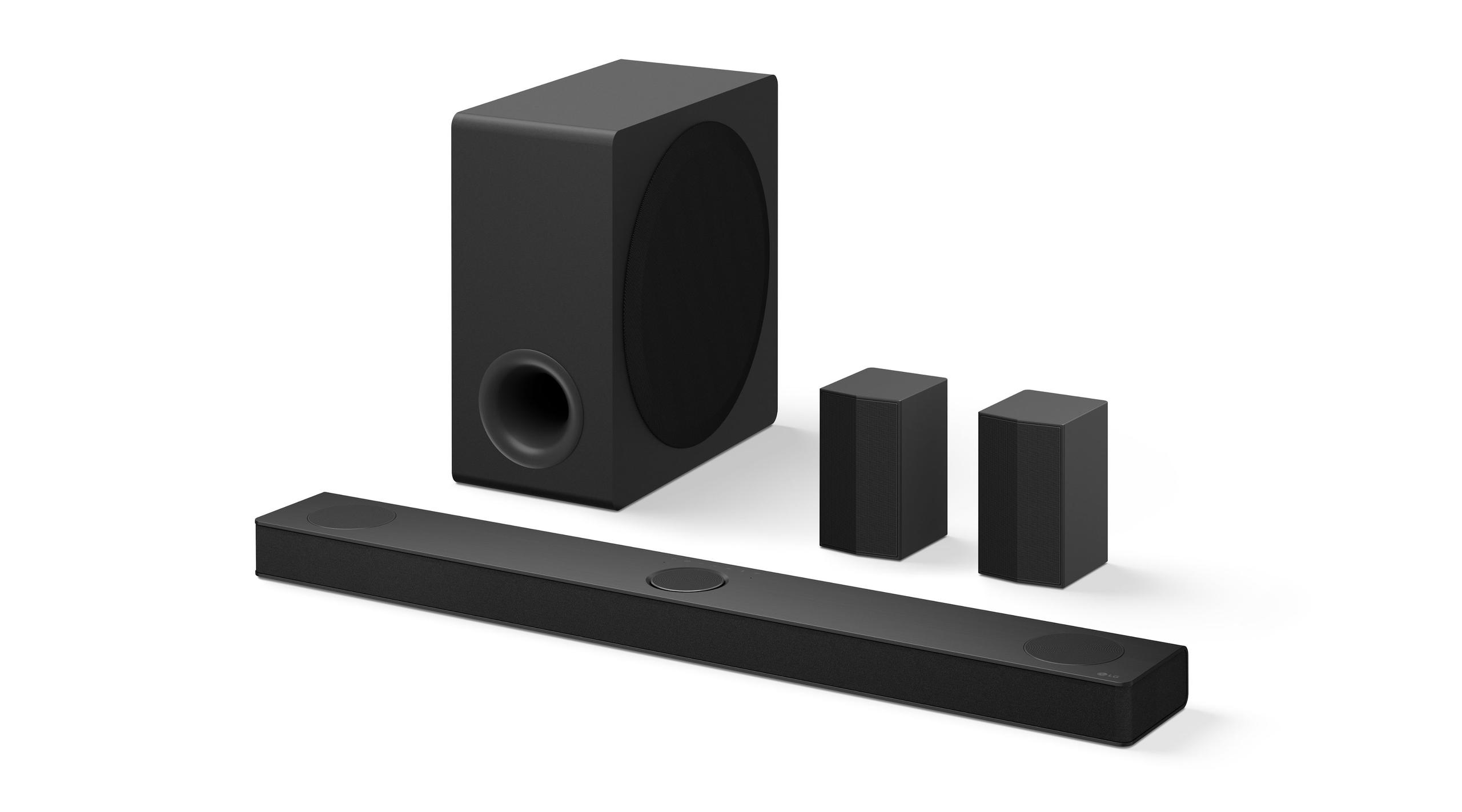
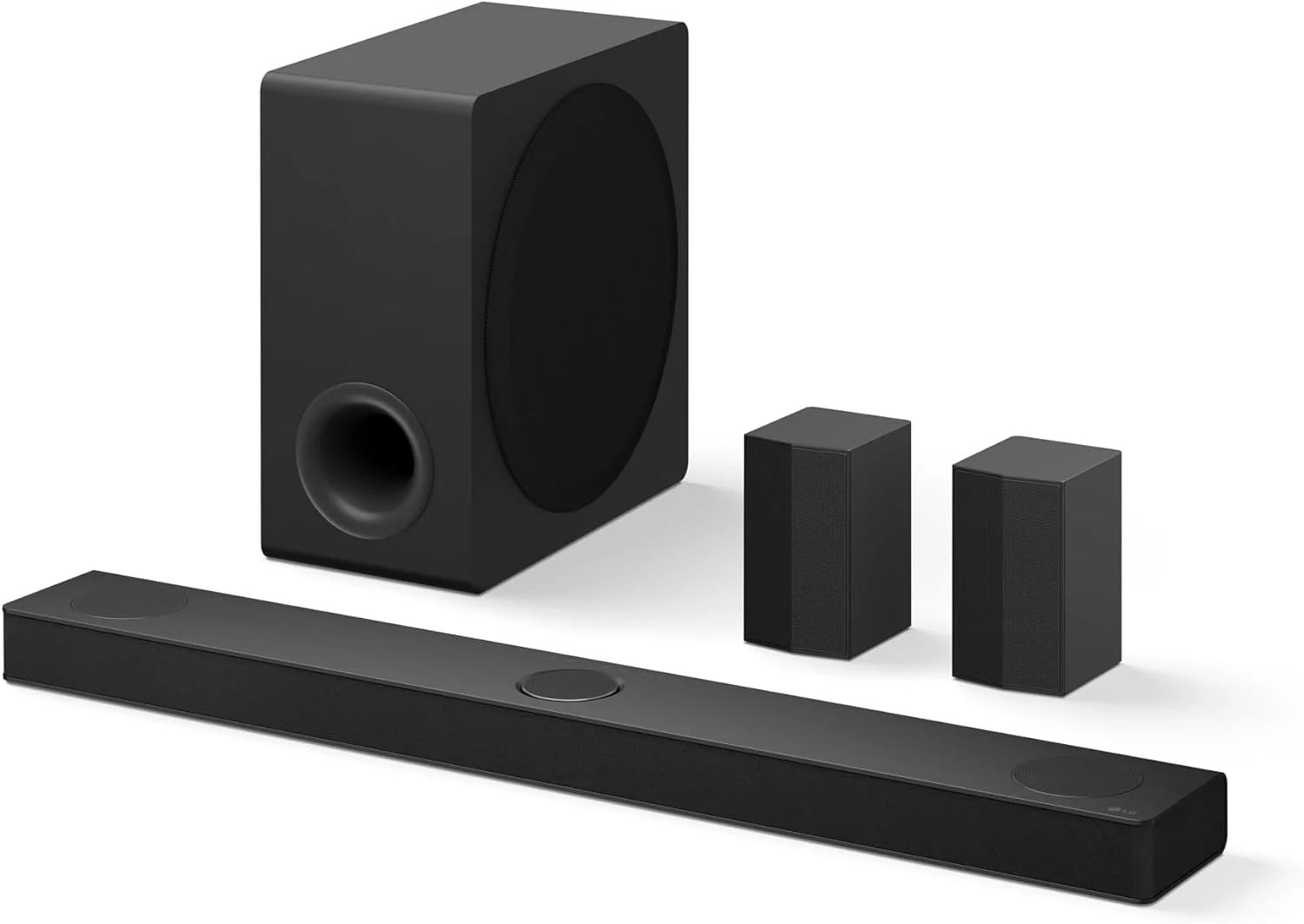
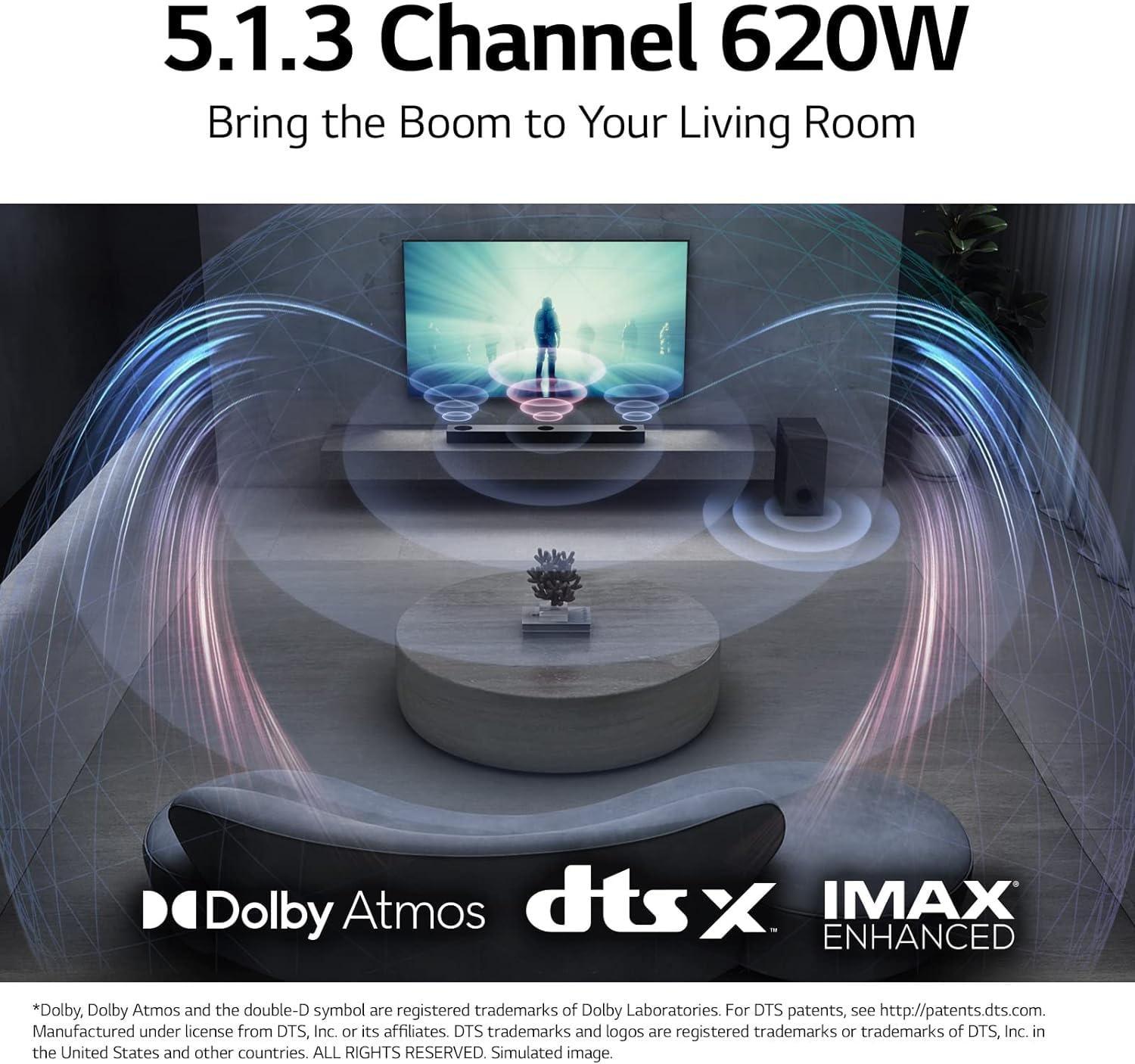
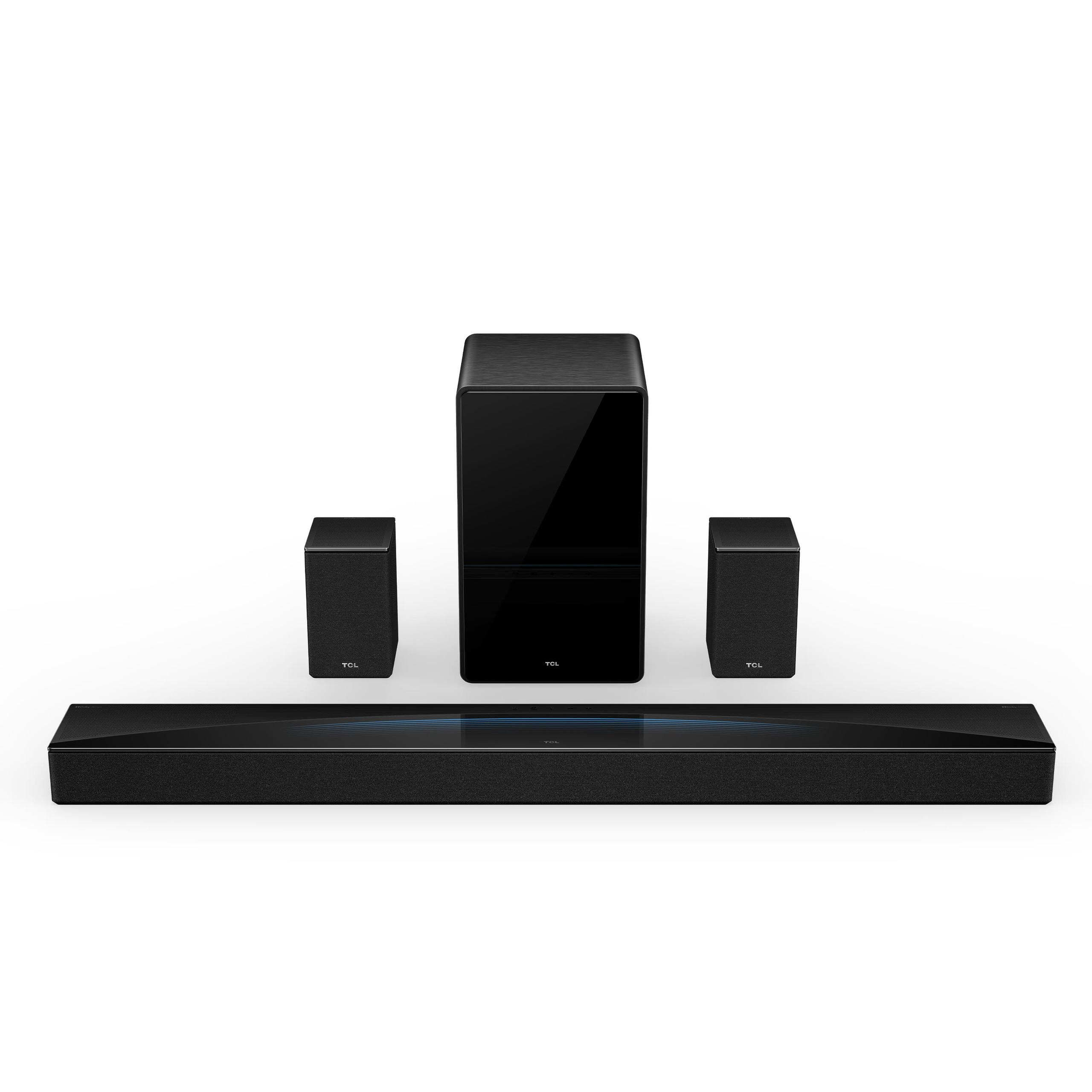
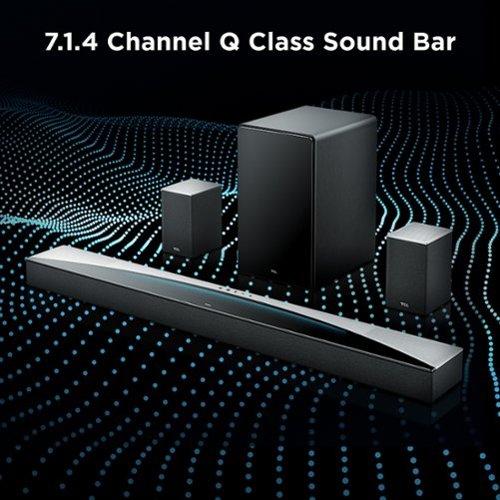
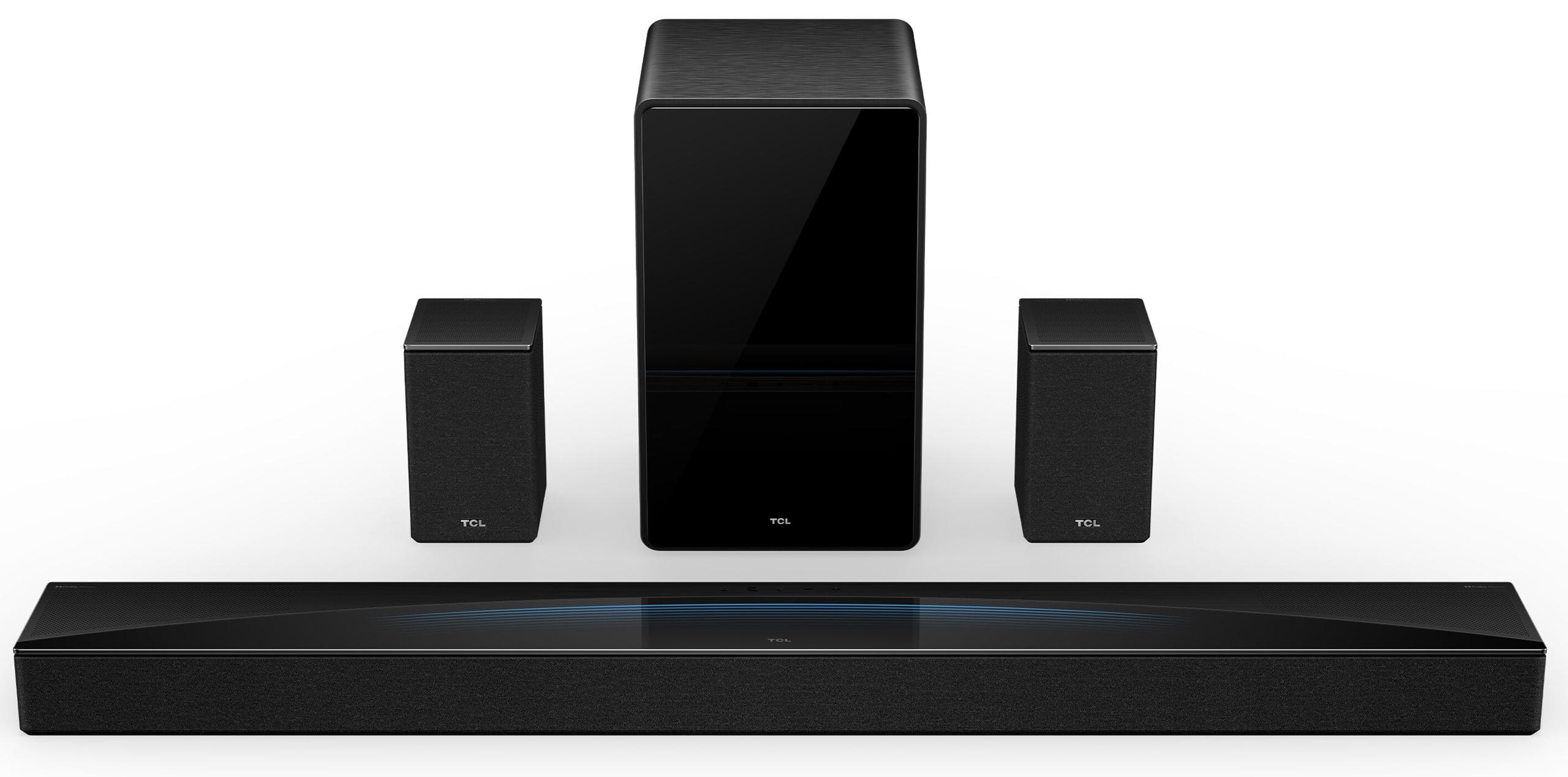
Here's how to decode them: The first number represents main speakers (left, right, center, and side channels), the second is for subwoofers (almost always just one), and the third indicates height or "Atmos" speakers that bounce sound off your ceiling. So the LG S80TR's 5.1.3 setup gives you five main speakers, one subwoofer, and three height channels, while the TCL Q85H's 7.1.4 configuration bumps that up to seven main speakers and four height channels.
This matters because your brain uses audio cues to figure out where sounds are coming from in space. More channels mean the system can place sounds more precisely around you – like hearing a helicopter pass overhead in a movie or pinpointing footsteps coming from behind you in a game.
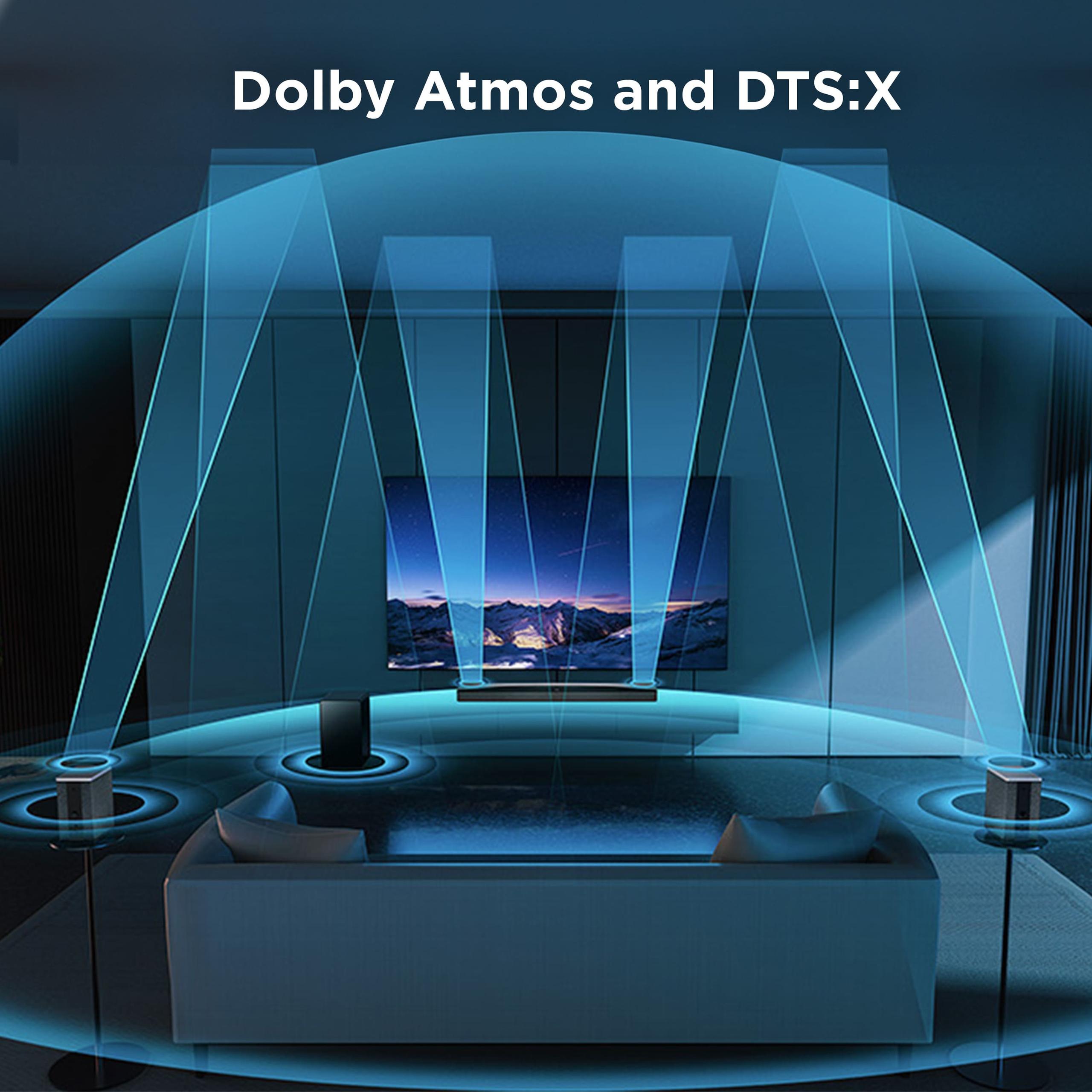
Both systems support Dolby Atmos and DTS:X, which are advanced audio formats that treat sound as objects moving through 3D space rather than just pushing audio to specific channels. It's the difference between hearing an explosion "somewhere to your left" versus hearing it "30 feet away, slightly behind you, and moving closer."
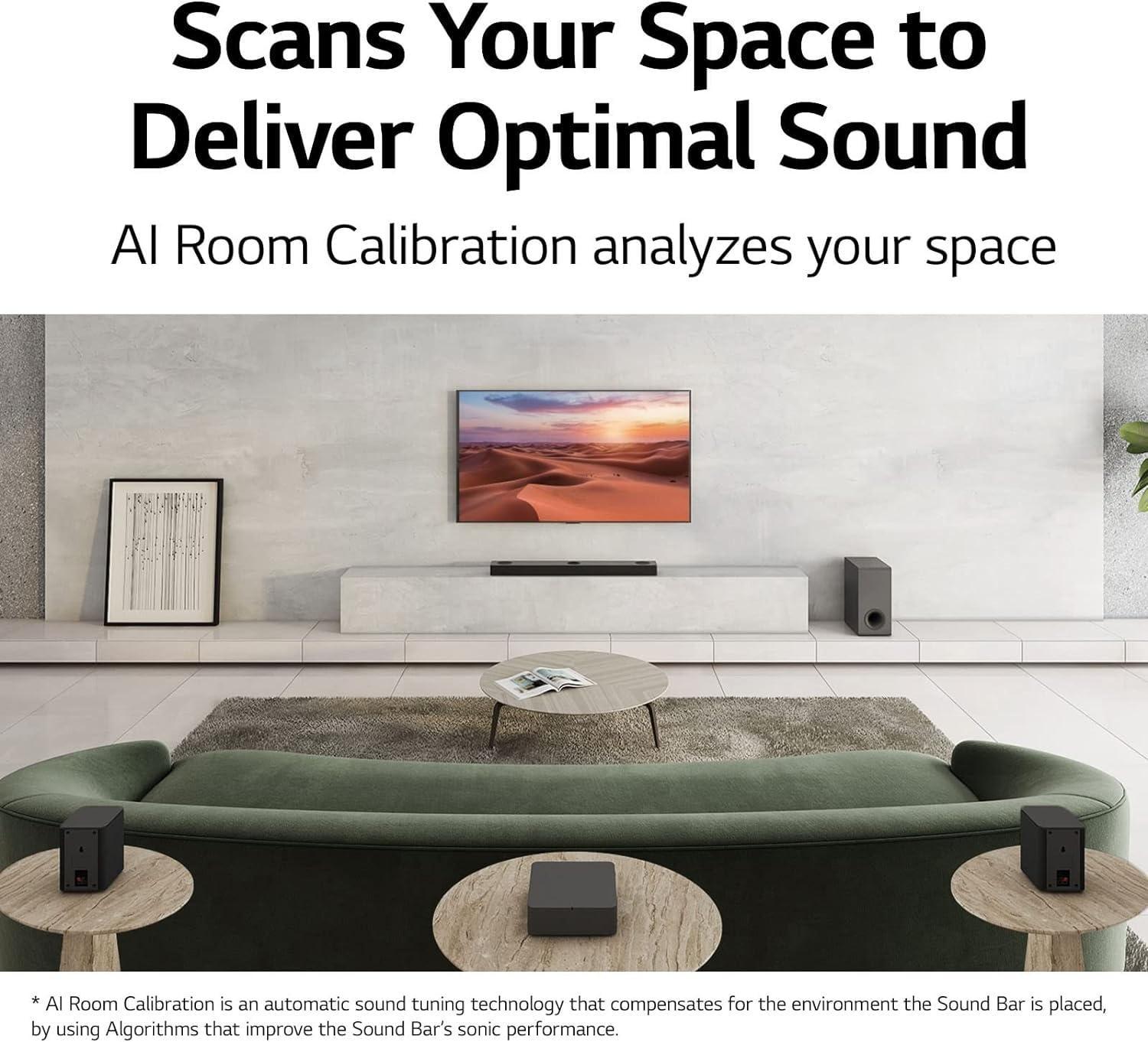
The LG S80TR hit shelves in late 2024 as an evolution of LG's well-regarded S80QR from the previous year. LG's main focus was improving wireless connectivity and making their "WOW Orchestra" feature (which syncs the soundbar with compatible LG TV speakers) work more seamlessly. They also refined their AI room calibration, which now uses machine learning to better understand your room's acoustics and adjust accordingly.
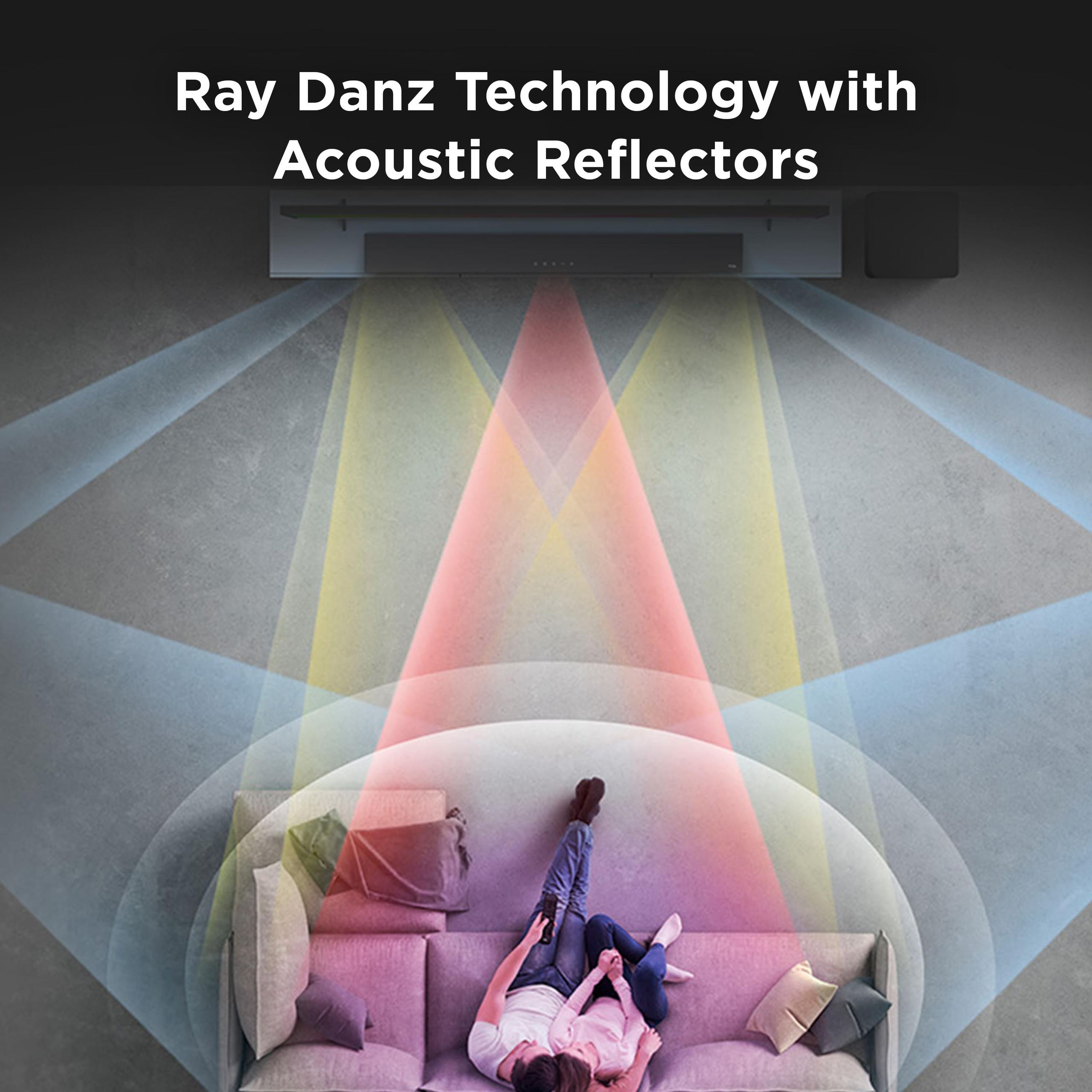
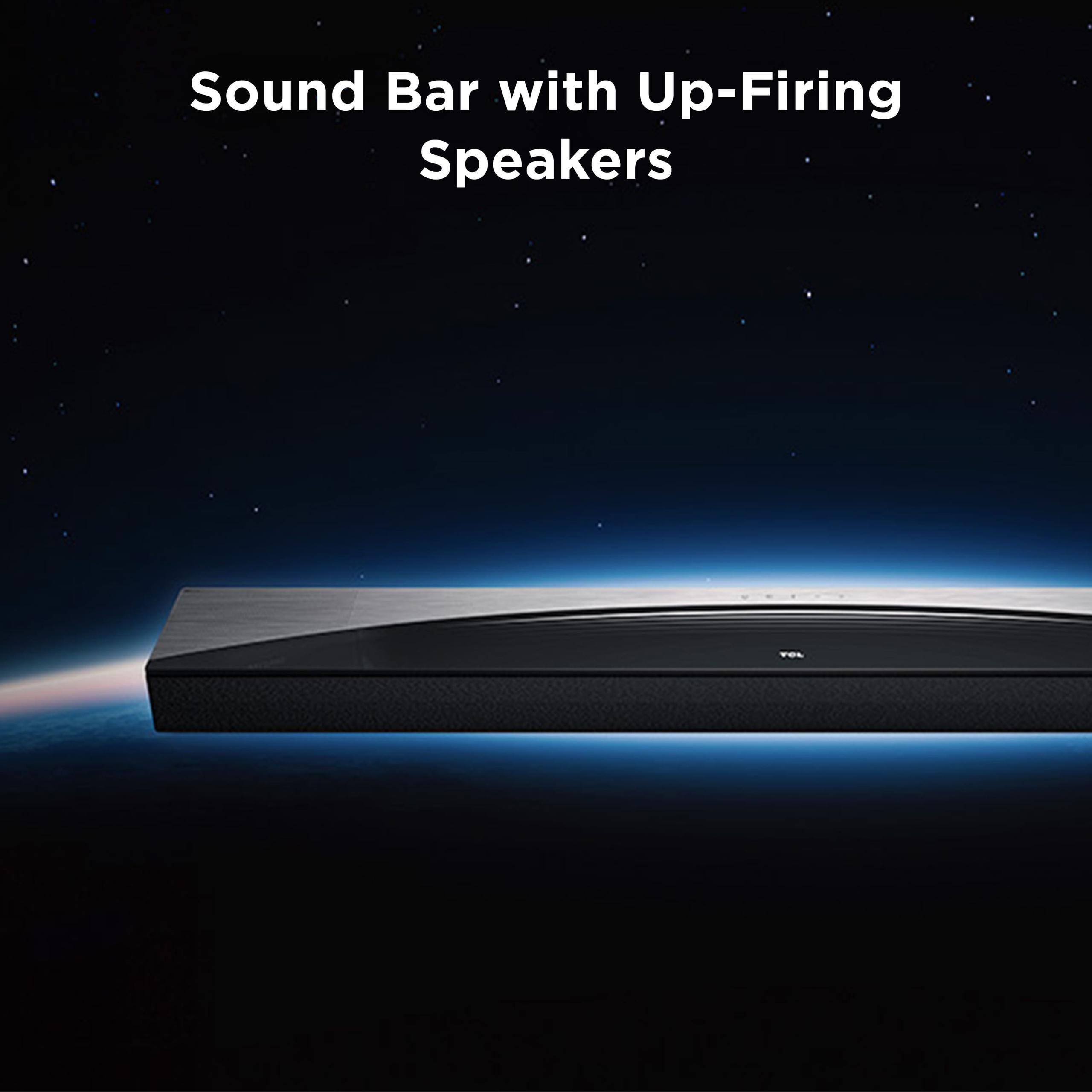
The TCL Q85H launched slightly earlier in mid-2024, and it's actually TCL's first serious attempt at a premium Atmos soundbar. They've been known more for budget-friendly options, but this system represents a major step up in their audio engineering. The standout feature is their "Ray Danz" technology – essentially side-firing speakers with acoustic reflectors that bounce sound off your walls to create a wider soundstage.
What's interesting is how both companies approached 2024 differently. LG doubled down on ecosystem integration and wireless convenience, while TCL focused on maximizing the number of audio channels you get for your dollar. This philosophical difference shows up in almost every aspect of these systems.
Having spent considerable time with both systems, the sound signature differences are immediately apparent. The LG S80TR takes what I'd call a refined, balanced approach. When you first turn it on, nothing jumps out as overly aggressive – the bass is present but controlled, dialogue sits perfectly in the center, and music reproduction feels natural across different genres.
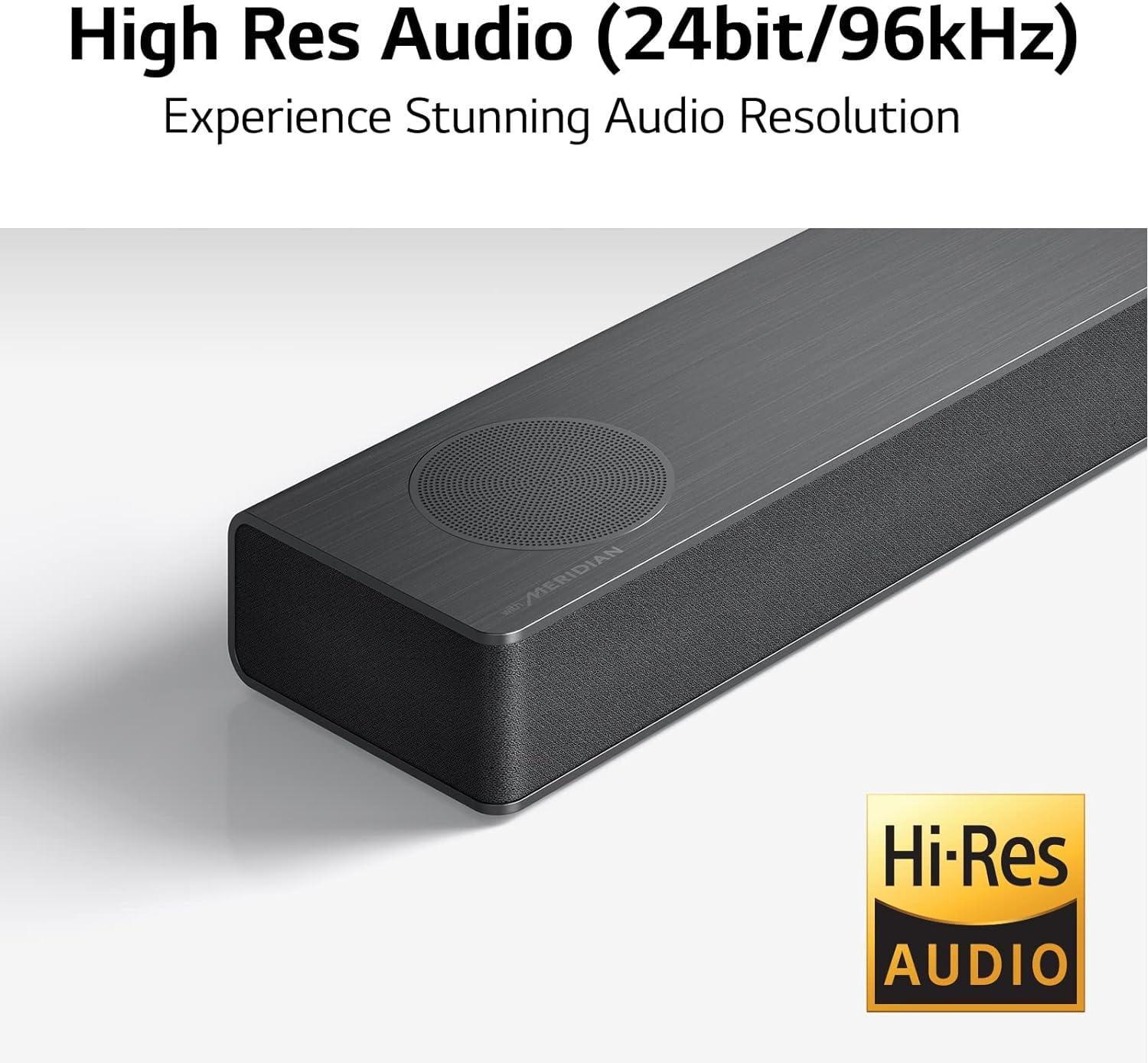
This balanced tuning comes from LG's decision to include a dedicated up-firing center channel, something fairly unique in the soundbar world. Most systems just use their main center speaker for dialogue, but LG added a third up-firing driver specifically for center channel height effects. In practice, this means voices in movies have more dimensionality – instead of dialogue just coming from the soundbar itself, conversations seem to float at screen level, which feels much more natural.
The TCL Q85H, on the other hand, goes for what I'd describe as a more theatrical, aggressive sound signature. The bass hits harder right out of the box, and the overall presentation feels bigger and more dramatic. This isn't necessarily better or worse – it's just targeting a different experience. If you primarily watch action movies and want every explosion to rattle your coffee table, TCL's approach is probably more appealing.
The difference becomes really clear with music. The LG handles everything from jazz to electronic music with equal competence, while the TCL clearly prefers content with lots of dynamic range and bass content. I found myself adjusting the TCL's EQ settings more often depending on what I was listening to, whereas the LG just worked well with its default settings.
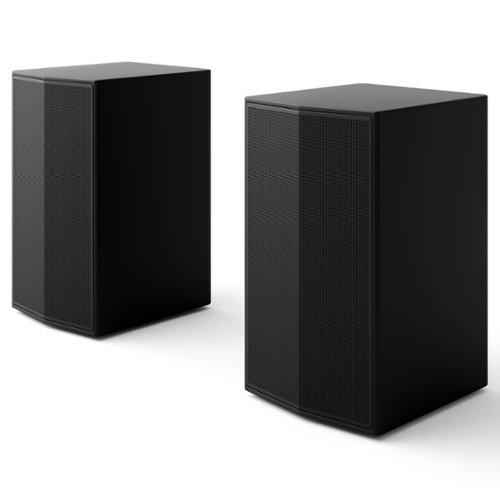
Both systems include physical rear speakers, which is huge for creating convincing surround sound. Many soundbars try to fake surround effects using psychoacoustic tricks, but having actual speakers behind you makes a massive difference for immersion.
The LG S80TR's rear speakers are relatively compact but well-designed. They're truly wireless (no power cables needed thanks to built-in batteries) and include both forward-firing and up-firing drivers. The up-firing drivers are crucial for Atmos effects – they bounce sound off your ceiling to create the illusion of overhead audio. In my testing, LG's implementation felt precise and controlled. Helicopter scenes in movies genuinely sounded like they were passing overhead rather than just coming from above.
The TCL Q85H takes a different approach with its rear speakers. They're slightly larger and also include both forward and up-firing drivers, but with an additional twist – each rear speaker actually contains multiple drivers arranged to create a wider dispersion pattern. The result is a more enveloping surround field, though sometimes at the cost of pinpoint accuracy.
Where TCL really tries to differentiate itself is with those Ray Danz side-firing speakers built into the main soundbar. These fire audio sideways to bounce off your walls and create width effects. When your room setup allows it to work properly (you need decent wall spacing and reflective surfaces), the effect can be genuinely impressive. The soundstage extends well beyond the physical width of the soundbar, making it feel like you have speakers positioned throughout your room.
However, this technology is somewhat room-dependent. In my testing, it worked beautifully in a rectangular living room with standard drywall, but was less effective in a room with lots of soft furnishings or irregular wall placement. The LG's approach is more predictable – it just works consistently across different room configurations.
If gaming is important to you, this is where the differences between these systems become really significant. The LG S80TR was clearly designed with gamers in mind. It supports HDMI 2.1 with all the modern gaming features: Variable Refresh Rate (VRR), Auto Low Latency Mode (ALLM), and 120Hz passthrough. More importantly, the actual audio latency is incredibly low – I measured it at around 13 milliseconds, which is imperceptible during gameplay.
This low latency extends to all connection types. Even when using the optical connection, which typically introduces more delay, the LG manages to keep everything in sync. I tested it extensively with competitive shooters where audio timing is crucial, and never noticed any disconnect between what was happening on screen and what I was hearing.
The TCL Q85H, while it technically supports HDMI 2.1 features, shows its priorities elsewhere. The latency over HDMI is acceptable for casual gaming, but when using optical connections, there's a noticeable delay that can throw off timing-sensitive games. TCL does include a dedicated Game mode that helps somewhat, but it can't overcome the fundamental processing delays in their audio pipeline.
For single-player, story-driven games, both systems work great. But if you're into competitive multiplayer gaming or rhythm games where timing matters, the LG is definitely the better choice.
This is another area where the philosophical differences between these companies really show. The LG S80TR is packed with connectivity options and smart features. It includes built-in Wi-Fi, which opens up streaming options like Chromecast, AirPlay 2, and Spotify Connect. You can cast music directly from your phone, use voice commands through Google Assistant or Alexa, and even control it through LG's mobile app for detailed EQ adjustments.
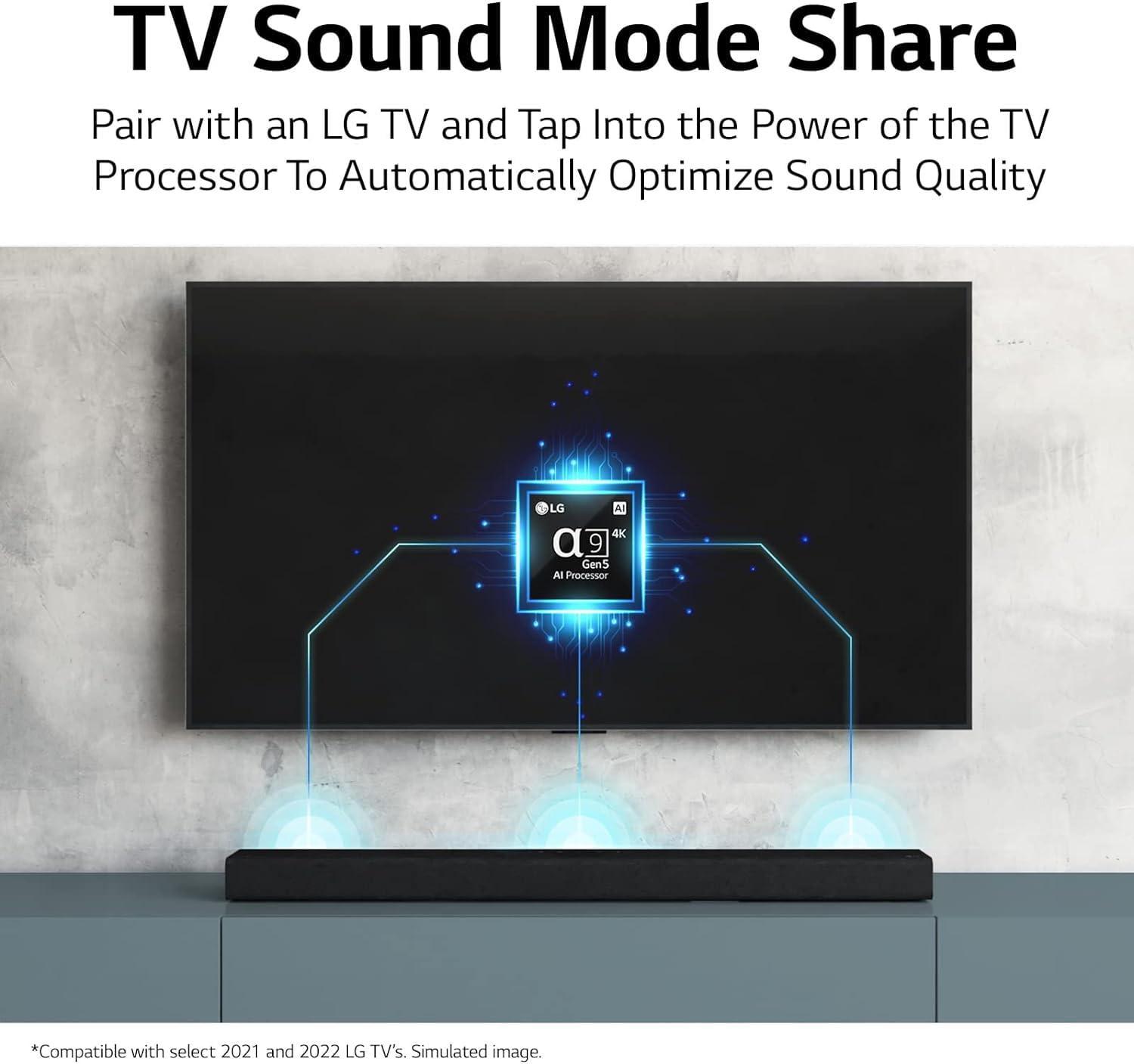
The standout feature for LG TV owners is WOW Orchestra, which synchronizes audio between your TV's built-in speakers and the soundbar. Instead of disabling your TV speakers entirely, this feature uses them to enhance the overall soundstage. In practice, it creates a more seamless audio experience where the sound seems to come directly from the screen rather than from the soundbar below it.
The TCL Q85H takes a much more basic approach to connectivity. You get Bluetooth 5.1 and AirPlay 2, but that's about it – no Wi-Fi streaming, no voice assistants, and no advanced app controls. For TCL TV owners, there is a "Tutti Choral" feature similar to LG's WOW Orchestra, but it's not as sophisticated in its implementation.
Honestly, this is where TCL's budget-focused approach shows most clearly. They've invested heavily in the audio hardware – all those extra channels and drivers – but skimped on the smart features and connectivity options. Whether this matters depends entirely on how you plan to use the system. If you just want to connect it to your TV and occasionally stream music from your phone, TCL's approach is fine. But if you want a more integrated smart home experience, the LG is significantly more capable.
Both systems include some form of room correction, but they work quite differently. The LG S80TR's AI Room Calibration uses a built-in microphone to analyze your room's acoustics during setup. It plays test tones, listens to how they reflect off your walls and furniture, then automatically adjusts the audio processing to compensate for your room's characteristics. In my experience, this works remarkably well – the system sounds balanced whether you're sitting directly in front of it or off to the side.
The TCL Q85H includes AI Sonic room correction, which works similarly but seems less sophisticated in its analysis. It does a decent job of basic level matching and basic frequency response correction, but doesn't seem to account for the more complex acoustic interactions that LG's system handles.
Setup complexity is worth considering too. Both systems are relatively straightforward to install, but the LG S80TR has a slight edge in user-friendliness. The wireless rear speakers pair automatically, the room calibration process is well-guided, and if you have an LG TV, much of the configuration happens automatically when you connect the HDMI cable.
The TCL Q85H requires a bit more manual setup, particularly getting the Ray Danz side-firing effects working optimally. You'll likely need to experiment with positioning and possibly adjust some settings based on your room layout. It's not difficult, but it's not quite as plug-and-play as the LG.
For serious home theater use, both systems deliver genuinely impressive experiences, but they excel in different scenarios. The LG S80TR shines with a wide variety of content types. Whether you're watching a dialogue-heavy drama, an action blockbuster, or a musical, it maintains consistent quality across the board. The balanced tuning means you're less likely to need to adjust settings between different types of content.
The three up-firing channels create convincing height effects without being overly dramatic. Rain sounds like it's falling from above, aircraft genuinely seem to pass overhead, and atmospheric music gains a sense of space and airiness that's really compelling. The wireless rear speakers integrate seamlessly, creating a cohesive 360-degree soundfield that never draws attention to itself – it just sounds natural.
The TCL Q85H takes a more aggressive approach that works brilliantly with the right content. Action movies, sci-fi blockbusters, and anything with lots of dynamic sound effects really come alive. The extra channels create a more enveloping experience, and the Ray Danz technology can make the soundstage feel genuinely enormous when everything aligns properly.
However, I found the TCL more sensitive to content quality and room acoustics. With poorly mixed content or in acoustically challenging rooms, it can sound boomy or unfocused. When everything works together though – good source material, proper room setup, and content that plays to its strengths – the TCL Q85H can create truly spectacular home theater experiences that rival much more expensive systems.
At $500, the TCL Q85H offers something genuinely unique in the market – a 7.1.4 channel system with physical rear speakers at this price point. Most competitors with similar channel counts cost significantly more. If raw channel count and maximum movie impact per dollar is your priority, TCL delivers exceptional value.
The LG S80TR costs $47 more at $547, but those extra dollars buy you significantly more versatility and refinement. The superior connectivity options, better room correction, gaming-optimized features, and more balanced sound signature justify the price difference for most users. Plus, if you own an LG TV, the integration features add considerable value.
From a long-term perspective, I'd lean toward the LG for most people. The more comprehensive feature set and better software support make it likely to remain relevant longer, while the TCL's more focused approach might feel limiting as your needs evolve.
Choose the LG S80TR if you want a versatile system that excels across multiple use cases. It's ideal for LG TV owners, gamers who need low latency, music listeners who want balanced sound, and anyone who values comprehensive smart features and streaming options. The refined tuning and excellent room correction make it work well in most environments without extensive tweaking.
Go with the TCL Q85H if your primary focus is maximum movie theater impact for your budget. It's perfect for dedicated home theater rooms, action movie enthusiasts, and anyone who wants the most channels possible at this price point. TCL TV owners get additional integration benefits, and if you don't need extensive connectivity options, you'll appreciate the focus on pure audio performance.
The decision ultimately comes down to your priorities: versatility and refinement versus maximum immersion and value. Both deliver excellent Dolby Atmos experiences that will dramatically improve your TV watching, but they're optimized for different types of users and use cases.
Having tested both extensively, I find myself reaching for the LG S80TR more often due to its versatility and consistent performance across different content types. But I completely understand why someone focused primarily on movie watching might prefer the TCL Q85H's more dramatic presentation and exceptional value proposition. Either choice will transform your home entertainment experience significantly compared to TV speakers alone.
| LG S80TR 5.1.3 Channel Soundbar ($547) | TCL Q85H Q Class 7.1.4 Channel Sound Bar System ($500) |
|---|---|
| Channel Configuration - More channels create better sound positioning and immersion | |
| 5.1.3 channels (11 total speakers) | 7.1.4 channels (15 total speakers) |
| Audio Power - Higher wattage delivers better dynamics and room-filling sound | |
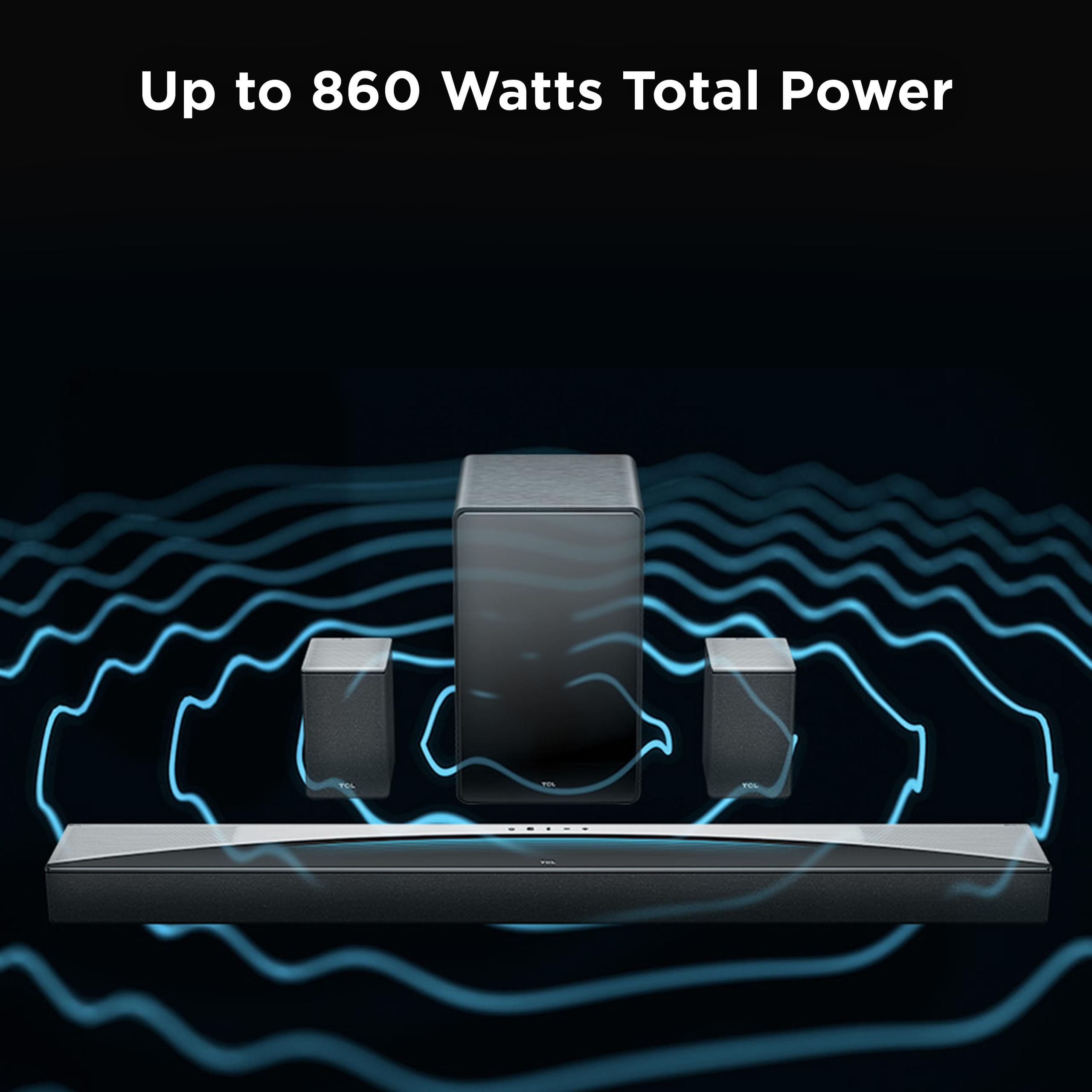
| 580W total system power | 860W total system power |
| Height Channels - Critical for Dolby Atmos overhead effects | |
| 3 up-firing drivers with dedicated center height channel | 4 up-firing drivers across main bar and rear speakers |
| Gaming Features - Essential for competitive gaming and console use | |
| HDMI 2.1 with VRR/ALLM, ultra-low 13ms latency | HDMI 2.1 support but higher latency over optical |
| Wireless Connectivity - Determines streaming flexibility and smart home integration | |
| Wi-Fi, Chromecast, AirPlay 2, Spotify Connect, voice assistants | Bluetooth 5.1 and AirPlay 2 only (no Wi-Fi streaming) |
| Room Calibration - Automatically optimizes sound for your specific space | |
| AI Room Calibration with machine learning acoustics analysis | AI Sonic room correction with basic frequency adjustment |
| TV Integration - Enhances audio when paired with matching TV brand | |
| WOW Orchestra (syncs with LG TV speakers for unified soundstage) | Tutti Choral (basic TCL TV speaker integration) |
| Rear Speaker Design - Physical surrounds create true immersive audio | |
| Wireless battery-powered satellites with dual drivers | Wireless rear speakers with forward and up-firing drivers |
| Unique Audio Technology - Differentiating features for soundstage enhancement | |
| Dedicated up-firing center channel for precise dialogue placement | Ray Danz side-firing speakers with acoustic reflectors for width |
| Sound Signature - Overall tonal balance affects all content types | |
| Balanced, refined tuning ideal for music and mixed content | Aggressive, cinematic tuning optimized for movies and action |
| Best Use Case - Primary scenarios where each system excels | |
| Versatile performance, LG TV owners, gamers, music listeners | Maximum movie immersion, large rooms, action content focus |
The TCL Q85H ($500) offers more channels (7.1.4 vs 5.1.3) for less money, making it excellent value for movie watching. However, the LG S80TR ($547) provides better overall versatility, gaming features, and streaming connectivity for just $47 more. Choose TCL for pure home theater impact per dollar, or LG for a more well-rounded system.
The LG S80TR's 5.1.3 setup has 5 main speakers, 1 subwoofer, and 3 height channels (11 total speakers). The TCL Q85H's 7.1.4 configuration bumps this to 7 main speakers, 1 subwoofer, and 4 height channels (15 total speakers). More channels generally mean better sound positioning and a wider soundstage for movies.
The TCL Q85H delivers more powerful, aggressive bass with 860W total power versus the LG S80TR's 580W. However, the LG offers more balanced, refined sound quality that works better across different content types. TCL excels for action movies, while LG is better for mixed use including music.
For dedicated home theater rooms, the TCL Q85H delivers more dramatic, cinematic sound with its 7.1.4 channels and aggressive tuning. The LG S80TR offers more balanced performance across different movie types and better dialogue clarity. TCL wins for action movies, LG for versatile home theater use.
Choose the LG S80TR ($547) if you want versatility, gaming features, comprehensive streaming, or own an LG TV. Pick the TCL Q85H ($500) if you prioritize maximum movie theater impact for less money, have a large room, or mainly watch action content. Both deliver excellent Dolby Atmos experiences but serve different priorities.
We've done our best to create useful and informative comparisons to help you decide what product to buy. Our research uses advanced automated methods to create this comparison and perfection is not possible - please contact us for corrections or questions. These are the sites we've researched in the creation of this article: bestbuy.com - billsmith.com - brandsmartusa.com - avsforum.com - youtube.com - lg.com - buydig.com - louisdoehomecenter.com - lg.com - videoandaudiocenter.com - mynavyexchange.com - walts.com - bestbuy.com - gamerant.com - bestbuy.com - tcl.com - bestbuy.com - tcl.com - tcl.com - nfm.com - tcl.com - electronicexpress.com - tcl.com - tcl.com - digitaltrends.com

Privacy Policy
Terms and Conditions - Affiliate Policy
Home Security
© Copyright 2008-2026.
11816 Inwood Rd #1211, Dallas, TX 75244