

When your TV's built-in speakers make dialogue sound like it's coming from inside a tin can, it's time for a soundbar upgrade. But with dozens of options ranging from basic stereo bars to full surround systems, choosing the right one can feel overwhelming. Today we're comparing two popular but very different approaches: the budget-friendly Samsung HW-B630F and the premium LG S80TR.
These soundbars represent opposite philosophies in home audio. Samsung focuses on delivering exceptional dialogue clarity and solid bass at an accessible price point, while LG provides a complete surround sound experience with all the bells and whistles. At the time of writing, the Samsung costs roughly half what you'd pay for the LG, making this comparison particularly interesting for anyone trying to balance performance with budget constraints.
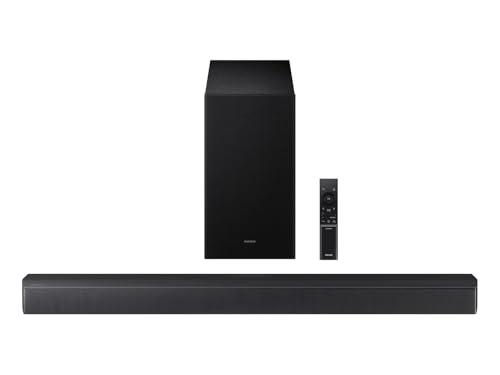
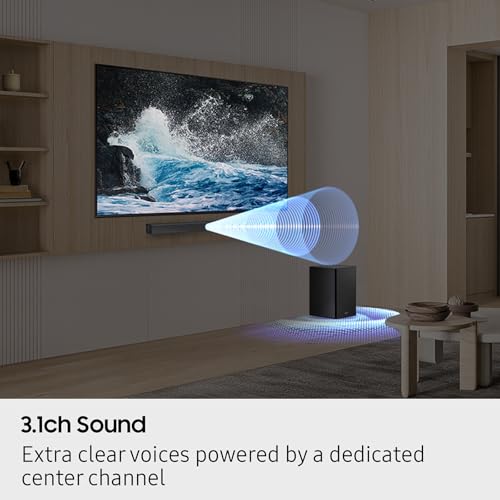
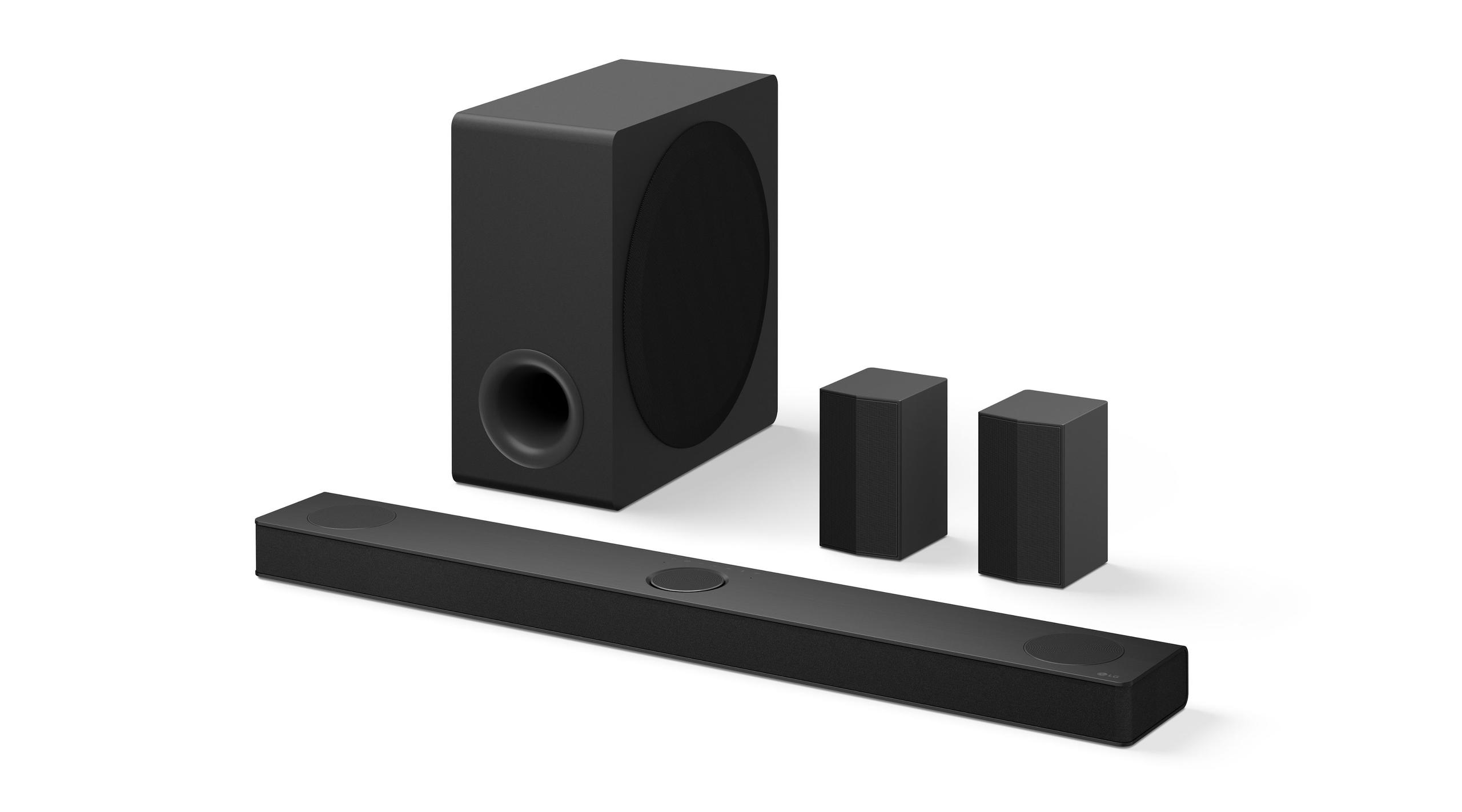
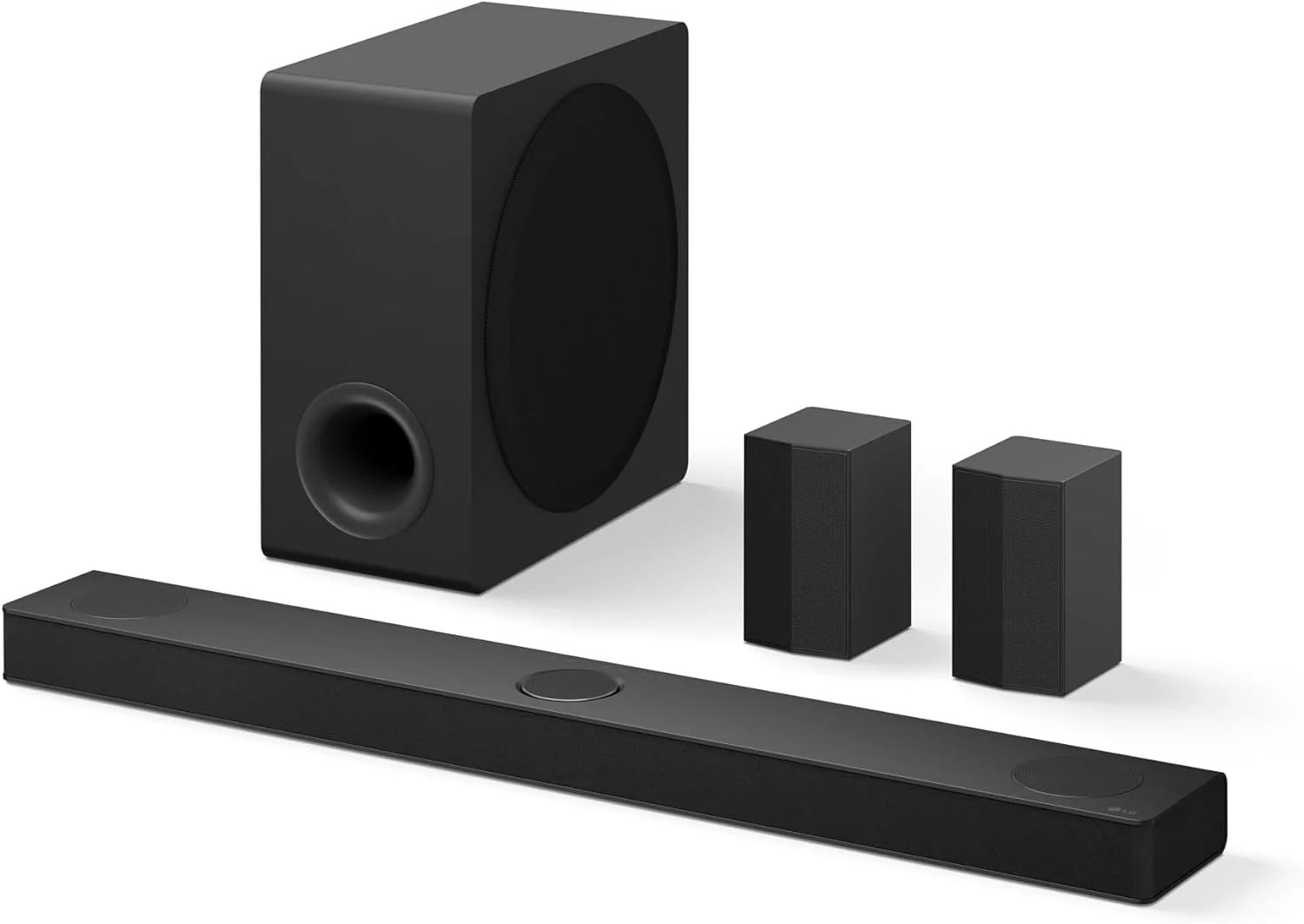
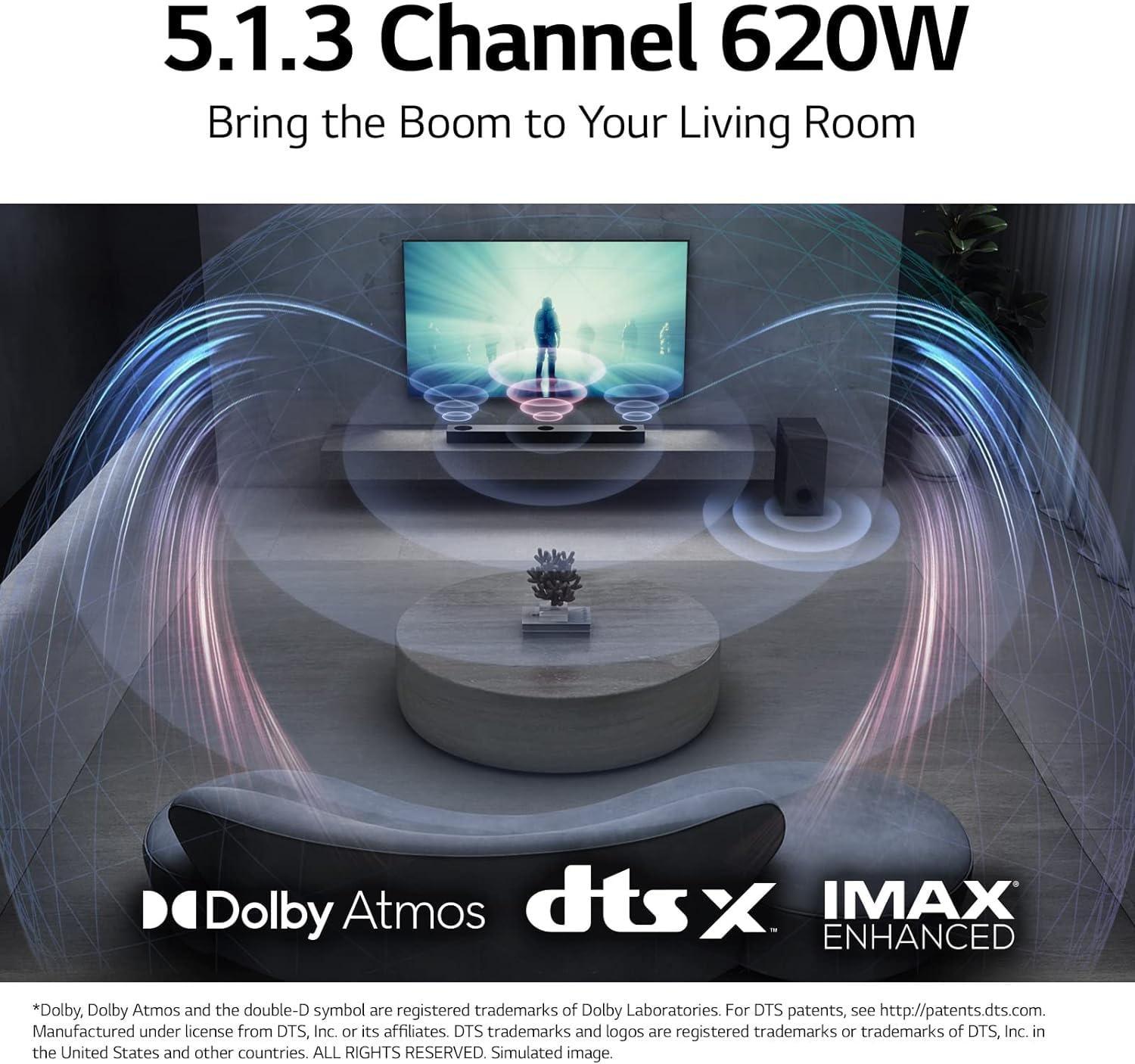
Before diving into specifics, let's establish what makes a good soundbar in 2025. The most important factor is channel configuration – essentially how many separate speakers and directions of sound the system can produce. A 3.1 system like the Samsung has three front-facing speakers (left, center, right) plus a subwoofer (that's the ".1" part handling deep bass). The LG's 5.1.3 configuration is more complex: five main speakers, one subwoofer, and three height channels that fire sound upward to bounce off your ceiling.
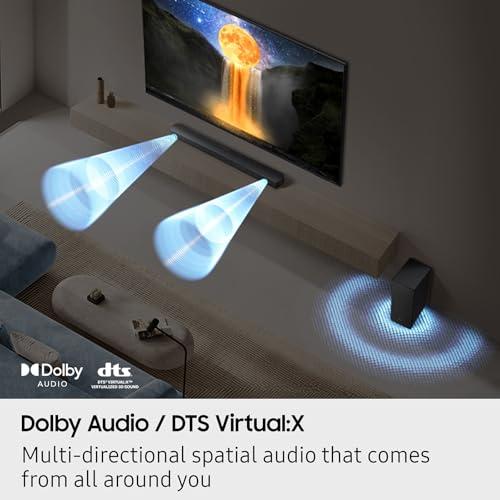
The second crucial element is audio processing. This is where the soundbar's brain decides how to distribute different sounds across all those speakers. Virtual processing like DTS Virtual:X can simulate surround sound from fewer physical speakers, while true Dolby Atmos requires dedicated height speakers to create genuine overhead effects.
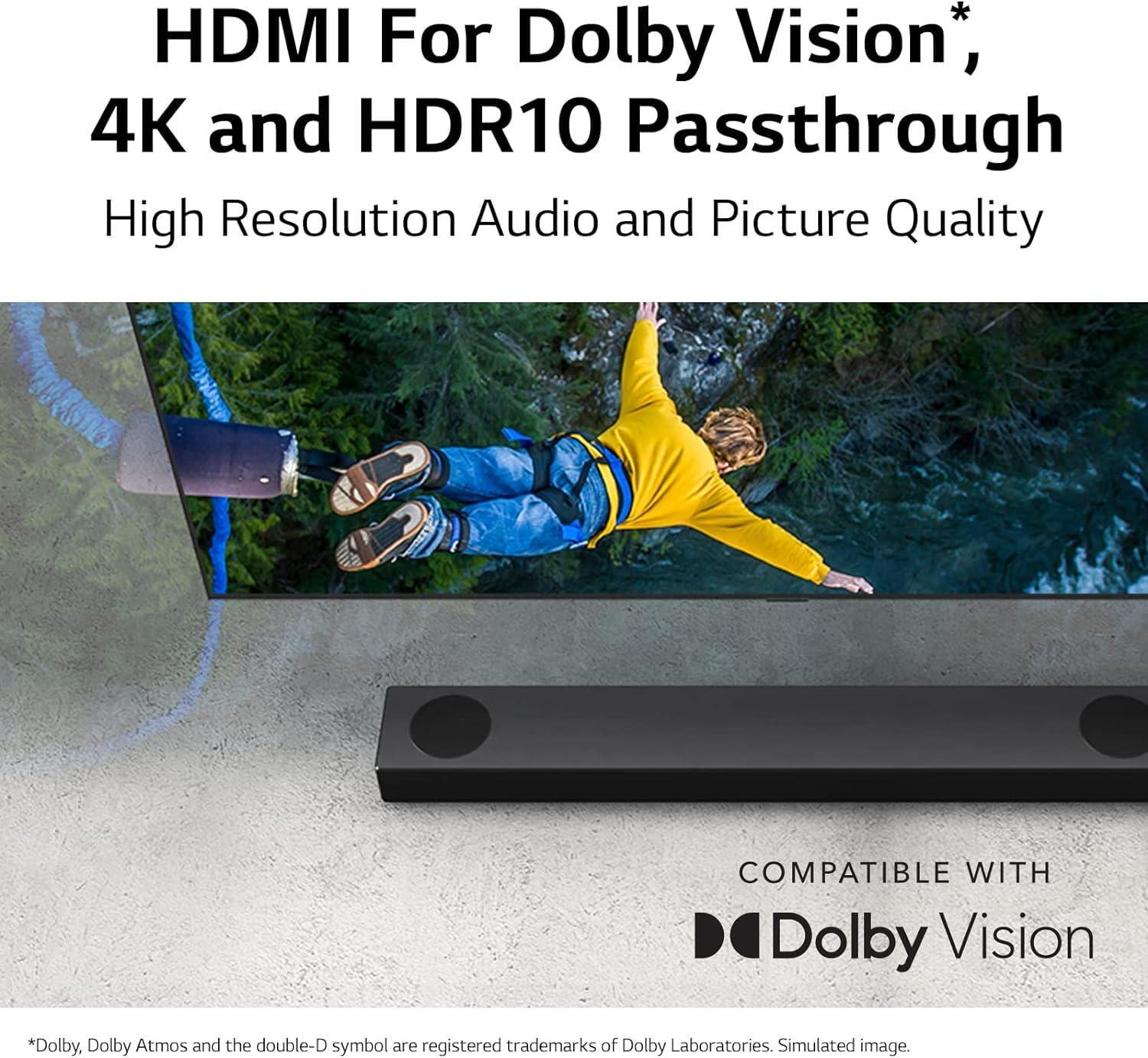
Finally, there's connectivity and integration – how well the soundbar plays with your TV, gaming console, and other devices. Modern soundbars need to handle 4K video passthrough while extracting high-quality audio, and the best ones integrate seamlessly with your TV's remote control.
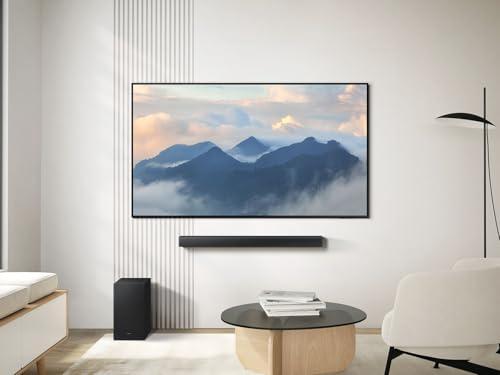
The Samsung HW-B630F launched in 2024 as part of Samsung's value-focused B-Series lineup. It's a 3.1-channel system that prioritizes what most people need most: crystal-clear dialogue and surprisingly powerful bass from a compact package. Samsung designed this soundbar specifically for TV and streaming content, with features like Adaptive Sound that automatically adjusts the audio based on what you're watching.
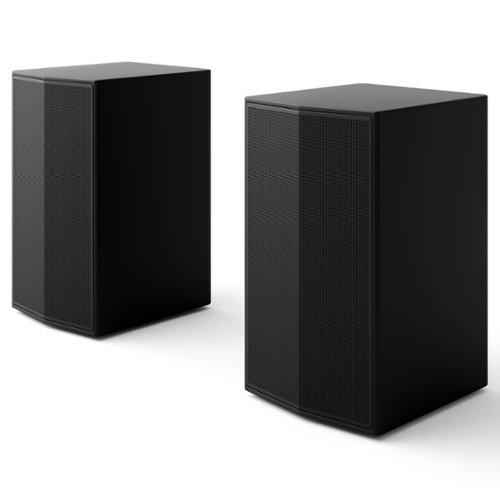
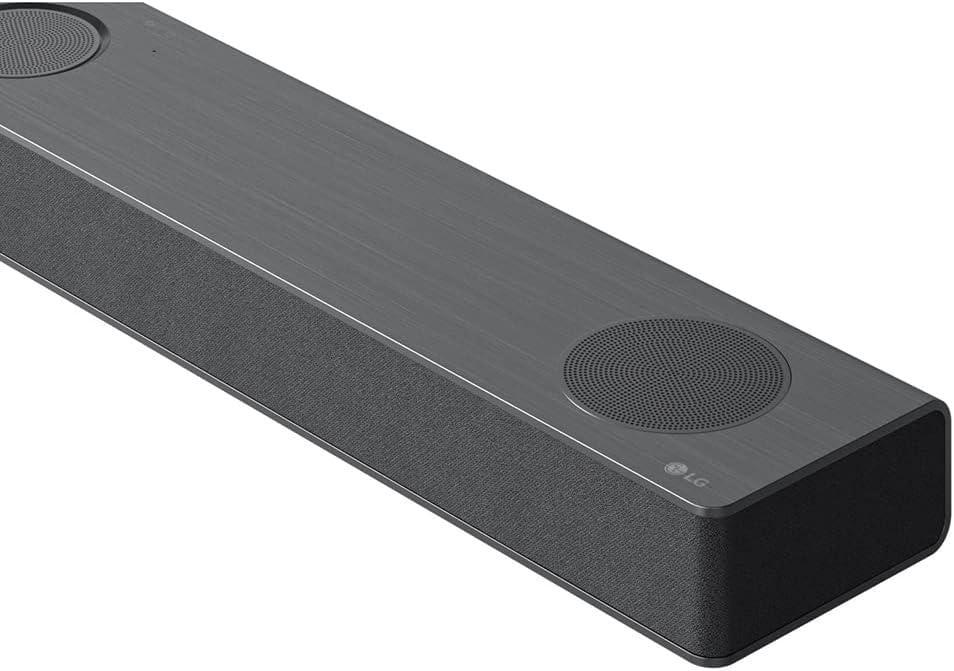
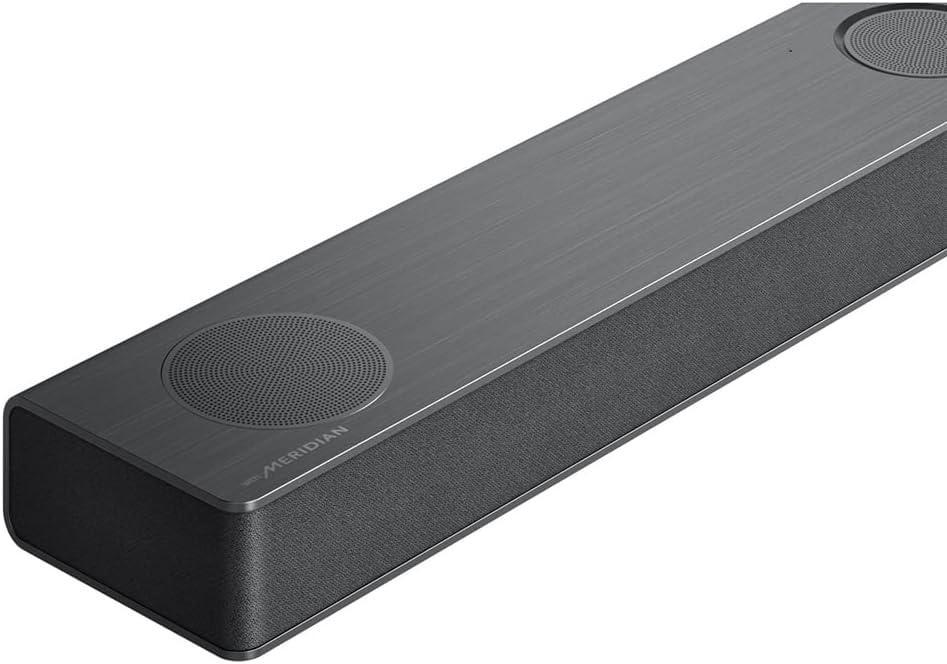
The LG S80TR, released in late 2024, takes the opposite approach. It's a complete 5.1.3 home theater system that includes wireless rear speakers and up-firing height channels for true Dolby Atmos. LG positioned this as a premium offering that can transform any living room into a cinema-like experience.
Since their release, both companies have refined their software through firmware updates. Samsung has improved its virtual surround processing, while LG has enhanced its AI Room Calibration feature to better adapt to different room layouts.
Here's where the Samsung truly excels. That dedicated center channel speaker is specifically tuned for human speech frequencies, and combined with Voice Enhance Mode, it delivers some of the clearest dialogue we've encountered in this price range. This isn't just marketing fluff – the physics make sense. When dialogue comes from a dedicated center speaker positioned directly below your TV screen, voices appear to come right from the actors' mouths rather than floating somewhere in the general vicinity.
The LG certainly handles dialogue well, but its strength lies in creating a balanced soundscape rather than specializing in speech clarity. If you frequently find yourself rewinding shows because you missed what someone said, or if anyone in your household has hearing difficulties, the Samsung's dialogue focus becomes a significant advantage.
This is where the fundamental difference between these systems becomes most apparent. The Samsung uses DTS Virtual:X processing to create the illusion of surround sound from its three front-facing speakers. It's impressive technology that can make explosions seem wider than the soundbar itself and create some sense of depth, but it's ultimately fighting physics.
The LG doesn't need to fight physics because it has dedicated rear speakers. When a helicopter flies overhead in a movie, you hear it move from front to back through actual speakers positioned around your room. The up-firing height channels bounce sound off your ceiling to create genuine overhead effects that virtual processing simply cannot match.
Our research into user reviews consistently shows that people notice this difference immediately when watching action movies or playing games. The Samsung creates an enhanced stereo experience, while the LG creates true surround sound immersion.
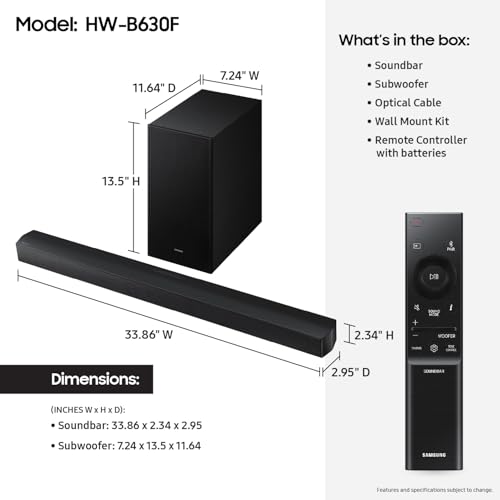
Interestingly, this is where expectations don't always match reality. The Samsung's compact 6-inch subwoofer consistently surprises users with its punch and depth. Samsung has tuned this system specifically for home theater content, with Bass Boost mode that emphasizes the frequencies that make explosions and music feel impactful without becoming muddy.
The LG has a larger subwoofer that should theoretically produce deeper, more powerful bass. However, user feedback suggests the bass isn't as prominent as many expect from such a premium system. This likely reflects LG's more balanced tuning approach – they're aiming for accuracy rather than emphasis.
For most living rooms, the Samsung's bass will feel more exciting and punchy, while the LG's bass will be more refined and accurate. Neither approach is wrong, but it affects which system you'll prefer.
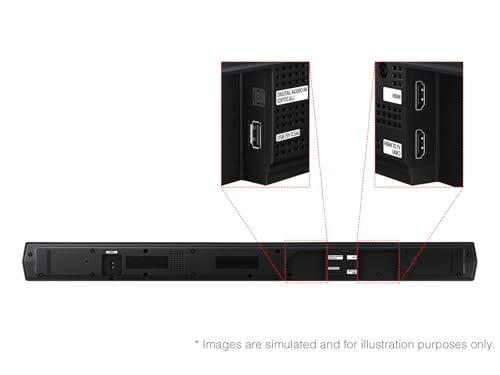
If you own a PlayStation 5, Xbox Series X, or plan to upgrade your gaming setup, the LG S80TR has a significant technical advantage. Its HDMI 2.1 support enables 4K gaming at 120Hz – meaning games can display 120 frames per second at full 4K resolution. The Samsung's HDMI 2.0 connection limits you to 4K at 60Hz, potentially bottlenecking your gaming experience.
The LG also includes dedicated Game Mode processing with something called cross-talk cancellation. This reduces audio interference that can make it harder to pinpoint enemy locations in competitive games. For serious gamers, these features justify a significant portion of the LG's higher price.
The Samsung is clearly tuned for TV and movie content. It makes dialogue crystal clear and gives explosions satisfying impact, but music can sound somewhat mid-focused because of that center channel emphasis. It's perfectly listenable for casual music streaming via Bluetooth, but it's not going to satisfy serious music lovers.
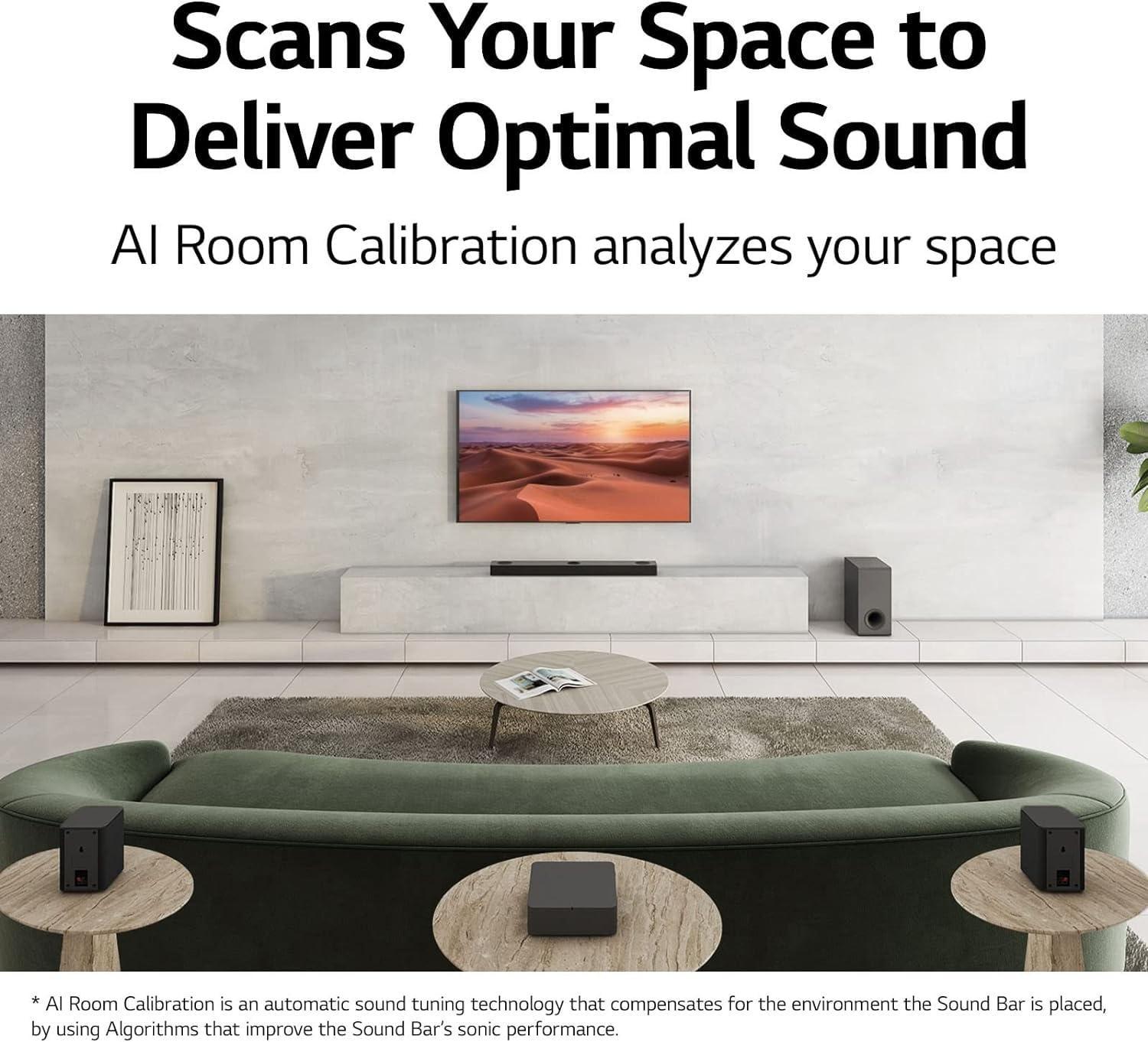
The LG offers better musical performance thanks to its more balanced tuning and AI Room Calibration feature. This system uses a built-in microphone to measure your room's acoustics and adjust the sound accordingly – something the Samsung lacks entirely. If you plan to stream music regularly, the LG's more neutral sound signature will serve you better.
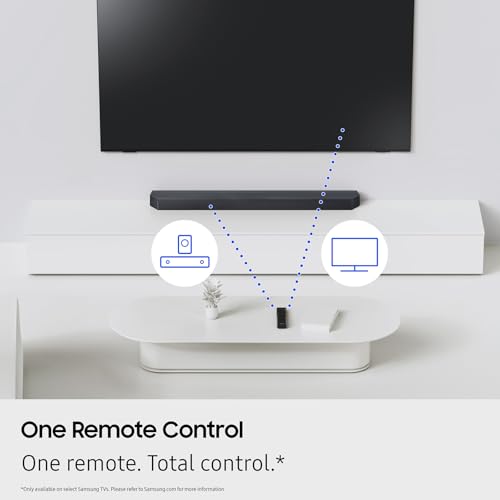
Setting up the Samsung is refreshingly straightforward. The soundbar connects to your TV via HDMI ARC (Audio Return Channel, which sends audio back from the TV to the soundbar), and the wireless subwoofer automatically pairs when you power everything on. If you own a Samsung TV, the integration gets even better – your TV remote can control the soundbar's volume and power, eliminating remote clutter through Samsung's One Remote Control feature.
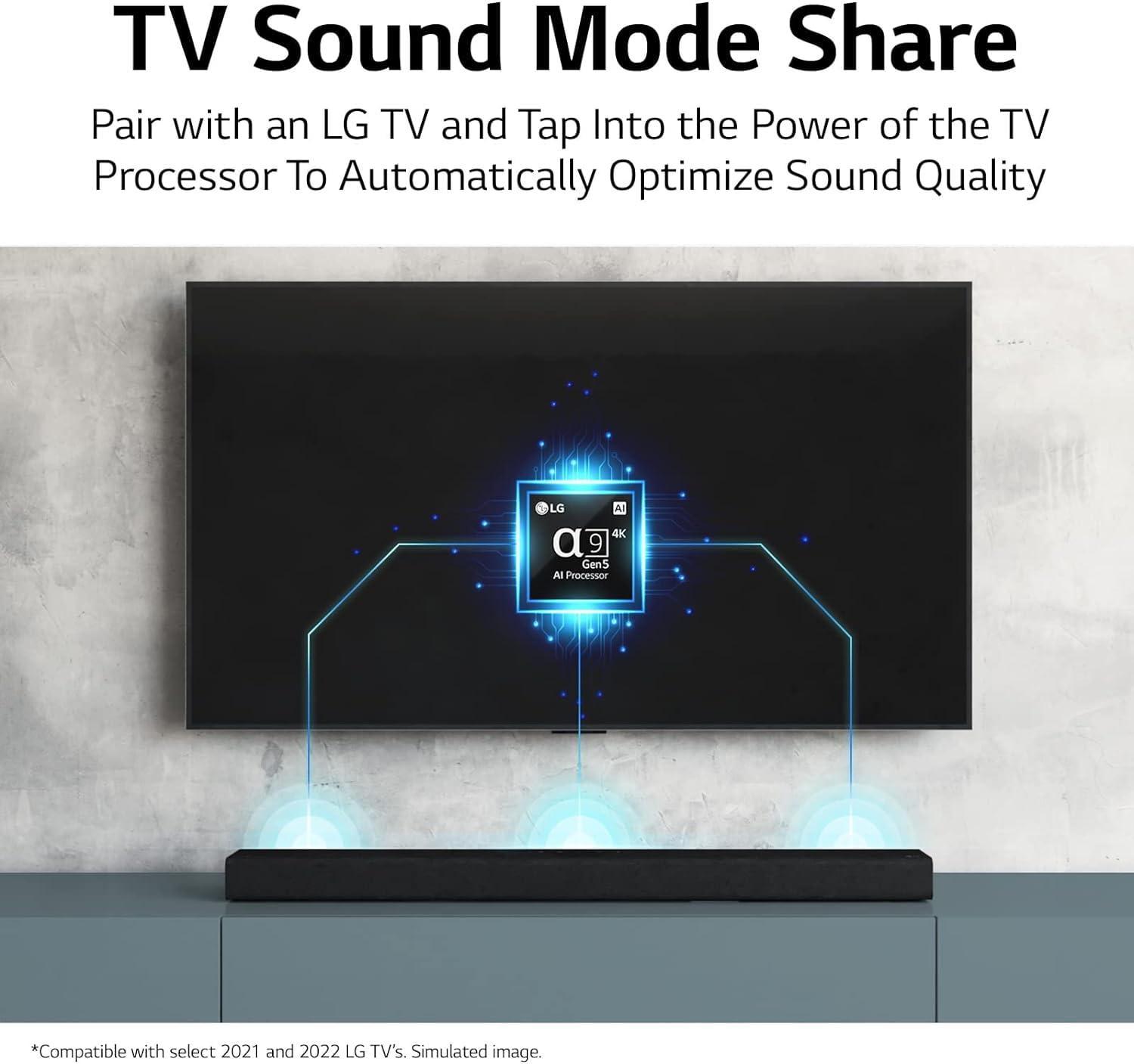
The LG requires more patience during setup. You'll need to position the wireless rear speakers somewhere behind your seating area, find a good spot for the larger subwoofer, and ensure all the wireless connections are stable. The payoff is LG's WOW Orchestra feature, which can use your LG TV's built-in speakers alongside the soundbar to create an even wider soundstage.
From our evaluation of user experiences, about 10% of LG users report occasional wireless connectivity issues with the rear speakers, while Samsung's simpler setup rarely causes problems.
At the time of writing, the Samsung costs roughly half what you'd pay for the LG. This isn't just a price difference – it represents two entirely different value propositions.
The Samsung delivers about 85% of what most people want from a soundbar upgrade at 50% of the cost. That dedicated center channel and powerful bass response transform TV watching immediately, and features like Night Mode (which reduces loud effects while keeping dialogue clear) prove genuinely useful for everyday viewing.
The LG costs significantly more but provides capabilities the Samsung simply cannot match. True surround sound, overhead effects, and future-proofed gaming support justify the premium for users who want a complete home theater experience.
However, there's a middle ground worth considering. Samsung offers an optional Wireless Surround Kit that adds rear speakers to the B630F for additional cost. Even with this upgrade, you'd still pay less than the LG's base price while gaining most of the surround sound benefits – though you'd still miss the height channels that make Dolby Atmos special.
Your physical space significantly influences which system makes sense. The Samsung works beautifully in small to medium-sized rooms, apartments, or bedrooms where rear speaker placement might be impractical. Its compact design fits under most TVs without blocking sensors or looking oversized.
The LG needs room to breathe. Those rear speakers should ideally be positioned 6-8 feet behind your seating area and somewhat elevated for optimal performance. If your couch sits against a wall or you have an open floor plan where rear speakers would be in walkways, the Samsung's virtual surround becomes more appealing.
We've found that room size also affects bass perception. The Samsung's emphasis works particularly well in smaller spaces where the bass can pressurize the room effectively. In larger spaces, the LG's more powerful but balanced bass approach often sounds more natural.
The Samsung HW-B630F makes the most sense for people who primarily watch TV shows, news, and streaming content. If your main frustration with TV audio is unclear dialogue, or if you want a significant upgrade without complexity or high cost, this system delivers exactly what you need. It's also ideal for Samsung TV owners who value seamless integration, and for anyone with space constraints that make rear speakers impractical.
Choose the LG S80TR if you're building a proper home theater setup. This system rewards movie enthusiasts who watch a lot of action films, sci-fi, or anything with Dolby Atmos soundtracks. It's also the better choice for serious gamers with next-gen consoles, music listeners who want room-calibrated sound, and anyone who has the space and budget for a complete surround system.
The LG also makes sense if you plan to keep this system for many years. Its HDMI 2.1 support and comprehensive audio format compatibility provide better future-proofing as streaming services and gaming continue evolving.
Both soundbars excel at what they're designed to do, but they're designed for different users. The Samsung HW-B630F represents exceptional value for anyone seeking clear dialogue and solid bass without complexity. It's the soundbar equivalent of a reliable daily driver – not flashy, but it gets the job done beautifully at a price that won't strain your budget.
The LG S80TR is for people who want to transform their living room into a mini cinema. If you have the space, budget, and desire for true surround sound immersion, it delivers an experience that virtual processing simply cannot match.
Our research suggests most people underestimate how much they'll appreciate clear dialogue until they experience it, making the Samsung a smart choice for general TV viewing. However, if you regularly watch movies or play games and have the room for proper speaker placement, the LG's immersive capabilities justify its higher cost.
The decision ultimately comes down to whether you want good sound for TV or great sound for everything. Both deliver on their promises, but those promises are quite different.
| Samsung HW-B630F B-Series 3.1ch Soundbar System | LG S80TR 5.1.3 Channel Soundbar with Dolby Atmos and Rear Speakers |
|---|---|
| Channel Configuration - Determines surround sound capability and immersion level | |
| 3.1 channels (3 front + subwoofer) with virtual surround processing | 5.1.3 channels (5 main + subwoofer + 3 height) with physical surround speakers |
| Included Components - What you get in the box affects setup complexity and performance | |
| Soundbar + wireless subwoofer (rear speakers sold separately) | Complete system: soundbar + wireless subwoofer + wireless rear speakers |
| Dolby Atmos Support - Essential for overhead sound effects in movies and games | |
| No true Atmos (uses DTS Virtual:X for simulated height effects) | Full Dolby Atmos and DTS:X with dedicated up-firing height channels |
| HDMI Capabilities - Critical for 4K gaming and future-proofing | |
| HDMI 2.0 (4K/60Hz passthrough, ARC support) | HDMI 2.1 (4K/120Hz passthrough, eARC, VRR, ALLM) |
| Dialogue Enhancement - Key feature for TV shows and unclear speech | |
| Dedicated center channel with Voice Enhance Mode (excellent clarity) | Standard center channel performance (good but not specialized) |
| Room Calibration - Automatically optimizes sound for your specific space | |
| Manual bass/treble adjustments only | AI Room Calibration with built-in microphone |
| Wireless Connectivity - Affects music streaming and smart home integration | |
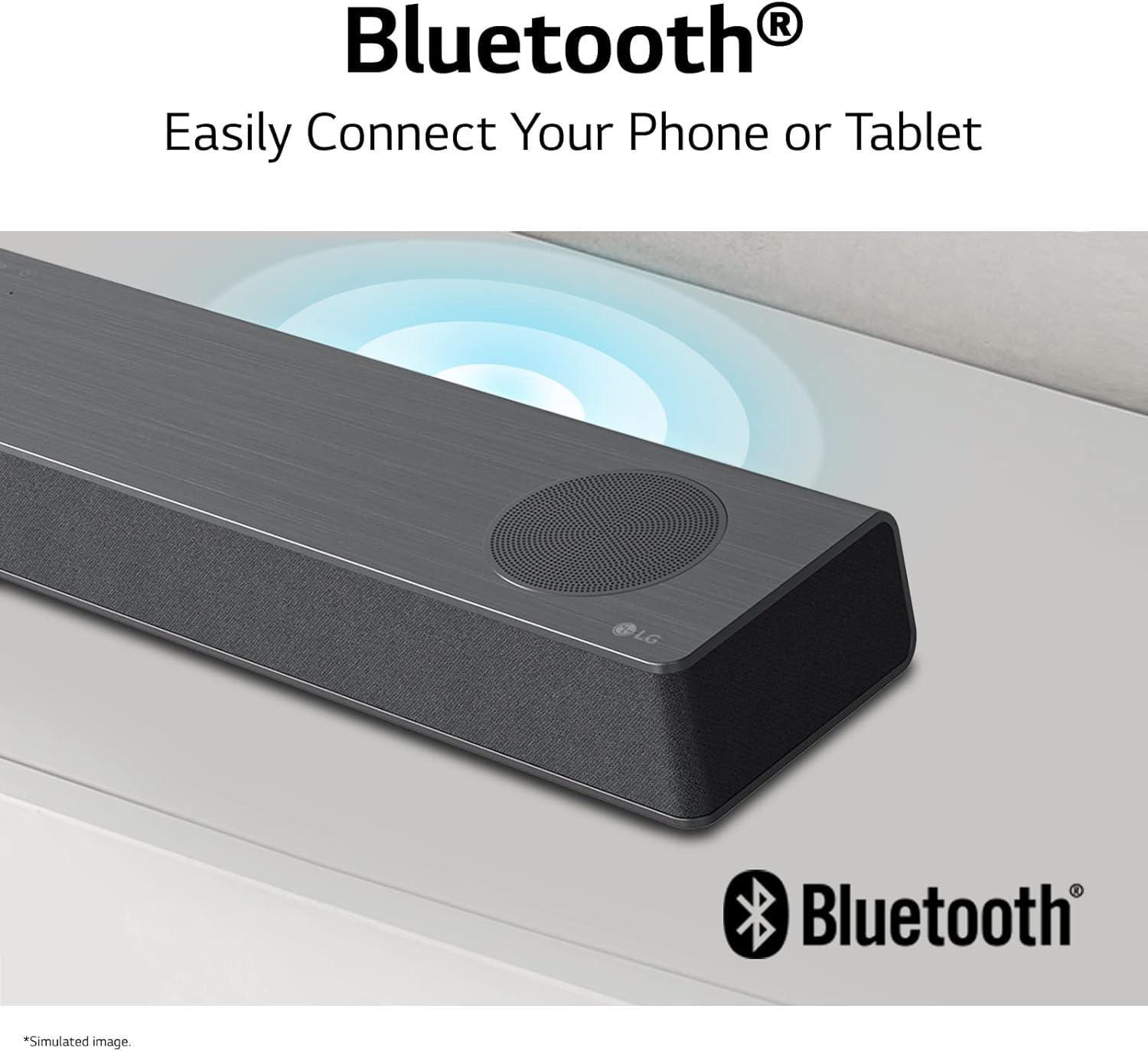
| Bluetooth 5.2 with multi-device connection | Bluetooth 5.3 + Wi-Fi + voice assistant support |
| TV Integration - Simplifies daily use with your existing TV remote | |
| One Remote Control (works seamlessly with Samsung TVs) | WOW Orchestra (syncs with LG TV speakers for expanded soundstage) |
| Bass Performance - Important for action movies and music impact | |
| 6" subwoofer with Bass Boost mode (punchy, emphasized low-end) | Larger subwoofer with balanced tuning (accurate but less emphasized) |
| Setup Complexity - Time and effort required to get optimal performance | |
| Simple 2-component setup (bar + sub auto-pairs) | Complex 4-component system requiring rear speaker positioning |
| Gaming Features - Specialized modes for competitive and immersive gaming | |
| Basic Game Mode processing | Dedicated Game Mode with cross-talk cancellation + 120Hz support |
| Expandability - Options to upgrade the system later | |
| Optional Wireless Surround Kit available (adds 5.1 capability) | Complete system with no expansion needed or possible |
| Value Positioning - Performance relative to cost at time of writing | |
| Exceptional dialogue clarity and bass at budget-friendly price | Premium complete surround experience at significantly higher cost |
The Samsung HW-B630F excels at dialogue clarity thanks to its dedicated center channel speaker and Voice Enhance Mode. This combination makes speech stand out clearly from background music and sound effects, making it ideal for TV shows and news. While the LG S80TR also delivers good dialogue performance, it's tuned for overall balance rather than specialized voice enhancement.
The LG S80TR includes wireless rear speakers that create true surround sound, while the Samsung HW-B630F uses virtual processing to simulate surround effects from front-facing speakers only. True rear speakers provide more convincing surround immersion, especially for movies and gaming, but virtual surround can still create a wider soundstage than basic TV speakers.
The Samsung HW-B630F is significantly easier to install, requiring only the main soundbar and a wireless subwoofer that pairs automatically. The LG S80TR involves positioning multiple components including wireless rear speakers, making setup more complex but ultimately more rewarding for home theater enthusiasts.
The Samsung HW-B630F has 3.1 channels (left, center, right speakers plus subwoofer), while the LG S80TR features 5.1.3 channels (five main speakers, subwoofer, and three height channels). More channels generally mean better surround sound separation and more immersive audio, but also higher cost and complexity.
The LG S80TR offers superior gaming performance with 4K/120Hz HDMI passthrough, dedicated Game Mode with cross-talk cancellation, and true surround sound for positional audio. The Samsung HW-B630F supports gaming but is limited to 4K/60Hz and lacks advanced gaming-specific features.
Only the LG S80TR provides true Dolby Atmos support with dedicated up-firing height channels that bounce sound off your ceiling. The Samsung HW-B630F uses DTS Virtual:X to simulate height effects but cannot deliver genuine overhead sound placement that true Atmos systems provide.
The Samsung HW-B630F delivers exceptional value by focusing on what most people need most: clear dialogue and solid bass at an affordable price. The LG S80TR costs significantly more but provides a complete surround system with features that justify the premium for serious home theater enthusiasts.
Both soundbars work with any TV brand, but each offers special integration features with their respective manufacturers. The Samsung HW-B630F includes One Remote Control compatibility with Samsung TVs, while the LG S80TR features WOW Orchestra technology that works with LG TVs to use both TV and soundbar speakers simultaneously.
The Samsung HW-B630F works excellently in small to medium rooms where rear speaker placement might be impractical. Its compact design and virtual surround processing are well-suited for apartments or bedrooms. The LG S80TR requires adequate space for optimal rear speaker positioning and performs best in larger rooms.
The Samsung HW-B630F delivers surprisingly punchy bass from its compact 6-inch subwoofer with Bass Boost mode, emphasizing impact for movies and music. The LG S80TR features a larger subwoofer with more balanced, accurate bass tuning that's less emphasized but more refined for critical listening.
The Samsung HW-B630F supports an optional Wireless Surround Kit that adds rear speakers for 5.1 capability, providing an upgrade path. The LG S80TR comes as a complete system with all components included and doesn't require or support additional expansion options.
For movie enthusiasts, the LG S80TR provides superior cinematic immersion with true Dolby Atmos, dedicated rear speakers, and overhead sound effects that enhance action scenes and atmospheric content. The Samsung HW-B630F offers excellent dialogue clarity and solid bass that improves most movie experiences, but without the full surround immersion of the LG system.
We've done our best to create useful and informative comparisons to help you decide what product to buy. Our research uses advanced automated methods to create this comparison and perfection is not possible - please contact us for corrections or questions. These are the sites we've researched in the creation of this article: samsung.com - bhphotovideo.com - crutchfield.com - youtube.com - bestproducts.com - videoandaudiocenter.com - pcrichard.com - bhphotovideo.com - samsung.com - youtube.com - requiremints.com - karlsonline.com - crutchfield.com - youtube.com - donstv.com - samsung.com - bhphotovideo.com - youtube.com - youtube.com - crutchfield.com - costco.ca - rtings.com - crutchfield.com - accio.com - bhphotovideo.com - manuals.plus - samsung.com - saraappliance.com - bestbuy.com - billsmith.com - brandsmartusa.com - avsforum.com - youtube.com - lg.com - buydig.com - louisdoehomecenter.com - lg.com - videoandaudiocenter.com - mynavyexchange.com - walts.com - bestbuy.com

Privacy Policy
Terms and Conditions - Affiliate Policy
Home Security
© Copyright 2008-2026.
11816 Inwood Rd #1211, Dallas, TX 75244