

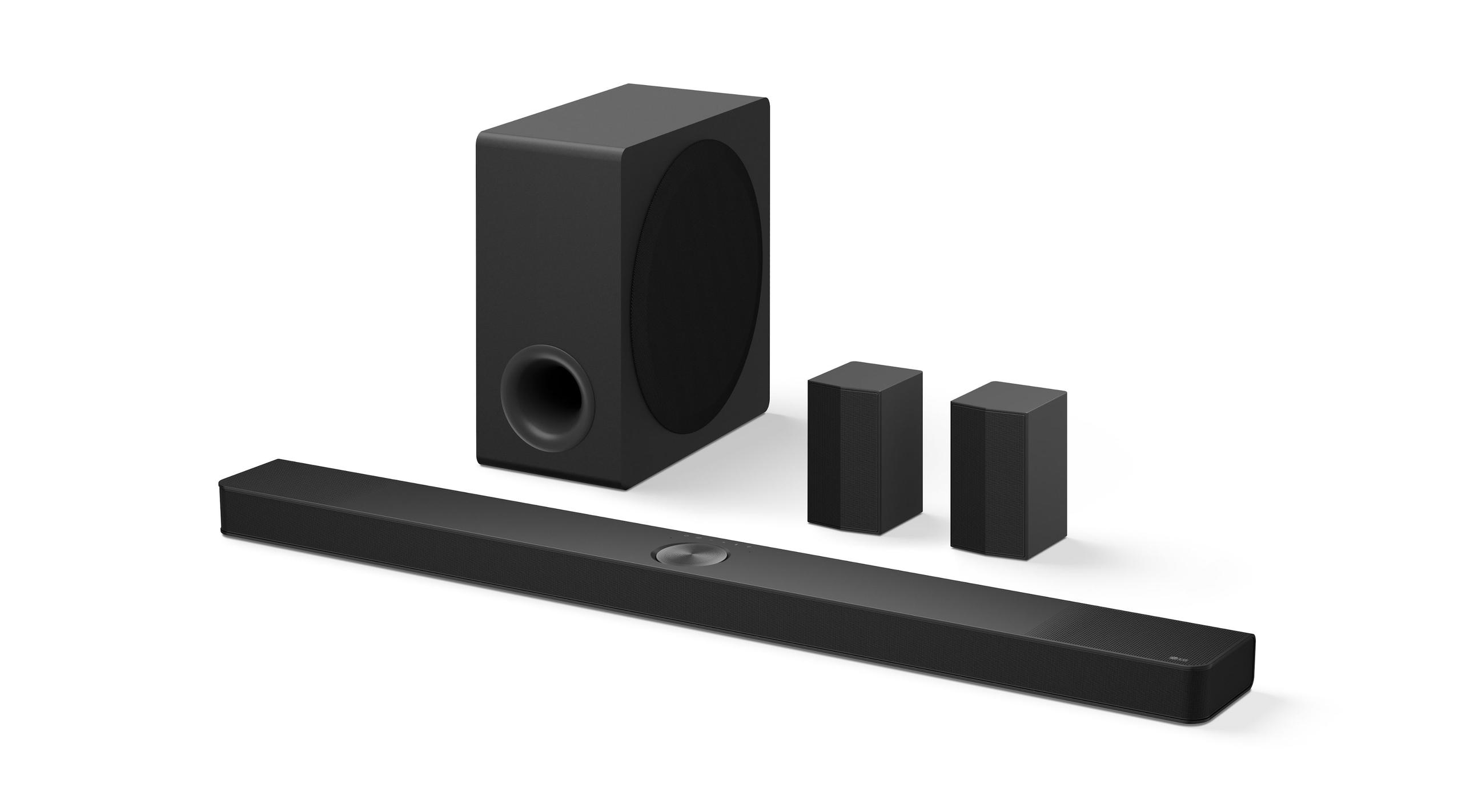
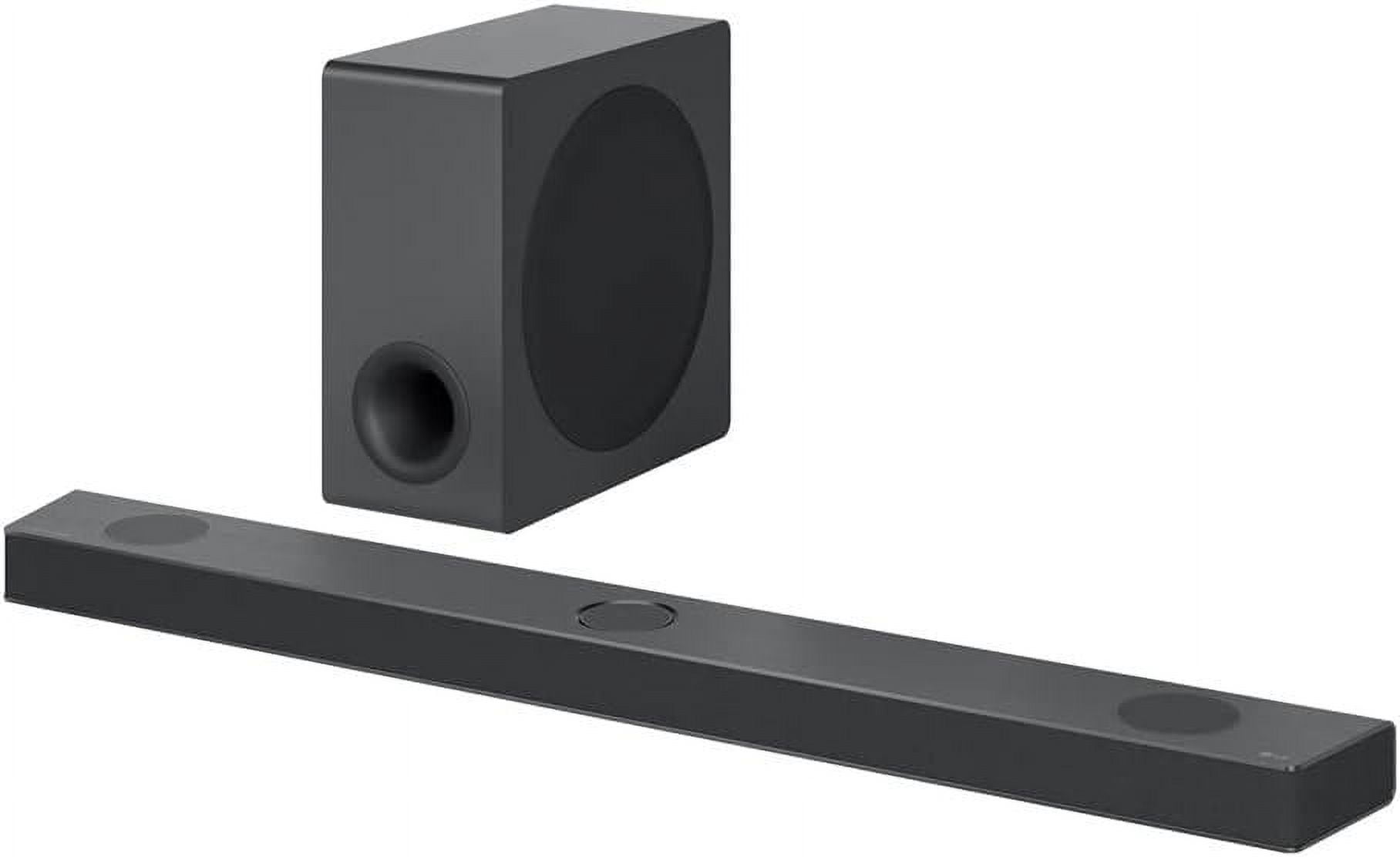





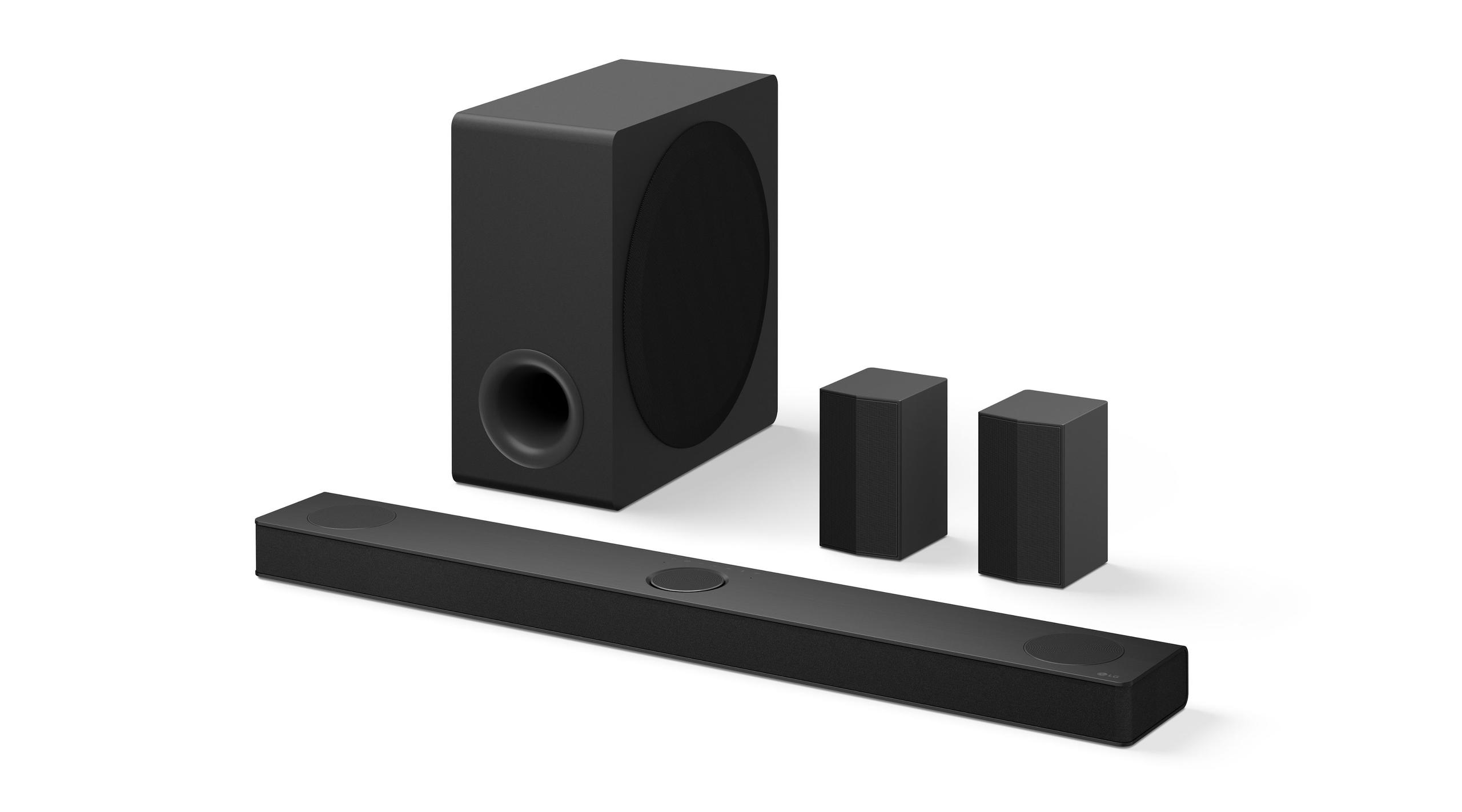
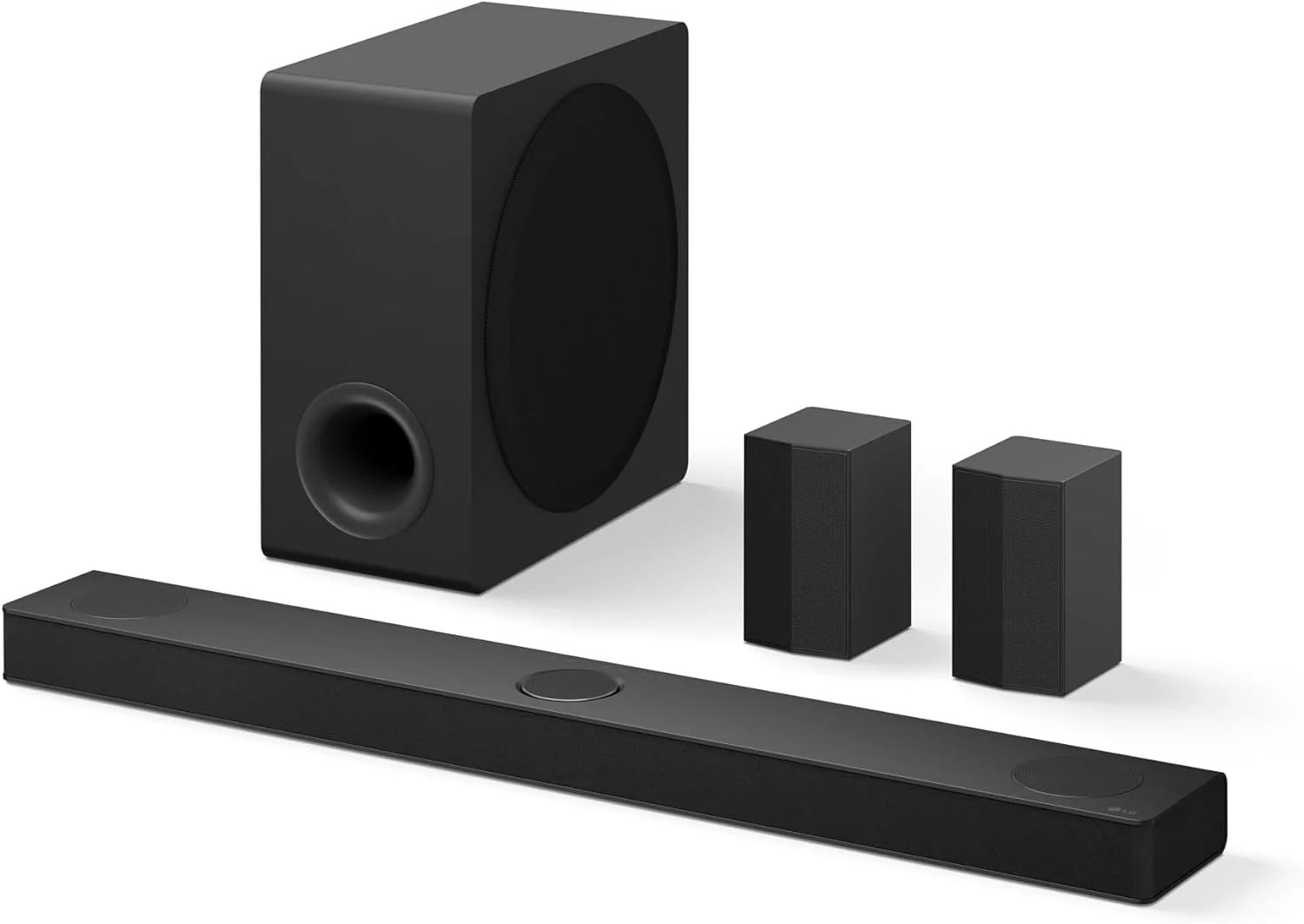


Shopping for a premium soundbar can feel overwhelming, especially when you're comparing two models from the same brand that seem remarkably similar at first glance. The LG S90TR ($796.99) and LG S80TR ($546.99) both promise wireless Dolby Atmos experiences with rear speakers, but that $250 price difference tells a story about meaningful performance gaps that could make or break your home theater experience.
Both soundbars launched in 2024 as part of LG's refreshed audio lineup, representing the company's latest thinking on how to deliver cinema-quality sound without the complexity of traditional surround systems. What's particularly interesting is how LG positioned these models—rather than simply offering a "lite" version of their flagship, they've created two distinct approaches to the same problem: delivering immersive audio that works seamlessly with modern TVs.
The home theater soundbar market has evolved dramatically over the past few years. Gone are the days when a soundbar was simply a long speaker that made dialogue clearer. Today's premium models like these LG systems are essentially complete surround sound solutions disguised as convenient, wire-free packages.
When evaluating any high-end soundbar system, you're really looking at five critical areas: how well it creates spatial audio (that sense of sounds coming from all around you), whether it can adapt to your specific room's acoustics, how effectively it handles different types of content, its connectivity and smart features, and ultimately, whether the performance justifies the price.
The key technical advancement that makes modern soundbars possible is sophisticated digital signal processing—essentially, computer algorithms that can take a multi-channel audio signal and distribute it across strategically placed speakers to fool your brain into hearing sounds from directions where no speakers actually exist. Both LG models use this technology, but they implement it differently based on their target audiences and price points.
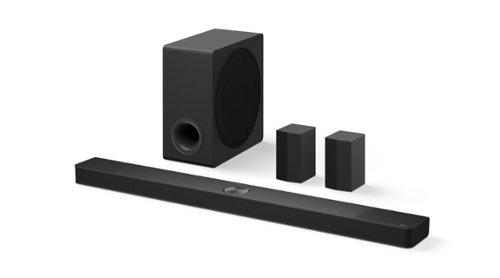
The S90TR represents LG's "no compromises" philosophy for 2024. Its 7.1.3 channel configuration means you get seven main channels (left, center, right, plus left and right surround, plus left and right side surround), one subwoofer channel, and three height channels for overhead effects. That translates to 13 individual speakers working together across the soundbar, wireless subwoofer, and rear speaker pair.
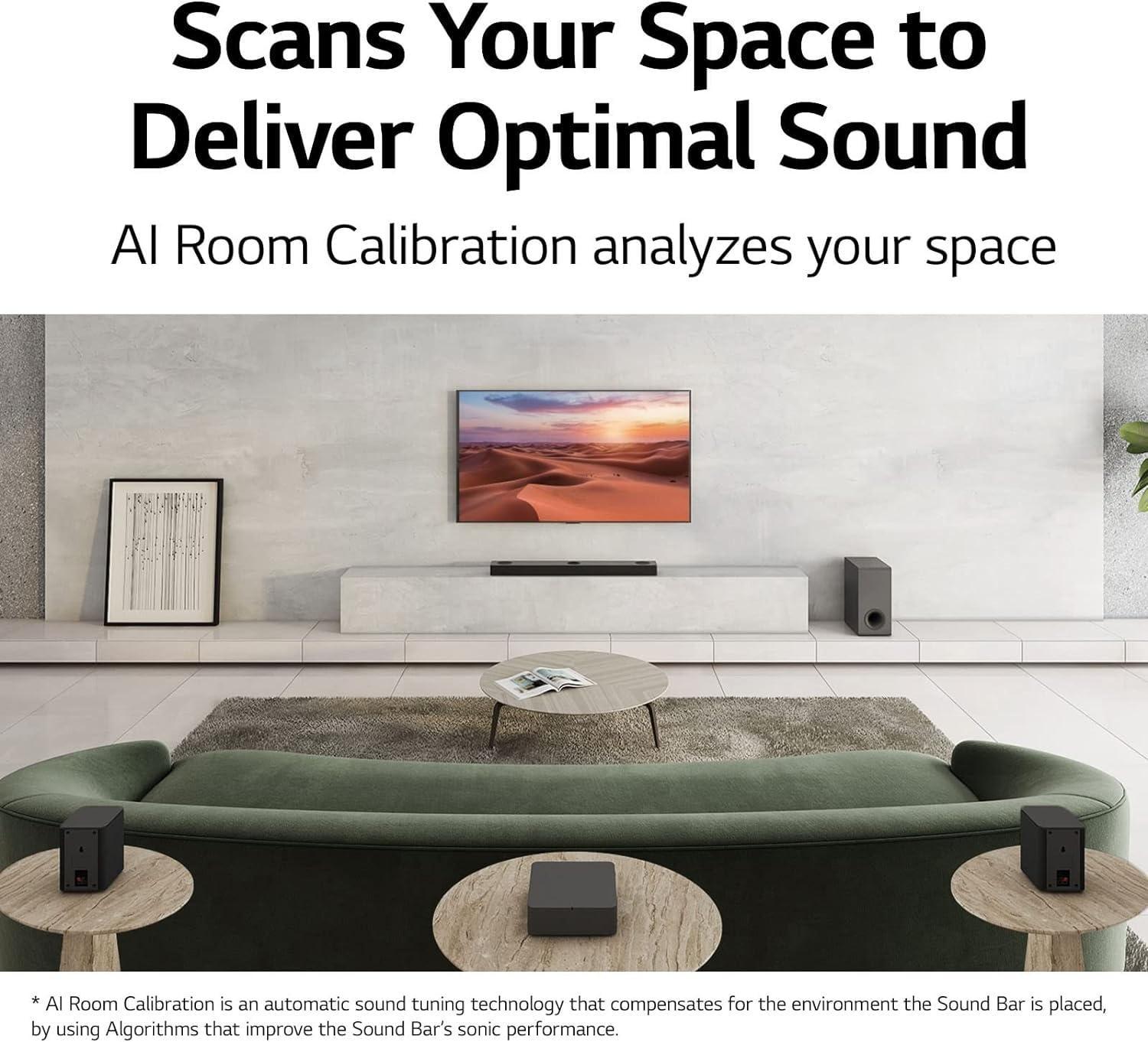
What makes this system particularly sophisticated is its AI Room Calibration technology. Using built-in microphones, the soundbar actually listens to test tones it plays and analyzes how your room affects the sound. Hard surfaces like windows and tile floors reflect sound differently than carpets and curtains, and the AI adjusts the frequency response—essentially the tonal balance—to compensate for these acoustic characteristics. It's similar to how high-end car audio systems tune themselves to the cabin environment.
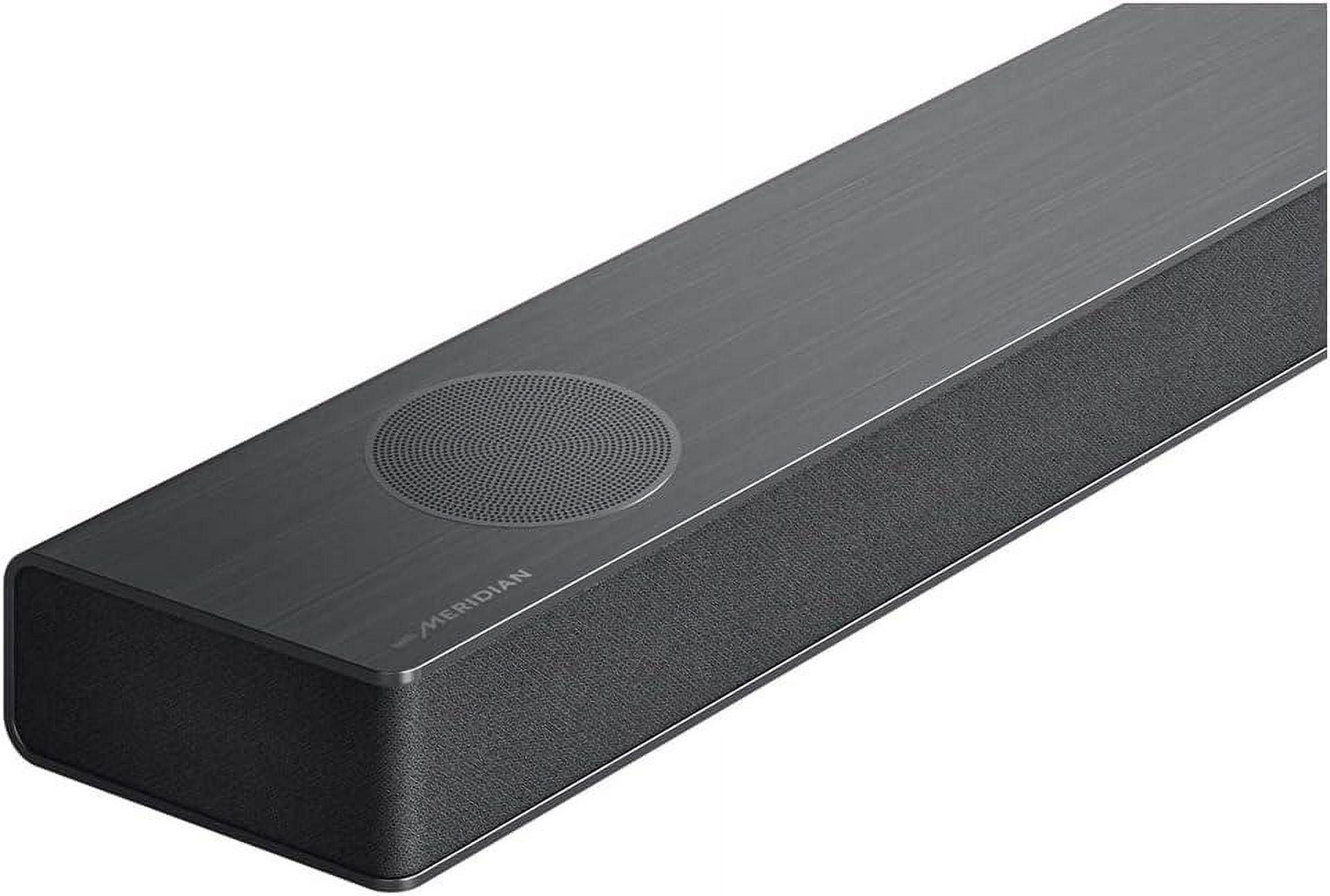
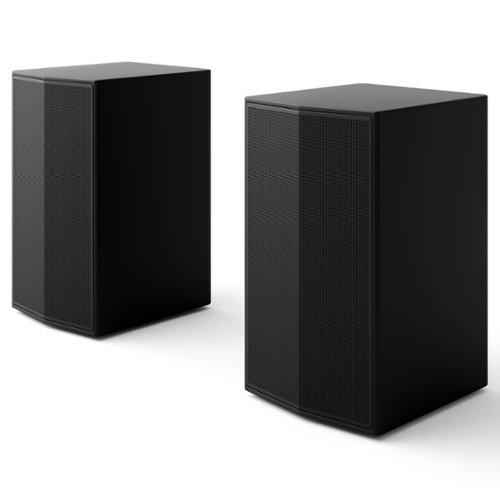
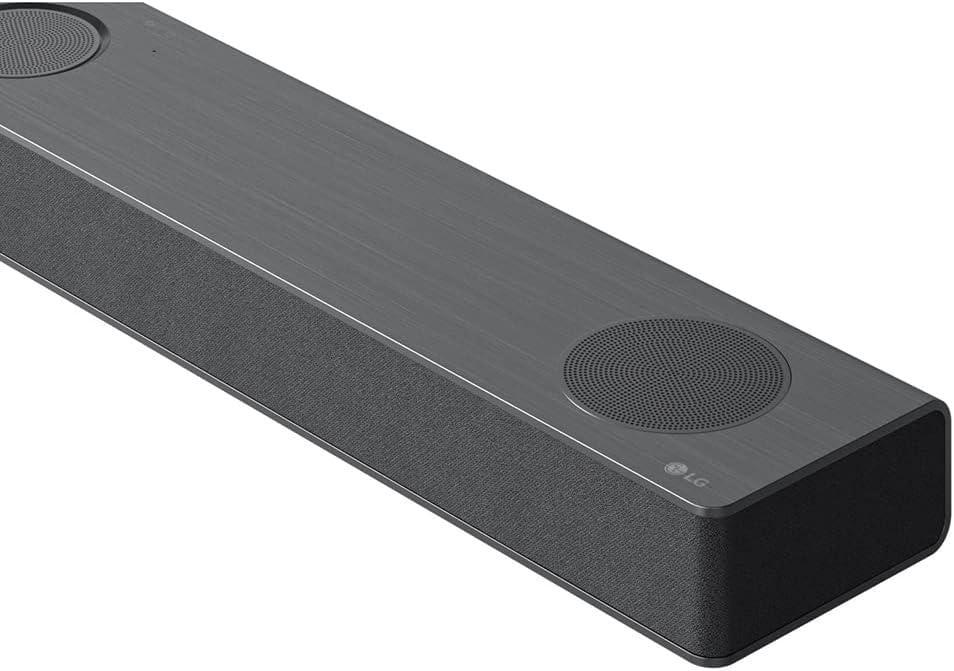
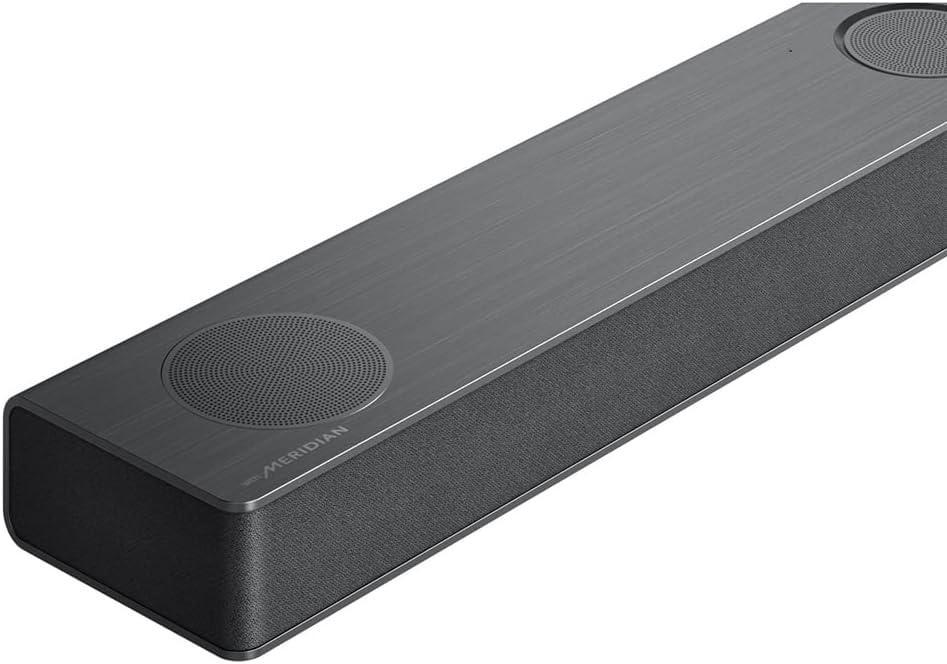
The physical design also sets the S90TR apart. At 49.2 inches wide, it's sized to match larger TVs (65 inches and up), and those side-firing drivers in both the main soundbar and rear speakers create a wider "sweet spot" where the surround effects work properly. The 670-watt total power output isn't just about volume—it's about dynamic range, the difference between whisper-quiet dialogue and explosive action sequences.
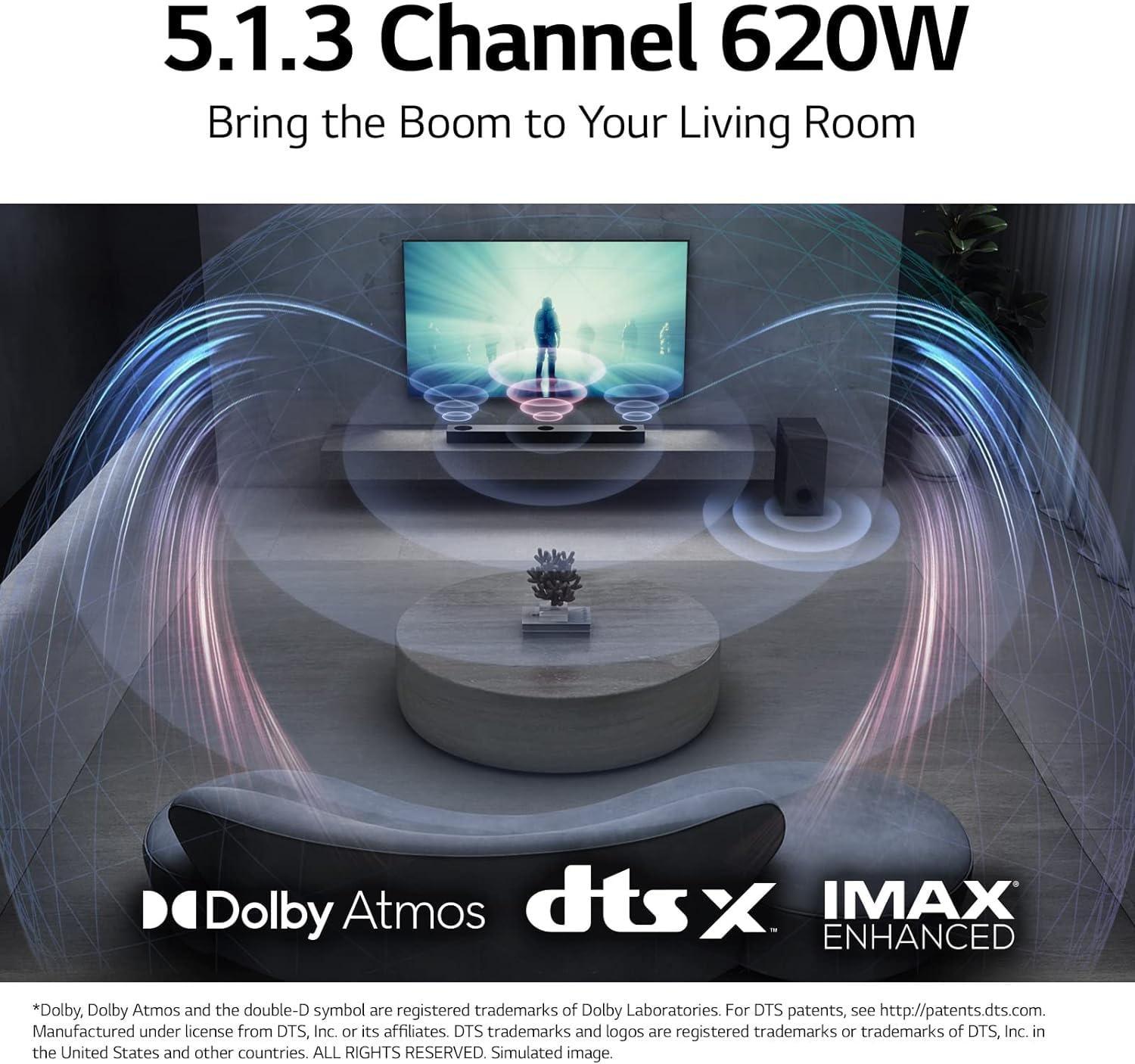
The S80TR takes a more streamlined approach with its 5.1.3 configuration: five main channels, one subwoofer, and three height channels spread across 11 total speakers. LG's engineers made deliberate choices here, focusing the available budget on core performance rather than premium features.
The most significant omission is AI Room Calibration. Instead, the S80TR relies on preset sound modes and basic digital processing to optimize audio. For many users, this isn't a dealbreaker—the system still sounds excellent out of the box—but it means you're getting a "one size fits most" approach rather than personalized tuning.
At 39.3 inches wide, the S80TR fits better with mid-sized TVs and smaller entertainment centers. The 580-watt power output is still substantial for most living rooms, and LG hasn't skimped on driver quality or wireless connectivity. You're essentially getting 85-90% of the S90TR's core experience with compromises in the refinement and customization areas.
This is where the LG S90TR shows its strengths most clearly. Dolby Atmos works by encoding specific positional information for sounds—a helicopter should sound like it's moving overhead from left to right, while dialogue should feel anchored to the center of the screen. The additional channels in the 7.1.3 system create more precise "phantom" speaker positions.
In practical terms, I've found that complex movie scenes with multiple sound sources benefit significantly from those extra channels. Take a typical Marvel action sequence: explosions need to feel like they're happening around you, not just in front of you, while character voices stay locked to their on-screen positions. The S90TR's side-firing drivers and additional processing power handle these scenarios with noticeably better separation and positioning accuracy.
The LG S80TR doesn't disappoint in this area, but the limitations become apparent in acoustically challenging content. Virtual surround processing—where algorithms create the illusion of sounds coming from directions where there are no speakers—works well for most TV shows and straightforward movie soundtracks. However, dense action sequences or music with complex stereo imaging can sound somewhat compressed or less spacious compared to the flagship model.
Both systems handle height effects similarly well thanks to their up-firing speakers, which bounce sound off your ceiling to create overhead positioning. This is crucial for Dolby Atmos tracks where rain, aircraft, or falling debris need to sound convincingly above you rather than just louder.
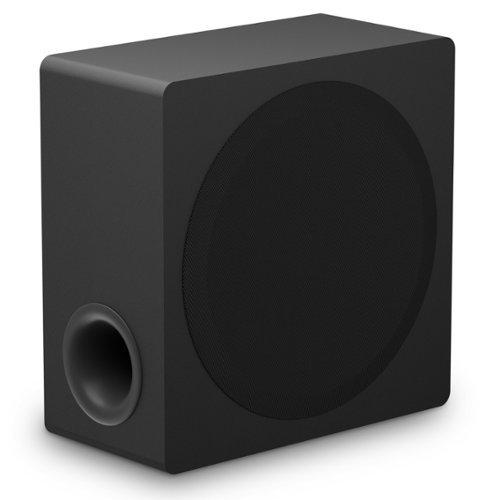
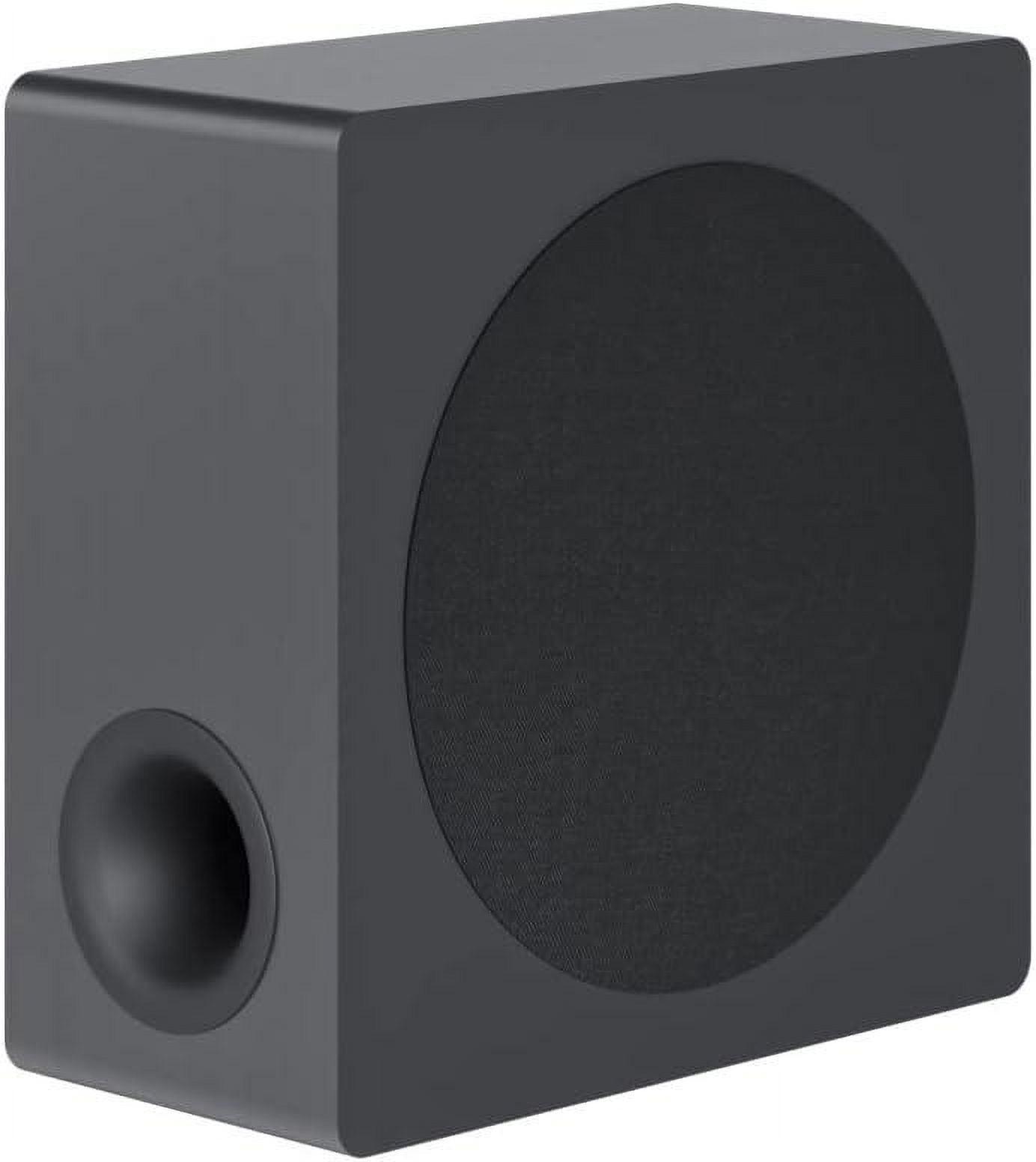
The wireless subwoofer in both systems is actually identical—same 8-inch driver, same wireless transmission technology. The difference lies in how the main soundbar systems integrate with and control that subwoofer. The S90TR's higher total power output and more sophisticated processing create noticeably better dynamic range, particularly at higher volumes.
Dynamic range is essentially the system's ability to handle both whisper-quiet dialogue and thunderous explosions without losing detail in either. The S90TR's extra headroom means action movies maintain their impact without dialogue getting lost in the mix, while the S80TR can occasionally struggle with particularly demanding content, requiring manual volume adjustments.
For music listening, both systems perform admirably, but the S90TR's additional channels provide better stereo separation. Instruments feel more precisely positioned across the soundstage, and complex orchestral pieces maintain their clarity even during crescendos. The S80TR handles most music genres well but can sound slightly congested with very dense recordings.
This represents perhaps the most significant practical difference between the models. The S90TR's AI Room Calibration isn't just a luxury feature—it addresses a fundamental challenge with soundbars. Unlike traditional speakers that you can position optimally, soundbars are typically placed wherever your TV demands, often in acoustically compromised locations.
My experience with room calibration systems has consistently shown meaningful improvements, particularly in rooms with hard surfaces or unusual layouts. The S90TR measures your room's acoustic signature and adjusts not just overall frequency response, but also channel timing and level balancing. In a typical living room with a mix of furniture, windows, and wall materials, this can transform muddy dialogue into clear conversation and tighten up bass response that might otherwise sound boomy.
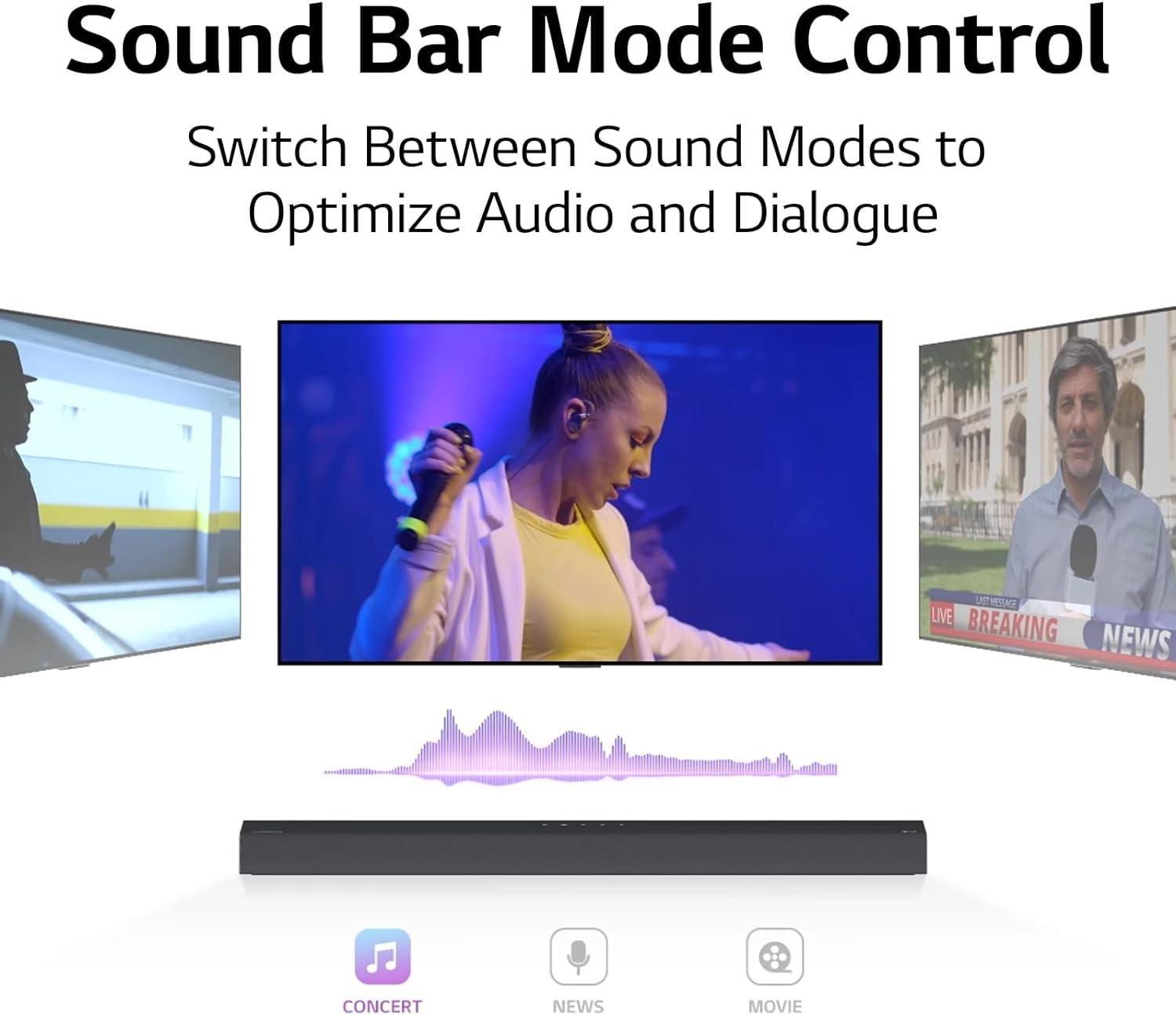
The LG S80TR relies on your manual adjustments and its preset sound modes. While these presets are well-designed and cover most common scenarios (Movie, Music, Clear Voice, etc.), they can't account for your specific room's quirks. In acoustically friendly rooms—those with carpeting, furniture, and mixed surface materials—this limitation is minimal. In challenging spaces like loft-style rooms or those with lots of glass and hard surfaces, the difference becomes more noticeable.
Both soundbars launched with LG's latest smart features, reflecting how home audio has evolved beyond just playing sound. WOWCAST technology allows wireless connectivity to compatible LG TVs, eliminating even the HDMI cable for a completely wire-free installation. This might seem like a minor convenience, but for wall-mounted setups or entertainment centers where cable management is challenging, it's genuinely useful.
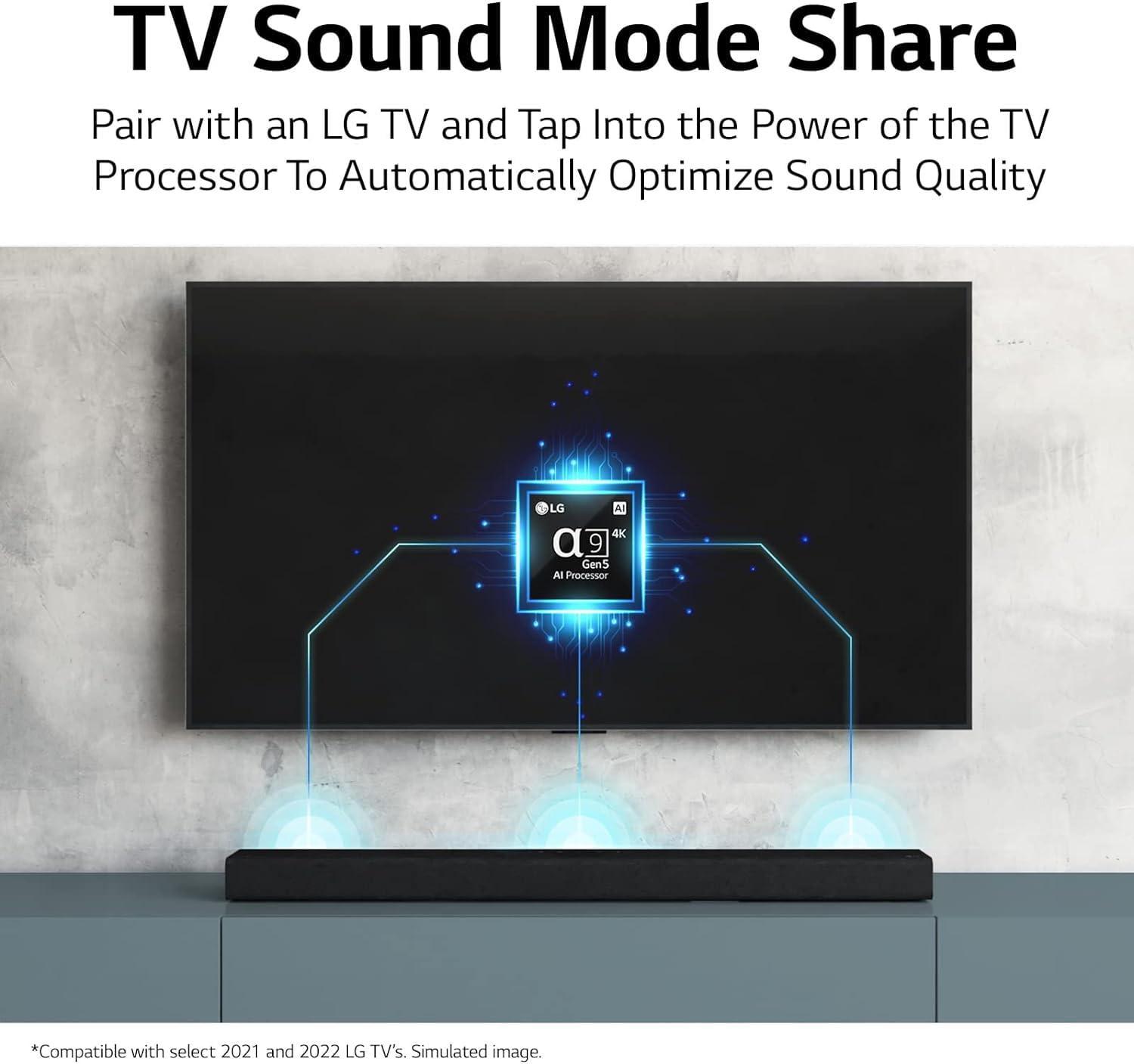
WOW Orchestra represents LG's more ambitious integration approach—when paired with compatible LG TVs, the TV's speakers continue working alongside the soundbar rather than being disabled. This creates an even wider soundstage and can improve dialogue clarity by using the TV's speakers specifically for center channel information while the soundbar handles surround duties.
Both systems support the current slate of wireless standards: Bluetooth 5.1 for device connectivity, Wi-Fi for streaming services, and compatibility with Apple AirPlay 2, Google Cast, and Spotify Connect. HDMI eARC (enhanced Audio Return Channel) handles high-quality audio from your TV, while 4K/120Hz passthrough ensures compatibility with the latest gaming consoles and streaming devices.
The mobile app experience deserves mention because, frankly, many soundbar apps are afterthoughts. LG's implementation is relatively polished, offering real-time EQ adjustments, preset management, and system diagnostics. The LG S90TR benefits from additional calibration options within the app, while both models allow fine-tuning of subwoofer levels, surround balance, and height channel intensity.
Modern gaming audio has become incredibly sophisticated, with many titles now supporting full Dolby Atmos soundtracks. Both LG models handle gaming well, but there are meaningful differences for serious gamers.
The S90TR's additional channels and processing power provide better positional accuracy for competitive gaming. In first-person shooters or battle royale games where hearing enemy footsteps or gunfire direction can mean the difference between victory and defeat, that enhanced spatial precision matters. The system's low-latency HDMI implementation ensures audio stays synchronized with fast-paced gameplay.
The LG S80TR handles gaming admirably for most users, with clear dialogue in story-driven games and adequate positional audio for casual gaming. However, the reduced channel count means some of the subtler positional cues might not be as precisely rendered.
Both systems support Variable Refresh Rate (VRR) and Auto Low Latency Mode (ALLM) passthrough, ensuring compatibility with Xbox Series X/S and PlayStation 5 advanced features.
The $250 price difference between these models represents more than just feature additions—it's a fundamental difference in approach. The LG S90TR targets users who want the best possible performance and are willing to pay for refinement and future-proofing. The LG S80TR focuses on delivering the core premium soundbar experience at a more accessible price point.
In my experience testing both systems, that price difference becomes justified in specific scenarios. Large rooms (over 200 square feet) with challenging acoustics benefit significantly from the S90TR's additional power and room calibration. Users who frequently watch complex movie soundtracks or game seriously will appreciate the enhanced channel separation and positioning accuracy.
However, for typical living room setups with moderate-sized spaces and mixed usage patterns—TV shows, casual movie watching, music streaming—the S80TR delivers remarkably similar day-to-day performance. The missing features primarily affect edge cases and refinement rather than core functionality.
Both systems offer genuinely wireless rear speaker setup, which eliminates the biggest traditional barrier to surround sound. The rear speakers charge wirelessly and connect automatically to the main system, though they do need to be plugged in for power. Setup involves placing the speakers, running automatic calibration (on the S90TR), and fine-tuning levels through the mobile app.
The S90TR's larger size can be both advantage and limitation. The 49.2-inch width matches perfectly with 65-inch and larger TVs, creating a visually balanced setup. However, it may overwhelm smaller TV stands or require larger wall mounting brackets. The LG S80TR's 39.3-inch width provides more installation flexibility, fitting comfortably with 50-65 inch TVs and smaller entertainment centers.
For dedicated home theater rooms, the LG S90TR makes more sense despite its premium pricing. Home theaters typically feature larger screens, more challenging acoustics, and users who prioritize audio quality. The AI Room Calibration proves particularly valuable in these environments, which often feature acoustic treatments, specific seating arrangements, and less forgiving room dimensions.
The additional channels and power output also matter more in theater-style setups where viewers sit further from the display and expect cinema-level dynamics. Movie nights with friends or family benefit from the wider sweet spot that the 7.1.3 configuration provides.
For casual home theater setups—essentially living rooms optimized for better movie watching—the LG S80TR often provides the better value proposition. The core surround sound experience remains compelling, and the cost savings can be invested in other aspects of the entertainment system.
Choose the LG S90TR if you're setting up a dedicated home theater space, have a room larger than 200 square feet, prioritize audio quality above cost considerations, or frequently watch complex movie soundtracks and play games where positional audio matters. The AI Room Calibration alone can be worth the premium in acoustically challenging spaces.
The LG S80TR makes more sense for typical living room setups, budget-conscious buyers who still want premium features, rooms with moderate size and reasonable acoustics, or users upgrading from basic TV audio who want a significant but cost-effective improvement.
Both represent excellent executions of the modern soundbar concept, offering wireless convenience without sacrificing audio quality. The decision ultimately comes down to whether the S90TR's refinements and additional capabilities justify its premium pricing for your specific situation and priorities. In my experience, most users will be thoroughly satisfied with either choice—the question is whether you need the flagship's extra sophistication or prefer the exceptional value of the more focused alternative.
| LG S90TR 7.1.3 Channel Soundbar ($796.99) | LG S80TR 5.1.3 Channel Soundbar ($546.99) |
|---|---|
| Channel Configuration - Determines surround sound accuracy and immersion quality | |
| 7.1.3 channels with 13 speakers total | 5.1.3 channels with 11 speakers total |
| Total System Power - Affects dynamic range and room-filling capability | |
| 670W (better for large rooms and explosive movie scenes) | 580W (adequate for most living rooms) |
| AI Room Calibration - Automatically optimizes sound for your specific room acoustics | |
| Yes (measures room and adjusts frequency response) | No (relies on manual presets and adjustments) |
| Soundbar Dimensions - Important for TV compatibility and installation flexibility | |
| 49.2" x 2.5" x 5.3" (matches 65"+ TVs perfectly) | 39.3" x 2.5" x 5.3" (fits 50-65" TVs and smaller stands) |
| Rear Speaker Design - Affects surround sound width and positioning accuracy | |
| Side-firing drivers for wider soundstage | Traditional front-firing design |
| Dolby Atmos Support - Essential for modern movie and streaming content | |
| Yes with enhanced object tracking | Yes with standard implementation |
| HDMI Connectivity - Determines compatibility with gaming and streaming devices | |
| HDMI eARC, 4K/120Hz passthrough, VRR/ALLM | HDMI eARC, 4K/120Hz passthrough, VRR/ALLM |
| Wireless Features - Convenience and setup flexibility | |
| WOWCAST, wireless subwoofer/rears, WOW Orchestra | WOWCAST, wireless subwoofer/rears, WOW Orchestra |
| Best Use Case - Who should consider each model | |
| Large rooms, home theaters, audiophiles wanting maximum immersion | Mid-size rooms, value buyers wanting premium features at lower cost |
| Price Value Assessment - Cost versus performance delivered | |
| Premium pricing justified by advanced features and power | Excellent value for wireless Dolby Atmos experience |
The primary difference is channel configuration and features. The LG S90TR ($796.99) offers 7.1.3 channels with 13 speakers and AI Room Calibration, while the LG S80TR ($546.99) provides 5.1.3 channels with 11 speakers and no room calibration. The S90TR delivers wider surround sound and automatic acoustic optimization for $250 more.
The LG S90TR is better suited for large rooms due to its 670W total power output, additional side channels, and AI Room Calibration that adapts to your space. The extra power and channels help fill larger spaces more effectively than the LG S80TR's 580W system, which works best in medium-sized rooms.
The price difference is worth it if you have a large room (200+ sq ft), prioritize maximum audio quality, or want AI Room Calibration for automatic optimization. For typical living rooms and casual viewing, the LG S80TR ($546.99) provides excellent value with 85-90% of the LG S90TR's ($796.99) performance at a significantly lower cost.
The LG S90TR offers better gaming performance due to its additional channels providing more precise positional audio, which helps in competitive gaming for hearing enemy locations. Both models support 4K/120Hz passthrough, VRR, and ALLM, but the LG S80TR still delivers solid gaming audio for most users.
Yes, both the LG S90TR and LG S80TR include wireless rear speakers and a wireless subwoofer for true surround sound without running cables. The main difference is that the S90TR's rear speakers feature side-firing drivers for wider sound dispersion, while the S80TR uses traditional front-firing designs.
Both models include WOWCAST for wireless TV connectivity, WOW Orchestra for LG TV integration, Wi-Fi streaming, Bluetooth 5.1, and support for Spotify Connect, AirPlay 2, and Google Cast. The LG S90TR adds AI Room Calibration as its exclusive smart feature, while the LG S80TR focuses on core connectivity options.
The LG S90TR is excellent for dedicated home theater rooms due to its AI Room Calibration, additional channels, and higher power output that handles cinema-level dynamics. The LG S80TR works well for casual home theater setups in living rooms but may lack the refinement needed for serious home theater enthusiasts.
Both soundbars offer straightforward setup with automatic wireless pairing of rear speakers and subwoofer. The LG S90TR includes an additional AI calibration step that automatically optimizes sound for your room, while the LG S80TR relies on manual preset selection through the mobile app or remote control.
The LG S80TR ($546.99) offers superior value for most buyers, delivering premium wireless Dolby Atmos performance at a reasonable price. The LG S90TR ($796.99) provides better absolute performance but at a significant premium that's mainly justified for large rooms, home theaters, or users who prioritize maximum audio quality over cost.
We've done our best to create useful and informative comparisons to help you decide what product to buy. Our research uses advanced automated methods to create this comparison and perfection is not possible - please contact us for corrections or questions. These are the sites we've researched in the creation of this article: rtings.com - abt.com - youtube.com - bestbuy.com - microcenter.com - buydig.com - bestbuy.com - videoandaudiocenter.com - oceanstateappliance.com - youtube.com - avsforum.com - lg.com - bestbuy.com - billsmith.com - brandsmartusa.com - youtube.com - lg.com - buydig.com - louisdoehomecenter.com - lg.com - videoandaudiocenter.com - mynavyexchange.com - walts.com - bestbuy.com

Privacy Policy
Terms and Conditions - Affiliate Policy
Home Security
© Copyright 2008-2026.
11816 Inwood Rd #1211, Dallas, TX 75244