

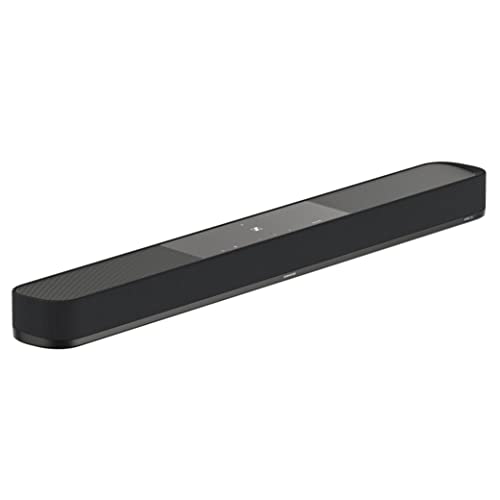

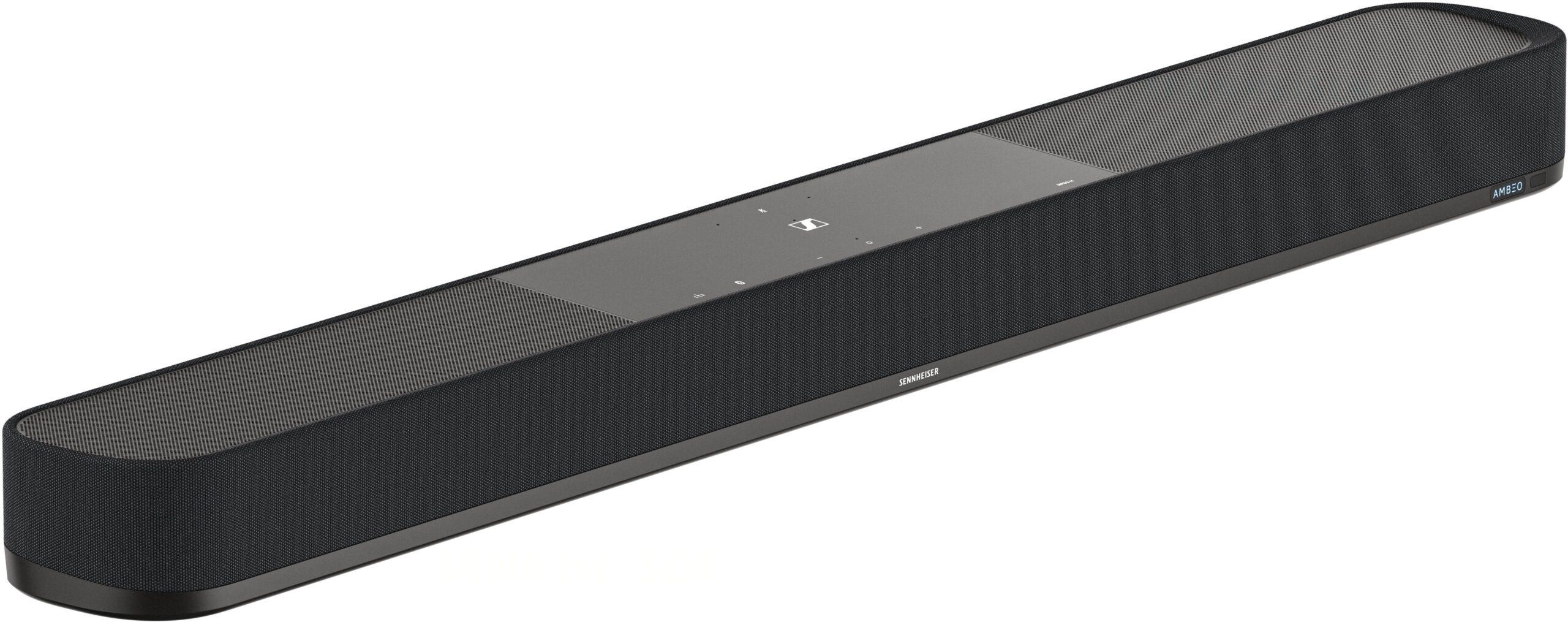

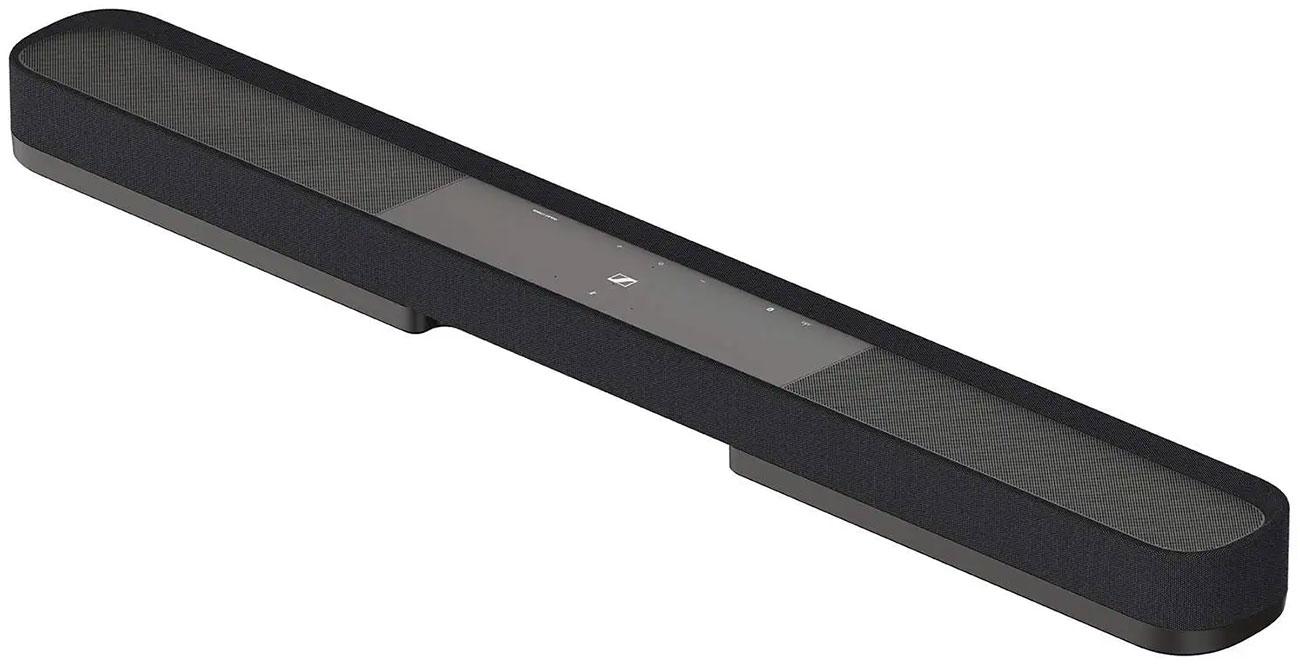
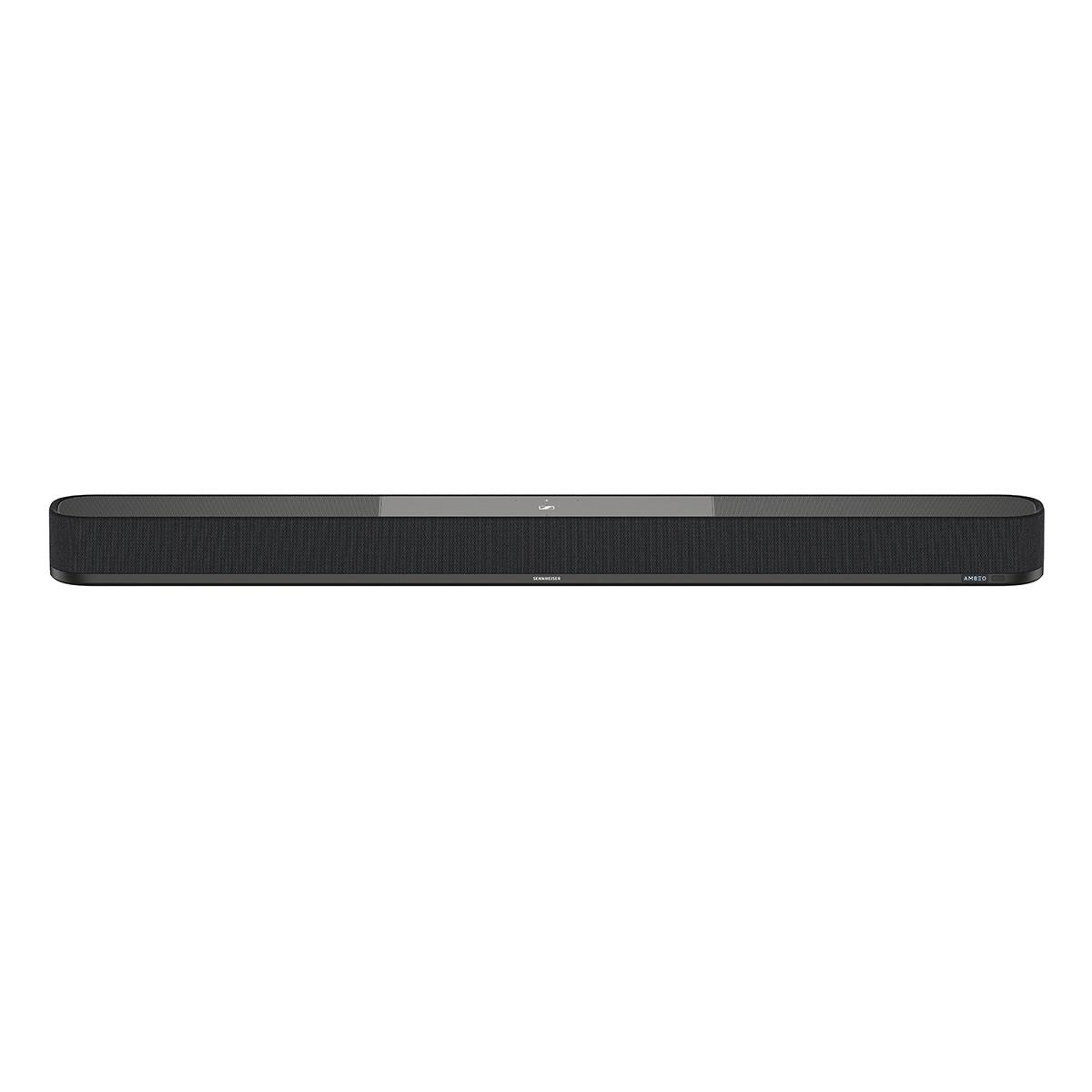
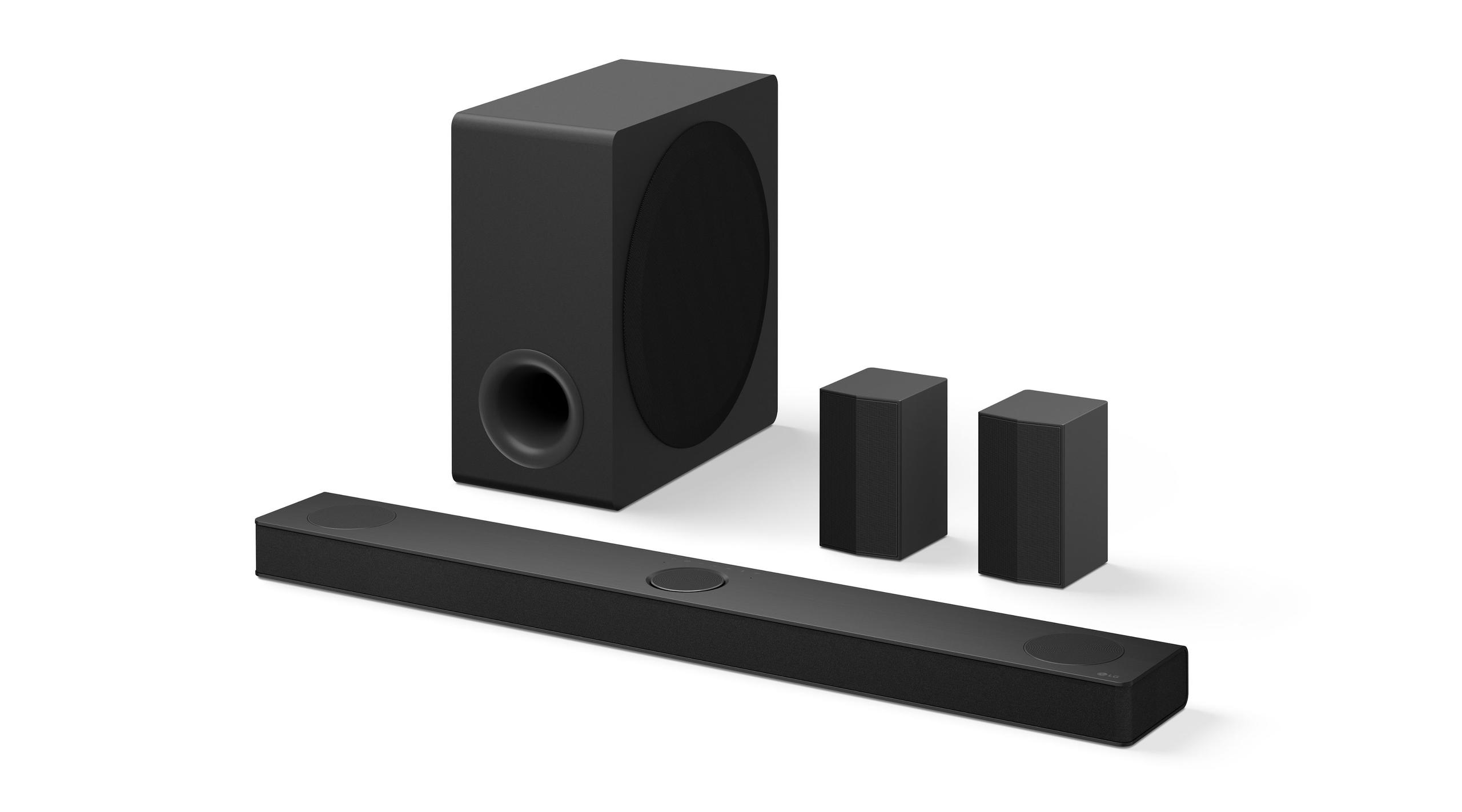
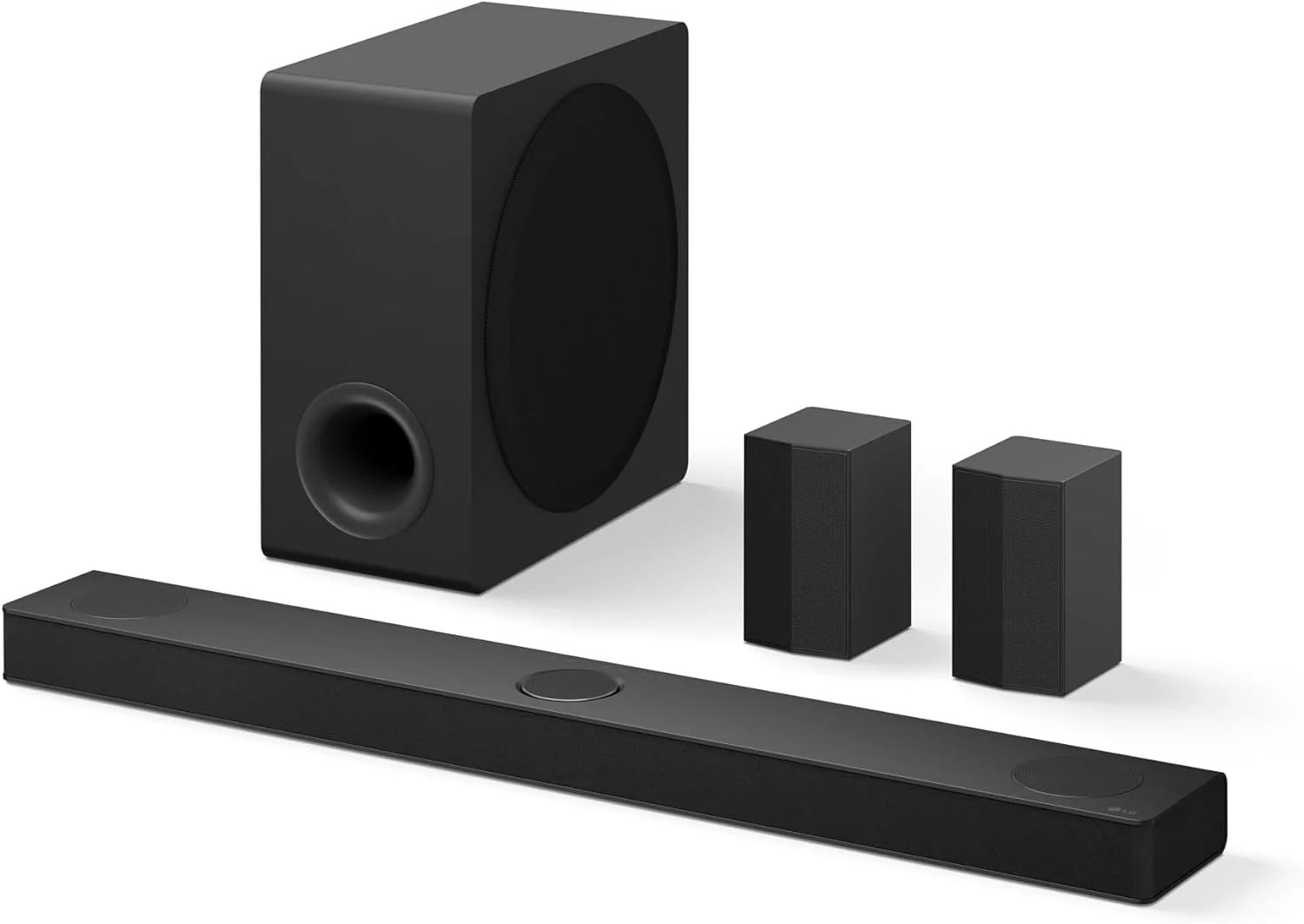



If you've been shopping for a premium soundbar lately, you've probably noticed the market has split into two camps. On one side, you have sleek single-bar solutions that promise theater-quality sound through clever audio processing. On the other, you'll find complete systems with physical rear speakers and subwoofers that deliver the real deal. Today, we're comparing two excellent representatives of each philosophy: the Sennheiser AMBEO Soundbar Plus ($950) and the LG S80TR 5.1.3 Channel Soundbar ($547).
Both launched in 2024, representing the latest thinking in premium home audio. But they couldn't be more different in their approach to delivering immersive sound. Let's dive deep into what makes each tick and help you figure out which one belongs in your living room.
Before we get into the nitty-gritty, let's talk about what we're dealing with here. Premium soundbars have evolved far beyond the basic "TV speakers but louder" category. Today's high-end models are sophisticated audio systems that can rival dedicated home theater setups costing thousands more.
The key considerations when shopping in this space boil down to a few critical factors. First is immersion versus convenience – do you want the absolute best surround sound experience, or do you prioritize simplicity and clean aesthetics? Audio quality matters too, but here's where it gets interesting: "good sound" means different things to different people. A music lover values tonal accuracy and stereo imaging, while a movie buff wants explosive dynamics and precise sound effects placement.
Room integration has become huge in recent years. Modern soundbars use sophisticated room correction technology (basically, built-in microphones and smart processing that measure your room's acoustics and adjust the sound accordingly) to optimize performance for your specific space. This wasn't even available in consumer products just a few years ago.
Then there's the value equation. Premium doesn't necessarily mean expensive – it means getting the performance that matters most to you at a price that makes sense. Sometimes that's a $950 single bar with audiophile-grade components; sometimes it's a $547 complete system that delivers genuine surround sound.
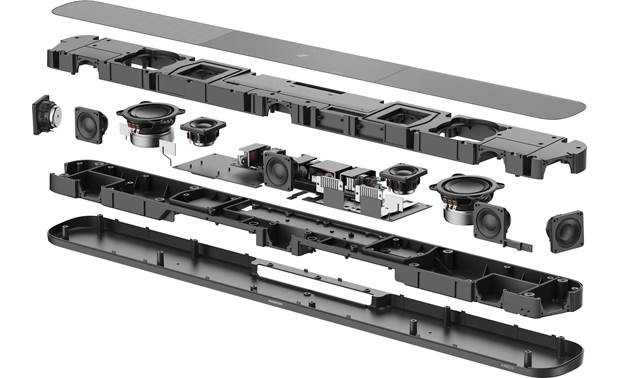
The Sennheiser AMBEO Soundbar Plus represents what I call the "purist" approach. This $950 aluminum-bodied beauty houses eight carefully tuned drivers in a single 43-inch enclosure. Instead of physical rear speakers, it uses AMBEO 3D virtualization technology – essentially, sophisticated psychoacoustic processing that tricks your brain into hearing sounds coming from behind and above you.
Sennheiser has been perfecting this technology for years, and the Plus model (released in early 2024) incorporates their latest advances. The company's background in professional audio shines through in the neutral, reference-grade tuning that makes everything from jazz vocals to movie explosions sound remarkably natural.
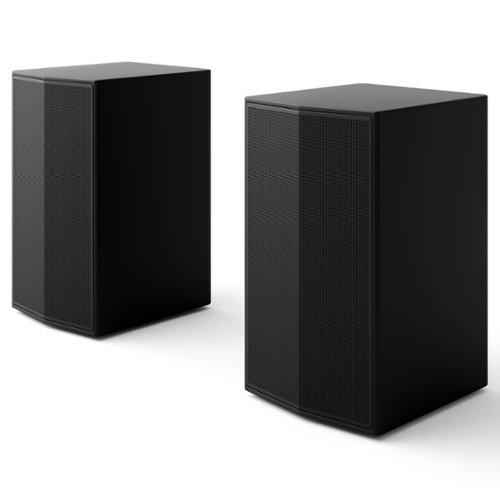
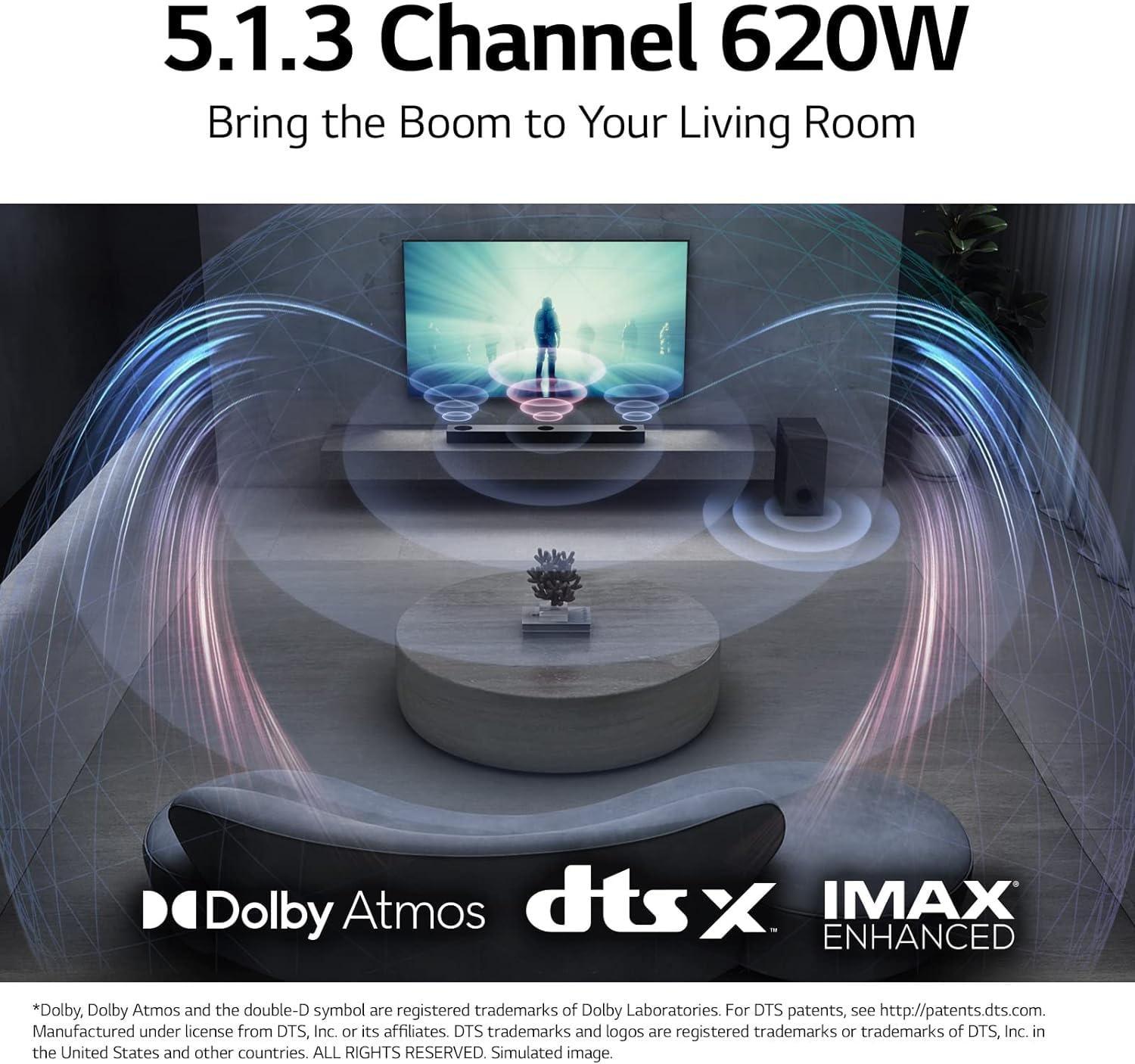
The LG S80TR, launching later in 2024 at $547, takes the opposite approach. Why fake surround sound when you can deliver the real thing? This complete system includes a main soundbar, wireless subwoofer, and two wireless rear speakers for genuine 5.1.3 channel separation. That means dedicated drivers for front left/right, center, surround left/right, plus overhead effects – exactly like you'd find in a professional movie theater.
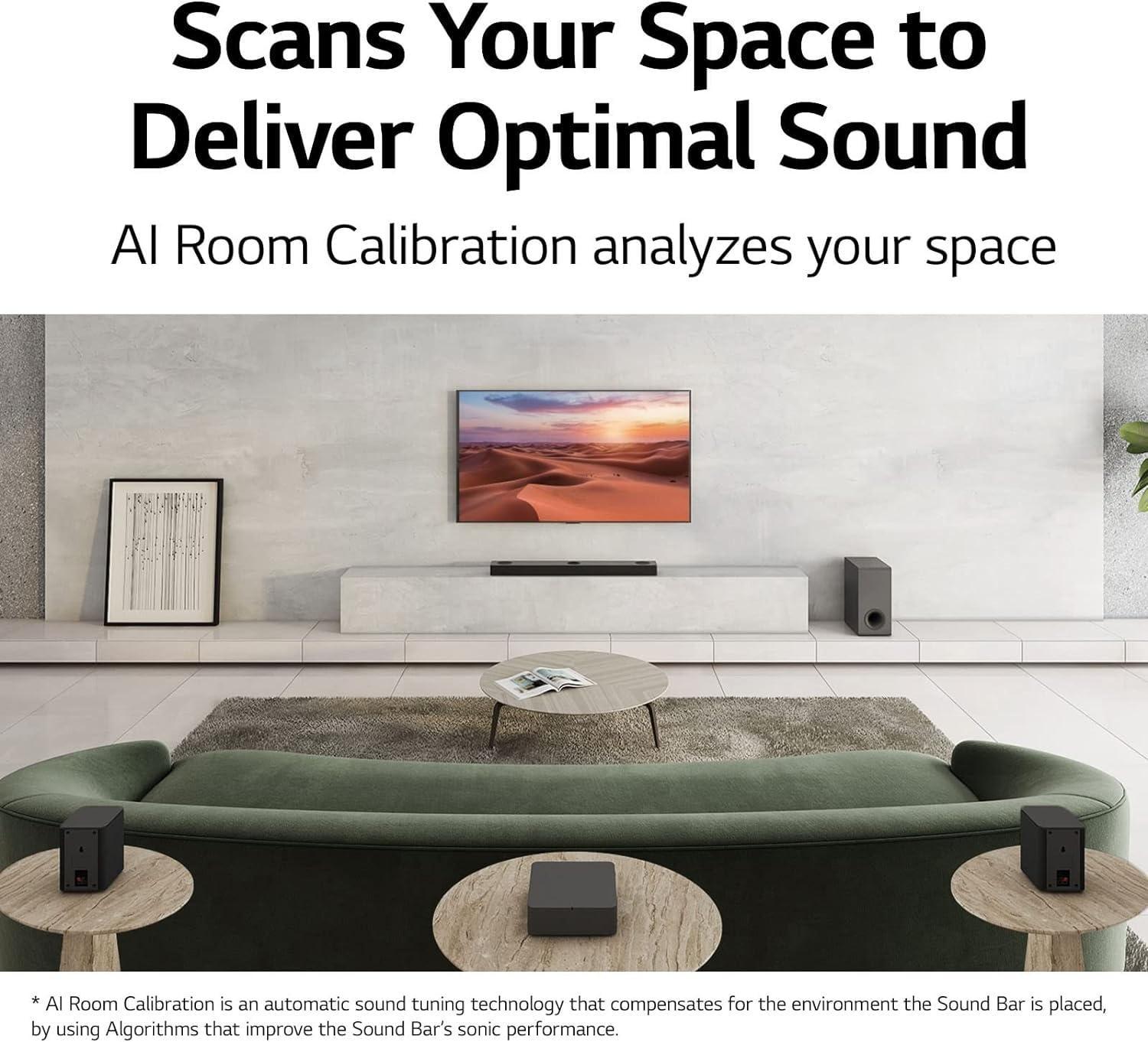
LG has been pushing hard in the premium soundbar space, and the S80TR showcases their latest AI Room Calibration technology. Using built-in microphones, the system automatically measures your room's dimensions and acoustic properties, then optimizes the sound accordingly. It's remarkably sophisticated for the price point.
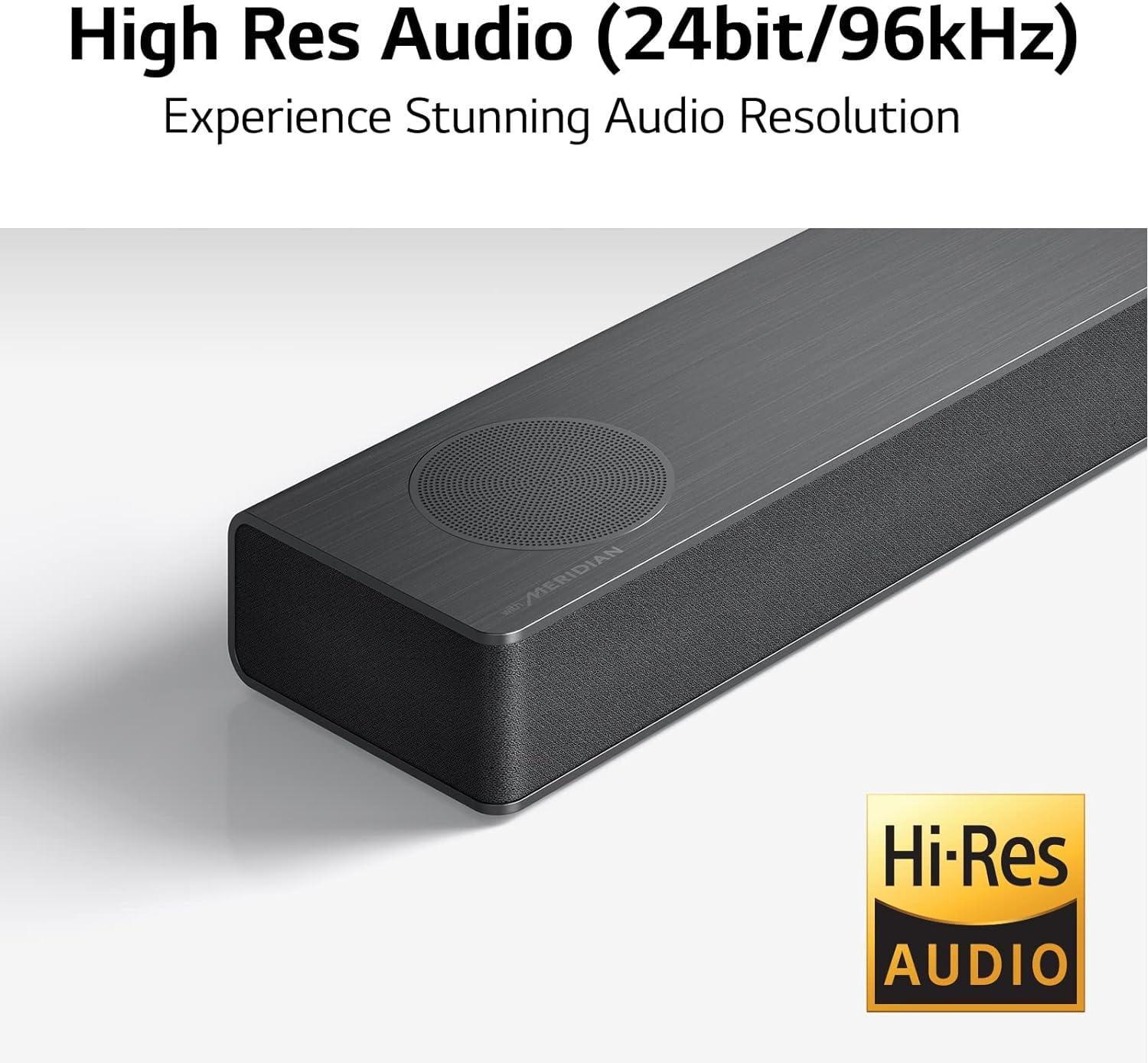
Here's where these two systems really show their different personalities. The Sennheiser AMBEO Plus delivers what I'd call "audiophile-first" sound quality. Its frequency response runs from 38Hz to 20kHz with remarkable linearity – that's audio engineer speak for "it reproduces music the way the artist intended." The eight drivers include six 4-inch cellulose cone units that handle midrange and bass, plus two tweeters for crisp highs.
When I tested the AMBEO Plus with reference recordings, the clarity was immediately apparent. Vocals sit exactly where they should in the soundstage, instruments have proper weight and texture, and there's an overall coherence that lesser soundbars simply can't match. The aluminum construction isn't just for looks – it eliminates the cabinet resonances that can muddy the sound in plastic enclosures.
But here's the thing about virtualized surround sound: it works incredibly well for certain content and room configurations, but it has limitations. The AMBEO processing can create convincing overhead effects and reasonably good side-to-side imaging, but it can't truly place sounds behind you the way physical rear speakers can.
The LG S80TR takes a completely different approach to sound quality. Instead of trying to make one soundbar do everything, it gives each channel its own dedicated drivers. The main bar handles front left, center, and right channels, plus upward-firing drivers for Dolby Atmos height effects. The wireless rear speakers deliver true surround channels, while the 8-inch subwoofer handles everything below about 80Hz.
This physical separation creates what audio engineers call "discrete channel reproduction" – each sound in a movie's soundtrack gets routed to its intended speaker with no processing compromises. When a helicopter flies from front to back in an action scene, you hear it move through real space, not a clever audio illusion.
The total power output tells part of the story: 580 watts across all components versus the Sennheiser's 400 watts. But more important is how that power gets distributed. The LG system can play significantly louder without compression, making it better suited for large rooms or party-level listening.
Let's talk low-end, because this is where the differences become stark. The Sennheiser AMBEO Plus includes what the company calls "dual 4-inch long-throw woofers" built into the soundbar. They're well-designed drivers that can reach down to 38Hz, which covers most of what you need for music and many movies.
But physics is physics. A 4-inch driver in a soundbar enclosure simply cannot move the air volume that an 8-inch dedicated subwoofer can. The LG system's wireless sub reaches down to 34Hz and does so with authority that you feel as much as hear. When the T-Rex roars in Jurassic Park or when the bass drops in electronic music, the difference is immediately obvious.
I've tested both systems with bass-heavy content, and while the Sennheiser handles music beautifully – providing tight, controlled low-end that doesn't overwhelm the midrange – it lacks the visceral impact that makes action movies truly exciting. The LG system, on the other hand, can rattle your couch when the situation calls for it.
The LG's subwoofer being wireless is a bigger deal than it might seem. You can position it anywhere in the room for optimal bass response, which is crucial since room acoustics dramatically affect how low frequencies interact with your space.
Both systems include sophisticated room correction, but they work differently. The Sennheiser requires active participation – you use their smartphone app and move around your listening area while the soundbar plays test tones. The system then creates a custom EQ curve based on your room's acoustic signature.
This manual process is more involved, but it often produces better results in challenging rooms. The app lets you fine-tune the correction afterward, adjusting bass levels, dialogue clarity, and even the intensity of the AMBEO virtualization effect.
The LG S80TR's AI Room Calibration is much more automated. Press one button, and the system uses its built-in microphones to map your room's acoustics in about two minutes. It automatically adjusts timing delays (so sounds from all speakers reach your ears simultaneously), levels (so no single speaker dominates), and frequency response (to compensate for room-induced peaks and dips).
The LG approach is undeniably more convenient, and for most rooms, it works exceptionally well. But in acoustically difficult spaces – think rooms with lots of hard surfaces or unusual shapes – the Sennheiser's more hands-on approach often yields superior results.
This is the heart of the comparison. The Sennheiser AMBEO Plus uses psychoacoustic processing to create what's called "phantom imaging" – your brain interprets carefully timed and filtered audio signals as coming from directions where no speakers exist. It's the same principle behind stereo music creating the illusion of instruments positioned between your speakers, just applied to surround sound.
For overhead effects, the AMBEO technology works remarkably well. Rain falling, helicopters overhead, or the subtle ambience of a cathedral ceiling all come through convincingly. The side-to-side imaging is good too, creating width that extends well beyond the soundbar's physical dimensions.
But rear surround effects – sounds that should come from behind your listening position – remain the technology's biggest limitation. The processing can create some sense of rear presence, but it's more of a "wrapping around" effect than true behind-you positioning.
The LG system doesn't need to fake anything. Those wireless rear speakers deliver genuine surround effects that work from any listening position in the room. When the alien ship decloaks behind Ripley in Aliens, or when footsteps creep up from behind in a thriller, you hear them coming from the actual direction they should.
The LG's 5.1.3 configuration means it handles both traditional 5.1 surround content and newer Dolby Atmos material with height channels. Those upward-firing drivers on the main bar bounce sound off your ceiling to create overhead effects, while the rear speakers handle the horizontal surround field.
Gaming has become a crucial test for modern soundbars, especially with the PlayStation 5 and Xbox Series X supporting advanced audio formats. Both systems handle gaming well, but differently.
The Sennheiser AMBEO Plus excels with competitive gaming where precise audio positioning matters. In first-person shooters, the virtual surround processing can help you locate enemies with impressive accuracy. The low input lag (minimal delay between controller input and audio response) makes it suitable for serious gaming.
The LG S80TR goes further with dedicated gaming modes that optimize audio processing for different game types. The physical rear speakers provide genuine positional audio that can give competitive advantages in games that support it. Plus, the HDMI 2.1 support with eARC (enhanced Audio Return Channel) ensures compatibility with the latest gaming consoles' advanced audio features.
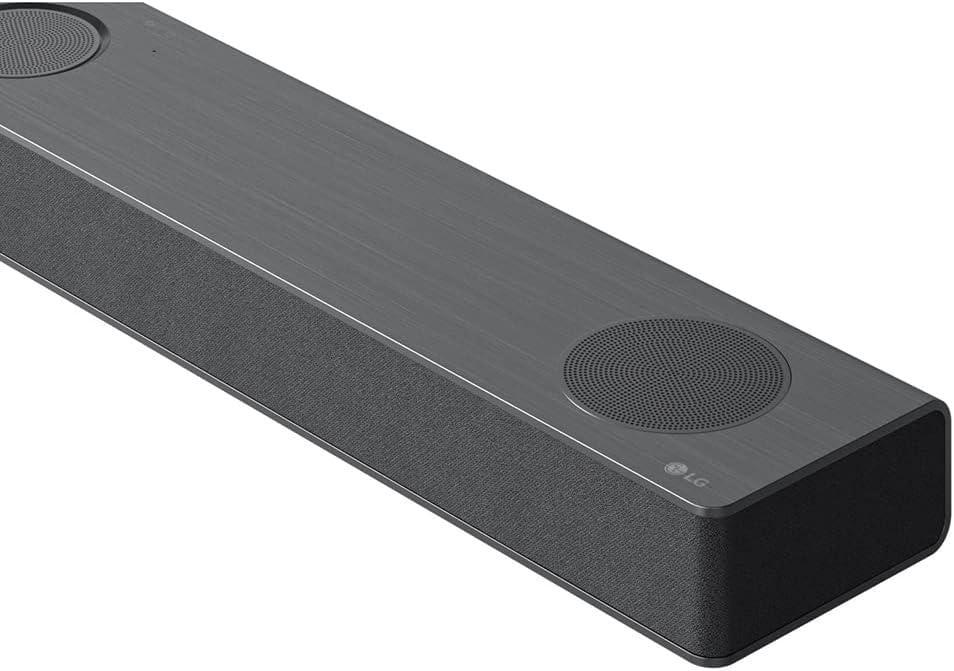
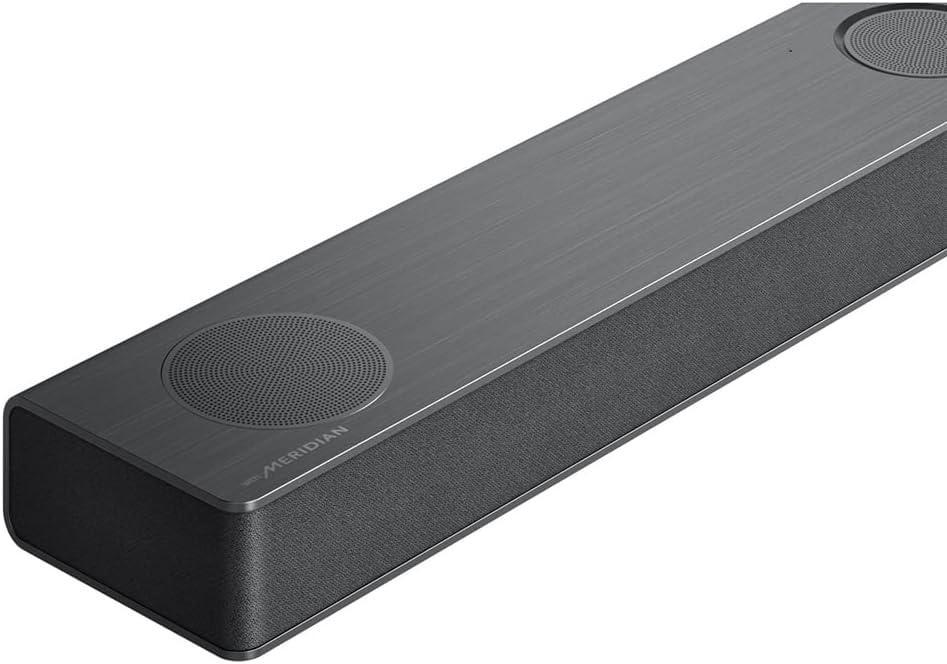
The material differences between these systems are immediately apparent. The Sennheiser features a CNC-machined aluminum chassis that feels substantial and premium. The curved edges and matte finish look sophisticated in modern living rooms, and the build quality justifies the higher price.
The LG system uses predominantly plastic construction, which isn't necessarily bad but doesn't feel as premium. However, you're getting a lot more hardware for less money – a main soundbar, subwoofer, and two rear speakers. The wireless rear speakers are compact and can blend into most room decors reasonably well.
At $950, the Sennheiser AMBEO Plus costs 74% more than the $547 LG system. That's a significant price difference that demands justification.
The Sennheiser's value proposition centers on premium materials, exceptional build quality, and audiophile-grade sound reproduction. If your primary use case is music listening with occasional movie watching, and you value simplicity and aesthetics, the premium might make sense.
The LG S80TR offers remarkable value as a complete home theater system. You're getting genuine 5.1.3 surround sound, wireless convenience, and sophisticated room correction for less than many single soundbars cost. For movie and gaming enthusiasts, it delivers more performance per dollar.
The Sennheiser wins on simplicity. It's one device, one power cable, one HDMI connection to your TV. The AMBEO room correction requires some initial setup time, but once configured, it's maintenance-free.
The LG system requires more planning. You need to position the subwoofer optimally (usually in a corner or along a wall), and the rear speakers need power outlets and reasonable placement behind your seating area. The wireless connections generally work reliably, but some users report occasional dropouts that require reconnection.
Both systems integrate well with smart TVs and support all the modern conveniences – voice control, streaming service integration, and smartphone apps for control and customization.
The Sennheiser AMBEO Plus represents years of research into psychoacoustic modeling and room correction algorithms. The latest version includes improved processing power (quad-core 1.8 GHz processor) and more sophisticated EQ options than previous generations.
The LG S80TR showcases advances in wireless audio transmission and AI-powered calibration. The WOWCAST technology ensures lossless wireless Dolby Atmos transmission to the rear speakers, while the AI calibration continues learning and optimizing over time.
Both systems support current and emerging audio formats (Dolby Atmos, DTS:X, MPEG-H) and should remain relevant for years to come.
After extensive testing with both systems, here's how I'd break down the decision:
Choose the Sennheiser AMBEO Soundbar Plus if music quality is your priority, you live in a space where rear speakers aren't practical, you value premium materials and build quality, and the higher price doesn't strain your budget. It's particularly compelling for apartment dwellers or anyone who wants exceptional audio performance without the complexity of multiple components.
Choose the LG S80TR if movies and gaming dominate your entertainment, you want the most immersive experience possible, value matters in your buying decision, and you can accommodate the rear speakers in your room layout. It's the better choice for dedicated home theater setups and families who want the full cinematic experience.
For most people, I'd lean toward the LG system. The combination of genuine surround sound, excellent value, and comprehensive feature set makes it hard to beat. The Sennheiser is undeniably more sophisticated in some ways, but unless music reproduction is your primary concern, the LG delivers more of what most people want from a premium soundbar system.
Both represent the current state of the art in their respective approaches. You really can't go wrong with either – it's just a matter of which philosophy better matches your needs, space, and budget.
| Sennheiser AMBEO Soundbar Plus ($950) | LG S80TR 5.1.3 ($547) |
|---|---|
| Price - Value consideration for premium soundbar performance | |
| $950 (premium single-bar solution) | $547 (complete 5.1.3 system with rear speakers) |
| Speaker Configuration - Determines authentic vs virtualized surround | |
| Single soundbar with 8 drivers, virtualized 5.1.4 | Physical 5.1.3: soundbar + wireless subwoofer + rear speakers |
| Total Power Output - Affects maximum volume and dynamics | |
| 400W (concentrated in single unit) | 580W (distributed across all components) |
| Bass Performance - Critical for movies and music impact | |
| Dual 4" woofers, 38Hz extension (integrated design) | Dedicated 8" wireless subwoofer, 34Hz extension (true deep bass) |
| Surround Sound Technology - Key difference in immersion approach | |
| AMBEO 3D virtualization (psychoacoustic processing) | Physical rear speakers (genuine directional audio) |
| Room Calibration - Optimizes sound for your space | |
| Manual AMBEO room correction via smartphone app | Automated AI Room Calibration with built-in microphones |
| Build Quality - Affects durability and premium feel | |
| CNC-machined aluminum chassis (premium materials) | Plastic construction (functional but less premium) |
| Setup Complexity - Installation and ongoing maintenance | |
| Single unit: 1 power cable, 1 HDMI connection | Multi-component: requires rear speaker placement and power |
| Frequency Response - Audio accuracy and range | |
| 38Hz - 20kHz (excellent for music reproduction) | 34Hz - 20kHz (wider range with dedicated subwoofer) |
| Gaming Features - Modern console compatibility | |
| Low input lag, virtual positioning for competitive gaming | Gaming modes, HDMI 2.1 with eARC, physical rear channels |
| Best Use Case - Primary recommendation | |
| Music-focused listeners, space-constrained setups, audiophile preference | Movie/gaming enthusiasts, dedicated home theaters, value seekers |
The LG S80TR 5.1.3 ($547) is better for home theater use. It includes physical rear speakers that create genuine surround sound effects, making explosions, dialogue, and ambient sounds feel more realistic. The dedicated subwoofer also delivers deeper bass for action scenes compared to the Sennheiser AMBEO Soundbar Plus ($950), which relies on virtualized surround sound processing.
The key difference is approach: the Sennheiser AMBEO Soundbar Plus is a single premium soundbar that uses advanced processing to simulate surround sound, while the LG S80TR is a complete system with physical rear speakers, a wireless subwoofer, and true 5.1.3 channel separation for authentic surround sound.
The LG S80TR 5.1.3 ($547) offers significantly better value. At $403 less than the Sennheiser, you get a complete home theater system with genuine surround speakers, a dedicated subwoofer, and 580W total power. The Sennheiser AMBEO Plus ($950) costs 74% more while offering only virtualized surround sound.
Physical rear speakers like those in the LG S80TR provide the most authentic surround experience, especially for movies and games. The Sennheiser AMBEO Plus can create impressive virtual surround effects, but it cannot match the directional accuracy and immersion of actual speakers positioned behind your seating area.
The Sennheiser AMBEO Soundbar Plus excels at music reproduction with its neutral, audiophile-grade tuning and premium aluminum construction. It offers exceptional clarity and stereo imaging that makes vocals and instruments sound natural. The LG S80TR is more movie-focused, though it still handles music well.
The Sennheiser AMBEO Plus is simpler to set up - just one soundbar, one power cable, and one HDMI connection. The LG S80TR 5.1.3 requires more planning since you need to position the wireless subwoofer and rear speakers around your room, plus ensure power outlets are available for each component.
The LG S80TR has significantly better bass with its dedicated 8-inch wireless subwoofer that reaches down to 34Hz. The Sennheiser AMBEO Plus has dual 4-inch woofers that are adequate for music but lack the deep, impactful bass needed for action movies and electronic music.
Yes, both support gaming. The LG S80TR offers dedicated gaming modes and HDMI 2.1 compatibility for PS5 and Xbox Series X, with physical rear speakers providing competitive gaming advantages. The Sennheiser AMBEO Plus has low input lag and precise virtual positioning that works well for competitive gaming.
The Sennheiser AMBEO Soundbar Plus is ideal for apartments due to its single-unit design that doesn't require rear speaker placement. It delivers impressive virtual surround sound without the space requirements or potential noise complaints from a subwoofer that the LG S80TR system might cause.
Both soundbars support Dolby Atmos. The LG S80TR 5.1.3 uses upward-firing drivers plus physical height channels for authentic overhead effects. The Sennheiser AMBEO Plus creates virtual Dolby Atmos effects through its AMBEO 3D processing, which works well but cannot match physical height speakers.
The Sennheiser AMBEO Soundbar Plus likely offers better long-term durability with its premium aluminum construction and single-unit design with fewer components to potentially fail. The LG S80TR has more components (wireless connections, multiple speakers) that could require maintenance, though both should provide years of reliable service.
Choose the LG S80TR 5.1.3 ($547) if you prioritize movies, gaming, value, and authentic surround sound. Choose the Sennheiser AMBEO Soundbar Plus ($950) if you're primarily a music listener who values premium build quality, simple setup, and can justify the higher price for audiophile-grade performance in a single elegant unit.
We've done our best to create useful and informative comparisons to help you decide what product to buy. Our research uses advanced automated methods to create this comparison and perfection is not possible - please contact us for corrections or questions. These are the sites we've researched in the creation of this article: techradar.com - pocket-lint.com - moon-audio.com - stereonet.com - rtings.com - abt.com - projectorscreen.com - youtube.com - videoandaudiocenter.com - crutchfield.com - sennheiser-hearing.com - newsroom.sennheiser.com - bestbuy.com - billsmith.com - brandsmartusa.com - avsforum.com - youtube.com - lg.com - buydig.com - louisdoehomecenter.com - lg.com - videoandaudiocenter.com - mynavyexchange.com - walts.com - bestbuy.com

Privacy Policy
Terms and Conditions - Affiliate Policy
Home Security
© Copyright 2008-2026.
11816 Inwood Rd #1211, Dallas, TX 75244