

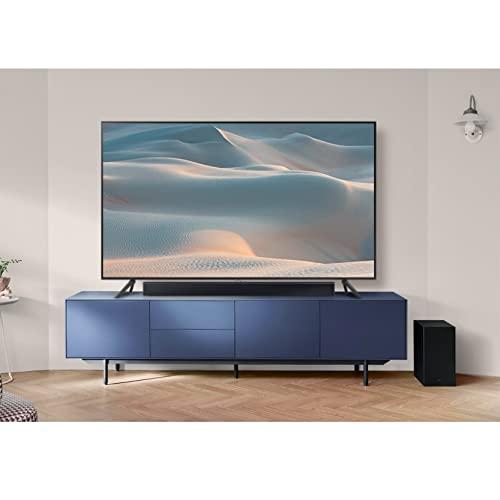



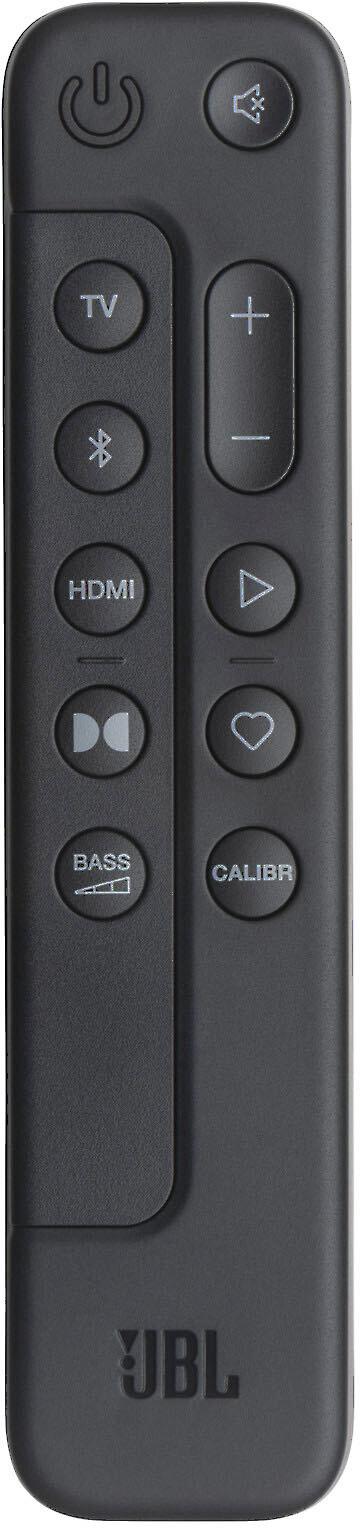
If you've ever tried watching an action movie with your TV's built-in speakers, you know the struggle. The dialogue sounds muffled, explosions lack punch, and everything feels flat. That's where soundbars come in—they're designed to transform your living room into a mini theater without the complexity of a full surround sound system.
Today we're comparing two popular options in the budget soundbar space: the Samsung HW-C450 and the JBL Bar 300. These represent two different philosophies for delivering better sound, and understanding their approaches will help you make the right choice for your setup.
Before diving into specifics, let's talk about what makes a good soundbar in this price range. At the time of writing, both of these models fall into the sweet spot between "basic improvement over TV speakers" and "serious home theater investment"—typically ranging from around $150 to $400.
The fundamental challenge with any soundbar is physics. TV speakers are tiny and fire downward or backward, creating weak, unfocused sound. A good soundbar needs to solve several problems: it must produce clear dialogue, create a sense of space and immersion, deliver satisfying bass, and do all this from a slim package that sits elegantly under your TV.
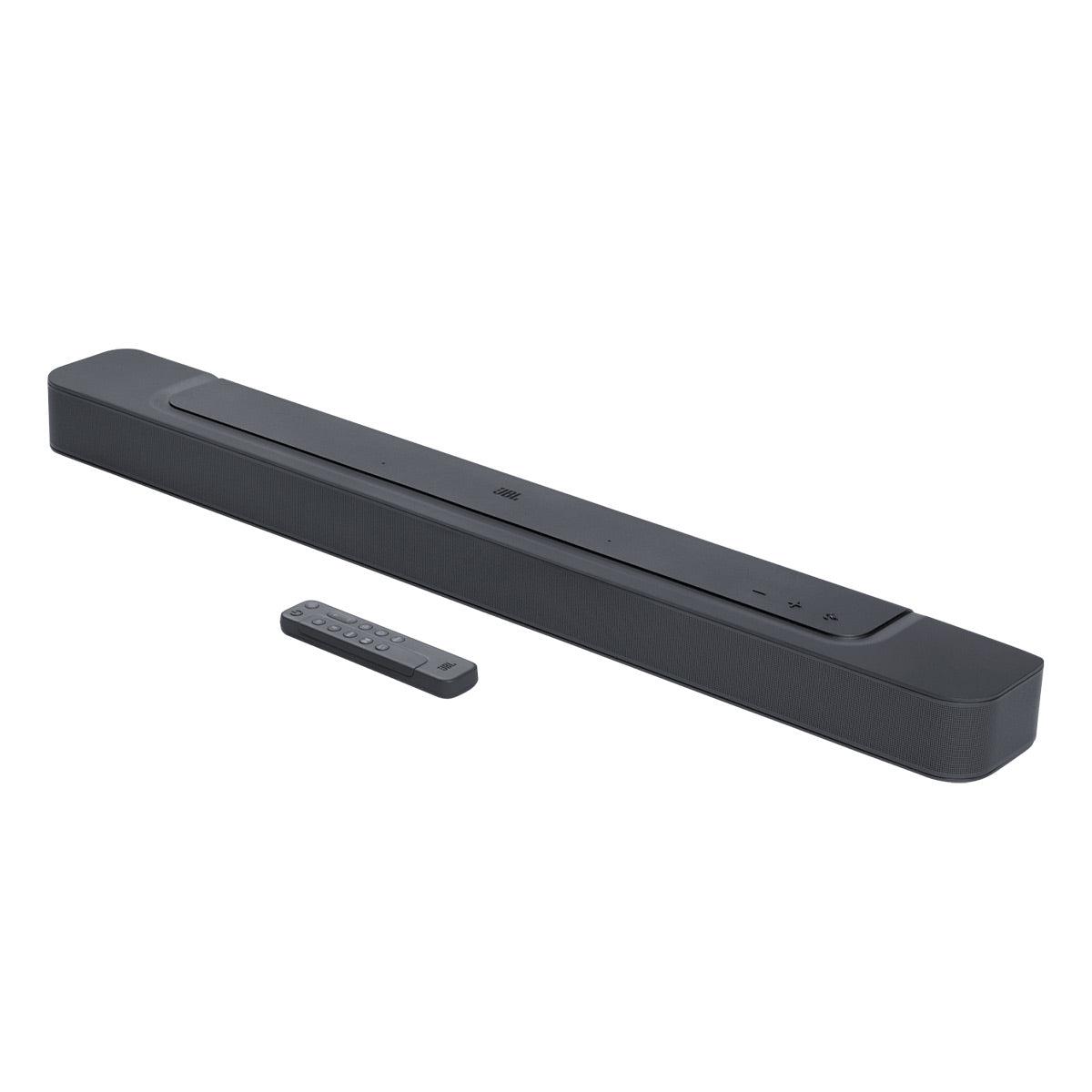
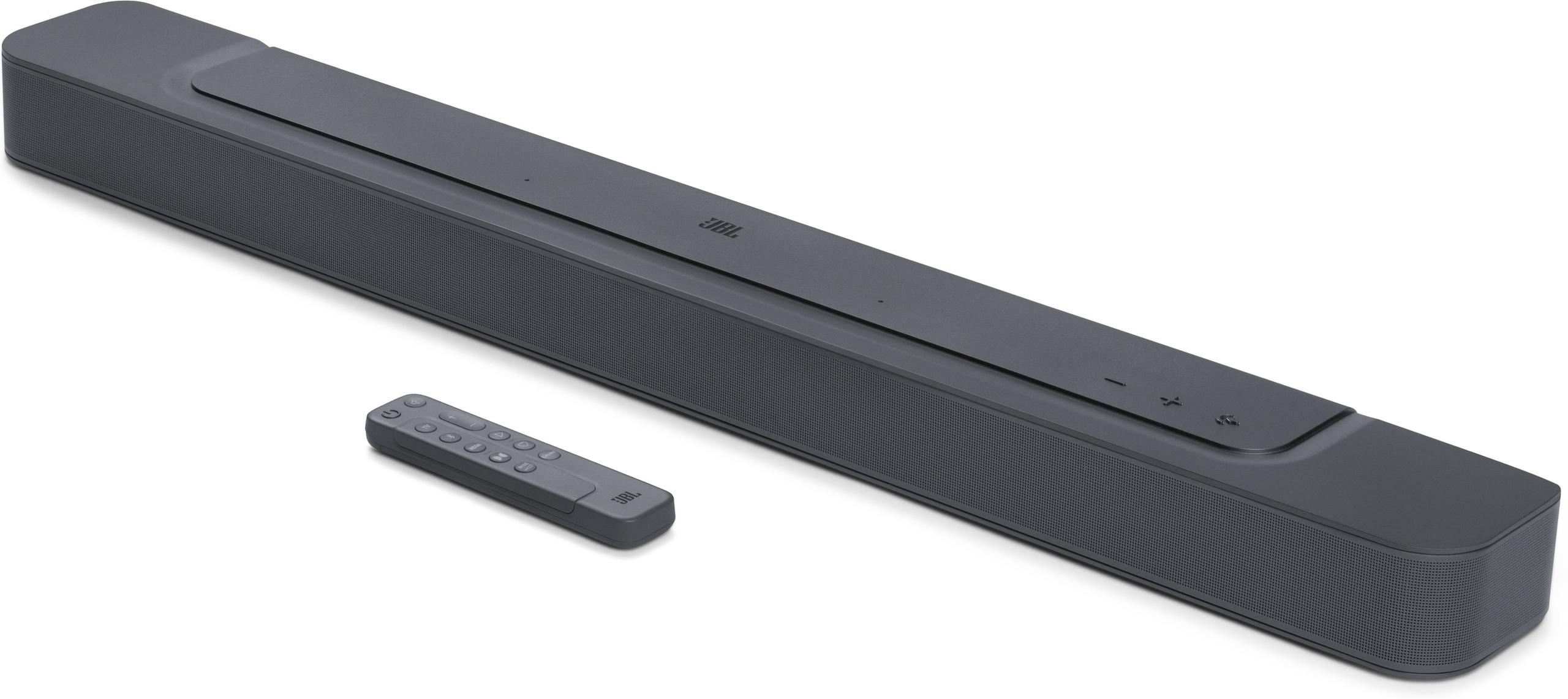
Channel configuration is probably the most important spec to understand. The Samsung HW-C450 uses a "2.1" setup—that's two main channels (left and right) plus one subwoofer channel for bass. The JBL Bar 300 goes with "5.0"—five separate channels that include left, right, center, and two surround channels, but no dedicated subwoofer.
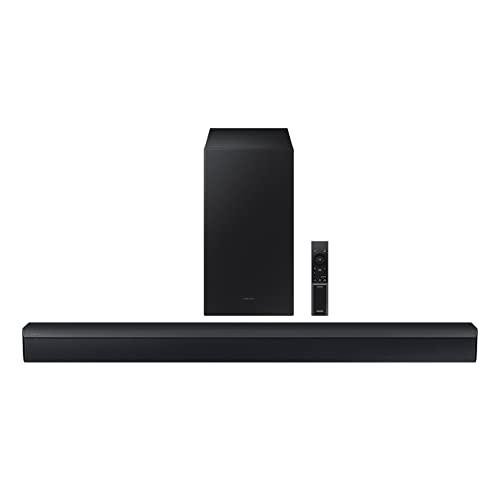
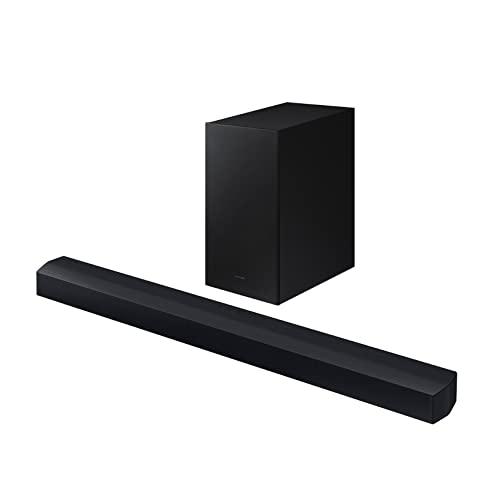
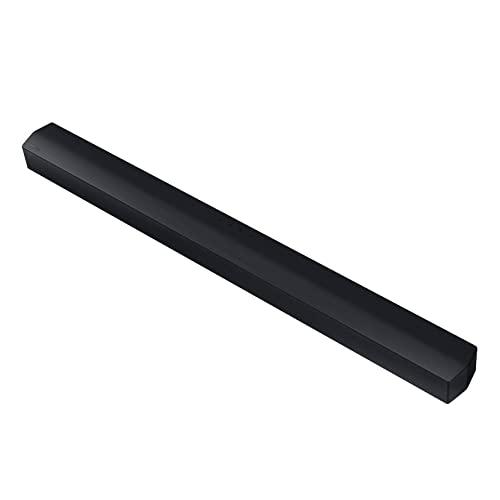
The Samsung HW-C450, released in 2023, represents Samsung's entry-level offering in their current soundbar lineup. Samsung took a conventional approach here: pair a slim soundbar with a wireless subwoofer to handle the heavy lifting for bass frequencies.
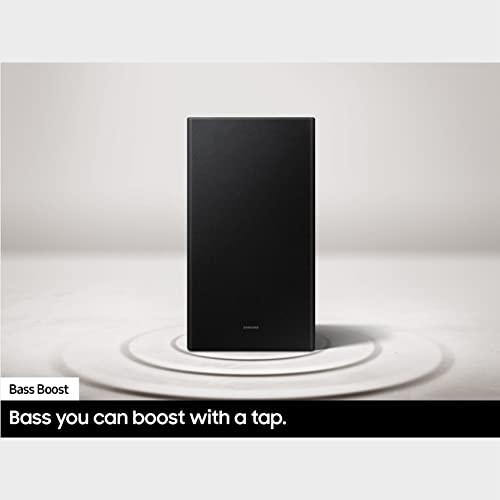
This design philosophy makes a lot of sense. Bass frequencies are the hardest to reproduce from a thin soundbar because they require larger drivers and more internal air space. By dedicating a separate 6-inch subwoofer—which weighs about 10 pounds—the Samsung HW-C450 can deliver genuinely impactful low-end that you'll feel in your chest during movie explosions.
The wireless subwoofer connection is particularly clever. When you first power on the system, the subwoofer automatically pairs with the soundbar without any complex setup. This means you can place the sub anywhere in your room—under an end table, behind your couch, or in a corner—to optimize bass response for your specific space.
What's interesting about Samsung's processing is their implementation of DTS Virtual:X. This technology takes the two physical speakers in the soundbar and uses psychoacoustic tricks to create the illusion of surround sound. Think of it like audio optical illusions—by carefully timing and phase-shifting the audio signals, DTS Virtual:X can make sounds appear to come from behind or beside you, even though they're actually coming from the front-facing soundbar.
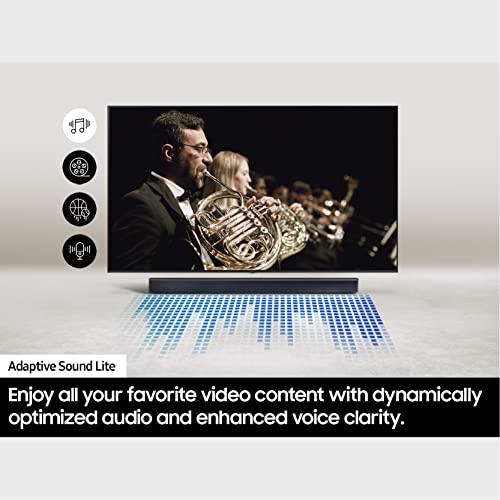
The Samsung HW-C450 also includes several practical features that show Samsung's focus on everyday usability. Voice Enhance mode specifically boosts the frequency range where human speech lives (roughly 300Hz to 3kHz), making dialogue easier to understand when background music or sound effects are loud. Night Mode compresses the dynamic range—this means it reduces the difference between the quietest and loudest sounds, so you can watch movies at lower volumes without losing dialogue clarity.
For gaming, the Samsung HW-C450 includes a dedicated Game Mode that emphasizes directional audio cues. This is particularly useful for competitive gaming where hearing enemy footsteps or gunfire direction can mean the difference between victory and defeat.
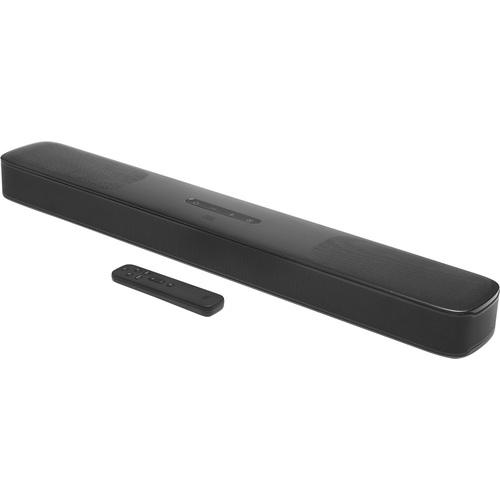
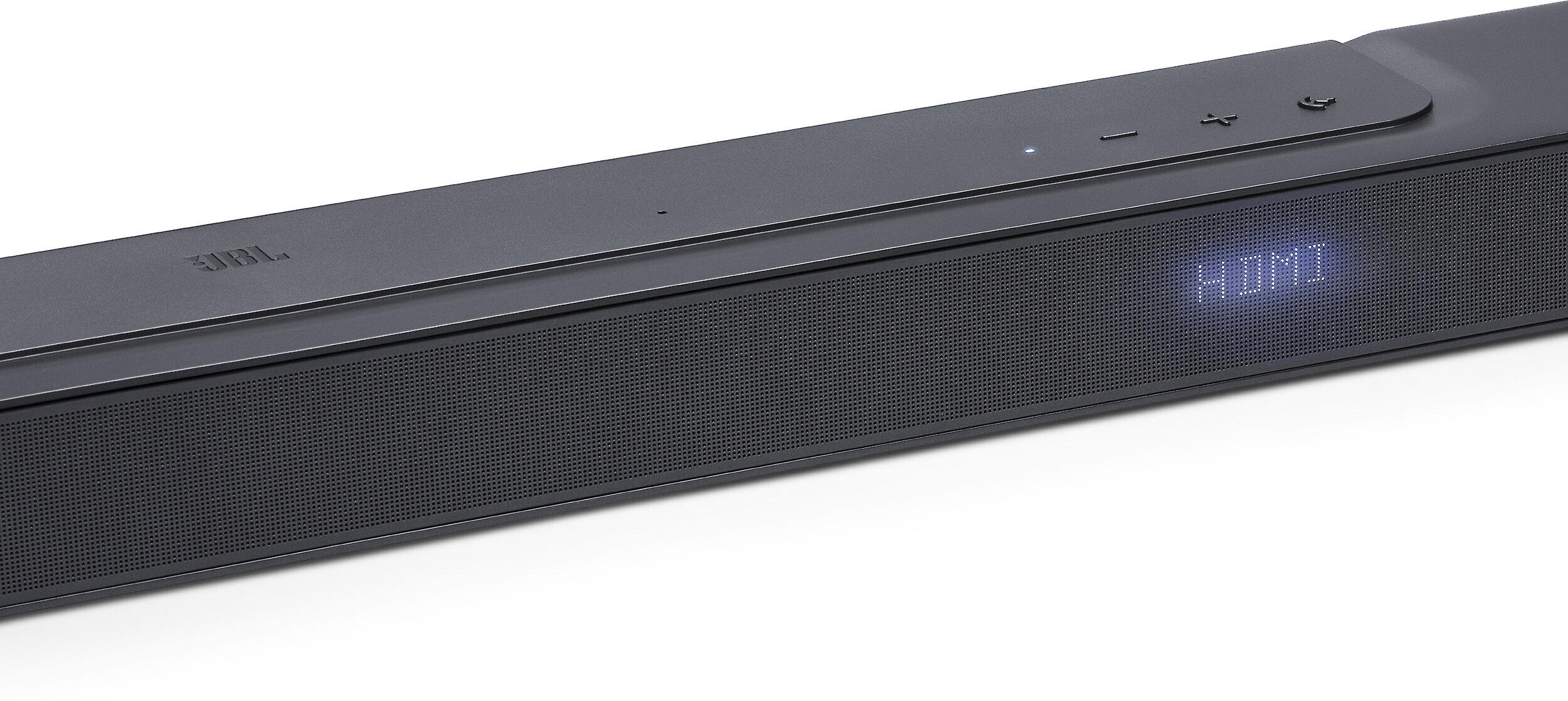
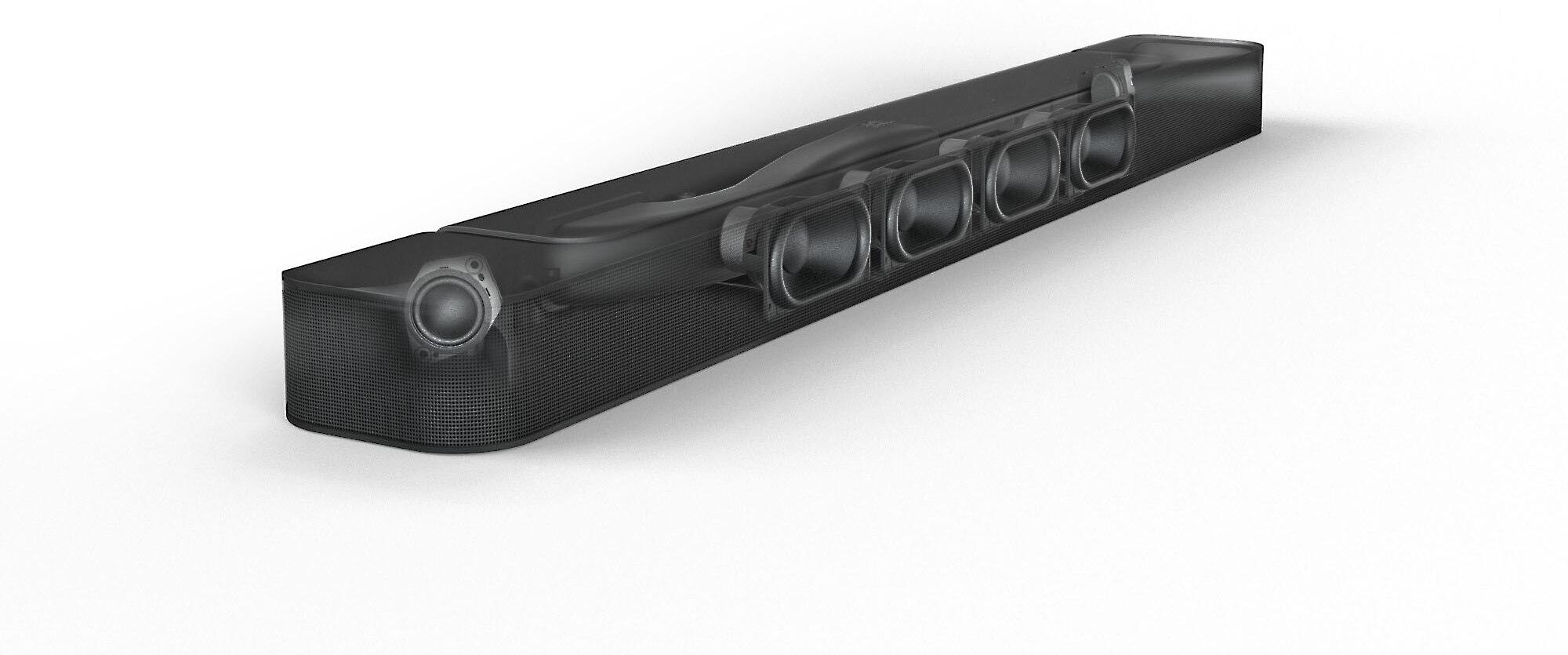
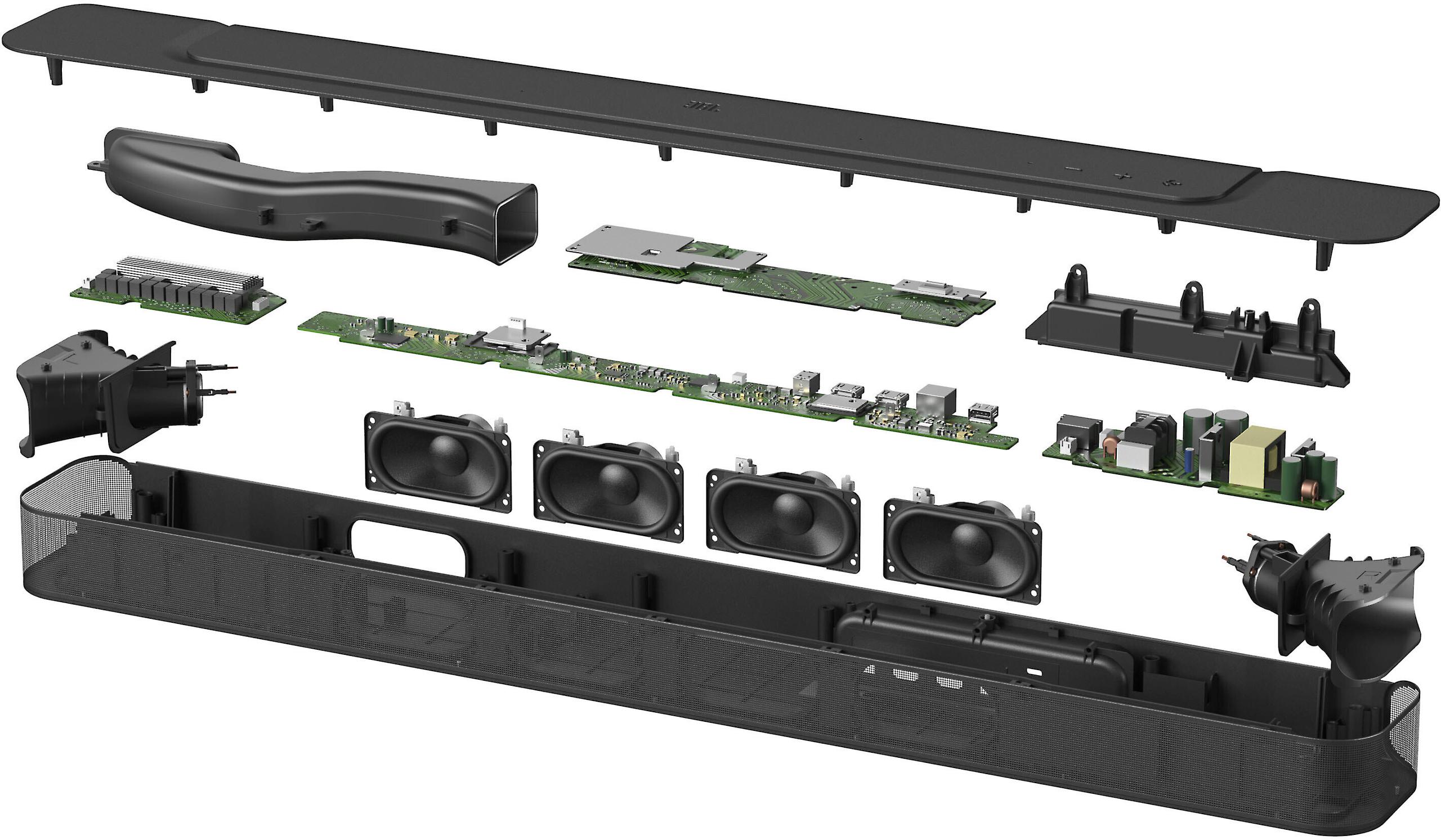
The JBL Bar 300, also released in 2023, takes a completely different approach. Instead of separating bass duties to an external subwoofer, JBL packed five discrete audio channels into a single 32-inch soundbar. This means you get dedicated left, right, center, and surround channels all firing from different positions within the bar itself.
The standout feature here is genuine Dolby Atmos support. Dolby Atmos is an advanced audio format that adds height information to sound—instead of just placing audio left, right, front, and back, it can also place sounds above you. The JBL Bar 300 achieves this through upward-firing drivers and sophisticated signal processing that bounces sound off your ceiling to create overhead effects.
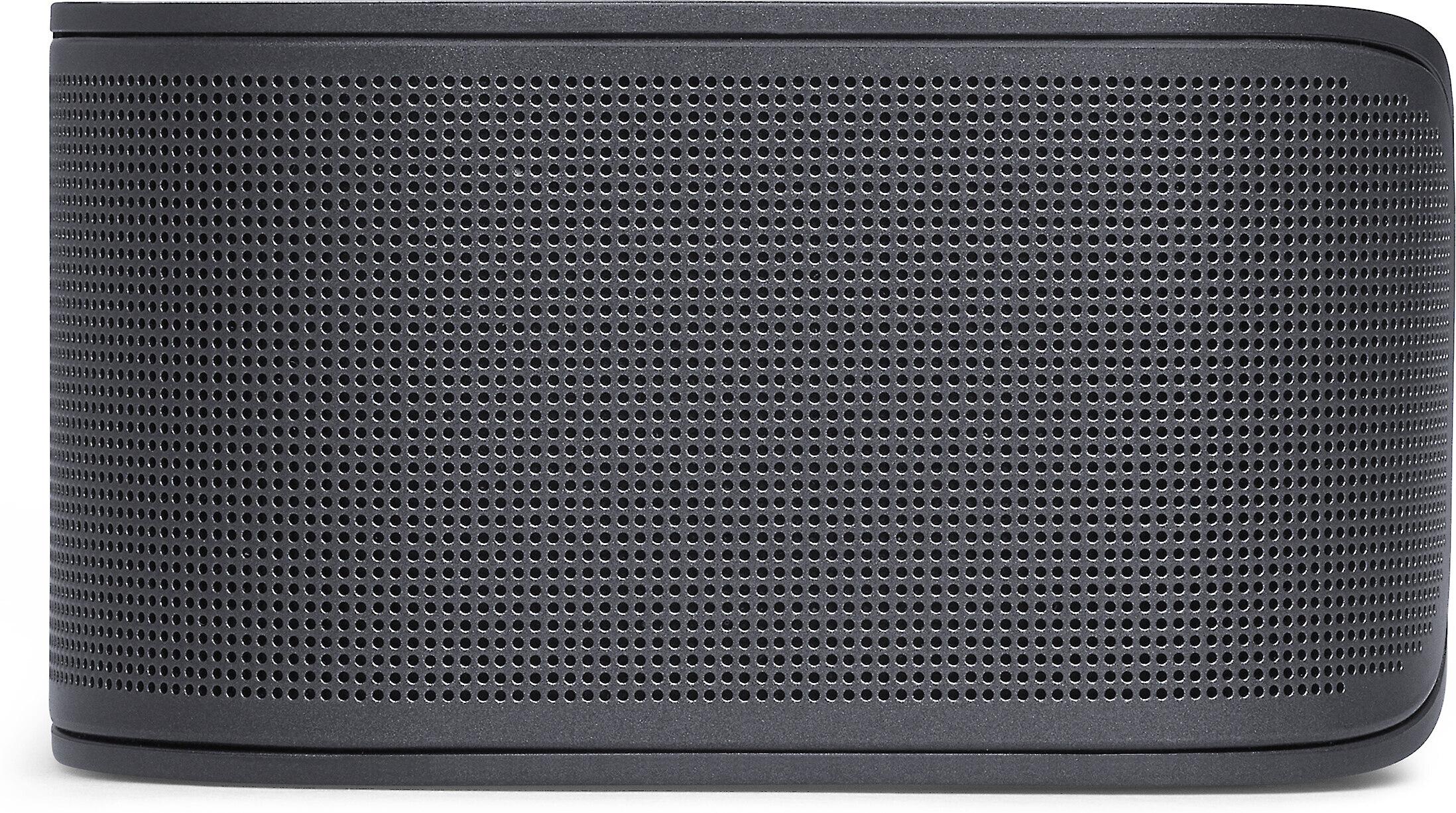
JBL's MultiBeam technology deserves special attention because it's genuinely innovative for this price range. Traditional soundbars fire sound directly forward, but MultiBeam uses multiple drivers aimed in different directions within the soundbar housing. This creates a wider soundstage—the perceived width of the audio image—without requiring separate surround speakers.
The PureVoice technology in the JBL Bar 300 represents a more sophisticated approach to dialogue enhancement than Samsung's simple frequency boosting. PureVoice uses real-time analysis to identify speech patterns in the audio mix and dynamically adjusts multiple parameters—not just volume, but also clarity, separation from background elements, and positioning within the soundstage.
What's particularly impressive is the built-in room calibration system. The JBL Bar 300 includes an internal microphone that analyzes your room's acoustics during setup. It sends out test tones, listens to how they reflect off your walls and furniture, then adjusts its processing accordingly. This is typically a feature found in much more expensive systems.
This is where the fundamental design differences become most apparent. The Samsung HW-C450's dedicated subwoofer with 220 watts of power creates genuinely impactful bass that you'll feel physically. During action movies, explosions have weight and presence that integrated designs simply cannot match.
Our research into user feedback consistently shows that the Samsung HW-C450 delivers bass extension down to around 35Hz—low enough to reproduce the rumble of movie soundtracks and the thump of music bass lines effectively. The separate subwoofer also allows for bass optimization based on room placement, which can significantly improve performance.
The JBL Bar 300, constrained by its all-in-one design, simply cannot move as much air. Its integrated bass ports help, but the physics limitations are real. Bass response typically falls off around 50Hz, missing the deepest frequencies that make action scenes truly exciting. However, what bass it does produce is typically well-integrated with the main channels and doesn't suffer from the placement issues that sometimes plague separate subwoofers.
Here's where the JBL Bar 300 shines. The five discrete channels create a genuinely wider soundstage compared to the Samsung HW-C450's virtual processing. When watching movies, you'll notice better separation between dialogue (anchored in the center channel), music and effects (spread across the left and right channels), and ambient sounds (handled by the surround channels).
The Dolby Atmos processing in the JBL Bar 300 adds a vertical dimension that the Samsung HW-C450 simply cannot match. During helicopter flyovers or rain scenes, you'll hear sounds positioned above your head, creating a more immersive bubble of audio around your listening position.
However, DTS Virtual:X in the Samsung HW-C450 shouldn't be dismissed. While it can't match true multi-channel processing, it does create a convincing sense of width and some height effects. For casual viewing, many users find it perfectly adequate.
Both soundbars handle dialogue well, but through different methods. The Samsung HW-C450's Voice Enhance mode provides immediate, noticeable improvement in speech clarity by simply boosting midrange frequencies. It's effective but somewhat crude.
The JBL Bar 300's PureVoice technology is more sophisticated, using adaptive processing to maintain dialogue clarity even during complex audio scenes. The dedicated center channel also helps anchor voices to the screen, making conversations feel more natural and easier to follow.
In real-world testing feedback, both perform well for TV shows and movies, but the JBL Bar 300 maintains better consistency across different content types and volume levels.
Gaming has become increasingly important for soundbar evaluation, especially as more people use their living rooms for console gaming. Both soundbars offer gaming-specific modes, but with different strengths.
The Samsung HW-C450's Game Mode focuses on enhancing directional audio cues and reducing audio lag. The dedicated subwoofer adds impact to gaming sound effects—explosions feel more satisfying, and gunfire has more punch. For casual gaming, it's perfectly adequate.
The JBL Bar 300 provides superior positional accuracy thanks to its true multi-channel setup. In competitive first-person shooters, the ability to precisely locate enemy movements through audio can provide a real advantage. The wider soundstage also makes open-world games feel more immersive.
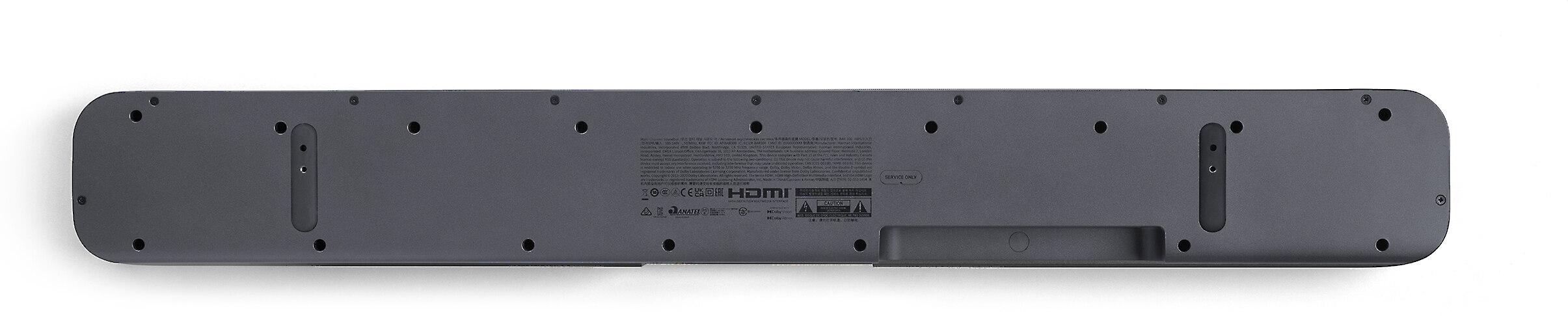
This is an area where the JBL Bar 300 clearly leads. Its HDMI eARC connection supports the latest audio formats and provides single-cable connection to your TV, with the ability to pass through 4K video signals including HDR10 and Dolby Vision.
The built-in Wi-Fi opens up streaming capabilities that the Samsung HW-C450 simply doesn't offer. You can stream music directly from services like Spotify or Apple Music, use AirPlay from iOS devices, or cast from Android phones using Chromecast. The JBL One app provides easy setup and customization options.
The Samsung HW-C450 is more basic, relying primarily on optical digital connection and Bluetooth. However, this simplicity can be an advantage—there's less to go wrong, and setup is nearly foolproof. The One Remote integration with Samsung TVs is genuinely convenient if you're already in Samsung's ecosystem.
At the time of writing, these soundbars typically have different price points that reflect their different approaches. The Samsung HW-C450 generally costs significantly less while including a wireless subwoofer—components that often cost extra with other brands.
The JBL Bar 300 commands a premium for its advanced processing and features. Whether this premium is justified depends on your priorities and room requirements.
For pure audio improvement per dollar spent, the Samsung HW-C450 is hard to beat. The inclusion of a wireless subwoofer at its typical price point represents exceptional value. You're getting genuinely impactful bass and clear dialogue enhancement for a reasonable investment.
The JBL Bar 300 justifies its higher price through more sophisticated processing, better connectivity, and superior surround sound performance. If you value features like Dolby Atmos, streaming capabilities, and precise audio positioning, the extra cost makes sense.
Your room's characteristics significantly influence which soundbar will work better. The Samsung HW-C450 excels in smaller to medium-sized rooms where its bass response can pressurize the space effectively without overwhelming it. The wireless subwoofer placement flexibility allows optimization for your specific room layout.
The JBL Bar 300 works better in larger rooms where its wider soundstage can properly develop and where the lack of a separate subwoofer won't be as noticeable. The all-in-one design is also ideal for apartments or situations where subwoofer placement is problematic.
Choose the Samsung HW-C450 if you're looking for maximum audio improvement at the lowest cost. It's perfect for users upgrading from TV speakers who want simple setup, impactful bass, and clear dialogue without complexity. The wireless subwoofer makes it ideal for movie watching and casual gaming in smaller rooms.
The Samsung HW-C450 is also the better choice if you prefer physical bass impact over surround sound sophistication, or if you're building a basic home theater on a tight budget. Its straightforward approach and reliable performance make it an easy recommendation for first-time soundbar buyers.
Choose the JBL Bar 300 if you want a more complete audio experience with genuine surround sound processing. It's worth the premium for users who stream music frequently, game competitively, or want future-proof features like Dolby Atmos and modern connectivity.
The JBL Bar 300 makes more sense for larger rooms, apartments where subwoofer placement is challenging, or situations where you want a single, sophisticated audio solution that handles all content types well.
Both soundbars succeed in their intended roles, but they serve different users and priorities. The Samsung HW-C450 delivers exceptional value and focuses on the fundamentals—clear dialogue and impactful bass. The JBL Bar 300 provides a more sophisticated, feature-rich experience with genuinely superior surround sound processing.
Your choice ultimately depends on whether you prioritize value and simplicity (Samsung) or comprehensive performance and modern features (JBL). Both represent solid improvements over TV speakers, but understanding their different approaches will help ensure you get the audio experience that best matches your needs and expectations.
| Samsung HW-C450 2.1ch Soundbar | JBL Bar 300 5.0 Soundbar |
|---|---|
| Channel Configuration - Determines surround sound quality and immersion | |
| 2.1 channels (stereo + subwoofer) | 5.0 channels (left, right, center, two surround) |
| Bass Delivery - Critical for movie impact and music enjoyment | |
| Dedicated wireless 6" subwoofer with 220W power | Integrated bass ports within soundbar |
| Advanced Audio Processing - Enables 3D and height effects | |
| DTS Virtual:X (virtualized surround from 2 speakers) | Dolby Atmos + MultiBeam (true multi-channel with height) |
| Total Power Output - Affects maximum volume and dynamics | |
| 300W total (80W soundbar + 220W subwoofer) | 260W total (all-in-one design) |
| Connectivity Options - Determines compatibility and ease of use | |
| Optical, Bluetooth, USB (no HDMI) | HDMI eARC, optical, Bluetooth, built-in Wi-Fi |
| Smart Features - Modern conveniences and streaming capabilities | |
| One Remote Control (Samsung TV integration) | Built-in streaming (AirPlay, Chromecast, Alexa MRM) |
| Physical Design - Space requirements and aesthetic impact | |
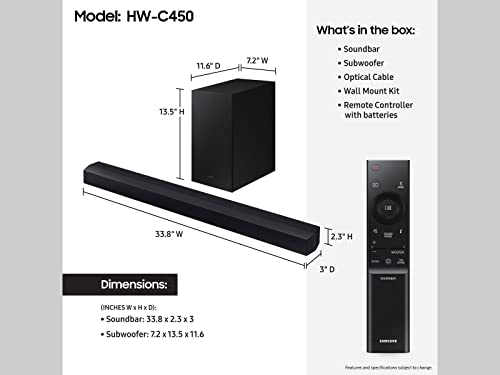
| Soundbar (33.8" x 2.3" x 3") + separate subwoofer | Single all-in-one unit (32.3" x 2.2" x 4.1") |
| Room Calibration - Automatic sound optimization for your space | |
| Manual sound modes and positioning | Embedded microphone with automatic calibration |
| Dialogue Enhancement - Ensures clear speech during movies | |
| Voice Enhance mode (frequency boosting) | PureVoice 2.0 technology (adaptive processing) |
| Gaming Features - Specialized audio modes for competitive play | |
| Game Mode (directional cues + low latency) | MultiBeam positioning + Dolby Atmos spatial audio |
| Best Room Size - Optimal performance environment | |
| Small to medium rooms (up to 300 sq ft) | Medium to large rooms (up to 500 sq ft) |
The Samsung HW-C450 is generally better suited for small rooms due to its 2.1-channel configuration and wireless subwoofer. The separate subwoofer allows you to optimize bass placement in compact spaces, while the simpler channel setup provides adequate coverage without overwhelming smaller areas. The JBL Bar 300 works better in medium to larger rooms where its 5.0-channel soundstage can properly develop.
This depends on your priorities and space constraints. The Samsung HW-C450 includes a dedicated wireless subwoofer that delivers significantly more impactful bass for movies and music. However, the JBL Bar 300's all-in-one design eliminates placement challenges and cable management, making it ideal for apartments or rooms where subwoofer positioning is difficult.
The JBL Bar 300 provides superior surround sound with true 5.0-channel processing and Dolby Atmos support, creating genuine multi-directional audio. The Samsung HW-C450 relies on DTS Virtual:X processing to simulate surround sound from its 2.1 setup, which is effective but cannot match the spatial accuracy of discrete channels.
The Samsung HW-C450's 2.1 configuration means two main speakers plus one subwoofer channel, focusing on stereo sound with enhanced bass. The JBL Bar 300's 5.0 setup includes left, right, center, and two surround channels without a dedicated subwoofer, providing wider soundstage coverage and better dialogue anchoring through the center channel.
Both offer gaming modes, but the JBL Bar 300 provides better positional accuracy for competitive gaming thanks to its true multi-channel setup. The Samsung HW-C450 delivers more impactful sound effects through its dedicated subwoofer, making it better for casual gaming where bass impact matters more than precise audio positioning.
The JBL Bar 300 offers more advanced connectivity with HDMI eARC, built-in Wi-Fi, AirPlay, and Chromecast support for streaming music directly. The Samsung HW-C450 uses simpler connections with optical input and Bluetooth, making it easier to set up but with fewer smart features and streaming capabilities.
Both handle dialogue well but through different approaches. The JBL Bar 300 uses PureVoice 2.0 technology with adaptive processing and a dedicated center channel for more consistent speech clarity. The Samsung HW-C450 offers Voice Enhance mode that boosts speech frequencies effectively, though less sophisticatedly than the JBL's processing.
Yes, both the Samsung HW-C450 and JBL Bar 300 work with any TV brand through optical or HDMI connections. However, the Samsung HW-C450 offers enhanced integration features like One Remote Control when paired with Samsung TVs, while the JBL Bar 300 provides universal compatibility through its HDMI eARC connection.
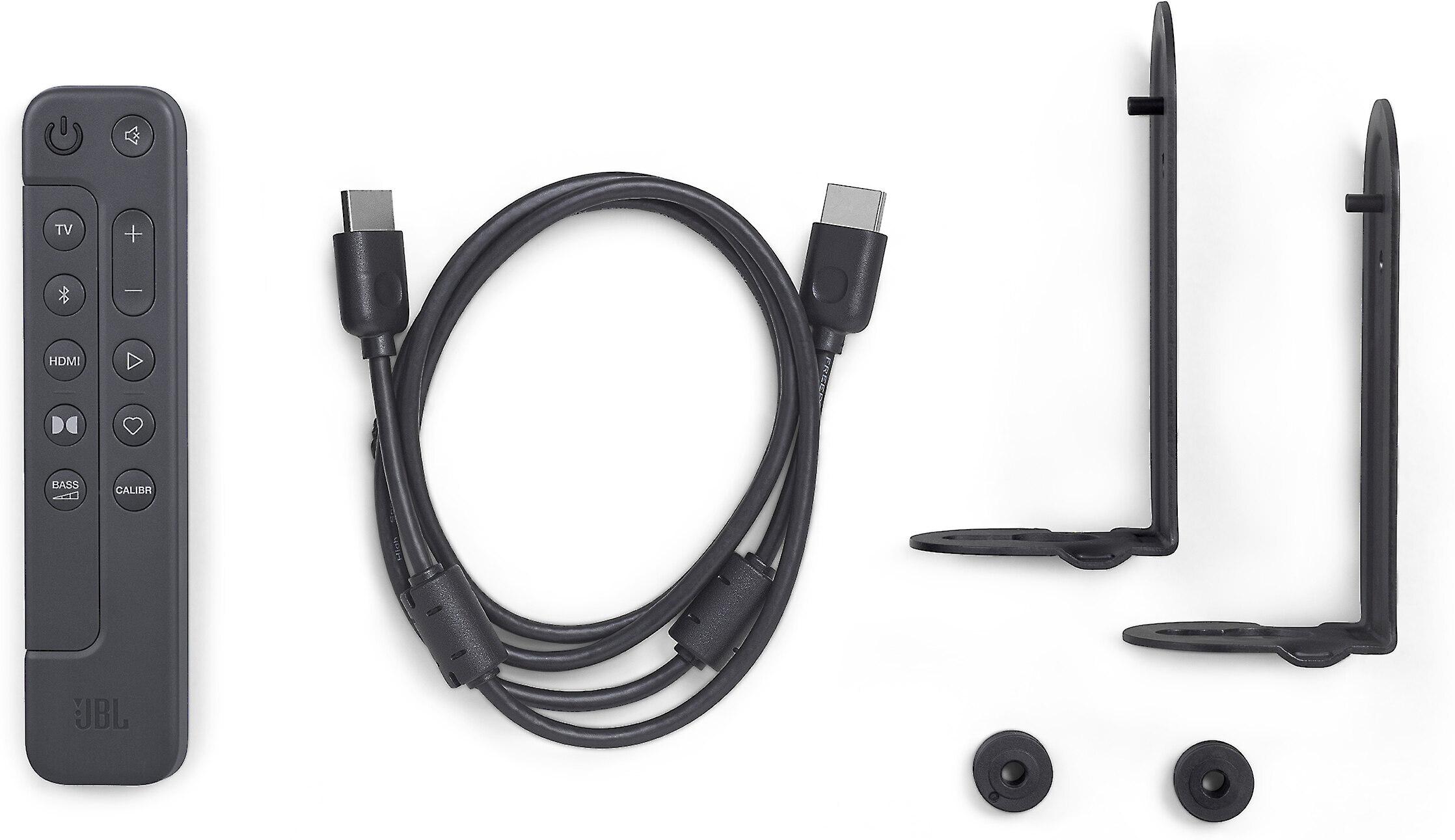
The Samsung HW-C450 typically offers simpler setup with automatic wireless subwoofer pairing and basic optical connection to your TV. The JBL Bar 300 requires more initial configuration but includes automatic room calibration through its built-in microphone and app-guided setup process for optimized performance.
The JBL Bar 300 excels at music streaming with built-in Wi-Fi, direct access to streaming services, AirPlay, and Chromecast support. The Samsung HW-C450 relies on Bluetooth connectivity for music streaming, which is simpler but offers fewer options and typically lower audio quality than Wi-Fi-based streaming.
The Samsung HW-C450 typically offers exceptional value by including a wireless subwoofer at its price point, providing significant audio improvement over TV speakers at a lower cost. The JBL Bar 300 justifies its higher price through advanced features like Dolby Atmos, better surround processing, and comprehensive connectivity options.
Choose the Samsung HW-C450 if you want maximum audio improvement per dollar spent, need impactful bass for movies, prefer simple setup, or have a smaller room. Choose the JBL Bar 300 if you want genuine surround sound, stream music frequently, need modern connectivity like HDMI eARC, or have a larger room that benefits from wider soundstage coverage.
We've done our best to create useful and informative comparisons to help you decide what product to buy. Our research uses advanced automated methods to create this comparison and perfection is not possible - please contact us for corrections or questions. These are the sites we've researched in the creation of this article: e-catalog.com - alibaba.com - smart.dhgate.com - greentoe.com - requiremints.com - versus.com - bhphotovideo.com - rtings.com - soundmachine.com.mt - samsung.com - samsung.com - youtube.com - bhphotovideo.com - newegg.com - images.samsung.com - bestbuy.com - samsung.com - youtube.com - jsappliance.com - gadgetsleo.com - youtube.com - saraappliance.com - walmart.com - whathifi.com - safeandsoundhq.com - youtube.com - cnet.com - mm.jbl.com - jbl.com - bestbuy.com - support.jbl.com - dell.com - walmart.com

Privacy Policy
Terms and Conditions - Affiliate Policy
Home Security
© Copyright 2008-2026.
11816 Inwood Rd #1211, Dallas, TX 75244