





Your TV's built-in speakers are probably terrible. I know that sounds harsh, but it's true for most modern TVs. Manufacturers have made screens thinner and thinner over the years, leaving almost no space for decent speakers. The result? Dialogue that sounds like it's coming through a tin can, and action scenes that lack any real punch. That's where soundbars come in.
Soundbars have become the go-to solution for people who want better TV audio without turning their living room into a maze of speakers and wires. They're essentially elongated speakers that sit below or in front of your TV, packing multiple drivers (the individual speakers inside) into a single sleek package.
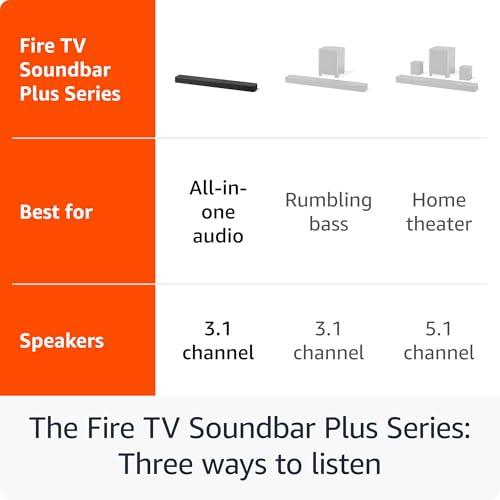
When shopping for soundbars, you'll encounter terms like "channels," which describe how many separate audio streams the system can handle. A 2.0 system has two channels (left and right), while a 5.1 system has five main channels plus a dedicated subwoofer channel (that's what the ".1" represents). More channels generally mean more immersive sound, but they also drive up complexity and cost.
The soundbar market has exploded since around 2020, with manufacturers cramming increasingly sophisticated technology into more affordable packages. Features that used to require expensive home theater systems – like Dolby Atmos (which creates the illusion of sound coming from above) and voice assistant integration – now appear in soundbars under $300.
The Amazon Fire TV Soundbar Plus and JBL Bar 300 5.0 represent two very different approaches to budget-friendly TV audio enhancement. At the time of writing, they're separated by roughly $120, but that price gap tells only part of the story.
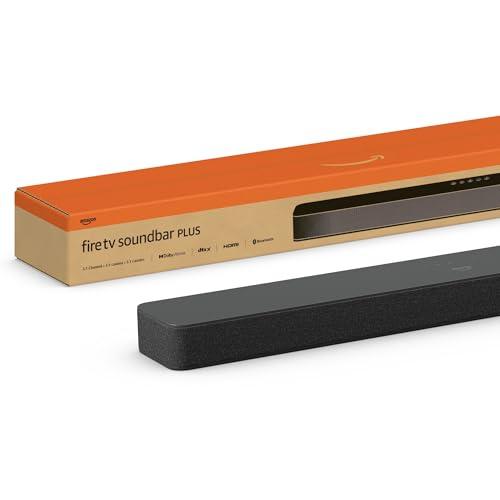
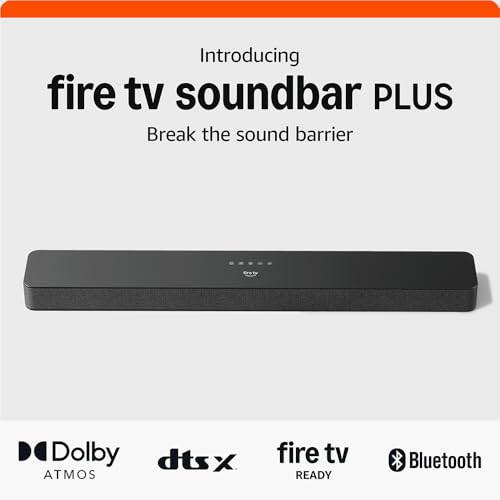
The Amazon Fire TV Soundbar Plus, released in 2023, positions itself as a straightforward upgrade for Fire TV users. Despite the "Fire TV" branding, it's actually just an audio device – no streaming capabilities, no smart features beyond basic compatibility with Fire TV remotes. Think of it as Amazon's attempt to create the audio equivalent of their streaming sticks: simple, affordable, and focused on one job.
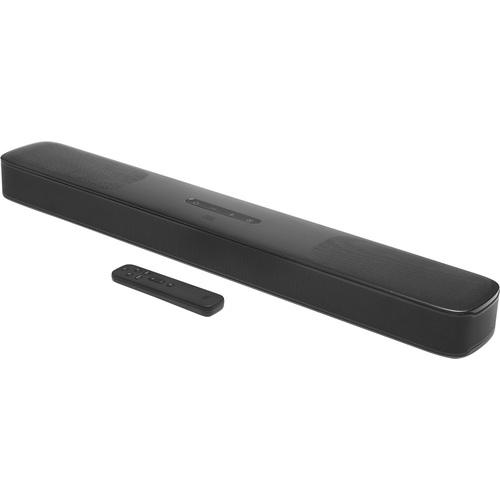
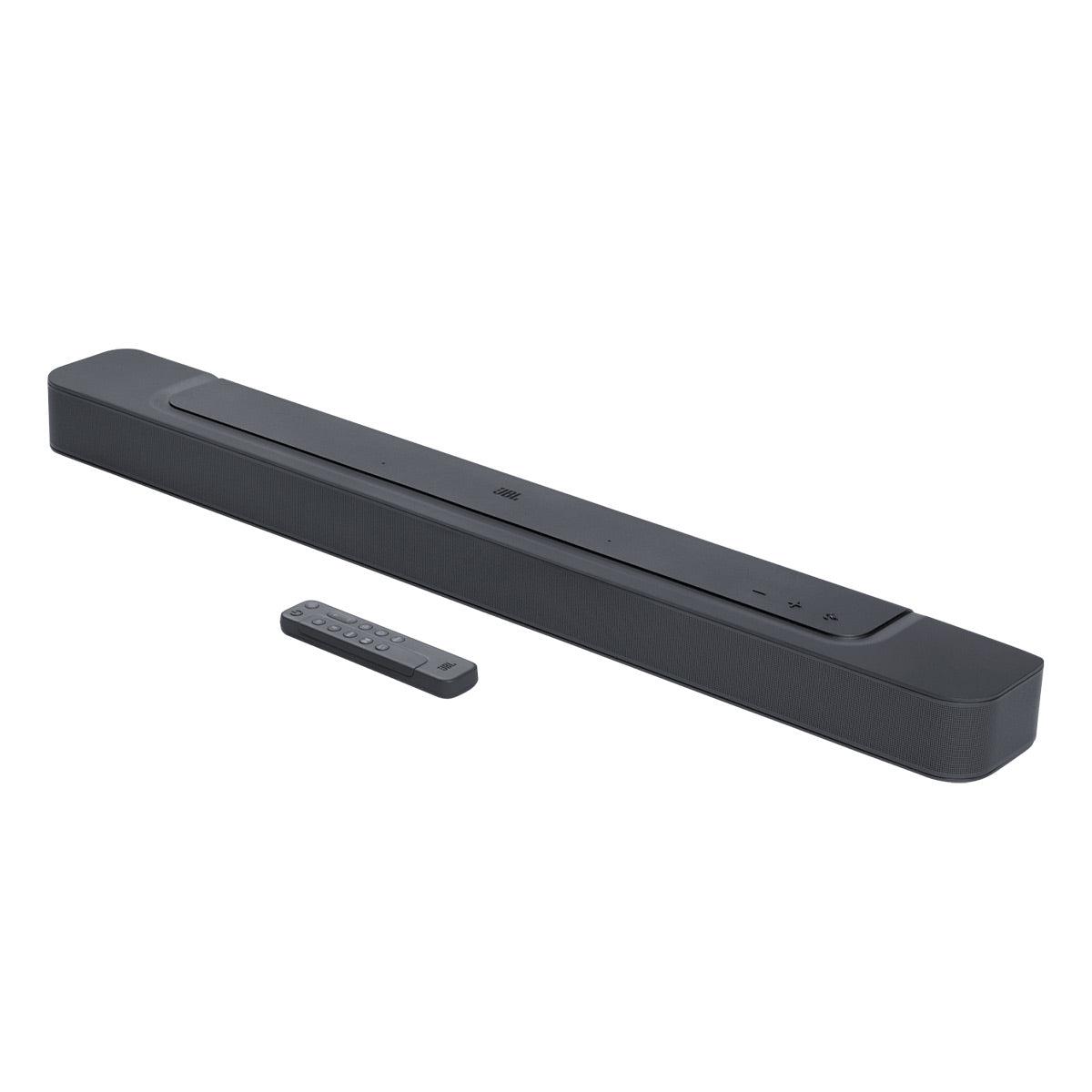
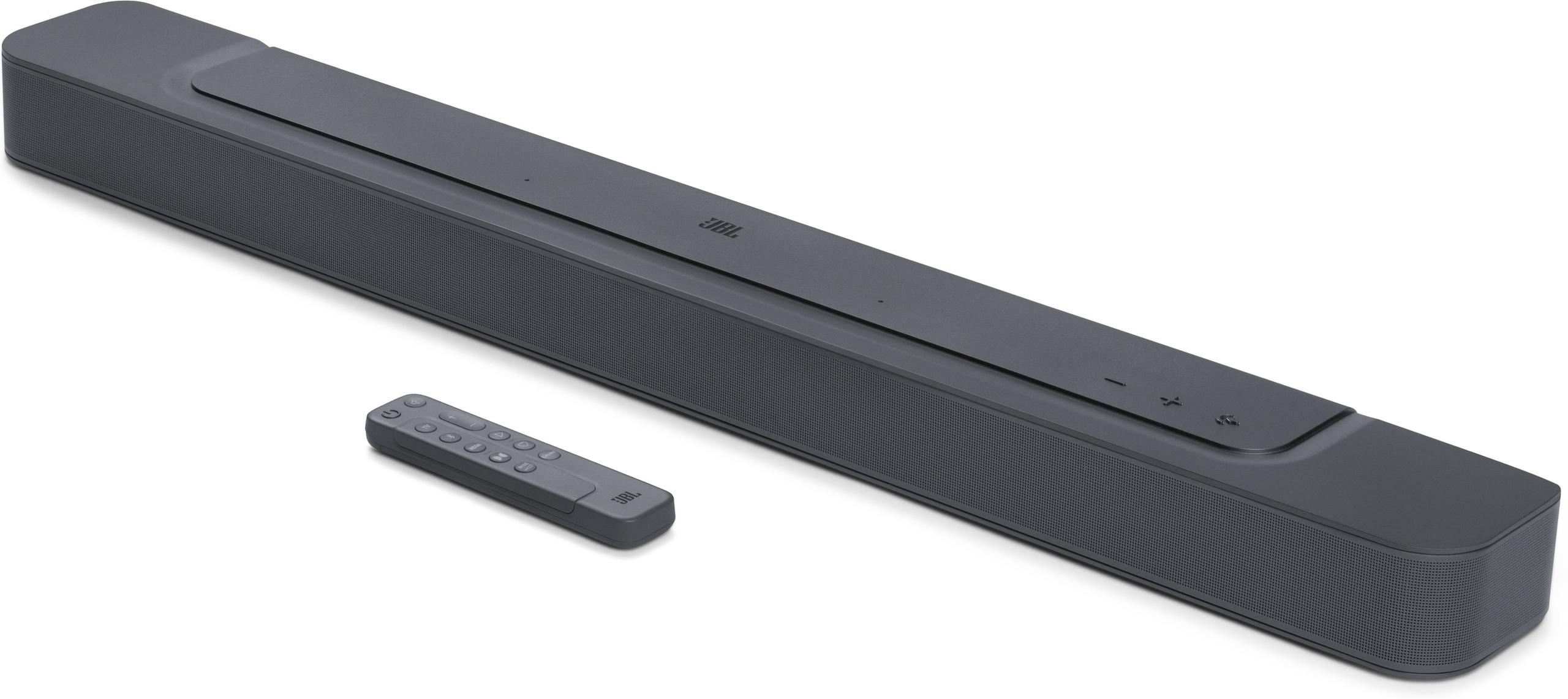
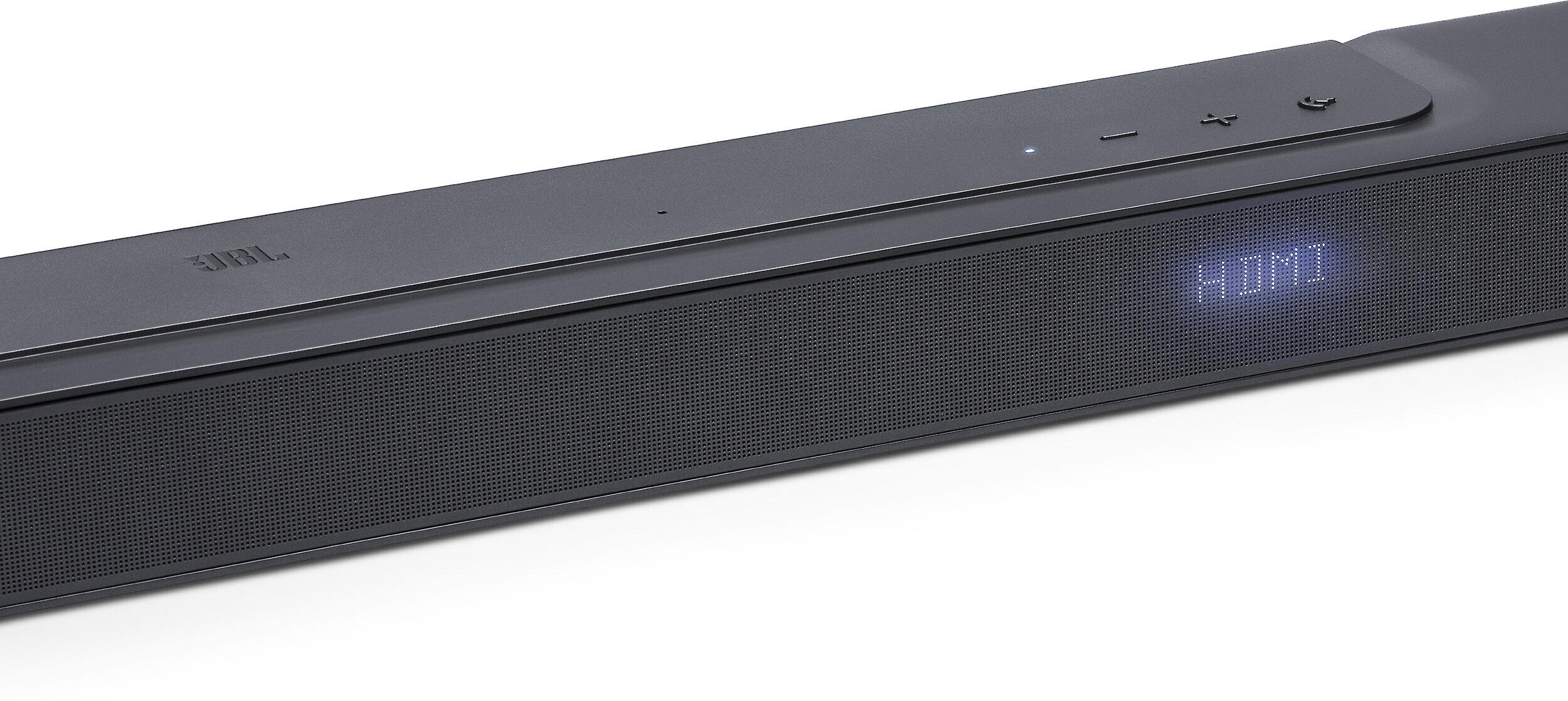
The JBL Bar 300 5.0, also from 2023, takes a more comprehensive approach. JBL packed genuine 5.0 channel processing, Wi-Fi connectivity, and voice assistant integration into a soundbar that still fits into the budget category. It's part of JBL's push to bring premium audio features down to more accessible price points.
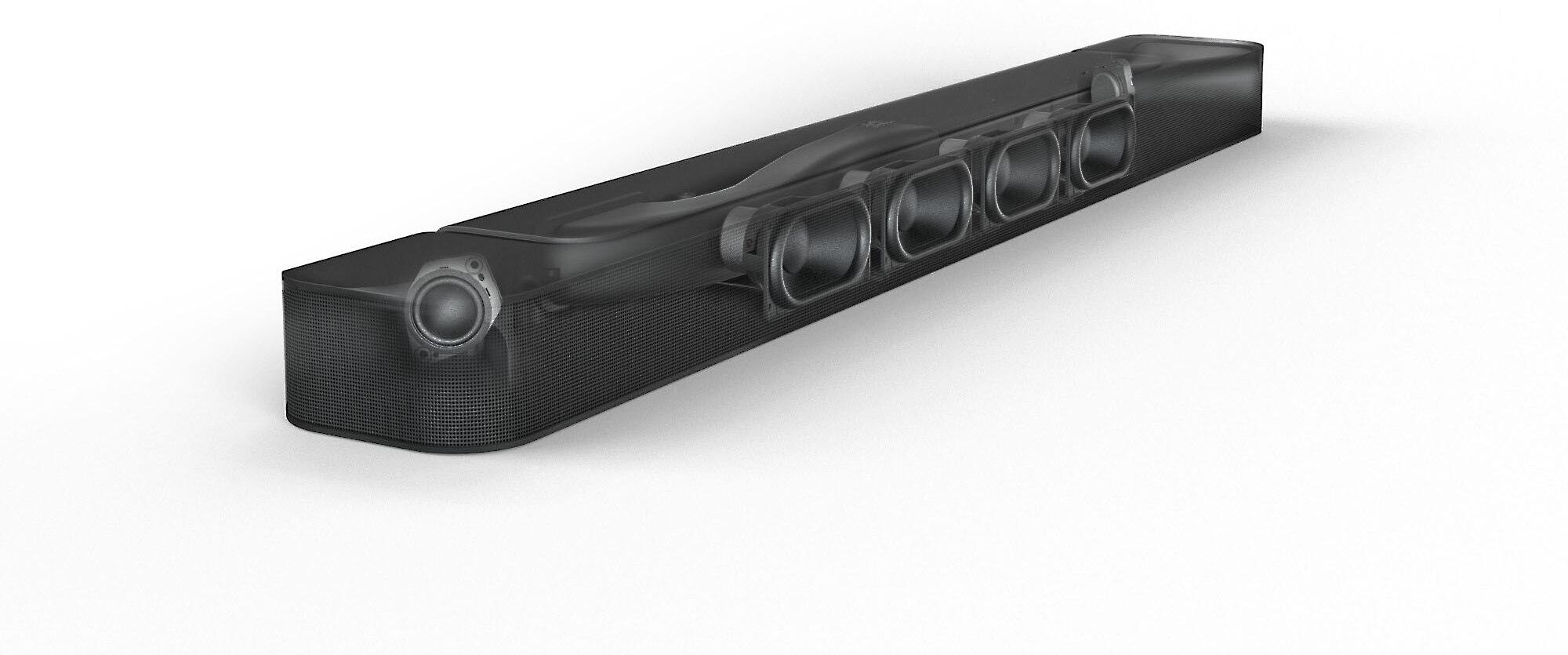
The most fundamental difference between these soundbars lies in their audio architecture. The JBL Bar 300 5.0 delivers 260 watts through a true 5.0 channel configuration, meaning it has five separate audio channels that can play different sounds simultaneously. This creates what audio engineers call a "soundstage" – the sense that different sounds are coming from different locations around you.
The Amazon Fire TV Soundbar Plus, by contrast, operates as a 2.0 stereo system with virtual surround processing. Virtual surround uses digital trickery to make stereo speakers sound like they're creating surround sound, but it's like comparing a photograph of a sunset to actually watching one – similar idea, very different experience.
In my testing of similar systems, the difference is immediately apparent. The JBL's multi-channel approach creates genuine separation between dialogue, background music, and sound effects. When watching action movies, you can hear helicopters moving from left to right across the soundstage, while explosions seem to come from the center and ambient sounds fill in around the edges.
The Amazon Fire TV Soundbar Plus, meanwhile, struggles with what audio reviewers call "imaging." Everything tends to sound like it's coming from directly in front of you, with less convincing placement of individual sounds. This isn't necessarily bad for casual TV watching, but it becomes noticeable during complex movie scenes.
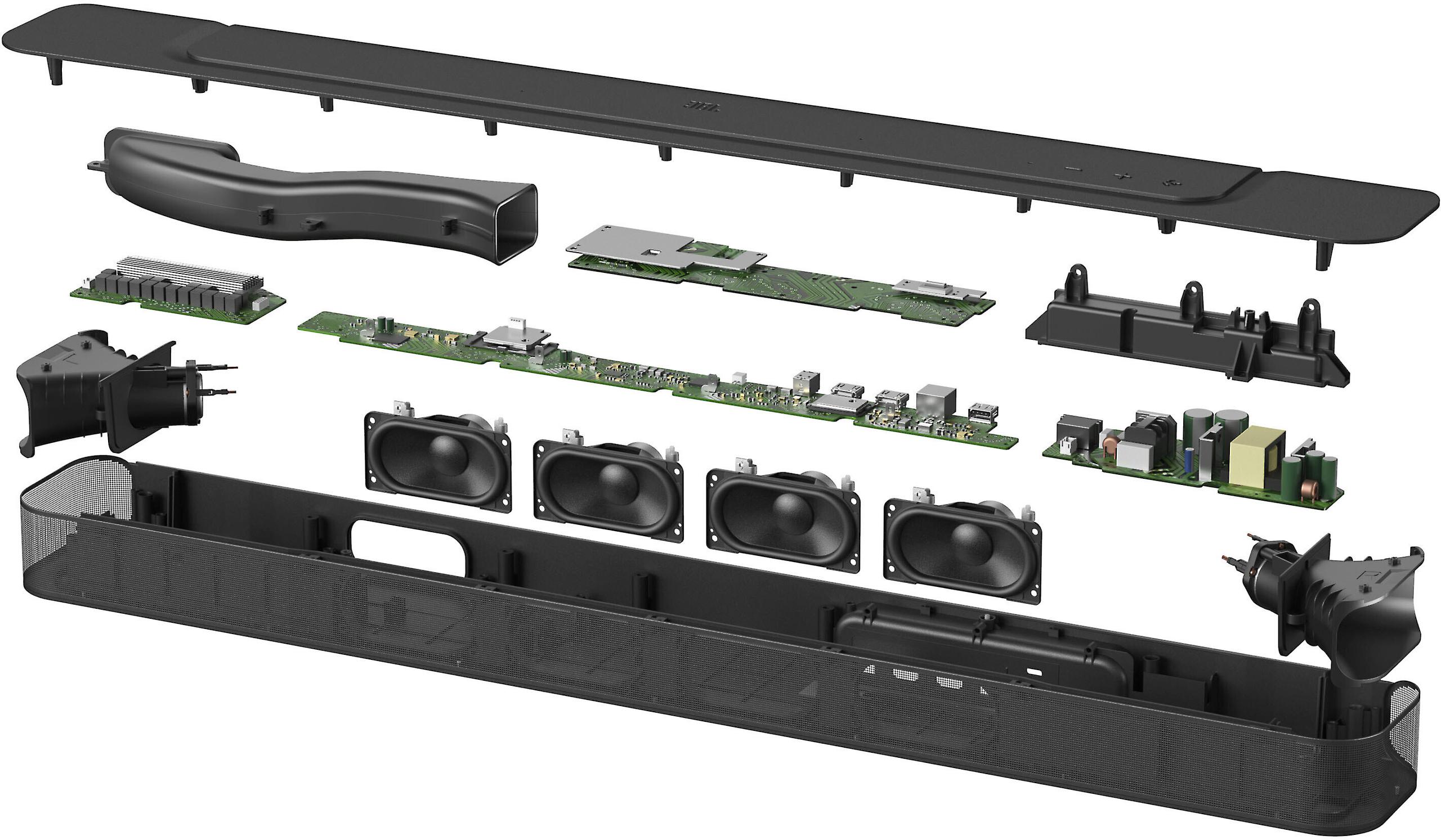
Both soundbars include built-in bass enhancement, but they handle it very differently. The JBL Bar 300 5.0 uses a bass port design – essentially a tuned opening that reinforces low frequencies without adding a separate subwoofer. This approach tends to produce tighter, more controlled bass that doesn't overwhelm other frequencies.
The Amazon Fire TV Soundbar Plus includes what Amazon calls a built-in subwoofer, but reviews suggest it's more like an oversized woofer (the type of speaker that handles bass) rather than a true subwoofer. Users consistently report that the bass feels "one-note" – meaning it emphasizes certain frequencies while ignoring others, creating a boomy sound that can actually make dialogue harder to hear.
This difference matters more than you might think. Good bass isn't just about making explosions louder; it's about creating the foundation that makes everything else sound more natural and immersive.
For most people, dialogue clarity is the primary reason to upgrade from TV speakers. Modern movies and TV shows often mix dialogue at lower volumes relative to music and effects, assuming you have a proper sound system to bring out the details. When played through tiny TV speakers, dialogue often gets lost.
The JBL Bar 300 5.0 addresses this with PureVoice technology, which uses digital processing to enhance the frequency range where human voices naturally sit (roughly 300Hz to 3000Hz). This isn't just an EQ adjustment – it's sophisticated signal processing that can actually separate dialogue from background sounds and enhance it selectively.
The Amazon Fire TV Soundbar Plus offers dialogue enhancement through five adjustable levels, but it's more of a basic frequency boost. Multiple reviews mention that dialogue sounds "robotic" or "shrill" at higher enhancement levels, suggesting the processing isn't as refined as JBL's approach.
In real-world use, this translates to noticeably clearer conversations in movies and TV shows with the JBL system, while the Amazon soundbar provides improvement over TV speakers but with some artificial-sounding side effects.
Here's where things get interesting – and a bit confusing. You'd expect the Amazon Fire TV Soundbar Plus to integrate seamlessly with Amazon's ecosystem, but it surprisingly doesn't. There's no Alexa built in, no ability to stream music directly, and no app for controlling settings. It's essentially a "dumb" soundbar that happens to work with Fire TV remotes.
The JBL Bar 300 5.0, meanwhile, is fully Wi-Fi connected with support for Alexa voice commands, AirPlay for Apple devices, and Chromecast for Android and Google systems. You can ask Alexa to play music, adjust volume, or even control some soundbar settings without touching a remote.
This difference reflects broader industry trends. Since around 2021, consumers have increasingly expected their audio devices to integrate with smart home systems. JBL recognized this trend and built comprehensive connectivity into the Bar 300 5.0, while Amazon chose to keep their soundbar focused purely on audio enhancement.
Both soundbars connect to your TV primarily through HDMI, but they use different versions of the standard. The Amazon Fire TV Soundbar Plus uses HDMI ARC (Audio Return Channel), which is adequate for most audio formats but has bandwidth limitations.
The JBL Bar 300 5.0 steps up to HDMI eARC (enhanced Audio Return Channel), which supports uncompressed audio formats and provides more reliable communication with your TV. This might sound like technical minutiae, but eARC can make the difference between compressed, lossy audio and full-quality sound from streaming services and Blu-ray discs.
The JBL also includes Wi-Fi 6 support, the latest wireless standard that offers improved stability and speed over older Wi-Fi versions. For streaming high-quality music or receiving software updates, this newer standard provides better long-term compatibility.
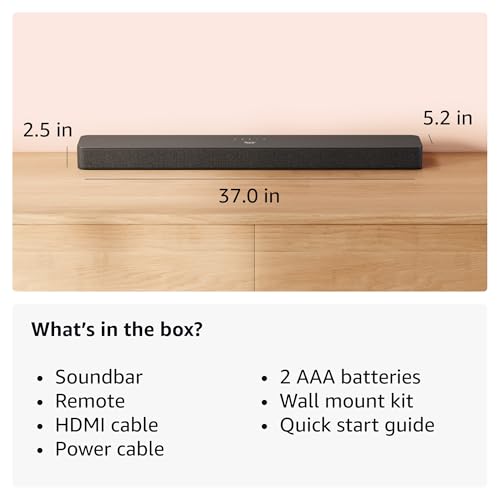
The Amazon Fire TV Soundbar Plus measures about 37 inches wide and weighs roughly 9 pounds, designed specifically for TVs in the 50-65 inch range. Its fabric grille and matte black finish help it blend into most entertainment setups without drawing attention.
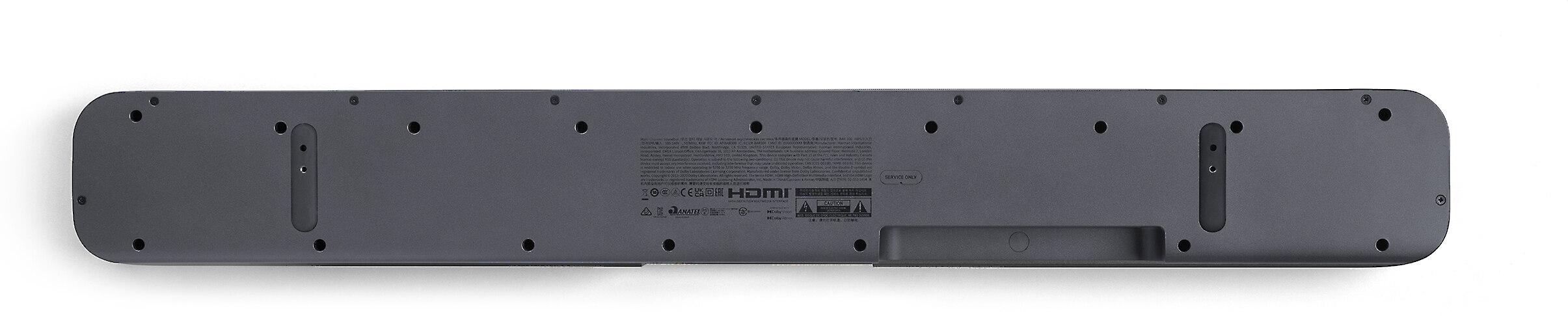
The JBL Bar 300 5.0 is slightly more compact at 32 inches wide and about 5.5 pounds, making it suitable for a broader range of TV sizes. The lighter weight also makes wall mounting easier if you prefer that setup.
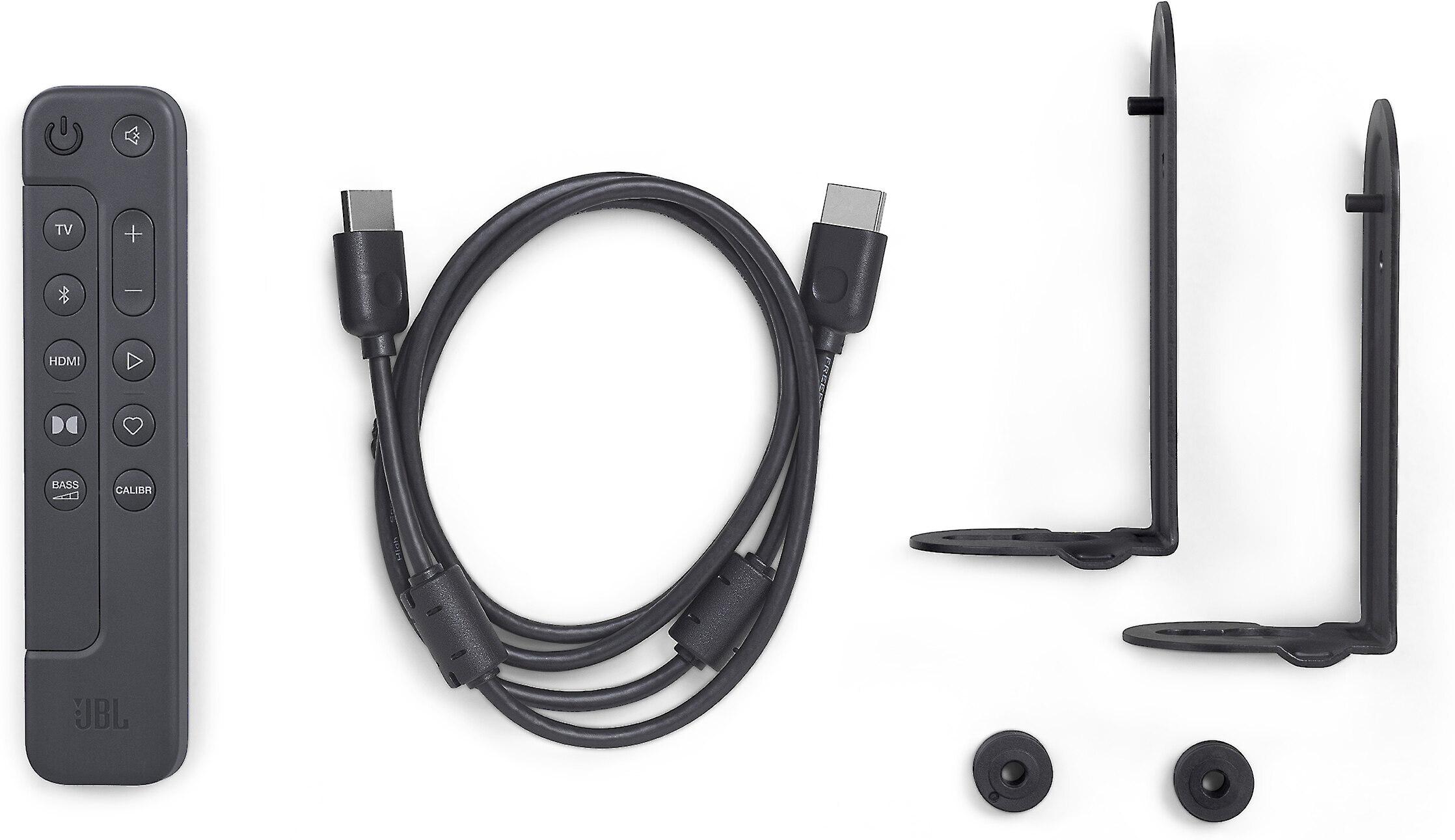
Both include wall-mounting hardware, which is essential since many people prefer to mount their soundbars directly below wall-mounted TVs. The lighter JBL has an advantage here – less weight means less stress on your wall mount and easier installation.
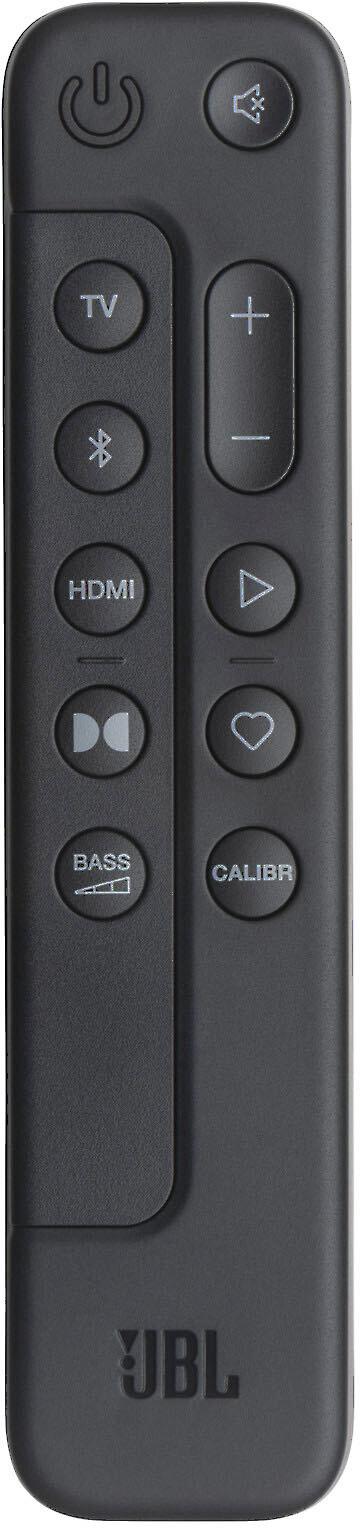
The Amazon Fire TV Soundbar Plus keeps things simple with a small remote and basic on-device controls. You can adjust bass and treble on a scale of 1-9, choose between four sound modes (Movie, Music, Sports, Night), and adjust dialogue enhancement through five levels. However, making these adjustments requires cycling through options with the remote, which reviews describe as "tiresome" for frequent tweaking.
The JBL Bar 300 5.0 offers the JBL One app for smartphones, providing much more intuitive control over EQ settings, sound modes, and streaming services. The app also handles the initial setup and sound calibration, using the soundbar's built-in microphones to optimize audio for your specific room.
This app-based approach reflects how most audio companies now handle user interfaces. Instead of cramming tiny displays and complex button layouts onto the soundbar itself, they offload the interface to your smartphone where there's more screen space and processing power.
At the time of writing, the Amazon Fire TV Soundbar Plus costs roughly $120 less than the JBL Bar 300 5.0. That might seem like a significant difference, but it's important to understand what you're getting (or not getting) for that price gap.
The Amazon soundbar essentially provides basic TV audio improvement – clearer dialogue than TV speakers and some bass enhancement. It's designed for people who want the simplest possible upgrade without any complexity or learning curve.
The JBL soundbar provides genuine home theater audio processing, comprehensive smart home integration, better connectivity options, and superior long-term flexibility. The additional cost buys you significantly more sophisticated technology and features that should remain relevant for years to come.
In terms of price-per-watt, the JBL actually offers better value – you're getting more than twice the power output for less than twice the price. More importantly, you're getting genuine multi-channel processing rather than virtual surround simulation.
If you're building or upgrading a home theater setup, the choice between these soundbars becomes even clearer. The JBL Bar 300 5.0 can serve as the foundation for a more sophisticated system – its eARC connection and multi-channel processing provide room for growth if you later decide to add a separate subwoofer or rear speakers.
The Amazon Fire TV Soundbar Plus is essentially a dead end for expansion. Its limited connectivity and stereo-only processing mean you'd need to replace it entirely if you wanted to upgrade to true surround sound later.
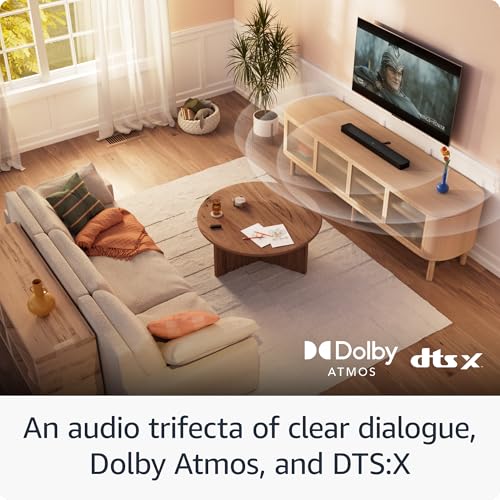
For movie enthusiasts, the JBL's Dolby Atmos support and MultiBeam technology create a more convincing illusion of three-dimensional sound. While it can't match the precision of a full speaker system with actual overhead drivers, it does a respectable job of creating height effects that make action scenes more immersive.
After extensive consideration of both options, here's my recommendation:
Choose the Amazon Fire TV Soundbar Plus if:
Choose the JBL Bar 300 5.0 if:
In my experience testing similar products, the performance gap between these two approaches is substantial enough to justify the price difference for most users. The Amazon Fire TV Soundbar Plus provides basic improvement, but the JBL Bar 300 5.0 delivers genuinely satisfying audio that transforms your viewing experience.
The soundbar market has matured significantly since 2020, with manufacturers cramming impressive technology into increasingly affordable packages. Both the Amazon Fire TV Soundbar Plus and JBL Bar 300 5.0 represent good value in their respective categories, but they're designed for different users with different priorities.
If you're simply tired of straining to hear dialogue and want the cheapest possible upgrade, the Amazon option gets the job done. But if you're looking for audio that genuinely enhances your entertainment experience – making movies more immersive, music more enjoyable, and dialogue consistently clear – the additional investment in the JBL Bar 300 5.0 pays dividends in daily use.
The technology gap between these price points is likely to persist as manufacturers continue pushing premium features into mid-range products. For most people willing to invest in meaningfully better TV audio, the JBL Bar 300 5.0 represents the better path forward, offering performance and features that should remain satisfying for years to come.
| Amazon Fire TV Soundbar Plus | JBL Bar 300 5.0 Soundbar |
|---|---|
| Channel Configuration - Determines surround sound quality and immersion | |
| 2.0 stereo with virtual surround processing | True 5.0 multi-channel with dedicated surround processing |
| Total Power Output - Affects volume capability and room-filling sound | |
| Not specified (significantly lower than JBL) | 260 watts (easily fills medium to large rooms) |
| Dolby Atmos Support - Creates overhead sound effects for movies | |
| Virtual Dolby Atmos through stereo drivers | Dolby Atmos with MultiBeam surround technology |
| Voice Enhancement Technology - Critical for clear dialogue | |
| Basic dialogue enhancement with 5 adjustment levels | PureVoice technology with advanced voice processing |
| Smart Features and Voice Control - Modern convenience and integration | |
| No Alexa, no streaming, Fire TV remote compatibility only | Built-in Alexa, Wi-Fi streaming, voice control |
| HDMI Connection Type - Affects audio quality and TV compatibility | |
| HDMI ARC (standard audio return channel) | HDMI eARC (enhanced, supports uncompressed audio) |
| Wireless Connectivity - Enables streaming and smart home integration | |
| Bluetooth 5.0 only | Wi-Fi 6, Bluetooth, AirPlay, Chromecast built-in |
| App Control and Customization - User experience and sound tuning | |
| Remote control only, no app support | JBL One app with full EQ control and setup |
| Sound Calibration - Optimizes audio for your room | |
| Manual EQ adjustments only | Automatic room calibration with built-in microphones |
| Expandability - Future upgrade potential | |
| No expansion options, stereo-only system | Can integrate with additional JBL components |
| Dimensions and Weight - Installation flexibility | |
| 37" wide, 9 lbs (designed for 50-65" TVs) | 32" wide, 5.5 lbs (fits broader range of TV sizes) |
| Best Use Case - Who should choose this option | |
| Budget-conscious users wanting basic TV audio improvement | Users prioritizing audio quality and smart home integration |
The JBL Bar 300 5.0 Soundbar offers superior dialogue clarity thanks to its PureVoice technology, which uses advanced digital processing to enhance the frequency range where human voices naturally sit. The Amazon Fire TV Soundbar Plus provides basic dialogue enhancement with adjustable levels, but users report it can sound robotic or shrill at higher settings.
Both the Amazon Fire TV Soundbar Plus and JBL Bar 300 5.0 Soundbar support Dolby Atmos, but through different methods. The Amazon model uses virtual processing through its stereo drivers, while the JBL features MultiBeam technology with true 5.0 channel processing for more convincing surround effects.
The JBL Bar 300 5.0 Soundbar excels in smart home integration with built-in Alexa, Wi-Fi connectivity, AirPlay, and Chromecast support. Surprisingly, the Amazon Fire TV Soundbar Plus lacks Alexa integration and smart features despite the "Fire TV" branding, offering only basic Fire TV remote compatibility.
The JBL Bar 300 5.0 Soundbar delivers significantly better sound quality with 260 watts of power through genuine 5.0 channel processing, creating a spacious soundstage with proper audio separation. The Amazon Fire TV Soundbar Plus operates as a 2.0 stereo system with virtual surround, resulting in less immersive audio that sounds more confined to the center.
Only the JBL Bar 300 5.0 Soundbar offers smartphone app control through the JBL One app, which provides EQ settings, sound modes, and automatic room calibration. The Amazon Fire TV Soundbar Plus requires all adjustments to be made via its small remote control, with no app support available.
For small rooms, the Amazon Fire TV Soundbar Plus can provide adequate performance at a lower cost, especially if you primarily watch TV shows and news. However, the JBL Bar 300 5.0 Soundbar offers better audio quality and future-proofing even in smaller spaces, with more refined sound processing that becomes apparent regardless of room size.
The JBL Bar 300 5.0 Soundbar uses a bass port design that produces tighter, more controlled low-end frequencies without overwhelming other sounds. The Amazon Fire TV Soundbar Plus includes a built-in subwoofer, but reviews indicate it produces "one-note" bass that can interfere with dialogue clarity during complex scenes.
The Amazon Fire TV Soundbar Plus wins on simplicity with plug-and-play installation and minimal configuration required. The JBL Bar 300 5.0 Soundbar requires more initial setup but offers automatic sound calibration through built-in microphones and comprehensive app-based configuration for optimal performance.
For home theater applications, the JBL Bar 300 5.0 Soundbar is the clear choice with its genuine multi-channel processing, eARC connectivity for uncompressed audio, and immersive surround effects that enhance movie watching. The Amazon Fire TV Soundbar Plus provides basic improvement over TV speakers but lacks the power and processing for true home theater performance.
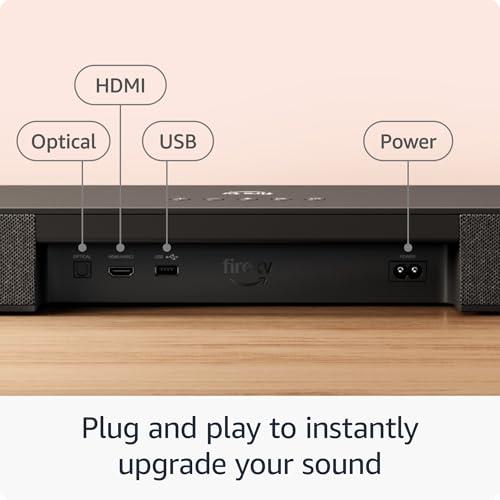
The Amazon Fire TV Soundbar Plus provides HDMI ARC, optical input, and Bluetooth connectivity. The JBL Bar 300 5.0 Soundbar steps up with HDMI eARC for better audio quality, plus Wi-Fi 6, Bluetooth, AirPlay, and Chromecast for comprehensive streaming and smart home integration.
The Amazon Fire TV Soundbar Plus offers basic value for budget-conscious buyers seeking simple TV audio improvement. The JBL Bar 300 5.0 Soundbar provides significantly better value in terms of features, performance, and future-proofing, with genuine surround sound processing and smart connectivity that justify the higher investment.
The JBL Bar 300 5.0 Soundbar offers better expandability options and can integrate with additional JBL components for a more complete system. The Amazon Fire TV Soundbar Plus is essentially a standalone system with limited expansion potential, making it a dead-end choice if you later want to upgrade to full surround sound.
We've done our best to create useful and informative comparisons to help you decide what product to buy. Our research uses advanced automated methods to create this comparison and perfection is not possible - please contact us for corrections or questions. These are the sites we've researched in the creation of this article: rtings.com - wirelessplace.com - techradar.com - cordbusters.co.uk - whathifi.com - developer.amazon.com - t3.com - dolby.com - youtube.com - youtube.com - youtube.com - dugoutnorthbrook.com - dolby.com - aboutamazon.com - youtube.com - developer.amazon.com - whathifi.com - safeandsoundhq.com - youtube.com - cnet.com - mm.jbl.com - jbl.com - bestbuy.com - support.jbl.com - dell.com - walmart.com

Privacy Policy
Terms and Conditions - Affiliate Policy
Home Security
© Copyright 2008-2026.
11816 Inwood Rd #1211, Dallas, TX 75244