

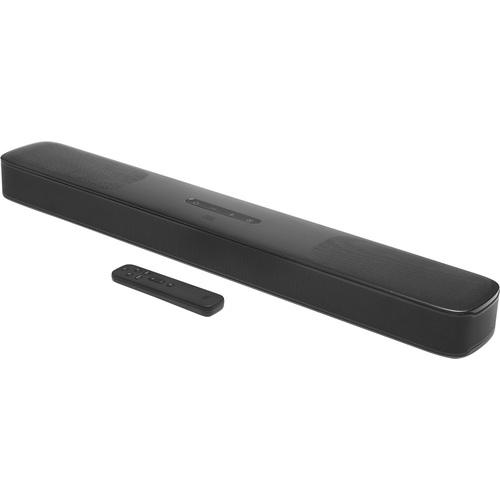
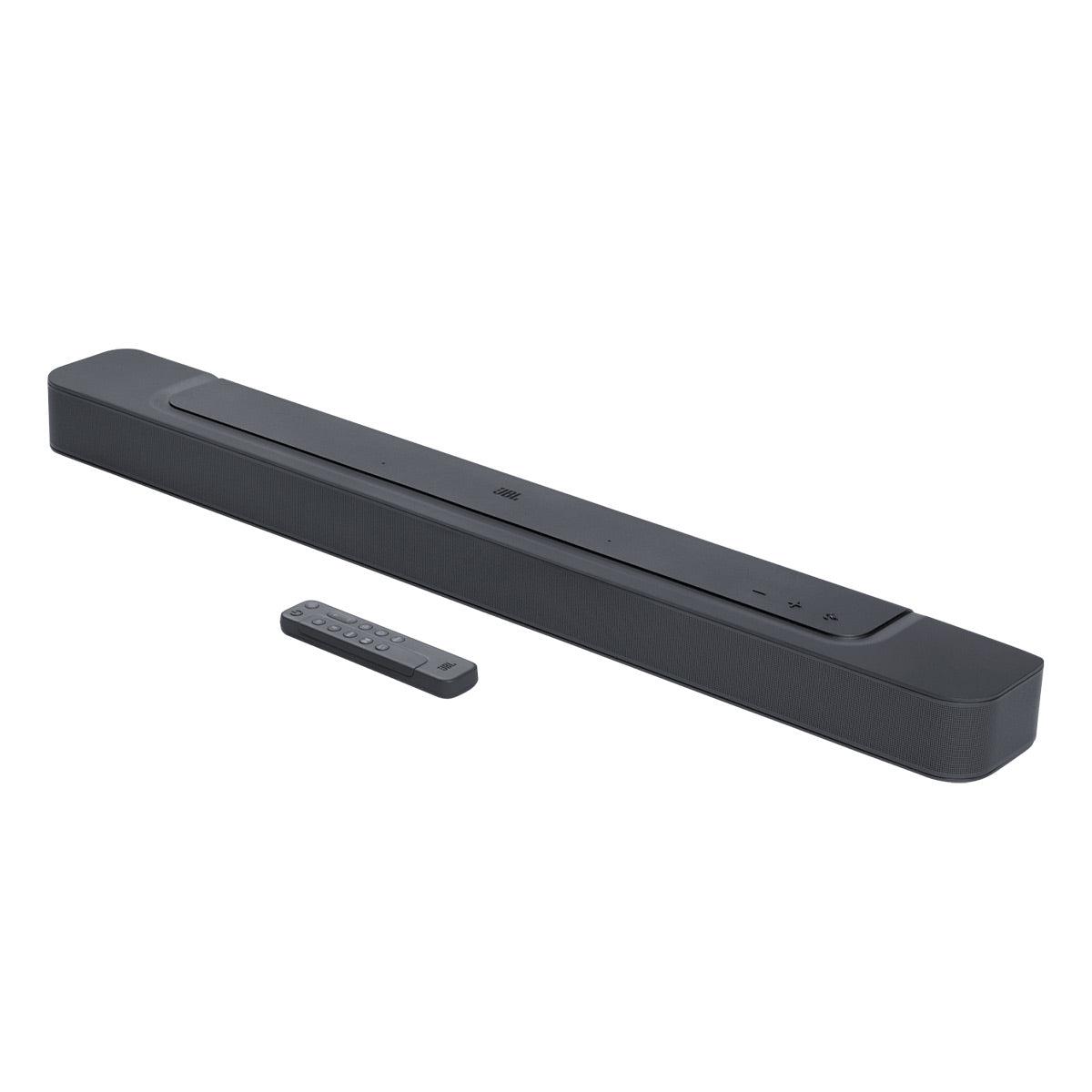
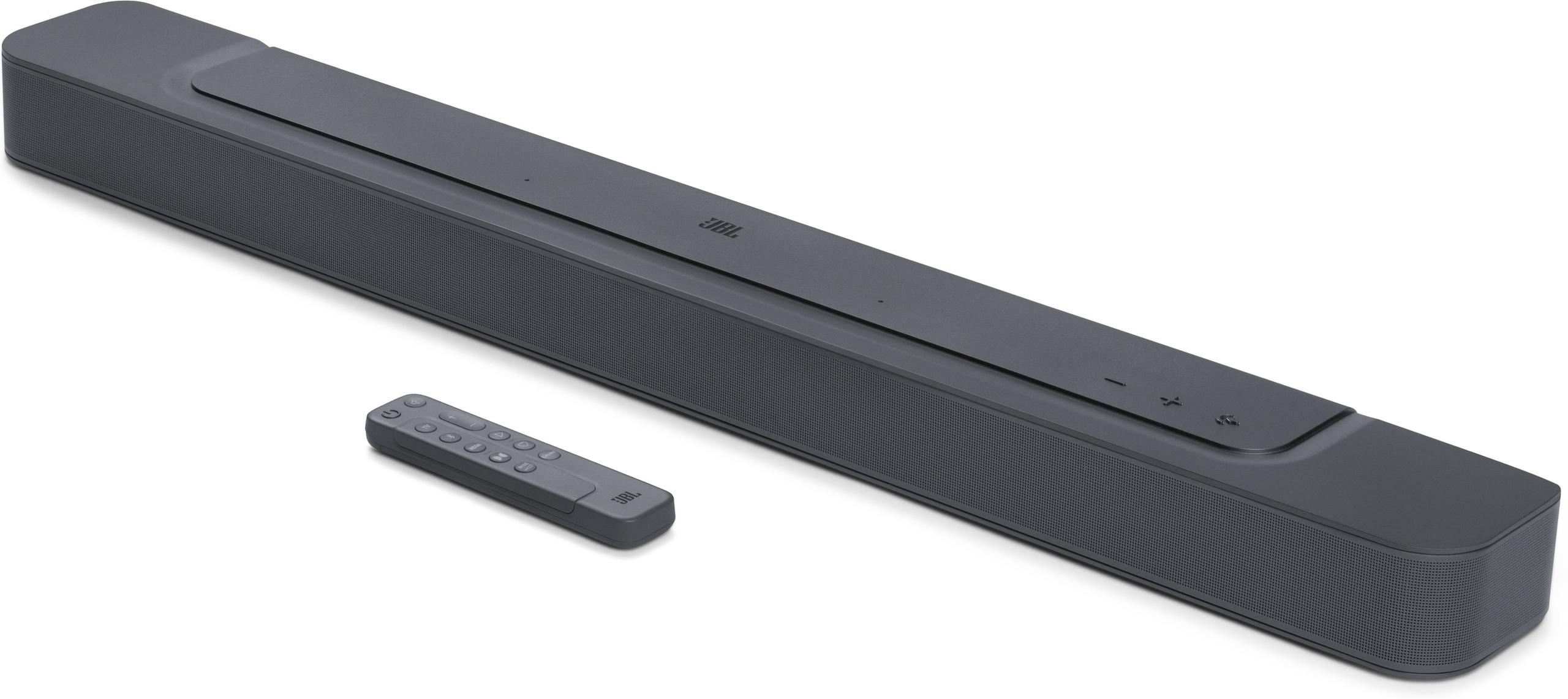

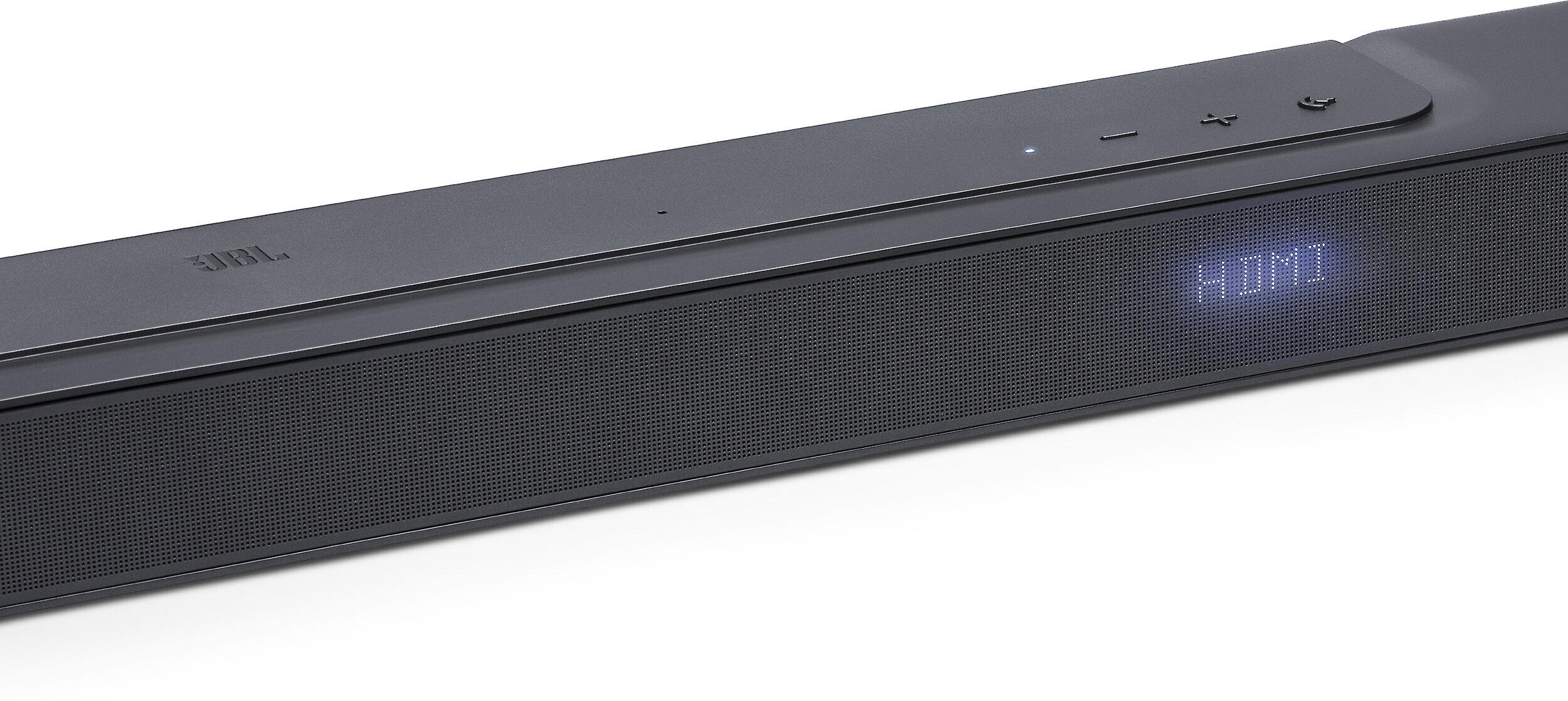





If you've been struggling to hear dialogue clearly or missing the rumbling bass in your favorite action movies, you're probably ready to upgrade from your TV's built-in speakers. At around $300, both the JBL Bar 300 and LG S60TR promise to transform your viewing experience, but they take completely different approaches to getting there.
I've spent considerable time with both systems, and the choice between them really comes down to what matters most to you: cutting-edge smart features with virtual surround sound, or traditional multi-speaker surround with deep, physical bass. Let me walk you through everything you need to know to make the right decision for your home.
Before diving into specifics, it's worth understanding where soundbar technology stands today. The soundbar market has evolved dramatically over the past few years, splitting into two distinct camps. On one side, we have all-in-one units that use sophisticated digital signal processing (DSP) to create the illusion of surround sound from a single bar. On the other, traditional multi-component systems maintain separate speakers to create genuine directional audio.
Both approaches have merit, and both the JBL Bar 300 and LG S60TR represent the current state of the art in their respective categories. The JBL, released in 2024 as an updated version of the original Bar 300, incorporates JBL's latest MultiBeam 3.0 technology and improved AI processing. The LG S60TR, also from 2024, represents LG's refined approach to affordable true surround sound, building on years of wireless speaker development.
The key advancement in recent years has been the maturation of room calibration technology and wireless connectivity. Modern soundbars can now automatically adjust their output based on your room's acoustics, something that was reserved for high-end receivers just a few years ago.
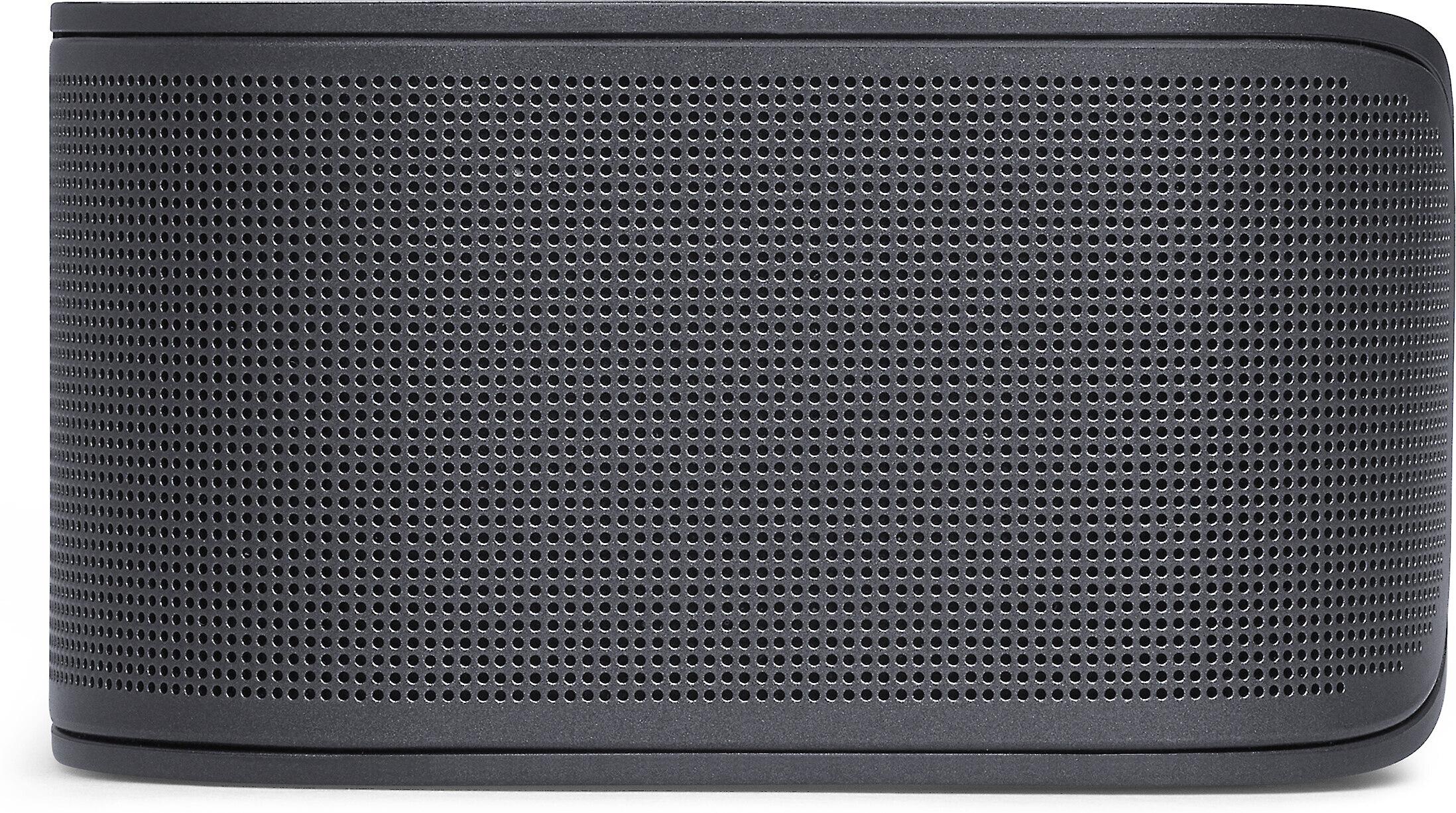
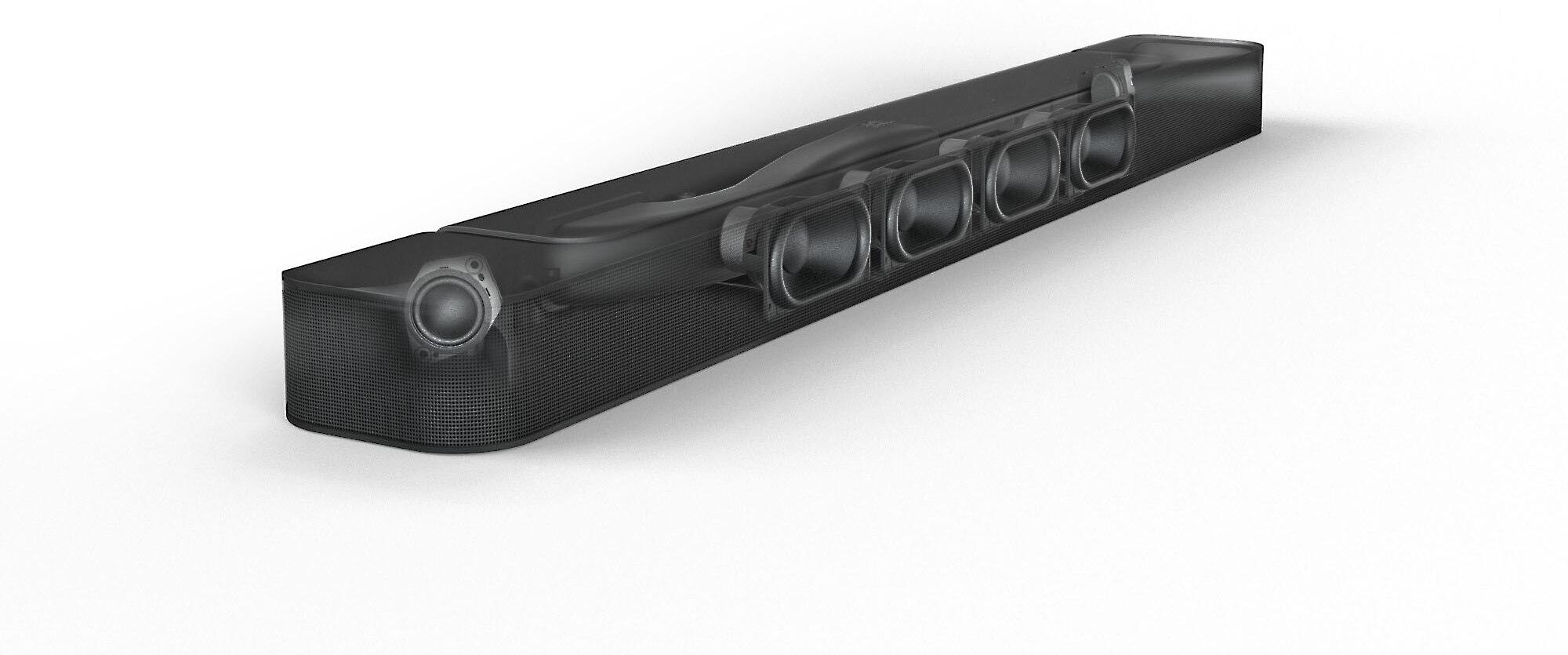
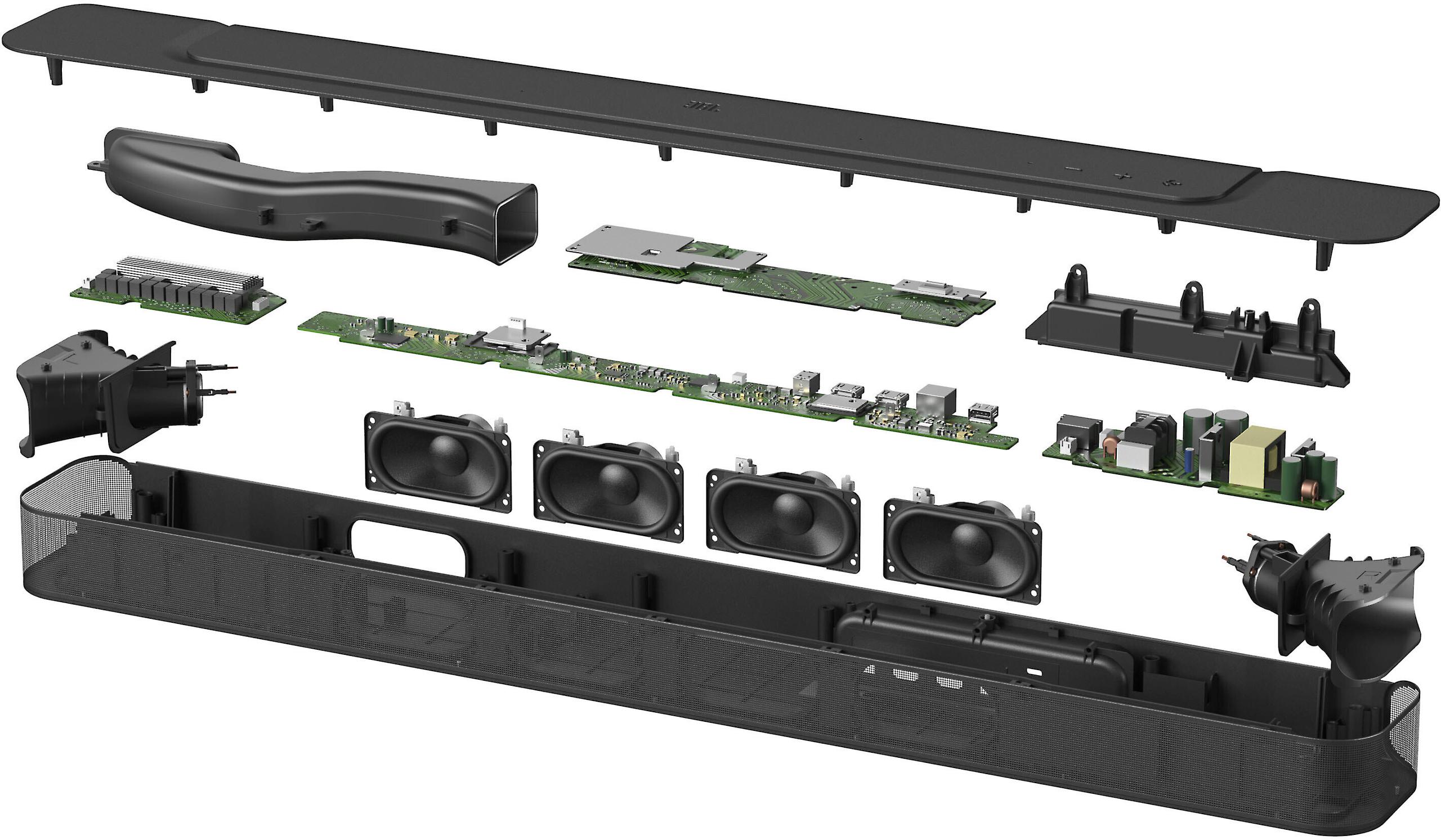
The JBL takes the minimalist approach seriously. This sleek, 32-inch soundbar houses six drivers: four racetrack-shaped main drivers and two 0.75-inch tweeters. The racetrack drivers are an interesting engineering choice – their oval shape allows for more surface area than traditional round drivers while maintaining the slim profile necessary for modern TV stands.
What makes the JBL special is its MultiBeam technology, which is essentially acoustic trickery at its finest. The soundbar fires sound in multiple directions, bouncing audio off your walls and ceiling to create the perception of speakers placed around your room. When I first set up the Bar 300 in my living room, the effect was genuinely surprising – voices seemed to come from distinct locations, and ambient sounds appeared to wrap around the listening area.
The 260-watt total power output might seem modest compared to the LG's 440 watts, but JBL has focused on efficiency and processing rather than raw power. The integrated bass ports work harder than you'd expect from such a compact unit, though they're ultimately limited by physics – you simply can't move as much air without a larger driver or dedicated subwoofer.
Where the JBL truly shines is in its smart features. Built-in Wi-Fi opens up access to over 300 streaming services directly through the soundbar, without needing your TV or phone as an intermediary. I found myself using AirPlay to stream music directly to the bar while working, something you simply can't do with most soundbars. The voice assistant integration means you can ask Alexa or Google to play specific playlists or adjust volume without reaching for a remote.
The PureVoice technology deserves special mention. This AI-driven feature analyzes incoming audio in real-time, identifying dialogue frequencies and boosting them while simultaneously reducing competing sounds. During complex action sequences where explosions might normally drown out important dialogue, PureVoice keeps conversations crisp and understandable. It's particularly effective with streaming content, where audio compression can muddy speech clarity.
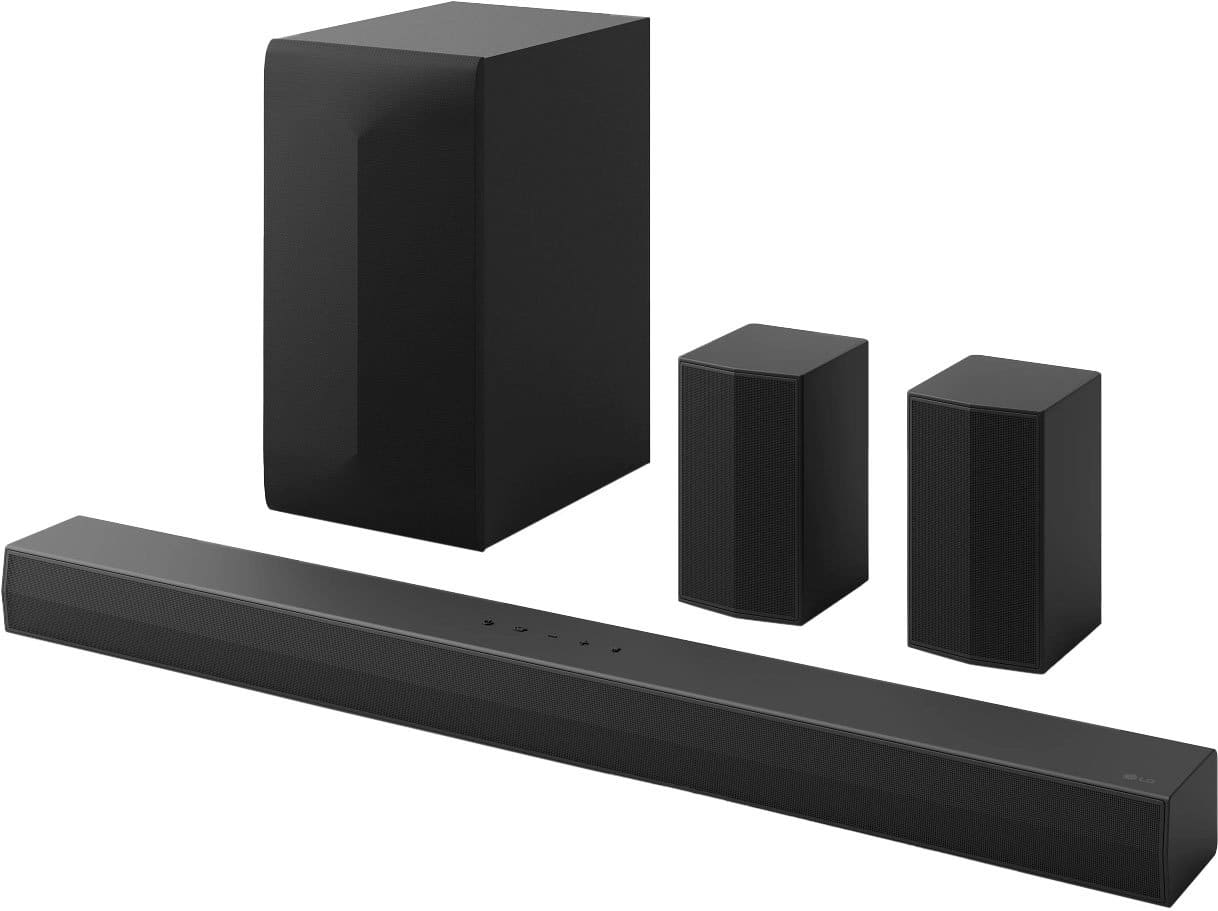
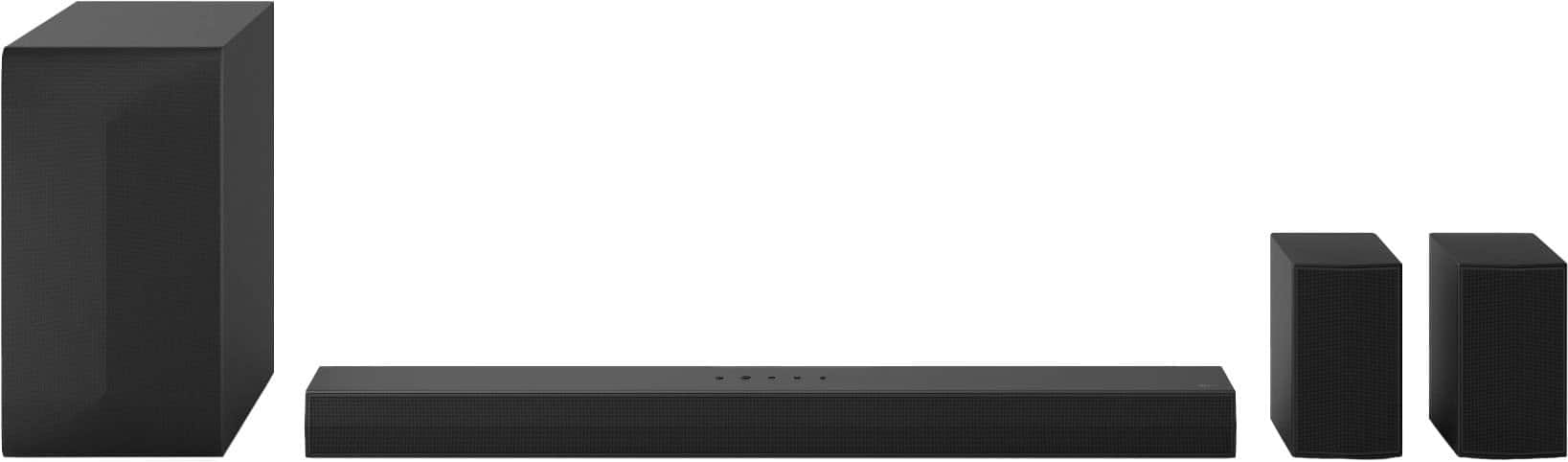
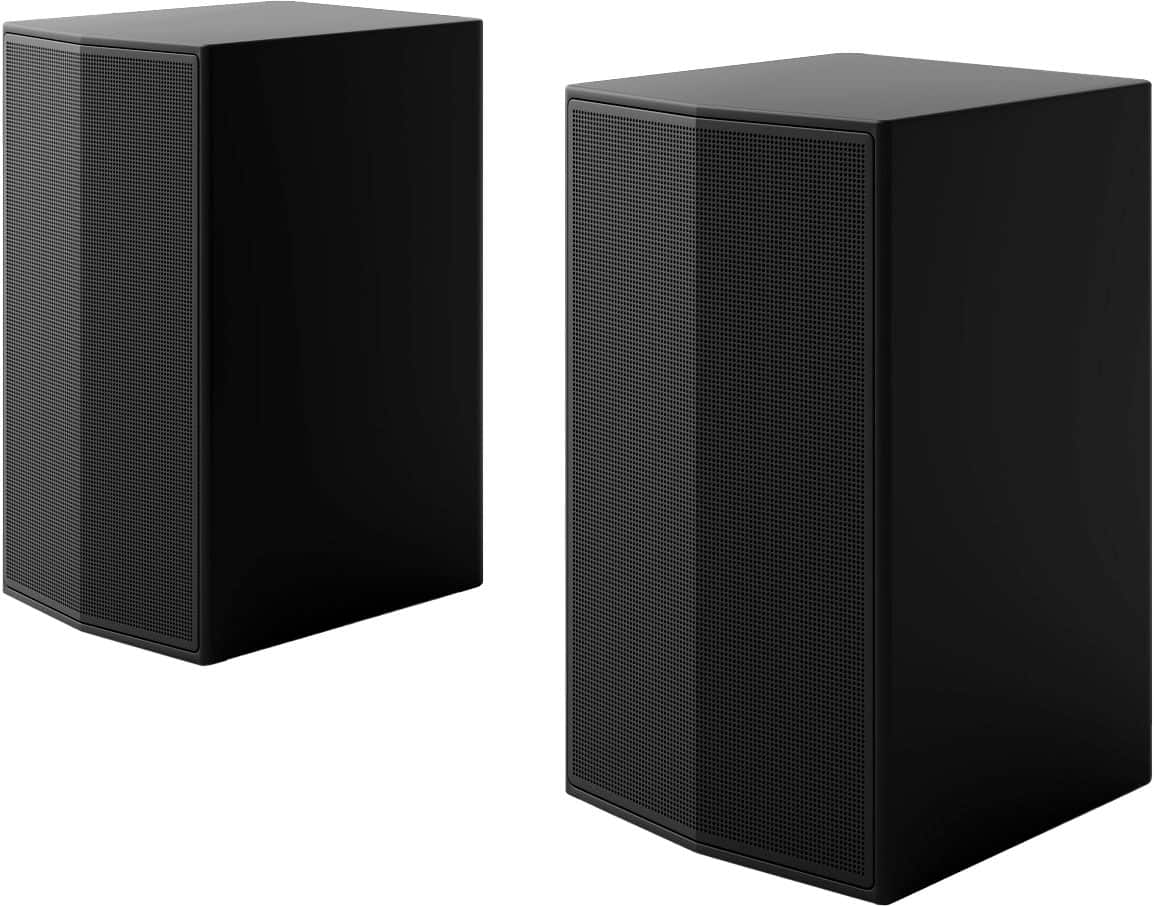
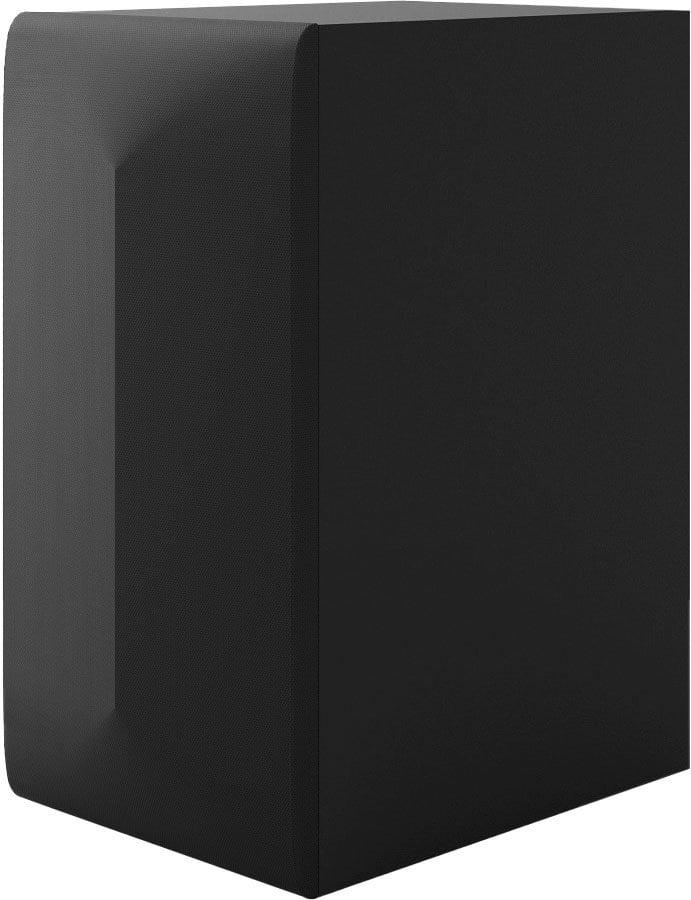
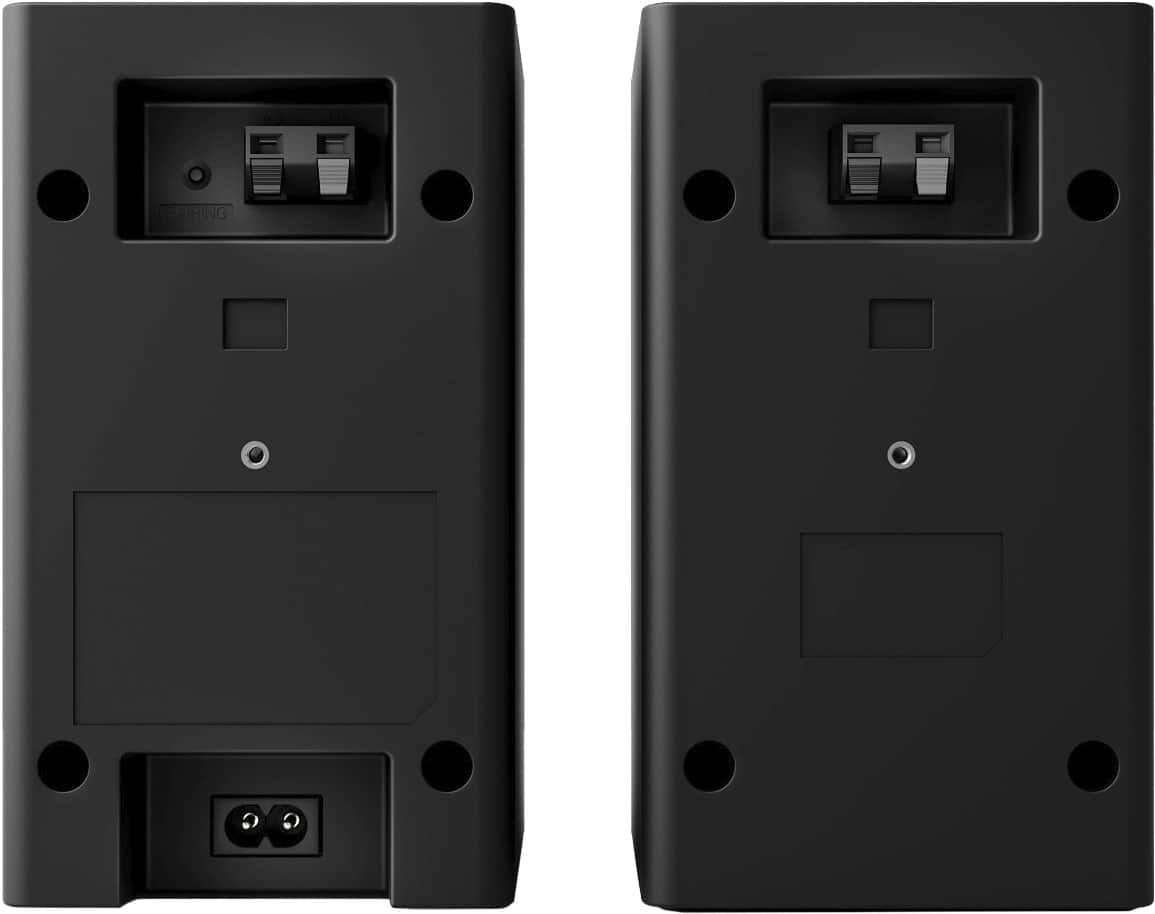
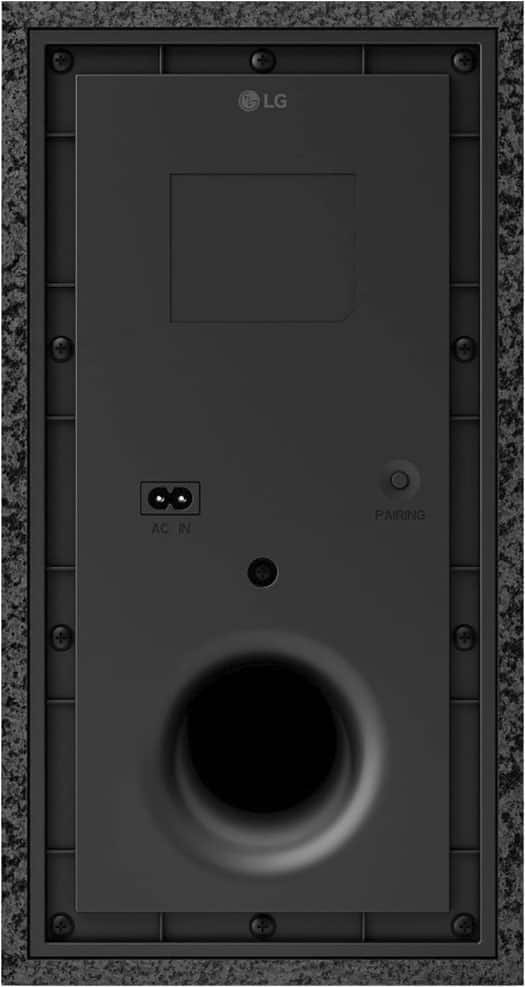
The LG S60TR takes the "if it ain't broke, don't fix it" approach to surround sound. This 5.1 system includes the main soundbar, a wireless subwoofer, and two wireless rear speakers – though "wireless" is a bit of a misnomer since the rear speakers connect to each other with a cable, and one requires power.
The subwoofer is where the LG immediately shows its advantage. At 220 watts with a 7-inch driver, this dedicated bass unit can reproduce low frequencies that the JBL simply cannot match. When the T-Rex footsteps rumble through your living room in Jurassic Park, or when Hans Zimmer's score drops those earth-shaking low notes in Dune, the difference is immediately apparent. The subwoofer doesn't just add volume – it adds dimension and physical presence that you feel as much as hear.
The rear speakers, each putting out 50 watts, create genuine surround effects that no amount of digital processing can fully replicate. In gaming, this makes a huge difference for positional audio. When playing Call of Duty or similar action games, being able to accurately locate enemy movements behind you isn't just immersive – it's tactically useful.
LG's AI Sound Pro technology represents their approach to intelligent audio processing. Rather than focusing solely on dialogue like JBL's PureVoice, AI Sound Pro analyzes the entire audio spectrum and adjusts the system's output to optimize for the content type. Sports broadcasts get enhanced crowd noise and commentary clarity, while music content receives more balanced frequency response across all speakers.
The setup process reveals both the strengths and weaknesses of this approach. While the initial connection between components is straightforward, positioning the rear speakers optimally requires some experimentation. In my testing, placement made a significant difference in surround effectiveness – too close to the wall and effects became muddy, too far from the listening position and they became disconnected from the front channels.
This is where the fundamental difference between these systems becomes most apparent. The LG's dedicated subwoofer provides extension down to around 35Hz, which covers the bottom octave of most movie soundtracks and music. The JBL, constrained by its compact design, rolls off around 50Hz – still respectable, but missing that visceral low-end that makes action scenes truly engaging.
In practical terms, this means the LG delivers the kind of bass that you feel in your chest during movie explosions, while the JBL provides adequate low-end for most content but won't rattle your windows. For music listening, particularly genres like electronic, hip-hop, or orchestral pieces with deep bass lines, the LG offers a more complete experience.
Here's where room acoustics become crucial for the JBL. In my rectangular living room with hard walls, the MultiBeam effect works remarkably well. Helicopter flyovers in action movies genuinely seemed to move from one side to the other, and ambient forest sounds in nature documentaries created an enveloping atmosphere. However, when I moved the system to a friend's open-plan kitchen and living area, much of this effect was lost as sound dispersed rather than reflecting properly.
The LG S60TR, by contrast, maintains its surround effectiveness regardless of room layout. The physical rear speakers mean that surround effects come from where they're supposed to, whether you're in a perfectly rectangular room or an L-shaped living area. This consistency is particularly valuable for home theater enthusiasts who want reliable performance.
The JBL's PureVoice technology gives it a significant edge for television viewing. I found myself rarely reaching for the remote to adjust volume during shows with varying dialogue levels – something that's become frustratingly common with modern TV productions. The AI processing does an excellent job of maintaining speech intelligibility even when characters are whispering or speaking over background music.
The LG's dedicated center channel provides clear dialogue reproduction, but it lacks the adaptive intelligence of the JBL's system. During intense action sequences, dialogue can sometimes get overwhelmed by the surrounding sound effects, particularly from the subwoofer. The Clear Voice Pro mode helps, but it's a manual adjustment rather than the automatic optimization the JBL provides.
For dedicated music listening, the LG's multi-driver approach and subwoofer give it broader frequency response and better stereo separation. The front left and right speakers in the soundbar can create a wider soundstage, while the subwoofer fills in the bottom end that's crucial for most musical genres.
The JBL, despite its limitations, offers something the LG cannot: direct streaming capability. Being able to access Spotify, Apple Music, or Tidal directly through the soundbar, without needing to use your phone or TV as an intermediary, is genuinely convenient for casual music listening. The sound quality is respectable for background music, though serious listening sessions will reveal the bass limitations.
This is where the two systems diverge most dramatically. The JBL Bar 300 is essentially a smart speaker that happens to be optimized for TV audio. Built-in Wi-Fi enables not just streaming services, but also integration with multi-room audio systems. If you have other compatible speakers around your house, the JBL can participate in synchronized playback throughout your home.
The voice assistant integration works surprisingly well. I found myself using voice commands not just for music playback, but for adjusting audio settings and checking connection status. The automatic calibration feature uses an embedded microphone to analyze your room and adjust output accordingly – a feature that typically requires expensive external microphones in traditional audio systems.
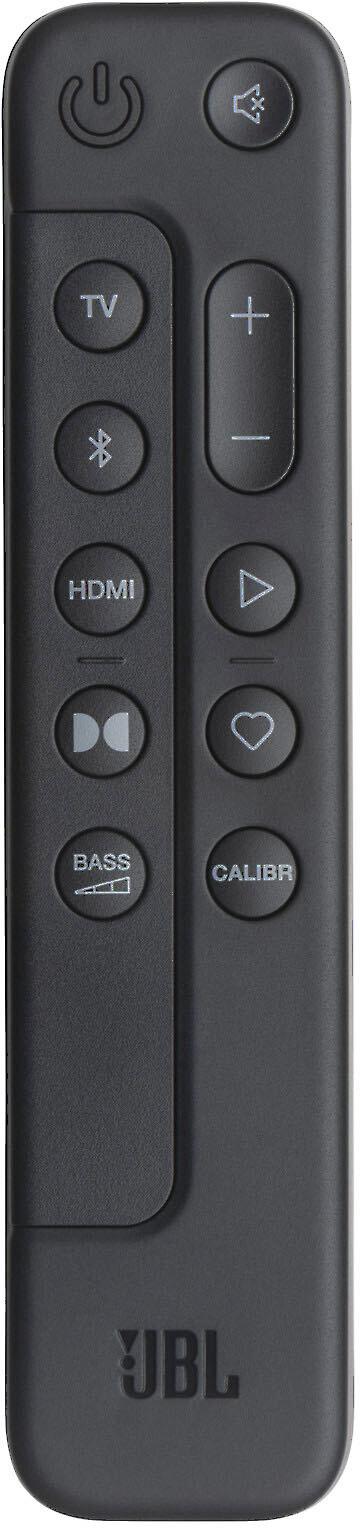
The JBL One app provides comprehensive control over EQ settings, sound modes, and streaming services. You can create custom sound profiles for different content types or family members, and the app remembers these preferences automatically.
The LG, by comparison, feels decidedly old-school in its connectivity. Bluetooth works reliably for phone and tablet audio, but there's no Wi-Fi, no streaming services, and no voice control. The LG Soundbar app provides basic functionality – volume control, sound mode selection, and some EQ adjustment – but it's a far cry from the comprehensive control the JBL offers.
Your room's size and layout will significantly influence which system works better for you. The JBL performs optimally in small to medium rooms with reflective surfaces. My 12x15-foot living room with hardwood floors and painted walls proved ideal for the MultiBeam effect. Larger rooms, particularly those exceeding 200 square feet, may find the JBL's 260-watt output insufficient for proper surround immersion.
The LG S60TR scales better to larger spaces thanks to its higher total power output and distributed speaker placement. The wireless subwoofer can be positioned for optimal bass response regardless of where the soundbar sits, and the rear speakers maintain their effectiveness even in spacious rooms.
Open floor plans present a particular challenge for virtual surround systems like the JBL. Without clear walls to reflect sound off of, much of the MultiBeam effect is lost. The LG's physical speakers continue working regardless of architectural limitations.
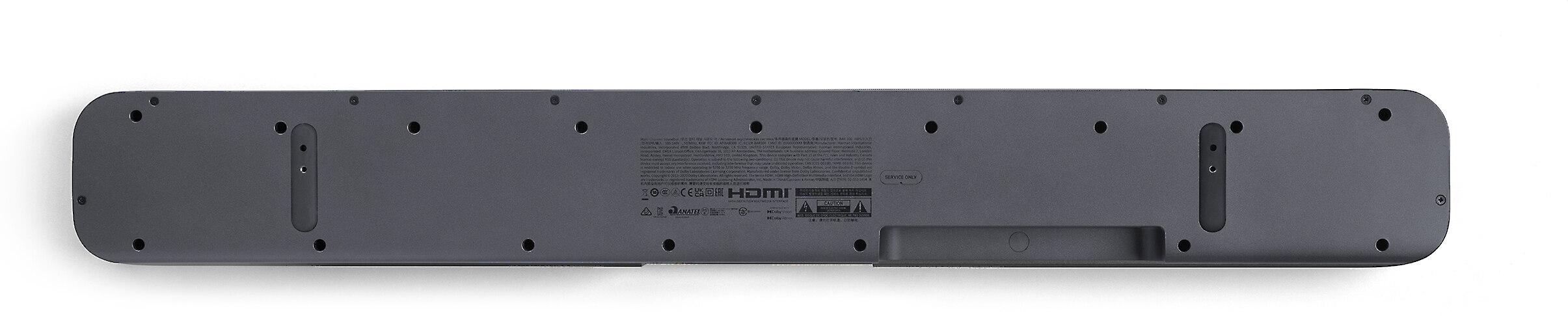
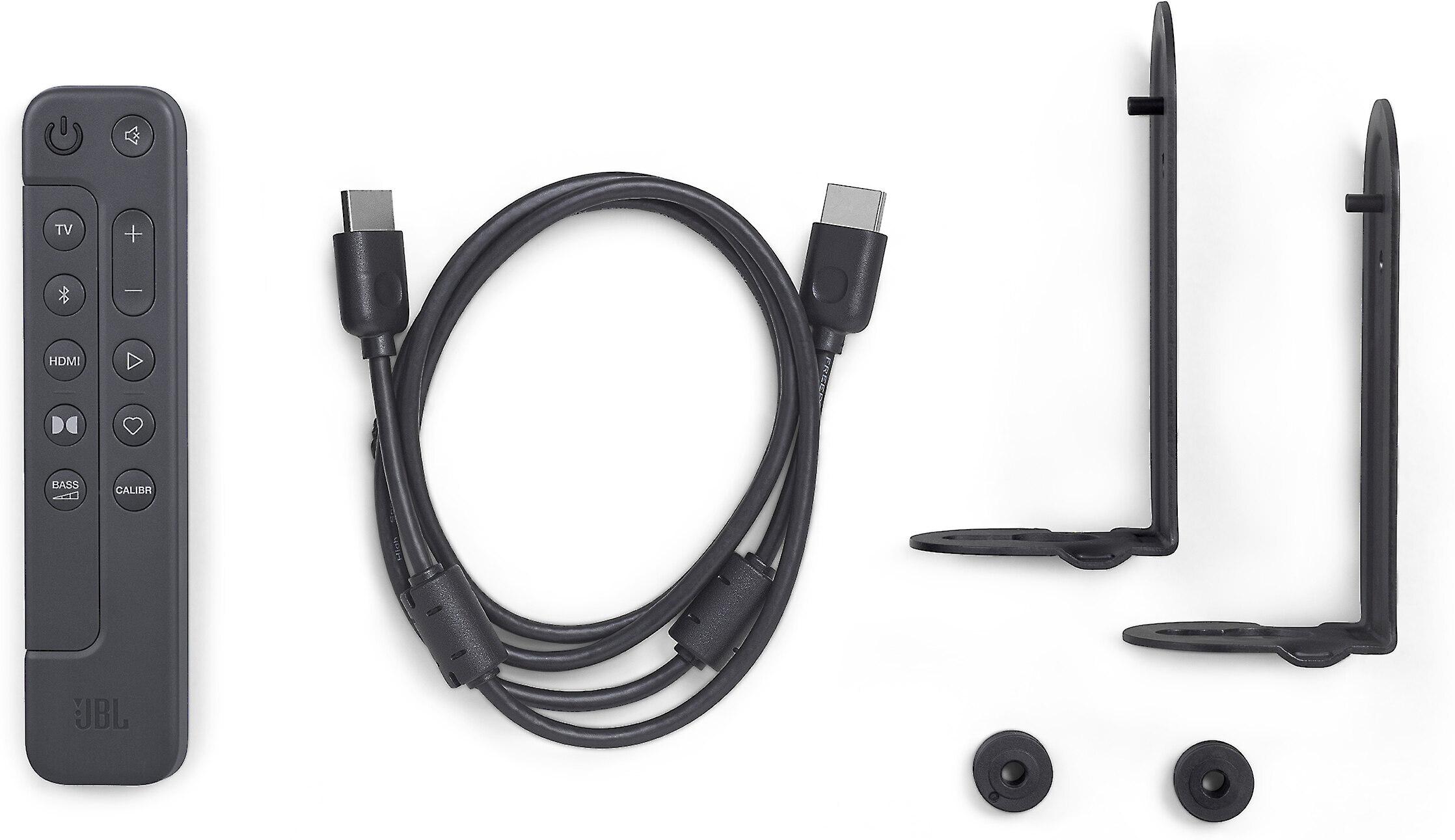
Installation complexity differs significantly between the systems. The JBL requires only a single HDMI connection to your TV and a power cord – you can have it running in under five minutes. The LG involves positioning and powering three separate components, running the rear speaker cable, and optimizing placement for best performance. It's not difficult, but it does require more planning and effort.
Both systems retail for around $300, but they offer very different value propositions. The JBL packs premium features typically found in much more expensive soundbars – built-in streaming, voice control, automatic calibration, and sophisticated audio processing. For someone who values convenience and modern connectivity, these features represent excellent value.
The LG focuses on fundamental audio performance, delivering true surround sound and deep bass at a price point where most competitors offer only virtual surround or require significant compromises. For pure acoustic performance per dollar, the LG is hard to beat.
Long-term software support is worth considering. JBL has a track record of providing firmware updates that add new features and streaming service support. The Bar 300's Wi-Fi connectivity enables over-the-air updates, ensuring the system can evolve over time. The LG, with its simpler connectivity, is less likely to receive significant feature updates, though it's also less likely to experience compatibility issues.
After extensive testing with both systems, I've found they serve different needs exceptionally well. The JBL Bar 300 excels as a smart, compact solution for modern viewing habits. If you primarily watch streaming content, value dialogue clarity, and want the convenience of built-in smart features, the JBL delivers exceptional value despite its bass limitations.
The LG S60TR succeeds as a traditional home theater solution that prioritizes acoustic performance. For movie enthusiasts, gamers, or anyone who wants to feel the full impact of their content's soundtrack, the LG's dedicated subwoofer and rear speakers provide an experience the JBL simply cannot match.
Your room size and layout will ultimately influence which system works better for you, but both represent excellent value at their price point. The JBL offers the future of soundbar technology – intelligent, connected, and adaptable. The LG provides the tried-and-true approach – more speakers, more power, and more physical presence. Either choice will dramatically improve your TV's audio, but understanding these fundamental differences will help ensure you choose the system that best fits your specific needs and preferences.
| JBL Bar 300 5.0 Soundbar | LG S60TR 5.1 Channel Soundbar |
|---|---|
| System Configuration - Determines setup complexity and surround sound authenticity | |
| All-in-one soundbar with virtual surround | Soundbar + wireless subwoofer + rear speakers |
| Total Power Output - Affects maximum volume and room filling capability | |
| 260W (optimized for efficiency) | 440W (220W subwoofer + 220W speakers) |
| Bass Performance - Critical for action movies and music enjoyment | |
| Built-in ports, limited by compact size | Dedicated 220W wireless subwoofer with 7" driver |
| Surround Sound Technology - How immersive audio is created | |
| Dolby Atmos + MultiBeam virtual processing | True 5.1 with physical rear speakers |
| Smart Features - Modern convenience and streaming capabilities | |
| Built-in Wi-Fi, 300+ streaming services, voice control | Bluetooth only, no streaming services |
| Room Size Suitability - Where each system performs optimally | |
| Small to medium rooms (≤200 sq ft) with reflective walls | All room sizes, especially larger spaces |
| Dialogue Clarity - Important for TV shows and movie comprehension | |
| PureVoice AI technology with adaptive processing | Clear Voice Pro mode (manual boost) |
| Setup Complexity - Time and effort required for installation | |
| Single HDMI connection, 5-minute setup | Multiple components, cable management required |
| Price Point - Current market value | |
| $300 | $300 |
| Best For - Target user profile | |
| Streaming-focused users wanting smart features | Home theater enthusiasts prioritizing acoustic performance |
The JBL Bar 300 is better suited for small to medium rooms under 200 square feet. Its MultiBeam technology works best when it can bounce sound off nearby walls to create virtual surround effects. The compact all-in-one design also takes up less space on your TV stand.
The LG S60TR has significantly better bass thanks to its dedicated 220W wireless subwoofer with a 7-inch driver. The JBL Bar 300 relies on built-in ports which provide adequate bass but can't match the deep, room-filling low frequencies of a dedicated subwoofer.
The JBL Bar 300 is much easier to set up, requiring only a single HDMI connection and power cord - you can have it running in under 5 minutes. The LG S60TR requires positioning three separate components (soundbar, subwoofer, and rear speakers) and managing multiple cables.
The LG S60TR is better for movies due to its true 5.1 surround sound with physical rear speakers and powerful subwoofer. This creates more immersive audio for action scenes and provides the deep bass needed for cinematic soundtracks that the JBL Bar 300 cannot match.
Only the JBL Bar 300 supports direct music streaming with built-in Wi-Fi and access to over 300 streaming services like Spotify and Apple Music. The LG S60TR only has Bluetooth connectivity, so you'll need to stream from your phone or other device.
The JBL Bar 300 has superior dialogue clarity thanks to its PureVoice AI technology that automatically enhances speech frequencies and reduces background noise. The LG S60TR has a dedicated center channel but lacks the intelligent processing for optimal voice clarity.
The LG S60TR performs better in large rooms due to its higher 440W total power output and physical speaker placement that doesn't rely on wall reflections. The JBL Bar 300 may struggle to fill larger spaces effectively with its 260W output and virtual surround technology.
The JBL Bar 300 supports Alexa, Google Assistant, and Siri for voice control of volume, playback, and settings. The LG S60TR does not have built-in voice assistant support and requires manual control via remote or app.
Both offer good value at around $300, but for different reasons. The JBL Bar 300 provides premium smart features typically found in much more expensive soundbars. The LG S60TR delivers true surround sound performance usually requiring systems costing significantly more.
The LG S60TR is better for gaming due to its physical rear speakers that provide accurate positional audio - crucial for competitive gaming where you need to locate enemies by sound. The true surround sound also enhances immersion in single-player games better than the JBL Bar 300's virtual processing.
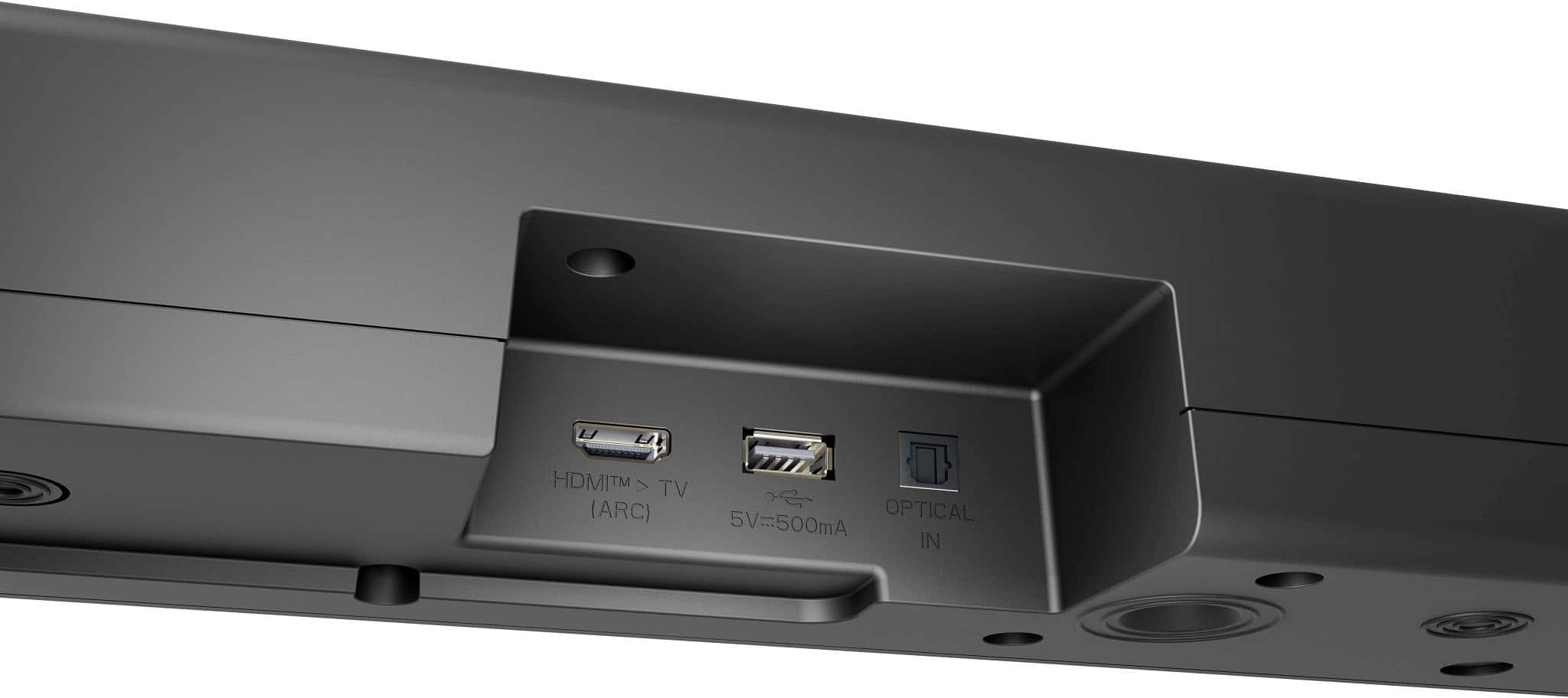
Both soundbars support HDMI ARC/CEC, allowing basic control with your TV remote for volume and power. However, the LG S60TR offers better integration with LG TVs through their WOW interface, while the JBL Bar 300 provides more comprehensive app-based control options.
Both should last many years with proper care, but the JBL Bar 300 may have longer software support due to its Wi-Fi connectivity enabling firmware updates with new features and streaming service compatibility. The LG S60TR is simpler electronically with fewer potential points of failure, though it's less likely to receive major feature updates.
We've done our best to create useful and informative comparisons to help you decide what product to buy. Our research uses advanced automated methods to create this comparison and perfection is not possible - please contact us for corrections or questions. These are the sites we've researched in the creation of this article: whathifi.com - safeandsoundhq.com - youtube.com - cnet.com - mm.jbl.com - jbl.com - bestbuy.com - support.jbl.com - dell.com - walmart.com - bestbuy.com - mynavyexchange.com - youtube.com - consumerreports.org - avsforum.com - rentacenter.com - bestbuy.com - homechoicestores.com - oconsommateur.com - lg.com - bestbuy.com - samsung.com

Privacy Policy
Terms and Conditions - Affiliate Policy
Home Security
© Copyright 2008-2026.
11816 Inwood Rd #1211, Dallas, TX 75244