

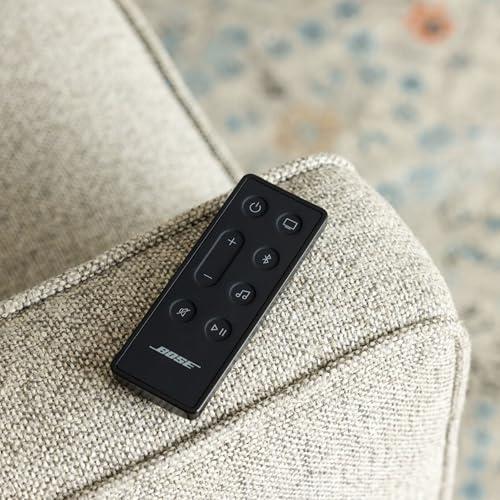
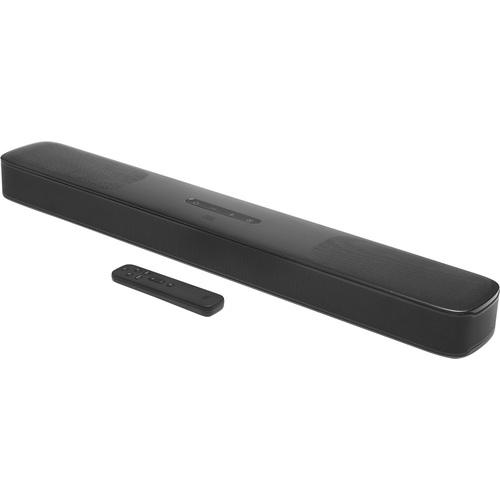
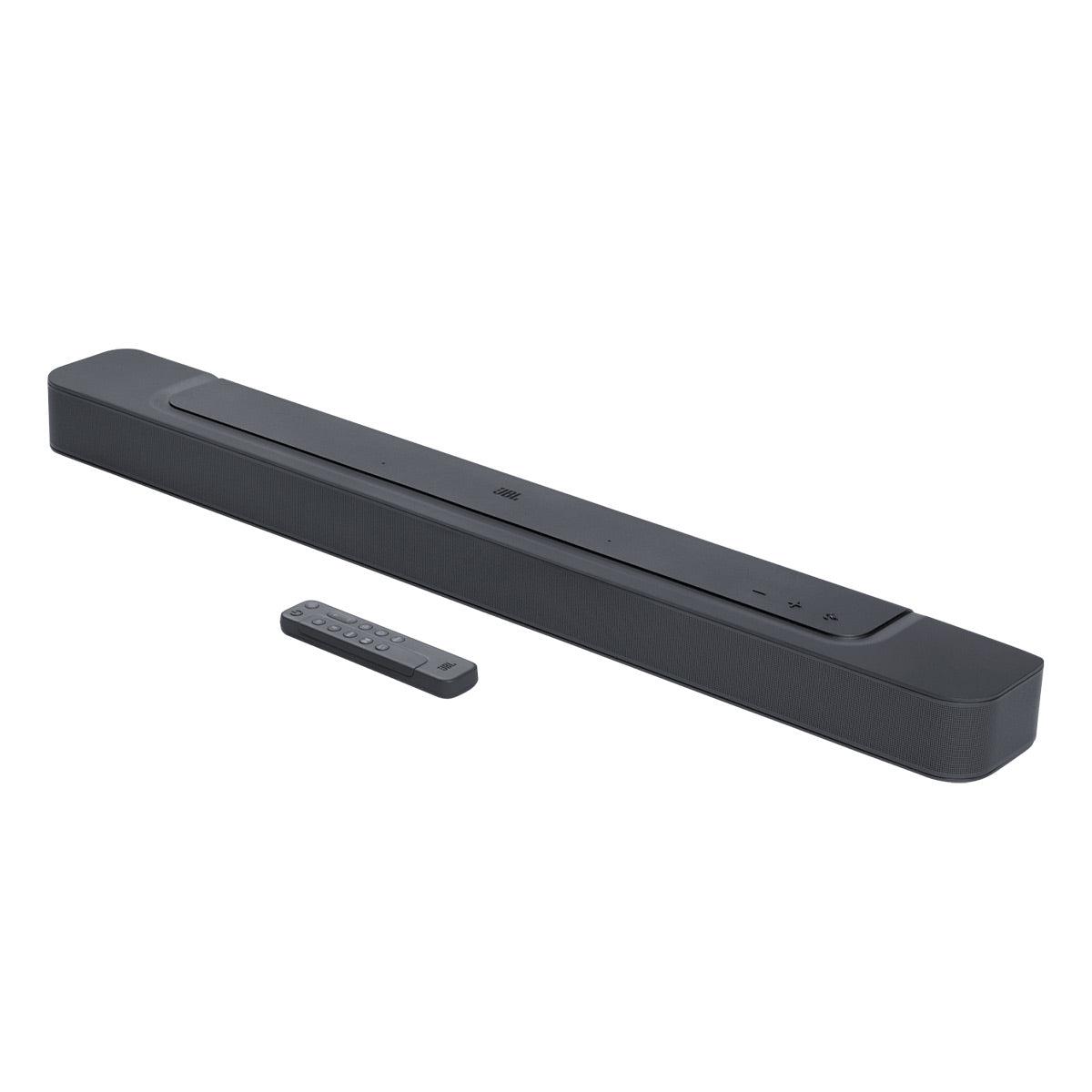
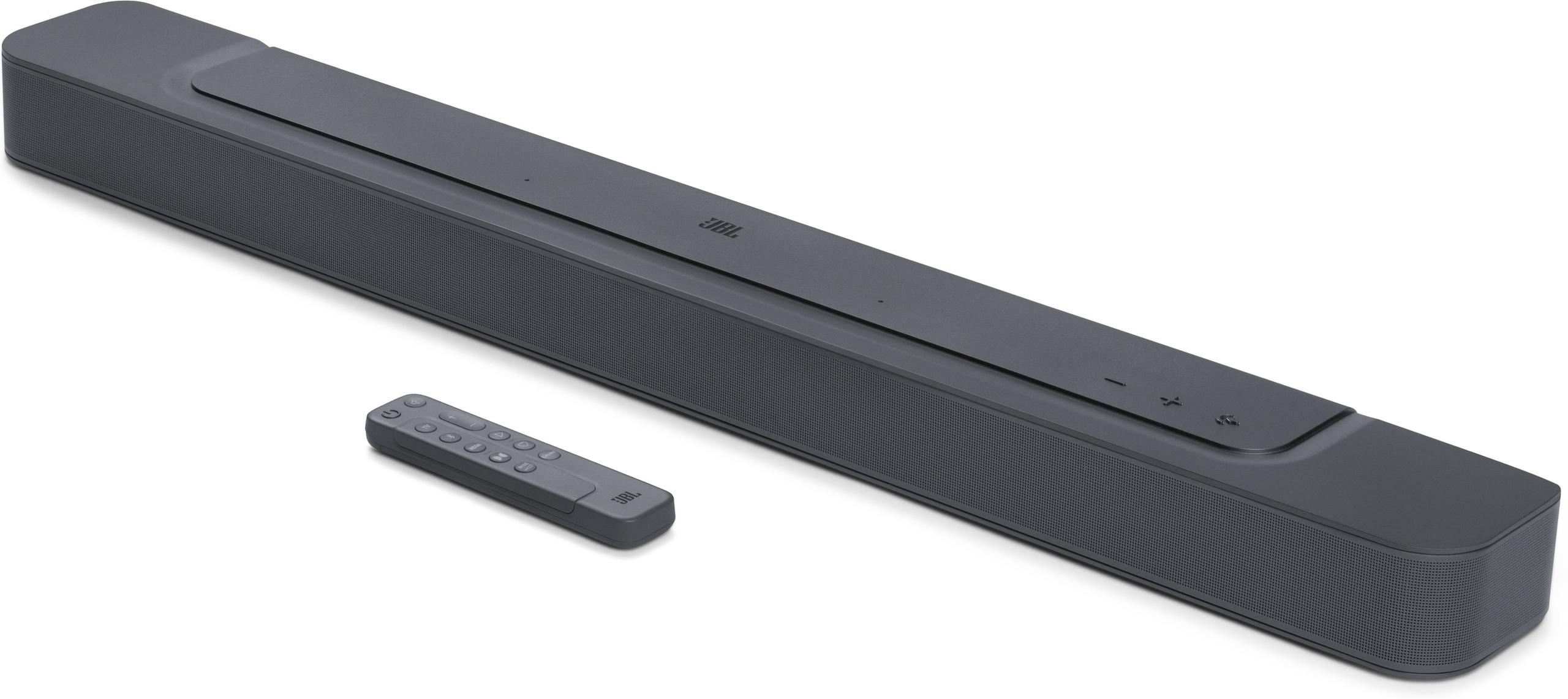

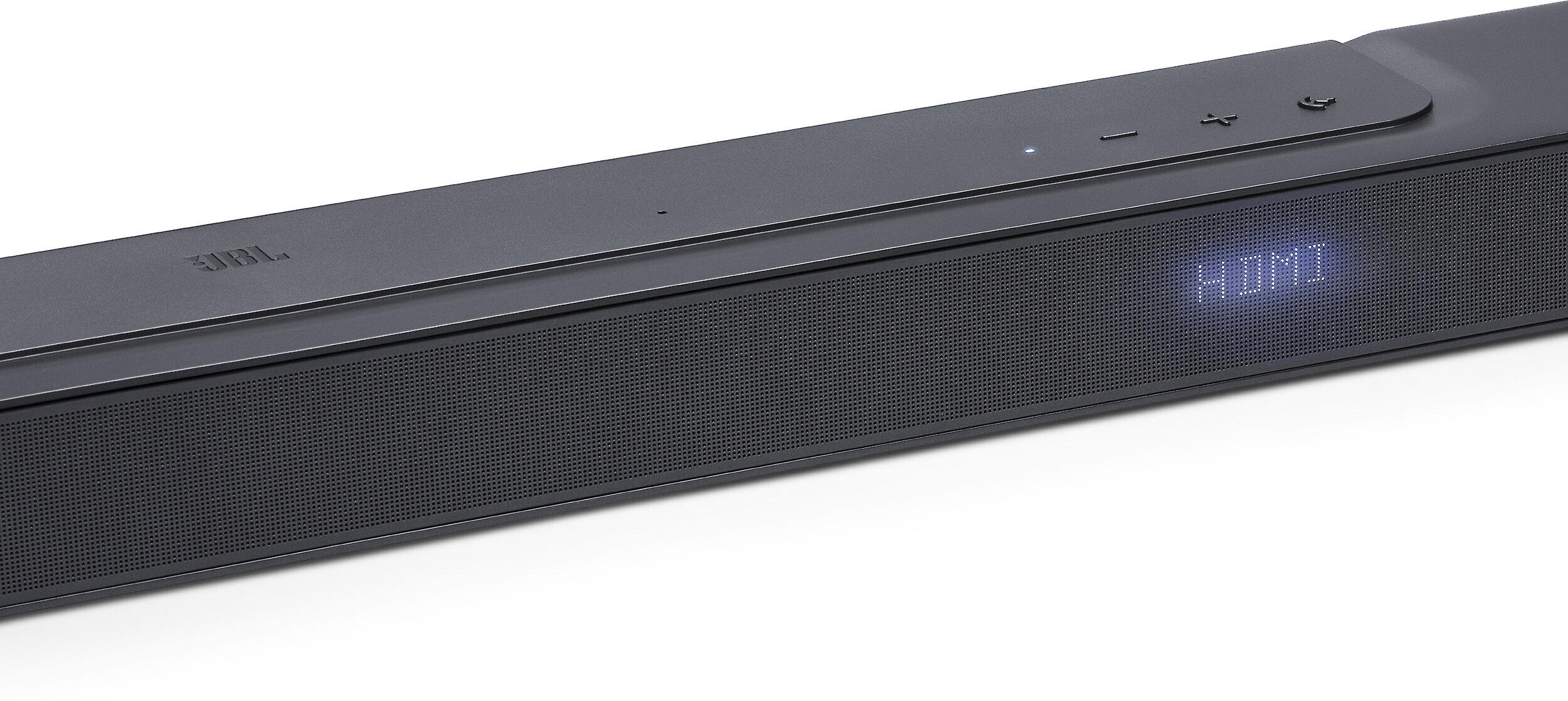
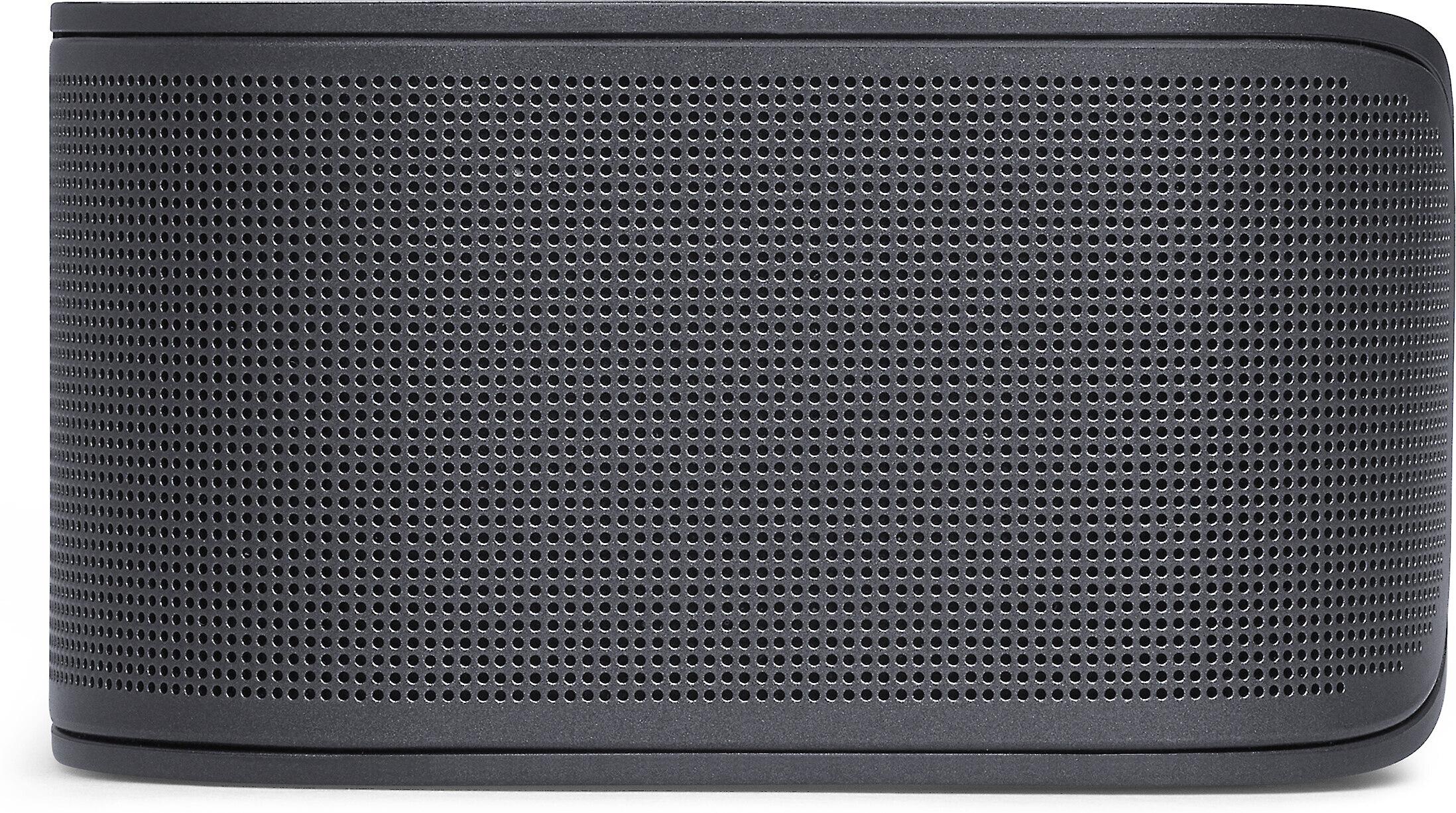


When your TV's built-in speakers just aren't cutting it anymore, a compact soundbar with Dolby Atmos can transform your viewing experience without taking over your living room. Both the Bose Smart Soundbar 1100 and JBL Bar 300 promise immersive 3D audio in sleek packages, but they take notably different approaches to achieving that goal.
Released in 2023, both soundbars represent the latest thinking in compact home audio. The Bose Smart Soundbar 1100 sits in the middle of Bose's current lineup, while the JBL Bar 300 targets budget-conscious buyers who still want premium features. At the time of writing, the JBL typically costs significantly less than the Bose, making value a key consideration in this comparison.
Before diving into specifics, it's worth understanding what makes this category unique. Traditional surround sound requires multiple speakers placed around your room, but compact Dolby Atmos soundbars create 3D audio effects using clever engineering tricks. They bounce sound off your ceiling using up-firing drivers (speakers that point upward) and use digital processing to simulate speakers that aren't actually there.
The main considerations when shopping in this category include dialogue clarity for TV shows and movies, bass performance without a separate subwoofer, smart features like voice control and wireless streaming, and the ability to expand the system later. The fundamental trade-off is always size versus performance—these compact units can't match full surround systems, but they're far more practical for most homes.
The most important difference between these soundbars lies in their sound signatures and overall audio philosophy. Based on extensive research into professional reviews and user feedback, the Bose Smart Soundbar 1100 delivers what audiophiles call a "refined" sound—balanced, controlled, and focused on clarity. The JBL Bar 300, meanwhile, takes a more energetic approach that emphasizes excitement and impact.
For TV and movie dialogue, the Bose Smart Soundbar 1100 consistently outperforms the JBL in professional reviews. This advantage comes from Bose's A.I. Dialogue Mode, which uses artificial intelligence to automatically detect when people are speaking and adjusts the tonal balance accordingly. Think of it as having an audio engineer constantly tweaking the settings to make voices crystal clear without losing the surrounding sound effects.
The technology works by analyzing the audio signal in real-time, identifying speech frequencies, and boosting them just enough to cut through background noise and music. This means you won't need to constantly adjust the volume during movies that jump between quiet dialogue scenes and loud action sequences—a common frustration with many soundbars.
The JBL Bar 300 includes its own dialogue enhancement called PureVoice technology, which also aims to optimize voice clarity. However, based on reviewer feedback, it's not quite as sophisticated or effective as Bose's implementation. Voices remain clear, but the automatic adjustment isn't as seamless or intelligent.
Here's where things get interesting. Despite the Bose Smart Soundbar 1100 having a reputation for quality audio, the JBL Bar 300 actually delivers more impactful bass performance. This might seem counterintuitive given Bose's premium positioning, but it comes down to design philosophy and engineering choices.
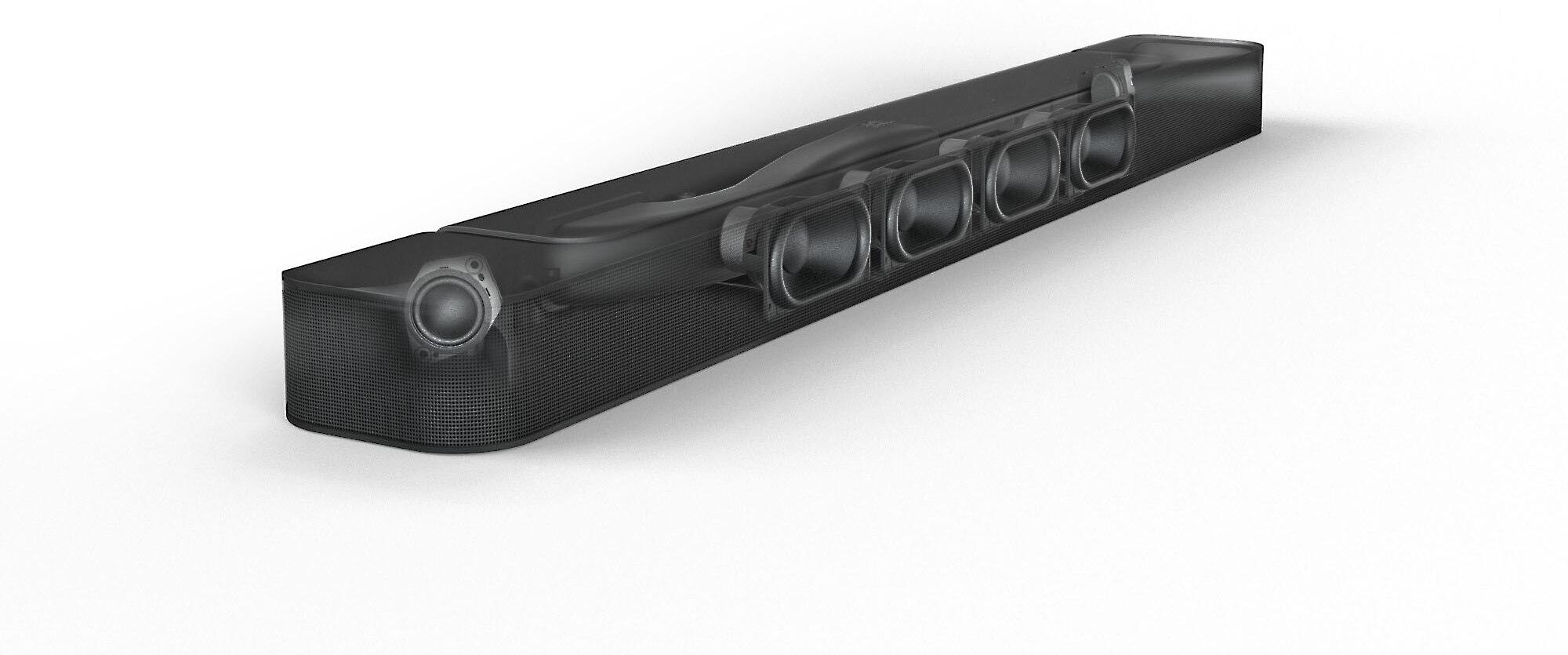
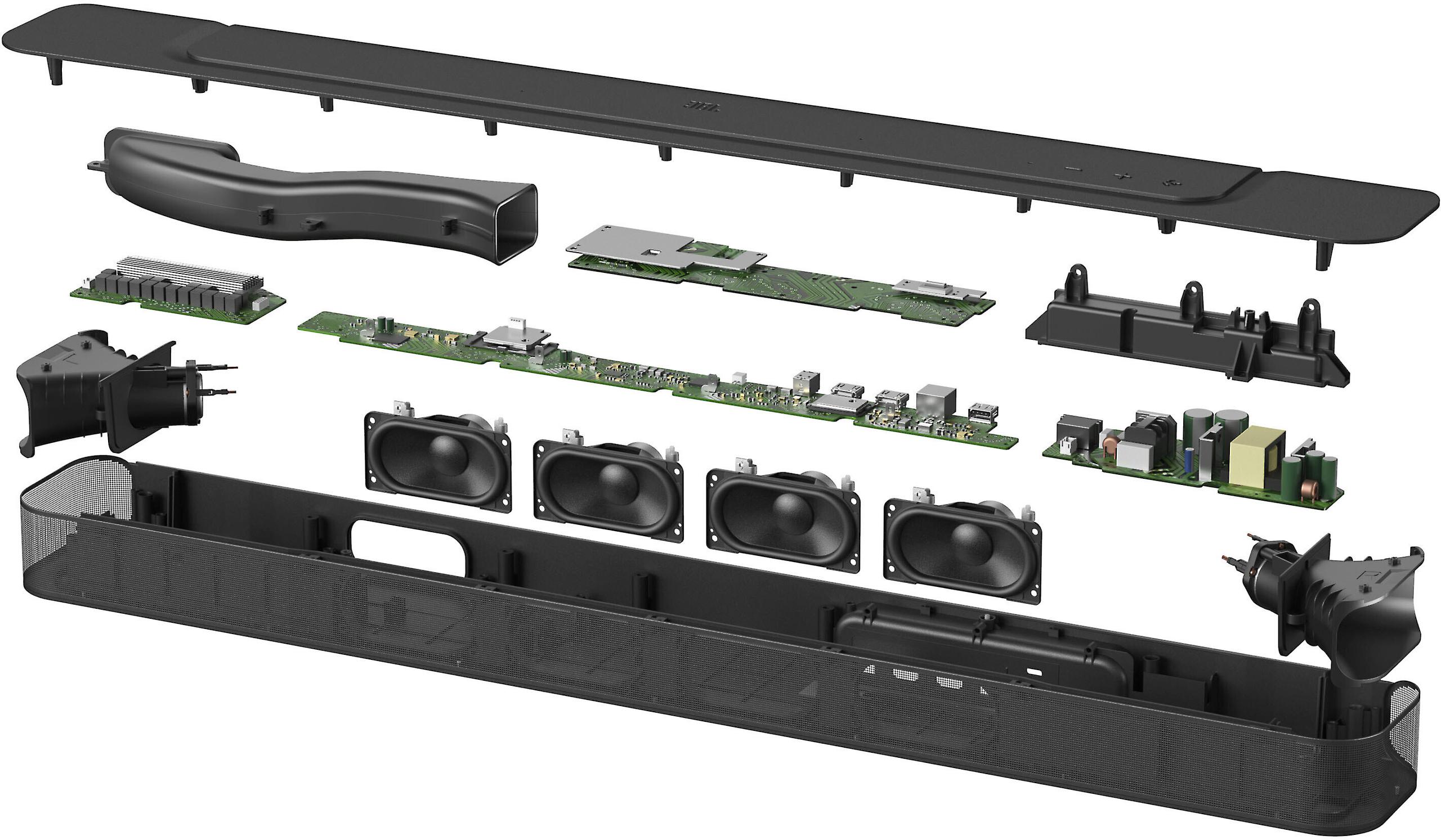
The JBL achieves this through its built-in bass port—essentially a carefully designed opening that allows the soundbar to move more air and produce deeper low frequencies. At 260 watts of total power output, it also has the muscle to drive those bass frequencies effectively. The result is what reviewers describe as "punchy" bass that adds excitement to action scenes and depth to music.
The Bose Smart Soundbar 1100, while producing respectable bass for its size, focuses more on overall balance and refinement. It uses Bose's proprietary QuietPort technology, which reduces distortion but doesn't push the low-end as aggressively as JBL's approach. This means cleaner, more controlled bass, but less of the room-shaking impact some users crave.
This difference matters most if you plan to use the soundbar primarily as a standalone unit without adding a separate subwoofer later. The JBL's stronger built-in bass makes it more satisfying for action movies and music right out of the box.
Both soundbars support Dolby Atmos, but their implementations reveal important differences in approach and sophistication. Dolby Atmos creates the illusion of sound moving around and above you by encoding audio with three-dimensional positioning information. The soundbar then uses various techniques to recreate this spatial audio without requiring speakers in your ceiling.
The Bose Smart Soundbar 1100 takes a more traditional approach with dedicated up-firing drivers—two speakers that point toward the ceiling to create height effects. These bounce sound off your ceiling and back down to your ears, creating the illusion of overhead audio. Bose enhances this with their TrueSpace technology, which analyzes non-Atmos content and creates artificial height effects from regular stereo or surround sound.
Additionally, Bose's PhaseGuide technology uses "beams of multi-directional sound" to create a wider soundstage. While this sounds like marketing speak, it's actually a sophisticated technique that uses phase relationships between speakers to direct sound to specific areas of your room.
The JBL Bar 300 uses what they call MultiBeam technology to create surround effects. While JBL claims this delivers "vivid 3D surround sound," the specific technical implementation isn't as clearly documented as Bose's approach. Based on reviewer feedback, it creates convincing spatial effects, but perhaps not with the same precision and sophistication as the Bose system.
For most users, both implementations will be a significant improvement over TV speakers, but the Bose Smart Soundbar 1100 appears to have a slight edge in creating convincing height effects and spatial immersion.
This is where the philosophical differences between these brands become most apparent. The Bose Smart Soundbar 1100 integrates smart features deeply into the user experience, while the JBL Bar 300 focuses on compatibility and flexibility.
The Bose includes Amazon Alexa built directly into the soundbar, complete with a noise-rejecting microphone array that can hear your commands even when music is playing loudly. This isn't just basic voice control—Bose's Voice4Video technology extends Alexa's capabilities to control your TV and cable box, potentially replacing multiple remotes with voice commands.
The JBL Bar 300 takes a different approach, working with voice assistants from external devices like Amazon Echo or Google Home speakers. While this requires additional hardware, it offers more flexibility in choosing your preferred voice ecosystem and doesn't add cost to the soundbar itself.
Both soundbars support modern streaming protocols including AirPlay, Chromecast, and Spotify Connect. However, their companion apps reveal different priorities. The Bose Music app focuses on simplicity and integration with other Bose products, making it easy to set up multi-room audio if you own other Bose speakers.
The JBL One app puts more emphasis on customization, offering detailed EQ controls and sound personalization options. For users who like to tweak their audio settings, JBL provides more granular control over the sound signature.
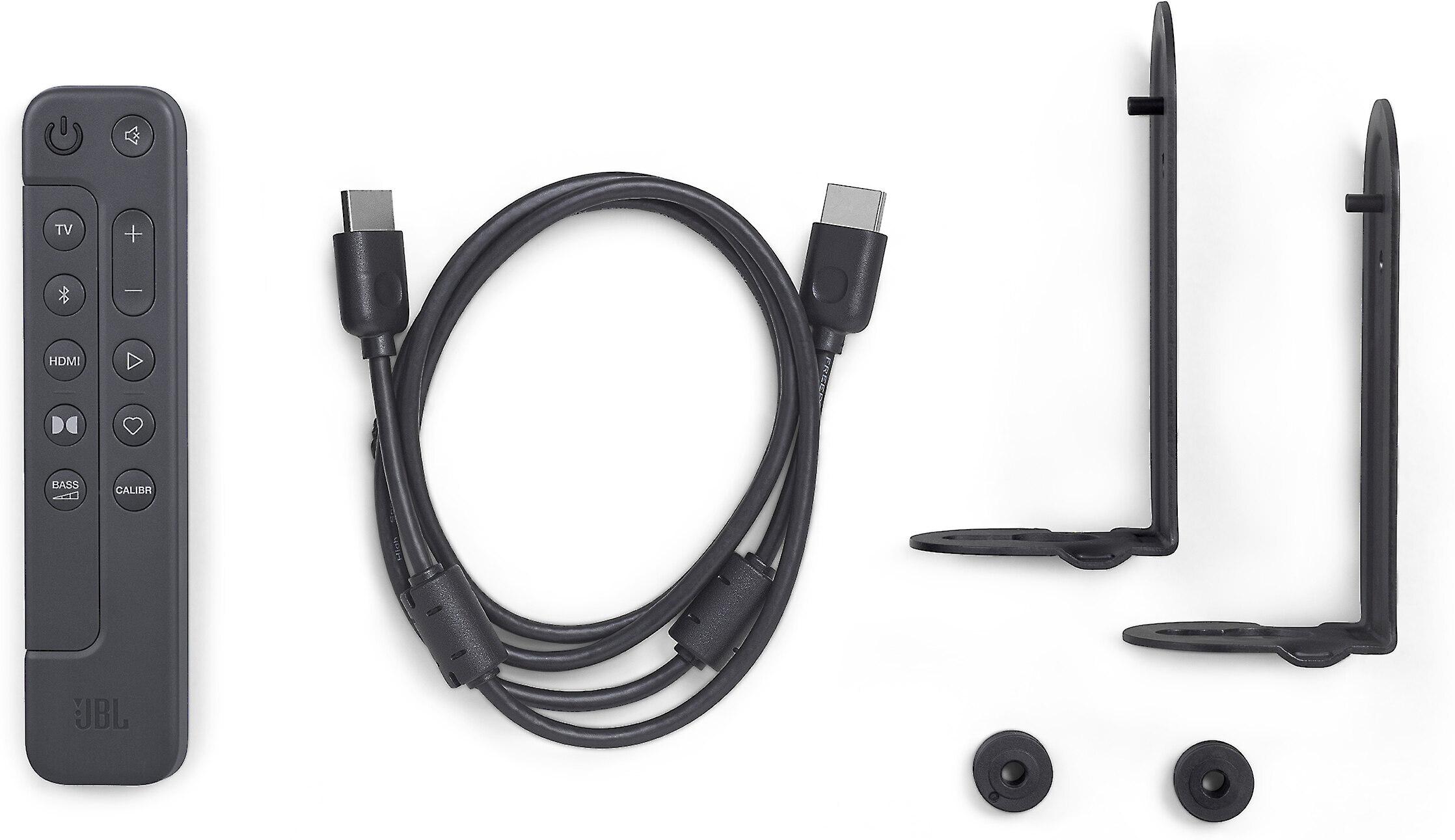
Here's where the JBL Bar 300 shows a significant practical advantage. It includes both HDMI eARC (for high-quality audio from your TV) and a separate HDMI input with 4K Dolby Vision passthrough. This means you can connect a streaming device or gaming console directly to the soundbar, which then passes the video to your TV while processing the audio.
The Bose Smart Soundbar 1100 only includes HDMI eARC output, requiring you to connect all devices directly to your TV. While this isn't necessarily a problem, the JBL's approach is more flexible and can be especially valuable if your TV has limited HDMI inputs.
Room acoustics dramatically affect soundbar performance, and these two products take opposite approaches to optimization. The JBL Bar 300 includes automatic sound calibration using an embedded microphone. When you first set it up, it plays test tones and analyzes how they reflect off your walls and furniture, then adjusts its output accordingly.
This automatic calibration is genuinely useful—rooms with hard surfaces like tile or hardwood floors can make audio sound harsh and echo-prone, while rooms with lots of soft furnishings can make sound feel muffled. The JBL's system helps compensate for these acoustic challenges without requiring any audio expertise from the user.
The Bose Smart Soundbar 1100 lacks automatic room calibration (unlike Bose's higher-end Ultra Soundbar), instead relying on manual adjustment and a basic Wall EQ preset for when the soundbar is mounted rather than placed on a TV stand. This is somewhat surprising given Bose's reputation for sophisticated audio processing.
If you're considering upgrading your system over time, the expansion options differ significantly. The Bose Smart Soundbar 1100 is designed as the foundation of a potentially much larger system. You can add Bose's Bass Module 500 or 700 for deeper low-frequency performance, plus Bose Surround Speakers for true rear-channel effects.
More uniquely, Bose offers "Personal Surround Sound" through their Ultra Open Earbuds, which can act as wireless rear speakers for solo listening without disturbing others. This is genuinely innovative and could be perfect for late-night movie watching.
The JBL Bar 300 appears to be designed as a standalone solution with limited expansion options. This isn't necessarily negative—if the built-in performance meets your needs, a simpler system can be more reliable and easier to use.
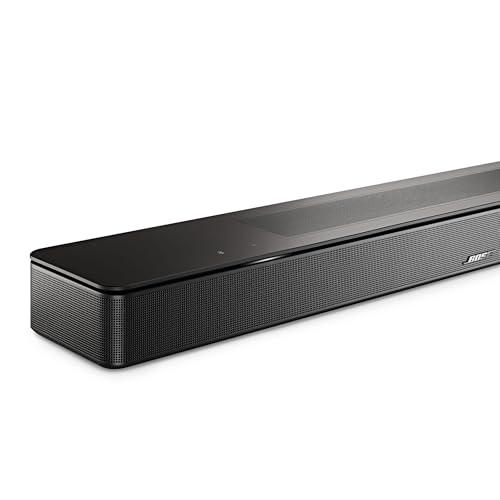
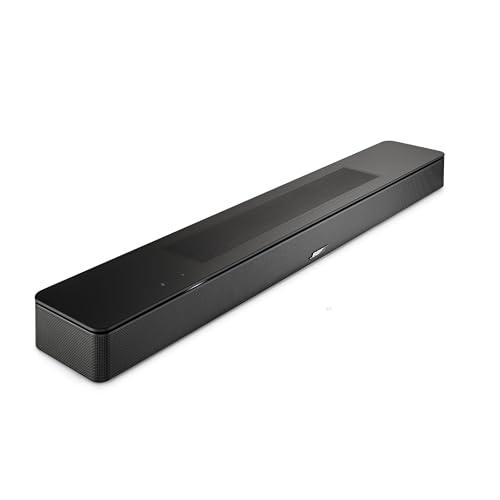
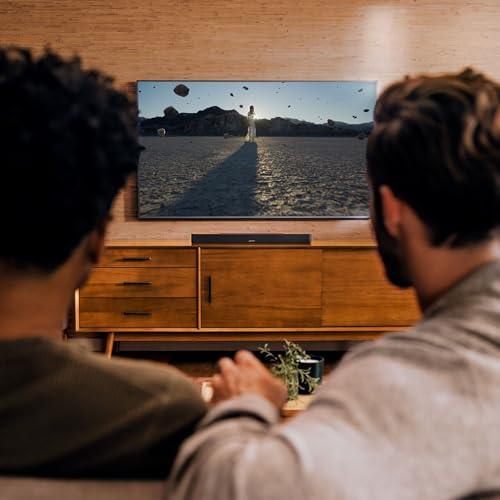
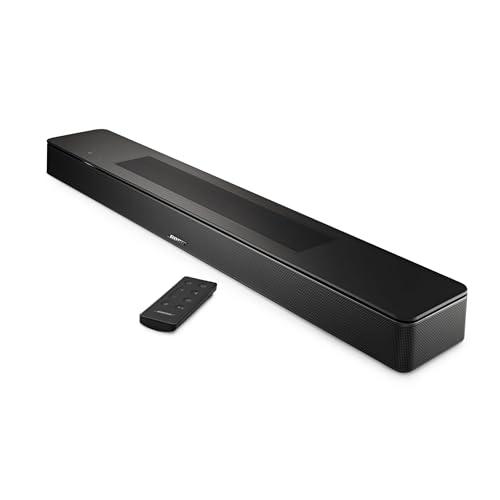
The physical differences between these soundbars reflect their different market positions. The Bose Smart Soundbar 1100 measures 27.3 inches wide, making it ideal for TVs up to about 55 inches. Its build quality reflects Bose's premium positioning, with high-quality materials and a sophisticated matte black finish that looks expensive.
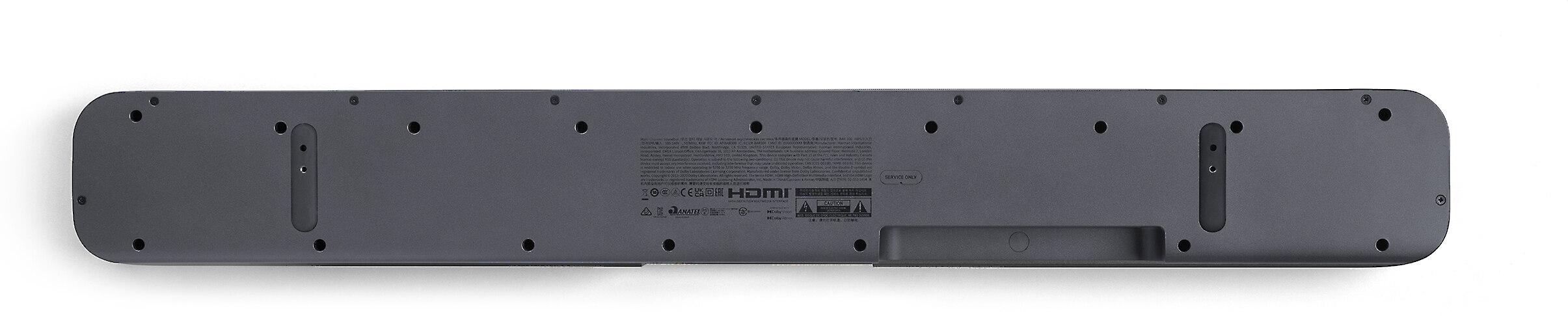
The JBL Bar 300 is notably longer at 32.3 inches, making it better suited to larger TVs of 65 inches and above. Despite its lower price point, it's actually lighter than the Bose at 5.5 pounds versus 6.9 pounds. The construction feels solid, though perhaps not quite as premium as the Bose.
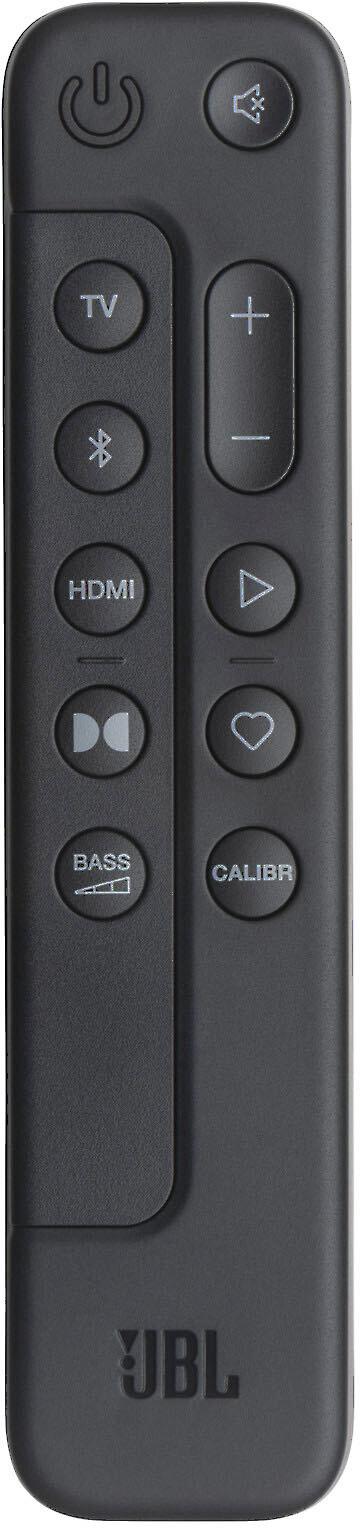
Both soundbars are wall-mountable, though you'll need to purchase mounting brackets separately. Neither includes physical volume controls on the unit itself—everything is handled through remotes or smartphone apps.
For serious home theater use, both soundbars face inherent limitations due to their compact, single-unit design. However, they approach these limitations differently.
The Bose Smart Soundbar 1100 prioritizes refinement and expandability, making it better suited for users who plan to build a more complete system over time. Its superior dialogue clarity makes it excellent for TV series and dialogue-heavy films, while the expansion options mean you can add proper bass and surround effects as budget allows.
The JBL Bar 300 takes a "good enough" approach that maximizes performance from a single unit. Its stronger built-in bass and energetic sound signature make it immediately satisfying for action movies and gaming, even without additional speakers.
Neither soundbar supports DTS or DTS:X audio formats, which could be limiting if you have a large collection of Blu-ray discs or digital movies encoded with these formats. This is increasingly common in budget and mid-range soundbars as manufacturers focus on the more popular Dolby formats.
Based on extensive research into professional reviews and user feedback, the choice between these soundbars ultimately comes down to priorities and usage patterns.
Choose the Bose Smart Soundbar 1100 if you prioritize dialogue clarity above all else, plan to expand your system over time, or value the convenience of integrated voice control. It's the better choice for TV-focused viewing, especially news, talk shows, and dialogue-heavy dramas. The premium build quality and brand reliability also make it a safer long-term investment.
The JBL Bar 300 makes more sense if you want maximum bang for your buck, need HDMI input connectivity, or prefer a more immediately exciting sound signature. Its automatic calibration and strong built-in bass make it more plug-and-play, while the lower price point leaves room in your budget for other home theater upgrades.
For most buyers at the time of writing, the JBL Bar 300 offers better overall value, providing roughly 80% of the Bose's performance at a significantly lower price. However, if dialogue clarity is your top priority—and it should be for most TV viewing—the extra cost of the Bose Smart Soundbar 1100 may be justified.
Both soundbars represent solid choices in the compact Dolby Atmos category, but they're aimed at slightly different users with different priorities. The key is honestly assessing what matters most in your specific setup and usage patterns.
| Bose Smart Soundbar 1100 | JBL Bar 300 5.0 Soundbar |
|---|---|
| Dimensions - Critical for TV compatibility and room aesthetics | |
| 27.3" × 2.2" × 4.1", 6.9 lbs (ideal for 43-55" TVs) | 32.3" × 2.2" × 4.1", 5.5 lbs (better for 55"+ TVs) |
| Total Power Output - Determines maximum volume and dynamic range | |
| Not specified (typically 200-240W based on Bose's similar models) | 260W (higher power for louder, more dynamic sound) |
| Speaker Configuration - Affects sound quality and immersion | |
| 5 drivers + center tweeter with dedicated up-firing drivers | 4 racetrack drivers + 2 tweeters with MultiBeam technology |
| Dolby Atmos Implementation - Creates 3D spatial audio effects | |
| True up-firing drivers + TrueSpace upmixing technology | MultiBeam surround with Dolby Atmos support |
| Voice Control Integration - Convenience for smart home users | |
| Amazon Alexa built-in with Voice4Video TV control | Compatible with external voice assistants (requires separate device) |
| HDMI Connectivity - Important for device connections and audio quality | |
| HDMI eARC output only (all devices connect to TV) | HDMI eARC + HDMI input with 4K passthrough (more flexible setup) |
| Room Calibration - Automatically optimizes sound for your space | |
| Manual adjustment with Wall EQ preset only | Automatic sound calibration with embedded microphone |
| Dialogue Enhancement - Critical for TV viewing clarity | |
| A.I. Dialogue Mode with automatic voice optimization | PureVoice technology for vocal clarity |
| Bass Performance - Affects music enjoyment and action movie impact | |
| Respectable but limited (QuietPort technology for clean bass) | Punchy bass with built-in bass port (no subwoofer needed initially) |
| Audio Format Support - Determines compatibility with content | |
| Dolby Atmos, Dolby Digital variants (no DTS support) | Dolby Atmos, Dolby Digital variants (no DTS support) |
| Wireless Streaming - Access to music services and casting | |
| Wi-Fi, Bluetooth 5.0, AirPlay 2, Chromecast, Spotify Connect | Wi-Fi, Bluetooth 5.0, AirPlay, Chromecast, Alexa Multi-Room |
| Expandability Options - Future upgrade potential | |
| Bose Bass Modules, Surround Speakers, Personal Surround with earbuds | Limited expansion options (designed as standalone unit) |
| App Experience - Setup and customization ease | |
| Bose Music app with multi-room focus | JBL One app with detailed EQ controls and personalization |
| Build Quality - Long-term durability and premium feel | |
| Premium materials with sophisticated matte finish | Solid construction with more affordable materials |
| Best For | |
| TV dialogue clarity, premium experience, future expansion plans | Immediate bass impact, value-focused buyers, larger TV setups |
The Bose Smart Soundbar 1100 excels at dialogue clarity thanks to its A.I. Dialogue Mode, which automatically detects speech and adjusts frequencies to make voices crystal clear without affecting background sound. The JBL Bar 300 includes PureVoice technology for vocal enhancement, but the Bose system is more sophisticated and effective for TV viewing where clear dialogue is crucial.
The JBL Bar 300 delivers more impactful bass performance despite the Bose brand's premium reputation. With its built-in bass port and 260W power output, the JBL produces punchier, more exciting low-end frequencies. The Bose Smart Soundbar 1100 offers cleaner, more controlled bass through QuietPort technology, but with less room-shaking impact for action movies and music.
The Bose Smart Soundbar 1100 has Amazon Alexa built directly into the soundbar with noise-rejecting microphones and Voice4Video technology for controlling your TV and cable box. The JBL Bar 300 requires external voice assistant devices like Echo speakers but offers more flexibility in choosing your preferred voice ecosystem without adding cost to the soundbar itself.
The Bose Smart Soundbar 1100 offers extensive expansion options including Bass Module subwoofers, Surround Speakers for true 5.1 setup, and unique Personal Surround Sound with Bose earbuds. The JBL Bar 300 is designed primarily as a standalone unit with limited expansion capabilities, making it better for users who want a complete solution in one package.
The JBL Bar 300 at 32.3 inches wide is better proportioned for larger TVs of 55 inches and above, while the Bose Smart Soundbar 1100 at 27.3 inches is ideal for smaller to medium TVs up to 55 inches. The physical proportions matter for both aesthetics and sound projection across wider seating areas.
Yes, both the Bose Smart Soundbar 1100 and JBL Bar 300 support Dolby Atmos for immersive 3D audio. The Bose uses dedicated up-firing drivers and TrueSpace technology for height effects, while the JBL employs MultiBeam technology. The Bose implementation appears more sophisticated based on technical specifications and reviewer feedback.
The JBL Bar 300 offers superior connectivity with both HDMI eARC and a separate HDMI input with 4K Dolby Vision passthrough, allowing direct device connections. The Bose Smart Soundbar 1100 only includes HDMI eARC output, requiring all devices to connect through your TV first, which can be limiting for complex setups.
The JBL Bar 300 includes automatic sound calibration using an embedded microphone that analyzes your room acoustics and adjusts output accordingly. The Bose Smart Soundbar 1100 lacks automatic calibration, instead offering manual adjustments and a basic Wall EQ preset, which is surprising given Bose's audio expertise.
The JBL Bar 300 typically offers better overall value, providing roughly 80% of the Bose's performance at a significantly lower cost. It includes practical features like HDMI input, automatic calibration, and stronger built-in bass. The Bose Smart Soundbar 1100 justifies its premium pricing with superior dialogue clarity, build quality, and expansion options.
Both soundbars are designed as space-saving alternatives to full surround systems, but with limitations. The Bose Smart Soundbar 1100 works better as a foundation for gradual system building through its expansion options. The JBL Bar 300 maximizes standalone performance but may leave serious home theater enthusiasts wanting more immersive surround effects.
The JBL Bar 300 is generally more plug-and-play thanks to automatic calibration and straightforward connectivity. The Bose Smart Soundbar 1100 requires more manual setup but offers deeper integration with smart home systems once configured. Both use intuitive smartphone apps for control and customization.
Both the Bose Smart Soundbar 1100 and JBL Bar 300 support modern streaming protocols including AirPlay, Chromecast, Spotify Connect, and Bluetooth. However, neither supports DTS or DTS:X audio formats, which could limit compatibility with some Blu-ray discs and digital movie collections that use these encoding formats.
We've done our best to create useful and informative comparisons to help you decide what product to buy. Our research uses advanced automated methods to create this comparison and perfection is not possible - please contact us for corrections or questions. These are the sites we've researched in the creation of this article: bestbuy.com - rtings.com - rtings.com - youtube.com - staples.com - youtube.com - soundguys.com - businessinsider.com - youtube.com - rtings.com - crutchfield.com - youtube.com - youtube.com - smart.dhgate.com - dolby.com - bose.com - assets.bose.com - bose.com - connection.com - bestbuy.com - cdw.com - dell.com - device.report - whathifi.com - safeandsoundhq.com - youtube.com - cnet.com - mm.jbl.com - jbl.com - bestbuy.com - support.jbl.com - dell.com - walmart.com

Privacy Policy
Terms and Conditions - Affiliate Policy
Home Security
© Copyright 2008-2026.
11816 Inwood Rd #1211, Dallas, TX 75244