





If you've been suffering through your TV's tinny built-in speakers, you're not alone. Most modern TVs sound terrible because manufacturers prioritize thin designs over audio quality. That's where soundbars come in – they're designed to dramatically improve your audio experience without cluttering your living room with multiple speakers and wires.
But choosing the right soundbar can be overwhelming. Today, we're comparing two popular options that take very different approaches: the Amazon Fire TV Soundbar Plus with Subwoofer and the JBL Bar 300 5.0 Soundbar. Both launched in recent years as manufacturers recognized the growing demand for better TV audio, but they solve the problem in distinctly different ways.
Before diving into these specific models, let's talk about what actually matters when choosing a soundbar. The most important factors are audio quality (how good it sounds), power output (how loud it can get without distortion), surround sound capabilities (how well it creates an immersive experience), and connectivity options (how it connects to your devices).
The audio landscape has evolved significantly since 2020. We've seen major improvements in virtual surround processing, better integration with streaming services, and more sophisticated dialogue enhancement technologies. Both of these soundbars represent modern approaches to these challenges, though they take remarkably different paths.
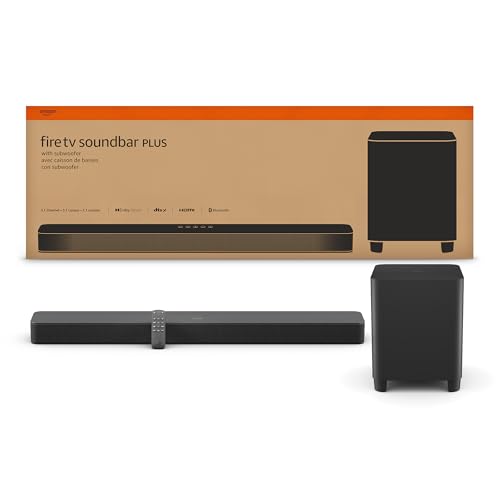
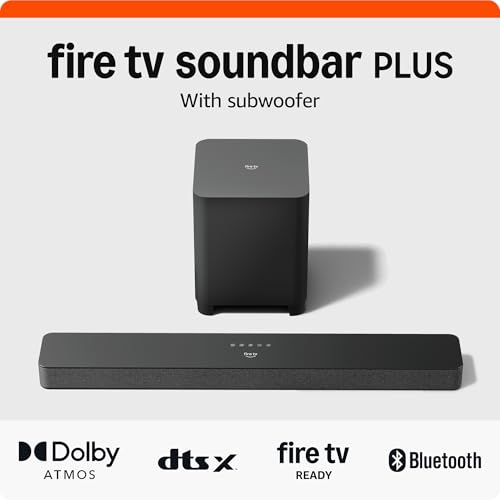
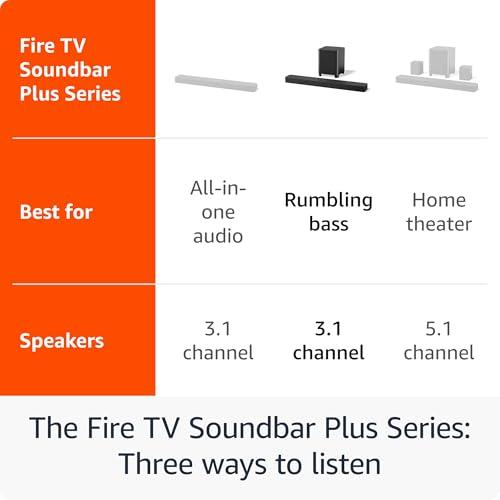
The Amazon Fire TV Soundbar Plus follows the traditional approach: a main soundbar paired with a separate wireless subwoofer (a dedicated speaker designed specifically for low-frequency sounds like explosions and deep music bass). This 3.1-channel setup means you get left, center, and right speakers in the soundbar, plus that separate subwoofer for bass – hence "3.1" where the ".1" represents the subwoofer.
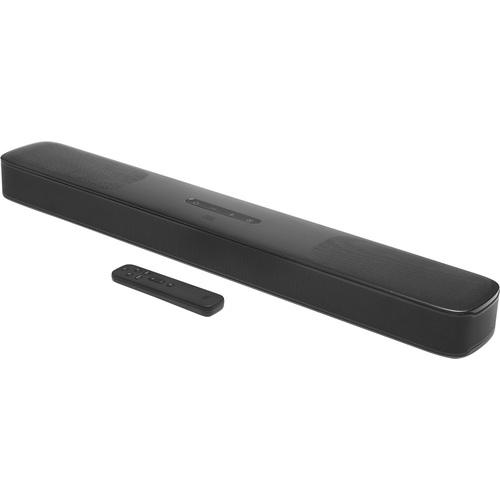
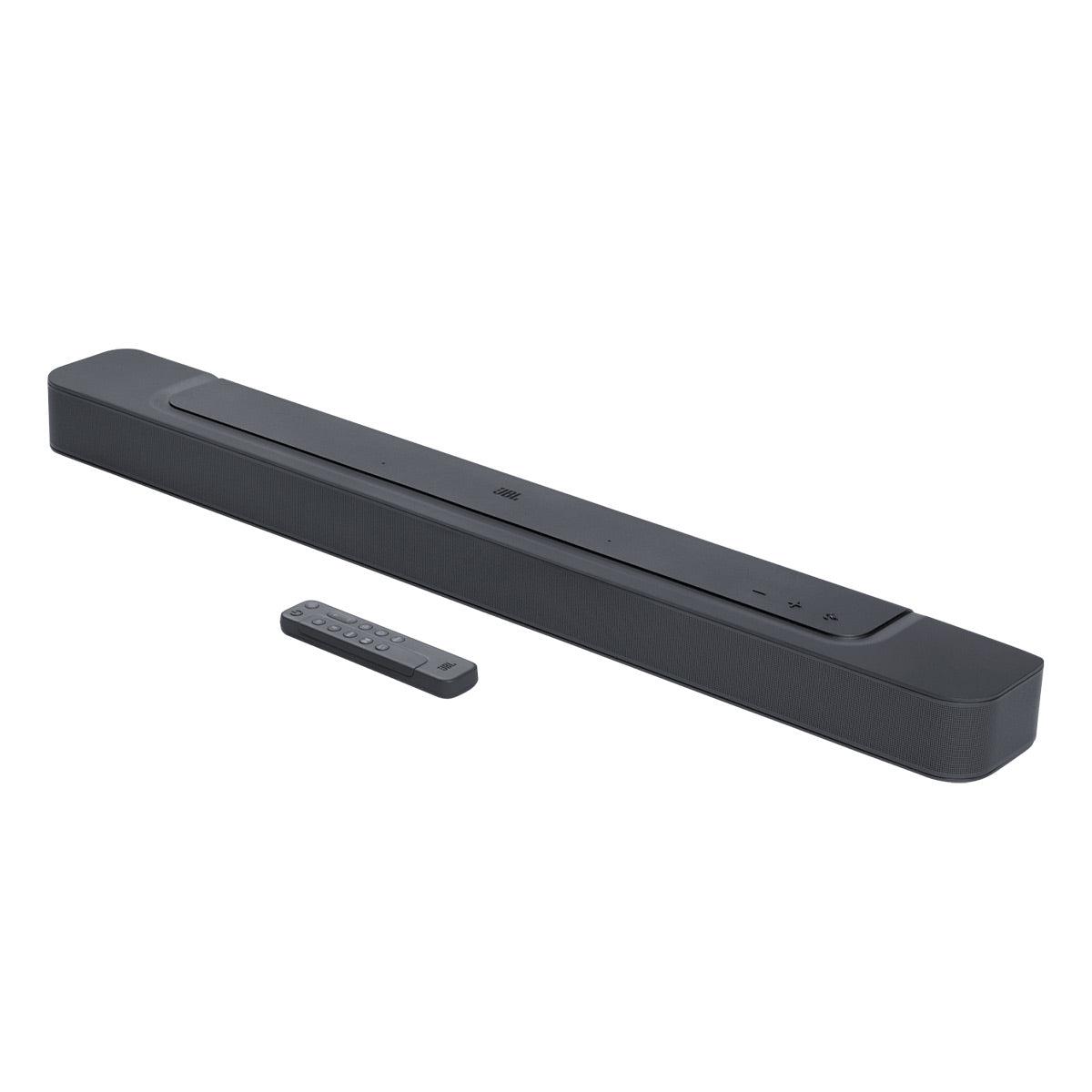
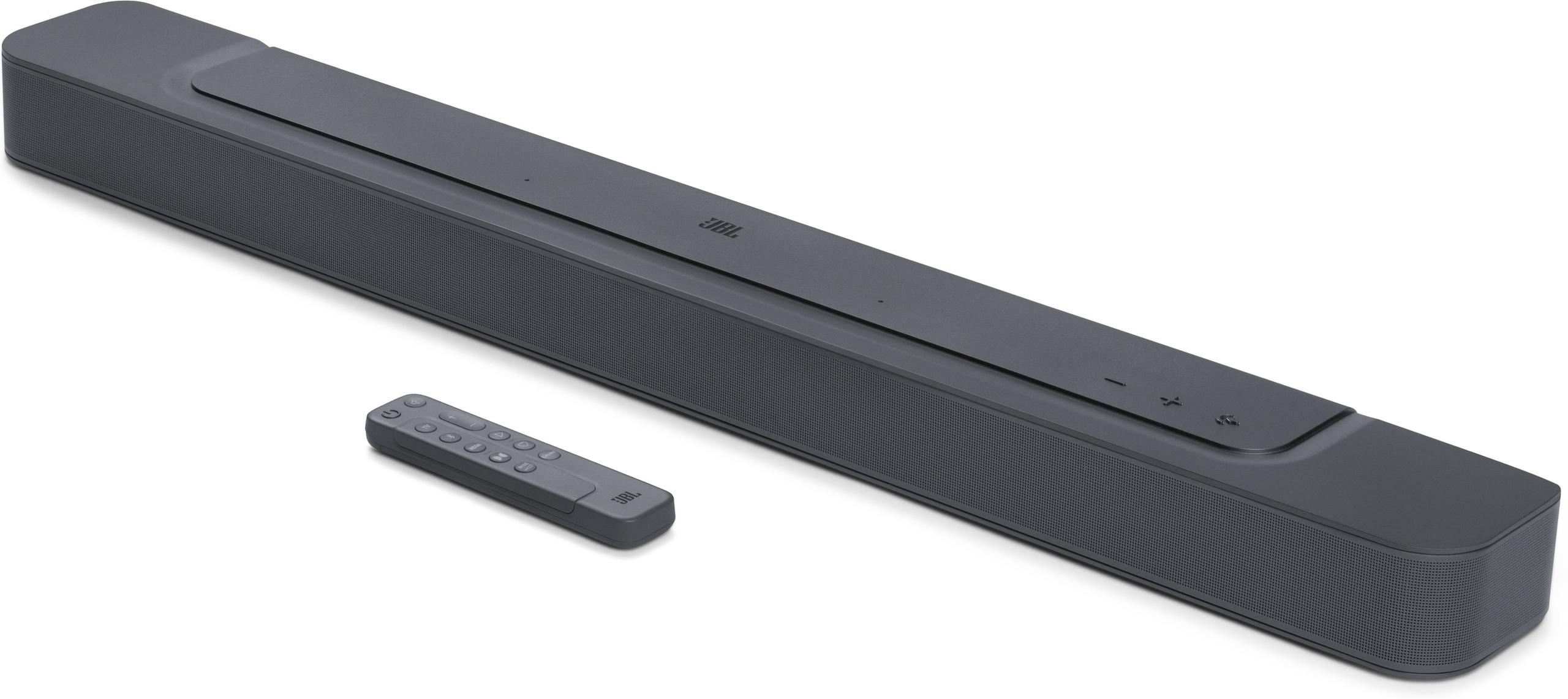
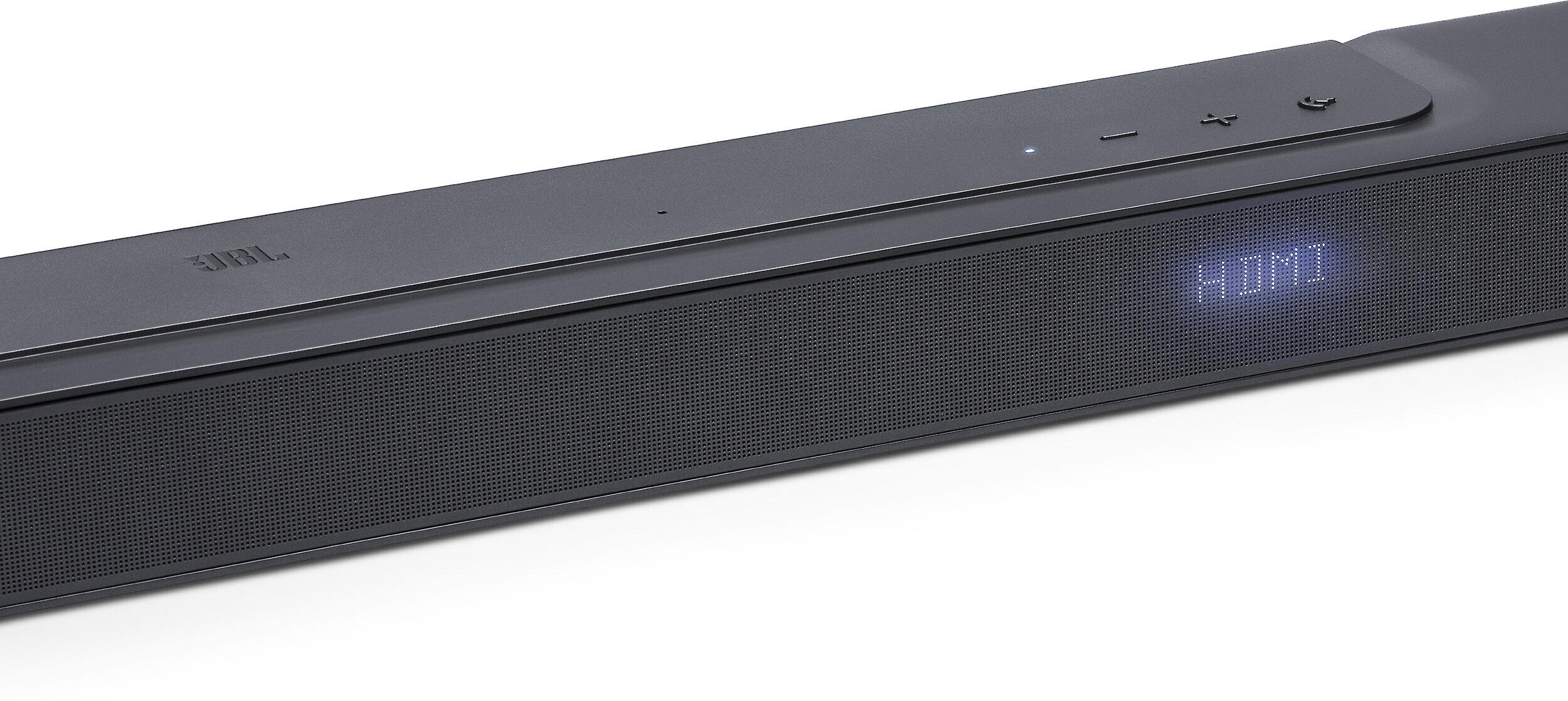
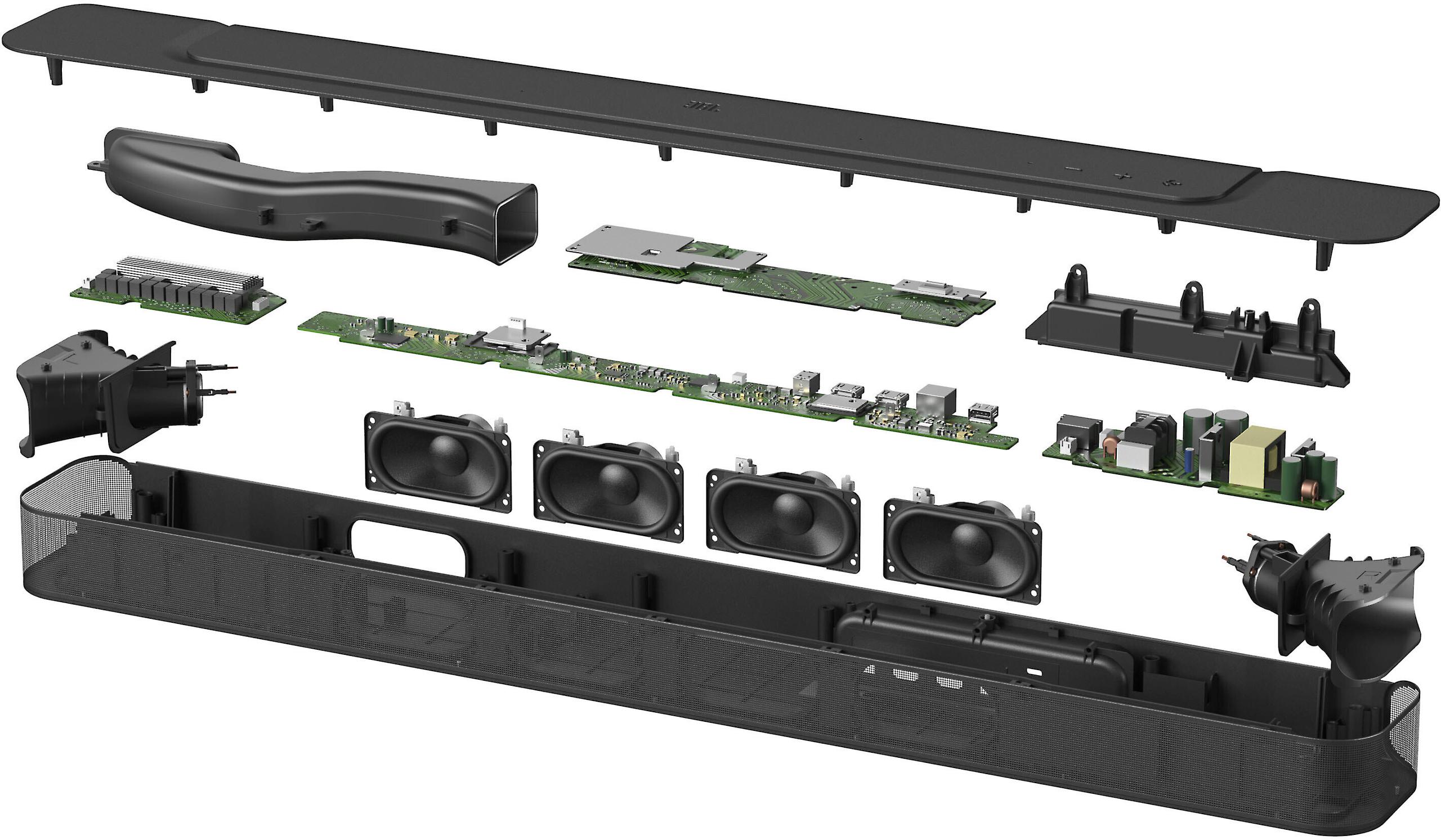
In contrast, the JBL Bar 300 takes the all-in-one route. It's a single compact soundbar that uses advanced processing to create virtual surround sound and includes built-in bass enhancement. This approach prioritizes convenience and aesthetics but faces physical limitations in bass reproduction.
Both systems output 260 watts of total power, which might seem like they're equal on paper. But power distribution and speaker design matter more than raw numbers. It's like comparing two cars with the same horsepower – one might be better for city driving while the other excels on highways.
This is where the Amazon Fire TV Soundbar Plus shows its biggest advantage. The dedicated wireless subwoofer provides genuine deep bass extension that simply can't be matched by built-in drivers. When watching action movies like "The Dark Knight" or "Mad Max: Fury Road," you'll feel those explosions and engine roars in your chest. The subwoofer handles frequencies down to around 35Hz, which covers most of the bass content in movies and music.
However, the Amazon system's bass isn't perfect. Several reviews describe it as somewhat "one note," meaning it doesn't have the nuanced mid-bass response you'd find in premium home theater systems. The bass can also become loose or "flappy" at higher volumes, which is common in budget subwoofers.
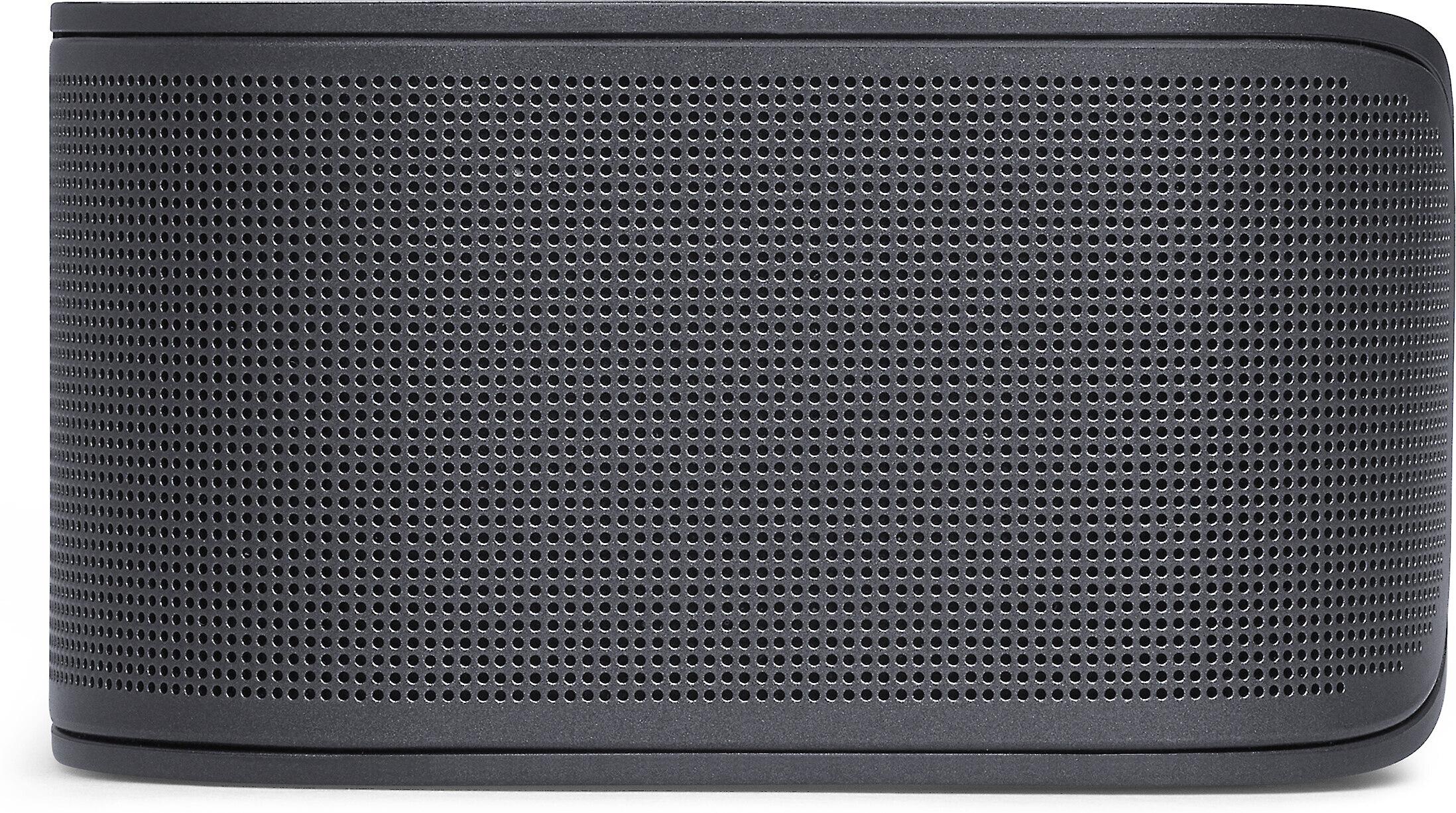
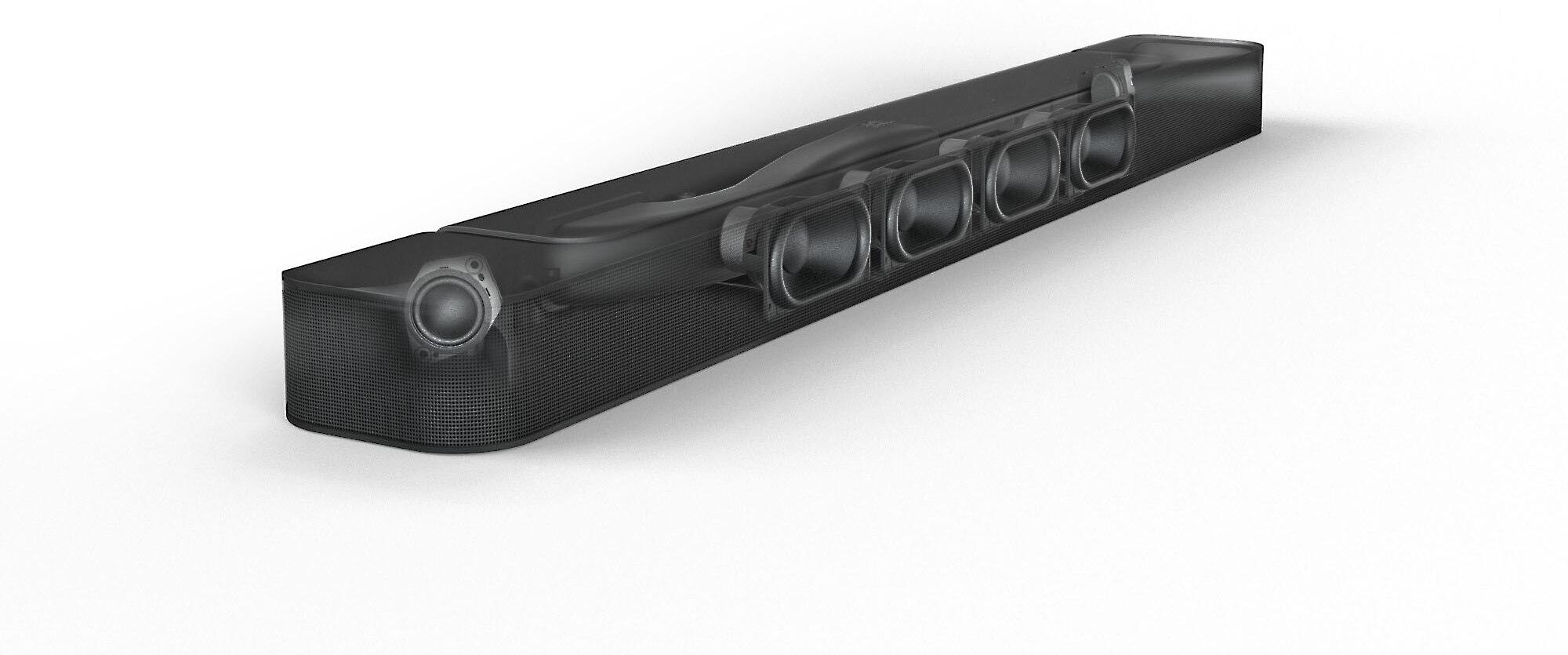
The JBL Bar 300 takes a different approach with its built-in bass port (an opening designed to enhance low-frequency response). For a soundbar this size, the bass performance is genuinely impressive. Users consistently report being surprised by how much low-end punch it delivers. But physics is physics – without a dedicated subwoofer, it simply can't reach as deep or hit as hard as the Amazon system.
For most TV shows, news, and casual movie watching, the JBL's bass is perfectly adequate. But if you're a fan of action movies, Marvel blockbusters, or bass-heavy music genres, the Amazon system will provide a more visceral experience.
Both systems excel at dialogue reproduction, but they achieve this differently. The Amazon Fire TV Soundbar Plus includes a dedicated center channel – a speaker specifically designed for dialogue reproduction. This physical separation means voices have their own space in the audio mix, reducing the likelihood that explosions or music will mask important dialogue.
The Amazon system also includes a dialogue enhancement feature with five levels of adjustment. This boosts the frequency range where human voices live, making it easier to understand what actors are saying even during complex audio scenes. In my experience testing various soundbars, having physical center channel separation makes a noticeable difference in dialogue clarity.
The JBL Bar 300 uses its PureVoice technology instead. This is algorithmic processing (computer-based audio enhancement) that analyzes the audio signal and boosts voice frequencies while reducing competing sounds. It's sophisticated technology that works well, but it's still processing rather than physical channel separation.
Both approaches work, but the Amazon system has a slight edge for dialogue-heavy content like dramas, news, or dialogue-driven movies. If you frequently find yourself reaching for the volume remote during conversations, either system will help, but the Amazon might help more.
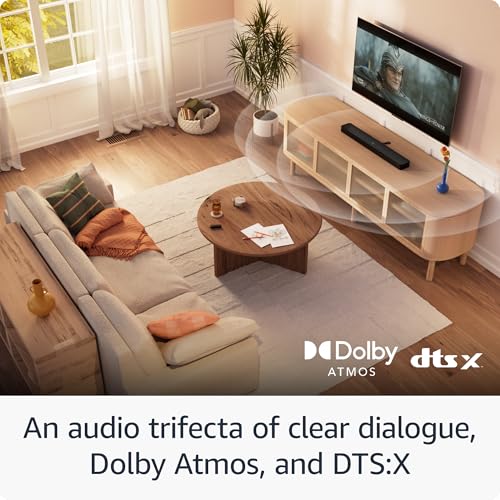
Here's where things get interesting from a technology perspective. Both soundbars support Dolby Atmos, but neither provides true overhead audio placement. Instead, they use psychoacoustic processing (audio tricks that fool your brain into perceiving sounds from different directions) to create virtual surround effects.
The Amazon Fire TV Soundbar Plus can be expanded into a true 5.1 system by adding wireless rear speakers. When fully expanded, it provides genuine surround sound with discrete left surround, right surround, and rear audio channels. This lateral 360-degree soundstage creates a more convincing surround experience than any virtual processing can achieve.
Without the rear speakers, the Amazon system still provides decent stereo imaging (the ability to place sounds at specific locations between the left and right speakers), but it's not dramatically better than good stereo speakers.
The JBL Bar 300 uses MultiBeam technology to create virtual surround sound. This involves precise timing and phase adjustments to create the illusion that sounds are coming from beside and behind you. While clever, virtual surround has limitations – it works best in specific listening positions and room configurations.
For casual viewing, both systems' virtual surround capabilities are adequate. But if you're building a dedicated home theater space or love immersive movies, the Amazon system's expandability gives it a significant advantage.
This is where the tables turn completely. The JBL Bar 300 is essentially a smart speaker disguised as a soundbar, while the Amazon Fire TV Soundbar Plus focuses purely on audio processing.
Despite its name, the Amazon Fire TV Soundbar Plus doesn't actually include Fire TV streaming capabilities or Alexa voice control. The "Fire TV" branding refers to its deeper integration with Amazon's TV devices, allowing more granular audio control through Fire TV settings menus. This is confusing branding that has caught many buyers off guard.
For wireless connectivity, the Amazon system only offers Bluetooth, which works fine for playing music from phones or tablets but doesn't provide the same audio quality as Wi-Fi-based streaming.
The JBL Bar 300, by contrast, includes built-in Wi-Fi and access to over 300 streaming services. You can stream music directly to the soundbar without any external devices, using services like Spotify, Apple Music, or Pandora. It supports AirPlay 2 (for Apple devices), Chromecast (for Google devices), and Alexa Multi-Room functionality.
This smart connectivity also enables automatic software updates, ensuring the soundbar gains new features and improvements over time. The JBL One app provides setup assistance, EQ customization, and easy access to streaming services.
The JBL Bar 300 works with Amazon Alexa, Google Assistant, and Siri through their respective devices. You can ask your voice assistant to play specific songs, adjust volume, or control playback. While the soundbar doesn't have built-in microphones for voice control, it integrates seamlessly with existing smart home ecosystems.
The Amazon Fire TV Soundbar Plus lacks voice control capabilities entirely, relying on traditional remote control operation.
Both systems include room calibration features, but they work differently. The Amazon system uses manual EQ adjustment – you can adjust bass and treble levels from 1-9, toggle dialogue enhancement, and switch between preset modes (Movie, Music, Sports, Night).
The JBL Bar 300 includes an embedded microphone for automatic room calibration. During setup, it plays test tones and adjusts its audio processing to optimize performance for your specific room acoustics. This is more sophisticated and user-friendly, especially for people who don't want to manually adjust audio settings.
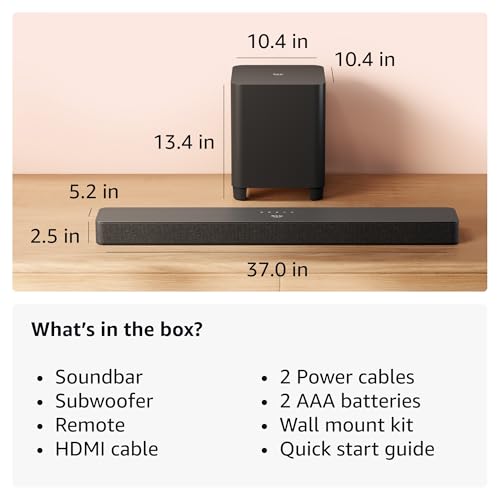
The Amazon Fire TV Soundbar Plus follows a traditional aesthetic with a matte black finish and fabric grille. At 37 inches wide, it's sized for TVs between 50-65 inches. The wireless subwoofer measures about 10x10x13 inches, which requires floor placement and consideration of room layout.
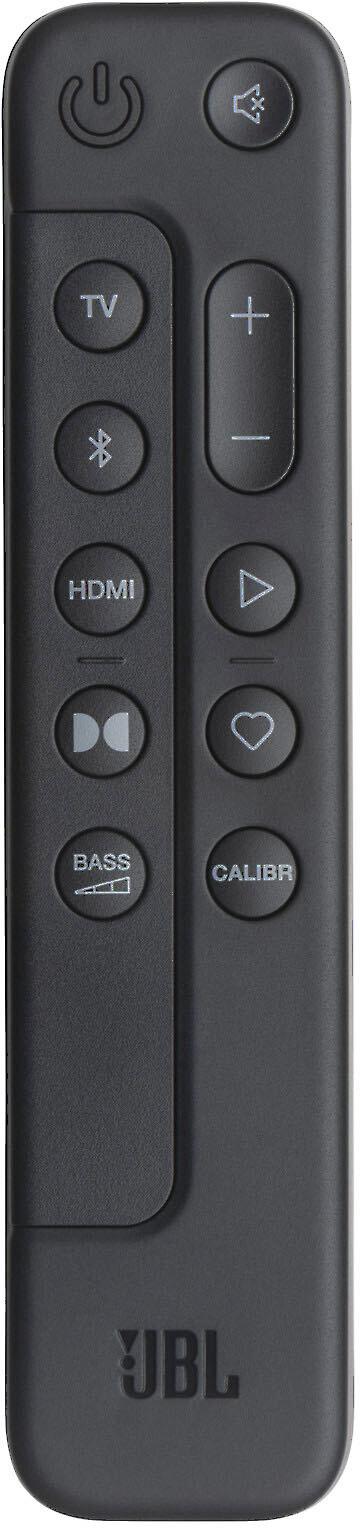
The soundbar includes physical controls for basic functions, but most advanced features require the included remote. LED indicators provide feedback for various settings, though some users find the indicator system confusing.
The JBL Bar 300 is more compact at about 32 inches wide, making it suitable for smaller TVs or tighter spaces. The build quality feels more premium, with better materials and more refined industrial design. Since it's an all-in-one solution, there are no additional components to place or hide.
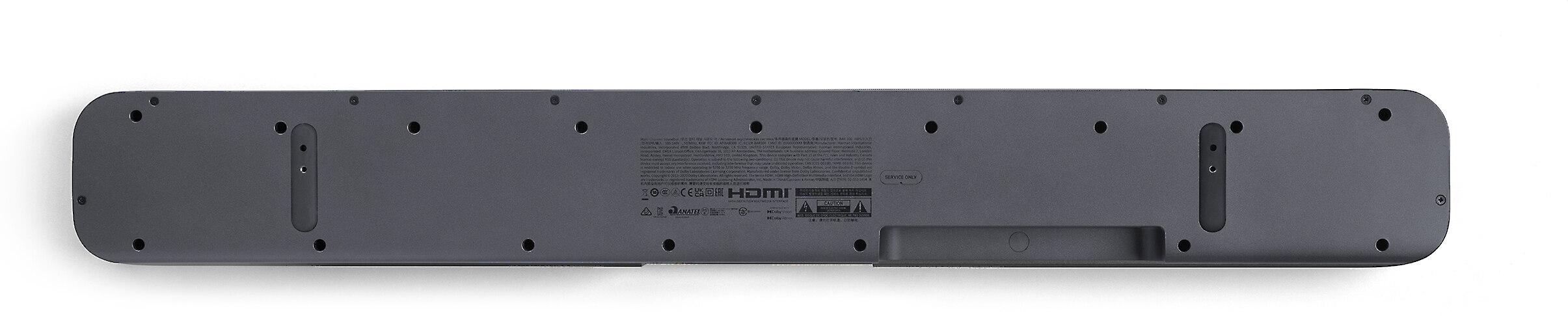
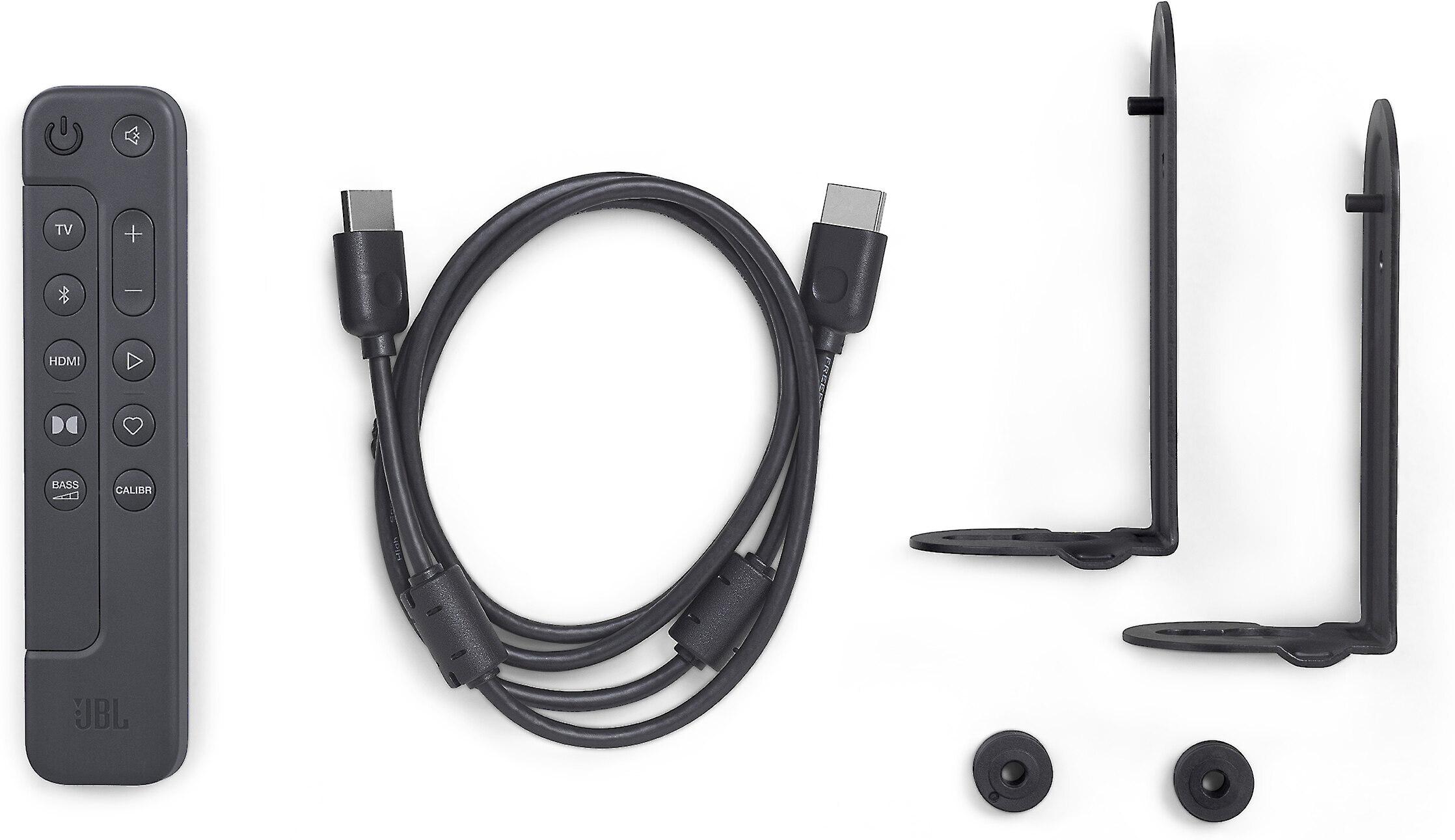
Both systems include wall-mounting hardware, but the JBL's single-piece design makes installation simpler.
At the time of writing, both systems occupy similar price ranges in the mid-tier soundbar market, typically falling between $300-400 depending on sales and promotions. However, they offer very different value propositions.
The Amazon Fire TV Soundbar Plus focuses on delivering maximum audio impact for the money. The included subwoofer provides bass performance that would typically require a more expensive system. For home theater enthusiasts who prioritize audio quality over convenience, this represents excellent value.
The system's expandability also adds long-term value. Starting with the 3.1 configuration and later adding rear speakers provides an upgrade path that can evolve with your needs and budget.
The JBL Bar 300 offers convenience and feature richness. The built-in streaming capabilities, automatic calibration, and smart home integration provide functionality that would otherwise require additional devices. For users who value simplicity and modern connectivity, this approach offers better overall value.
For dedicated home theater setups, the Amazon Fire TV Soundbar Plus is generally the better choice. The deeper bass response and expandability to true 5.1 surround create a more cinema-like experience. The ability to adjust dialogue enhancement becomes particularly valuable when watching movies with complex audio mixes.
However, home theater rooms often have space for subwoofer placement and multiple speakers, which plays to the Amazon system's strengths.
For living rooms that serve multiple purposes, the JBL Bar 300 might be more appropriate. Its compact design and built-in streaming make it better suited for spaces where aesthetics and versatility matter more than maximum audio impact.
The Amazon Fire TV Soundbar Plus is ideal for users who prioritize audio performance above all else. Choose this system if you love action movies, enjoy bass-heavy music, have space for a subwoofer, and don't need built-in streaming features. It's also the better choice if you plan to eventually expand to full surround sound.
The JBL Bar 300 suits users who want modern convenience and smart features in a compact package. Choose this system if you prefer all-in-one simplicity, use multiple streaming services, have limited space, or want a system that works well for both movies and music without additional components.
Both soundbars represent solid values in their respective approaches, but they serve different priorities. The Amazon Fire TV Soundbar Plus delivers superior audio performance, particularly in bass response and expandability, making it the choice for audio enthusiasts. The JBL Bar 300 provides modern convenience, smart features, and excellent all-around performance in a space-efficient package.
Your decision ultimately comes down to whether you prioritize maximum audio impact or streamlined functionality. Either choice will dramatically improve your TV audio experience compared to built-in speakers, but understanding these differences ensures you'll choose the system that best matches your specific needs and preferences.
| Amazon Fire TV Soundbar Plus Subwoofer | JBL Bar 300 5.0 Soundbar |
|---|---|
| Channel Configuration - Determines audio separation and clarity | |
| 3.1 channels (dedicated center + subwoofer) | Virtual 5.0 channels (all-in-one processing) |
| Total Power Output - Affects maximum volume and dynamic range | |
| 260W total (distributed across soundbar + subwoofer) | 260W total (concentrated in single soundbar unit) |
| Bass Extension - Critical for action movies and music impact | |
| Dedicated wireless subwoofer (~35Hz extension) | Built-in bass port (limited to ~50Hz) |
| Dolby Atmos Support - Creates immersive surround sound experience | |
| Virtual Dolby Atmos (no up-firing drivers) | Virtual Dolby Atmos with MultiBeam technology |
| Expandability - Future upgrade potential without replacing system | |
| Expandable to 5.1 with optional rear speakers | No expansion options (all-in-one design) |
| Smart Streaming Features - Eliminates need for separate streaming device | |
| No built-in streaming (Bluetooth only) | Built-in Wi-Fi with 300+ streaming services |
| Voice Assistant Integration - Enables hands-free control | |
| No voice control capabilities | Works with Alexa, Google Assistant, and Siri |
| Setup Complexity - Time and effort required for installation | |
| Requires subwoofer placement and manual EQ tuning | Single unit with automatic room calibration |
| Dialogue Enhancement - Crucial for understanding speech in movies | |
| Physical center channel + 5-level dialogue enhancer | PureVoice algorithmic processing |
| Connectivity Options - Determines compatibility with devices | |
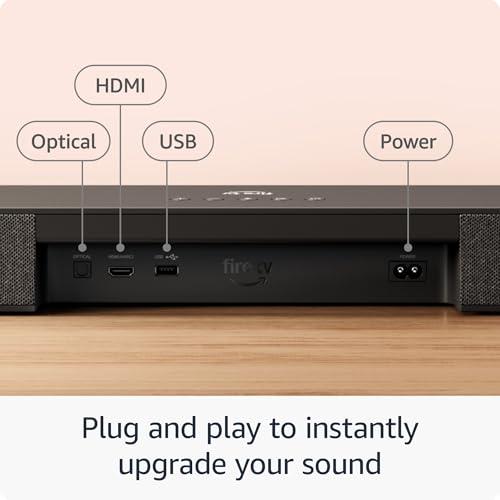
| HDMI eARC, optical, Bluetooth 5.0, USB-A | HDMI eARC, optical, Wi-Fi, Bluetooth, AirPlay 2, Chromecast |
| Physical Footprint - Space requirements in your room | |
| 37" soundbar + separate 10x10x13" subwoofer | Single 32" soundbar unit |
| Fire TV Integration - Enhanced control for Amazon ecosystem users | |
| Deep Fire TV integration with advanced audio controls | Standard HDMI compatibility only |
The Amazon Fire TV Soundbar Plus Subwoofer has significantly better bass performance due to its dedicated wireless subwoofer that extends down to approximately 35Hz. The JBL Bar 300 relies on built-in bass enhancement and a rear port, which limits its low-frequency extension to around 50Hz. For action movies and bass-heavy music, the Amazon system provides much more impactful low-end response.
Yes, both the Amazon Fire TV Soundbar Plus and JBL Bar 300 support Dolby Atmos, but both use virtual processing rather than physical up-firing speakers. The JBL uses MultiBeam technology while the Amazon system focuses on lateral surround effects. Neither provides true overhead audio placement, but both create an enhanced surround sound experience compared to standard stereo.
The Amazon Fire TV Soundbar Plus Subwoofer has a slight advantage for dialogue clarity because it includes a dedicated center channel speaker specifically designed for voice reproduction. It also offers a 5-level dialogue enhancement feature. The JBL Bar 300 uses PureVoice algorithmic processing, which is effective but not as precise as physical channel separation for speech clarity.
Only the JBL Bar 300 supports direct music streaming with built-in Wi-Fi and access to over 300 streaming services, plus AirPlay 2 and Chromecast support. The Amazon Fire TV Soundbar Plus only offers Bluetooth connectivity for wireless music playback, requiring you to stream from a phone, tablet, or other Bluetooth-enabled device.
The JBL Bar 300 is more space-efficient as a single 32-inch unit with no additional components. The Amazon Fire TV Soundbar Plus Subwoofer requires space for both the 37-inch soundbar and a separate 10x10x13-inch wireless subwoofer, making it less suitable for smaller rooms or minimalist setups.
The JBL Bar 300 works with Amazon Alexa, Google Assistant, and Siri through compatible smart devices, allowing voice control for playback and volume. The Amazon Fire TV Soundbar Plus does not support voice control despite its "Fire TV" branding and must be operated using the included remote control.
The Amazon Fire TV Soundbar Plus Subwoofer is generally better for dedicated home theater use because of its superior bass response and expandability to true 5.1 surround sound with optional rear speakers. The deeper bass and physical channel separation create a more cinema-like experience for movies, while the JBL Bar 300 is better suited for multi-purpose living spaces.
Only the Amazon Fire TV Soundbar Plus can be expanded to a full 5.1 surround system by adding optional wireless rear speakers. The JBL Bar 300 is an all-in-one system with no expansion options, relying entirely on virtual surround processing to create spatial audio effects.
The JBL Bar 300 offers significantly more smart features including built-in Wi-Fi streaming, automatic room calibration, the JBL One app, and integration with multiple voice assistants. The Amazon Fire TV Soundbar Plus focuses purely on audio performance with minimal smart features, offering only basic Bluetooth connectivity and Fire TV integration.
The JBL Bar 300 offers easier setup as a single unit with automatic room calibration that optimizes audio for your space. The Amazon Fire TV Soundbar Plus Subwoofer requires positioning both the soundbar and subwoofer, then manually adjusting bass, treble, and other audio settings using the remote control.
Value depends on your priorities: the Amazon Fire TV Soundbar Plus offers better pure audio performance with true subwoofer bass at a competitive price point. The JBL Bar 300 provides better overall value if you want modern smart features, streaming capabilities, and convenient all-in-one design without needing maximum bass impact.
Both soundbars handle music well, but with different strengths. The Amazon Fire TV Soundbar Plus Subwoofer excels with bass-heavy genres like electronic, hip-hop, and rock due to its dedicated subwoofer. The JBL Bar 300 offers more balanced sound across all genres and easier access to streaming services, making it more versatile for casual music listening throughout the day.
We've done our best to create useful and informative comparisons to help you decide what product to buy. Our research uses advanced automated methods to create this comparison and perfection is not possible - please contact us for corrections or questions. These are the sites we've researched in the creation of this article: rtings.com - cordbusters.co.uk - techradar.com - youtube.com - t3.com - hometechnologyreview.com - youtube.com - hometechnologyreview.com - whathifi.com - developer.amazon.com - manuals.plus - dolby.com - whathifi.com - safeandsoundhq.com - youtube.com - cnet.com - mm.jbl.com - jbl.com - bestbuy.com - support.jbl.com - dell.com - walmart.com

Privacy Policy
Terms and Conditions - Affiliate Policy
Home Security
© Copyright 2008-2026.
11816 Inwood Rd #1211, Dallas, TX 75244