





Television speakers have become laughably bad over the years. As TVs get thinner, manufacturers squeeze smaller and smaller speakers into impossibly tight spaces, often firing sound toward your wall instead of your ears. The result? Dialogue sounds like it's coming from inside a cardboard box, and action scenes have all the impact of a polite golf clap.
This reality has made soundbars essential for anyone who cares about their viewing experience. But choosing the right one means understanding two fundamentally different approaches to better sound: physical surround speakers versus virtual processing wizardry. The Amazon Fire TV Soundbar Plus 5.1 and JBL Bar 300 represent these opposing philosophies perfectly, and picking between them requires understanding what each strategy actually delivers.
Before diving into specifics, it's crucial to understand what makes soundbars work and why certain features matter more than marketing buzzwords suggest.
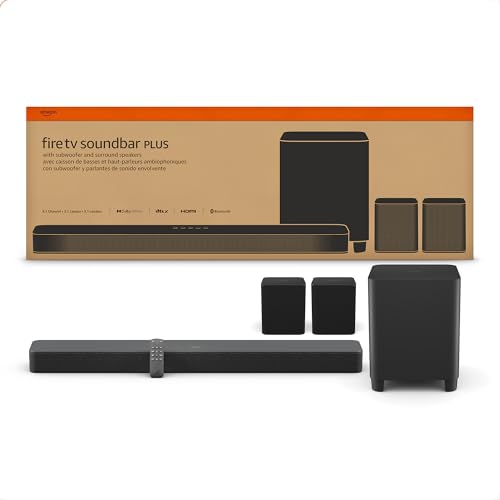
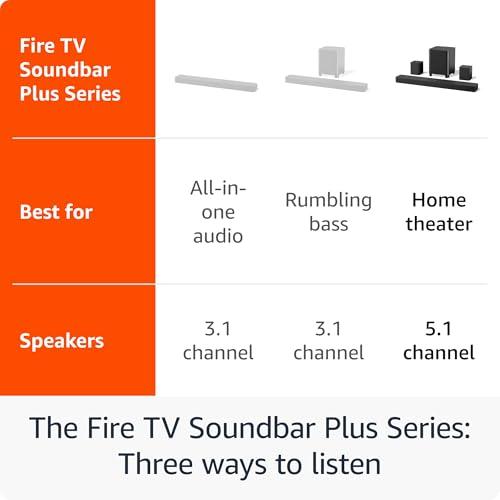
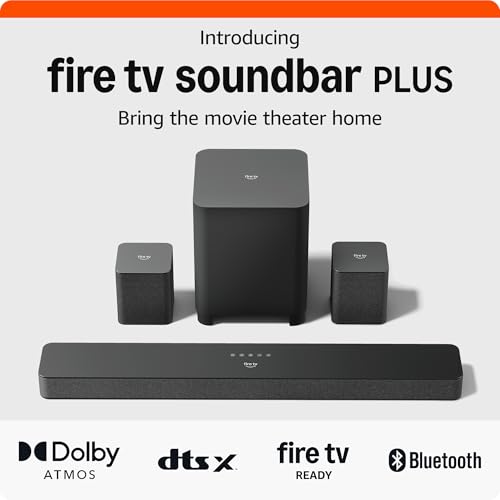
Channel configuration tells you how many distinct audio streams a soundbar can handle. A 5.1 system processes six separate channels: left, right, center, left surround, right surround, and a low-frequency effects (LFE) channel for the subwoofer. The Amazon Fire TV Soundbar Plus 5.1 achieves this through physical speakers—a main soundbar plus separate wireless subwoofer and satellite speakers positioned around your room.
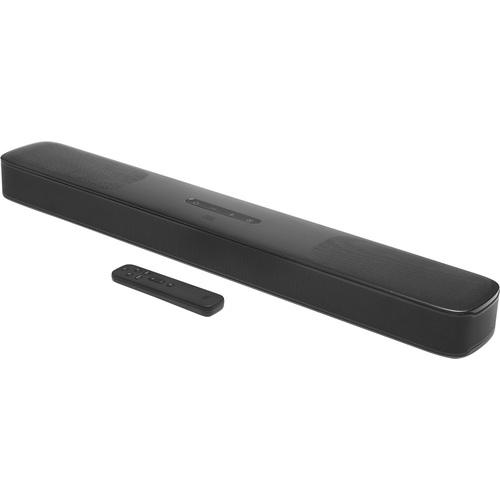
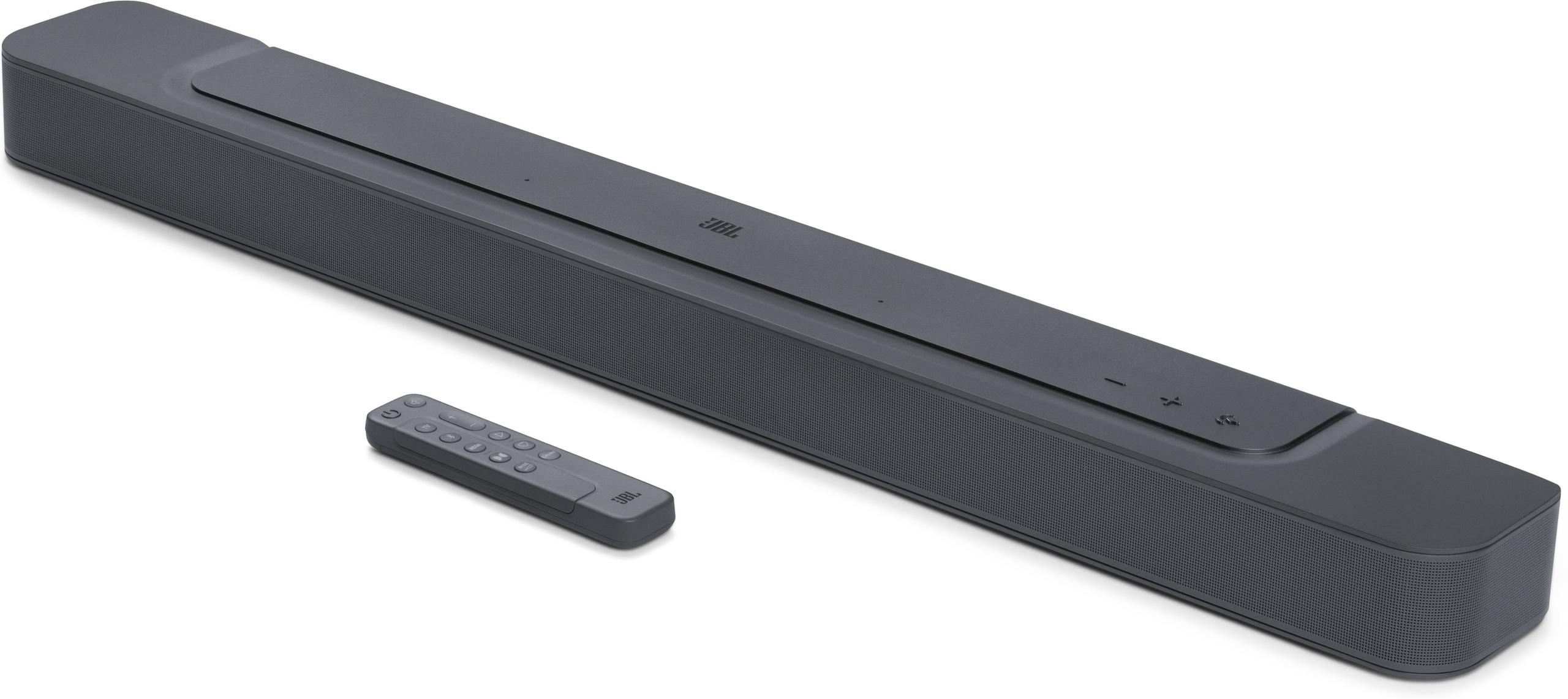
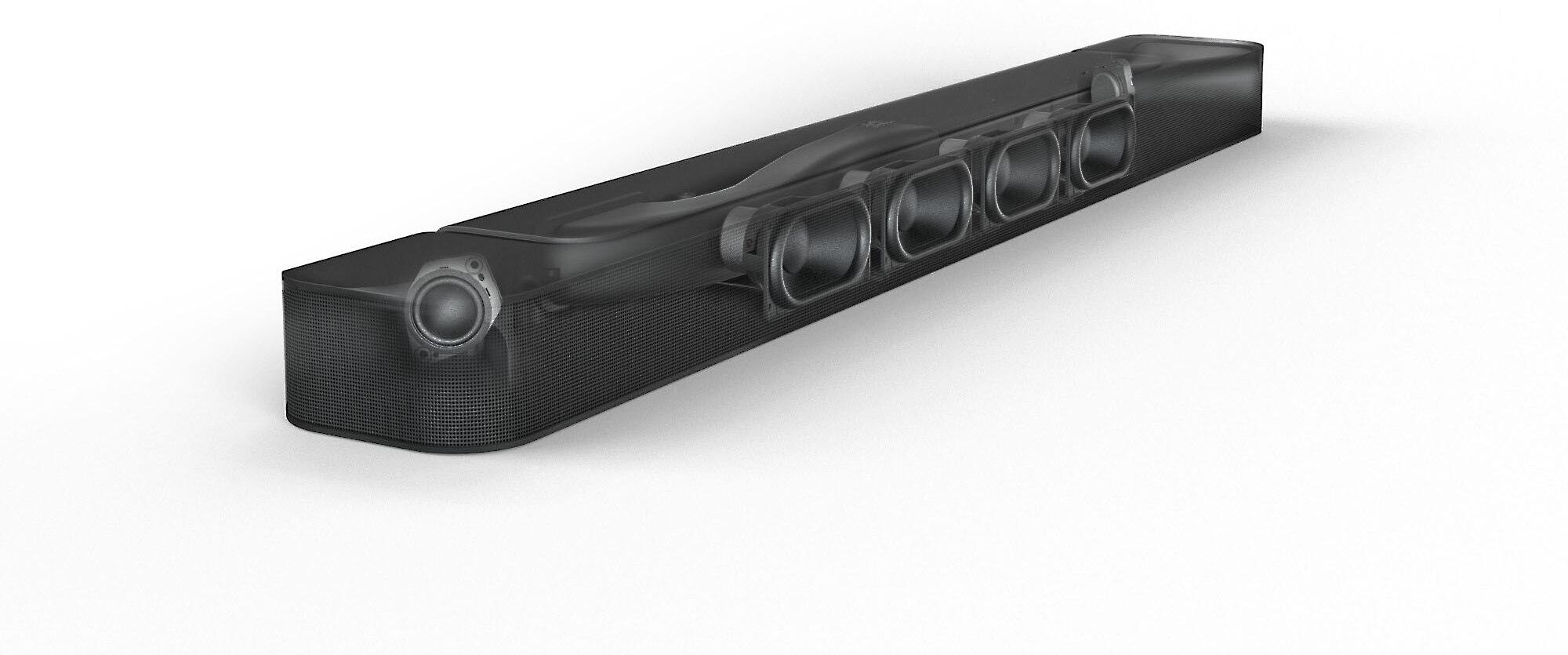
The JBL Bar 300 takes a different approach with its 5.0 configuration. It uses sophisticated digital signal processing (DSP) to take those same audio channels and beam them around your room using precisely angled drivers and acoustic reflections. This creates what engineers call "virtual surround"—your brain perceives sounds coming from behind you, even though all the speakers face forward.
Both approaches have merit, but they excel in different scenarios. Physical surround speakers provide authentic directional audio cues that virtual processing simply cannot replicate perfectly. However, virtual systems offer convenience and aesthetic benefits that many users prioritize over absolute audio accuracy.
The most critical performance metrics for any soundbar include dialogue clarity, bass response, surround effect authenticity, and dynamic range (how well it handles both whisper-quiet dialogue and explosive action sequences). These characteristics determine whether a soundbar enhances your viewing experience or becomes another source of frustration.
The architectural differences between these soundbars fundamentally shape their performance and user experience.
The Amazon Fire TV Soundbar Plus 5.1, released in 2023 as Amazon's answer to growing competition in the mid-range soundbar market, commits fully to the traditional home theater approach. The system includes four separate wireless components: a main soundbar housing left, right, and center channels, plus dedicated tweeters for high-frequency detail; a wireless subwoofer handling low-frequency effects below 80Hz; and two compact satellite speakers for rear channel information.
This physical separation creates genuine surround sound. When a helicopter flies from your front right to back left in a movie, discrete speakers actually reproduce that movement. The rear satellites receive their own audio signals and produce sound behind your listening position, creating authentic spatial cues that match what sound engineers intended.
However, this authentic approach demands compromise. The system requires careful placement of four components throughout your room. The satellites need power outlets and clear wireless communication paths to the main soundbar. Room layout becomes crucial—you need space behind your seating area and the freedom to position a subwoofer where it performs best acoustically.
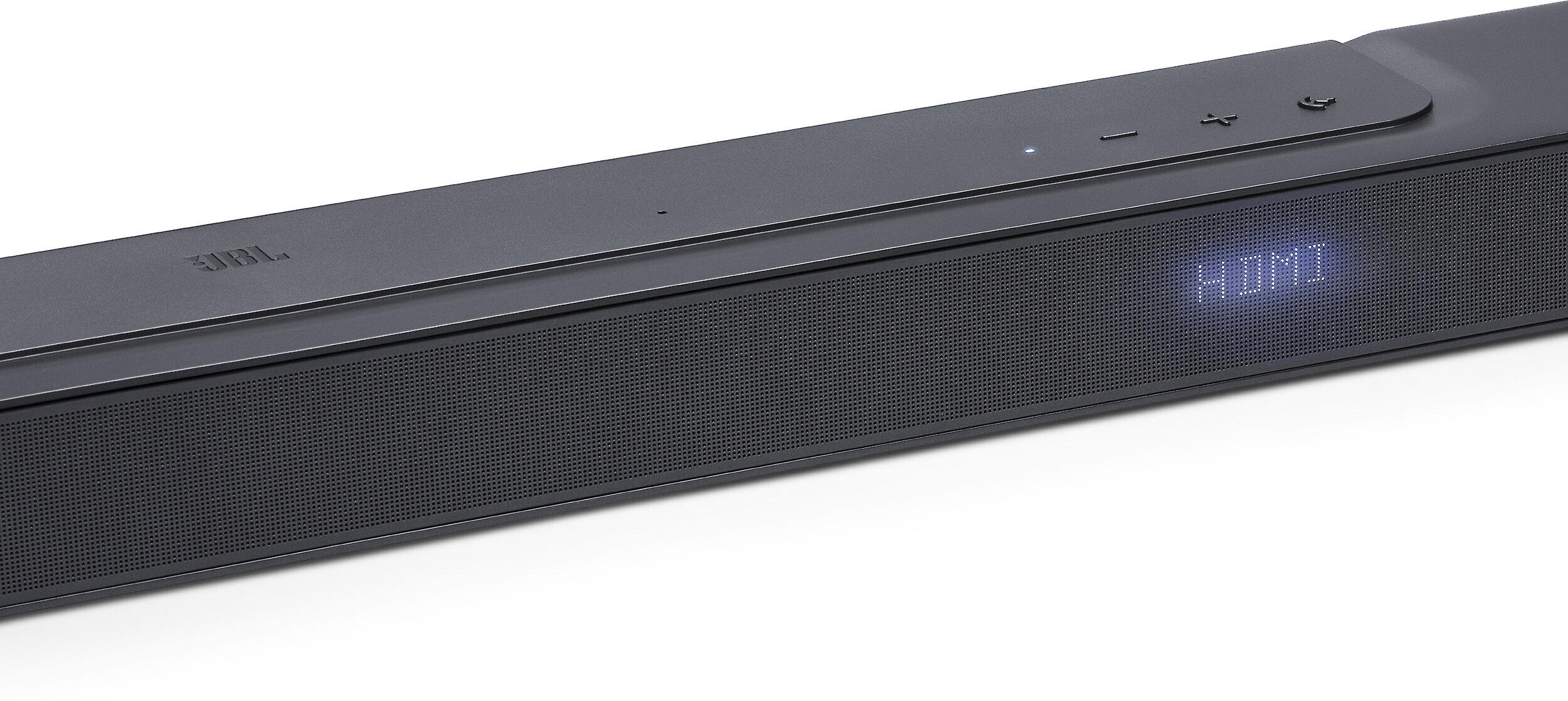
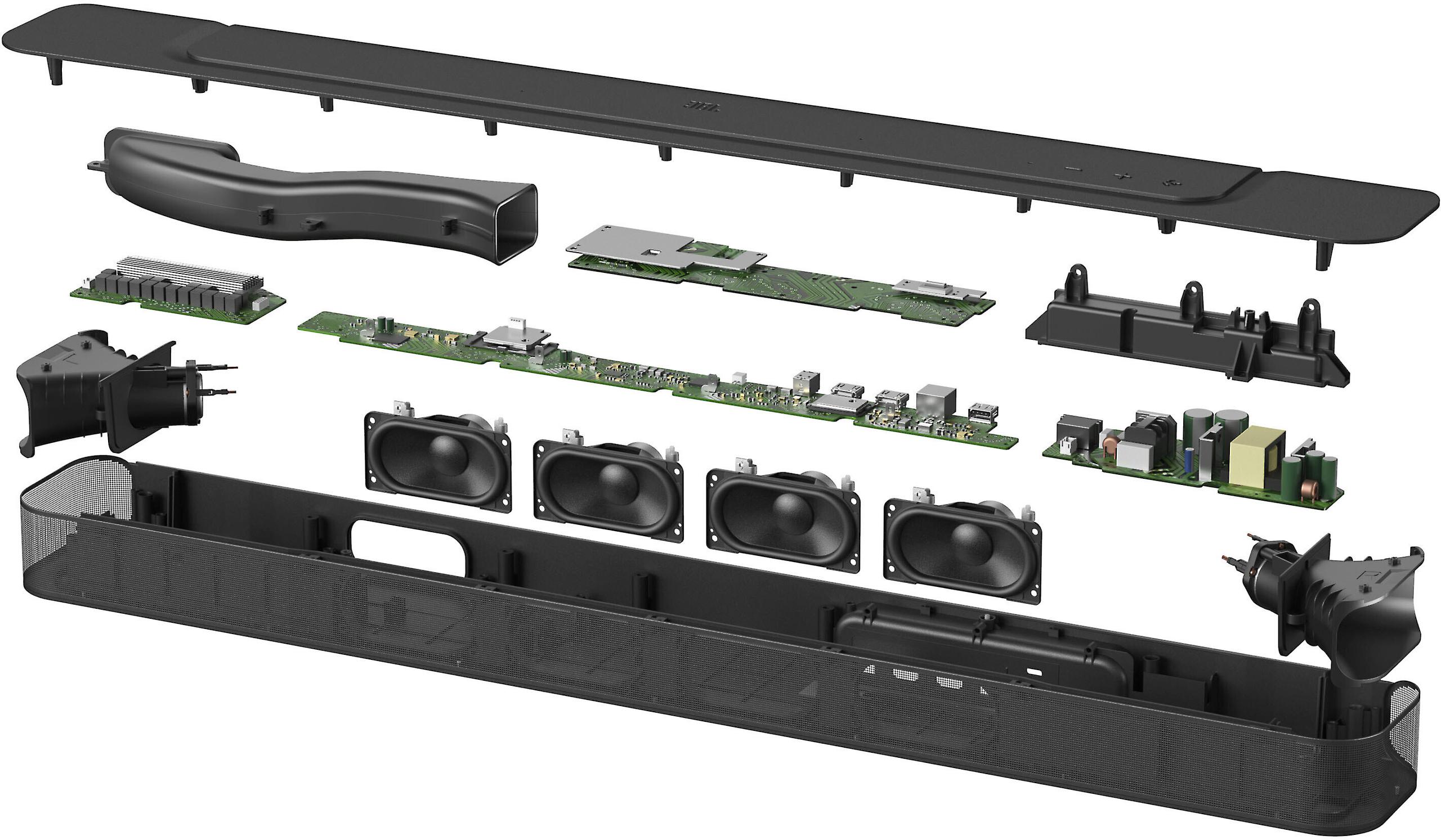
The JBL Bar 300, also released in 2023, embraces the virtual surround philosophy that has revolutionized soundbar design over the past decade. Its MultiBeam technology uses an array of precisely positioned drivers within the single soundbar chassis to create sound reflections that simulate surround speakers.
This approach relies on psychoacoustic principles—how your brain processes sound cues to determine direction and distance. The soundbar fires audio at specific angles toward your room's walls and ceiling. These reflections reach your ears at slightly different times and intensities, creating the illusion that sound originates from various points around the room.
Modern virtual surround has become remarkably convincing, especially for content mixed specifically for these systems. The JBL Bar 300 includes sophisticated room correction algorithms that adapt its processing based on your room's acoustic signature, measured through an embedded microphone during initial setup.
Bass performance represents perhaps the most significant technical difference between these systems, affecting everything from movie explosions to music reproduction.
The Amazon Fire TV Soundbar Plus 5.1 dedicates an entire component to low-frequency reproduction. The wireless subwoofer contains a substantial driver and internal amplifier designed specifically for frequencies below the crossover point (typically around 80Hz). This specialization allows the subwoofer to move the large amounts of air necessary for impactful bass without compromising the main soundbar's midrange clarity.
Our research into user experiences reveals that this dedicated approach delivers genuinely impactful low-end response. Users consistently report satisfying rumble during action sequences and substantial presence in music reproduction. The wireless connection provides placement flexibility—subwoofers often perform best in corners or along walls where room boundaries reinforce low frequencies.
However, some users note integration challenges. The subwoofer can sound "one-note" compared to higher-end systems, particularly during music playback where bass lines require more nuance than movie sound effects. Additionally, the crossover between subwoofer and main soundbar occasionally becomes audible, creating a slight disconnect in the frequency spectrum.
The JBL Bar 300 takes an integrated approach, incorporating bass drivers and a rear-firing port within the main soundbar chassis. This design prioritizes coherence over ultimate extension—the bass integrates seamlessly with midrange frequencies because it originates from the same location.
The built-in bass port works like a carefully tuned exhaust system, reinforcing specific low frequencies while maintaining the soundbar's compact profile. Users report surprisingly robust bass for the size, though with obvious limitations compared to dedicated subwoofers. The bass feels more controlled and musical, particularly at moderate listening levels.
For smaller rooms or apartment living where overwhelming bass becomes problematic, the JBL Bar 300 offers significant advantages. The integrated approach prevents the bass boom that can occur with poorly positioned subwoofers, and neighbors appreciate the more restrained low-end impact.
Clear dialogue represents the most important aspect of TV audio, yet it's where many soundbars struggle most. Understanding how these systems approach vocal clarity reveals crucial performance differences.
The Amazon Fire TV Soundbar Plus 5.1 employs a dedicated center channel within the main soundbar, just like professional home theater systems. This physical center channel handles all dialogue and center-panned audio information exclusively, preventing interference from other frequency content. The system also includes adjustable dialogue enhancement, allowing users to boost vocal frequencies by up to several decibels when necessary.
This traditional approach proves particularly effective for challenging content like British period dramas or action movies where dialogue competes with sound effects. Users can fine-tune the dialogue enhancement to their preferences and hearing capabilities, creating consistent vocal intelligibility across different content types.
However, some users report that voices can sound thin or overly bright when dialogue enhancement is pushed too high, particularly with male voices that require lower midrange support. The center channel's performance depends heavily on the soundbar's positioning relative to the TV and listening area.
The JBL Bar 300 relies on PureVoice technology, which uses digital signal processing to identify and enhance vocal content automatically. This algorithmic approach analyzes incoming audio in real-time, distinguishing speech from other audio elements and applying appropriate frequency shaping.
PureVoice generally produces more natural-sounding dialogue enhancement because it adapts continuously to the specific content being played. Rather than applying a fixed frequency boost, it identifies actual vocal content and processes only those elements. This prevents the artificial harshness that can occur with static dialogue enhancement.
The trade-off involves less user control. While PureVoice works well for most content, users cannot adjust its intensity or disable it entirely when it becomes overly aggressive with certain material.
The surround sound experience represents these soundbars' most fundamental philosophical difference, with measurable impacts on immersion and spatial awareness.
The Amazon Fire TV Soundbar Plus 5.1 achieves surround sound through physical satellite speakers positioned behind or beside the listening area. These speakers receive discrete audio channels containing specific spatial information—ambient effects, directional dialogue, and positional sound effects that create three-dimensional audio environments.
When properly positioned, physical surround speakers provide unambiguous directional cues. Our evaluation of user feedback reveals that helicopter flyovers, rain effects, and crowd noise achieve convincing realism that clearly places sounds in specific spatial locations. Gaming becomes particularly immersive, with footsteps and environmental audio providing accurate positional information.
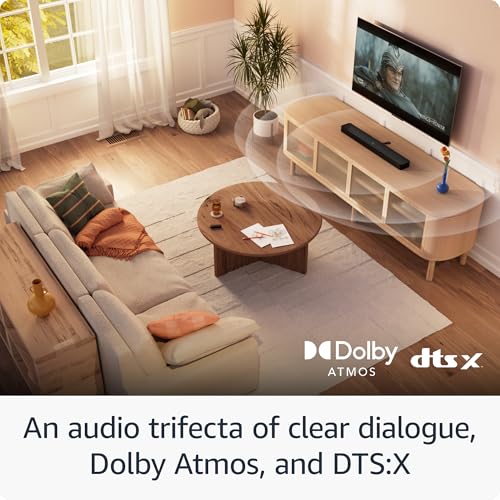
The system's Dolby Atmos support adds vertical dimension through processing, though without dedicated height speakers, these effects rely on virtualization similar to the JBL Bar 300. The lateral surround effects from physical rear speakers remain authentic, creating a genuine 360-degree horizontal soundstage that virtual systems struggle to match completely.
Room size and layout significantly affect performance. Larger rooms with proper satellite placement showcase the system's capabilities, while smaller spaces or challenging layouts may not provide sufficient separation between front and rear speakers to achieve optimal surround effects.
The JBL Bar 300 creates surround illusions through MultiBeam technology, which fires precisely controlled audio reflections toward room surfaces. These reflections reach listeners at calculated delays and intensities, triggering psychological responses that interpret reflected sound as originating from various room locations.
Modern virtual surround has become remarkably sophisticated. The JBL Bar 300 includes room calibration that measures your space's acoustic properties and adjusts its processing accordingly. Users report convincing surround effects for many movie types, particularly those mixed specifically for soundbar playback.
However, virtual surround remains content-dependent. Some material creates convincing spatial illusions, while other content fails to engage the processing algorithms effectively. Room acoustics play crucial roles—spaces with appropriate reflective surfaces enhance virtual surround, while heavily furnished or irregularly shaped rooms may diminish the effect.
The integration of smart features has become increasingly important as streaming services dominate content consumption and smart home ecosystems expand throughout modern houses.
The Amazon Fire TV Soundbar Plus 5.1 takes a surprisingly traditional approach despite its "Fire TV" branding. The system lacks built-in Wi-Fi, streaming capabilities, or voice assistant integration. The Fire TV designation refers exclusively to enhanced integration with Amazon's streaming devices—when connected to Fire TV products via HDMI, the soundbar can be controlled through Fire TV menus and responds to Fire TV remote commands.
This approach prioritizes audio performance over smart features. All processing power and component costs focus on sound reproduction rather than networking capabilities or streaming service integration. Users who prefer dedicated streaming devices or gaming consoles may appreciate this focus on core audio functionality.
However, the lack of smart features limits long-term adaptability. As streaming services evolve and new audio formats emerge, the soundbar cannot receive firmware updates to support new capabilities. Users must rely entirely on connected devices for streaming and smart home integration.
The JBL Bar 300 embraces comprehensive smart connectivity with built-in Wi-Fi supporting the latest 802.11ax (Wi-Fi 6) standards. This enables direct access to over 300 streaming music services, AirPlay compatibility for Apple devices, Chromecast support for Android integration, and Alexa Multi-Room Music for smart home audio distribution.
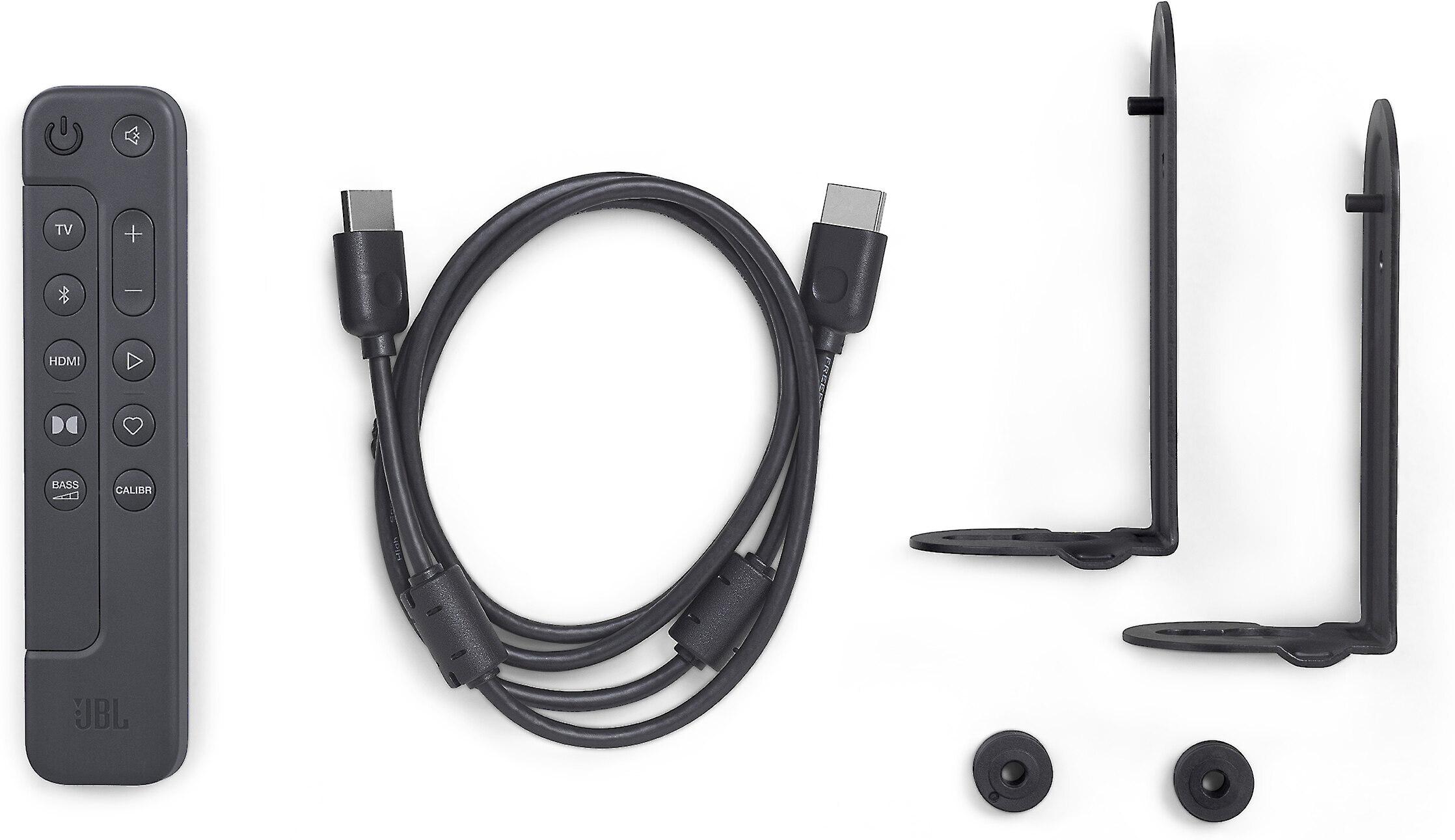
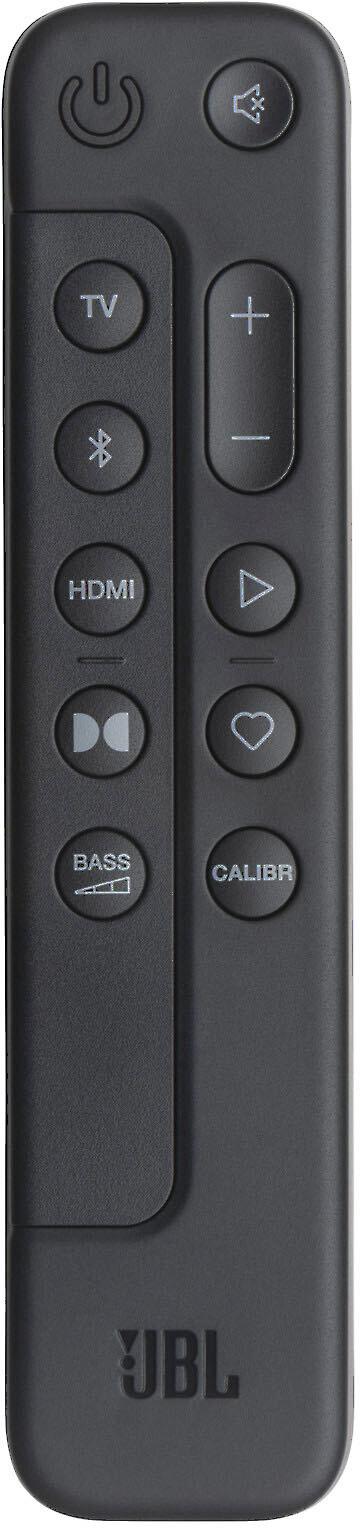
The JBL One mobile application provides extensive customization options, including room calibration, EQ adjustment, and streaming service management. Users can configure the soundbar entirely through their smartphones, eliminating the need for multiple remote controls and providing access to advanced settings that physical remotes cannot accommodate.
Voice assistant integration extends beyond basic playback control. The soundbar responds to natural language commands for volume adjustment, input switching, and content selection. Integration with existing smart home ecosystems allows the soundbar to participate in whole-home audio scenarios and respond to automation routines.
Regular firmware updates ensure continued compatibility with evolving streaming services and audio formats. This connectivity extends the product's useful lifespan by adapting to changing technology standards and user preferences.
Physical construction and aesthetic integration significantly impact long-term satisfaction and room compatibility.
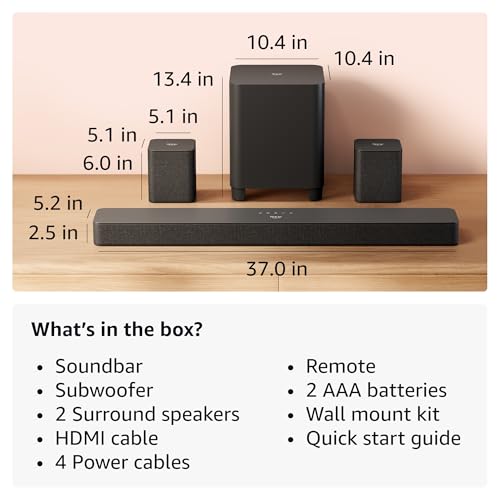
The Amazon Fire TV Soundbar Plus 5.1 prioritizes functional design over premium aesthetics. The main soundbar measures a substantial 37 inches wide, accommodating multiple drivers and internal amplification for the satellite speakers. The matte black finish with fabric grille provides understated appearance suitable for most room decors, though the size may overwhelm smaller TV stands or wall-mounted installations.
The four-component design requires strategic room planning. The wireless subwoofer measures over 10 inches in each dimension, demanding floor space and proximity to power outlets. The satellite speakers, while compact at roughly 5 inches square, need appropriate surfaces or wall mounting hardware for optimal positioning.
Build quality reflects the system's value-oriented positioning. Components feel solid and functional rather than luxurious, with emphasis on acoustic performance over premium materials or sophisticated industrial design.
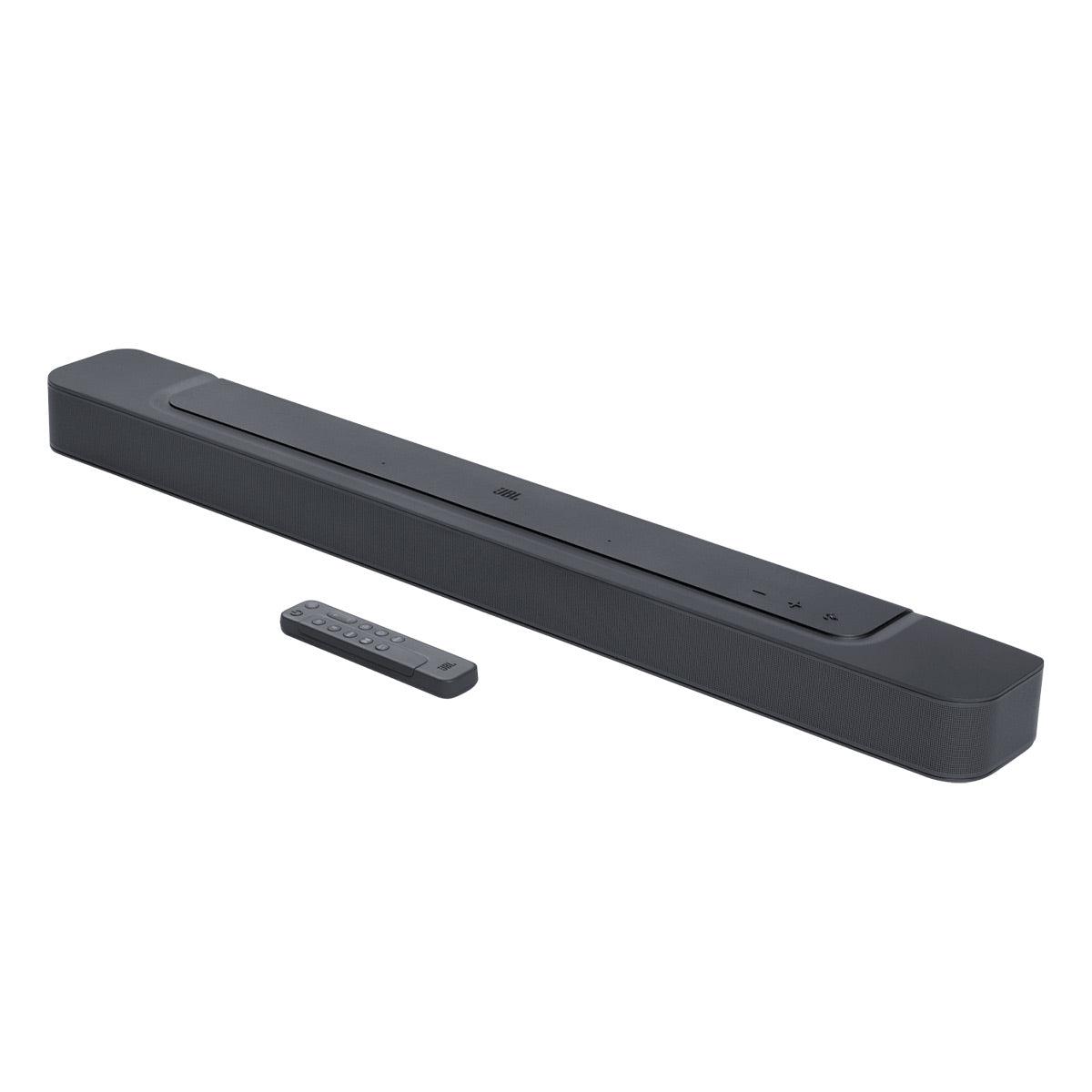
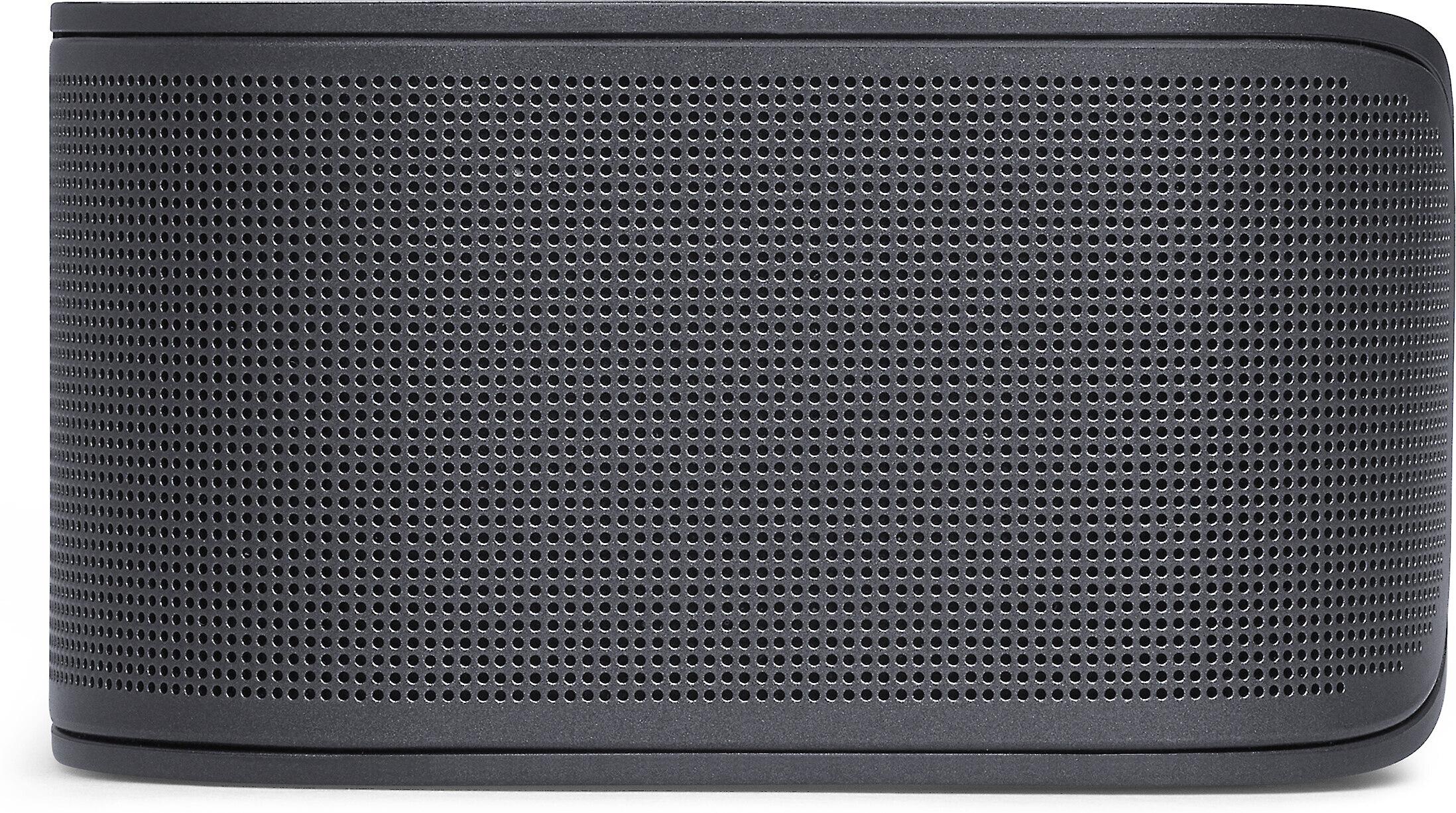
The JBL Bar 300 demonstrates more refined construction with attention to aesthetic detail. The compact 32-inch width accommodates most TV installations without overwhelming the visual presentation. Premium materials and precise manufacturing tolerances create a more upscale appearance suitable for contemporary living spaces.
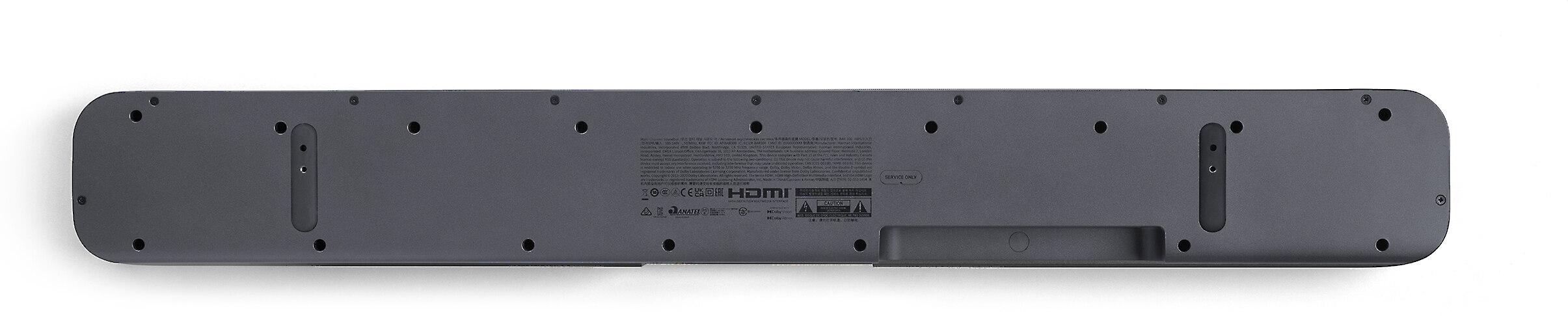
The single-component design eliminates placement compromises and cable management challenges. Wall mounting becomes straightforward with included hardware, and the soundbar's low profile maintains clean sight lines to wall-mounted displays.
JBL's professional audio heritage shows in the attention to acoustic engineering details—driver positioning, port tuning, and cabinet resonance control demonstrate sophisticated design approaches that extend beyond basic functionality.
Understanding the value proposition requires analyzing not just initial purchase price, but long-term utility and upgrade paths.
At the time of writing, the Amazon Fire TV Soundbar Plus 5.1 commands a moderate premium over the JBL Bar 300, reflecting the additional hardware components and true surround capability. This pricing positions it competitively against other 5.1 soundbar systems while undercutting premium brands with similar channel configurations.
The value calculation depends heavily on room compatibility and usage patterns. Users with appropriate spaces for satellite placement receive authentic surround sound experiences that typically require significantly higher investments in traditional home theater systems. The included components—soundbar, subwoofer, and two satellites—would cost considerably more if purchased separately.
However, the lack of smart features and limited upgrade potential may reduce long-term value as technology evolves. The system cannot adapt to new streaming formats or integrate with emerging smart home standards, potentially requiring earlier replacement as user needs change.
The JBL Bar 300 offers compelling value through its combination of smart features, premium construction, and versatile performance at a lower entry price. The all-in-one design eliminates additional component costs and reduces setup complexity, providing immediate satisfaction for most users.
The smart feature integration extends value beyond basic audio improvement. Users gain access to streaming services, voice control, and smart home integration that often require separate purchases or subscriptions with traditional soundbars. Regular firmware updates maintain compatibility with evolving technology standards, extending useful product lifespan.
Dedicated home theater usage reveals important performance distinctions that casual TV viewing might not expose.
The Amazon Fire TV Soundbar Plus 5.1 excels in traditional home theater scenarios where movies and immersive content dominate. The physical surround speakers create convincing spatial environments that enhance dramatic tension and action sequences. Users report particular satisfaction with horror movies, where subtle environmental audio and sudden directional effects contribute significantly to the viewing experience.
Gaming becomes notably more immersive with discrete rear channels providing accurate positional audio. Competitive gaming benefits from precise directional cues, while adventure games gain atmospheric depth from authentic environmental sound placement.
The system handles demanding audio formats effectively, supporting lossless codecs like Dolby TrueHD and DTS-HD Master Audio when connected via HDMI eARC. This comprehensive format support ensures compatibility with high-quality source material from 4K Blu-ray discs and premium streaming services.
However, some technical limitations become apparent in dedicated theater applications. Users report occasional handshaking issues when switching between different audio formats, requiring power cycling to restore proper operation. Audio latency can also become problematic for gaming, though most modern TVs include A/V sync adjustments to compensate.
The JBL Bar 300 provides more consistent performance across diverse content types, with particular strength in dialogue-heavy material and moderate-volume listening scenarios. The virtual surround processing works well for many movie types, though it cannot match the authentic spatial placement that physical rear speakers provide.
The smart features prove valuable in home theater contexts, allowing voice control of playback and integration with smart home lighting and climate systems for complete theater experiences. The compact design suits media rooms where aesthetic considerations balance with performance requirements.
The decision between these soundbars ultimately depends on specific usage patterns, room characteristics, and personal priorities.
Choose the Amazon Fire TV Soundbar Plus 5.1 if you have a dedicated home theater space or living room where satellite speaker placement is practical. This system rewards users who prioritize authentic surround sound over convenience features and who regularly consume immersive content like action movies, concerts, or gaming.
The system particularly suits households where multiple family members have different hearing needs—the adjustable dialogue enhancement and comprehensive EQ controls accommodate various preferences and hearing capabilities. Users who own high-quality source devices like gaming consoles or 4K Blu-ray players will appreciate the extensive format support and audio processing capabilities.
However, avoid this system if you live in a small apartment, rent your space, or prioritize clean aesthetics over ultimate performance. The four-component design requires commitment to strategic placement and may not suit frequently rearranged living spaces.
Choose the JBL Bar 300 if you want immediate improvement over TV speakers without complicated setup or room planning. This system excels for users who stream most content, value smart home integration, and prefer app-based control over physical remotes.
The single-component design suits renters, small spaces, and users who prioritize aesthetics alongside performance improvement. The smart features provide long-term value through regular updates and evolving capability, making this system particularly appropriate for tech-forward households.
Both soundbars deliver substantial improvements over built-in TV speakers, but they serve different philosophies about home audio. The Amazon Fire TV Soundbar Plus 5.1 commits to traditional home theater principles, while the JBL Bar 300 embraces modern convenience and smart integration. Understanding your space, content preferences, and long-term plans will guide you toward the approach that best matches your specific needs and expectations.
| Amazon Fire TV Soundbar Plus 5.1 Channel System | JBL Bar 300 5.0 Soundbar |
|---|---|
| Channel Configuration - Determines surround sound authenticity | |
| True 5.1 with physical rear speakers and dedicated subwoofer | Virtual 5.0 with MultiBeam technology (no physical rear speakers) |
| Bass Response - Critical for movie impact and music enjoyment | |
| Dedicated wireless subwoofer with substantial low-frequency extension | Integrated bass port within soundbar (more controlled but less impactful) |
| Smart Features - Affects long-term usability and convenience | |
| No built-in Wi-Fi, streaming, or voice control (Fire TV integration only) | Full smart connectivity: Wi-Fi, AirPlay, Chromecast, Alexa, 300+ streaming services |
| Setup Complexity - Important for ease of installation | |
| Four components require strategic room placement and power outlets | Single soundbar with simple wall-mount or TV stand placement |
| Dolby Atmos Support - Enhances immersion for compatible content | |
| Virtualized Atmos (no up-firing drivers, relies on processing) | Virtualized Atmos with MultiBeam reflections and room calibration |
| Dialogue Enhancement - Essential for clear speech | |
| Dedicated center channel with adjustable dialogue boost (1-9 scale) | PureVoice technology with automatic vocal optimization |
| HDMI Connectivity - Determines audio format support and TV integration | |
| HDMI eARC with comprehensive format support (includes HDMI cable) | HDMI eARC with 4K Dolby Vision passthrough |
| Physical Footprint - Affects room aesthetics and placement flexibility | |
| Large soundbar (37") plus subwoofer and two satellites throughout room | Compact single unit (32.3") suitable for smaller spaces |
| App Control - Impacts customization and convenience | |
| Physical remote only (no smartphone app available) | JBL One app with room calibration, EQ, and streaming management |
| Audio Format Support - Important for high-quality source devices | |
| Dolby TrueHD, DTS-HD MA, DTS:X (optimized for physical media) | Standard streaming formats with Dolby Digital Plus |
| Voice Assistant Integration - Adds smart home functionality | |
| None (relies on connected Fire TV devices for voice control) | Built-in Alexa, Google Assistant, and Siri compatibility |
| Room Size Suitability - Affects performance optimization | |
| Best for medium to large rooms with satellite placement flexibility | Ideal for small to medium rooms or apartments with space constraints |
The Amazon Fire TV Soundbar Plus 5.1 is a true 5.1 system with physical rear speakers and a wireless subwoofer, while the JBL Bar 300 is a single soundbar that uses virtual surround technology. The Amazon system provides authentic surround sound through separate speakers placed around your room, whereas the JBL creates surround effects through audio processing and reflections.
The JBL Bar 300 is better suited for small spaces because it's a single compact unit that doesn't require additional speakers throughout the room. The Amazon Fire TV Soundbar Plus 5.1 needs space for a subwoofer and two rear speakers, which can be challenging in smaller rooms or apartments where furniture placement is limited.
Only the JBL Bar 300 offers built-in streaming with Wi-Fi connectivity, providing access to over 300 music services, AirPlay, and Chromecast. The Amazon Fire TV Soundbar Plus 5.1 doesn't have built-in streaming capabilities despite the "Fire TV" name - it only integrates with Fire TV devices when connected.
The Amazon Fire TV Soundbar Plus 5.1 delivers significantly better bass through its dedicated wireless subwoofer, which can produce deeper, more impactful low frequencies. The JBL Bar 300 has a built-in bass port that provides decent bass for its size, but it can't match the extension and power of a dedicated subwoofer.
The JBL Bar 300 is much simpler to set up as a single unit that connects to your TV with one cable. The Amazon Fire TV Soundbar Plus 5.1 requires placing and powering four separate components around your room, though all wireless connections are pre-paired from the factory.
The JBL Bar 300 has built-in support for Alexa, Google Assistant, and Siri, allowing direct voice control. The Amazon Fire TV Soundbar Plus 5.1 doesn't have built-in voice control but can be controlled through Fire TV remotes when connected to compatible Fire TV devices.
Yes, both the Amazon Fire TV Soundbar Plus 5.1 and JBL Bar 300 support Dolby Atmos, but through virtualization rather than dedicated upward-firing speakers. Neither soundbar has physical height channels, so they simulate overhead effects through audio processing.
Both soundbars handle dialogue well but differently. The Amazon Fire TV Soundbar Plus 5.1 uses a dedicated center channel with adjustable dialogue enhancement that you can control manually. The JBL Bar 300 uses PureVoice technology that automatically optimizes vocal clarity through digital processing.
Only the JBL Bar 300 offers smartphone app control through the JBL One app, which provides room calibration, EQ settings, and streaming service access. The Amazon Fire TV Soundbar Plus 5.1 relies on its included physical remote and doesn't have an accompanying mobile app.
The Amazon Fire TV Soundbar Plus 5.1 provides more authentic surround sound because it uses physical rear speakers that actually place sound behind you. The JBL Bar 300 creates convincing virtual surround effects, but they can't fully replicate the directional accuracy of discrete rear channels.
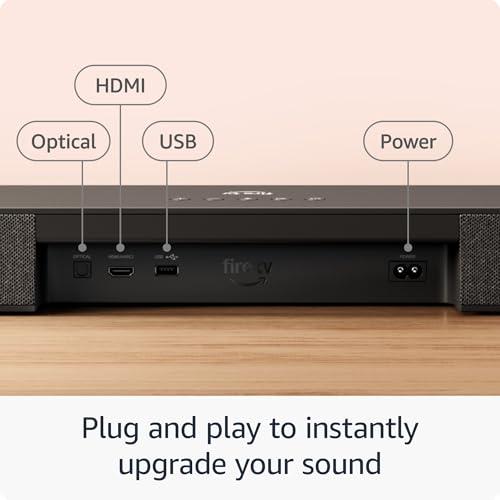
Both soundbars feature HDMI eARC for the best audio quality and TV integration. The Amazon Fire TV Soundbar Plus 5.1 also includes optical input and USB playback, while the JBL Bar 300 adds Bluetooth 5.0 and Wi-Fi connectivity for wireless streaming from phones and tablets.
The JBL Bar 300 may offer better long-term value due to its smart features, regular firmware updates, and compact design that adapts to different living situations. The Amazon Fire TV Soundbar Plus 5.1 provides superior audio performance for dedicated home theater setups but lacks smart features and update capabilities that extend product lifespan.
We've done our best to create useful and informative comparisons to help you decide what product to buy. Our research uses advanced automated methods to create this comparison and perfection is not possible - please contact us for corrections or questions. These are the sites we've researched in the creation of this article: rtings.com - cordbusters.co.uk - techradar.com - developer.amazon.com - t3.com - hometechnologyreview.com - youtube.com - hometechnologyreview.com - whathifi.com - hometechnologyreview.com - hometechnologyreview.com - youm.design - hometechnologyreview.com - dolby.com - whathifi.com - safeandsoundhq.com - youtube.com - cnet.com - mm.jbl.com - jbl.com - bestbuy.com - support.jbl.com - dell.com - walmart.com

Privacy Policy
Terms and Conditions - Affiliate Policy
Home Security
© Copyright 2008-2026.
11816 Inwood Rd #1211, Dallas, TX 75244