

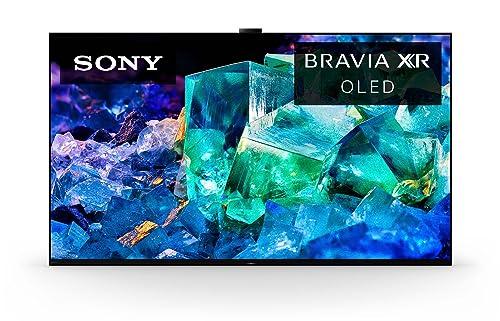





When you're shopping for a premium 65-inch TV, you're making a decision that will likely shape your entertainment experience for the next decade. The Sony Bravia XR A95K 65" QD-OLED TV and Samsung 65" QN80F Neo QLED 4K TV represent two fundamentally different approaches to achieving stunning picture quality, and understanding these differences is crucial to making the right choice for your specific needs.
The TV market has evolved dramatically in recent years, with manufacturers pushing the boundaries of display technology to deliver more vibrant colors, deeper contrast, and brighter images. These two models embody this evolution perfectly – one representing a breakthrough in OLED technology, the other showcasing the latest advances in LED backlighting systems.
Before diving into specifics, it's important to understand what separates premium TVs from budget options. Premium displays focus on three core areas: contrast ratio (the difference between the darkest blacks and brightest whites), color accuracy and volume (how many colors the TV can display and how vibrant they appear), and motion handling (how well the TV displays fast-moving content without blur).
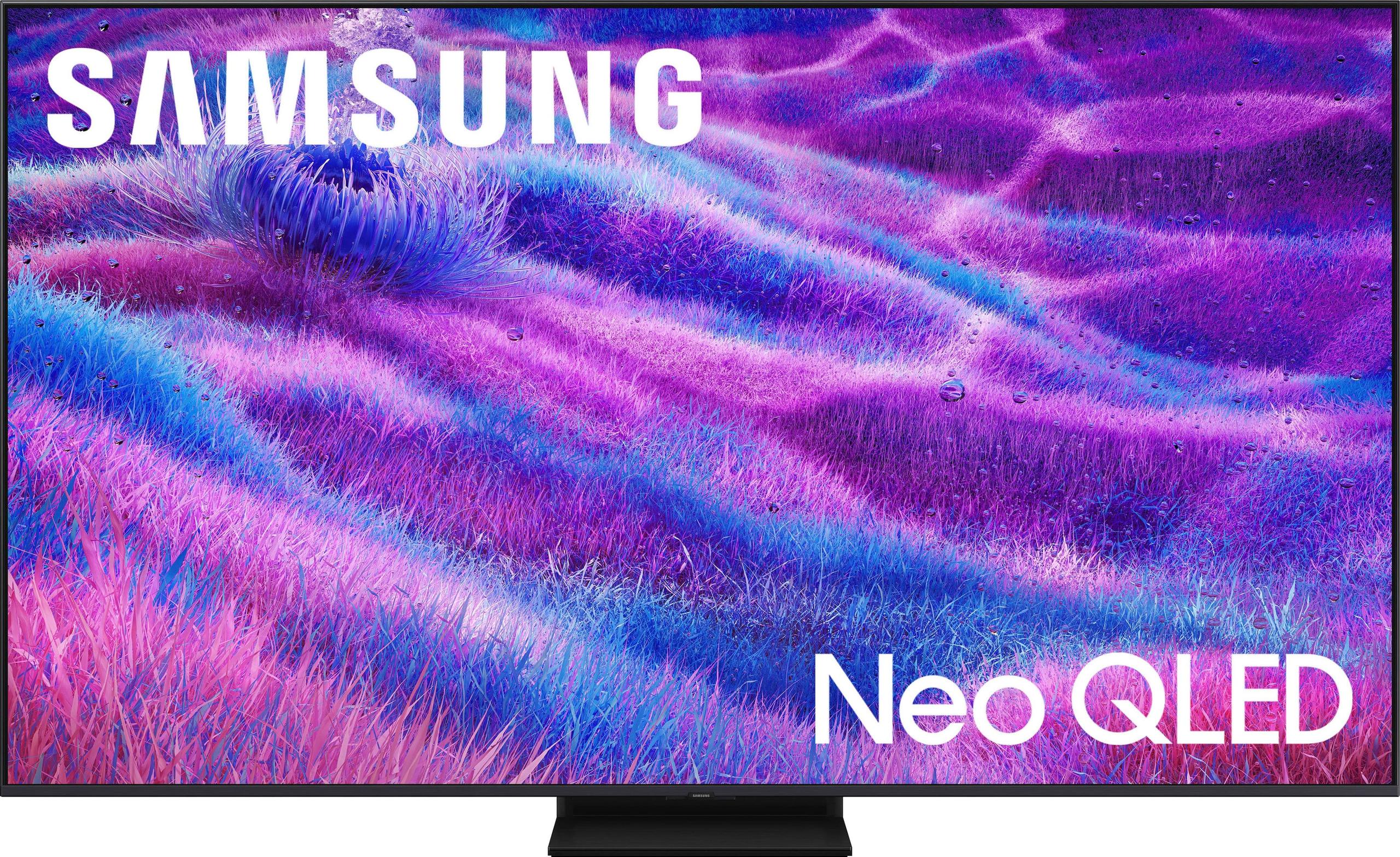
The Sony A95K and Samsung QN80F take completely different technological approaches to achieve these goals. Sony's QD-OLED technology represents a fusion of traditional OLED benefits with quantum dot enhancement, while Samsung's Neo QLED pushes Mini LED backlighting to new levels of precision.
The most fundamental difference between these TVs lies in how they create images. The Sony A95K uses QD-OLED technology, where each pixel generates its own light. Think of it like having over 8 million tiny lightbulbs that can turn completely on or off independently. When a pixel needs to be black, it simply turns off entirely, creating perfect darkness. This is why OLED TVs are famous for their incredible contrast – they can display the darkest blacks right next to the brightest whites with no interference between them.
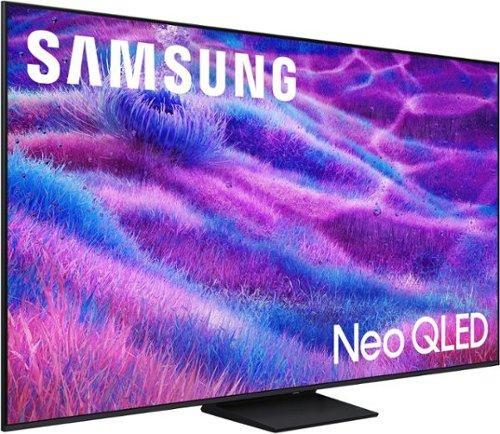
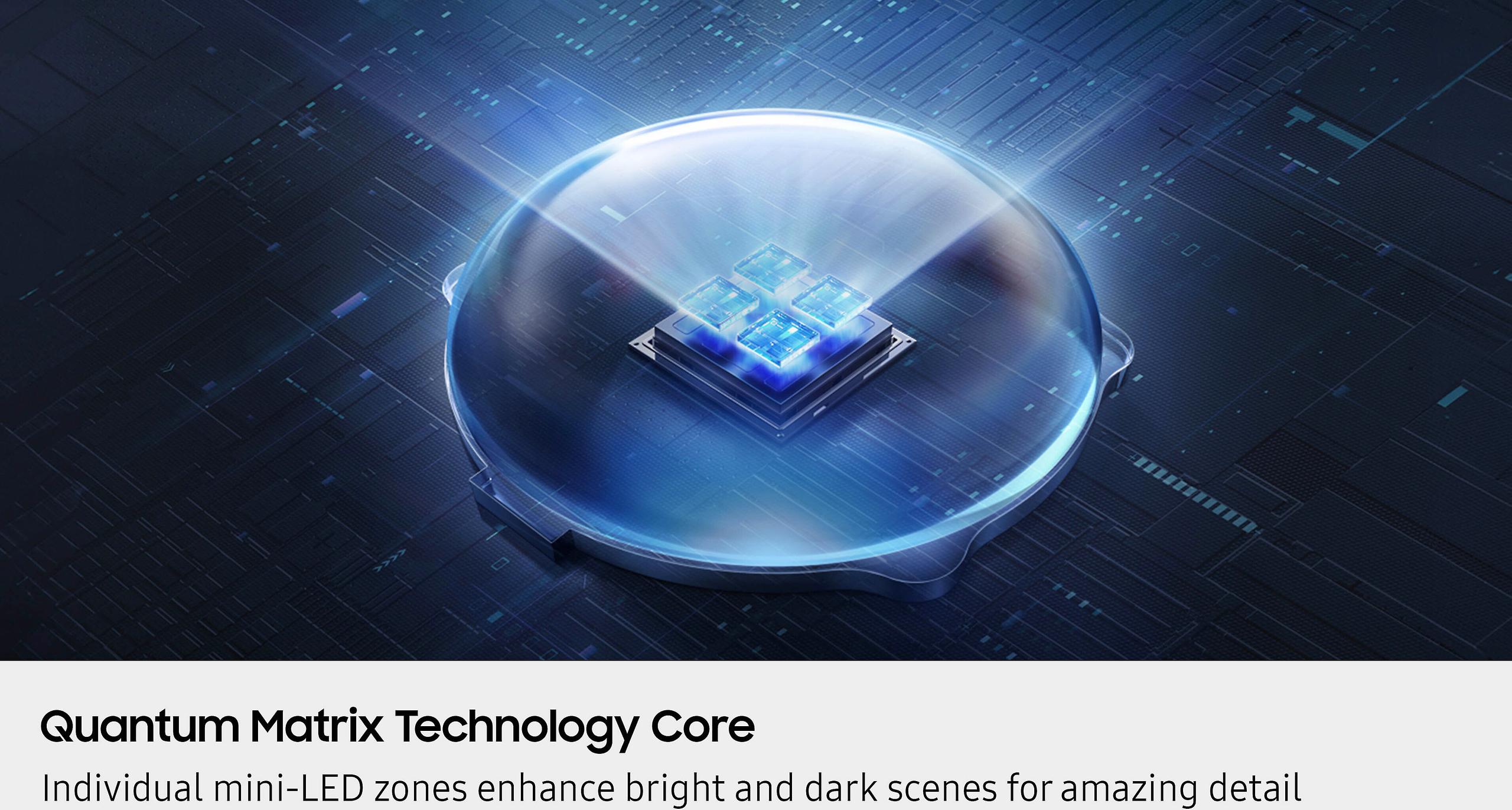
The Samsung QN80F, on the other hand, uses what's called Mini LED backlighting behind an LCD panel. Instead of pixels creating their own light, thousands of tiny LED lights shine through the LCD layer, which acts like a sophisticated filter. The "Mini" part is crucial – these LEDs are significantly smaller than traditional LED backlights, allowing for much more precise control over brightness in different areas of the screen.
Both approaches have distinct advantages. Sony's self-emitting pixels can achieve perfect blacks and infinite contrast ratios – technical terms that translate to incredibly realistic dark scenes where you can see every detail in shadows while bright elements still pop off the screen. Samsung's Mini LED approach, meanwhile, can produce much brighter peak brightness levels, making HDR content (High Dynamic Range, which provides more realistic lighting in movies and shows) more impactful, especially in bright rooms.
In our research across professional reviews and user feedback, the Sony A95K consistently emerges as the contrast champion. When you're watching a movie with a dark scene – think of a thriller where someone's walking through a shadowy house – the Sony can make those shadows truly black while keeping details visible. There's no "glow" or "blooming" around bright objects like lamps or windows, which is a common issue with backlit displays.
The Samsung QN80F has made significant strides in contrast performance thanks to its Mini LED zones, but it still can't achieve true blacks. In those same dark movie scenes, you might notice a subtle gray tint in areas that should be completely dark. However, this limitation becomes much less noticeable in brighter viewing environments.
This is where Samsung's approach pays dividends. The Samsung QN80F can typically reach peak brightness levels exceeding 1,000 nits (a measure of luminance), while the Sony A95K tops out around 400 nits. In practical terms, this means Samsung's TV makes HDR content more impactful – explosions in action movies appear more dazzling, and sunny outdoor scenes look more realistic.
If your TV room has large windows or you tend to watch during daytime, Samsung's higher brightness provides better visibility and prevents the washed-out look that can affect darker displays in bright environments. However, Sony's QD-OLED technology delivers what's called "color brightness" – meaning colors themselves appear more vivid and saturated even at lower overall brightness levels.
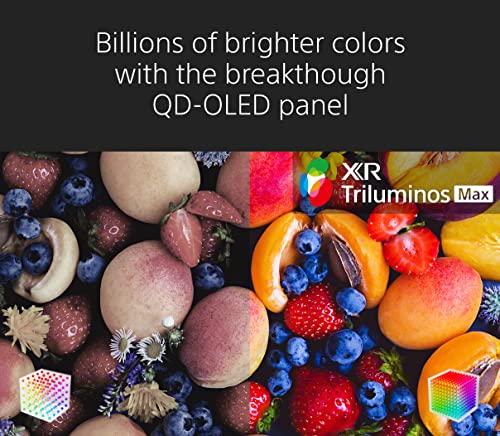
The Sony A95K leverages its QD-OLED panel with XR Triluminos Max technology to achieve exceptional color reproduction. The quantum dot layer enhances the purity of red and green colors while maintaining OLED's naturally accurate color rendering. In our evaluation of professional calibration reviews, this TV consistently measures among the most color-accurate displays available.
Samsung's quantum dot technology in the QN80F also delivers impressive color performance, particularly in terms of color volume – the ability to maintain vibrant colors at high brightness levels. However, some users report that Samsung's default picture modes can appear oversaturated, requiring manual adjustment for more natural-looking content.
Both TVs excel at motion handling, but for different reasons. The Sony A95K benefits from OLED's near-instantaneous pixel response time, meaning fast-moving objects in sports or action movies appear crisp without motion blur. The trade-off is that some viewers notice what's called the "soap opera effect" with certain content, where movies appear too smooth and lose their cinematic quality.
The Samsung QN80F includes Motion Xcelerator technology that can handle up to 144Hz refresh rates, making it particularly appealing for sports fans and gamers. The processing is designed to maintain natural motion while reducing blur, though the effectiveness can vary depending on content type.
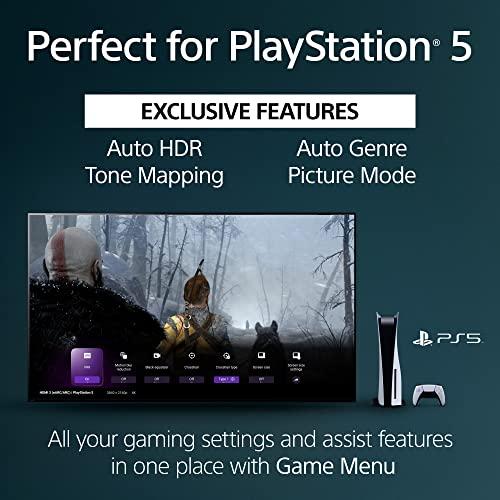
Gaming has become a crucial consideration for TV buyers, and both models cater to this demand with different strengths. The Sony A95K offers two HDMI 2.1 ports supporting 4K gaming at 120Hz with Variable Refresh Rate (VRR) technology. VRR synchronizes the TV's refresh rate with your gaming console's output, eliminating screen tearing and stuttering for smoother gameplay.
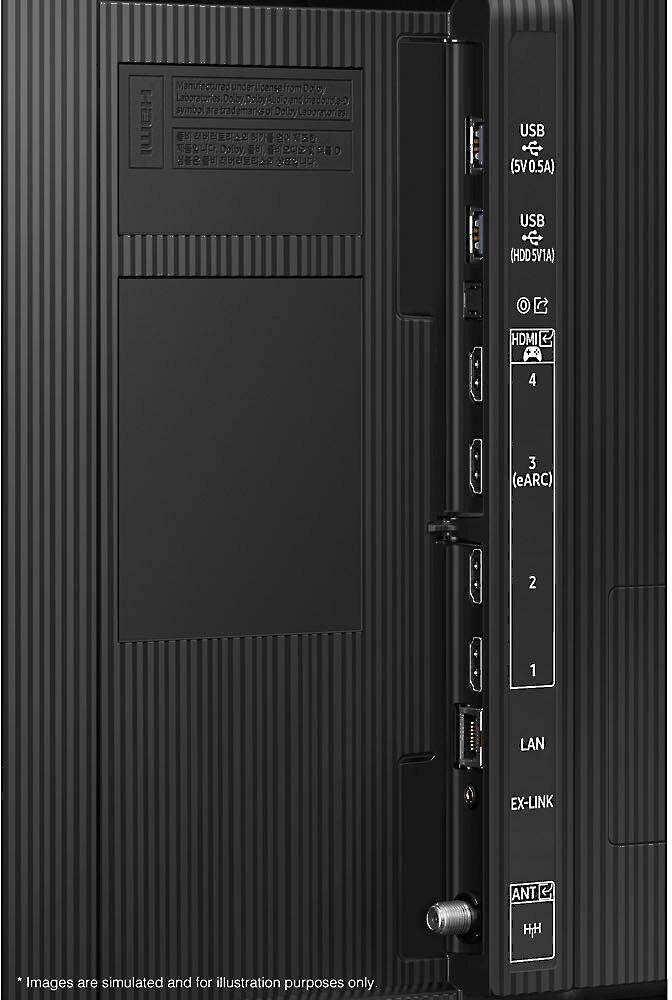
The Samsung QN80F goes further with four HDMI 2.1 ports and support for refresh rates up to 144Hz. This is particularly beneficial for households with multiple gaming devices or for PC gamers who want the highest possible refresh rates. Samsung's AI Auto Game Mode automatically detects when you're gaming and optimizes settings accordingly.
However, the Sony A95K has an inherent advantage in pixel response time due to OLED technology, making it excellent for competitive gaming where every millisecond matters. The perfect blacks also enhance gaming visuals in dark scenes, providing better visibility of enemies hiding in shadows.
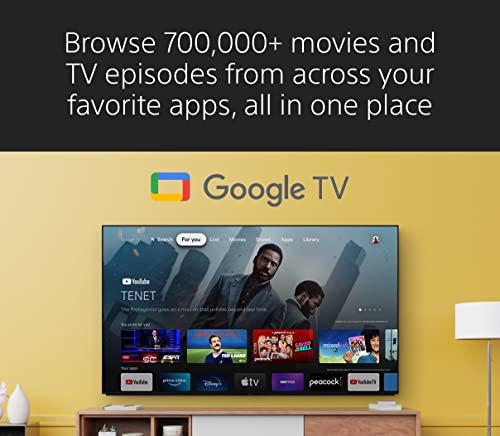
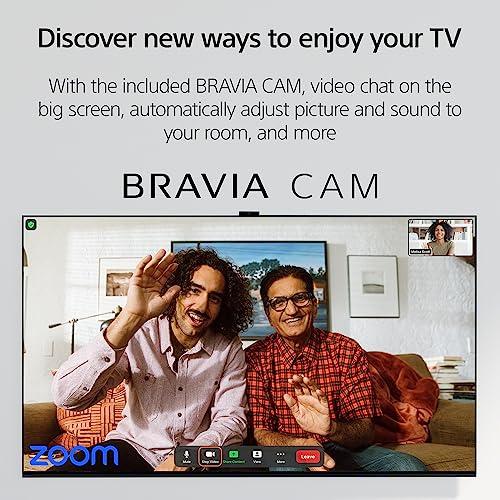
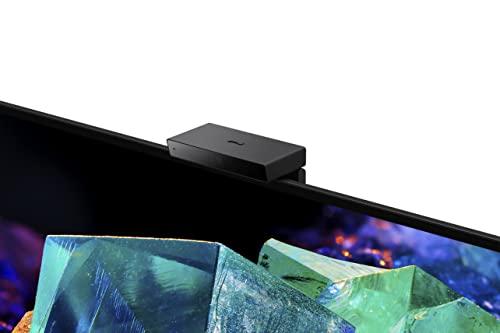
The smart TV experience differs significantly between these models. The Sony A95K runs Google TV, which provides access to all major streaming services through an intuitive interface. The included BRAVIA CAM adds unique functionality like gesture controls and video calling capabilities, though these features may appeal more to tech enthusiasts than average users.
Samsung's QN80F showcases the company's latest Vision AI suite, including features like Live Translate for foreign language content and Generative Wallpaper that creates custom backgrounds using AI. The enhanced Bixby voice assistant can process multiple commands simultaneously, making smart home integration more seamless.
Both platforms handle streaming well, but Samsung's newer AI features provide more advanced personalization and smart home integration options that may become increasingly valuable over time.
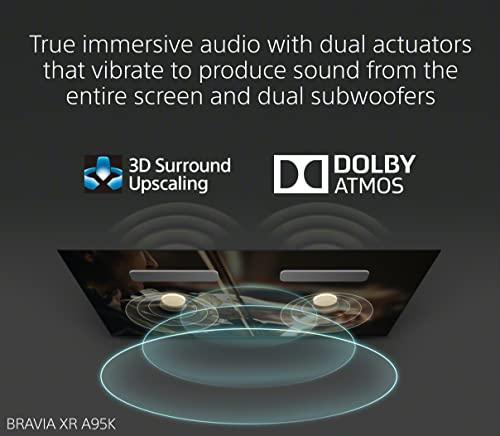
Audio represents one of the most innovative aspects of the Sony A95K. Its Acoustic Surface Audio+ technology vibrates the entire screen to produce sound, creating the impression that dialogue and effects emanate directly from the image. This screen-as-speaker approach provides more immersive audio than traditional TV speakers and can even function as a center channel when connected to a surround sound system.
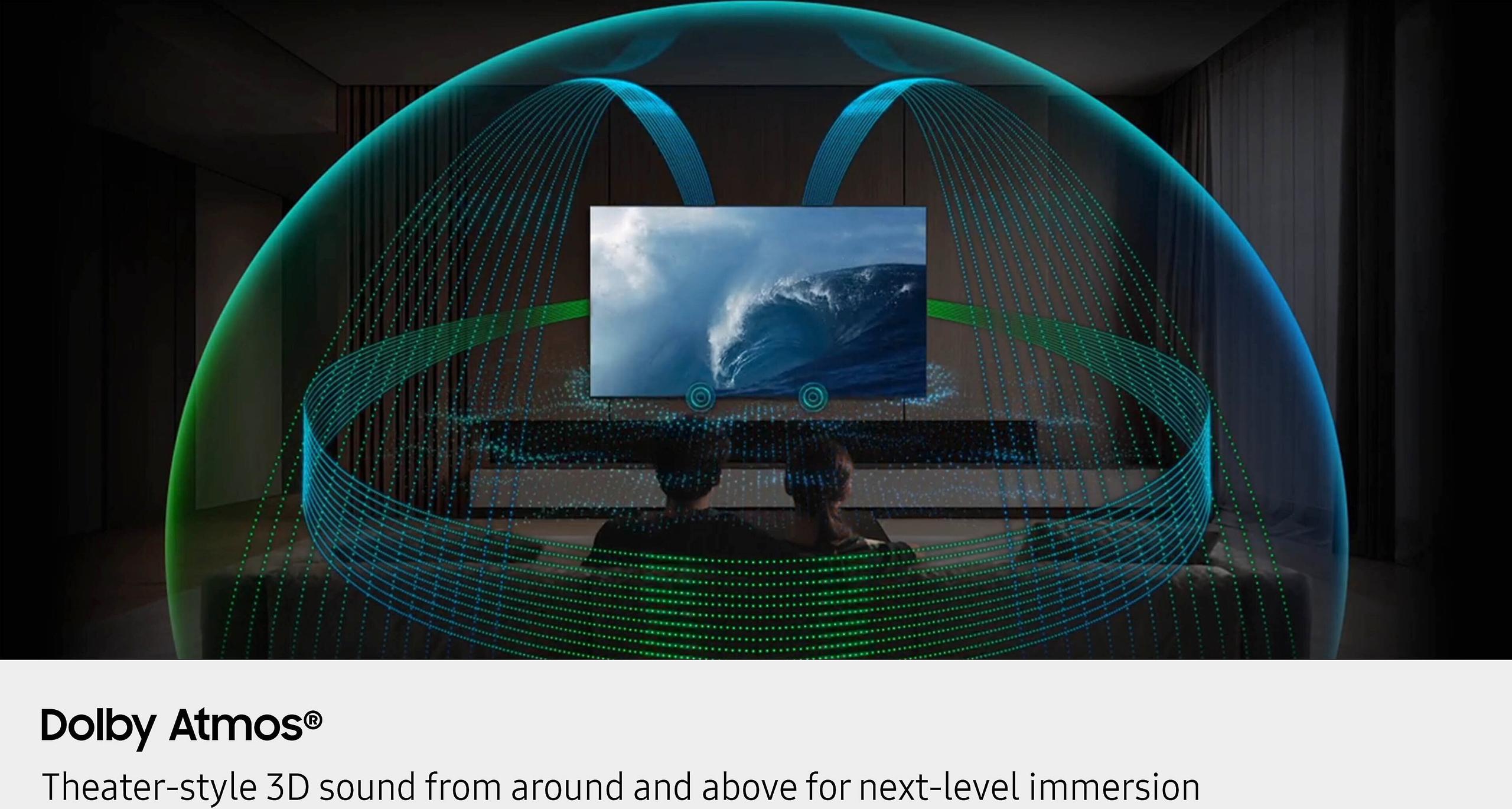
The Samsung QN80F takes a more conventional approach with dedicated speakers and Dolby Atmos support. While it includes Adaptive Sound Pro technology that uses AI to optimize audio based on content type, it doesn't match the unique immersive quality of Sony's screen-based audio system.
For home theater enthusiasts planning to use external sound systems, both TVs support advanced audio formats and can pass through high-quality sound to receivers and soundbars.
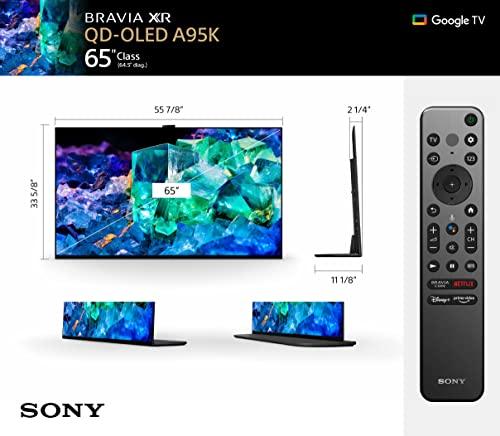
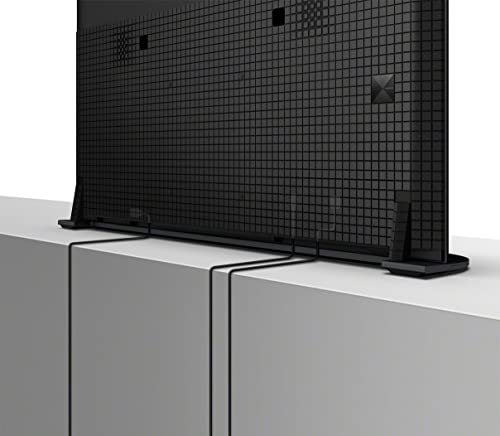
Both manufacturers have created attractive designs, but with different philosophies. The Sony A95K features a minimalist aesthetic with a unique dual-style stand that can be positioned toward the front or back of the TV base, allowing for different visual profiles depending on your furniture setup.
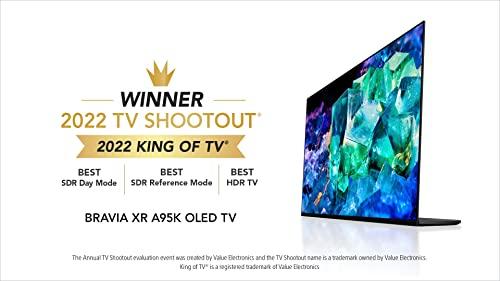
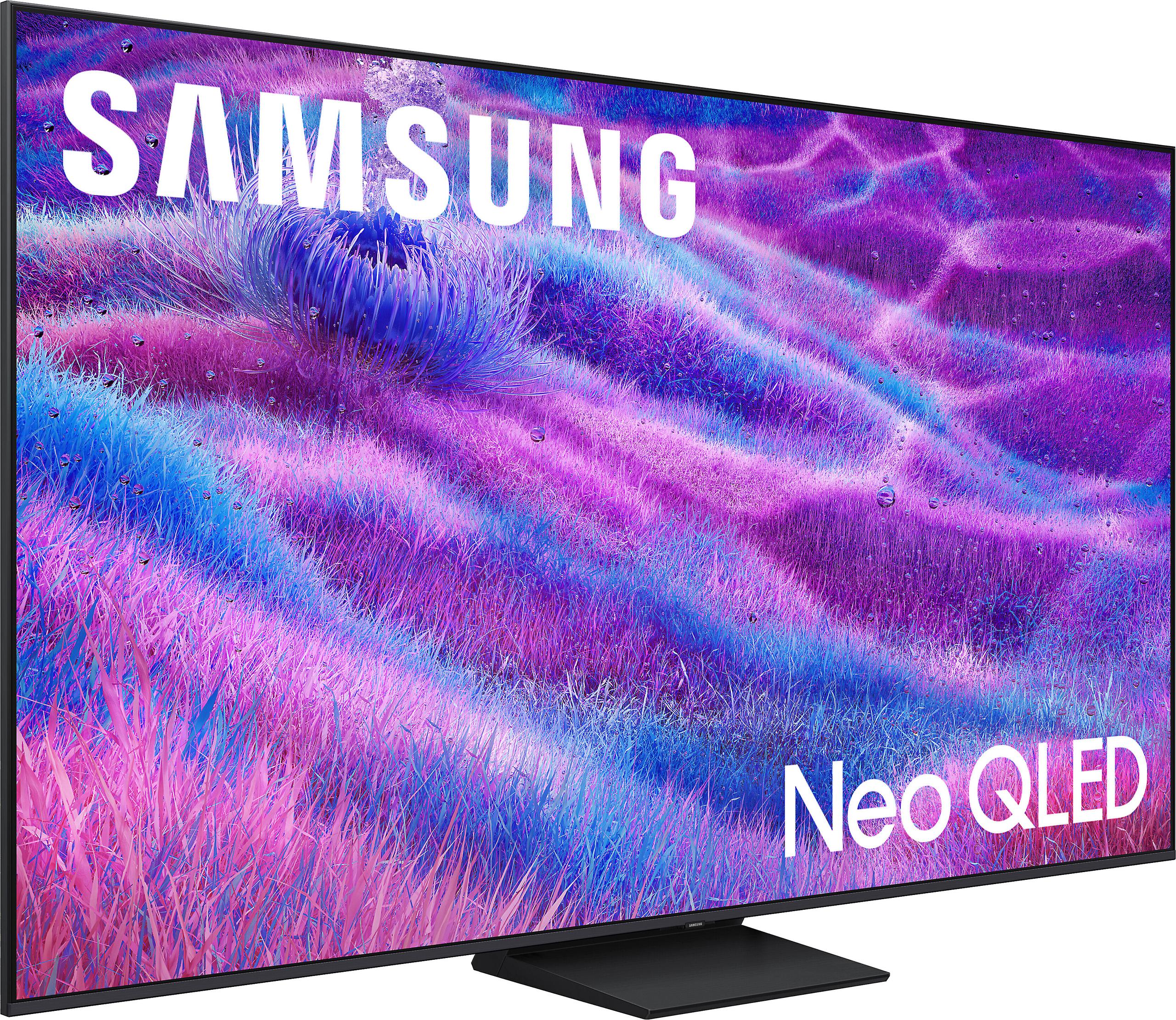
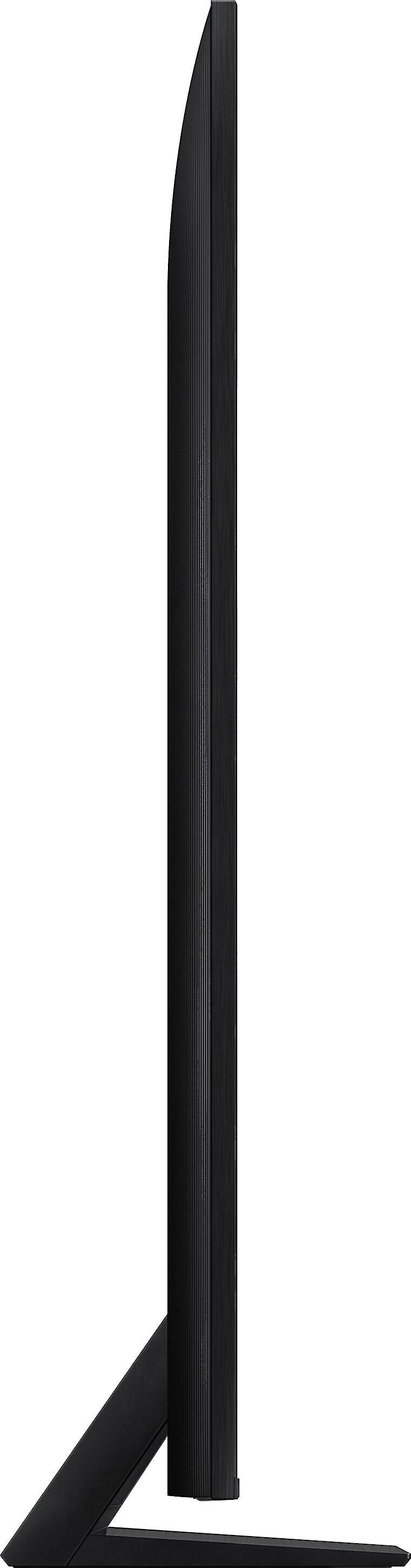
The Samsung QN80F maintains Samsung's sleek design language with clean lines and minimal bezels. Build quality is excellent on both models, though the Sony feels particularly premium given its flagship positioning when released in 2022.
For dedicated home theater setups, the Sony A95K generally provides the superior experience. The perfect blacks create that "floating image" effect that's crucial for cinematic viewing, especially in dark rooms. The wide viewing angles ensure consistent picture quality for multiple seating positions, and the accurate color reproduction means content appears as filmmakers intended.
However, the Samsung QN80F shouldn't be dismissed for home theater use. Its higher peak brightness can make HDR content more impactful, and the four HDMI 2.1 ports provide more flexibility for connecting multiple sources like gaming consoles, streaming devices, and 4K Blu-ray players.
The choice often comes down to your room's lighting conditions. In a dedicated theater room with controlled lighting, Sony's contrast advantages shine. In a multipurpose family room with ambient light, Samsung's brightness capabilities may provide better overall visibility.
At the time of writing, the Sony A95K represents exceptional value as a former flagship model that has seen significant price reductions since its 2022 release. This makes cutting-edge QD-OLED technology accessible at more reasonable price points, though availability may become limited as inventory clears.
The Samsung QN80F, being a current 2025 model, likely commands a premium price but offers the latest features and processing capabilities. The question becomes whether the newest AI features and improved Mini LED implementation justify the price difference.
For long-term ownership, both TVs should provide years of excellent performance. The Sony carries the typical OLED concern about potential burn-in with static content like news tickers or gaming HUDs, though QD-OLED technology shows improved resistance to this issue. Samsung's LCD-based approach eliminates burn-in concerns entirely while potentially offering better longevity for the backlight system.
Choose the Sony Bravia XR A95K if you prioritize absolute picture quality, especially for movie watching and cinematic content. This TV excels in dark or controlled lighting environments where its perfect blacks and superior contrast can truly shine. It's ideal for film enthusiasts, those with dedicated home theater setups, and viewers who want the most immersive audio experience without additional speakers.
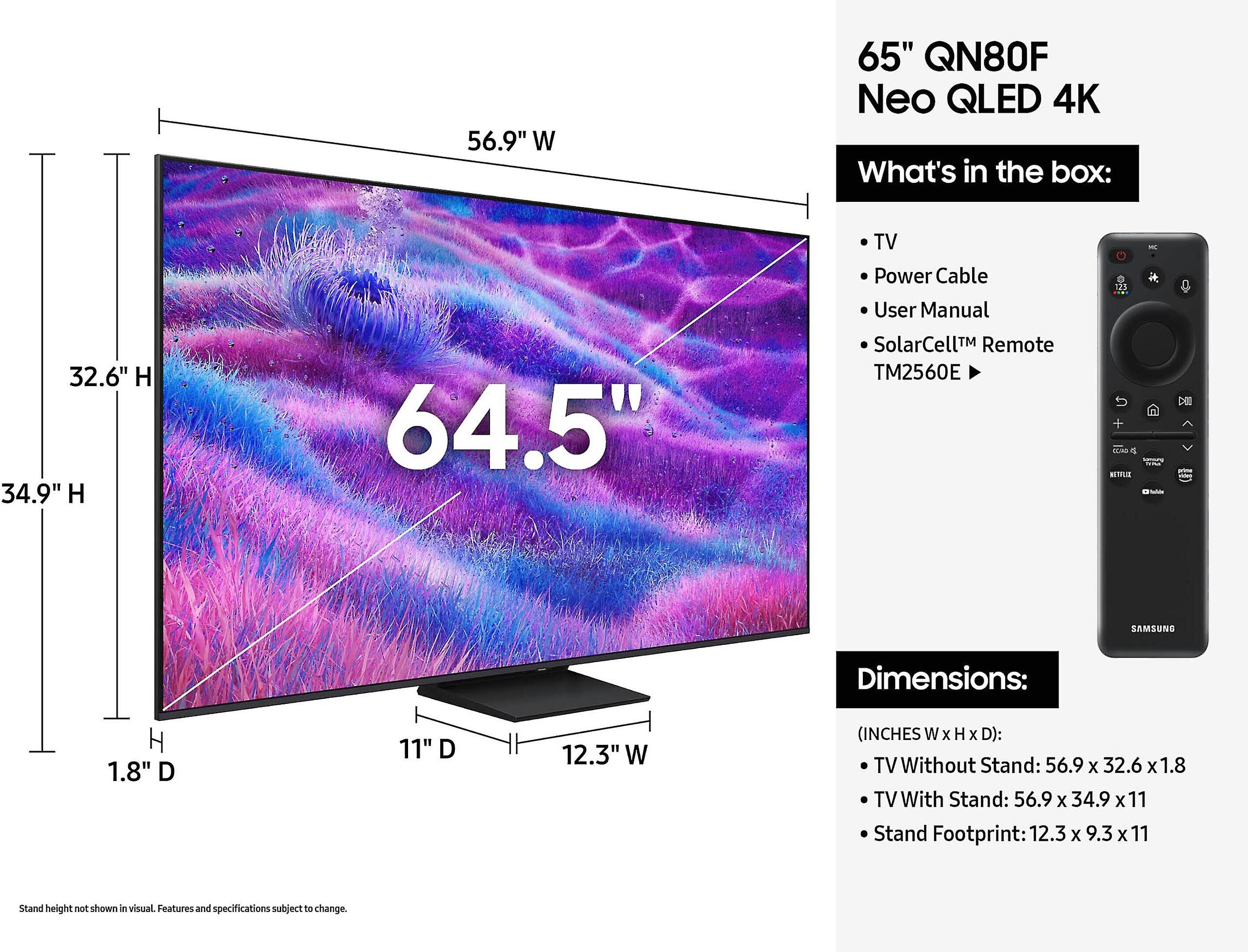
The Samsung 65" QN80F Neo QLED makes more sense for bright rooms, families who watch a lot of daytime TV, and users who want the latest smart features. Its superior brightness makes it more versatile across different lighting conditions, while the four HDMI 2.1 ports provide excellent connectivity for multiple devices.
Ultimately, both represent excellent choices in the premium TV category, with the decision often coming down to your specific viewing environment and priorities. The Sony delivers a more cinematic experience with unmatched contrast, while the Samsung provides a brighter, more feature-rich option that adapts better to varied lighting conditions. Consider your room setup, viewing habits, and feature priorities to determine which approach better suits your needs.
| Sony Bravia XR A95K 65" QD-OLED TV | Samsung 65" QN80F Neo QLED 4K TV |
|---|---|
| Panel Technology - Determines contrast capabilities and viewing experience | |
| QD-OLED (self-emitting pixels with quantum dot enhancement) | Mini LED with Quantum Dot (advanced backlighting with LCD panel) |
| Contrast Ratio - Critical for dark scene detail and cinematic experience | |
| Infinite contrast (perfect blacks, each pixel turns completely off) | High contrast with Mini LED zones (very good but not perfect blacks) |
| Peak Brightness - Essential for HDR impact and bright room viewing | |
| ~400 nits typical (excellent color brightness but lower peak luminance) | 1,000+ nits typical (superior for bright rooms and HDR highlights) |
| Viewing Angles - Important for off-center seating positions | |
| Perfect viewing angles (no color/contrast degradation from any angle) | Limited viewing angles (VA panel shows color shift when viewed off-center) |
| Gaming Features - Key for console and PC gaming performance | |
| 2x HDMI 2.1 ports, 4K@120Hz, VRR, ALLM, excellent pixel response | 4x HDMI 2.1 ports, up to 144Hz VRR, AI Auto Game Mode, Motion Xcelerator |
| Audio Technology - Affects immersive experience without external speakers | |
| Acoustic Surface Audio+ (screen vibrates to produce sound) | Traditional speakers with Dolby Atmos and Adaptive Sound Pro AI |
| Smart Platform - Determines app selection and user interface experience | |
| Google TV with BRAVIA CAM for gesture control and video calls | Samsung Tizen with Vision AI suite including Live Translate and generative features |
| Processor - Handles upscaling and picture optimization | |
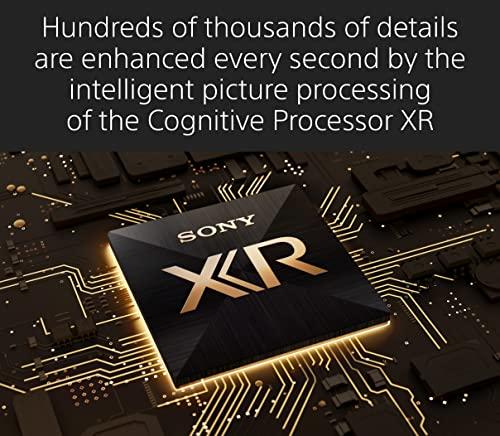
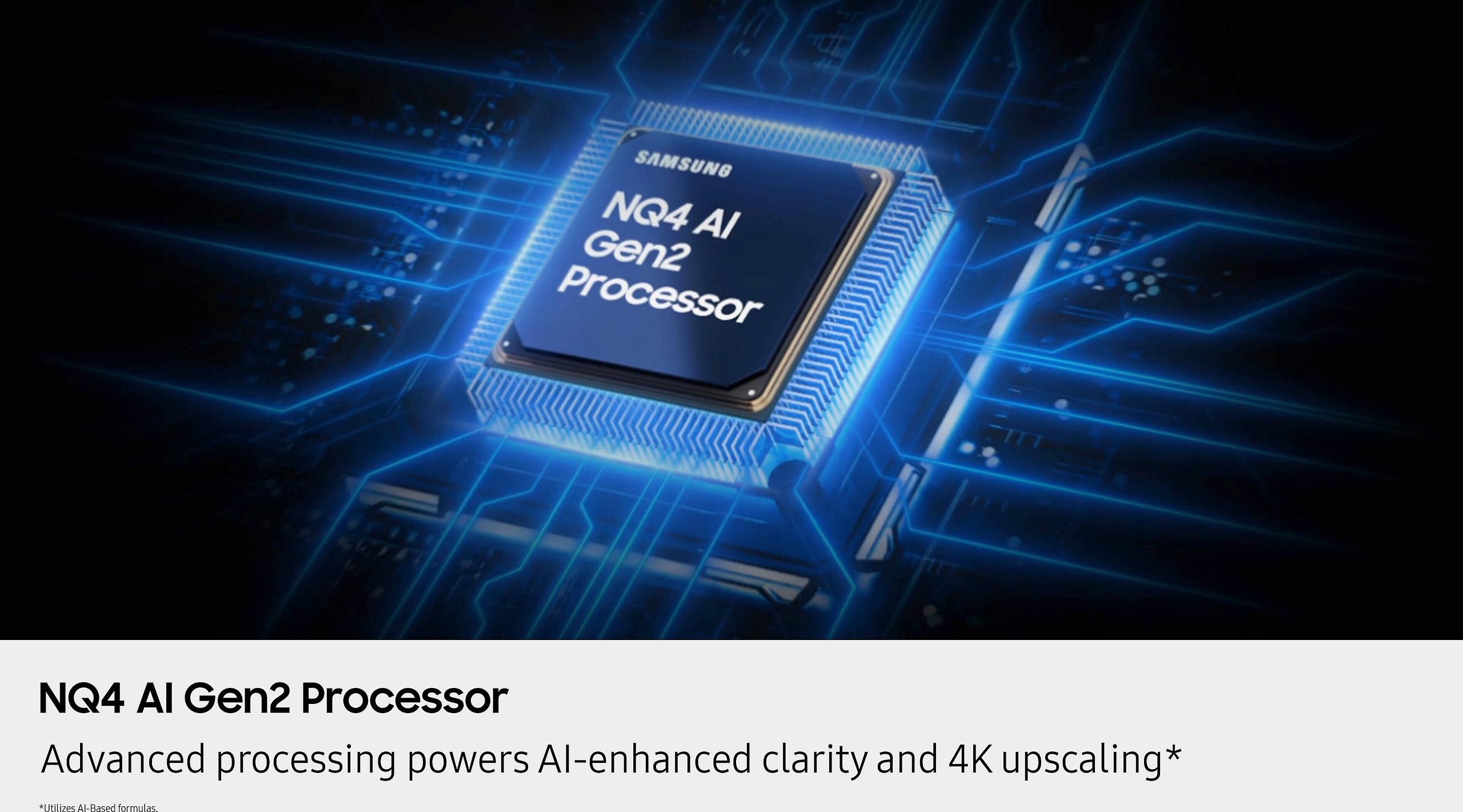
| Cognitive Processor XR (mimics human visual perception) | NQ4 AI Gen2 Processor (advanced AI with 4K upscaling and content optimization) |
| Release Year - Affects price positioning and feature currency | |
| 2022 flagship (mature technology, potential for better pricing) | 2025 current model (latest features but likely higher pricing) |
| Burn-in Resistance - Important for static content like news or gaming HUDs | |
| QD-OLED shows improved resistance but still possible with static content | No burn-in risk due to LCD technology with LED backlighting |
| Motion Handling - Critical for sports and fast-action content | |
| Near-instantaneous pixel response, 120Hz native, excellent for gaming | Motion Xcelerator 144Hz, good processing but slight motion blur possible |
| Color Performance - Affects realism and vibrancy of content | |
| XR Triluminos Max with exceptional color accuracy and natural rendering | Quantum Dot technology with high color volume, may appear oversaturated in default modes |
The Sony Bravia XR A95K 65" QD-OLED TV delivers superior picture quality for movies due to its perfect black levels and infinite contrast ratio. Each pixel can turn completely off, creating true blacks that make dark movie scenes look incredibly realistic. The Samsung 65" QN80F Neo QLED 4K TV offers excellent picture quality too, but can't achieve the same level of contrast due to its LCD panel technology.
QD-OLED in the Sony Bravia XR A95K combines self-emitting OLED pixels with quantum dot enhancement, where each pixel creates its own light. Neo QLED in the Samsung 65" QN80F Neo QLED 4K TV uses thousands of tiny LED backlights behind an LCD panel with quantum dots. The Sony approach provides perfect blacks, while Samsung's method delivers higher peak brightness.
The Samsung 65" QN80F Neo QLED 4K TV performs better in bright rooms due to its higher peak brightness levels, typically exceeding 1,000 nits. This makes HDR content more visible and prevents the washed-out appearance that can affect darker displays. The Sony Bravia XR A95K is better suited for controlled lighting environments where its contrast advantages can shine.
Both TVs support modern gaming, but with different strengths. The Samsung 65" QN80F Neo QLED 4K TV offers four HDMI 2.1 ports and supports refresh rates up to 144Hz, making it ideal for multiple gaming devices. The Sony Bravia XR A95K 65" QD-OLED TV has two HDMI 2.1 ports with excellent pixel response time, perfect for competitive gaming where every millisecond matters.
The Samsung 65" QN80F Neo QLED 4K TV includes Samsung's latest Vision AI suite with features like Live Translate, generative wallpapers, and enhanced Bixby voice control. The Sony Bravia XR A95K runs Google TV with included BRAVIA CAM for gesture controls and video calling. Samsung offers more cutting-edge AI features, while Sony provides a more established smart platform.
The Sony Bravia XR A95K 65" QD-OLED TV features unique Acoustic Surface Audio+ technology that vibrates the entire screen to produce sound, creating an immersive experience where audio appears to come directly from the image. The Samsung 65" QN80F Neo QLED 4K TV uses traditional speakers with Dolby Atmos support and AI-powered sound optimization.
For dedicated home theaters with controlled lighting, the Sony Bravia XR A95K is typically the better choice. Its perfect blacks create that cinematic "floating image" effect crucial for movie watching, and the wide viewing angles ensure consistent picture quality from multiple seating positions. The accurate color reproduction means content appears exactly as filmmakers intended.
The Sony Bravia XR A95K 65" QD-OLED TV has potential burn-in risks with static content like news tickers or gaming HUDs, though QD-OLED technology shows improved resistance compared to traditional OLED. The Samsung 65" QN80F Neo QLED 4K TV has no burn-in concerns due to its LCD-based technology, making it worry-free for varied content consumption.
Value depends on timing and priorities. The Sony Bravia XR A95K, released in 2022, often provides exceptional value as a former flagship with significant price reductions. The Samsung 65" QN80F Neo QLED 4K TV, being a 2025 model, likely commands premium pricing but offers the latest features and processing capabilities.
The Sony Bravia XR A95K 65" QD-OLED TV offers perfect viewing angles with no color or contrast degradation from any position, ideal for wide seating arrangements. The Samsung 65" QN80F Neo QLED 4K TV has limited viewing angles due to its VA panel technology, with noticeable color shifting and contrast reduction when viewed off-center.
Both handle motion well but differently. The Sony Bravia XR A95K benefits from near-instantaneous OLED pixel response time, making fast-moving objects appear crisp without blur. The Samsung 65" QN80F Neo QLED 4K TV includes Motion Xcelerator 144Hz technology designed to reduce blur while maintaining natural motion, though some slight motion artifacts may still occur.
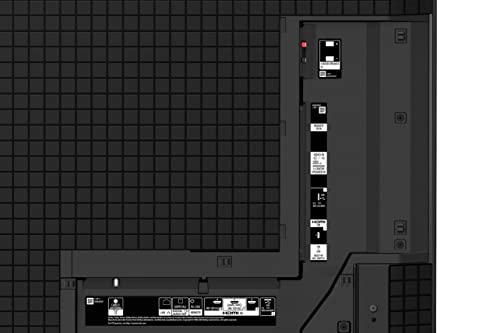
The Samsung 65" QN80F Neo QLED 4K TV provides superior connectivity with four HDMI 2.1 ports, ideal for households with multiple gaming consoles, streaming devices, and other high-bandwidth sources. The Sony Bravia XR A95K 65" QD-OLED TV offers two HDMI 2.1 ports plus two HDMI 2.0 ports, which may require more careful device management for users with many connected devices.
We've done our best to create useful and informative comparisons to help you decide what product to buy. Our research uses advanced automated methods to create this comparison and perfection is not possible - please contact us for corrections or questions. These are the sites we've researched in the creation of this article: tomsguide.com - audioadvice.com - wepc.com - bestbuy.com - tvsbook.com - rtings.com - youtube.com - flatpanelshd.com - rtings.com - youtube.com - reviewed.com - avsforum.com - youtube.com - youtube.com - rtings.com - youtube.com - electronics.sony.com - sonypremiumhome.com - valueelectronics.com - sony.com - displayspecifications.com - flatpanelshd.com - donstv.com - youtube.com - businessinsider.com - youtube.com - displayspecifications.com - bestbuy.com - samsung.com - theshortcut.com - youtube.com - bestbuy.com - rtings.com - samsung.com - samsung.com - samsung.com - sargentappliance.com - displayspecifications.com - bestbuy.com

Privacy Policy
Terms and Conditions - Affiliate Policy
Home Security
© Copyright 2008-2026.
11816 Inwood Rd #1211, Dallas, TX 75244