

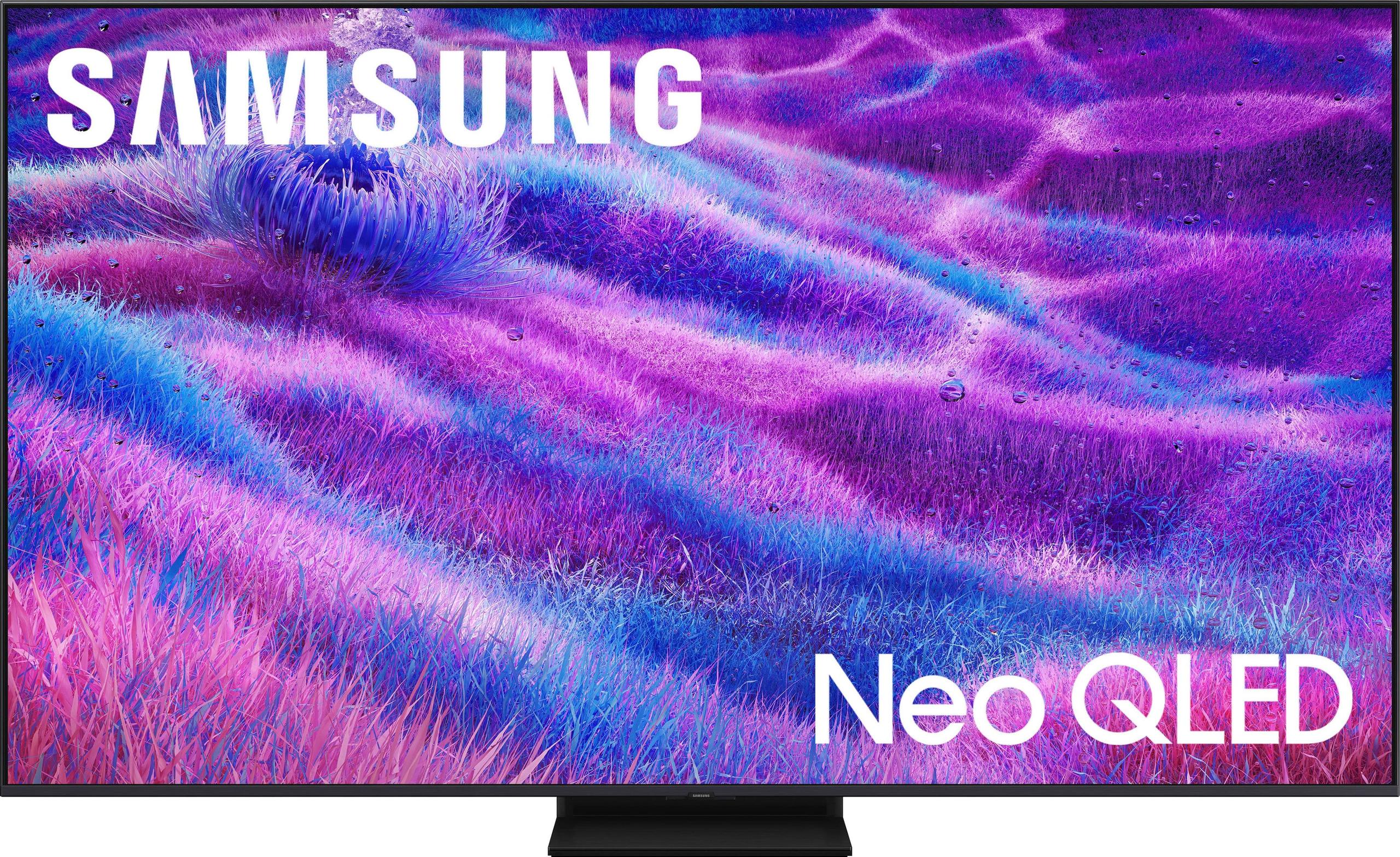
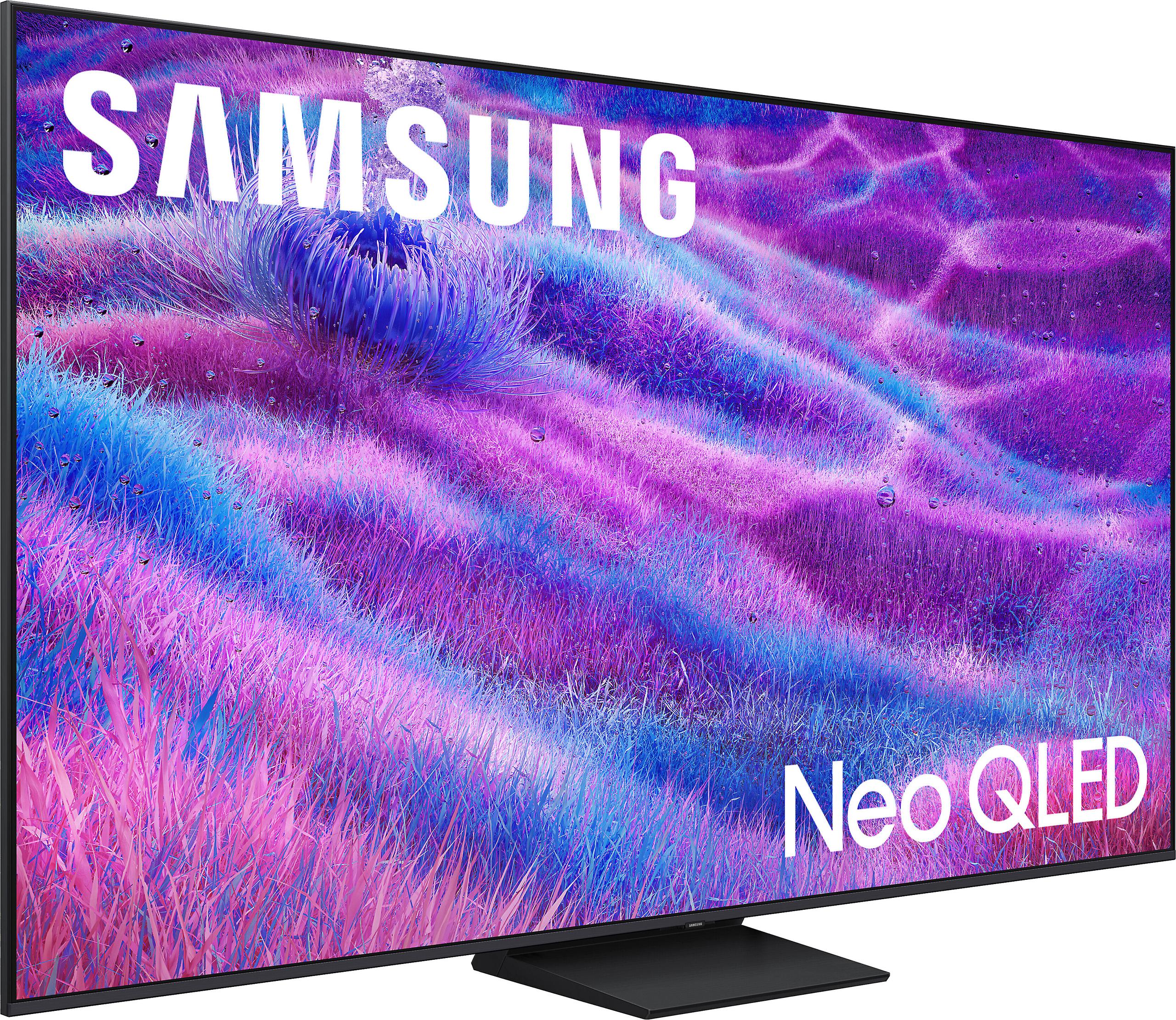
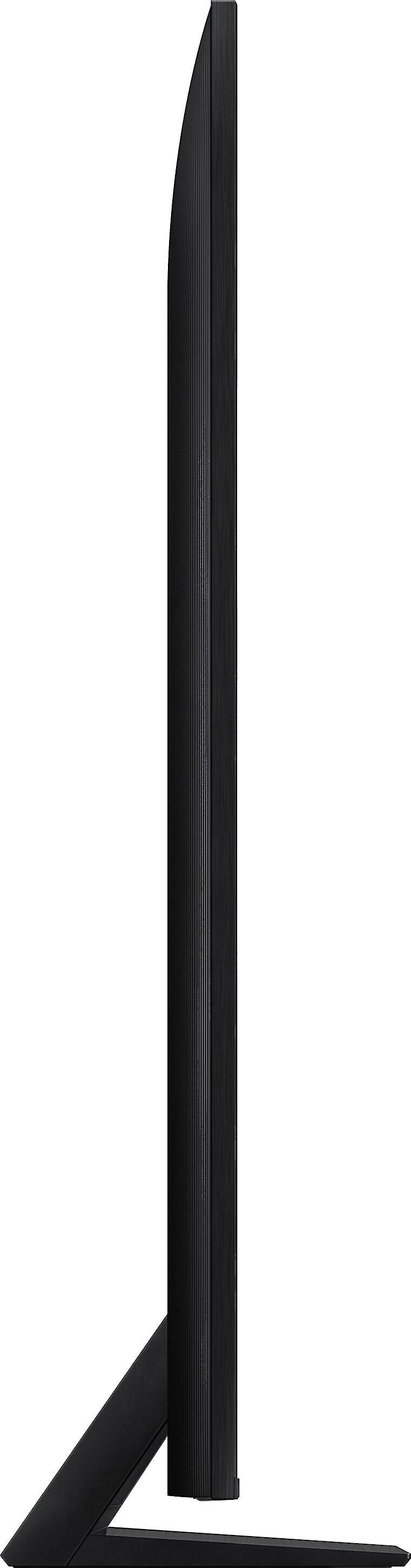
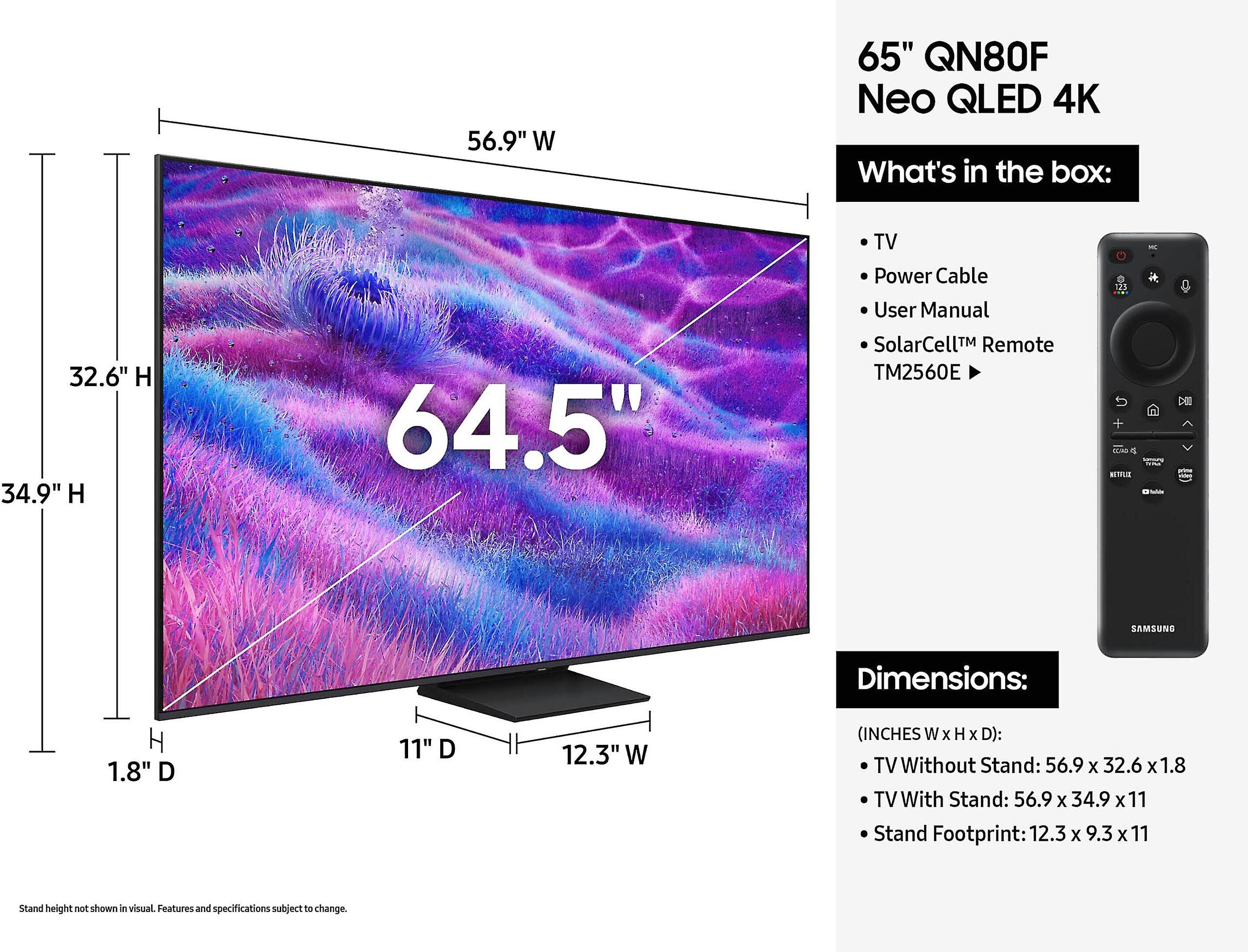
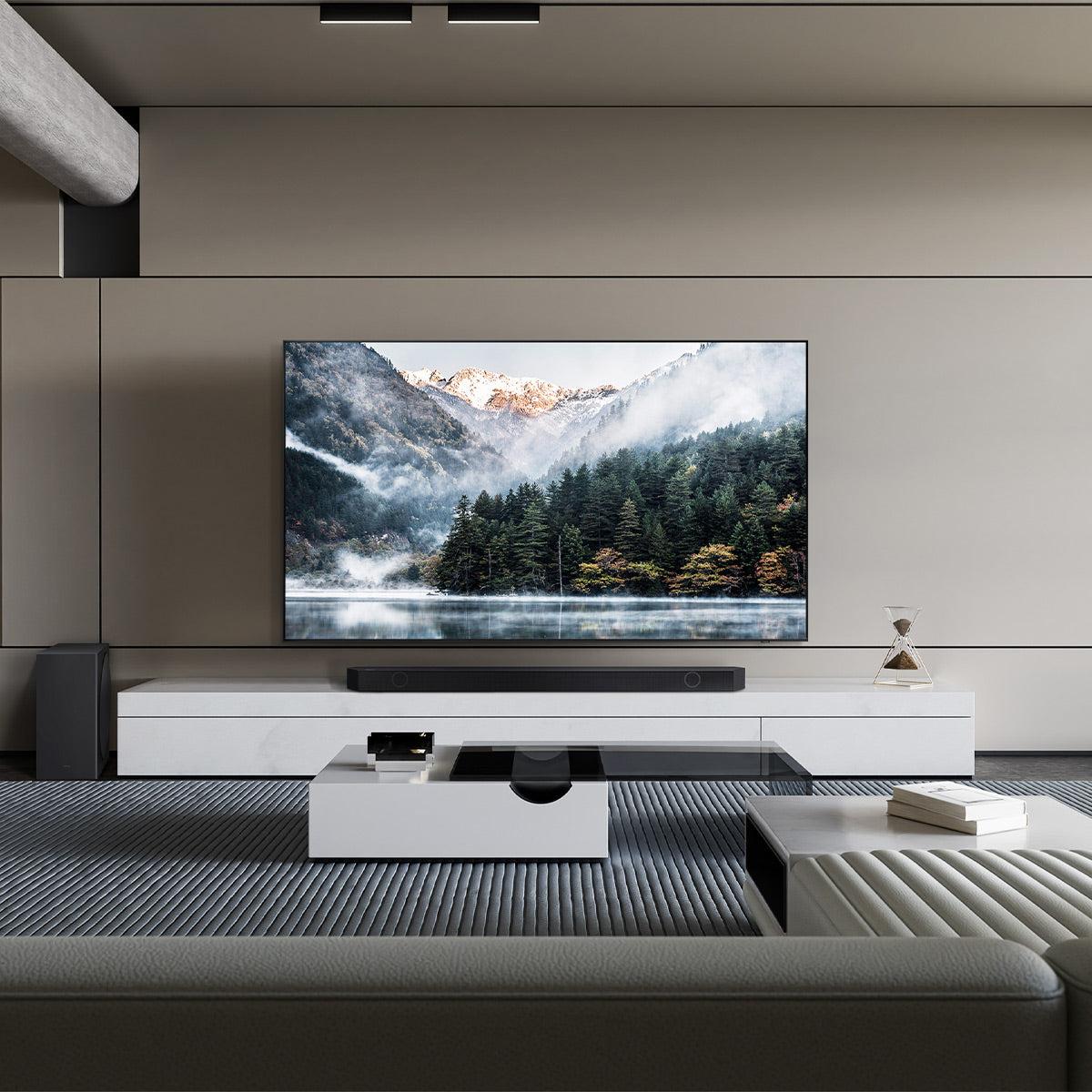
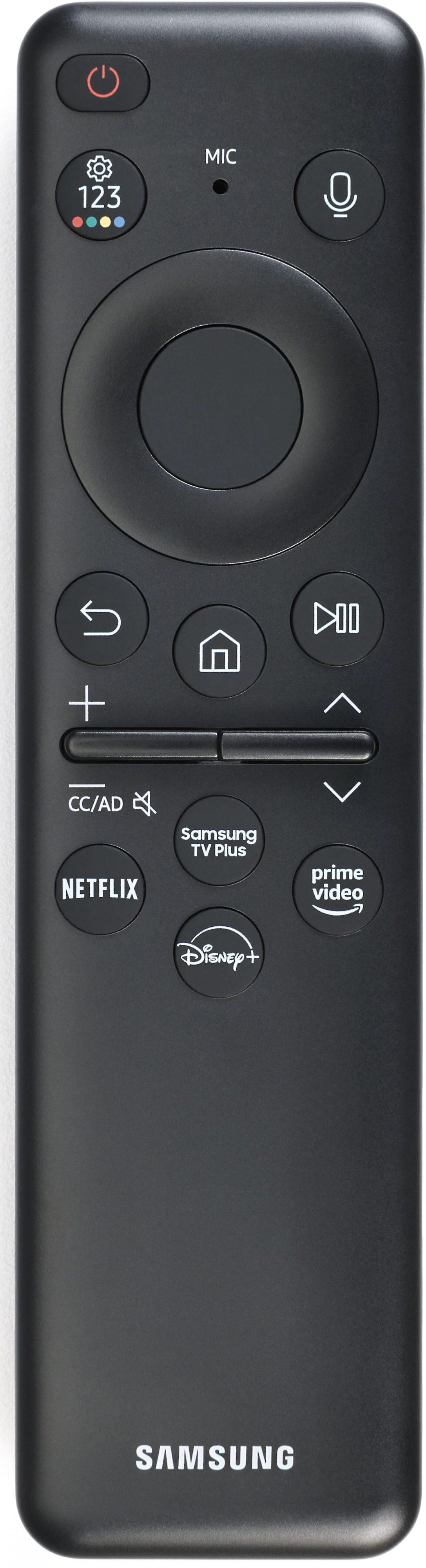
If you're shopping for a premium 65-inch TV, you've probably noticed that Samsung offers some compelling options across different display technologies. Today, we're diving deep into two standout models: the Samsung 65" QN80F Neo QLED and the Samsung 65" S95D OLED. These represent fundamentally different approaches to creating stunning pictures, and understanding their differences will help you make the right choice for your home.
Before we jump into specifics, let's talk about what makes a premium TV worth your investment. At this level, you're not just buying a bigger screen – you're getting advanced display technologies that can transform how you experience movies, games, and everyday content.
The two main players in the premium TV space are Mini-LED backlit LCD (what Samsung calls Neo QLED) and OLED displays. Think of Mini-LED as the evolution of traditional LCD technology, using thousands of tiny LED lights behind the screen for precise brightness control. OLED, on the other hand, is a completely different beast where each pixel creates its own light and can turn completely off for perfect blacks.
Both approaches have their strengths, and your choice depends heavily on your viewing environment, content preferences, and what aspects of picture quality matter most to you.
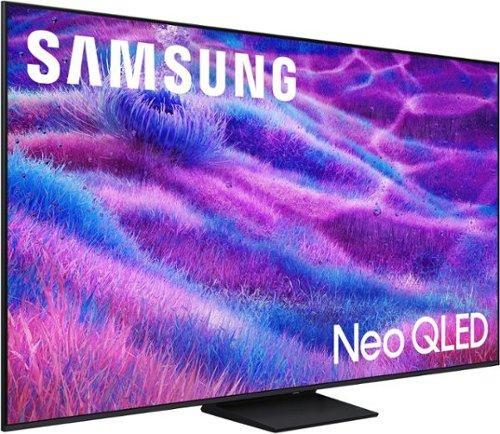
The Samsung QN80F Neo QLED represents Samsung's 2025 take on premium Mini-LED technology. However, there's an important caveat here – this model is part of the QN800 series that Samsung discontinued in 2025 as they shifted focus away from certain LCD offerings. While this might sound concerning, it doesn't necessarily mean it's a bad TV; it's more about Samsung's strategic direction in the market.
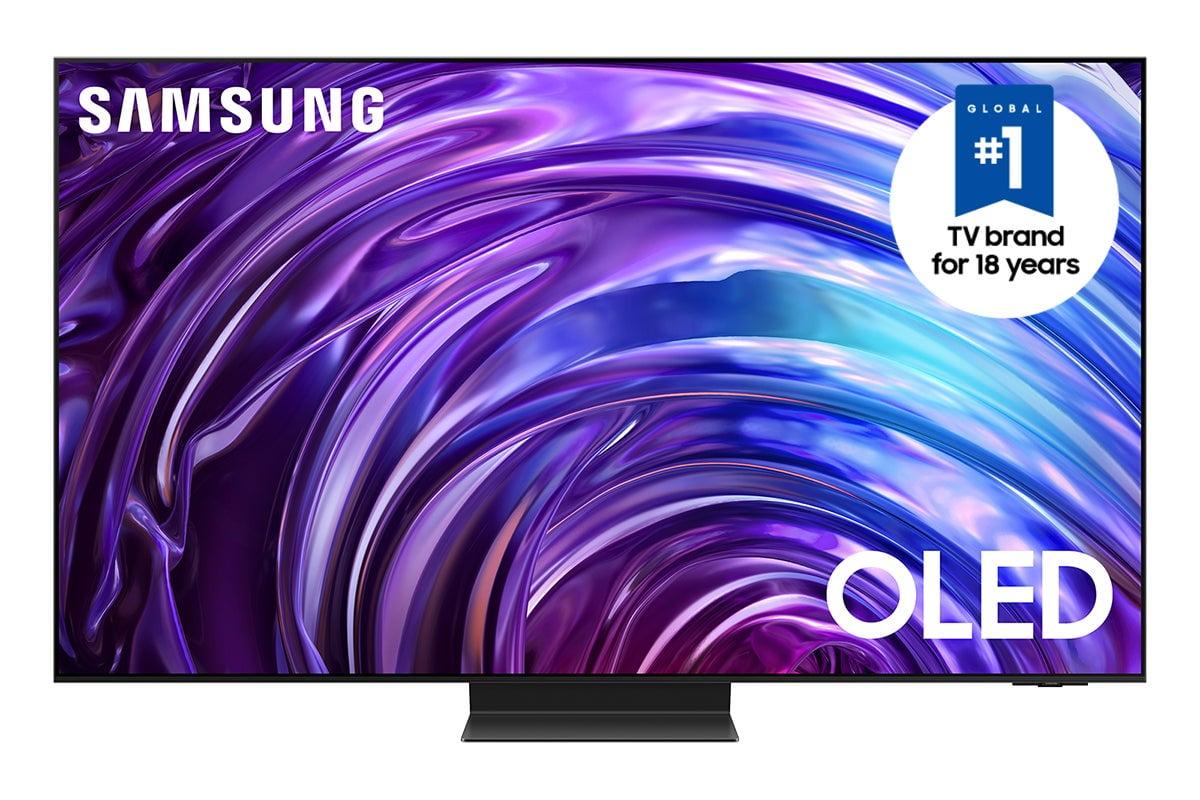
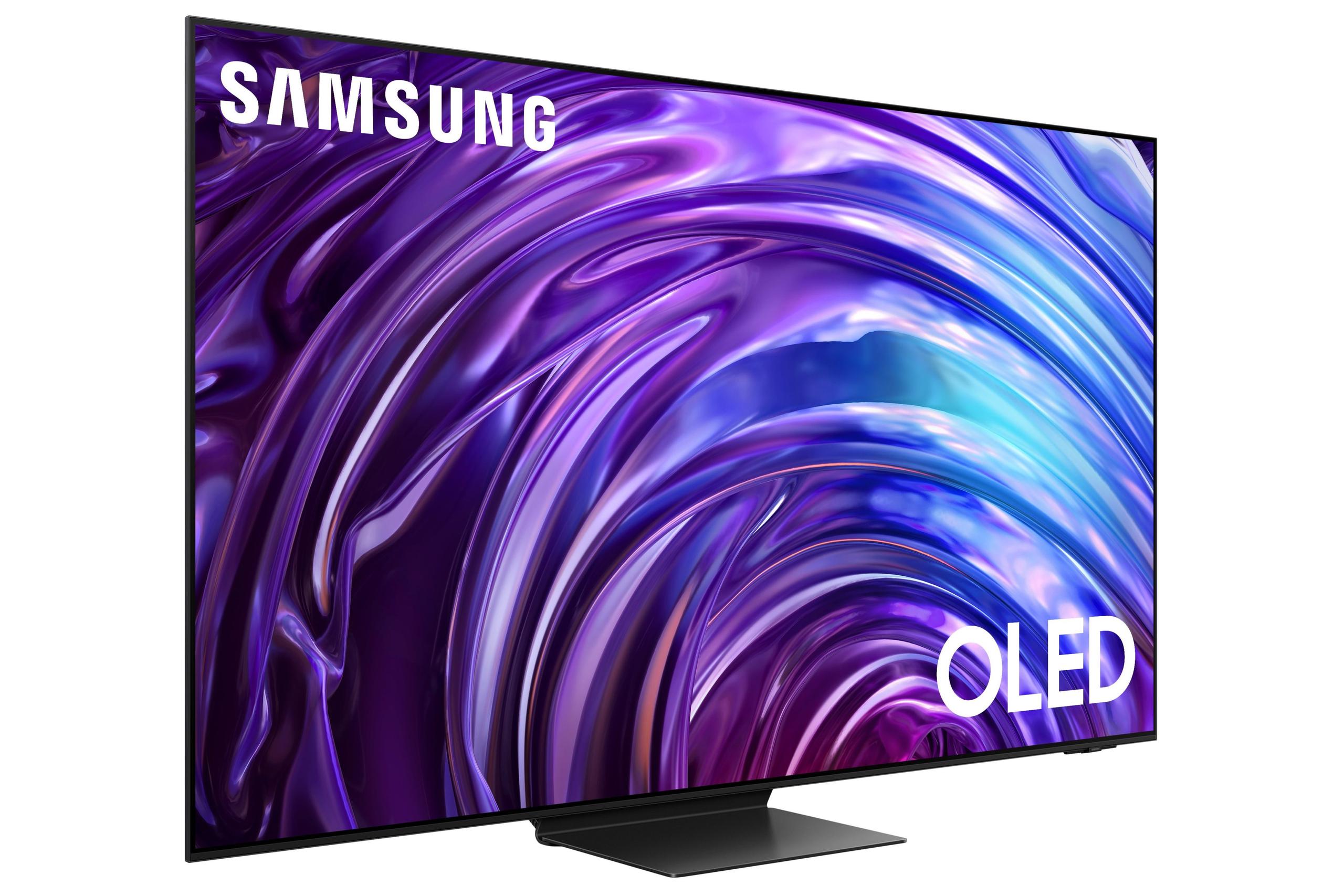
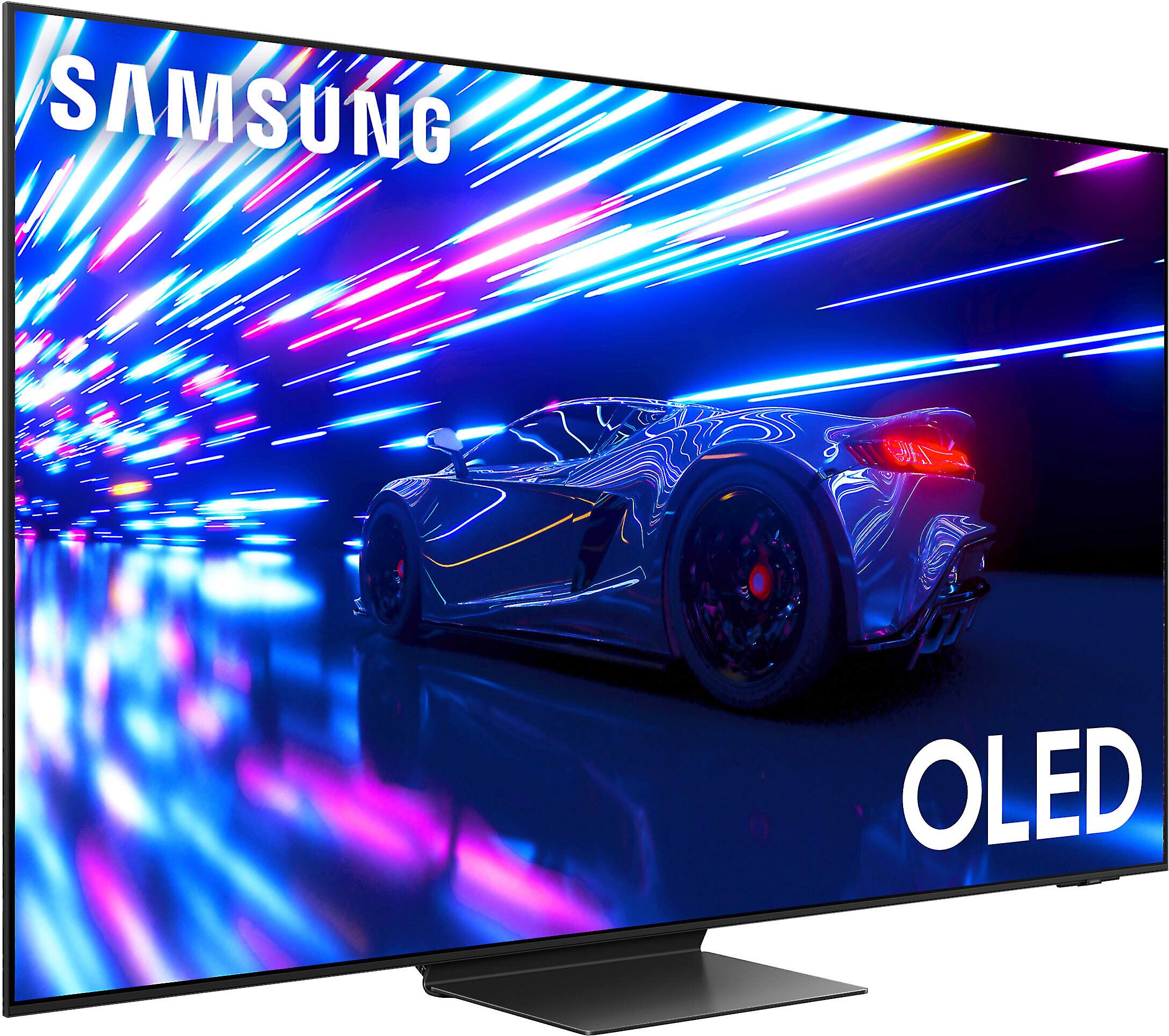
The Samsung S95D OLED, released in 2024, sits at the opposite end of the spectrum as Samsung's flagship OLED model for that year. It showcases their QD-OLED technology, which combines the perfect blacks of OLED with the color richness of quantum dots.
Here's where things get really interesting. The fundamental difference between these TVs lies in how they create light and color.
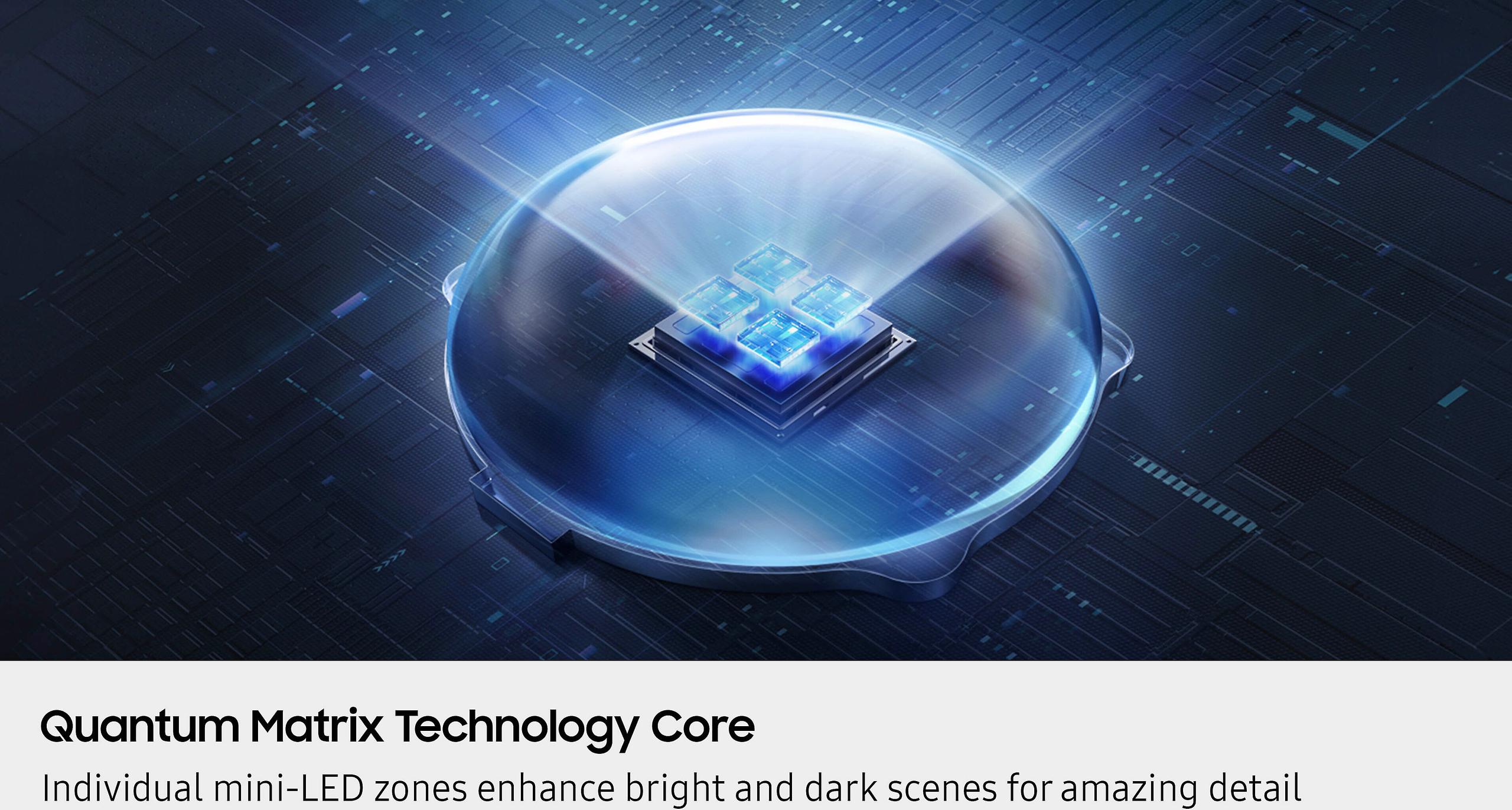
The QN80F Neo QLED uses Mini-LED backlighting, which means thousands of tiny LEDs sit behind the LCD panel, organized into dimming zones. When you're watching a scene with a bright explosion against a dark sky, these zones can dim independently to create better contrast. It's like having thousands of tiny flashlights that can adjust their brightness based on what's happening on screen. The "Neo" designation indicates Samsung's most advanced version of this technology, with more precise control than standard LED TVs.
The quantum dot layer adds another dimension by converting the LED backlight into more accurate colors. Think of quantum dots as tiny color converters that take blue LED light and transform it into precise reds and greens, resulting in more vibrant and accurate colors than traditional LCD displays.
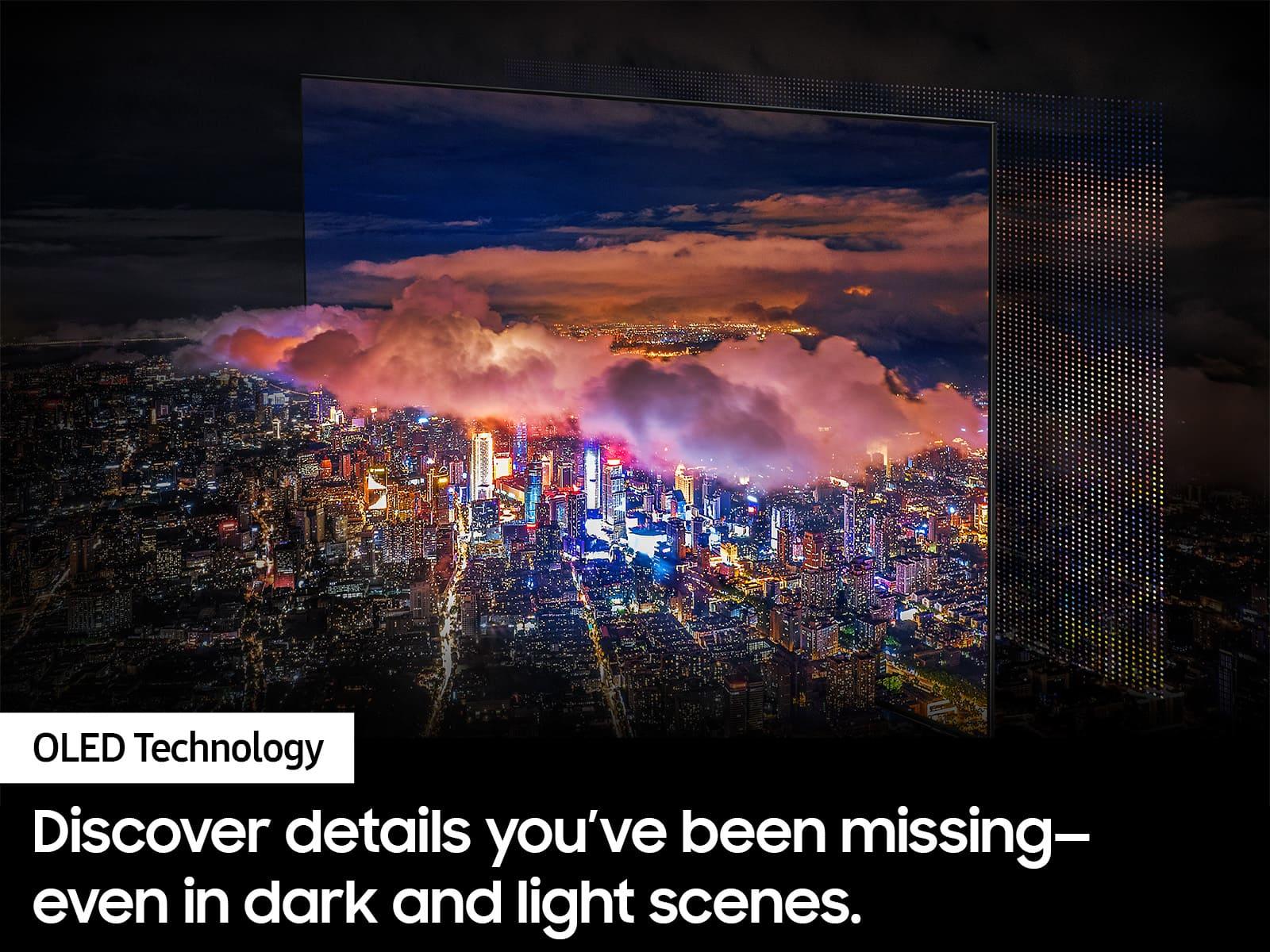
Meanwhile, the S95D OLED takes a completely different approach. Each pixel is essentially a tiny light bulb that can turn on, off, or dim independently. When displaying a starry night sky, the black areas between stars are truly black because those pixels are completely off – not just dimmed. This creates what we call "infinite contrast ratio," something LCD technology simply cannot achieve regardless of how many dimming zones it has.
The "QD" in QD-OLED stands for quantum dot, and Samsung has cleverly combined quantum dot technology with OLED panels. This hybrid approach aims to deliver OLED's perfect blacks while boosting color volume and brightness beyond what traditional OLED can achieve.
When it comes to contrast performance, the S95D OLED has a clear advantage in dark room scenarios. I've spent countless hours watching movies in darkened home theaters, and nothing quite matches the way an OLED can make dark scenes come alive. When watching something like "Blade Runner 2049," the neon signs pop against the truly black backgrounds in a way that makes the image feel three-dimensional.
However, the QN80F Neo QLED fights back with superior peak brightness. In a bright living room with windows, this higher brightness capability means HDR highlights can still punch through ambient light effectively. If you're watching a sunny beach scene at 2 PM with natural light streaming in, the Neo QLED will likely deliver a more impactful image.
Color accuracy and volume represent interesting trade-offs between these technologies. Both use quantum dot technology, but apply it differently. The S95D has been Pantone-validated, meaning its colors have been professionally calibrated to match industry standards. In my experience, this translates to more natural skin tones and accurate color reproduction that doesn't fatigue your eyes during long viewing sessions.
The QN80F delivers impressive color volume too, and its higher brightness means it can display vibrant colors even in bright scenes. However, LCD technology inherently struggles with maintaining color accuracy at extreme brightness levels, while OLED maintains consistent color regardless of brightness.
High Dynamic Range (HDR) – the technology that expands the range between the darkest and brightest parts of an image – performs differently on each display type.
The S95D OLED excels at the shadow detail side of HDR. Because it can display true blacks, you'll see details in dark areas that other TVs might crush to complete darkness. When watching "The Batman," you can actually make out details in the shadowy corners of scenes that would be invisible on most other displays.
The QN80F Neo QLED shines (literally) with bright HDR highlights. Sun reflections on water, car headlights, or bright explosions can reach much higher brightness levels than OLED can achieve. This creates more impactful "wow" moments in HDR content, especially in bright viewing environments.
Both TVs support advanced HDR formats, but the implementation differs. The S95D's OLED HDR Pro focuses on expanding the color gamut and optimizing the tone mapping for OLED's unique characteristics. The QN80F's approach emphasizes making the most of its brightness advantage while managing the inherent limitations of LCD contrast.
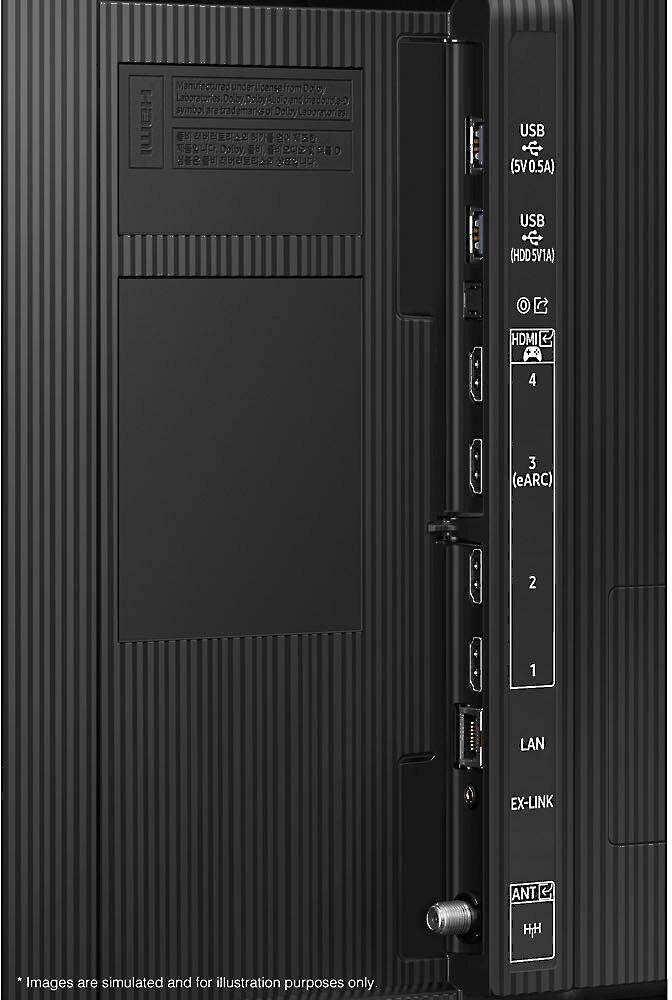
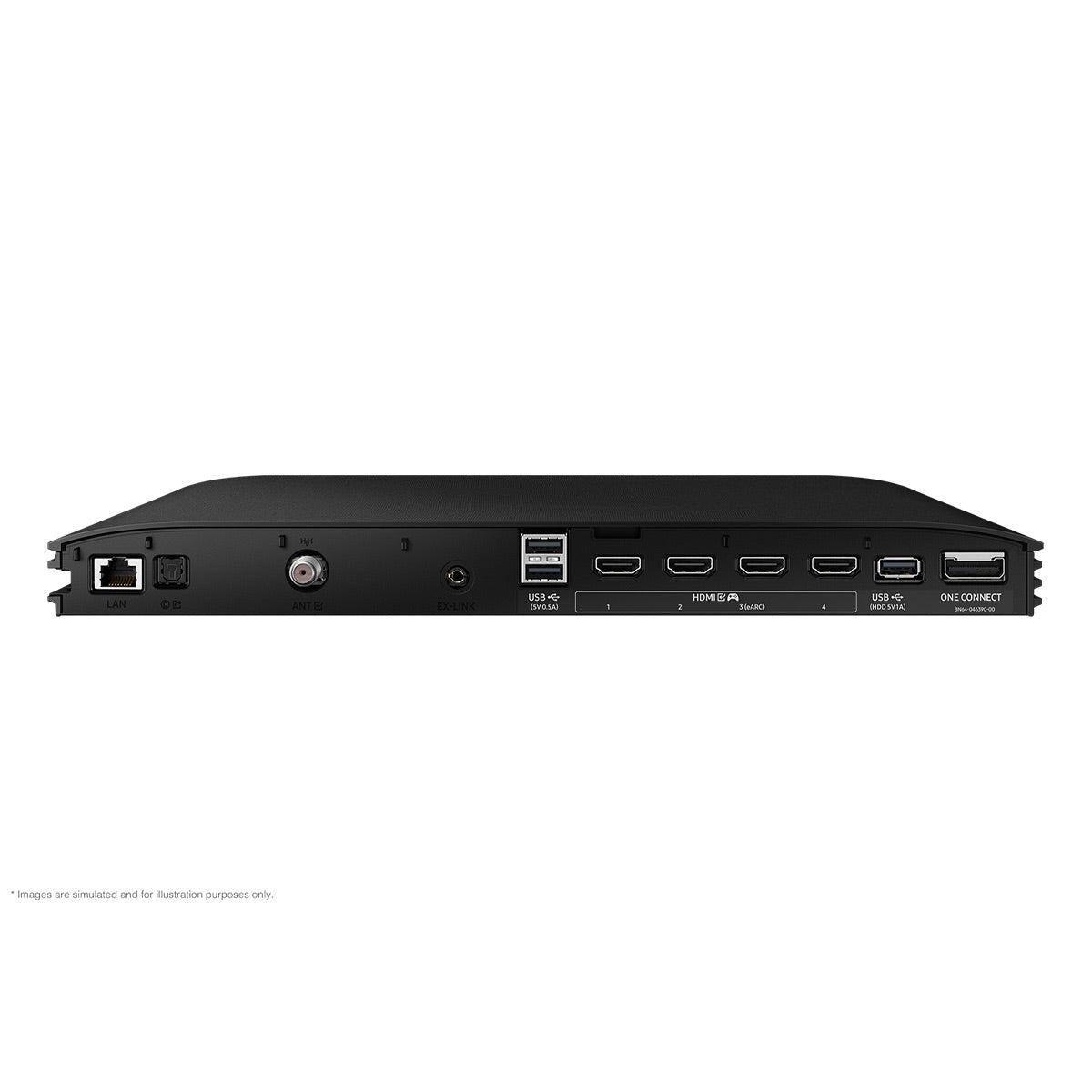
Modern gaming demands have transformed TV requirements, and both models deliver impressive gaming credentials. Each offers four HDMI 2.1 ports, which is crucial for connecting next-gen consoles, PCs, and other high-bandwidth devices without compromise.
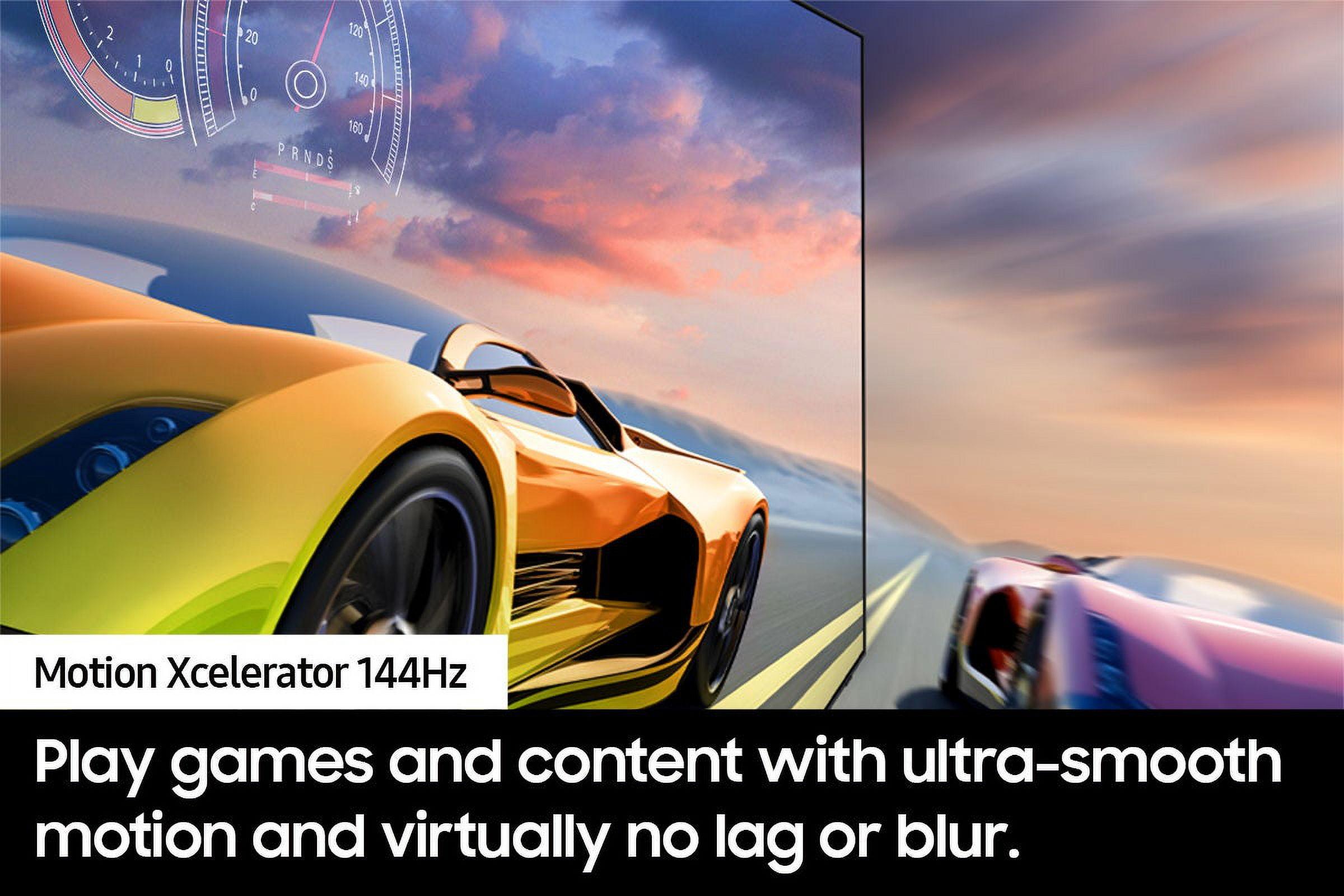
Variable Refresh Rate (VRR) – technology that matches the TV's refresh rate to your gaming device's output frame rate – works excellently on both models, supporting up to 144Hz. This eliminates screen tearing and stuttering, creating smoother gameplay whether you're playing competitive shooters or exploration games.
Input lag – the delay between pressing a button and seeing the action on screen – measures around 9 milliseconds on both TVs in game mode. That's exceptional performance that puts these TVs among the best gaming displays available.
The key gaming difference lies in content considerations. The S95D OLED delivers superior motion clarity and response times, making fast-paced games feel incredibly responsive. However, if you play games with static elements like health bars or maps for extended periods, the QN80F Neo QLED eliminates any burn-in concerns that might develop over years of use.
For home theater gaming setups, the S95D's perfect blacks create incredible immersion in games with dark environments. Playing something like "Resident Evil" or "Dead Space" in a darkened room on OLED creates an almost unmatched sense of tension and atmosphere.
This is perhaps the most crucial factor in choosing between these technologies, and it's where personal experience really matters.
The S95D OLED includes Samsung's controversial anti-glare matte coating. In my testing, this coating dramatically reduces reflections from windows and lights, which has traditionally been OLED's biggest weakness in bright rooms. However, some viewers find that the matte finish slightly softens image sharpness compared to glossy screens. It's a trade-off that works well for most people, but it's worth seeing in person if possible.
The QN80F Neo QLED uses a traditional glossy screen that can show reflections but maintains maximum image sharpness. Its higher peak brightness means it can overcome ambient light through sheer power rather than reflection reduction.
For dark room viewing – the classic home theater scenario – the S95D OLED provides an experience that's simply magical. The way it renders star fields in space movies or candlelit scenes in period dramas creates a sense of depth and realism that LCD technology cannot match.
For bright room viewing, the QN80F Neo QLED traditionally held advantages, though the S95D's matte coating has narrowed this gap considerably. If your TV faces large windows or you primarily watch during daylight hours, both can work well, but the Neo QLED might edge ahead in extreme brightness scenarios.
Both TVs run Samsung's Tizen operating system, which has matured into one of the most comprehensive smart TV platforms available. The interface is intuitive, app selection is extensive, and performance is snappy.
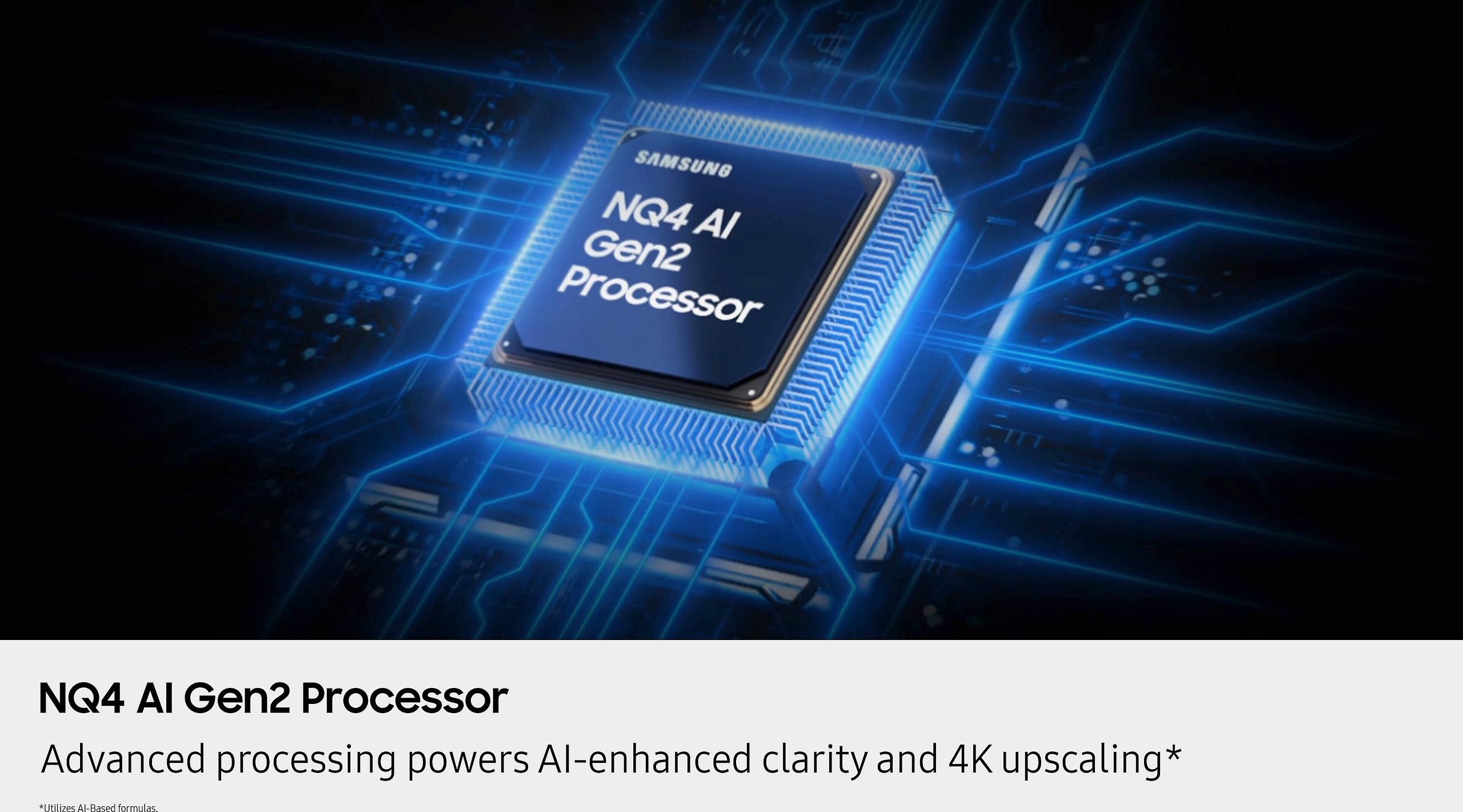
The processing power differs significantly. The S95D uses Samsung's NQ4 AI Gen2 processor, which leverages artificial intelligence for picture optimization, upscaling, and sound processing. In practice, this means lower-resolution content gets intelligently enhanced, and the TV adapts its settings based on what you're watching.
The QN80F also features the NQ4 AI Gen2 processor with similar capabilities. However, the discontinued status of the QN800 series raises questions about long-term software support and feature updates.
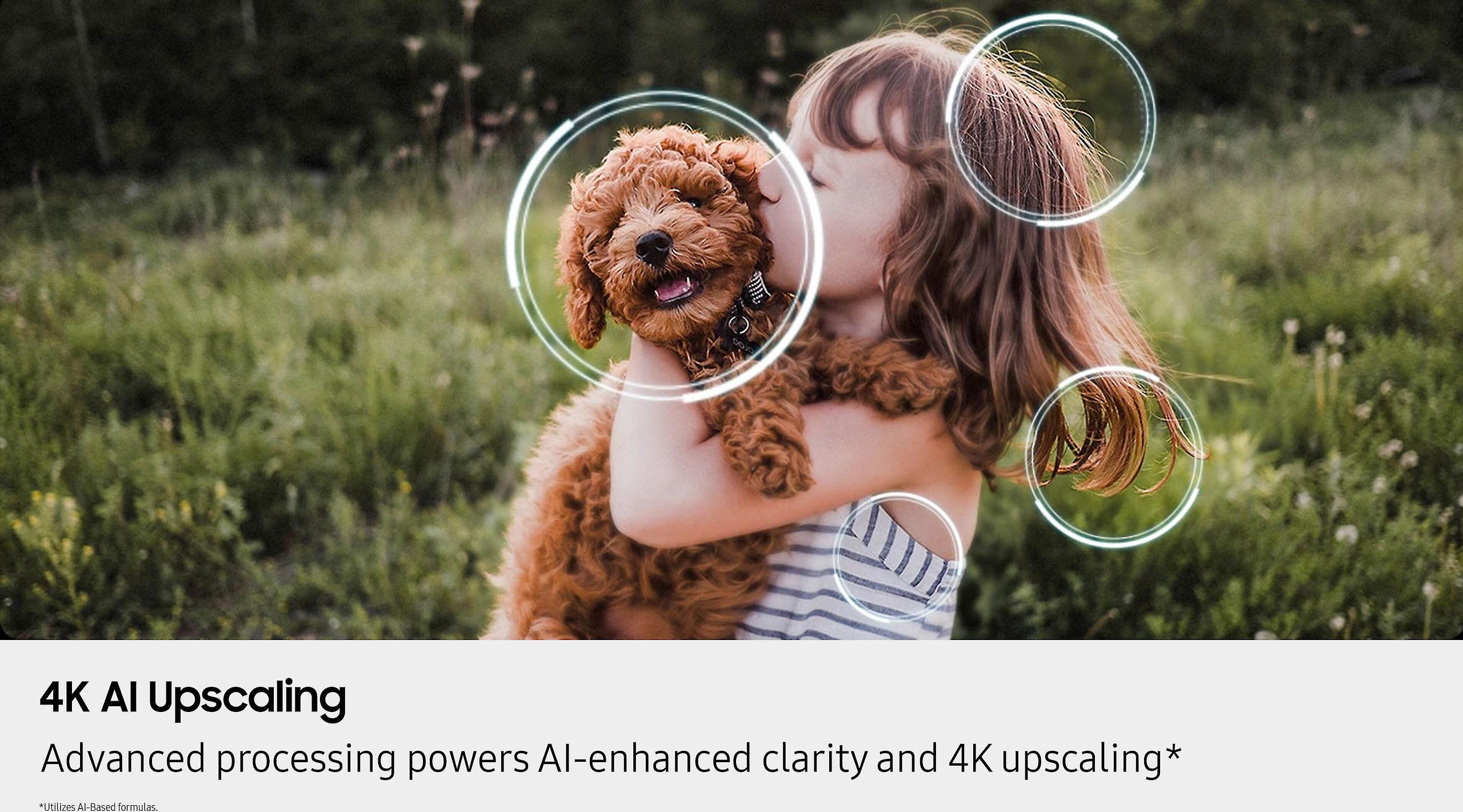
4K AI Upscaling works impressively on both models, transforming 1080p content into sharp, detailed images that look surprisingly good on these large screens. The AI processing analyzes the content in real-time and applies appropriate sharpening, noise reduction, and detail enhancement.
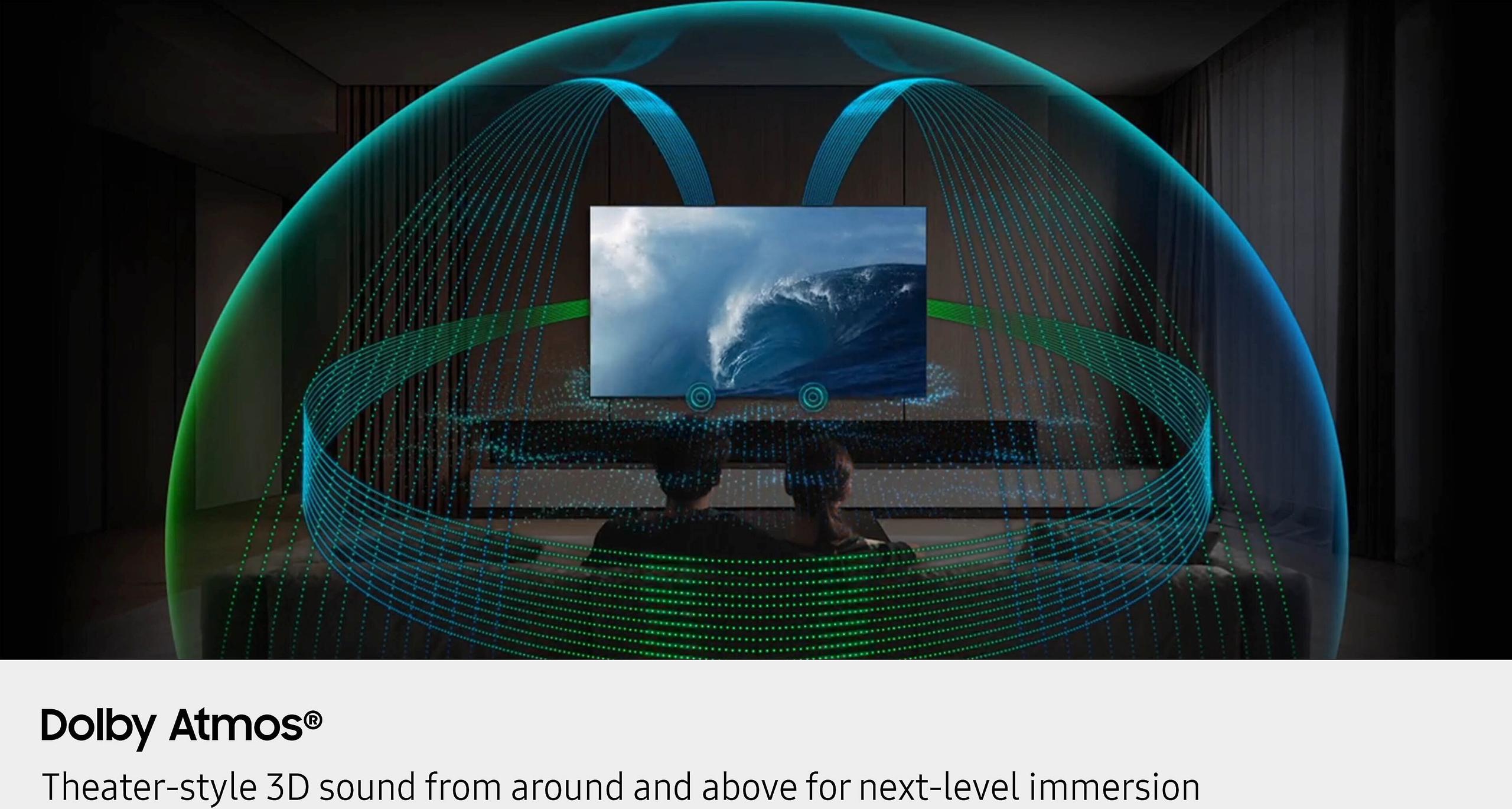
Both TVs support Dolby Atmos, the surround sound format that adds height channels for more immersive audio. However, their implementation differs.
The S95D OLED features Object Tracking Sound+, which attempts to move audio around the screen to match visual action. When a car drives across the screen, the sound follows it. While TV speakers can never replace a proper surround sound system, this feature adds a noticeable sense of immersion for casual viewing.
The QN80F Neo QLED includes similar audio processing but without the advanced object tracking capabilities. For serious home theater use, you'll likely want to add a soundbar or surround sound system regardless of which TV you choose.
At the time of writing, these TVs represent different value propositions. The S95D OLED commands a premium that reflects its flagship status and advanced OLED technology, while the QN80F Neo QLED offers high-end features at a more accessible price point.
However, the QN80F's discontinued status complicates the value equation. While you might find attractive pricing due to clearance sales, you're potentially sacrificing long-term software support and future feature updates. For a major purchase like a premium TV that you'll likely keep for 5-7 years, this matters more than initial savings might suggest.
The S95D represents a safer long-term investment despite the higher initial cost. Samsung's commitment to their OLED lineup means continued software support, feature updates, and better resale value down the road.
For dedicated home theater setups, picture quality in dark environments becomes paramount. The S95D OLED delivers an experience that approaches what you'd see in a commercial cinema. The perfect blacks allow for precise shadow detail, while the quantum dot enhancement provides vibrant colors without oversaturation.
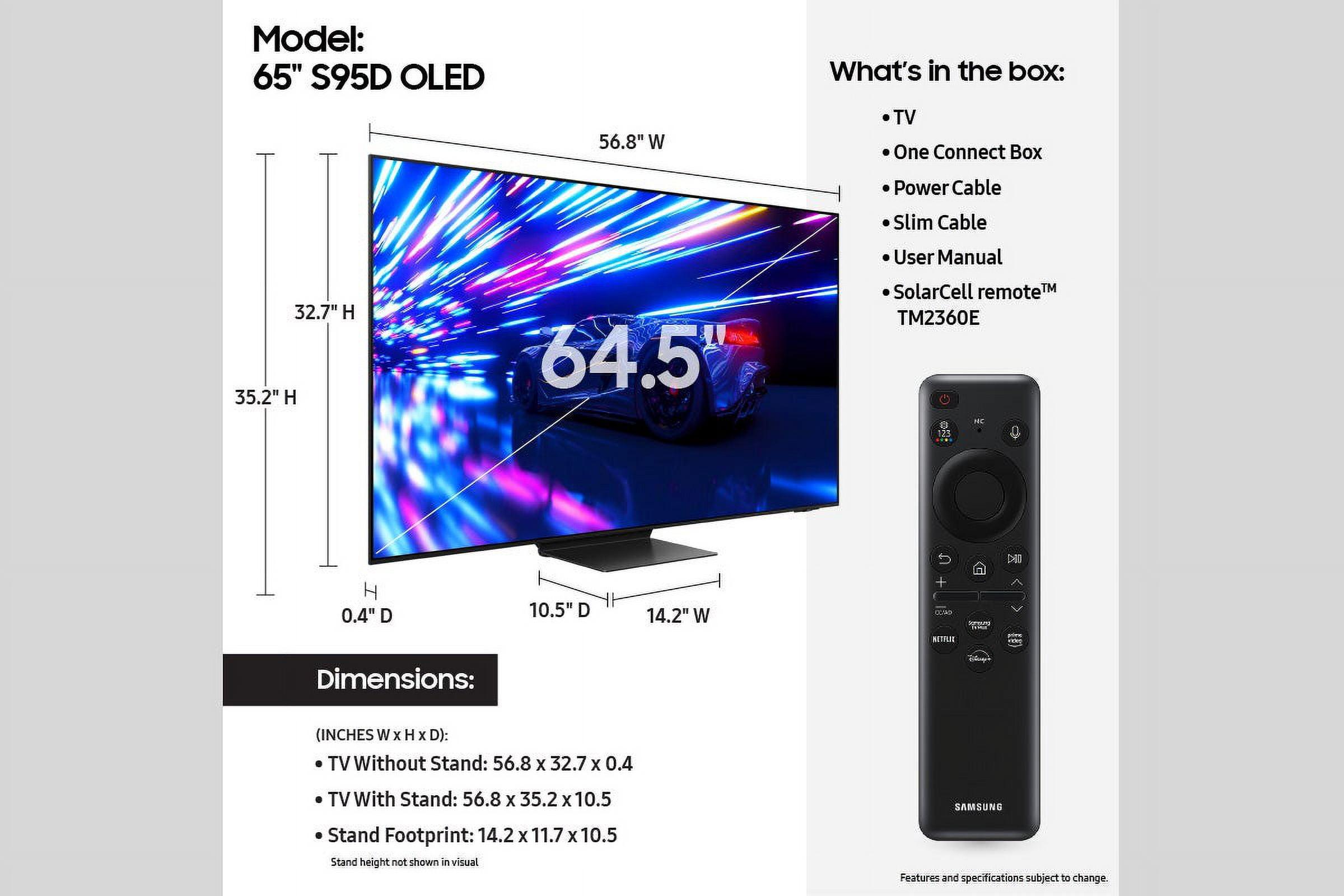
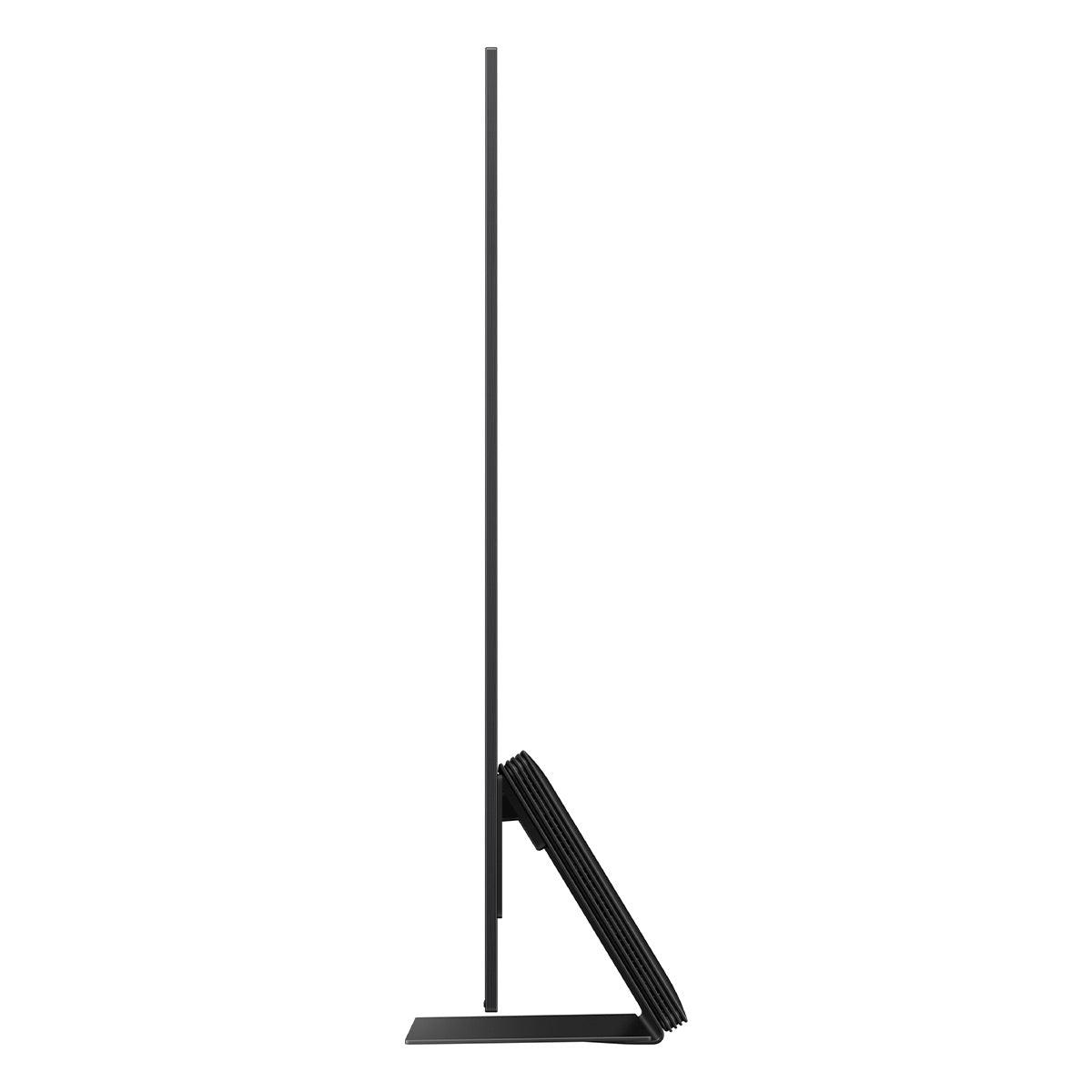
The One Connect Box design of the S95D also offers practical advantages in home theater installations. All your HDMI devices connect to the external box, which connects to the TV via a single thin cable. This makes wall mounting cleaner and allows you to hide the connection box in a cabinet while keeping the ultra-thin display visible.
For home theaters with some ambient light control but not complete darkness, both TVs can work well. The S95D's anti-glare coating helps with minor light sources like under-cabinet lighting or dimmed sconces.
The Samsung S95D OLED makes sense for viewers who:
The Samsung QN80F Neo QLED works better for users who:
After extensive consideration of both technologies, features, and market positioning, the Samsung S95D OLED emerges as the better choice for most buyers. Yes, it costs more, but the superior display technology, established product support, and transformative viewing experience justify the premium.
The picture quality difference is substantial enough that most viewers notice it immediately. The perfect blacks, vibrant colors, and exceptional HDR performance create a viewing experience that's genuinely different from traditional LCD technology.
However, the QN80F Neo QLED isn't without merit. If budget constraints are significant or your viewing environment is extremely bright, it can deliver excellent performance. Just be aware of the long-term implications of choosing a discontinued model.
For most home theater enthusiasts and quality-focused viewers, the S95D represents a worthwhile investment in display technology that will provide years of exceptional viewing pleasure. It's the kind of upgrade that makes you want to rewatch your favorite movies just to see them in a new light – quite literally.
| Samsung 65" QN80F Neo QLED 4K TV | Samsung 65" S95D 4K OLED Smart TV |
|---|---|
| Display Technology - Fundamentally affects picture quality and performance | |
| Mini-LED backlit LCD with Quantum Dots (Neo QLED) | Self-emissive QD-OLED with perfect pixel control |
| Contrast Ratio - Critical for dark scene detail and overall image depth | |
| Local dimming zones provide good contrast but not perfect blacks | Infinite contrast ratio with true blacks (pixels turn completely off) |
| Peak Brightness - Determines HDR impact and bright room performance | |
| Higher peak brightness, excellent for bright rooms | Lower peak brightness but sufficient for most HDR content |
| Screen Coating - Affects glare and image sharpness | |
| Traditional glossy finish with standard reflection handling | Anti-glare matte coating significantly reduces reflections |
| Gaming Performance - Input lag and refresh rate capabilities | |
| 9ms input lag, 144Hz VRR, 4 HDMI 2.1 ports | 9ms input lag, 144Hz VRR, 4 HDMI 2.1 ports (virtually identical) |
| Burn-in Risk - Long-term durability with static content | |
| No burn-in risk (LCD technology immune to image retention) | Potential burn-in with prolonged static images (typical OLED limitation) |
| Design and Connectivity - Physical setup and installation flexibility | |
| Traditional TV design with rear connections | Ultra-thin panel with external One Connect Box for all inputs |
| Product Status - Affects long-term support and availability | |
| 2025 model from discontinued QN800 series (uncertain future support) | 2024 flagship model with established ongoing support |
| Processor - AI features and upscaling performance | |
| NQ4 AI Gen2 with 4K AI upscaling and optimization | NQ4 AI Gen2 with 4K AI upscaling and optimization (same processor) |
| Audio Technology - Built-in sound quality and features | |
| Dolby Atmos with standard audio processing | Dolby Atmos with Object Tracking Sound+ for directional audio |
| Best Use Case - Optimal viewing scenarios | |
| Bright living rooms, budget-conscious buyers, heavy gaming with static elements | Dark/controlled lighting, picture quality enthusiasts, home theaters |
The Samsung S95D OLED delivers superior picture quality overall, especially in dark rooms. Its OLED technology provides perfect blacks and infinite contrast, creating more realistic images with better shadow detail. The Samsung QN80F Neo QLED offers higher peak brightness for HDR content but cannot match OLED's contrast performance.
The Samsung QN80F Neo QLED uses Mini-LED backlighting behind an LCD panel with thousands of dimming zones for improved contrast. The Samsung S95D OLED uses self-emissive pixels that can turn completely on or off individually, creating perfect blacks and infinite contrast ratios that LCD technology cannot achieve.
The Samsung QN80F Neo QLED traditionally performs better in very bright rooms due to its higher peak brightness. However, the Samsung S95D OLED features an anti-glare matte coating that significantly reduces reflections, making it surprisingly effective in bright environments despite lower peak brightness.
The Samsung QN80F Neo QLED has zero burn-in risk since it uses LCD technology. The Samsung S95D OLED has potential burn-in concerns with static images displayed for extended periods, though this is less common with normal viewing habits and Samsung's built-in protection features.
Both TVs offer excellent gaming performance with 9ms input lag and 144Hz variable refresh rate support. The Samsung S95D OLED provides slightly better motion clarity for fast-paced content, while the Samsung QN80F Neo QLED eliminates burn-in concerns for games with static UI elements.
The Samsung S95D OLED is superior for dedicated home theaters with controlled lighting. Its perfect blacks and exceptional contrast create a cinematic experience that surpasses the Samsung QN80F Neo QLED. The S95D's One Connect Box design also simplifies home theater installations.
Both the Samsung QN80F Neo QLED and Samsung S95D OLED run Samsung's Tizen OS with identical app selection and interface. They both feature the same NQ4 AI Gen2 processor for 4K upscaling and optimization, making smart features virtually identical between models.
HDR performance varies by scenario. The Samsung S95D OLED excels with shadow detail and color accuracy in HDR content, while the Samsung QN80F Neo QLED delivers brighter HDR highlights. For dark room HDR viewing, the S95D provides a more balanced and realistic experience.
The Samsung QN80F Neo QLED is part of Samsung's discontinued QN800 series, which raises questions about long-term software support and updates. The Samsung S95D OLED represents Samsung's established OLED lineup with guaranteed ongoing support and better long-term value retention.
Both TVs support Dolby Atmos, but the Samsung S95D OLED includes Object Tracking Sound+ technology that moves audio around the screen to match visual action. The Samsung QN80F Neo QLED offers standard Dolby Atmos processing without the advanced directional audio features.
Despite costing more, the Samsung S95D OLED offers better long-term value due to superior display technology and established product support. The Samsung QN80F Neo QLED may seem like better value initially, but its discontinued status creates uncertainty about future support and resale value.
Choose the Samsung S95D OLED if you prioritize picture quality and have some light control in your room. Select the Samsung QN80F Neo QLED if you have an extremely bright room or want to minimize any burn-in concerns, though consider the discontinued product line implications before purchasing.
We've done our best to create useful and informative comparisons to help you decide what product to buy. Our research uses advanced automated methods to create this comparison and perfection is not possible - please contact us for corrections or questions. These are the sites we've researched in the creation of this article: samsung.com - theshortcut.com - youtube.com - bestbuy.com - rtings.com - samsung.com - samsung.com - samsung.com - sargentappliance.com - displayspecifications.com - bestbuy.com - techradar.com - videoandaudiocenter.com - avsforum.com - cnet.com - abt.com - merlinstv.com - nfm.com - rtings.com - flintsfurniture.com - samsung.com - bestbuy.com - displayspecifications.com

Privacy Policy
Terms and Conditions - Affiliate Policy
Home Security
© Copyright 2008-2026.
11816 Inwood Rd #1211, Dallas, TX 75244