

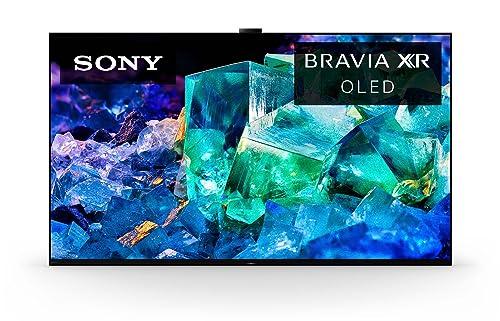


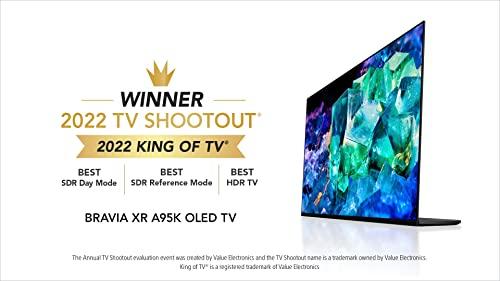
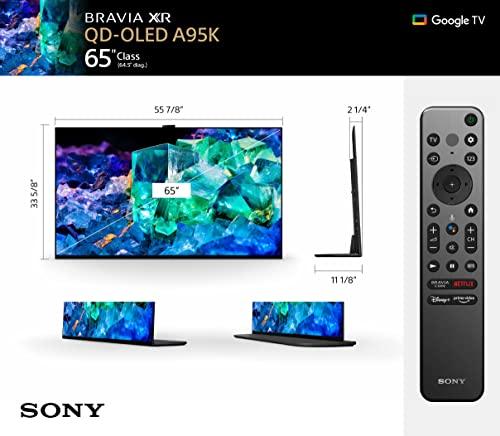


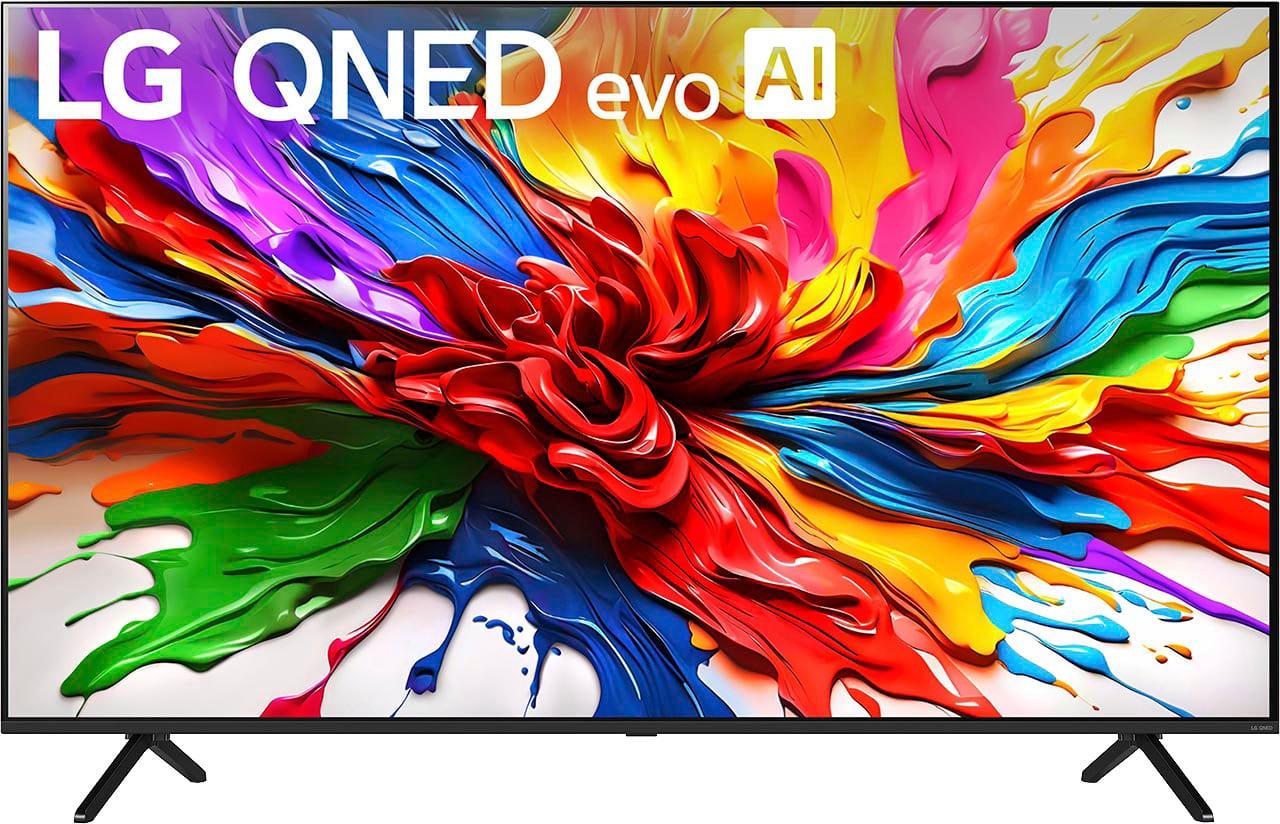
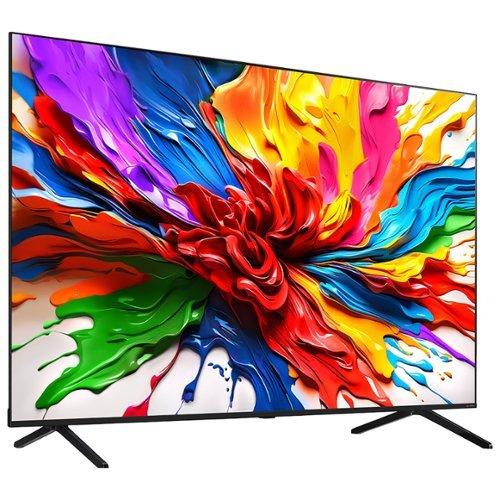
When you're shopping for a premium 65-inch TV, you're essentially choosing between two fundamentally different approaches to creating stunning picture quality. On one side, we have the Sony Bravia XR A95K, a 2022 flagship that introduced the revolutionary QD-OLED technology to the consumer market. On the other, there's the LG 65" QNED92A, a 2025 Mini LED powerhouse that represents the latest evolution in LCD technology.
Both TVs cost considerably more than budget models—at the time of writing, you're looking at premium pricing that reflects their flagship status. But the question isn't just about money; it's about understanding which technology better serves your specific needs and viewing environment.
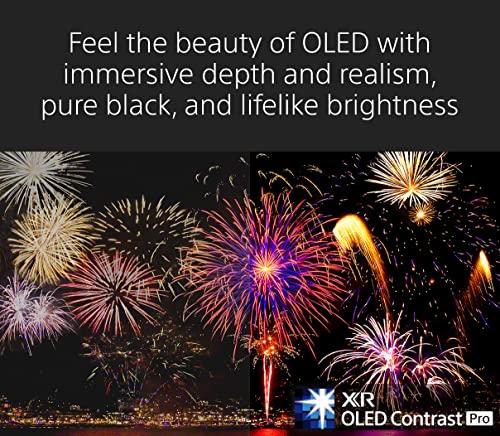
The heart of this comparison lies in two completely different philosophies for creating light and color. The Sony A95K uses QD-OLED (Quantum Dot OLED) technology, where each pixel generates its own light. Think of it like having 8.3 million tiny lightbulbs that can turn completely on or off individually. When a pixel needs to be black, it simply turns off entirely, creating perfect darkness.
The LG QNED92A, meanwhile, uses Mini LED backlighting—thousands of incredibly small LED lights behind an LCD panel. These LEDs are grouped into hundreds of dimming zones that can brighten or dim independently. It's like having a sophisticated grid of flashlights behind a transparency, where different sections can adjust their brightness to match what's happening on screen.
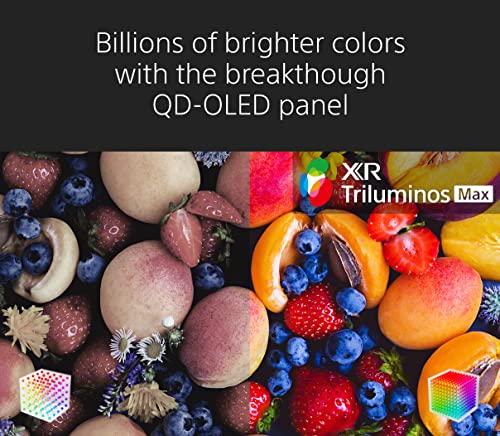
Here's why this matters: OLED technology has been around since the late 2000s, but QD-OLED is Sony's 2022 breakthrough that solved OLED's biggest weakness—brightness. Traditional OLED TVs struggle in bright rooms because they can't get as bright as LED TVs. Sony's QD-OLED uses blue OLED pixels combined with quantum dot converters to create red and green light, resulting in colors that are up to 200% brighter than conventional OLEDs.
Mini LED, on the other hand, has evolved rapidly since its introduction around 2019. The LG QNED92A represents the 2025 state of the art, with far more precise dimming zones and better blooming control than earlier generations. It's LCD technology pushed to its absolute limits.
When it comes to contrast—the difference between the darkest blacks and brightest whites—the Sony A95K operates in a different league entirely. Because each pixel can turn completely off, you get perfect blacks that no backlit display can match. Picture watching a space movie: stars floating in the inky void of space appear exactly as they should, with the blackness around them being truly black, not the slightly gray "black" you see on most TVs.
The LG QNED92A does admirably well for LED technology, with its hundreds of dimming zones creating much better contrast than older LED TVs. However, it faces the fundamental limitation of all backlit displays: light bleed. Even with sophisticated local dimming, bright objects against dark backgrounds can create subtle halos or blooming effects. It's dramatically better than cheaper LED TVs, but still can't match OLED's pixel-level precision.
For home theater enthusiasts who dim the lights for movie nights, this contrast advantage makes the Sony A95K feel more cinematic. Dark scenes maintain their shadow detail while bright highlights pop with intensity.
Here's where the tables turn dramatically. The LG QNED92A can reach peak brightness levels of 1,520 nits in HDR content—that's bright enough to make HDR highlights feel almost sun-like. In a bright living room with windows and overhead lights, this superior brightness means you can actually see the picture clearly without fighting reflections and washout.
The Sony A95K, despite its QD-OLED improvements, still tops out at significantly lower brightness levels. In a dark or moderately lit room, this doesn't matter much. But in a bright family room where the TV competes with sunlight streaming through windows, the Mini LED's brightness advantage becomes crucial for visibility.
This brightness difference particularly affects HDR (High Dynamic Range) content. HDR is designed to show a wider range of brightness levels, from deep shadows to brilliant highlights that mimic real-world lighting. The LG QNED92A can render those eye-searing highlights—like sunlight reflecting off water or an explosion in an action movie—with more impact.
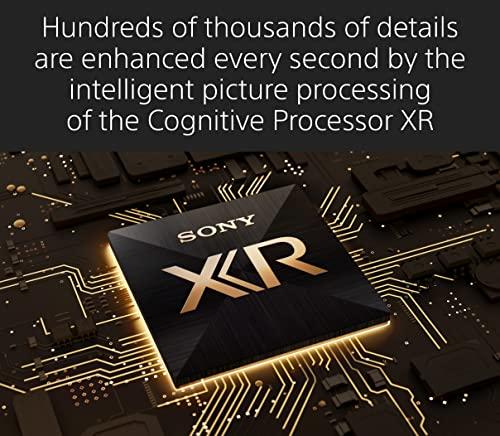
Both TVs excel at color reproduction, but they achieve it differently. The Sony A95K leverages its QD-OLED technology to produce what many consider the most natural, accurate colors available in consumer TVs. The quantum dot layer helps create a wider color gamut (the range of colors the TV can display), while Sony's XR Triluminos Max processing ensures colors look as filmmakers intended.
The LG QNED92A uses its own approach with Dynamic QNED Color technology, combining quantum dots with LG's NanoCell layer. It achieves 100% Color Volume certification and covers 97% of the DCI-P3 color space—technical measurements that translate to vivid, saturated colors in real-world viewing. However, some colors can appear slightly more artificial or oversaturated compared to the OLED's more natural presentation.
For critical viewers who prioritize color accuracy—especially when watching movies and premium content—the Sony A95K typically edges ahead. For viewers who prefer more vibrant, punchy colors, the LG QNED92A delivers impressive results.
Gaming capabilities reveal one of the most significant practical differences between these TVs. The LG QNED92A is simply better equipped for modern gaming, and it's not particularly close.
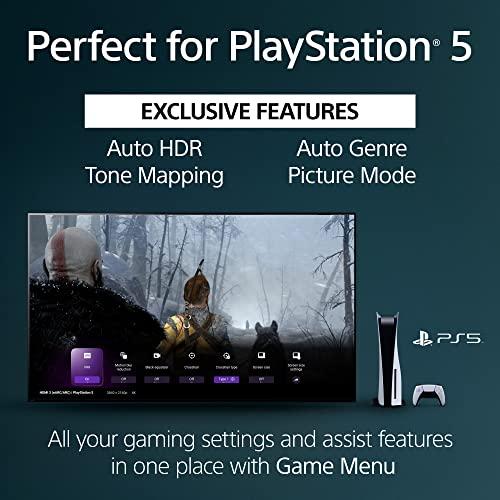
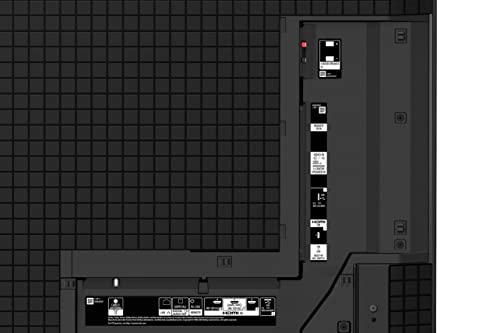
The connectivity advantage is stark: while the Sony A95K offers only two HDMI 2.1 ports (with one typically reserved for audio return channel), the LG QNED92A provides four full-bandwidth HDMI 2.1 connections. This matters enormously if you own multiple gaming devices—a PlayStation 5, Xbox Series X, and a gaming PC, for example.
Input lag (the delay between when you press a button and see the action on screen) measures just 9.6 milliseconds on the LG QNED92A, which is excellent for competitive gaming. The Sony A95K also delivers low input lag, but the LG edges ahead slightly in this crucial metric.
More importantly, the LG QNED92A supports advanced gaming features like 4K at 144Hz with Variable Refresh Rate (VRR), which ensures smooth gameplay without screen tearing. It also supports Dolby Vision for gaming, delivering enhanced HDR visuals during gameplay. The comprehensive Game Optimizer suite provides quick access to gaming-specific settings without navigating complex menus.
The Sony A95K handles gaming well, with excellent motion clarity thanks to OLED's fast pixel response times. However, you'll need to manually switch between Dolby Vision and VRR modes, and the limited port selection may force compromises in your setup.
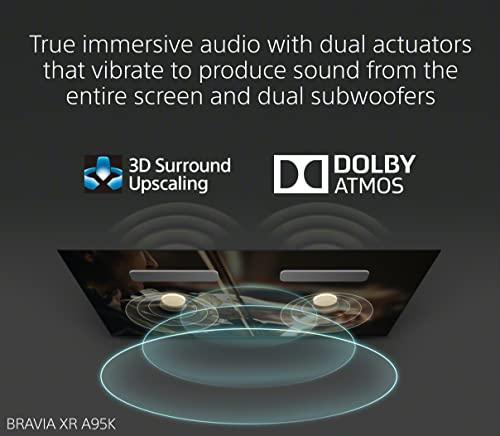
Audio represents another area where these TVs take fundamentally different approaches. The Sony A95K features Acoustic Surface Audio+ technology, which vibrates the entire screen to produce sound. This creates an uncanny effect where dialogue appears to come directly from actors' mouths rather than from speakers below the screen. It's particularly impressive for movie watching, creating a more immersive experience without external speakers.
The system can even function as a center channel speaker when paired with a surround sound system—a unique feature that audiophiles appreciate for its seamless integration.
The LG QNED92A uses a more traditional 2.2 channel speaker setup enhanced by AI Sound Pro processing. While it lacks the Sony A95K's innovative screen-as-speaker technology, it delivers solid audio performance with Dolby Atmos support. The AI processing analyzes content in real-time to optimize sound characteristics, though it can't match the positional accuracy of the Sony's approach.
Both TVs benefit significantly from external sound systems, but the Sony A95K's audio innovation provides a more engaging experience when using built-in speakers.
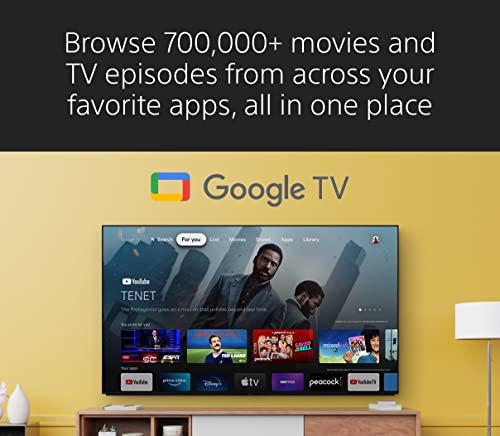
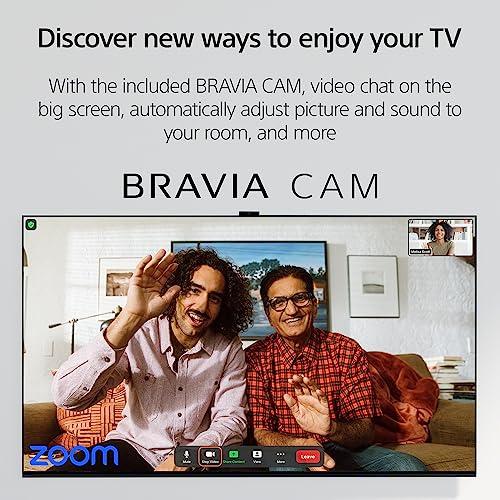
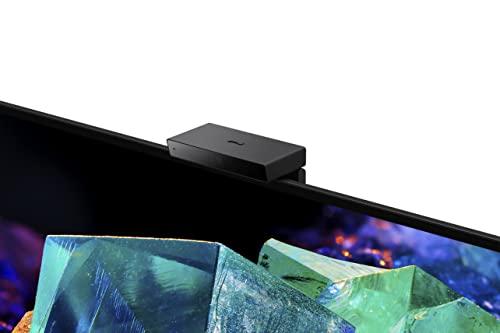
The smart TV experience reveals interesting trade-offs between current capability and long-term support. The Sony A95K runs Google TV with access to virtually all major streaming apps. The included BRAVIA CAM enables gesture controls and video calling, though its utility varies by user preference. Sony's Netflix Calibrated and BRAVIA CORE Calibrated modes ensure optimal settings for specific content types.
The LG QNED92A offers webOS 25, which many consider among the best smart TV interfaces available. More importantly, LG commits to five years of software updates through their Re:New Program—a significant advantage for long-term ownership. The interface includes access to over 300 free channels and comprehensive voice assistant support.
For future-proofing, the LG QNED92A holds clear advantages with its superior gaming connectivity, longer software support commitment, and newer processing hardware.
For dedicated home theater setups, the choice becomes more nuanced. The Sony A95K delivers the more cinematic experience with its perfect blacks, natural colors, and immersive audio positioning. In a controlled lighting environment—the ideal home theater setup—OLED's contrast advantages shine brightest.
However, even home theaters benefit from the LG QNED92A's superior brightness for HDR content. Those brilliant highlights in action scenes or nature documentaries can appear more impactful on the brighter display.
The audio consideration also matters here. While many home theater enthusiasts use external sound systems, the Sony A95K's center channel capability can enhance even sophisticated surround sound setups.
At the time of writing, both TVs command premium pricing, but they offer different value propositions. The Sony A95K provides cutting-edge display technology and the most cinematic viewing experience available. You're paying for innovation and picture quality that, in many scenarios, remains unmatched.
The LG QNED92A, while still expensive, offers more comprehensive features, better gaming support, and longer software commitments. It's the more practical choice for diverse usage scenarios and represents better long-term value for most households.
Choose the Sony A95K if you prioritize picture quality above all else. This TV excels for movie enthusiasts with dedicated viewing rooms, users who value audio innovation, and anyone seeking the most advanced display technology available. It's the connoisseur's choice—perfect for those who dim the lights and focus entirely on the viewing experience.
Choose the LG QNED92A if you need a TV that performs excellently across diverse scenarios. It's superior for bright rooms, gaming setups, sports viewing, and families with varied entertainment needs. The extensive connectivity, longer software support, and practical brightness advantages make it the more versatile choice.
The fundamental question comes down to your viewing environment and priorities. In darker rooms with controlled lighting, the Sony A95K's OLED technology creates an almost magical viewing experience that's hard to beat. In brighter environments with mixed usage patterns, the LG QNED92A's brightness and feature set provide better daily usability.
Both represent excellent choices within their respective strengths. The key is honestly assessing your space, usage patterns, and what aspects of TV performance matter most to your household's entertainment needs.
| Sony Bravia XR A95K 65" QD-OLED TV | LG 65" QNED92A QNED evo AI Mini LED 4K TV 2025 |
|---|---|
| Display Technology - Fundamentally determines picture quality approach | |
| QD-OLED with self-emissive pixels for perfect blacks | Mini LED with hundreds of dimming zones for superior brightness |
| Peak Brightness - Critical for HDR impact and bright room viewing | |
| ~400-600 nits (excellent for dark rooms, struggles in bright spaces) | 1,520 nits (outstanding for any lighting condition) |
| Black Levels - Essential for contrast and cinematic experience | |
| Perfect blacks with infinite contrast ratio | Deep blacks for LED technology, but some light bleed possible |
| Color Performance - Affects realism and viewing enjoyment | |
| Natural, accurate colors with 200% improved color brightness over traditional OLED | 100% Color Volume with vivid, punchy colors covering 97% DCI-P3 |
| Gaming Connectivity - Crucial for multiple console setups | |
| 2x HDMI 2.1 ports (limiting for modern gaming setups) | 4x HDMI 2.1 ports (ideal for multiple consoles and gaming PC) |
| Gaming Performance - Important for competitive and casual gaming | |
| 4K@120Hz, VRR support, excellent motion clarity | 4K@144Hz, 9.6ms input lag, comprehensive Game Optimizer |
| Audio Innovation - Affects immersion without external speakers | |
| Acoustic Surface Audio+ (screen vibrates to produce sound) | Traditional 2.2 channel speakers with AI Sound Pro |
| Smart Platform & Updates - Determines long-term usability | |
| Google TV with BRAVIA CAM gesture controls | webOS 25 with 5-year guaranteed software updates |
| Best Use Case - Who should choose each TV | |
| Movie enthusiasts with controlled lighting who prioritize picture perfection | Multi-purpose users needing bright room performance and gaming versatility |
| Release Year & Technology Maturity | |
| 2022 flagship with cutting-edge QD-OLED innovation | 2025 model with mature, refined Mini LED technology |
The LG 65" QNED92A is significantly better for bright rooms with its peak brightness of 1,520 nits compared to the Sony Bravia XR A95K's lower brightness output. If your TV will be in a living room with lots of windows or overhead lighting, the Mini LED technology in the LG QNED92A will maintain better visibility and color accuracy in bright conditions.
The Sony Bravia XR A95K uses QD-OLED technology where each pixel produces its own light and can turn completely off for perfect blacks. The LG 65" QNED92A uses Mini LED backlighting with hundreds of dimming zones behind an LCD panel. QD-OLED offers superior contrast and black levels, while Mini LED provides higher peak brightness and better performance in bright rooms.
The LG 65" QNED92A is better for gaming with four HDMI 2.1 ports, 9.6ms input lag, and support for 4K at 144Hz. The Sony Bravia XR A95K only has two HDMI 2.1 ports, which can be limiting if you have multiple gaming consoles. The LG QNED92A also includes comprehensive gaming features and doesn't require manual mode switching.
The Sony Bravia XR A95K typically offers better picture quality for movies due to its perfect black levels, superior contrast, and more natural color reproduction. In a dark home theater environment, the QD-OLED technology in the Sony A95K creates a more cinematic experience with deeper blacks and better shadow detail than the LG 65" QNED92A.
Both TVs offer good built-in audio, but the Sony Bravia XR A95K has a unique advantage with Acoustic Surface Audio+ technology that makes the screen itself vibrate to produce sound. This creates more immersive audio positioning compared to the traditional speaker setup in the LG 65" QNED92A, though both support Dolby Atmos and benefit from external sound systems.
The LG 65" QNED92A is generally better for sports viewing due to its superior brightness, which helps in bright room conditions where sports are often watched. Both TVs handle motion well, but the Mini LED's brightness advantage and vibrant colors make sports content more engaging, especially during daytime viewing when the Sony Bravia XR A95K might appear dimmer.
The LG 65" QNED92A offers superior long-term support with LG's commitment to five years of software updates through their Re:New Program. The Sony Bravia XR A95K receives regular updates but without the same explicit long-term commitment, making the LG QNED92A a better choice for future-proofing.
For dedicated home theater use, the Sony Bravia XR A95K is typically the better choice due to its perfect black levels, superior contrast, and more accurate colors in dark viewing environments. The QD-OLED technology excels when lights are dimmed, creating a more cinematic experience. However, the LG 65" QNED92A can be better for home theaters that aren't completely dark due to its superior brightness for HDR highlights.
Yes, connectivity is a major difference. The LG 65" QNED92A has four HDMI 2.1 ports while the Sony Bravia XR A95K only has two. This makes the LG QNED92A much better for users with multiple gaming consoles, streaming devices, or other high-bandwidth equipment that requires HDMI 2.1 features.
Both TVs excel at HDR but in different ways. The Sony Bravia XR A95K offers superior contrast with perfect blacks that make dark HDR scenes more impactful, while the LG 65" QNED92A delivers brighter HDR highlights that can be more impressive for certain content types. The choice depends on whether you prioritize contrast (Sony) or peak brightness (LG).
The Sony Bravia XR A95K runs Google TV and includes the BRAVIA CAM for gesture controls and video calling. The LG 65" QNED92A uses webOS 25, which many consider more user-friendly, and includes access to over 300 free channels. Both support major streaming apps, but the LG QNED92A offers better long-term software support.
The LG 65" QNED92A typically offers better overall value for most users due to its versatility across different lighting conditions, superior gaming connectivity, longer software support, and excellent performance in mixed-use scenarios. The Sony Bravia XR A95K offers premium picture quality that justifies its cost for movie enthusiasts and those with dedicated home theaters, but the LG QNED92A serves more diverse needs effectively.
We've done our best to create useful and informative comparisons to help you decide what product to buy. Our research uses advanced automated methods to create this comparison and perfection is not possible - please contact us for corrections or questions. These are the sites we've researched in the creation of this article: tomsguide.com - audioadvice.com - wepc.com - bestbuy.com - tvsbook.com - rtings.com - youtube.com - flatpanelshd.com - rtings.com - youtube.com - reviewed.com - avsforum.com - youtube.com - youtube.com - rtings.com - youtube.com - electronics.sony.com - sonypremiumhome.com - valueelectronics.com - sony.com - displayspecifications.com - flatpanelshd.com - donstv.com - youtube.com - businessinsider.com - youtube.com - displayspecifications.com - bestbuy.com - stereoindex.com - youtube.com - youtube.com - digitaltrends.com - abt.com - lg.com - youtube.com - ecoustics.com - hometheaterforum.com - lg.com - valueelectronics.com - listenup.com - pcrichard.com - furnitureconnectionnd.com - avnirvana.com - files.bbystatic.com - lg.com - lgnewsroom.com - techradar.com - bestbuy.com - bestbuy.com - youtube.com - youtube.com

Privacy Policy
Terms and Conditions - Affiliate Policy
Home Security
© Copyright 2008-2026.
11816 Inwood Rd #1211, Dallas, TX 75244