

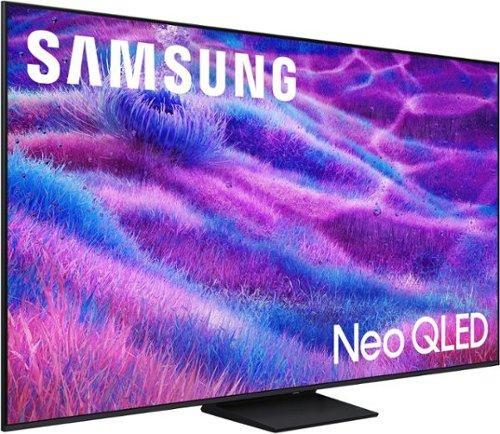
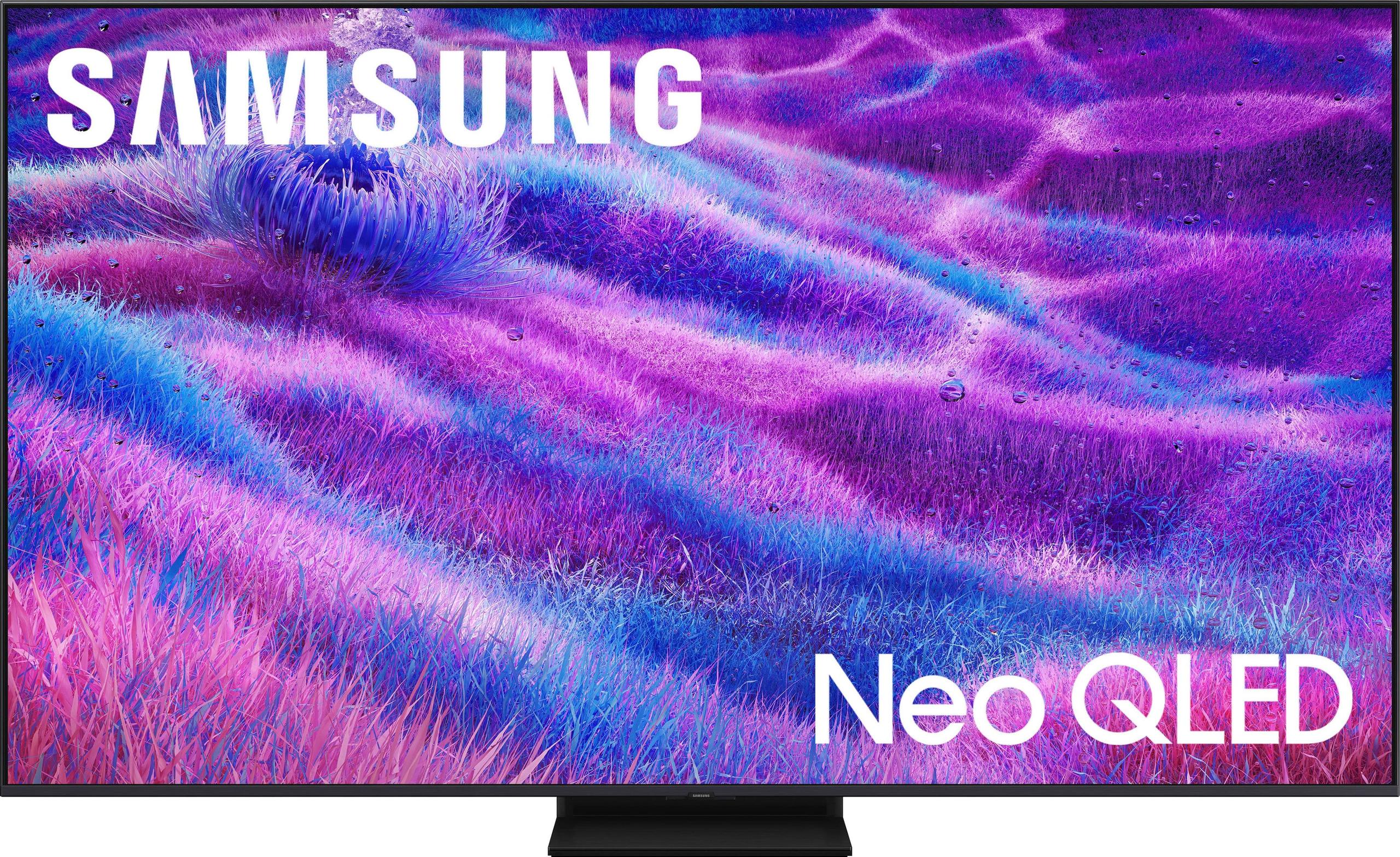
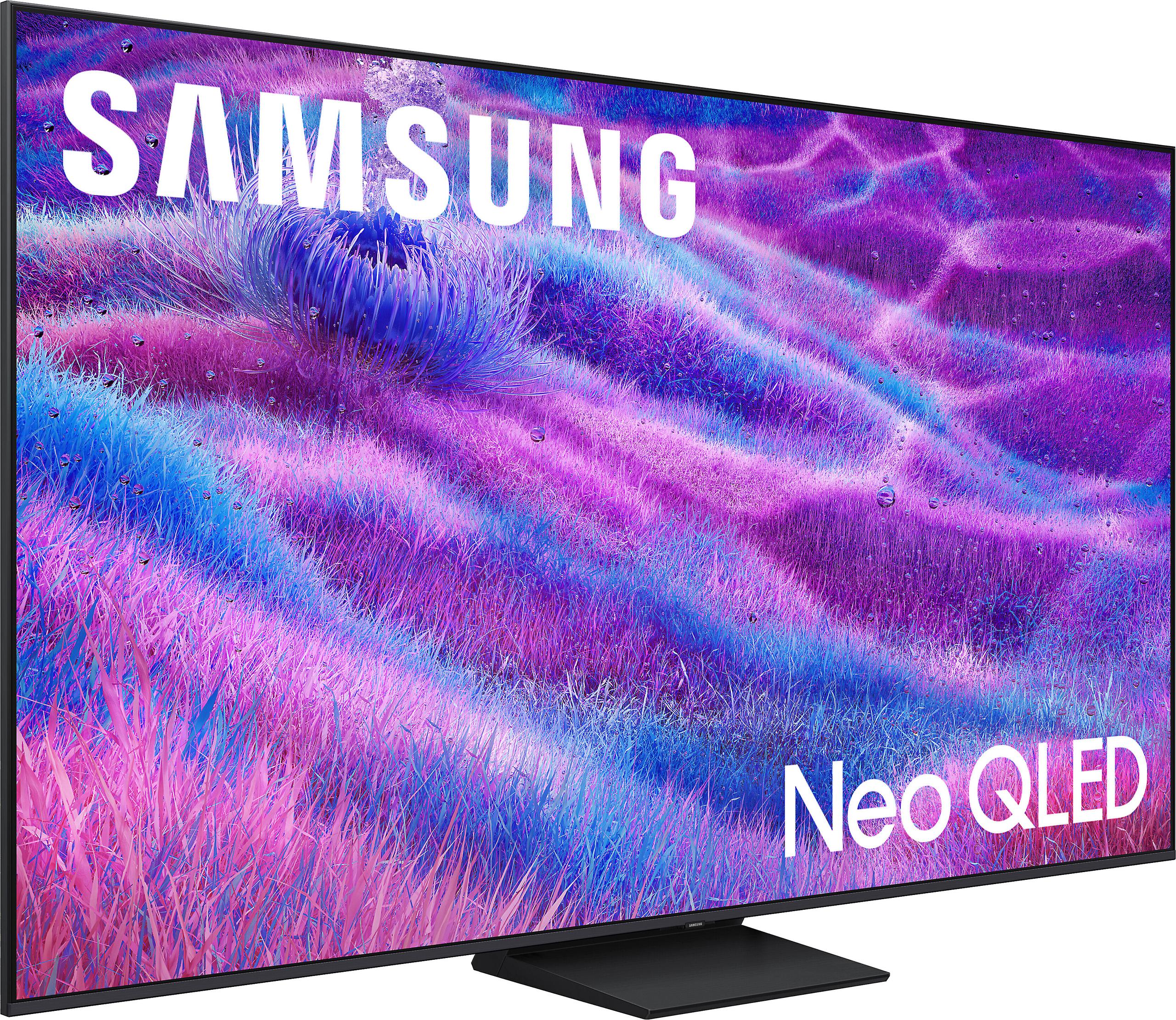
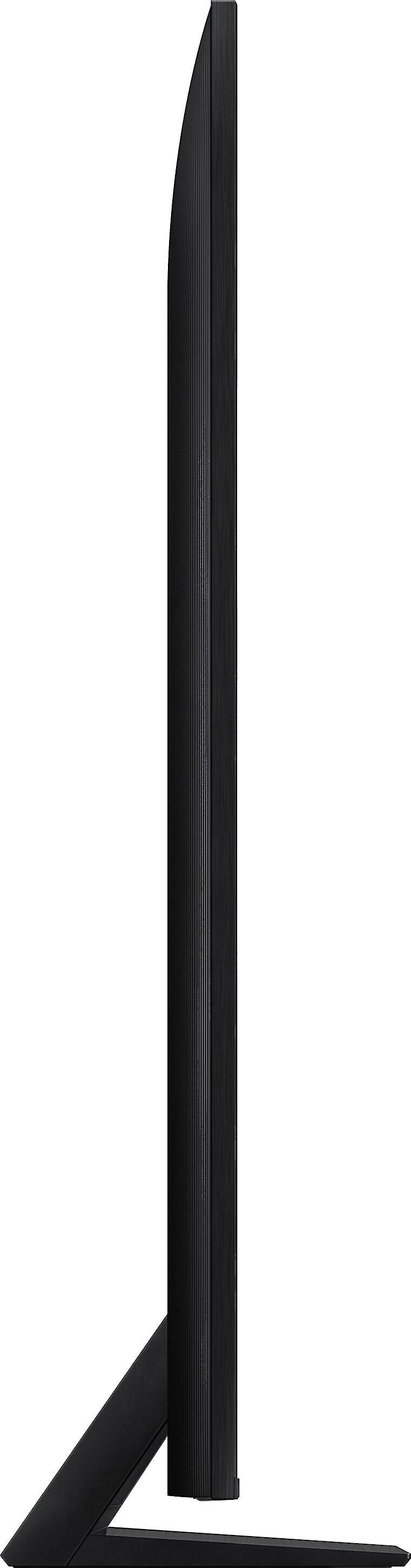
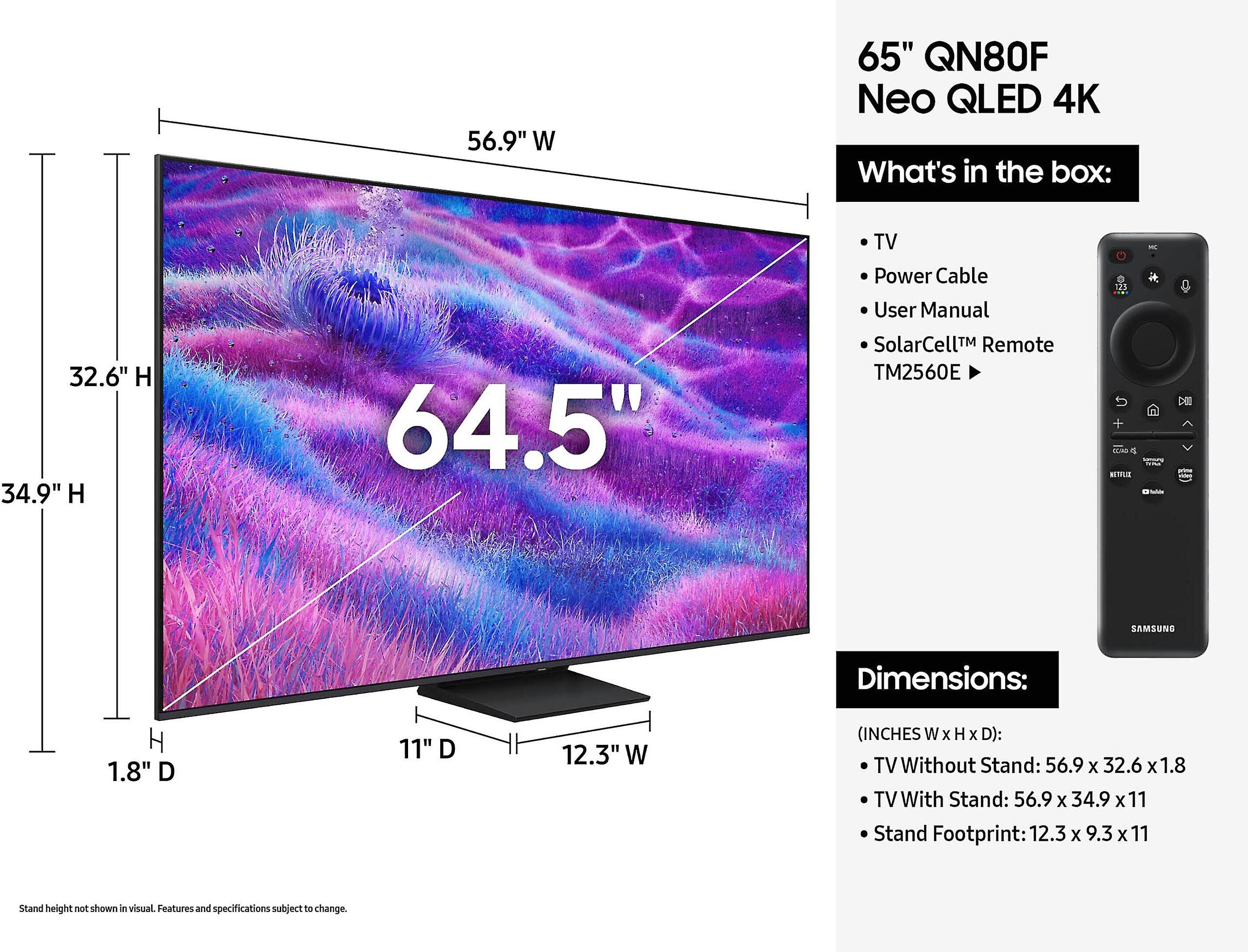
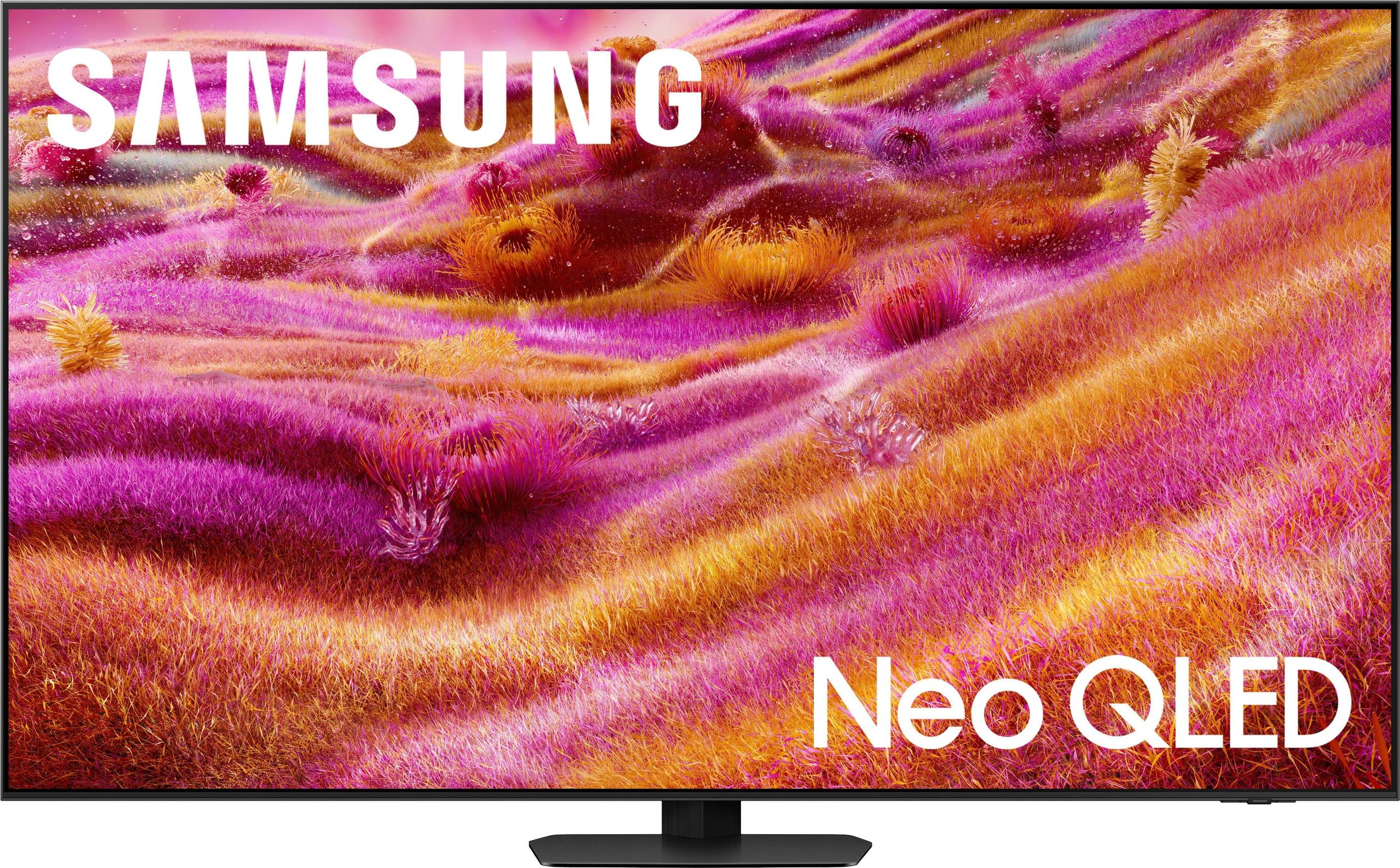
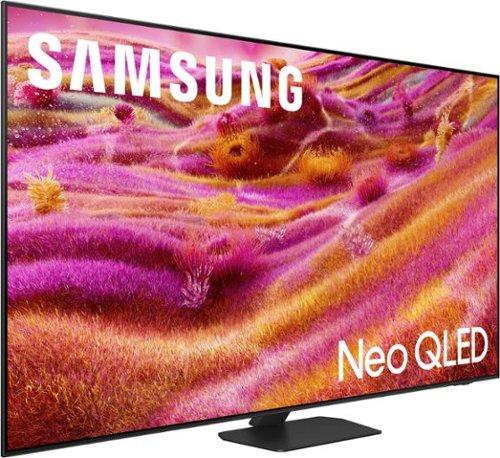
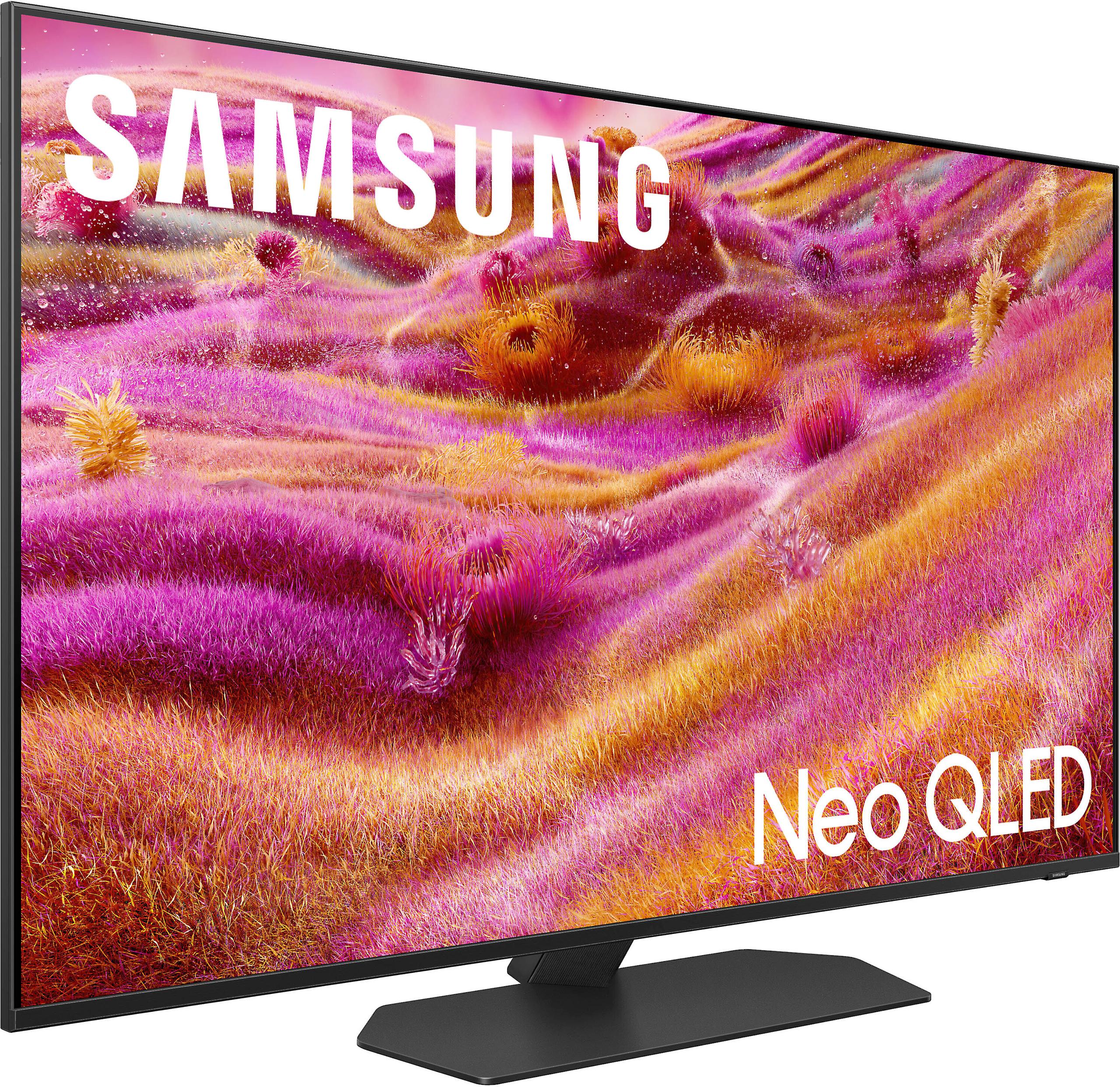
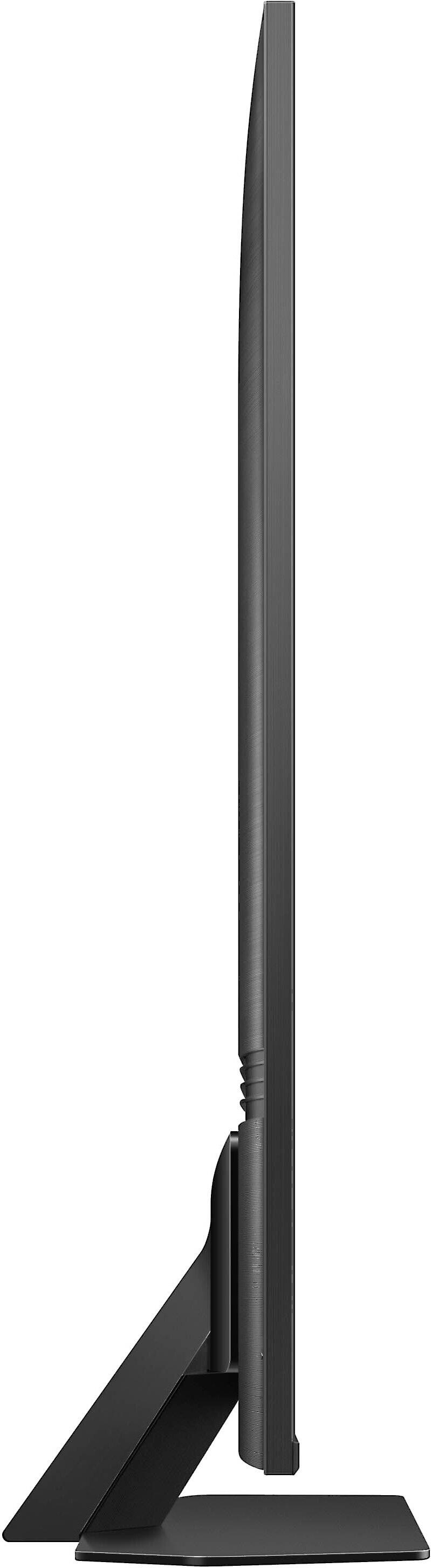
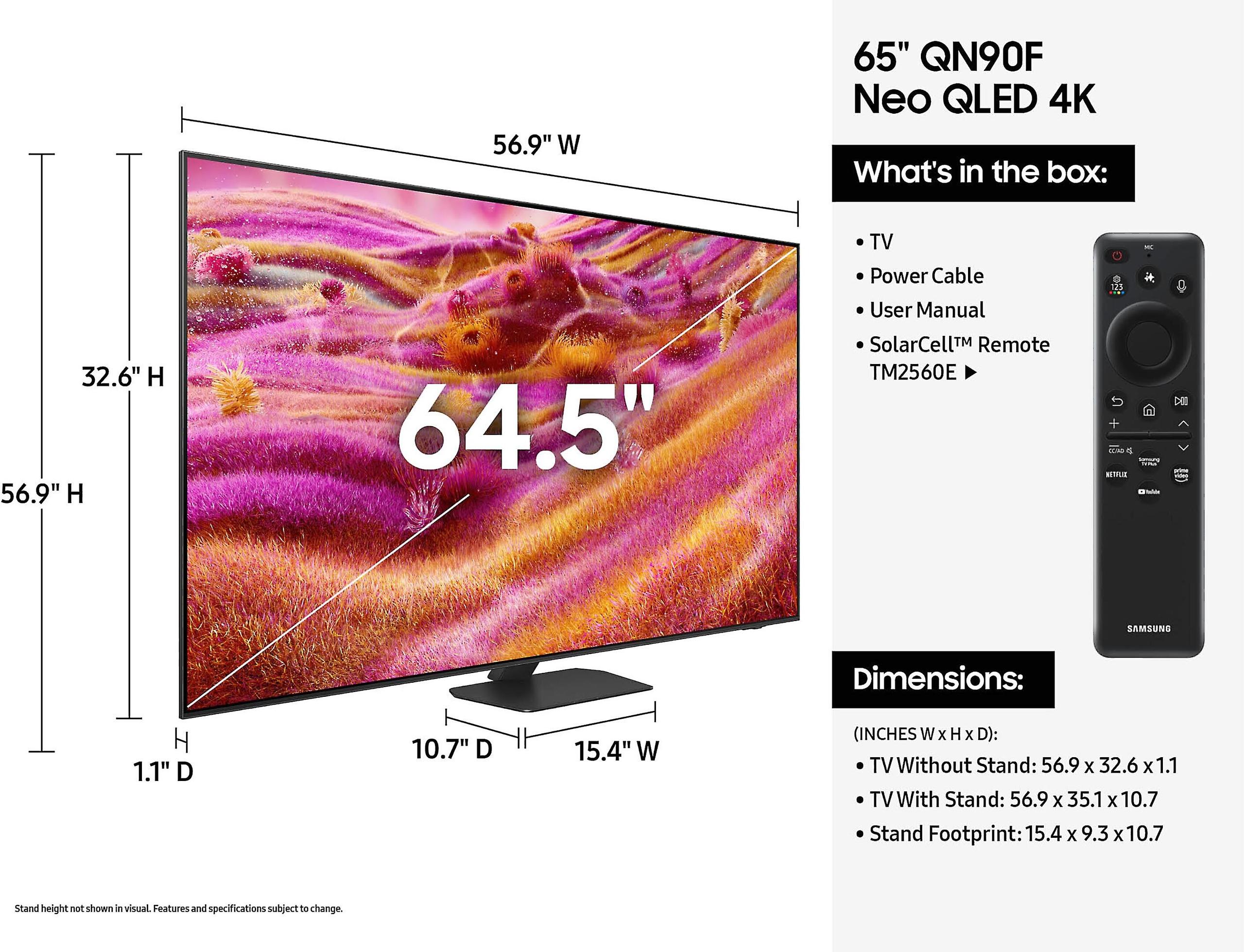
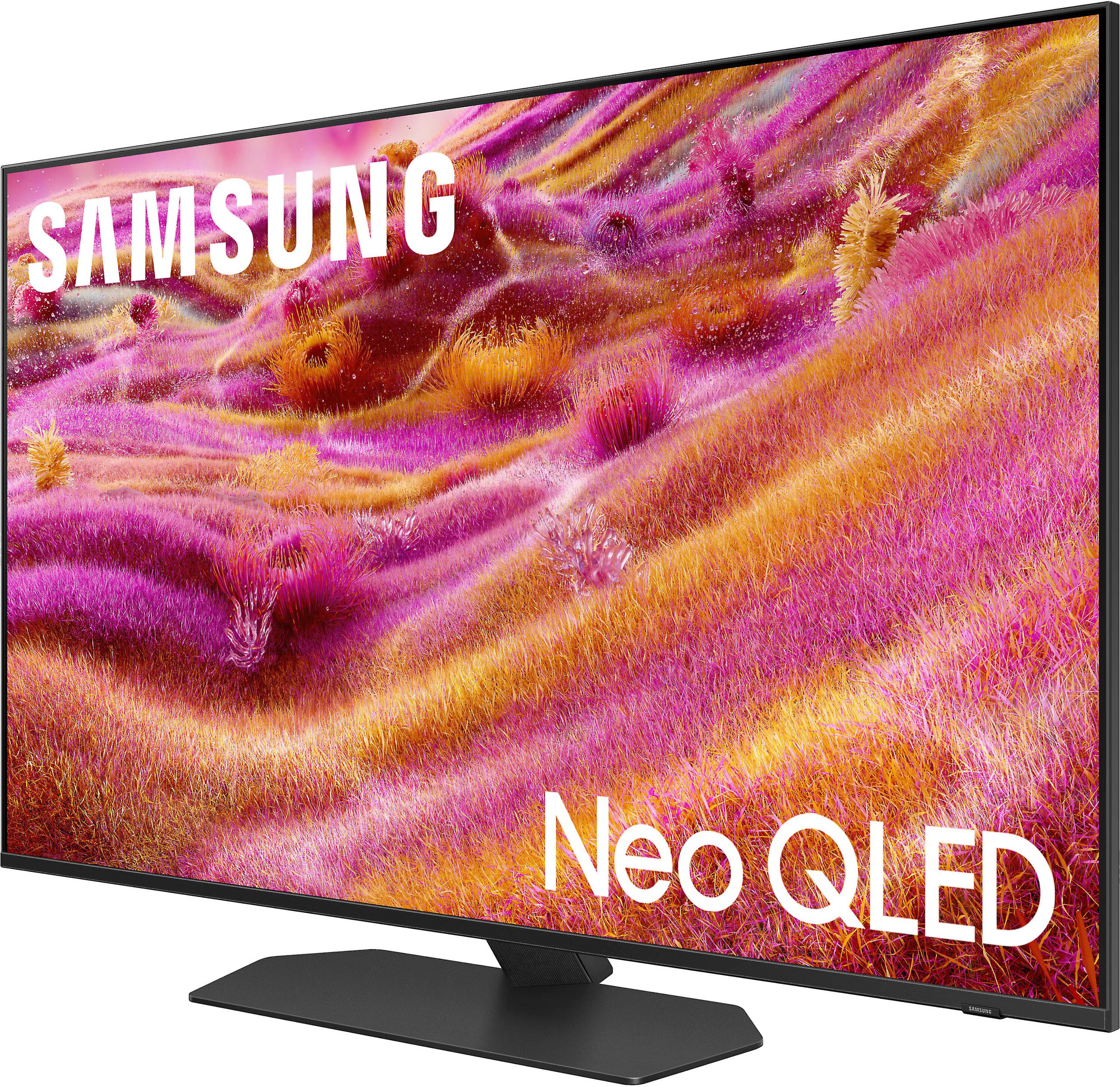
Choosing a premium 65-inch TV is one of those purchases that'll stick with you for years, so getting it right matters. Samsung's 2025 Neo QLED lineup puts two compelling options in front of buyers: the Samsung 65" QN80F Neo QLED 4K TV and the Samsung 65" QN90F Neo QLED 4K Vision AI Smart TV. Both use Samsung's Mini LED technology with quantum dots—essentially tiny particles that create more accurate colors—but they approach the premium TV experience very differently.
After spending considerable time analyzing both models and diving deep into their technical specifications, I've found that while they share the same screen size and basic technology foundation, the differences between these TVs are substantial enough to significantly impact your daily viewing experience. The choice ultimately comes down to how much you value cutting-edge features versus getting solid performance at a more accessible price point.
Samsung released both the QN80F and QN90F as part of their 2025 Neo QLED refresh, building on years of Mini LED development that began in earnest around 2021. The technology has matured significantly since those early days when Mini LED TVs often struggled with blooming (unwanted light spill around bright objects) and inconsistent brightness zones.
What makes Neo QLED special is the combination of Mini LEDs—which are much smaller than traditional LED backlights—with quantum dot technology. Think of Mini LEDs as thousands of tiny flashlights behind your screen that can turn on and off independently, creating deeper blacks and brighter highlights. Quantum dots act like color filters that make reds redder, greens greener, and blues more vibrant than what you'd get from a standard LED TV.
The main considerations when shopping in this premium category include picture quality metrics like peak brightness (measured in nits), contrast ratio, color accuracy, and black levels. Smart features and processing power have become increasingly important as TVs handle more AI-driven tasks. Gaming performance matters more than ever with modern consoles pushing 4K at 120Hz. And in 2025, features like anti-glare technology and advanced AI processing can make the difference between a good TV and a great one.
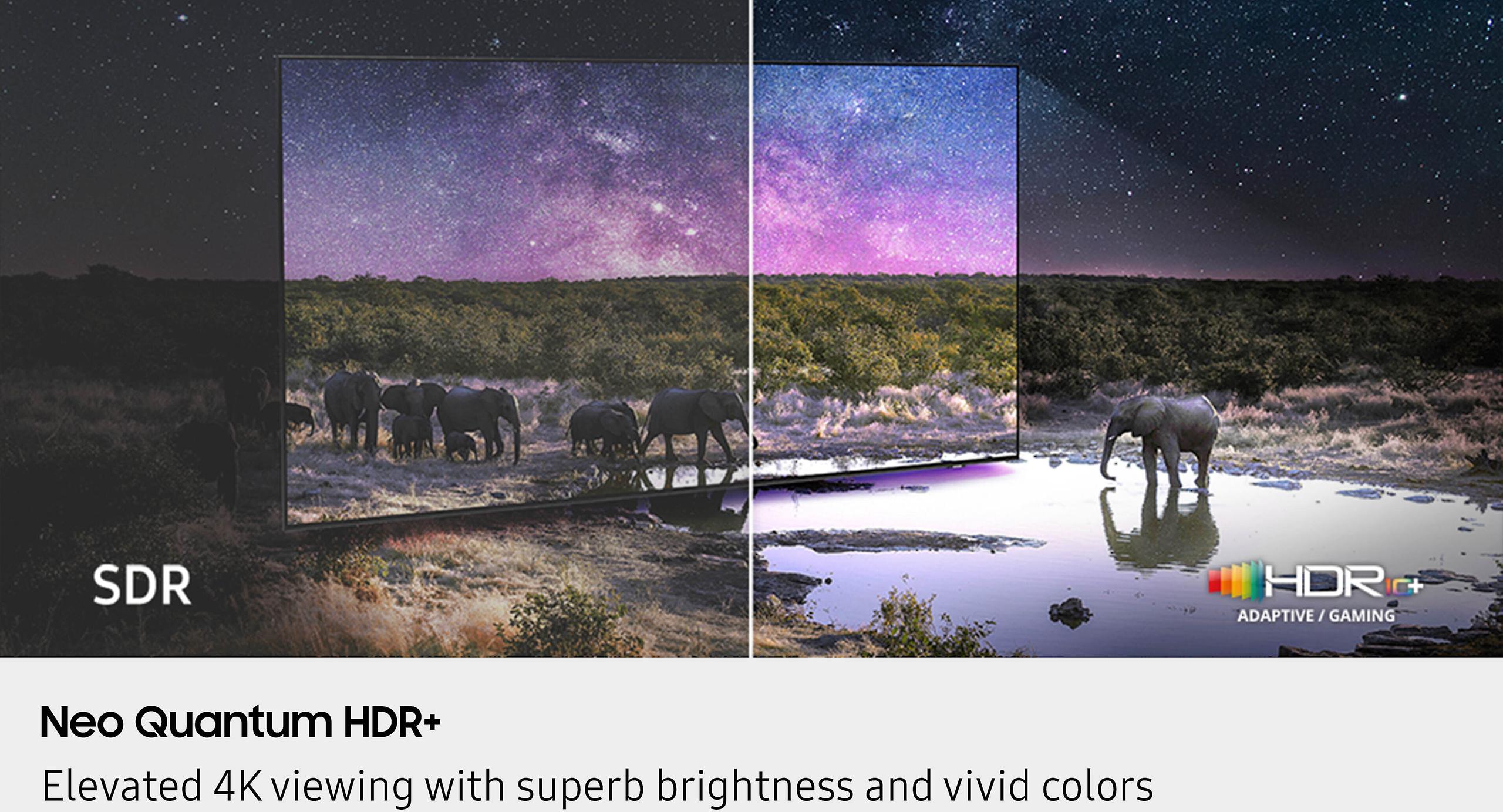
The most immediately noticeable difference between these models lies in their brightness capabilities and HDR (High Dynamic Range) performance. HDR essentially allows TVs to display a wider range of brightness levels, from deeper blacks to blazing highlights, making content look more like what your eyes would see in real life.
The QN90F achieves exceptional peak brightness, hitting around 1900 nits in small highlight areas—imagine the sun reflecting off a car bumper in a movie scene. This level of brightness ensures that HDR content really pops, especially in scenes with stark contrasts like a sunset or explosions in action movies. In full-screen brightness, it maintains around 600 nits, which is bright enough to remain clearly visible even in well-lit living rooms with large windows.
Meanwhile, the QN80F reaches a respectable 550-600 nits in typical real-world scenes. This is still quite bright and works well for most viewing environments, but you'll notice the difference in rooms with significant natural light or when watching HDR content with spectacular highlights. Think of it like comparing a bright flashlight to a powerful spotlight—both work, but one clearly outperforms in challenging conditions.
Here's where the technical differences really matter for your viewing experience. Local dimming refers to the TV's ability to control different areas of the backlight independently. More dimming zones mean more precise control over which parts of the screen are bright or dark at any given moment.
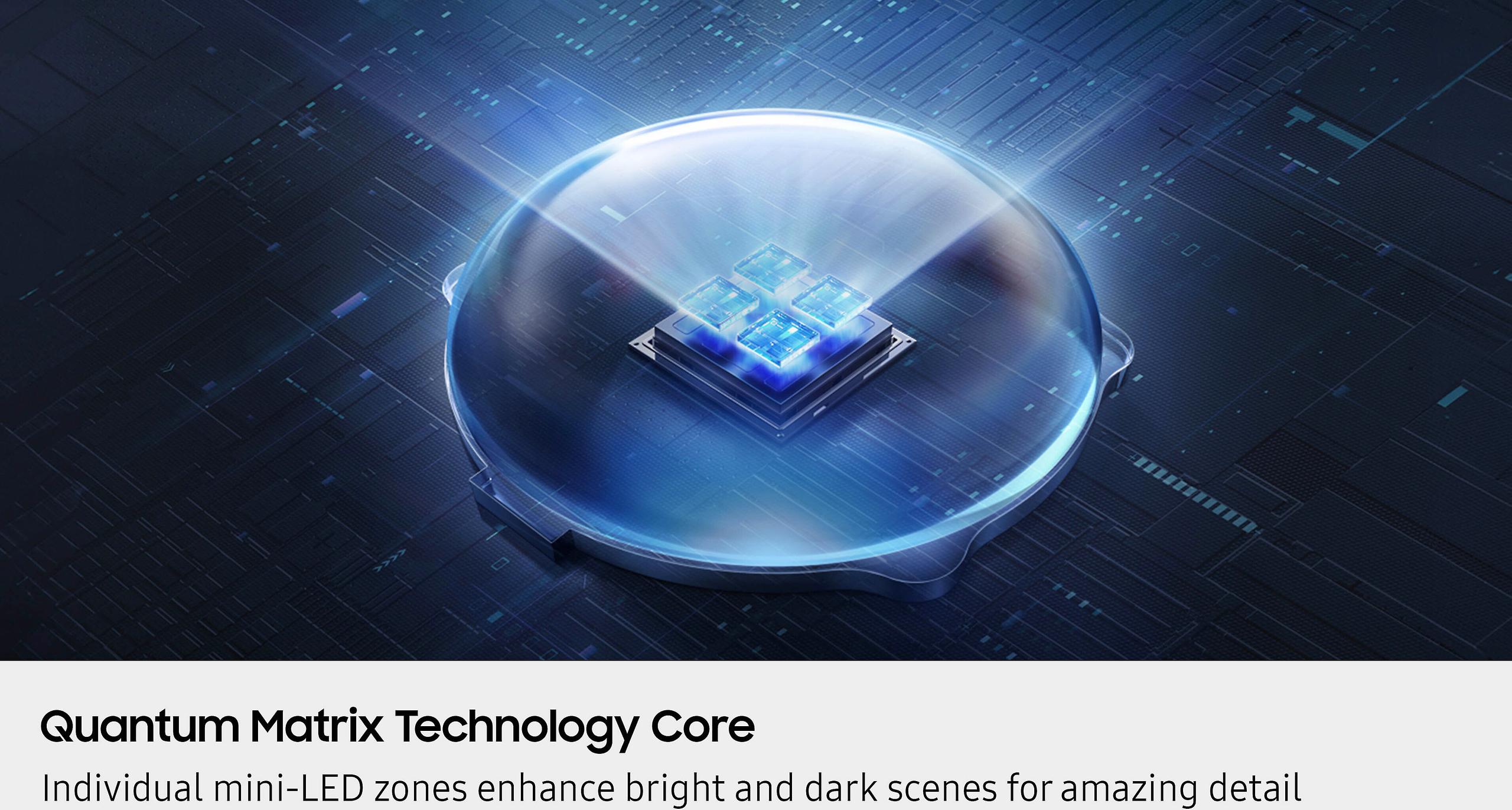
The QN90F uses Samsung's advanced Quantum Matrix Technology Pro with thousands of dimming zones. Professional reviewers have consistently noted that this model achieves "effectively perfect contrast with minimal blooming" and "rivals OLED in black levels"—which is remarkable praise since OLED TVs are considered the gold standard for contrast. When you're watching a space movie with stars against the black void, or a horror film with dark shadowy scenes, this level of precision makes a dramatic difference.
The QN80F employs standard Quantum Matrix Technology with fewer dimming zones. While it still delivers good contrast performance, reviewers have noted "the downgrade in dimming precision compared to the flagship." In practical terms, this means you might see some light bleeding around bright objects against dark backgrounds, and black levels won't be quite as deep.
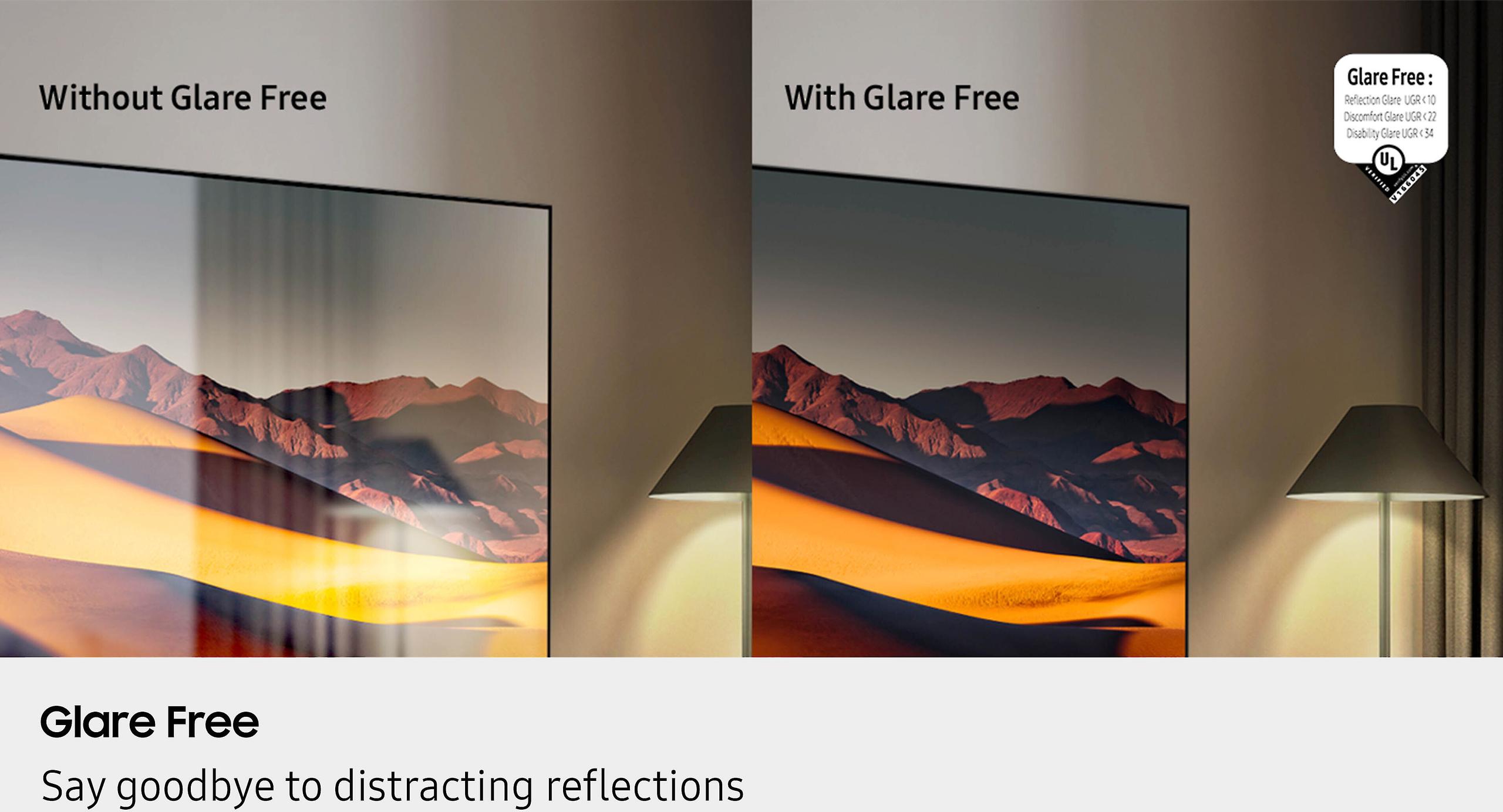
Perhaps the most significant differentiator between these models is the QN90F's revolutionary matte anti-glare coating. Traditional TVs act like mirrors when lights or windows create reflections on the screen, which can be incredibly distracting during daytime viewing.
Samsung's matte coating on the QN90F virtually eliminates these reflections while maintaining color accuracy and contrast—a technical achievement that's harder to accomplish than it sounds. Customer reviews consistently highlight this feature, with many describing it as "stunning and completely free of any reflections" and allowing comfortable viewing even in direct sunlight.
The QN80F lacks this coating, resulting in what reviewers describe as "distracting direct mirror-like reflections." If your TV room has windows or bright overhead lights, you'll likely find yourself adjusting curtains or changing seating positions to avoid these reflections, which can significantly impact your viewing comfort.
The gap in processing power between these models is substantial and affects everything from upscaling lower-resolution content to enabling advanced smart features.
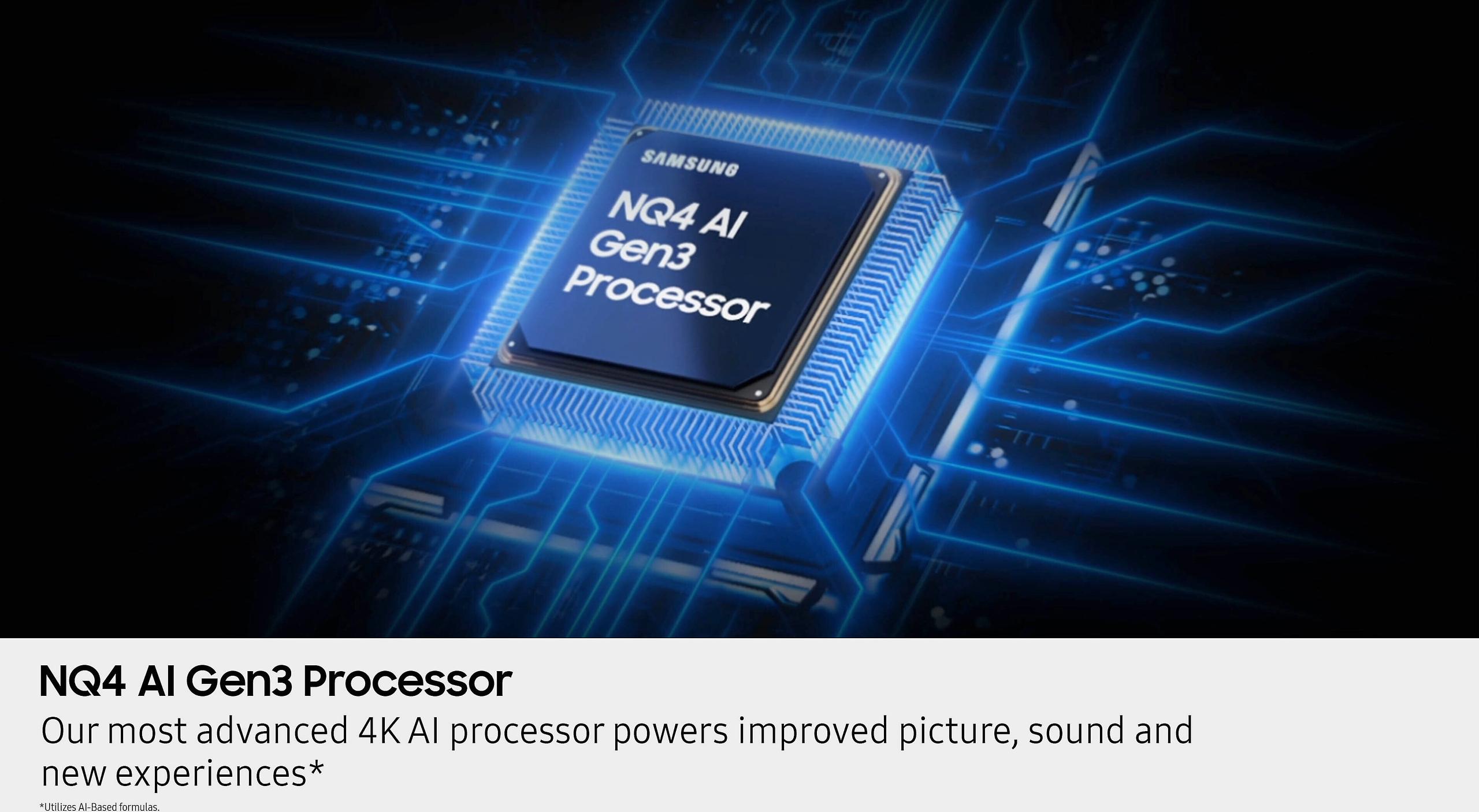
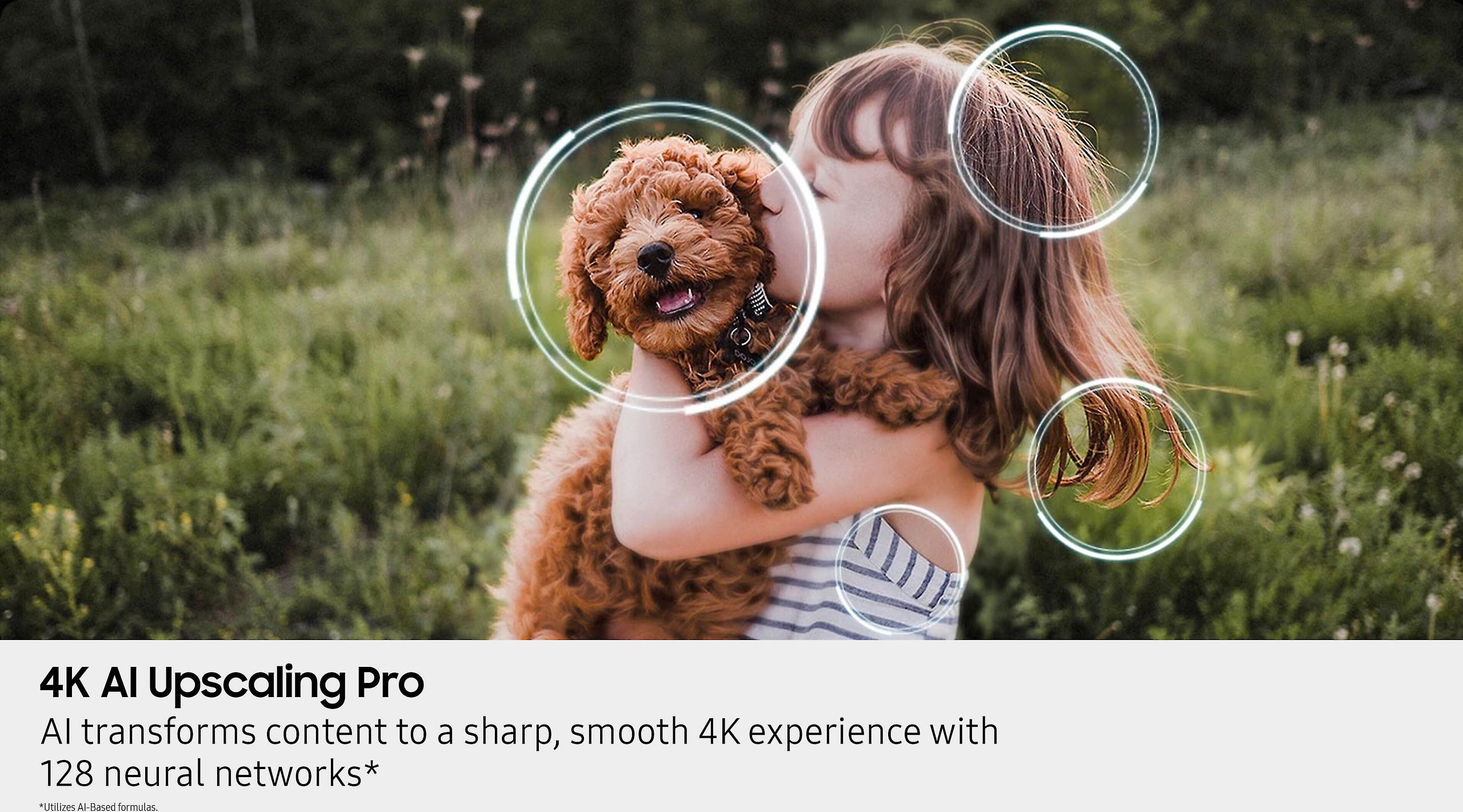
The QN90F features Samsung's flagship NQ4 AI Gen3 processor, powered by 128 neural networks. Neural networks are essentially artificial intelligence systems that learn to recognize patterns and make decisions—in this case, about how to optimize your picture and sound in real time. This processor analyzes every frame of content, identifying objects, faces, text, and backgrounds to apply appropriate enhancements.
This processing power enables Samsung's Vision AI suite, which includes features like universal gesture control (controlling your TV with hand movements), generative wallpapers that create unique art based on your mood, and home insights that can alert you to activity detected by the TV's sensors.
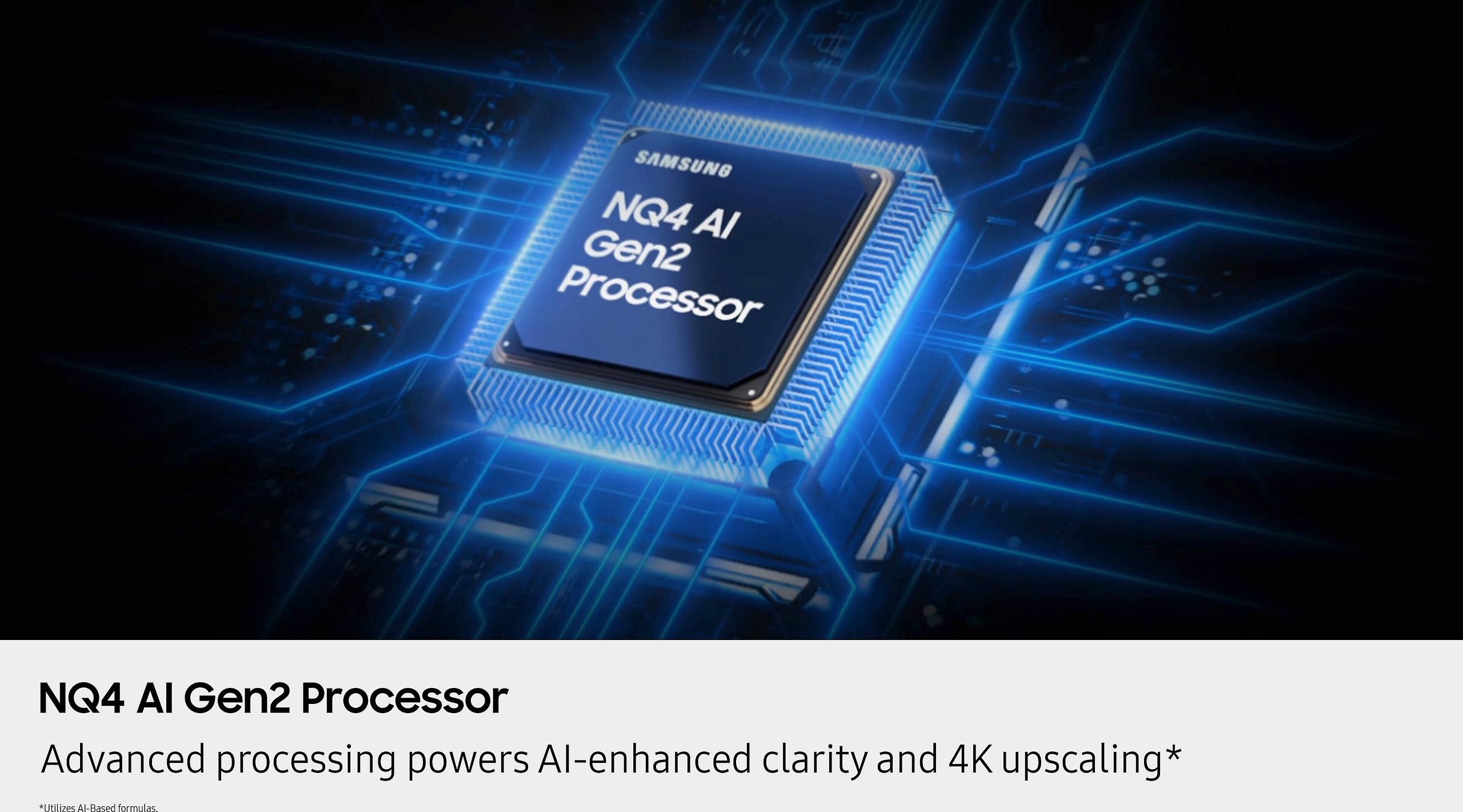
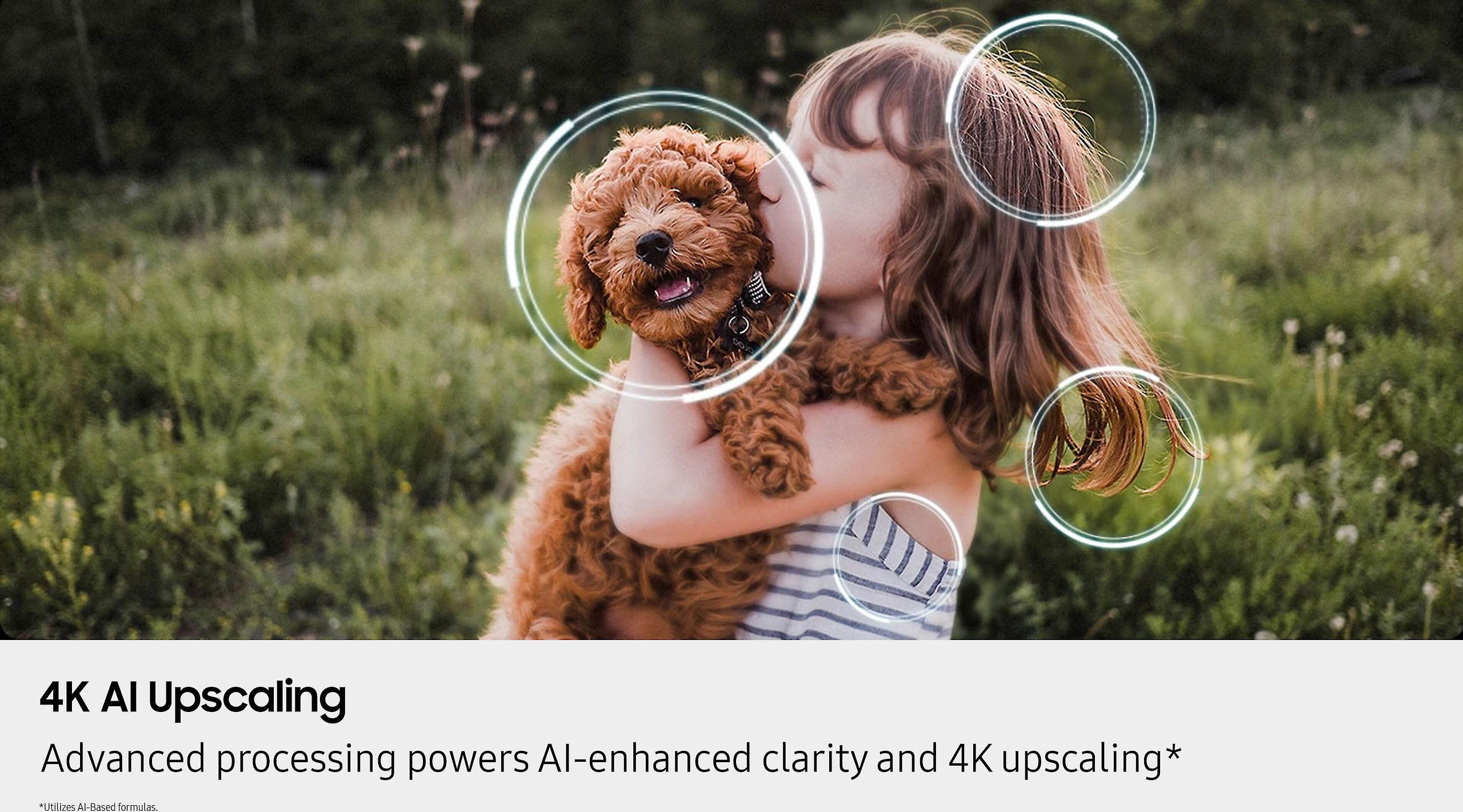
The QN80F uses a Gen2 processor with only 20 neural networks—still capable, but representing a significant reduction in AI processing power. You'll still get good upscaling of lower-resolution content to near-4K quality, but without the advanced AI features and real-time optimization capabilities of the premium model.
Both TVs excel at upscaling, which is the process of taking lower-resolution content (like 1080p Netflix shows or 720p cable TV) and making it look good on a 4K screen. However, the QN90F's superior processing shows clear advantages here. The 128 neural networks can better identify and enhance different types of content, preserving details in faces during dialogue scenes while sharpening backgrounds and text differently.
When watching older TV shows or movies that weren't originally filmed in 4K, the difference in upscaling quality becomes apparent in fine details like clothing textures, hair, and background objects. The enhanced processing also helps with motion handling, reducing blur during fast-paced sports or action sequences.
Audio often gets overlooked in TV comparisons, but both models offer significant improvements over basic TV speakers.
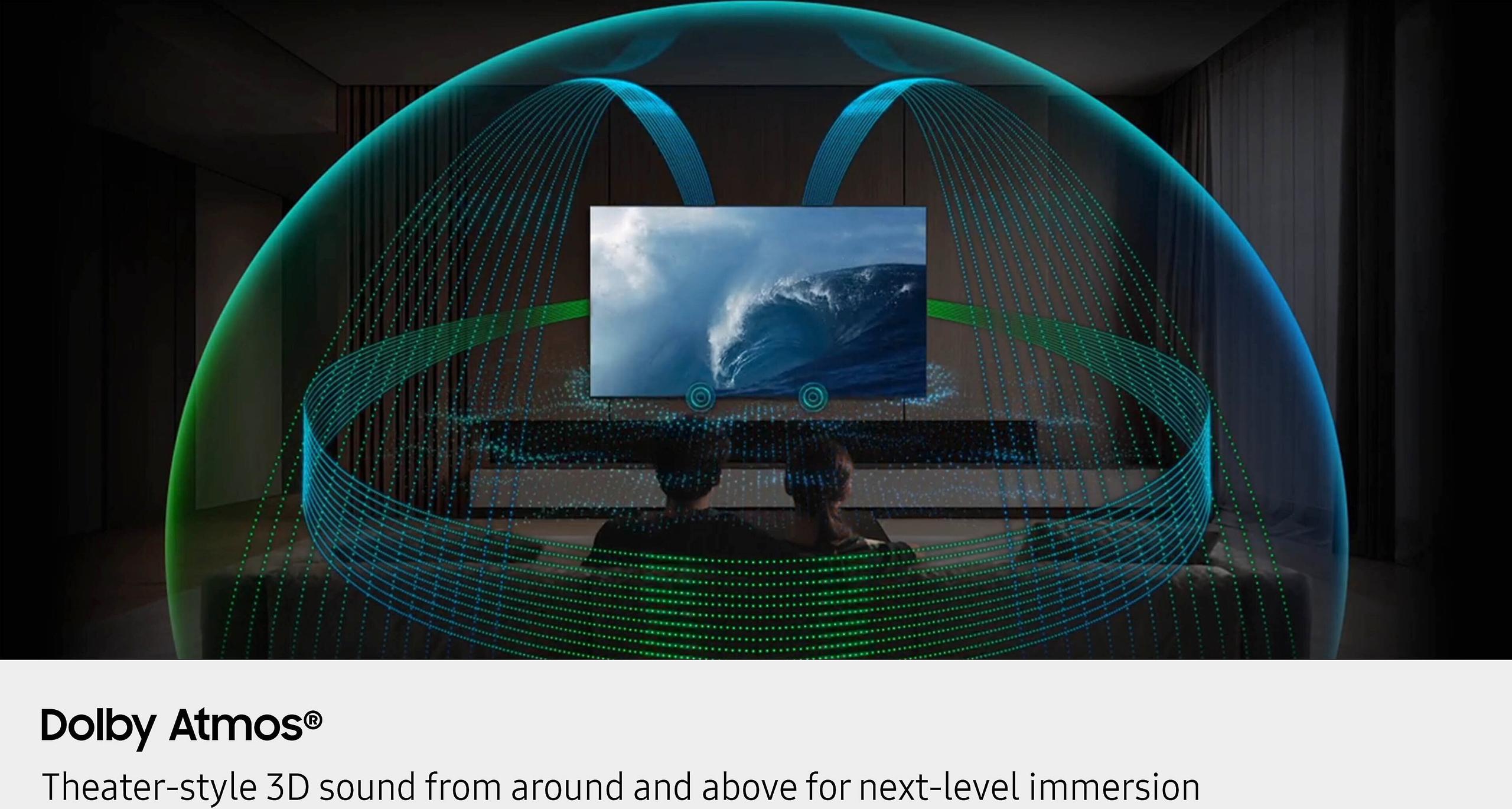
The QN90F features a more sophisticated 60W 4.2.2 channel speaker system with Object Tracking Sound+. This technology analyzes the audio track and directs sounds to specific speakers based on where action is happening on screen. When a car drives from left to right, the audio follows that movement. When a helicopter flies overhead in a movie, you'll hear it move across your room accordingly.
The Adaptive Sound Pro feature uses AI to separate dialogue, music, and sound effects, optimizing each component individually. This means voices remain clear during explosive action scenes, while background music and effects maintain their impact without overwhelming conversations.
The QN80F provides standard audio features without the advanced spatial processing. While still offering decent sound quality for a TV, it lacks the immersive audio experience that can make movies and shows more engaging.
Both TVs support Dolby Atmos, which creates three-dimensional sound by bouncing audio off your ceiling and walls. However, the QN90F's additional processing power and speaker configuration make better use of this technology.
Both models excel for gaming, supporting the features that modern consoles and gaming PCs demand. This includes 4K resolution at 120Hz refresh rates, which means games can display 120 frames per second for incredibly smooth motion—particularly noticeable in fast-paced racing games or first-person shooters.
Variable Refresh Rate (VRR) technology synchronizes the TV's refresh rate with your gaming device's output, eliminating screen tearing (when parts of different frames display simultaneously, creating a jagged appearance). Auto Low Latency Mode (ALLM) automatically switches the TV to its fastest response mode when it detects gaming input.
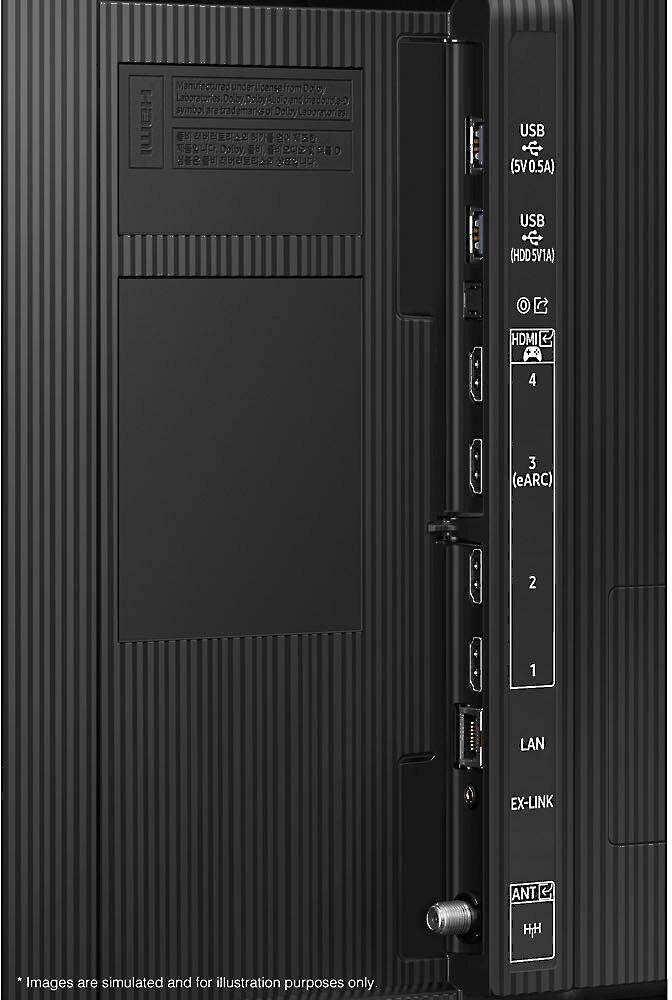
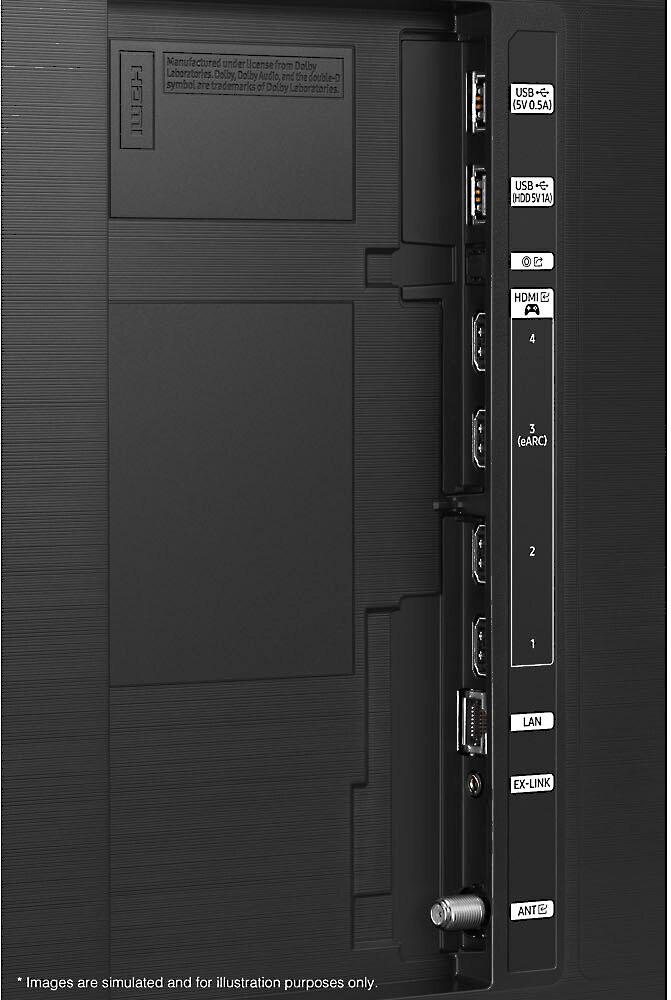
Both the QN80F and QN90F achieve ultra-low input lag around 9.9ms, which is excellent for competitive gaming where every millisecond matters. Four HDMI 2.1 ports on each model support full bandwidth for all these features simultaneously.
The QN90F offers additional support for 165Hz refresh rates, beneficial for high-end PC gaming with powerful graphics cards. Samsung's Gaming Hub provides access to cloud gaming services like Xbox Game Pass and NVIDIA GeForce NOW without needing a console.
For home theater gaming setups, the QN90F's superior contrast and brightness make games more immersive, especially in darker titles where shadow detail matters. The anti-glare coating also helps in gaming rooms with ambient lighting.
Samsung's Tizen operating system powers both TVs, offering access to all major streaming services and over 2,700 free channels. The interface is intuitive and responsive, with voice control through Samsung's Bixby assistant.
The QN90F distinguishes itself with Samsung Vision AI features that weren't possible with earlier processing limitations. These include real-time language translation for foreign content, AI-generated artwork that matches your room's mood and lighting, and smart home integration that can control compatible devices throughout your house.
Setup and calibration are more automated on the QN90F, with AI analyzing your room's lighting and acoustics to optimize settings automatically. The TV can even adjust its picture based on ambient light throughout the day.
For dedicated home theater setups, several factors become particularly important. The QN90F offers advantages that serious home theater enthusiasts will appreciate.
The superior contrast performance means you'll see more detail in dark scenes without having to adjust room lighting. Whether you're watching atmospheric horror films or space epics with deep black backgrounds, the improved black levels create a more cinematic experience.
The anti-glare coating on the QN90F might seem less relevant in a darkened theater room, but it actually helps even in these environments by reducing reflections from any ambient lighting, exit signs, or light leakage from adjacent rooms.
Peak brightness capabilities matter more than you might expect in home theaters. HDR content like 4K Blu-rays often contains specular highlights—think of sunlight glinting off water or metal—that benefit from higher peak brightness to maintain the director's intended impact.
Both models support HDR10+ but notably lack Dolby Vision support, which is a consideration for home theater purists who prefer the more advanced HDR format. However, Samsung's HDR10+ implementation is quite good, and the vast majority of streaming content works well with both formats.
At the time of writing, Samsung typically prices the QN90F as the premium option above the QN80F, though specific promotional pricing can vary significantly throughout the year. The question becomes whether the additional features and performance improvements justify the price difference for your specific situation.
The QN80F targets buyers who want Mini LED technology and solid performance without paying for flagship features. It makes the most sense for dedicated dark-room viewing where reflection issues won't impact the experience, and where advanced AI features aren't priorities.
However, many reviewers have noted that the value proposition for the QN80F can be challenging when compared to competitive Mini LED options from other manufacturers. The reflection handling issues and processing limitations create scenarios where similarly priced alternatives might offer better overall experiences.
The QN90F typically justifies its premium positioning through the anti-glare technology alone for most buyers. The ability to enjoy content in any lighting condition without compromise is a daily quality-of-life improvement that affects every viewing session. Add the superior processing, picture quality, and advanced features, and it becomes a better long-term investment for most users.
The QN80F makes sense if:
The QN90F is the better choice if:
For home theater enthusiasts specifically: The QN90F is almost certainly the better investment. The superior contrast, peak brightness, and processing power create a more engaging cinematic experience. While the anti-glare coating might seem unnecessary in a darkened room, it actually helps with any ambient lighting and creates a more professional theater-like appearance.
Professional reviews consistently conclude that the QN90F is "significantly better than the Samsung QN80F in almost every way." Unless budget is the absolute determining factor and you have ideal dark viewing conditions, the QN90F's anti-glare technology alone makes it worth considering for most buyers.
The superior processing power, picture quality improvements, and daily usability advantages make the QN90F a better long-term investment. In a category where you'll likely keep your purchase for 5-7 years, the additional features and performance capabilities become increasingly valuable over time.
The QN80F isn't a bad TV—it offers solid Mini LED performance and excellent gaming capabilities. However, in the premium TV market, "solid" often isn't enough when competitors offer similar performance at potentially better values, or when spending a bit more gets you significantly better technology.
If you're considering either of these models, I'd strongly recommend experiencing the QN90F's anti-glare coating in person at a retail store with typical lighting conditions. The difference is immediately apparent and often becomes the deciding factor for buyers who initially planned to save money with the QN80F.
The 2025 TV market offers more choices than ever, but Samsung's QN90F represents the sweet spot for buyers who want flagship performance without moving to 8K or OLED technologies. It's a TV that works exceptionally well in real-world conditions while delivering the premium experience that justifies the investment in a 65-inch centerpiece for your home entertainment setup.
| Samsung 65" QN80F Neo QLED 4K TV | Samsung 65" QN90F Neo QLED 4K Vision AI Smart TV 2025 |
|---|---|
| AI Processing Power - Determines upscaling quality and smart features | |
| NQ4 AI Gen2 Processor with 20 neural networks | NQ4 AI Gen3 Processor with 128 neural networks |
| Peak HDR Brightness - Critical for HDR impact and bright room viewing | |
| 550-600 nits (good for most rooms) | 1,900 nits highlights, 600 nits full-screen (excellent for any environment) |
| Local Dimming Technology - Controls contrast and black levels | |
| Quantum Matrix Technology (fewer zones) | Quantum Matrix Technology Pro (thousands of zones) |
| Anti-Glare Performance - Makes or breaks daytime viewing comfort | |
| Standard glossy screen with mirror-like reflections | Revolutionary matte coating virtually eliminates all reflections |
| Audio System - Determines if you need a soundbar | |
| Standard speakers with Dolby Atmos | 60W 4.2.2CH with Object Tracking Sound+ and Adaptive Sound Pro |
| Gaming Refresh Rate - Important for PC gaming beyond 120Hz | |
| 120Hz maximum (perfect for consoles) | Up to 165Hz (benefits high-end PC gaming) |
| Smart TV Features - Future-proofing and convenience | |
| Basic Tizen OS with standard features | Samsung Vision AI with gesture control, generative wallpapers, home insights |
| Black Level Performance - Most noticeable in dark scenes | |
| Good contrast with some blooming | Near-OLED black levels with minimal blooming |
| Weight - Indicates build quality and mounting considerations | |
| 52.2 lbs (lighter, simpler construction) | 60.6 lbs with stand (premium build quality) |
| Best Use Case - When each model makes most sense | |
| Dark rooms, budget-conscious buyers, gaming focus | Any lighting condition, premium experience, long-term investment |
The biggest difference is the Samsung QN90F features revolutionary anti-glare technology that virtually eliminates reflections, while the Samsung QN80F has a standard glossy screen that creates mirror-like reflections. The QN90F also has significantly more processing power with 128 neural networks compared to the QN80F's 20 neural networks.
The Samsung QN90F is dramatically better for bright rooms due to its matte anti-glare coating that eliminates distracting reflections even in direct sunlight. The Samsung QN80F will show mirror-like reflections from windows and lights, making daytime viewing uncomfortable without closing curtains or adjusting seating.
Yes, both the Samsung QN80F and Samsung QN90F excel for gaming with 4K 120Hz support, ultra-low 9.9ms input lag, and four HDMI 2.1 ports. The QN90F offers additional 165Hz support for high-end PC gaming, but both perform equally well with consoles like PS5 and Xbox Series X.
The Samsung QN90F delivers superior picture quality with higher peak brightness (1,900 nits vs 550-600 nits), better contrast with thousands of dimming zones, and near-OLED black levels. The Samsung QN80F still provides good picture quality but with fewer dimming zones and less precise contrast control.
The Samsung QN90F includes Samsung Vision AI with gesture control, generative wallpapers, and smart home insights that the Samsung QN80F lacks. These features aren't essential for basic TV viewing but add convenience and future-proofing for tech enthusiasts who want the latest smart TV capabilities.
For home theater use, the Samsung QN90F is the clear winner with its superior contrast, higher peak brightness for HDR content, and better black levels that rival OLED TVs. These improvements create a more cinematic experience, especially for dark movie scenes and HDR content on 4K Blu-rays.
The Samsung QN90F reaches 1,900 nits in small highlights and maintains 600 nits full-screen, while the Samsung QN80F achieves 550-600 nits in typical scenes. This brightness difference is immediately noticeable in HDR content and bright room viewing situations.
Yes, both the Samsung QN80F and Samsung QN90F run Samsung's Tizen operating system with access to all major streaming services like Netflix, Disney+, and Prime Video, plus over 2,700 free channels. The QN90F offers additional AI-powered features for content optimization and smart home integration.
The Samsung QN90F features a more advanced 60W 4.2.2 channel system with Object Tracking Sound+ that moves audio around the room to match on-screen action. The Samsung QN80F has standard TV speakers that are decent but lack the spatial audio processing of the premium model.
The Samsung QN80F works well for buyers with dark viewing rooms and controlled lighting who prioritize gaming performance and don't need advanced AI features. However, most people will benefit from the Samsung QN90F's anti-glare technology and superior picture quality for daily use in typical living room environments.
While the Samsung QN80F costs less upfront, the Samsung QN90F typically offers better long-term value due to its anti-glare technology, superior processing, and premium features that improve the daily viewing experience. The QN90F's versatility in any lighting condition makes it a better investment for most buyers.
Both the Samsung QN80F and Samsung QN90F are 2025 models that will likely see promotional pricing throughout the year. However, if you need a TV now, the performance gap between these models remains consistent regardless of pricing, so the same decision factors apply whether you buy during sales or at regular prices.
We've done our best to create useful and informative comparisons to help you decide what product to buy. Our research uses advanced automated methods to create this comparison and perfection is not possible - please contact us for corrections or questions. These are the sites we've researched in the creation of this article: samsung.com - theshortcut.com - youtube.com - bestbuy.com - rtings.com - samsung.com - samsung.com - samsung.com - sargentappliance.com - displayspecifications.com - bestbuy.com - rtings.com - images.samsung.com - youtube.com - listenup.com - youtube.com - cullenshomecenter.com - rtings.com - shopjetson.com - youtube.com - samsung.com - samsung.com - videoandaudiocenter.com - rtings.com - bestbuy.com - youtube.com - news.samsung.com - news.samsung.com - news.samsung.com - bestbuy.com - news.samsung.com - youtube.com - news.samsung.com - youtube.com - smarthomesounds.co.uk

Privacy Policy
Terms and Conditions - Affiliate Policy
Home Security
© Copyright 2008-2026.
11816 Inwood Rd #1211, Dallas, TX 75244