

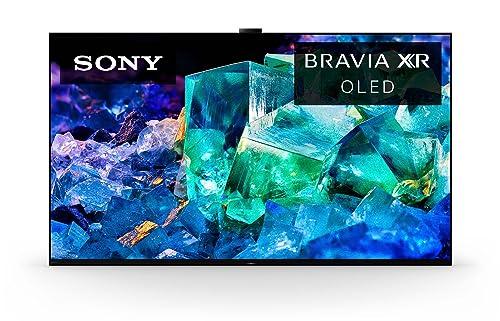


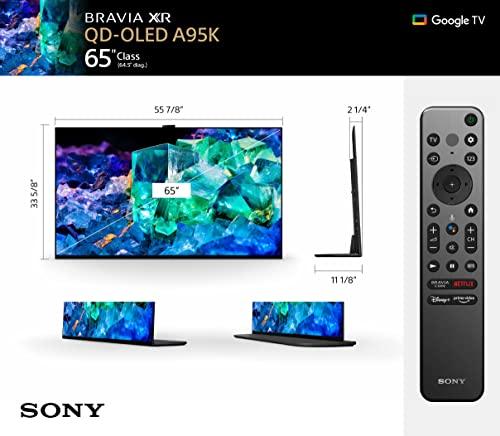



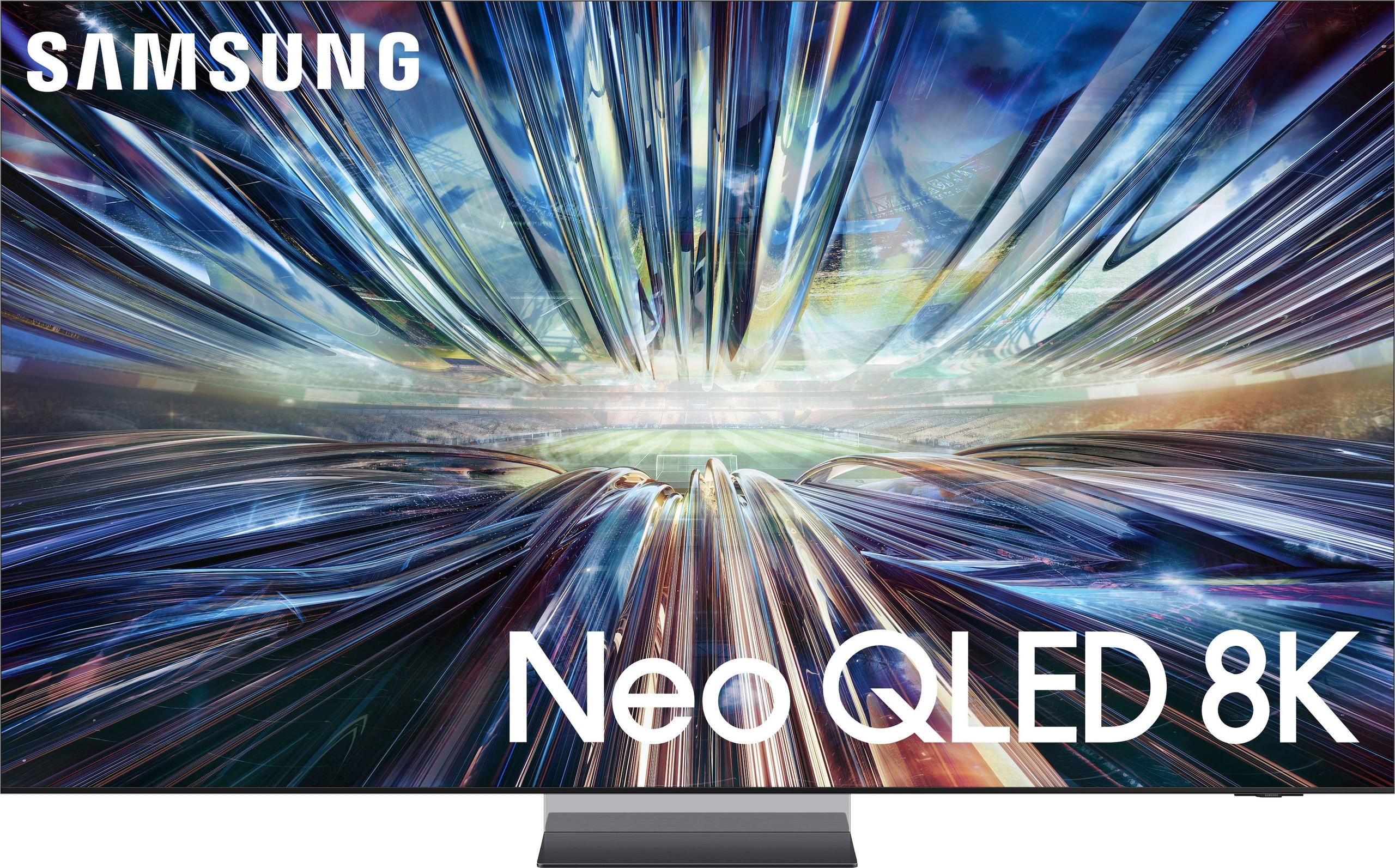
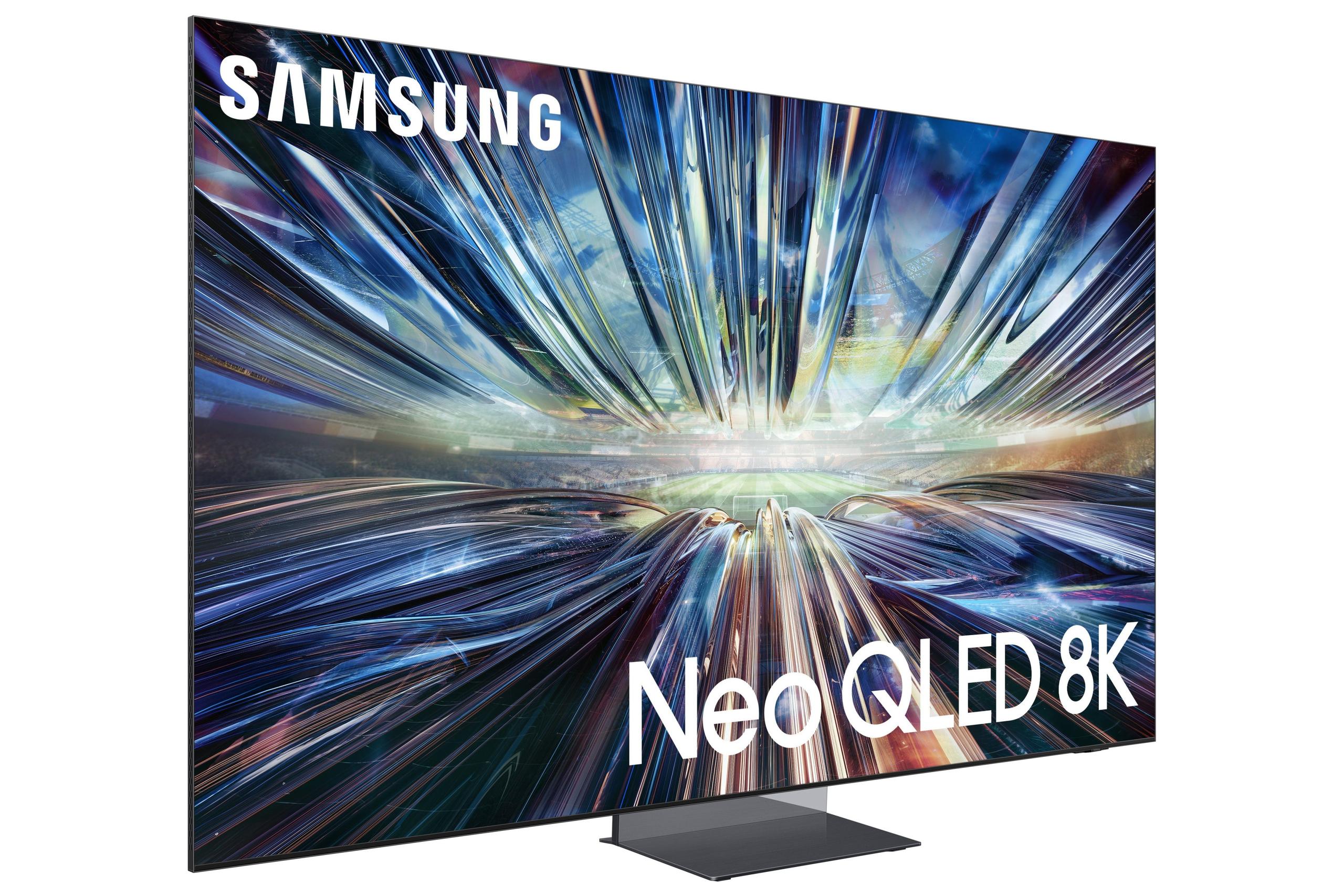
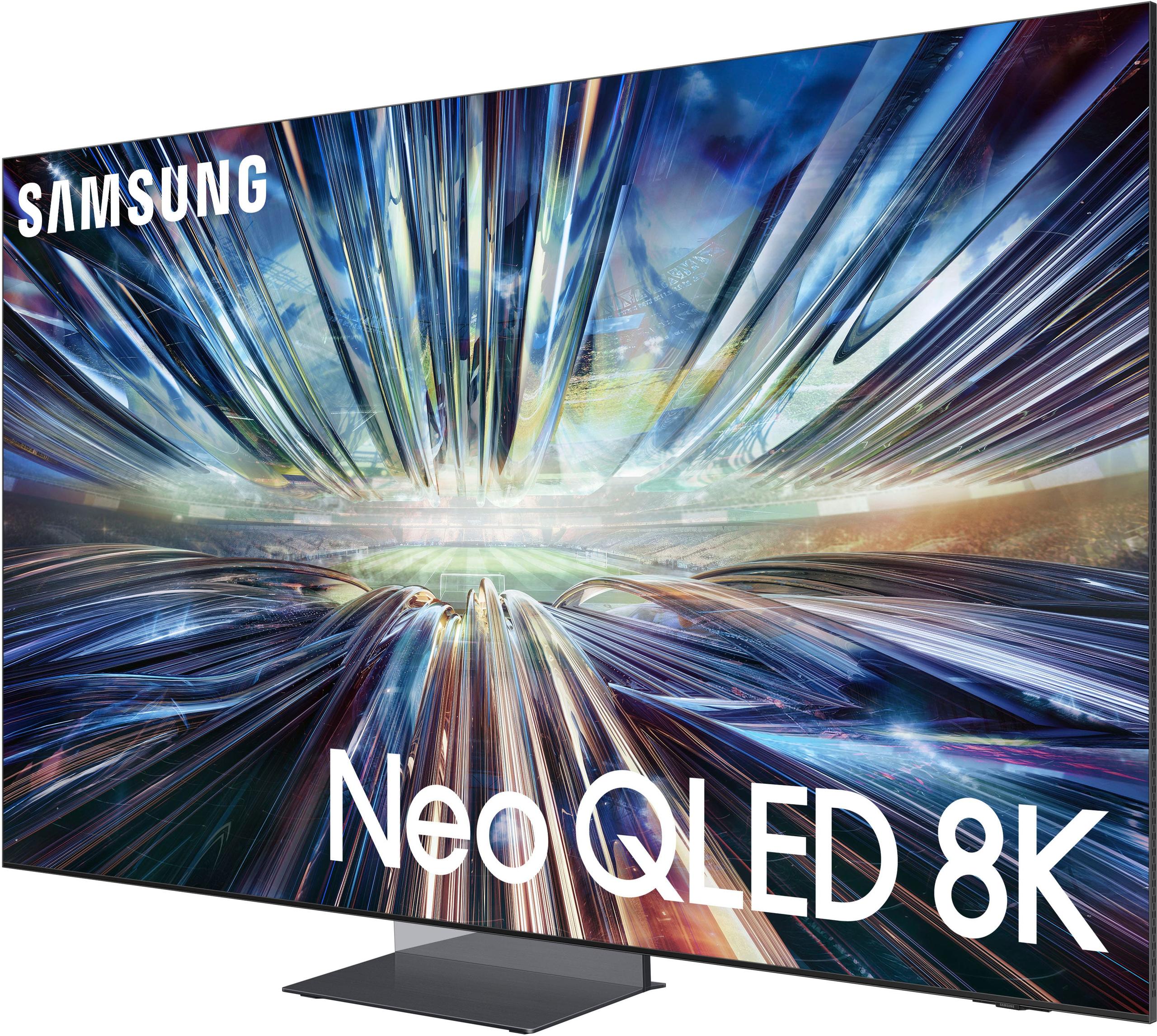
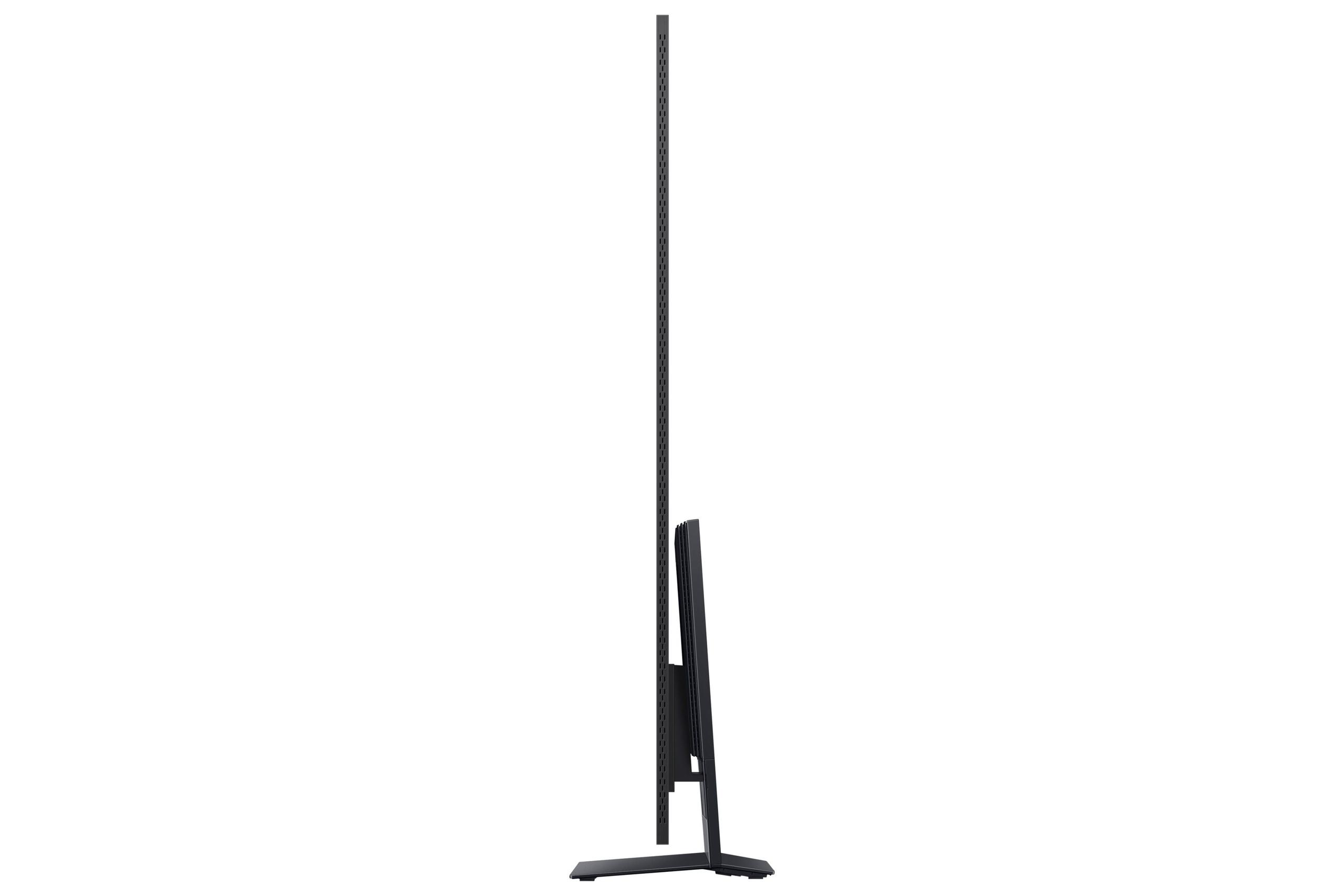


Shopping for a premium TV in today's market means choosing between two fundamentally different technologies that approach picture quality from opposite angles. The Sony Bravia XR A95K represents the cutting edge of OLED technology with its QD-OLED panel, while the Samsung QN900D pushes Mini-LED brightness and 8K resolution to new heights. Both deliver exceptional performance, but understanding their differences is crucial for making the right choice for your home.
Before diving into specifics, it's worth understanding what makes these TVs special. Traditional LCD TVs use a backlight that shines through liquid crystals to create images, but they struggle with deep blacks because the backlight always bleeds through slightly. OLED TVs solve this by using pixels that emit their own light and can turn completely off, creating perfect blacks. Mini-LED TVs use thousands of tiny LEDs as backlights with precise dimming zones, achieving much better contrast than regular LCDs while reaching higher peak brightness than OLEDs.
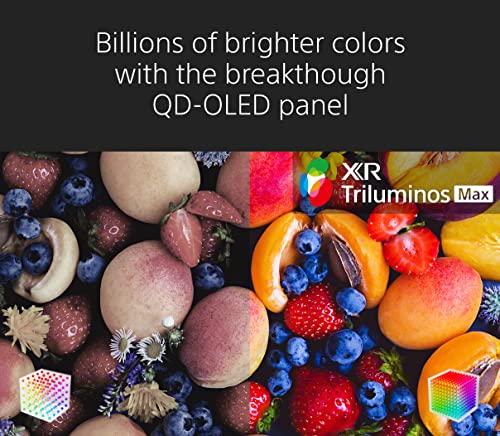
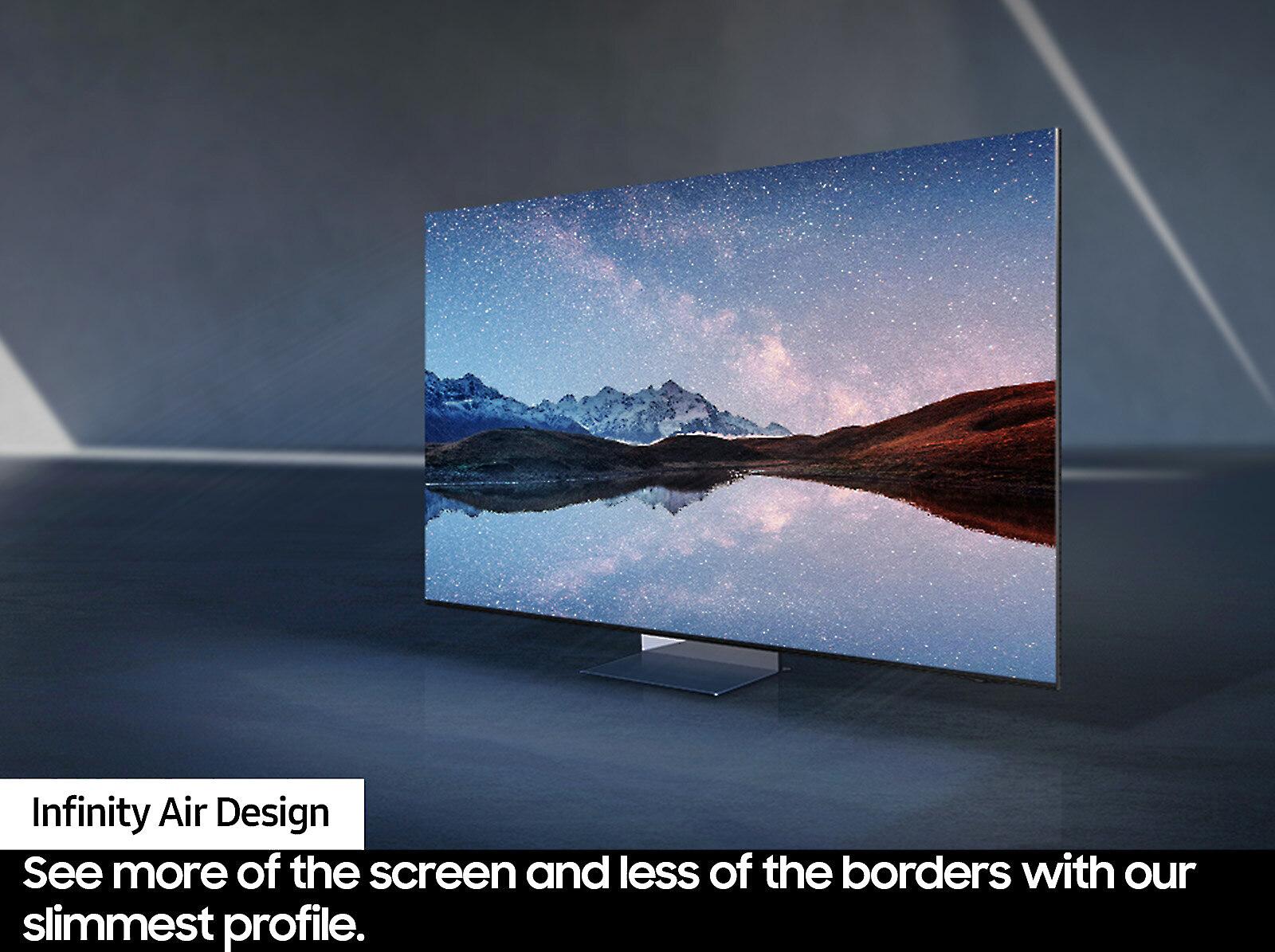
The Sony A95K takes OLED technology further with QD-OLED, which combines self-emitting pixels with quantum dots (tiny particles that convert blue light into pure red and green colors). This creates more vibrant colors than traditional OLEDs while maintaining perfect blacks. The Samsung QN900D represents Samsung's flagship Mini-LED approach, using quantum matrix technology to control thousands of dimming zones precisely while upscaling everything to 8K resolution.
Key factors in premium TV performance include black level depth (how dark blacks can get), peak brightness (important for HDR content), color accuracy and volume (how many colors the TV can display), motion handling (crucial for sports and gaming), and smart features. The best choice depends on your viewing environment, content preferences, and whether you prioritize cinematic picture quality or cutting-edge features.
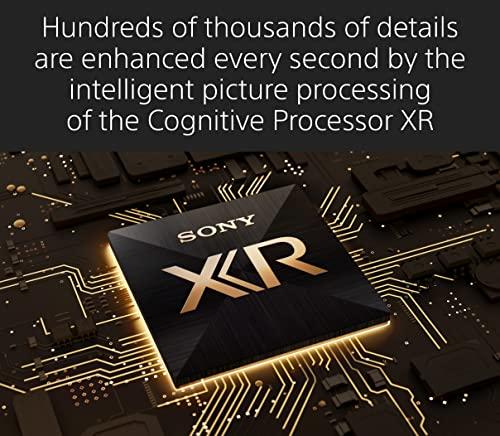
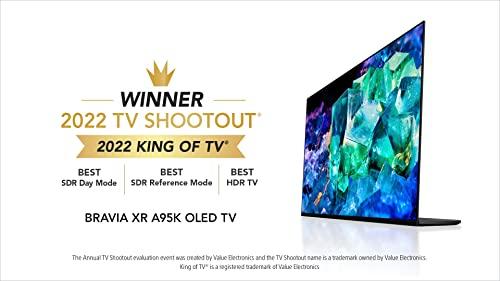
The Sony A95K launched in 2022 as one of the first consumer QD-OLED TVs available, representing a major breakthrough in display technology. Since its release, QD-OLED has proven itself as a premium technology, though it remains expensive to manufacture and limited to larger screen sizes. The TV's Cognitive Processor XR was Sony's answer to AI-enhanced picture processing, analyzing content the way human brains perceive images and sound.
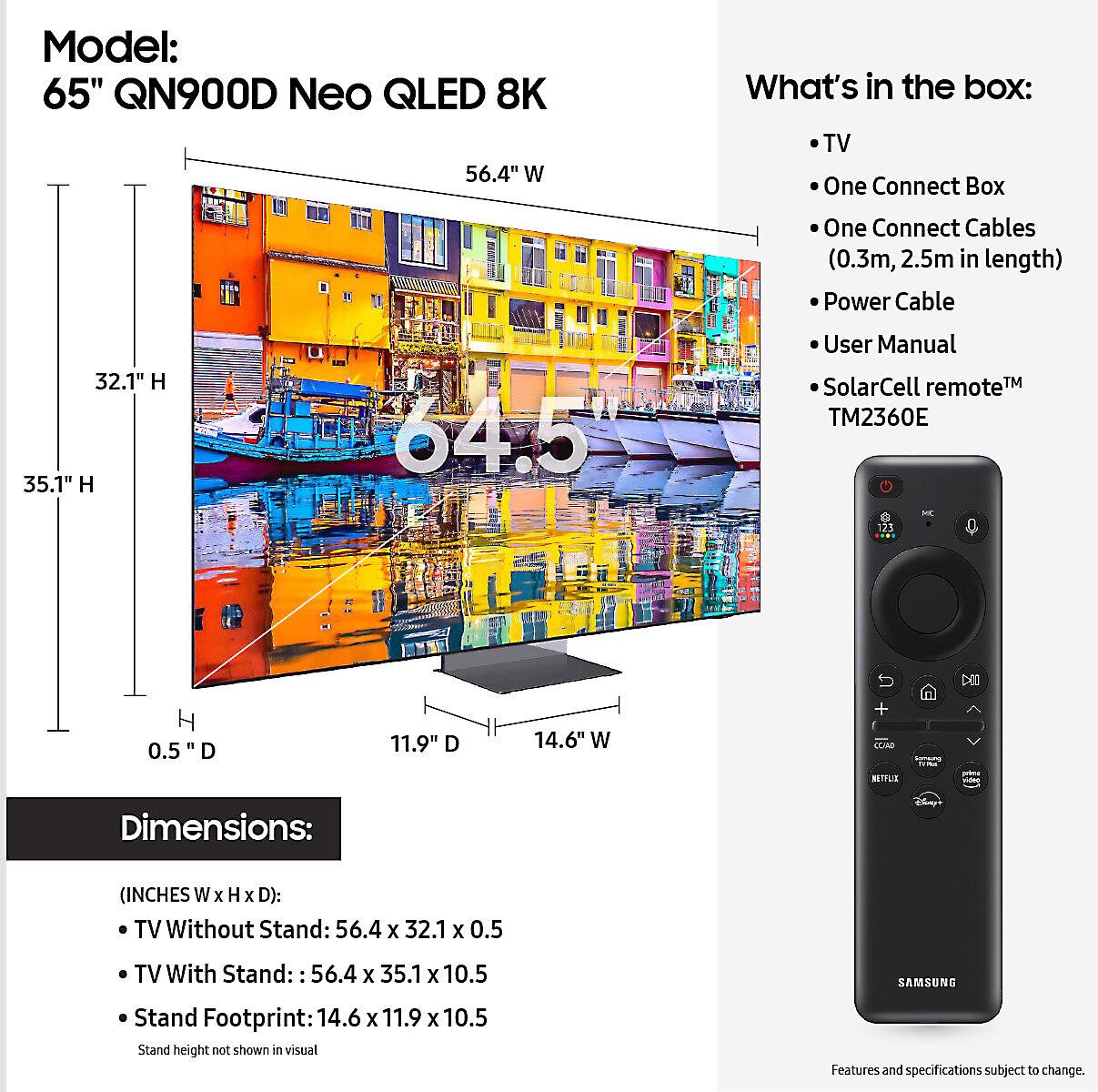
The Samsung QN900D arrived in 2024 as Samsung's flagship 8K TV, featuring their third-generation NQ8 AI processor and refined Mini-LED technology. Since the original Neo QLED launch in 2021, Samsung has continuously improved their local dimming algorithms and reduced blooming effects, though they still can't match OLED's pixel-perfect control.
Between these release years, the TV landscape has evolved significantly. HDR content has become more prevalent, gaming features have become crucial selling points, and AI upscaling has improved dramatically. However, 8K content remains scarce, making the practical benefits of 8K displays questionable for most users.
Picture quality starts with contrast, and this is where the Sony A95K demonstrates its fundamental advantage. OLED pixels can turn completely off, creating true black with zero light emission. When you're watching a movie with stars in space or a dark scene with subtle shadow details, the A95K displays perfect blacks alongside bright highlights, creating an infinite contrast ratio that no backlit display can match.
The Samsung QN900D uses advanced local dimming with thousands of Mini-LEDs, allowing it to darken specific screen areas while keeping others bright. This creates excellent contrast for a backlit display, but it can't achieve true black. Dark scenes show a slight grayish tint, and you might notice subtle blooming (light halos) around bright objects on dark backgrounds. However, Samsung's quantum matrix technology has significantly reduced these issues compared to earlier generations.
For movie watching, especially in dark rooms, the A95K's perfect blacks create a more immersive experience. Dark movie scenes retain detail without the slight gray cast that affects even the best Mini-LED displays.
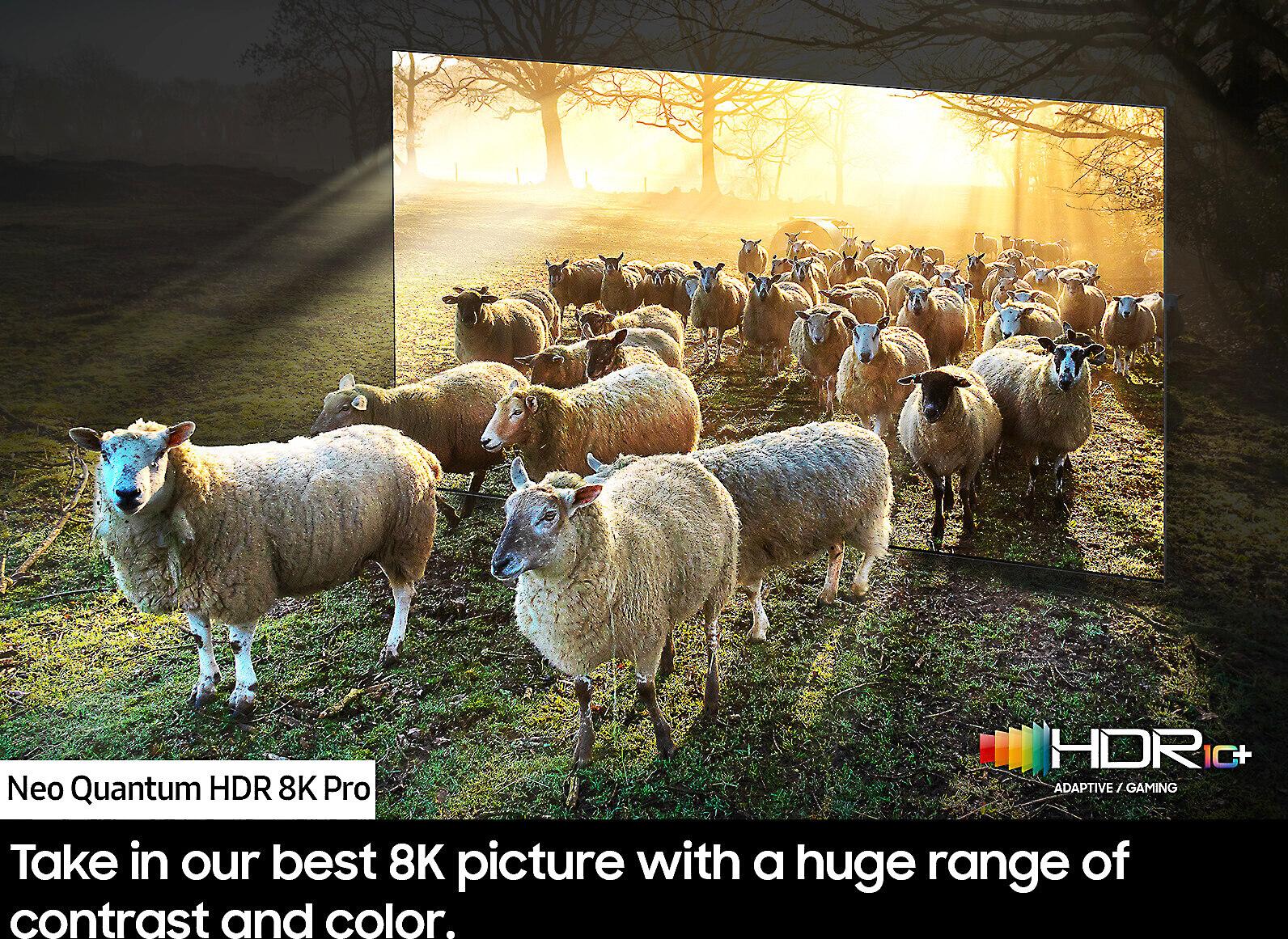
Peak brightness tells a different story. The Samsung QN900D can achieve significantly higher brightness levels than the Sony A95K, making it superior for bright rooms and HDR content that demands brilliant highlights. HDR (High Dynamic Range) content is mastered to display brighter whites and deeper blacks simultaneously, and higher peak brightness allows more dramatic HDR effects.
In a bright living room with large windows, the QN900D's superior brightness helps it overcome ambient light better. Bright HDR scenes like sunlit landscapes or explosions maintain their impact even when competing with daylight. The A95K, while still capable, may look less vibrant in very bright environments.
However, brightness isn't everything. The A95K's QD-OLED technology delivers exceptional brightness efficiency, meaning colors remain saturated and accurate even at lower overall brightness levels. Many users find this creates a more natural, less fatiguing viewing experience during extended watching sessions.
Color reproduction showcases the Sony A95K's technological advantage. QD-OLED combines quantum dots with OLED's pixel control, creating colors that are both highly accurate and incredibly vibrant. The technology eliminates the white subpixel used in traditional OLEDs, allowing for purer reds and greens while maintaining OLED's contrast advantages.
During our research into professional reviews and user feedback, the A95K consistently receives praise for its color accuracy straight out of the box. Skin tones look natural, landscapes appear vivid without oversaturation, and the TV maintains color accuracy across different brightness levels. This makes it exceptional for both movies and TV content where accurate colors matter.
The Samsung QN900D also delivers excellent colors through quantum dot technology, but it's limited by its LCD panel structure. While it can display very bright, saturated colors, it can't match the A95K's pixel-level color control or its ability to display deep, saturated colors in darker scenes.
Here's where the Sony A95K gains a significant advantage for streaming enthusiasts. It supports Dolby Vision, the premium HDR format used by Netflix, Disney+, Apple TV+, and Amazon Prime Video for their highest-quality content. Dolby Vision uses dynamic metadata, adjusting HDR settings scene by scene for optimal picture quality.
The Samsung QN900D doesn't support Dolby Vision, instead using HDR10+ for dynamic HDR. While HDR10+ can deliver similar benefits, most streaming services prioritize Dolby Vision content. This means you'll miss out on the optimal HDR experience when watching popular shows and movies on major streaming platforms.
For serious movie and TV enthusiasts, Dolby Vision support often becomes a deciding factor. The difference is particularly noticeable in dark scenes with subtle lighting or bright scenes with complex HDR mastering.
The Samsung QN900D's 8K resolution provides four times more pixels than 4K, but here's the reality: there's virtually no native 8K content available to consumers. No streaming services offer 8K, and 8K Blu-rays don't exist. The TV's value depends entirely on its 8K AI upscaling capabilities.
Samsung's 8K AI upscaling has improved significantly, using machine learning to enhance 4K and lower-resolution content. Well-mastered 4K content can look slightly sharper on the QN900D compared to native 4K displays, but the improvement is subtle and most noticeable on larger screen sizes or close viewing distances.
The Sony A95K focuses on delivering exceptional 4K performance with excellent upscaling for 1080p content. Given that virtually all content is 4K or lower, this practical approach often delivers better real-world results than theoretical 8K capability.
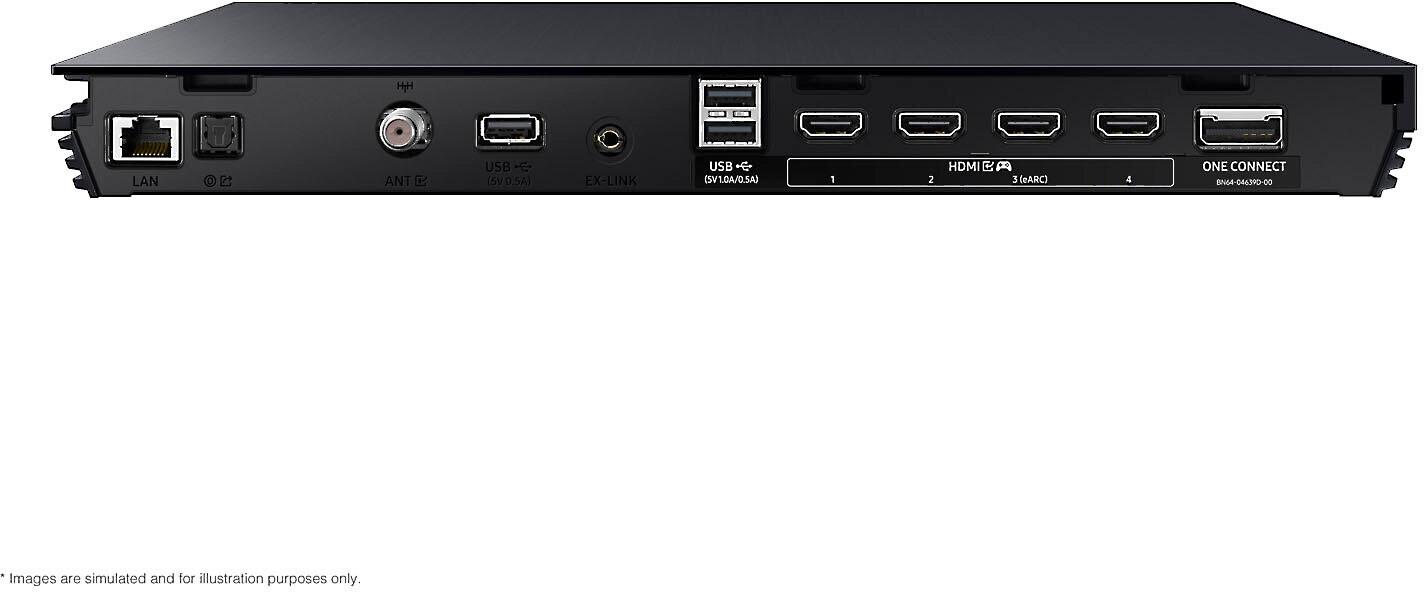
Gaming has become a crucial consideration for premium TVs, and the Samsung QN900D leads in raw specifications. It supports 4K gaming at up to 240Hz or 8K gaming at 60Hz, making it appealing for PC gamers with high-end graphics cards. The TV includes four HDMI 2.1 ports with full bandwidth, providing flexibility for multiple gaming devices.
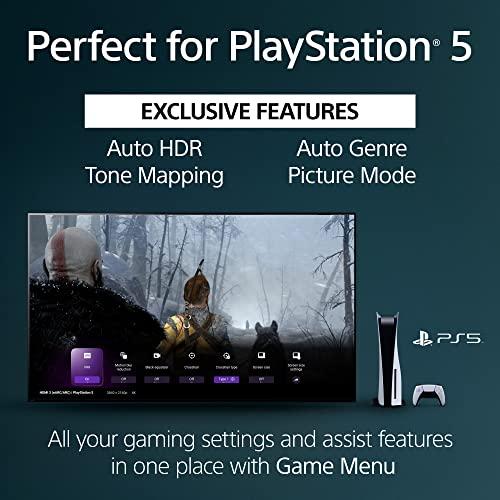
The Sony A95K, released in 2022, supports 4K gaming at 120Hz with Variable Refresh Rate (VRR) support, which covers most gaming needs for PlayStation 5 and Xbox Series X. However, it only includes two HDMI 2.1 ports, which can limit connectivity when you have multiple gaming devices and a sound system.
Response time and input lag matter tremendously for competitive gaming. Based on professional testing data, both TVs deliver low input lag in their gaming modes, but the QN900D has a slight edge due to its newer processing and more advanced gaming optimizations.
The Samsung QN900D includes more comprehensive gaming features, including AI Auto Game Mode that automatically adjusts settings based on the connected console and game type. Its support for all major VRR standards ensures compatibility with a wider range of gaming hardware.
However, OLED technology gives the Sony A95K advantages for gaming picture quality. Perfect blacks enhance dark game scenes, and OLED's near-instantaneous pixel response eliminates motion blur that can affect LCD panels during fast action sequences.
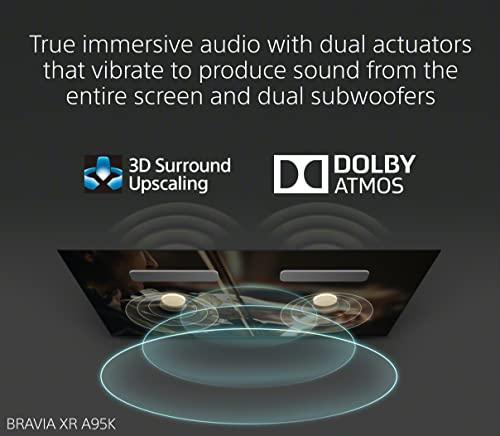
The Sony A95K includes a genuinely innovative audio solution that many overlook. Its Acoustic Surface Audio+ technology turns the entire screen into a speaker using actuators that vibrate the display panel. This creates sound that appears to come directly from on-screen action, improving dialogue clarity and creating a more immersive experience without external speakers.
Traditional TV speakers, like those presumably used in the Samsung QN900D, produce sound from below or behind the screen, creating a disconnect between what you see and hear. The A95K's screen-based audio is particularly effective for dialogue-heavy content and creates a more engaging experience for casual viewing.
Both TVs support Dolby Atmos for spatial audio when connected to compatible sound systems, but the A95K's built-in audio solution means you can delay purchasing external speakers while still getting excellent sound quality.
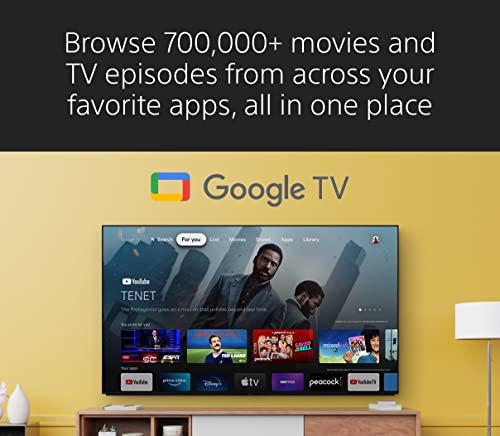
The Sony A95K runs Google TV, providing excellent app selection and integration with Google Assistant. The interface is clean and responsive, with good content recommendations across services. Google TV's strength lies in its comprehensive search across multiple streaming platforms and seamless integration with other Google services.
The Samsung QN900D uses Samsung's Tizen platform, which has matured significantly over recent years. Tizen offers smooth performance and includes most major streaming apps, though some niche services may be slower to arrive compared to Google TV or other platforms.
Both platforms handle streaming well, but Google TV's universal search and recommendation features often provide a more cohesive experience for users who subscribe to multiple streaming services.
At the time of writing, the Sony A95K typically costs several hundred dollars less than the Samsung QN900D, making it exceptional value for QD-OLED technology. The A95K was a flagship model when released in 2022, and while newer OLED models exist, the technology remains current and competitive.
The Samsung QN900D commands a premium price for its 8K capability and latest gaming features. Whether this premium is justified depends heavily on your specific needs and how much you value having the absolute latest technology versus proven performance.
Consider that OLED prices have historically dropped more quickly than Mini-LED flagships, and the A95K's 2022 release means it's likely reached its value sweet spot. The QN900D, being newer, may see more significant price drops over the next year.
For dedicated home theater setups, the Sony A95K often proves superior. Its perfect blacks shine in dark viewing environments, and movies mastered for theatrical presentation look exceptional with proper black levels. The built-in Acoustic Surface Audio+ can serve as an excellent center channel in surround sound setups, providing dialogue clarity that matches the screen.
The Samsung QN900D works better for multipurpose family rooms where ambient light is common. Its higher brightness ensures good picture quality even when lights are on, and its gaming features make it versatile for different family members' entertainment needs.
If you're building a serious home theater, prioritize the A95K's cinematic picture quality. For a main living room TV that serves multiple purposes, consider whether the QN900D's brightness and gaming features justify the higher cost.
Choose the Sony A95K if you prioritize cinematic picture quality, watch a lot of streaming content with Dolby Vision, prefer a dark or moderately lit viewing environment, and value getting flagship OLED performance at a more reasonable price point. It's ideal for movie enthusiasts and those who want exceptional built-in audio without immediately purchasing a sound system.
Choose the Samsung QN900D if you game extensively and want the latest gaming features, have a bright viewing room that challenges OLED performance, don't mind paying a premium for cutting-edge 8K technology, or strongly prefer Samsung's smart TV ecosystem. It's the better choice for gaming enthusiasts and users who prioritize having the absolute latest technology.
Both TVs excel in their respective strengths, but they serve different priorities. The Sony A95K delivers superior picture quality for movies and streaming content while providing better value at its current pricing. The Samsung QN900D offers cutting-edge gaming features and superior brightness but at a significant premium for features that provide limited immediate benefits.
For most users, the A95K's combination of QD-OLED picture quality, Dolby Vision support, and innovative audio technology provides a more complete premium TV experience at a better value. The QN900D makes sense primarily for serious gamers or users who specifically need maximum brightness for challenging viewing environments.
The decision ultimately comes down to whether you value proven, exceptional picture quality or prefer investing in the latest technology with future-focused features. Both are excellent TVs, but the A95K offers more immediate, tangible benefits for typical viewing scenarios.
| Sony Bravia XR A95K 65" QD-OLED TV | Samsung QN900D Series 65" Neo QLED 8K Smart TV |
|---|---|
| Display Technology - Fundamentally different approaches to picture quality | |
| QD-OLED (perfect blacks, infinite contrast) | 8K Neo QLED Mini-LED (higher brightness, local dimming) |
| Resolution - Limited 8K content makes this less critical than expected | |
| 4K (3840 x 2160) - matches all current content | 8K (7680 x 4320) - future-proofed but minimal current benefit |
| Peak Brightness - Crucial for HDR performance and bright room viewing | |
| ~400 cd/m² (excellent for dark/moderate lighting) | Much higher peak brightness (superior for bright rooms) |
| Black Levels - Most noticeable difference in dark scenes | |
| Perfect blacks (pixels turn completely off) | Excellent blacks with minimal blooming (slight gray cast) |
| HDR Format Support - Critical for streaming service compatibility | |
| HDR10, HLG, Dolby Vision (Netflix, Disney+, Apple TV+) | HDR10, HDR10+, HLG (no Dolby Vision support) |
| Gaming Performance - Important for console and PC gaming | |
| 4K @ 120Hz, VRR, 2x HDMI 2.1 ports | 4K @ 240Hz or 8K @ 60Hz, VRR, 4x HDMI 2.1 ports |
| Audio Technology - Often overlooked but impacts daily experience | |
| Acoustic Surface Audio+ (screen-as-speaker technology) | Traditional speaker system (6.2.4CH, 90W) |
| Smart TV Platform - Affects app selection and user experience | |
| Google TV (comprehensive app support, universal search) | Tizen (Samsung's platform, good but more limited) |
| Processor - Determines upscaling and picture optimization quality | |
| Cognitive Processor XR (excellent 4K optimization) | NQ8 AI Gen3 (advanced 8K upscaling, faster processing) |
| Release Year - Impacts pricing and technology maturity | |
| 2022 (mature QD-OLED technology, better current value) | 2024 (cutting-edge features, premium pricing) |
| Best For - Primary use case recommendations | |
| Movie enthusiasts, dark room viewing, value seekers | Gamers, bright rooms, early adopters wanting latest tech |
The Sony Bravia XR A95K delivers superior picture quality for movies due to its QD-OLED technology. It provides perfect black levels and infinite contrast, making dark movie scenes look incredibly realistic. The Samsung QN900D offers excellent picture quality too, but it can't match OLED's perfect blacks. For cinematic viewing, the Sony A95K is the clear winner.
Currently, 8K provides minimal real-world benefits since there's virtually no 8K content available. No streaming services offer 8K, and 8K Blu-rays don't exist. The Samsung QN900D uses AI upscaling to enhance 4K content, but the improvement is subtle. Most users would be better served by the Sony A95K's exceptional 4K performance rather than paying extra for theoretical 8K capabilities.
The Samsung QN900D performs better in bright rooms due to its higher peak brightness from Mini-LED technology. It can overcome ambient light more effectively than OLED displays. The Sony A95K works well in moderately lit rooms but may look less vibrant in very bright environments with lots of windows or overhead lighting.
No, only the Sony A95K supports Dolby Vision, which is used by Netflix, Disney+, Apple TV+, and Amazon Prime Video for their premium HDR content. The Samsung QN900D uses HDR10+ instead, which provides similar benefits but isn't as widely supported by streaming services. For streaming enthusiasts, Dolby Vision support is a significant advantage for the Sony A95K.
The Samsung QN900D offers superior gaming features with 4K @ 240Hz or 8K @ 60Hz support, four HDMI 2.1 ports, and advanced gaming modes. The Sony A95K supports 4K @ 120Hz gaming, which is sufficient for current consoles, but has only two HDMI 2.1 ports. Serious gamers will prefer the Samsung QN900D's cutting-edge gaming capabilities.
The Sony A95K features innovative Acoustic Surface Audio+ technology that turns the screen itself into a speaker, creating sound that appears to come directly from on-screen action. This provides better dialogue clarity and audio-visual alignment than traditional speakers. The Samsung QN900D uses conventional speakers, which are good but can't match the immersive experience of the Sony A95K's screen-based audio system.
The Sony A95K typically offers better value, providing flagship QD-OLED technology at a lower cost than the Samsung QN900D. You get exceptional picture quality, Dolby Vision support, and innovative audio technology without paying a premium for 8K capabilities that provide limited current benefits. The Samsung QN900D commands higher pricing for its latest features and 8K resolution.
The Sony A95K uses OLED technology, which can theoretically experience burn-in with static images displayed for extended periods. However, modern OLEDs include protective features like pixel shifting and automatic brightness limiting that make burn-in extremely rare with normal viewing habits. The Samsung QN900D doesn't have burn-in concerns since it uses LCD technology with Mini-LED backlighting.
The Sony A95K excels in dedicated home theater environments due to its perfect black levels and accurate colors that shine in dark viewing conditions. Its Acoustic Surface Audio+ can even serve as a center channel speaker in surround sound setups. The Samsung QN900D works better for multipurpose family rooms where ambient light is common, but the Sony A95K delivers the cinematic experience most home theater enthusiasts prefer.
The Sony A95K runs Google TV, offering excellent app selection, universal search across streaming services, and seamless integration with Google services. The Samsung QN900D uses Samsung's Tizen platform, which provides smooth performance and most major apps but may be slower to receive niche streaming services. Both platforms work well, but Google TV on the Sony A95K often provides a more comprehensive streaming experience.
Both TVs handle motion well, but they excel in different areas. The Samsung QN900D offers higher refresh rates and advanced motion processing that can benefit fast sports action. The Sony A95K provides near-instantaneous pixel response times due to OLED technology, eliminating motion blur. For sports viewing, the Samsung QN900D has a slight edge due to its higher peak brightness and motion handling capabilities.
The Sony A95K represents mature QD-OLED technology that remains highly competitive despite being from 2022, making it an excellent purchase now at current pricing. The Samsung QN900D is newer (2024) but commands premium pricing for features like 8K that provide limited immediate benefits. Unless you specifically need the latest gaming features, the Sony A95K offers better current value than waiting for future models.
We've done our best to create useful and informative comparisons to help you decide what product to buy. Our research uses advanced automated methods to create this comparison and perfection is not possible - please contact us for corrections or questions. These are the sites we've researched in the creation of this article: tomsguide.com - audioadvice.com - wepc.com - bestbuy.com - tvsbook.com - rtings.com - youtube.com - flatpanelshd.com - rtings.com - youtube.com - reviewed.com - avsforum.com - youtube.com - youtube.com - rtings.com - youtube.com - electronics.sony.com - sonypremiumhome.com - valueelectronics.com - sony.com - displayspecifications.com - flatpanelshd.com - donstv.com - youtube.com - businessinsider.com - youtube.com - displayspecifications.com - bestbuy.com - rtings.com - videoandaudiocenter.com - bestbuy.com - avsforum.com - bestbuy.com - walts.com - images.samsung.com - samsung.com - merlinstv.com - samsung.com - avsforum.com - samsung.com

Privacy Policy
Terms and Conditions - Affiliate Policy
Home Security
© Copyright 2008-2026.
11816 Inwood Rd #1211, Dallas, TX 75244