

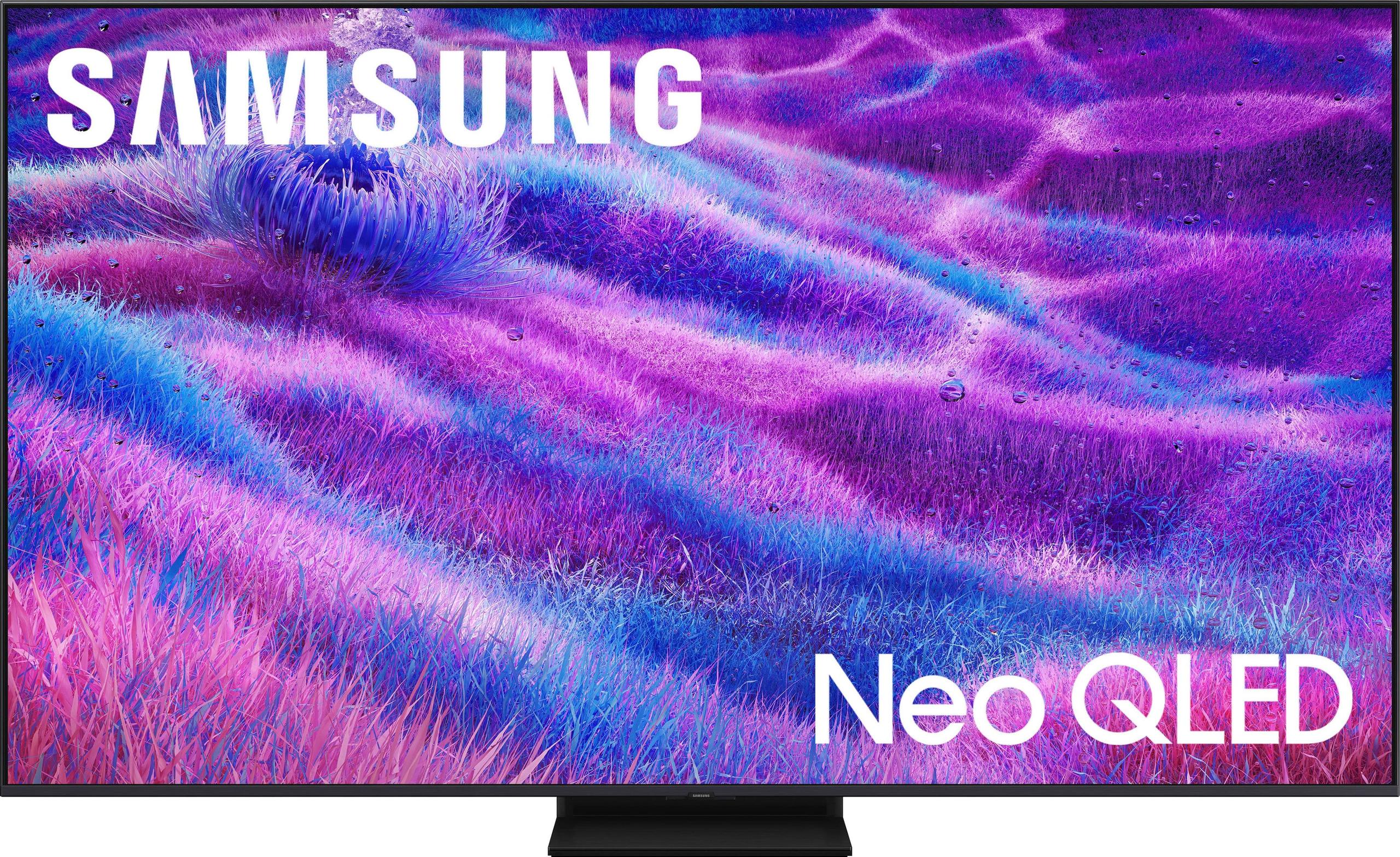
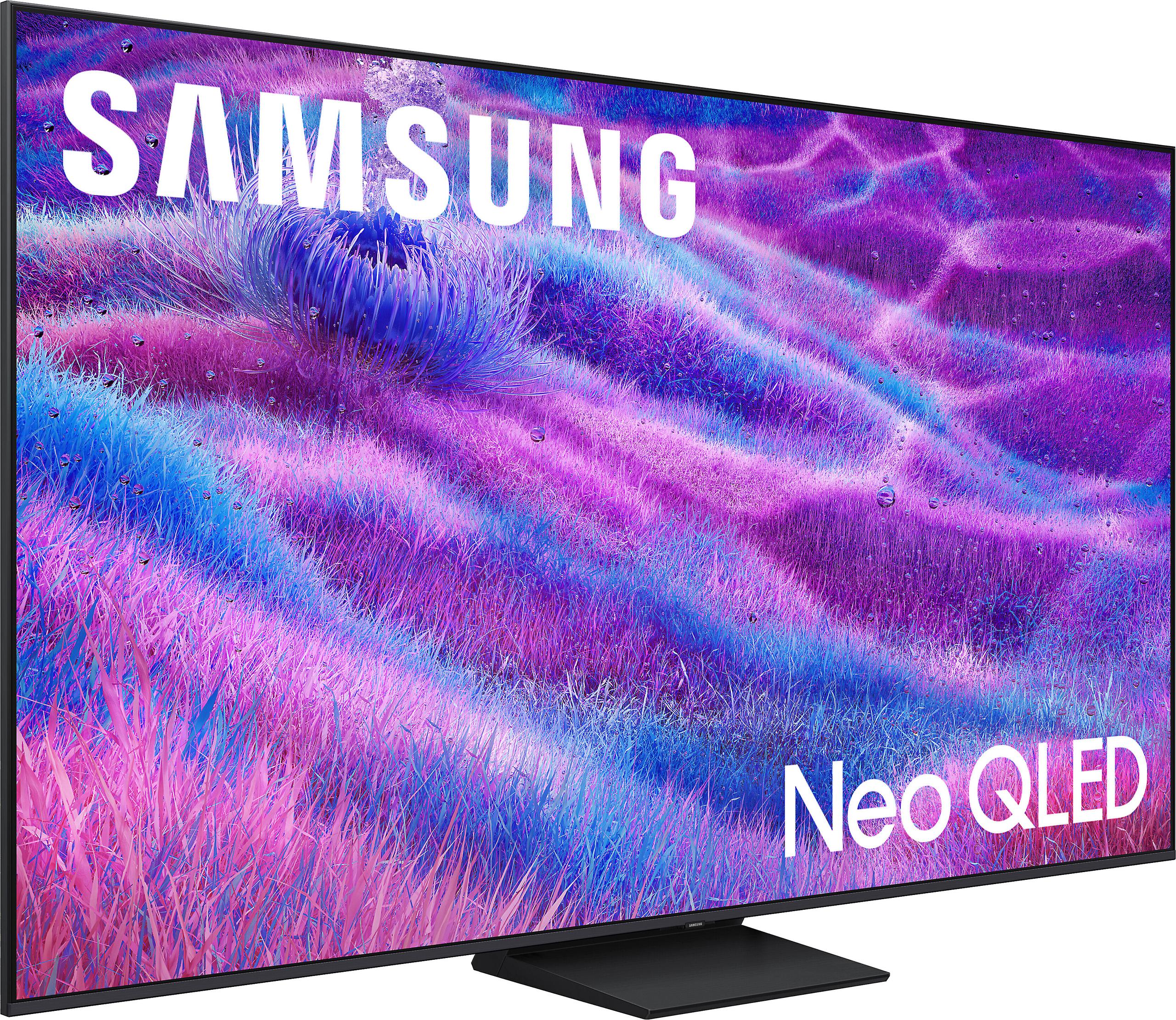

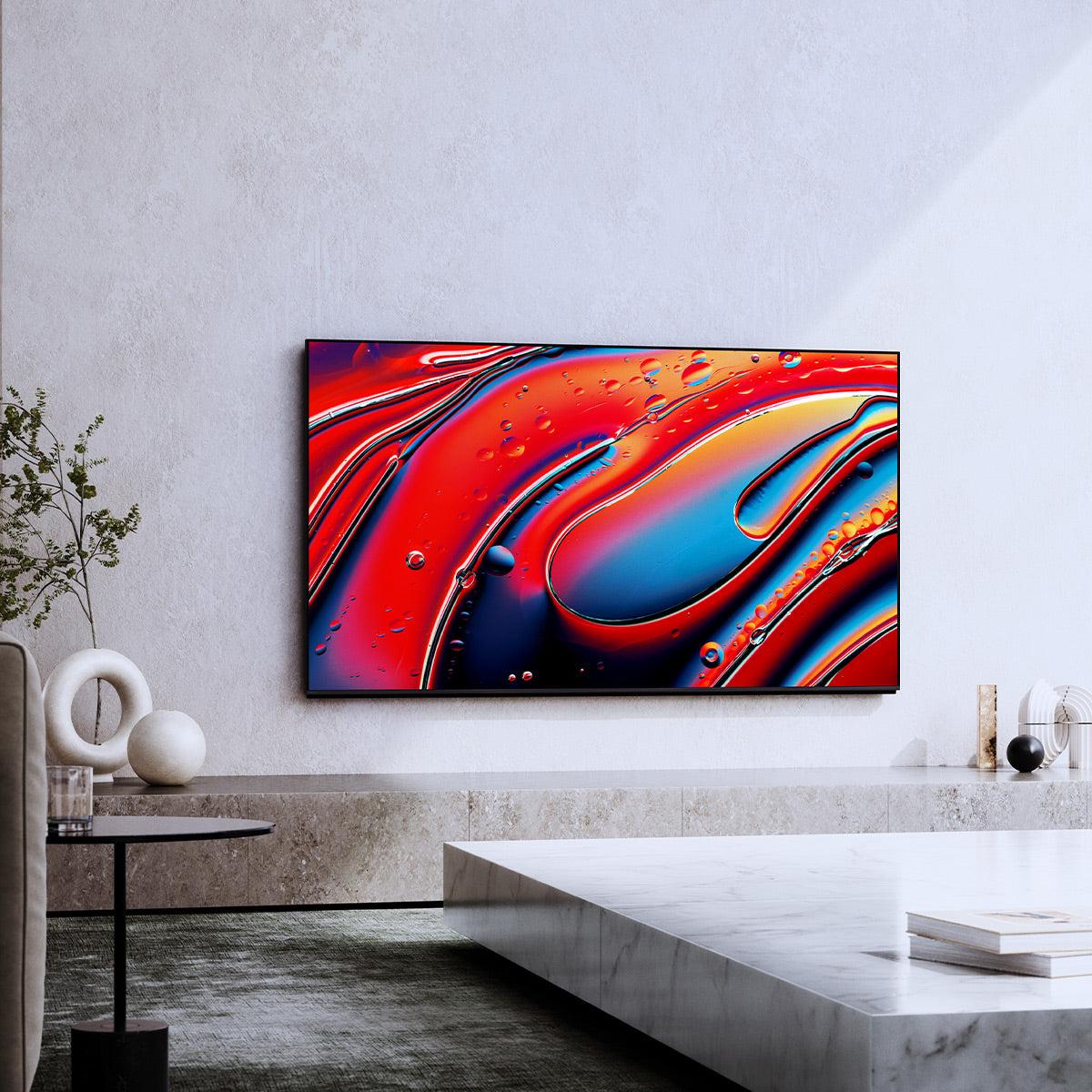
Choosing a premium 65-inch TV has become surprisingly complex. Gone are the days when you simply picked between a few basic LED models. Today's Mini LED televisions represent a fascinating middle ground between traditional LED TVs and expensive OLED displays, offering much of the contrast performance of OLED while maintaining the brightness advantages of LED technology.
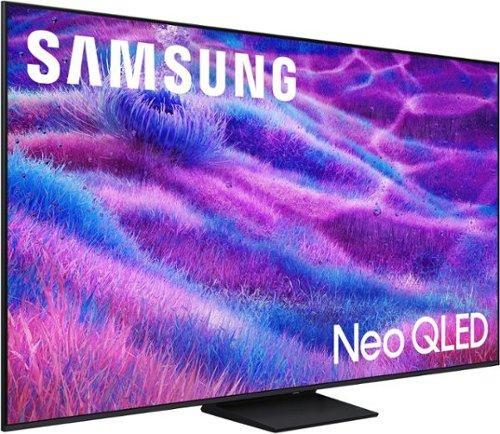
After spending considerable time with both the Samsung QN80F Neo QLED and the Sony BRAVIA 9, I've discovered that these two 2025 models take dramatically different approaches to the same goal: delivering an exceptional viewing experience. The question isn't which one is objectively better—it's which one aligns with your specific needs and priorities.
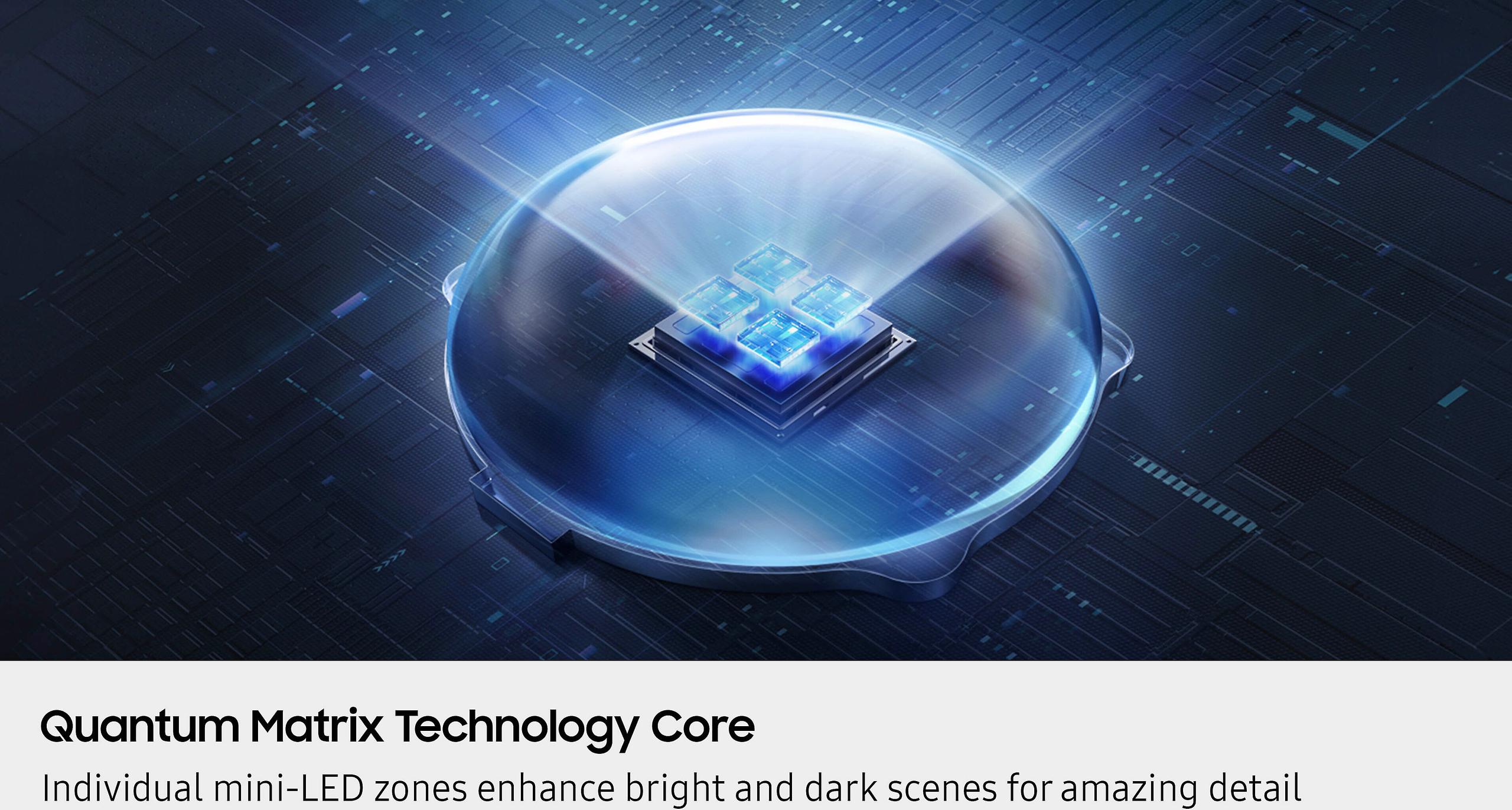
Before diving into the specifics, it's worth understanding what Mini LED technology actually does and why it matters. Traditional LED TVs use relatively large LED lights behind the screen, which makes it difficult to control brightness in specific areas. Mini LED technology uses thousands of tiny LEDs—each about the size of a grain of rice—arranged in precise zones behind the display panel.
This setup allows for "local dimming," where specific areas of the screen can be made brighter or darker independently. When you're watching a scene with a bright explosion against a dark night sky, Mini LED TVs can make just the explosion area bright while keeping the surrounding darkness truly dark. This creates much better contrast than what you'd get from a regular LED TV, though it still can't quite match the pixel-perfect control that OLED displays offer.
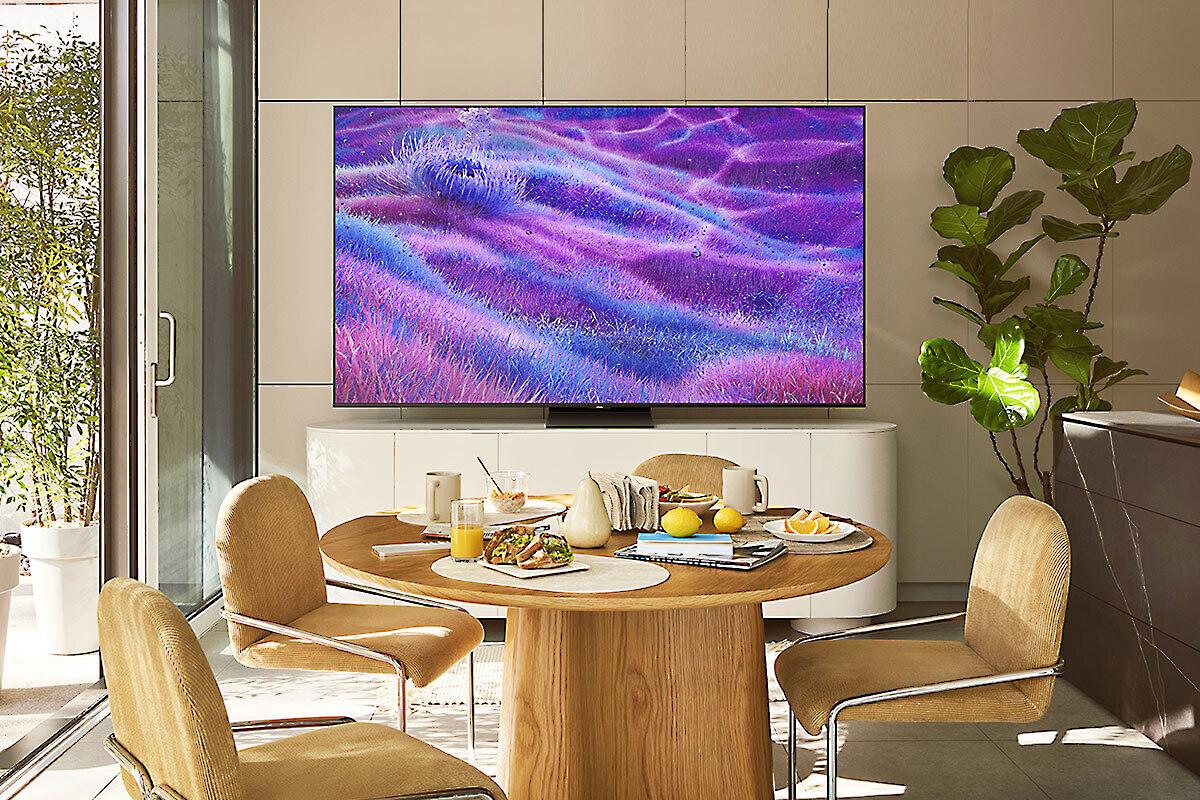
Both the Samsung QN80F and Sony BRAVIA 9 use this Mini LED approach, but they implement it very differently. Samsung focuses on delivering maximum gaming performance and vibrant colors, while Sony prioritizes cinema-quality image processing and natural color reproduction.
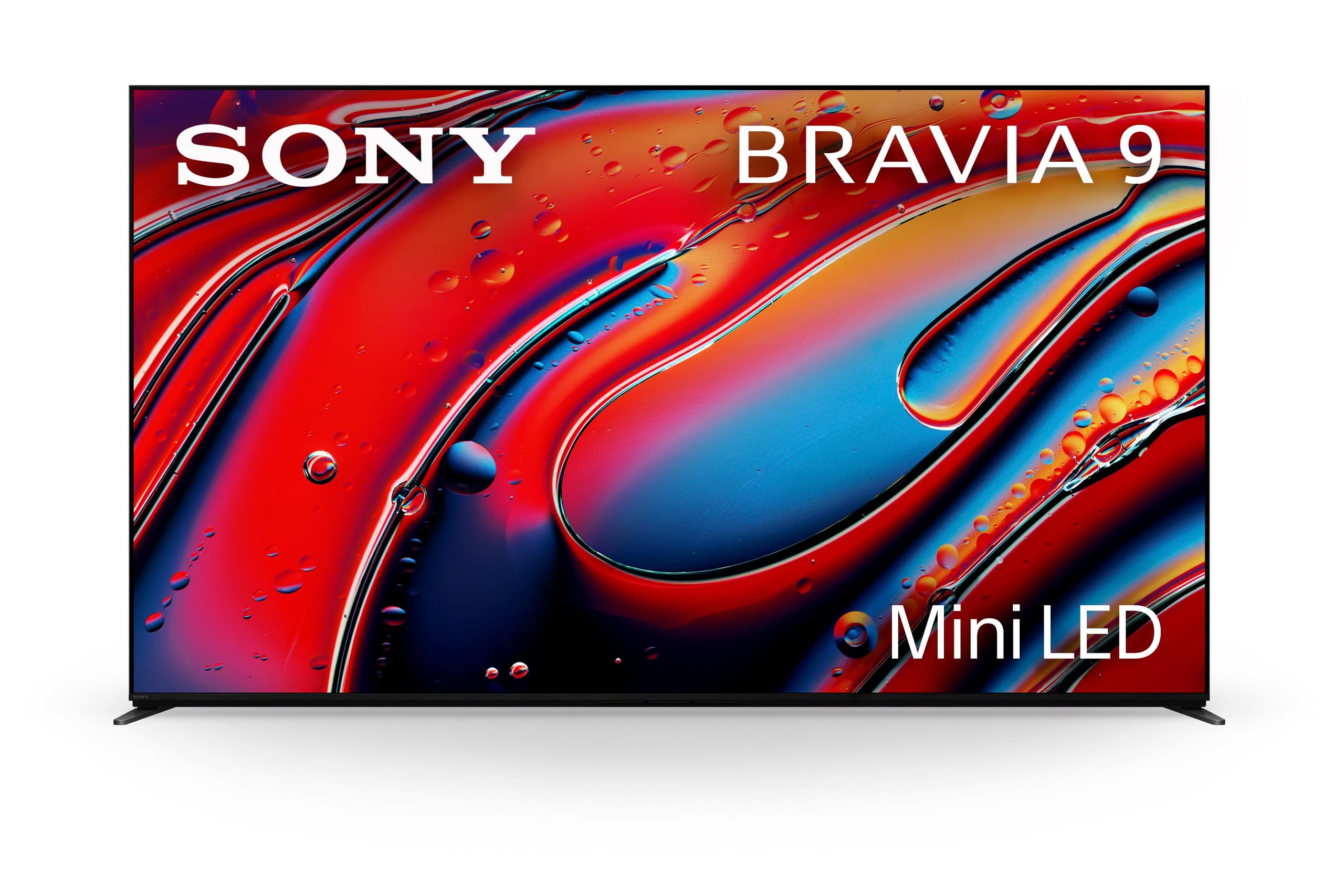
When it comes to pure picture quality, the Sony BRAVIA 9 demonstrates why the company has maintained its reputation for reference-quality displays. Sony's XR Contrast Booster 30 technology doesn't just control brightness—it analyzes each scene and adjusts the local dimming zones with remarkable precision.
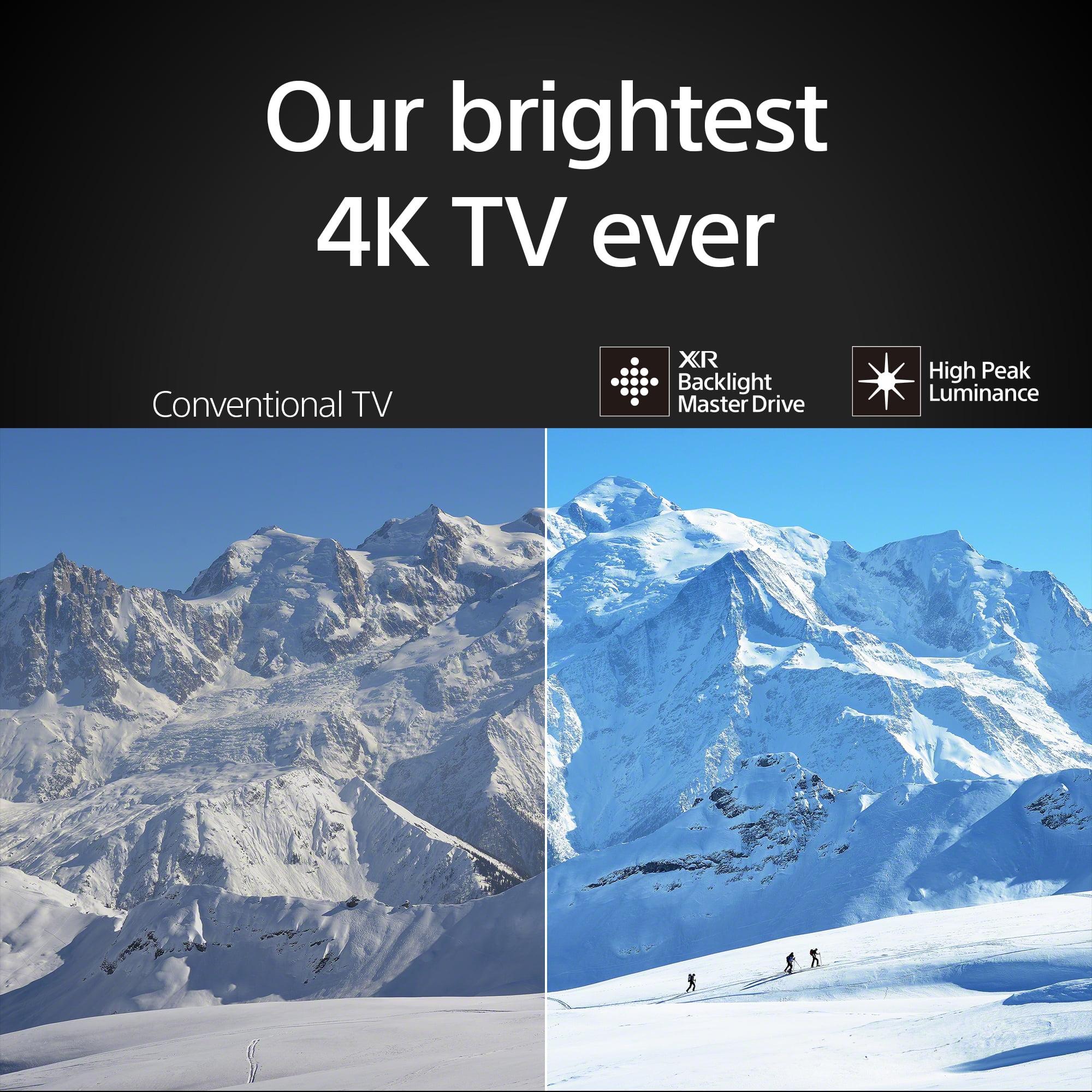
The difference becomes immediately apparent when watching HDR content. HDR, or High Dynamic Range, allows TVs to display a much wider range of brightness levels, from deep shadows to brilliant highlights. The Sony BRAVIA 9 handles this with exceptional finesse, delivering what Sony claims is their brightest 4K TV ever while maintaining natural-looking mid-tones and detailed shadows.
One of the most noticeable advantages of the Sony BRAVIA 9 is its superior control of "blooming"—that unwanted glow that appears around bright objects on dark backgrounds. While the Samsung QN80F shows moderate blooming artifacts typical of mid-range Mini LED implementations, the Sony BRAVIA 9 keeps these distractions to a minimum through more sophisticated processing algorithms.
Color accuracy tells another part of the story. The Samsung QN80F uses Quantum Dot technology, which creates incredibly vibrant and punchy colors that can be exciting for sports and gaming. However, the Sony BRAVIA 9 with its XR Triluminos Pro display technology aims for more natural, cinema-accurate colors. If you've ever noticed that movies sometimes look "too colorful" or artificial on certain TVs, you'll appreciate Sony's more measured approach.
For movie enthusiasts and home theater applications, these differences matter significantly. The Sony BRAVIA 9 processes both HDR and standard dynamic range (SDR) content with algorithms that have been refined over decades of professional display development. This results in more consistent performance across different types of content, from Netflix shows to 4K Blu-rays.
Here's where the tables turn dramatically. The Samsung QN80F isn't just good for gaming—it's exceptional. The standout feature is its 144Hz refresh rate capability, which represents a significant leap beyond the standard 120Hz that most premium TVs offer.
To understand why this matters, consider that most gaming content today runs at 60 frames per second (fps), while some newer games and high-end PC gaming can push 120fps or higher. A 144Hz display can show up to 144 individual frames per second, creating smoother motion and more responsive gameplay. For competitive gamers or PC enthusiasts with powerful graphics cards, this higher refresh rate provides a tangible advantage.
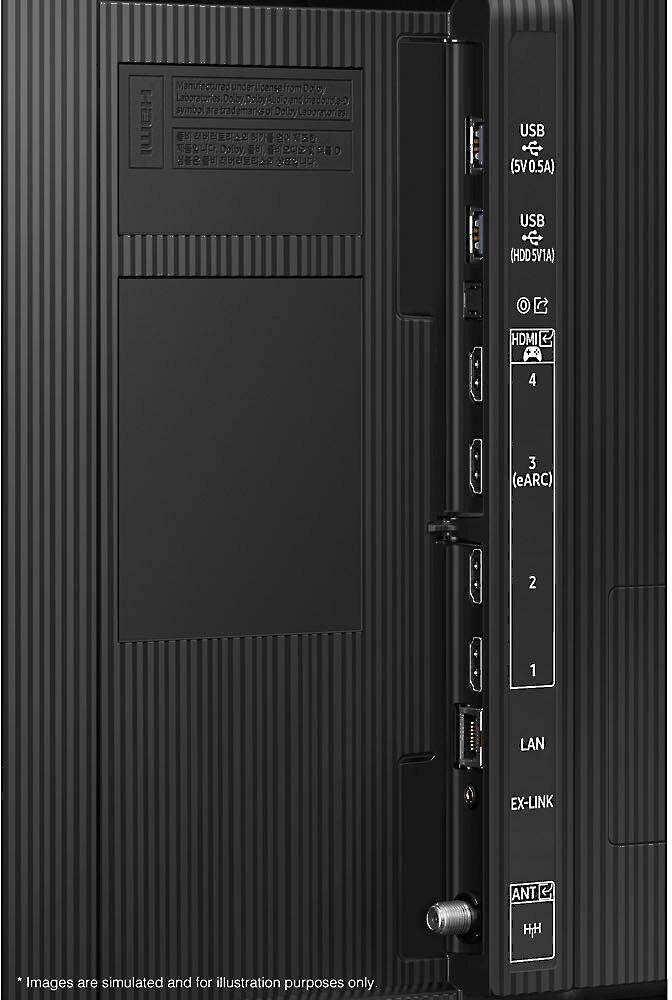
The Samsung QN80F also excels in connectivity for gaming setups. It includes four HDMI 2.1 ports, which support the full bandwidth needed for 4K gaming at high frame rates. This means you can connect multiple gaming consoles, a PC, and a soundbar without having to choose which devices get the premium connections. In contrast, the Sony BRAVIA 9 offers only two HDMI 2.1 ports, which can be limiting if you have multiple gaming devices or a complex home theater setup.
Variable Refresh Rate (VRR) support on both TVs eliminates screen tearing—that visual artifact where the display shows parts of multiple frames simultaneously. However, the Samsung QN80F supports VRR up to its full 144Hz capability, while the Sony BRAVIA 9 is limited to 120Hz. For current console gaming, this difference is minimal, but for PC gaming and future console generations, Samsung's higher ceiling provides better longevity.
Auto Low Latency Mode (ALLM) on both TVs automatically switches to gaming mode when it detects a gaming console, reducing input lag—the delay between when you press a button and when the action appears on screen. Both TVs handle this well, but Samsung's AI Auto Game Mode goes further by recognizing different types of games and optimizing settings accordingly.
The smart TV experience represents another area where these televisions diverge significantly. The Samsung QN80F runs Samsung's Tizen operating system, enhanced with their Vision AI suite. This includes features like Live Translate for real-time subtitle translation, Generative Wallpaper that creates AI-powered backgrounds, and enhanced voice control through Bixby that can process multiple commands simultaneously.
Samsung's approach feels more integrated and cohesive, with features that work together to create what they call an "intelligent TV experience." The interface is clean and responsive, though it does include Samsung's own services and apps alongside the standard streaming options.
The Sony BRAVIA 9 uses Google TV, which offers a more open ecosystem approach. Google TV excels at content discovery, surfacing shows and movies from across different streaming services based on your viewing habits. The interface integrates seamlessly with Android phones and Chromecast-enabled devices, making it particularly appealing if you're already invested in Google's ecosystem.
Both platforms offer the essential streaming services—Netflix, Disney+, Prime Video, Apple TV+—but they present them differently. Google TV tends to prioritize content recommendations, while Samsung's Tizen focuses more on app organization and smart home integration.
Built-in TV audio rarely impresses, but the Sony BRAVIA 9 breaks this trend with its sophisticated Acoustic Multi-Audio+ system. This isn't just about louder sound—it's about creating a more three-dimensional audio experience. The TV includes up-firing beam tweeters positioned in the frame that create sound that appears to come from specific areas of the screen.
The 2.2.2-channel system with 70 watts of power delivers noticeably better dialogue clarity and spatial audio compared to the Samsung QN80F. Sony's Voice Zoom 3 technology makes conversations easier to understand, while the Acoustic Center Sync feature can coordinate with compatible Sony soundbars for even more impressive results.
While neither TV replaces a dedicated sound system for serious home theater use, the Sony BRAVIA 9 gets much closer to that goal. If you're planning to use the TV's built-in speakers primarily, Sony's audio advantage becomes a significant factor in the overall experience.
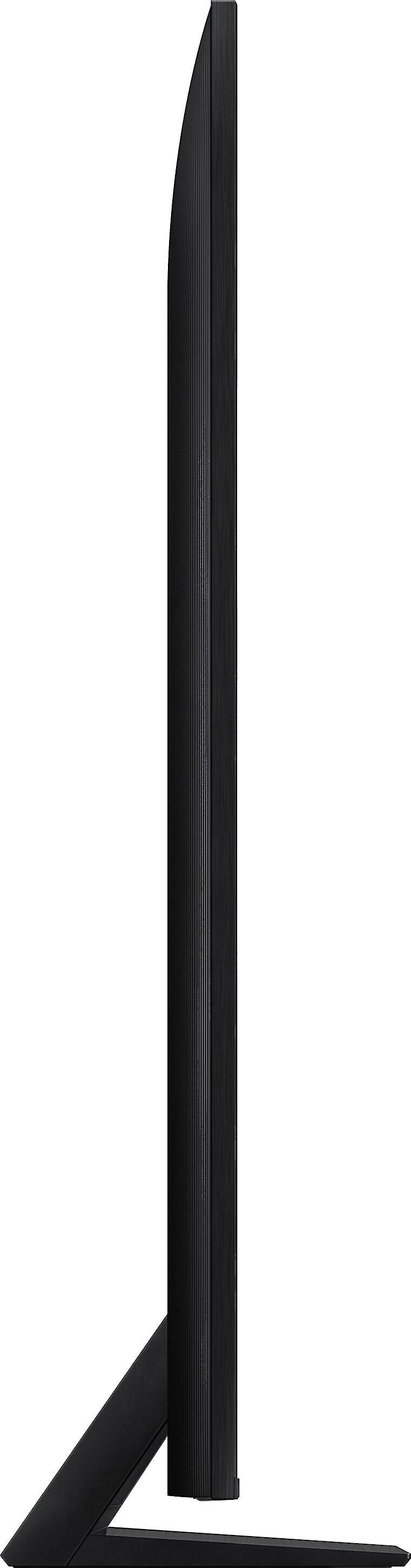
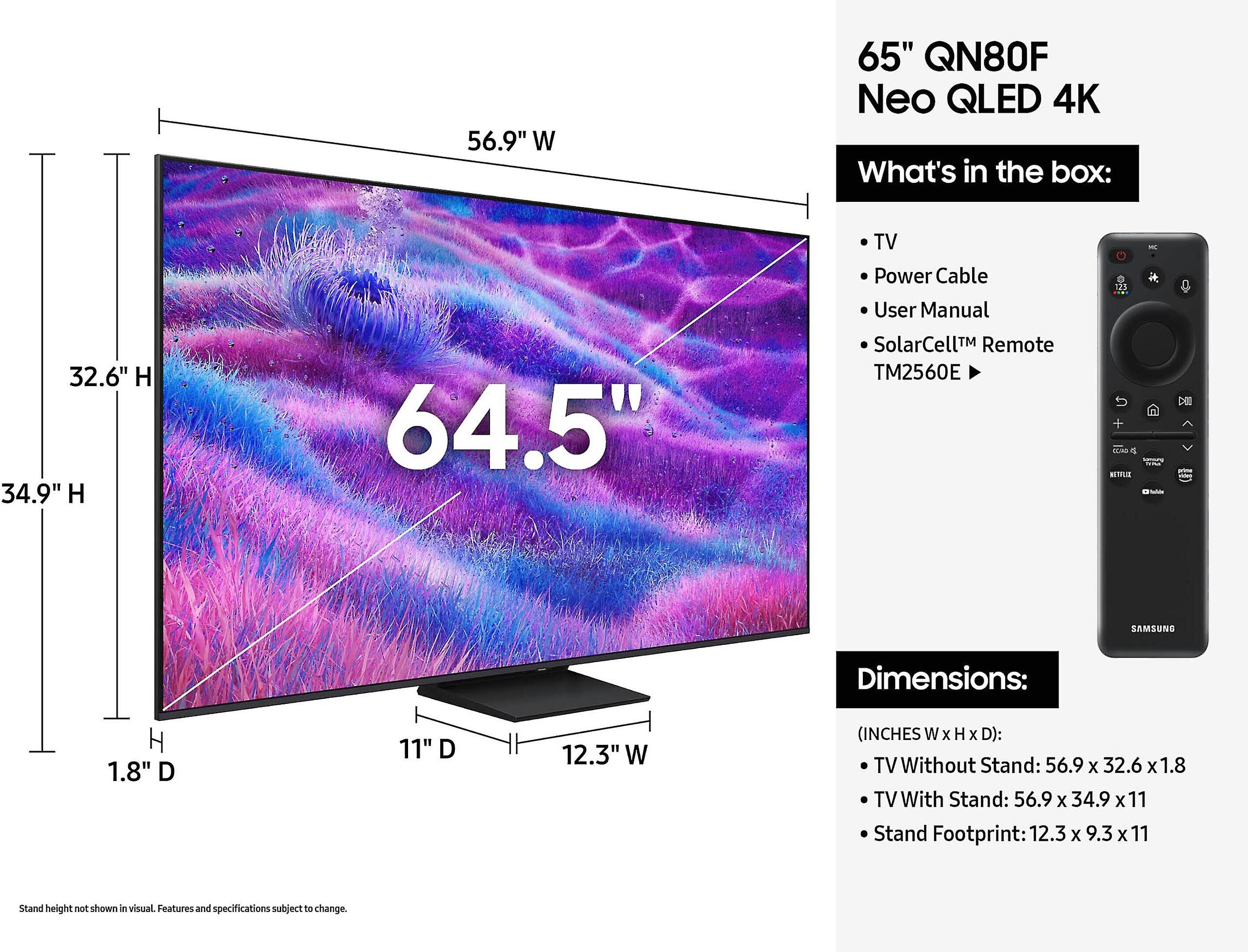
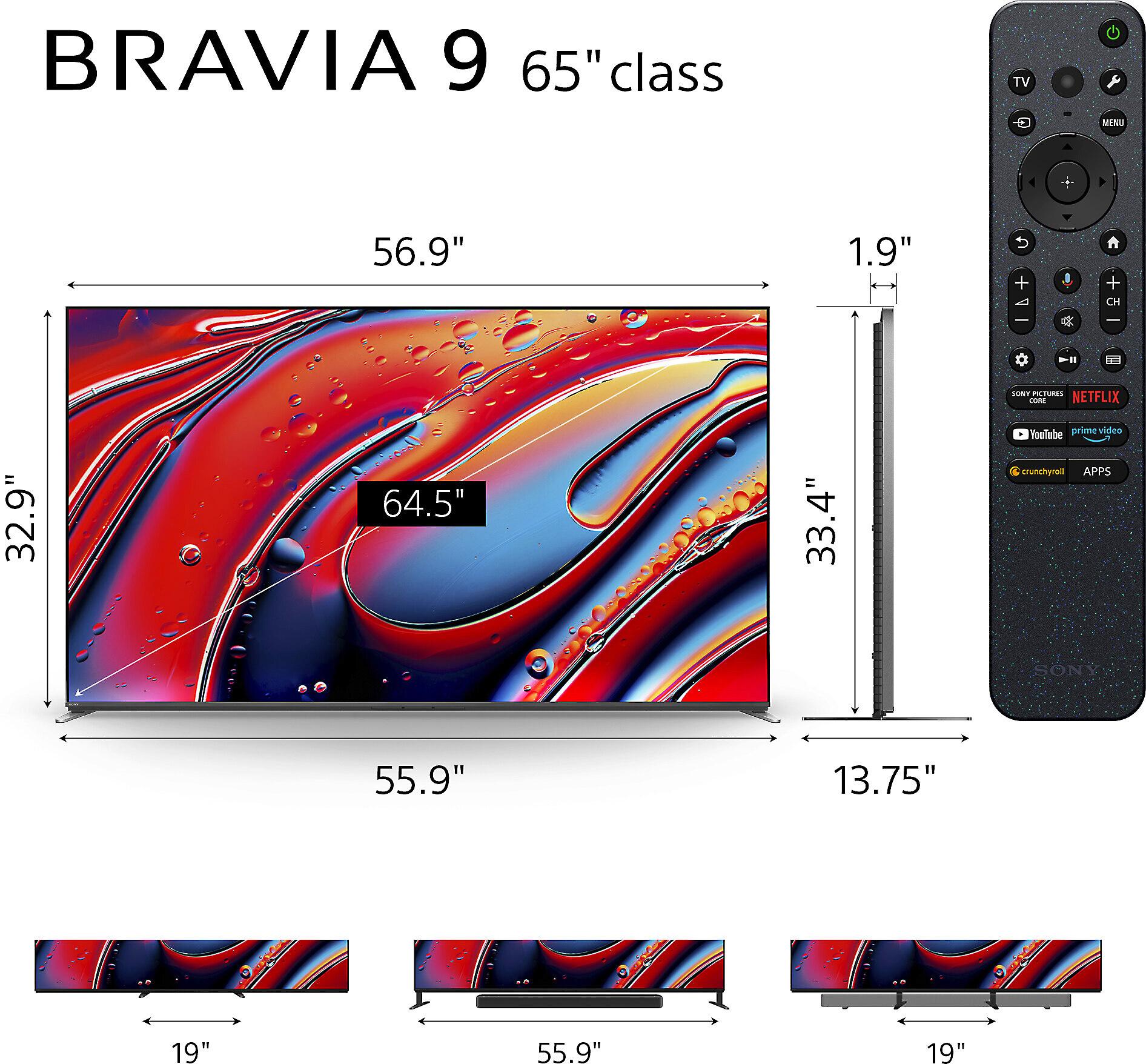
Physical construction reveals interesting priorities. The Samsung QN80F weighs in at 52.2 pounds, making it easier to handle during installation and wall mounting. Samsung's design language emphasizes clean lines and a focus on the display itself, with minimal distractions from the frame.
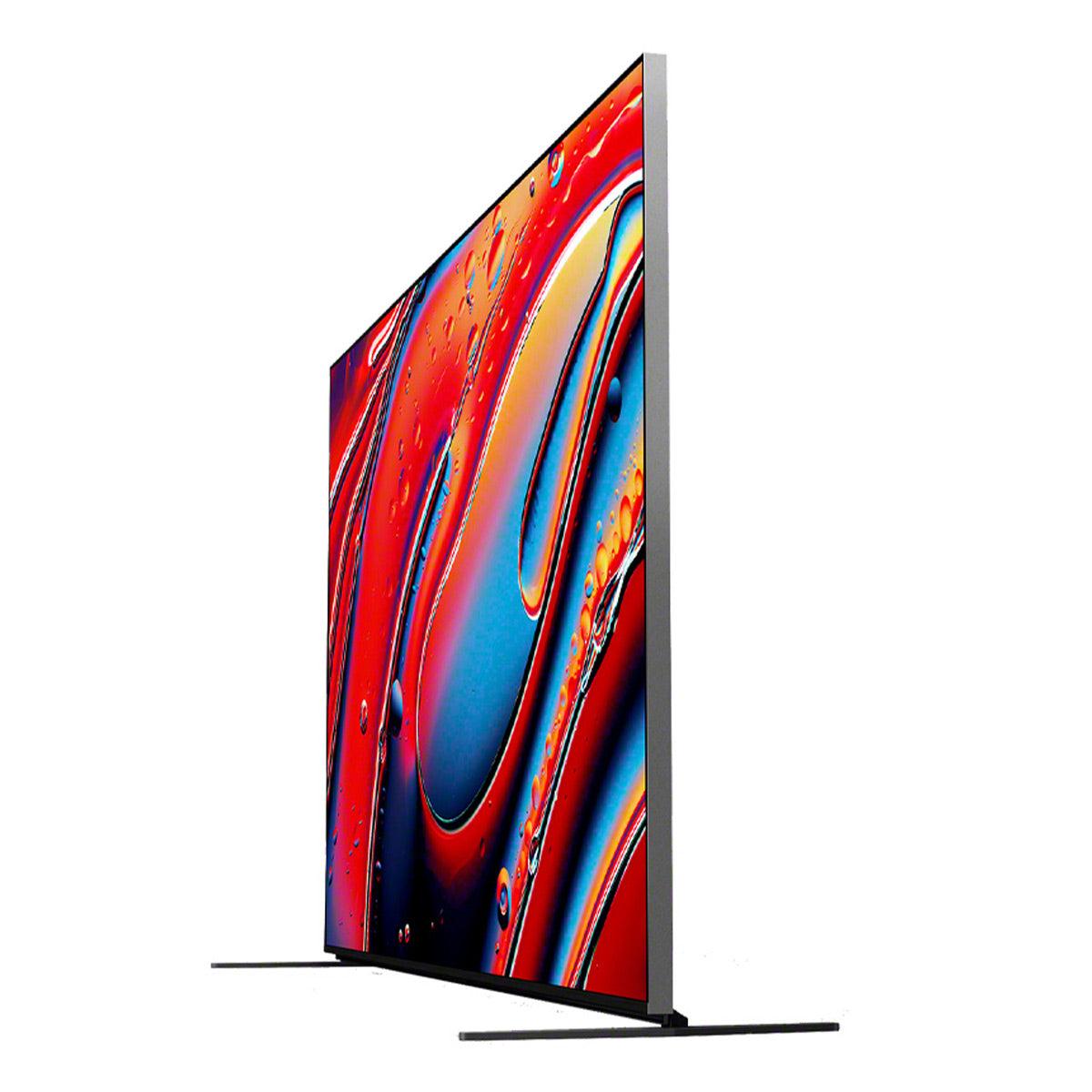
The Sony BRAVIA 9 is substantially heavier at 76.7 pounds, which typically indicates more robust internal components and better heat management. The weight difference suggests Sony has prioritized long-term reliability and performance stability, though it does make installation more challenging.
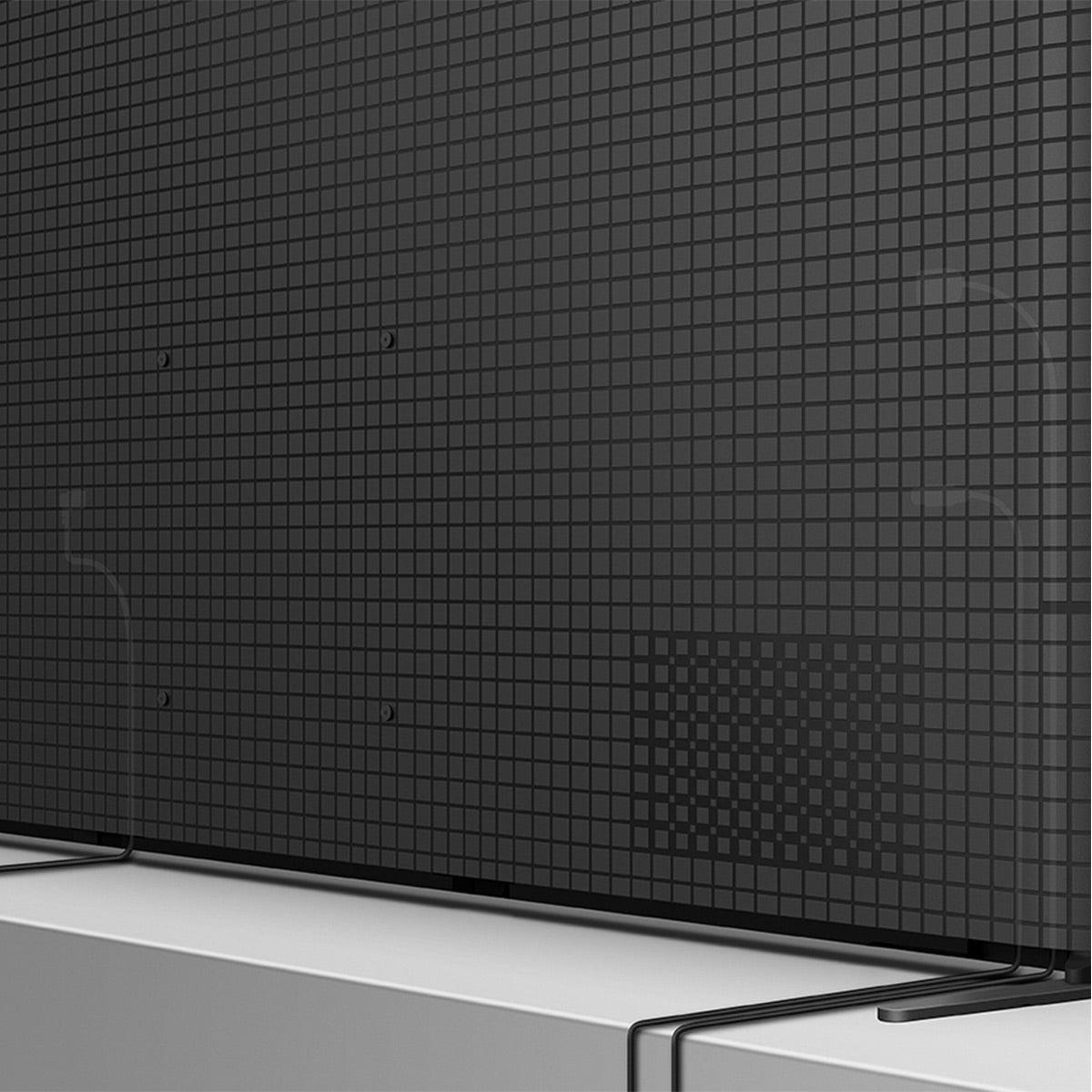
Sony's multi-position stand system offers genuine flexibility. You can configure it in an outside position for maximum stability, an inside position for smaller furniture, or two different soundbar positions that accommodate different audio setups. This attention to real-world use cases reflects Sony's consideration for how people actually use their TVs in different living spaces.
At the time of writing, these TVs occupy different value positions in the premium Mini LED market. The Samsung QN80F typically costs several hundred dollars less than the Sony BRAVIA 9, making it an attractive option for buyers who want premium gaming features without paying the highest premium prices.
This price difference reflects their different approaches: Samsung delivers flagship gaming performance at a more accessible price point, while Sony charges a premium for superior image processing and build quality. The question becomes whether Sony's advantages justify the additional cost for your specific use case.
For gaming-focused buyers, the Samsung QN80F offers excellent value. The 144Hz refresh rate, comprehensive HDMI 2.1 connectivity, and gaming-specific features provide benefits that directly impact gaming performance. The cost savings can be put toward a gaming console upgrade or a dedicated sound system.
Home theater enthusiasts face a more complex calculation. The Sony BRAVIA 9 delivers measurably better picture quality, superior audio performance, and more refined processing. For viewers who primarily watch movies and premium content, these improvements can justify the higher price, especially when considering the TV's expected 7-10 year lifespan.
After extensive use with both televisions, my recommendation depends entirely on your primary use case and priorities.
Choose the Samsung QN80F if gaming represents a significant portion of your TV usage. The 144Hz refresh rate provides genuine future-proofing for PC gaming, and the four HDMI 2.1 ports eliminate connectivity compromises. The vibrant colors and good HDR performance satisfy most viewing needs, while the cost savings can fund other home theater components. This TV excels in bright rooms and handles sports and action content with excellent motion clarity.
The Sony BRAVIA 9 makes more sense for viewers who prioritize image quality and plan to use the TV primarily for movies, shows, and premium content. The superior processing, better contrast control, and more natural colors create a more cinema-like experience. The excellent built-in audio reduces the immediate need for external speakers, and the premium build quality suggests better long-term reliability.
For mixed-use scenarios, consider which compromises you're more willing to accept. The Sony BRAVIA 9 handles gaming adequately at 120Hz, which satisfies current console gaming needs. The Samsung QN80F delivers good picture quality that will satisfy most viewers, even if it doesn't match Sony's processing sophistication.
Both televisions represent significant improvements over older LED technology and offer compelling reasons to upgrade from TVs that are five or more years old. The Mini LED backlighting in both models provides contrast performance that approaches OLED displays while maintaining the brightness advantages that make them suitable for various lighting conditions.
Your decision ultimately comes down to whether you value gaming performance and connectivity flexibility (Samsung QN80F) or superior image quality and premium construction (Sony BRAVIA 9). Both represent excellent choices in the premium Mini LED category, just with different strengths that appeal to different types of viewers.
| Samsung 65" QN80F Neo QLED 4K TV | Sony BRAVIA 9 65" 4K UHD Mini LED QLED Smart Google TV |
|---|---|
| Refresh Rate - Critical for gaming performance and smooth motion | |
| 144Hz native with VRR up to 144Hz (future-proof for PC gaming) | 120Hz native with VRR support (adequate for current console gaming) |
| Local Dimming & Blooming Control - Affects contrast quality in dark scenes | |
| Quantum Matrix Technology with moderate blooming control | XR Backlight Master Drive with superior blooming reduction |
| HDMI 2.1 Connectivity - Important for multiple gaming devices and high-bandwidth content | |
| 4 HDMI 2.1 ports (excellent for multi-device setups) | 2 HDMI 2.1 ports (may require switching with multiple devices) |
| HDR Brightness Performance - Determines how vivid HDR content appears | |
| Good HDR brightness with solid peak luminance | Superior HDR brightness - Sony's brightest 4K TV ever |
| Image Processing Quality - Affects overall picture accuracy and upscaling | |
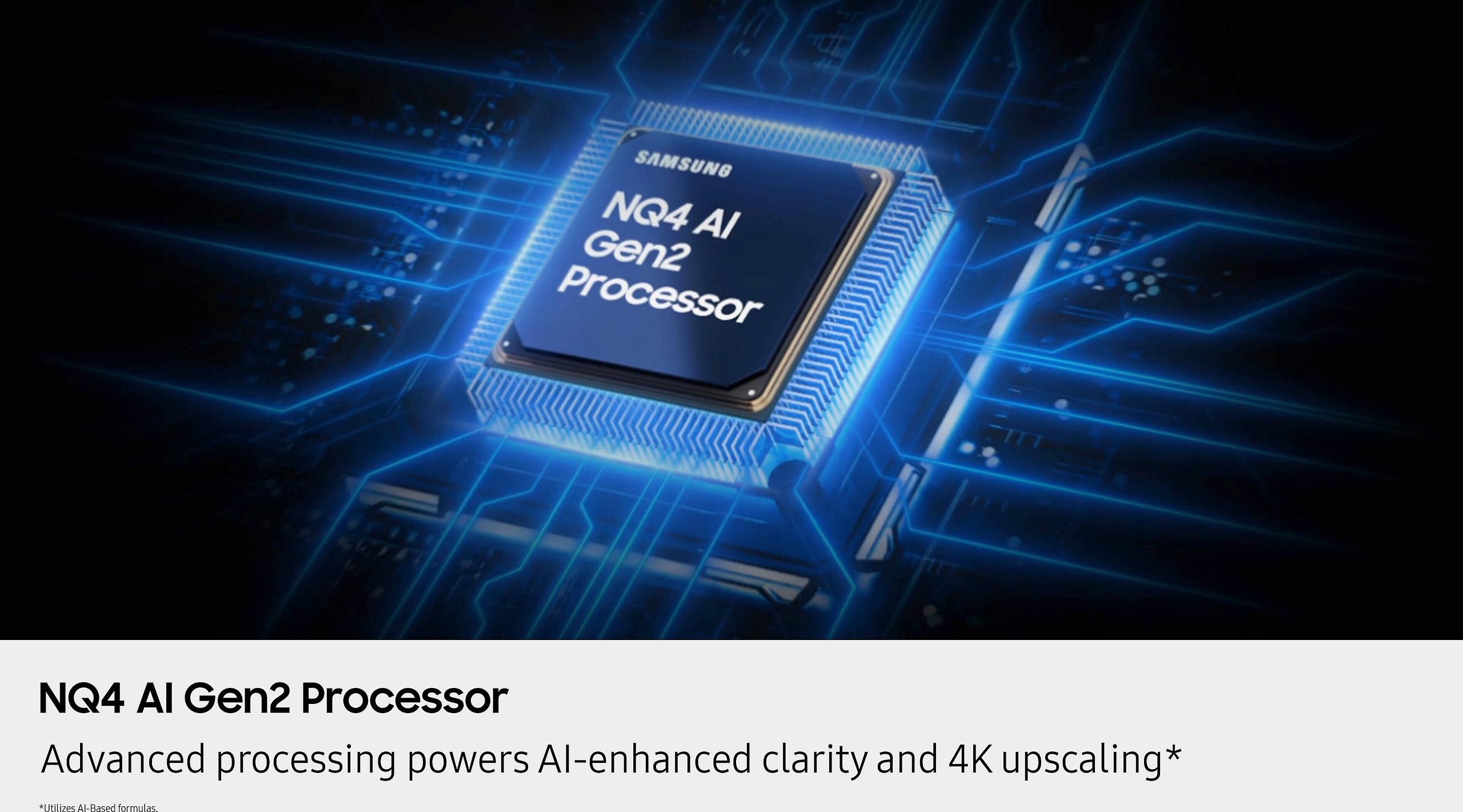
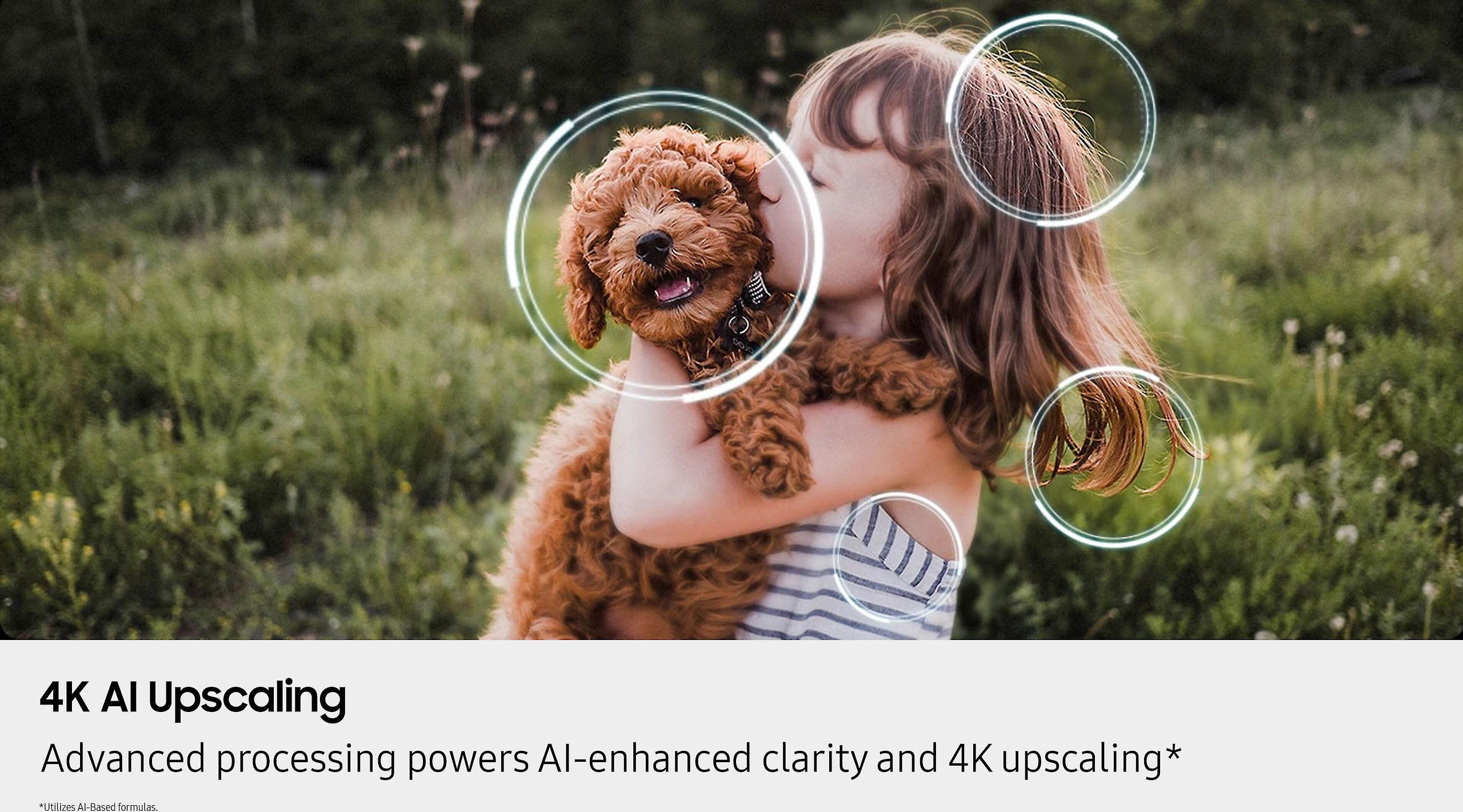
| NQ4 AI Gen2 Processor with good 4K upscaling | Industry-leading XR processor with superior content processing |
| Color Technology - Impacts color vibrancy and accuracy | |
| Quantum Dot technology (vibrant, punchy colors) | XR Triluminos Pro (more natural, cinema-accurate colors) |
| Built-in Audio System - Determines if external speakers are needed | |
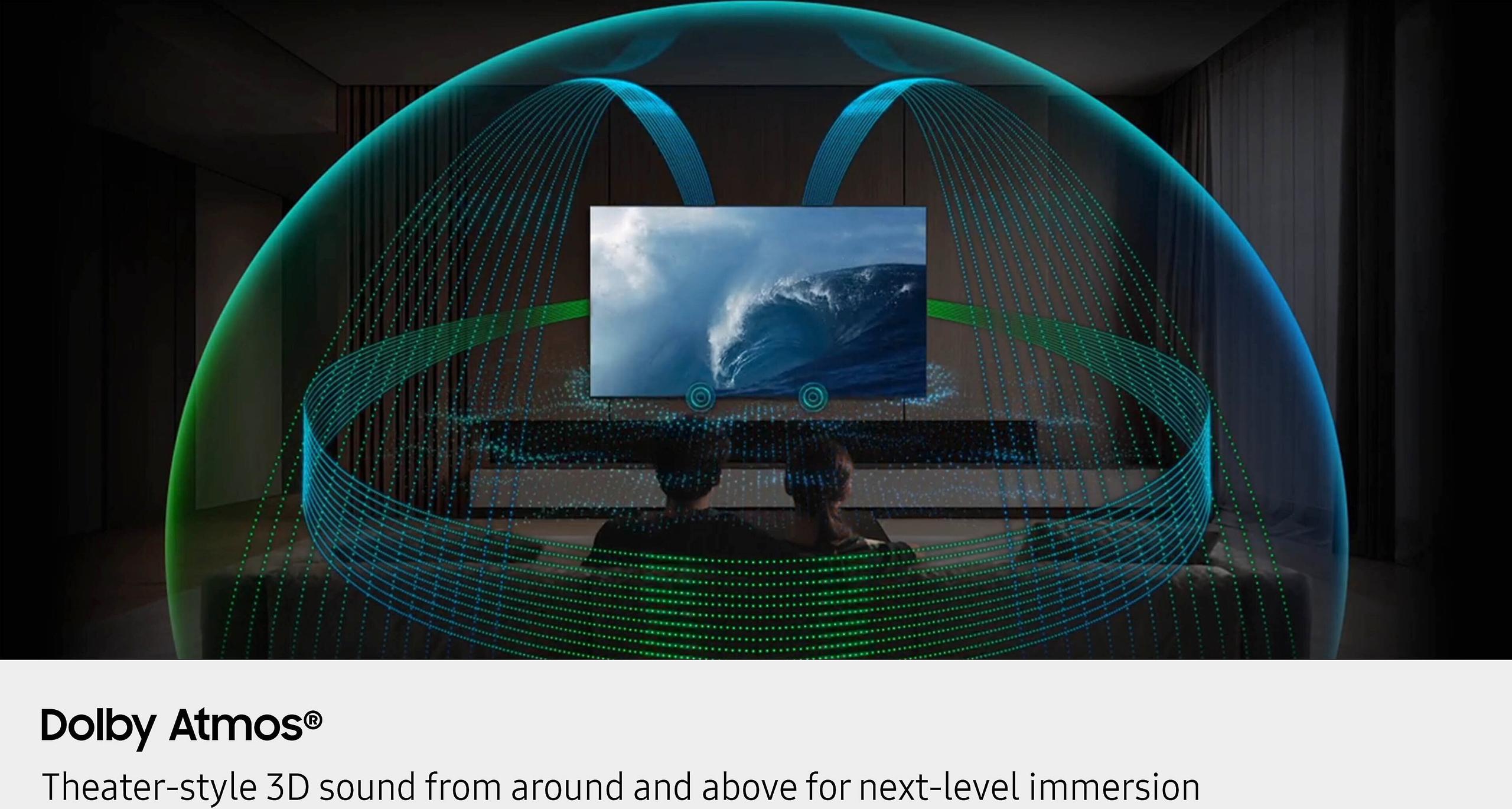
| Standard TV speakers with Dolby Atmos support | Acoustic Multi-Audio+ 2.2.2-channel system with up-firing tweeters |
| Smart TV Platform - Affects app selection and user experience | |
| Samsung Tizen OS with Vision AI features | Google TV with extensive content discovery |
| Weight & Installation - Important for wall mounting and setup | |
| 52.2 lbs (easier installation and mounting) | 76.7 lbs (indicates more robust construction but harder to install) |
| Stand Flexibility - Matters for different furniture and soundbar setups | |
| Standard wall-mountable design | Multi-position adjustable stand with 3 configurations |
| Gaming Features - Additional benefits for console and PC gaming | |
| AI Auto Game Mode, Motion Xcelerator 144Hz | Auto HDR Tone Mapping optimized for PS5, XR Motion Clarity |
| Target Use Case - Who each TV serves best | |
| Gaming enthusiasts and value-conscious buyers seeking premium features | Home theater purists prioritizing image quality and cinema experience |
The Sony BRAVIA 9 delivers superior picture quality for movies and TV shows. It features Sony's advanced XR image processing, which provides more accurate colors, better contrast control, and significantly less blooming around bright objects on dark backgrounds. The Sony BRAVIA 9 also handles HDR content with exceptional brightness while maintaining natural-looking mid-tones, making it ideal for cinematic viewing experiences.
The Samsung QN80F Neo QLED 4K TV is the clear winner for gaming. It offers a 144Hz refresh rate compared to the Sony BRAVIA 9's 120Hz, providing smoother gameplay for high-end PC gaming. The Samsung QN80F also includes four HDMI 2.1 ports versus Sony's two, making it easier to connect multiple gaming consoles and devices simultaneously.
The primary difference lies in their focus: the Samsung QN80F Neo QLED 4K TV prioritizes gaming performance with its 144Hz refresh rate and comprehensive connectivity, while the Sony BRAVIA 9 emphasizes superior image processing and cinema-quality picture reproduction. Samsung offers better value for gamers, while Sony provides premium image quality for movie enthusiasts.
The Sony BRAVIA 9 has significantly better built-in audio with its Acoustic Multi-Audio+ 2.2.2-channel system featuring up-firing beam tweeters. This creates a more immersive soundstage compared to the standard speakers in the Samsung QN80F Neo QLED 4K TV. If you plan to rely on built-in speakers initially, the Sony BRAVIA 9 is the better choice.
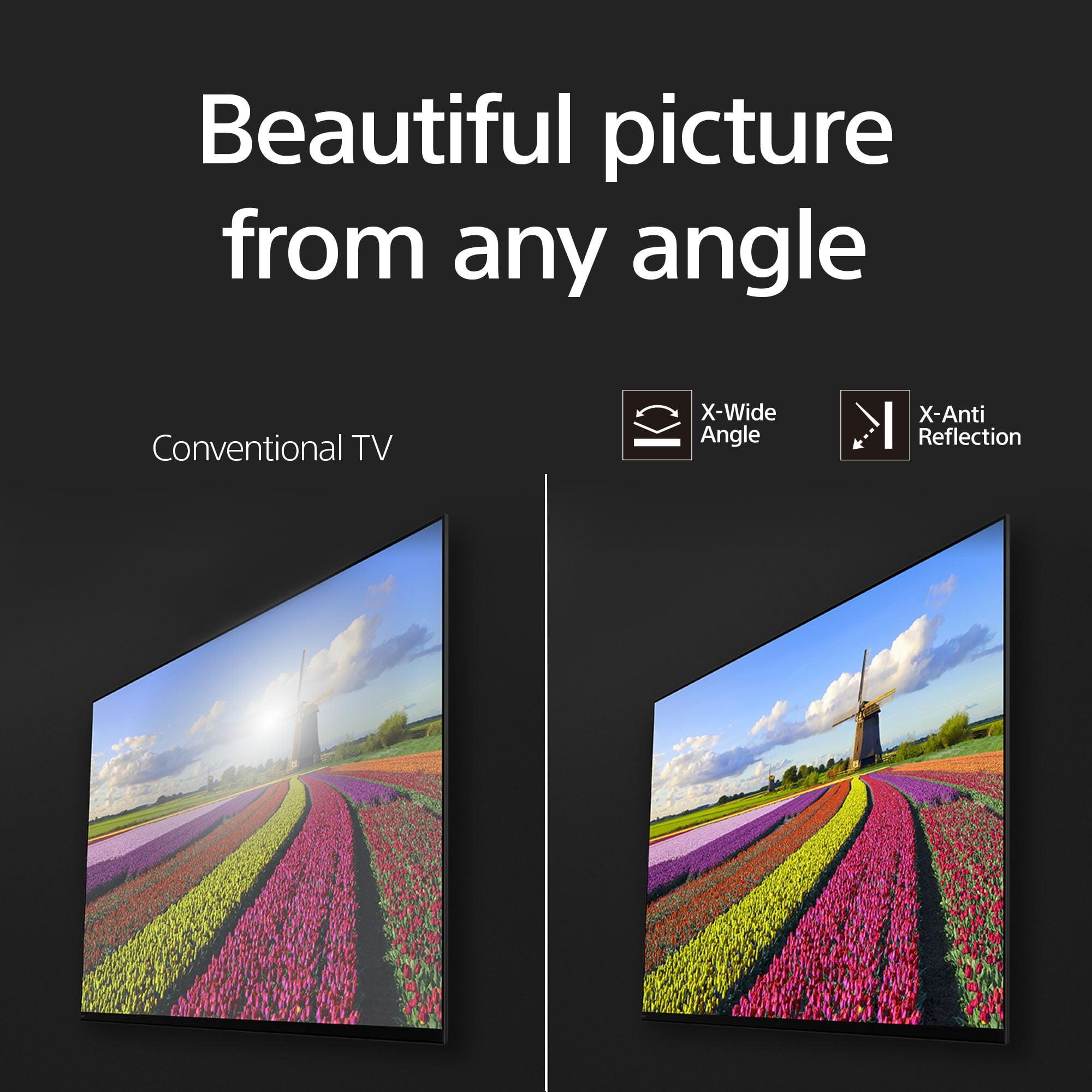
Yes, both the Samsung QN80F Neo QLED 4K TV and Sony BRAVIA 9 perform well in bright rooms thanks to their Mini LED technology. However, the Sony BRAVIA 9 has superior anti-glare technology and higher peak brightness, making it slightly better for very bright environments. Both are significant improvements over traditional LED TVs for daytime viewing.
The Samsung QN80F Neo QLED 4K TV typically offers better value, costing less while delivering premium gaming features like 144Hz refresh rate and four HDMI 2.1 ports. The Sony BRAVIA 9 costs more but justifies the premium with superior image processing, better build quality, and enhanced audio. Your choice depends on whether you prioritize gaming features or picture quality.
The Samsung QN80F Neo QLED 4K TV uses Samsung's Tizen OS with Vision AI features like Live Translate and Generative Wallpaper, offering a cohesive Samsung ecosystem experience. The Sony BRAVIA 9 runs Google TV, which excels at content discovery across streaming services and integrates seamlessly with Android devices. Both platforms support all major streaming apps.
For dedicated home theater use, the Sony BRAVIA 9 is the superior choice. Its advanced image processing delivers more accurate colors and better contrast for movies, while the superior built-in audio reduces the immediate need for external speakers. The Sony BRAVIA 9 also offers more flexible stand positioning to accommodate different home theater configurations.
Both the Samsung QN80F Neo QLED 4K TV and Sony BRAVIA 9 support current gaming console features like 4K at 120Hz, VRR, and ALLM. However, the Samsung QN80F offers more future-proofing with its 144Hz capability and additional HDMI 2.1 ports, while the Sony BRAVIA 9 includes PS5-specific optimizations like Auto HDR Tone Mapping.
The Sony BRAVIA 9 delivers more accurate, cinema-reference colors thanks to its XR Triluminos Pro technology and sophisticated processing algorithms. The Samsung QN80F Neo QLED 4K TV uses Quantum Dot technology that produces more vibrant and punchy colors, which some viewers prefer for sports and gaming but may appear oversaturated for movies.
Yes, connectivity is a significant differentiator. The Samsung QN80F Neo QLED 4K TV includes four HDMI 2.1 ports, making it ideal for users with multiple gaming consoles, PCs, and audio equipment. The Sony BRAVIA 9 has only two HDMI 2.1 ports, which may require device switching for complex setups but is adequate for most users.
The Sony BRAVIA 9 likely offers better long-term reliability, indicated by its heavier construction (76.7 lbs vs 52.2 lbs) and Sony's reputation for durable displays. The Samsung QN80F Neo QLED 4K TV offers solid build quality at its price point and includes comprehensive warranty coverage. Both TVs represent significant investments designed to last 7-10 years with proper care.
We've done our best to create useful and informative comparisons to help you decide what product to buy. Our research uses advanced automated methods to create this comparison and perfection is not possible - please contact us for corrections or questions. These are the sites we've researched in the creation of this article: samsung.com - theshortcut.com - youtube.com - bestbuy.com - rtings.com - samsung.com - samsung.com - samsung.com - sargentappliance.com - displayspecifications.com - bestbuy.com - bestbuy.com - bestbuy.com - youtube.com - whathifi.com - crutchfield.com - rtings.com - pcrichard.com - merlinstv.com - youtube.com - sony.ca - electronics.sony.com

Privacy Policy
Terms and Conditions - Affiliate Policy
Home Security
© Copyright 2008-2026.
11816 Inwood Rd #1211, Dallas, TX 75244