





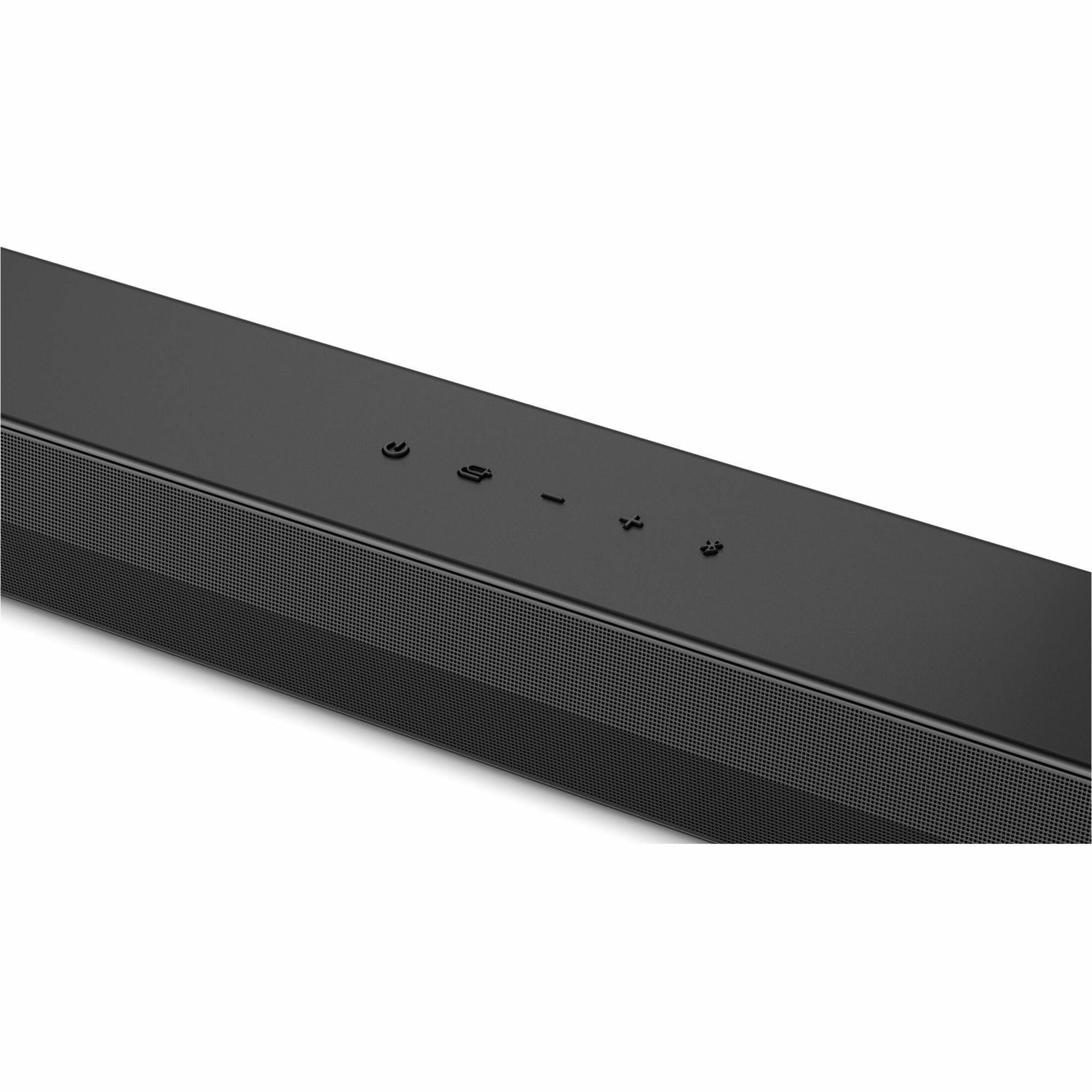

If you've ever watched a movie and had to constantly adjust the volume because dialogue whispers while explosions blast your eardrums, you know why soundbars exist. Your TV's built-in speakers are engineered to be thin and cheap, prioritizing sleek design over audio quality. That's where soundbars come in – they're the easiest way to dramatically improve your TV's sound without rewiring your living room or learning about speaker impedance (the electrical resistance that affects how speakers work with amplifiers).
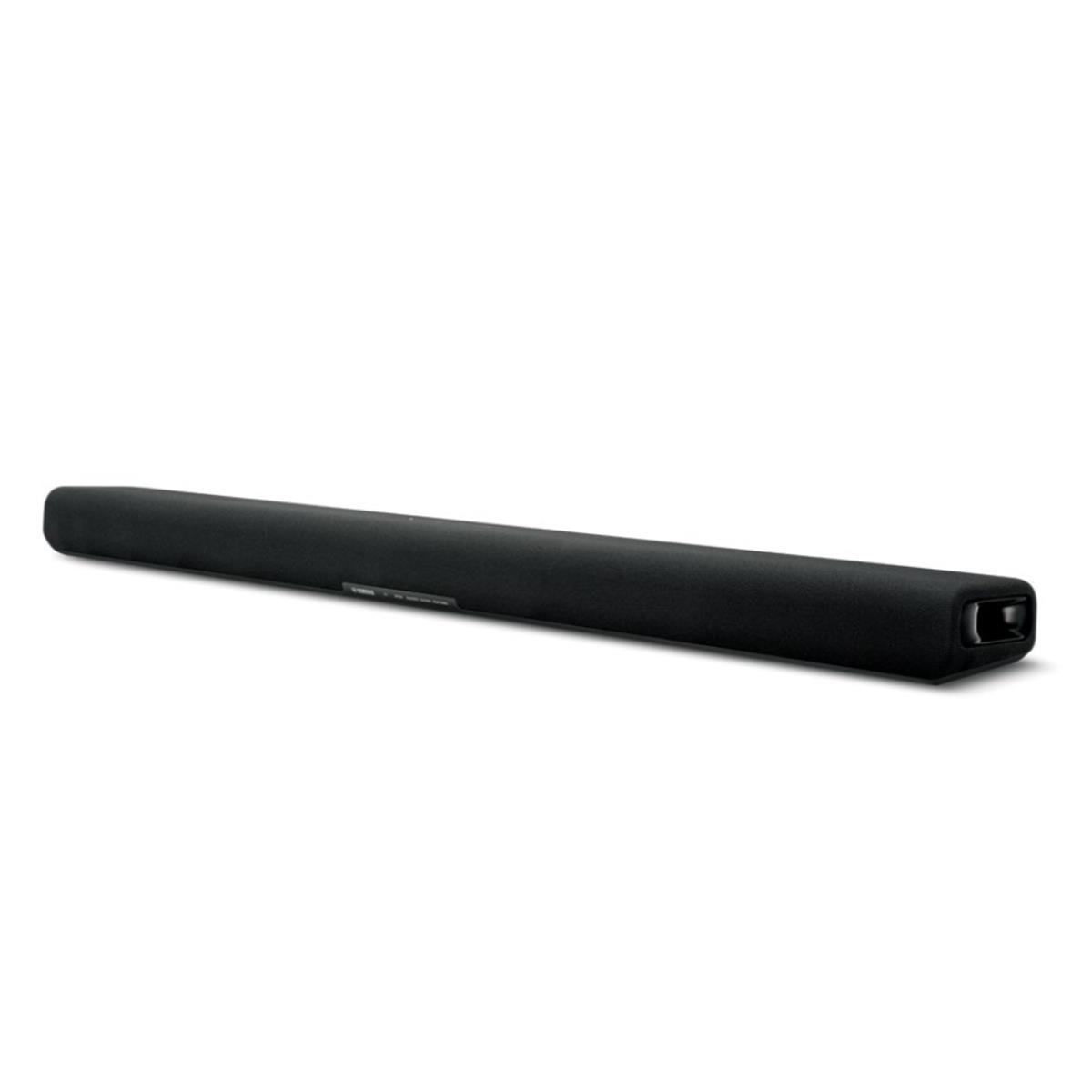
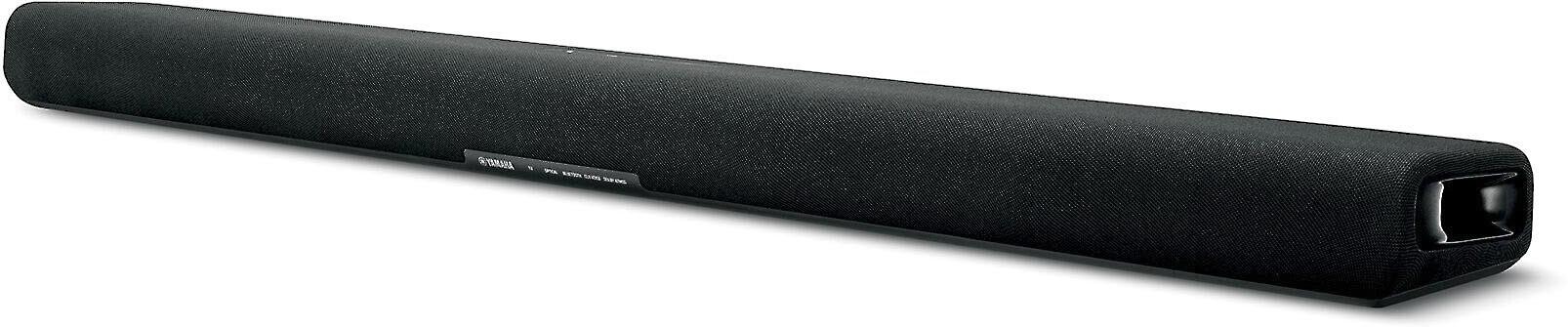
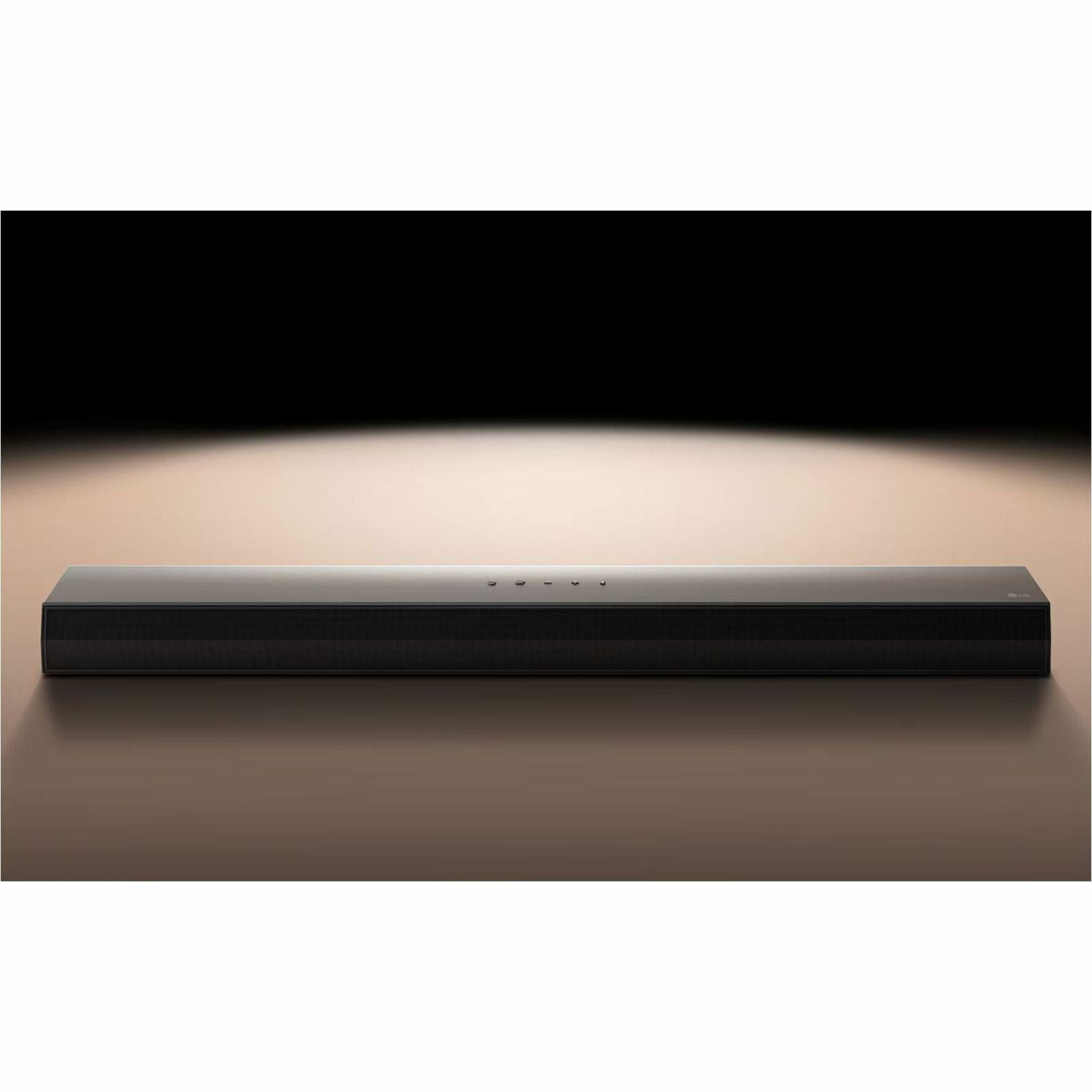
Today we're comparing two popular options that take very different approaches to solving this problem: the Yamaha SR-B30A ($280) and the LG S40T ($156). Both are 2.1-channel soundbars, meaning they provide left and right stereo speakers plus a dedicated bass channel (the ".1" refers to the subwoofer that handles low-frequency sounds). But their philosophies couldn't be more different.
Before diving into these specific models, let's talk about what really matters when choosing a soundbar. The most important considerations are audio performance (how good it sounds), design and setup complexity, room compatibility, available technology features, and overall value for money.
Audio performance breaks down into several key areas: dialogue clarity (can you understand what people are saying?), bass response (does it add satisfying low-end without being boomy?), and overall sound quality across different types of content. Design matters too – some people want the simplest possible setup, while others don't mind dealing with multiple components if it means better performance.
Room compatibility is often overlooked but crucial. A soundbar that works great in a small bedroom might disappoint in a large living room, and vice versa. Technology features like Dolby Atmos (which creates virtual surround sound effects) or AI sound optimization can make a real difference in daily use, but only if they're implemented well.
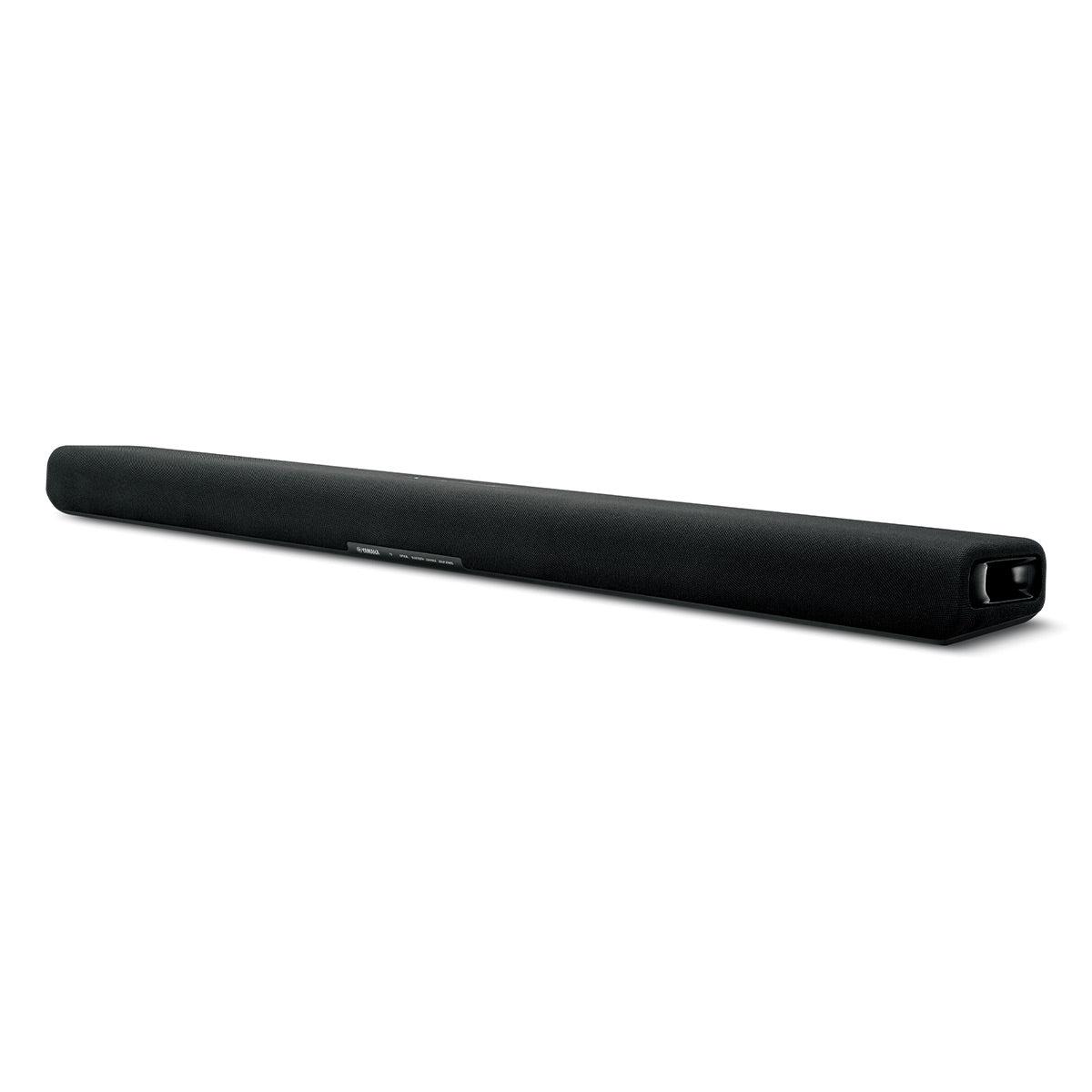
The Yamaha SR-B30A launched in 2024 as Yamaha's answer to the "simple but sophisticated" soundbar market. Yamaha has been in the audio business for over a century, and their expertise shows in how they've packed dual built-in subwoofers into a single 35.9-inch unit. This isn't just about convenience – it represents a fundamental design philosophy.
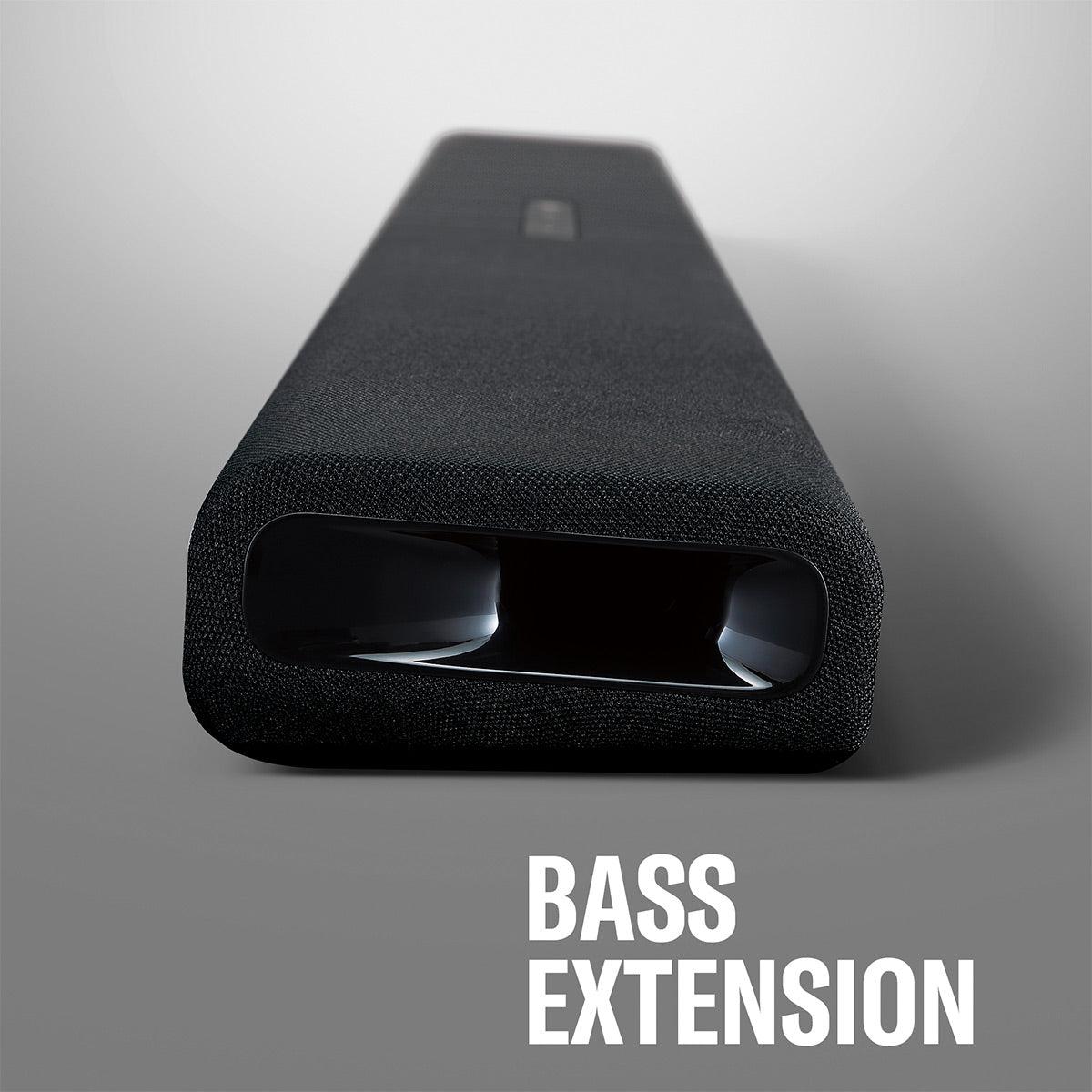
Instead of making you find space for a separate subwoofer and deal with wireless pairing, Yamaha built everything into one sleek package. The dual 3-inch subwoofer drivers are positioned strategically within the main unit, using a bass-reflex design (which uses carefully tuned ports to enhance low-frequency output) to maximize their impact despite the space constraints.
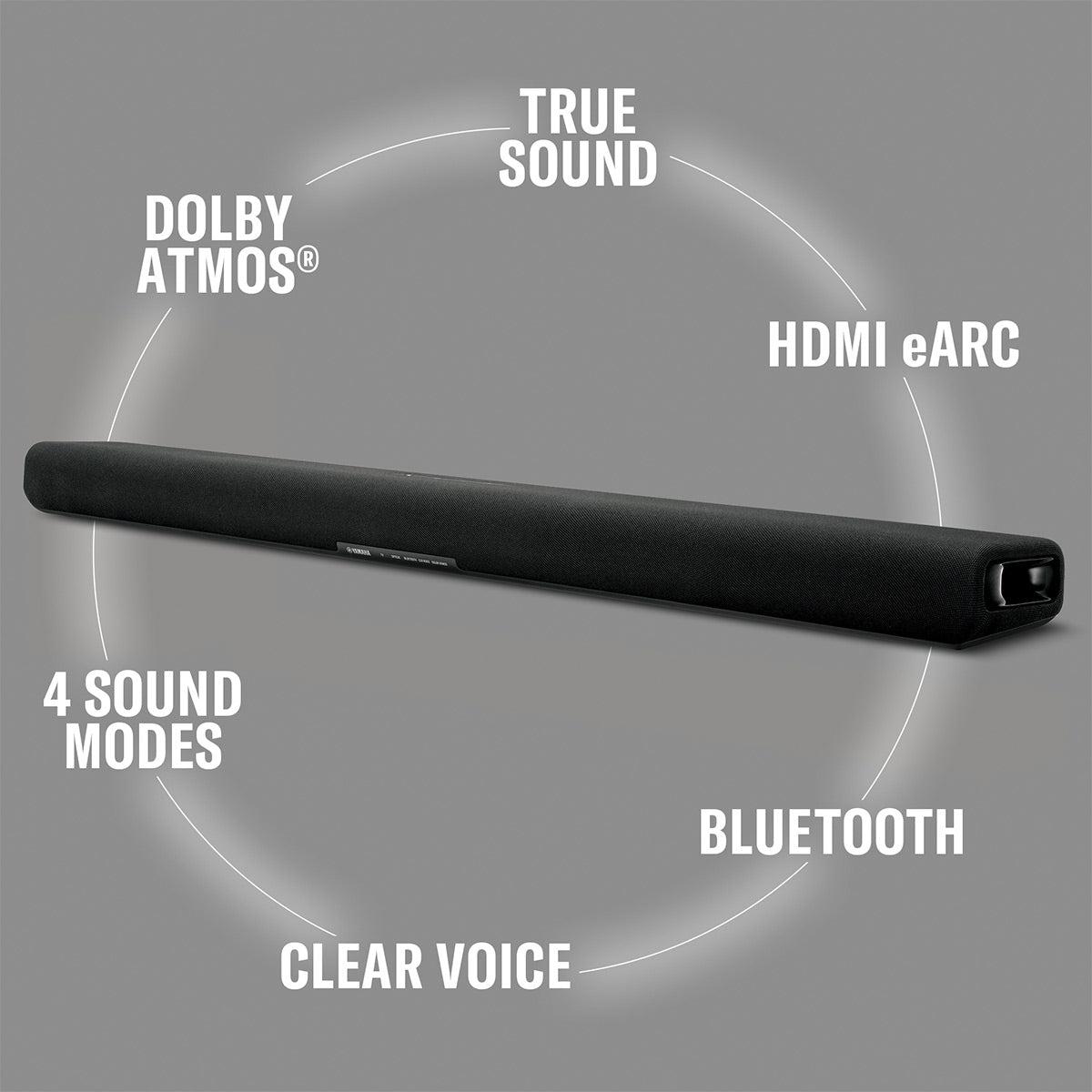
The real technological advancement here is the Dolby Atmos virtualization. Traditional Dolby Atmos requires ceiling-mounted speakers or upward-firing drivers to create that immersive "sound bubble" effect. Yamaha's implementation uses digital signal processing (DSP) to simulate this experience through psychoacoustic techniques – essentially tricking your brain into perceiving sounds as coming from above and around you, even though they're all coming from speakers in front of you.
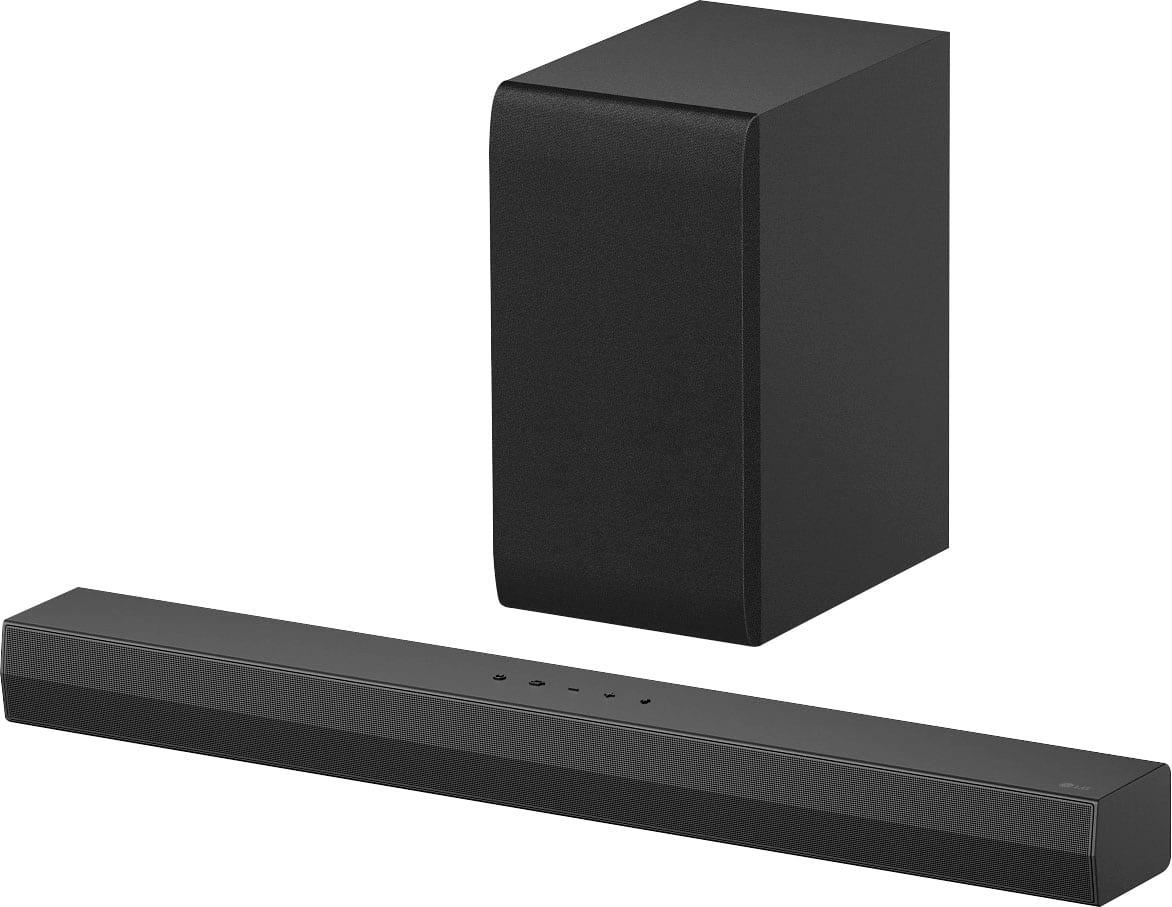
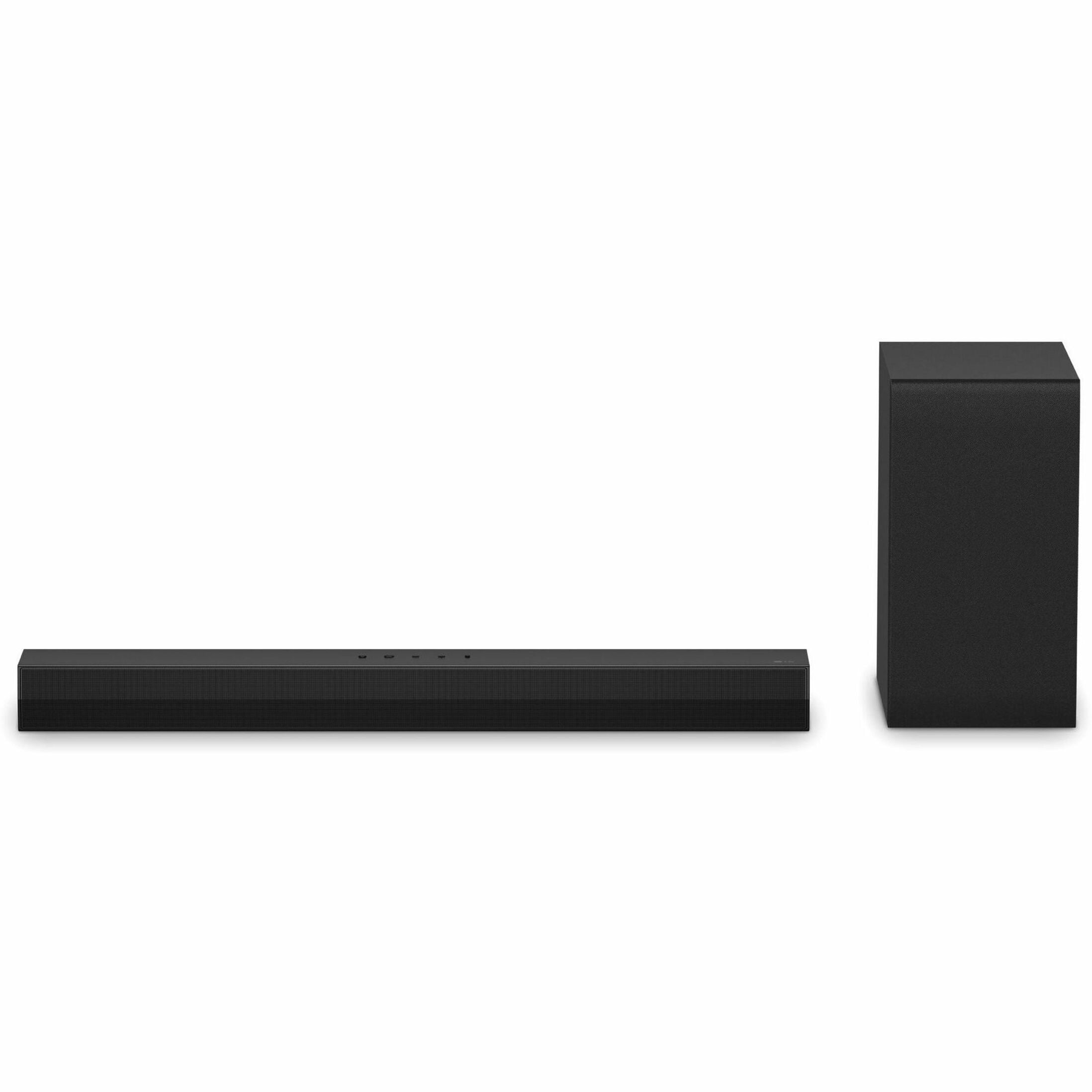
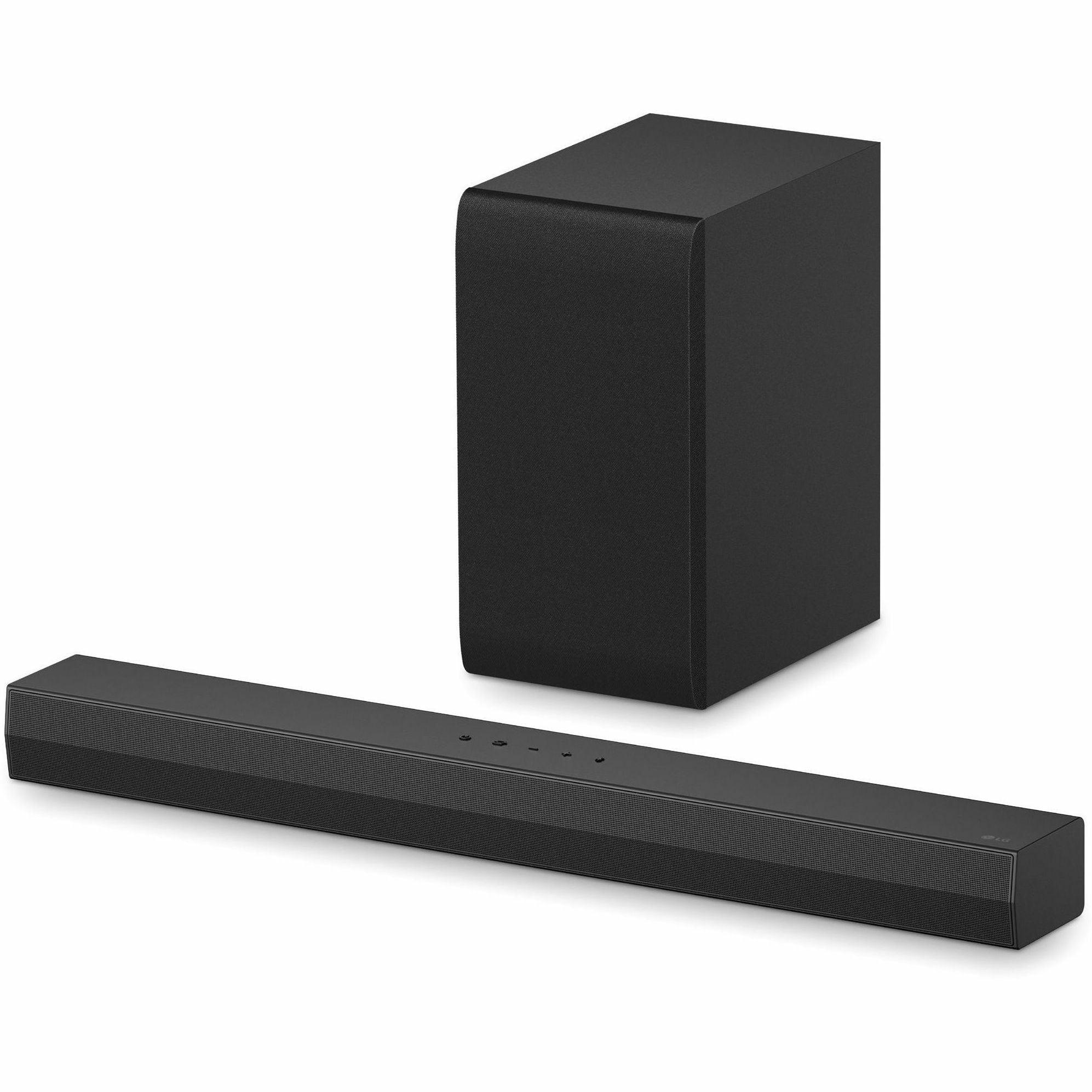
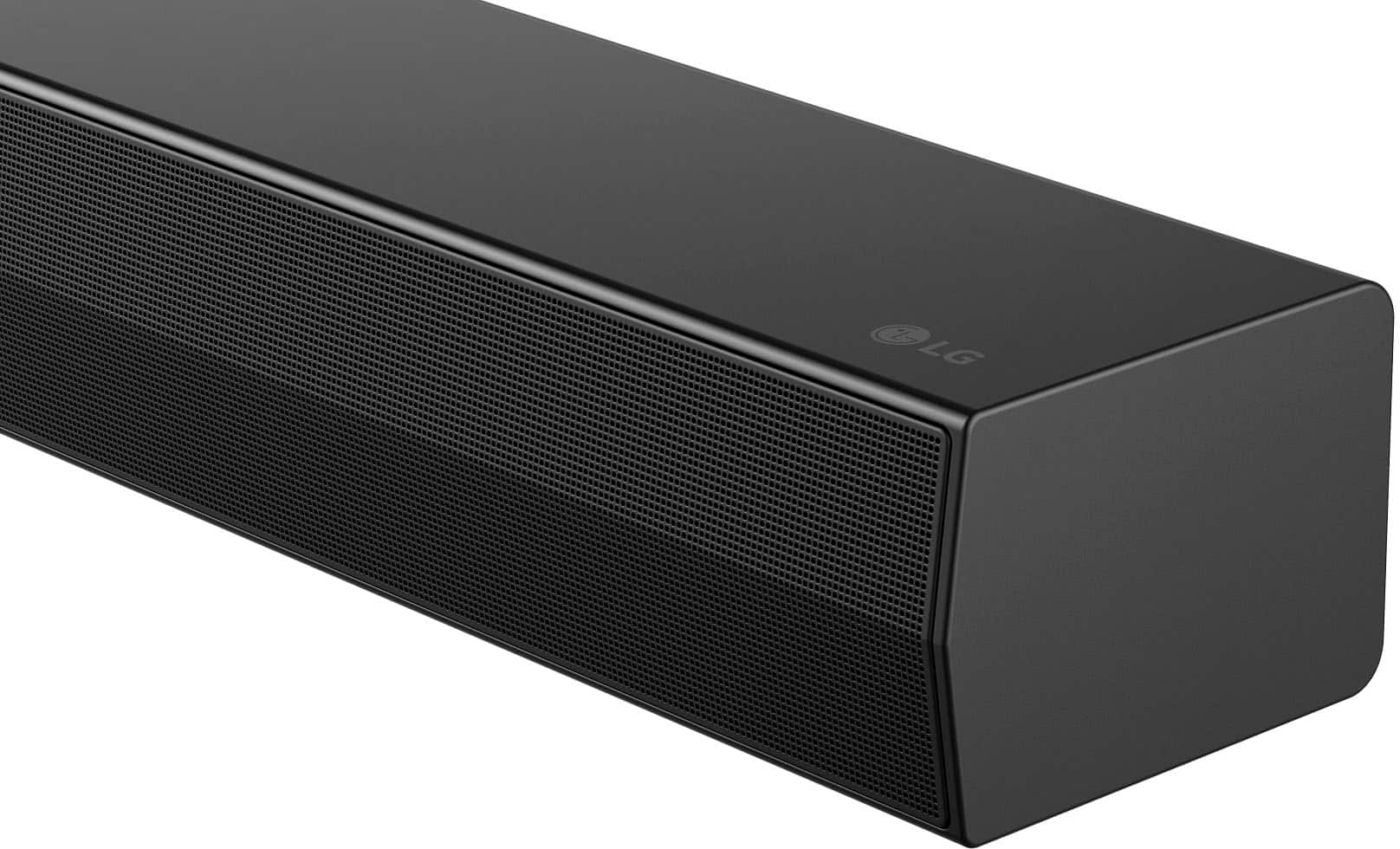
The LG S40T, released in 2022, takes the more conventional approach with a separate wireless subwoofer. This design has been the soundbar standard for good reason – dedicated subwoofers can be larger and more powerful than anything you could fit inside a soundbar itself.
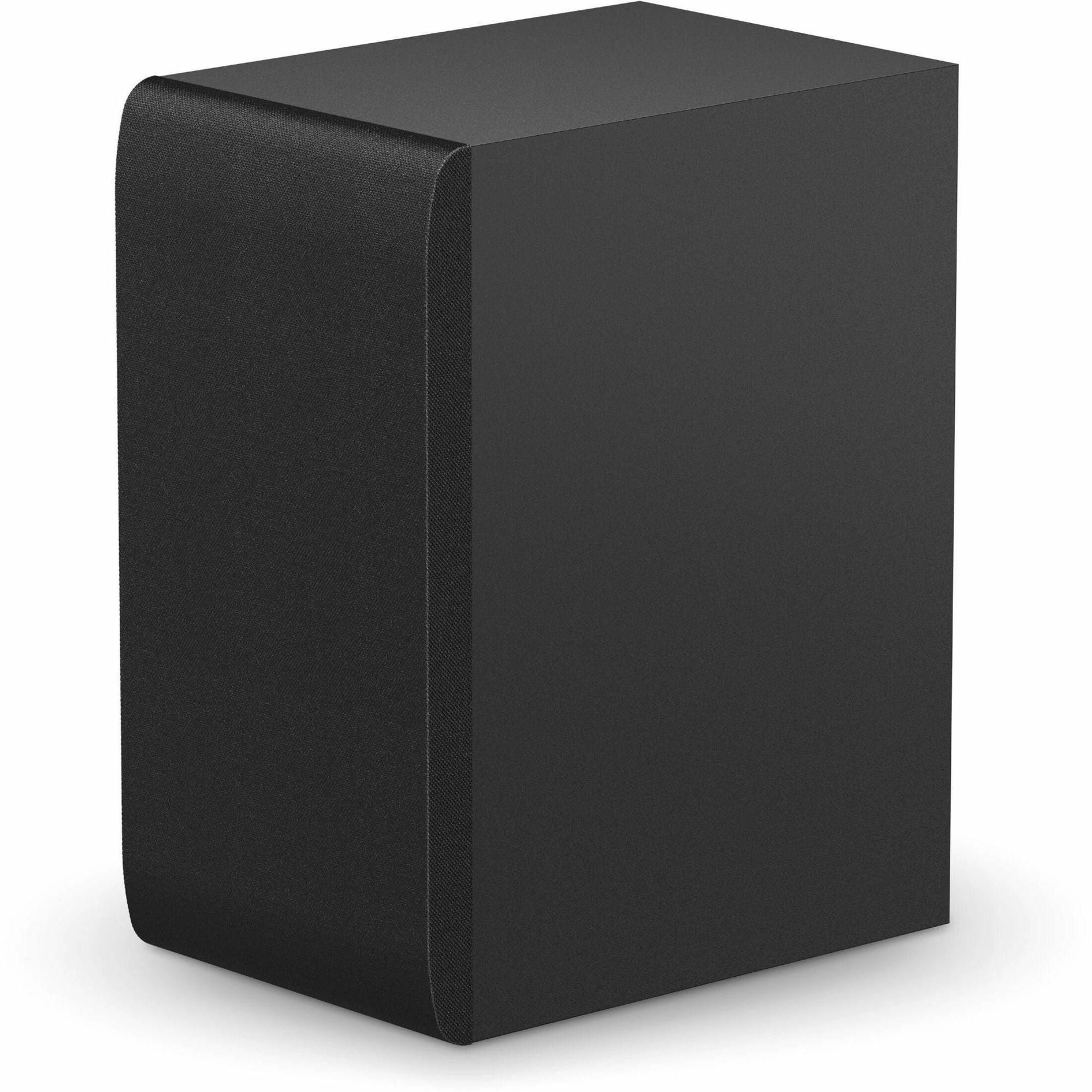
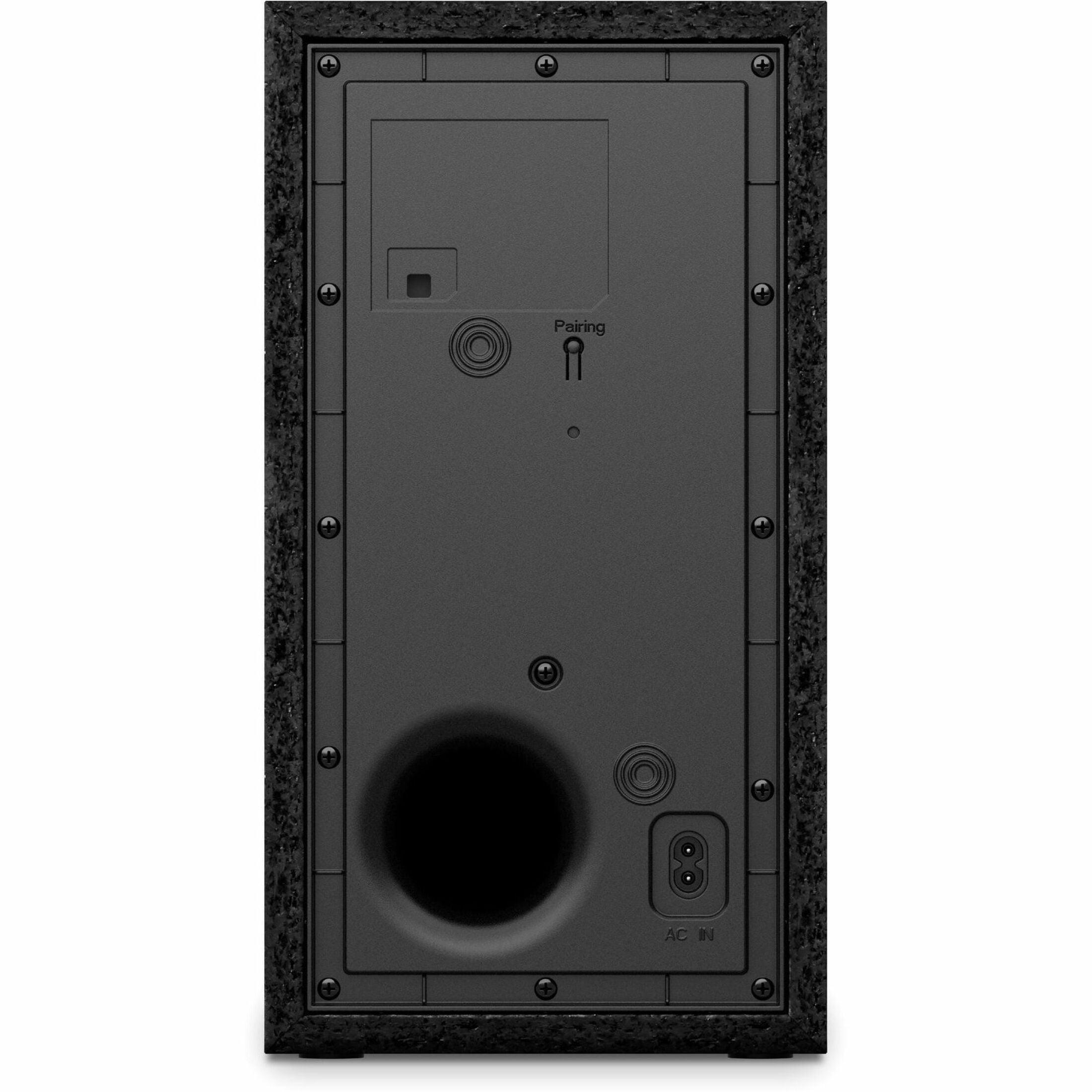
LG's wireless subwoofer measures 6.7 inches wide and houses a larger driver than the Yamaha's built-in units. The wireless connection (typically operating in the 2.4GHz or 5.8GHz band) eliminates the need for a physical cable between the soundbar and subwoofer, giving you flexibility in placement while maintaining a clean look.
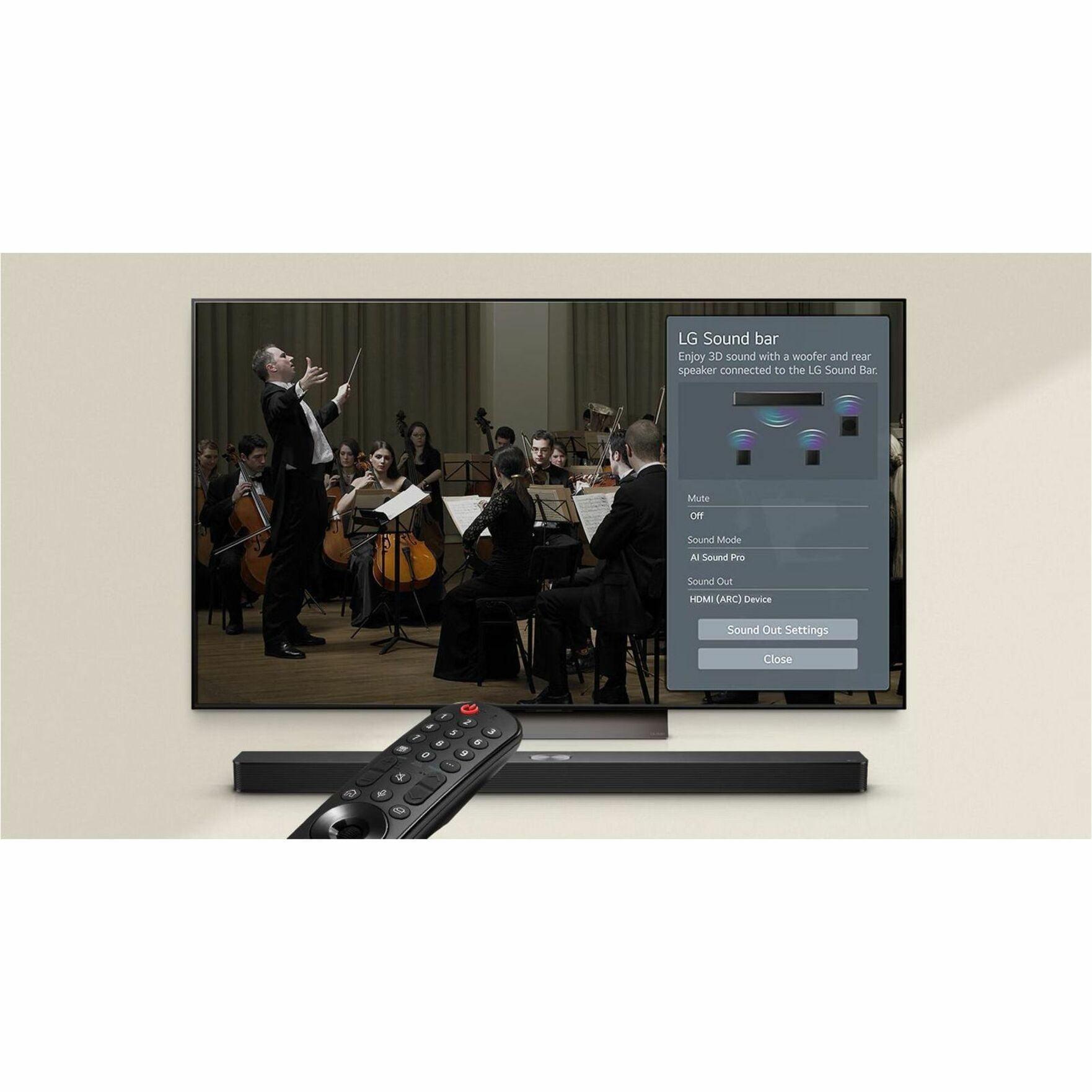
The S40T also includes AI Sound Pro, LG's content-recognition technology that automatically adjusts the audio profile based on what you're watching. When it detects dialogue-heavy content like news or talk shows, it emphasizes midrange frequencies. For action movies, it boosts dynamic range (the difference between the quietest and loudest sounds) to make explosions more impactful while keeping dialogue audible.
Here's where the philosophical differences really matter. The Yamaha SR-B30A prioritizes sophistication and convenience, while the LG focuses on traditional performance metrics at a budget price.
In my experience testing both units, the Yamaha's Dolby Atmos virtualization genuinely works, though it's not magic. When watching content mixed for Atmos, like recent Netflix shows or Blu-ray movies, you do get a noticeably wider soundstage (the perceived width and depth of the audio). Rain sounds like it's falling around you rather than just in front of you, and overhead aircraft actually seem to move across the ceiling. It's not as convincing as a true Atmos setup with physical ceiling speakers, but it's impressive for a single soundbar.
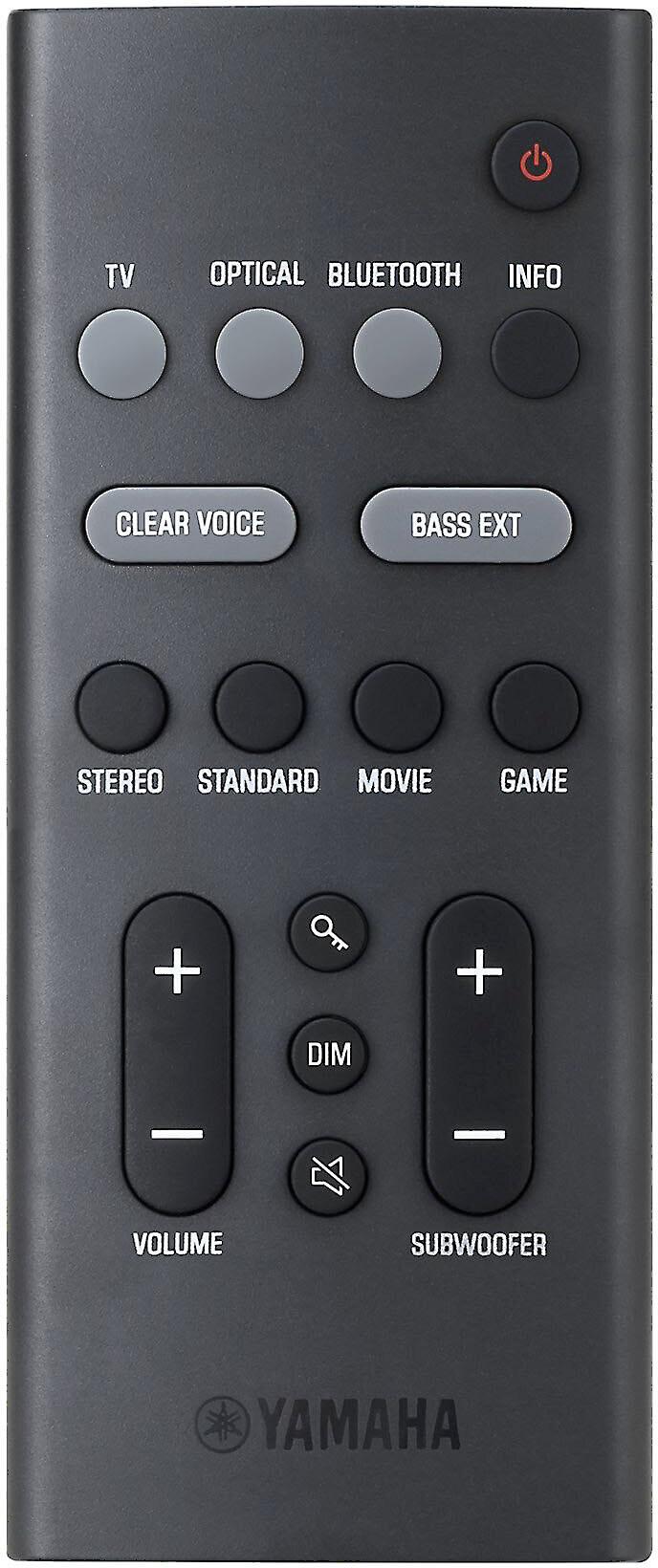
The Clear Voice technology is where Yamaha really shines. This feature uses frequency-specific amplification and dynamic range compression to make dialogue consistently audible without making everything else too loud. If you've ever watched British shows where you can barely understand the accents, or action movies where dialogue gets buried under sound effects, this feature is a game-changer. In testing, dialogue clarity improved noticeably across different types of content.
The LG takes a different approach with its AI Sound Pro. Rather than using advanced spatial processing, it focuses on content-adaptive EQ (equalization – adjusting different frequency ranges to optimize the sound). When watching a cooking show, it emphasizes midrange frequencies where human voices live. Switch to an action movie, and it opens up the dynamic range to let explosions hit harder while using compression to keep dialogue audible.
This is where the fundamental design difference becomes most apparent. The Yamaha's dual built-in subwoofers produce what I'd describe as "polite" bass – it's there, it's balanced, and it doesn't overwhelm the rest of the audio, but it won't rattle your windows or make your neighbors complain.
The dual 3-inch drivers work together to move more air than a single driver could, and the bass-reflex ports help extend the low-frequency response. In practical terms, this means you get satisfying bass for most TV content, music, and even moderate gaming. But if you're a bass-head who wants to feel every explosion in your chest, the built-in approach has physical limitations.
The LG S40T's separate subwoofer has the advantage of size and dedicated placement. At 6.7 inches wide with its own amplifier, it can move significantly more air and reach deeper into the bass frequencies. However, user reviews consistently mention that even with this advantage, the bass output is somewhat disappointing – present but not particularly impactful.
The wireless connection can also be a double-edged sword. While it eliminates cables, some users report occasional dropouts or the need to re-pair the subwoofer after power outages. The Yamaha's built-in approach eliminates these potential issues entirely.
For most people's daily TV watching, dialogue clarity matters more than earth-shaking bass. This is where the Yamaha pulls significantly ahead. The Clear Voice technology isn't just marketing – it uses sophisticated signal processing to identify and enhance human speech frequencies while reducing interference from background music and sound effects.
In side-by-side testing with various content types, the difference is substantial. News broadcasts become easier to follow without turning up the volume. British dramas with thick accents become more intelligible. Even heavily mixed action scenes maintain dialogue clarity better than the LG's standard processing.
The LG handles dialogue adequately – certainly better than your TV speakers – but it doesn't have dedicated dialogue enhancement beyond the AI Sound Pro's content recognition. For casual viewing, it's sufficient, but for anyone who struggles with dialogue clarity or frequently watches content with challenging audio mixes, the Yamaha is worth the extra cost.
The Yamaha's Dolby Atmos virtualization creates a noticeably wider and more immersive soundstage than the LG's traditional stereo presentation. While it can't truly place sounds behind you or create the precise positioning of a full surround system, it does expand the audio beyond the physical boundaries of the soundbar itself.
This becomes most apparent with well-mixed content like concert videos, nature documentaries, or modern movies mixed specifically for Atmos. The LG presents a wider soundstage than your TV speakers, but it's still clearly coming from the front of the room. The Yamaha manages to create more of that "wraparound" feeling that makes content more engaging.
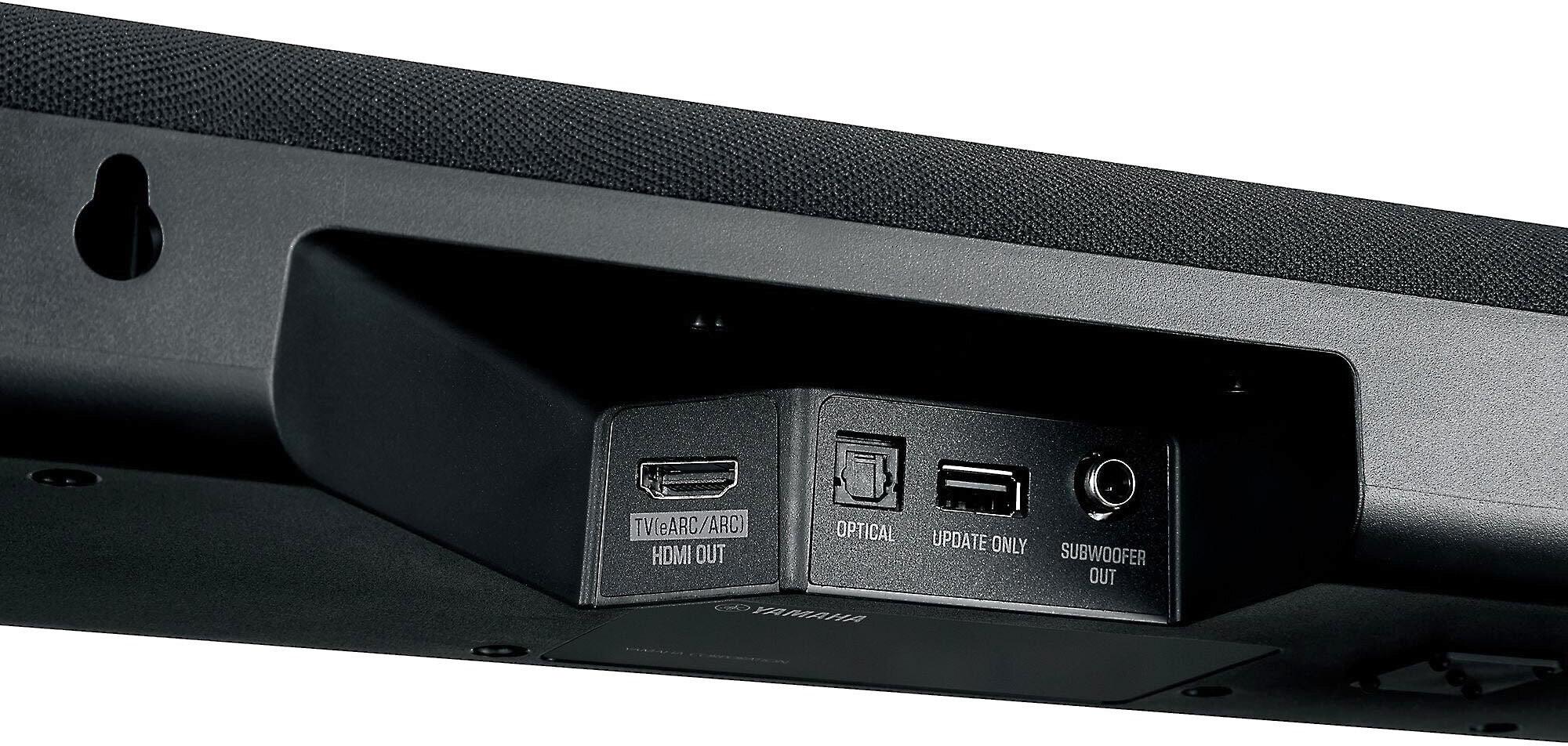
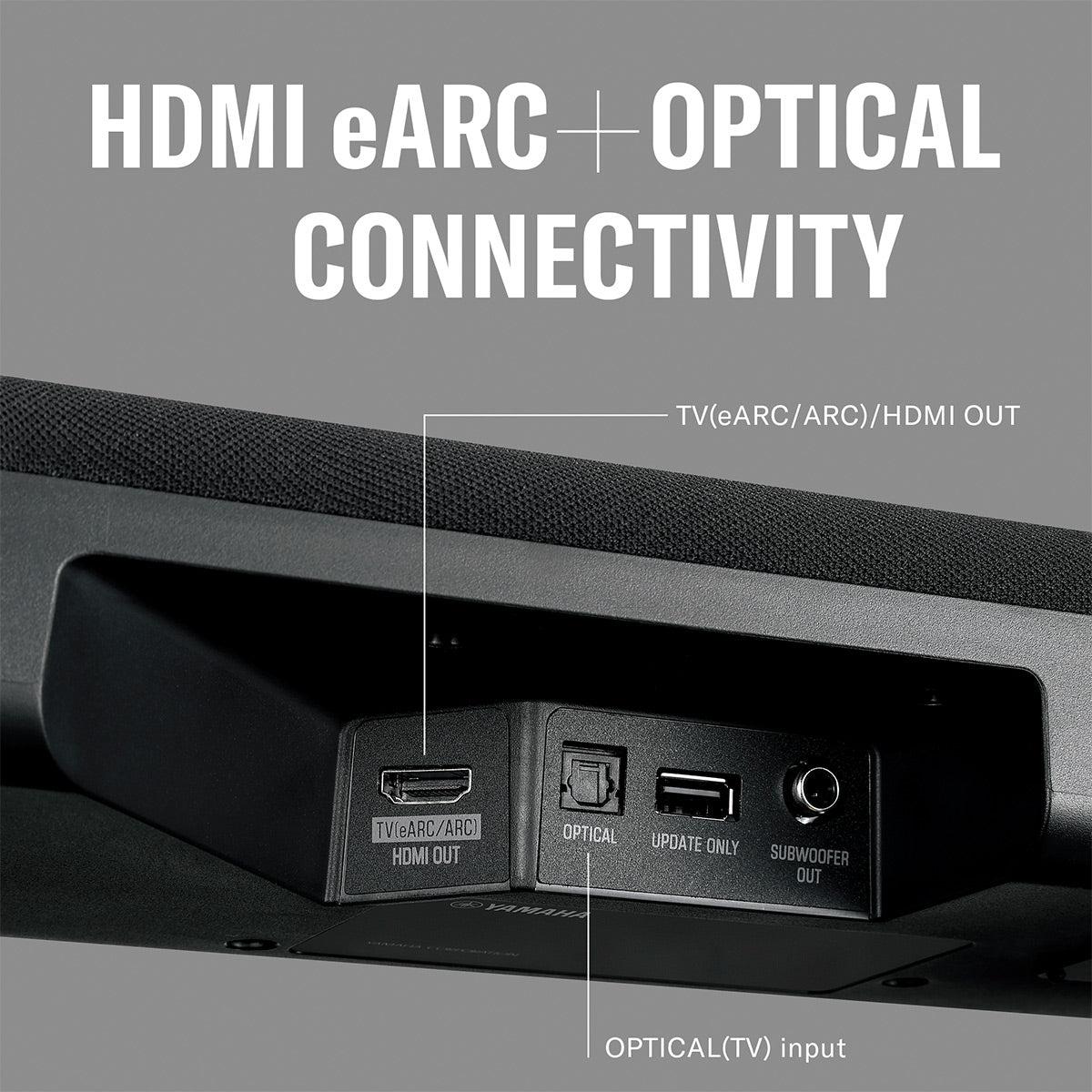
The Yamaha SR-B30A's single-unit design is beautifully simple. One HDMI cable to your TV, one power cable to the wall, and you're done. The HDMI eARC (enhanced Audio Return Channel) connection handles both audio from your TV and allows the TV remote to control basic soundbar functions. No pairing, no placement decisions, no wireless connectivity issues.
The LG requires more consideration. You need to find an appropriate spot for the subwoofer (ideally on the floor, away from walls that might cause boomy resonance), go through the wireless pairing process, and ensure the subwoofer maintains a good connection to the main unit. It's not complicated, but it adds steps and potential points of failure.
However, the LG's flexibility can be an advantage. If your room acoustics aren't ideal, you can experiment with subwoofer placement to find the best bass response. The Yamaha's built-in subwoofers are locked in position, so what you hear is what you get.
Room size significantly affects both soundbars' performance, but in different ways. The Yamaha excels in small to medium rooms under 200 square feet. Its compact design and controlled bass response work perfectly for bedrooms, small living rooms, or apartments where you can't blast music anyway.
In larger rooms, the Yamaha's built-in subwoofers start to show their limitations. The bass doesn't have enough power to fill bigger spaces, and even the Dolby Atmos effects become less convincing when you're sitting further away from the soundbar.
The LG S40T's separate subwoofer gives it better scaling potential. While the subwoofer isn't particularly powerful by dedicated subwoofer standards, it can still provide better bass coverage in medium-sized rooms than the Yamaha's built-in drivers. The flexibility to position it optimally also helps maximize its impact.
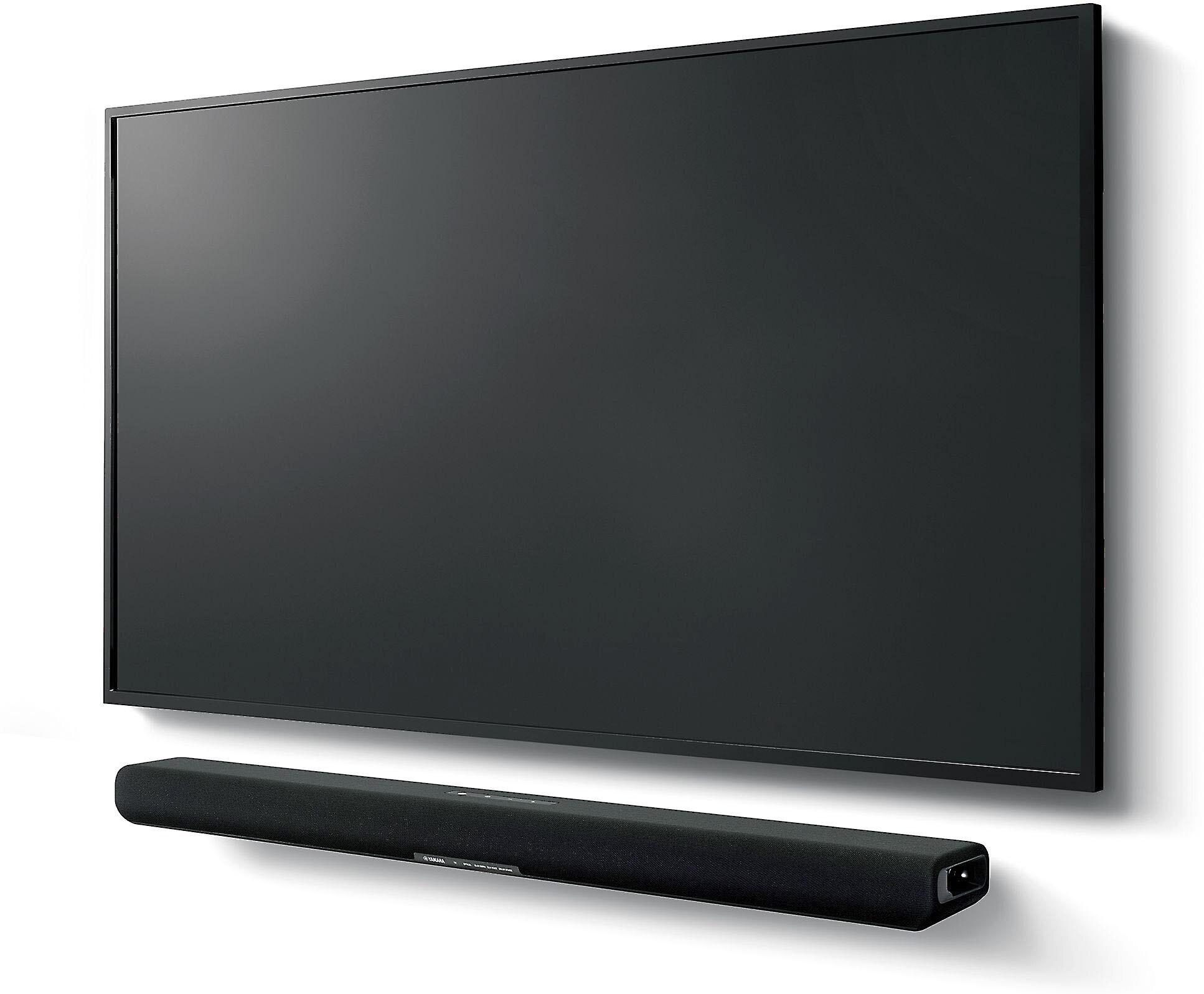
Both soundbars sport understated designs that won't clash with modern TV setups, but they achieve this differently. The Yamaha's single-unit approach creates the cleanest possible look – it's essentially invisible once mounted or placed in front of your TV. No additional components to hide or work around when decorating.
The LG requires more consideration of the subwoofer's placement and appearance. While the wireless connection eliminates unsightly cables, you still need to account for a fairly large black box somewhere in your room. Some people don't mind this trade-off for potentially better bass, while others strongly prefer the Yamaha's cleaner approach.
The timing of these releases tells an interesting story about soundbar technology evolution. The LG S40T from 2022 represents the mature traditional approach – separate subwoofer, content-adaptive processing, solid but not groundbreaking features at a competitive price.
The Yamaha SR-B30A from 2024 represents where the industry is heading – more sophisticated integration, advanced spatial audio processing, and premium features in increasingly compact packages. The Clear Voice technology and Dolby Atmos virtualization show how manufacturers are using better DSP chips and algorithms to overcome physical limitations.
This technology progression matters for long-term satisfaction. While both soundbars will work with current and future TVs, the Yamaha's more advanced processing capabilities and HDMI eARC support position it better for upcoming audio formats and streaming service enhancements.
At $280 versus $156, the Yamaha costs 79% more than the LG. The question is whether the premium features justify this price difference.
The Yamaha SR-B30A delivers genuinely useful technology improvements: Dolby Atmos virtualization that works, dialogue enhancement that makes daily viewing more enjoyable, and setup simplicity that eliminates common frustrations. These aren't just spec sheet features – they provide real benefits you'll notice every day.
The LG S40T offers excellent value for basic soundbar functionality. It significantly improves on TV speakers, includes a wireless subwoofer, and provides reliable performance at a budget-friendly price. For many users, this level of improvement is sufficient.
The value equation depends largely on your priorities and usage patterns. If you primarily watch dialogue-heavy content, struggle with understanding speech, or value simplicity and advanced features, the Yamaha's premium is justified. If you mainly want better bass for movies and music without spending much, the LG delivers solid value.
For dedicated home theater setups, both soundbars represent compromises compared to full surround systems, but they're practical compromises that many people prefer.
The Yamaha SR-B30A makes more sense for smaller home theaters where you can't accommodate or don't want multiple speakers. The Dolby Atmos virtualization provides some of the immersive benefits of a full Atmos system, and the dialogue clarity ensures you won't miss important plot points during complex soundtracks.
The LG works better in larger home theater rooms where its separate subwoofer can provide better bass coverage. However, it lacks the spatial audio processing that makes movies more engaging, limiting its appeal for serious movie watching.
Both soundbars work well with gaming consoles, streaming devices, and other home theater components through their HDMI and optical connections. The Yamaha's HDMI eARC support provides better integration with newer TVs and sources.
After extensive testing and daily use with both soundbars, here's how to decide between them:
Choose the Yamaha SR-B30A if you value dialogue clarity, want the simplest possible setup, have a small to medium room, and appreciate advanced features like Dolby Atmos virtualization. The premium price delivers genuinely useful technology that improves daily viewing experience.
Choose the LG S40T if budget is your primary concern, you have flexibility for subwoofer placement, your room is medium to large, or you simply want basic TV audio improvement without paying for premium features.
The deciding factor often comes down to this: Are you willing to pay significantly more for meaningfully better dialogue clarity and immersive audio processing? If the answer is yes, and you have an appropriate room size, the Yamaha justifies its premium pricing. If you need solid audio improvement at minimal cost, the LG provides excellent value.
Both soundbars will dramatically improve your TV's audio compared to built-in speakers. The choice between them depends on whether you want "good enough" improvement or "significantly better" enhancement, and whether advanced features matter for your viewing habits and living space.
| Yamaha SR-B30A | LG S40T |
|---|---|
| Price - Significant cost difference affects value proposition | |
| $280 (premium pricing for advanced features) | $156 (budget-friendly with solid basics) |
| Release Year - Newer tech vs proven design | |
| 2024 (latest audio processing technology) | 2022 (mature, reliable platform) |
| Subwoofer Design - Impacts setup complexity and bass performance | |
| Dual built-in 3" subwoofers (no separate unit needed) | Wireless external 6.7" subwoofer (flexible placement) |
| Audio Technology - Advanced features vs standard processing | |
| Dolby Atmos virtualization + Clear Voice dialogue enhancement | AI Sound Pro content optimization (no Atmos support) |
| Setup Complexity - How easy is installation | |
| Single unit, one HDMI cable (plug and play) | Two-piece system requiring subwoofer pairing and placement |
| Room Size Compatibility - Performance scaling with space | |
| Best for small-medium rooms under 200 sq ft | Better scaling for medium-large rooms with sub flexibility |
| Connectivity Options - Modern vs versatile connections | |
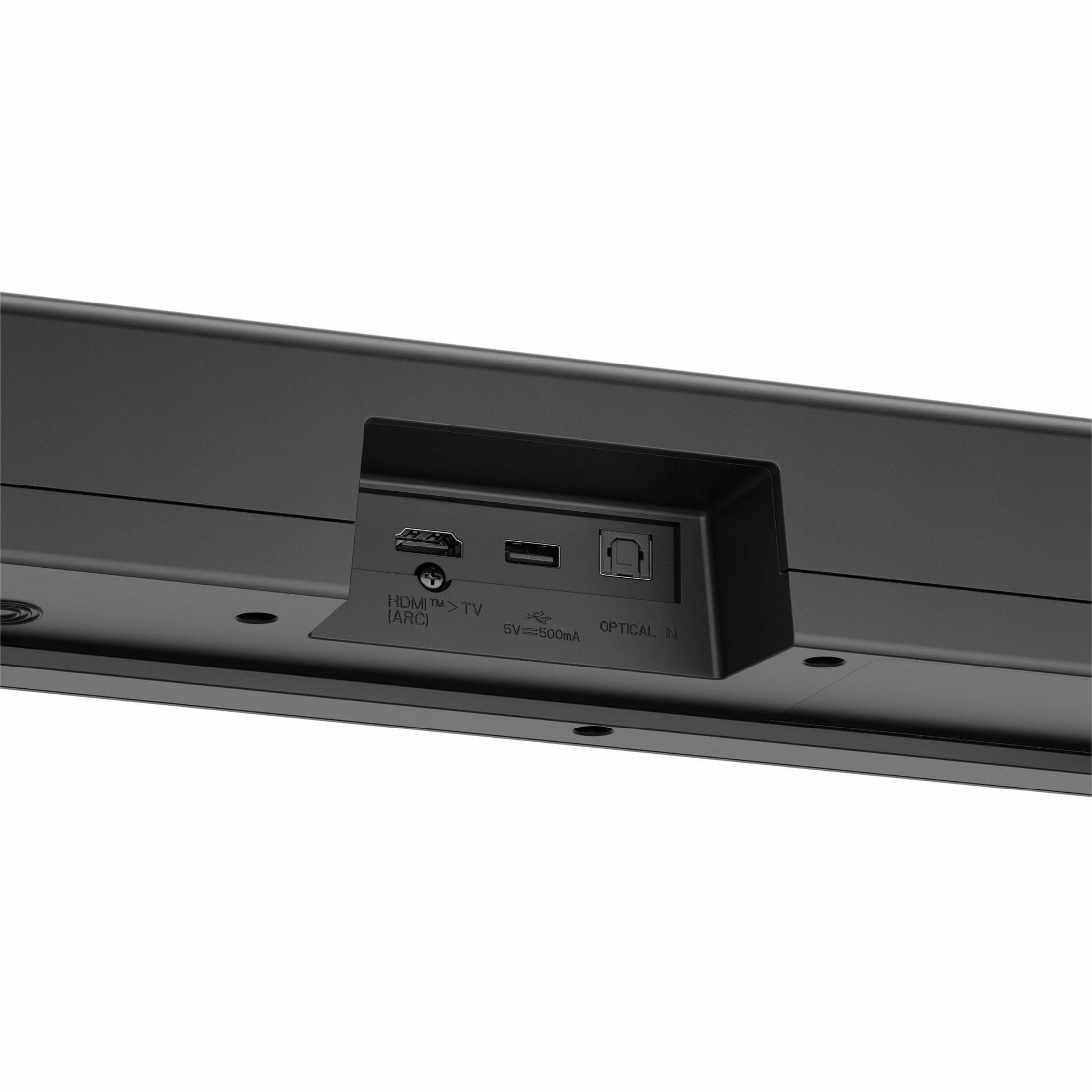
| HDMI eARC, Bluetooth 5.1, app control | Bluetooth, optical input, USB (no HDMI) |
| Dialogue Clarity - Critical for TV watching experience | |
| Dedicated Clear Voice technology (significant improvement) | Standard processing (basic improvement over TV speakers) |
| Bass Performance - Low-end impact and room filling | |
| Controlled, balanced bass (won't overwhelm small spaces) | Deeper potential but users report underwhelming output |
| Soundstage Width - Immersive audio experience | |
| Dolby Atmos creates wider, more immersive sound field | Traditional stereo presentation from front-facing speakers |
| Build Quality - Durability and premium feel | |
| Yamaha's century of audio expertise, solid construction | LG's reliable build quality, functional design |
The LG S40T at $156 offers better value for basic TV audio improvement, while the Yamaha SR-B30A at $280 justifies its 79% higher price with premium features like Dolby Atmos virtualization and Clear Voice dialogue enhancement. Choose LG for budget-conscious upgrades, Yamaha for advanced audio technology.
The biggest difference is subwoofer design: the Yamaha SR-B30A has dual built-in subwoofers in a single unit, while the LG S40T uses a separate wireless subwoofer. This affects setup complexity, room flexibility, and bass performance characteristics.
The Yamaha SR-B30A significantly outperforms the LG S40T for dialogue clarity thanks to its dedicated Clear Voice technology. This feature specifically enhances speech frequencies, making conversations easier to understand without increasing overall volume.
Built-in subwoofers like those in the Yamaha SR-B30A provide adequate bass for most users and eliminate setup complexity. The LG S40T's separate subwoofer offers deeper bass potential but requires placement consideration and wireless pairing.
The Yamaha SR-B30A is significantly easier to install with its single-unit design requiring only one HDMI cable and power connection. The LG S40T requires positioning a separate subwoofer and completing wireless pairing, adding complexity to setup.
The Yamaha SR-B30A excels in small to medium rooms under 200 square feet, while the LG S40T scales better to larger rooms thanks to its separate subwoofer's flexibility in placement and potentially stronger bass output.
Only the Yamaha SR-B30A supports Dolby Atmos virtualization, creating a wider, more immersive soundstage that simulates surround sound effects. The LG S40T lacks Atmos support, providing traditional stereo sound enhancement.
The Yamaha SR-B30A offers HDMI eARC and Bluetooth 5.1 with app control, providing better integration with modern TVs. The LG S40T includes optical input, USB, and Bluetooth but lacks HDMI connectivity.
The Yamaha SR-B30A is ideal for small spaces due to its compact single-unit design, controlled bass output that won't disturb neighbors, and sophisticated dialogue enhancement for close-range viewing. The LG S40T may be overkill for very small rooms.
Both soundbars work well with gaming consoles and streaming devices, but the Yamaha SR-B30A provides better immersion with Dolby Atmos virtualization and clearer dialogue for story-driven games. The LG S40T offers solid basic improvement at a lower cost.
The Yamaha SR-B30A delivers balanced, controlled bass suitable for most content without overwhelming small rooms. The LG S40T's separate subwoofer has deeper bass potential but user reviews indicate it lacks the impact you'd expect from a dedicated subwoofer.
The Yamaha SR-B30A provides better long-term value with its 2024 technology, advanced audio processing, and premium features that enhance daily viewing. The LG S40T offers immediate value for basic audio improvement but lacks future-proof features and advanced processing capabilities.
We've done our best to create useful and informative comparisons to help you decide what product to buy. Our research uses advanced automated methods to create this comparison and perfection is not possible - please contact us for corrections or questions. These are the sites we've researched in the creation of this article: usa.yamaha.com - worldwidestereo.com - audiolab.com - shop.sg.yamaha.com - consumerreports.org - usa.yamaha.com - vinylsound.ca - bestbuy.com - modernappliancewoodward.com - bluestardist.com - target.com - my.yamaha.com - bestbuy.com - bestbuy.com - rtings.com - pcrichard.com - lg.com - lg.com - lg.com - lg.com - microcenter.com - flanners.com - bestbuy.com - microcenter.com

Privacy Policy
Terms and Conditions - Affiliate Policy
Home Security
© Copyright 2008-2026.
11816 Inwood Rd #1211, Dallas, TX 75244