



When your TV's built-in speakers make dialogue sound like it's coming from inside a tin can, it's time to consider a soundbar upgrade. But with options ranging from basic stereo bars to complex multi-speaker systems, choosing the right one can feel overwhelming. Today we're comparing two soundbars that represent very different approaches to improving your TV audio: the budget-friendly Samsung HW-C450 and the more advanced Sony HT-A3000.
These aren't direct competitors in the traditional sense—they're aimed at different budgets and expectations. However, both promise to transform your TV watching experience, just through different methods. Understanding which approach suits your needs better will save you from buyer's remorse and ensure you get the best performance for your money.
Before diving into specifics, let's establish what makes a soundbar effective. The most important performance metrics are dialogue clarity, bass impact, soundstage width (how spread out the sound feels), and surround immersion. A soundbar's channel configuration—like 2.1 or 3.1—tells you how many discrete audio channels it can reproduce. The first number represents main speakers (left, center, right), while the number after the decimal indicates subwoofers for low-frequency effects.
Dialogue clarity should be your top priority. If you can't understand what actors are saying without constantly adjusting volume or turning on subtitles, even the most impressive bass won't matter. This is where having a dedicated center channel makes a huge difference—it anchors voices to the screen and prevents them from wandering around the soundstage when you're not sitting dead center.
Bass impact and extension determine how well you'll feel action sequences and music. However, quality matters more than quantity here. Loose, boomy bass that overwhelms dialogue is worse than tight, controlled bass that complements the overall mix. Soundstage width affects how immersive movies and music feel—wider is generally better, but it needs to feel natural rather than artificially stretched.
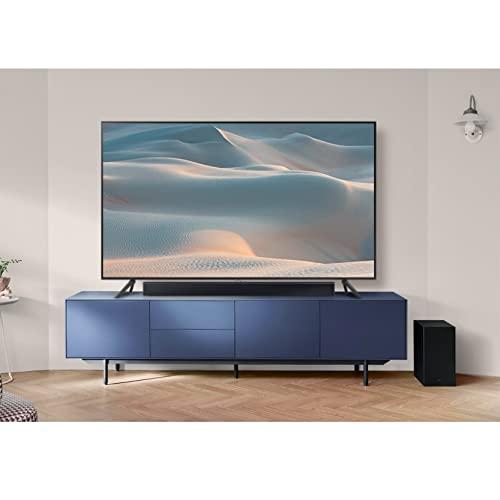
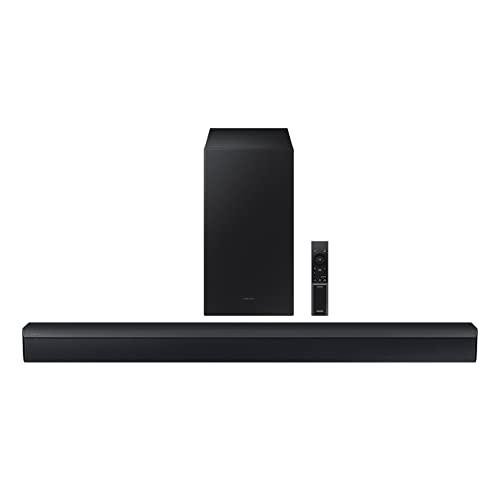
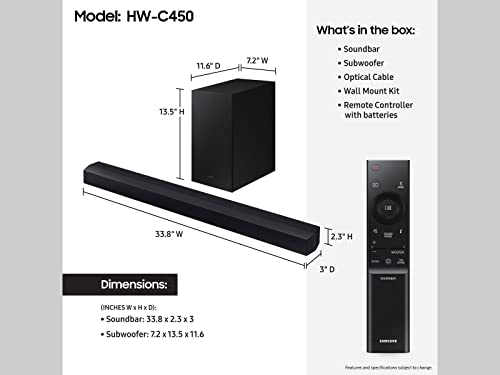
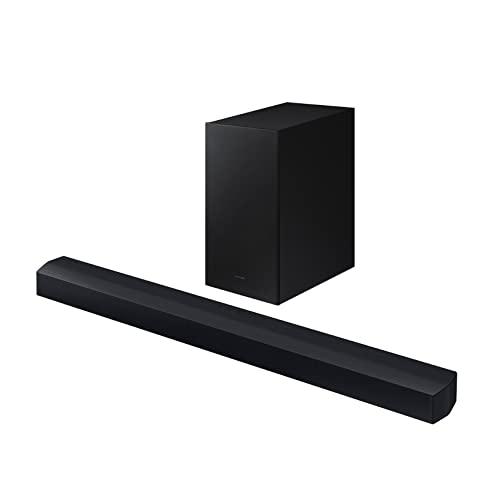
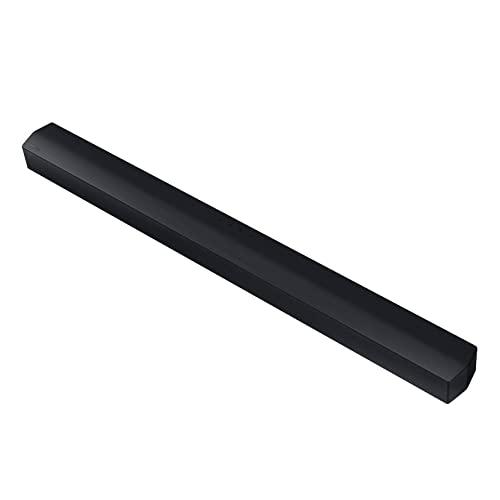
The Samsung HW-C450, released in 2023, represents Samsung's entry-level approach to soundbar design. It's a 2.1-channel system that pairs a compact soundbar with a wireless subwoofer, focusing on simplicity and value. Samsung designed it for users who want better TV audio without complexity or a major financial investment.
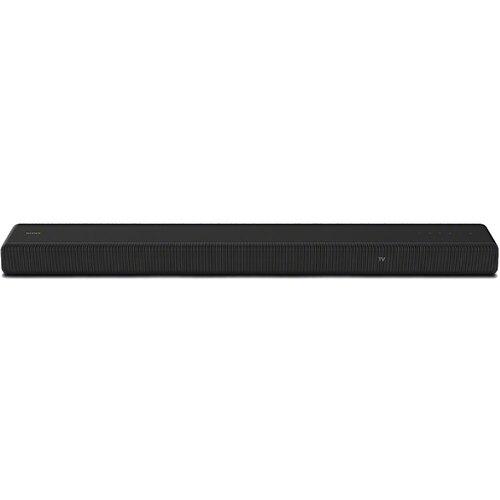
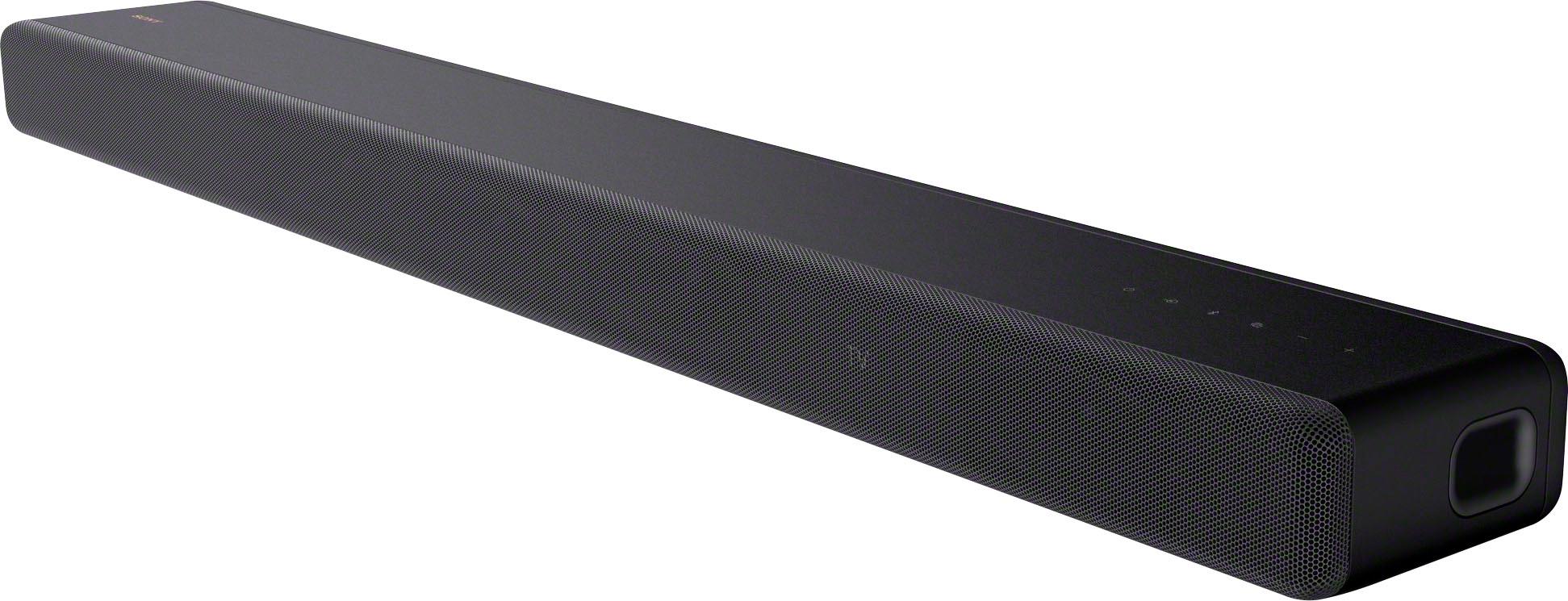
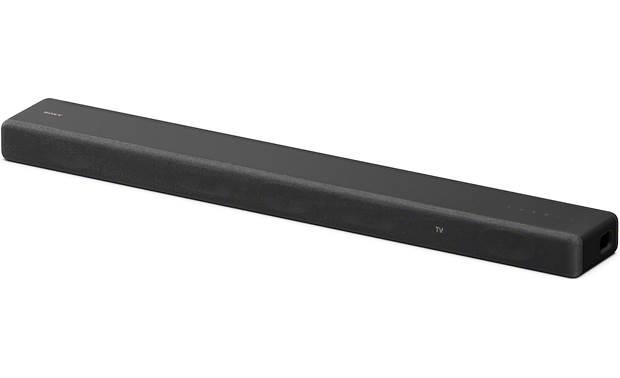
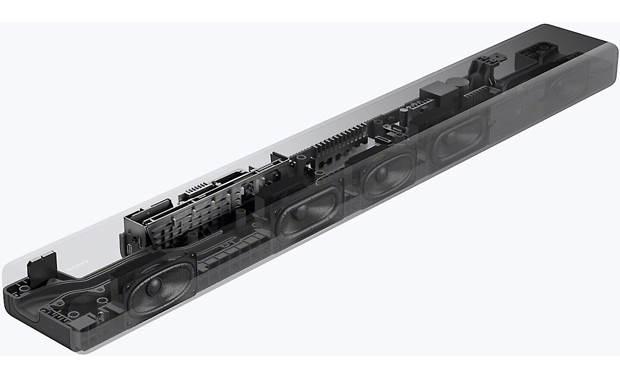
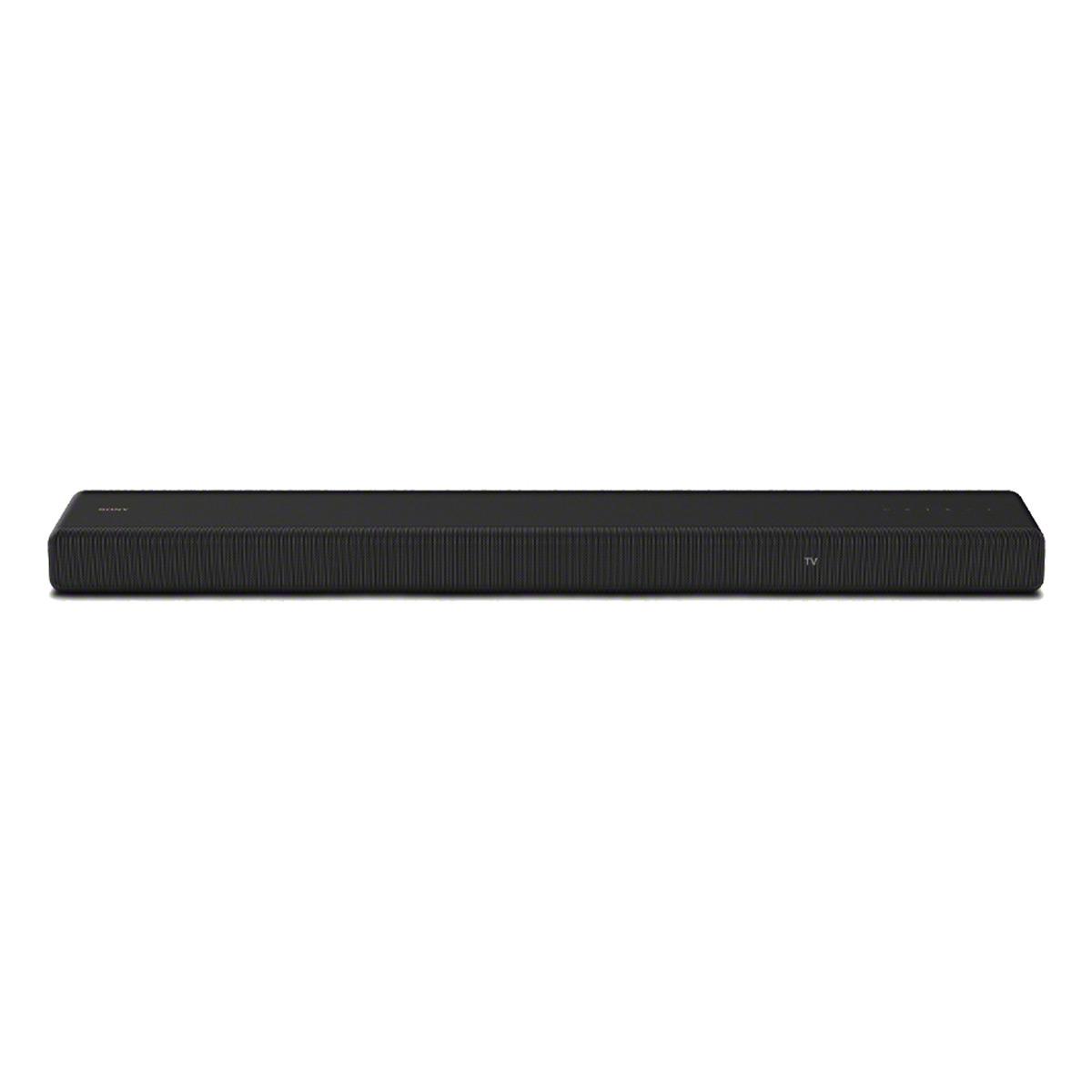
The Sony HT-A3000, launched in 2022, takes a more sophisticated approach. This 3.1-channel system includes a dedicated center speaker and dual built-in subwoofers, all while supporting advanced audio formats like Dolby Atmos—a technology that creates three-dimensional sound by adding height information to traditional surround sound.
At the time of writing, the Samsung HW-C450 costs roughly one-third the price of the Sony HT-A3000, making them appeal to very different budgets. However, Sony's system frequently goes on sale, sometimes bringing the price gap closer than you might expect.
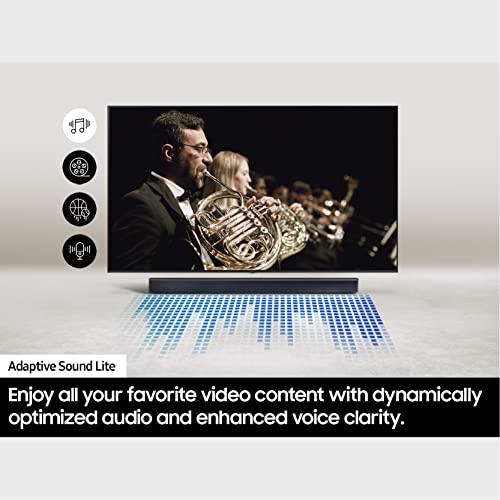
Our research into user and expert reviews reveals a clear hierarchy in overall sound quality. The Samsung HW-C450 delivers respectable improvement over TV speakers, with particular strength in its Adaptive Sound technology. This feature automatically analyzes incoming audio and adjusts the sound profile for different content types—boosting dialogue frequencies for news, enhancing bass for action movies, or optimizing dynamics for music.
However, the Samsung's limitations become apparent during critical listening. The soundstage remains narrow, concentrated primarily in front of the TV rather than expanding into the room. High frequencies can sound harsh at higher volumes, and the overall presentation lacks the refinement you'd expect from more expensive systems. It's perfectly adequate for casual TV watching but won't satisfy listeners seeking audiophile-level performance.
The Sony HT-A3000 operates in a different league entirely. Expert reviews consistently praise its balanced tonal signature, with smooth treble response that avoids harshness even at high volumes. The dedicated center channel makes an immediate difference—dialogue remains clear and anchored to the screen regardless of seating position. Music reproduction is notably superior, with better instrument separation and more natural timbre.
Sony's X-Balanced Speaker Unit technology maximizes the diaphragm area within space constraints, resulting in less distortion and greater vocal clarity. This engineering approach becomes evident when comparing the two systems side by side—the Sony sounds more refined and effortless, while the Samsung occasionally feels strained during complex passages.
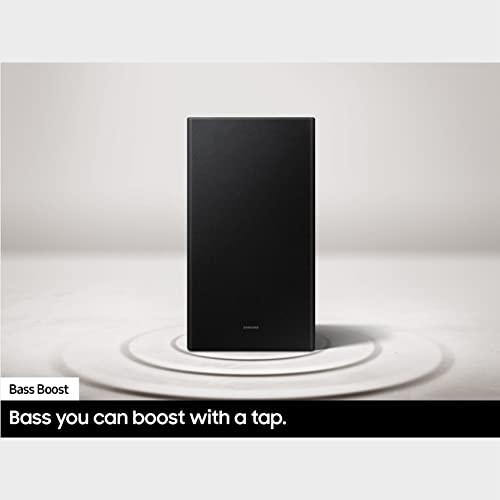
Bass performance represents one of the most significant differences between these systems, though not necessarily in the way you might expect. The Samsung HW-C450 includes a dedicated wireless subwoofer rated at higher wattage than Sony's built-in units. This translates to more room-shaking impact during action sequences and deeper extension for electronic music.
However, our evaluation of user feedback reveals that the Samsung's bass often sacrifices precision for power. The subwoofer can sound boomy and imprecise, particularly in smaller rooms or when positioned too close to walls. While impressive initially, this loose bass presentation becomes fatiguing during longer listening sessions and can overwhelm dialogue during quiet scenes.
The Sony HT-A3000 takes a different approach with dual built-in subwoofers measuring 4.375" x 1.8125". These compact drivers can't match a dedicated subwoofer's raw output, but they offer superior integration and control. Bass notes sound tighter and more defined, with better timing relative to the main speakers. This controlled approach works particularly well for music, where precise bass timing is crucial for rhythm and groove.
For home theater applications, the choice depends on your priorities. If you want to feel every explosion and prefer impressive low-end impact, the Samsung's dedicated subwoofer delivers more visceral thrills. If you value accuracy and prefer bass that enhances rather than dominates the mix, Sony's approach is more satisfying long-term.
This category showcases the most dramatic performance gap between the two systems. The Samsung HW-C450 supports DTS Virtual:X processing, which attempts to create surround effects from its 2.1 speaker configuration. While this provides some sense of width compared to TV speakers, the effect remains subtle and unconvincing. Most content still feels distinctly front-focused, with limited sense of envelopment or spatial depth.
The Sony HT-A3000 genuinely supports Dolby Atmos and DTS:X formats, representing a significant technological advantage. Even more impressive is Sony's virtual processing technology: Vertical Surround Engine and S-Force PRO Front Surround. These systems use advanced psychoacoustic processing to create phantom speakers around and above the listener.
In optimal conditions—hard-surface rooms with proper soundbar positioning—the Sony's virtual surround effects can be startlingly convincing. Action sequences like helicopter flyovers genuinely seem to move overhead, while ambient effects place convincingly around the listening position. This isn't just marketing hyperbole; multiple expert reviews confirm that Sony's virtual processing represents some of the best phantom surround technology currently available.
However, effectiveness varies significantly with room acoustics. Soft furnishings, carpeting, and irregular room shapes diminish the effect, sometimes dramatically. The Samsung's simpler approach is more consistent across different environments, even if it's less impressive at its peak.
Dialogue intelligibility represents perhaps the most important practical difference between these systems. The Samsung HW-C450 relies on its left and right speakers to reproduce center-channel content, which works adequately when sitting directly in front of the TV. However, dialogue can feel unfocused when listening from off-center positions, and voices sometimes get lost in complex soundtracks.
The Sony HT-A3000's dedicated center channel provides superior dialogue anchoring. Voices remain clearly focused on the screen regardless of seating position, and they maintain intelligibility even during loud action sequences. This isn't just a subtle improvement—it's immediately noticeable and makes the Sony more suitable for family viewing where people sit in various positions.
For anyone who frequently watches dialogue-heavy content—dramas, documentaries, news programs—the center channel advantage makes the Sony worth considering despite its higher price. The difference becomes even more pronounced with age-related hearing changes, where dialogue clarity becomes increasingly important.
Technology moves quickly in the audio world, and format support significantly impacts long-term satisfaction. The Samsung HW-C450 supports basic Dolby Digital and stereo formats, which covers most current TV programming and streaming content. However, it cannot decode advanced formats like Dolby Atmos or DTS:X, limiting its compatibility with premium streaming services and UHD Blu-rays.
The Sony HT-A3000 supports virtually every current audio format, including Dolby Atmos, DTS:X, Dolby TrueHD, and DTS-HD Master Audio. As more streaming services adopt Dolby Atmos for their premium content—Netflix, Disney+, Apple TV+, and Amazon Prime all offer Atmos programming—this broader format support becomes increasingly valuable.
Sony's DSEE Extreme technology deserves special mention. This feature upscales compressed digital music in real-time, analyzing instrumentation and musical genres to restore high-frequency information lost during compression. While it can't work miracles with heavily compressed files, it does provide noticeable improvement when streaming music from services like Spotify or Apple Music.
Modern soundbars need to integrate seamlessly with various devices and services. The Samsung HW-C450 keeps things simple with HDMI ARC and optical inputs, plus basic Bluetooth for wireless music streaming. This covers essential connectivity needs without complexity, making setup straightforward for non-technical users.
The Sony HT-A3000 offers significantly more sophisticated connectivity options. HDMI eARC supports advanced audio formats and provides better TV integration than standard ARC. The Bluetooth implementation includes LDAC codec support—Sony's proprietary technology that transmits roughly three times more data than standard Bluetooth, resulting in noticeably better wireless audio quality when used with compatible Android devices.
Additionally, Sony includes AirPlay 2 and Chromecast built-in, enabling high-quality wireless streaming from both Apple and Android ecosystems. This makes the Sony more versatile as a standalone music system, not just a TV audio enhancer.
Room size significantly affects soundbar performance, and these systems suit different spaces. The Samsung HW-C450 works well in small to medium rooms where its 310W output can provide adequate volume without strain. The wireless subwoofer helps fill smaller spaces effectively, though careful placement is essential to avoid boomy bass.
The Sony HT-A3000 excels in similar-sized rooms but handles the space more elegantly. Its 250W output might seem lower on paper, but the more efficient design and better driver integration actually provide more usable volume in real-world conditions. The virtual surround processing also works best in small to medium rooms where reflections can be properly controlled.
Neither system is ideal for very large spaces—both begin to sound thin and lose impact in rooms exceeding 200 square feet. For such applications, you'd need to consider either adding rear speakers (possible with the Sony) or stepping up to larger, more powerful systems.
At the time of writing, the Samsung HW-C450 represents excellent value for budget-conscious buyers. It delivers substantial improvement over TV speakers at an accessible price point, with simple setup and reliable performance. The 310W power output and wireless subwoofer provide good value for basic audio enhancement.
However, the Sony HT-A3000 presents a more compelling value proposition when considered at its frequent sale prices. Despite costing roughly three times more than the Samsung, it delivers exponentially more sophisticated audio processing, better overall sound quality, and genuine future-proofing through advanced format support.
The Sony's original retail price positioned it as a premium option, but market pricing has made it increasingly competitive with mid-range alternatives. When you factor in the included technology—Dolby Atmos processing, LDAC Bluetooth, room correction, and expansion capabilities—the per-feature value becomes quite attractive.
The Samsung HW-C450 is essentially a fixed system with no expansion options. What you buy is what you get, which simplifies decision-making but limits future upgrade paths. This works well for users who want a set-and-forget solution but may disappoint those who catch the home theater upgrade bug.
The Sony HT-A3000 supports optional rear speakers and a dedicated subwoofer, transforming it into a more complete surround system. While these additions represent significant additional investment, they provide a clear upgrade path for users who want to expand their system over time.
Choose the Samsung HW-C450 if you want simple TV audio improvement without complexity or major investment. It's perfect for small rooms, casual viewing habits, and users who primarily watch cable TV or basic streaming content. The straightforward setup and reliable performance make it ideal for less technical users or secondary viewing areas like bedrooms.
The Sony HT-A3000 makes sense for users who watch movies with advanced soundtracks, value audio quality refinement, and want expansion possibilities. It's particularly suitable for streaming service subscribers who access Dolby Atmos content, music enthusiasts who appreciate high-quality wireless connectivity, and users who prefer technological sophistication over simplicity.
Your viewing habits should drive this decision more than raw specifications. If you frequently watch Netflix, Disney+, or other services with Dolby Atmos content, the Sony's advanced processing capabilities justify its higher price. If you primarily watch cable TV and want better dialogue clarity with some bass impact, the Samsung delivers excellent value.
Both systems represent honest engineering efforts targeted at different user needs. The Samsung succeeds as an accessible entry point into better TV audio, while the Sony provides genuine home theater performance at a mid-range price point. Understanding your priorities, room characteristics, and long-term audio ambitions will guide you to the right choice for your specific situation.
| Samsung HW-C450 | Sony HT-A3000 |
|---|---|
| Channel Configuration - Determines dialogue clarity and surround capabilities | |
| 2.1-channel (left/right + subwoofer) | 3.1-channel (left/center/right + dual subwoofers) |
| Total Power Output - Affects maximum volume and bass impact | |
| 310W (150W soundbar + 160W wireless subwoofer) | 250W across five built-in speakers |
| Dolby Atmos Support - Essential for 3D movie sound from streaming services | |
| No (basic Dolby Digital only) | Yes (full Dolby Atmos and DTS:X decoding) |
| Subwoofer Design - Impacts bass quality and room placement flexibility | |
| Dedicated wireless 6.5" subwoofer | Dual built-in 4.375" x 1.8125" subwoofers |
| Virtual Surround Technology - Creates immersive sound without rear speakers | |
| DTS Virtual:X (basic spatial effects) | Vertical Surround Engine + S-Force PRO (advanced phantom surround) |
| Connectivity Options - Determines audio quality and device compatibility | |
| HDMI ARC, Optical, Basic Bluetooth | HDMI eARC, Optical, LDAC Bluetooth, AirPlay 2, Chromecast |
| Sound Enhancement Features - Improves specific content types | |
| Adaptive Sound, Game Mode, Voice Enhancement | DSEE Extreme, Sound Field Optimization, Multiple listening modes |
| Physical Design - Affects room aesthetics and installation options | |
| 858mm x 59mm x 75mm, 1.4kg + separate subwoofer | 950mm x 64mm x 128mm, 4.6kg all-in-one design |
| Expandability Options - Future upgrade potential | |
| None (fixed 2.1 system) | Optional rear speakers and dedicated subwoofer available |
| Best Room Size - Where each system performs optimally | |
| Small to medium rooms (up to 150 sq ft) | Small to medium rooms (up to 200 sq ft) |
| Target User - Who gets the most value from each system | |
| Budget buyers wanting basic TV audio improvement | Movie enthusiasts seeking Dolby Atmos without complexity |
The Sony HT-A3000 provides superior dialogue clarity thanks to its dedicated center channel that anchors voices to the screen. The Samsung HW-C450 relies on left and right speakers for dialogue, which can make voices feel less focused, especially when sitting off-center from the TV.
If you watch movies from Netflix, Disney+, or other streaming services that offer Dolby Atmos content, the Sony HT-A3000 delivers a significantly more immersive experience with height effects and 3D sound. The Samsung HW-C450 doesn't support Dolby Atmos, limiting it to basic stereo and 5.1 audio formats.
The Samsung HW-C450 includes a dedicated wireless subwoofer that produces deeper, more impactful bass for action movies and music. The Sony HT-A3000 has dual built-in subwoofers that offer tighter, more controlled bass but can't match the raw power of a dedicated subwoofer unit.
A 2.1 system like the Samsung HW-C450 has left and right speakers plus a subwoofer, while a 3.1 system like the Sony HT-A3000 adds a dedicated center channel specifically for dialogue. The center channel makes voices clearer and more focused on the screen.
The Samsung HW-C450 offers simpler setup with basic HDMI ARC connection and automatic wireless subwoofer pairing. The Sony HT-A3000 has more advanced features like room calibration and multiple connectivity options, making setup more complex but offering better customization.
Both soundbars support Bluetooth connectivity, but the Sony HT-A3000 offers superior wireless audio with LDAC support for higher quality streaming, plus AirPlay 2 and Chromecast built-in. The Samsung HW-C450 provides basic Bluetooth connectivity that works well for casual music streaming.
Both the Samsung HW-C450 and Sony HT-A3000 work well in small to medium rooms. The Samsung's wireless subwoofer requires careful placement to avoid boomy bass, while the Sony's built-in subwoofers eliminate placement issues but may lack deep bass impact in larger spaces.
Yes, both the Samsung HW-C450 and Sony HT-A3000 work with any TV that has HDMI ARC or optical audio outputs. However, Samsung soundbars may offer enhanced integration features when paired with Samsung TVs.
The Samsung HW-C450 provides excellent value for budget-conscious buyers seeking basic TV audio improvement. The Sony HT-A3000 offers better long-term value with Dolby Atmos support, superior audio quality, and expandability options, though at a higher upfront cost.
The Samsung HW-C450 cannot be expanded beyond its 2.1 configuration. The Sony HT-A3000 supports optional rear speakers and an additional subwoofer, allowing you to build a more complete surround sound system over time.
Both soundbars include gaming modes, but the Samsung HW-C450 emphasizes its Game Mode feature for enhanced directional audio cues. The Sony HT-A3000 offers superior spatial audio processing that can provide better positional awareness in games, especially those with Dolby Atmos support.
The Sony HT-A3000 delivers better music performance with more balanced sound, superior stereo imaging, and high-quality wireless codecs like LDAC. The Samsung HW-C450 provides adequate music playback but focuses more on TV and movie audio enhancement rather than critical music listening.
We've done our best to create useful and informative comparisons to help you decide what product to buy. Our research uses advanced automated methods to create this comparison and perfection is not possible - please contact us for corrections or questions. These are the sites we've researched in the creation of this article: e-catalog.com - alibaba.com - smart.dhgate.com - greentoe.com - requiremints.com - versus.com - bhphotovideo.com - rtings.com - soundmachine.com.mt - samsung.com - samsung.com - youtube.com - bhphotovideo.com - newegg.com - images.samsung.com - bestbuy.com - samsung.com - youtube.com - jsappliance.com - gadgetsleo.com - youtube.com - saraappliance.com - walmart.com - rtings.com - electronics.sony.com - crutchfield.com - store.sony.com.au - digitaltrends.com - videoandaudiocenter.com - abt.com - sony.com - merlinstv.com - crutchfield.com - youtube.com

Privacy Policy
Terms and Conditions - Affiliate Policy
Home Security
© Copyright 2008-2026.
11816 Inwood Rd #1211, Dallas, TX 75244