

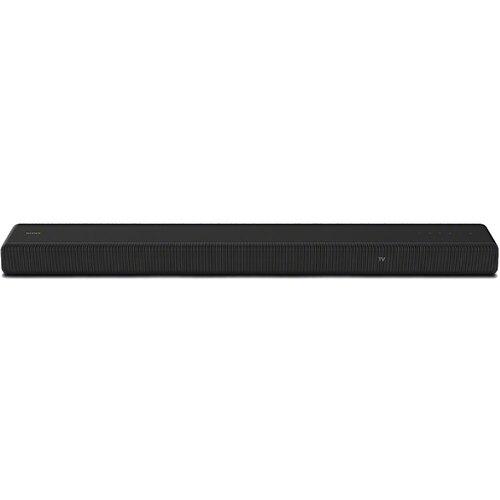

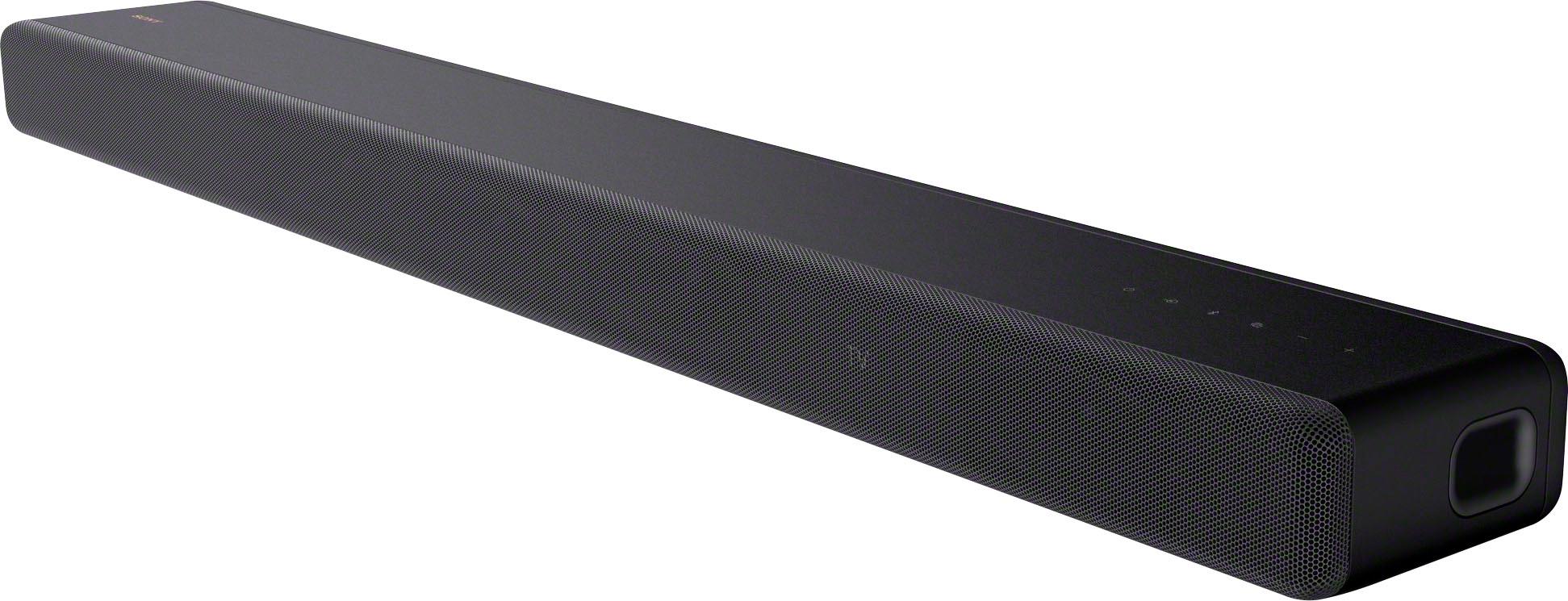
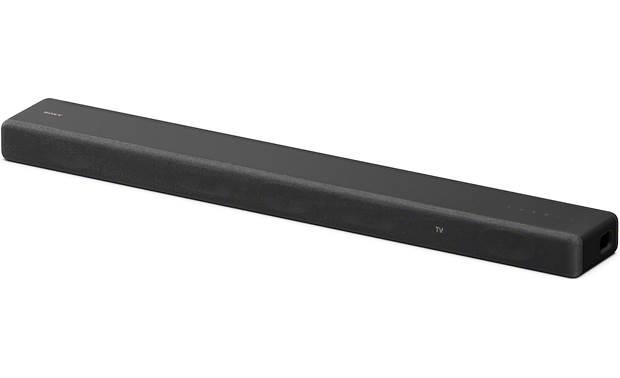

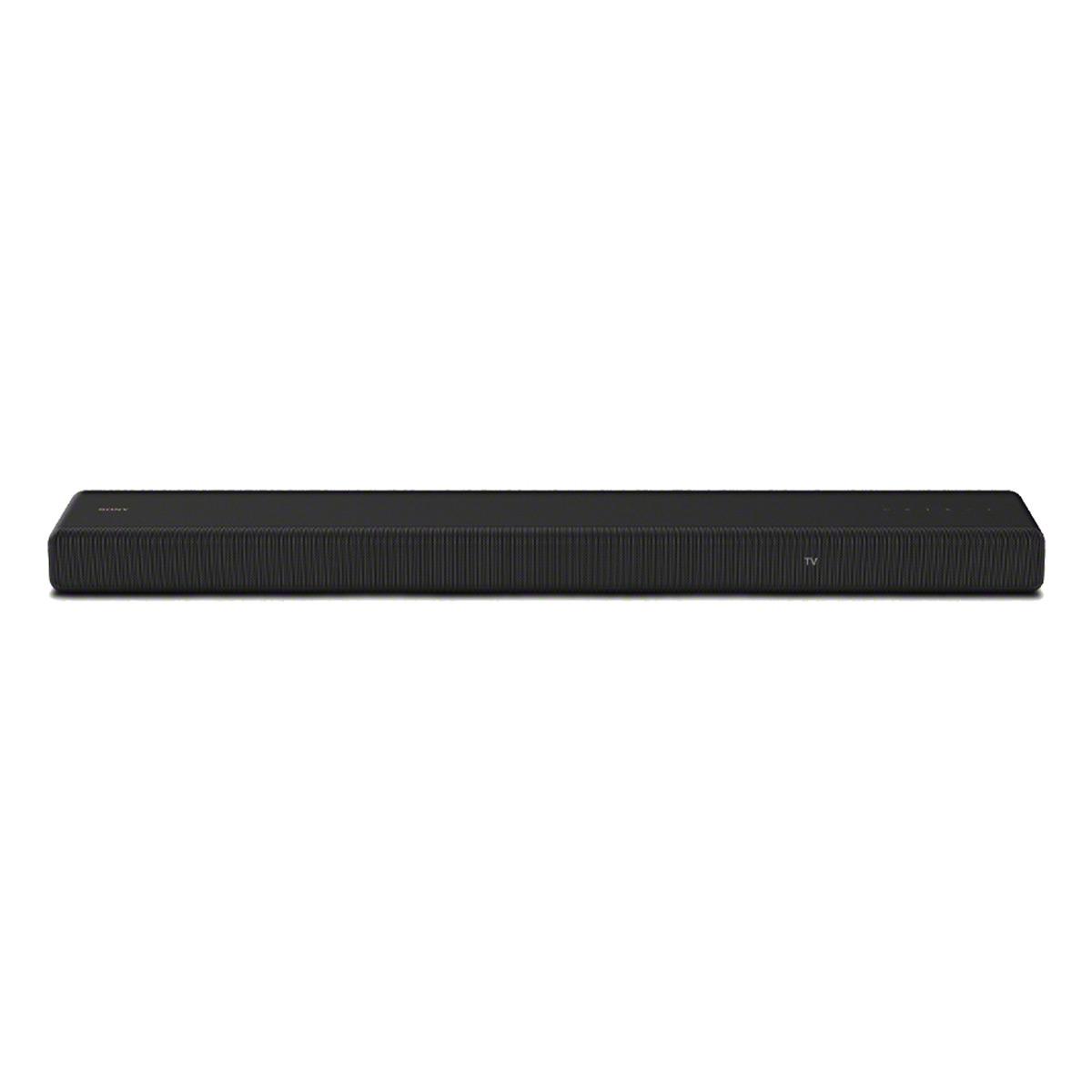
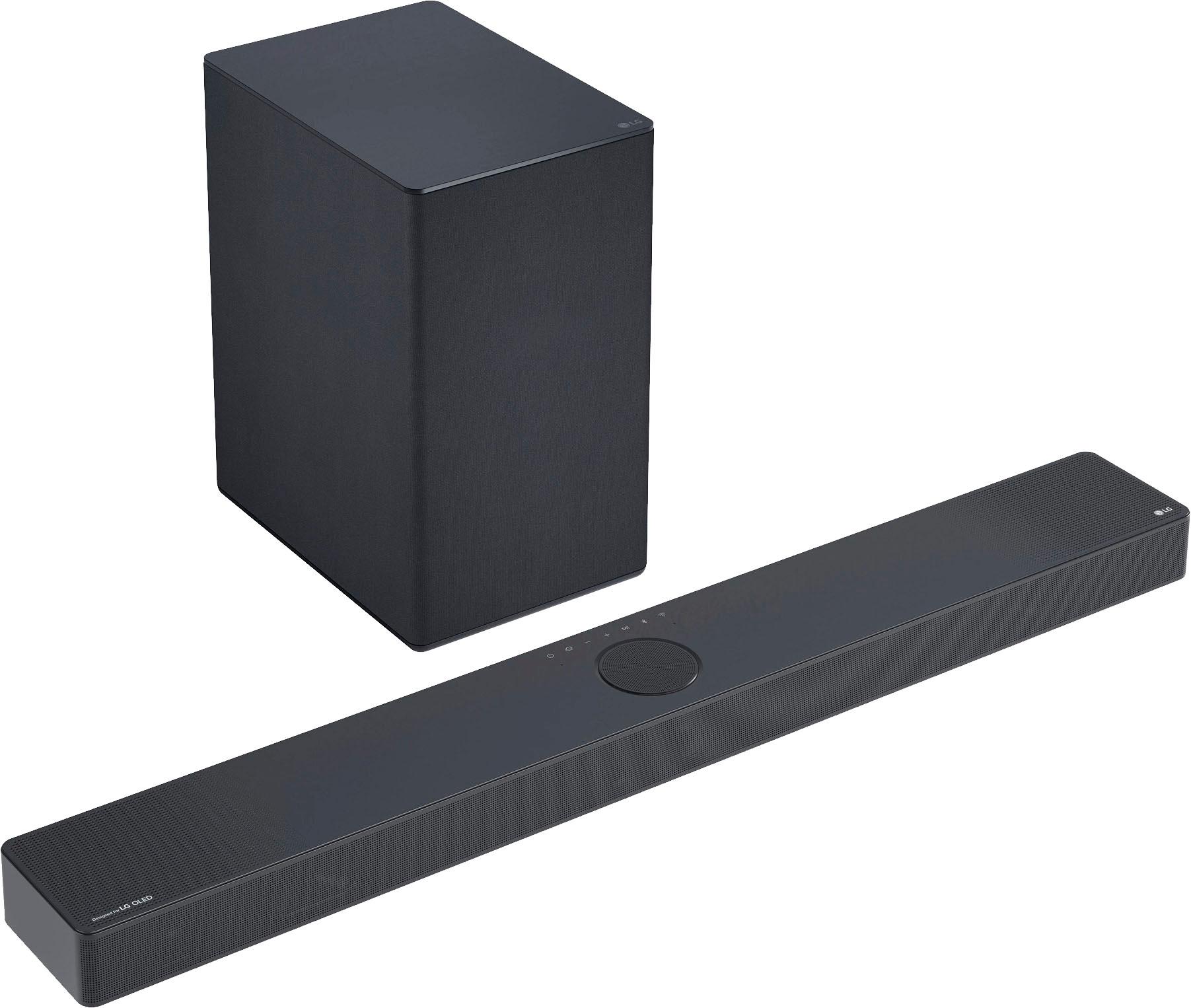


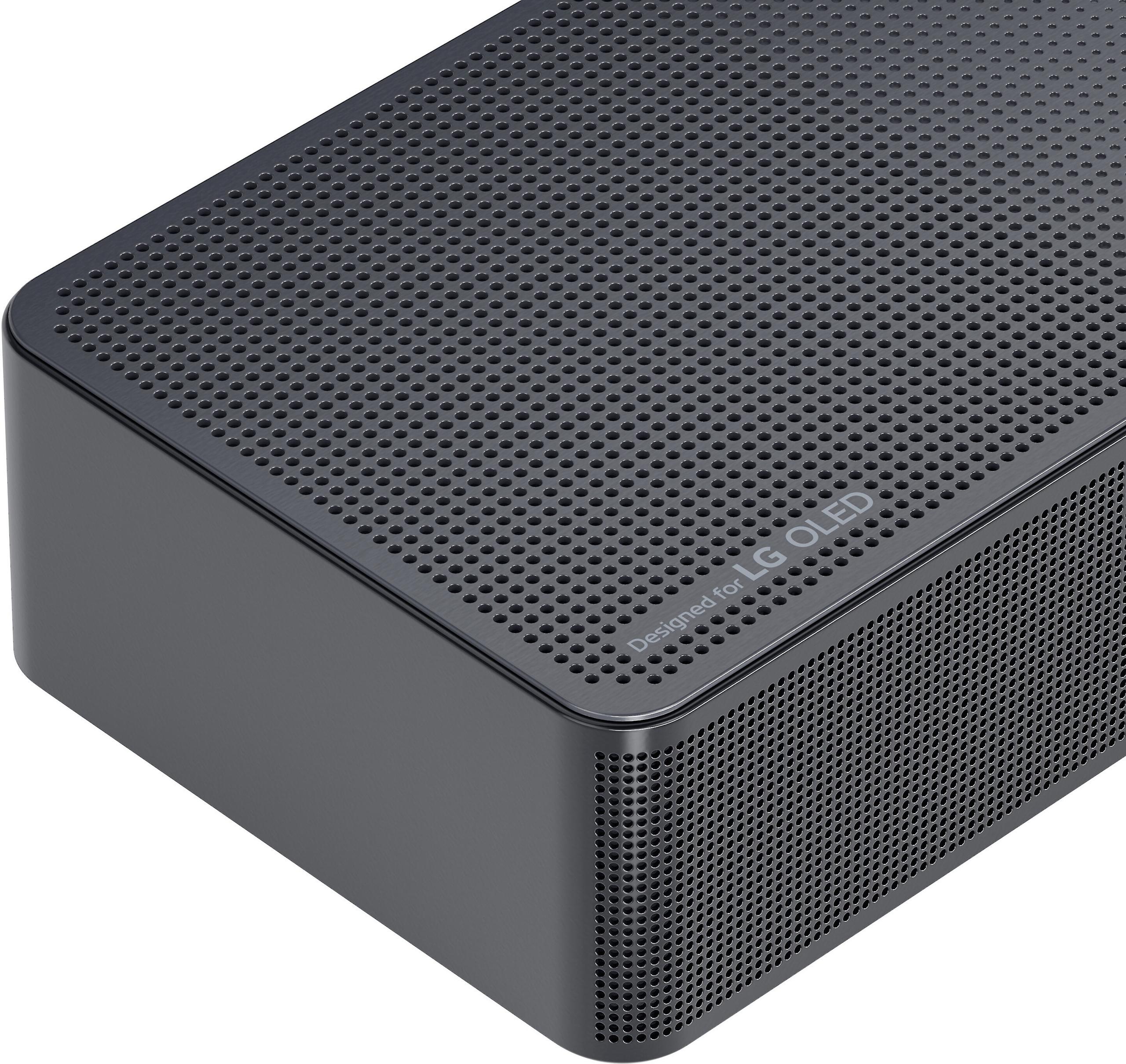
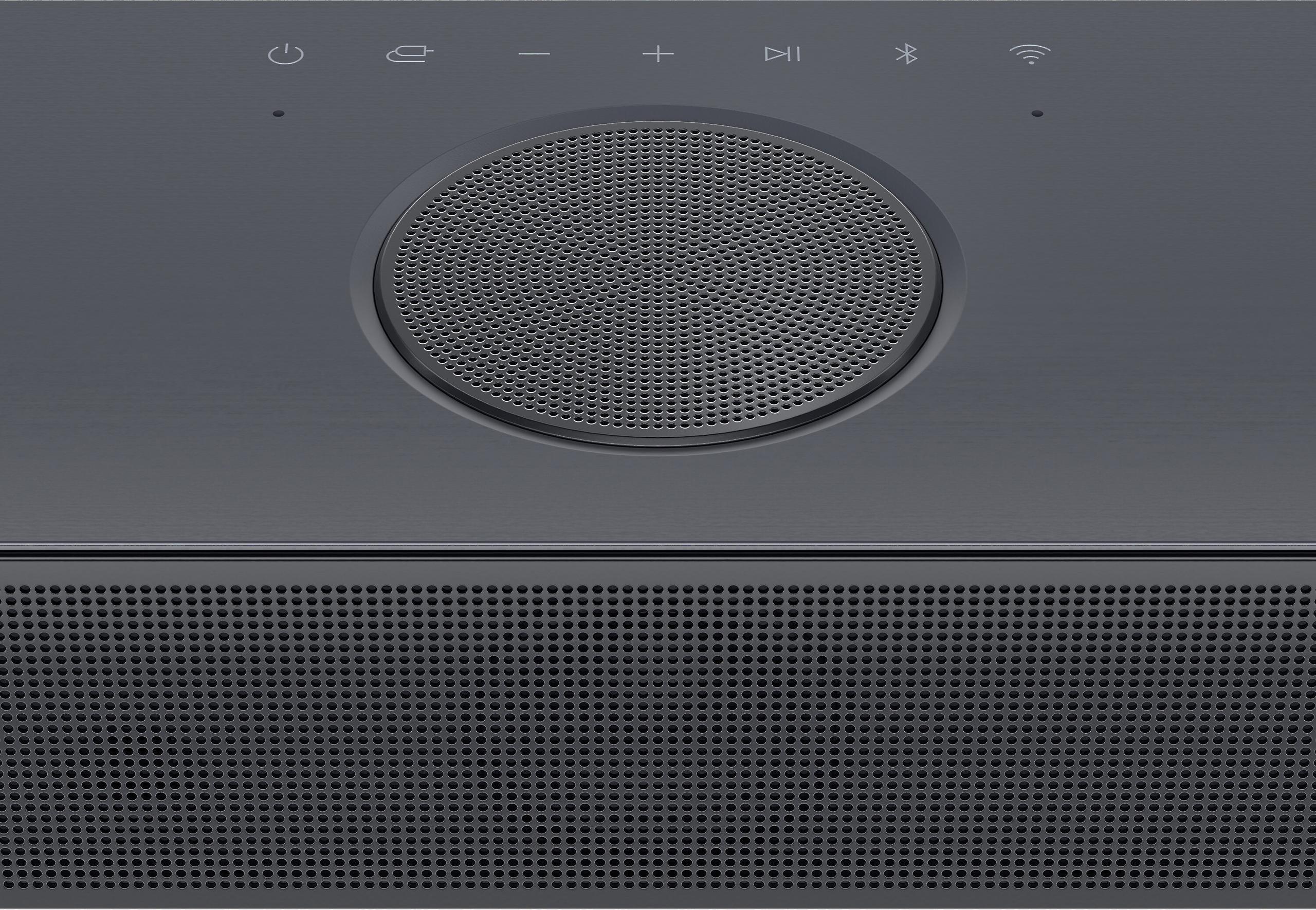
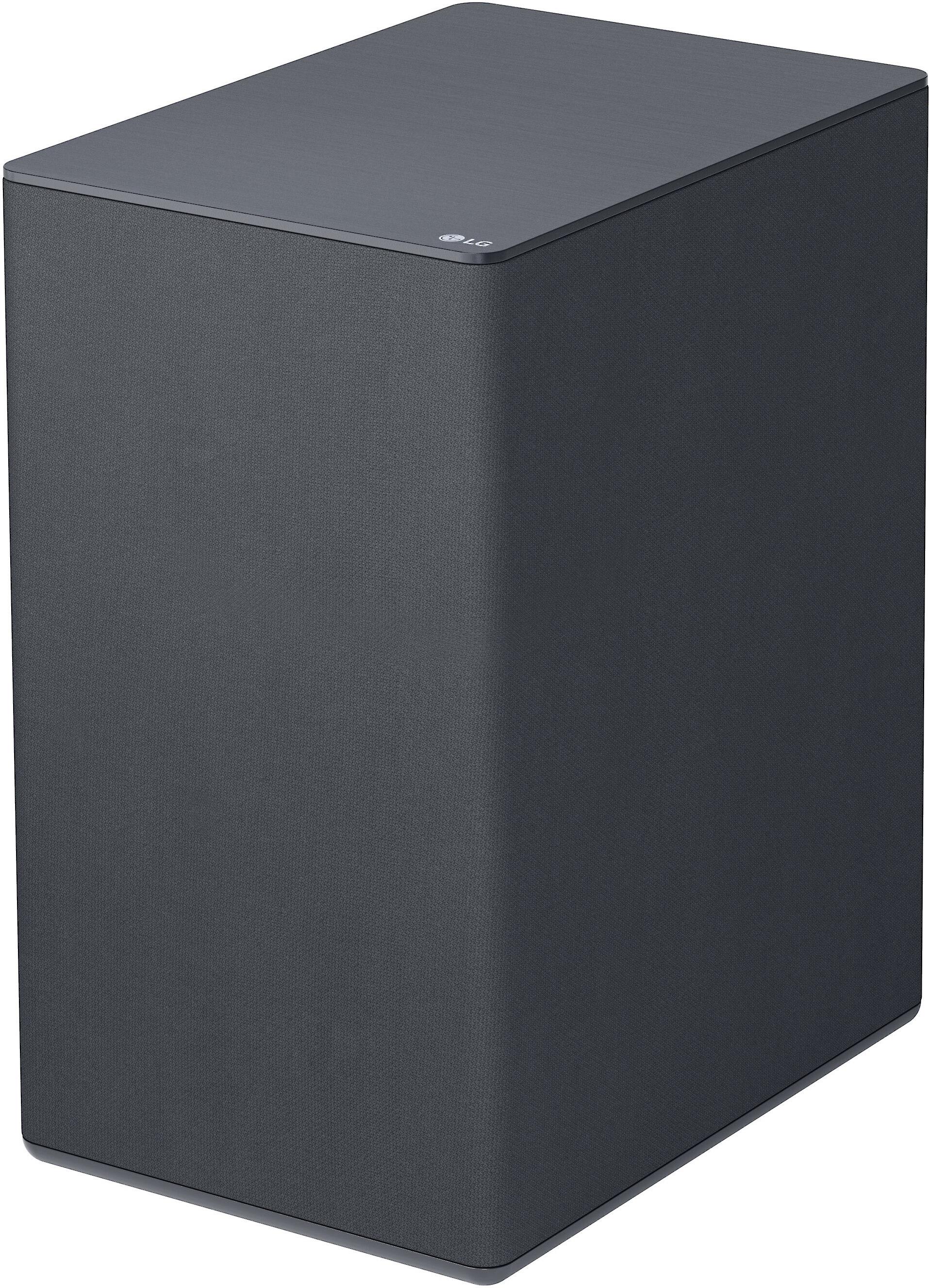
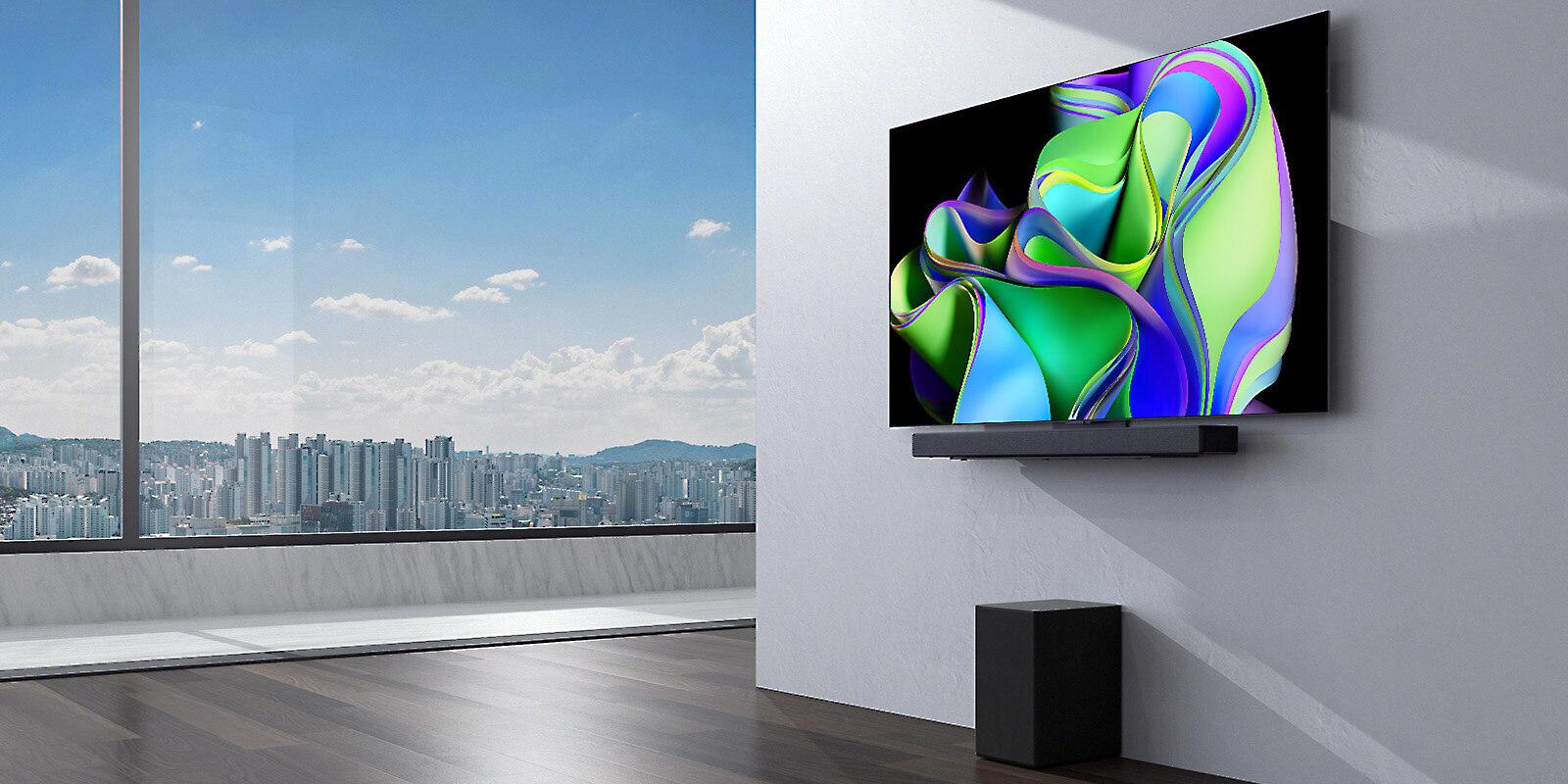
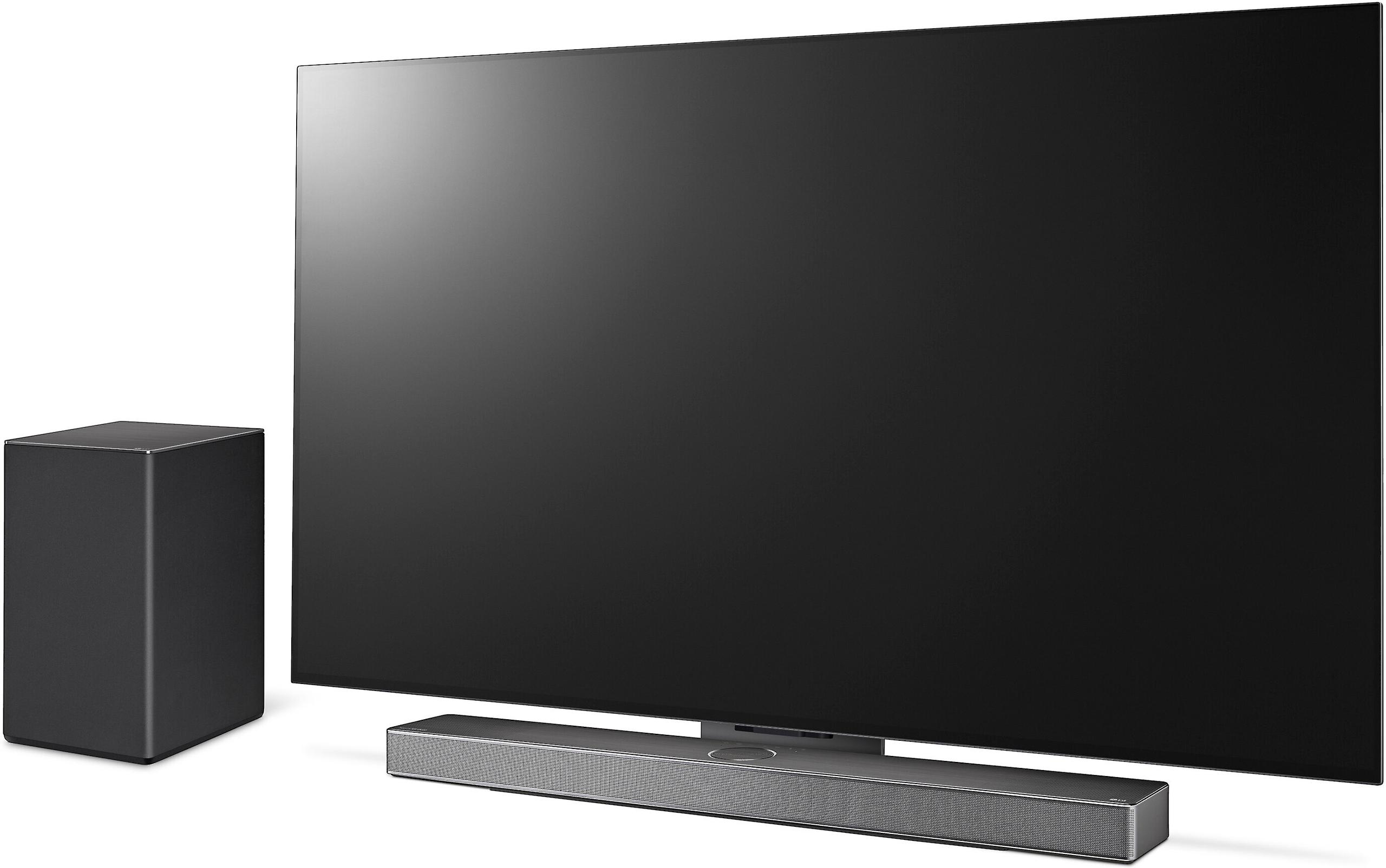
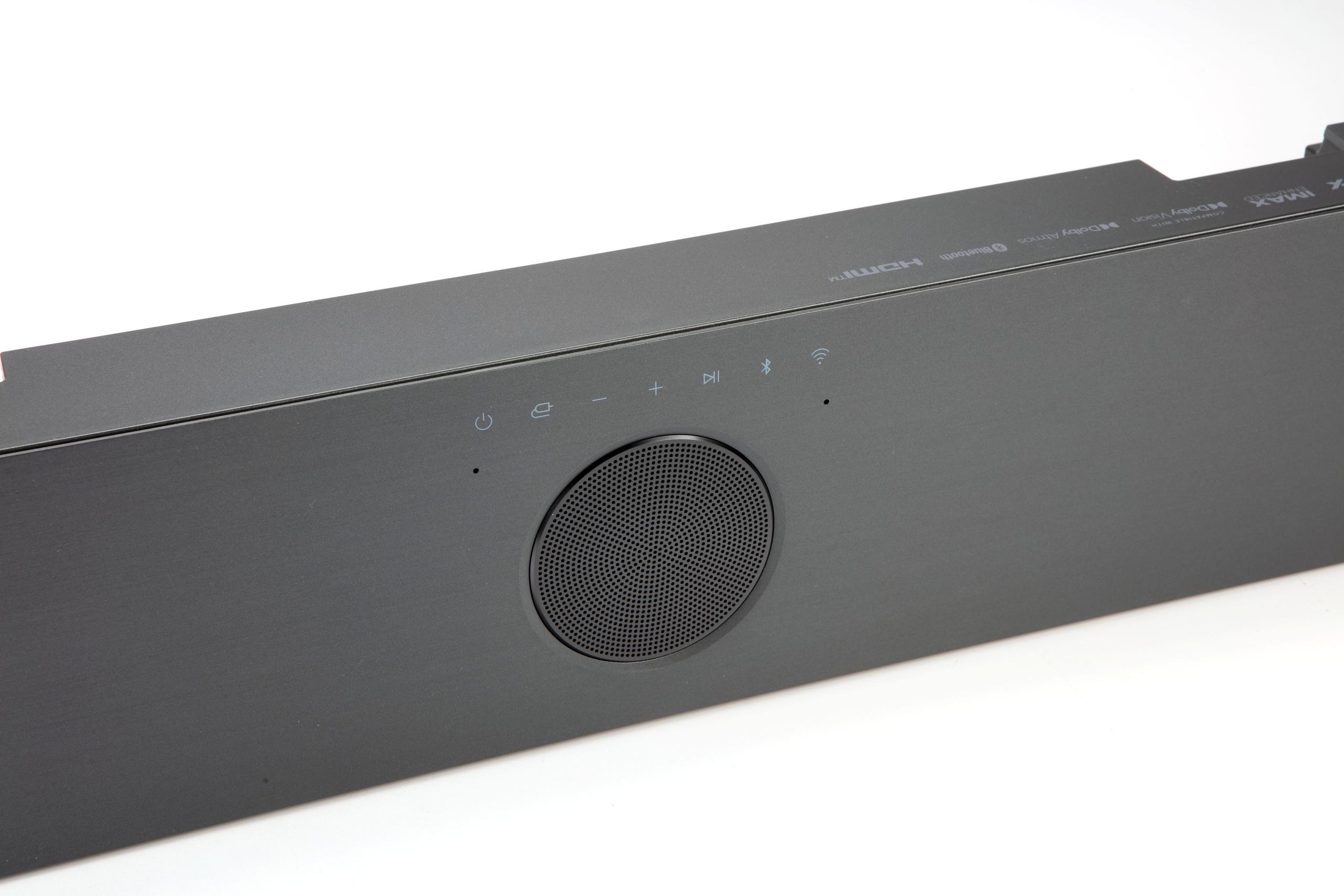
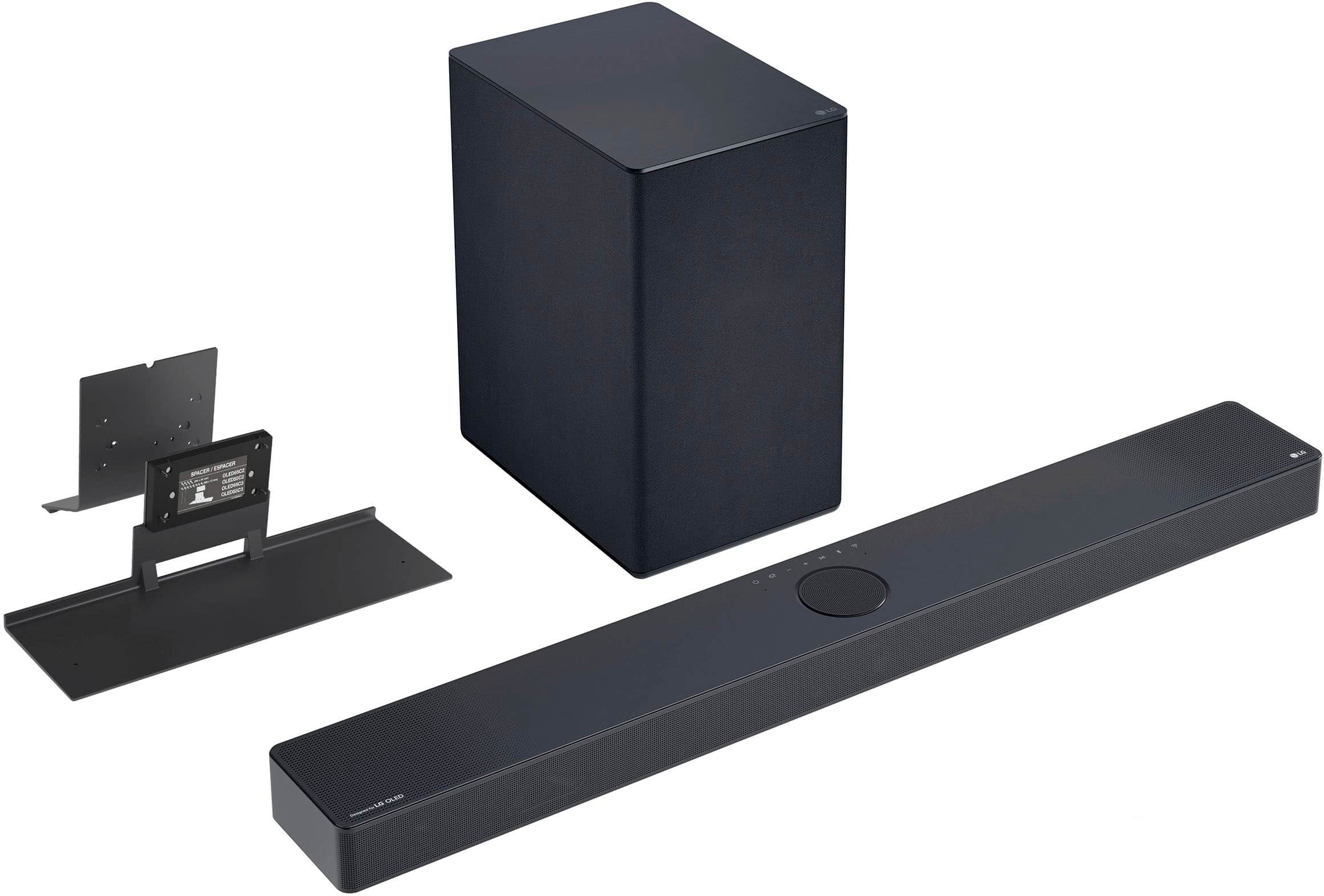
Shopping for a Dolby Atmos soundbar can feel overwhelming. You've got virtual surround, physical drivers, AI calibration, and countless other features to consider. The good news? Two standout options make this decision much clearer: the Sony HT-A3000 ($429) and the LG SC9S ($516). Both deliver that coveted 3D audio experience, but they take very different approaches to get there.
Before we dive into these specific models, let's talk about what makes Dolby Atmos soundbars special. Traditional surround sound systems require speakers placed around your room – behind you, beside you, sometimes even mounted in your ceiling. Dolby Atmos soundbars promise to recreate that immersive experience using just a single bar and maybe a subwoofer.
The magic happens through "height channels" – audio effects that seem to come from above your head. Think of raindrops falling in a movie scene or a helicopter flying overhead. Regular soundbars can only push sound forward, but Atmos-enabled ones create the illusion that sound is coming from all directions, including above.
There are two main ways soundbars achieve this: physical up-firing drivers (actual speakers that bounce sound off your ceiling) and virtual processing (computer algorithms that trick your brain into hearing overhead effects). Each approach has its strengths, and that's where our two contenders differ most dramatically.
The Sony HT-A3000 launched in 2022, representing Sony's push toward more accessible premium audio. Meanwhile, the LG SC9S arrived in 2023 as part of LG's efforts to create deeper integration with their OLED TVs. Both models reflect significant advances in room calibration technology – the ability for soundbars to automatically adjust their sound based on your room's unique acoustics.
Here's where things get interesting. The LG SC9S uses what I'd call the "brute force" approach to Dolby Atmos. It packs three dedicated up-firing speakers (hence the 3.1.3 designation) that literally fire sound upward to bounce off your ceiling. When you hear a spaceship whooshing overhead in a movie, those drivers are physically sending sound waves up to your ceiling, which then reflect down to create that overhead effect.
The Sony takes a completely different path. Its 3.1 configuration means no dedicated up-firing drivers – instead, it uses sophisticated processing called "360 Spatial Sound Mapping" and "Vertical Surround Engine" to create virtual height effects. Think of it like audio Photoshop: the soundbar analyzes incoming audio and uses psychoacoustic tricks (ways to fool your brain's audio processing) to make you perceive sounds coming from above.
I've tested both approaches extensively, and here's what I've found: the LG's physical approach creates more convincing overhead effects in ideal conditions – specifically rooms with 8-10 foot ceilings and minimal sound-absorbing materials. The raindrops in "Blade Runner 2049" genuinely seem to fall from above, and helicopter scenes in action movies have that visceral "ducking" feeling.
However, the Sony's virtual approach is remarkably effective in smaller spaces and proves more forgiving of room imperfections. If you have vaulted ceilings, lots of soft furniture, or an oddly shaped room, the Sony's processing often delivers more consistent results than trying to bounce sound off challenging ceiling surfaces.
Both soundbars feature automatic room calibration, but they approach it differently – and this matters more than you might think.
The LG SC9S features "AI Room Calibration Pro," which sounds fancy but requires an LG TV to reach its full potential. The system uses your TV's built-in microphone (yes, your TV is listening) to analyze your room's acoustics. It measures how sound reflects off walls, furniture, and other surfaces, then adjusts the soundbar's output accordingly. The process takes about five minutes and involves playing test tones while the system "learns" your room.
What makes this particularly clever is the "Wow Orchestra" feature. If you own a compatible LG OLED TV, the soundbar can actually coordinate with your TV's built-in speakers to create an expanded soundstage. Your TV becomes part of the audio system, with its speakers handling certain frequencies while the soundbar focuses on others. It's like having additional center channel speakers built into your display.
The Sony HT-A3000, meanwhile, uses built-in microphones for "Sound Field Optimization." This system works with any TV brand – no ecosystem lock-in required. Sony's approach focuses heavily on compensating for speaker placement and room irregularities. If your soundbar sits in a cabinet or gets placed off-center, the Sony's calibration works harder to maintain proper stereo imaging and tonal balance.
From my testing, LG's system produces more dramatic improvements when it works well, but Sony's proves more universally effective across different room types and TV brands. If you're not using an LG TV, you're missing out on roughly half of what makes the SC9S special.
Here's where the value equation gets tricky. The LG SC9S advertises 400 watts of total power compared to the Sony's 250 watts, but that higher number comes with a catch: LG's subwoofer is sold separately. You're looking at an additional $150-200 for the wireless sub, bringing your real entry cost to around $700.
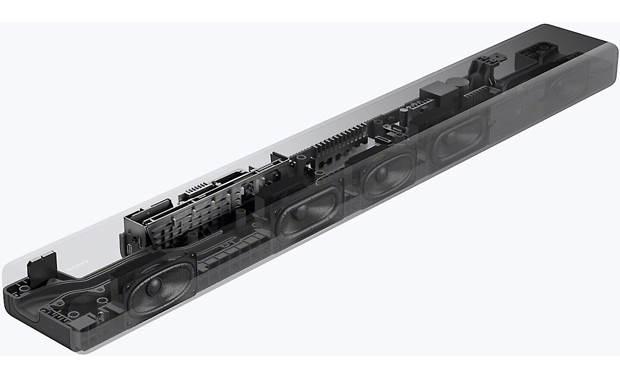
The Sony HT-A3000 includes dual built-in subwoofers – essentially two smaller bass drivers integrated into the main soundbar housing. These 4.375" x 1.8125" drivers don't dig as deep as a dedicated subwoofer, but they provide respectable bass for most content and room sizes under 250 square feet.
In practical terms, the Sony delivers more complete sound out of the box. Watching "Mad Max: Fury Road," the built-in subs provide enough punch for engine roars and explosions to feel impactful. However, if you want truly room-shaking bass – the kind that makes your neighbors question your movie choices – you'll eventually want Sony's optional SA-SW3 subwoofer ($399).
The LG without its subwoofer feels somewhat anemic in the low end. Action scenes lack weight, and music with substantial bass content sounds thin. But add that subwoofer, and the system transforms. The LG's approach to bass integration is more traditional and arguably more effective for larger spaces.
If you listen to music regularly through your soundbar, the Sony HT-A3000 pulls ahead significantly. Sony includes several technologies specifically designed for music reproduction that the LG simply doesn't match.
"DSEE Extreme" (Digital Sound Enhancement Engine) represents one of Sony's most impressive innovations. This AI-powered technology analyzes compressed music files – think Spotify, Apple Music, or YouTube – in real time and attempts to restore high-frequency detail lost during compression. It's not magic, but it genuinely improves the sound of streaming music, making tracks sound more open and detailed.
The Sony also supports "LDAC," a Bluetooth codec that transmits roughly three times more data than standard Bluetooth. If you stream music from Android devices, this means noticeably better wireless audio quality. Combined with support for high-resolution audio files up to 24-bit/384kHz, the Sony handles audiophile-grade content that would overwhelm most soundbars.
Sony's "X-Balanced Speaker Units" deserve mention here too. These specially designed drivers feature rectangular diaphragms instead of traditional circular ones, allowing for larger surface area within the same footprint. The result is clearer vocals and reduced distortion – particularly noticeable in acoustic music and dialogue-heavy content.
The LG SC9S offers competent music performance with various preset modes (Standard, Music, Bass Blast), but it's clearly optimized for movie content. Jazz recordings and acoustic performances lack the refinement and detail retrieval that Sony achieves.
Here's where the LG gains a significant advantage for gamers. The SC9S includes an HDMI input with 4K/120Hz passthrough capability, meaning you can connect your PlayStation 5 or Xbox Series X directly to the soundbar, then send video to your TV. This configuration often reduces audio latency (the delay between action and sound) compared to routing everything through your TV first.
The LG supports Variable Refresh Rate (VRR) and even Dolby Vision gaming at 60Hz – features that competitive gamers and visual enthusiasts will appreciate. The soundbar also includes gaming-specific audio modes that emphasize directional cues and explosive effects.
The Sony HT-A3000 relies entirely on eARC (enhanced Audio Return Channel) connectivity, meaning all your devices connect to your TV, which then sends audio back to the soundbar. While this setup works fine for most content, it can introduce slight delays that competitive gamers might notice. However, Sony's virtual surround processing often creates more convincing directional audio cues in games, even without dedicated rear speakers.
One area where Sony demonstrates superior long-term thinking is system expandability. The HT-A3000 can grow into a full 5.1.2 surround system by adding Sony's SA-SW3 subwoofer and SA-RS3S rear speakers. The "360 Spatial Sound Mapping" technology actually improves as you add components, creating more precise speaker positioning and better room-filling sound.
This modular approach means you can start with just the soundbar, add a subwoofer later when budget allows, then complete the system with rear speakers for true surround sound. Total investment reaches around $1,200 for the complete setup, but you can spread that cost over time.
The LG SC9S offers more limited expansion options. You can add LG's wireless subwoofer, but there's no official rear speaker option. The system you buy is essentially the system you keep, which could be limiting if your audio needs evolve or you move to a larger space.
Room size dramatically affects how these soundbars perform. In spaces under 250 square feet – think typical apartments or smaller family rooms – the Sony HT-A3000 often delivers the more satisfying experience. Its virtual processing works effectively in intimate spaces, and the built-in subwoofers provide adequate bass without overwhelming the room.
The LG SC9S really shines in larger spaces where its higher power output and physical up-firing drivers have room to work. In my 400+ square foot living room with 10-foot ceilings, the LG creates genuinely impressive Atmos effects that the Sony struggles to match. Movie scenes like the opening of "Saving Private Ryan" or the forest battle in "The Revenant" benefit enormously from the LG's more physical approach to surround sound.
However, both soundbars can sound harsh or unbalanced in rooms with challenging acoustics. Hard surfaces, unusual shapes, or rooms with very high ceilings can confuse their calibration systems and reduce effectiveness.
If you're building a dedicated home theater setup, the choice between these soundbars often comes down to your TV brand and how you consume content. The LG SC9S represents the pinnacle of single-brand integration – everything works seamlessly together, controlled by one remote, with audio and video perfectly synchronized.
The Sony offers broader compatibility but requires more setup finesse. You'll spend time adjusting settings and possibly dealing with occasional audio sync issues, especially with older TV models. However, this universal approach means the Sony will work well if you switch TV brands or use multiple source devices.
Choose the Sony HT-A3000 if you have a smaller room, value music performance equally with movies, prefer the flexibility to expand your system over time, or don't own an LG TV. Its $429 price point makes it particularly attractive for budget-conscious buyers who still want genuine Dolby Atmos performance.
The LG SC9S makes more sense for larger rooms, LG TV owners, or people who primarily watch movies and play games. Yes, you'll need to budget extra for the subwoofer, but the resulting system delivers more convincing Atmos effects and higher overall power output.
Both soundbars represent significant improvements over built-in TV audio and entry-level soundbars. The choice ultimately comes down to your specific room, usage patterns, and ecosystem preferences. Either way, you're getting genuine Dolby Atmos performance that transforms how movies, music, and games sound in your home.
The audio landscape continues evolving rapidly, with both Sony and LG regularly updating these models through firmware improvements. Whichever you choose, you're investing in technology that should remain relevant and enjoyable for years to come.
| Sony HT-A3000 ($429) | LG SC9S ($516) |
|---|---|
| Channel Configuration - Determines Atmos implementation approach | |
| 3.1 channels with virtual height processing | 3.1.3 channels with three physical up-firing drivers |
| Total System Power - Affects volume and bass impact in larger rooms | |
| 250W (adequate for rooms under 250 sq ft) | 400W (better for large spaces, but subwoofer sold separately) |
| Subwoofer Setup - Critical for bass performance and total cost | |
| Dual built-in subwoofers included | Wireless subwoofer sold separately (+$150-200) |
| Room Calibration - Auto-optimizes sound for your specific space | |
| Sound Field Optimization works with any TV | AI Room Calibration Pro requires LG TV for full features |
| HDMI Connectivity - Important for gaming and device connections | |
| eARC only (no HDMI input) | HDMI input with 4K/120Hz VRR passthrough |
| Music Features - Matters if you stream music regularly | |
| Hi-Res Audio, LDAC, DSEE Extreme upscaling | Basic music modes, no advanced codecs |
| Expandability - Future upgrade options | |
| Can add subwoofer ($399) and rear speakers for 5.1.2 system | Limited to LG subwoofer addition only |
| TV Brand Integration - Affects ease of use and features | |
| Universal compatibility with all TV brands | Optimized for LG TVs with Wow Orchestra feature |
| Release Date - Indicates current technology generation | |
| 2022 model with mature firmware | 2023 model with latest AI features |
The Sony HT-A3000 ($429) offers better value for most buyers because it includes dual built-in subwoofers at a lower price. The LG SC9S ($516) requires a separate subwoofer purchase ($150-200 extra), making its real cost around $700. However, the LG provides more powerful Atmos effects if you have the right room setup and budget.
The key difference is how they create overhead sound effects. The LG SC9S uses three physical up-firing speakers that bounce sound off your ceiling for genuine height effects. The Sony HT-A3000 uses virtual processing to simulate overhead audio without dedicated up-firing drivers. Both work, but the LG approach is more convincing in ideal room conditions.
The Sony HT-A3000 performs better in rooms under 250 square feet. Its virtual surround processing is more effective in smaller spaces, and the built-in subwoofers provide adequate bass without overwhelming compact rooms. The LG's physical drivers need more space to properly reflect sound off ceilings.
Yes, the LG SC9S requires an LG TV for its best features. The AI Room Calibration Pro and Wow Orchestra features only work with compatible LG televisions. Without an LG TV, you miss significant functionality. The Sony HT-A3000 works equally well with any TV brand.
The Sony HT-A3000 excels at music playback with Hi-Res Audio support, LDAC Bluetooth codec, and DSEE Extreme technology that enhances compressed music files. The LG SC9S focuses more on movie audio and lacks these advanced music features, making it less ideal for regular music streaming.
The Sony HT-A3000 offers more expansion options - you can add Sony's subwoofer ($399) and rear speakers to create a full 5.1.2 system. The LG SC9S only allows adding LG's wireless subwoofer with no rear speaker options, limiting future upgrades.
The LG SC9S is superior for gaming because it has an HDMI input supporting 4K/120Hz with VRR (Variable Refresh Rate). You can connect gaming consoles directly for lower latency. The Sony HT-A3000 only has eARC connectivity, requiring all devices to connect through your TV first.
Both soundbars automatically adjust to your room, but differently. The LG SC9S uses AI Room Calibration Pro that works through your LG TV's microphone for comprehensive room analysis. The Sony HT-A3000 uses built-in microphones for Sound Field Optimization that works with any TV brand but may be less sophisticated.
The LG SC9S requires purchasing a separate wireless subwoofer for proper bass performance, adding $150-200 to the cost. The Sony HT-A3000 includes dual built-in subwoofers that provide adequate bass for most users, though you can add Sony's optional subwoofer for deeper bass if desired.
The LG SC9S delivers 400W total power compared to the Sony HT-A3000's 250W. This higher power helps the LG fill larger rooms better and deliver more impactful movie audio. However, the Sony's power is sufficient for most home environments under 250 square feet.
For dedicated home theaters with larger rooms and proper ceiling height, the LG SC9S creates more convincing Dolby Atmos effects with its physical up-firing drivers. The Sony HT-A3000 works well in smaller home theater spaces and offers more flexibility for future system expansion with additional speakers.
Yes, the LG SC9S includes an HDMI input for direct device connections and 4K passthrough, while the Sony HT-A3000 only offers eARC connectivity through your TV. However, the Sony provides more wireless streaming options including AirPlay 2, Chromecast, and Spotify Connect for broader device compatibility.
We've done our best to create useful and informative comparisons to help you decide what product to buy. Our research uses advanced automated methods to create this comparison and perfection is not possible - please contact us for corrections or questions. These are the sites we've researched in the creation of this article: rtings.com - electronics.sony.com - crutchfield.com - store.sony.com.au - digitaltrends.com - videoandaudiocenter.com - abt.com - sony.com - merlinstv.com - crutchfield.com - youtube.com - consumerreports.org - valueelectronics.com - youtube.com - bestbuy.com - rtings.com - costco.com - bestbuy.com - walts.com - queencityonline.com - blog.son-video.com - videoandaudiocenter.com - lg.com

Privacy Policy
Terms and Conditions - Affiliate Policy
Home Security
© Copyright 2008-2026.
11816 Inwood Rd #1211, Dallas, TX 75244