




If you've ever tried to watch a movie on your TV and found yourself constantly adjusting the volume—cranking it up for whispered dialogue, then scrambling for the remote when explosions blow out your eardrums—you understand why soundbars have become so popular. These sleek audio devices promise to solve the biggest problem with modern flat-screen TVs: terrible built-in speakers.
But choosing the right soundbar can feel overwhelming, especially when comparing products at different price points like the Amazon Fire TV Soundbar Plus and the Sony HT-A3000. At the time of writing, these represent two very different approaches to improving your TV's audio, with the Amazon option positioned as an affordable upgrade and the Sony as a premium home theater solution.
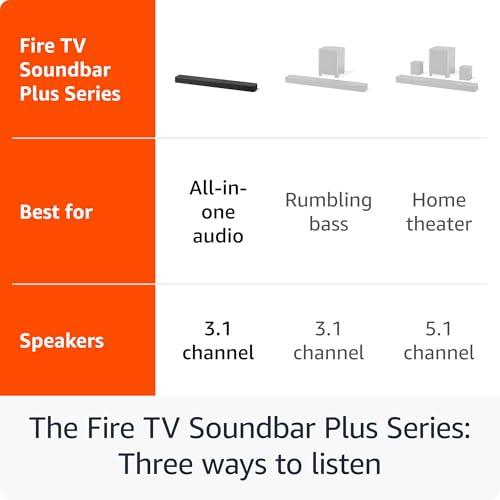
Before diving into specifics, it's worth understanding what separates a good soundbar from a mediocre one. The most important factor is channel configuration—essentially how many separate speakers and audio channels the device can handle. A basic stereo soundbar has two channels (left and right), while a 3.1 system adds a dedicated center channel specifically for dialogue, plus a subwoofer (the ".1") for bass.
This matters more than you might think. When you're watching a movie, dialogue typically comes through the center channel, while music and sound effects use the left and right channels. Without a proper center channel, voices can sound muddy or get lost in the mix—especially frustrating when you're trying to follow a complex plot or catch subtitled dialogue.
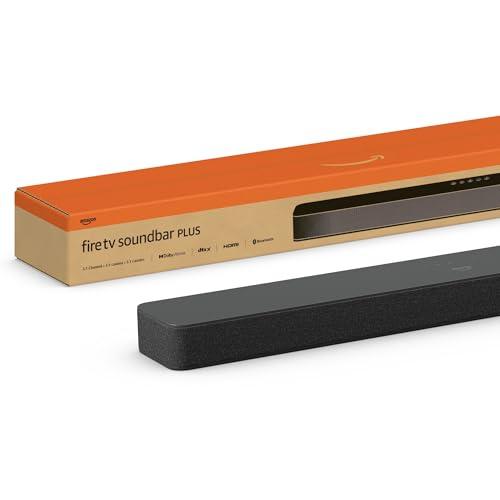
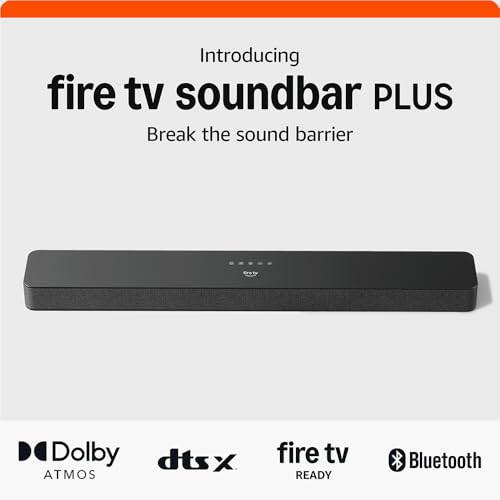
The Amazon Fire TV Soundbar Plus, released in 2022, represents Amazon's entry into the competitive soundbar market. Despite being marketed as a "3.1" system, it doesn't actually have a true dedicated center channel speaker. Instead, it uses digital processing to simulate center channel effects, which works but isn't quite the same thing.
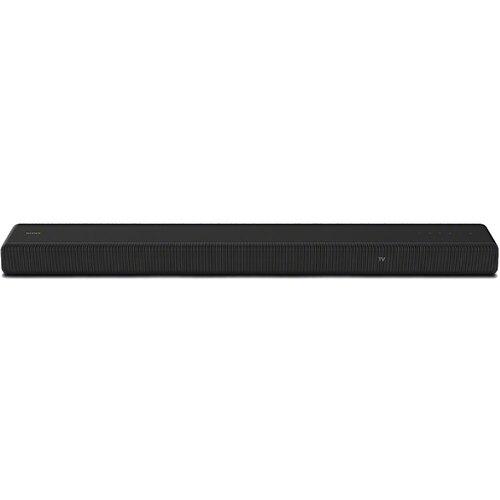
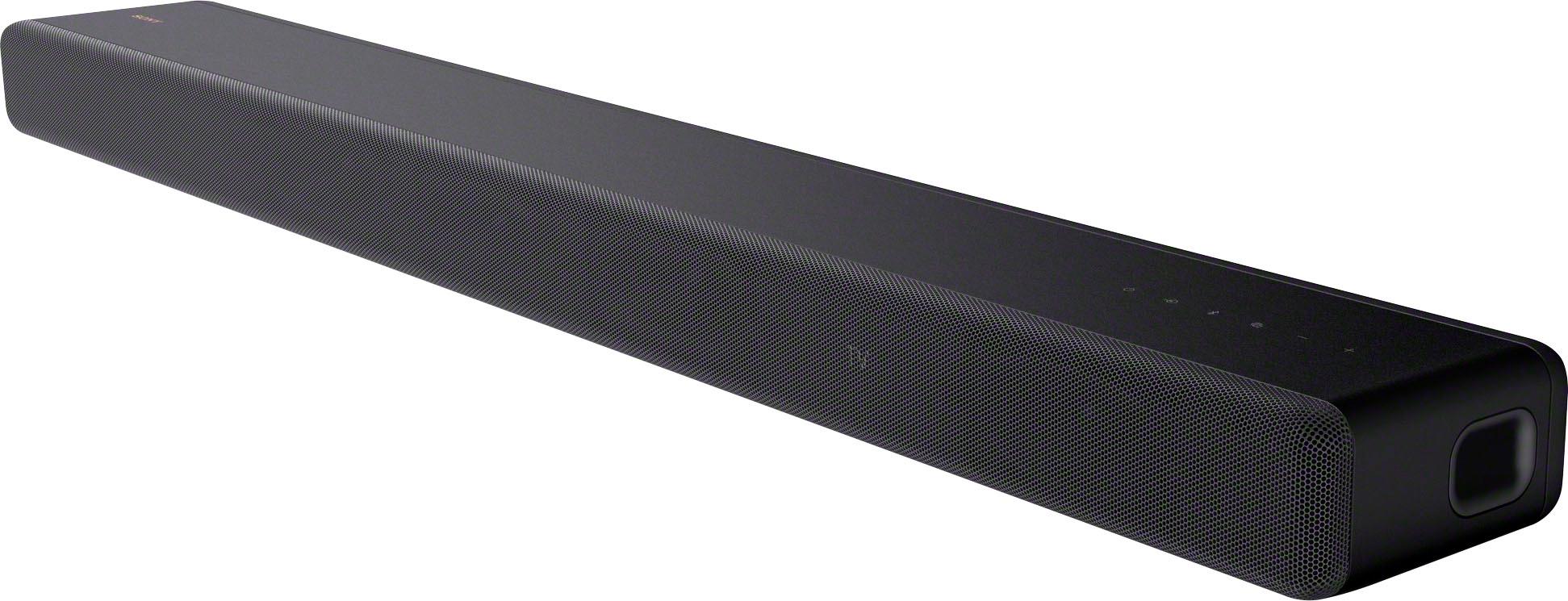
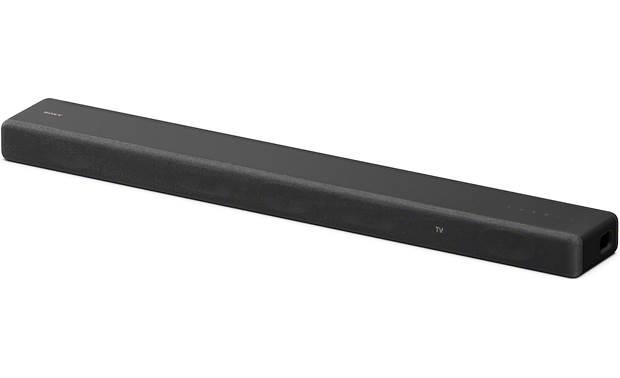
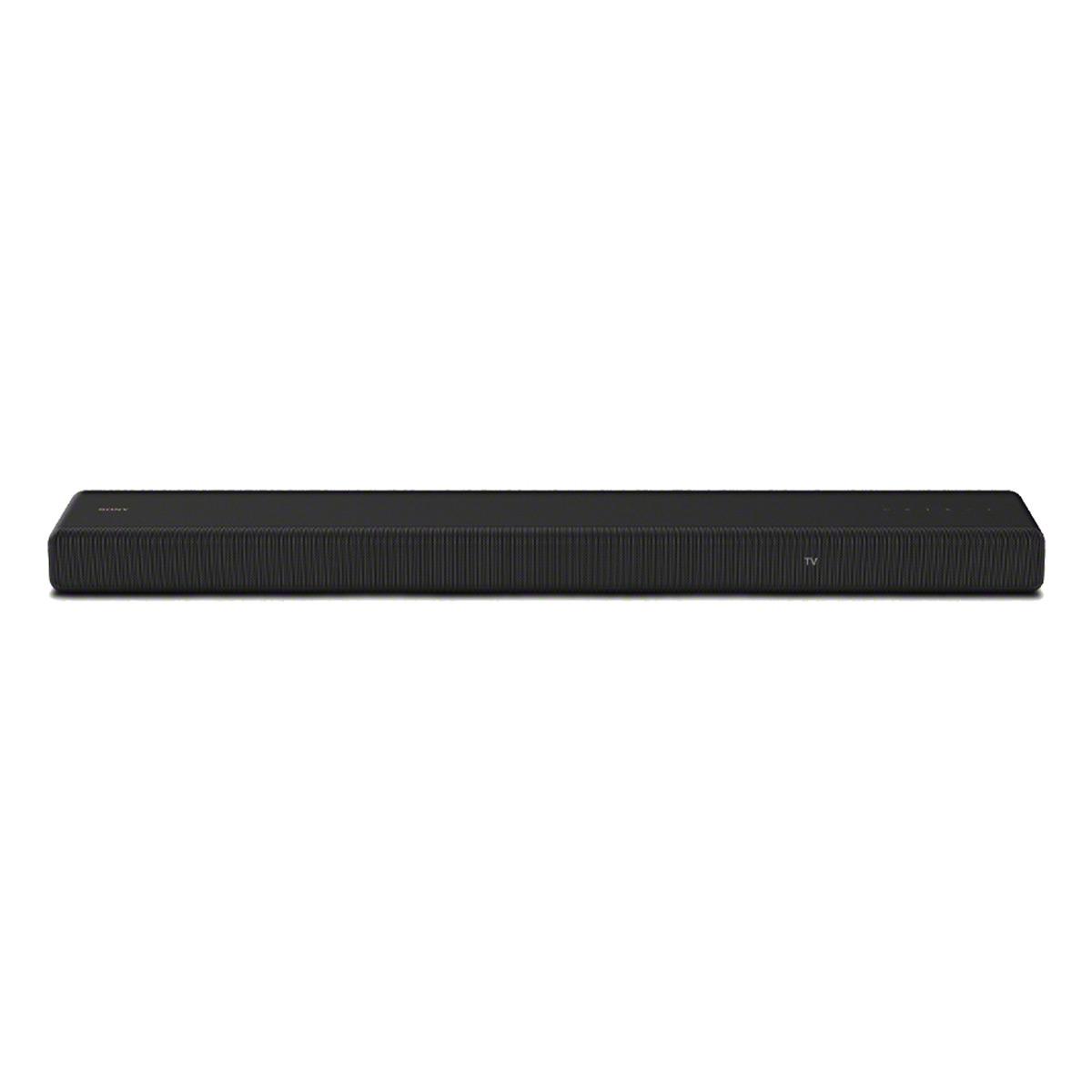
The Sony HT-A3000, launched in 2021, takes a more traditional approach with genuine 3.1-channel architecture. It features three discrete front speakers—including a real center channel designed specifically for dialogue—plus built-in dual subwoofers. This hardware-based approach typically delivers clearer, more focused sound.
Here's where things get technical, but bear with me because it directly affects what you'll hear. The Amazon Fire TV Soundbar Plus uses what I'd call a "virtual 3.1" setup. It has multiple drivers (individual speakers) inside its cabinet, but they're not independently controlled to create true left, center, and right channels. Instead, clever digital processing creates the illusion of separate channels.
This isn't necessarily bad—many affordable soundbars use similar techniques—but it has limitations. When complex audio mixes throw dialogue, explosions, and musical scores at the soundbar simultaneously, the processing can struggle to keep everything separate and clear.
The Sony HT-A3000, by contrast, dedicates specific speakers to specific jobs. Its center channel speaker only handles dialogue and vocals, while the left and right speakers focus on music, ambient sounds, and effects. This division of labor typically results in clearer, more intelligible speech—something I've noticed makes a huge difference when watching anything from Marvel movies to British crime dramas.
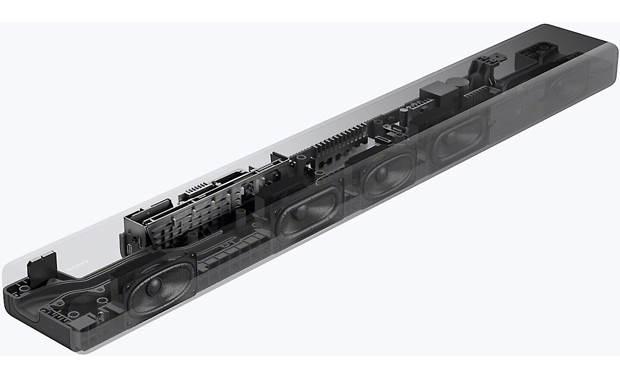
The Sony's approach becomes even more impressive when you consider its power delivery. It pumps out 250 watts through five separate amplifier channels using Sony's S-Master HX digital amplifier technology. This isn't just marketing speak—having dedicated power for each speaker channel means the system can handle demanding audio passages without distortion or channel interference.
Speaking of drivers, Sony has implemented some genuinely clever engineering in the HT-A3000. Their X-Balance drivers use a rectangular shape instead of the traditional circular design. This might seem like a minor detail, but it's actually quite significant.
Traditional round drivers waste space in rectangular speaker cabinets, but Sony's rectangular drivers maximize the surface area available for moving air—and moving air is how speakers create sound. More surface area means more controlled bass and cleaner midrange frequencies where dialogue lives. The built-in subwoofers measure 4.375" x 1.8125", which provides substantial bass output without the bulk of a separate subwoofer box.
The Amazon Fire TV Soundbar Plus doesn't publish detailed driver specifications, which often indicates more basic components. While it includes bass drivers and promises "built-in subwoofer" performance, user reports suggest the bass response lacks the depth and control you'd want for movie soundtracks or music listening.
This difference becomes apparent when you're watching something like "Dune" or "Mad Max: Fury Road"—movies that use deep bass not just for explosions but to create atmosphere and tension. A quality subwoofer system reproduces those low-frequency effects that you feel as much as hear, while basic bass drivers often sound boomy or muddy.
If there's one area where the engineering differences between these soundbars become immediately obvious, it's dialogue clarity. Poor dialogue reproduction is probably the number one complaint people have about their TV audio, and for good reason—if you can't understand what characters are saying, the entire viewing experience suffers.
The Sony HT-A3000 excels here thanks to its dedicated center channel. Having tested numerous soundbars over the years, I've found that systems with proper center channels consistently outperform virtual alternatives, especially in challenging scenarios like action sequences where dialogue competes with explosions and music.
The Amazon Fire TV Soundbar Plus includes dialogue enhancement features and does manage to improve speech intelligibility compared to TV speakers, but it can't match the focused clarity of a dedicated center channel. Users frequently report that while dialogue is clearer than their TV's built-in speakers, it still occasionally gets lost during busy audio scenes.
This matters more than you might initially think. If you're someone who watches a lot of prestige dramas, foreign films with subtitles, or content where understanding every word is crucial, the Sony's superior dialogue clarity could significantly improve your viewing experience.
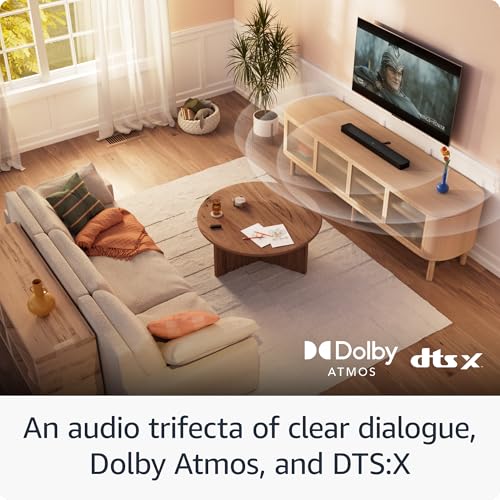
Both soundbars support advanced spatial audio formats like Dolby Atmos and DTS:X, but their implementations differ substantially. These formats create three-dimensional soundscapes, placing audio objects in specific locations around (and above) your listening position instead of just sending sounds to left, right, and center channels.
The Amazon Fire TV Soundbar Plus processes spatial audio entirely through digital algorithms. It uses DTS Virtual:X technology to create the impression of sounds coming from different directions, including height effects that seem to originate above your head. This virtual processing works reasonably well and does create a wider, more enveloping soundstage than basic stereo.
However, the Sony HT-A3000 goes several steps further with multiple spatial audio technologies. Its Vertical Surround Engine specifically handles height effects, while S-Force PRO Front Surround creates width and depth illusions. When you add Sony's optional rear speakers, the system enables 360 Spatial Sound Mapping—technology that creates the acoustic illusion of speakers throughout your room even though the physical speakers remain in fixed positions.
I've experienced this technology in larger home theater setups, and when properly implemented, it can create remarkably convincing spatial effects. The difference between virtual processing and more sophisticated spatial mapping becomes apparent during scenes with helicopters flying overhead, rain falling around characters, or subtle ambient effects that enhance immersion.
Modern soundbars need to integrate seamlessly with today's streaming-focused entertainment ecosystem, and here the two products take notably different approaches.
The Amazon Fire TV Soundbar Plus focuses heavily on Fire TV integration. If you use Fire TV streaming devices, the soundbar can be controlled through your existing Fire TV remote, creating a streamlined user experience. The integration goes deep enough that soundbar settings appear in your Fire TV's on-screen menus, making adjustments intuitive.
However, despite carrying the "Fire TV" name, the soundbar itself doesn't include streaming capabilities. It's purely an audio device that works particularly well with Fire TV ecosystem products but doesn't add smart features beyond Bluetooth connectivity for music streaming.
The Sony HT-A3000 takes a more platform-agnostic approach with broader smart device compatibility. It supports LDAC Bluetooth for high-quality audio from Android devices, AirPlay 2 for Apple users, and Chromecast built-in for casting from various apps and devices. This flexibility means you can stream high-resolution music directly to the soundbar regardless of which smartphone or tablet ecosystem you prefer.
Perhaps more importantly, the Sony includes Sound Field Optimization—a feature that uses built-in microphones to analyze your room's acoustics and automatically adjust the audio output accordingly. Room acoustics dramatically affect sound quality, and having automatic calibration eliminates much of the guesswork in getting optimal performance.
The connection between your soundbar and TV might seem straightforward, but the specific HDMI implementation affects both current performance and future compatibility.
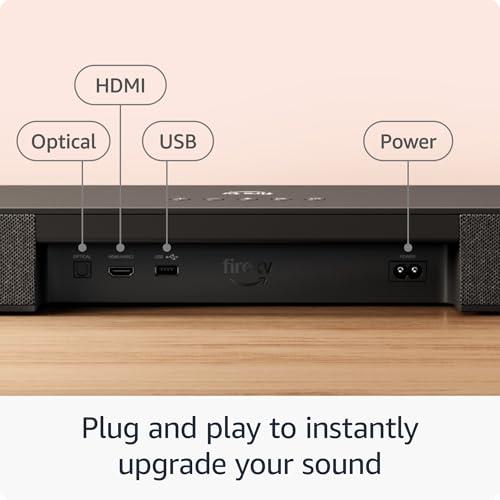
The Amazon Fire TV Soundbar Plus includes HDMI ARC (Audio Return Channel), which handles most current audio formats adequately. ARC allows your TV to send audio back to the soundbar through the same HDMI cable used for video, simplifying cable management.
The Sony HT-A3000 supports the more advanced HDMI eARC (enhanced Audio Return Channel), which provides higher bandwidth for advanced audio formats including uncompressed Dolby TrueHD and DTS-HD Master Audio. As streaming services continue improving their audio quality and more content includes sophisticated spatial audio mixing, eARC support becomes increasingly valuable.
This technical difference might not matter immediately, but it could affect how well your soundbar handles future content formats. Given that soundbars typically last five to ten years, choosing a model with better future compatibility makes financial sense.
While many people buy soundbars primarily for improving TV and movie audio, music performance deserves consideration since you'll likely use your soundbar for streaming music, gaming audio, and other non-video content.
The Amazon Fire TV Soundbar Plus handles simple music adequately but shows its limitations with complex recordings. Users report that acoustic music and vocals sound reasonable, but rock, electronic, and orchestral music can become harsh and congested at higher volumes. The soundbar seems optimized for dialogue and basic TV audio rather than critical music listening.
The Sony HT-A3000 includes several features specifically designed to enhance music reproduction. DSEE Extreme technology analyzes compressed audio files and attempts to restore high-frequency information lost during compression. While no processing can truly recreate lost audio data, DSEE Extreme does make compressed music sound more detailed and natural.
The Sony's support for high-resolution audio codecs through LDAC Bluetooth and casting protocols means you can stream CD-quality or better audio directly from your phone or streaming service. If you're someone who enjoys music listening sessions through your TV system, this capability adds significant value.
One of the most significant differences between these soundbars lies in their expansion possibilities, which affects their long-term value proposition.
The Amazon Fire TV Soundbar Plus operates as a fixed system. What you buy is what you get, with no options for adding additional speakers or subwoofers later. This simplicity has advantages—no complicated setup, no additional purchases required—but it also limits your options if your needs or room size change.
The Sony HT-A3000 was designed as the foundation of an expandable system. Sony offers optional wireless rear speakers and additional subwoofers that integrate seamlessly with the main soundbar. When you add rear speakers, the system's 360 Spatial Sound Mapping technology becomes available, creating a more immersive surround sound experience.
This expandability transforms the purchase decision from "buying a soundbar" to "investing in a home theater system foundation." You can start with just the soundbar and add components as your budget and interests grow, potentially creating a system that rivals much more expensive traditional home theater setups.
Evaluating value requires looking beyond initial purchase price to consider total cost of ownership, performance capabilities, and longevity.
The Amazon Fire TV Soundbar Plus offers exceptional value at its price point. At the time of writing, it provides DTS Virtual:X processing, Fire TV integration, and meaningful improvement over TV speakers for hundreds less than premium alternatives. For users seeking basic TV audio enhancement without complexity or high cost, it delivers solid value.
However, its limitations become apparent when compared to more expensive alternatives. The virtual center channel, basic connectivity, and lack of expandability mean users may eventually want to upgrade if their needs evolve or if they develop higher expectations for audio quality.
The Sony HT-A3000 costs significantly more initially but provides features and performance that justify the premium for serious home theater enthusiasts. The built-in dual subwoofers alone would cost substantial money as separate units, while the advanced audio processing and room calibration typically require much more expensive systems.
When evaluating total system cost, the Sony's all-in-one design with quality built-in subwoofers compares favorably to competitors that require separate subwoofer purchases to achieve similar bass performance.
After extensive consideration of both products' capabilities and limitations, clear usage scenarios emerge for each soundbar.
Choose the Amazon Fire TV Soundbar Plus if you're primarily a casual viewer who wants significantly better TV audio without complexity or high cost. It's ideal for apartments, bedrooms, or secondary viewing areas where space and budget constraints matter more than audiophile performance. The Fire TV integration makes it particularly appealing if you're already invested in Amazon's streaming ecosystem.
The Sony HT-A3000 better serves users who view their soundbar as a serious home theater component. If dialogue clarity is crucial—whether due to hearing difficulties, preference for complex dramas, or foreign language content—the Sony's dedicated center channel provides substantial benefits. It's also the better choice for music listeners and anyone who might want to expand their system over time.
The Sony particularly shines in larger living rooms where its superior bass response and spatial audio processing can fill the space effectively. Its advanced connectivity and future-proofing features make it a smarter long-term investment for users willing to pay more initially for better performance and flexibility.
Ultimately, both soundbars successfully address the fundamental problem of poor TV audio, but they serve different users with different priorities. The Amazon option democratizes decent TV sound for budget-conscious buyers, while the Sony provides the foundation for a serious home entertainment system. Understanding which category matches your needs, budget, and expectations will guide you to the right choice for your home theater setup.
| Amazon Fire TV Soundbar Plus | Sony HT-A3000 3.1ch Dolby Atmos Soundbar |
|---|---|
| Channel Configuration - Determines dialogue clarity and overall sound separation | |
| 3.1-style with virtual center channel processing | True 3.1 with dedicated center channel speaker |
| Total Power Output - Affects maximum volume and dynamic range | |
| Not specified (likely under 150W) | 250W through 5 amplifier channels |
| Built-in Subwoofer - Eliminates need for separate bass unit | |
| Basic bass drivers, limited low-end extension | Dual 4.375" x 1.8125" X-Balance subwoofers |
| Spatial Audio Processing - Creates immersive surround effects | |
| DTS Virtual:X (virtual processing only) | Dolby Atmos, DTS:X, Vertical Surround Engine, S-Force PRO |
| HDMI Connectivity - Affects audio format compatibility | |
| HDMI ARC (standard bandwidth) | HDMI eARC (high bandwidth for advanced formats) |
| Smart Features - Streaming and device integration capabilities | |
| Fire TV integration, Bluetooth, no built-in streaming | LDAC Bluetooth, AirPlay 2, Chromecast built-in, Sound Field Optimization |
| Expandability - Future upgrade options | |
| Fixed system, no expansion possible | Compatible with optional wireless rear speakers and subwoofers |
| Room Calibration - Automatic sound optimization | |
| Manual EQ adjustments only | Automatic Sound Field Optimization with built-in microphones |
| Music Enhancement - Audio processing for streaming and compressed files | |
| Basic music modes | DSEE Extreme upscaling, high-resolution audio support |
| Design and Mounting - Physical installation considerations | |
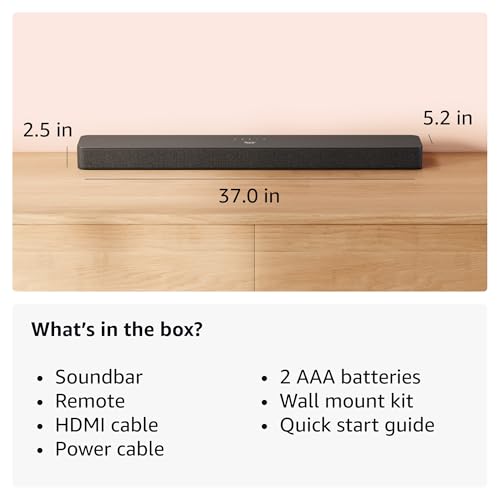
| 94cm wide, wall mount kit included | 95cm wide, premium fabric grille, wall mount kit included |
| Target User - Best suited for different needs and budgets | |
| Budget-conscious Fire TV users seeking basic TV audio upgrade | Home theater enthusiasts wanting premium dialogue clarity and expandable system |
The key difference is audio architecture. The Amazon Fire TV Soundbar Plus uses virtual processing to simulate a center channel, while the Sony HT-A3000 has a true dedicated center channel speaker for clearer dialogue. The Sony also includes dual built-in subwoofers and 250W of power compared to the Amazon's more basic driver setup.
The Sony HT-A3000 provides significantly better dialogue clarity thanks to its dedicated center channel speaker. The Amazon Fire TV Soundbar Plus relies on digital processing to separate dialogue, which works but can't match the focused clarity of a physical center channel, especially during complex audio scenes.
Yes, both support spatial audio formats, but differently. The Amazon Fire TV Soundbar Plus uses DTS Virtual:X processing to create virtual height effects. The Sony HT-A3000 supports both Dolby Atmos and DTS:X with more advanced processing including Vertical Surround Engine and S-Force PRO technology.
The Sony HT-A3000 delivers superior bass with dual 4.375" x 1.8125" built-in subwoofers using Sony's X-Balance driver technology. The Amazon Fire TV Soundbar Plus includes basic bass drivers but lacks the depth and control needed for impactful movie soundtracks or music listening.
Only the Sony HT-A3000 can be expanded with optional wireless rear speakers and subwoofers to create a full surround system. The Amazon Fire TV Soundbar Plus operates as a fixed system with no expansion options, limiting future upgrade possibilities.
The Sony HT-A3000 provides broader smart connectivity with LDAC Bluetooth, AirPlay 2, Chromecast built-in, and automatic room calibration. The Amazon Fire TV Soundbar Plus focuses on Fire TV integration but doesn't include built-in streaming capabilities despite its name.
The Sony HT-A3000 excels at music with DSEE Extreme processing that enhances compressed audio and support for high-resolution formats. The Amazon Fire TV Soundbar Plus handles simple music adequately but can sound harsh with complex recordings at higher volumes.
For serious home theater applications, the Sony HT-A3000 is the clear winner with its true 3.1 channels, powerful built-in subwoofers, advanced spatial audio processing, and expandability options. The Amazon Fire TV Soundbar Plus works well for casual viewing but lacks the performance needed for immersive movie experiences.
Yes, but with important differences. The Amazon Fire TV Soundbar Plus includes HDMI ARC for basic audio formats. The Sony HT-A3000 features HDMI eARC with higher bandwidth support for advanced audio formats like uncompressed Dolby TrueHD, providing better future compatibility.
The Amazon Fire TV Soundbar Plus offers simpler setup, especially for Fire TV users who can control everything with one remote. The Sony HT-A3000 includes automatic room calibration that optimizes sound without manual adjustment, though it has more features to configure.
The Amazon Fire TV Soundbar Plus works well in apartments with its compact design and adequate performance for smaller spaces. The Sony HT-A3000 includes a Night Mode and better bass control, making it suitable for apartments where sound isolation matters, though it's more powerful than most apartment dwellers need.
The Sony HT-A3000 provides better long-term value for users prioritizing audio quality, with superior performance, expandability, and future-proofing through eARC support. The Amazon Fire TV Soundbar Plus offers excellent value for budget-conscious users seeking basic TV audio improvement with Fire TV integration.
We've done our best to create useful and informative comparisons to help you decide what product to buy. Our research uses advanced automated methods to create this comparison and perfection is not possible - please contact us for corrections or questions. These are the sites we've researched in the creation of this article: rtings.com - wirelessplace.com - techradar.com - cordbusters.co.uk - whathifi.com - developer.amazon.com - t3.com - dolby.com - youtube.com - youtube.com - youtube.com - dugoutnorthbrook.com - dolby.com - aboutamazon.com - youtube.com - developer.amazon.com - rtings.com - electronics.sony.com - crutchfield.com - store.sony.com.au - digitaltrends.com - videoandaudiocenter.com - abt.com - sony.com - merlinstv.com - crutchfield.com - youtube.com

Privacy Policy
Terms and Conditions - Affiliate Policy
Home Security
© Copyright 2008-2026.
11816 Inwood Rd #1211, Dallas, TX 75244