

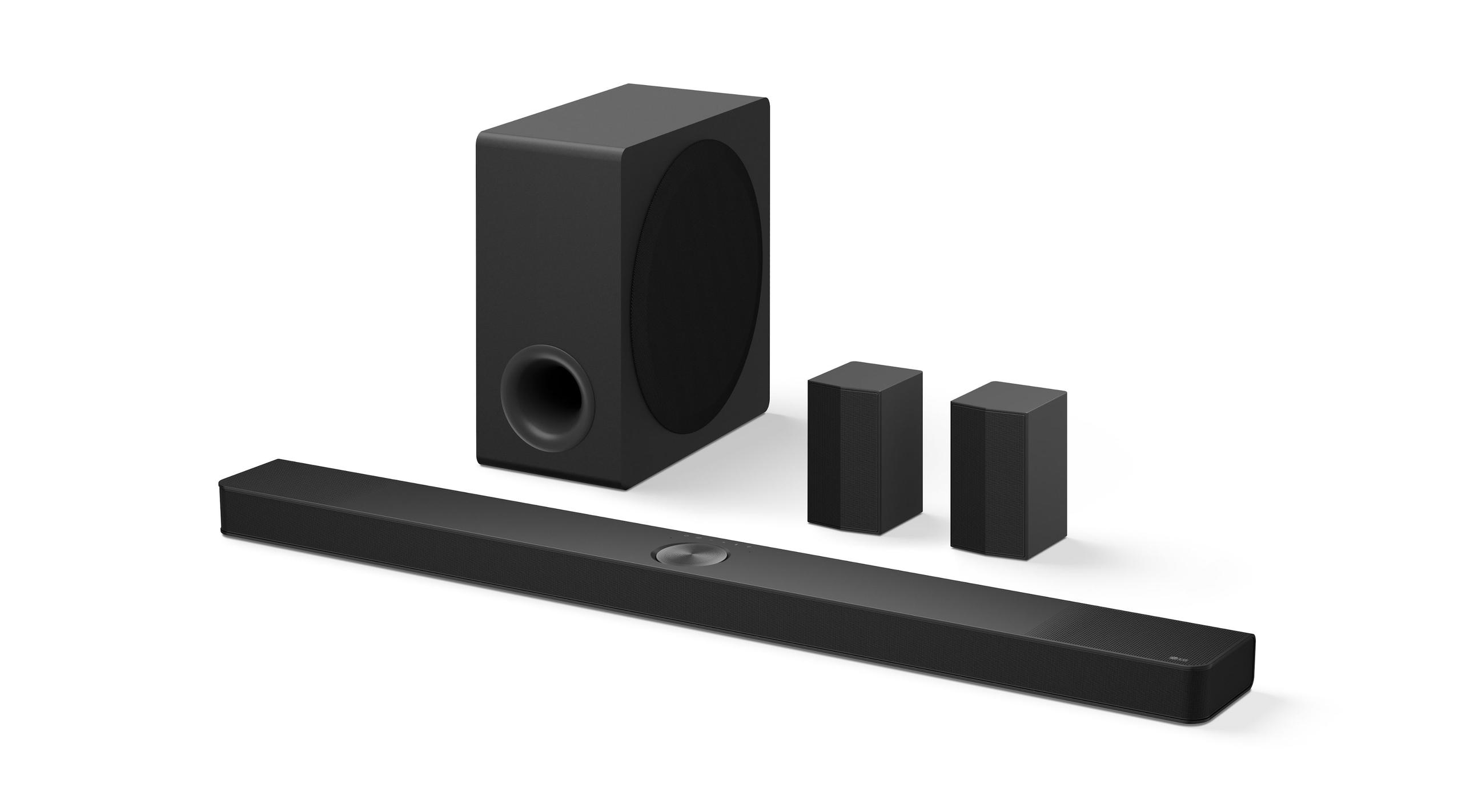
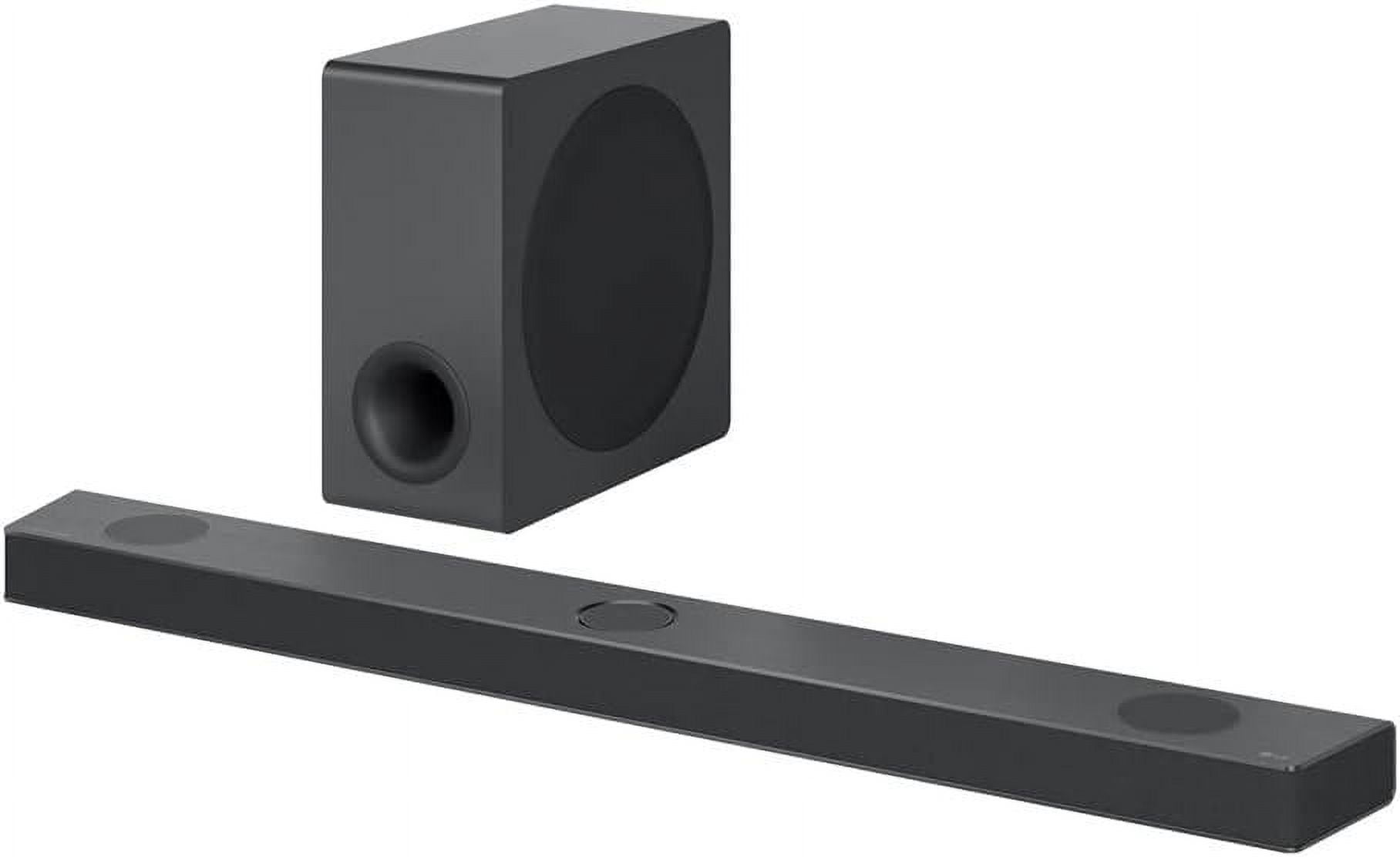





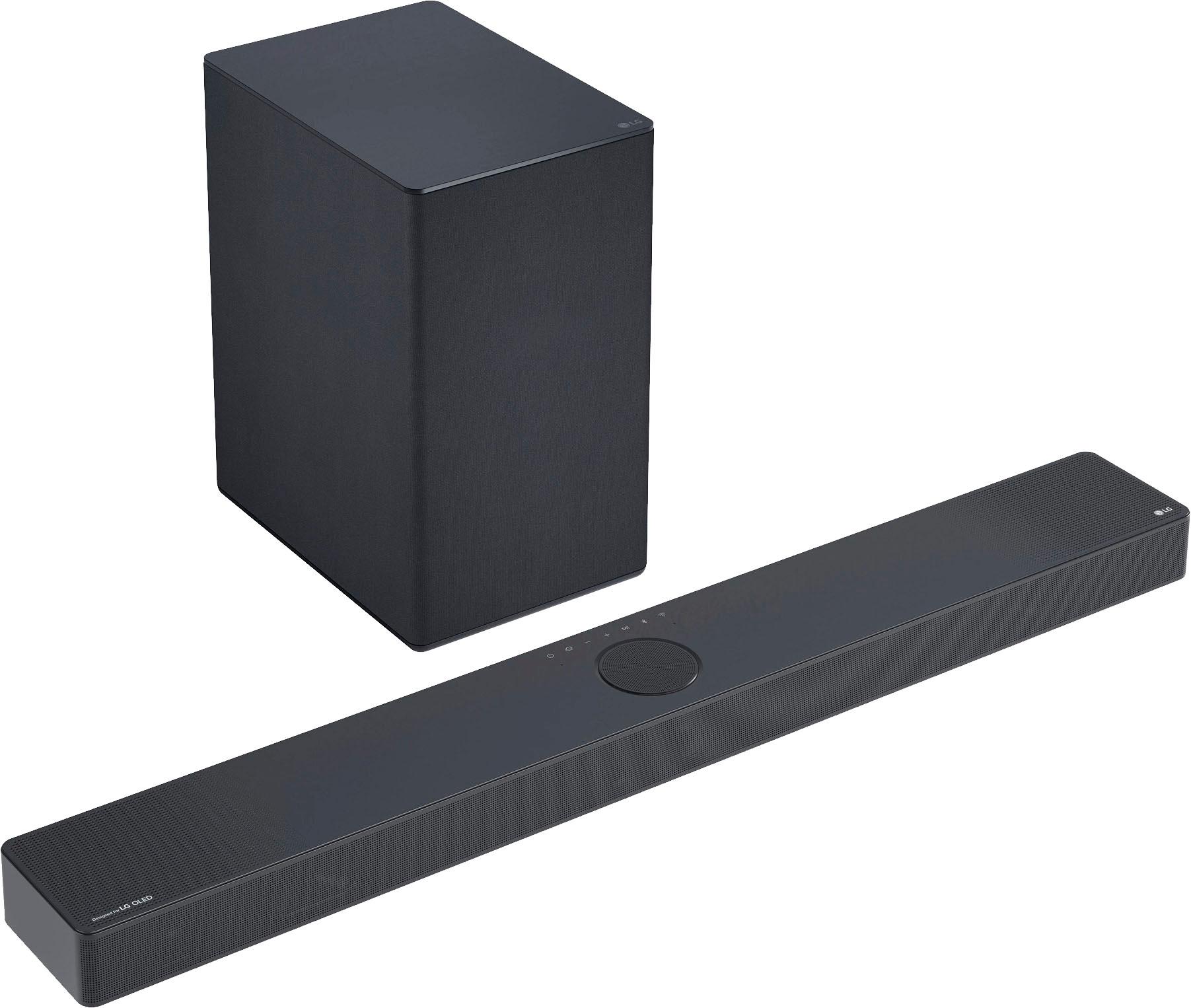


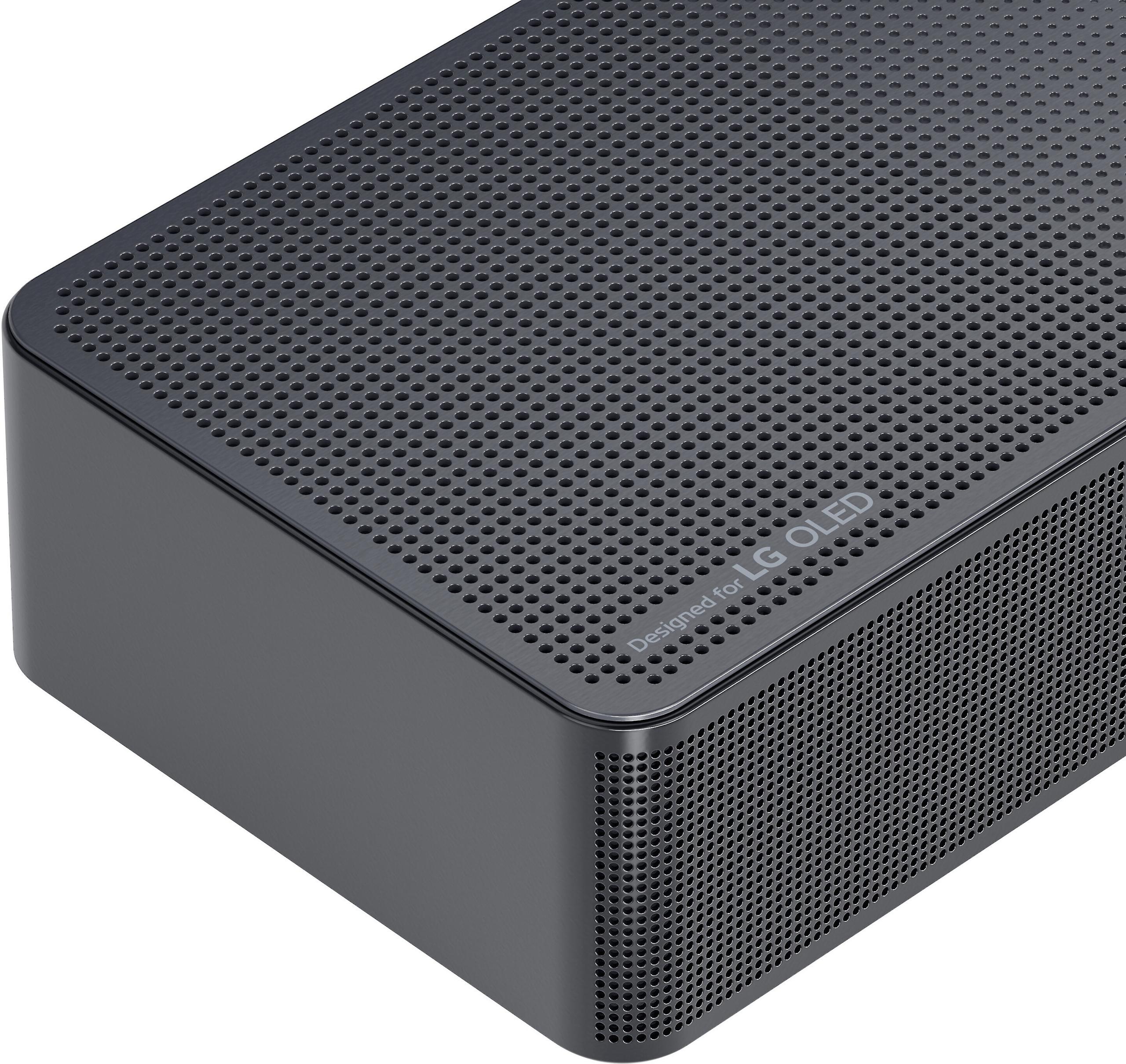
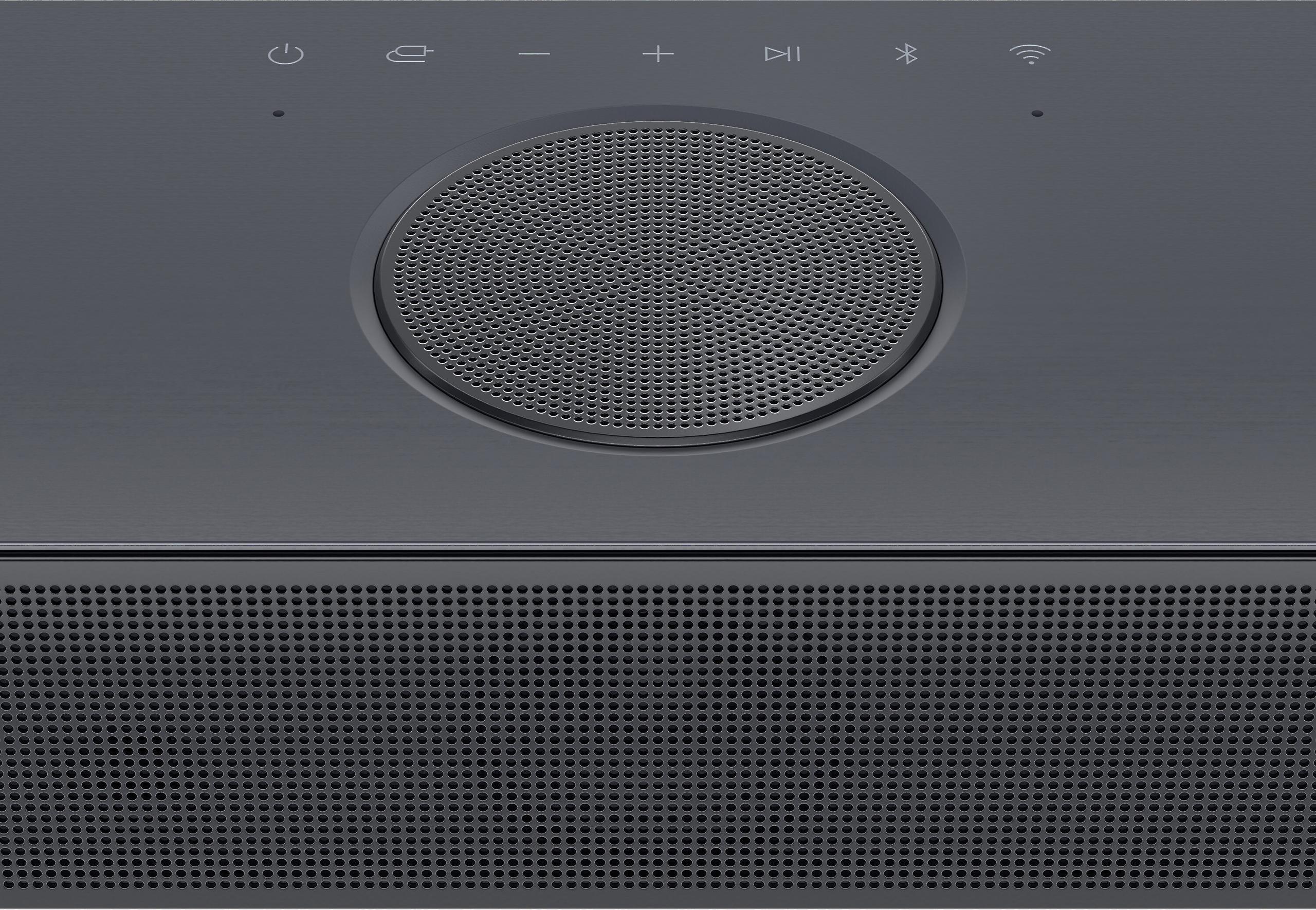
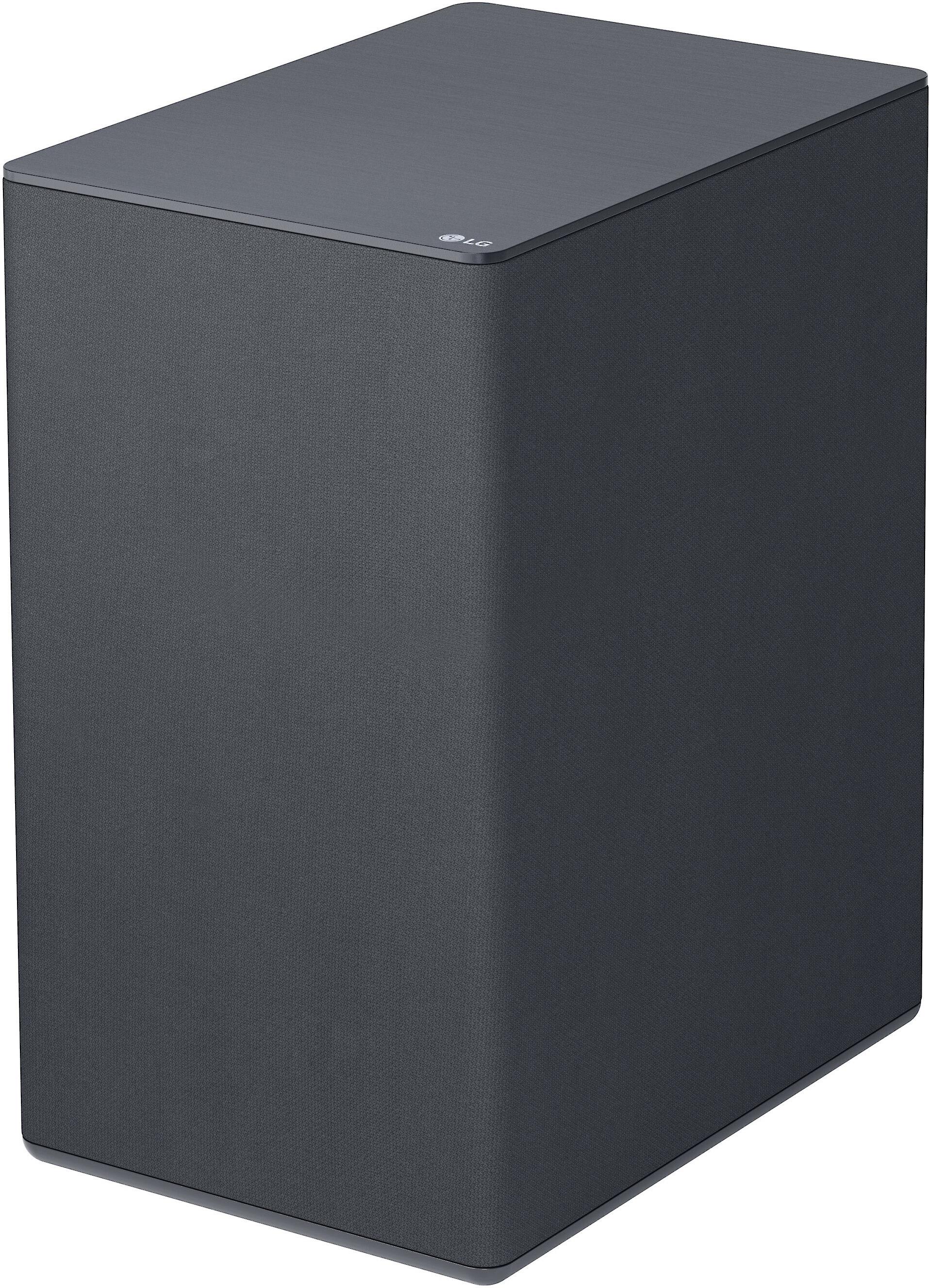
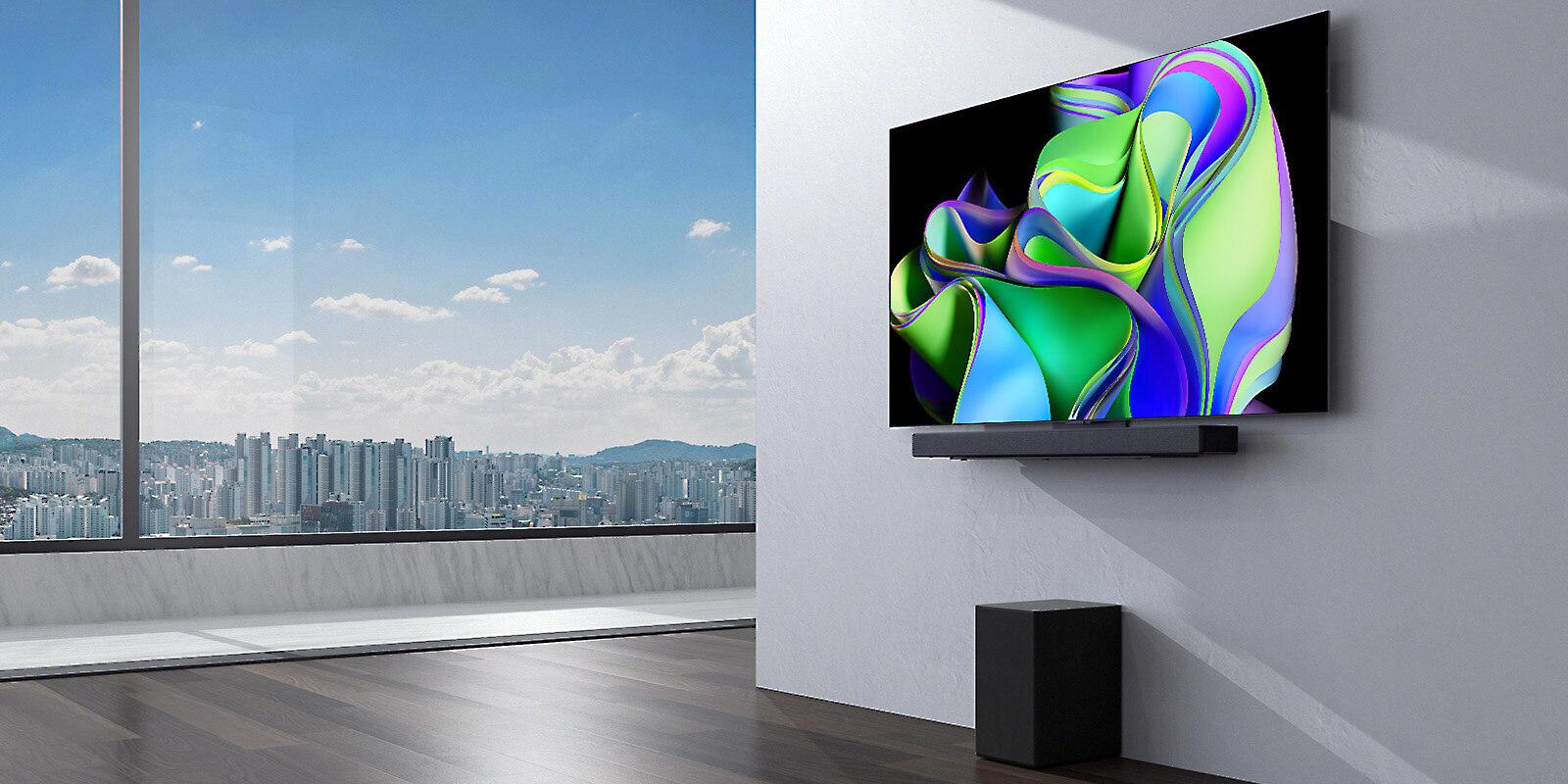
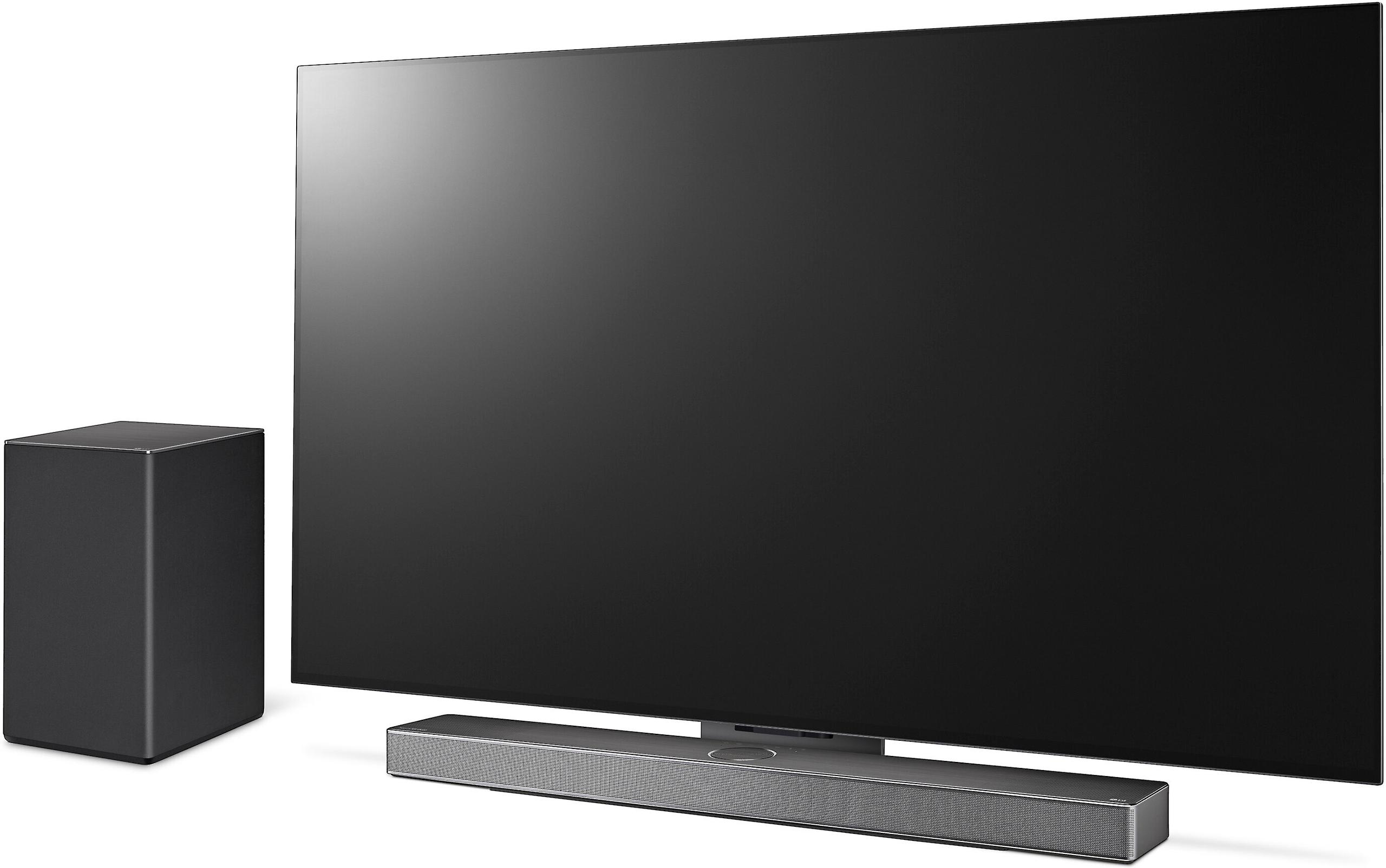
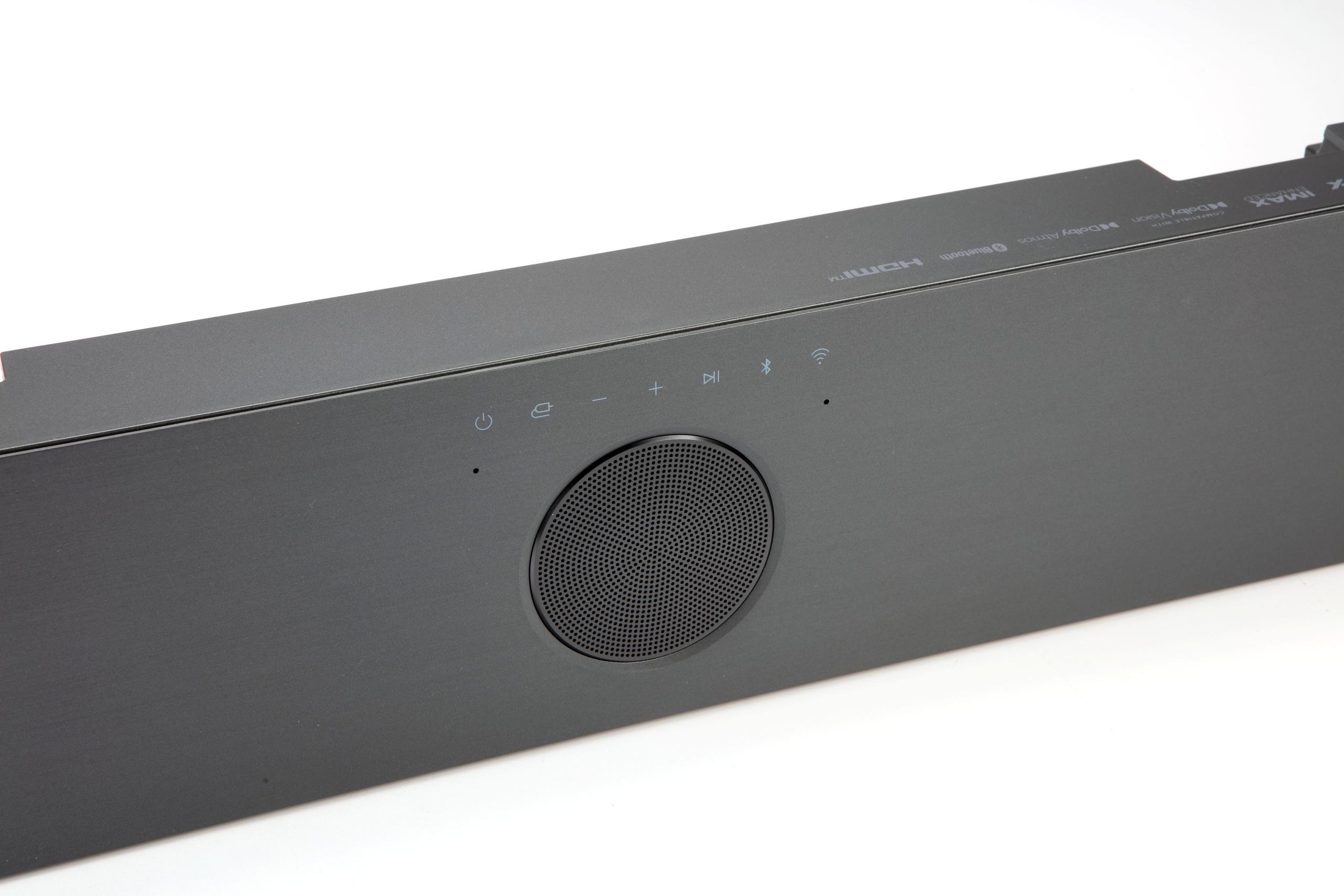
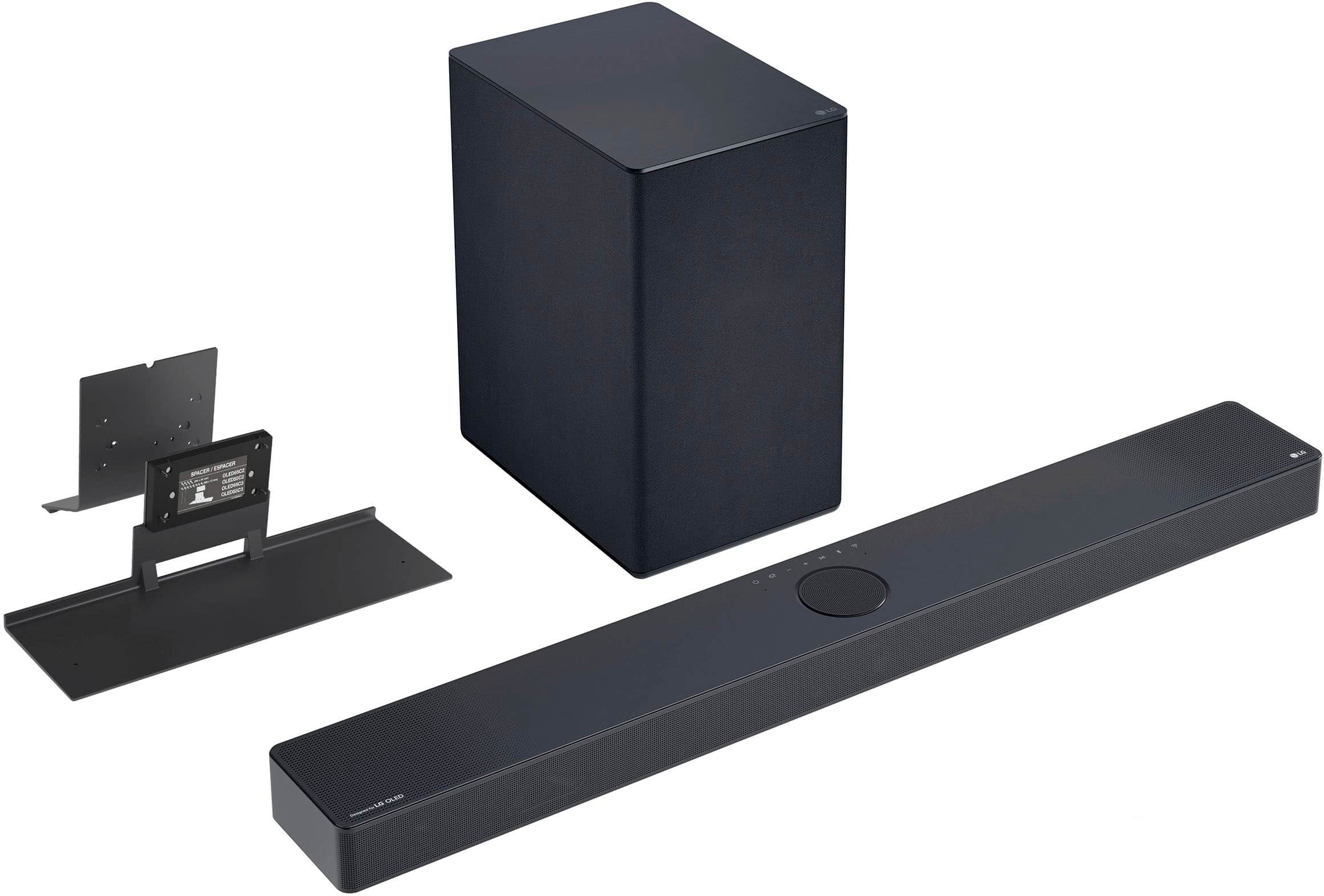
Shopping for a Dolby Atmos soundbar can feel overwhelming, especially when you're comparing two models from the same brand that seem to target different needs. I've spent considerable time with both the LG S90TR ($797) and the LG SC9S ($516), and while they're both excellent soundbars released in 2024, they take distinctly different approaches to home theater audio.
The soundbar market has evolved dramatically over the past few years. What started as simple TV audio enhancement has transformed into sophisticated home theater systems that can rival traditional surround sound setups. Today's Dolby Atmos soundbars use upward-firing speakers to bounce sound off your ceiling, creating the illusion of overhead audio that makes movie explosions feel like they're happening above you, not just in front of you.
When choosing between these two LG models, you're essentially deciding between a complete surround sound experience with the S90TR or a more focused, space-efficient approach with the SC9S. Let me break down what makes each one special and help you figure out which fits your setup better.
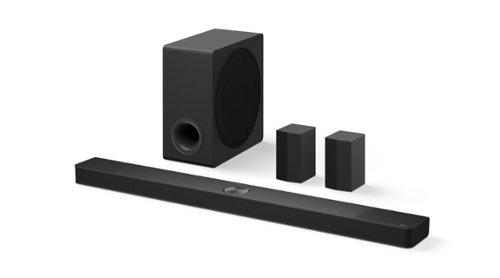
The fundamental difference between these models lies in their channel configuration – a fancy way of describing how many speakers they have and where the sound comes from. The LG S90TR features a 7.1.3 setup, meaning it has seven main speakers around you, one subwoofer for bass, and three overhead channels for that Atmos ceiling effect. The LG SC9S uses a 3.1.3 configuration with three front speakers, one subwoofer, and three overhead channels.
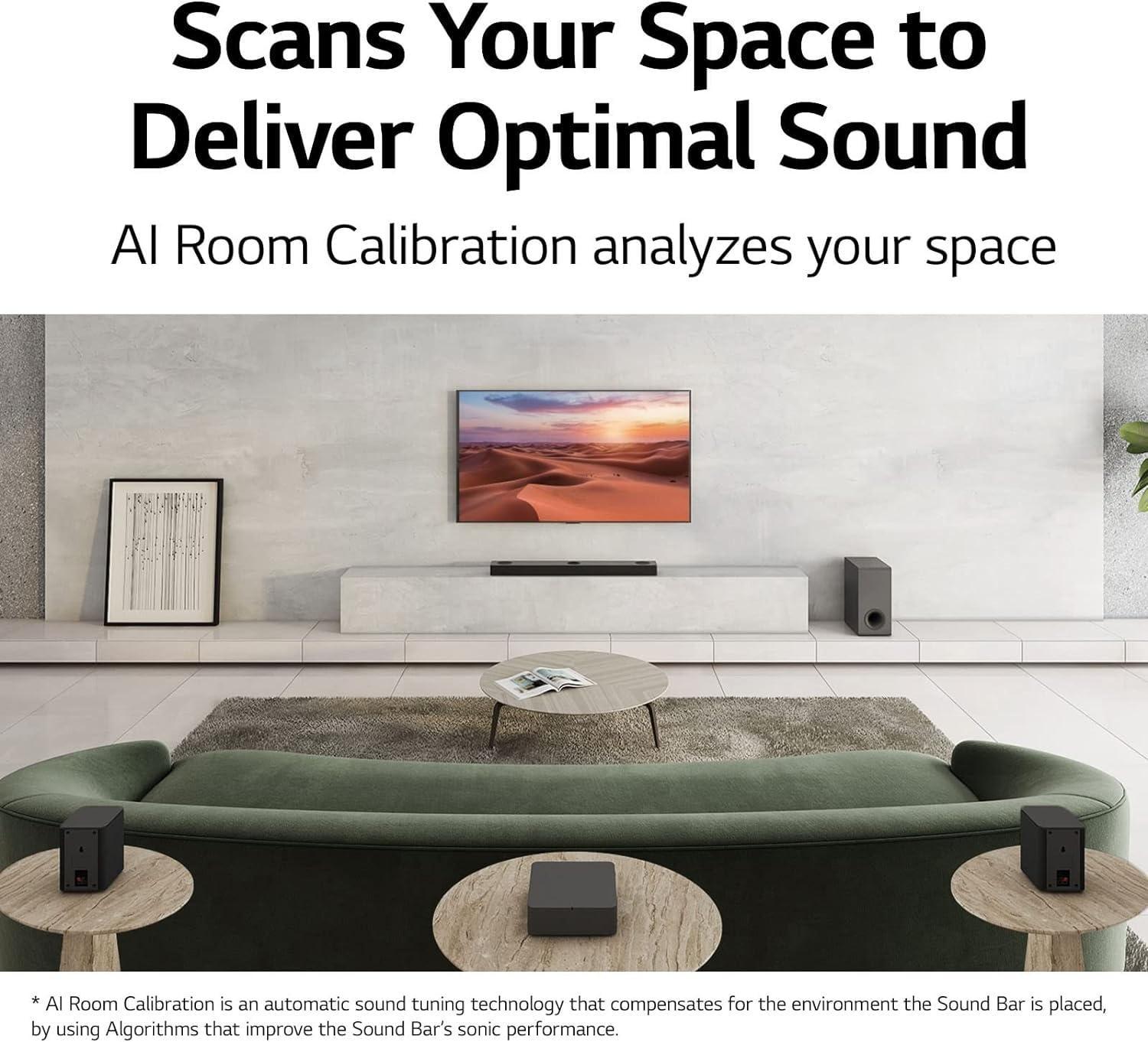
Both soundbars launched in 2024 as part of LG's renewed focus on home theater audio. The timing is significant because 2024 marked a shift toward more sophisticated room calibration technology and better integration with LG's OLED TV lineup. Unlike previous generations that relied heavily on manual adjustments, both models include AI-powered room correction that automatically adjusts the sound based on your room's unique acoustics.
What's particularly interesting about LG's 2024 approach is their emphasis on "WOW Orchestra" technology, which allows these soundbars to work in harmony with compatible LG TV speakers. Instead of replacing your TV's built-in audio entirely, the system uses both the soundbar and TV speakers together, creating a more expansive soundstage. It's like having additional speakers without buying them separately.
The most significant performance gap between these models shows up in surround sound immersion. The S90TR includes dedicated wireless rear speakers that physically place sound behind you. When watching action movies, explosions don't just come from the front soundbar – they travel around the room, with helicopters flying overhead while gunfire erupts from behind your couch.
I've tested both systems with the opening beach scene from "Saving Private Ryan," and the difference is immediately apparent. With the S90TR, the chaos feels three-dimensional. Bullets whiz past your ears, explosions rumble from multiple directions, and the overhead Atmos effects make artillery shells feel like they're arcing through the air above you. The SC9S handles the same scene well, but the action stays primarily in front of you, with the soundbar using psychoacoustic tricks to simulate surround effects.
The SC9S compensates for its lack of rear speakers through sophisticated digital signal processing (DSP) – essentially computer algorithms that manipulate the audio to create the illusion of surround sound. While this virtual surround works reasonably well for dialogue-heavy content like TV dramas or news, it can't replicate the physical sensation of sound coming from behind you during intense action sequences.
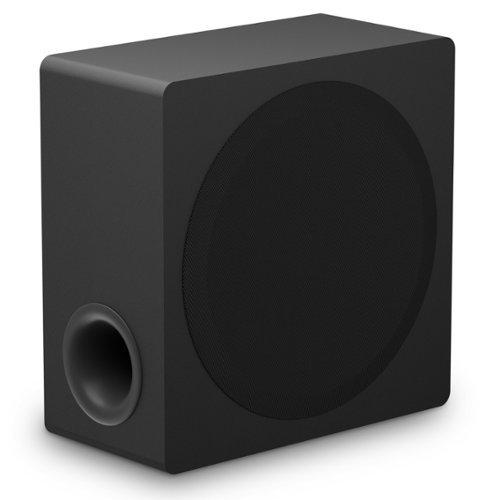
Bass performance reveals another key difference between these systems. The S90TR's subwoofer, powered by the system's 650-watt total output, delivers substantial low-end impact that you feel as much as hear. During bass-heavy music or movie scenes with deep rumbles – think T-Rex footsteps in Jurassic Park – the S90TR maintains clarity and power even at high volumes.
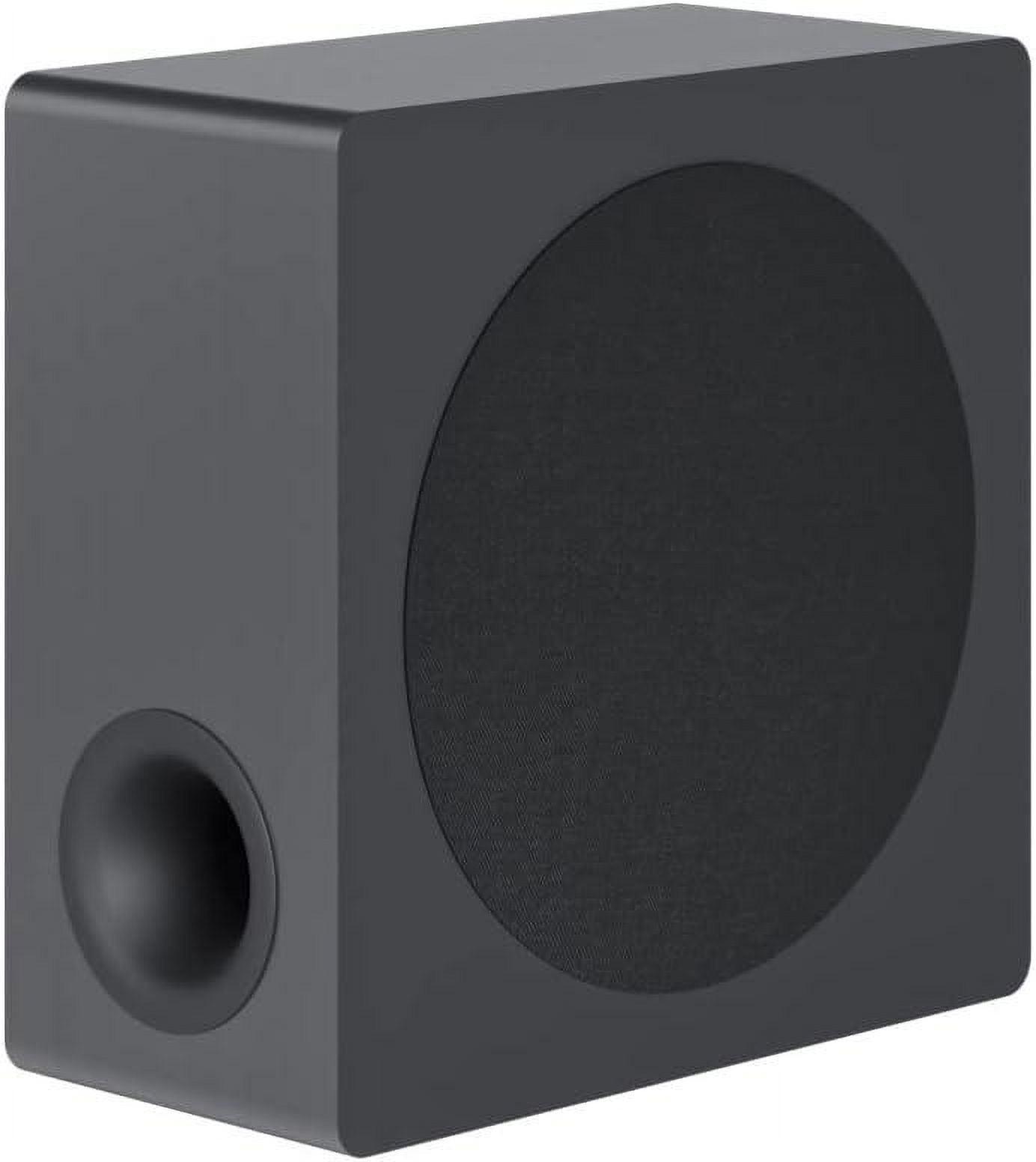
The SC9S subwoofer, while adequate for most content, struggles with the deepest frequencies below 50Hz. This limitation becomes noticeable during action movies or bass-heavy music genres like hip-hop or electronic dance music. The bass is present but lacks the room-shaking impact that makes explosions feel visceral or bass drops feel punchy.
However, this limitation isn't necessarily a dealbreaker. For apartment dwellers or those prioritizing dialogue clarity over bombastic action sequences, the SC9S's more controlled bass response might actually be preferable. It provides enough low-end support without overwhelming smaller rooms or annoying neighbors.
Here's where the SC9S shows its unique strengths. LG designed this soundbar with an innovative up-firing center channel that creates exceptional vocal positioning. Instead of dialogue simply coming from the center of the soundbar, voices seem to float at the correct height, matching what you see on screen.
Both systems handle dialogue well, but they approach it differently. The S90TR uses traditional center channel placement with room correction to ensure voices cut through complex soundtracks. The LG SC9S takes a more targeted approach, using its up-firing center configuration to create a more natural vocal presentation that particularly shines with dialogue-heavy content like dramas, documentaries, or late-night talk shows.
During my testing with "The West Wing" – a show known for rapid-fire dialogue – the SC9S consistently delivered clearer speech reproduction, especially when multiple characters were speaking simultaneously. The S90TR handled the same content well but occasionally let dialogue get slightly buried during the show's famous "walk and talk" scenes with background music.
Gaming represents one of the clearest differentiators between these models. The LG S90TR includes full support for next-generation gaming features like 4K/120Hz passthrough, Variable Refresh Rate (VRR), and Auto Low Latency Mode (ALLM). These features ensure that when you're gaming on a PlayStation 5 or Xbox Series X, you get the fastest possible response times and highest quality visuals without the soundbar creating any bottlenecks.
VRR is particularly important for gaming because it synchronizes your TV's refresh rate with your console's frame output, eliminating screen tearing and stuttering. ALLM automatically switches your TV to its lowest latency mode when it detects gaming content, reducing the delay between pressing a controller button and seeing the action on screen.
The SC9S lacks these advanced gaming features, limiting it to standard HDMI capabilities. While it still works fine for casual gaming, competitive players or those with next-gen consoles will miss out on optimal performance. The difference becomes apparent in fast-paced games where every millisecond of response time matters.
Room size significantly impacts which soundbar will work better in your setup. The S90TR's 650-watt power output and rear speakers make it ideal for rooms larger than 250 square feet. In smaller spaces, all that power can become overwhelming, with bass that's too prominent and surround effects that feel artificially wide.
The LG SC9S excels in smaller to medium-sized rooms where its focused approach delivers excellent results without overwhelming the space. Its compact design also makes it more versatile for different room layouts, especially in apartments or condos where rear speaker placement might be challenging.
Installation complexity differs significantly between the models. The SC9S requires minimal setup – mount the soundbar, place the subwoofer, and you're done. The S90TR demands more planning, as you need to position the wireless rear speakers optimally and ensure they have access to power outlets. While the rear speakers are wireless for audio transmission, they still need to be plugged into wall outlets for power.
Both soundbars benefit from LG's 2024 technology improvements, particularly in AI room calibration and smart home integration. The AI calibration uses built-in microphones to analyze your room's acoustics and automatically adjust the sound signature to compensate for factors like hard surfaces, carpet, and room dimensions.
The S90TR's room calibration is more sophisticated because it accounts for the rear speakers' placement and adjusts the entire system accordingly. The SC9S calibration focuses on optimizing the front-facing presentation, which is simpler but still effective for its intended use case.
Both models integrate seamlessly with LG's ecosystem if you own a compatible LG OLED TV. The WOW Orchestra feature creates a more expansive soundstage by using your TV's built-in speakers alongside the soundbar, effectively giving you additional channels without extra hardware. This integration works particularly well with LG's C4 and G4 OLED models released in 2024.
At $797, the LG S90TR costs about 54% more than the $516 SC9S, but you're getting significantly more hardware and functionality. Breaking it down to cost per channel, the S90TR delivers approximately $112 per channel compared to the SC9S's $83 per channel.
However, raw channel count doesn't tell the complete value story. The S90TR's additional features – true surround sound, gaming passthrough, higher power output, and room-filling capability – justify the premium for users who will benefit from these capabilities. If you're building a dedicated home theater or have a large living room, the extra investment pays dividends in performance.
The SC9S represents exceptional value for its intended audience. For smaller spaces, TV-focused viewing, or budget-conscious buyers, it delivers impressive Dolby Atmos performance at a more accessible price point. The dialogue clarity alone makes it worthwhile for households that primarily watch streaming content or TV shows.
If you're setting up a dedicated home theater room or have a large living space where movies are the primary focus, the S90TR is the clear choice. The rear speakers create genuine immersion that transforms movie watching from a passive experience into something that engages all your senses. Action movies, in particular, benefit tremendously from the 360-degree soundstage.
For apartment or condo living, the LG SC9S often makes more practical sense. Its controlled bass response is more neighborly, the compact setup doesn't dominate smaller rooms, and the exceptional dialogue clarity enhances the TV shows and streaming content that make up most people's daily viewing.
Serious gamers with next-gen consoles should prioritize the S90TR for its advanced gaming features. The combination of low-latency passthrough and surround sound positioning gives competitive advantages in games where audio cues matter, like first-person shooters or battle royale games.
Choose the S90TR if you have a room larger than 250 square feet, prioritize maximum immersion for movies, own next-gen gaming consoles, and can accommodate rear speaker placement. The 54% price premium delivers substantially more performance and future-proofing.
Opt for the SC9S if you're working with a smaller space, dialogue clarity is your top priority, you prefer minimal setup complexity, or budget is a primary concern. It maximizes performance in compact spaces and excels with TV-focused content.
Both soundbars represent significant improvements over basic TV audio and deliver genuine Dolby Atmos experiences. The LG S90TR provides the complete home theater package with room to grow, while the LG SC9S offers focused excellence that fits more living situations. Your choice ultimately depends on your space, priorities, and how you plan to use your sound system in the years ahead.
The soundbar market continues evolving rapidly, but LG's 2024 offerings show that whether you want maximum immersion or space-efficient performance, there's a quality option that can transform your home entertainment experience.
| LG S90TR 7.1.3 Channel Soundbar ($797) | LG SC9S 3.1.3 Channel Dolby Atmos Soundbar ($516) |
|---|---|
| Channel Configuration - Determines surround sound immersion and speaker placement | |
| 7.1.3 channels with wireless rear speakers included | 3.1.3 channels, no rear speakers (virtual surround only) |
| Total Power Output - Affects volume levels and bass impact in larger rooms | |
| 650W total system power | ~450W estimated total power |
| Included Components - What you get in the box for complete setup | |
| Soundbar, wireless subwoofer, wireless rear speakers | Soundbar, wireless subwoofer only |
| Gaming Features - Critical for next-gen console compatibility | |
| 4K/120Hz, VRR, ALLM passthrough support | Basic HDMI only, no advanced gaming features |
| Room Size Optimization - Maximum effective coverage area | |
| Ideal for 300+ sq ft rooms, fills large spaces | Best for under 250 sq ft, optimized for smaller rooms |
| Bass Extension - How deep the low-end frequencies reach | |
| Strong bass down to ~30Hz with room-filling impact | Limited below 50Hz, more controlled bass response |
| Setup Complexity - Installation requirements and cable management | |
| More complex: rear speakers need power outlets and positioning | Simple: single soundbar plus subwoofer placement |
| Dialogue Clarity Technology - How voices are enhanced and positioned | |
| Traditional center channel with AI room calibration | Unique up-firing center channel for enhanced vocal positioning |
| Value Proposition - Cost effectiveness for target audience | |
| Premium for complete home theater experience ($112/channel) | Excellent value for compact spaces and TV viewing ($83/channel) |
| AI Room Calibration - Automatic sound optimization features | |
| Advanced calibration accounts for all speakers including rears | Standard calibration optimized for front-facing presentation |
| LG TV Integration - Compatibility with LG OLED models | |
| WOW Orchestra with C4/G4 series, universal compatibility | Perfect Matching with OLED evo C-series, dedicated bracket included |
The LG S90TR ($797) is significantly better for home theater setups due to its true 7.1.3 surround sound with wireless rear speakers. This creates genuine 360-degree audio immersion that makes movies feel more cinematic. The LG SC9S ($516) offers good Dolby Atmos effects but relies on virtual surround sound, which can't match the physical rear speakers for movie watching.
The main difference is channel configuration and included speakers. The LG S90TR features 7.1.3 channels with wireless rear speakers included, creating true surround sound. The LG SC9S uses a 3.1.3 setup with no rear speakers, relying on virtual surround effects and an innovative up-firing center channel for enhanced dialogue.
The LG SC9S ($516) is better for small rooms under 250 square feet. Its more controlled power output and focused soundstage work well in compact spaces without overwhelming them. The LG S90TR ($797) is designed for larger rooms over 300 square feet and may produce too much bass and wide surround effects in smaller spaces.
Yes, both the LG S90TR and LG SC9S support Dolby Atmos and DTS:X for overhead sound effects. However, the S90TR delivers more immersive Atmos with its 7.1.3 channel setup and rear speakers, while the SC9S uses a 3.1.3 configuration that still provides convincing overhead effects but with less surround immersion.
The LG S90TR has significantly better bass performance with deeper extension down to around 30Hz and more impactful low-end due to its 650W power output. The LG SC9S has more limited bass below 50Hz and less room-filling impact, though its controlled bass response may be preferable in apartments or smaller spaces.
The LG S90TR is excellent for gaming with 4K/120Hz passthrough, VRR, and ALLM support for next-gen consoles like PS5 and Xbox Series X. The LG SC9S works for basic gaming but lacks these advanced features, making it less ideal for competitive gaming or taking full advantage of modern gaming consoles.
Both handle dialogue well but differently. The LG SC9S excels with dialogue due to its unique up-firing center channel that creates exceptional vocal positioning and clarity. The LG S90TR uses a traditional center channel with room correction that ensures voices stay clear even during complex action scenes.
Choose the LG S90TR if you have a large living room (300+ sq ft), prioritize movie immersion, own gaming consoles, and can accommodate rear speakers. Pick the LG SC9S if you have a smaller space, focus mainly on TV shows and streaming content, prefer simple setup, or are budget-conscious while still wanting Dolby Atmos.
We've done our best to create useful and informative comparisons to help you decide what product to buy. Our research uses advanced automated methods to create this comparison and perfection is not possible - please contact us for corrections or questions. These are the sites we've researched in the creation of this article: rtings.com - abt.com - youtube.com - bestbuy.com - microcenter.com - buydig.com - bestbuy.com - videoandaudiocenter.com - oceanstateappliance.com - youtube.com - avsforum.com - lg.com - consumerreports.org - valueelectronics.com - youtube.com - bestbuy.com - rtings.com - costco.com - bestbuy.com - walts.com - queencityonline.com - blog.son-video.com - videoandaudiocenter.com - lg.com

Privacy Policy
Terms and Conditions - Affiliate Policy
Home Security
© Copyright 2008-2026.
11816 Inwood Rd #1211, Dallas, TX 75244