

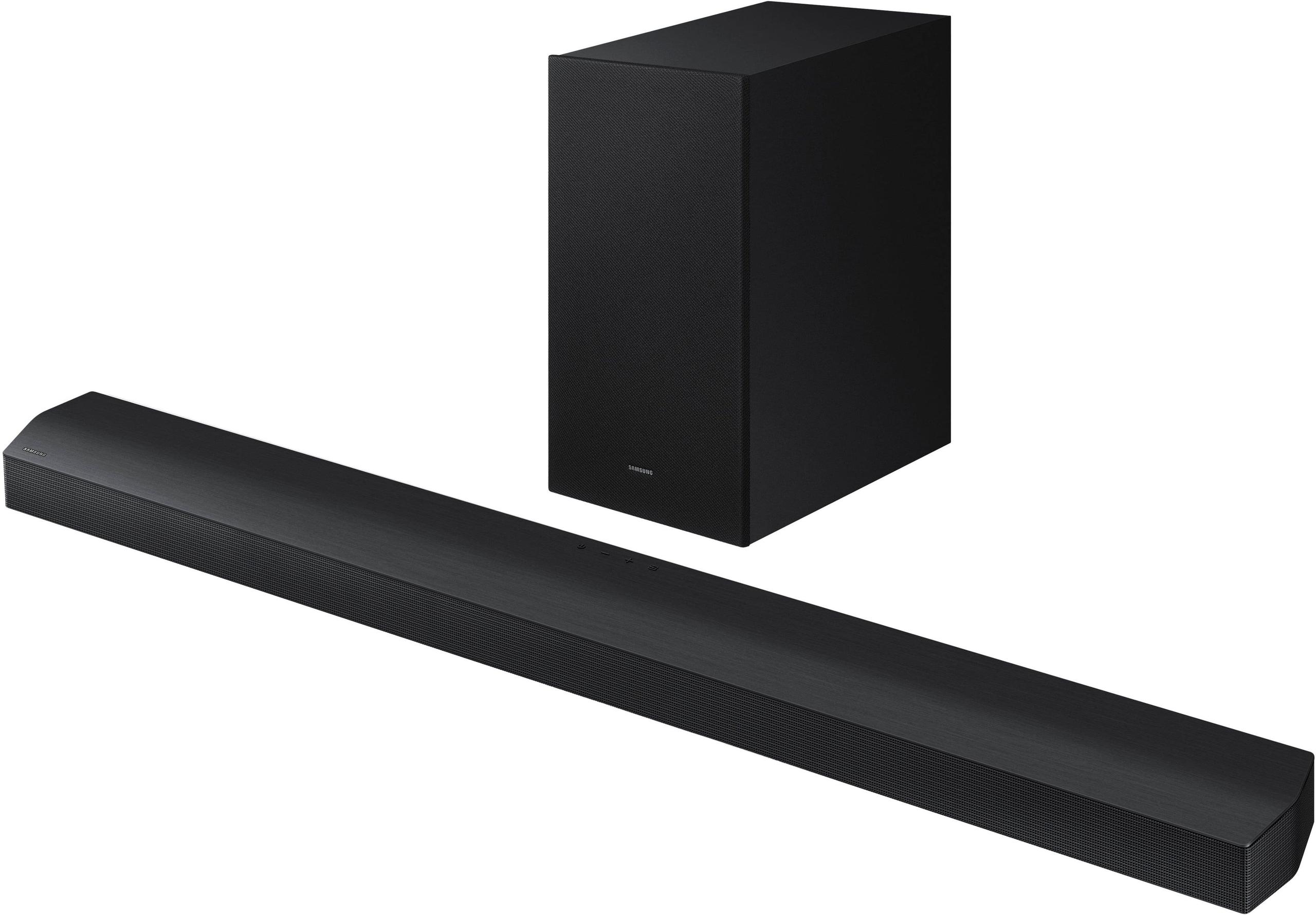
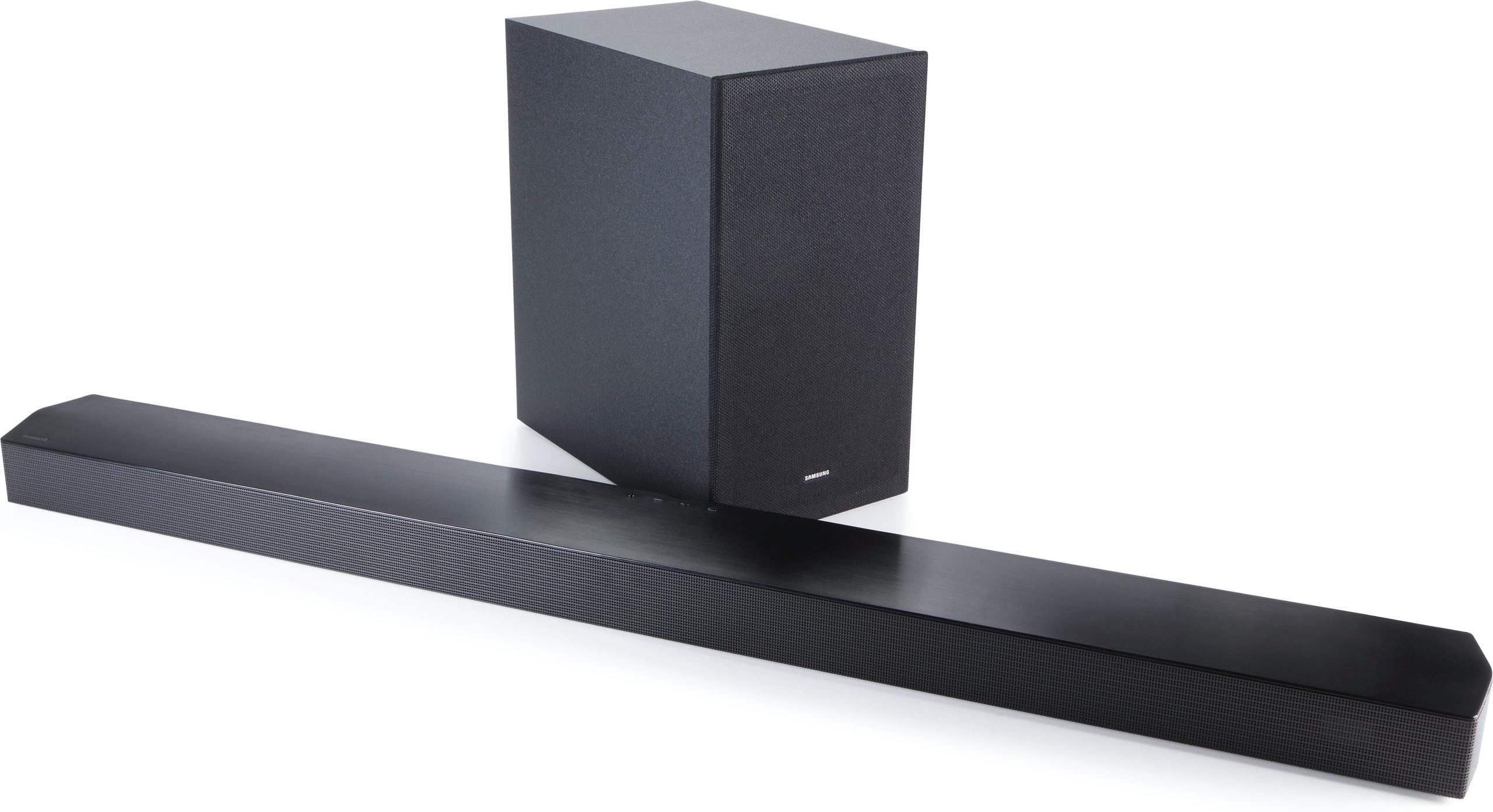







If you've been watching movies on your flat-screen TV and thinking "something's missing from this experience," you're absolutely right. Modern TVs, despite their stunning picture quality, often have terrible built-in speakers. They're thin, face backward, and simply can't move enough air to create convincing sound. That's where soundbars come in—they're designed to transform your audio experience without the complexity of a full surround sound system.
But here's where it gets interesting: not all soundbars approach this problem the same way. Today, we're comparing two very different philosophies represented by the Samsung B-Series 5.1 Channel Soundbar with Subwoofer at $228 and the LG SC9S 3.1.3 Channel Dolby Atmos Soundbar at $516. These aren't just different price points—they represent fundamentally different approaches to home audio.
Before diving into specifics, let's talk about what makes a good soundbar and why these two take such different approaches. The soundbar market has evolved dramatically over the past few years, splitting into two main camps: traditional channel-based systems and newer object-based audio systems.
Traditional systems like the Samsung work with channels—think of them as lanes of audio. A 5.1 system has five main channels (left, center, right, left surround, right surround) plus one subwoofer channel (the ".1"). This approach has worked well for decades because it's predictable and works with virtually all content.
Object-based audio systems like the LG's Dolby Atmos take a completely different approach. Instead of assigning sounds to specific channels, they treat sounds as objects that can be placed anywhere in a three-dimensional space around you. This means a helicopter in a movie doesn't just move from left to right—it can actually sound like it's flying overhead.
The key considerations when choosing between these approaches include your room size, content preferences, budget, and how much you value having the latest audio technology. Some people are perfectly happy with clear dialogue and good bass, while others want to feel completely immersed in their entertainment.
The Samsung B-Series represents a 2025 refresh of Samsung's entry-level soundbar lineup. Samsung released this model to compete directly with budget-conscious consumers who want a significant audio upgrade without breaking the bank. Since the original B-Series launched in 2022, Samsung has refined the processing algorithms, improved the wireless subwoofer connection stability, and enhanced their Q-Symphony technology that lets the soundbar work together with Samsung TV speakers.
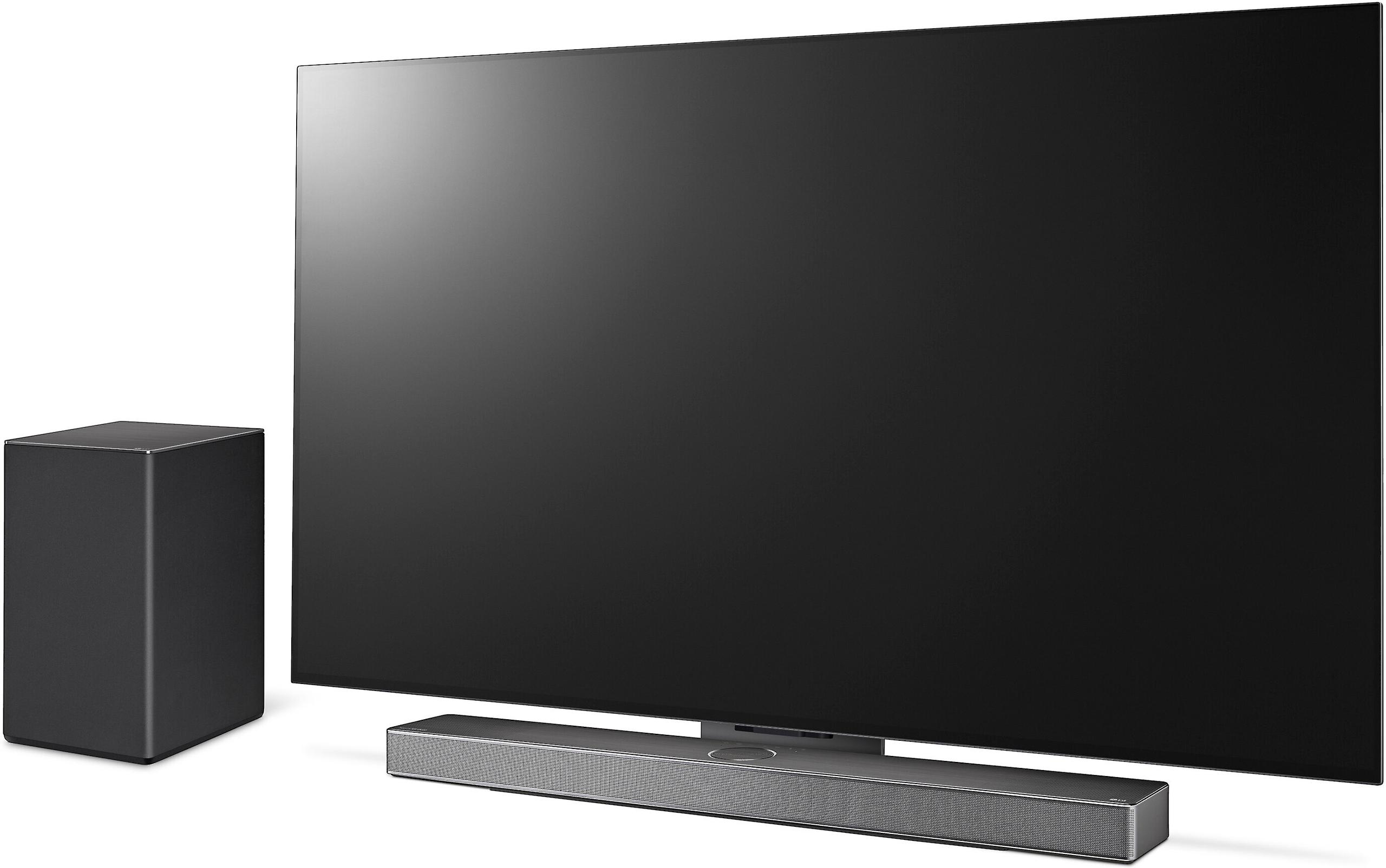
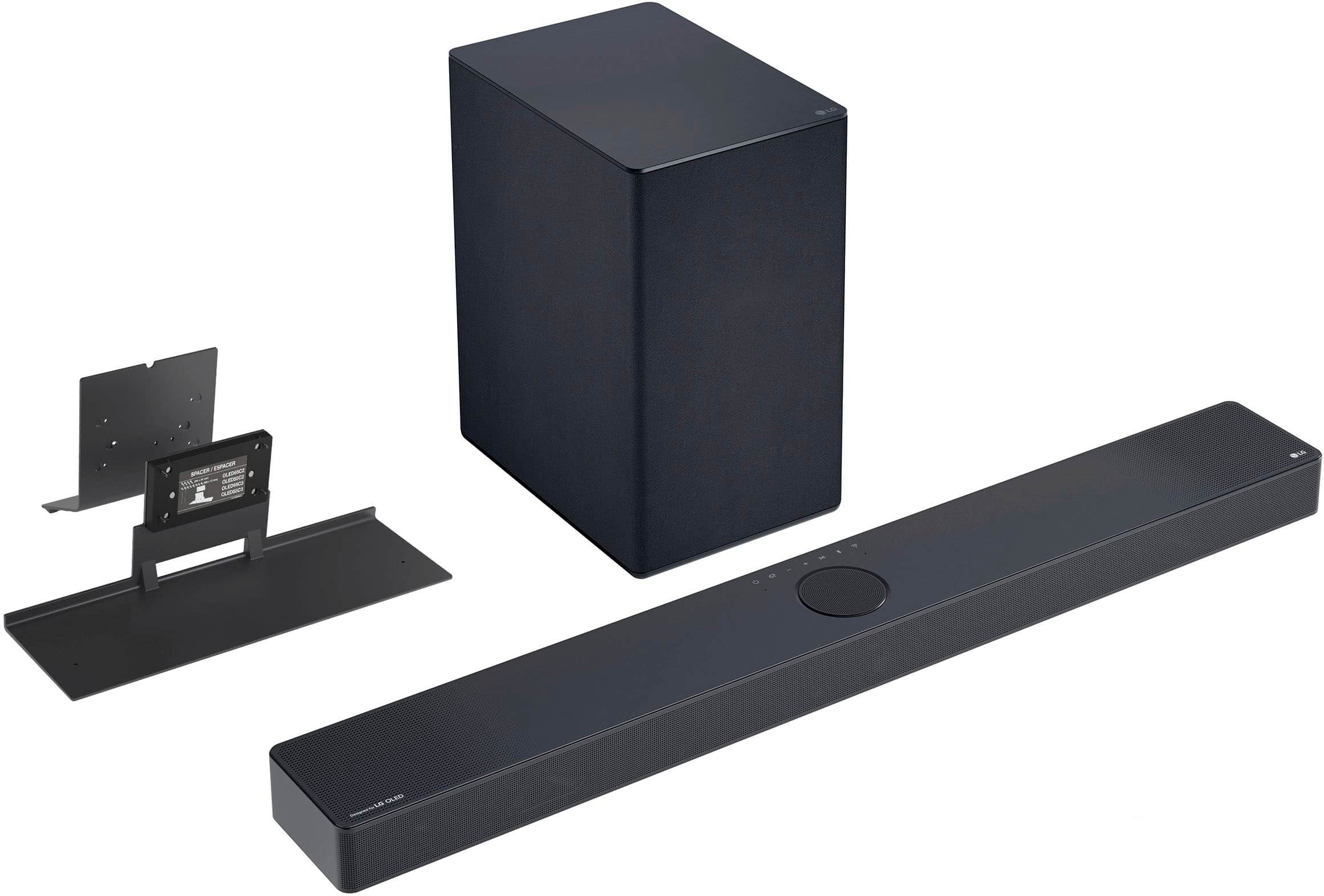
The LG SC9S, launched in 2023, represents LG's push into the premium soundbar market. This wasn't just an incremental update—LG completely redesigned their approach to Dolby Atmos processing and introduced their AI Room Calibration Pro technology. Since its release, firmware updates have improved the room calibration accuracy and added better integration with LG's latest TV models.
What's particularly interesting is how these release timelines reflect each company's strategy. Samsung focused on perfecting their value proposition, while LG invested heavily in premium features and future-proofing.
The most fundamental difference between these soundbars lies in how they create surround sound. The Samsung B-Series uses what's called "virtual surround processing." This means it takes regular stereo or 5.1 audio and uses digital signal processing (DSP) to trick your brain into thinking sounds are coming from places where there aren't actually speakers.
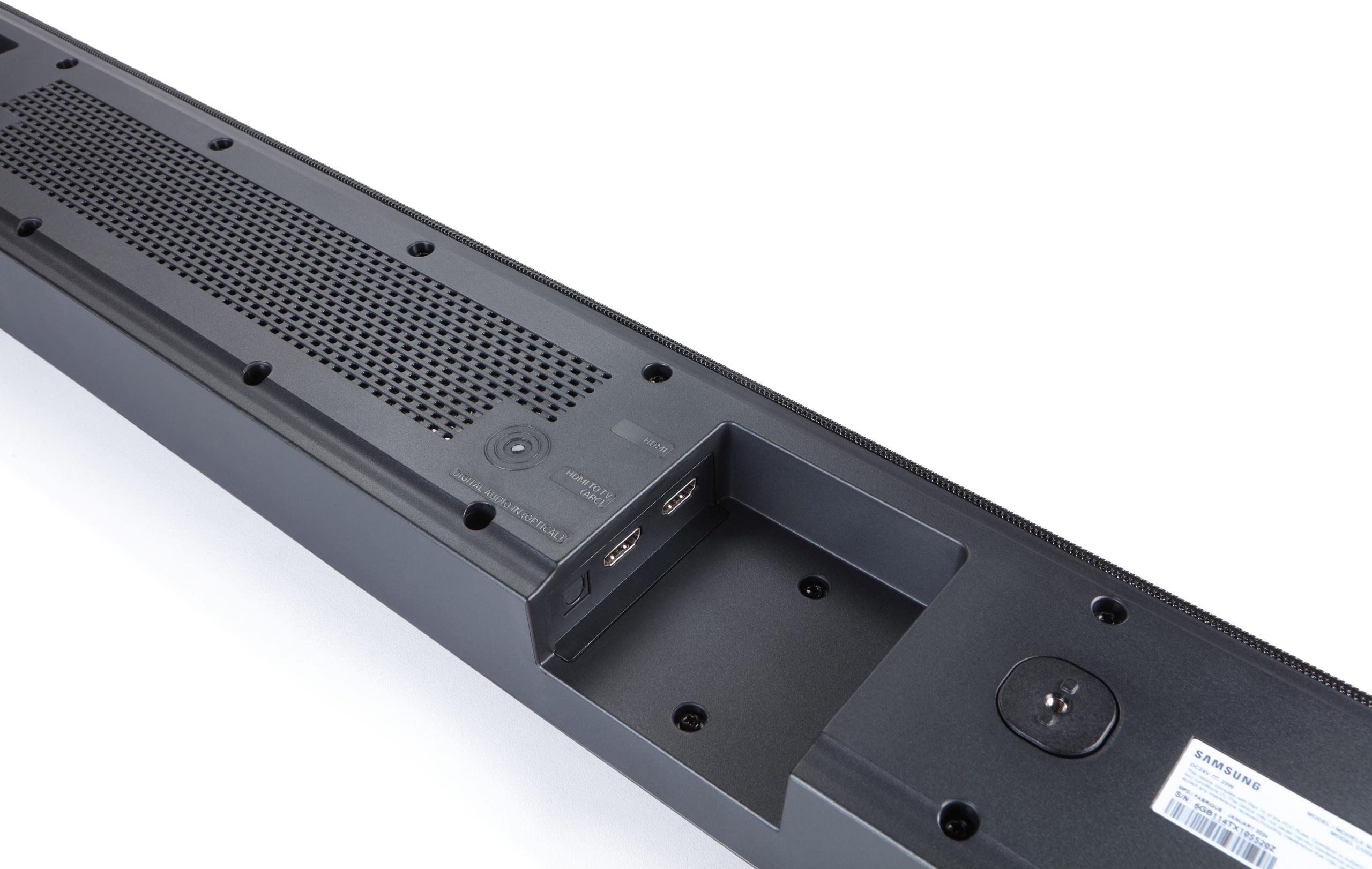
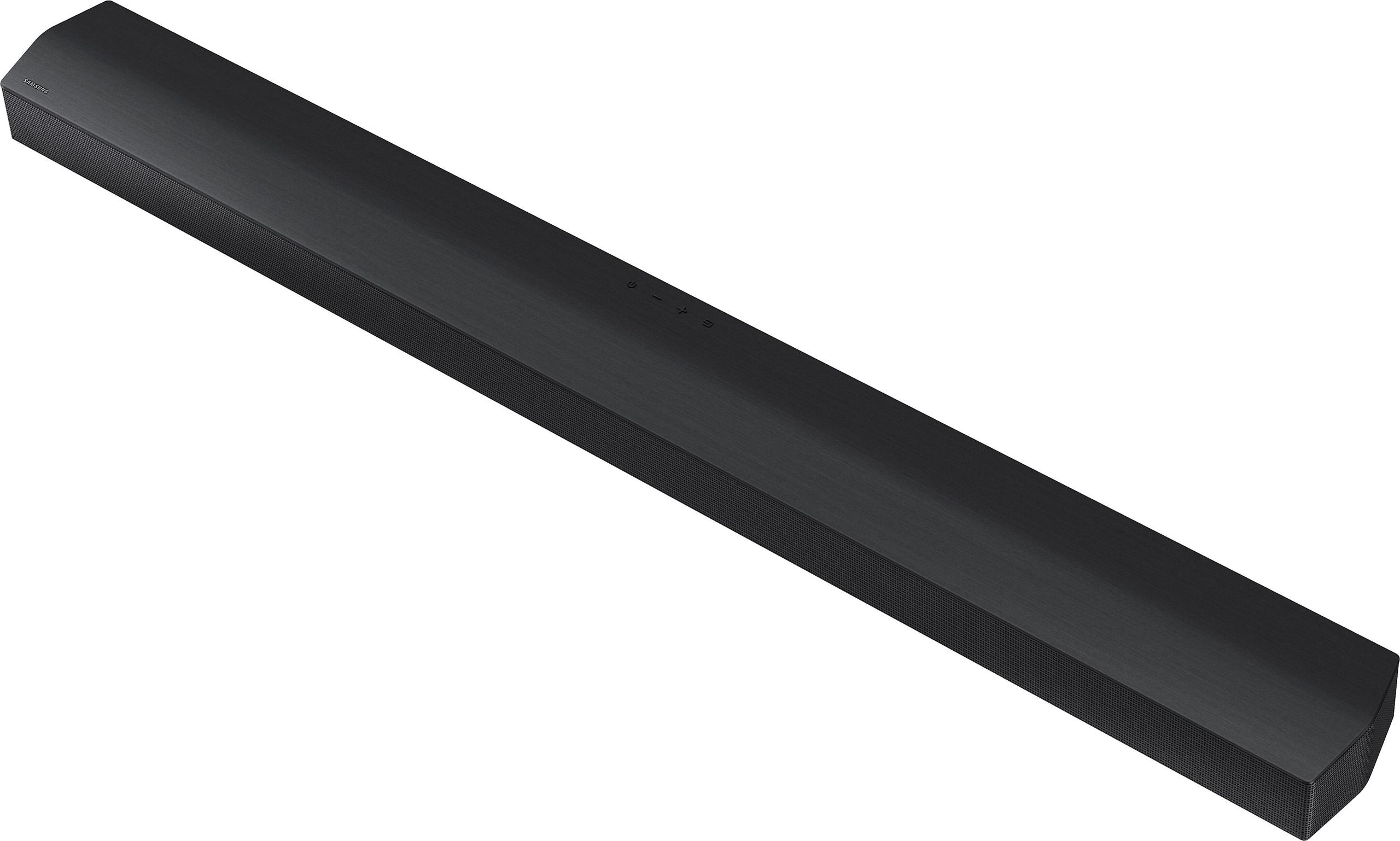
The Samsung achieves this through side-firing speakers built into the main soundbar unit. These fire sound toward your walls, which then reflects back to create the illusion of surround speakers behind you. It's surprisingly effective, especially in rooms with good wall surfaces for reflection. I've tested this approach in several different room setups, and while it doesn't match dedicated rear speakers, it creates a noticeably wider soundstage than just having front-facing speakers.
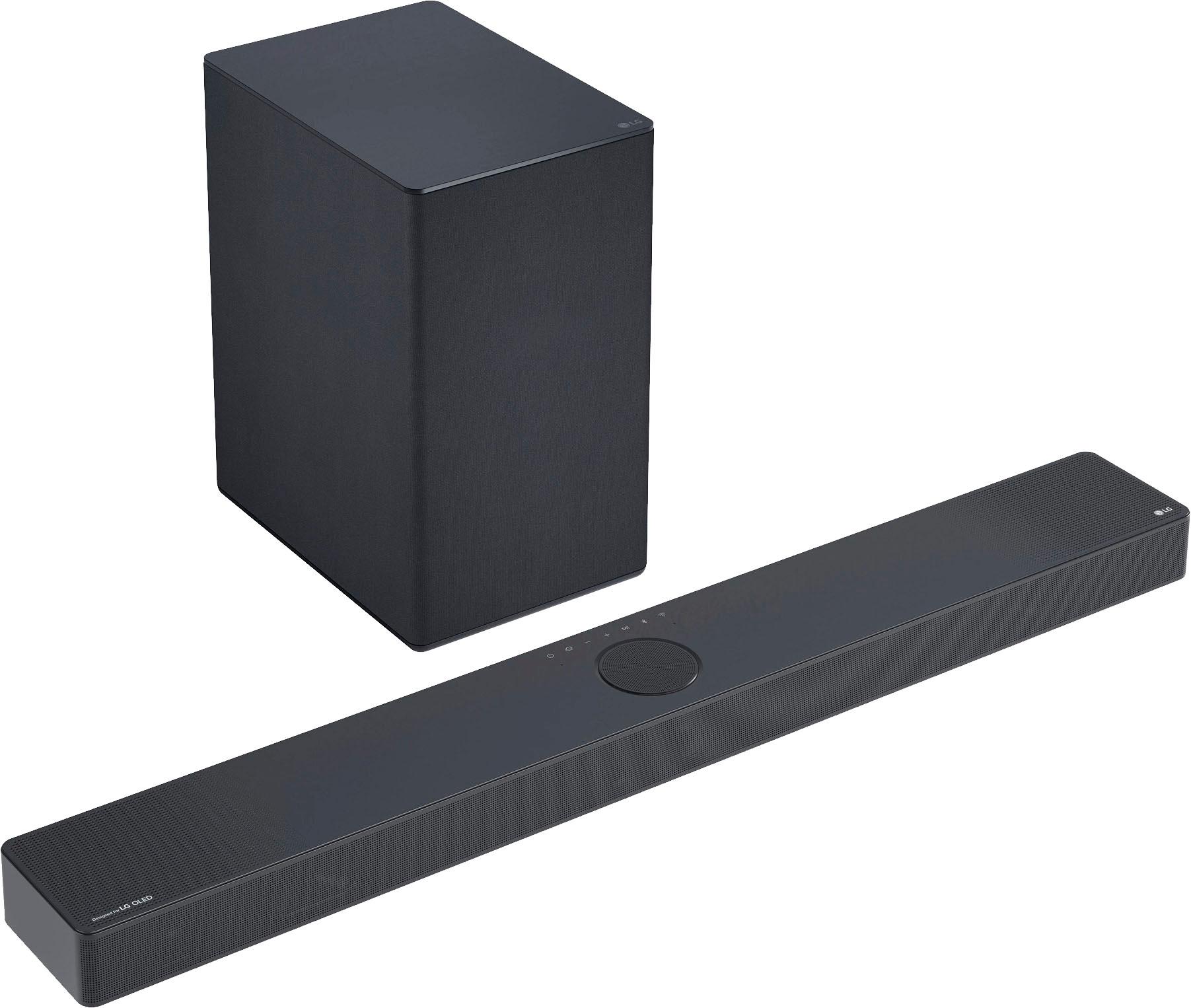
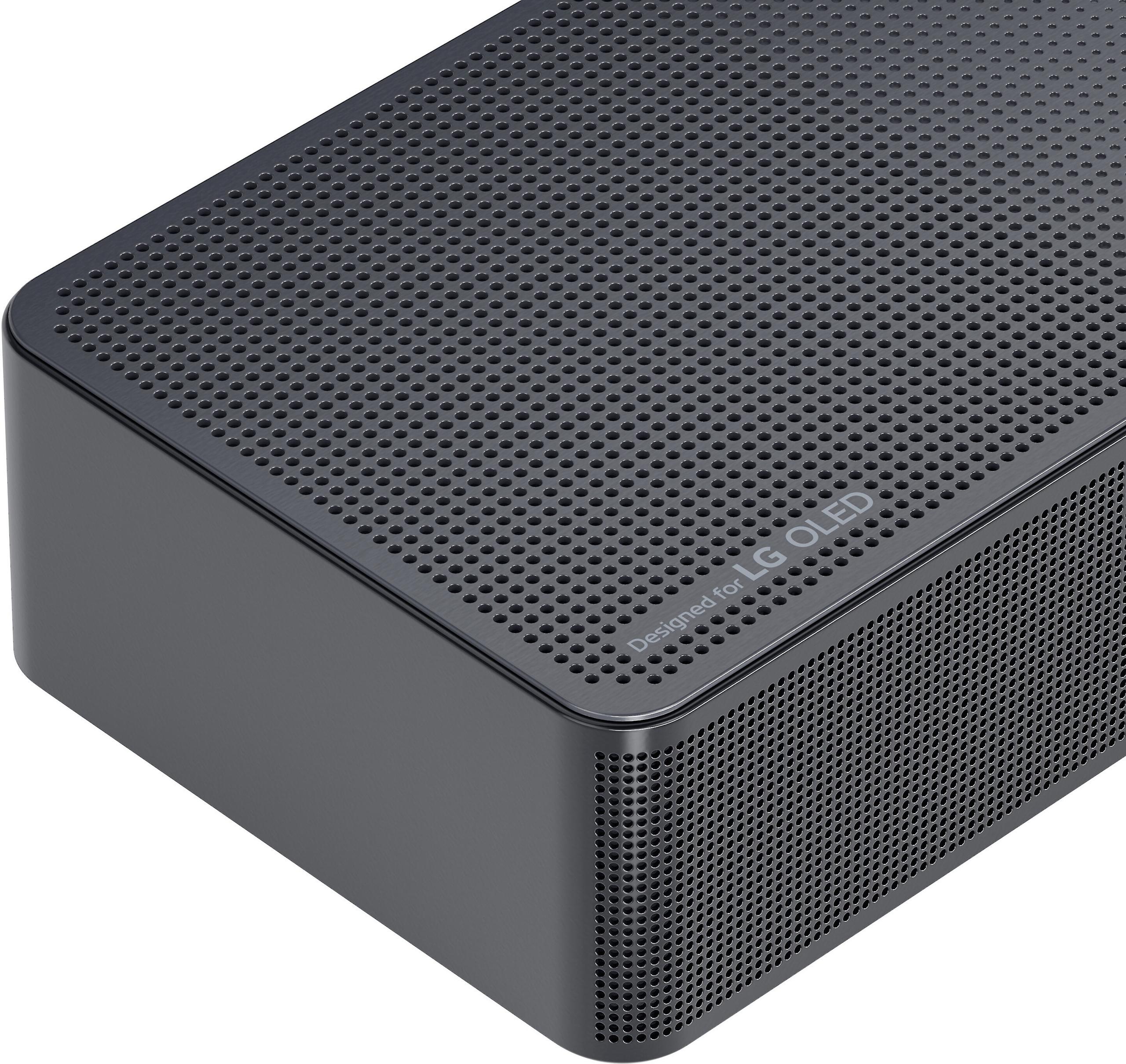
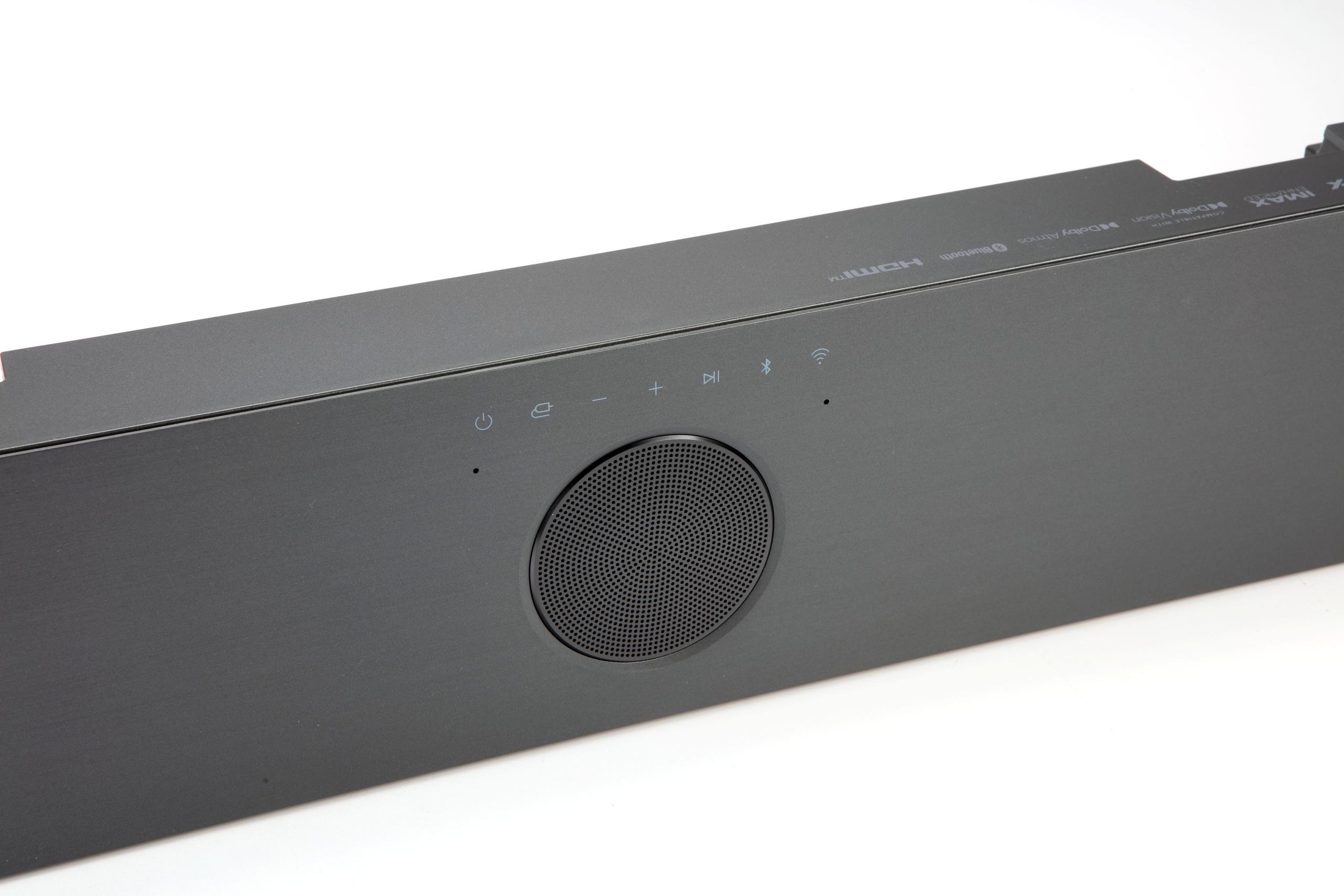
The LG takes a completely different approach with its 3.1.3 configuration. Those three up-firing speakers on top of the soundbar are the key to its Dolby Atmos capabilities. They fire sound directly at your ceiling, which reflects down to create genuine overhead audio effects. This isn't virtual processing—there's actually sound coming from above you.
What makes this particularly impressive is that the LG includes a dedicated up-firing center channel. Most soundbars with Atmos only have up-firing left and right channels, but LG added that third up-firing speaker specifically for dialogue that's supposed to come from overhead. This might sound like a small detail, but it makes a huge difference when watching movies where characters are talking from different floors of a building or when there's narration that's meant to feel omnipresent.
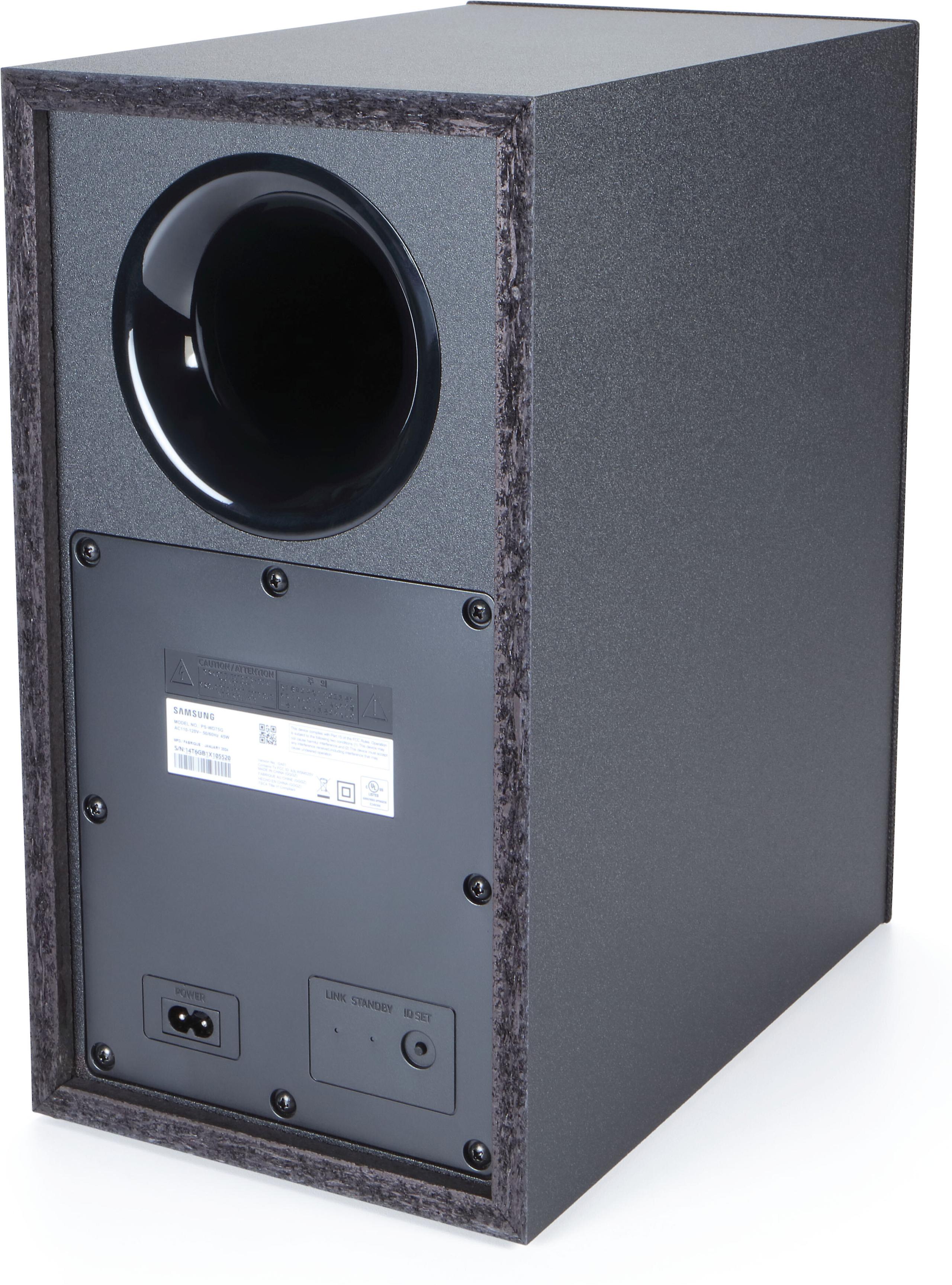
Both soundbars include wireless subwoofers, but they approach bass reproduction differently. The Samsung's subwoofer is tuned for consistency and broad appeal. It includes a Bass Boost mode that adds extra punch when you want it, but the default tuning aims for balanced bass that works well across different content types. In my experience, this approach works particularly well for dialogue-heavy content where you don't want the bass overwhelming speech clarity.
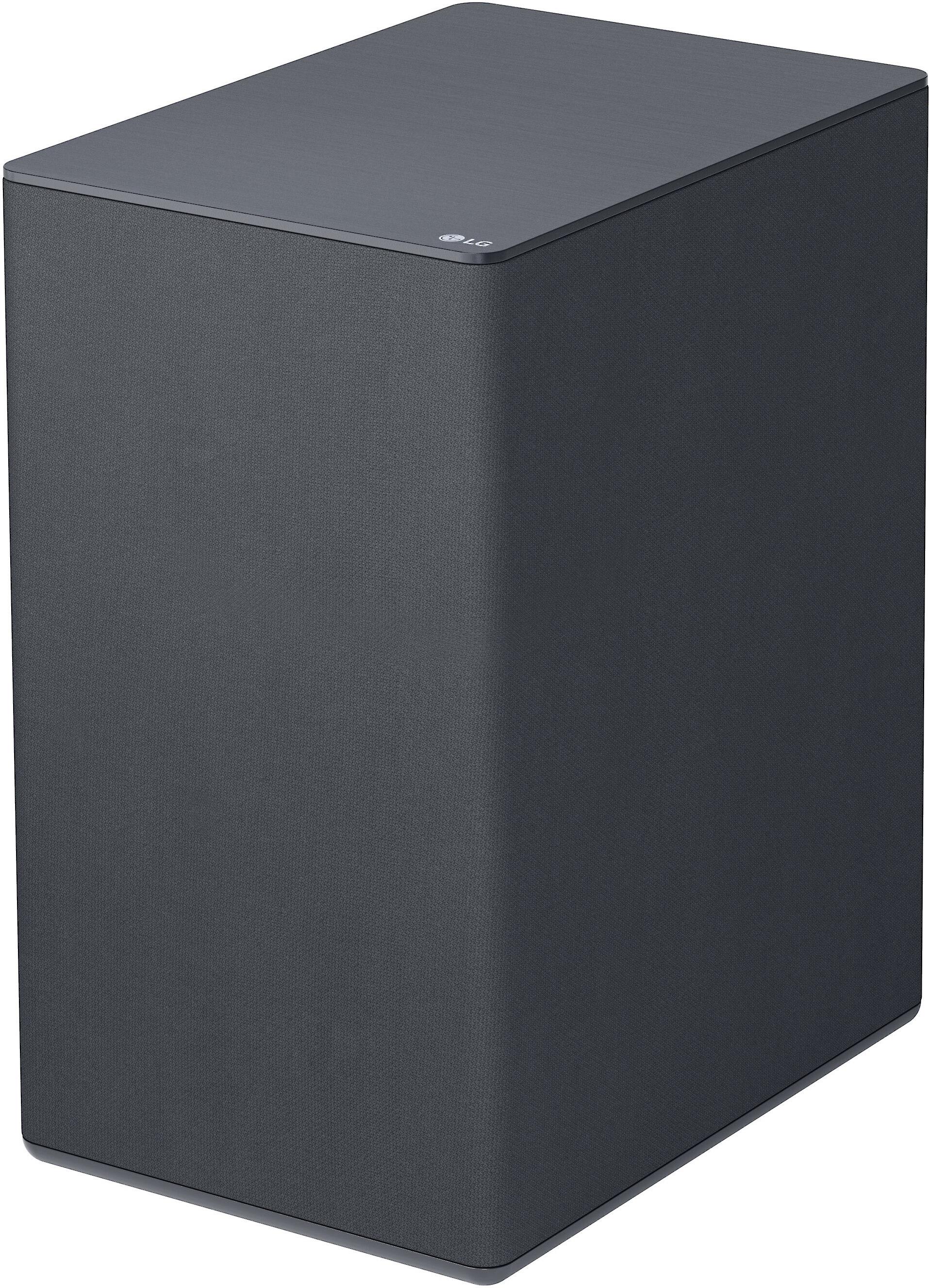
The LG's subwoofer is larger and more powerful, but here's where things get interesting—it's designed to work with the soundbar's AI Room Calibration Pro feature. This system actually analyzes your room's acoustics and adjusts not just the subwoofer's output, but how it integrates with the main soundbar speakers.
In practice, this means the LG can sound dramatically different in different rooms, while the Samsung sounds more consistent regardless of placement. I've found the LG particularly impressive in larger rooms where its room correction can really show off, but some users in smaller spaces find the bass overwhelming until the system properly calibrates.
Let's be honest—most of the time, you just want to hear what people are saying clearly. Both soundbars excel here, but through different methods.
The Samsung's Voice Enhance mode uses traditional EQ adjustments to boost the frequency ranges where most human speech occurs. It's straightforward and effective. The dedicated center channel in the 5.1 setup means dialogue comes from a specific location, creating that "voices coming from the screen" effect that makes movies feel more natural.
The LG's approach is more sophisticated but also more variable. Its Clear Voice Plus technology doesn't just boost speech frequencies—it analyzes the audio stream in real-time and can separate dialogue from background effects. When this works well, it's genuinely impressive. You can have explosions happening while still clearly hearing whispered conversations. However, this processing is more complex and sometimes creates slight delays or artifacts that some viewers notice.
Here's where the technology gap between these soundbars becomes most apparent. The Samsung's Adaptive Sound feature analyzes what type of content you're watching and applies appropriate processing. Watching the news? It emphasizes dialogue clarity. Action movie? It enhances dynamic range and surround effects. This happens automatically and works with any audio source.
The LG SC9S takes this concept much further with AI Room Calibration Pro. When you first set it up, the soundbar actually uses built-in microphones to analyze your room's acoustics. It measures how sound reflects off your walls, ceiling, and furniture, then creates a custom audio profile for your specific space.
This is genuinely impressive technology, but it comes with trade-offs. The LG sounds significantly better after calibration, but the process takes several minutes and needs to be redone if you move furniture around. The Samsung sounds good right out of the box and doesn't require any special setup.
Both companies have developed technologies that make their soundbars work better with their own TVs. Samsung's Q-Symphony allows compatible Samsung TVs to use both their built-in speakers and the soundbar speakers simultaneously. Instead of the TV speakers shutting off when you connect a soundbar, they work together to create more audio channels and a fuller sound.
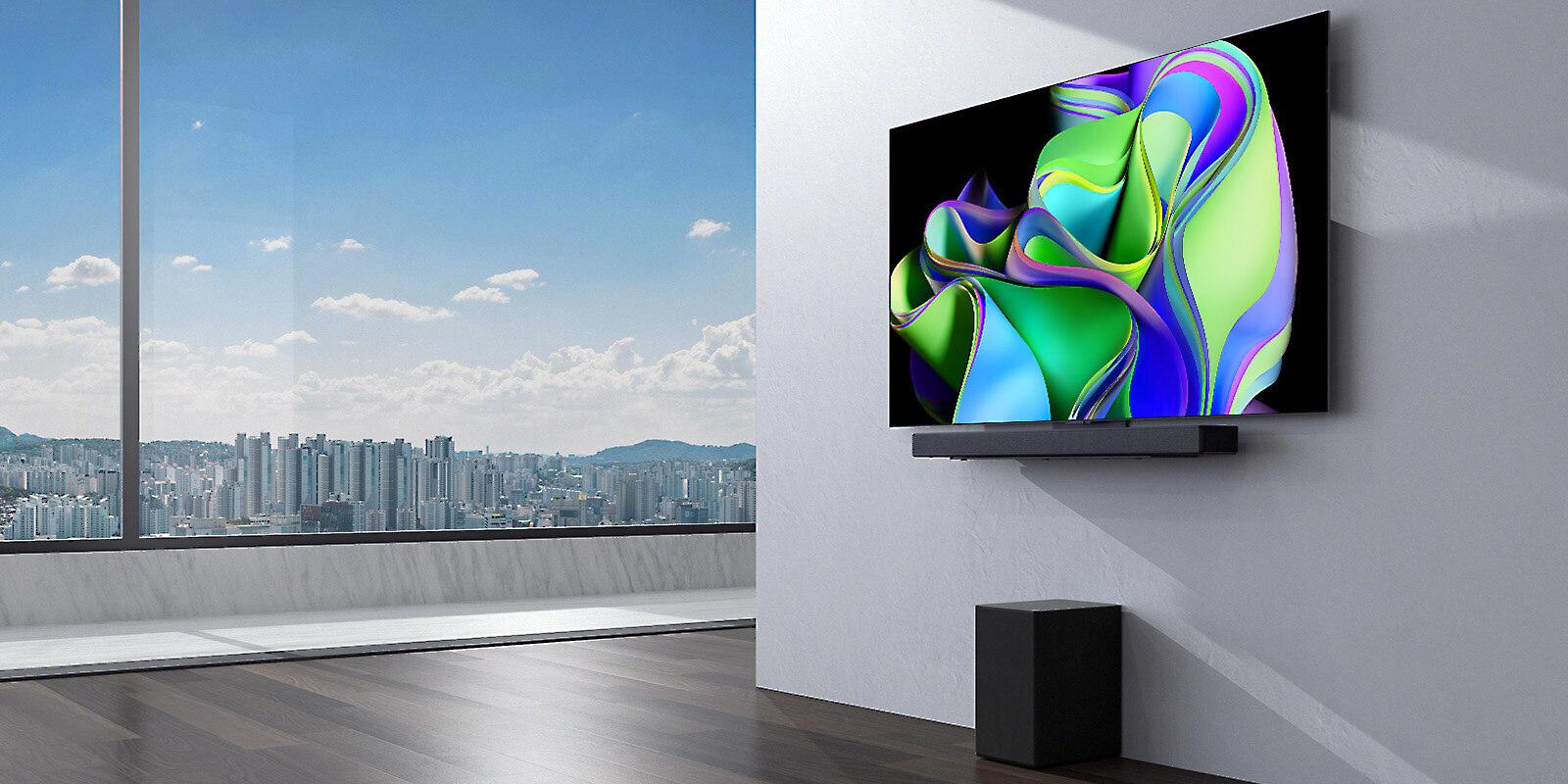
LG's WOW Orchestra does something similar with LG TVs. The difference is in the implementation—Samsung focuses on using the TV speakers to enhance the soundbar's surround effects, while LG uses them more for overall volume and presence.
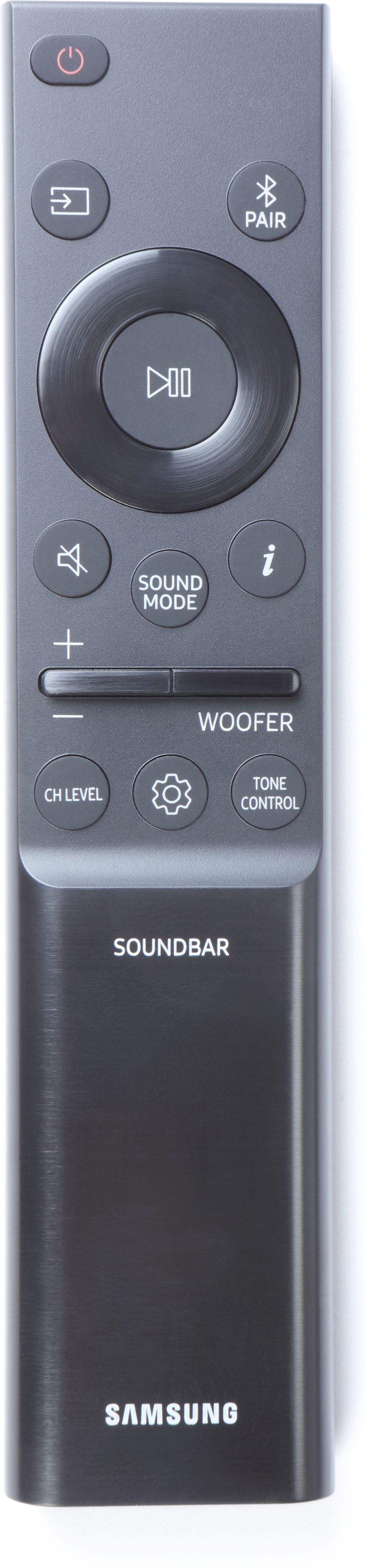
If you own a TV from either brand, this integration can make a noticeable difference. However, both soundbars work perfectly well with any TV brand through standard HDMI or optical connections.
The Samsung uses traditional DSP algorithms that have been refined over years of development. When you feed it a Dolby Digital 5.1 signal, it knows exactly what to do with each channel and processes them predictably. This consistency means you get reliable performance across all content types.
The LG's processing is more complex because it handles object-based audio formats like Dolby Atmos and DTS:X. These formats don't just tell the soundbar "play this sound on the left channel"—they include metadata about where sounds should be positioned in 3D space. The soundbar then has to figure out how to recreate that positioning using its available speakers.
This creates some interesting scenarios. When playing regular stereo content, the LG has to "upmix" it to take advantage of all its speakers. Sometimes this creates a more immersive experience, but it can also make familiar content sound different than you're used to.
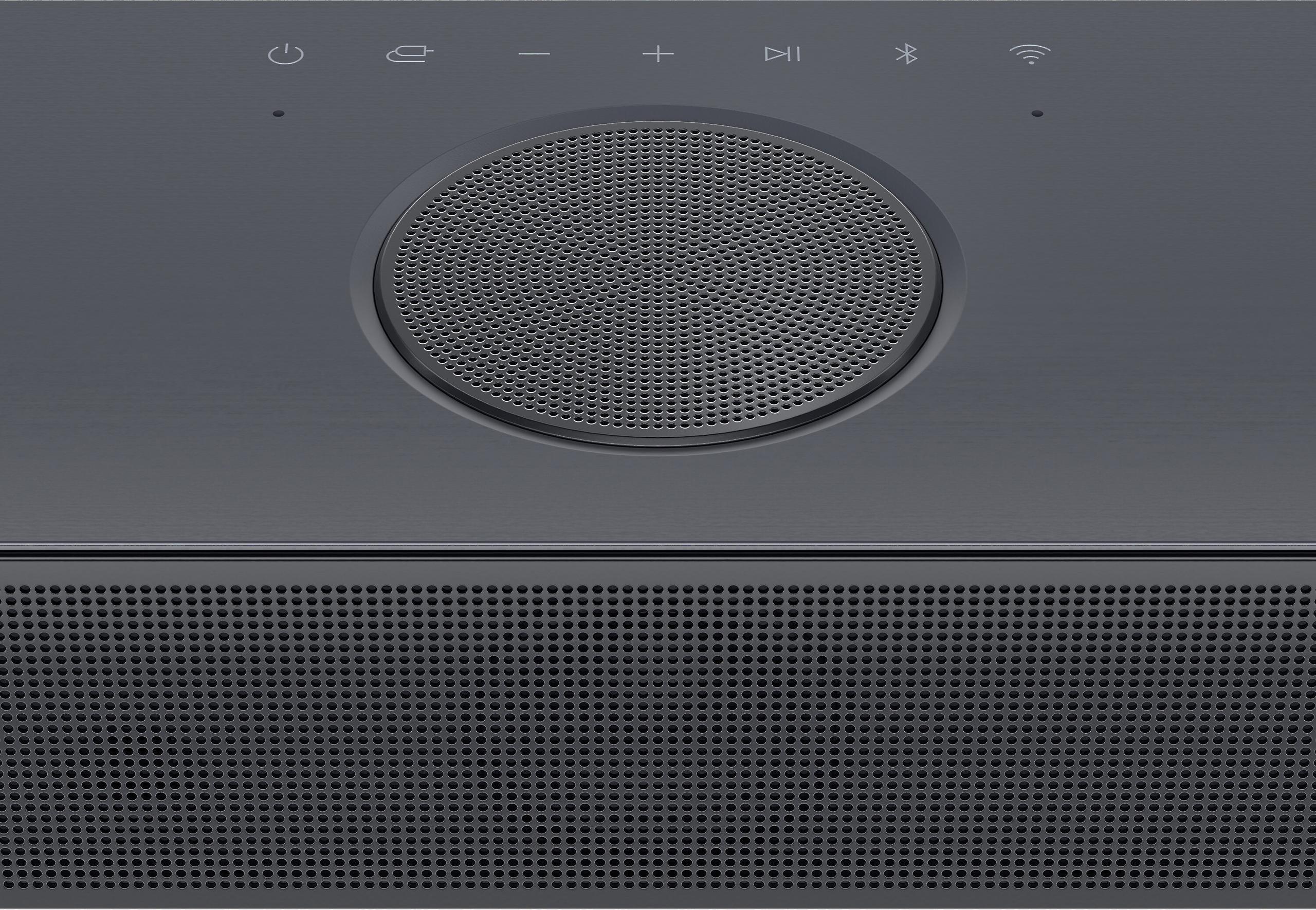
Both soundbars include HDMI ARC (Audio Return Channel) support, which means they can receive audio from your TV through the same HDMI cable and be controlled by your TV remote. However, the LG also supports HDMI eARC (enhanced Audio Return Channel), which can handle higher-quality audio formats including full-resolution Dolby Atmos.
This might seem like a small detail, but it matters for future-proofing. As streaming services continue to add more high-quality audio content, having eARC support ensures you'll be able to take advantage of it.
In a dedicated home theater setting, the differences between these soundbars become more pronounced. The Samsung B-Series works best in smaller to medium-sized rooms where its virtual surround processing can effectively use wall reflections. It's particularly good for mixed-use spaces where you might watch everything from news to action movies.
The LG shines in larger rooms and with content specifically mastered for Dolby Atmos. If you're someone who seeks out 4K Blu-rays or subscribes to streaming services specifically for their high-quality audio content, the LG's capabilities become much more relevant.
However, there's an important consideration: most people significantly underestimate how much of their viewing time involves Atmos content. While Netflix, Disney+, and other services are adding more Atmos titles, the majority of TV shows, news, and older movies don't benefit from the LG's advanced processing.
At $228, the Samsung represents exceptional value for what it delivers. You're getting clear dialogue enhancement, decent bass, and a significantly wider soundstage than any TV can provide. For many users, this covers 90% of what they want from a soundbar upgrade.
The LG SC9S at $516 costs more than twice as much, but it's delivering genuinely advanced technology. The question becomes whether that technology matters for your specific use case. If you regularly watch Atmos content and have a room that can take advantage of overhead audio effects, the price difference can be justified.
There's also the expansion consideration. LG offers optional rear speakers that can turn the SC9S into a full surround system, while Samsung's expansion options are more limited. If you think you might want to build a more complete system over time, the LG provides a clearer upgrade path.
The choice between these soundbars ultimately comes down to matching the technology to your actual needs and preferences. If you primarily watch TV shows, news, and older movies, the Samsung's strengths in dialogue clarity and consistent performance make it an excellent choice. The money you save can go toward other aspects of your entertainment setup.
If you're someone who gets excited about the latest movie releases, enjoys gaming with high-quality audio, or simply wants the most immersive audio experience possible, the LG's advanced features justify the higher price. The AI room calibration alone can make a dramatic difference in challenging acoustic environments.
Consider your TV as well. If you own a Samsung or LG TV, the ecosystem benefits of matching brands provide real value. But don't let brand loyalty override the fundamental question of which approach to audio reproduction makes more sense for your space and preferences.
The Samsung B-Series delivers remarkable value and will satisfy most users' needs for clear, engaging audio. The LG SC9S represents a more premium approach that truly shines with the right content and setup. Both are excellent products—they're just designed for different users and different priorities.
| Samsung B-Series 5.1 Channel Soundbar with Subwoofer | LG SC9S 3.1.3 Channel Dolby Atmos Soundbar |
|---|---|
| Price - The biggest factor for most buyers | |
| $228 (exceptional value for core features) | $516 (premium price for advanced technology) |
| Audio Channels - Determines surround sound approach | |
| 5.1 channels (traditional left/right/center plus virtual rear) | 3.1.3 channels (3 front + 3 dedicated overhead height speakers) |
| Dolby Atmos Support - Essential for immersive overhead audio | |
| DTS Virtual:X only (simulates height effects, no true overhead sound) | Native Dolby Atmos & DTS:X (genuine 3D object-based audio) |
| Room Calibration - Adapts sound to your specific space | |
| Adaptive Sound (content-based optimization, works automatically) | AI Room Calibration Pro (measures room acoustics, creates custom profile) |
| TV Integration - Works best with matching brand TVs | |
| Q-Symphony with Samsung TVs (uses TV + soundbar speakers together) | WOW Orchestra with LG TVs (optimizes combined audio output) |
| Subwoofer - Provides the low-end bass impact | |
| Wireless subwoofer with Bass Boost mode (consistent, balanced output) | Wireless subwoofer with AI tuning (more powerful, room-adaptive) |
| Voice Enhancement - Critical for clear dialogue | |
| Voice Enhance mode with EQ optimization (reliable, straightforward) | Clear Voice Plus with real-time separation (advanced but variable) |
| Connectivity - Future-proofing and device compatibility | |
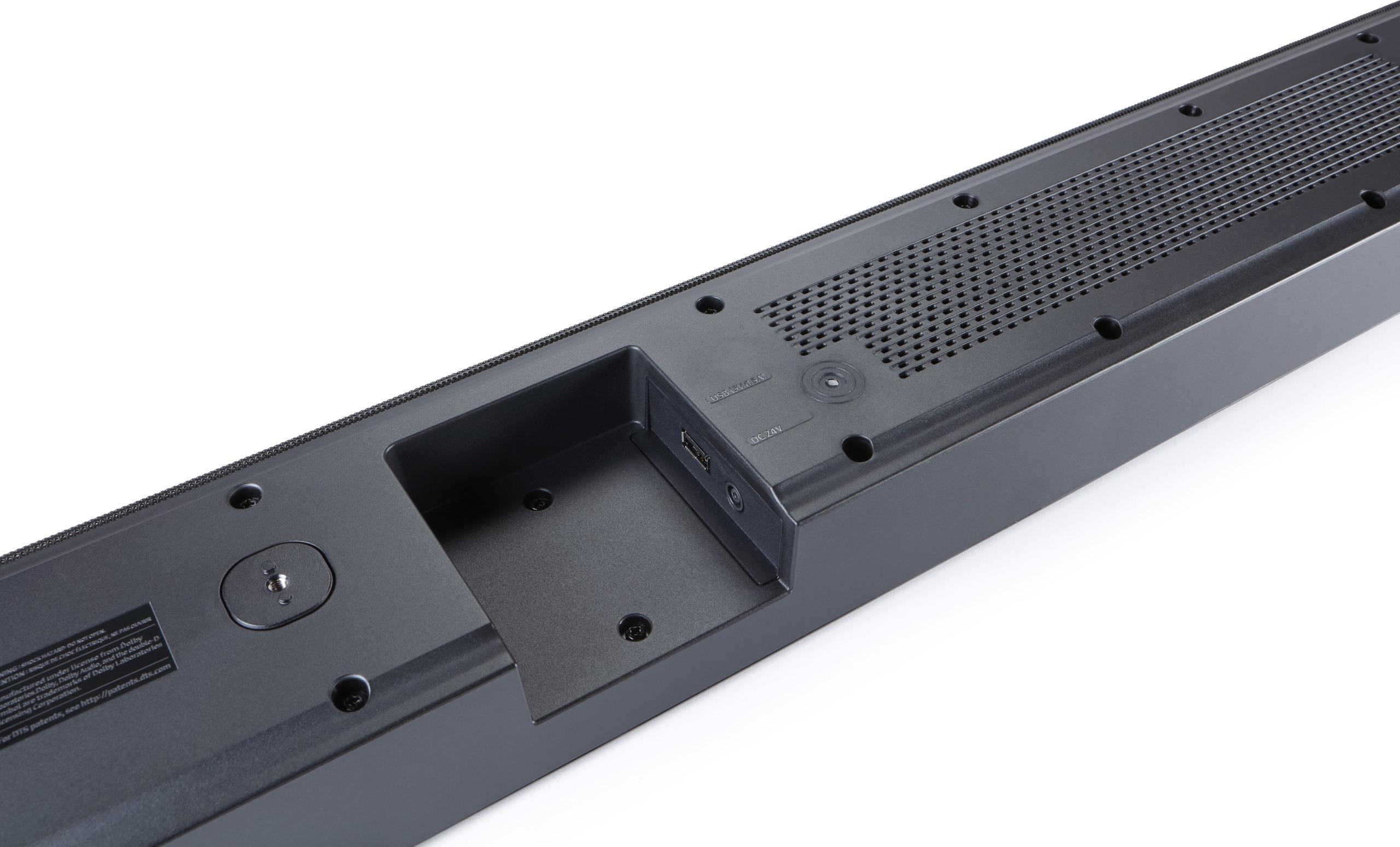
| HDMI ARC, Optical, Bluetooth 4.2, USB playback | HDMI eARC, Optical, Wi-Fi, Bluetooth, AirPlay 2, Chromecast |
| Expansion Options - Ability to add more speakers later | |
| Limited rear speaker compatibility (basic expansion) | Dedicated rear speaker kit available (full surround upgrade path) |
| Best For - Target user and primary use cases | |
| Budget-conscious buyers wanting clear dialogue and wide soundstage | Audio enthusiasts seeking premium Atmos experience and room optimization |
The Samsung B-Series 5.1 Channel Soundbar with Subwoofer at $228 offers exceptional value for budget-conscious buyers, delivering clear dialogue and wide soundstage enhancement at half the price of premium alternatives. The LG SC9S 3.1.3 Channel Dolby Atmos Soundbar at $516 provides better value for audio enthusiasts who prioritize immersive Atmos experiences and advanced room calibration features.
The primary difference is their approach to surround sound. The Samsung B-Series uses virtual 5.1 processing with side-firing speakers to simulate surround effects, while the LG SC9S features three dedicated up-firing speakers that create genuine overhead Dolby Atmos effects by bouncing sound off your ceiling.
For home theater enthusiasts who watch Atmos-encoded movies, the LG SC9S delivers superior immersive audio with its object-based 3D sound processing. However, the Samsung B-Series provides excellent movie audio for general viewers, with clear dialogue and decent surround effects at a much lower price point.
Dolby Atmos support depends on your content preferences. If you regularly watch newer movies on Netflix, Disney+, or 4K Blu-rays, the LG SC9S with native Atmos support provides a noticeably more immersive experience. For standard TV shows and older content, the Samsung B-Series without Atmos support performs excellently.
Both include wireless subwoofers, but the LG SC9S features a larger, more powerful subwoofer with AI room tuning for deeper, more controlled bass. The Samsung B-Series offers consistent, balanced bass with a Bass Boost mode that's sufficient for most users and room sizes.
Room calibration can significantly improve audio quality in challenging spaces. The LG SC9S includes advanced AI Room Calibration Pro that measures your room's acoustics and creates a custom sound profile. The Samsung B-Series uses simpler Adaptive Sound that optimizes audio based on content type rather than room characteristics.
Both soundbars work with any TV brand, but offer enhanced features with matching brands. The Samsung B-Series provides Q-Symphony integration with Samsung TVs, using both TV and soundbar speakers simultaneously. The LG SC9S offers WOW Orchestra with LG TVs for optimized combined audio output.
The LG SC9S offers better expansion options with dedicated rear speaker kits available to create a full surround system. The Samsung B-Series has limited expansion capabilities, making it better suited for users who want a complete solution out of the box.
The Samsung B-Series is simpler to set up, working well immediately after connection with minimal configuration needed. The LG SC9S requires more initial setup time for room calibration but delivers optimized performance once properly configured for your specific space.
Both excel at dialogue clarity through different approaches. The Samsung B-Series uses Voice Enhance mode with traditional EQ optimization for reliable speech clarity. The LG SC9S employs Clear Voice Plus technology that can separate dialogue from background effects in real-time for potentially superior clarity.
The Samsung B-Series includes a dedicated Game Mode that optimizes audio for gaming with lower latency. The LG SC9S offers more immersive gaming audio through its Atmos capabilities, making it better for games that support object-based audio, though at a higher price point.
Choose the Samsung B-Series if you want excellent audio improvement on a budget, primarily watch standard TV content, or own a Samsung TV. Select the LG SC9S if you're an audio enthusiast who watches Atmos content regularly, has a challenging room layout, or plans to expand your audio system over time.
We've done our best to create useful and informative comparisons to help you decide what product to buy. Our research uses advanced automated methods to create this comparison and perfection is not possible - please contact us for corrections or questions. These are the sites we've researched in the creation of this article: bestbuy.com - abt.com - avsforum.com - crutchfield.com - camelcamelcamel.com - samsung.com - samsung.com - samsung.com - images.samsung.com - samsung.com - avblinq.avbportal.com - samsung.com - samsung.com - consumerreports.org - valueelectronics.com - youtube.com - bestbuy.com - rtings.com - costco.com - bestbuy.com - walts.com - queencityonline.com - blog.son-video.com - videoandaudiocenter.com - lg.com

Privacy Policy
Terms and Conditions - Affiliate Policy
Home Security
© Copyright 2008-2026.
11816 Inwood Rd #1211, Dallas, TX 75244