

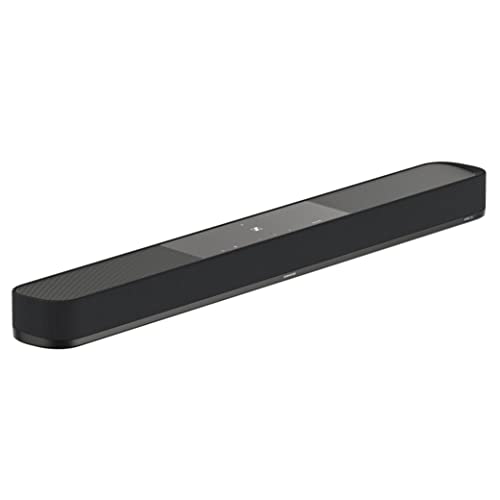

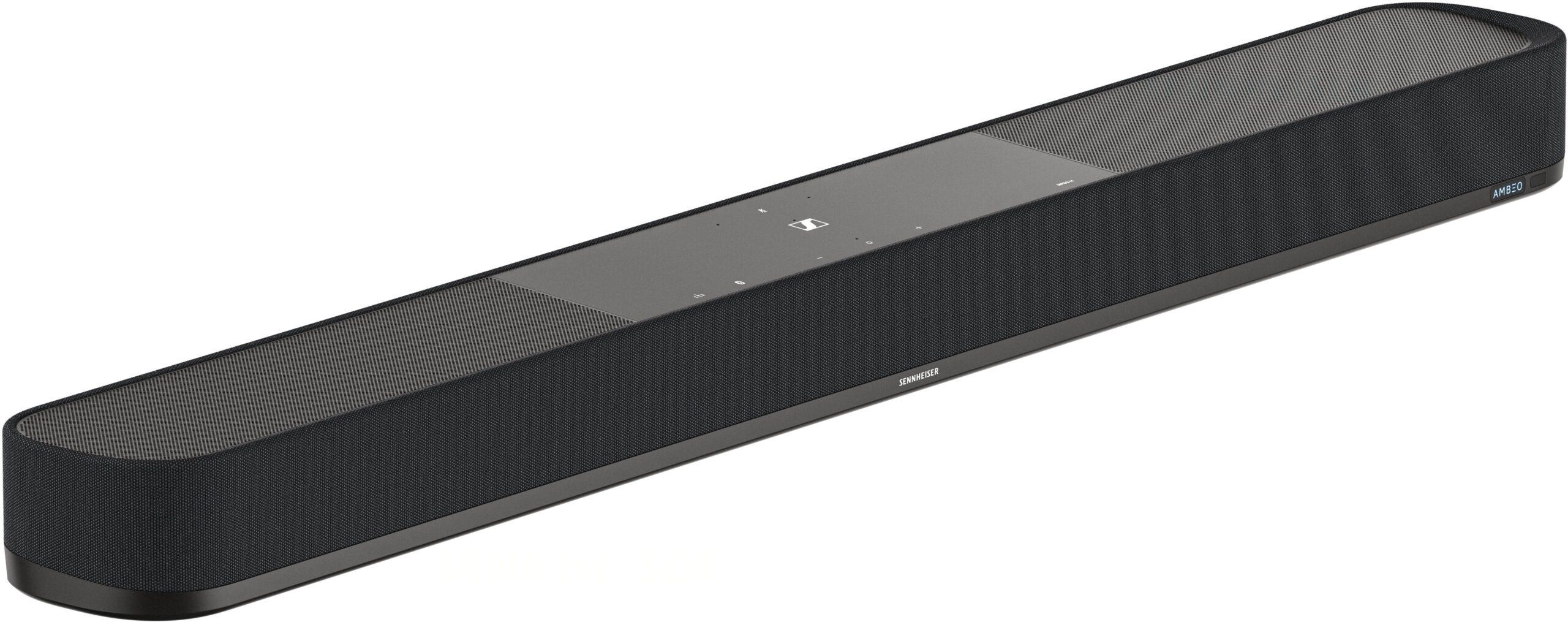

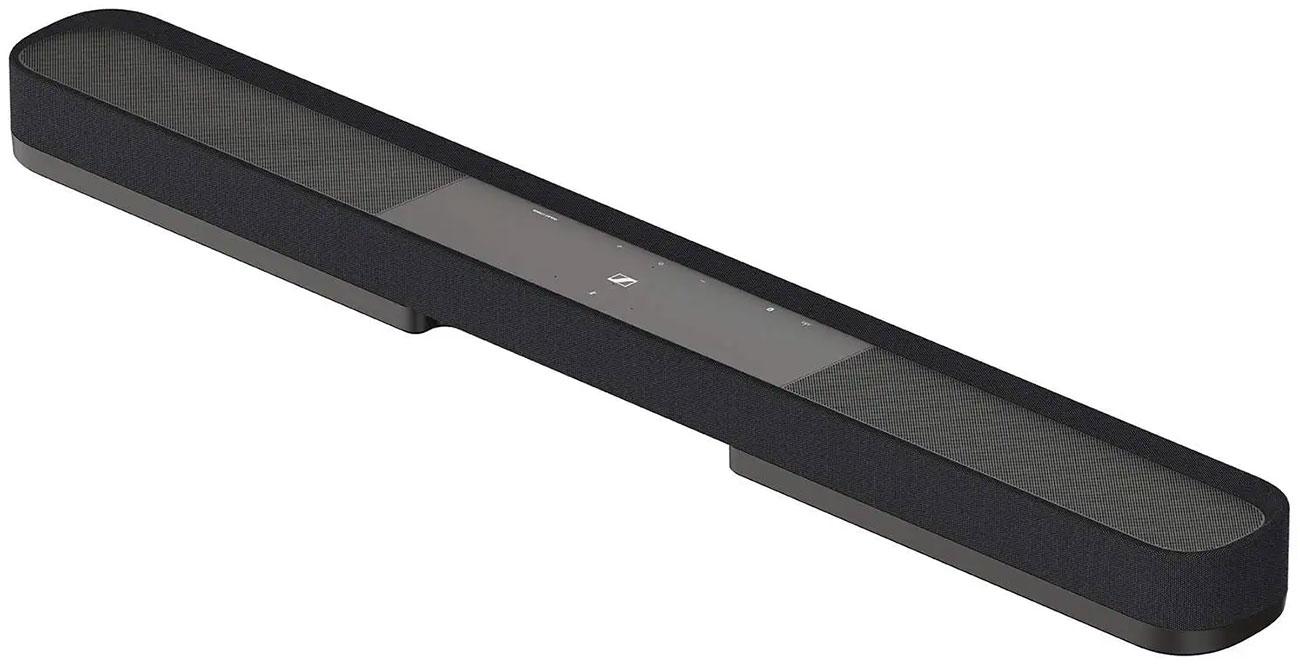
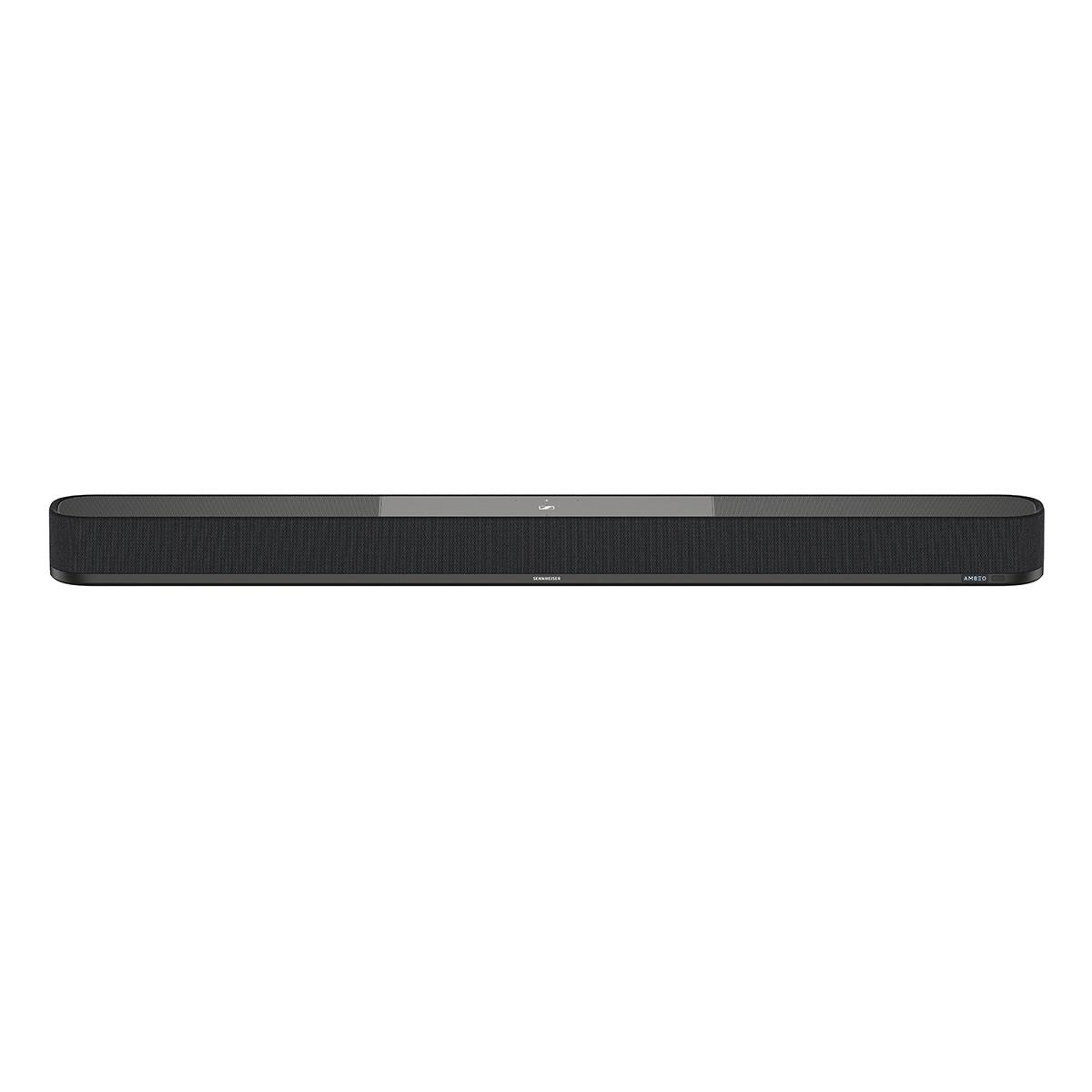
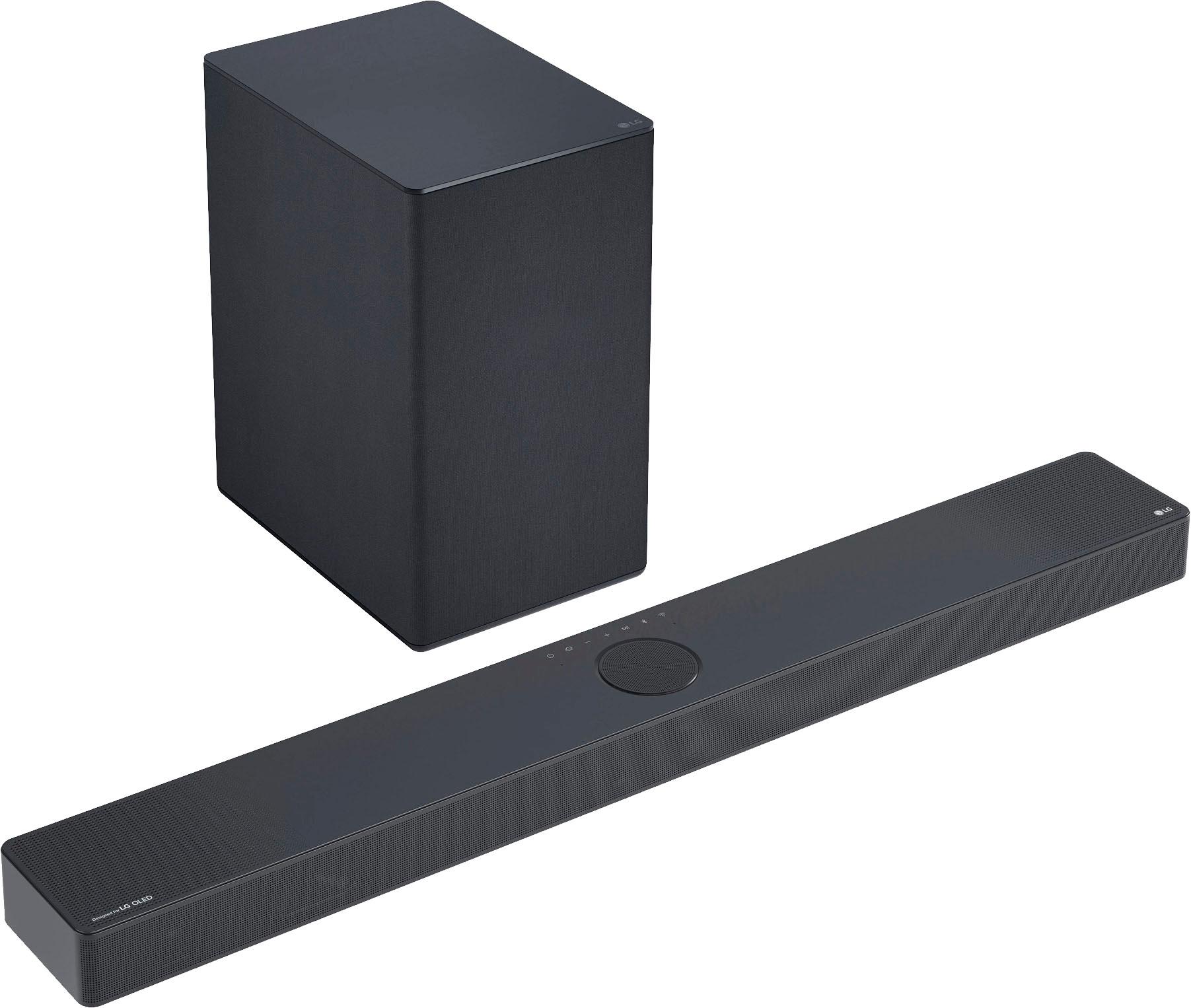


When you're ready to upgrade from your TV's built-in speakers but aren't quite prepared for a full surround sound system with speakers scattered around your room, premium soundbars offer an appealing middle ground. They promise to deliver immersive audio experiences without the complexity and space requirements of traditional home theater setups. Today, we're diving deep into two very different approaches to this challenge: the Sennheiser AMBEO Plus ($950) and the LG SC9S ($516).
Before we get into the specifics, let's talk about what separates premium soundbars from their budget counterparts. The main game-changers are immersive audio performance (how well they create that "surround sound in a room" feeling), room integration capabilities, connectivity options, and build quality. Premium models use advanced processing to make you feel like sound is coming from all directions, even though the speakers are all housed in one long bar beneath your TV.
The technology has evolved dramatically over the past few years. When I first started testing soundbars seriously around 2020, most models struggled to create convincing height effects – that sense of helicopters flying overhead or rain falling from above. Today's premium models use sophisticated digital signal processing (DSP) and strategically angled drivers to bounce sound off your ceiling and walls, creating phantom speakers that seem to exist where there are none.
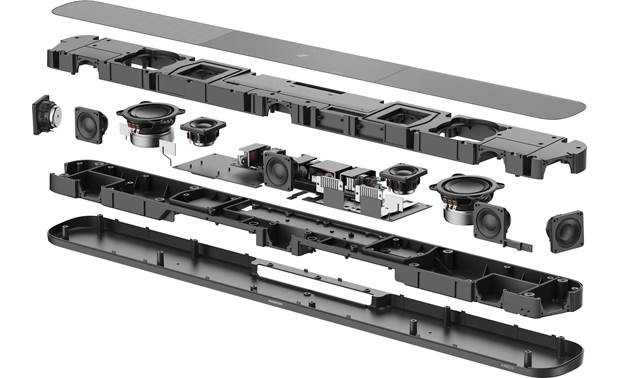
The Sennheiser AMBEO Plus, launched in 2023 as an evolution of Sennheiser's original AMBEO soundbar technology, represents the "virtualization maximalist" approach. It uses advanced computer processing to simulate a full 7.1.4-channel surround system – that means seven main speakers, one subwoofer, and four height channels – all from a single soundbar. Think of it like having a powerful computer that can make your ears believe there are speakers all around and above you, even though there aren't.
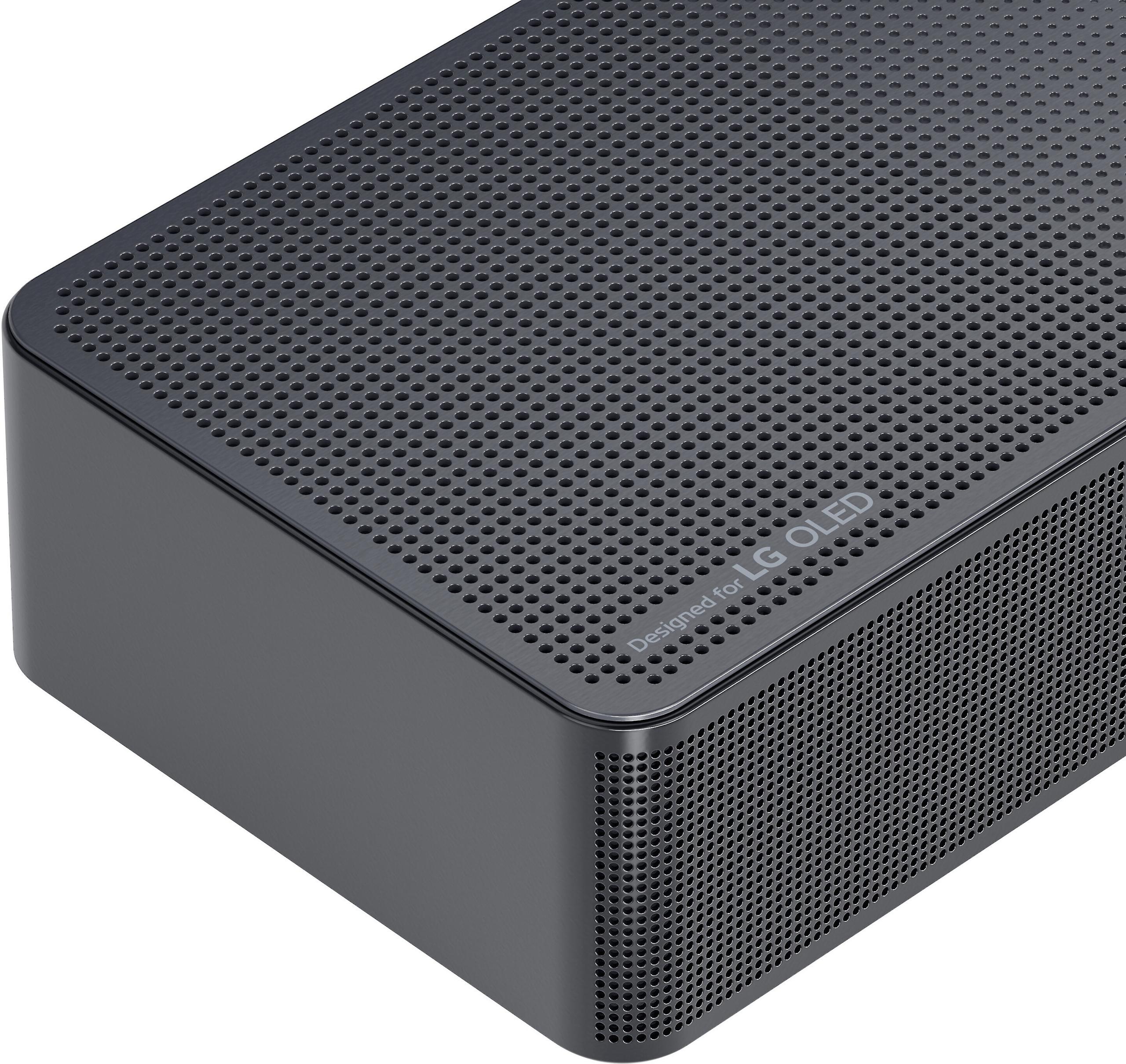
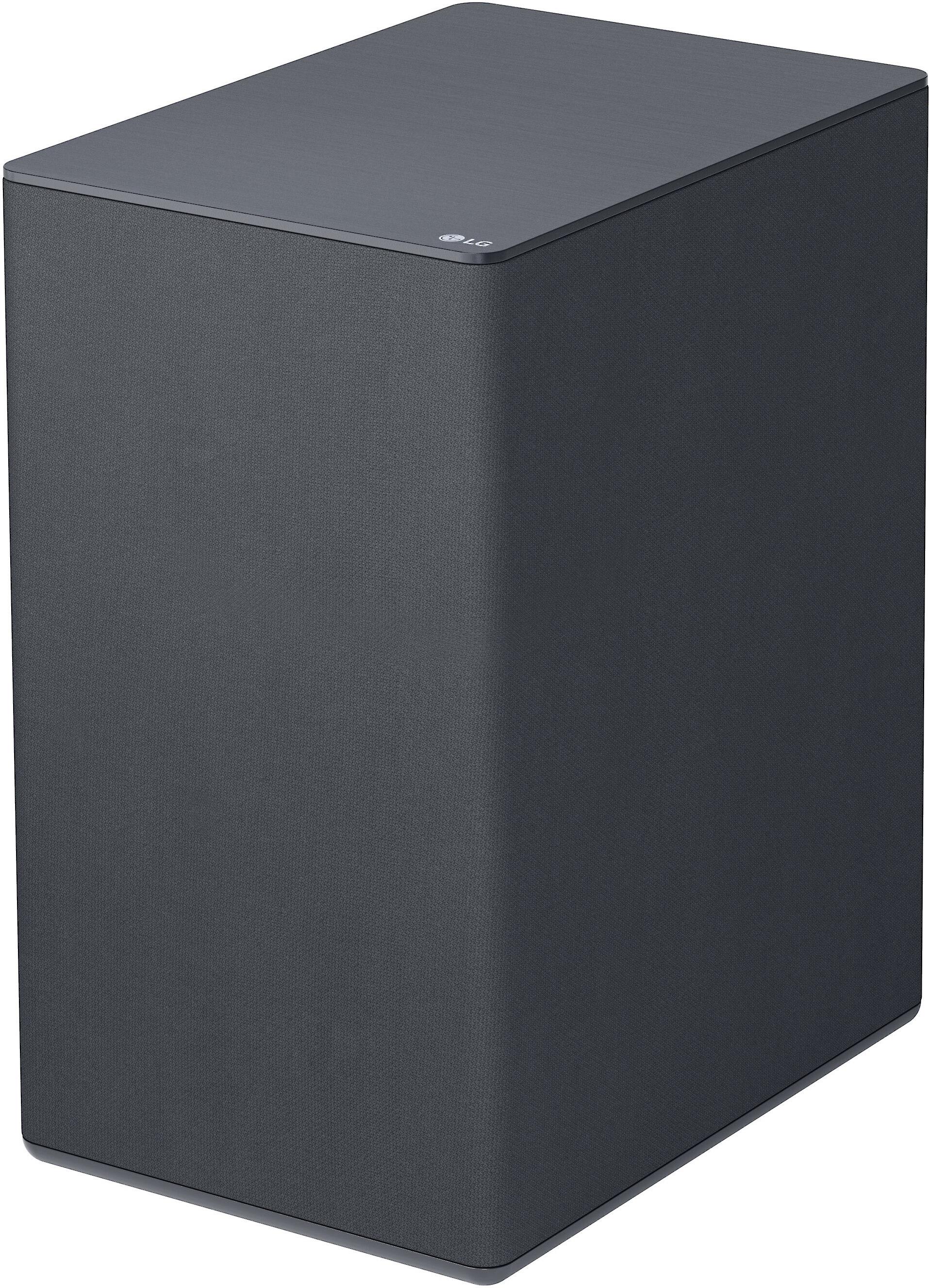
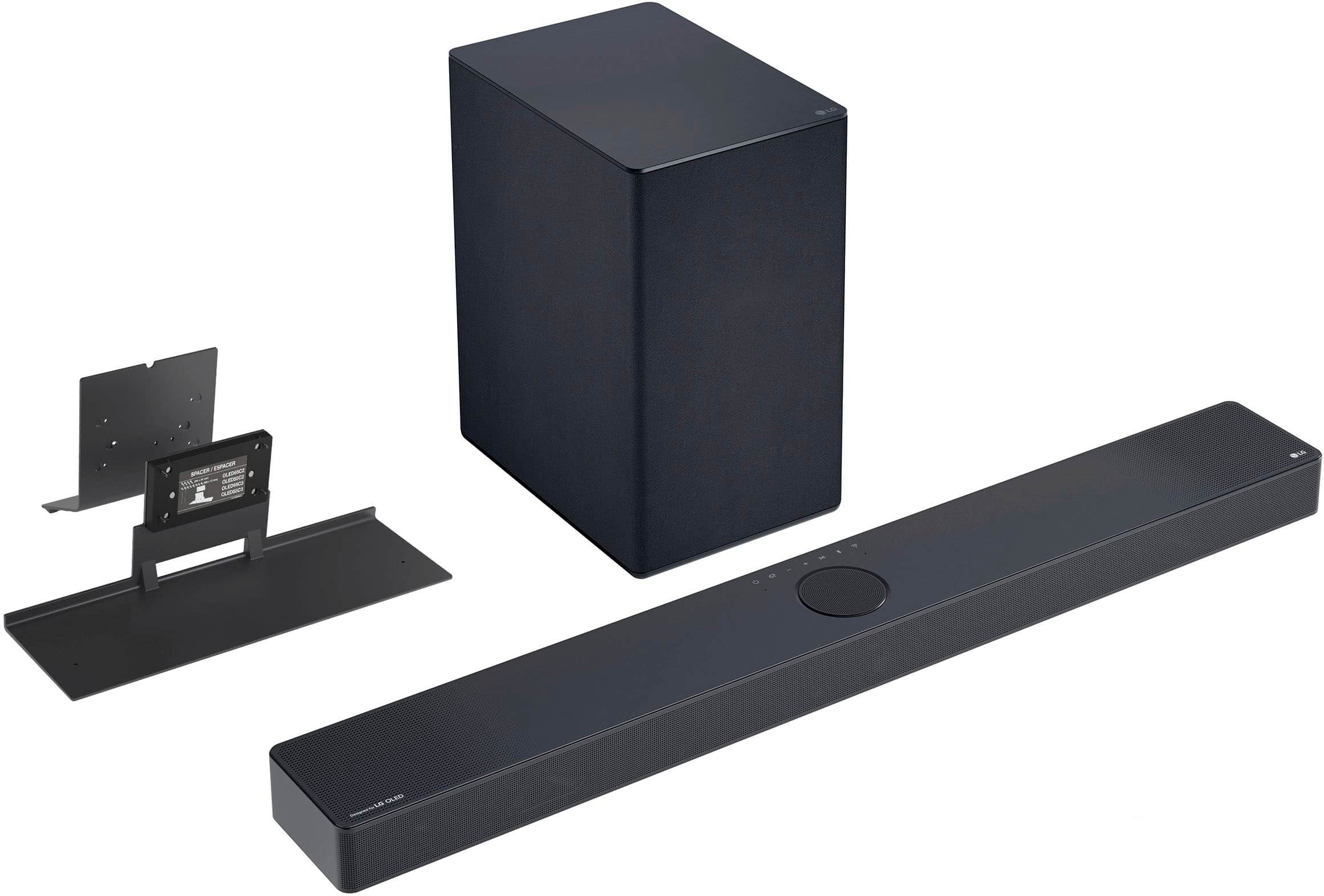
The LG SC9S, also released in 2023, takes what I call the "smart hybrid" approach. Instead of relying purely on virtual processing, it uses a unique 3.1.3-channel configuration with three up-firing speakers, including an industry-first up-firing center channel specifically for dialogue. This means it physically fires sound upward from three different positions to create height effects, rather than just using computer trickery.
The most important question is simple: which one makes you feel more like you're in the middle of the action? From my testing, the Sennheiser AMBEO Plus delivers what I can only describe as "audio spectacle." Its AMBEO 3D virtualization technology doesn't just add height – it creates an enveloping bubble of sound that can genuinely fool your brain into thinking there are speakers behind and above you.
However, this virtualization isn't perfect. I've found it works effectively about 70% of the time, with success heavily dependent on your room's layout, ceiling height, and furnishings. In my 12x15-foot living room with 9-foot ceilings and a mix of hard and soft surfaces, the effect was convincing enough that guests regularly asked where I'd hidden the rear speakers. But in a friend's larger, more open space with vaulted ceilings, the magic diminished significantly.
The LG SC9S takes a different approach with its "Triple Layer Spatial Sound" and what LG calls a "Virtual Sound Dome." The three up-firing speakers – including that unique up-firing center channel – create a more subtle but potentially more consistent experience. The trade-off is that some reviewers describe its delivery as "inexpressive" compared to the Sennheiser's more dramatic presentation.
This is where the two soundbars show their biggest personality differences. The Sennheiser comes with dual 4-inch subwoofers built right into the bar, delivering what can only be described as room-filling bass. During my testing with action movies like "Mad Max: Fury Road," the low-end impact was genuinely impressive for a soundbar – no separate subwoofer required for most users.
However, this aggressive bass approach has a downside. In complex scenes with multiple sound elements, the bass can become what audio engineers call "bloated" – it dominates the mix and can make dialogue harder to understand. The LG's bass is described as "weighty" but better controlled, though it requires its separate wireless subwoofer to achieve its full potential.
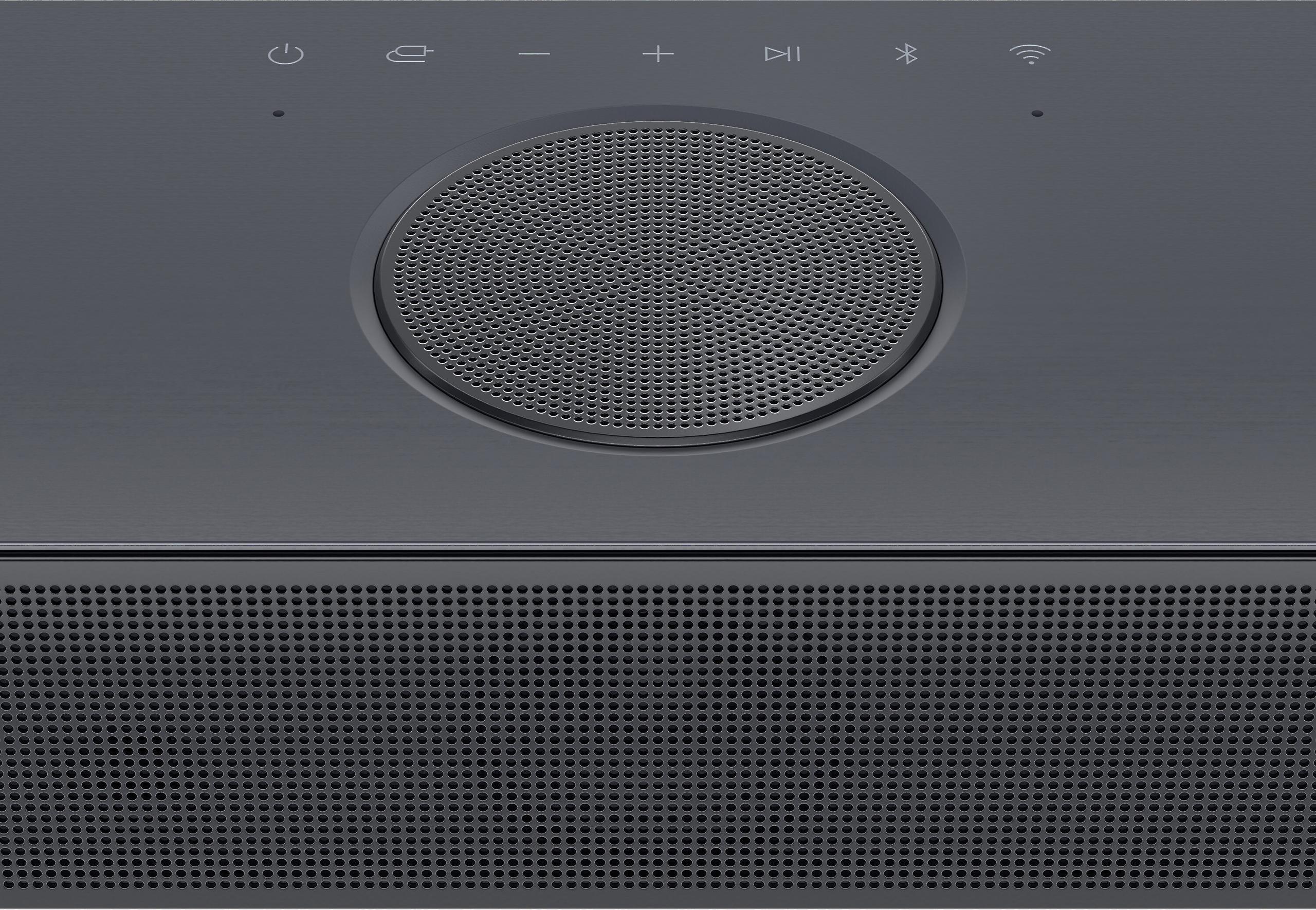
Here's where the LG SC9S shows its unique innovation. That up-firing center channel I mentioned? It's specifically designed to enhance dialogue clarity by directing speech sounds upward and then reflecting them back down toward your listening position. This creates what feels like dialogue coming from the screen itself, rather than from below it.
The Sennheiser AMBEO Plus handles dialogue well through traditional means – a strong center channel and multiple EQ presets including a dedicated "News" mode that emphasizes vocal frequencies. However, when its bass gets aggressive, dialogue can sometimes get lost in the mix.
If you find yourself constantly reaching for the remote to adjust volume during movies (quiet dialogue, loud explosions), this difference becomes crucial. The LG's approach addresses this common frustration more directly.
Both soundbars use microphone-based room calibration, but they approach it differently. The Sennheiser's advanced self-calibration system uses multiple built-in microphones to analyze your room's acoustics, then adjusts its AMBEO virtualization processing accordingly. This happens automatically during setup and adapts the virtual speaker positioning to work best in your specific space.
The LG's AI Room Calibration Pro is more straightforward – it measures basic room characteristics and creates a custom EQ profile. While effective, audio experts consider it a "basic automatic adjustment" compared to more sophisticated systems like Dirac Live, which you'll find in higher-end audio equipment.
This is where the Sennheiser AMBEO Plus shows its premium positioning. With three HDMI ports (one eARC output plus two inputs), it can serve as your central hub for multiple devices. The extensive streaming support – Spotify Connect, Apple AirPlay 2, Google Chromecast, and TIDAL Connect – means you can stream high-quality music directly to the soundbar without using your TV as an intermediary.
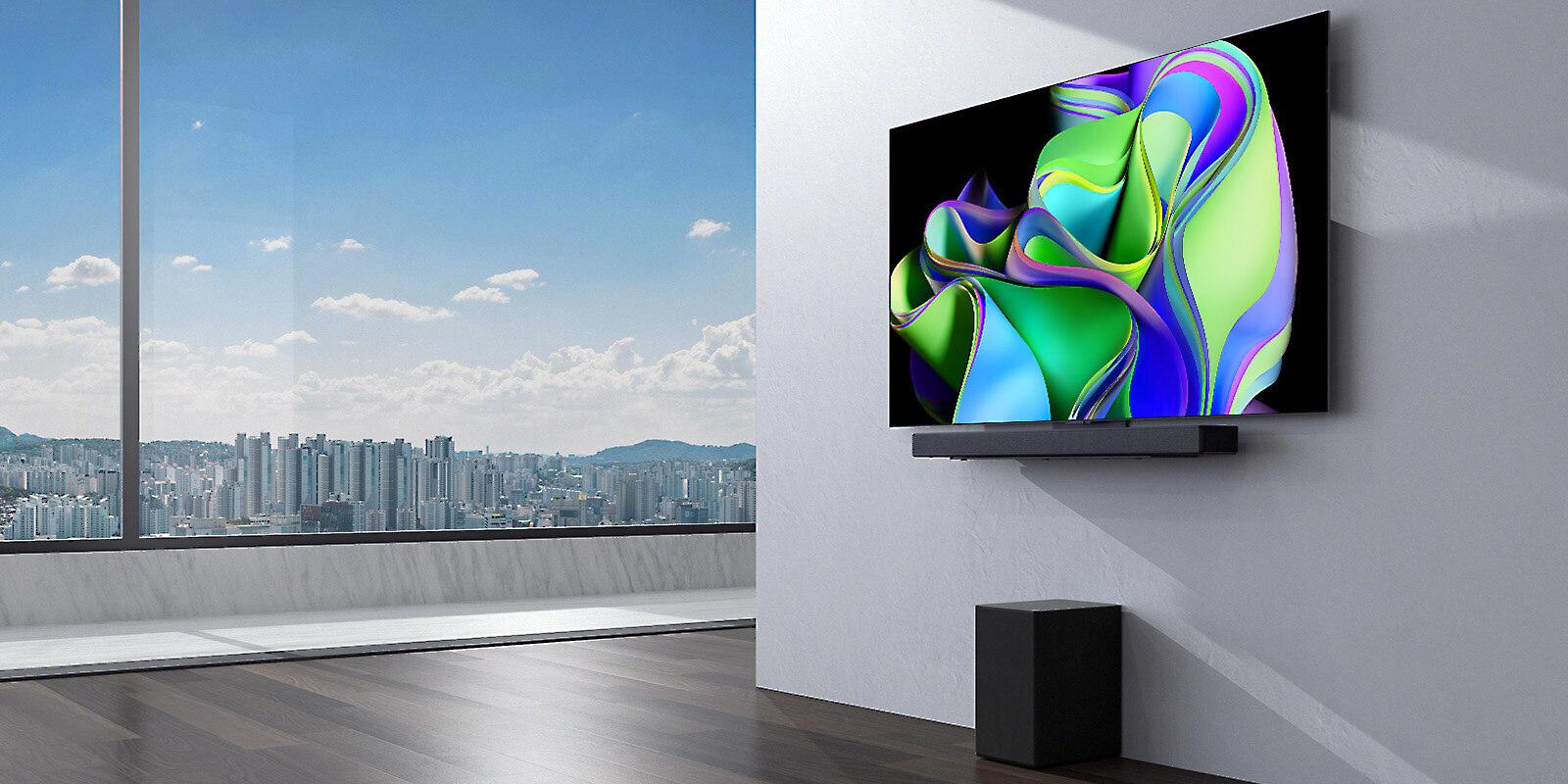
The LG SC9S takes a more minimalist approach with just one HDMI eARC port, but it compensates with deep integration into LG's ecosystem. If you own an LG OLED TV, the WOW Orchestra feature synchronizes the TV's built-in speakers with the soundbar to create a unified, larger soundstage. It's a clever solution that effectively turns your entire TV into part of the sound system.
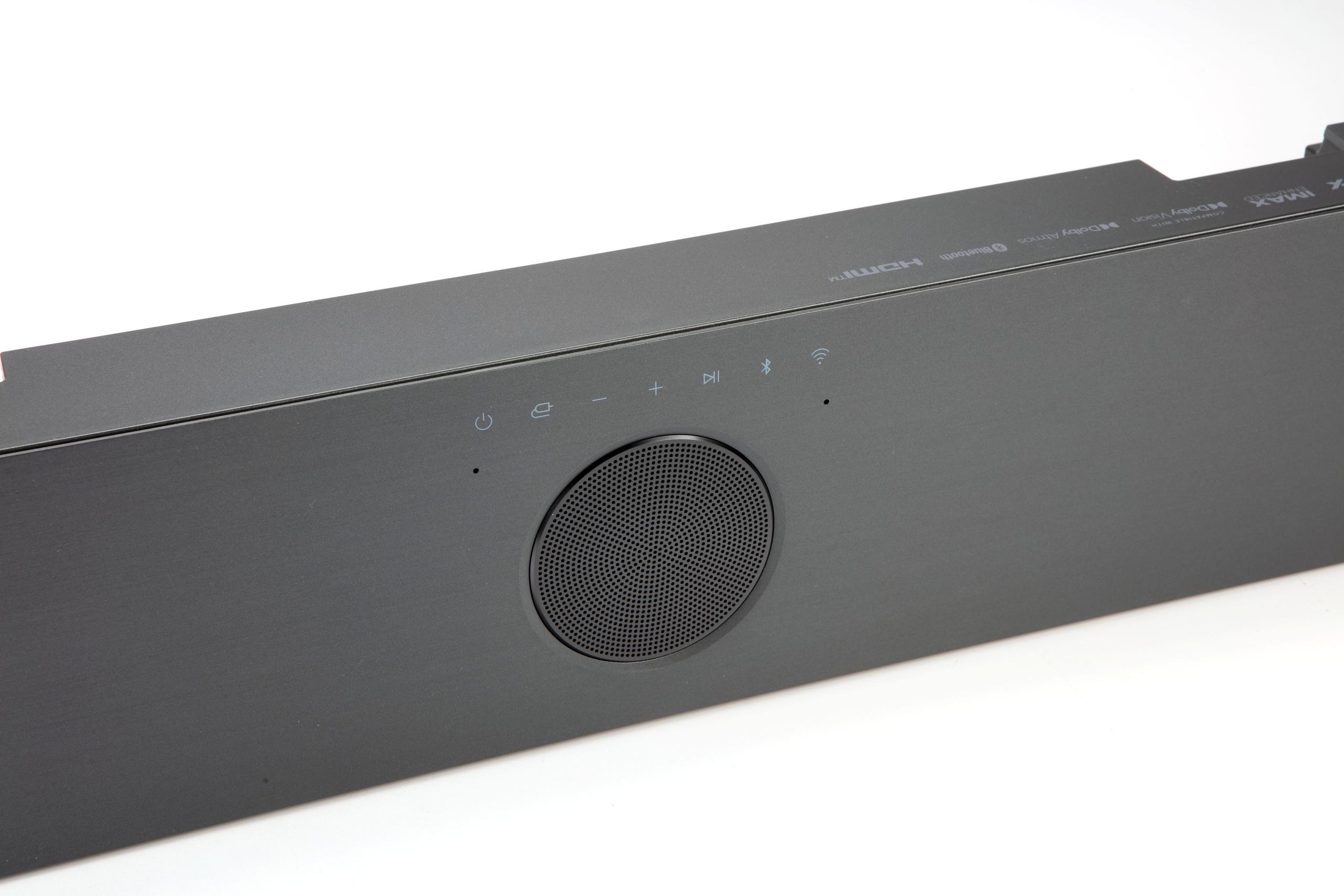
One limitation both share: neither offers full HDMI 2.1 bandwidth with 4K/120Hz passthrough, which is becoming increasingly important for next-generation gaming consoles. Both max out at 4K/60Hz, though the LG has some 120Hz support with limitations for certain content types.
The physical differences between these soundbars tell you a lot about their intended use cases. The Sennheiser is larger and more imposing – it's a statement piece that doesn't try to hide what it is. At 47 inches wide, it's designed to work with larger TVs (55 inches and up) and doesn't attempt to blend invisibly into your setup.
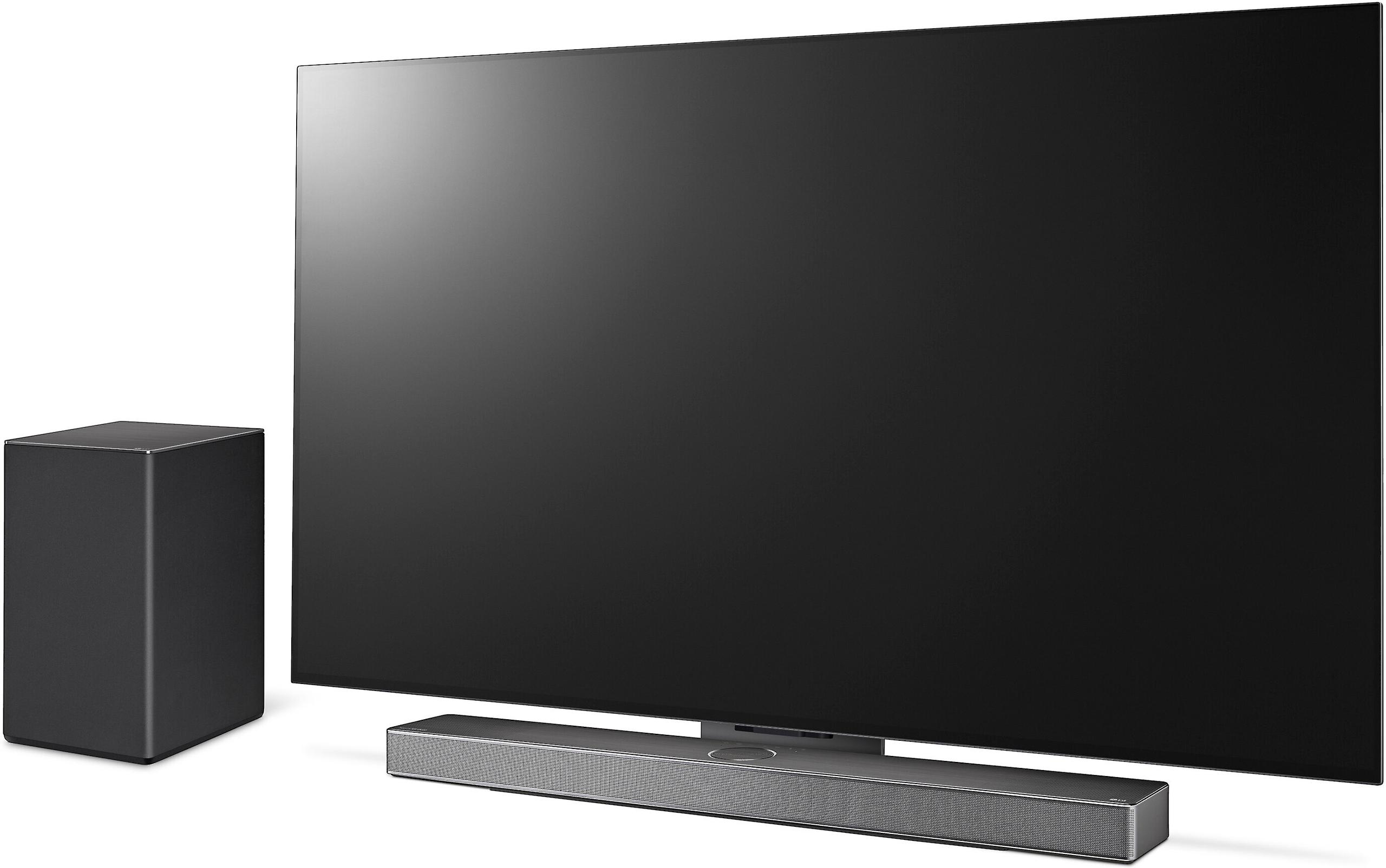
The LG takes the opposite approach, especially if you own an LG OLED C-Series TV. Its exclusive mounting bracket allows it to attach directly beneath compatible LG TVs, creating a seamless, integrated look that many find more aesthetically pleasing. The wireless subwoofer can be tucked away wherever it sounds best, giving you flexibility in room layout.
At $950, the Sennheiser AMBEO Plus costs 84% more than the LG SC9S at $516. But raw price comparison doesn't tell the whole story.
The Sennheiser's higher cost reflects its advanced virtualization processing, premium build quality, extensive connectivity, and ability to work as a complete standalone system. You're paying for technology that attempts to recreate a full surround system experience without additional speakers. For many users, this eliminates the need for a separate subwoofer or rear speakers, potentially saving money long-term.
The LG represents a different value proposition. At roughly half the price, it delivers Dolby Atmos and DTS:X support with that unique up-firing center channel innovation. However, professional reviews consistently note performance compromises – the sound is described as more "mediocre" and "emotionless" compared to premium competitors. For LG TV owners, though, the integration benefits and lower price create a compelling package.
In a dedicated home theater environment, both soundbars face the same fundamental challenge: they're trying to recreate a multi-speaker experience from a single location. This works better in some room configurations than others.
Medium-sized rooms (12x15 feet to 15x18 feet) with standard 8-9 foot ceilings represent the sweet spot for both products. The Sennheiser excels in these environments, where its virtualization can effectively use wall and ceiling reflections to create convincing surround effects. I've found it particularly impressive with action movies and concerts, where the sense of space and movement genuinely enhances the viewing experience.
The LG SC9S works better in rooms where dialogue clarity is the primary concern. Its up-firing center channel design makes it excellent for TV shows, dramas, and dialogue-heavy films. The trade-off is less dramatic surround effects, but more consistent performance across different content types.
Both struggle in very large rooms or spaces with unusual acoustics. If your viewing room is larger than 20x20 feet or has vaulted ceilings above 12 feet, you might find either soundbar underwhelming compared to a proper multi-speaker setup.
Choose the Sennheiser AMBEO Plus if you want the most immersive single-soundbar experience possible and you're willing to pay for advanced technology. It's ideal for movie enthusiasts who want that "wow factor" without the complexity of multiple speakers. The extensive connectivity makes it perfect for users with multiple gaming consoles, streaming devices, or those who prioritize high-quality music streaming alongside movies.
Choose the LG SC9S if you own or plan to buy an LG OLED TV and prioritize dialogue clarity and integration over pure immersion. It's the better choice for mixed-use scenarios where you watch equal amounts of movies, TV shows, and news. The lower price point makes it accessible for users who want Dolby Atmos without breaking the budget.
Both soundbars represent solid entries in the premium category, but they serve different priorities. The Sennheiser pushes the boundaries of what's possible from a single soundbar, while the LG focuses on practical benefits and smart integration. Your choice should depend on whether you value technological ambition or practical functionality more highly in your home entertainment setup.
The soundbar market continues evolving rapidly, with new models appearing regularly. But both of these 2023 releases represent their manufacturers' current thinking about how to deliver premium audio experiences without the complexity of traditional surround sound systems. Whichever you choose, you'll get a significant upgrade over basic TV audio – the question is which approach to that upgrade best matches your space, budget, and priorities.
| Sennheiser AMBEO Soundbar Plus ($950) | LG SC9S 3.1.3 Channel Dolby Atmos Soundbar ($516) |
|---|---|
| Channel Configuration - Determines surround sound capability | |
| Virtual 7.1.4 channels using AMBEO processing | Physical 3.1.3 channels with up-firing speakers |
| Power Output - Affects volume and dynamic range | |
| 400W total power with dual 4" subwoofers built-in | Not specified, includes separate wireless subwoofer |
| HDMI Connectivity - Critical for modern gaming and streaming | |
| 3 HDMI ports (1 eARC + 2 inputs), 4K/60Hz passthrough | 1 HDMI port (eARC only), 4K/120Hz with limitations |
| Room Calibration - Optimizes sound for your space | |
| Advanced self-calibration with multiple microphones | AI Room Calibration Pro (basic automatic adjustment) |
| Streaming Options - Convenience for music playback | |
| Spotify Connect, AirPlay 2, Chromecast, TIDAL Connect | AirPlay 2, Spotify Connect (standard options) |
| Voice Control - Smart home integration | |
| Amazon Alexa and Google Assistant built-in | Compatible through connected devices only |
| TV Integration - Seamless setup benefits | |
| Universal compatibility with any TV brand | WOW Orchestra feature exclusive to LG OLED TVs |
| Expandability - Future upgrade potential | |
| Supports up to 4 additional wireless subwoofers | Optional rear speaker kit (SPQ8-S) available |
| Dimensions - Space requirements | |
| 47" W x 2.6" H x 5.4" D (larger footprint) | 8.7" W x 15.4" H x 12.3" D (more compact) |
| Audio Formats - Content compatibility | |
| Dolby Atmos, DTS:X, MPEG-H, up to 24-bit/96kHz | Dolby Atmos, DTS:X, IMAX Enhanced |
| Best For - Target user scenarios | |
| Movie enthusiasts wanting maximum immersion | LG TV owners prioritizing dialogue clarity and value |
The LG SC9S ($516) offers better value for budget-conscious buyers, costing 46% less than the Sennheiser AMBEO Plus ($950). However, the Sennheiser provides more advanced virtualization technology and doesn't require additional speakers for most users, potentially offering better long-term value despite the higher upfront cost.
The Sennheiser AMBEO Plus includes dual 4-inch subwoofers built into the soundbar, so most users won't need an additional subwoofer. The LG SC9S comes with a separate wireless subwoofer that's essential for achieving its full bass performance and is included in the purchase price.
The LG SC9S has superior dialogue clarity thanks to its unique up-firing center channel that directs speech sounds upward and reflects them back down. The Sennheiser AMBEO Plus handles dialogue well but can sometimes struggle with clarity when its aggressive bass dominates complex audio scenes.
Both soundbars use different approaches to simulate surround sound. The Sennheiser AMBEO Plus uses advanced virtual processing to create a 7.1.4-channel experience, while the LG SC9S uses three physical up-firing speakers to bounce sound off your ceiling. Neither provides true discrete surround channels like a full speaker system.
The Sennheiser AMBEO Plus performs better in larger rooms due to its more powerful 400W output and room-filling bass capabilities. The LG SC9S is better suited for medium-sized rooms where its up-firing technology can effectively use ceiling reflections.
The Sennheiser AMBEO Plus works with any TV that has HDMI or optical connections. The LG SC9S also works universally but offers special integration features like WOW Orchestra only with compatible LG OLED TVs, making it particularly attractive for LG TV owners.
For pure cinematic immersion, the Sennheiser AMBEO Plus provides more dramatic surround effects and powerful bass that enhances action scenes. The LG SC9S offers a more balanced experience that's excellent for mixed content including movies, TV shows, and dialogue-heavy films.
The Sennheiser AMBEO Plus offers three HDMI ports (one eARC output plus two inputs), allowing it to serve as a central hub for multiple devices. The LG SC9S has only one HDMI eARC port, requiring you to connect additional devices directly to your TV.
The Sennheiser AMBEO Plus offers more comprehensive streaming options including Spotify Connect, Apple AirPlay 2, Google Chromecast, and TIDAL Connect. The LG SC9S supports standard options like AirPlay 2 and Spotify Connect but has fewer built-in streaming services.
Yes, both the Sennheiser AMBEO Plus and LG SC9S support Dolby Atmos and DTS:X audio formats. The Sennheiser uses virtual processing to create height effects, while the LG uses physical up-firing speakers to bounce sound off your ceiling for overhead audio.
The LG SC9S generally offers easier setup, especially for LG TV owners who can use the exclusive mounting bracket for seamless integration. The Sennheiser AMBEO Plus requires more careful positioning and room calibration to achieve optimal virtualization effects.
The Sennheiser AMBEO Plus can be expanded with up to four additional wireless subwoofers for enhanced bass. The LG SC9S can be expanded with LG's optional rear speaker kit (SPQ8-S) to create a more complete surround sound experience.
We've done our best to create useful and informative comparisons to help you decide what product to buy. Our research uses advanced automated methods to create this comparison and perfection is not possible - please contact us for corrections or questions. These are the sites we've researched in the creation of this article: techradar.com - pocket-lint.com - moon-audio.com - stereonet.com - rtings.com - abt.com - projectorscreen.com - youtube.com - videoandaudiocenter.com - crutchfield.com - sennheiser-hearing.com - newsroom.sennheiser.com - consumerreports.org - valueelectronics.com - youtube.com - bestbuy.com - rtings.com - costco.com - bestbuy.com - walts.com - queencityonline.com - blog.son-video.com - videoandaudiocenter.com - lg.com

Privacy Policy
Terms and Conditions - Affiliate Policy
Home Security
© Copyright 2008-2026.
11816 Inwood Rd #1211, Dallas, TX 75244