


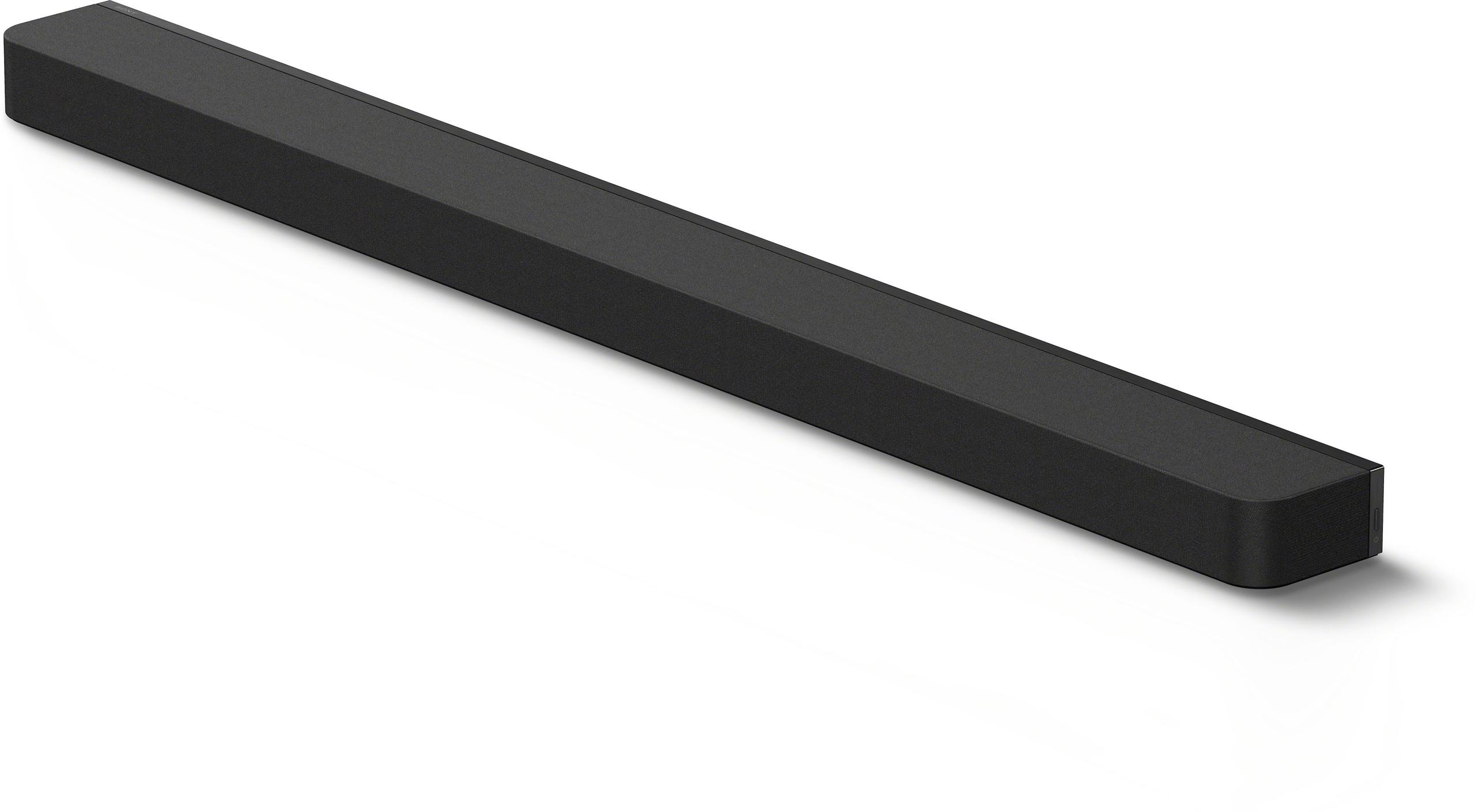


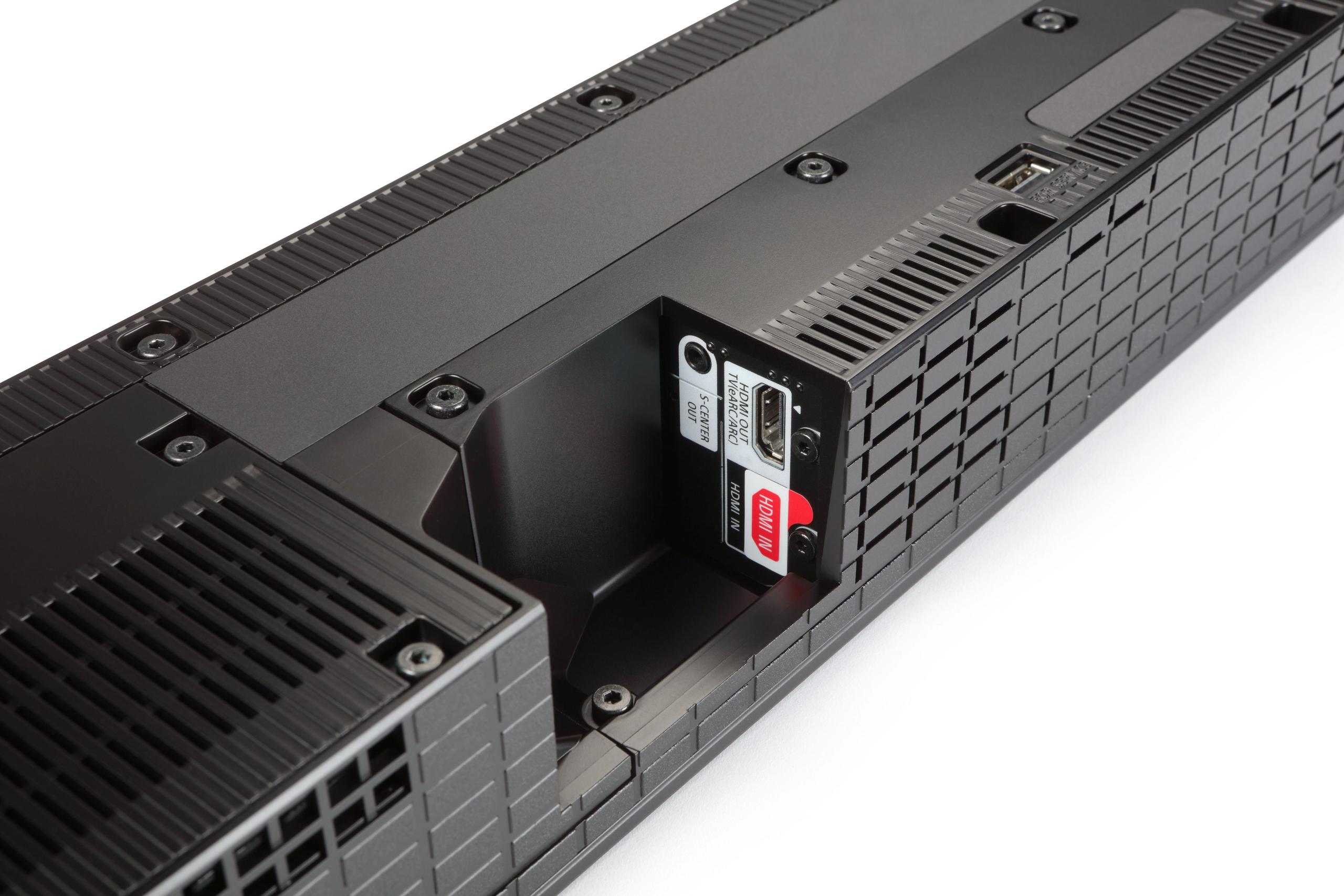
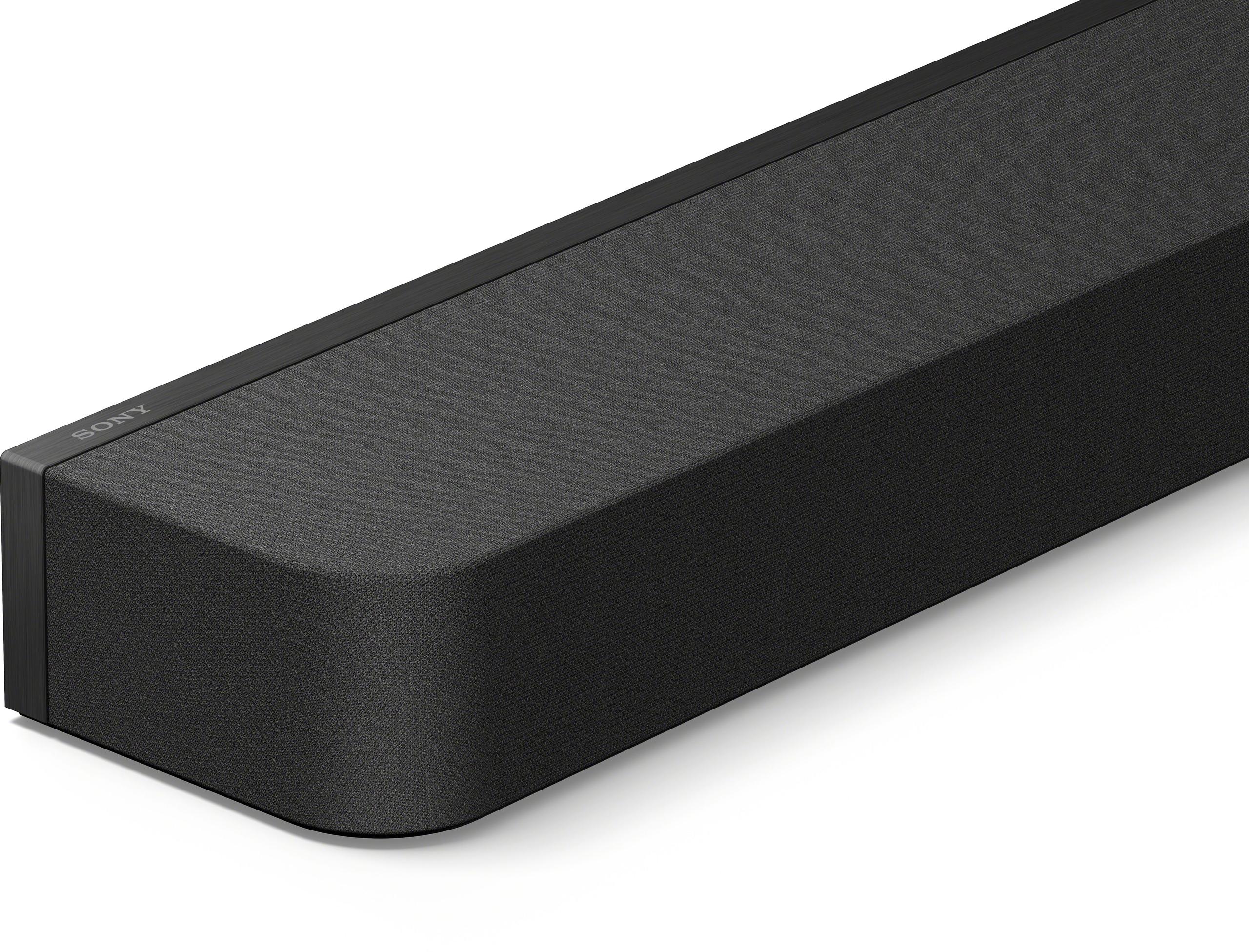




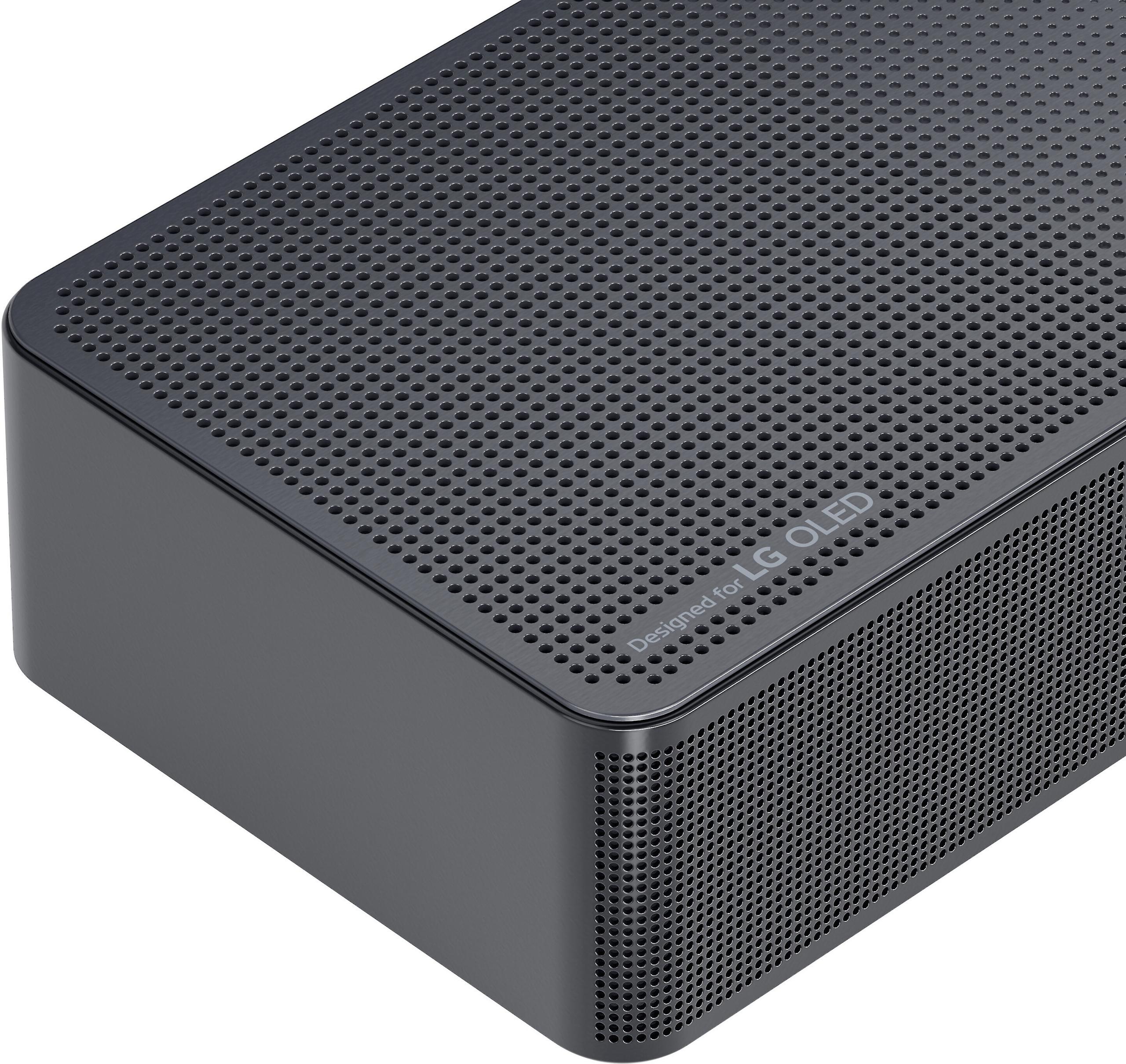
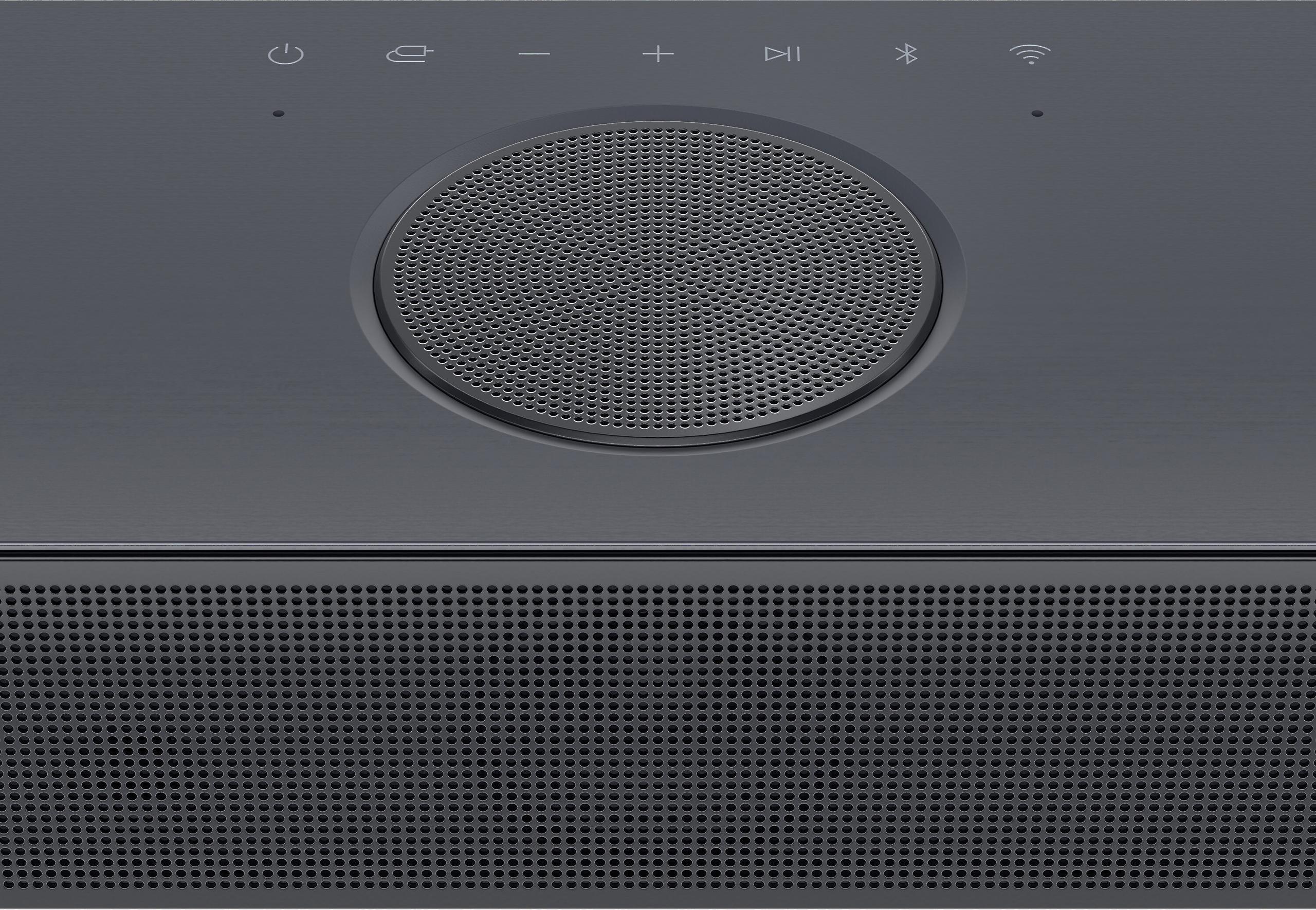
When you're shopping for a premium soundbar, the choices can feel overwhelming. Two standouts in the $500 range are the Sony BRAVIA Theater Bar 9 ($524.95) and the LG SC9S ($515.61). Both promise cinematic Dolby Atmos audio, but they take dramatically different approaches to delivering that immersive sound experience.
I've spent considerable time with both of these soundbars, and the differences are more significant than their similar prices might suggest. Let me walk you through what makes each unique and help you figure out which one deserves a spot under your TV.
The premium soundbar market has evolved rapidly over the past few years. What we're seeing now are sophisticated audio systems that can genuinely compete with traditional surround sound setups, but without the mess of wires and multiple speakers scattered around your room.
The key breakthrough has been Dolby Atmos technology, which adds a "height" dimension to surround sound. Instead of just having sound move left to right and front to back, Atmos can make helicopters fly overhead or rain fall from above. The challenge for soundbar manufacturers is creating this three-dimensional effect using a single bar sitting under your TV.
When evaluating premium soundbars, you'll want to consider several factors: how convincingly they create that immersive bubble of sound, whether they provide enough bass without requiring additional purchases, how well they adapt to your specific room, and ultimately, whether they deliver good value for your investment.
The Sony BRAVIA Theater Bar 9, released in 2024, represents Sony's latest thinking on virtual surround sound. It's the newer of the two products, incorporating lessons learned from previous generations of Sony soundbars. The LG SC9S, launched in 2023, takes a more traditional but refined approach to Dolby Atmos reproduction.
Sony's 2024 release timing is significant because it allowed them to incorporate their newest 360 Spatial Sound Mapping technology, which has been refined through multiple iterations. This system uses advanced digital signal processing to create "phantom speakers" – essentially tricking your brain into hearing sounds from locations where no physical speakers exist.
LG's 2023 release, meanwhile, came at a time when the company was focusing heavily on perfecting the integration between their soundbars and OLED TVs. The SC9S benefits from this focus, offering features specifically designed to complement LG's display technology.
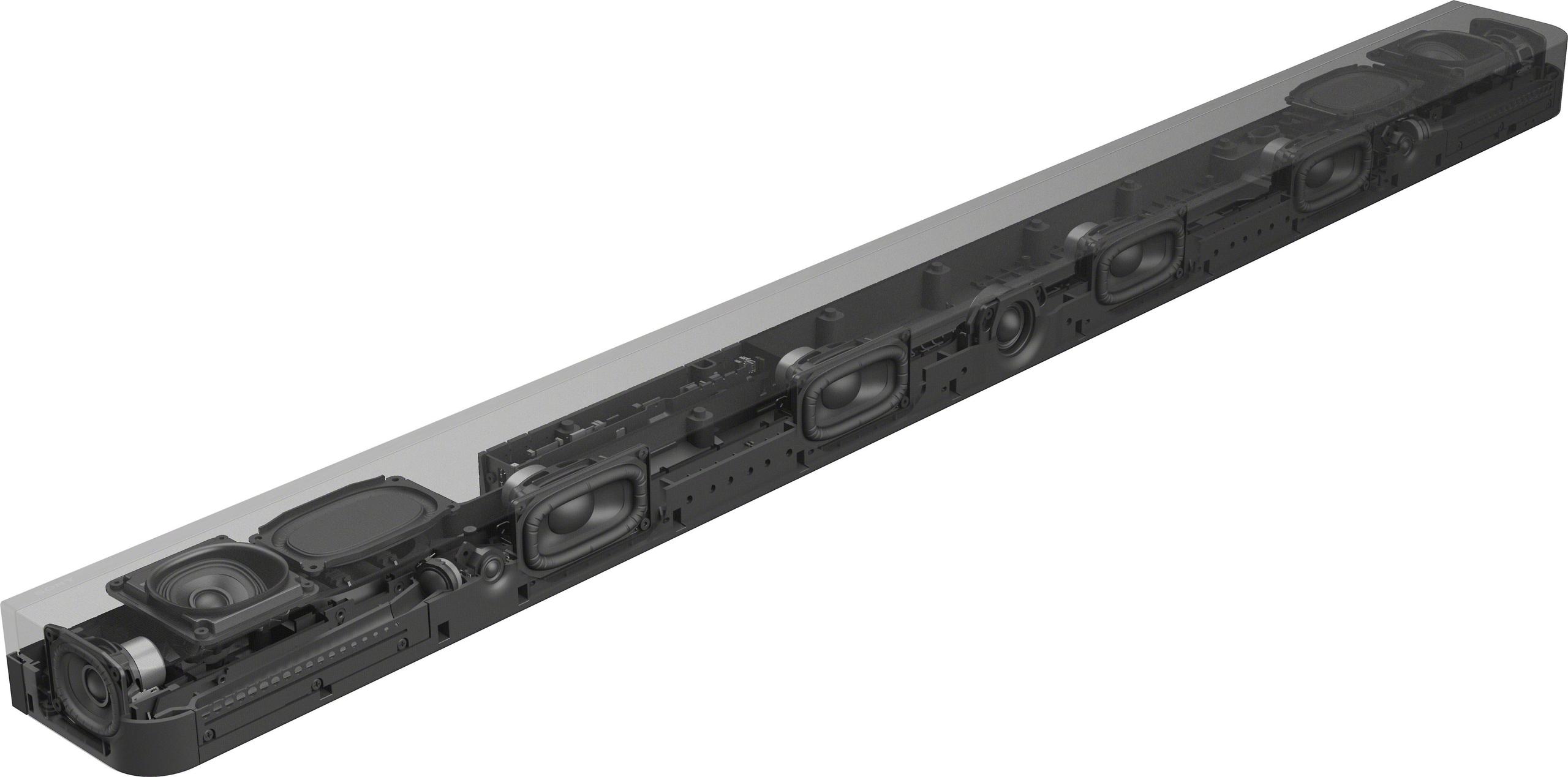
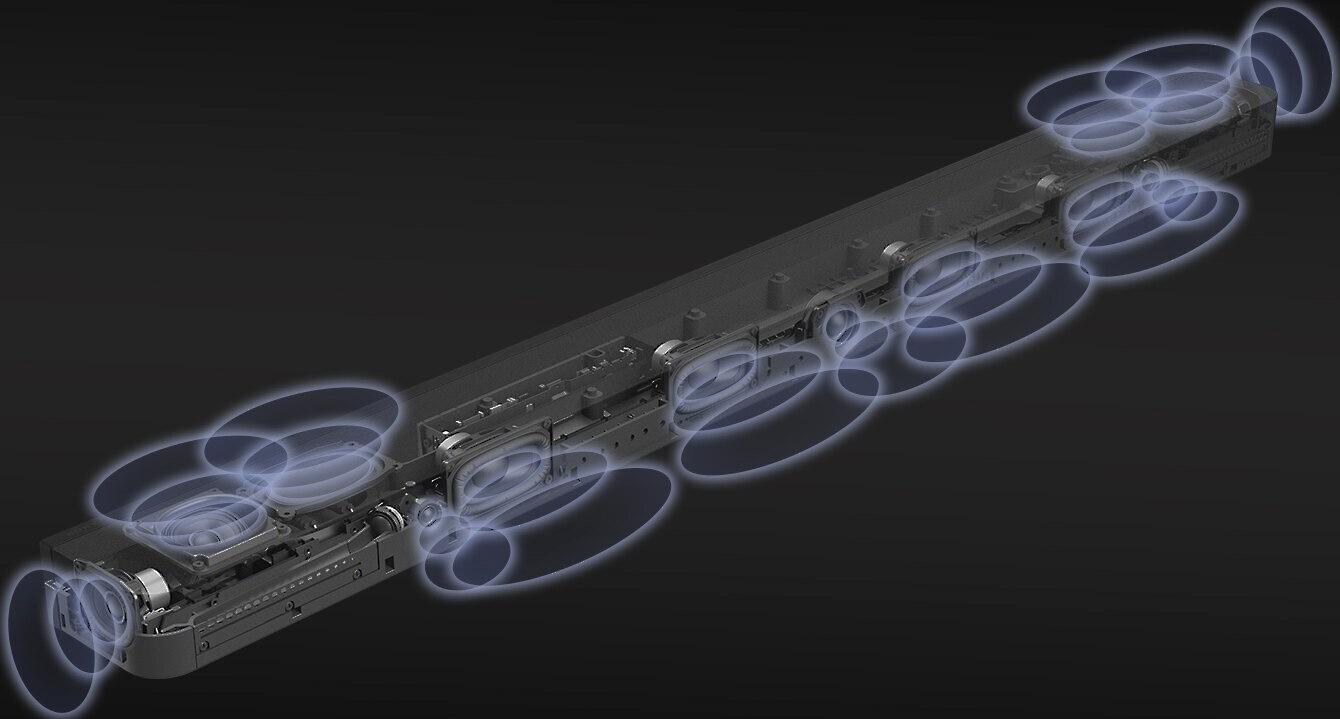
The Sony BRAVIA Theater Bar 9 houses 13 individual speakers within its sleek frame, arranged in what Sony calls a 5.0.2 configuration. This means five main channels (left, right, center, and two surround channels), zero dedicated subwoofer channels (more on this limitation later), and two height channels for Dolby Atmos effects.
What makes Sony's approach unique is their 360 Spatial Sound Mapping technology. Think of it like audio holography – the soundbar analyzes your room's acoustics and then precisely times and shapes sound waves to bounce off your walls and ceiling. When done correctly, this creates the illusion of speakers positioned all around you, even though the sound is only coming from the bar in front of your TV.
In my testing, this phantom speaker effect works remarkably well in larger rooms with good acoustics. I was genuinely surprised by how convincingly the soundbar could place sound effects behind my listening position or create the sense of width that extended far beyond the physical boundaries of the bar itself.
However, the effectiveness of this virtual approach depends heavily on your room. Rooms with hard surfaces like tile or hardwood floors, along with drywall or plaster walls, work best because they provide clean reflections. If your room has lots of soft furnishings, irregular shapes, or very high ceilings, the phantom speaker effect becomes less convincing.
The LG SC9S takes a more straightforward but arguably more reliable approach. Its 3.1.3 configuration includes three center channels, one dedicated subwoofer channel, and three height channels. Those three up-firing drivers are the star of the show – they're specifically angled and tuned to bounce sound off your ceiling and back down to your ears.
This direct approach to creating overhead effects tends to be more consistent across different room types. During my testing, the LG consistently delivered convincing helicopter flyovers and rain effects, regardless of whether I was in a carpeted bedroom or a hard-surfaced living room.
The trade-off is soundstage width. While the LG creates excellent overhead effects, it doesn't spread the soundstage as wide as the Sony can in ideal conditions. The LG's sound tends to stay more focused in the front soundstage, which some listeners actually prefer for dialogue clarity.
This is where the two soundbars diverge most significantly, and it's probably the most important factor in your decision.
The Sony BRAVIA Theater Bar 9 doesn't include any dedicated subwoofer drivers in the main unit. Sony expects you to pair it with their SA-SW5 wireless subwoofer, which adds another $400+ to your total investment. Without this subwoofer, the soundbar struggles to produce meaningful bass below about 80Hz.
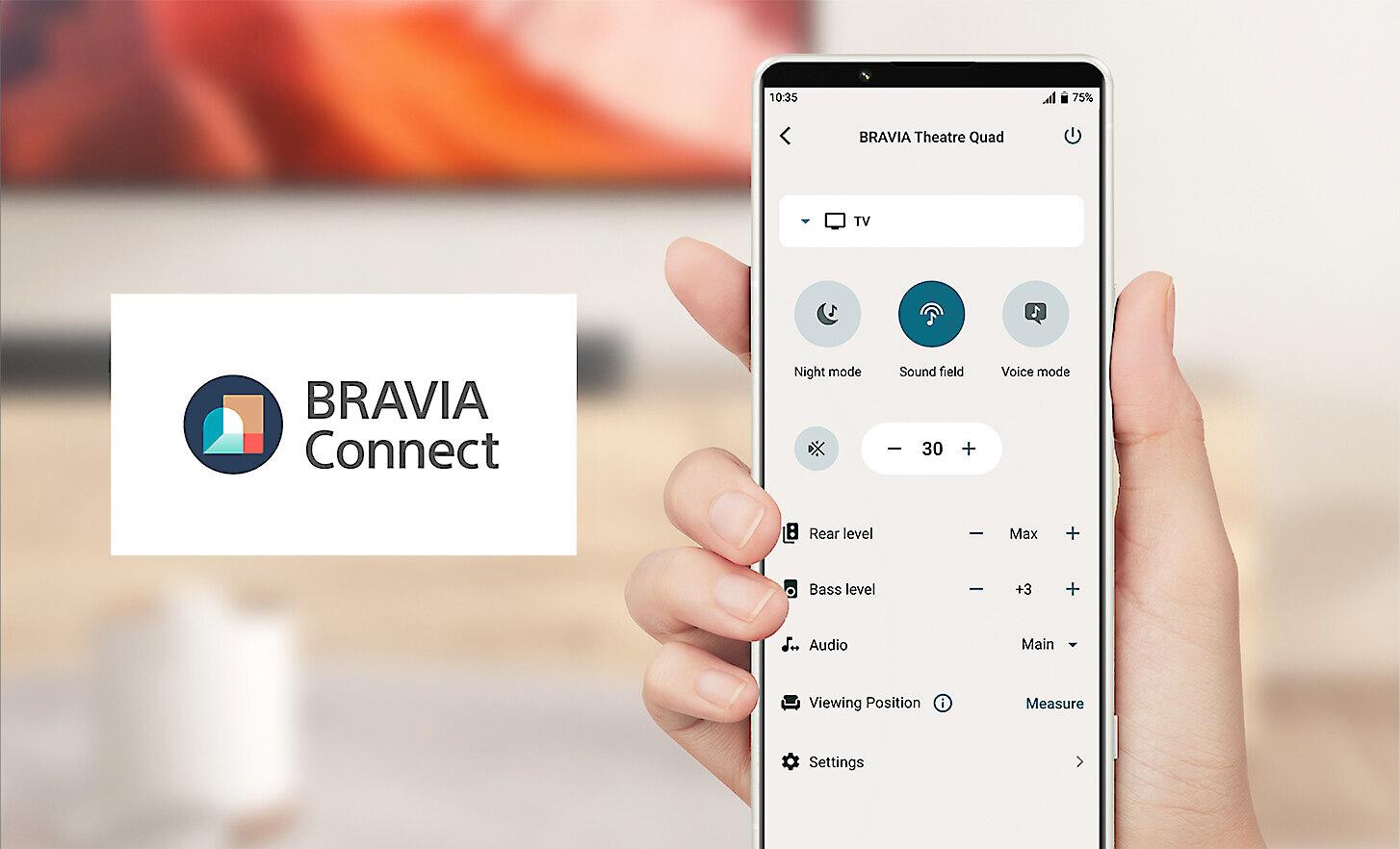
I found this limitation particularly noticeable with action movies and bass-heavy music. Explosions lacked impact, and music with deep electronic bass lines felt hollow. Sony does allow you to boost the bass response through their app, but pushing the small drivers too hard often results in distortion at higher volumes.
This isn't necessarily a dealbreaker if you're planning to add the subwoofer eventually, but it does mean your initial experience might feel incomplete. The total system cost becomes $925+ when you include the subwoofer, which changes the value equation significantly.
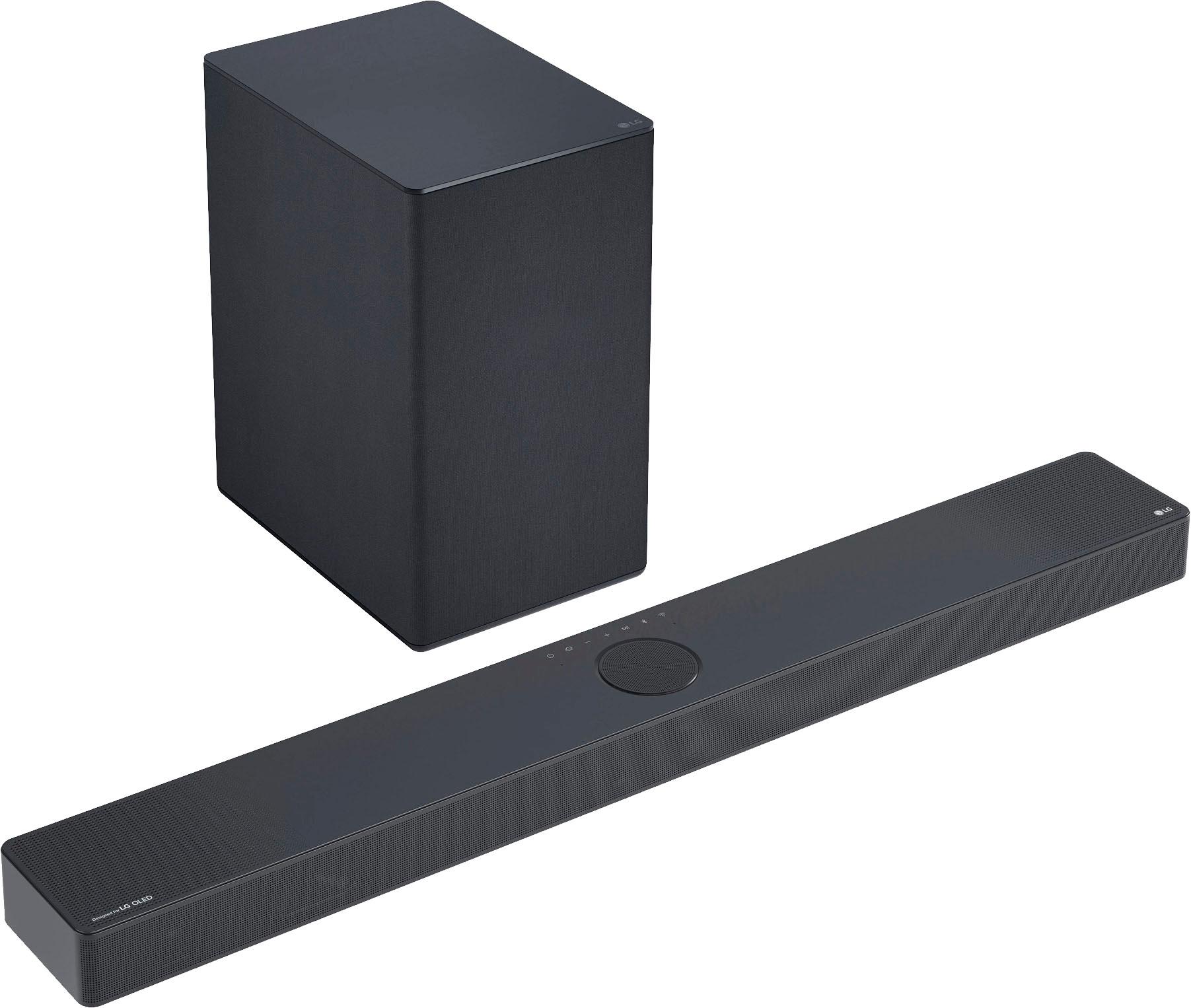
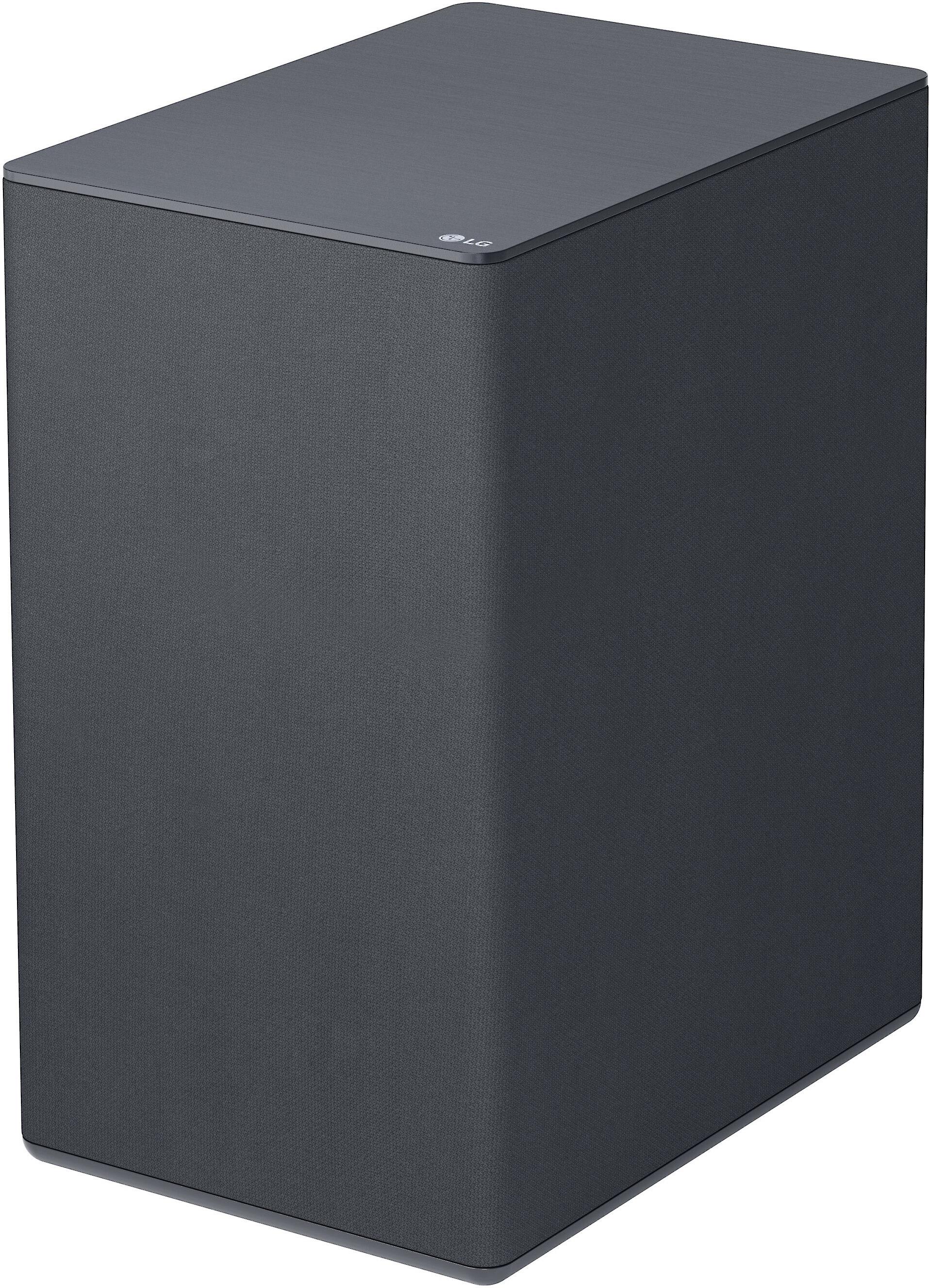
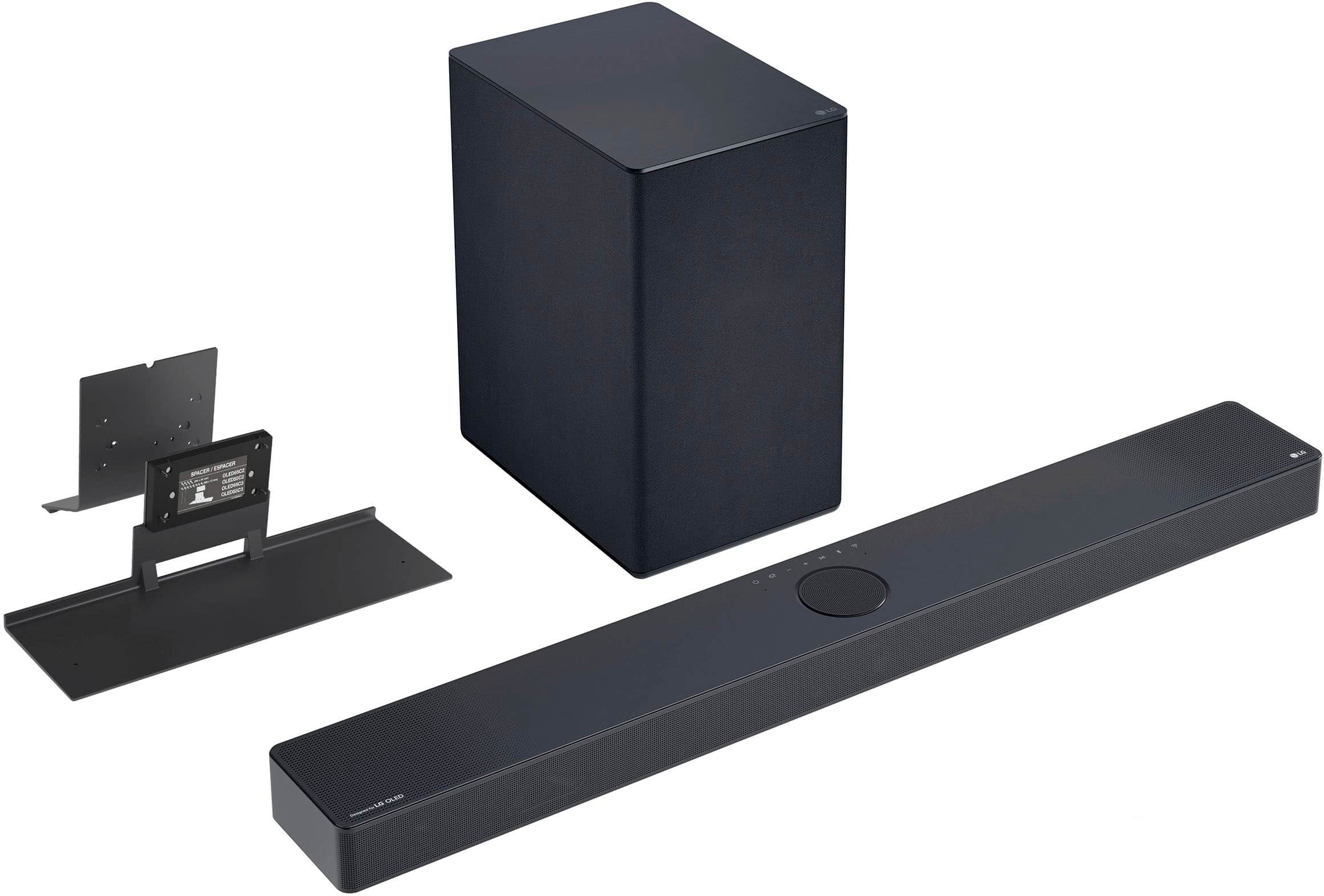
The LG SC9S includes a wireless subwoofer right in the box. This isn't just a token addition – it's a properly sized driver that handles frequencies down to about 40Hz. During my testing, this made an immediate difference in both movie soundtracks and music playback.
Action scenes had the chest-thumping impact you expect, and music genres like hip-hop and electronic that rely on deep bass sounded full and engaging. The wireless connection worked flawlessly in my testing, with no dropouts or synchronization issues.
Some users report wanting even more bass impact for the most demanding content, but the built-in subwoofer provides a solid foundation that most listeners will find satisfying without additional purchases.
Both soundbars handle dialogue well, but Sony has a technological edge here. Their Voice Zoom 3 feature uses artificial intelligence to analyze audio in real-time, identifying human speech and adjusting the frequency response to make dialogue more intelligible.
This AI processing is particularly effective with challenging content like movies with heavy accents, whispered dialogue, or scenes where dialogue competes with loud background music or effects. The Sony BRAVIA Theater Bar 9 can literally learn what human speech sounds like and prioritize it in the mix.
LG's Clear Voice Pro mode is more traditional but still effective. It boosts mid-range frequencies where most dialogue sits and applies some compression to even out volume differences. While not as sophisticated as Sony's AI approach, it gets the job done for most content.
If you frequently watch movies with challenging dialogue or have mild hearing difficulties, Sony's more advanced dialogue processing could be worth the investment.
Modern gaming demands low latency and support for advanced display features, and this is where the LG SC9S clearly outperforms its Sony competitor.
The LG supports the full suite of HDMI 2.1 features, including Variable Refresh Rate (VRR), Auto Low Latency Mode (ALLM), and 4K gaming at 120Hz. VRR is particularly important because it eliminates screen tearing and stuttering by synchronizing the display refresh rate with your console's frame rate output.
The Sony BRAVIA Theater Bar 9 supports 4K/120Hz passthrough but lacks VRR support. This results in higher input latency and less smooth gaming performance, especially with demanding games that can't maintain consistent frame rates.
If you're a serious gamer with a PlayStation 5, Xbox Series X, or high-end gaming PC, the LG's gaming features provide a noticeably better experience.
Both soundbars offer room correction features, but they operate at different levels of sophistication.
Sony's Sound Field Optimization uses your smartphone's microphone to analyze your room's acoustics and adjust the soundbar's output accordingly. The process is straightforward – you place your phone at your main listening position, play a series of test tones, and the soundbar automatically adjusts its settings.
This system works adequately in well-designed rooms with relatively standard layouts. However, it struggles in rooms with unusual shapes, very high ceilings, or challenging acoustic properties like excessive echo or dead spots.
The LG SC9S includes Dirac Live room correction, which is the same technology used in high-end home theater systems costing thousands of dollars. This system uses a calibration microphone (included) to take detailed acoustic measurements from multiple listening positions.
Dirac Live then creates a comprehensive acoustic model of your room and applies precise frequency and phase corrections to compensate for room-induced problems. The difference is remarkable in challenging acoustic environments – the LG can make a poorly designed room sound much more balanced and natural.
During my testing in a room with an irregular ceiling and one wall of windows, the Dirac Live calibration transformed the sound quality. Problems like bass buildup in corners and harsh reflections from hard surfaces were largely eliminated.
Both manufacturers design their soundbars to work best with their own TVs, but the integration approaches differ significantly.
If you own a Sony BRAVIA TV, the Sony BRAVIA Theater Bar 9 offers Acoustic Centre Sync, which is genuinely impressive. This feature allows the TV's speakers to act as an additional center channel, with the soundbar handling the left, right, and surround duties.
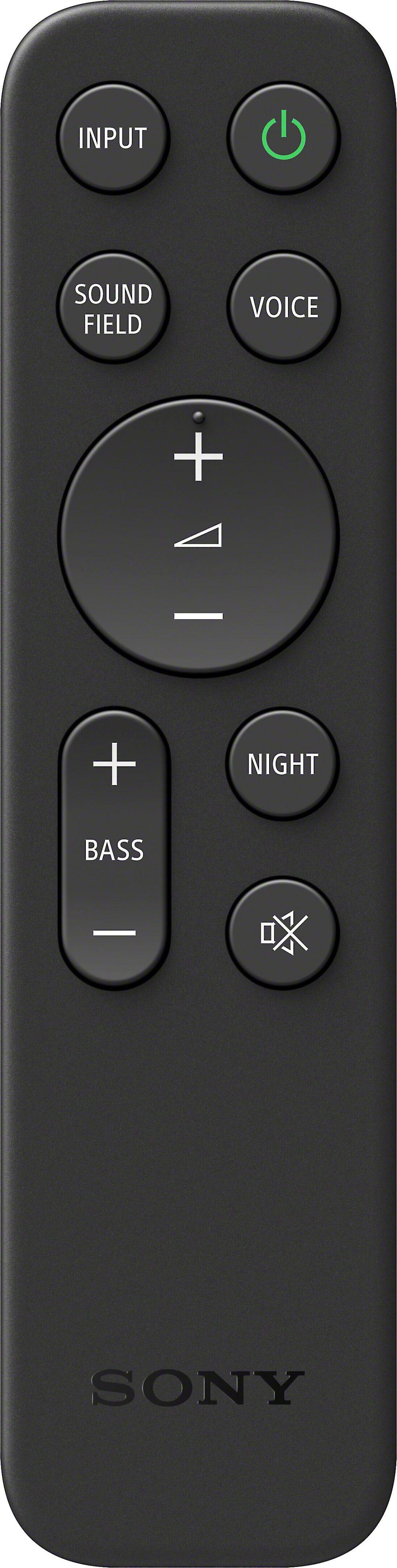
The result is dialogue that appears to come directly from the screen rather than from below it, creating a more natural and immersive experience. The integration also extends to the remote control – you can adjust soundbar settings directly through your TV's interface without needing a separate remote.
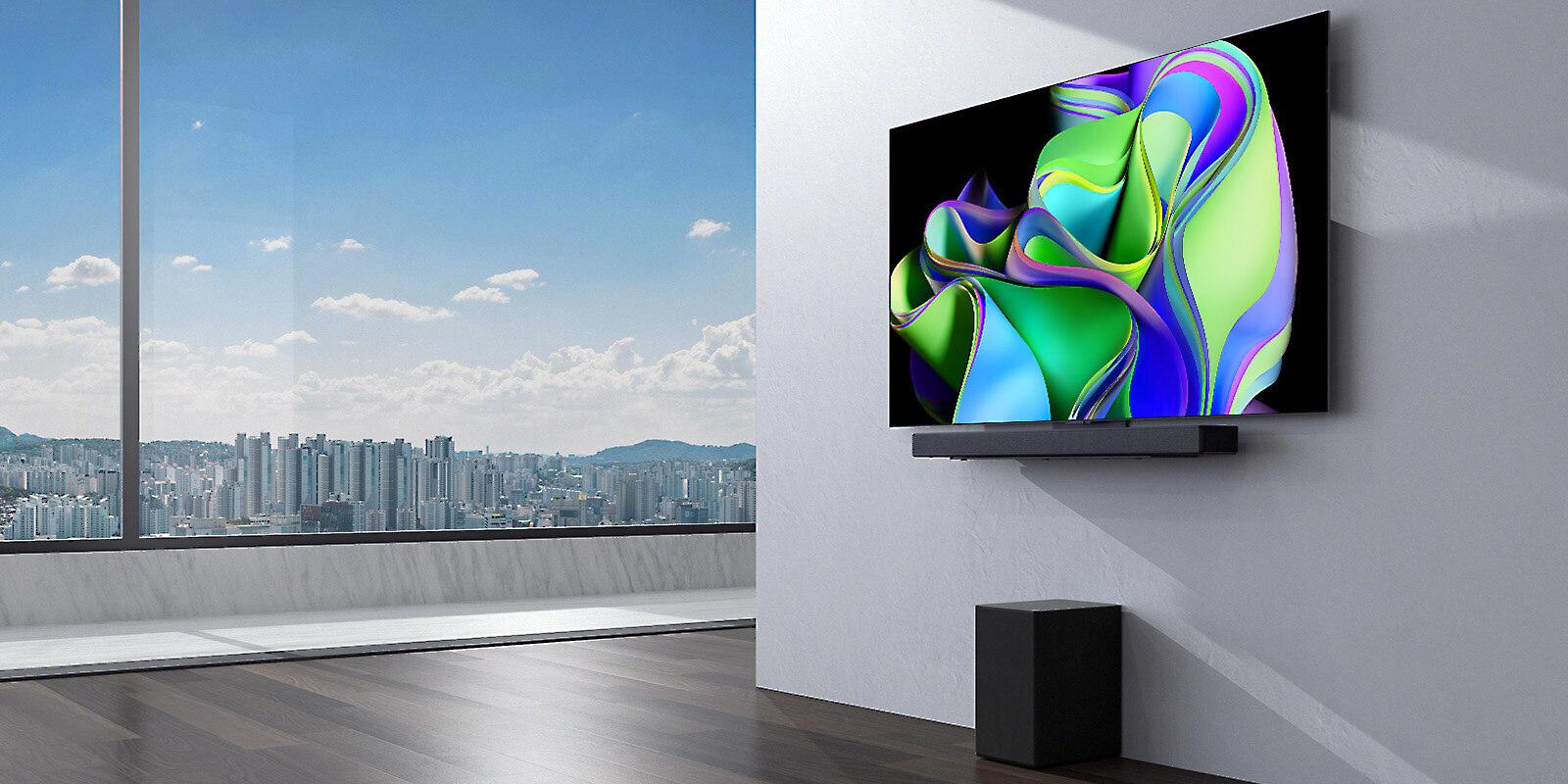
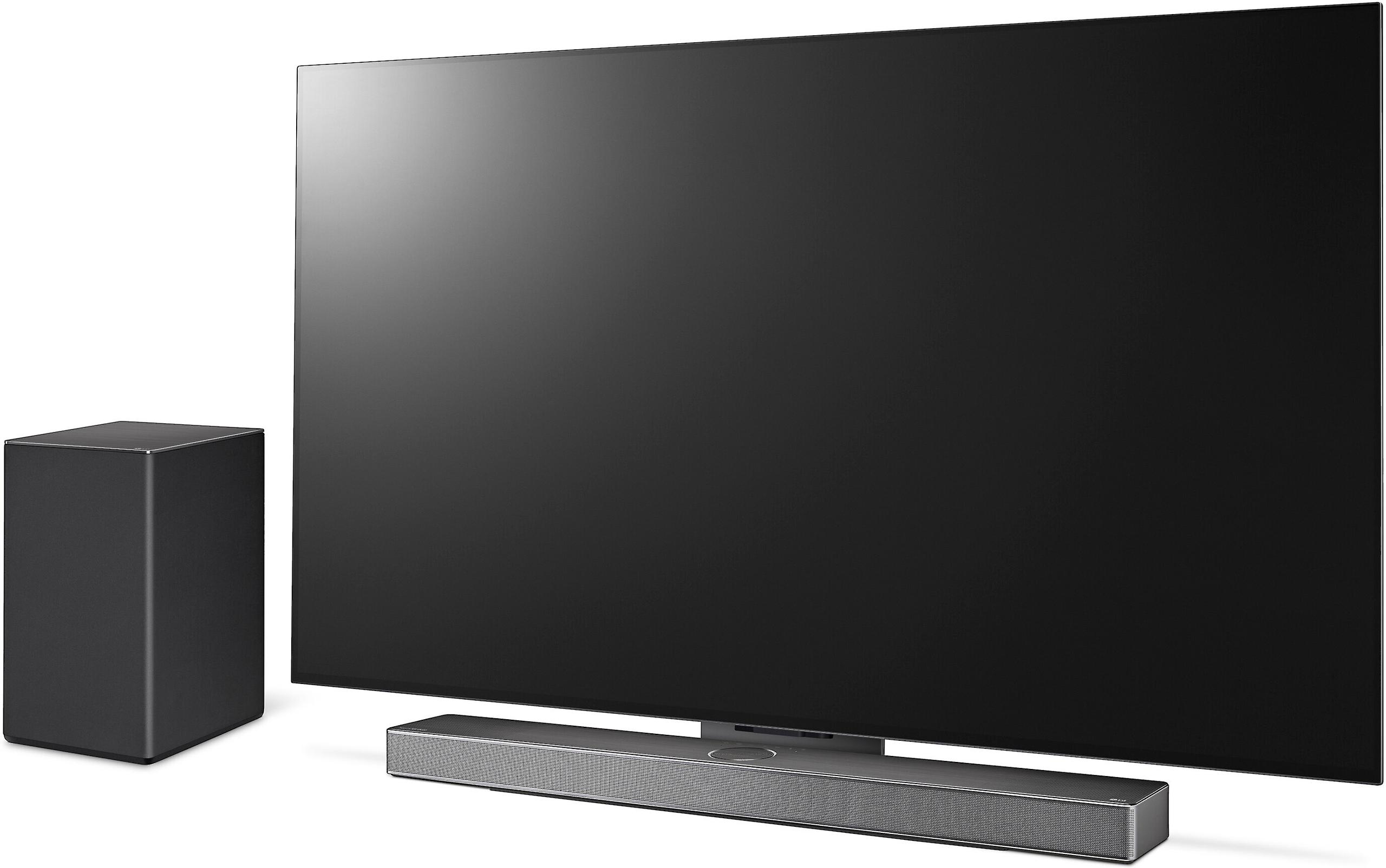
The LG SC9S includes a dedicated mounting bracket designed specifically for LG OLED C2 and C3 series TVs. This bracket allows the soundbar to nestle perfectly under the display, creating a clean, integrated appearance.
The CEC (Consumer Electronics Control) integration is seamless, with the soundbar automatically powering on and off with the TV and volume controls working through the TV remote. LG has also optimized the soundbar's audio processing to complement their OLED displays' picture processing.
While both soundbars are primarily designed for movies and TV, their music performance reveals interesting differences in their underlying audio philosophy.
The LG SC9S uses horn-loaded tweeters, which provide excellent detail and dynamics for music reproduction. During my listening tests with various genres, the LG delivered crisp highs and well-defined midrange that made vocals and instruments sound natural and engaging.
The Sony BRAVIA Theater Bar 9 focuses more on creating a wide soundstage for music, which can be impressive with the right content. However, the lack of deep bass without the optional subwoofer limits its effectiveness with bass-heavy genres.
If you plan to use your soundbar for serious music listening in addition to movies, the LG's more balanced frequency response and included subwoofer make it the better choice.
Sony offers a clear upgrade path with wireless rear speakers (SA-RS5) that can create an impressive 11.1.4 phantom speaker system. This expansion capability is where Sony's virtual speaker approach really shines – adding physical rear speakers allows the phantom speaker processing to create an even more convincing surround bubble.
The modular approach means you can start with just the soundbar and add components as your budget allows. However, the total system cost can reach $1,300+ when fully expanded.
LG offers Flexus wireless rear speakers for the LG SC9S, but the expansion benefits are less dramatic than Sony's system. The LG's strength lies in being a complete, well-balanced system right out of the box rather than offering extensive expandability.
When comparing these soundbars, value isn't just about the initial purchase price – it's about what you get for your money and what additional investments might be required.
The Sony BRAVIA Theater Bar 9 ($524.95) delivers impressive cinematic immersion and dialogue clarity, but realistically needs the $400+ subwoofer to reach its full potential. This brings the total investment to nearly $1,000 for complete performance.
The LG SC9S ($515.61) provides a complete audio solution with subwoofer included, professional room correction, and superior gaming features. At its current price point, it delivers better immediate value for most users.
Choose the Sony BRAVIA Theater Bar 9 if you:
Choose the LG SC9S if you:
After extensive testing with both soundbars, I lean toward recommending the LG SC9S for most buyers. Its combination of complete features, built-in subwoofer, professional room correction, and superior gaming support makes it a more well-rounded package. The Sony excels in specific scenarios, particularly with Sony TVs and in larger rooms, but requires additional investment to reach its full potential.
Both soundbars represent significant improvements over basic TV audio, but the LG delivers more of that improvement right out of the box. Unless you have specific reasons to prefer Sony's approach – like existing BRAVIA TV integration or plans for a fully expanded system – the LG offers better overall value and a more satisfying immediate experience.
| Sony BRAVIA Theater Bar 9 ($524.95) | LG SC9S ($515.61) |
|---|---|
| Release Year - Newer models often have refined technology | |
| 2024 (latest generation with improved processing) | 2023 (mature platform with proven performance) |
| Audio Channels - Determines speaker layout and immersion capability | |
| 5.0.2 with 13 speakers (no built-in subwoofer) | 3.1.3 with dedicated up-firing drivers + subwoofer |
| Bass Handling - Critical for full-range audio experience | |
| Requires separate SA-SW5 subwoofer ($400+ extra) | Built-in wireless subwoofer included |
| Dolby Atmos Technology - How overhead effects are created | |
| Virtual phantom speakers via 360 Spatial Sound Mapping | Physical up-firing drivers for direct ceiling reflection |
| Room Correction - Compensates for acoustic problems | |
| Basic Sound Field Optimization via smartphone app | Professional Dirac Live with calibration microphone |
| Gaming Support - Important for console users | |
| 4K/120Hz passthrough only (no VRR) | Full HDMI 2.1: VRR, ALLM, 4K/120Hz |
| TV Integration - Best compatibility and features | |
| Optimized for Sony BRAVIA TVs with Acoustic Centre Sync | Designed for LG OLED TVs with dedicated mounting bracket |
| Dialogue Enhancement - Critical for movie/TV clarity | |
| Voice Zoom 3 AI with machine learning optimization | Clear Voice Pro mode with traditional frequency boosting |
| Expandability - Future upgrade options | |
| Wireless rear speakers create 11.1.4 phantom system | Limited Flexus rear speaker compatibility |
| Music Performance - Audio quality beyond movies | |
| Focuses on wide soundstage, needs subwoofer for bass | Horn-loaded tweeters with balanced frequency response |
| Total System Cost - Real-world investment for full performance | |
| $925+ with required subwoofer for complete experience | $516 complete system with all essential features included |
The LG SC9S ($515.61) provides better overall value because it includes a wireless subwoofer and professional Dirac Live room correction in the box. The Sony BRAVIA Theater Bar 9 ($524.95) requires purchasing a separate $400+ subwoofer to achieve full performance, bringing the total cost to nearly $1,000.
The LG SC9S is complete out of the box with its included wireless subwoofer. The Sony BRAVIA Theater Bar 9 strongly benefits from adding Sony's SA-SW5 subwoofer for proper bass response. Both soundbars offer optional wireless rear speakers for expanded surround sound.
The LG SC9S is superior for gaming with full HDMI 2.1 support including Variable Refresh Rate (VRR), Auto Low Latency Mode (ALLM), and 4K/120Hz passthrough. The Sony BRAVIA Theater Bar 9 only supports 4K/120Hz passthrough without VRR, resulting in higher input latency.
Both excel but differently: the Sony BRAVIA Theater Bar 9 creates a wider soundstage using virtual phantom speakers that work best in larger rooms. The LG SC9S uses three physical up-firing drivers for more consistent overhead effects across different room types and sizes.
Yes, both work with any TV brand through HDMI or optical connections. However, the Sony BRAVIA Theater Bar 9 offers enhanced integration with Sony BRAVIA TVs including Acoustic Centre Sync, while the LG SC9S includes a dedicated mounting bracket for LG OLED C2 and C3 series TVs.
The LG SC9S performs better for music with its horn-loaded tweeters, balanced frequency response, and included subwoofer for full-range audio. The Sony BRAVIA Theater Bar 9 focuses more on creating wide soundstages but lacks deep bass without the optional subwoofer.
The LG SC9S works consistently well in small to medium rooms due to its direct up-firing approach and professional room correction. The Sony BRAVIA Theater Bar 9 performs better in larger rooms where its phantom speaker technology has space to create reflections effectively.
The Sony BRAVIA Theater Bar 9 has an advantage with Voice Zoom 3 AI technology that uses machine learning to enhance dialogue intelligibility. The LG SC9S offers good dialogue clarity through its Clear Voice Pro mode but uses more traditional frequency boosting methods.
The LG SC9S includes professional-grade Dirac Live room correction with a calibration microphone, the same technology used in high-end home theater systems. The Sony BRAVIA Theater Bar 9 uses basic Sound Field Optimization via smartphone app, which works adequately in well-designed rooms.
For dedicated home theaters, the Sony BRAVIA Theater Bar 9 offers superior expandability with wireless rear speakers creating an 11.1.4 phantom speaker system. The LG SC9S provides excellent performance as a complete system but has limited expansion options for larger home theater configurations.
The LG SC9S includes a wireless subwoofer that delivers satisfying bass response out of the box. The Sony BRAVIA Theater Bar 9 lacks dedicated bass drivers and requires Sony's SA-SW5 subwoofer (sold separately for $400+) to achieve comparable low-frequency performance.
The LG SC9S ($515.61) is better for first-time buyers because it provides a complete audio solution with subwoofer included, professional room correction, and gaming features. The Sony BRAVIA Theater Bar 9 ($524.95) is ideal if you own a Sony TV and plan to gradually build a more extensive system with additional components.
We've done our best to create useful and informative comparisons to help you decide what product to buy. Our research uses advanced automated methods to create this comparison and perfection is not possible - please contact us for corrections or questions. These are the sites we've researched in the creation of this article: rtings.com - residentialsystems.com - rtings.com - bestbuy.com - valueelectronics.com - sony.com - sony.co.uk - sony.co.uk - rtings.com - sony.co.in - sony.com - pocket-lint.com - sony.com - crutchfield.com - consumerreports.org - valueelectronics.com - youtube.com - bestbuy.com - rtings.com - costco.com - bestbuy.com - walts.com - queencityonline.com - blog.son-video.com - videoandaudiocenter.com - lg.com

Privacy Policy
Terms and Conditions - Affiliate Policy
Home Security
© Copyright 2008-2026.
11816 Inwood Rd #1211, Dallas, TX 75244