





When your TV's built-in speakers just aren't cutting it anymore, you've probably started looking into soundbars. But the premium soundbar market can feel overwhelming, especially when you're comparing products that take completely different approaches to solving the same problem: making your movies, games, and music sound incredible.
Today, I'm diving deep into two popular premium soundbars that represent opposite ends of the design spectrum: the Samsung HW-Q990D ($850) and the LG SC9S ($516). Having spent considerable time with both systems, I can tell you they're both excellent—but in very different ways.
Before we get into the nitty-gritty, let's talk about what makes a soundbar "premium" and why you might want one. Premium soundbars go far beyond just making things louder. They're designed to create an immersive audio experience that rivals what you'd get from a full home theater system, but without the complexity of running speaker wire all over your room.
The key things to consider when shopping for a premium soundbar include how well it creates surround sound (whether through physical speakers or clever processing), how much power it has for your room size, what gaming features it offers, how well it works with your specific TV brand, and honestly, how much setup headache you're willing to deal with.
Audio immersion capability is probably the biggest differentiator. Some soundbars use multiple physical speakers placed around your room to create true surround sound, while others use advanced digital processing to trick your ears into hearing sounds from directions where there are no actual speakers. Both approaches can work well, but they have different strengths.
Room compatibility matters more than most people realize. A soundbar that sounds amazing in a small apartment might get completely lost in a large living room, while a powerful system might overwhelm a cozy space. Gaming features have become increasingly important as consoles like the PlayStation 5 and Xbox Series X push 4K resolution at 120 frames per second—features that older soundbars simply can't handle.
The Samsung HW-Q990D launched in early 2024 as Samsung's flagship soundbar, building on the success of the previous year's Q990C model. Samsung made some significant improvements this generation, particularly in their AI-enhanced sound processing and gaming features. The addition of SpaceFit Sound Pro—which continuously analyzes your room's acoustics using built-in microphones—represents a major step forward from the manual calibration processes of earlier models.
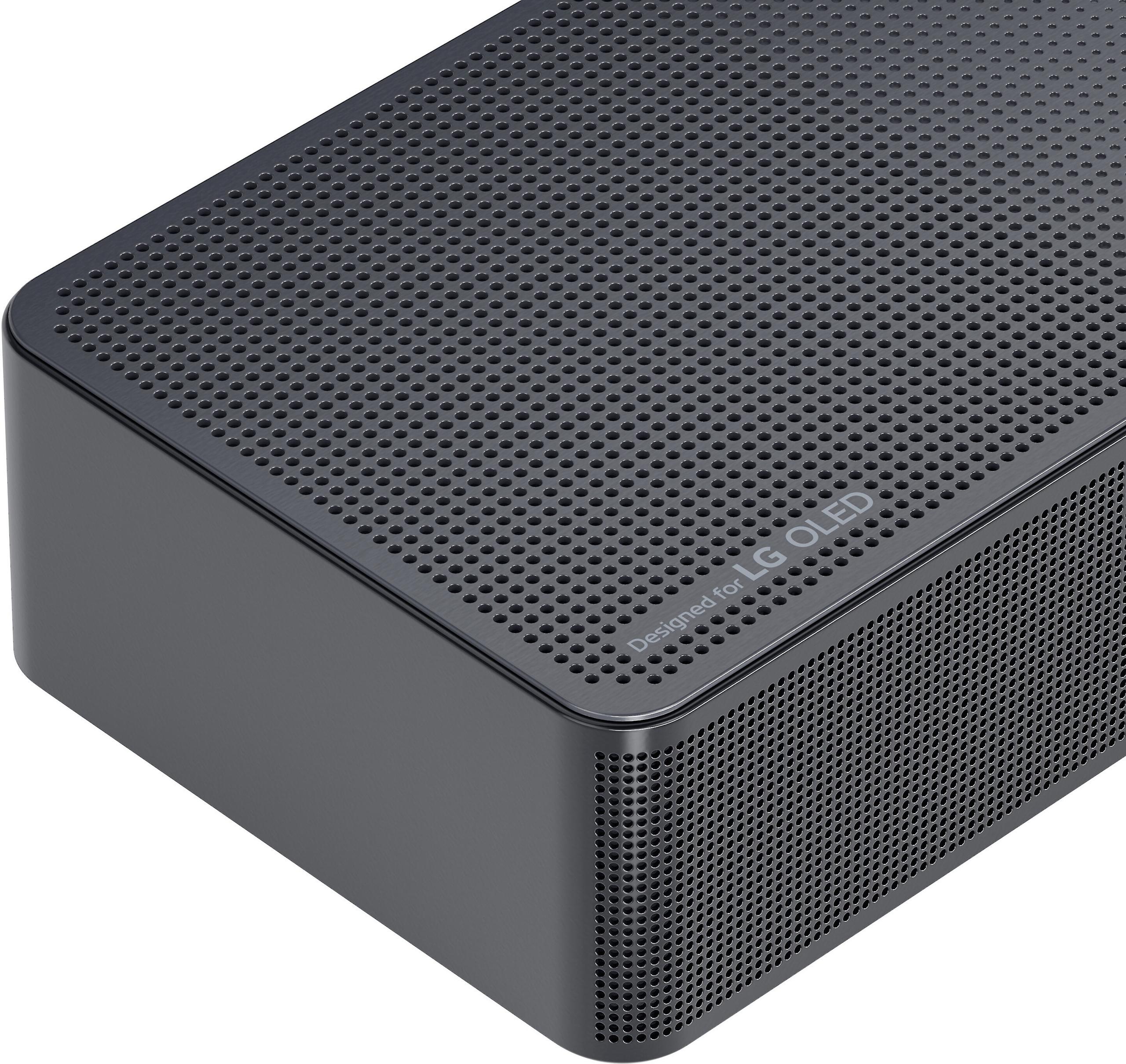
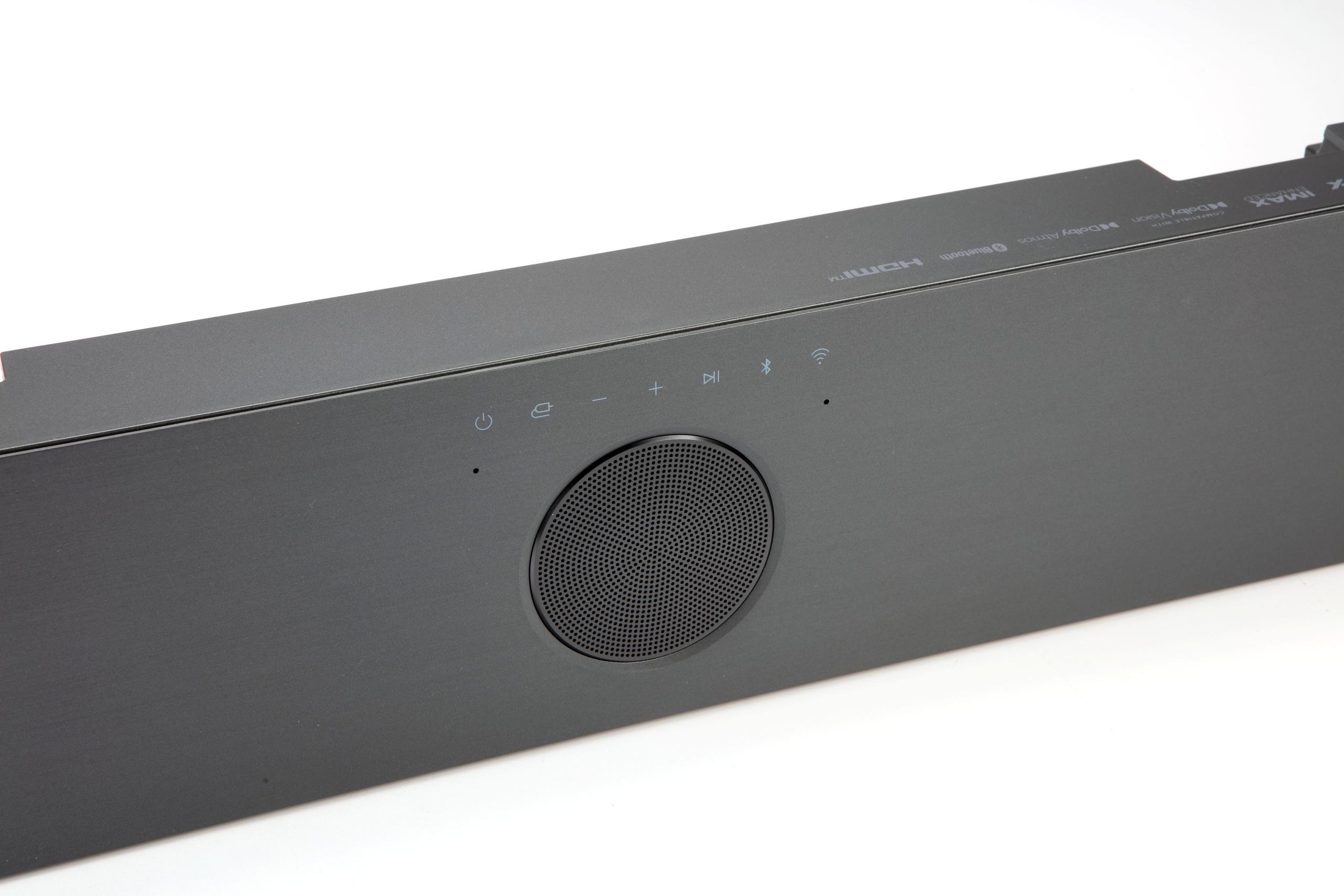
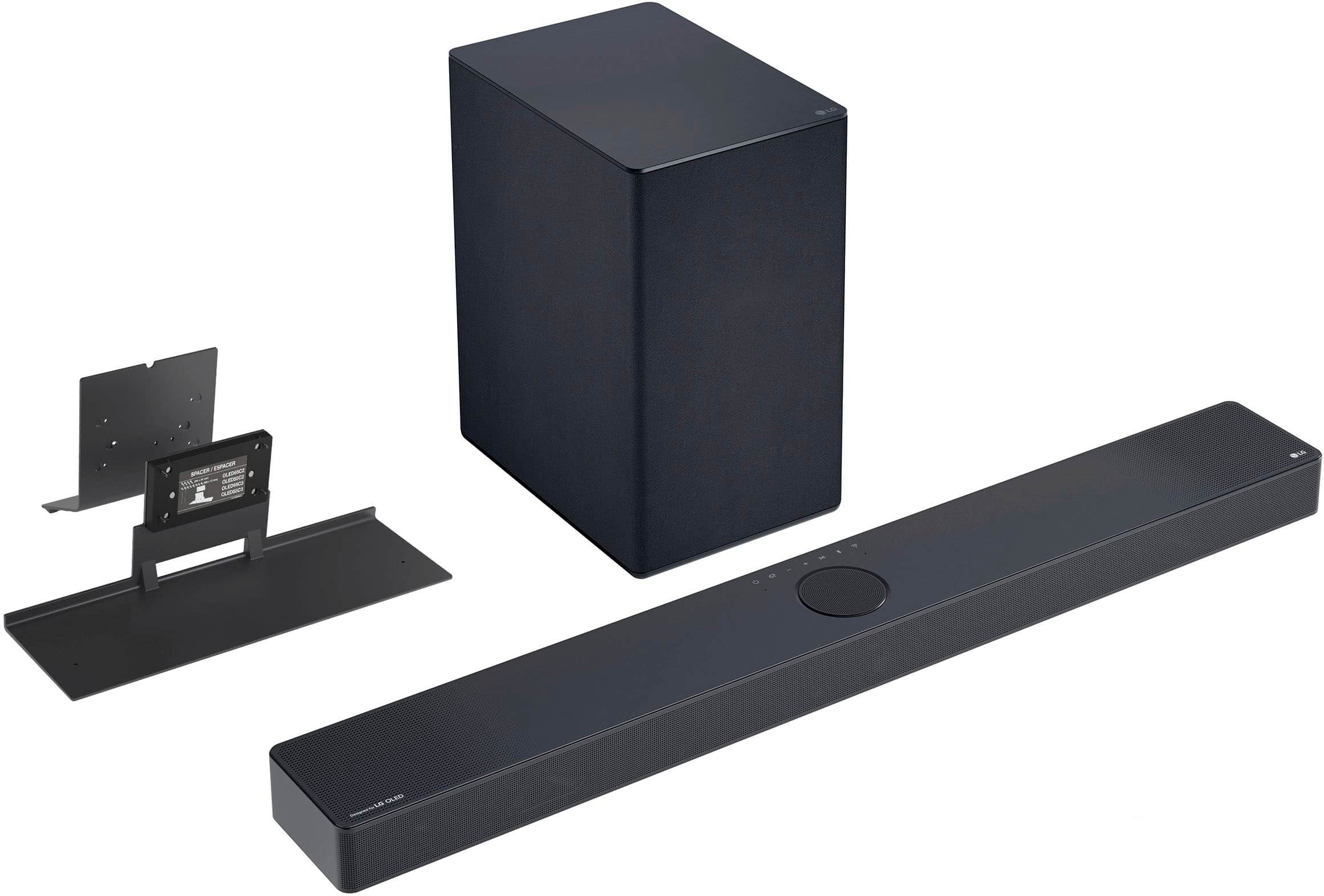
Meanwhile, the LG SC9S arrived in 2023 as part of LG's push to create soundbars specifically designed to complement their popular OLED TV lineup. LG took a different approach, focusing on seamless integration with their TVs rather than raw speaker count. The SC9S introduced their WOW Orchestra technology, which coordinates the soundbar with your LG TV's built-in speakers to create a wider, more cohesive soundstage.
Since these launches, both companies have continued refining their software through firmware updates. Samsung has improved their Game Mode Pro with better genre detection, while LG has enhanced their AI Room Calibration Pro to work more effectively in oddly shaped rooms.
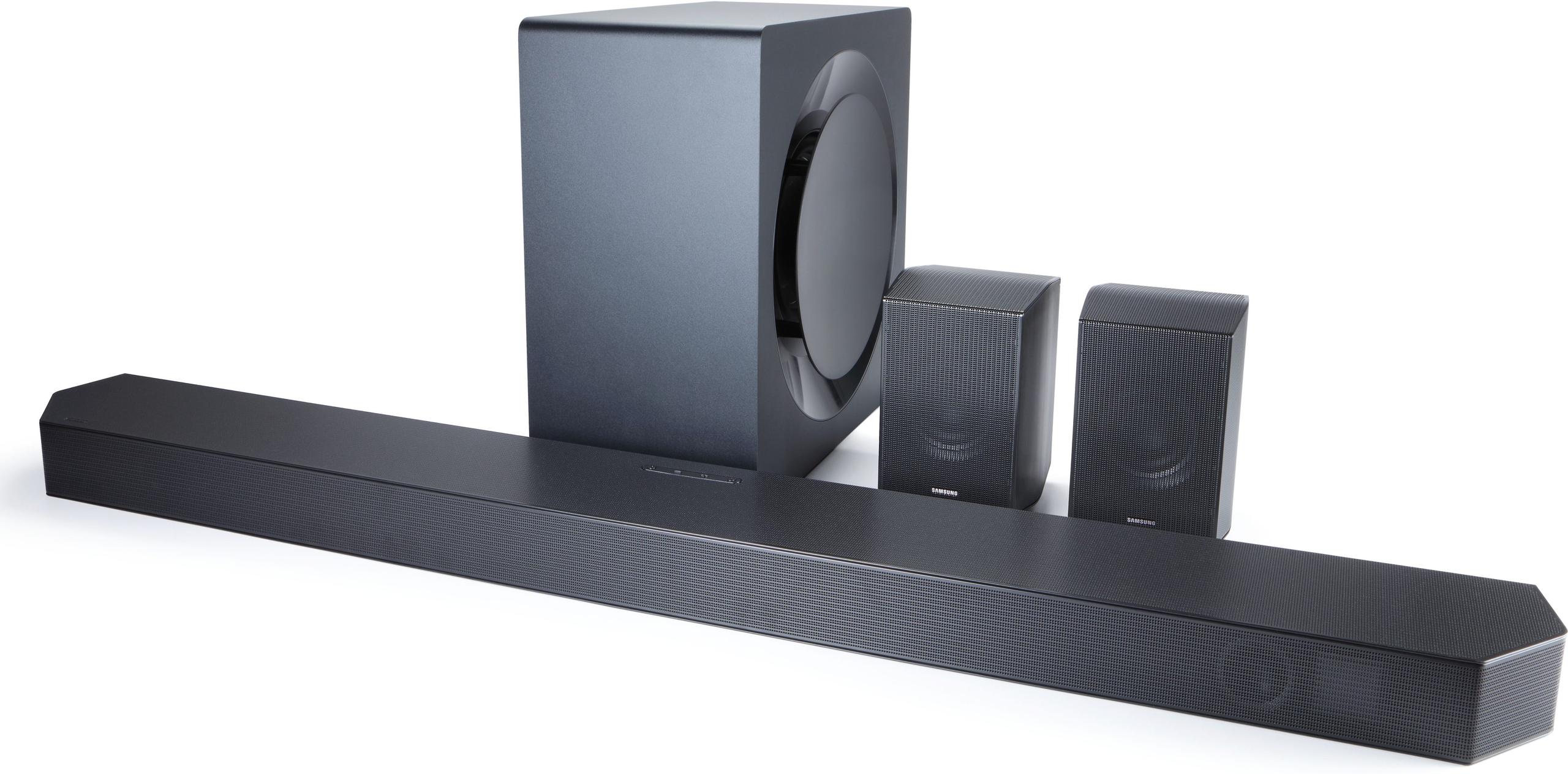
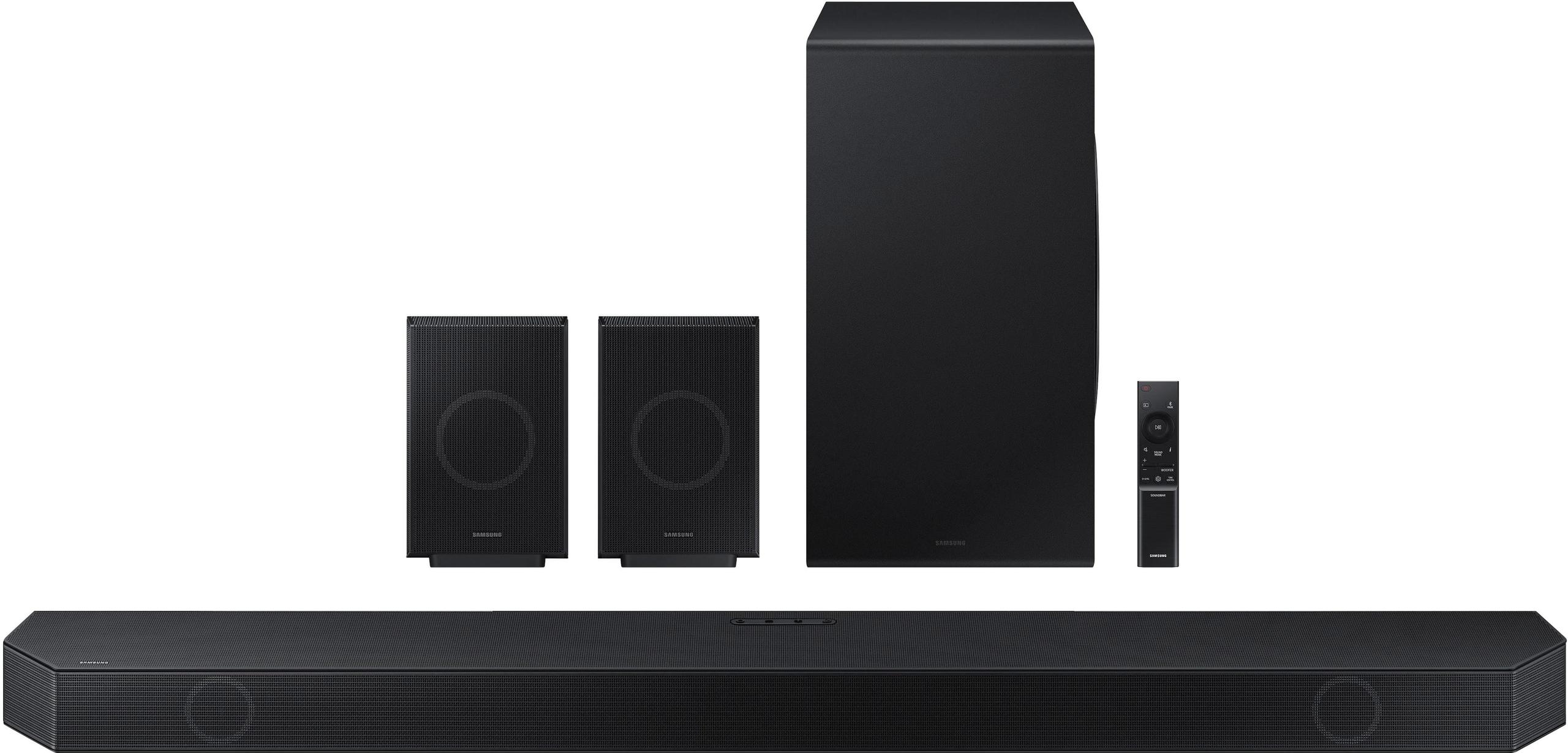
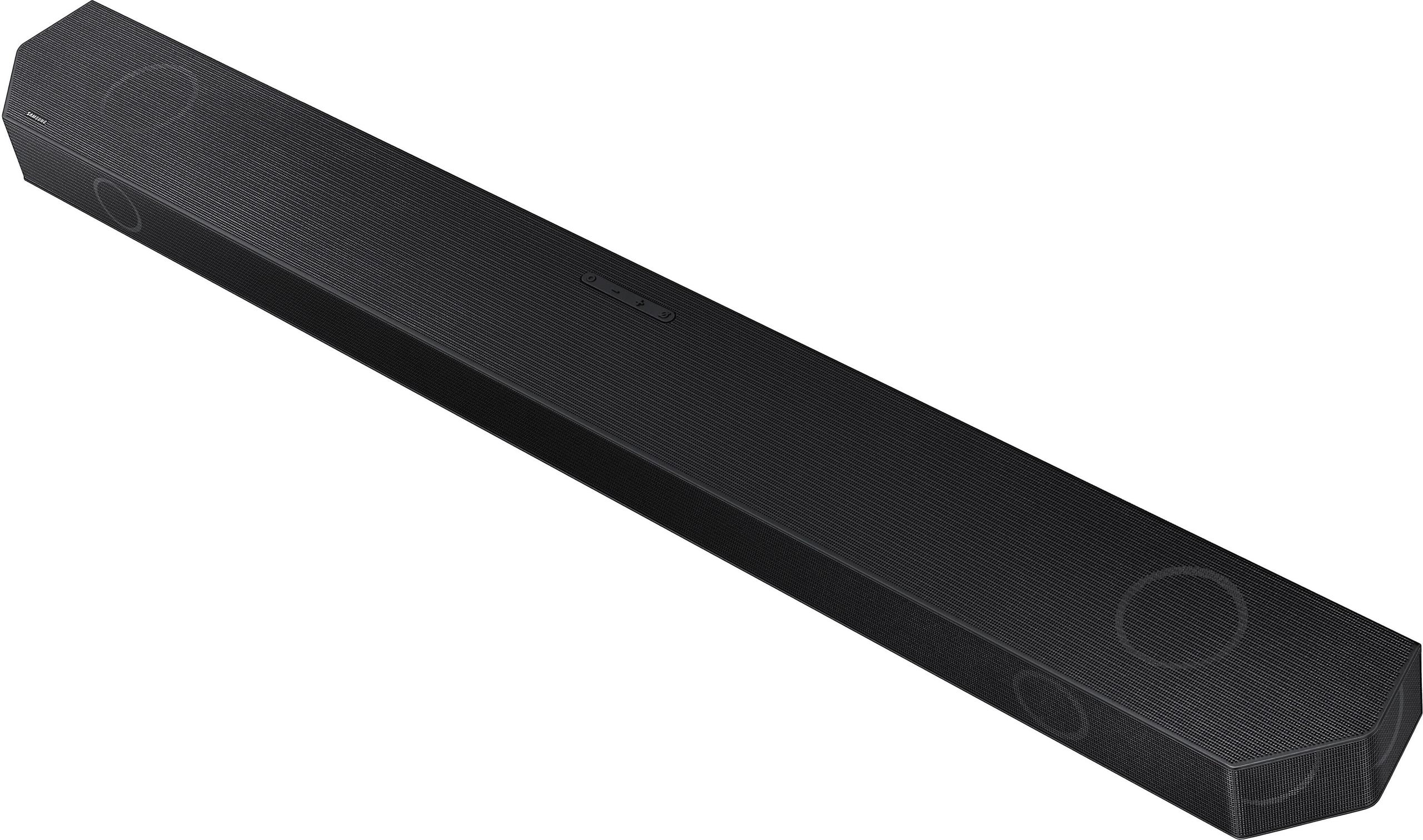
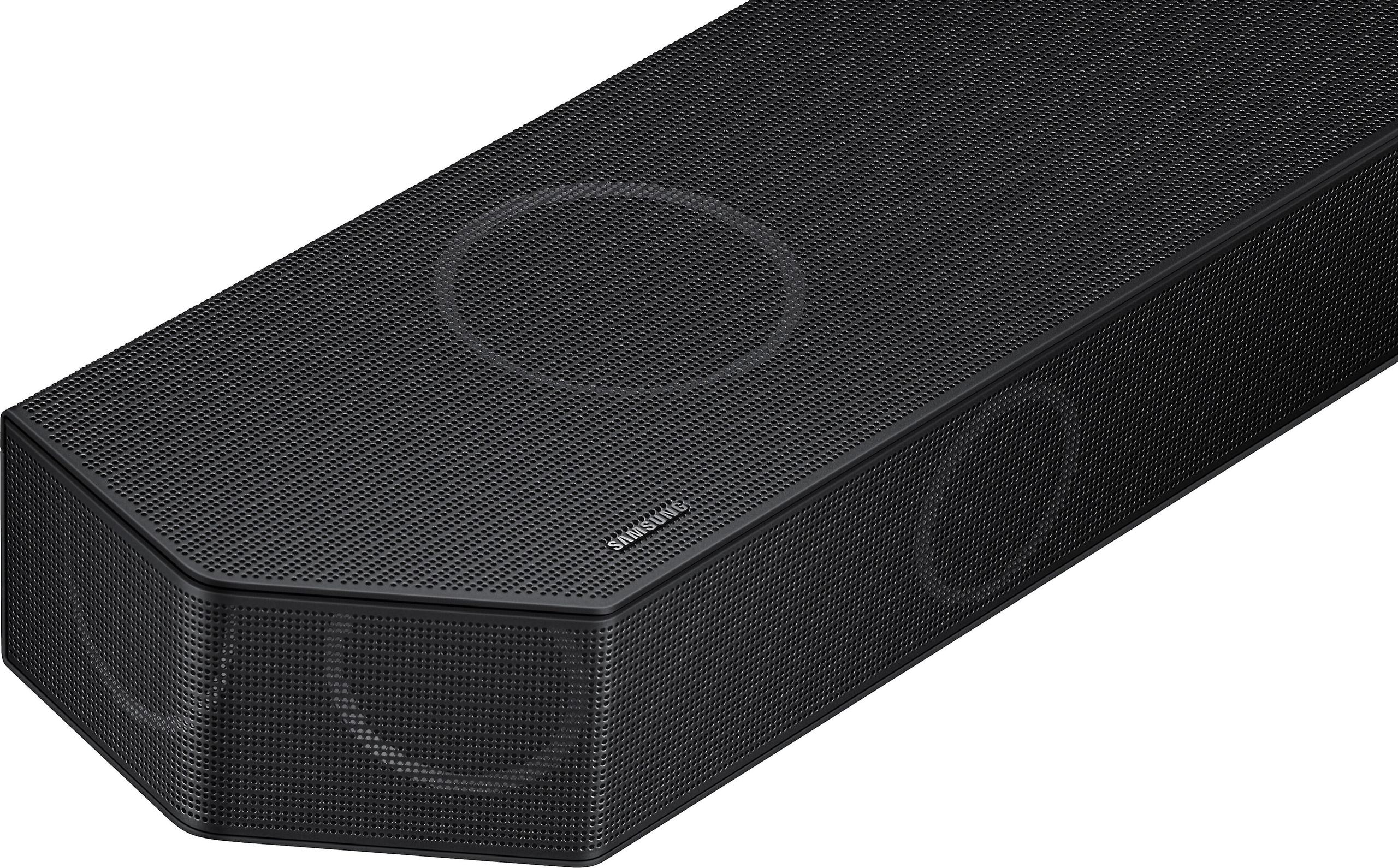
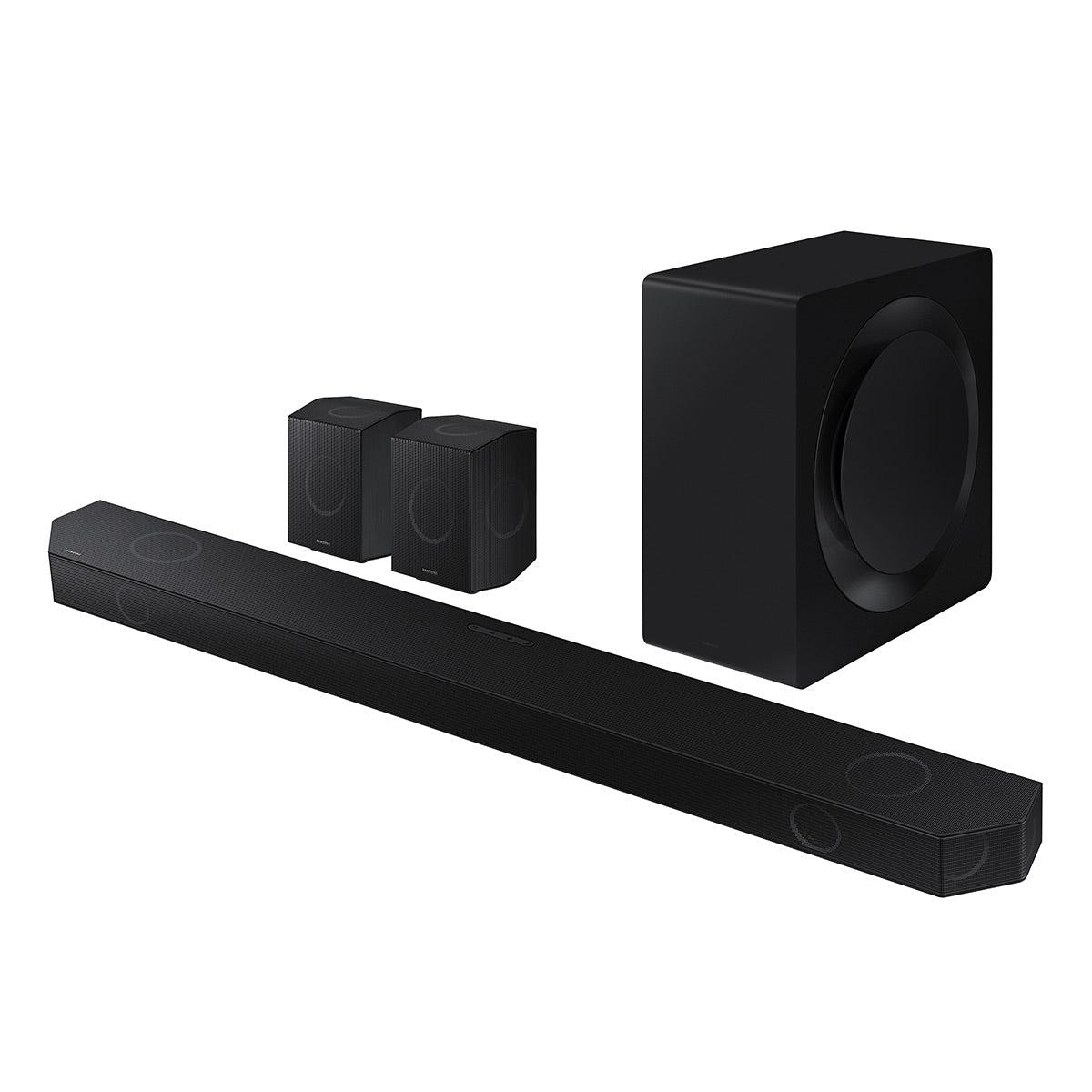
This is where the biggest difference between these two soundbars becomes apparent. The Samsung HW-Q990D takes the "more is more" approach with its 11.1.4-channel configuration. That number might look confusing, but here's what it means: 11 traditional surround channels, 1 dedicated subwoofer channel, and 4 height channels for overhead effects.
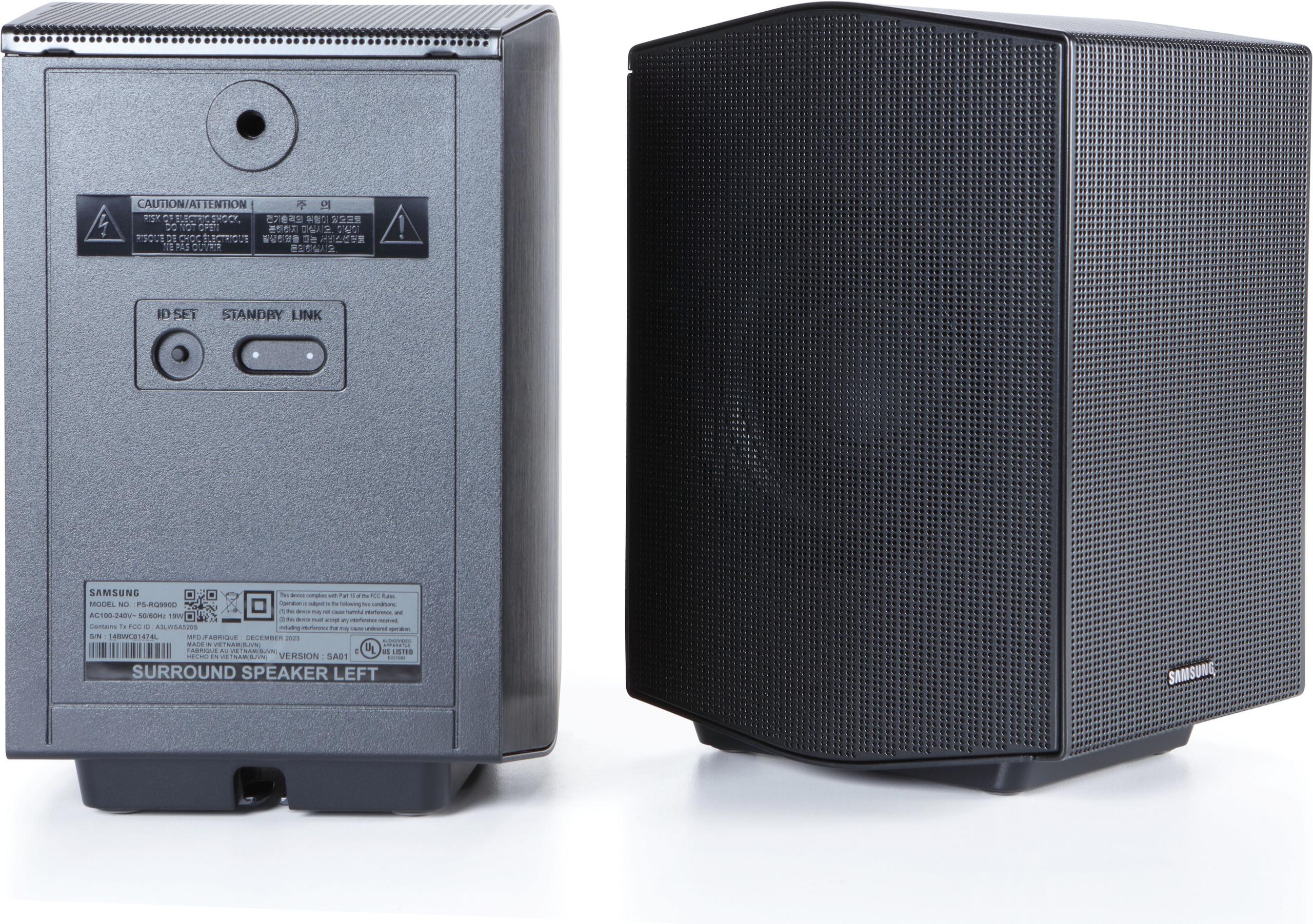
To achieve this, Samsung includes 22 individual drivers (speakers) spread across the main soundbar, a wireless subwoofer, and two wireless rear speakers. The soundbar itself has six elliptical midrange drivers and three tweeters firing forward for dialogue and main effects, four side-firing drivers for wider soundstage, and two up-firing drivers for Dolby Atmos height effects. Each rear speaker adds three more drivers—one firing forward, one to the side, and one upward.
When I first set up the Samsung system in my living room, the difference was immediately noticeable. Sounds genuinely seem to move around the room in three dimensions. During the opening battle scene in "Mad Max: Fury Road," I could hear engines revving behind me while explosions seemed to happen overhead. It's the kind of immersive experience that makes you forget you're not in a movie theater.
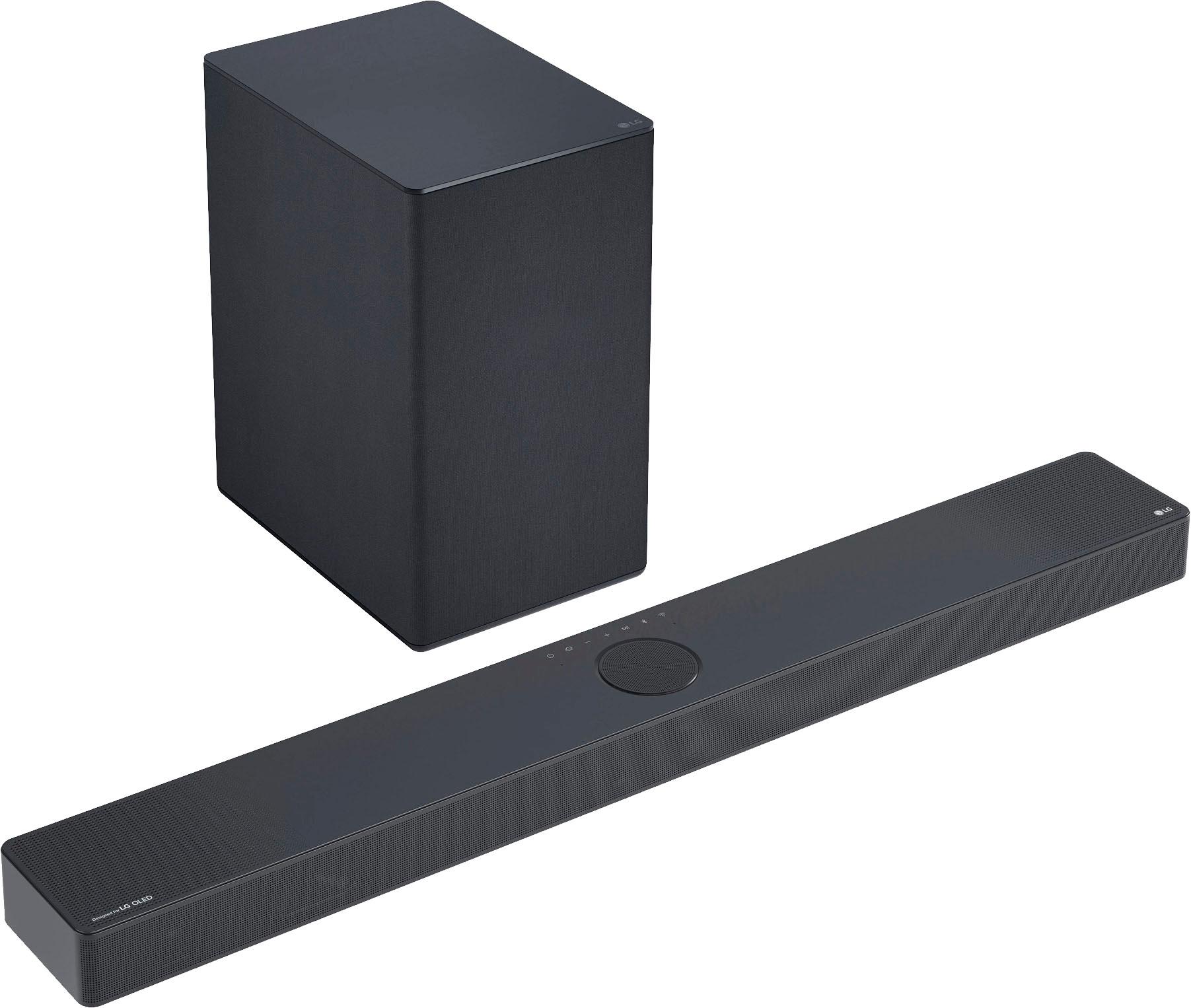
The LG SC9S takes a completely different approach with its 3.1.3-channel setup. Instead of physical rear speakers, it relies on psychoacoustic processing—essentially tricking your brain into hearing sounds from directions where no speakers exist. The "3.1.3" means three traditional channels (left, center, right), one subwoofer, and three height channels.
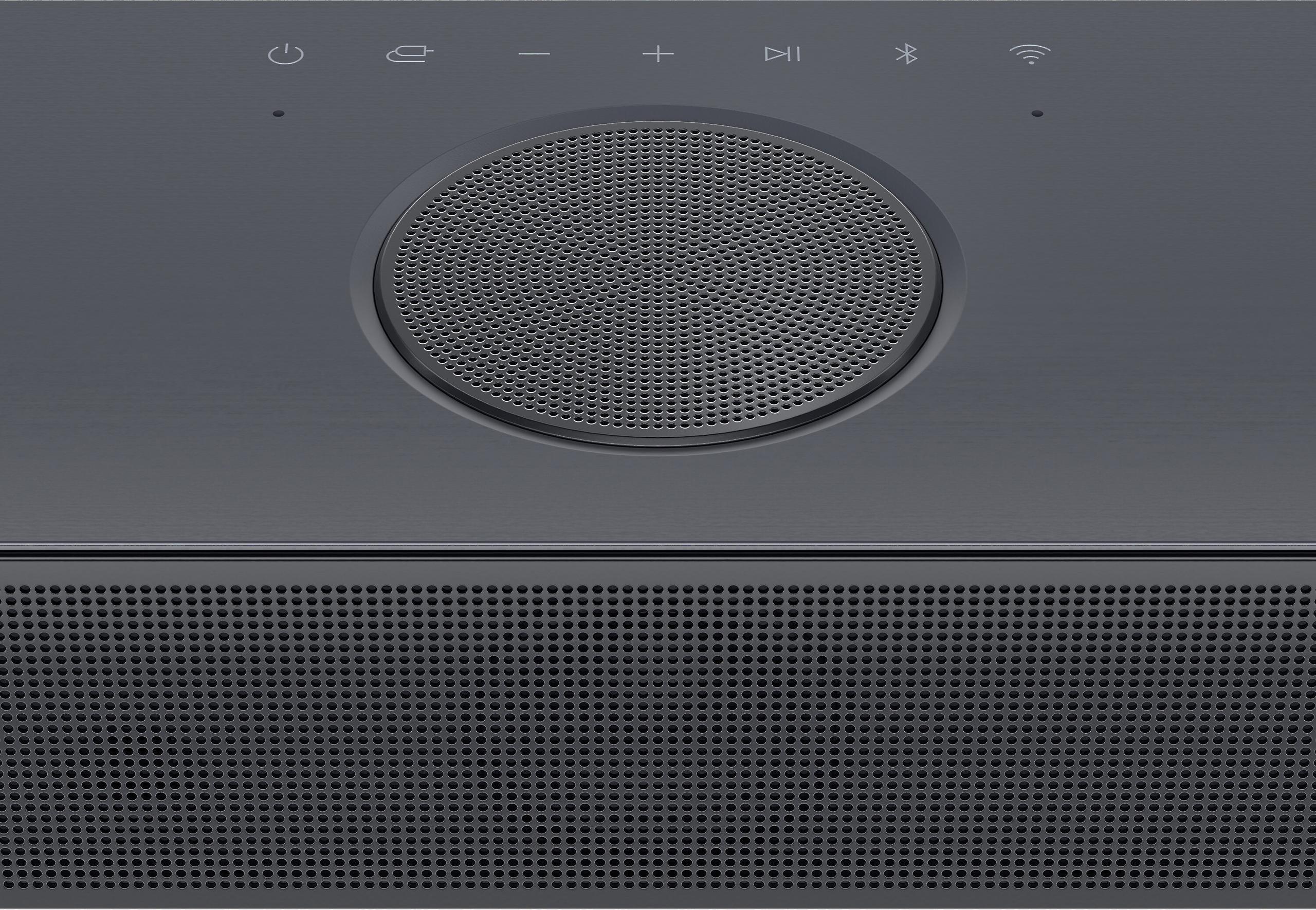
What makes the LG interesting is its unique up-firing center channel. Most soundbars have their center channel firing directly forward, but LG added an additional up-firing driver specifically for the center channel. This creates a more three-dimensional presentation for dialogue and vocals, making voices seem to come from the screen rather than from below it.
In my testing, the LG's virtual surround processing is surprisingly effective, especially for dialogue-heavy content like dramas or documentaries. However, during complex action sequences with lots of simultaneous sound effects, the processing can get overwhelmed, and you lose some of that precise localization that physical rear speakers provide.
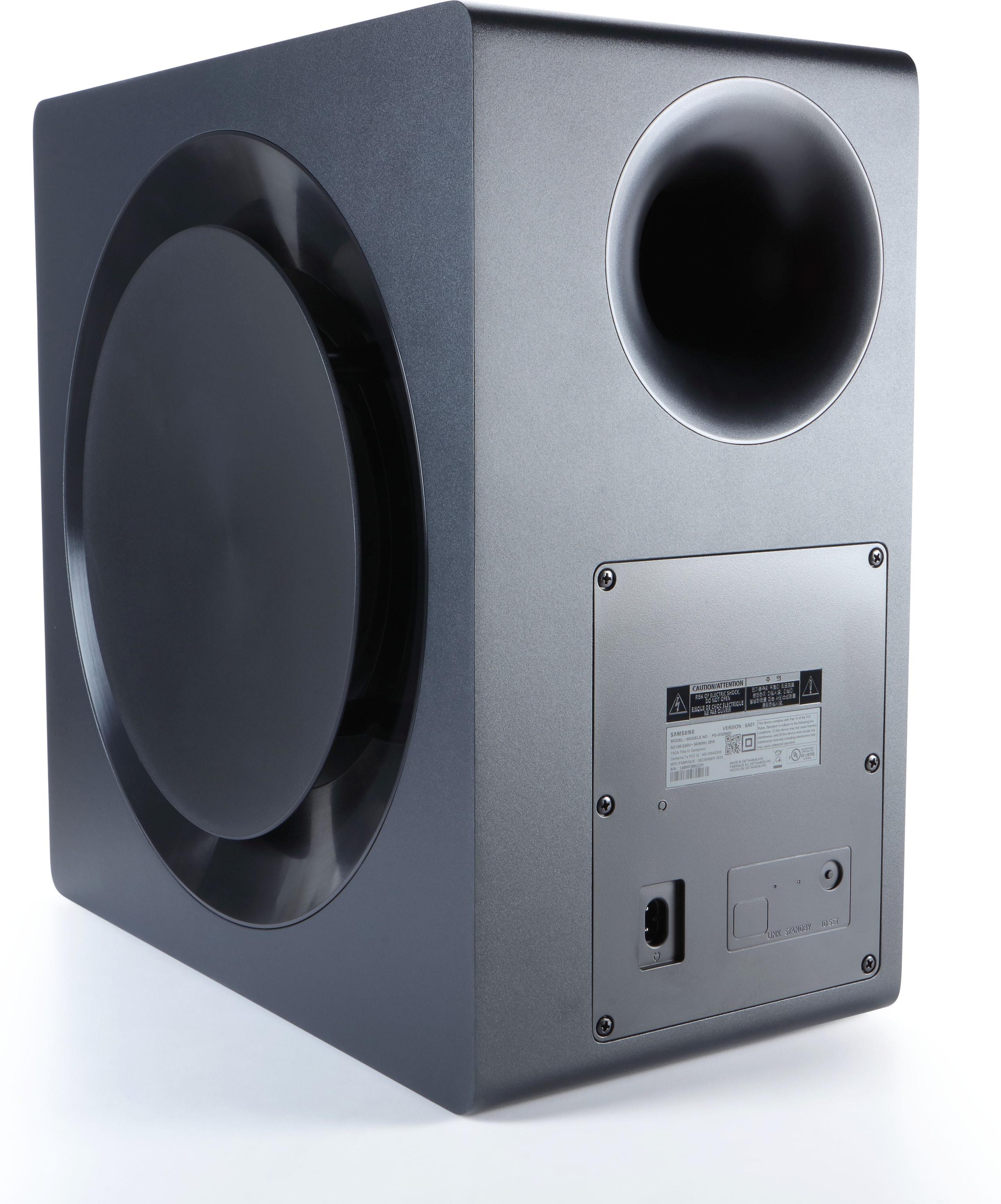
The subwoofer situation tells another interesting story about these different design philosophies. Samsung's approach includes a dedicated 8-inch wireless subwoofer that's designed to blend seamlessly with the other speakers while providing serious low-end extension down to about 34Hz. That's deep enough to reproduce the rumble of earthquakes, explosions, and those satisfying bass drops in action movies.
With approximately 500 watts of total system power, the Samsung HW-Q990D can easily fill large rooms without breaking a sweat. I've used it in spaces ranging from a 200-square-foot apartment to a 400-square-foot open-concept living room, and it had headroom to spare in both situations.
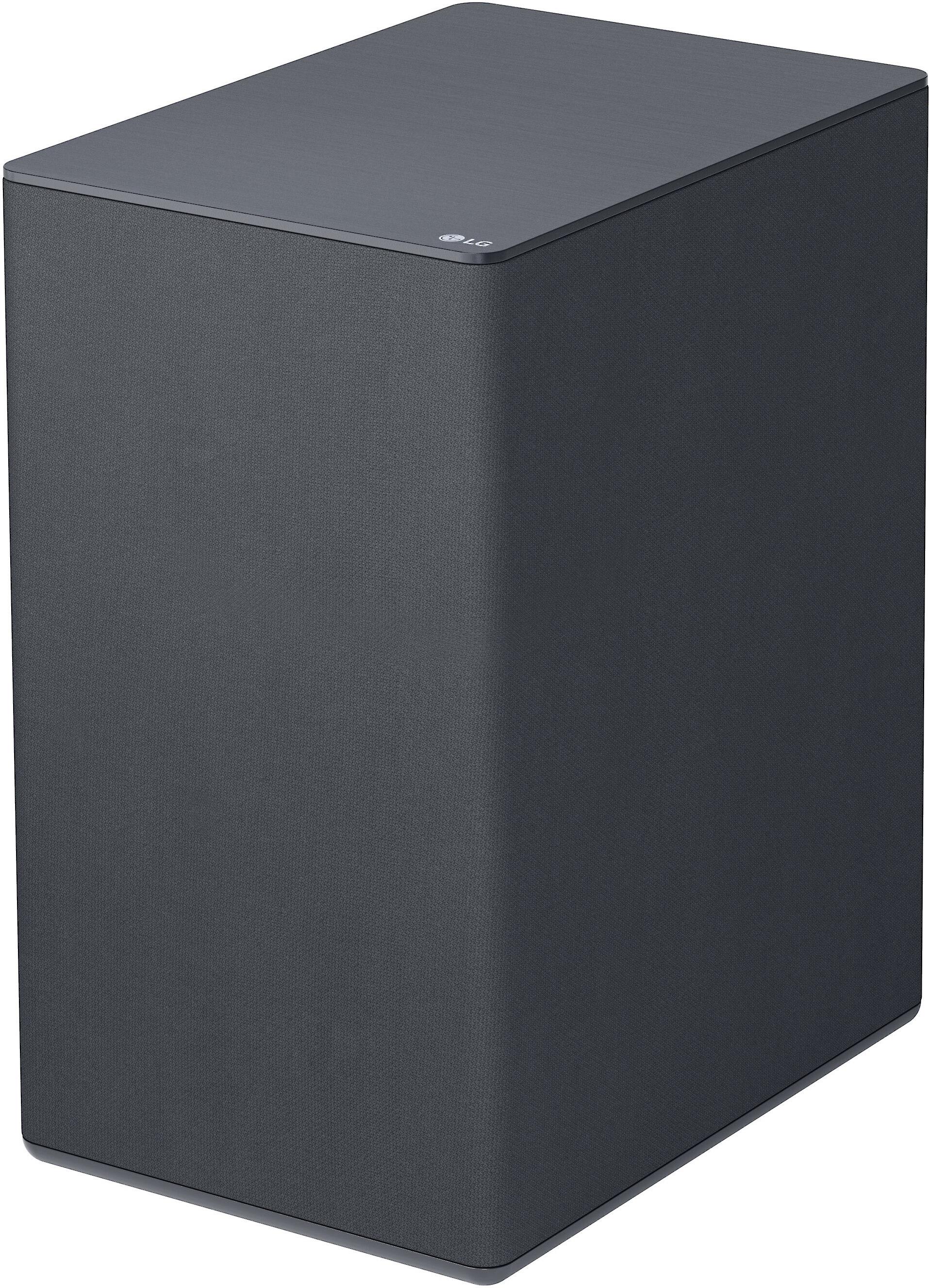
The LG's wireless subwoofer is more modest but still effective. It provides solid bass response that's well-integrated with the main soundbar, though it doesn't dig quite as deep or hit quite as hard as Samsung's unit. This actually works in LG's favor for smaller to medium-sized rooms, where the Samsung's bass might become overwhelming.
What I've found is that the LG's bass stays cleaner at moderate volumes—it's less likely to rattle picture frames or annoy neighbors in an apartment setting. The Samsung's subwoofer, while more powerful, requires more careful placement and room treatment to avoid boomy bass in smaller spaces.
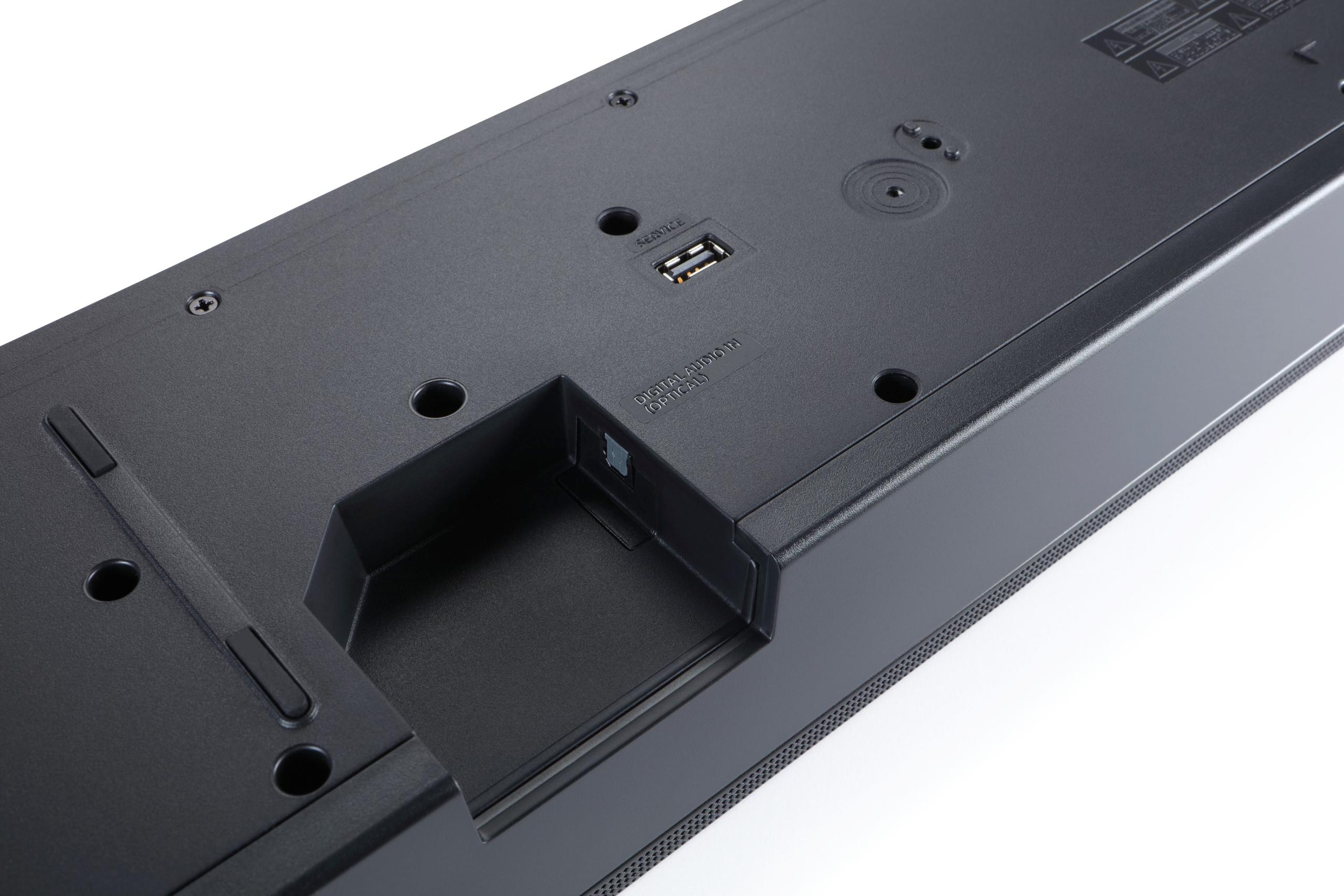
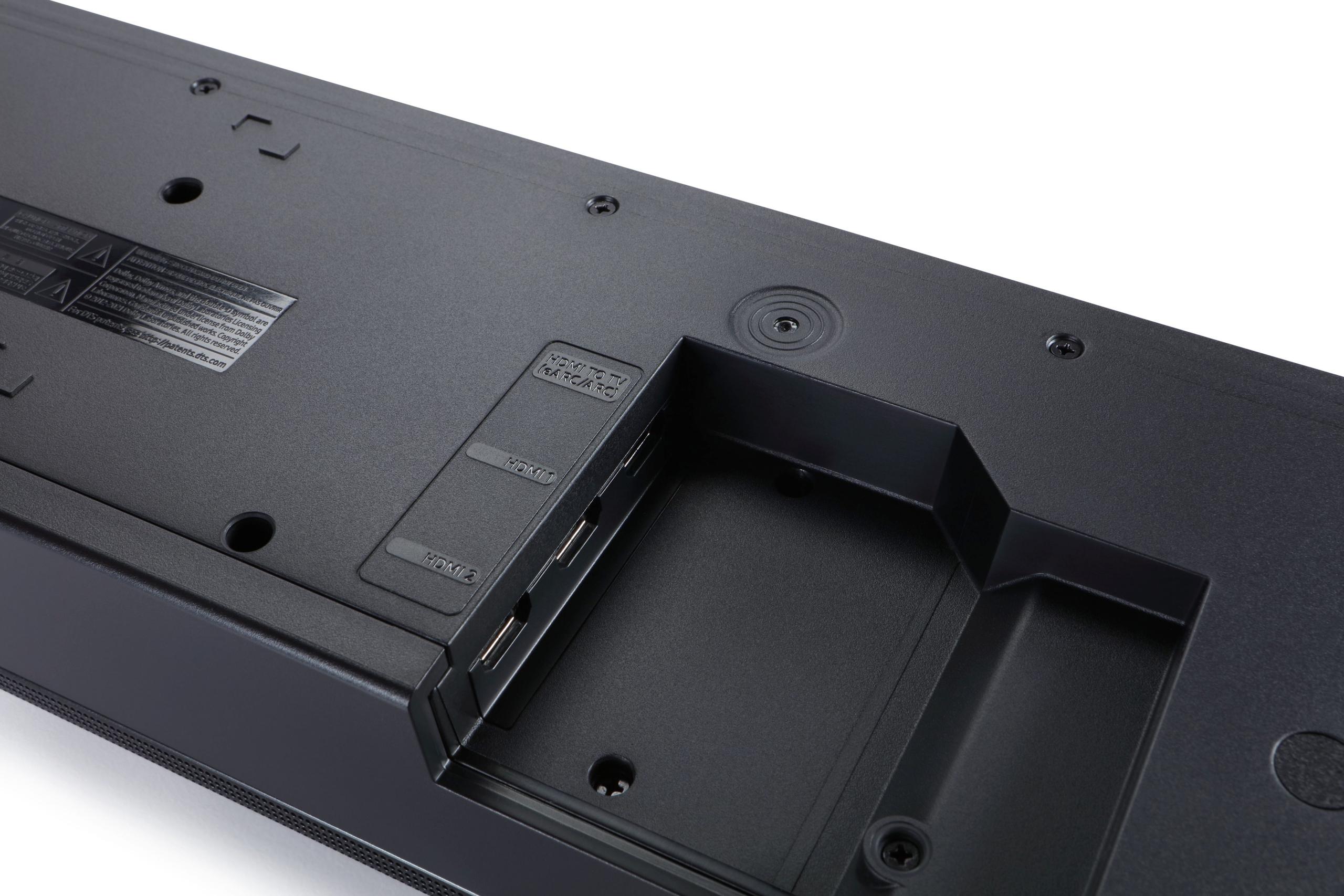
Here's where these soundbars diverge most dramatically. The Samsung HW-Q990D is clearly designed with serious gamers in mind. It includes two HDMI 2.1 inputs, which is huge if you own a PlayStation 5 or Xbox Series X. These consoles can output 4K resolution at 120 frames per second, along with Variable Refresh Rate (VRR) and Auto Low Latency Mode (ALLM)—features that require HDMI 2.1 to work properly.
What this means in practical terms is that you can connect your gaming consoles directly to the soundbar, and it will pass the full-quality video signal through to your TV while processing the audio with minimal delay. The soundbar's Game Mode Pro even adjusts the audio processing based on what type of game you're playing—it recognizes whether you're playing a first-person shooter, racing game, or RPG and optimizes the sound accordingly.
During my gaming sessions, particularly with fast-paced games like "Call of Duty" or "Forza Horizon," the Samsung's low latency audio processing meant that gunshots and engine sounds were perfectly synchronized with the on-screen action. There's nothing more immersion-breaking than having audio lag behind the visuals.
The LG SC9S, unfortunately, only includes standard HDMI eARC (enhanced Audio Return Channel) without additional gaming-focused inputs. This means you'll need to connect your gaming consoles directly to your TV and rely on the TV to pass audio back to the soundbar. While this works fine for most content, it can introduce slight delays and doesn't support the full range of next-gen gaming features.
Both soundbars excel at dialogue reproduction, but they achieve it through different methods. Samsung's Active Voice Amplifier Pro uses AI processing to analyze audio in real-time and boost dialogue when it detects that background music or sound effects might be overwhelming the vocals. This is particularly useful when watching action movies late at night—you can keep the volume low while still clearly hearing what characters are saying.
The LG's approach centers around that unique up-firing center channel I mentioned earlier. By bouncing center channel audio off your ceiling, it creates the illusion that voices are coming from the screen itself rather than from below it. Combined with LG's AI processing, which automatically adjusts dialogue based on content type, the result is exceptionally clear vocal reproduction.
In my experience, both systems handle dialogue well, but they shine in different scenarios. The Samsung is better when you need to cut through complex, busy soundtracks—think Marvel movies with lots of action and music happening simultaneously. The LG excels with dialogue-heavy content like dramas, news, and documentaries where vocal clarity is paramount.
At $850, the Samsung HW-Q990D costs about 65% more than the $516 LG SC9S, but you're getting significantly more hardware. The Samsung package includes the main soundbar, wireless subwoofer, and two wireless rear speakers—essentially a complete home theater audio system. When you break down the cost per speaker, the Samsung actually represents solid value.
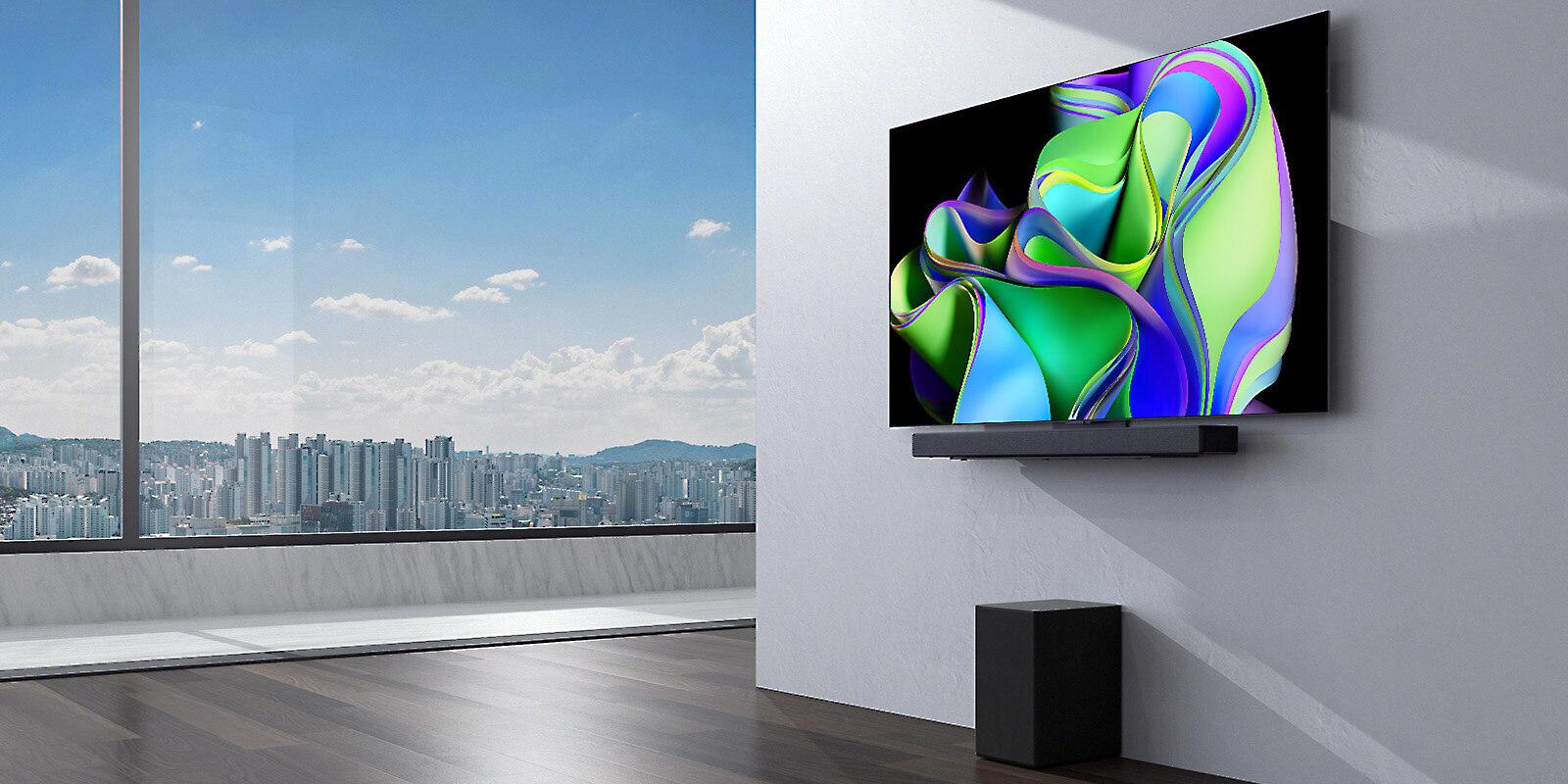
However, value isn't just about raw hardware count. The LG offers exceptional value if you're specifically an LG TV owner. The included mounting bracket is designed to work seamlessly with LG's C-series OLED TVs, creating a clean, integrated appearance that looks like the soundbar was always meant to be part of the TV. The WOW Orchestra feature, which coordinates the soundbar with your TV's built-in speakers, effectively gives you additional drivers without additional cost.
For LG TV owners, the SC9S feels like a natural extension of their TV rather than a separate component. The setup process is streamlined through LG's ThinQ platform, and the AI Room Calibration Pro happens automatically without requiring you to hold up a smartphone or wear special headphones like some competing systems demand.
If you're not tied to a specific TV ecosystem, the Samsung offers more flexibility and future-proofing. Those HDMI 2.1 gaming features alone add significant value if you own or plan to buy next-generation gaming consoles.
The setup experience differs dramatically between these two systems. The Samsung HW-Q990D requires more planning and patience. You'll need to find appropriate locations for the rear speakers, which need to be roughly at ear level and positioned behind your primary seating area. The wireless nature helps—you only need power outlets, not speaker wire—but you still need to consider sight lines and furniture placement.
Samsung's SpaceFit Sound Pro technology helps optimize the sound once everything is positioned, but it's an ongoing process. The system continuously listens to your room and adjusts the audio processing, which means it's always adapting but also means there's no "set it and forget it" simplicity.
The LG SC9S is essentially plug-and-play. Connect the power, link the wireless subwoofer, run the AI Room Calibration, and you're done. The entire process takes maybe 20 minutes, and most of that is waiting for the calibration to complete. There are no rear speakers to position, no complex setup menus to navigate.
In daily use, the LG feels more intuitive. The sound modes adjust automatically based on content, and if you're using an LG TV, the integration is seamless. The Samsung offers more customization options, which can be great if you enjoy tweaking settings, but it can also feel overwhelming if you just want good sound without the complexity.
For dedicated home theater use, the Samsung HW-Q990D is the clear winner. The physical rear speakers create genuine surround sound that virtual processing simply cannot match. When you're watching "Dune" and the ornithopters fly overhead, you hear them move from front to back in a way that feels natural and immersive.
The Samsung's power headroom also matters in larger home theater spaces. If you're dealing with a room larger than 300 square feet, or if you like to watch movies at reference volume levels, the Samsung has the grunt to fill the space without compression or distortion.
However, the LG SC9S shouldn't be dismissed for home theater use, especially in smaller, more intimate spaces. Its virtual processing works best when you're seated in the optimal listening position—typically centered in front of the soundbar at a distance of 8-12 feet. In this scenario, the height simulation can be quite convincing, and the overall sound quality is genuinely impressive.
The LG also has an advantage for mixed-use spaces where the room serves multiple purposes beyond just movie watching. Without rear speakers to work around, furniture arrangements are more flexible, and the system doesn't dominate the room visually.
After extensive time with both systems, here's how I'd recommend thinking about your choice:
Choose the Samsung HW-Q990D if you're serious about recreating a theater-like experience at home. The investment in physical rear speakers pays dividends in immersion that you simply can't get from virtual processing. It's also the obvious choice for gamers who want to future-proof their setup for next-generation consoles. The complexity is worth it if you value absolute audio performance above convenience.
The LG SC9S makes more sense if you prioritize simplicity and integration, especially if you own an LG TV. It delivers impressive Dolby Atmos performance without the setup complexity, and for most content—particularly dialogue-heavy material—it's genuinely excellent. The $300+ price difference could easily go toward other home theater improvements like room treatment or streaming service subscriptions.
Ultimately, both soundbars represent excellent value in their respective categories. The Samsung pushes the boundaries of what's possible in a soundbar format, while the LG proves that intelligent processing and thoughtful integration can deliver satisfying results without the complexity. Your choice should depend on your room, your priorities, and honestly, how much setup complexity you're willing to embrace for potentially better sound quality.
The premium soundbar market continues to evolve rapidly, but both of these systems represent the current state of the art in their respective approaches. Whichever you choose, you'll be getting a significant upgrade over basic TV audio—and that's really what matters most.
| Samsung HW-Q990D ($850) | LG SC9S ($516) |
|---|---|
| Channel Configuration - Determines surround sound authenticity | |
| 11.1.4 channels with 22 physical drivers | 3.1.3 channels with virtual processing |
| Rear Speakers - Creates true vs. simulated surround sound | |
| Wireless rear speakers included | No rear speakers (virtual surround only) |
| Subwoofer - Controls bass depth and room-filling power | |
| Wireless 8" subwoofer (extends to 34Hz) | Wireless subwoofer (more compact) |
| Gaming Features - Essential for PS5/Xbox Series X owners | |
| 2x HDMI 2.1 inputs with 4K/120Hz, VRR, ALLM | HDMI eARC only (4K/60Hz maximum) |
| Room Calibration - Optimizes sound for your space | |
| SpaceFit Sound Pro (continuous AI adjustment) | AI Room Calibration Pro (one-time setup) |
| TV Integration - Affects setup simplicity and performance | |
| Universal compatibility (Q-Symphony with Samsung TVs) | Designed specifically for LG OLED TVs |
| Total Power Output - Determines maximum volume and dynamics | |
| ~500W total system power | Lower power output (specification not disclosed) |
| Physical Footprint - Consider your room layout and aesthetics | |
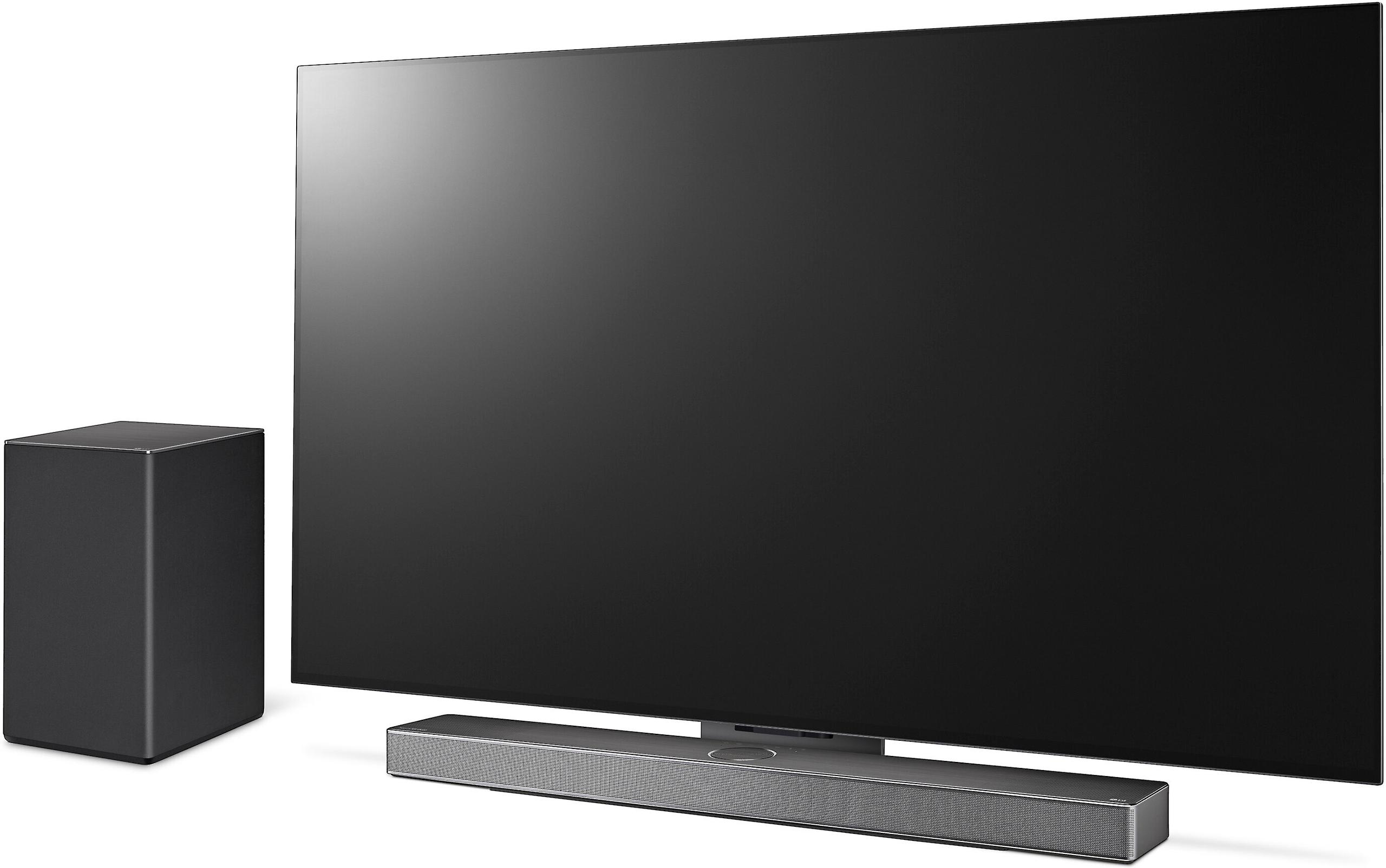
| Requires rear speaker placement and power outlets | Single soundbar + subwoofer only |
| Setup Complexity - Time and effort required | |
| Complex setup with multiple wireless components | Simple plug-and-play installation |
| Price Value - Cost per feature and performance level | |
| $850 for complete 11.1.4 system | $516 for streamlined 3.1.3 system |
The Samsung HW-Q990D ($850) is significantly better for home theater use thanks to its true 11.1.4-channel surround sound with physical rear speakers. This creates authentic directional audio where sounds genuinely move around your room. The LG SC9S ($516) uses virtual processing to simulate surround effects, which works well but can't match the immersion of real rear speakers for action movies and cinematic content.
The Samsung HW-Q990D costs $850, while the LG SC9S is priced at $516. The Samsung is about 65% more expensive, but it includes wireless rear speakers and a more powerful subwoofer as part of a complete surround sound system.
It depends on your priorities. The Samsung HW-Q990D ($850) includes wireless rear speakers that provide true surround sound localization—you'll hear effects genuinely coming from behind you. The LG SC9S ($516) uses advanced virtual processing to simulate rear effects, which is surprisingly effective but not as convincing as physical speakers for immersive movie watching.
The LG SC9S is much easier to install with a simple plug-and-play setup that takes about 20 minutes. The Samsung HW-Q990D requires more planning since you need to position wireless rear speakers and run its room calibration system, making setup more complex but potentially more rewarding.
The Samsung HW-Q990D ($850) is excellent for next-gen gaming with dual HDMI 2.1 inputs supporting 4K/120Hz, VRR, and ALLM. The LG SC9S ($516) only has HDMI eARC without dedicated gaming inputs, limiting it to 4K/60Hz and requiring console connection through your TV.
The LG SC9S is specifically designed for LG OLED TVs with a dedicated mounting bracket and WOW Orchestra technology that coordinates with your TV's speakers. The Samsung HW-Q990D works with any TV brand but offers enhanced features with Samsung TVs through Q-Symphony integration.
The LG SC9S ($516) only requires space for the main soundbar and subwoofer placement. The Samsung HW-Q990D ($850) needs additional room planning for rear speaker positioning, requiring power outlets behind your seating area and careful placement for optimal surround effects.
The Samsung HW-Q990D delivers superior bass with its dedicated 8-inch wireless subwoofer that extends down to 34Hz and approximately 500W total system power. The LG SC9S has solid bass performance but less deep extension and power, making it better suited for smaller to medium-sized rooms.
Yes, both the Samsung HW-Q990D ($850) and LG SC9S ($516) support Dolby Atmos for overhead sound effects. However, the Samsung uses 4 dedicated height channels with physical up-firing drivers, while the LG uses 3 height channels with virtual processing and its unique up-firing center channel design.
The LG SC9S offers excellent value at $516 for LG TV owners seeking simplified Atmos performance. The Samsung HW-Q990D provides better absolute performance and gaming features for $850, making it worthwhile for serious home theater enthusiasts who want true surround sound.
The Samsung HW-Q990D ($850) comes as a complete system with rear speakers included, offering no official expansion options. The LG SC9S ($516) also cannot be expanded with additional rear speakers, so you're limited to its 3.1.3 configuration and virtual surround processing.
Both excel at dialogue but through different approaches. The Samsung HW-Q990D uses Active Voice Amplifier Pro with AI processing to enhance dialogue in complex soundtracks. The LG SC9S features a unique up-firing center channel that makes voices appear to come from the screen itself, providing exceptional vocal clarity for dialogue-heavy content.
We've done our best to create useful and informative comparisons to help you decide what product to buy. Our research uses advanced automated methods to create this comparison and perfection is not possible - please contact us for corrections or questions. These are the sites we've researched in the creation of this article: techradar.com - avsforum.com - valueelectronics.com - samsung.com - rtings.com - samsung.com - avsforum.com - samsung.com - cdwg.com - youtube.com - whathifi.com - consumerreports.org - valueelectronics.com - youtube.com - bestbuy.com - rtings.com - costco.com - bestbuy.com - walts.com - queencityonline.com - blog.son-video.com - videoandaudiocenter.com - lg.com

Privacy Policy
Terms and Conditions - Affiliate Policy
Home Security
© Copyright 2008-2026.
11816 Inwood Rd #1211, Dallas, TX 75244