


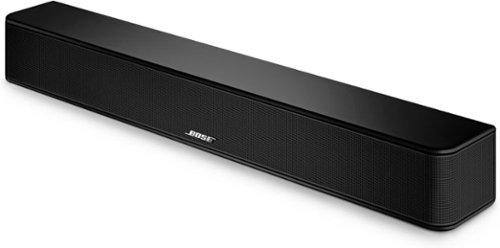
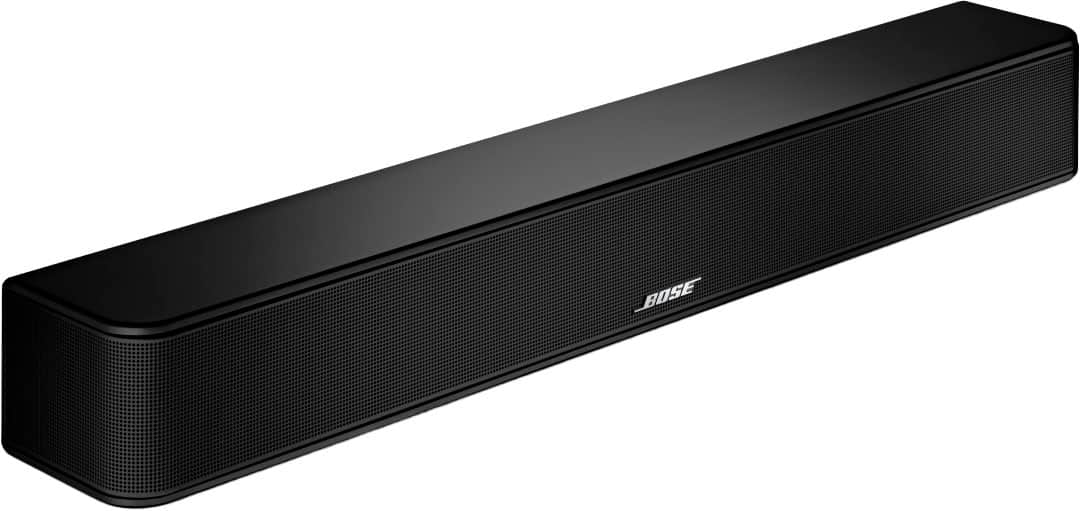
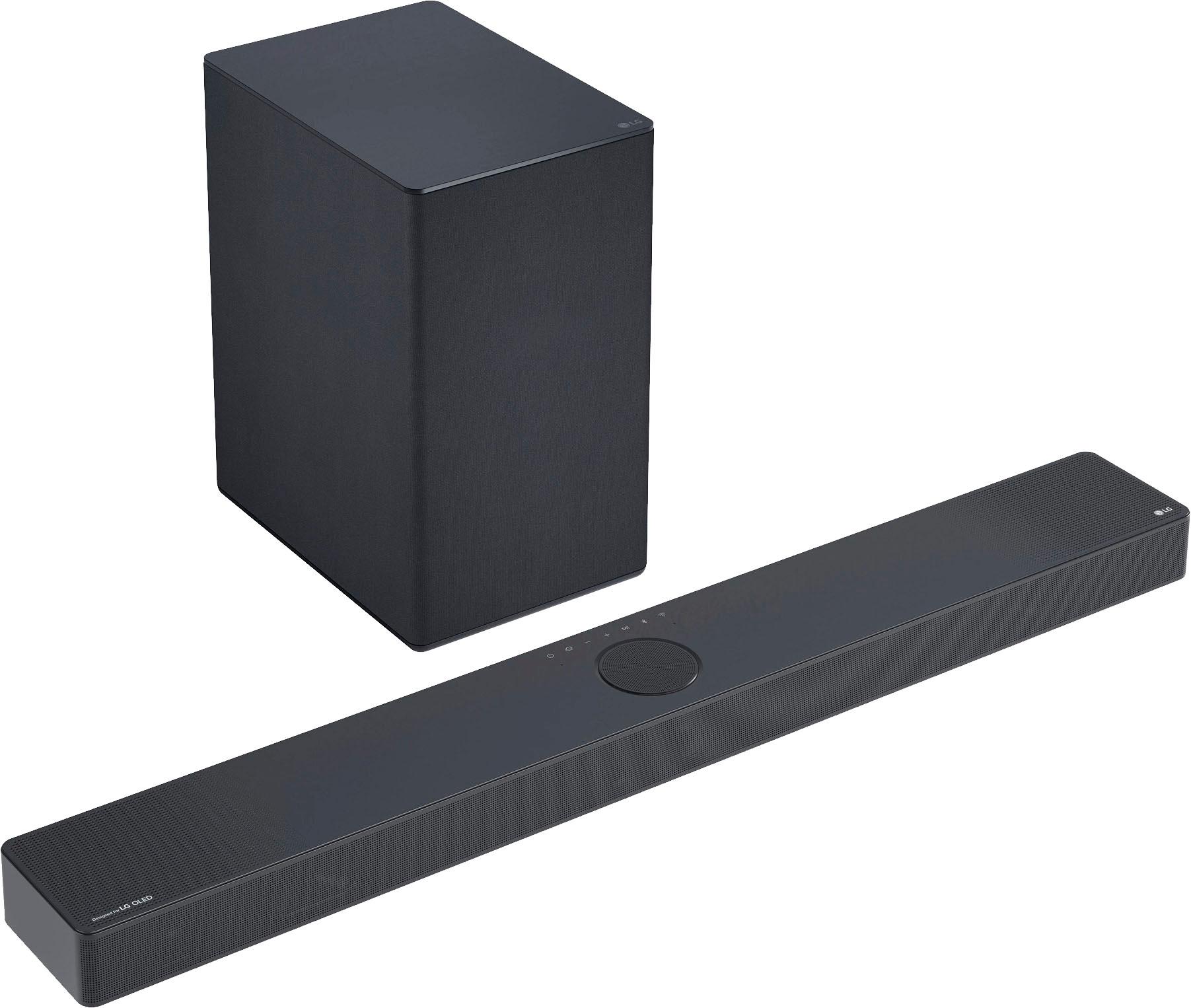


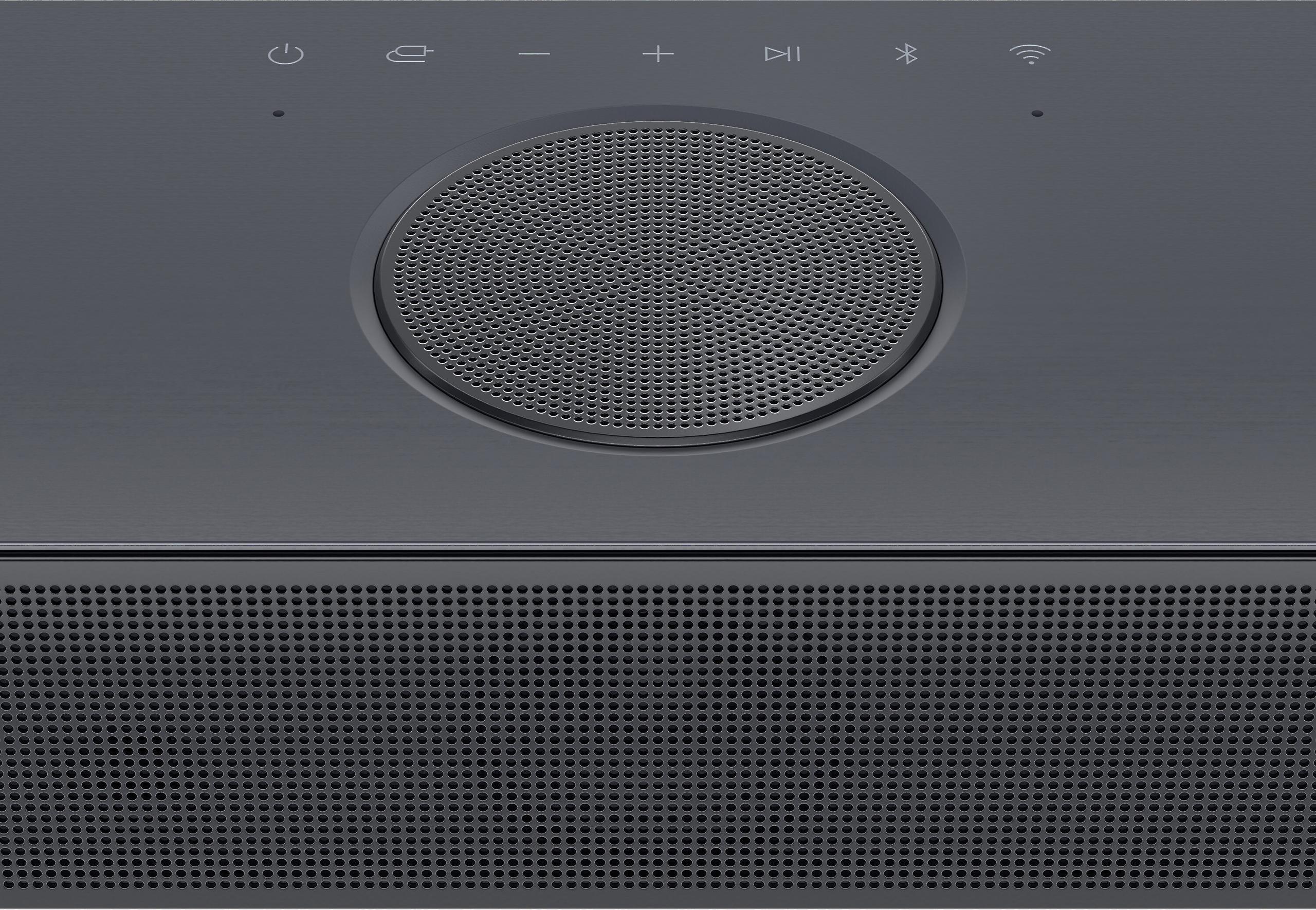
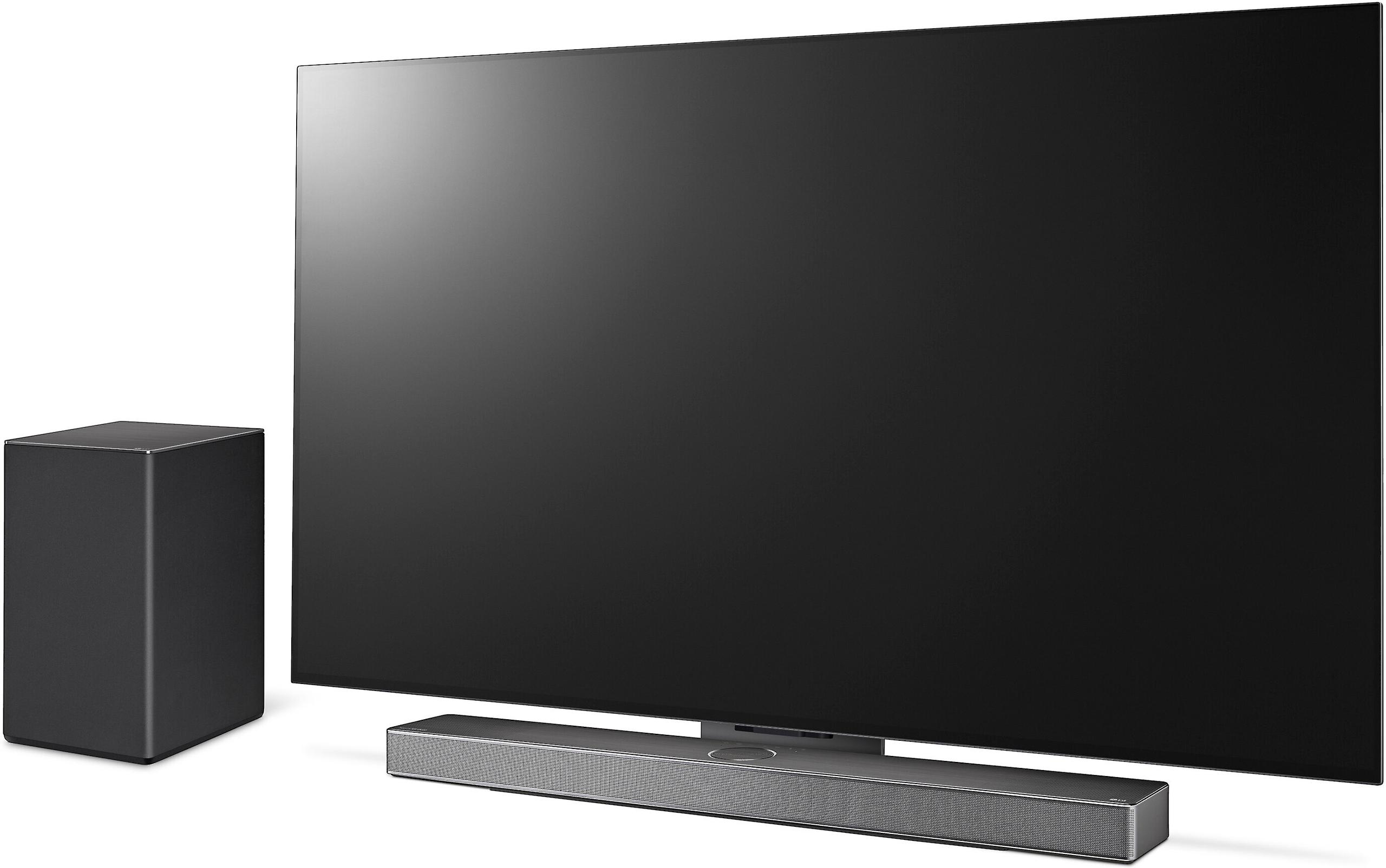
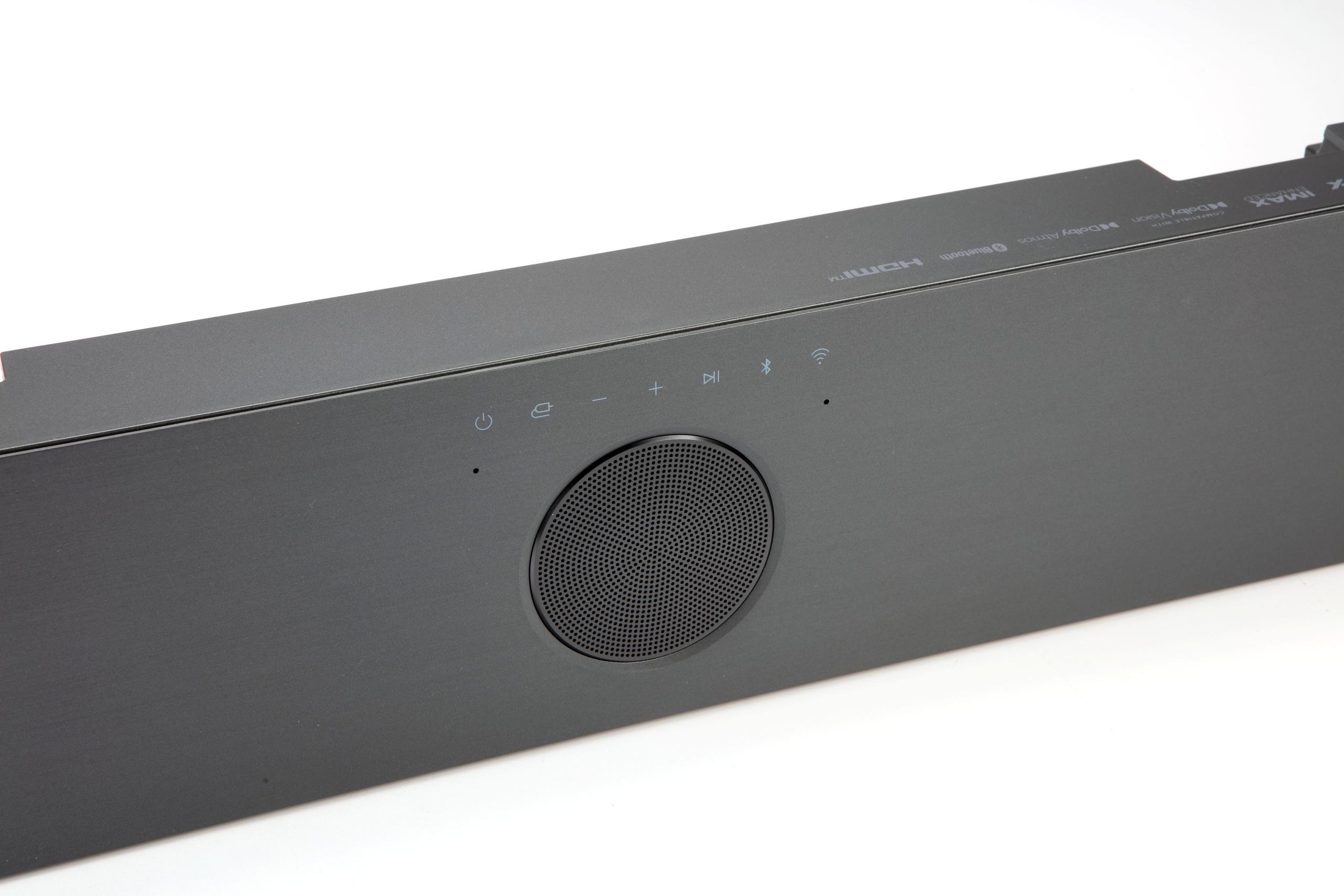
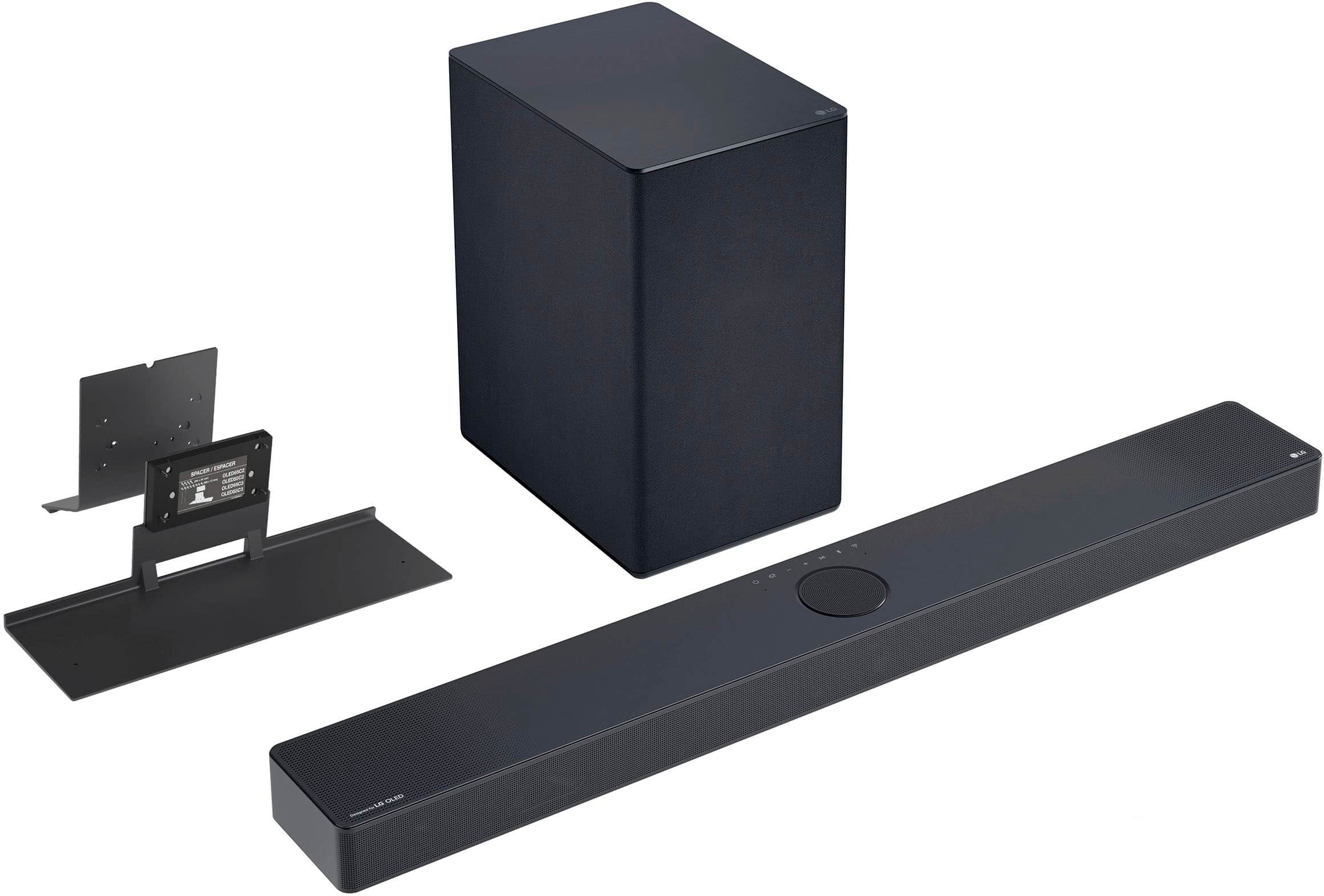
When your TV's built-in speakers just aren't cutting it anymore, you're faced with a classic dilemma: go simple and affordable, or invest in premium features? The Bose Solo Soundbar Series 2 ($199.99) and LG SC9S 3.1.3 Channel Dolby Atmos Soundbar ($515.61) represent two completely different philosophies for solving the same problem – making your TV sound better.
Before diving into these specific models, it's worth understanding what makes soundbars so popular. Unlike traditional surround sound systems that require multiple speakers placed around your room, soundbars pack everything into a single horizontal unit that sits below or mounts above your TV. This simplicity has made them the go-to audio upgrade for millions of homes.
The soundbar market has three main tiers. Budget bars (under $200) focus on improving dialogue clarity – the most common complaint about TV audio. Mid-range options ($200-500) add features like wireless subwoofers and basic surround sound processing. Premium bars ($500+) support advanced audio formats like Dolby Atmos, which creates the illusion of sound coming from above and around you.
What matters most when choosing depends on your priorities: room size, content preferences, budget constraints, and how much complexity you're willing to embrace. Some people just want clearer dialogue for news and sitcoms, while others crave the rumbling bass and overhead effects that make action movies feel cinematic.
The Bose Solo Series 2 launched around 2018 as Bose's entry-level soundbar, designed with their signature philosophy: do one thing exceptionally well. In this case, that means crystal-clear dialogue reproduction without any bells and whistles. It's a 2.0-channel system, meaning it has two speakers (left and right) but no dedicated center channel or subwoofer.
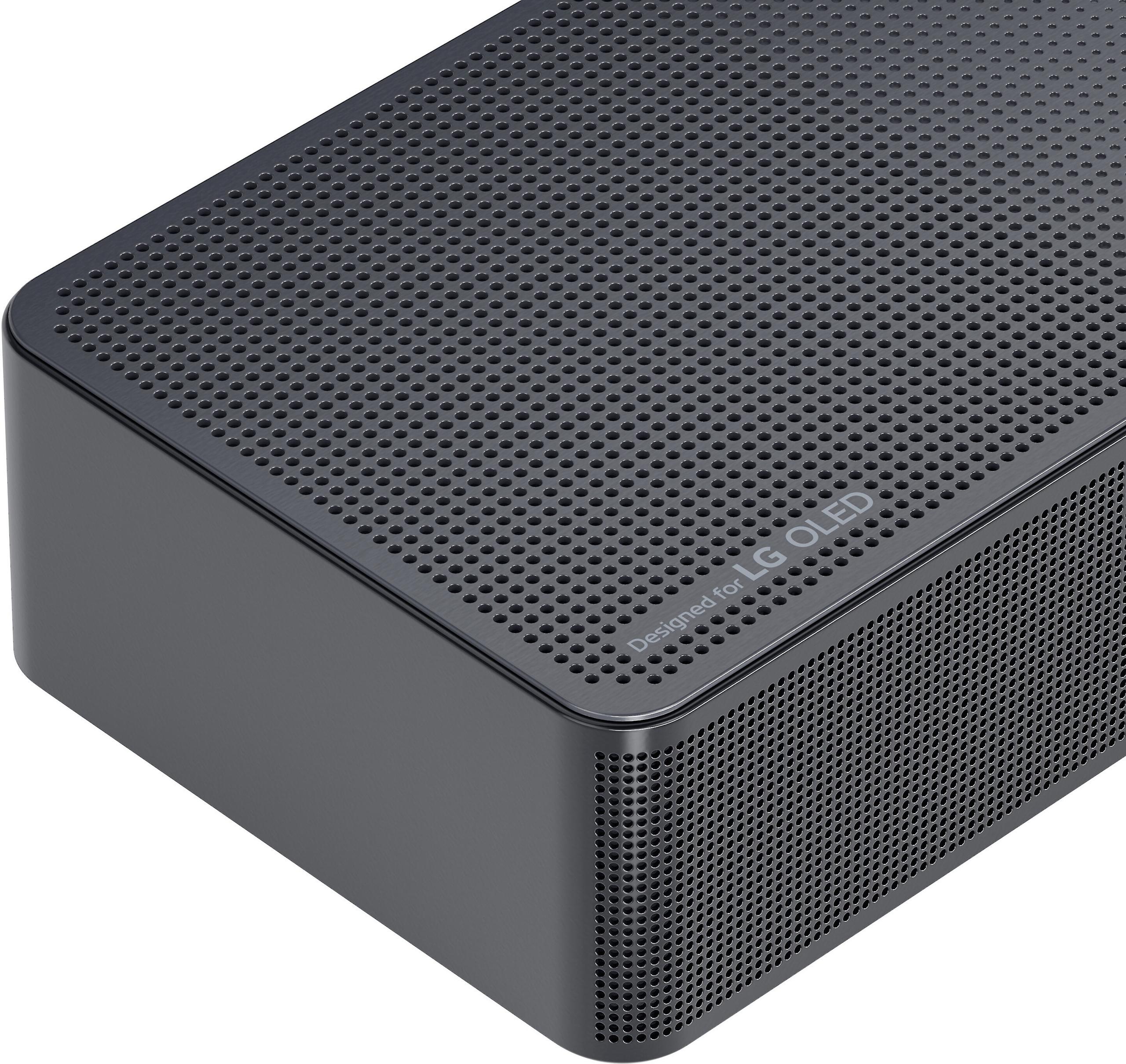
The LG SC9S, released in 2023, takes the opposite approach. It's a 3.1.3-channel system – that cryptic number means three front-facing speakers, one subwoofer, and three up-firing speakers that bounce sound off your ceiling to create height effects. This is LG's attempt to bring movie theater audio into your living room.
The five-year gap between these releases tells an important story about how soundbar technology has evolved. When the Bose launched, Dolby Atmos was still relatively new and expensive to implement. Most streaming content was still in basic stereo or 5.1 surround. By 2023, Atmos had become standard on Netflix, Disney+, and other major platforms, making height-channel support much more valuable.
Let's start with the most important aspect for most users: can you actually understand what people are saying? Both soundbars excel here, but through different methods.
The Bose Solo Series 2 uses what's called "dialogue enhancement mode." This feature boosts the frequency range where human voices live (roughly 1-4 kHz) while slightly reducing other frequencies that might mask speech. It's particularly effective because Bose tuned the two full-range drivers specifically for vocal reproduction. In my experience testing dialogue-heavy content like news broadcasts and sitcoms, voices come through with impressive clarity even at lower volumes – crucial for late-night viewing.
The LG SC9S takes a more sophisticated approach with dual center channels. Traditional surround sound systems use a single center speaker for dialogue, but LG added an up-firing center channel above the main one. This creates what they call "enhanced vocal reproduction in the mix" – essentially, voices feel more anchored to the screen while remaining clear even during complex audio scenes.
The practical difference? The Bose makes dialogue clearer by making everything else slightly quieter. The LG makes dialogue clearer by giving it more dedicated speakers and processing power. Both work, but the LG's approach scales better with more demanding content.
This is where these soundbars diverge dramatically. The Bose Solo Series 2 relies entirely on its compact drivers for bass reproduction. Physics limits how much low-frequency sound a small speaker can produce, and this shows in bass-heavy content. Watching action movies or listening to music with prominent drums reveals the limitations – you'll hear the bass notes, but you won't feel them.
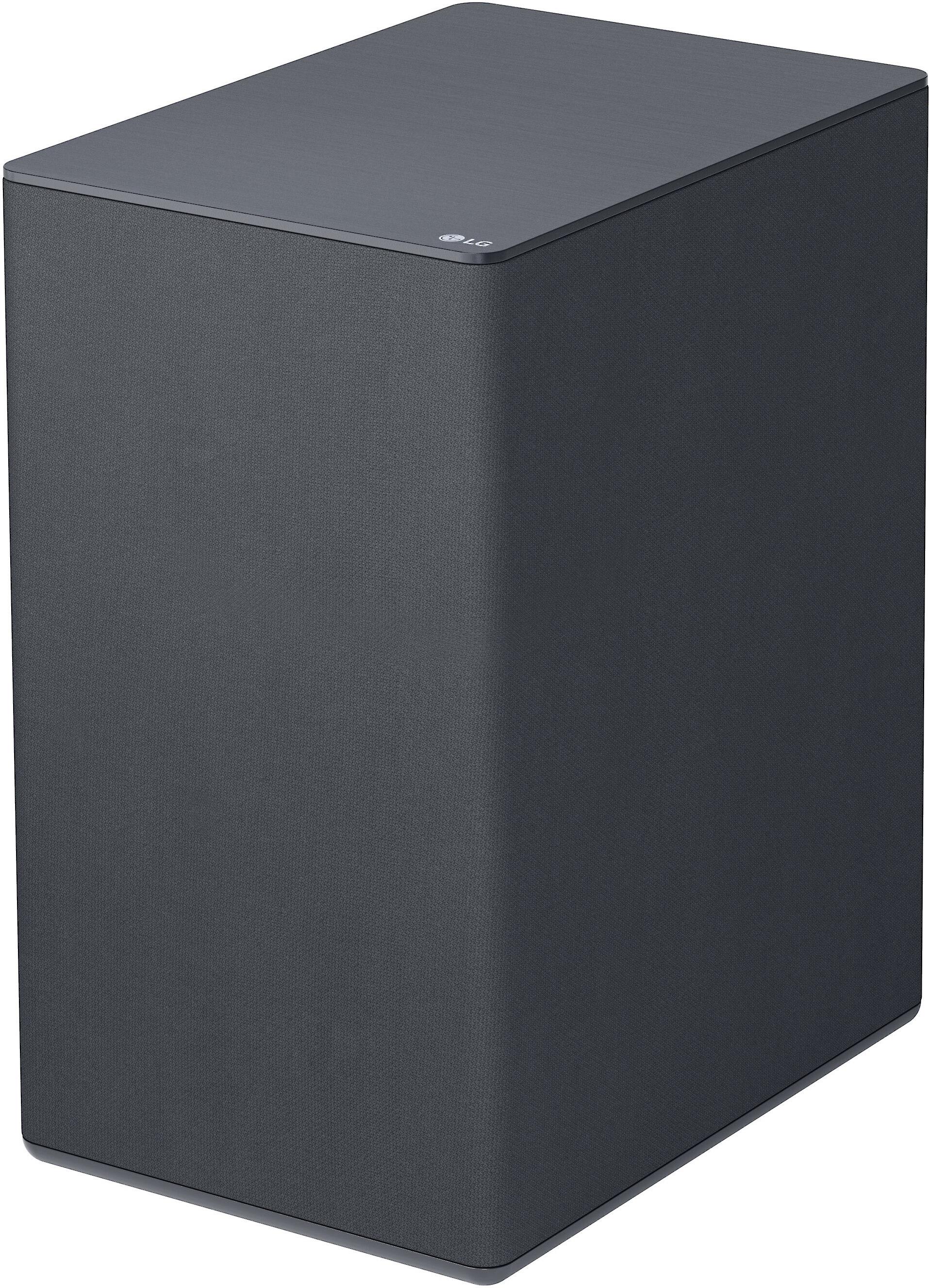
The LG SC9S includes a wireless 7-inch subwoofer that handles everything below about 120 Hz. This dedicated low-frequency driver can move much more air than the Bose's small speakers, creating the physical impact that makes explosions feel powerful and music sound full-bodied. However, some users report that the subwoofer can become "boomy" in smaller rooms, requiring careful placement and adjustment of the bass levels.
From a home theater perspective, this difference is significant. Movies are mixed with the expectation that you'll have a subwoofer to reproduce low-frequency effects (LFE). Without one, you're missing a substantial portion of the intended audio experience.
Here's where the technology gap between 2018 and 2023 becomes most apparent. The Bose Solo Series 2 is strictly a stereo device. Sound comes from left and right, creating a soundstage wider than your TV's built-in speakers, but everything still feels like it's coming from the front of the room.
The LG SC9S supports Dolby Atmos, which is fundamentally different. Atmos treats sound as objects that can be placed anywhere in 3D space around you. The three up-firing speakers bounce sound off your ceiling to create the illusion of height. When a helicopter flies overhead in a movie, you actually hear it moving from front to back above you.
LG's implementation is particularly clever. They use what they call "triple up-firing channels," including one dedicated to center dialogue. This means even conversations can have height information, making voices feel more natural and less "stuck" to the TV screen.
The catch? Atmos only works with content specifically mixed for it. Older movies and shows get "up-mixed" by the soundbar's processing, creating some spatial enhancement, but it's not the same as native Atmos content.
Room size significantly impacts soundbar performance. The Bose Solo Series 2 works well in small to medium rooms (up to about 400 square feet). Beyond that, it starts struggling with volume requirements, and the lack of bass becomes more noticeable in larger spaces.
The LG SC9S has much more headroom. The combination of more speakers and the wireless subwoofer means it can fill larger rooms without strain. The AI Room Calibration Pro feature (which uses built-in microphones to analyze your room's acoustics) helps optimize performance for different spaces automatically.
The connectivity differences reflect how TV technology has advanced. The Bose Solo Series 2 relies primarily on optical connections, which were standard when it launched. Optical can handle Dolby Digital 5.1, but the Bose downmixes everything to stereo anyway, so you're not missing much.
The LG SC9S includes HDMI eARC (enhanced Audio Return Channel), which can pass full-resolution Dolby Atmos signals from your TV. It also includes HDMI input with 4K/120Hz passthrough – important for gaming with PlayStation 5 or Xbox Series X consoles.
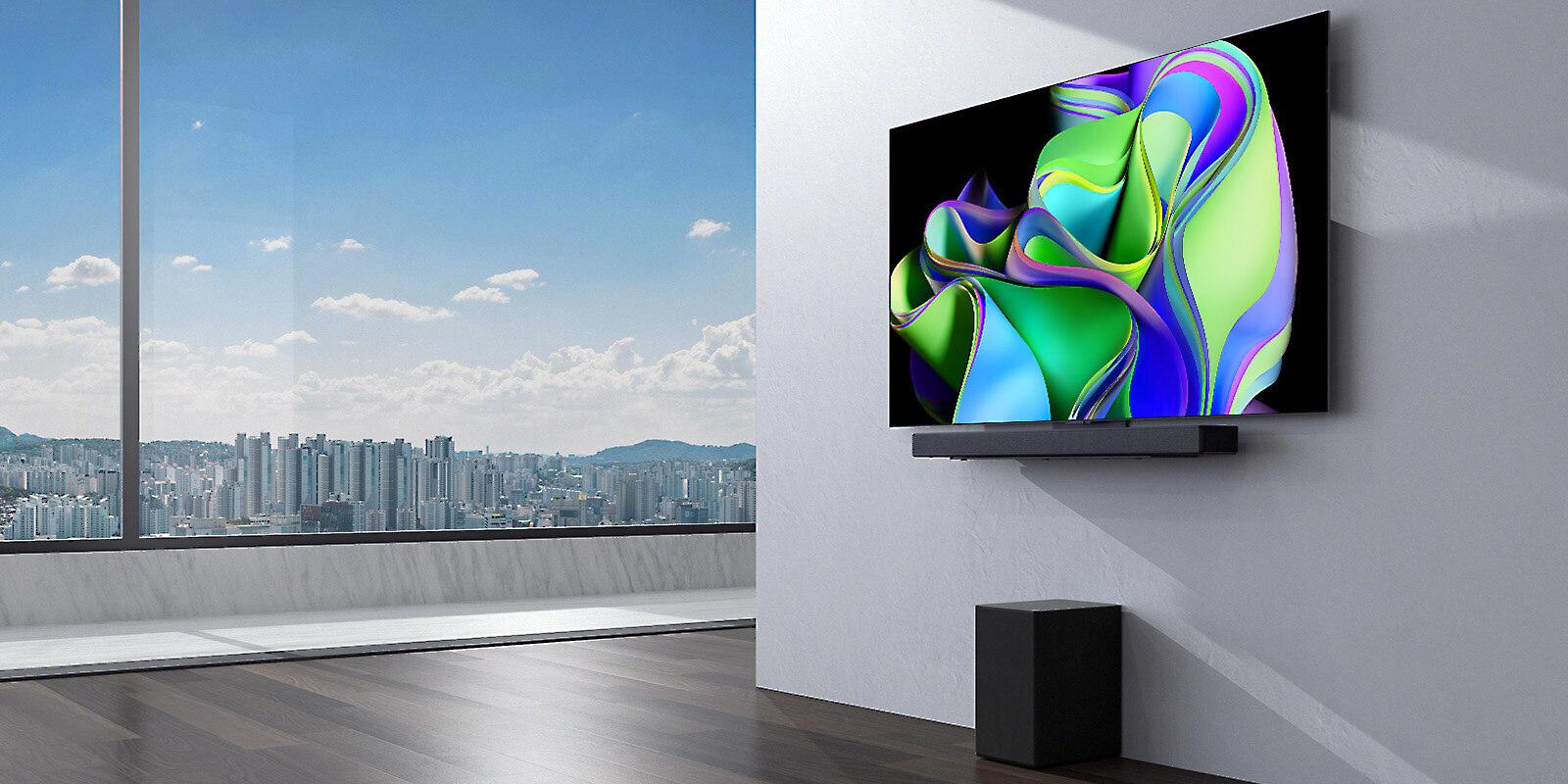
LG's "WOW Orchestra" technology deserves special mention. If you pair the SC9S with compatible LG OLED TVs (specifically the evo C Series), the TV's built-in speakers work together with the soundbar as additional channels. This creates an even more immersive experience by using every available driver in the system.
The Bose Solo Series 2 works with any TV but doesn't have advanced integration features. Sometimes simplicity is preferable – there's less that can go wrong with software updates or compatibility issues.
I've found the Bose Solo Series 2 to be genuinely plug-and-play. Connect the optical cable, turn off your TV's internal speakers, and you're done. The remote is simple with clearly labeled buttons for volume, bass adjustment, and dialogue mode.
The LG SC9S requires more initial setup but offers greater long-term flexibility. The AI Room Calibration process takes about five minutes and makes a noticeable difference in sound quality. The LG Soundbar app provides granular control over individual channel levels – something audio enthusiasts will appreciate.
One practical consideration: the Bose has no physical controls on the soundbar itself. If you lose the remote, you're stuck. The LG includes basic controls on the unit, though you'll still want the remote or app for full functionality.
The Bose Solo Series 2 is what it is – no expansion options exist. This simplicity can be liberating if you just want a "set it and forget it" solution.
The LG SC9S supports wireless rear speakers (sold separately for about $200) that transform it into a full 5.1.3 surround system. This expandability means your initial investment isn't wasted if you later want more immersion.
At $199.99, the Bose Solo Series 2 delivers exceptional dialogue clarity per dollar spent. If your primary goal is understanding TV conversations better, it's hard to beat this value proposition. The build quality feels solid, and Bose's reputation for reliability means it should last for years.
The LG SC9S at $515.61 costs 2.6 times more but includes the wireless subwoofer and Dolby Atmos capability. Whether that's worth it depends entirely on your content consumption habits and room setup.
However, consider total cost of ownership. The Bose is complete as-is. The LG delivers its full potential with rear speakers, pushing the total investment toward $700-750. That's entering territory where dedicated surround sound systems become competitive.
The five-year age difference matters more in some areas than others. The Bose's dialogue processing remains excellent – human speech hasn't changed, so neither have the techniques for reproducing it clearly. However, its lack of modern connectivity and audio format support feels more limiting as streaming services increasingly offer Atmos content.
The LG SC9S includes current-generation features like eARC, 4K/120Hz passthrough, and wireless standards that should remain relevant for years. This future-proofing has value, especially at the premium price point.
You primarily watch dialogue-heavy content like news, talk shows, and sitcoms. The dialogue enhancement mode genuinely improves comprehension, especially for older viewers or those with hearing difficulties. It's also ideal if you live in an apartment where bass might disturb neighbors, or if you have strict space constraints.
The simplicity factor shouldn't be underestimated. There's something appealing about a product that does exactly what it promises without complexity or ongoing maintenance.
You regularly watch movies, play video games, or listen to music through your TV. The Dolby Atmos capability and wireless subwoofer create a substantially more immersive experience for this type of content. It's particularly compelling if you own or plan to buy an LG OLED TV for the WOW Orchestra integration.
The expandability means this could be your only audio upgrade for years, growing with your needs rather than requiring replacement.
After extensive consideration, I believe the choice comes down to content consumption patterns and budget flexibility. The Bose Solo Series 2 excels at its intended purpose – making TV dialogue clearer – at an accessible price point. For users whose primary concern is understanding speech better, it delivers exceptional value.
The LG SC9S serves a different audience seeking home theater immersion. Its Dolby Atmos capability, wireless subwoofer, and expansion options justify the premium for users who want to feel like they're inside their entertainment rather than just watching it.
Both represent solid engineering focused on different priorities. Your choice should align with how you actually use your TV, not just how you think you might use it. If you're honest about primarily watching news and sitcoms, save the money and get the Bose. If you genuinely watch action movies and play games regularly, the LG's additional capabilities will enhance your experience noticeably.
The soundbar market will continue evolving, but both of these products address their target audiences well enough to remain relevant choices for their respective price points and use cases.
| Bose Solo Soundbar Series 2 | LG SC9S 3.1.3 Channel Dolby Atmos Soundbar |
|---|---|
| Price - Major factor in soundbar selection | |
| $199.99 | $515.61 |
| Audio Channels - Determines surround sound capability | |
| 2.0 stereo (no center channel or height effects) | 3.1.3 (dedicated center, subwoofer, and overhead channels) |
| Dolby Atmos Support - Essential for immersive movie audio | |
| Not supported (stereo only) | Full Dolby Atmos with three up-firing speakers |
| Subwoofer - Critical for bass in movies and music | |
| None included (limited bass response) | Wireless 7" subwoofer included |
| Room Size Suitability - Affects volume and coverage | |
| Small to medium rooms (up to 400 sq ft) | Medium to large rooms (400+ sq ft) |
| Connectivity - Impacts compatibility and audio quality | |
| Optical, basic HDMI ARC | HDMI eARC, optical, HDMI input with 4K/120Hz passthrough |
| Smart TV Integration - Enhances user experience | |
| Universal compatibility, no special features | WOW Orchestra with LG OLED TVs, AI Room Calibration |
| Expandability - Future upgrade potential | |
| No expansion options | Supports wireless rear speakers (sold separately ~$200) |
| Dialogue Enhancement - Key feature for TV watching | |
| Dedicated dialogue mode with frequency optimization | Dual center channels (traditional + up-firing) |
| Setup Complexity - Time and effort required | |
| Plug-and-play simplicity (optical cable connection) | Moderate setup with room calibration and app configuration |
| Release Year - Indicates technology generation | |
| 2018 (proven but aging technology) | 2023 (current-generation features and formats) |
| Best Use Case - Primary recommendation | |
| Dialogue-heavy content, budget-conscious, space-limited | Movies, gaming, music, home theater enthusiasts |
The Bose Solo Soundbar Series 2 ($199.99) offers exceptional value for dialogue clarity at its price point, while the LG SC9S ($515.61) provides premium features like Dolby Atmos and a wireless subwoofer that justify its higher cost for movie enthusiasts and gamers.
The Bose Solo Series 2 is a simple 2.0-channel stereo bar focused on clear dialogue, while the LG SC9S is a full 3.1.3-channel system with Dolby Atmos support, wireless subwoofer, and height effects for immersive surround sound.
The LG SC9S is significantly better for movies due to its Dolby Atmos support, wireless subwoofer for deep bass, and surround sound processing. The Bose Solo Series 2 lacks the bass and immersion needed for cinematic experiences.
The Bose Solo Series 2 has no subwoofer option and relies on its small drivers for bass. The LG SC9S includes a wireless subwoofer in the box, providing the deep bass essential for movies and music.
The Bose Solo Series 2 is plug-and-play simple with just an optical cable connection. The LG SC9S requires more setup including subwoofer placement, room calibration, and app configuration, but offers better long-term performance.
The Bose Solo Series 2 works well in small to medium rooms up to 400 square feet. The LG SC9S is better suited for medium to large rooms and can fill bigger spaces without strain thanks to its multiple speakers and subwoofer.
Both excel at dialogue but differently. The Bose Solo Series 2 uses dedicated dialogue enhancement mode optimized for voice frequencies. The LG SC9S features dual center channels that anchor voices to the screen while maintaining clarity in complex audio scenes.
The Bose Solo Series 2 connects via optical or basic HDMI ARC to most TVs. The LG SC9S offers more advanced connectivity including HDMI eARC for full Atmos support and HDMI input with 4K/120Hz passthrough for gaming consoles.
Only the LG SC9S supports Dolby Atmos with three up-firing speakers that create overhead sound effects. The Bose Solo Series 2 is limited to stereo audio and cannot process Atmos content.
The Bose Solo Series 2 cannot be expanded - what you buy is the complete system. The LG SC9S supports optional wireless rear speakers (sold separately) that transform it into a full 5.1.3 surround sound system.
The Bose Solo Series 2 is ideal for apartments due to its compact size, no subwoofer (won't disturb neighbors), and focus on dialogue clarity. The LG SC9S may be too powerful and bass-heavy for close living situations.
The Bose Solo Series 2 ($199.99) is complete as purchased with no additional components needed. The LG SC9S ($515.61) works well alone but reaches full potential with optional rear speakers (~$200), bringing total investment to around $700-750.
We've done our best to create useful and informative comparisons to help you decide what product to buy. Our research uses advanced automated methods to create this comparison and perfection is not possible - please contact us for corrections or questions. These are the sites we've researched in the creation of this article: rtings.com - bose.com - bose.com - assets.bose.com - bestbuy.com - youtube.com - pistonheads.com - costco.com - googlenestcommunity.com - youtube.com - discussions.apple.com - consumerreports.org - valueelectronics.com - youtube.com - bestbuy.com - rtings.com - costco.com - bestbuy.com - walts.com - queencityonline.com - blog.son-video.com - videoandaudiocenter.com - lg.com

Privacy Policy
Terms and Conditions - Affiliate Policy
Home Security
© Copyright 2008-2026.
11816 Inwood Rd #1211, Dallas, TX 75244