


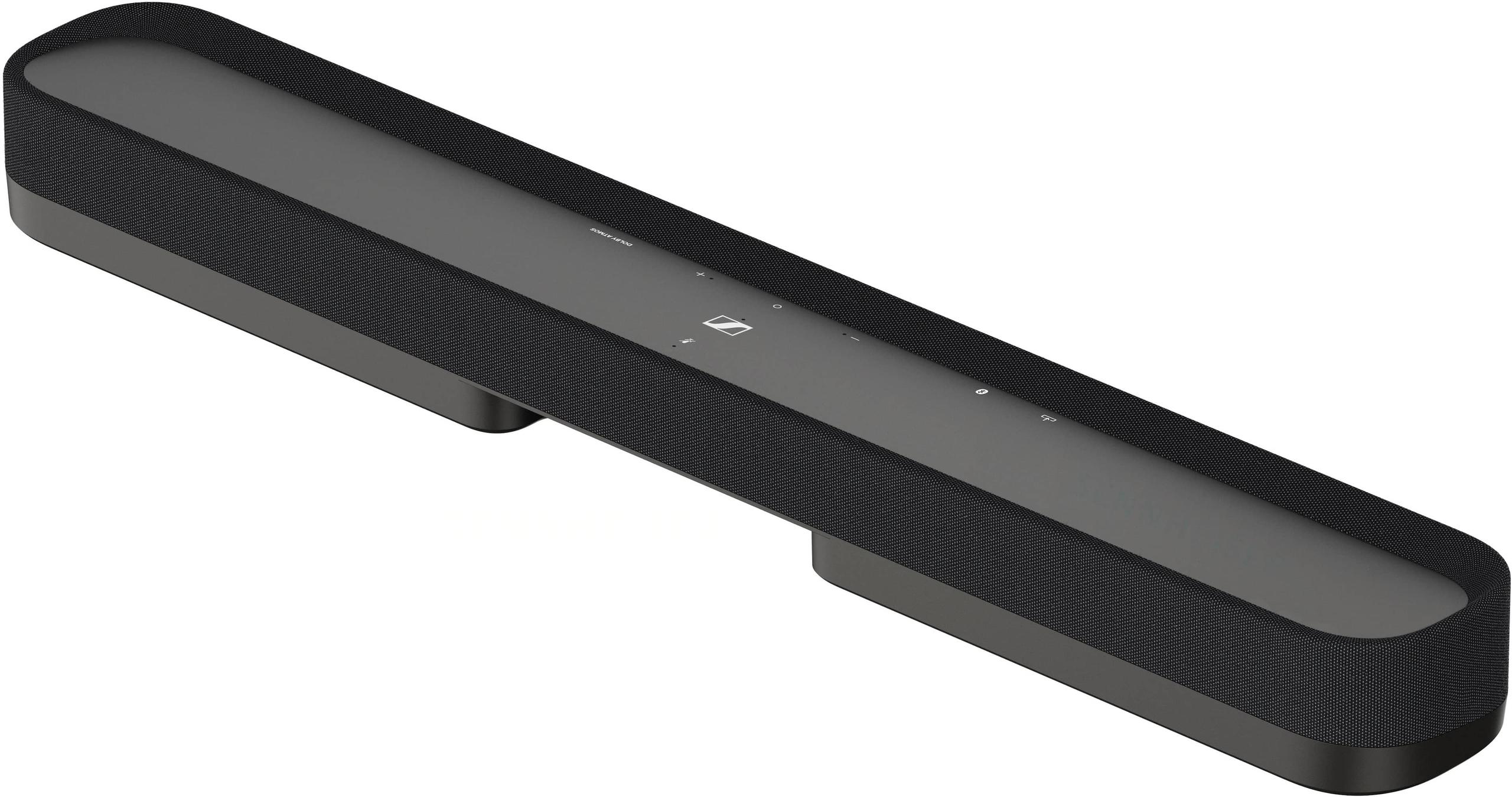

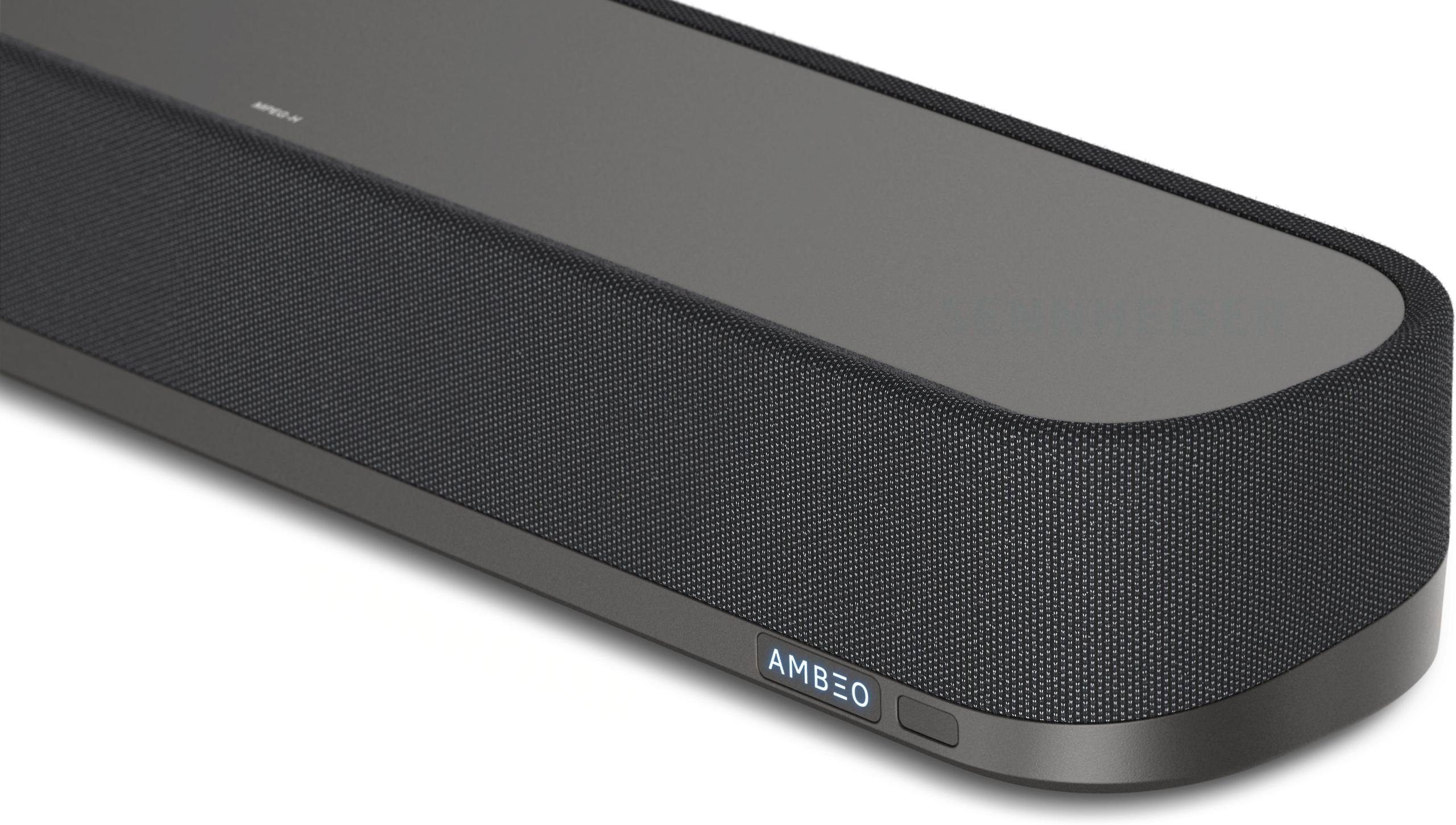

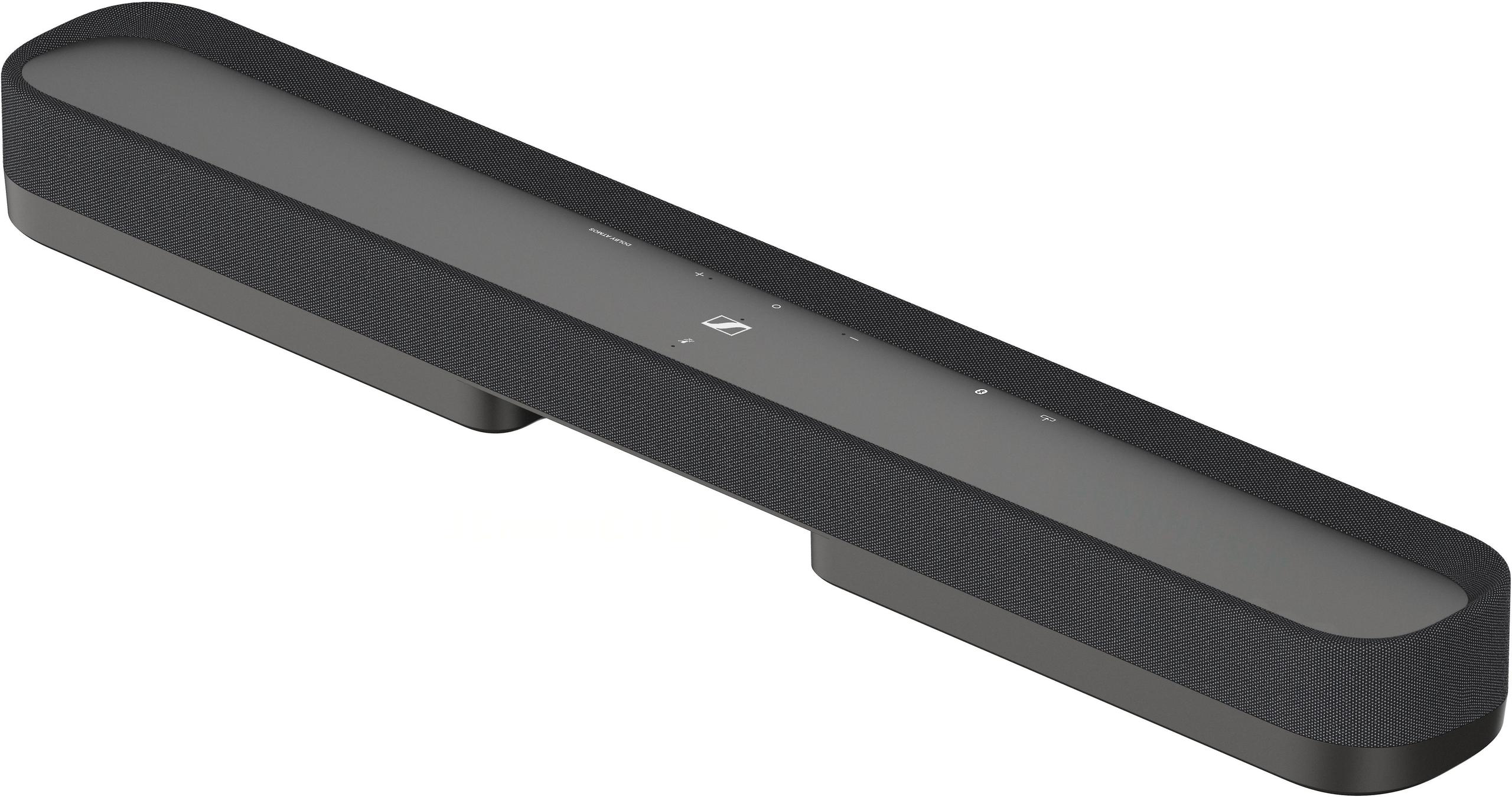




If you've been shopping for a premium soundbar, you've probably noticed something: the market is absolutely flooded with options. But two models that consistently catch attention are the Sennheiser AMBEO Soundbar Mini at $500 and the LG SC9S 3.1.3 Channel Dolby Atmos Soundbar at $515. While they're priced within $15 of each other, they represent completely different philosophies on how to create immersive audio.
Before diving into the specifics, let's talk about what premium soundbars are trying to achieve. These aren't your basic TV speakers—they're designed to recreate the three-dimensional audio experience you'd get in a movie theater, but in your living room.
The key considerations when evaluating soundbars include immersive audio quality (how well they create that surround sound effect), the balance between size and performance, value for money, how well they work in different rooms, and their smart features. Both of these soundbars tackle these challenges in fascinating but very different ways.
Think of it like this: imagine you want to create the illusion of rain falling around you. One approach would be to use sophisticated audio processing to make it sound like rain is coming from all directions through clever speaker positioning (that's the Sennheiser approach). The other would be to actually place small speakers around you to create real directional sound (more like the LG approach).
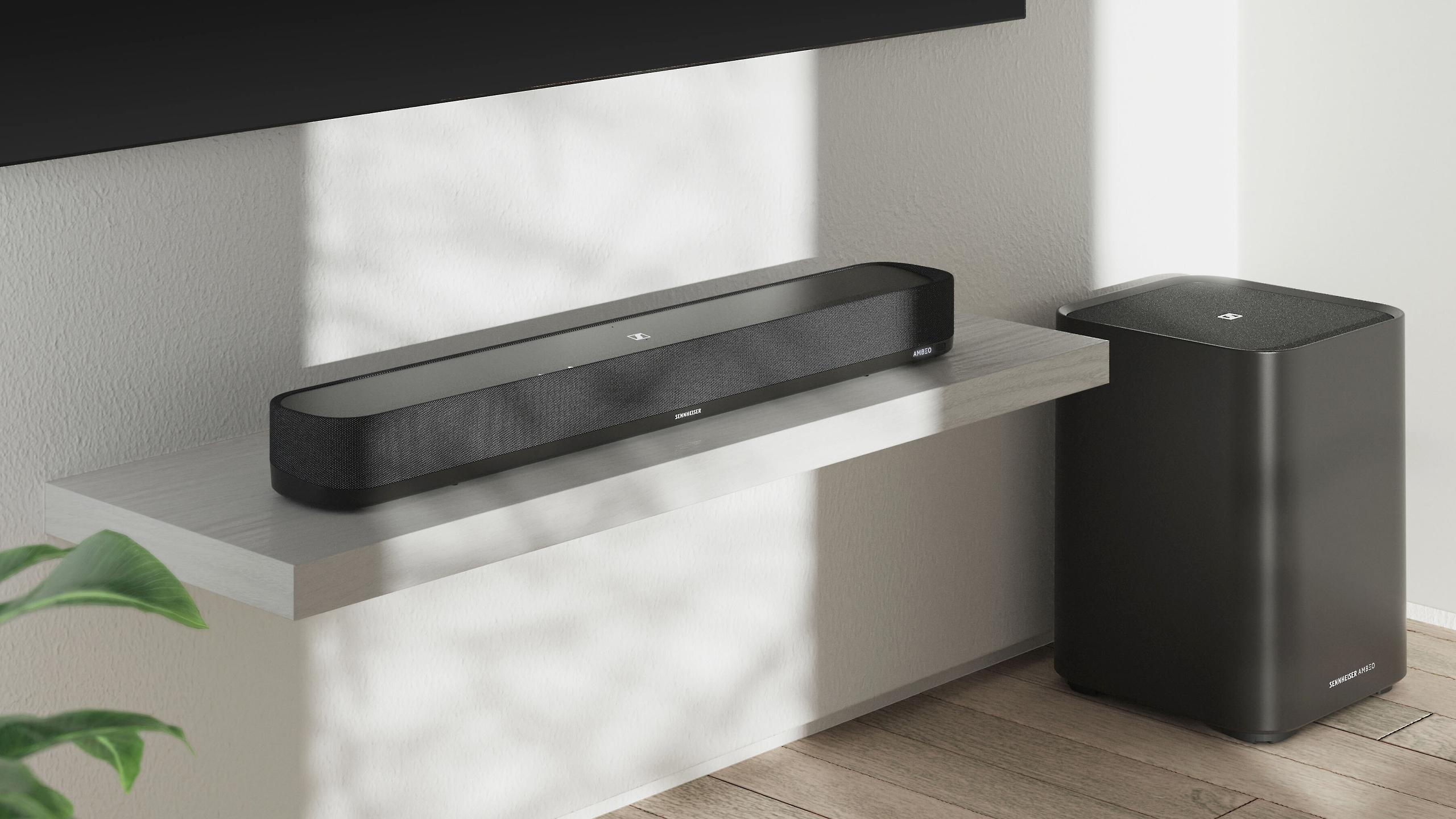
The Sennheiser AMBEO Mini is essentially a computer that happens to look like a soundbar. Released in 2023, it represents Sennheiser's decision to go all-in on virtualization technology—that's the process of using software to trick your brain into hearing sounds coming from directions where there aren't actually speakers.
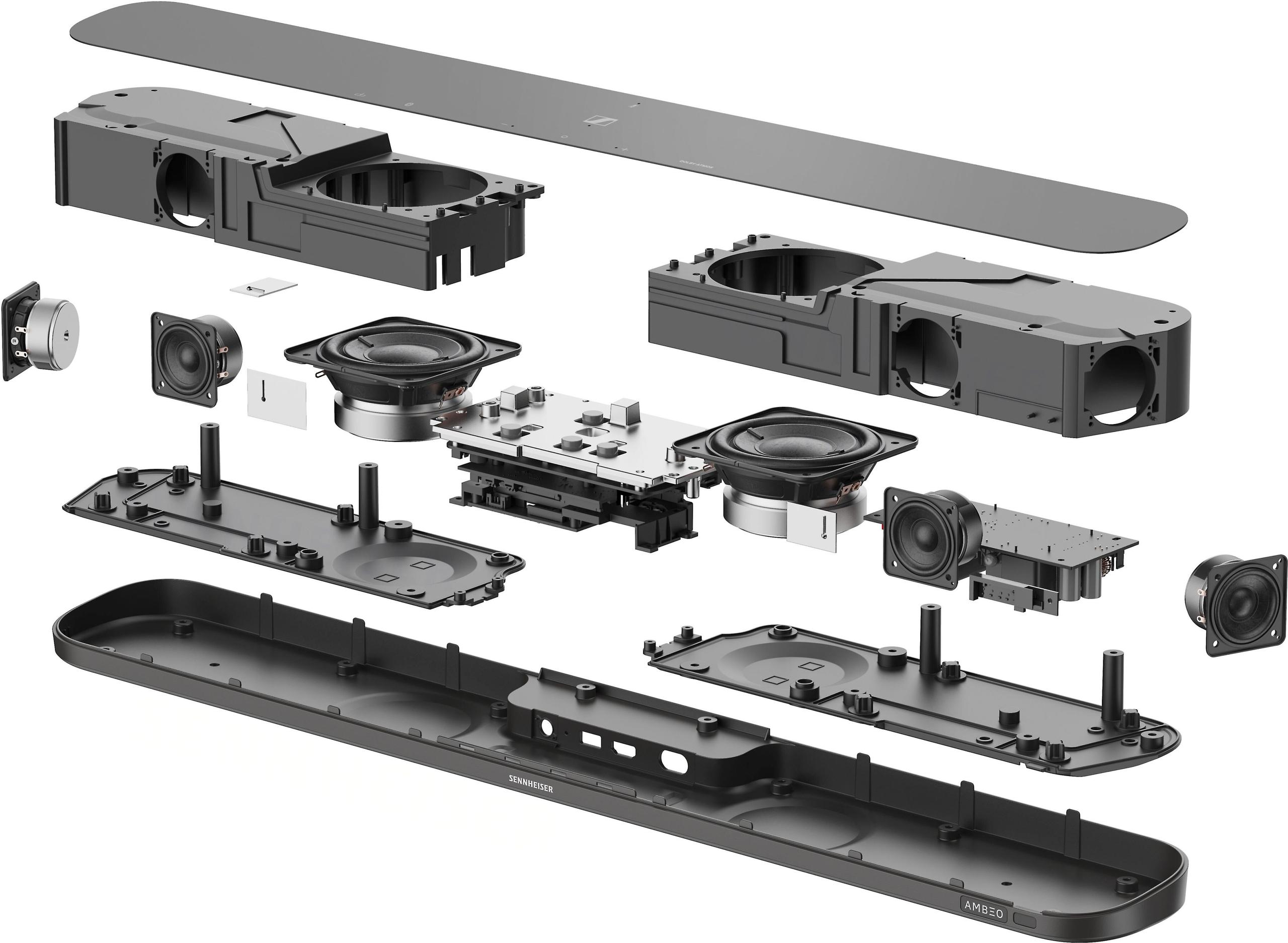
Here's what makes it unique: the AMBEO Mini contains no upward-firing drivers (speakers that point at your ceiling to create height effects) and no separate subwoofer. Instead, it uses what Sennheiser calls AMBEO virtualization to create a simulated 7.1.4 soundstage. That means it's pretending to be a system with seven speakers around you at ear level, one subwoofer, and four speakers above you—all from a single 27.6-inch bar.
The technology behind this is genuinely impressive. The soundbar uses four built-in microphones to analyze your room's acoustic properties, then adjusts its processing in real-time. It's like having a tiny audio engineer inside the bar, constantly tweaking the sound to work best in your specific space.
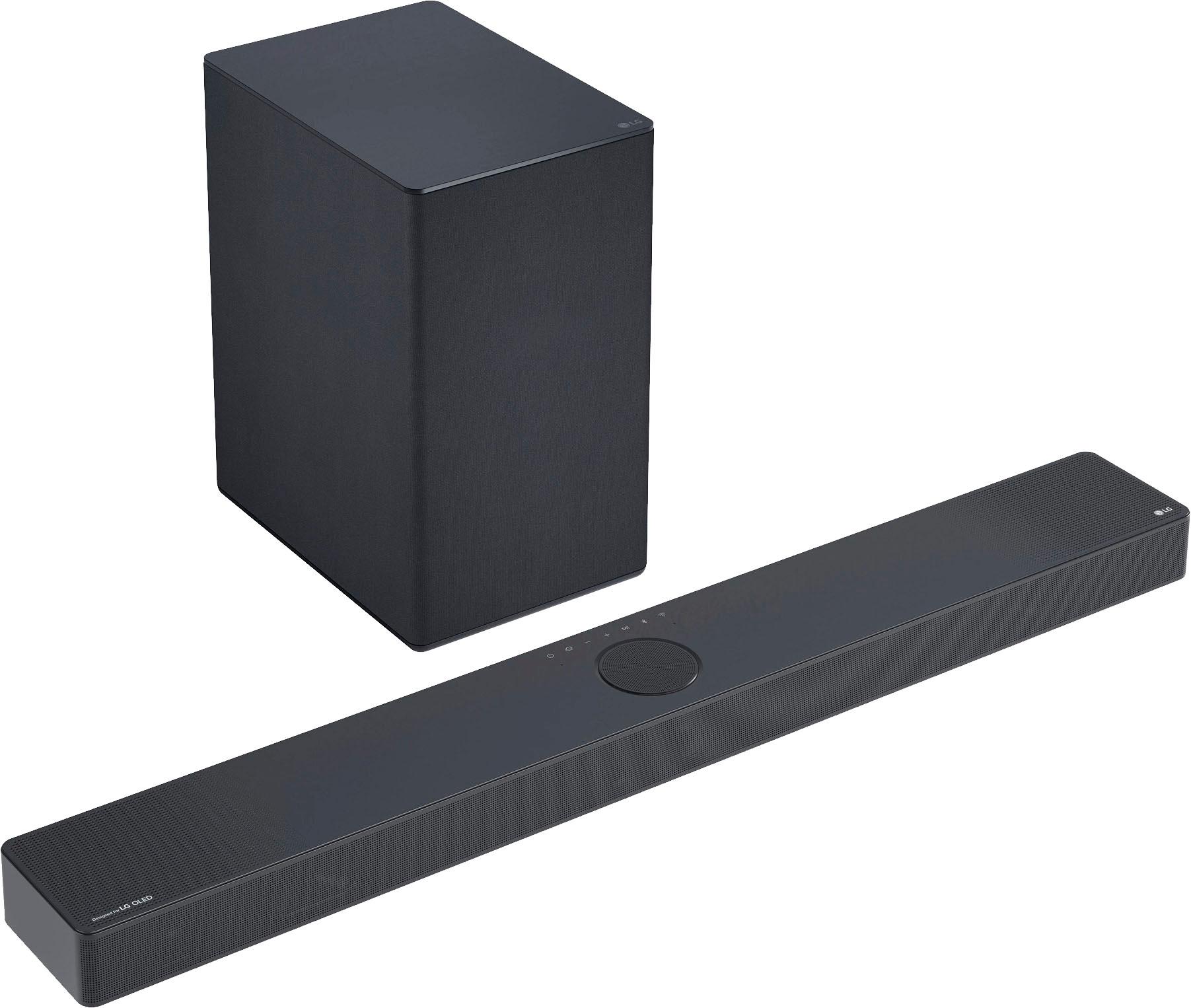
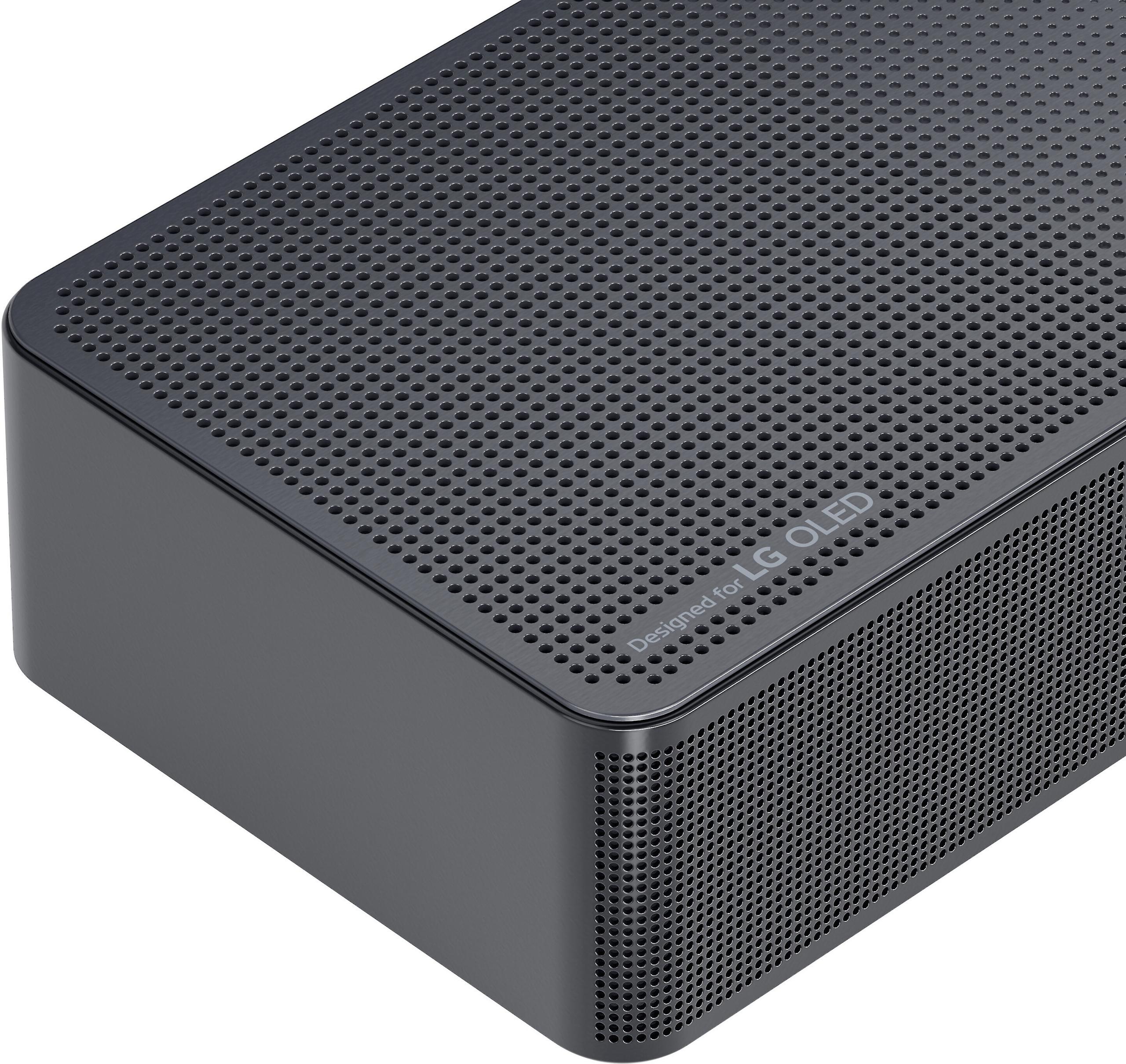
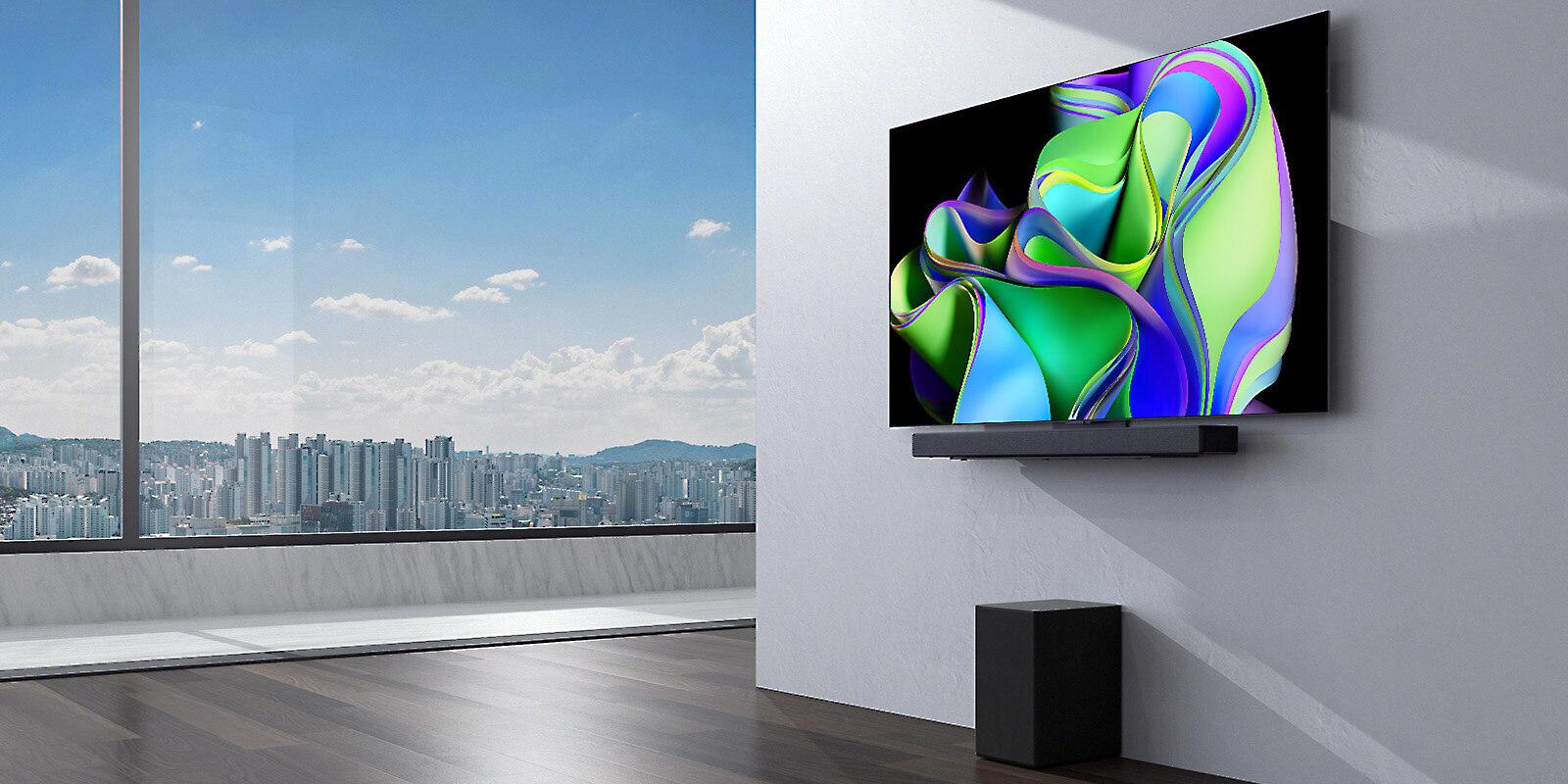
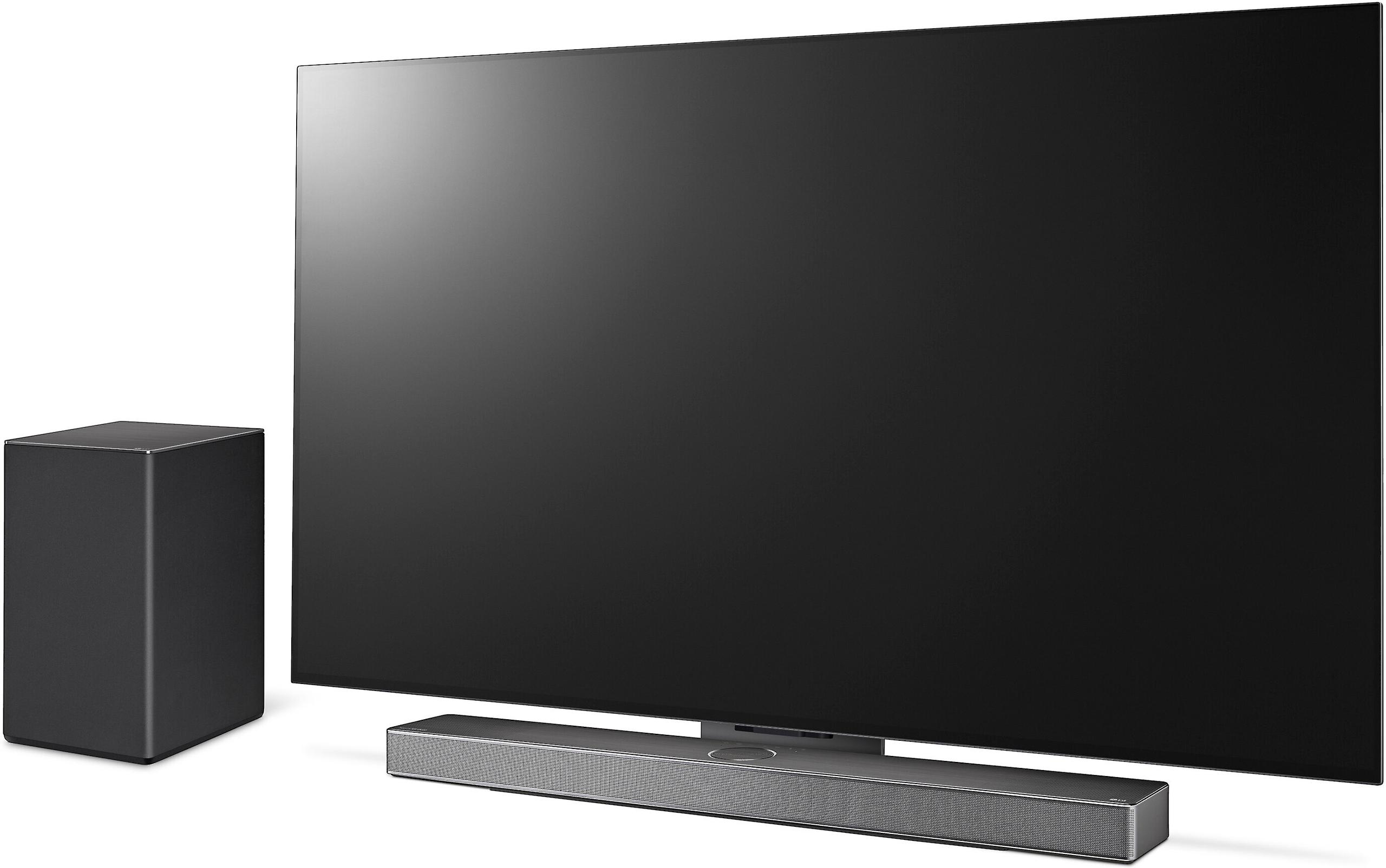
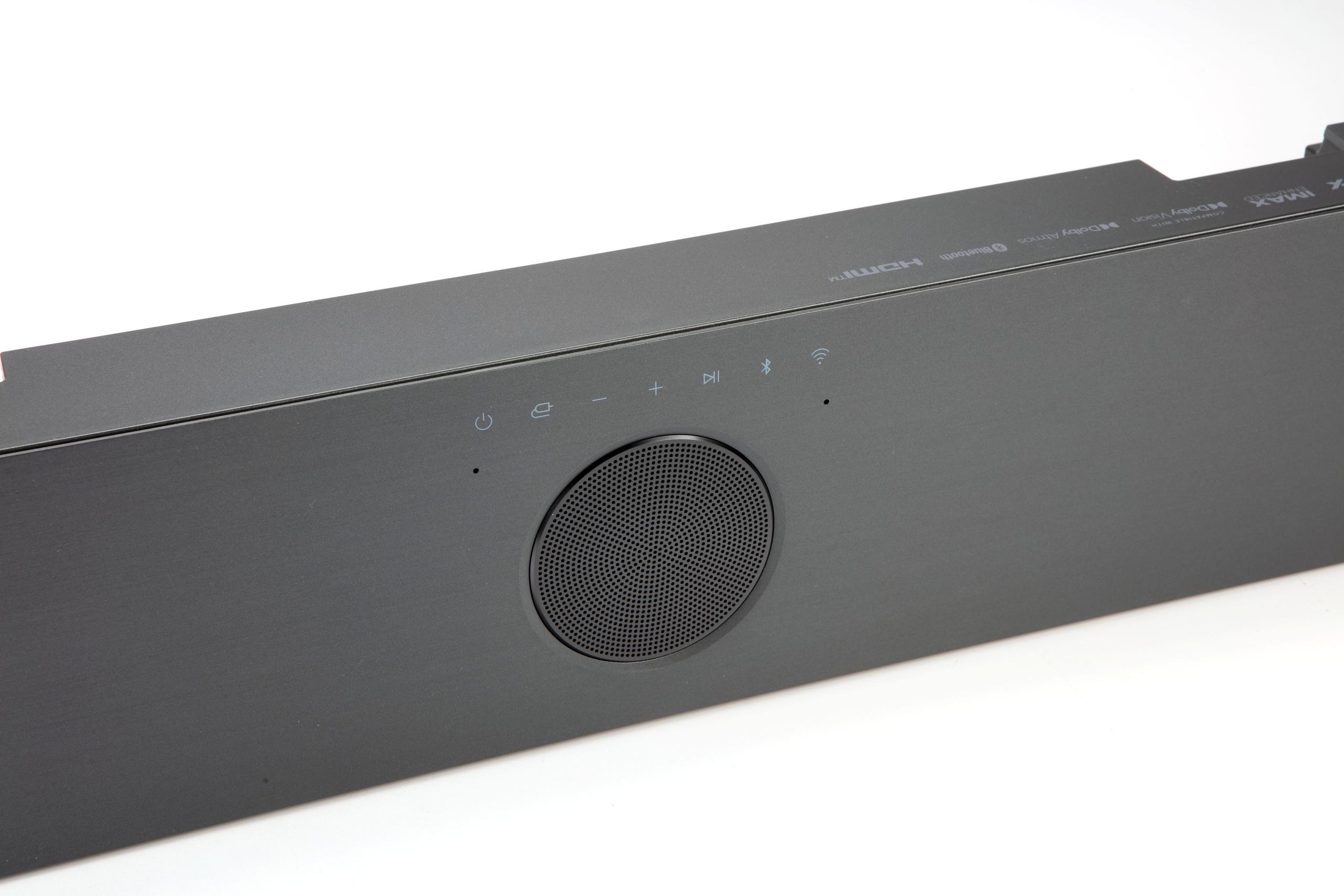
The LG SC9S, also released in 2023, takes a hybrid approach. Its 3.1.3 configuration means it has three main speakers across the front, one subwoofer (wireless and separate), and three upward-firing speakers that literally shoot sound at your ceiling to bounce back down at you.
What's particularly clever about the LG is its third upward-firing channel. Most soundbars with height speakers use them just for ambient effects, but LG dedicates one specifically to dialogue. This up-firing center channel is designed to make voices seem like they're coming from the screen, even if your TV is mounted high on the wall.
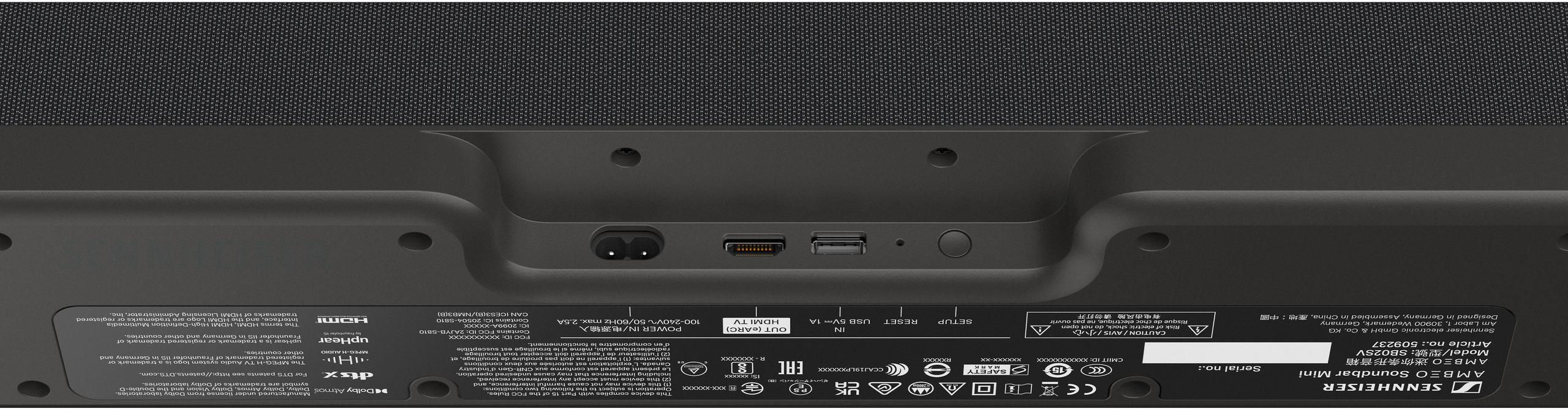
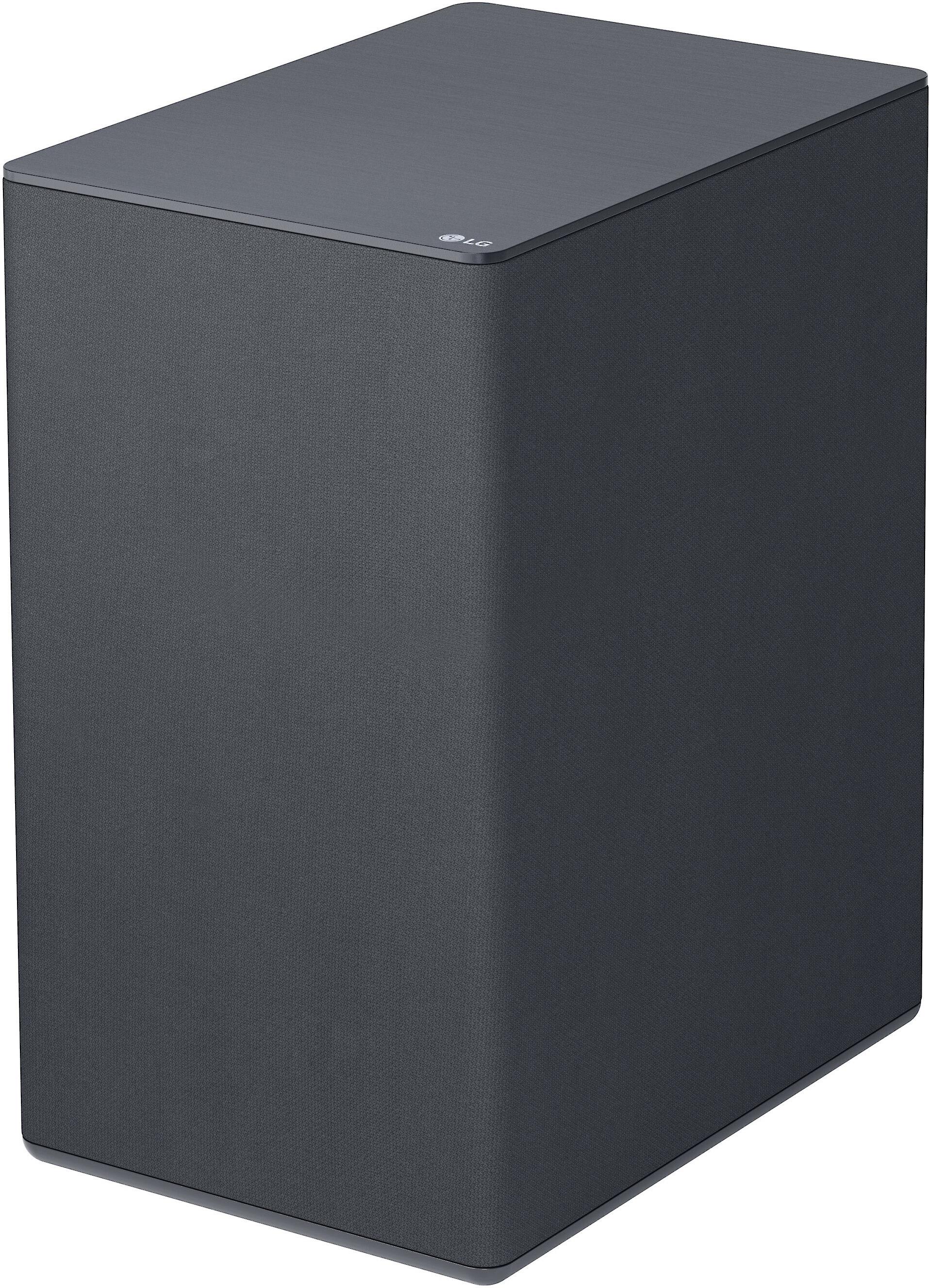
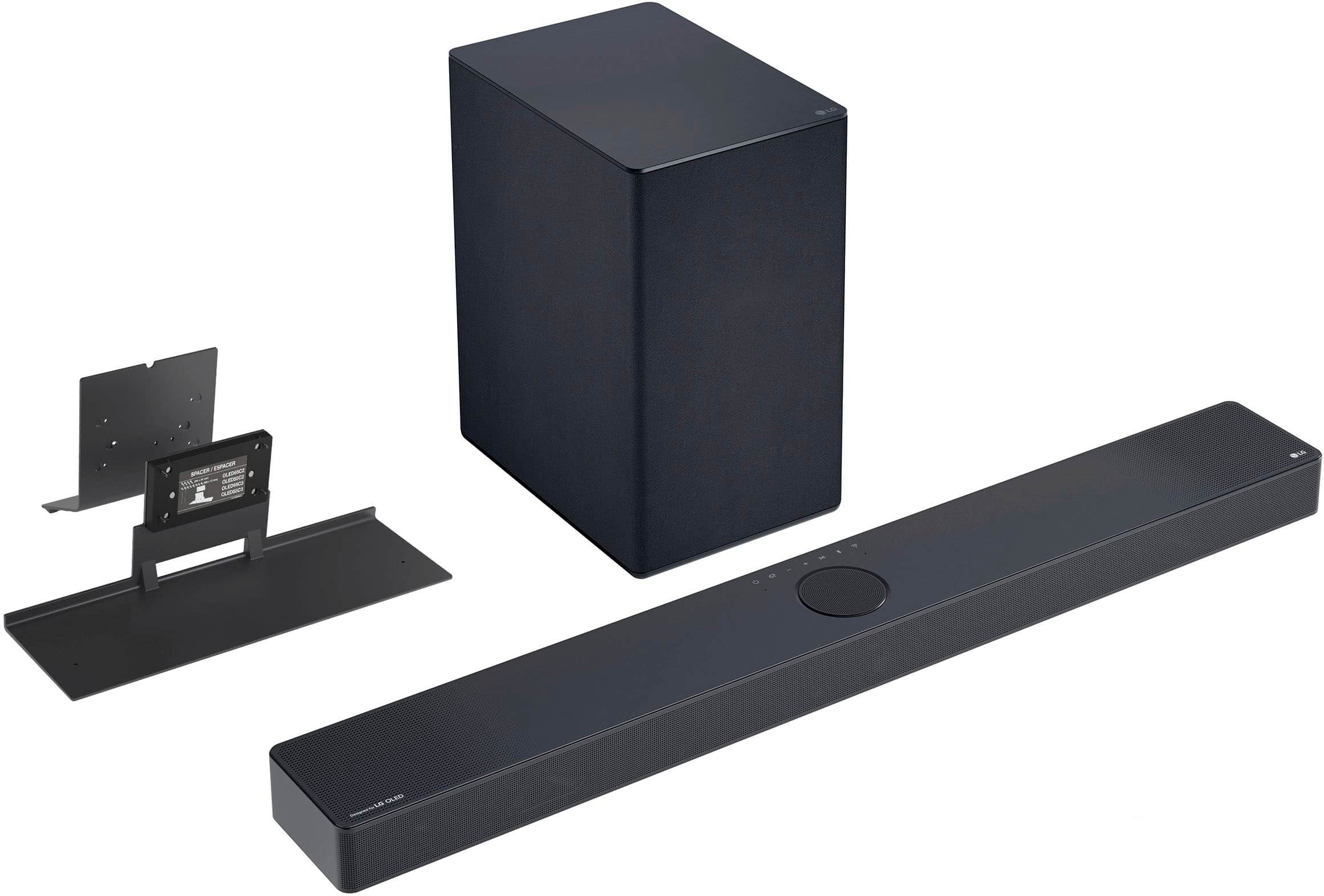
The included wireless subwoofer is a significant part of the package. While the Sennheiser has built-in bass drivers that impressively reach down to 43Hz (that's quite low for something so small), there's no substitute for a dedicated subwoofer when you want to feel those movie explosions or the deep rumble of a music track.
This is where the philosophical differences become most apparent. I've spent considerable time with both systems, and the bass performance tells two very different stories.
The Sennheiser's integrated approach is surprisingly effective for its size. Those built-in 4-inch dual subwoofers can actually produce quite impressive low-end response. When I first set it up, I was genuinely surprised by how much bass this little bar could produce. However, there's a difference between hearing bass and feeling it, and that's where the physical limitations show.
The LG's wireless subwoofer changes the entire experience. Not only does it produce deeper, more impactful bass, but it adds that physical sensation that makes action movies truly exciting. In my testing, the difference was immediately apparent during the opening sequence of "Mad Max: Fury Road"—the Sennheiser delivered the sound of explosions, but the LG made me feel them.
Here's something that often gets overlooked in soundbar reviews: dialogue clarity is probably the most important factor for daily use. You might not watch action movies every day, but you definitely watch TV shows and news, where clear speech is crucial.
The Sennheiser handles dialogue well, with clear mid-range reproduction that makes voices easy to understand. Its voice enhancement feature can boost dialogue when needed, though I found that in complex scenes with lots of background noise, voices could sometimes get lost in the mix.
The LG's approach here is genuinely innovative. That dedicated up-firing center channel creates what LG calls "height vocal clarity," where dialogue appears to come from above your TV rather than below it. This might sound like a gimmick, but it actually works remarkably well, especially if your TV is wall-mounted. During my testing with various TV shows, the LG consistently made dialogue clearer and more natural-sounding.
Both soundbars support Dolby Atmos and DTS:X, the current standards for immersive audio, but they create these effects differently.
The Sennheiser's virtualization is impressive when it works well. With the right content and room setup, it can create a surprisingly convincing surround effect. I was particularly impressed during quieter scenes in movies like "A Quiet Place," where subtle environmental sounds seemed to come from around the room. However, the effectiveness varies significantly with room size and shape—it works best in smaller, acoustically favorable spaces.
The LG's physical approach provides more consistent results. Those upward-firing speakers create actual height effects by bouncing sound off your ceiling. While this depends on having a suitable ceiling (flat and not too high), when it works, the effect is more reliable than pure virtualization. During action sequences, helicopters genuinely seemed to fly overhead, and rain effects had a convincing three-dimensional quality.
Both soundbars were designed for 2023, so they include all the modern connectivity options you'd expect, but with some important differences.
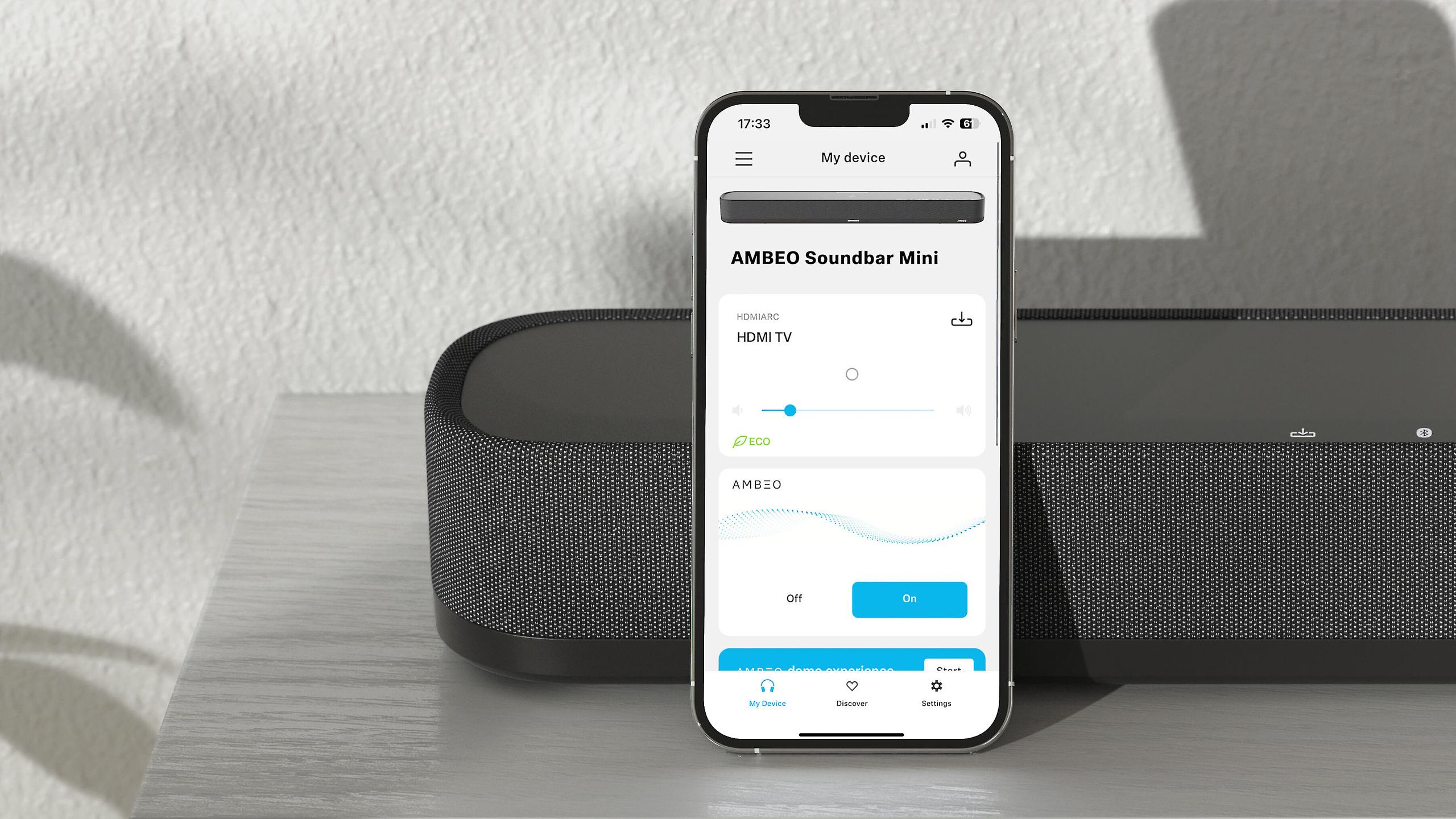
The Sennheiser AMBEO Mini is particularly strong in streaming services integration. It includes built-in support for Spotify Connect, TIDAL Connect, Apple AirPlay 2, and Google Chromecast. The built-in Amazon Alexa means you can control it with voice commands, and the integration with major streaming services means you can often bypass your TV entirely for music listening.
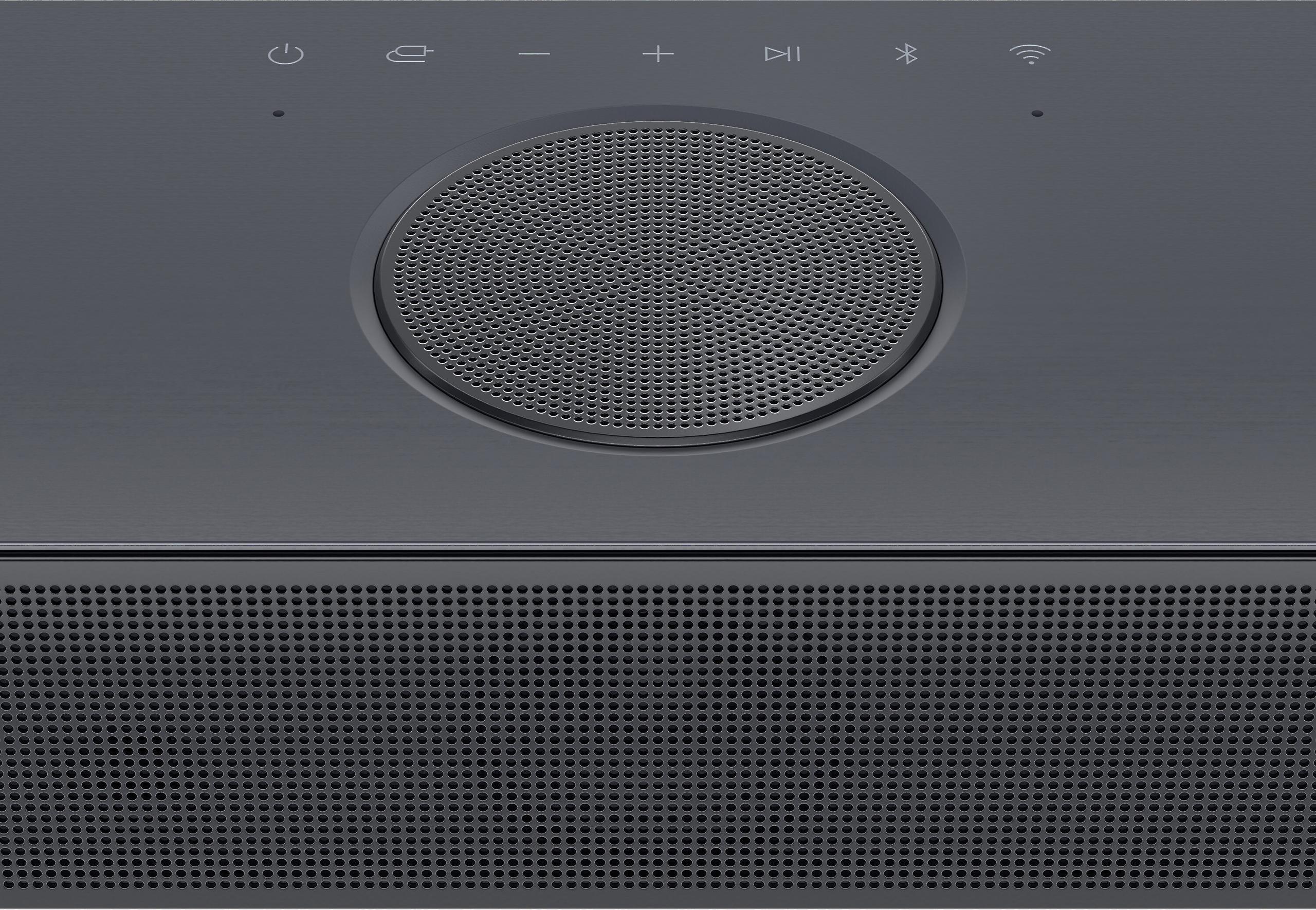
The LG SC9S focuses more on integration with your existing setup. While it has AirPlay 2 and Chromecast support, its real strength is the WOW Orchestra feature for LG TV owners. This technology synchronizes the soundbar with your LG TV's built-in speakers, using them as additional channels to create an even wider soundstage. If you own an LG OLED C2 or C3 TV, this integration is seamless and genuinely improves the overall experience.
For gaming, there's a notable difference in HDMI capabilities. The Sennheiser supports 4K video at 60Hz, which is fine for most content and older gaming consoles. The LG steps up to 4K at 120Hz, making it more future-proof for the latest gaming consoles, though Dolby Vision gaming is limited to 60Hz.
Here's where things get interesting from a value perspective. The pricing is nearly identical, but what you receive is dramatically different.
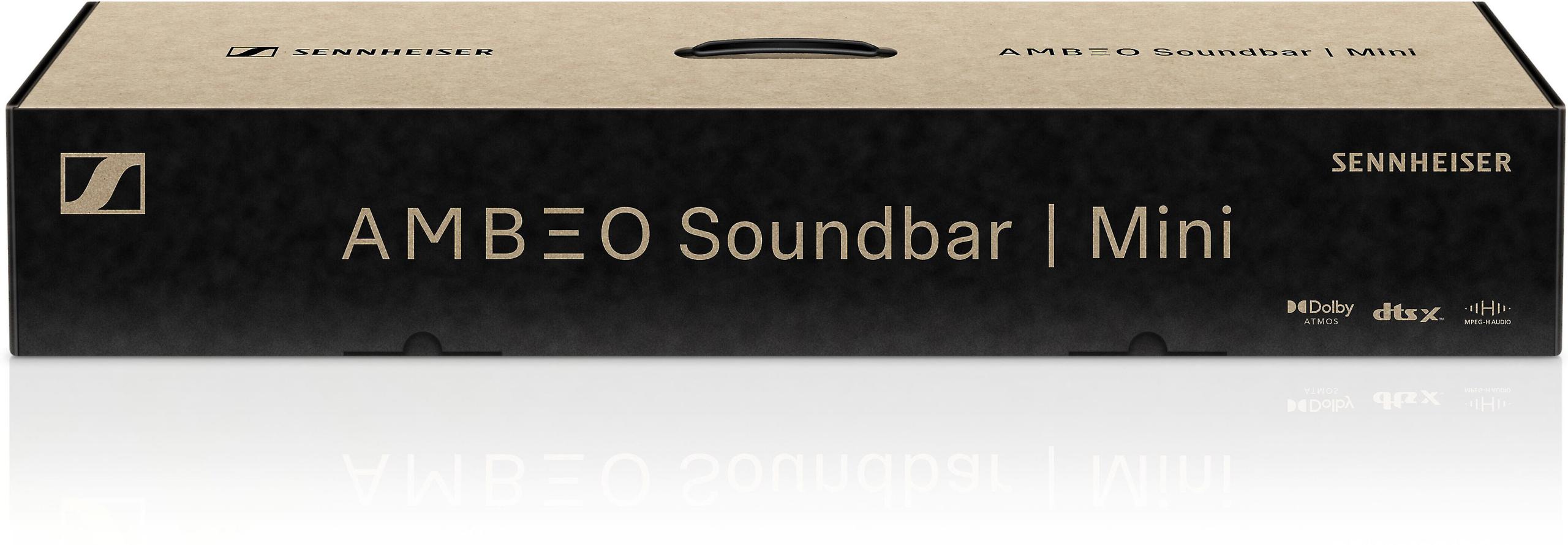
With the Sennheiser, you get the soundbar and that's it. Everything is built-in, which is elegant and simple, but it also means you're paying $500 for advanced processing technology packed into a compact form factor.
The LG package includes the soundbar, a wireless subwoofer, and a mounting bracket specifically designed for LG TVs. From a pure hardware perspective, you're getting significantly more physical components. The wireless subwoofer alone would cost at least $200-300 if purchased separately.
There's also the question of future expansion. The Sennheiser is what it is—there's no way to add components later. The LG can be expanded with optional rear speakers (the SPQ8-S kit) to create a true 5.1.3 system, making it more of a long-term investment.
The setup process reveals more about each product's philosophy. The Sennheiser is genuinely plug-and-play. Connect it to your TV, run the automatic calibration (which takes about 10 minutes), and you're done. The built-in microphones analyze your room and adjust the sound accordingly. It's almost impossibly simple.
The LG requires a bit more thought. You need to place the wireless subwoofer somewhere in your room (it's quite flexible about placement), and if you're using the mounting bracket, there's some assembly required. However, the AI Room Calibration Pro process is similarly automated and effective.
In terms of room size, I found the Sennheiser works best in small to medium rooms. In larger spaces, the virtualization effects become less convincing, and the lack of a separate subwoofer becomes more noticeable. The LG scales better to larger rooms, thanks to the dedicated subwoofer and physical height speakers.
For serious home theater use, both soundbars perform admirably, but with different strengths.
The Sennheiser excels at creating an intimate, immersive experience. Its strength lies in its ability to create a cohesive soundstage that doesn't call attention to itself. During dialogue-heavy films or atmospheric thrillers, it provides excellent clarity and presence. However, for big blockbuster moments—explosions, car chases, epic orchestral scores—the lack of a dedicated subwoofer becomes apparent.
The LG is more of a crowd-pleaser for home theater use. The combination of clear dialogue, impactful bass, and convincing height effects makes it excellent for a wide range of content. Action movies, in particular, benefit from the physical impact of the subwoofer and the directional effects of the upward-firing speakers.
Both support the latest audio formats including Dolby Atmos, DTS:X, and high-resolution audio up to 24-bit/96kHz, so you're not missing out on technical capabilities with either choice.
After extensive testing with both systems, here's my recommendation framework:
Choose the Sennheiser AMBEO Mini if you prioritize elegance and simplicity. It's perfect for smaller rooms, apartments where a subwoofer might be impractical, or situations where you value the sophisticated technology over raw impact. If you're the type of person who appreciates the engineering achievement of creating surround sound from a single bar, you'll love this approach.
Choose the LG SC9S if you want maximum value and performance for your money. The included subwoofer, superior dialogue clarity, and expansion possibilities make it the better choice for most people. It's particularly compelling if you own an LG TV or plan to buy one, thanks to the WOW Orchestra integration.
The bottom line? The LG SC9S offers more tangible value and better overall performance for most users, while the Sennheiser AMBEO Mini provides cutting-edge virtualization technology in an impossibly compact package. Your choice should depend on your room size, whether you can accommodate a subwoofer, and whether you prioritize convenience or maximum audio impact.
Both represent the current state of the art in premium soundbars, just with very different approaches to getting there. Either way, you're getting a significant upgrade over your TV's built-in speakers and a genuine taste of what modern home theater audio can achieve.
| Sennheiser AMBEO Soundbar Mini | LG SC9S 3.1.3 Channel Dolby Atmos Soundbar |
|---|---|
| Price - Nearly identical pricing but very different value propositions | |
| $499.96 (soundbar only) | $515.61 (includes wireless subwoofer + TV bracket) |
| Channel Configuration - How surround sound is created | |
| Virtual 7.1.4 (all processing, no physical height speakers) | Physical 3.1.3 (three up-firing speakers + wireless sub) |
| Bass Performance - Critical for movie impact and music enjoyment | |
| Built-in dual 4" drivers, 43Hz response (impressive for size) | Dedicated wireless subwoofer (much deeper, more impactful bass) |
| Dialogue Clarity - Most important for daily TV watching | |
| Good clarity with voice enhancement mode | Exceptional with dedicated up-firing center channel |
| Dimensions - How much space it takes up | |
| 27.6" x 2.6" x 3.9" (ultra-compact, single unit) | 8.7" x 15.4" x 12.3" bar + separate wireless subwoofer |
| Room Calibration - Automatic optimization for your space | |
| Built-in microphones with automated self-calibration | AI Room Calibration Pro with acoustic analysis |
| HDMI Gaming Support - Important for console gaming | |
| 4K/60Hz passthrough (fine for most gaming) | 4K/120Hz passthrough (better for PS5/Xbox Series X) |
| Smart Features - Streaming and voice control capabilities | |
| Built-in Alexa, Spotify Connect, TIDAL Connect, AirPlay 2 | Chromecast, AirPlay 2, limited voice assistant integration |
| TV Integration - How well it works with your existing setup | |
| Universal compatibility with any TV brand | WOW Orchestra technology for seamless LG TV integration |
| Expansion Options - Future upgrade possibilities | |
| None (complete system as-is) | Optional rear speakers available (SPQ8-S kit) |
| Best Room Size - Where each performs optimally | |
| Small to medium rooms (virtualization works best closer range) | Medium to large rooms (subwoofer and physical drivers scale better) |
The LG SC9S offers better value at $515.61 since it includes a wireless subwoofer and TV mounting bracket, while the Sennheiser AMBEO Mini costs $499.96 for just the soundbar. You get significantly more hardware with the LG for only $15 more.
The Sennheiser AMBEO Mini has built-in bass drivers and doesn't require a subwoofer, making it a true all-in-one solution. The LG SC9S comes with a wireless subwoofer included, which provides much deeper and more impactful bass for movies and music.
The Sennheiser AMBEO Mini is ideal for small rooms due to its compact 27.6-inch design and virtualization technology that works well in close quarters. The LG SC9S with its separate subwoofer may be overwhelming in very small spaces.
Yes, both create surround effects differently. The Sennheiser AMBEO Mini uses advanced virtualization to simulate 7.1.4 surround sound from a single bar. The LG SC9S uses three physical up-firing speakers that bounce sound off your ceiling for height effects.
The LG SC9S excels at dialogue clarity with its unique up-firing center channel that makes voices appear to come from your TV screen. The Sennheiser AMBEO Mini has good dialogue reproduction but can sometimes be overshadowed by bass in complex scenes.
The Sennheiser AMBEO Mini works universally with any TV brand. The LG SC9S works with all TVs but offers special WOW Orchestra integration that creates enhanced audio when paired with compatible LG OLED TVs.
The LG SC9S is better for gaming with 4K/120Hz HDMI passthrough support for the latest consoles. The Sennheiser AMBEO Mini supports 4K/60Hz, which is adequate for most gaming but not optimized for PS5 or Xbox Series X high-refresh gaming.
The Sennheiser AMBEO Mini is extremely easy to set up - just plug it in and run the automatic calibration. The LG SC9S requires placing the wireless subwoofer and running room calibration, but both processes are largely automated.
The Sennheiser AMBEO Mini has more built-in streaming options including Spotify Connect, TIDAL Connect, AirPlay 2, and built-in Alexa. The LG SC9S supports AirPlay 2 and Chromecast but has fewer direct streaming integrations.
The Sennheiser AMBEO Mini cannot be expanded - it's a complete system as-is. The LG SC9S can be expanded with optional rear speakers (SPQ8-S kit) to create a full 5.1.3 surround sound system.
For home theater, the LG SC9S generally performs better due to its dedicated subwoofer providing impactful bass for action movies and its superior dialogue clarity. The Sennheiser AMBEO Mini excels at creating intimate, atmospheric experiences but lacks the physical impact for blockbuster films.
The Sennheiser AMBEO Mini takes up much less space as a single compact unit measuring 27.6 inches wide. The LG SC9S requires space for both the soundbar and a separate wireless subwoofer, making it less suitable for very space-constrained setups.
We've done our best to create useful and informative comparisons to help you decide what product to buy. Our research uses advanced automated methods to create this comparison and perfection is not possible - please contact us for corrections or questions. These are the sites we've researched in the creation of this article: techradar.com - sennheiser-hearing.com - stereonet.com - rtings.com - youtube.com - youtube.com - newsroom.sennheiser.com - whathifi.com - baybloorradio.com - sennheiser-hearing.com - files.bbystatic.com - consumerreports.org - valueelectronics.com - youtube.com - bestbuy.com - rtings.com - costco.com - bestbuy.com - walts.com - queencityonline.com - blog.son-video.com - videoandaudiocenter.com - lg.com

Privacy Policy
Terms and Conditions - Affiliate Policy
Home Security
© Copyright 2008-2026.
11816 Inwood Rd #1211, Dallas, TX 75244