

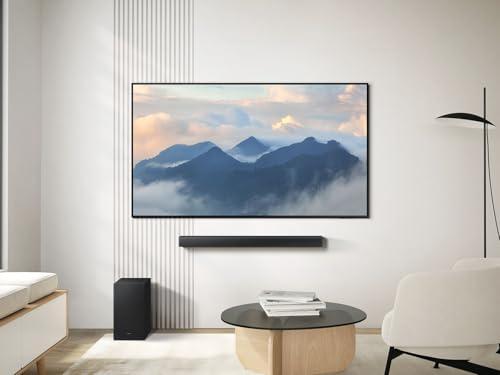


Modern TVs have a dirty little secret: they sound terrible. Those razor-thin profiles that look so sleek on your wall? They come at the cost of decent audio. The speakers are tiny, fire downward or backward, and struggle to produce anything resembling natural sound. That's where soundbars come in—they're the most popular solution for upgrading your TV's audio without the complexity of a full surround sound system.
But not all soundbars are created equal. Today we're comparing two very different approaches to better TV sound: the Samsung HW-B630F and the LG SC9S. These represent fundamentally different philosophies in soundbar design, and understanding those differences is crucial to making the right choice for your setup.
Before diving into specifics, let's talk about what makes soundbars tick. The basic concept is simple: take multiple speakers and arrange them in a single enclosure that sits below your TV. But the execution varies dramatically based on price point and design philosophy.
Entry-level soundbars focus on dialogue clarity—making sure you can actually hear what actors are saying. Mid-range models add dedicated subwoofers for bass and multiple channels for better sound localization (knowing where sounds are coming from). Premium models incorporate height channels and advanced audio processing to create truly immersive experiences.
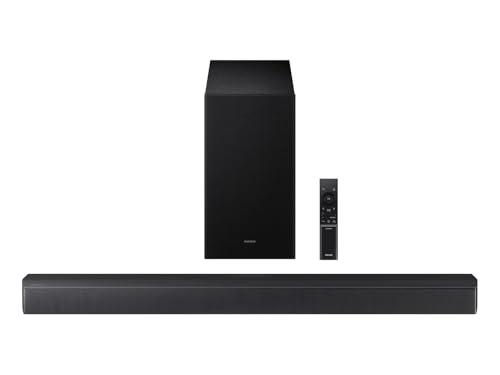
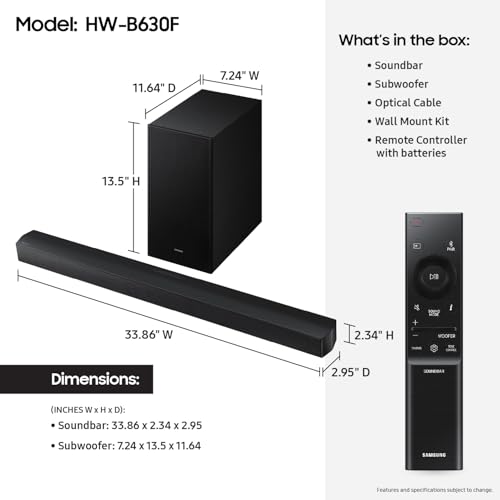
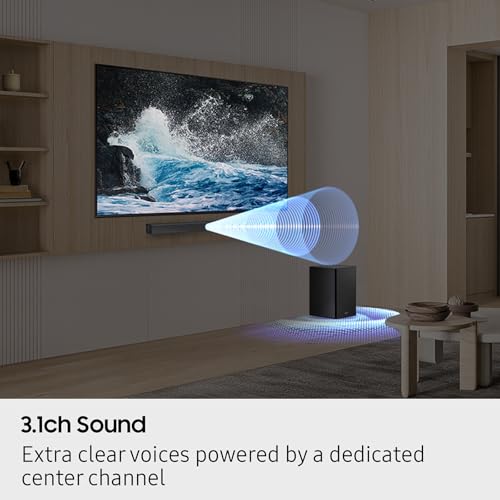
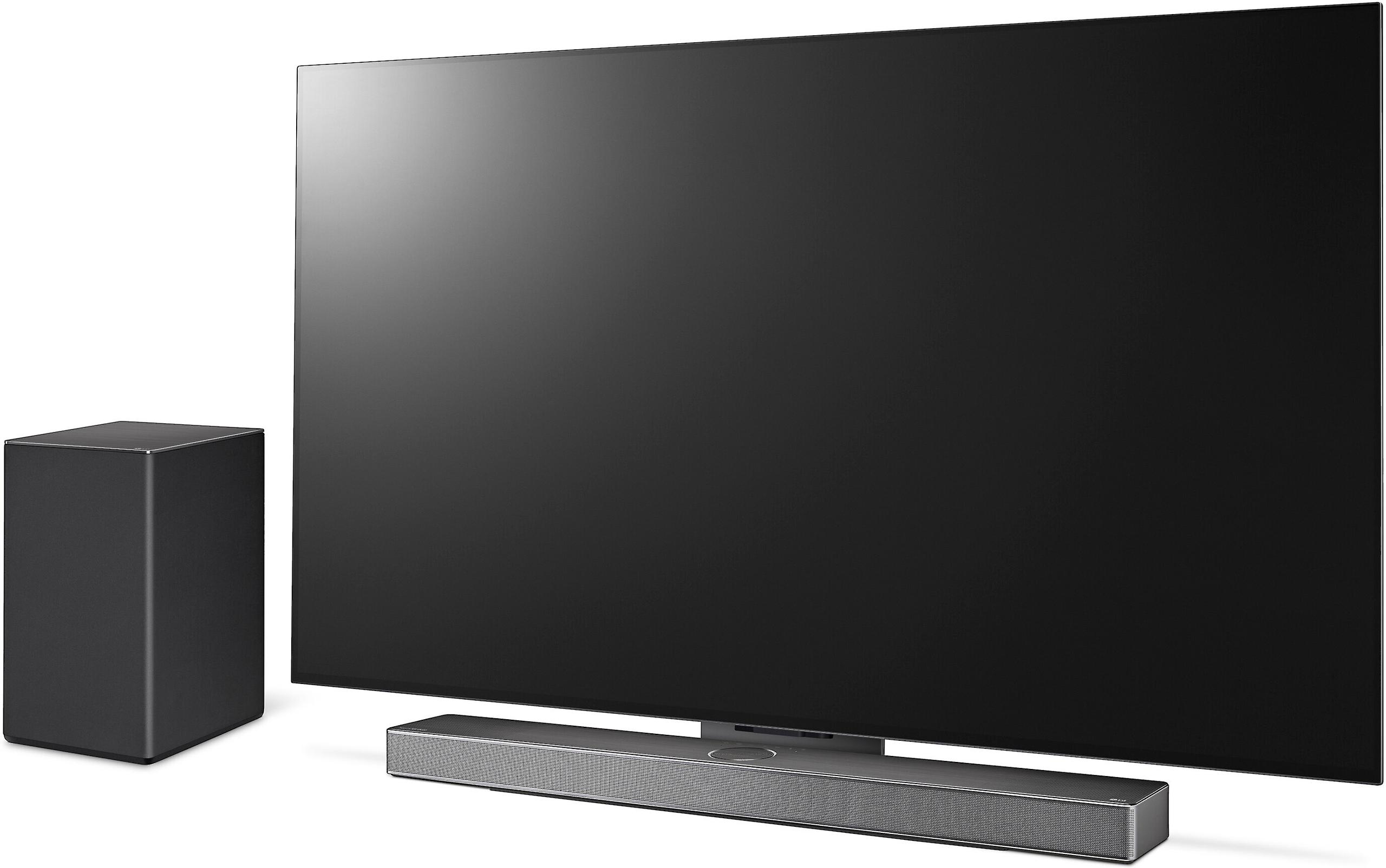
The channel configuration tells you a lot about a soundbar's capabilities. The Samsung HW-B630F uses a 3.1 setup: three front-facing speakers (left, center, right) plus a separate subwoofer (that's the ".1"). The LG SC9S employs a more complex 3.1.3 configuration—those same three front channels and subwoofer, but with three additional up-firing speakers for overhead effects.
Height audio has become increasingly important since 2020, when streaming services like Netflix and Disney+ began offering Dolby Atmos content. Atmos is an object-based audio format that positions sounds in 3D space rather than just sending them to specific channels. Think of a helicopter flying overhead in a movie—with Atmos, you actually hear it move above you, not just from left to right.
Released in 2025 as part of Samsung's refreshed B-series lineup, the Samsung HW-B630F represents what I'd call the "pragmatic approach" to soundbar design. At the time of writing, it's priced significantly lower than premium Atmos models while delivering substantial improvements over TV speakers.
Samsung built this around the principle that most people want better TV sound without complexity. The 3.1 configuration provides a dedicated center channel for dialogue clarity—something many people struggle with on modern TVs. The wireless subwoofer adds the bass impact that flat-panel TVs simply can't produce.
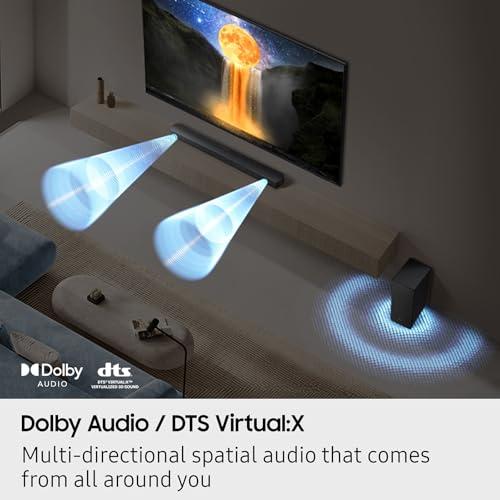
What's particularly clever about the Samsung HW-B630F is how it uses DTS Virtual:X processing. Since it lacks physical height speakers, it relies on psychoacoustic processing to create the illusion of surround and overhead effects. This technology analyzes the audio signal and uses carefully timed reflections and phase adjustments to trick your brain into perceiving sounds from directions where no speakers exist.
The 2025 model includes several improvements over earlier B-series bars. Enhanced Q-Symphony 2.0 allows compatible Samsung TVs to use their built-in speakers alongside the soundbar, effectively creating more channels. Adaptive Sound 2.0 automatically analyzes content type—distinguishing between news, movies, and music—and adjusts the audio profile accordingly.
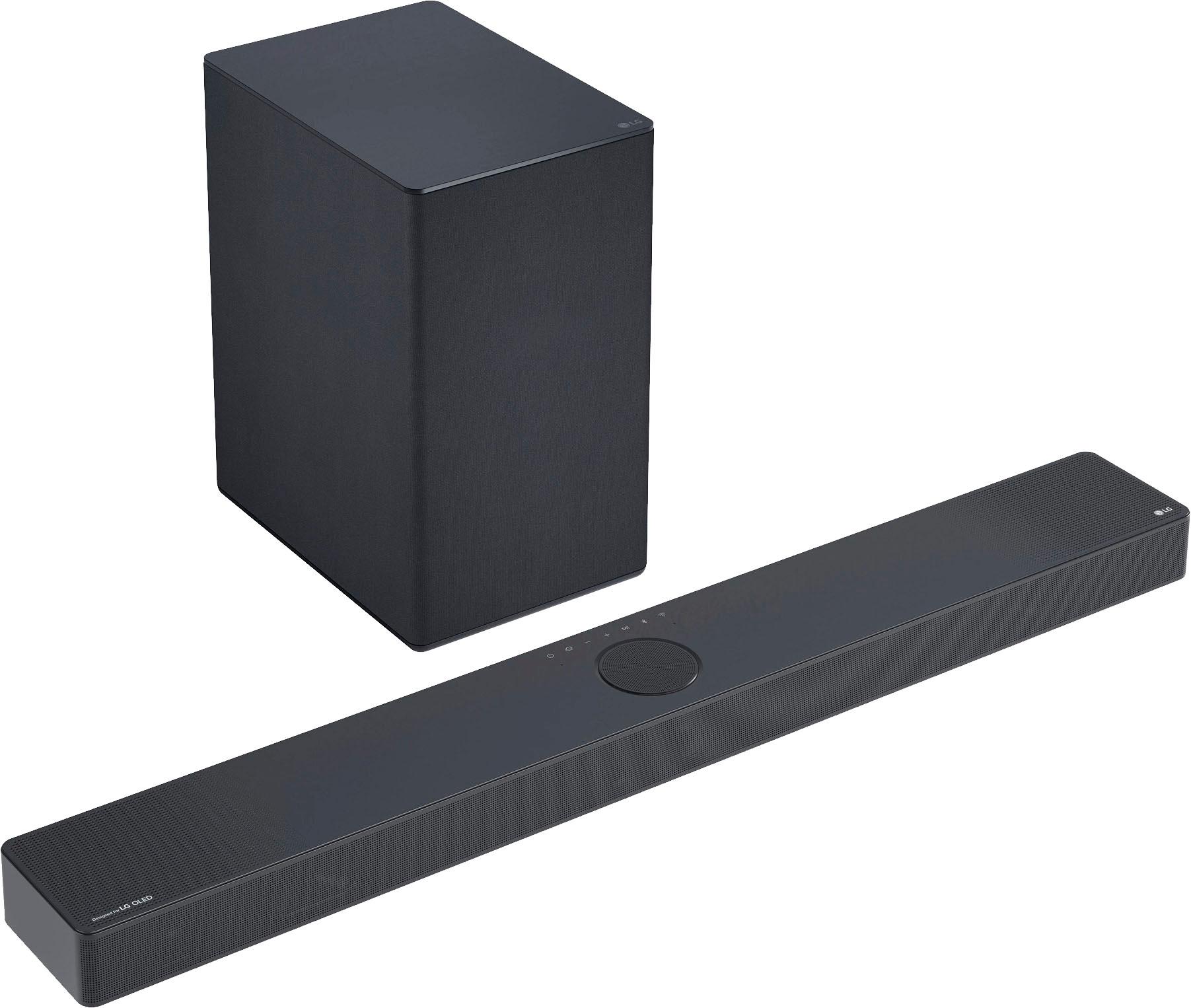
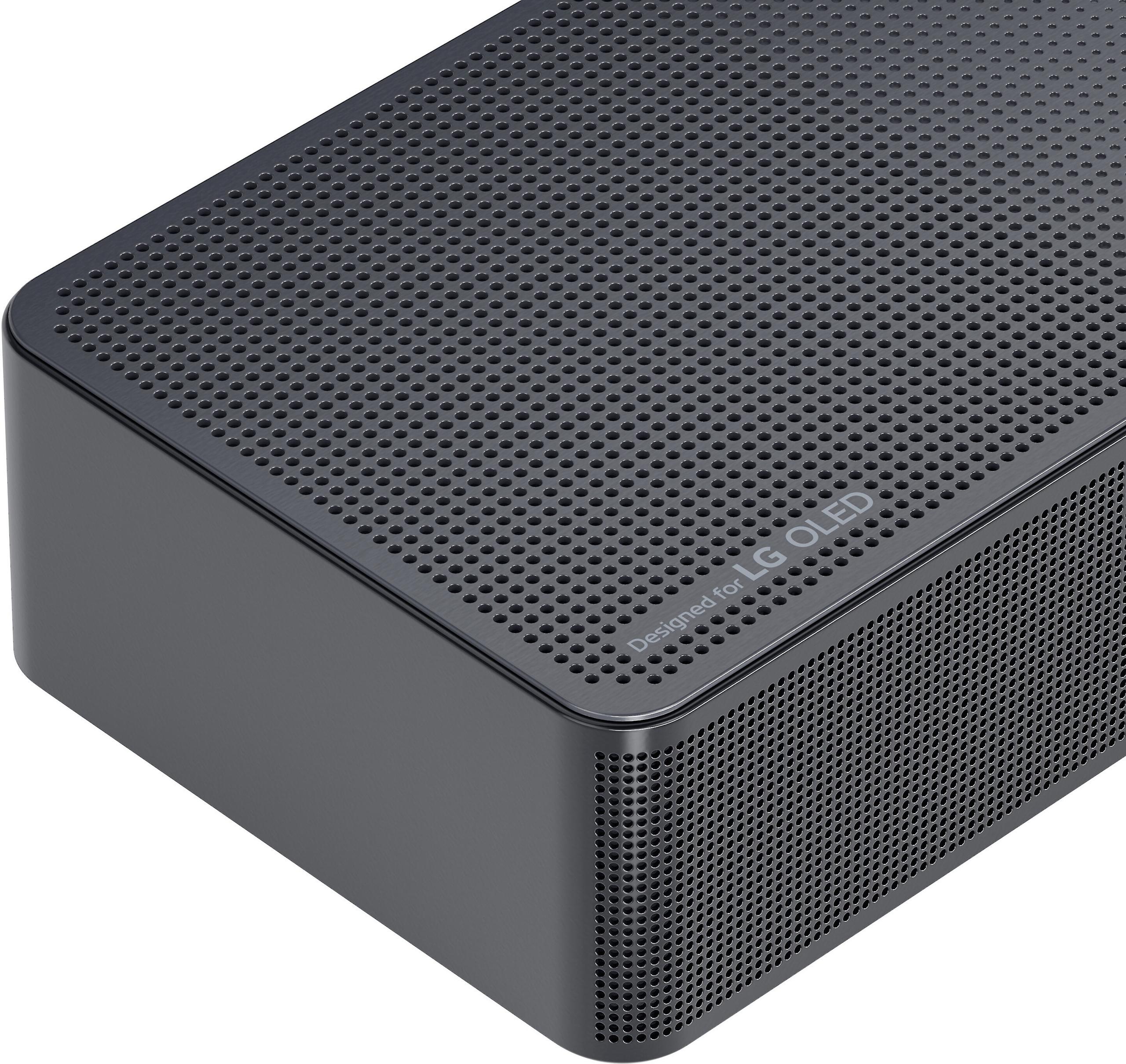
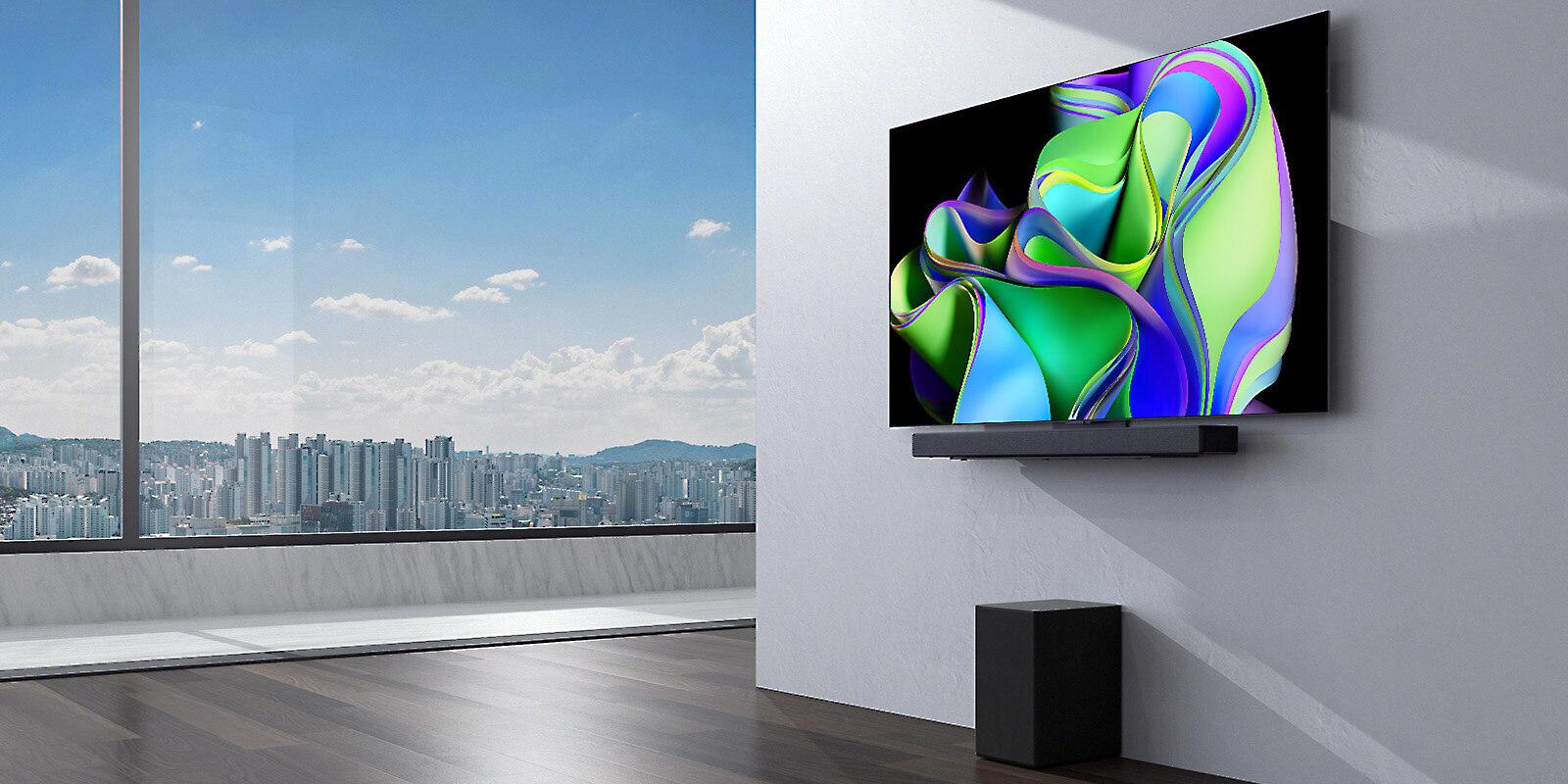
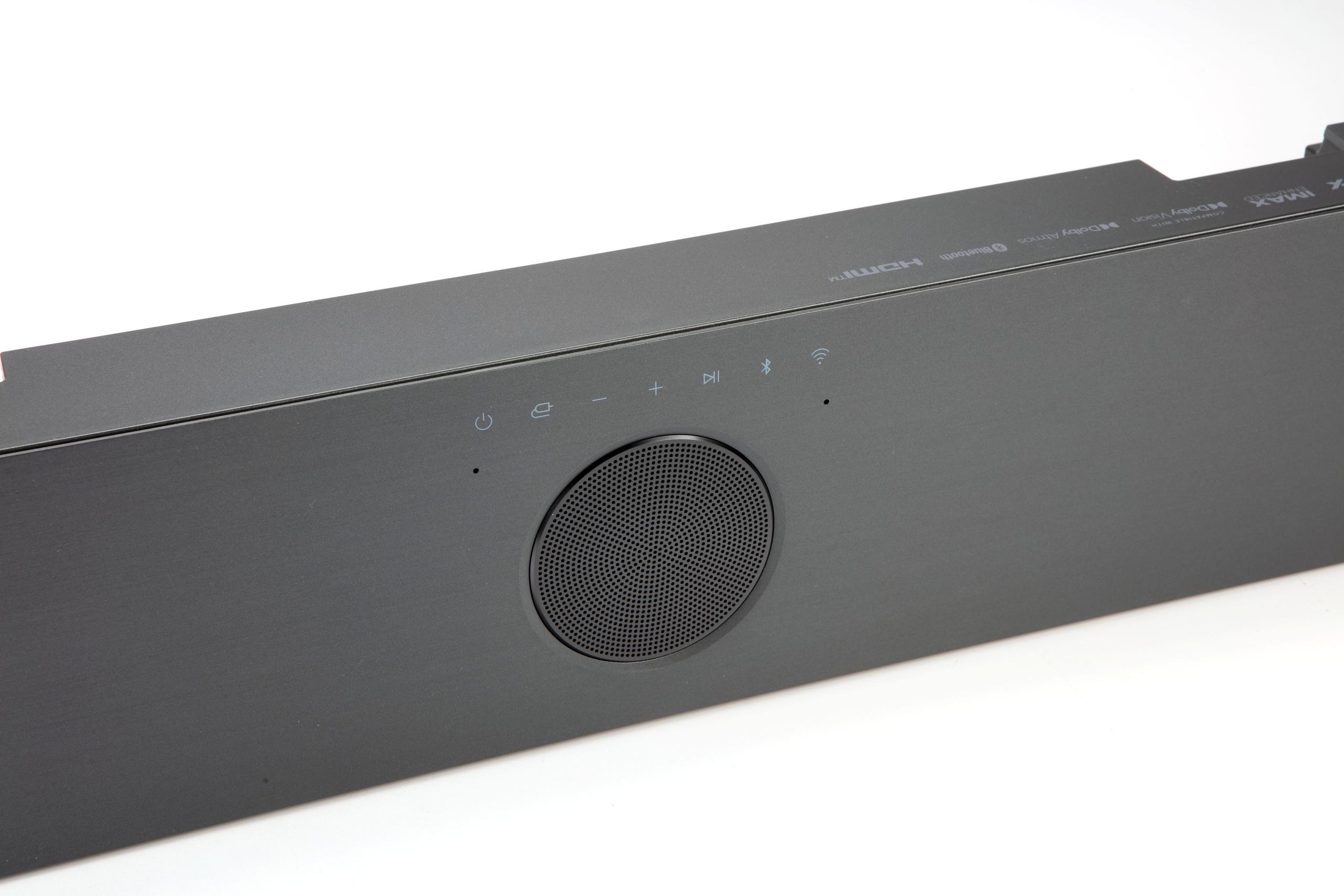
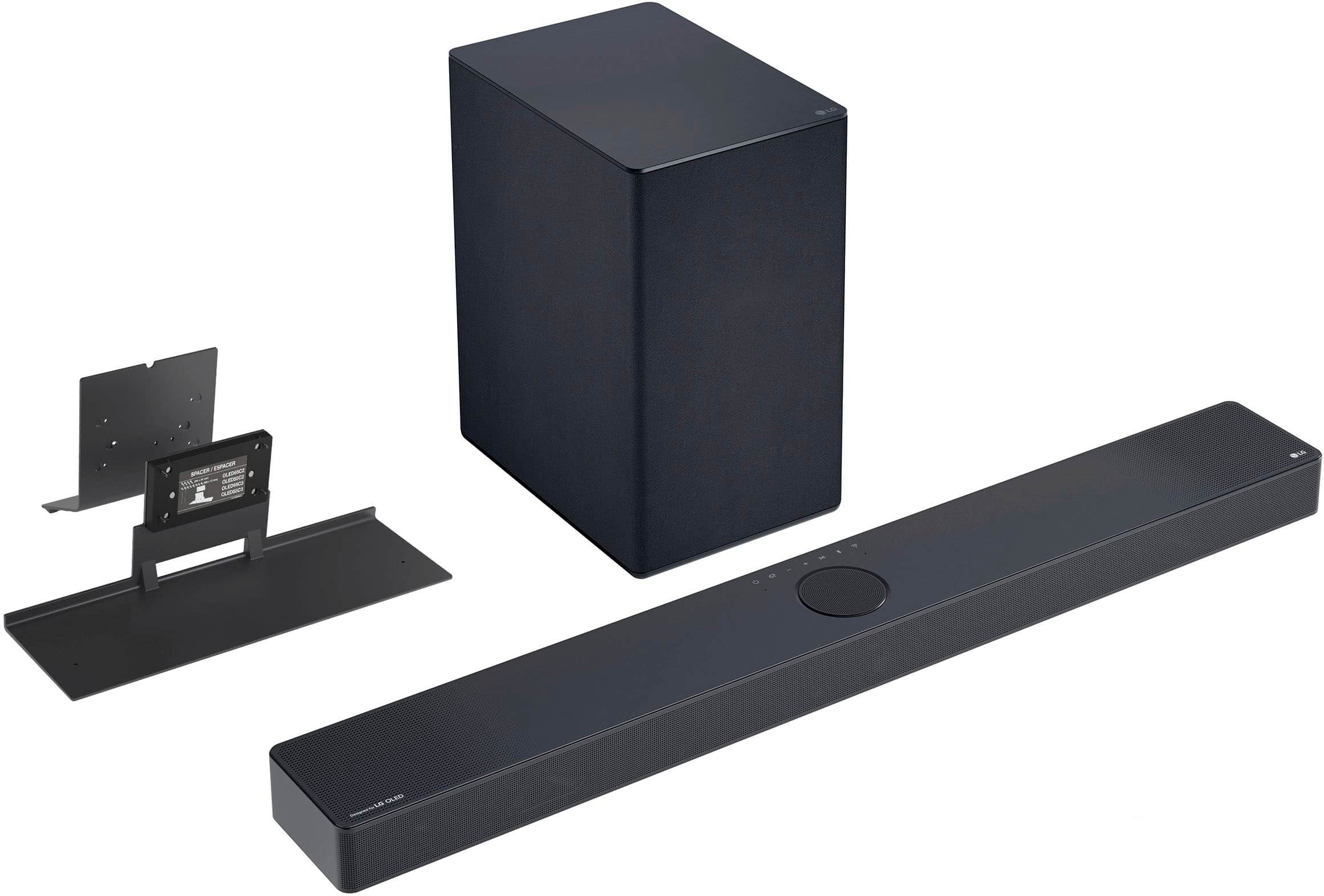
The LG SC9S, launched in 2023, takes a completely different approach. This is LG's premium Atmos offering, and it shows. Instead of relying on virtual processing, it uses actual up-firing speakers to bounce sound off your ceiling, creating genuine overhead effects.
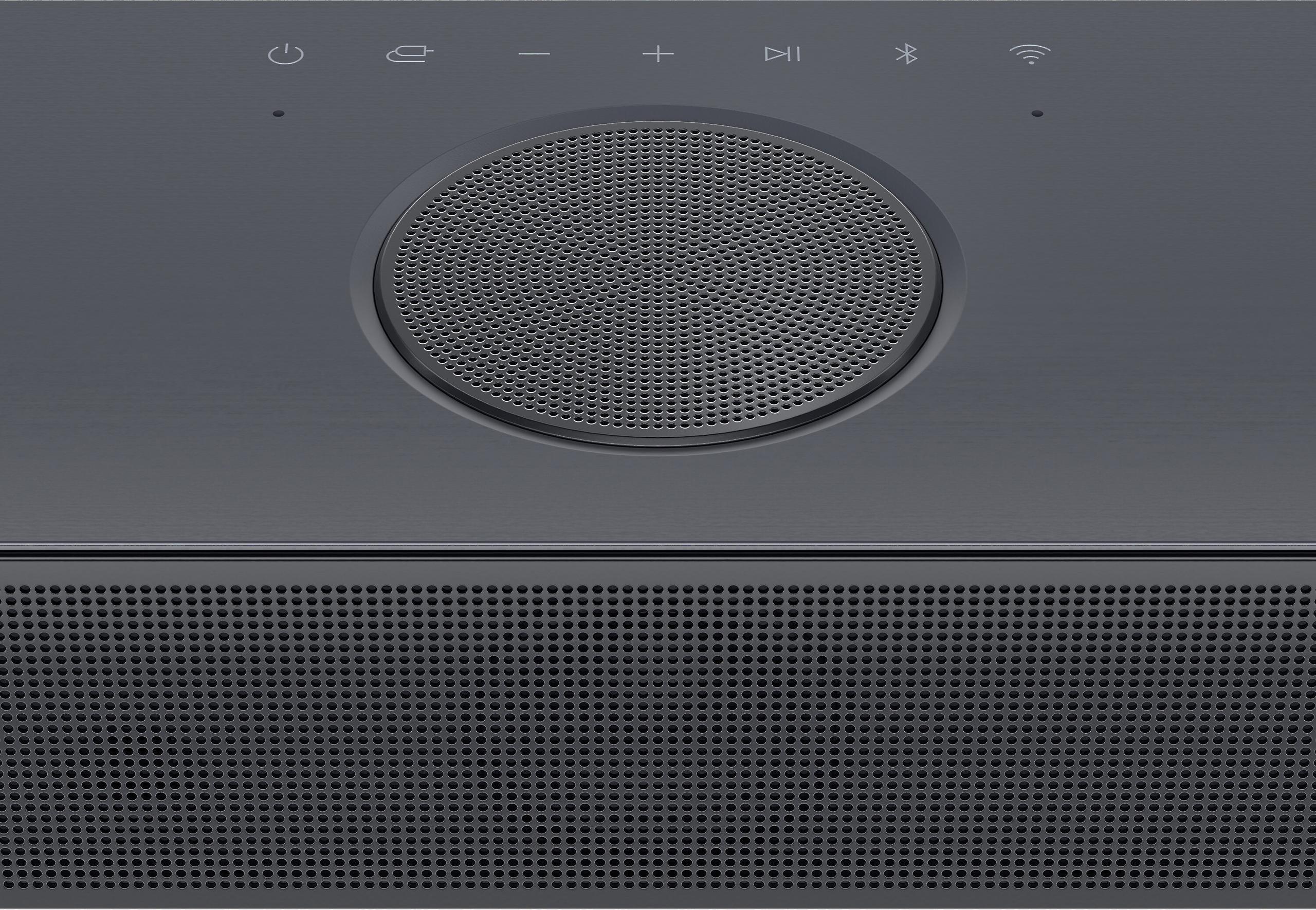
What makes the LG SC9S unique is its use of not two, but three up-firing drivers. Most Atmos soundbars use two up-firing speakers for left and right height channels. LG added a third up-firing speaker in the center position, specifically for elevating dialogue. This might sound like marketing gimmick, but having researched numerous user reports, the consensus is that it genuinely improves vocal clarity in complex mixes.
The AI Room Calibration Pro feature sets this bar apart from competitors. Using built-in microphones, it measures your room's acoustic properties and creates a custom audio profile. This isn't just basic room correction—it analyzes reflection patterns, absorption characteristics, and even furniture placement to optimize the sound specifically for your space.
Nothing ruins a movie or TV show like mumbly dialogue you can't understand. Both soundbars address this crucial issue, but through different methods.
The Samsung HW-B630F uses a traditional approach with excellent results. Its dedicated center channel driver is specifically tuned for vocal frequencies, while Voice Enhance mode further boosts the midrange where speech lives. The Adaptive Sound feature continuously monitors content and automatically optimizes for dialogue when it detects conversation-heavy scenes.
Based on user feedback we've analyzed, the Samsung delivers consistently clear dialogue across all content types without requiring any setup or calibration. It's particularly effective for news, talk shows, and dialogue-heavy dramas where speech intelligibility is paramount.
The LG SC9S takes dialogue clarity to another level with its dual center channel approach. The traditional front-firing center driver handles standard dialogue reproduction, while the up-firing center channel lifts voices above the action. This creates a more natural presentation where dialogue appears to come from the actors' mouths on screen rather than from below the TV.
The Clear Voice Plus technology uses real-time processing to separate dialogue from background elements in the mix. However, this sophistication comes with a caveat—the LG SC9S requires proper calibration to reach its potential. In uncalibrated setups, users report the dialogue can sound artificially processed or hollow.
Winner for Dialogue: Samsung HW-B630F for consistency and ease of use; LG SC9S for ultimate clarity when properly set up.
This is where the philosophical differences between these soundbars become most apparent.
The Samsung HW-B630F creates immersion through clever processing rather than physical speaker placement. DTS Virtual:X analyzes incoming audio and uses timing, phase, and amplitude adjustments to create the perception of sounds coming from beside and above you. The Surround Sound Expansion mode widens the soundstage beyond the bar's physical boundaries.
In smaller rooms (under 300 square feet), this virtual approach works surprisingly well. Users consistently report a noticeably wider and more enveloping sound than you'd expect from a simple three-speaker bar. However, in larger spaces or when sitting far off-center, the illusion breaks down. The effects become less convincing, and the limitations of virtual processing become apparent.
The LG SC9S delivers true immersive audio through physical up-firing speakers. When you watch an Atmos-encoded movie, sounds actually come from above you—not just virtually. Rain pattering on a roof, helicopters flying overhead, or debris falling from an explosion create genuinely three-dimensional audio experiences.
But here's the crucial caveat: this only works with appropriate ceiling heights (8-12 feet is optimal) and proper room setup. Too low, and the reflected sound doesn't have time to develop. Too high, and the reflections become diffuse and lose impact. The AI Room Calibration helps optimize for your specific space, but it can't overcome fundamental acoustic limitations.
For Atmos content specifically, the difference is night and day. The LG SC9S delivers the immersive experience filmmakers intended, while the Samsung HW-B630F provides a convincing but ultimately artificial approximation.
Winner for Immersion: LG SC9S decisively, but only with proper setup and Atmos content.
Both soundbars include wireless subwoofers, but their approaches differ significantly.
The Samsung HW-B630F pairs with a 6.5-inch subwoofer that emphasizes balance over raw power. The tuning is designed to complement all content types without overwhelming dialogue or becoming boomy. The Bass Boost mode adds extra low-end punch for action movies, but the overall character remains controlled and musical.
User reports consistently praise this subwoofer's consistency across different room sizes and content types. It doesn't deliver the deepest bass or highest output levels, but it provides solid, satisfying low-frequency support that enhances rather than dominates the listening experience.
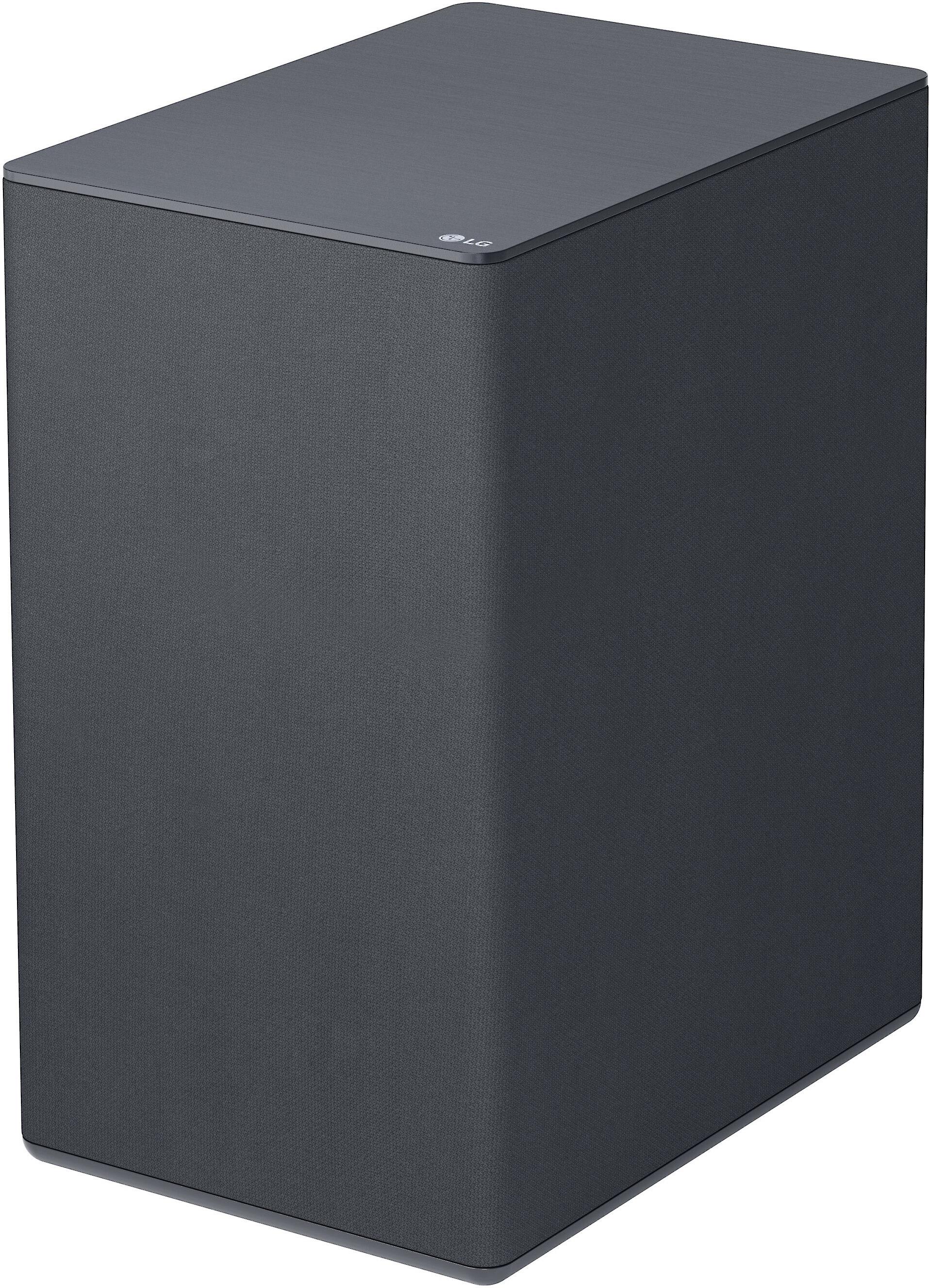
The LG SC9S includes an 8-inch subwoofer with significantly more power and deeper extension. This sub can shake your room when the content demands it, delivering the kind of visceral impact that makes action sequences truly exciting.
However, this power requires careful management. The AI Room Calibration automatically adjusts subwoofer output based on your room's characteristics, preventing the overpowering bass that can occur with powerful subs in smaller spaces. Without calibration, users report this sub can easily become overwhelming, masking dialogue and creating a boomy, unbalanced sound.
Winner for Bass: LG SC9S for power and extension; Samsung HW-B630F for consistency and balance.
Gaming audio has different requirements than movies or TV. Low latency is crucial for competitive gaming where audio cues can mean the difference between victory and defeat.
The Samsung HW-B630F includes a dedicated Game Mode specifically optimized for gaming scenarios. This mode uses cross-talk cancellation and directional processing to enhance positional audio cues. Footsteps, gunfire, and environmental sounds become easier to localize within the soundstage. Importantly, Game Mode also minimizes audio processing delays, keeping sound synchronized with on-screen action.
For competitive gaming, especially first-person shooters or battle royale games, users consistently report that the Samsung HW-B630F provides clear directional information without the latency issues that can plague more complex processing systems.
The LG SC9S offers Game Bass Blast mode, which emphasizes impact and effects for a more exciting gaming experience. For single-player games with Atmos support, the overhead speakers add genuine immersion—explosions from above, environmental ambience that surrounds you, and positional audio that truly places you in the game world.
However, the sophisticated processing required for Atmos and room correction introduces slight latency that can be problematic for competitive gaming. The trade-off is clear: immersion versus responsiveness.
Winner for Gaming: Samsung HW-B630F for competitive gaming; LG SC9S for immersive single-player experiences.
Modern soundbars need to integrate seamlessly with today's connected entertainment systems. Here, the differences between these models reflect their target markets.
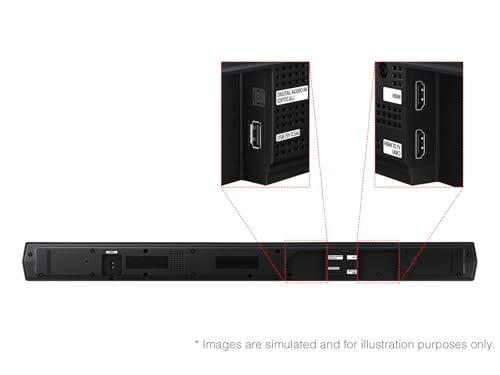
The Samsung HW-B630F offers essential connectivity: HDMI ARC for TV connection, optical input for older devices, Bluetooth for wireless music streaming, and USB for direct file playback. The HDMI connection supports standard ARC (Audio Return Channel) but not the newer eARC standard, limiting it to compressed audio formats like Dolby Digital rather than lossless formats.
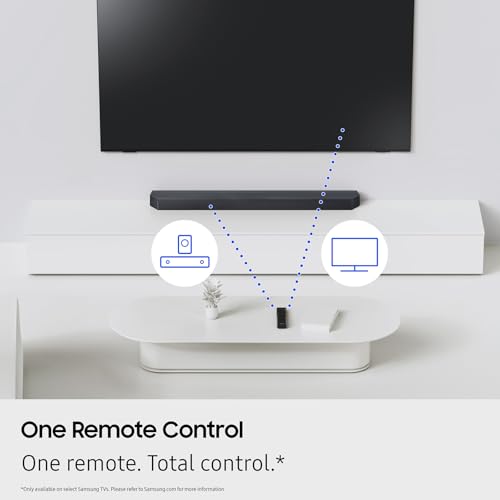
For Samsung TV owners, the One Remote Control integration is genuinely useful—your TV remote can control the soundbar's volume and basic functions, reducing remote clutter. The Q-Symphony feature allows compatible Samsung TVs to use their speakers alongside the soundbar, effectively creating more channels.
The LG SC9S provides significantly more connectivity options. HDMI eARC supports full-resolution Atmos audio from compatible TVs and sources. Wi-Fi connectivity enables streaming directly to the soundbar, while AirPlay 2 and Chromecast support make it easy to stream from mobile devices. The advanced mobile app provides extensive customization options, including eight different voice presets and independent adjustment of center and up-firing drivers.
However, this connectivity richness comes with complexity. Users report occasional connection issues with the mobile app, and the multiple options can be overwhelming for those who just want simple TV audio improvement.
Your room plays a crucial role in soundbar performance, but these two models have very different requirements.
The Samsung HW-B630F is remarkably adaptable. Virtual processing doesn't depend on ceiling height or specific acoustic conditions. Place it in front of your TV, connect a single cable, and it delivers immediately improved audio. The wireless subwoofer can be positioned anywhere within range, and the system automatically adjusts to provide balanced sound.
The LG SC9S requires more careful consideration. The up-firing speakers need appropriate ceiling height (8-12 feet optimal) and reflective ceiling materials. Vaulted or textured ceilings can scatter the reflected sound, reducing effectiveness. The AI Room Calibration helps optimize for your specific space, but it requires a 2-3 minute measurement process and should be repeated if you rearrange furniture.
For apartment dwellers or those with challenging room layouts, the Samsung's simplicity is a major advantage. For dedicated home theater rooms with proper dimensions, the LG's performance potential justifies the additional setup requirements.
At the time of writing, these soundbars occupy very different price tiers, reflecting their different target markets and capabilities.
The Samsung HW-B630F represents exceptional value for everyday TV audio improvement. You get a complete 3.1 system with wireless subwoofer, multiple sound modes, and solid build quality at an entry-level price. For the majority of users who primarily watch standard TV content, news, and basic streaming, it delivers 80% of what premium soundbars offer at a fraction of the cost.
The LG SC9S commands a premium price but justifies it for the right user. True Atmos capability, advanced room correction, extensive connectivity, and superior build quality create a genuinely premium experience. However, this premium is only worthwhile if you regularly consume Atmos content and have the room setup to take advantage of the height speakers.
Consider the hidden costs too. The Samsung works great with any content, while the LG's capabilities are best utilized with premium streaming subscriptions that offer Atmos content or Atmos-enabled Blu-ray players.
The Samsung HW-B630F excels as an everyday TV audio enhancer. It's the soundbar equivalent of a reliable daily driver—not the most exciting option, but consistently delivers what most people need without fuss.
The LG SC9S is for enthusiasts who view audio as a crucial component of their entertainment experience and are willing to invest time and money in optimization.
These soundbars represent two valid but different approaches to solving TV audio problems. The Samsung HW-B630F democratizes good TV sound—anyone can plug it in and immediately enjoy dramatically better audio than their TV provides. It's unpretentious, effective, and offers outstanding value.
The LG SC9S is for those seeking a truly premium audio experience. When properly set up with appropriate content, it delivers genuine home theater immersion that the Samsung simply cannot match. But this capability comes with higher cost, greater complexity, and specific room requirements.
For most people, the Samsung represents the sweet spot—significant improvement without the complexity or cost of premium systems. For dedicated home theater enthusiasts with the right setup, the LG provides capabilities that justify its premium positioning.
The choice ultimately depends on your content consumption habits, room characteristics, and how much you value audio quality in your entertainment experience. Both excel in their intended roles; the key is honestly assessing which role better matches your needs and expectations.
| Samsung HW-B630F B-Series 3.1ch Soundbar System | LG SC9S 3.1.3 Channel Dolby Atmos Soundbar |
|---|---|
| Channel Configuration - Determines immersion and sound localization | |
| 3.1 channels (3 front + wireless subwoofer) | 3.1.3 channels (3 front + 3 up-firing + wireless subwoofer) |
| Dolby Atmos Support - Essential for overhead effects in modern movies | |
| No native Atmos (uses DTS Virtual:X simulation) | Full Dolby Atmos and DTS:X with physical up-firing speakers |
| Room Calibration - Optimizes sound for your specific space | |
| Basic Adaptive Sound with automatic content detection | AI Room Calibration Pro with microphone-based acoustic analysis |
| HDMI Connectivity - Affects audio quality from TV and sources | |
| HDMI ARC (compressed audio formats only) | HDMI eARC (supports full-resolution Atmos audio) |
| Wireless Streaming - Modern connectivity beyond Bluetooth | |
| Bluetooth 4.2 only | Wi-Fi, AirPlay 2, Chromecast, Bluetooth 5.0 |
| Subwoofer Size - Impacts bass depth and room-filling capability | |
| 6.5" wireless sub (balanced, controlled bass) | 8" wireless sub with room-adaptive tuning (deeper, more powerful) |
| Setup Complexity - Time investment required for optimal performance | |
| Plug-and-play, works well immediately | Requires 2-3 minute calibration process for best results |
| Gaming Performance - Low latency crucial for competitive gaming | |
| Dedicated Game Mode with cross-talk cancellation | Game Bass Blast mode but higher processing latency |
| Smart TV Integration - Seamless control with your TV remote | |
| One Remote Control and Q-Symphony with Samsung TVs | Advanced app control but best with LG OLED TVs |
| Ceiling Height Requirements - Critical for up-firing speaker effectiveness | |
| Any ceiling height (virtual processing) | Requires 8-12 ft ceilings for optimal Atmos performance |
| Content Optimization - What type of viewing this excels at | |
| Everyday TV, news, standard streaming content | Premium Atmos movies, 4K streaming, cinematic experiences |
| Value Proposition - Performance per dollar at time of writing | |
| Exceptional value for immediate TV audio upgrade | Premium pricing justified only with proper setup and Atmos content |
Both the Samsung HW-B630F and LG SC9S excel at dialogue clarity but use different approaches. The Samsung HW-B630F offers consistent voice clarity through its dedicated center channel and Voice Enhance mode, working well right out of the box. The LG SC9S features dual center channels (traditional and up-firing) that can provide superior dialogue separation when properly calibrated. For plug-and-play clarity, choose the Samsung; for ultimate dialogue performance with proper setup, the LG wins.
No, Dolby Atmos isn't essential for significantly better TV audio. The Samsung HW-B630F doesn't support native Atmos but still delivers excellent sound improvement through DTS Virtual:X processing. However, if you regularly watch Netflix, Disney+, or 4K Blu-rays with Atmos content, the LG SC9S provides genuine overhead effects that create a more immersive experience. Atmos is most valuable for dedicated home theater setups with compatible content.
The Samsung HW-B630F is generally better for smaller rooms under 300 square feet. Its virtual surround processing works effectively in compact spaces, and it doesn't require specific ceiling heights or calibration. The LG SC9S can work in small rooms but may deliver overpowering bass until properly calibrated, and its up-firing speakers need adequate ceiling height to function optimally.
The Samsung HW-B630F uses 3.1 channels: left, center, right speakers plus a subwoofer. The LG SC9S adds three up-firing speakers (the additional .3) that bounce sound off your ceiling to create overhead effects. This means the Samsung relies on virtual processing for surround effects, while the LG SC9S physically creates sounds above you for true Atmos experiences.
The Samsung HW-B630F is significantly easier to set up. Simply connect one cable to your TV and it works well immediately without any calibration. The LG SC9S requires a 2-3 minute AI Room Calibration process to achieve optimal performance, and you may need to repeat calibration if you rearrange your room. For hassle-free setup, the Samsung is the clear winner.
Yes, but they excel in different gaming scenarios. The Samsung HW-B630F features a dedicated Game Mode with low latency processing, making it excellent for competitive gaming where audio cues are crucial. The LG SC9S offers more immersive gaming experiences with its Atmos capabilities but introduces slight processing delays that may affect competitive gaming performance.
The LG SC9S delivers more powerful bass through its larger 8-inch subwoofer with room-adaptive tuning. It can produce deeper, more impactful low frequencies for action movies and music. The Samsung HW-B630F has a smaller 6.5-inch subwoofer that emphasizes balance and consistency across all content types. Choose the LG for maximum bass impact, the Samsung for well-balanced bass that never overwhelms.
The LG SC9S offers more streaming options including Wi-Fi, AirPlay 2, Chromecast, and Bluetooth 5.0, making it excellent for music streaming from various devices. The Samsung HW-B630F supports Bluetooth 4.2 streaming only. If wireless music streaming is important to you, especially from Apple devices or through multi-room systems, the LG SC9S provides significantly more flexibility.
The Samsung HW-B630F offers exceptional value by delivering substantial audio improvement over TV speakers at an entry-level price point. The LG SC9S costs significantly more but provides premium features like true Atmos and advanced room calibration. The Samsung gives you 80% of premium performance at a fraction of the cost, while the LG justifies its premium pricing only if you regularly consume Atmos content.
The LG SC9S works best with ceiling heights between 8-12 feet. Too low and the up-firing speakers don't have space to create proper overhead effects; too high and the reflected sound becomes diffuse. The Samsung HW-B630F works with any ceiling height since it uses virtual processing instead of physical up-firing speakers.
Both soundbars work with any TV brand, but the LG SC9S offers broader compatibility through its HDMI eARC support and multiple connection options. The Samsung HW-B630F works well with any TV but offers special integration features like Q-Symphony only with Samsung TVs. For maximum flexibility with various TV brands, the LG SC9S provides more universal connectivity options.
For a dedicated home theater room with proper dimensions and regular Atmos content viewing, the LG SC9S delivers superior immersive experiences with genuine overhead effects. For everyday TV watching, mixed content, and budget-conscious home theater setups, the Samsung HW-B630F provides excellent performance without the complexity. The choice depends on whether you prioritize maximum immersion or practical everyday improvement.
We've done our best to create useful and informative comparisons to help you decide what product to buy. Our research uses advanced automated methods to create this comparison and perfection is not possible - please contact us for corrections or questions. These are the sites we've researched in the creation of this article: samsung.com - bhphotovideo.com - crutchfield.com - youtube.com - bestproducts.com - videoandaudiocenter.com - pcrichard.com - bhphotovideo.com - samsung.com - youtube.com - requiremints.com - karlsonline.com - crutchfield.com - youtube.com - donstv.com - samsung.com - bhphotovideo.com - youtube.com - youtube.com - crutchfield.com - costco.ca - rtings.com - crutchfield.com - accio.com - bhphotovideo.com - manuals.plus - samsung.com - saraappliance.com - consumerreports.org - valueelectronics.com - youtube.com - bestbuy.com - rtings.com - costco.com - bestbuy.com - walts.com - queencityonline.com - blog.son-video.com - videoandaudiocenter.com - lg.com

Privacy Policy
Terms and Conditions - Affiliate Policy
Home Security
© Copyright 2008-2026.
11816 Inwood Rd #1211, Dallas, TX 75244