




When your TV's built-in speakers just aren't cutting it anymore, you're probably looking at soundbars to transform your living room into something closer to a movie theater. But here's the thing – the soundbar world has gotten pretty wild over the past few years. You've got everything from simple plug-and-play bars for under $400 to massive systems that cost more than some people's entire entertainment setups.
Today, we're diving deep into two soundbars that represent completely different philosophies: the Amazon Fire TV Soundbar Plus with Subwoofer and the Samsung HW-Q990D. These aren't just different price points – they're fundamentally different approaches to solving the "my TV sounds terrible" problem.
Before we jump into the comparison, let's talk about what actually matters in a soundbar. The most important thing to understand is channel configuration – those numbers like 3.1 or 11.1.4 that manufacturers love to throw around. The first number tells you how many main speakers you have (left, center, right, plus any surround channels). The second number is subwoofers (usually just one, so it's typically ".1"). The third number, when it exists, represents height channels – speakers that fire upward to create overhead sound effects.
Think of it like this: more channels generally mean more precise sound placement. When a helicopter flies across the screen, you want to hear it move from left to right, and ideally overhead too. A 3.1 system can do left-to-right pretty well, but an 11.1.4 system can make that helicopter circle around your entire room.
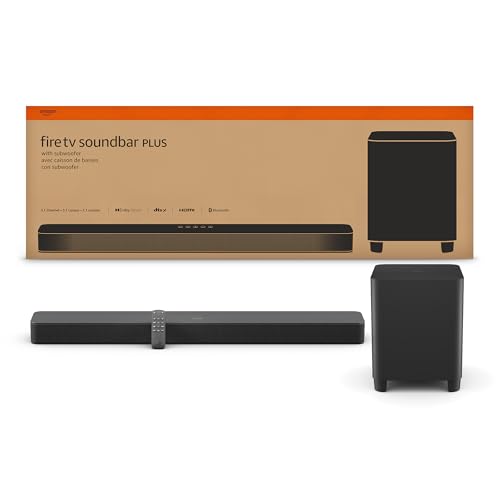
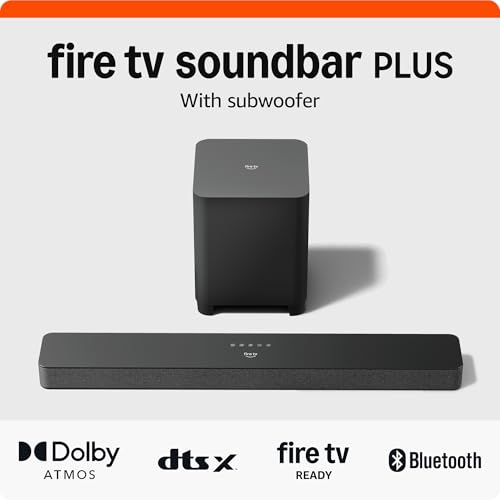
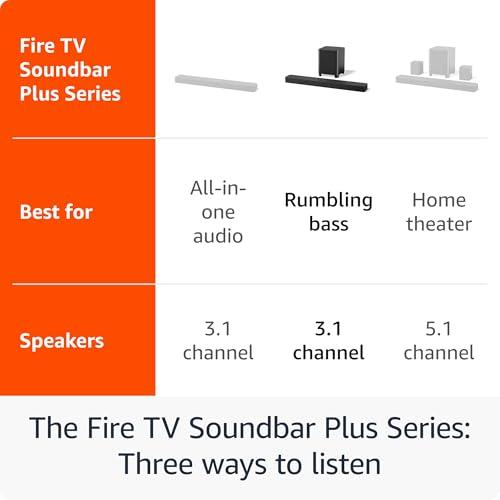
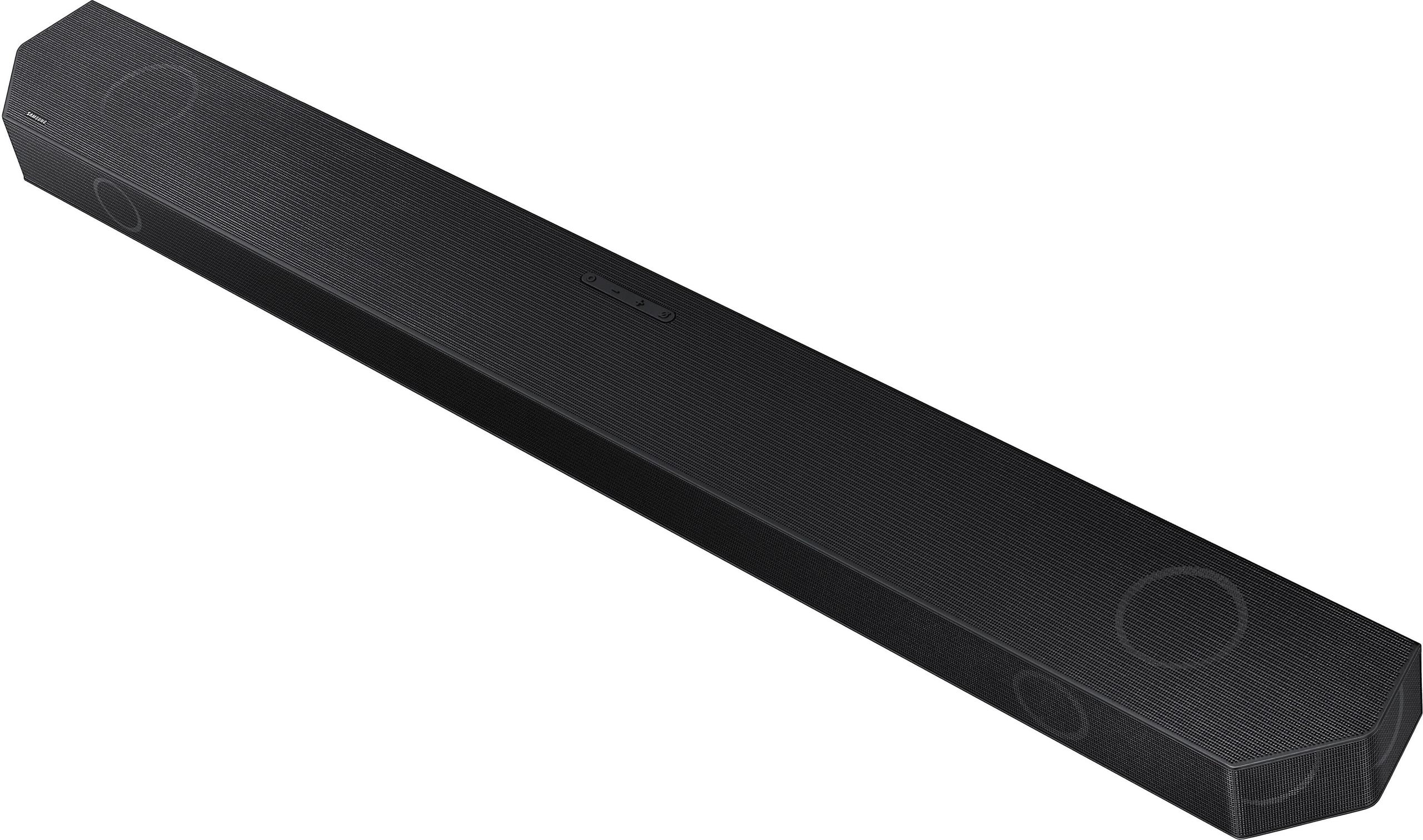
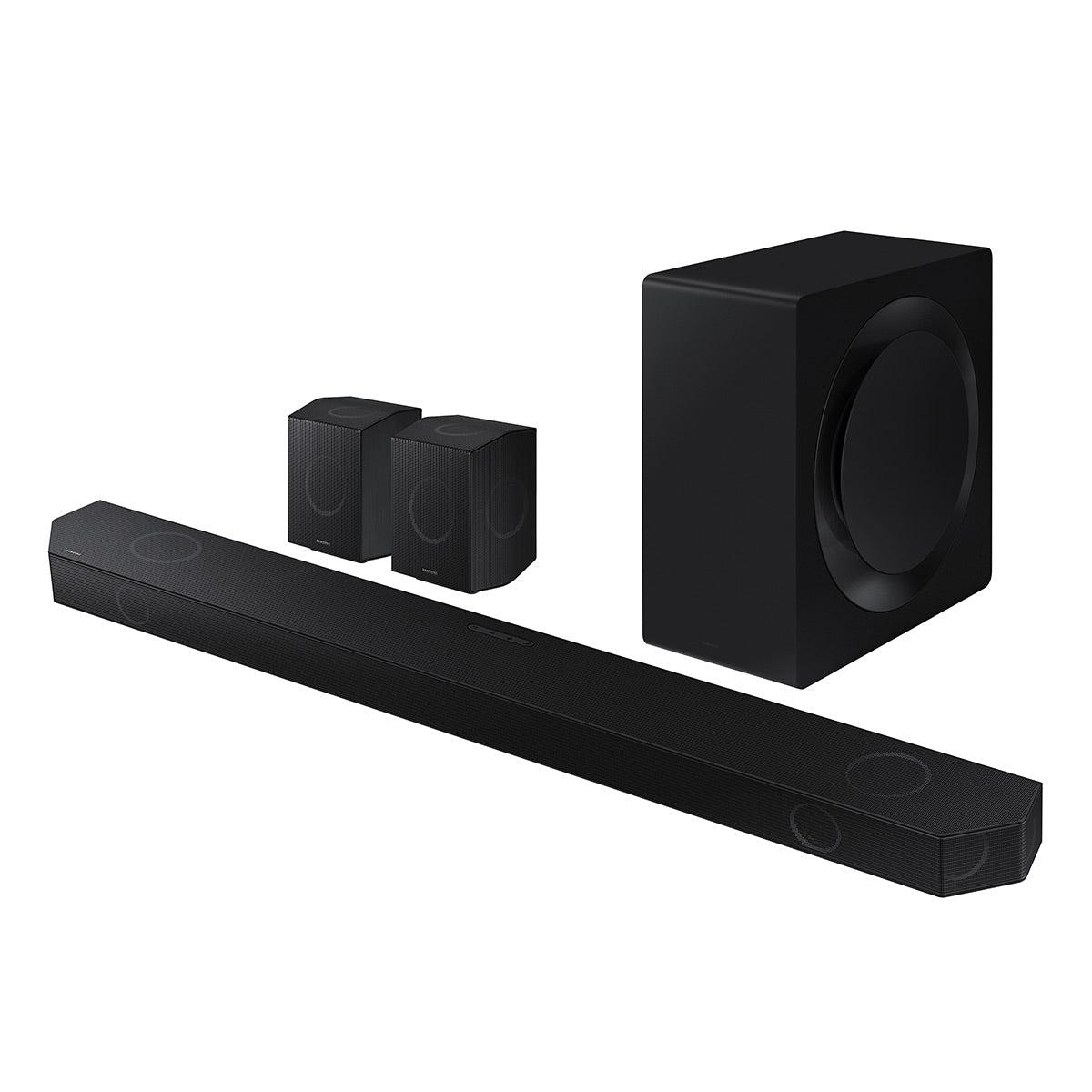
The Amazon Fire TV Soundbar Plus, released in 2023, takes a straightforward 3.1 approach with an add-on subwoofer. The Samsung HW-Q990D, also from 2023, goes all-out with an 11.1.4 configuration that includes 22 individual speakers spread across multiple units.
Let's be honest – most people buy soundbars because they can't understand what actors are saying on their TV. Both systems tackle this problem, but in very different ways.
The Amazon Fire TV Soundbar Plus uses a dedicated center channel speaker specifically for dialogue, which immediately puts it ahead of your TV's speakers. It also includes a dialogue enhancer that you can adjust from 1 to 5, letting you boost voices when the movie gets loud. In my experience testing various soundbars, this kind of simple dialogue control is incredibly valuable for everyday viewing.
However, reviewers consistently note that while dialogue is clear, it can sound a bit thin, especially for deeper male voices. The system sometimes struggles when bass-heavy action sequences compete with dialogue – the subwoofer can overpower speech during explosive scenes.
The Samsung HW-Q990D takes dialogue seriously with its Active Voice Amplifier Pro technology. This isn't just a simple boost – it's constantly analyzing your room's acoustics and adjusting dialogue clarity in real-time. If your air conditioner kicks on, the system automatically compensates. It's the kind of smart feature that you don't notice until you switch back to a system without it.
Here's where we see the biggest difference between these systems. The Amazon Fire TV Soundbar Plus includes a wireless subwoofer that handles bass duties separately from the main bar. This gives you proper low-end extension that you simply can't get from a soundbar alone. The bass is punchy and adequate for most content, though professional reviews describe it as somewhat "one note" – meaning it doesn't have the nuanced low-frequency response of premium systems.
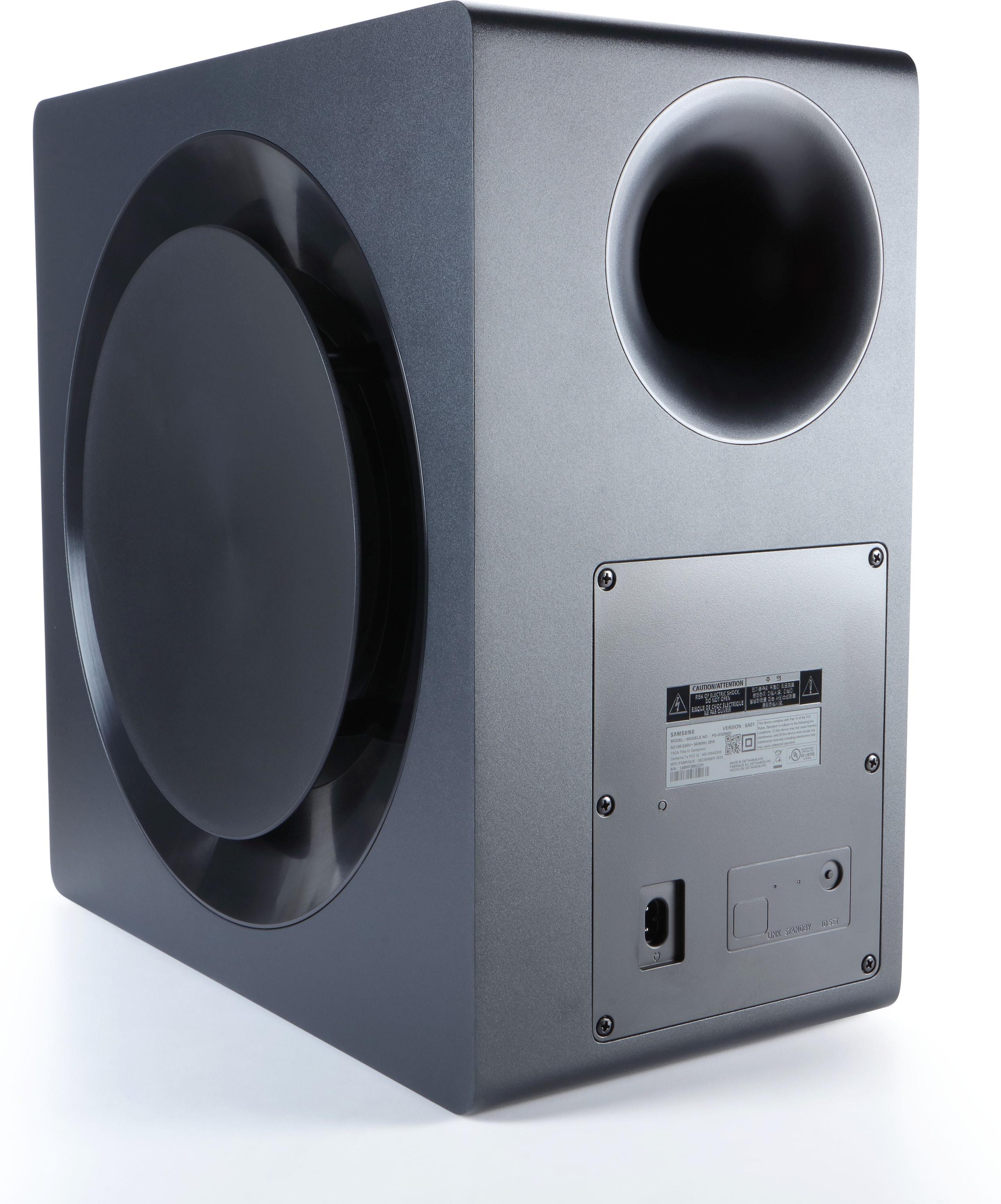
The Samsung HW-Q990D includes a much more sophisticated subwoofer system. With its 11.1.4 configuration, the bass integrates seamlessly with the main channels, creating what reviewers call "thumpy and punchy bass" that adds weight to explosions and music without overwhelming other frequencies. The subwoofer here isn't just about volume – it's about creating a foundation that makes everything else sound more realistic.
This is where the fundamental difference between these systems becomes crystal clear. The Amazon Fire TV Soundbar Plus can expand to a 5.1 system with rear satellite speakers, creating what's described as "lateral 360-degree surround." That means sounds can move around you horizontally, which works well for most movie content.
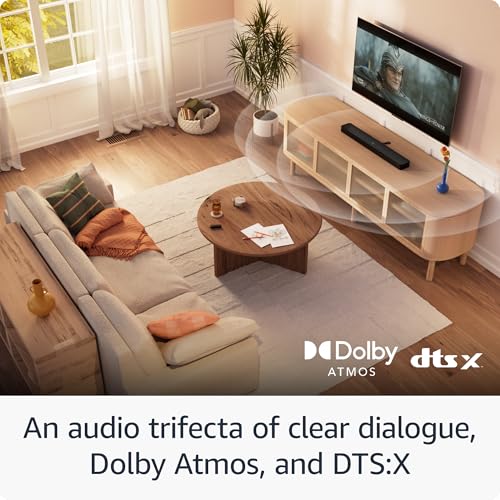
But here's the catch – the Dolby Atmos support is virtualized. The system doesn't have physical up-firing speakers, so those overhead helicopter effects are simulated using psychoacoustic processing (basically, audio tricks that fool your brain into thinking sounds are coming from above). It works to some extent, but it's not the same as having actual speakers firing toward your ceiling.
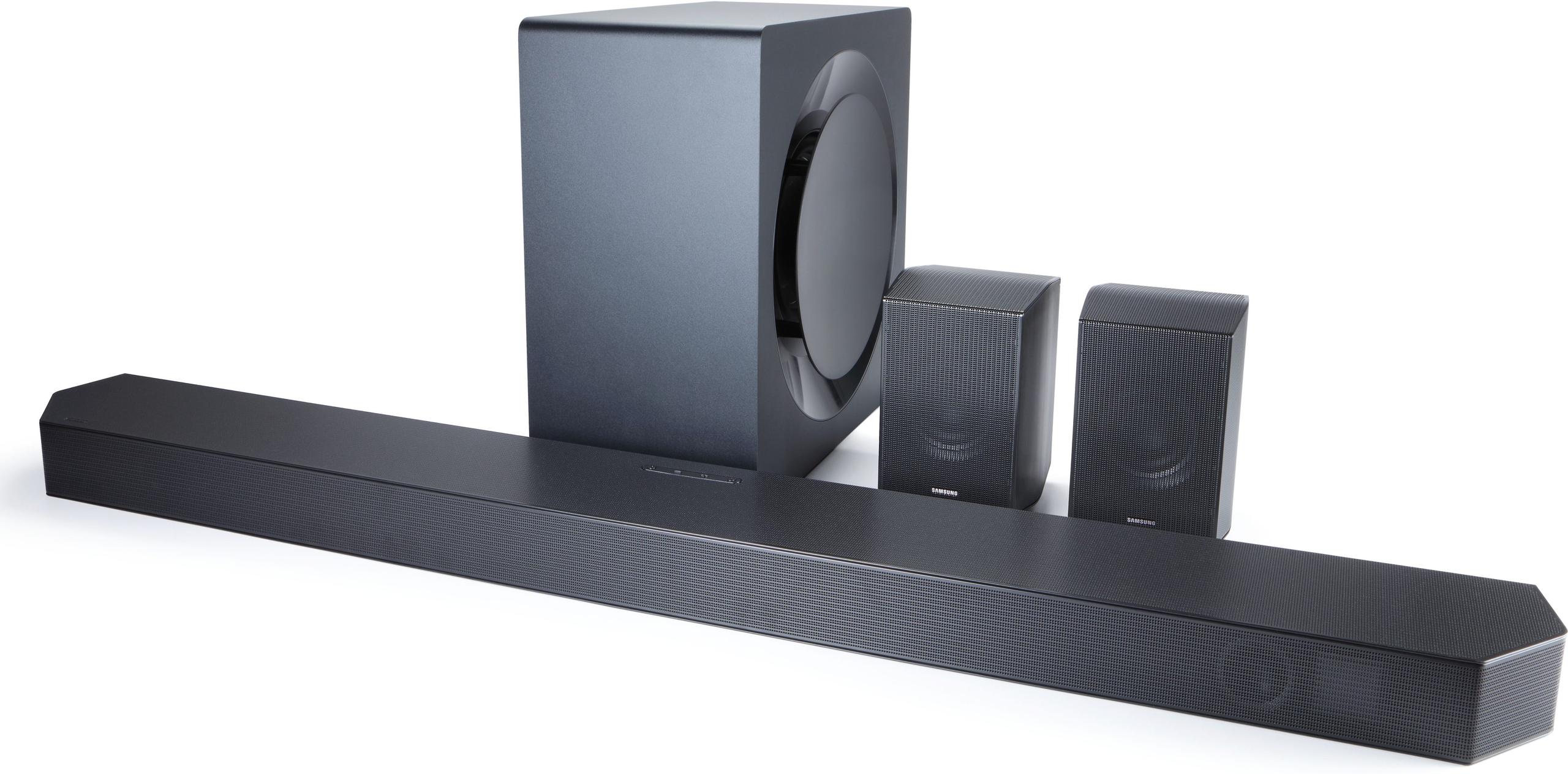
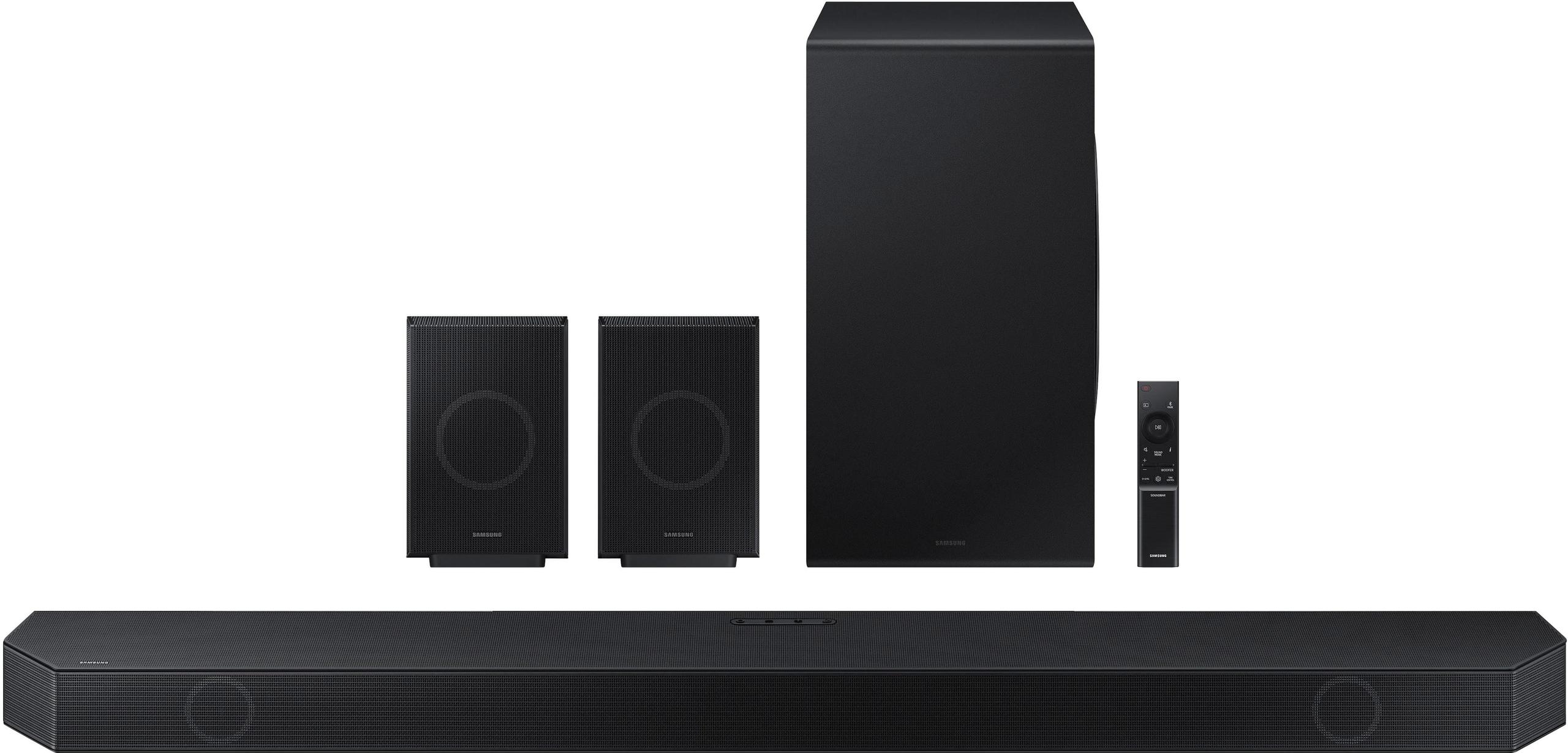
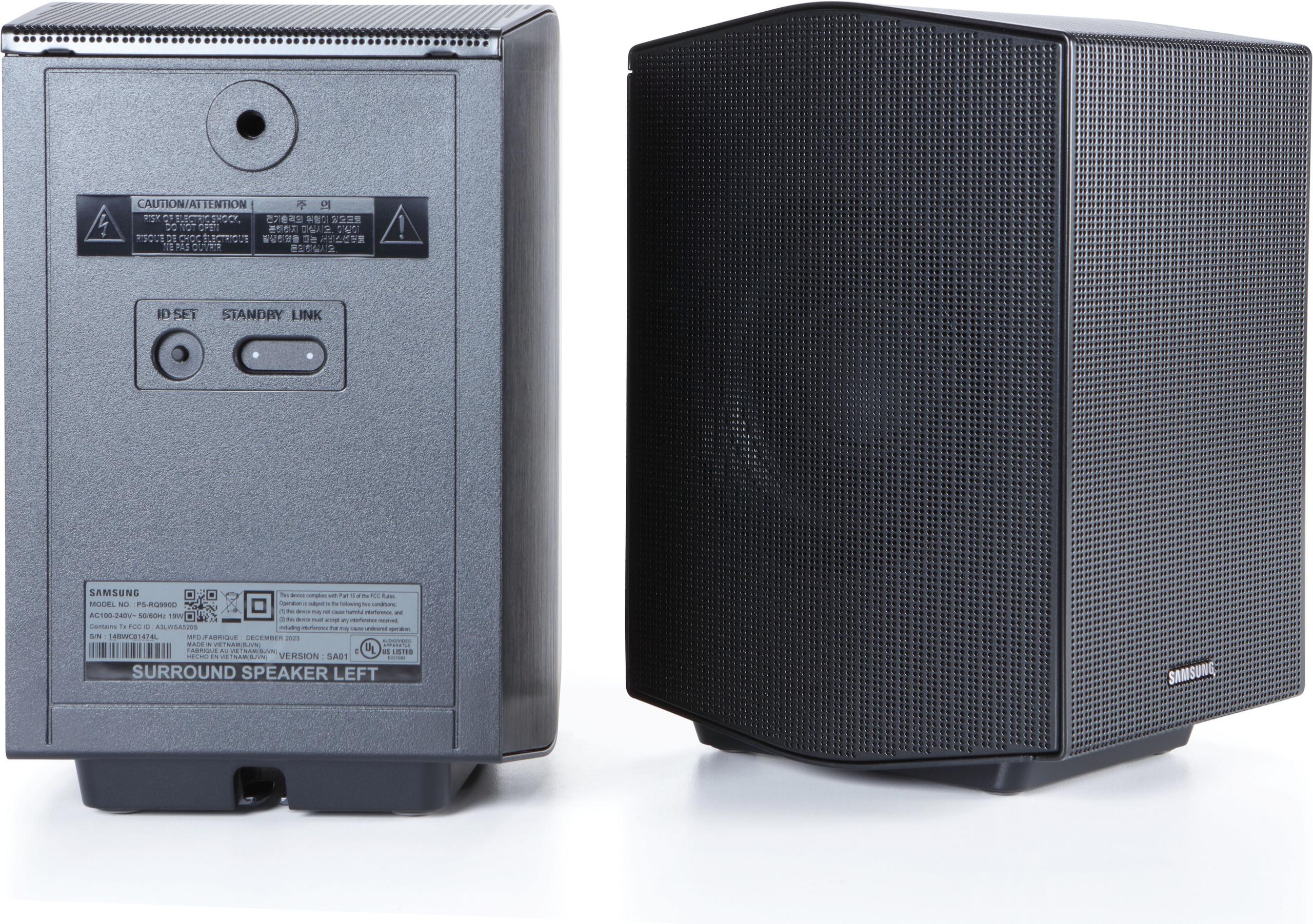
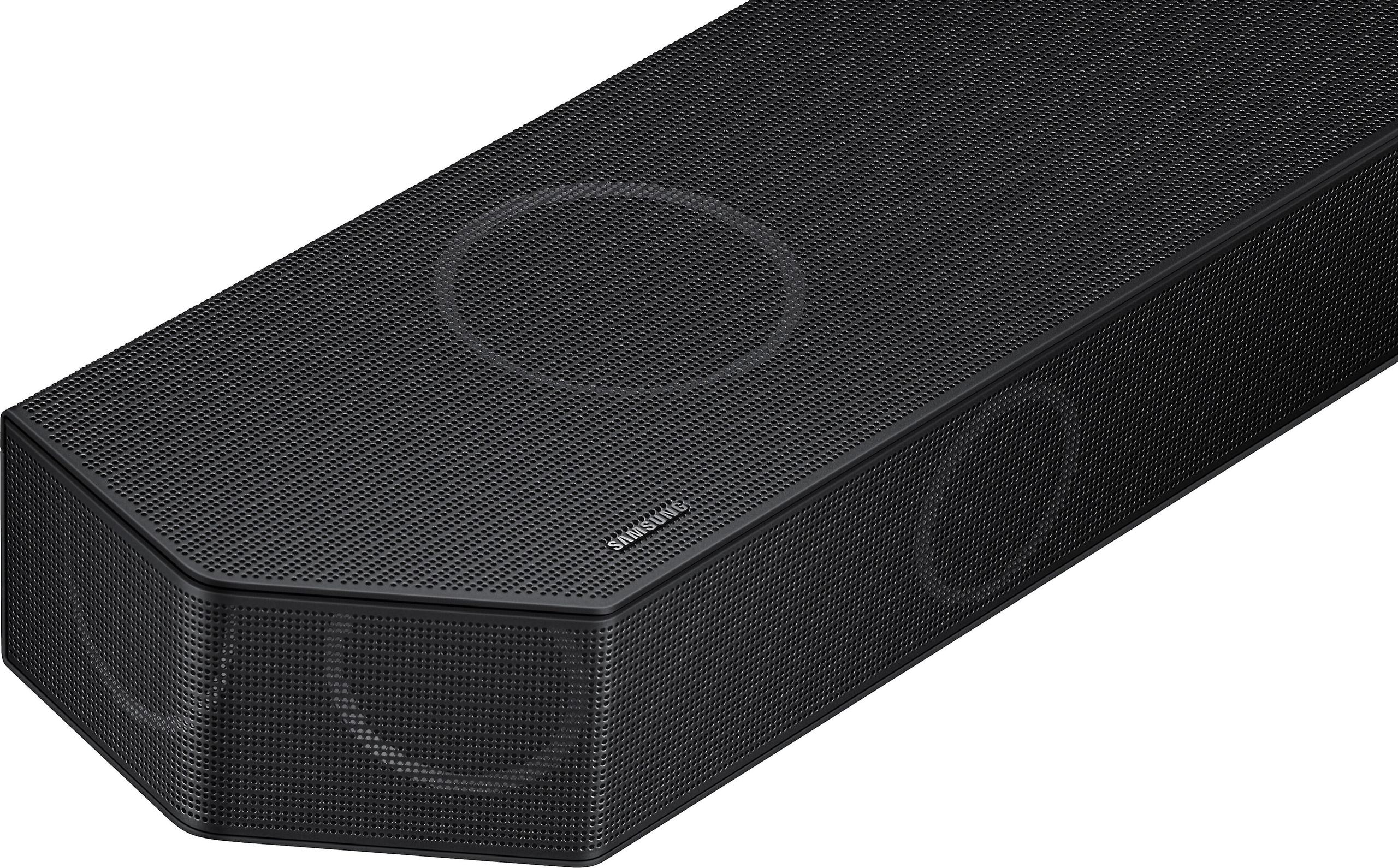
The Samsung HW-Q990D doesn't mess around with virtual anything. It has four dedicated height speakers – two in the main soundbar and one in each rear speaker – that actually fire sound upward. When properly set up, this creates genuine overhead effects that can make you duck when something flies over your head in a movie.
The difference in surround performance isn't subtle. The Samsung system creates what professionals call "an outstanding immersive experience" with precise sound placement throughout your room. The Amazon system provides good surround enhancement, but it's more like surround sound training wheels compared to the Samsung's full experience.
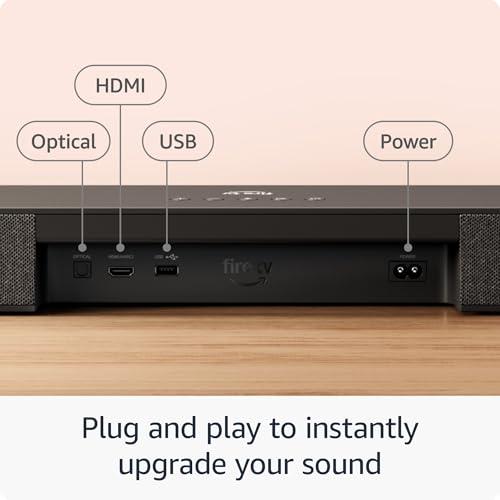
The Amazon Fire TV Soundbar Plus keeps things simple – maybe too simple. Despite the "Fire TV" name, it doesn't actually stream content or include Alexa. It's just a soundbar that happens to work particularly well with Fire TV devices, offering enhanced audio tuning when connected via HDMI. The connectivity is basic: HDMI eARC, optical input, and Bluetooth for wireless music streaming.
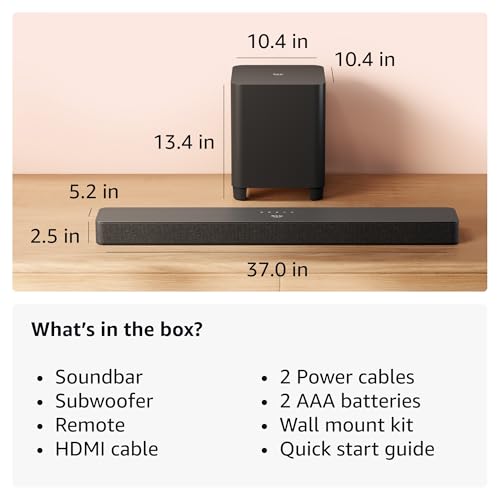
Setup is genuinely plug-and-play. The soundbar, subwoofer, and rear speakers come pre-paired out of the box. You literally just plug everything in and turn it on. There's no app to configure, no complex calibration – it just works.
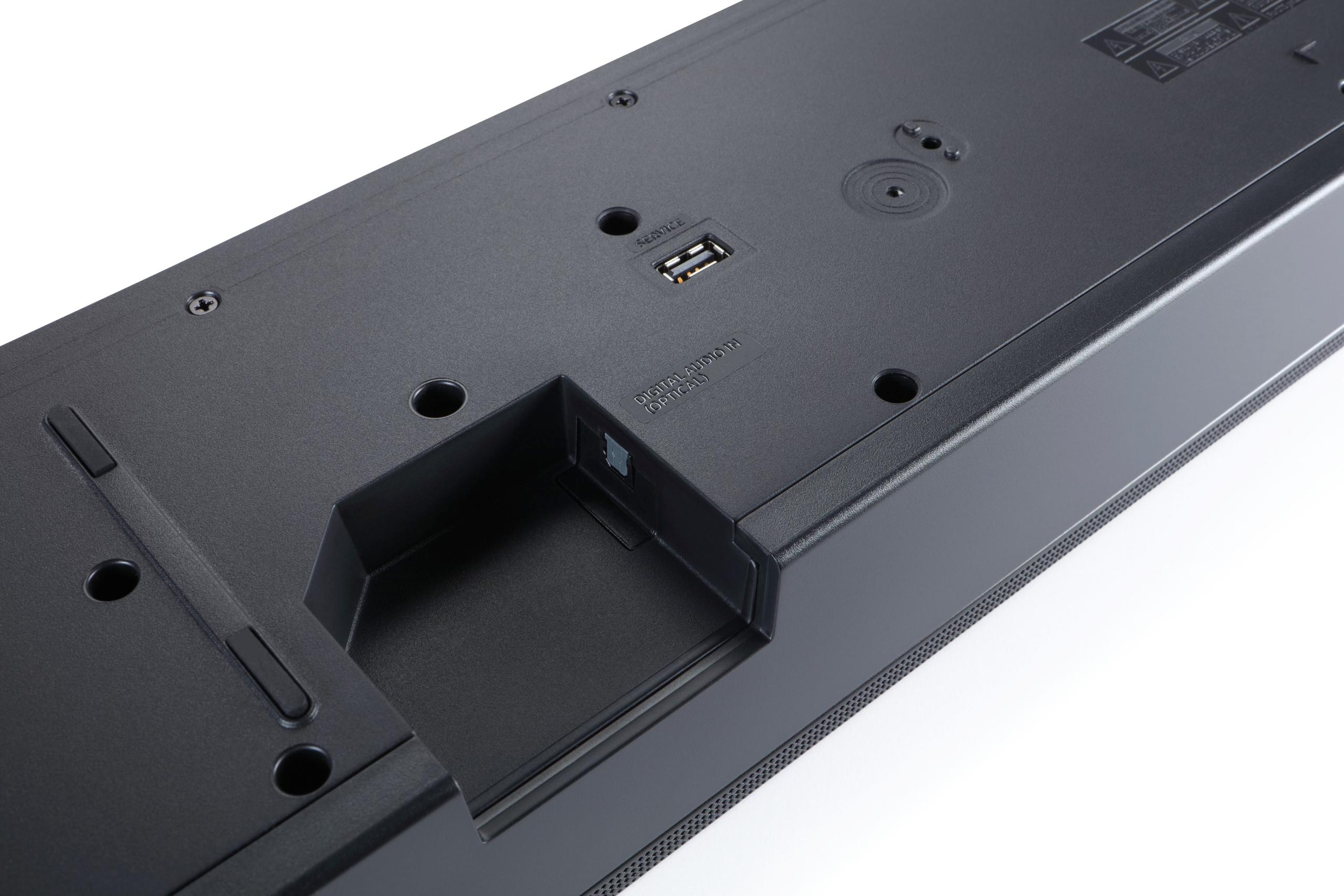
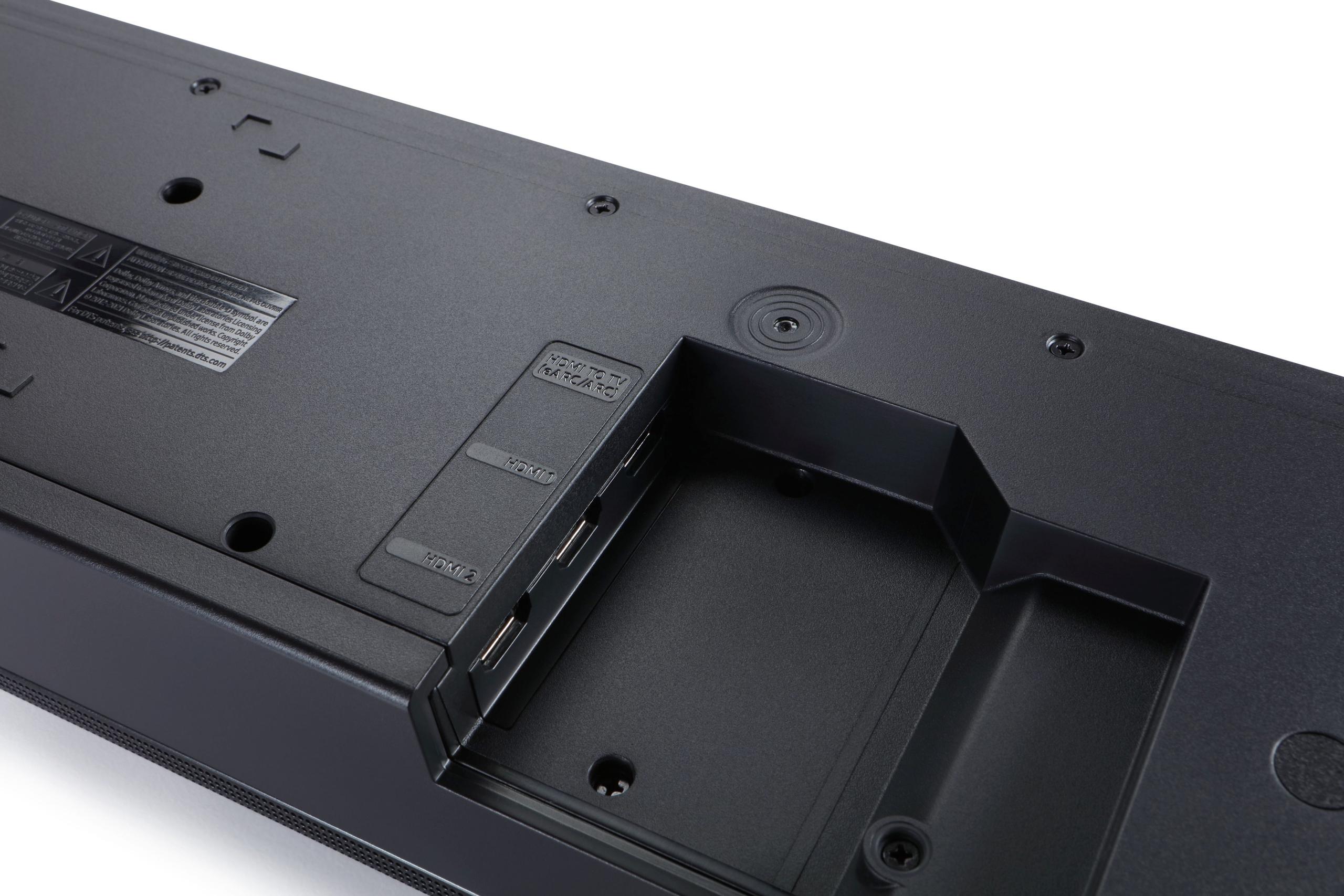
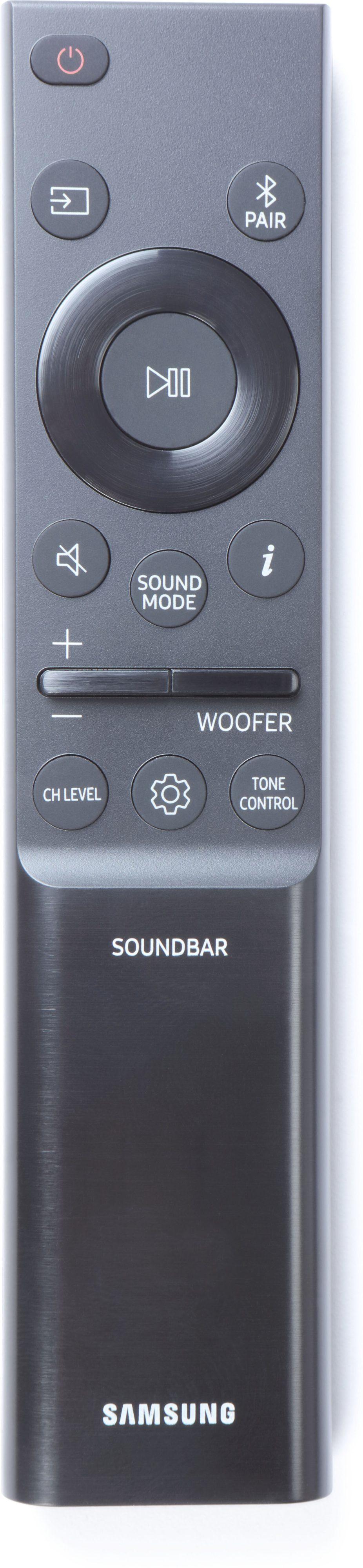
The Samsung HW-Q990D is practically a smart home hub that happens to be excellent at playing audio. It includes built-in Alexa, Bixby, and Google Assistant, so you can control your smart home devices, ask questions, and manage your entertainment system with voice commands. The connectivity is comprehensive: two HDMI inputs plus eARC output, Wi-Fi, Bluetooth 5.2, and support for streaming protocols like AirPlay 2 and Chromecast.
The Samsung's SpaceFit Sound Pro feature uses built-in microphones to constantly analyze your room and adjust the audio accordingly. It's like having an audio engineer living in your soundbar, making subtle tweaks based on your room's acoustics. This kind of automatic room correction used to require expensive separate equipment.
For gamers, the differences are significant. The Amazon Fire TV Soundbar Plus doesn't include gaming-specific features, though it works fine with game consoles through its HDMI connection.
The Samsung HW-Q990D includes Game Mode Pro, which automatically detects when you're gaming and adjusts the audio profile accordingly. It supports HDMI 2.1 with 4K/120Hz passthrough, meaning you can run the latest gaming consoles at their maximum performance while still getting premium audio processing. The system also supports Variable Refresh Rate (VRR) and Auto Low Latency Mode (ALLM) – features that reduce input lag and make games feel more responsive.
This might be the most practical consideration for many buyers. The Amazon Fire TV Soundbar Plus is designed for small to medium rooms. The soundbar itself is about 37 inches long, making it suitable for TVs between 50-65 inches. The system has enough power to fill a typical living room but starts to struggle in larger, open-concept spaces.
The Samsung HW-Q990D is built for bigger spaces. With 22 speakers total, it can fill large rooms and open floor plans with ease. But here's the thing – it can also scale down beautifully for smaller spaces. The room correction features help prevent it from overwhelming smaller rooms, though you'll obviously be paying for capability you're not fully using.
At the time of writing, these systems represent vastly different value propositions. The Amazon Fire TV Soundbar Plus typically costs around $400, making it an accessible entry point into serious surround sound. For that price, you're getting a legitimate 5.1 system with clear dialogue, solid bass, and straightforward operation. Professional reviewers consistently note that it "punches above its price class."
The Samsung HW-Q990D commands a premium price of around $2,000 – roughly five times the Amazon's cost. That's flagship smartphone money, and it needs to justify that price tag with flagship performance. According to professional reviews, it does exactly that, with reviewers saying it "justifies every penny with its stellar performance."
If you're building a dedicated home theater space, the performance differences become even more pronounced. The Amazon Fire TV Soundbar Plus works well for casual movie watching and significantly improves dialogue clarity compared to TV speakers. It's the soundbar equivalent of moving from a basic TV to a decent mid-range model – a noticeable upgrade that handles most content competently.
The Samsung HW-Q990D is designed to replace a traditional multi-speaker home theater setup. It delivers what reviewers call "crystal-clear dialogue, deep and immersive bass, alongside a broad and captivating soundstage." For serious movie enthusiasts, this system can handle reference-level content – those Dolby Atmos demos that show off what's possible with proper surround sound.
The Samsung's Q-Symphony feature, which works with compatible Samsung TVs, is particularly impressive in home theater setups. It uses your TV's speakers in conjunction with the soundbar to create an even wider front soundstage, essentially turning your entire TV into part of the speaker system.
Both systems benefit from recent advances in audio processing, but they implement these improvements differently. The Amazon Fire TV Soundbar Plus focuses on making proven technologies more accessible – Dolby Atmos processing, wireless subwoofer connection, and simple room correction via Fire TV integration.
The Samsung HW-Q990D represents the current state-of-the-art in soundbar technology. Its HDMI 2.1 support ensures compatibility with next-generation gaming consoles and streaming devices. The AI-enhanced sound processing, real-time room correction, and comprehensive smart home integration show where the industry is heading.
In terms of future-proofing, the Samsung system has a clear advantage. As streaming services add more immersive audio content and gaming pushes higher frame rates, the Samsung's advanced processing and connectivity will remain relevant longer.
The Amazon Fire TV Soundbar Plus makes perfect sense for several scenarios. If you're moving from TV speakers to your first soundbar system, it provides a dramatic improvement without overwhelming complexity or cost. It's ideal for apartments, smaller homes, or secondary viewing spaces where you want better audio without the premium price tag.
I'd also recommend it for Fire TV users who want seamless integration, parents who need simple operation (the basic remote is much easier to navigate than complex systems), and anyone who prioritizes dialogue clarity over immersive effects.
The Samsung HW-Q990D is the clear choice for serious home theater enthusiasts who want the best possible audio experience. If you have a large room, appreciate advanced features, own or plan to buy a Samsung TV, and don't mind the premium price for premium performance, this system delivers.
It's particularly compelling for gamers who want HDMI 2.1 features, tech enthusiasts who enjoy customization options, and anyone building a dedicated home theater space where audio quality is a priority.
These soundbars represent two valid but very different approaches to improving your TV's audio. The Amazon Fire TV Soundbar Plus democratizes decent surround sound, making a legitimate 5.1 system accessible to budget-conscious buyers. The Samsung HW-Q990D pushes the boundaries of what's possible in a soundbar form factor, delivering performance that rivals traditional multi-speaker setups.
The choice ultimately comes down to your priorities, room size, and budget. Both systems will dramatically improve your TV's audio, but they'll do it in fundamentally different ways. Choose the Amazon if you want great value and simplicity. Choose the Samsung if you want the best possible performance and don't mind paying for it.
Either way, you'll wonder why you put up with your TV's speakers for so long.
| Amazon Fire TV Soundbar Plus Subwoofer | Samsung HW-Q990D 11.1.4 Channel Sound Bar |
|---|---|
| Channel Configuration - Determines surround sound capability and speaker placement | |
| 5.1 channels (3.1 soundbar + wireless subwoofer + rear satellites) | 11.1.4 channels with 22 total speakers across all units |
| Height Channels - Critical for true Dolby Atmos overhead effects | |
| Virtualized only (no physical up-firing drivers) | 4 discrete up-firing speakers (2 in soundbar, 1 in each rear speaker) |
| Room Size Compatibility - Affects audio coverage and power needs | |
| Small to medium rooms (soundbar suitable for 50-65" TVs) | Large rooms and open floor plans with scalable performance |
| Audio Format Support - Determines compatibility with premium content | |
| Dolby Atmos (virtual), Dolby TrueHD, DTS:X (virtual) | Dolby Atmos (true), DTS:X (true), plus all standard formats |
| Connectivity Options - Impacts device compatibility and future-proofing | |
| HDMI eARC, optical, Bluetooth 5.0, USB-A | 2x HDMI 2.1 inputs + eARC, Wi-Fi, Bluetooth 5.2, streaming protocols |
| Smart Features - Convenience and automation capabilities | |
| Fire TV integration only, no voice assistants or apps | Built-in Alexa/Bixby/Google Assistant, SmartThings app, room correction |
| Gaming Support - Important for console gamers | |
| Basic HDMI passthrough only | Game Mode Pro, 4K/120Hz, VRR, ALLM support |
| Setup Complexity - Affects user experience and installation time | |
| Pre-paired components, plug-and-play operation | Multiple wireless units with advanced calibration options |
| Dialogue Enhancement - Critical for speech clarity | |
| Dedicated center channel with 1-5 dialogue enhancer levels | Active Voice Amplifier Pro with real-time room noise compensation |
| Value Positioning - Price-to-performance relationship | |
| Entry-level pricing with solid performance upgrade over TV speakers | Premium pricing justified by flagship features and true surround performance |
The Amazon Fire TV Soundbar Plus Subwoofer is significantly better for beginners. It comes pre-paired out of the box, requires no app setup, and offers simple plug-and-play operation. The Samsung HW-Q990D includes advanced features that can overwhelm first-time soundbar buyers, though it offers more room to grow as your needs evolve.
The primary difference is complexity and performance level. The Amazon Fire TV Soundbar Plus Subwoofer is a 5.1 entry-level system focused on improving TV audio at an affordable price. The Samsung HW-Q990D is a premium 11.1.4 system with 22 speakers designed to create a full home theater experience with true Dolby Atmos overhead effects.
Both systems excel at dialogue clarity, but in different ways. The Amazon Fire TV Soundbar Plus Subwoofer uses a dedicated center channel with adjustable dialogue enhancement levels. The Samsung HW-Q990D features Active Voice Amplifier Pro that automatically adjusts dialogue based on room noise, making it superior for varying listening conditions.
Not necessarily. The Amazon Fire TV Soundbar Plus Subwoofer includes a wireless subwoofer that provides solid bass performance for most users. The Samsung HW-Q990D offers more sophisticated bass integration and deeper extension, but the Amazon system delivers satisfying low-end performance at its price point.
The Samsung HW-Q990D is far superior for gaming, featuring Game Mode Pro, HDMI 2.1 support for 4K/120Hz, Variable Refresh Rate (VRR), and Auto Low Latency Mode (ALLM). The Amazon Fire TV Soundbar Plus Subwoofer works with gaming consoles but lacks gaming-specific optimizations.
Yes, both the Amazon Fire TV Soundbar Plus Subwoofer and Samsung HW-Q990D work with any TV brand through HDMI or optical connections. However, the Amazon system offers enhanced integration with Fire TV devices, while the Samsung system provides Q-Symphony features when paired with compatible Samsung TVs.
The Amazon Fire TV Soundbar Plus Subwoofer is better suited for small to medium rooms, being designed for 50-65 inch TVs. The Samsung HW-Q990D can work in smaller spaces but is engineered for larger rooms and may be overkill for compact living spaces.
Both systems support Dolby Atmos, but differently. The Amazon Fire TV Soundbar Plus Subwoofer uses virtualized Dolby Atmos without physical height speakers. The Samsung HW-Q990D provides true Dolby Atmos with four dedicated up-firing speakers that create genuine overhead sound effects.
Value depends on your needs and budget. The Amazon Fire TV Soundbar Plus Subwoofer offers exceptional value for entry-level buyers seeking a significant upgrade over TV speakers. The Samsung HW-Q990D provides premium value for those wanting flagship home theater performance, though at a much higher price point.
The Amazon Fire TV Soundbar Plus Subwoofer offers extremely simple setup with pre-paired components that work immediately after plugging in. The Samsung HW-Q990D requires more setup time due to multiple wireless components and calibration options, but includes automatic room correction features.
The Samsung HW-Q990D is superior for music with its balanced sound signature, wide soundstage, and sophisticated audio processing. The Amazon Fire TV Soundbar Plus Subwoofer handles music adequately with good stereo separation, but the Samsung system offers more refined musical reproduction across all genres.
TV size can help guide your decision. The Amazon Fire TV Soundbar Plus Subwoofer works well with 50-65 inch TVs in typical living rooms. The Samsung HW-Q990D can complement larger TVs and room sizes, though it's more about your audio quality expectations and budget than just matching your TV's dimensions.
We've done our best to create useful and informative comparisons to help you decide what product to buy. Our research uses advanced automated methods to create this comparison and perfection is not possible - please contact us for corrections or questions. These are the sites we've researched in the creation of this article: rtings.com - cordbusters.co.uk - techradar.com - youtube.com - t3.com - hometechnologyreview.com - youtube.com - hometechnologyreview.com - whathifi.com - developer.amazon.com - manuals.plus - dolby.com - techradar.com - avsforum.com - valueelectronics.com - samsung.com - rtings.com - samsung.com - avsforum.com - samsung.com - cdwg.com - youtube.com - whathifi.com

Privacy Policy
Terms and Conditions - Affiliate Policy
Home Security
© Copyright 2008-2026.
11816 Inwood Rd #1211, Dallas, TX 75244