




If you've been listening to your TV's built-in speakers and wondering why dialogue sounds like it's coming from underwater while explosions barely register, you're not alone. TV manufacturers have been cramming thinner and thinner speakers into their displays for years, prioritizing sleek designs over audio quality. That's where budget soundbars come in, promising to rescue your entertainment experience without requiring a second mortgage.
Today we're comparing two popular options that take distinctly different approaches to solving your TV audio woes: the Amazon Fire TV Soundbar Plus and the Polk Audio React. Both launched in the early 2020s during a surge of interest in affordable home audio solutions, but they tackle the same problem in surprisingly different ways.
Before diving into specifics, let's talk about what makes a good budget soundbar. The primary goal is simple: make your TV sound dramatically better without breaking the bank or requiring an engineering degree to set up. This means clearer dialogue (so you can finally stop using subtitles), better bass response (those action scenes should have some punch), and ideally some smart features that integrate with your existing setup.
The key considerations boil down to audio quality improvement over those terrible TV speakers, ease of setup, smart home integration capabilities, and whether you can expand the system later. Think of it like buying a car—you want something reliable that gets you where you're going, with the option to add features as your needs grow.
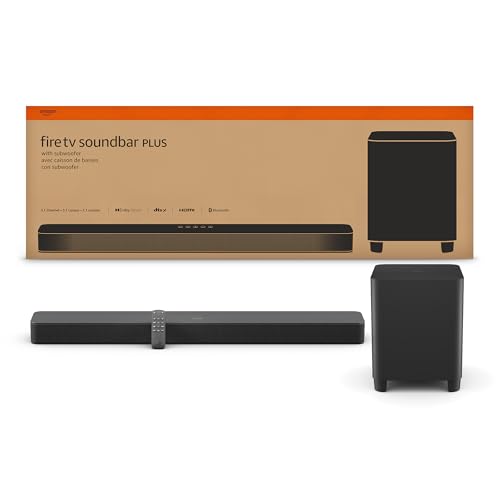
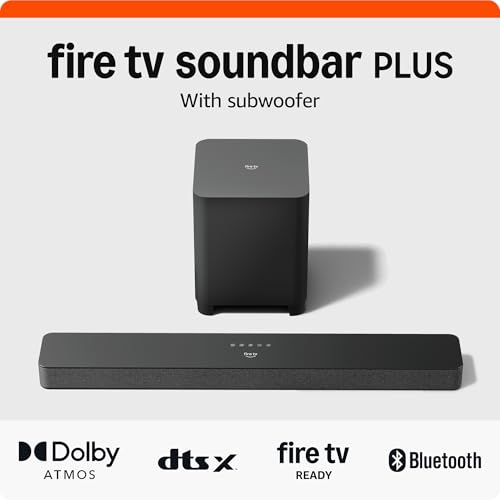
The Amazon Fire TV Soundbar Plus, released in late 2023, represents Amazon's more serious attempt at home audio after their initial basic soundbar received mixed reviews. At the time of writing, it typically costs around $300 when bundled with the wireless subwoofer, positioning it firmly in the mid-budget range. This system takes the "give you everything upfront" approach—you get the main soundbar plus a separate wireless subwoofer right out of the gate.
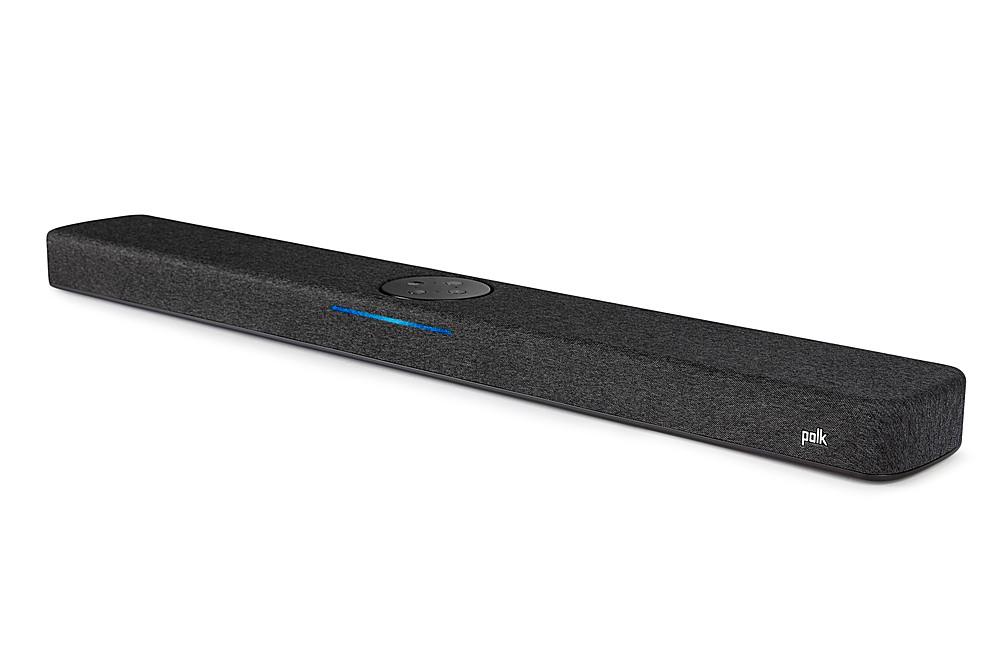
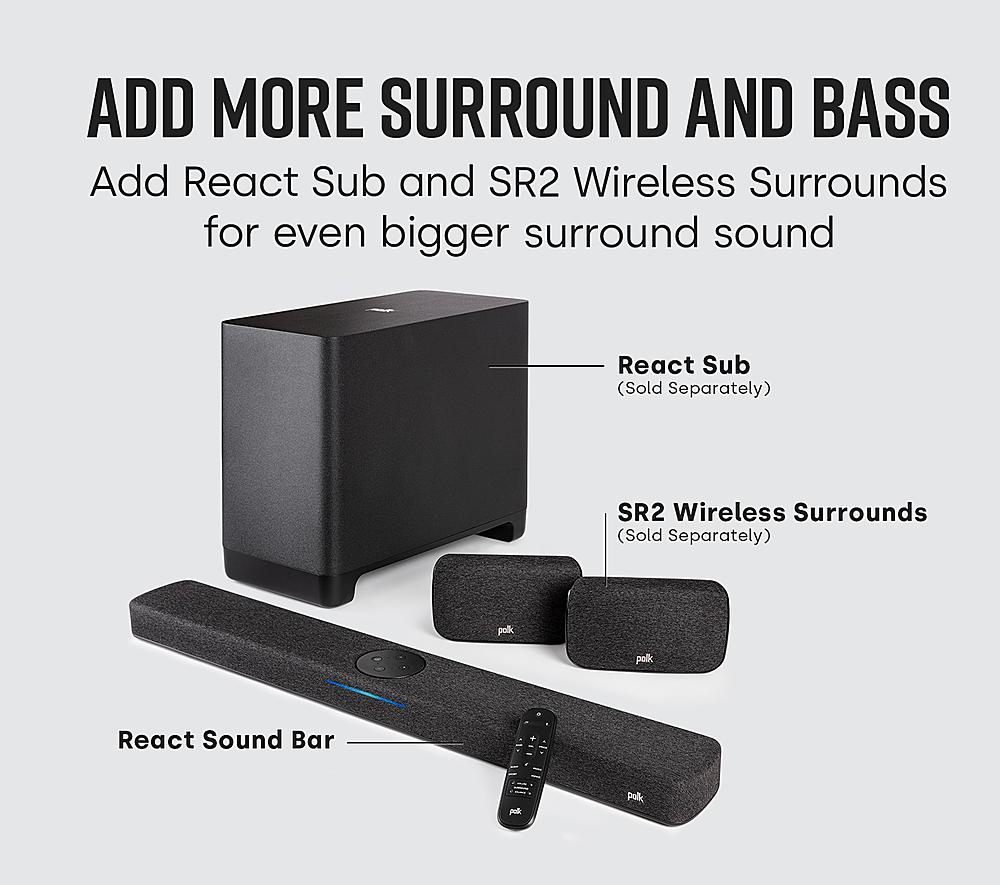
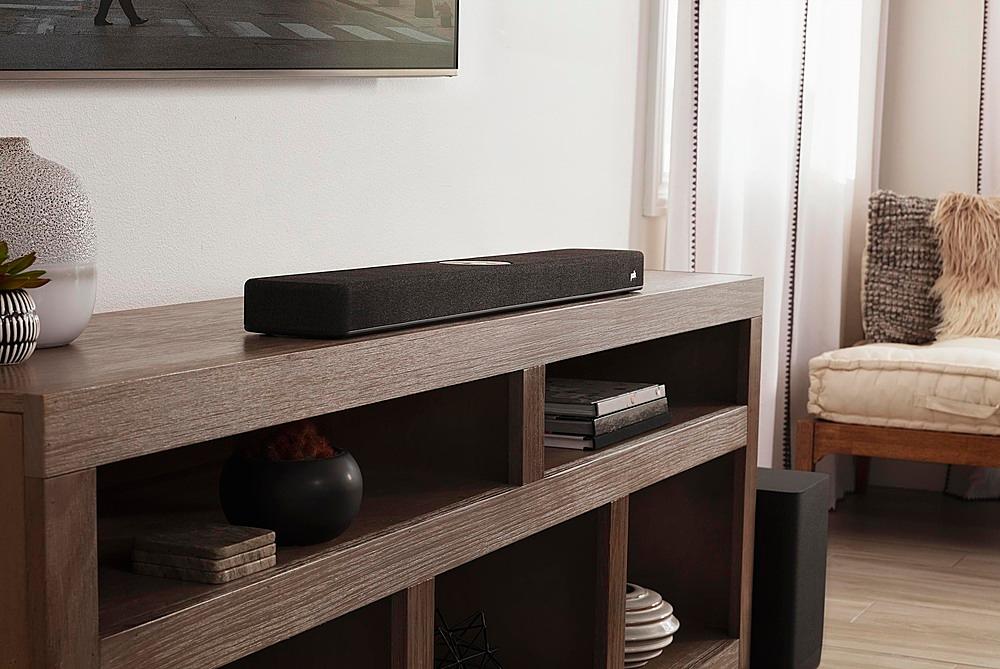
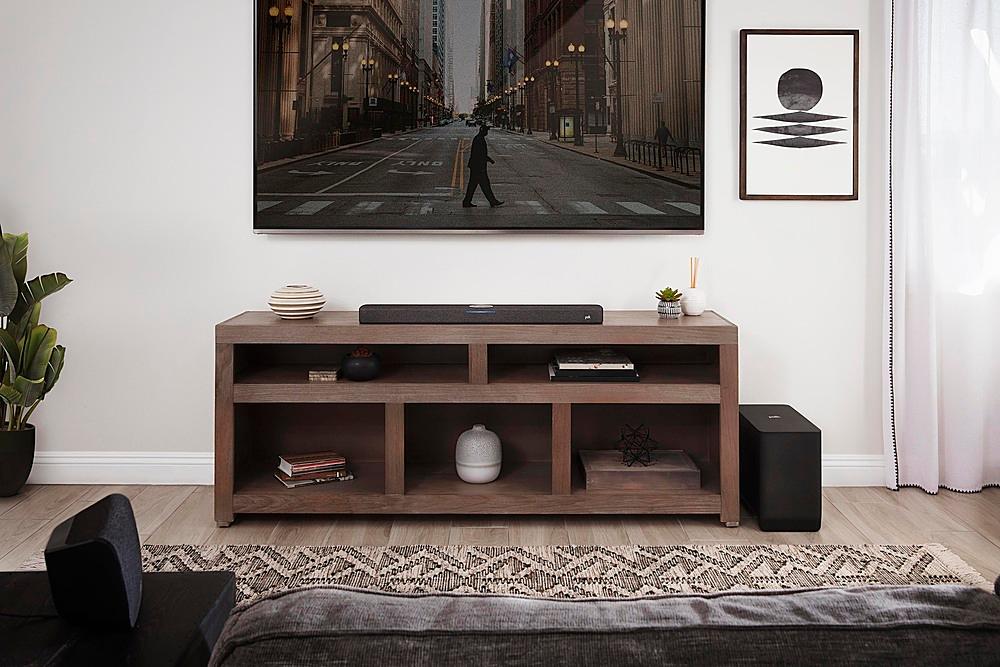
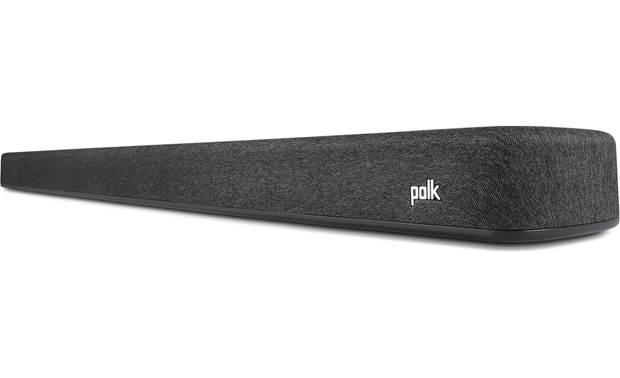
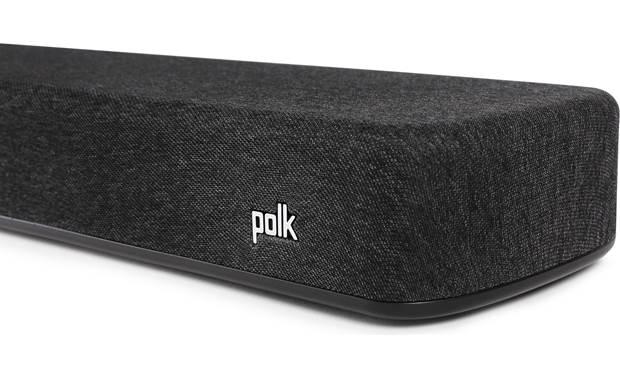
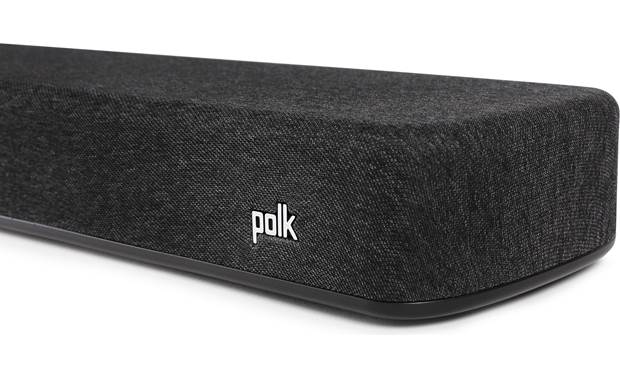
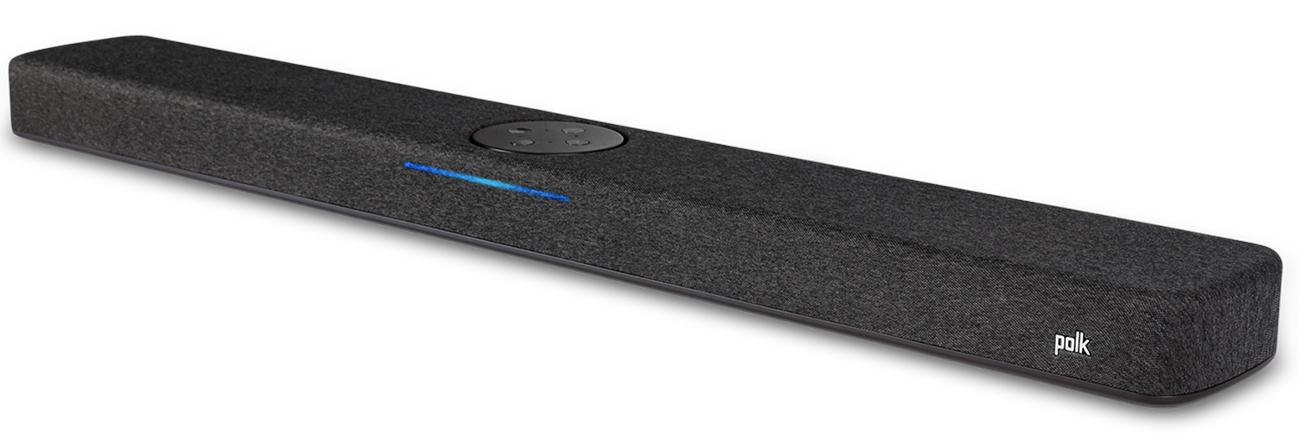
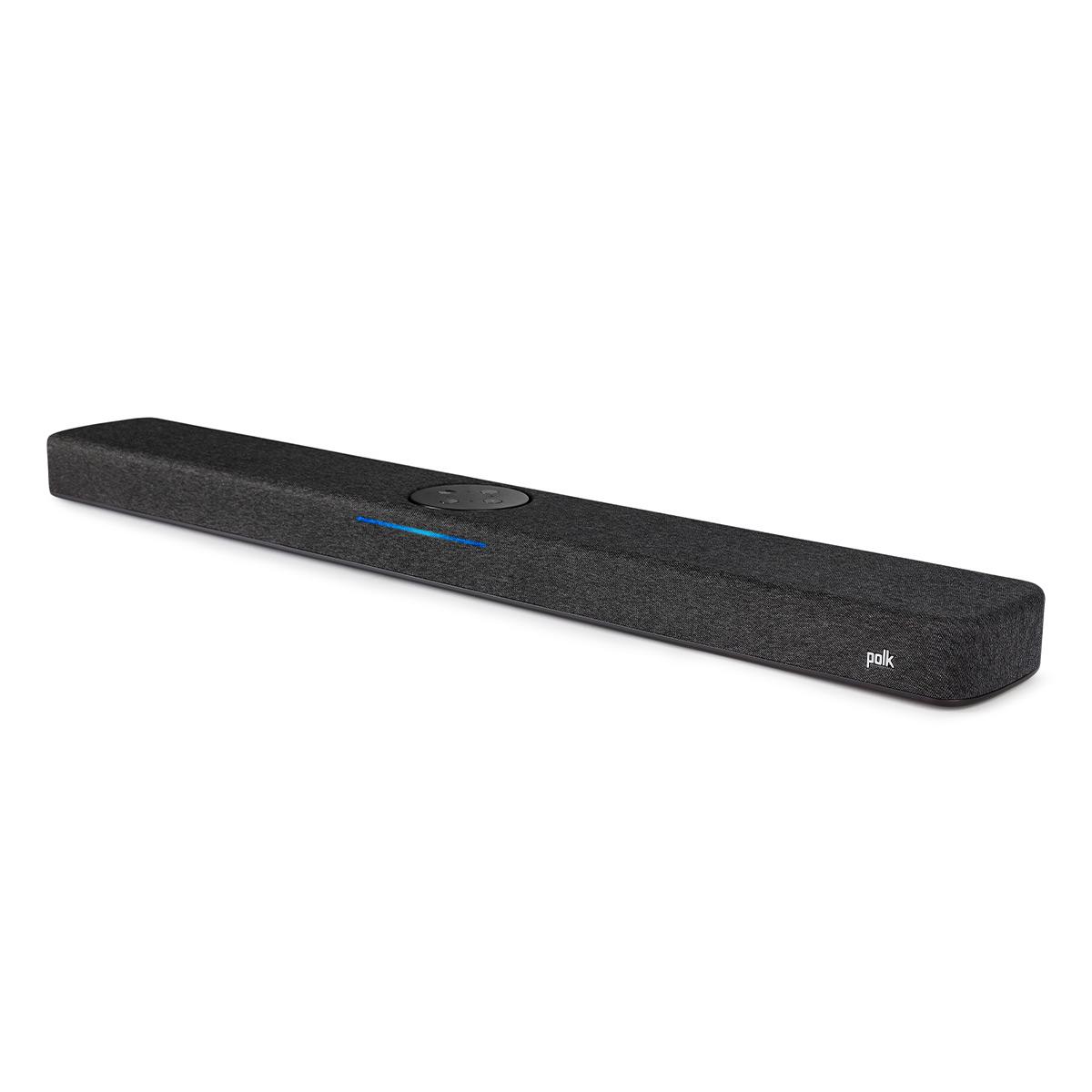
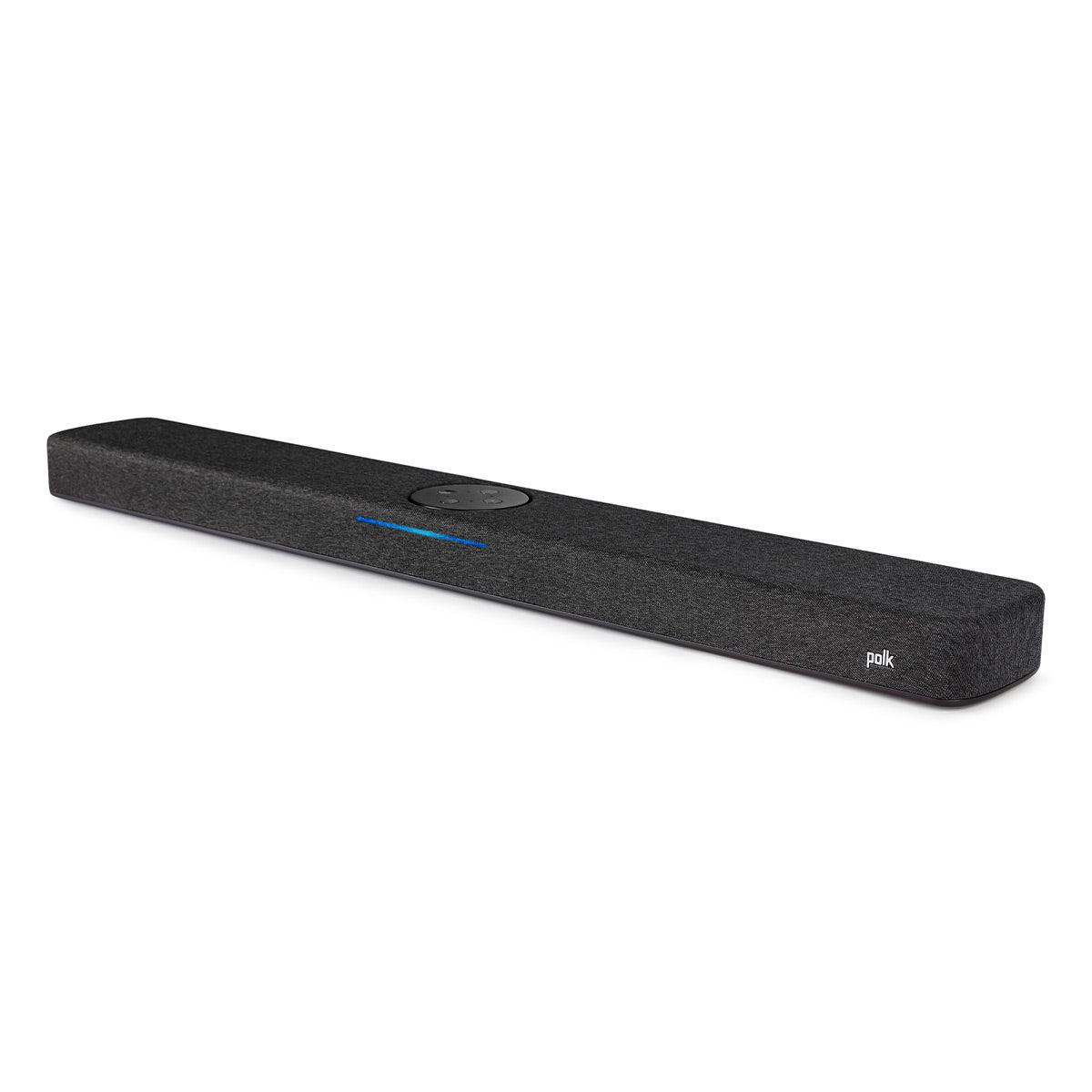
The Polk Audio React, which has been available since around 2021, comes from a company with decades of speaker-building experience. It generally retails for under $200 at the time of writing, making it significantly more affordable as an entry point. However, Polk takes a modular approach—you start with the basics and add components as your budget and needs grow.
These different philosophies create interesting trade-offs that we'll explore throughout this comparison.
Here's where the Amazon Fire TV Soundbar Plus flexes its muscles. The inclusion of both integrated subwoofers within the main soundbar and a separate wireless subwoofer creates what I'd call a "bass sandwich"—low-frequency drivers working together to fill your room with that satisfying rumble during action sequences.
When you're watching something like Mad Max: Fury Road, the difference is immediately apparent. Car engines growl with authority, explosions have genuine weight, and Hans Zimmer-style deep orchestral hits actually register rather than disappearing into thin air. The dual-subwoofer approach means the system can handle both the quick, punchy bass hits in music and the sustained low-frequency effects in movies.
However, there's a caveat. The external subwoofer, while effective, tends toward what audiophiles call "one note" bass—it's powerful but not particularly nuanced. Think of it like a drummer who can only play loud kick drums rather than subtle, varied percussion. For most users watching movies and TV shows, this limitation won't matter much, but music enthusiasts might notice the lack of subtlety in complex bass lines.
The Polk Audio React, in its standalone configuration, takes a completely different approach. Without a separate subwoofer, it relies on passive radiators (essentially speakers without voice coils that vibrate in response to the main drivers) and careful acoustic tuning to generate bass. This works reasonably well for dialogue-heavy content like dramas or news, but action movies will feel somewhat anemic until you add Polk's separate subwoofer.
This creates an interesting value proposition: the Amazon system gives you immediate bass satisfaction, while the Polk requires additional investment to reach similar low-frequency impact.
If there's one thing that separates decent soundbars from great ones, it's how they handle human voices. Modern movie and TV mixes often bury dialogue beneath music and effects, leading to the infamous "turn up the volume for dialogue, then get blasted by action scenes" problem.
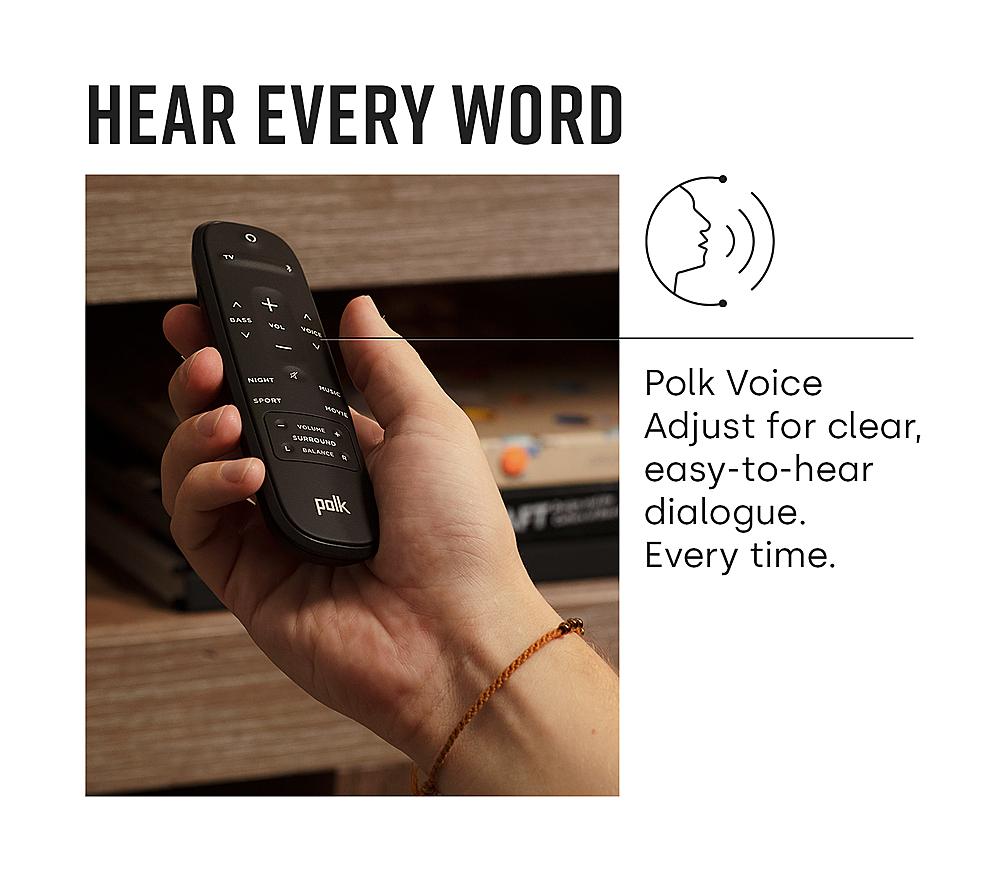
The Polk Audio React addresses this with their proprietary VoiceAdjust technology, which essentially gives you independent volume control for voices. Imagine being able to turn up just the actors' voices without making the background music or sound effects louder—that's exactly what this feature does. It's like having a sound engineer sitting next to your couch, constantly adjusting the mix to keep dialogue intelligible.
In practice, this feature is remarkably effective. During quiet conversation scenes in shows like The Crown or Better Call Saul, you can boost vocal clarity without the orchestral score becoming overwhelming. The system analyzes the frequency range where human voices typically reside (roughly 85Hz to 255Hz for fundamental frequencies, though harmonics extend much higher) and allows independent adjustment of this range.
The Amazon Fire TV Soundbar Plus handles dialogue through its dedicated center channel configuration and a dialogue enhancer feature adjustable on a scale of 1 to 5. While effective, this approach is less sophisticated than Polk's dedicated VoiceAdjust system. Think of it as the difference between a volume slider and a professional mixing board—both work, but one offers more precise control.
That said, the Amazon system's three-channel setup (left, center, right plus subwoofer) does provide inherent advantages for dialogue placement. Having a dedicated center channel means voices are anchored to the screen rather than floating somewhere in the stereo field, which can improve clarity and localization.
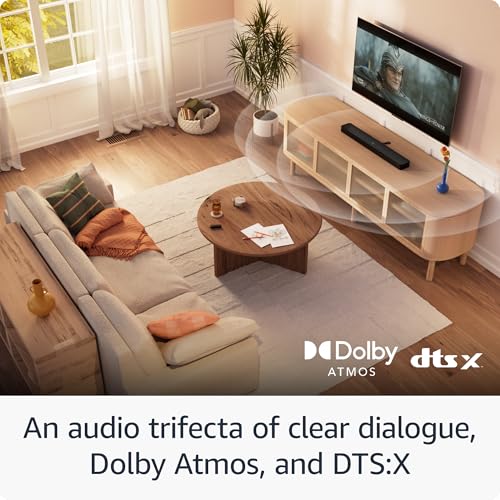
This is where things get technically interesting. The Amazon Fire TV Soundbar Plus supports advanced audio formats including Dolby TrueHD (a lossless audio format used on Blu-ray discs) and virtualized Dolby Atmos. Dolby Atmos is an object-based surround sound technology that treats individual sounds as "objects" that can be placed anywhere in three-dimensional space, rather than just in traditional surround channels.
However—and this is important—the Amazon soundbar doesn't have upward-firing drivers, which are typically used to create height effects by bouncing sound off your ceiling. Instead, it uses digital signal processing to simulate these effects. It's like the difference between having actual surround speakers placed around your room versus using headphones with simulated surround sound. The effect works, but it's not quite the same as discrete physical speakers.
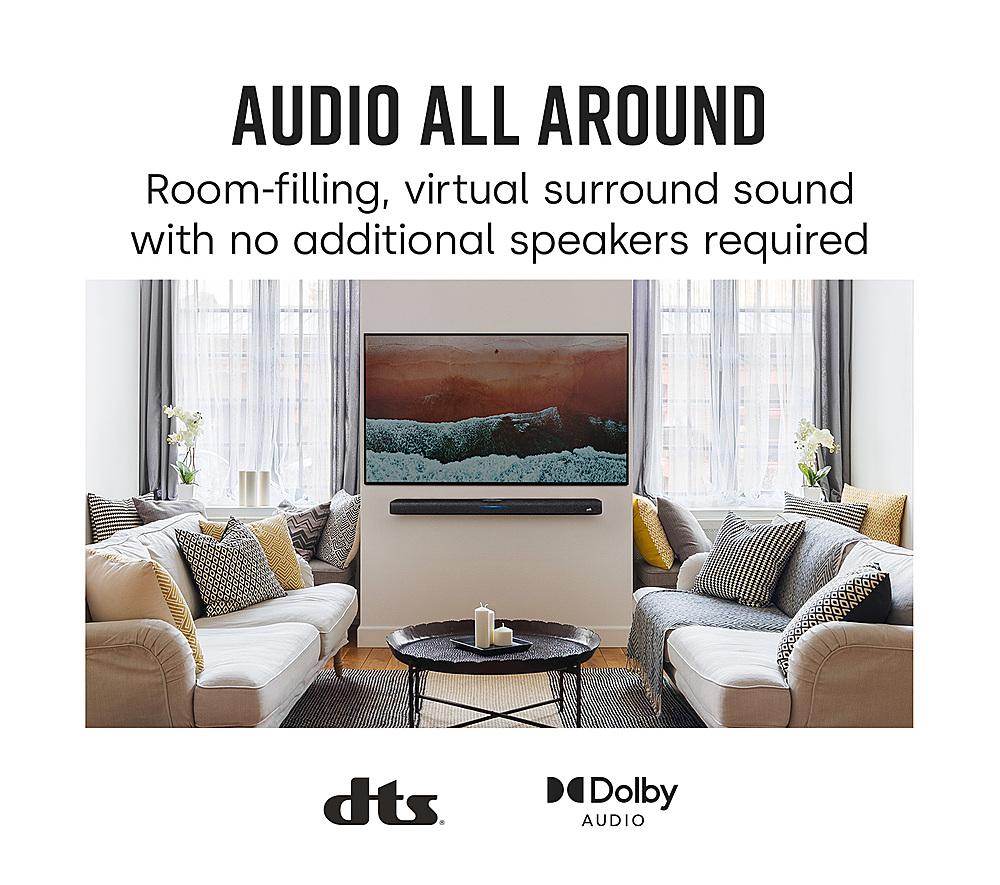
The Polk React takes a more conservative approach with Dolby Digital and DTS virtual surround processing. Rather than attempting complex Atmos virtualization, it focuses on creating a convincing stereo soundstage and ensuring dialogue stays properly centered. This is actually a smart design choice—it's better to do simpler processing well than to overpromise and underdeliver on complex spatial effects.
For home theater use, the Amazon system's approach will be more impressive during action sequences with its wider soundstage and more aggressive surround processing. But for everyday TV watching, Polk's focus on stereo imaging and dialogue placement might actually be more consistently satisfying.
Dynamic range refers to the difference between the quietest and loudest sounds a system can reproduce effectively. In practical terms, it's what allows whispered dialogue to remain clear while ensuring explosions don't cause distortion.
The Amazon Fire TV Soundbar Plus handles higher volume levels more gracefully, thanks partly to its separate subwoofer taking low-frequency duties off the main soundbar drivers. This division of labor means the main speakers can focus on midrange and treble frequencies without being stressed by bass content. During loud action sequences, the system maintains composure better and provides more headroom for dynamic peaks.
The Polk React shows its limitations at higher volumes, particularly with bass-heavy content when used without the optional subwoofer. However, for typical living room listening levels, it provides adequate output and maintains good sound quality throughout its useful range.
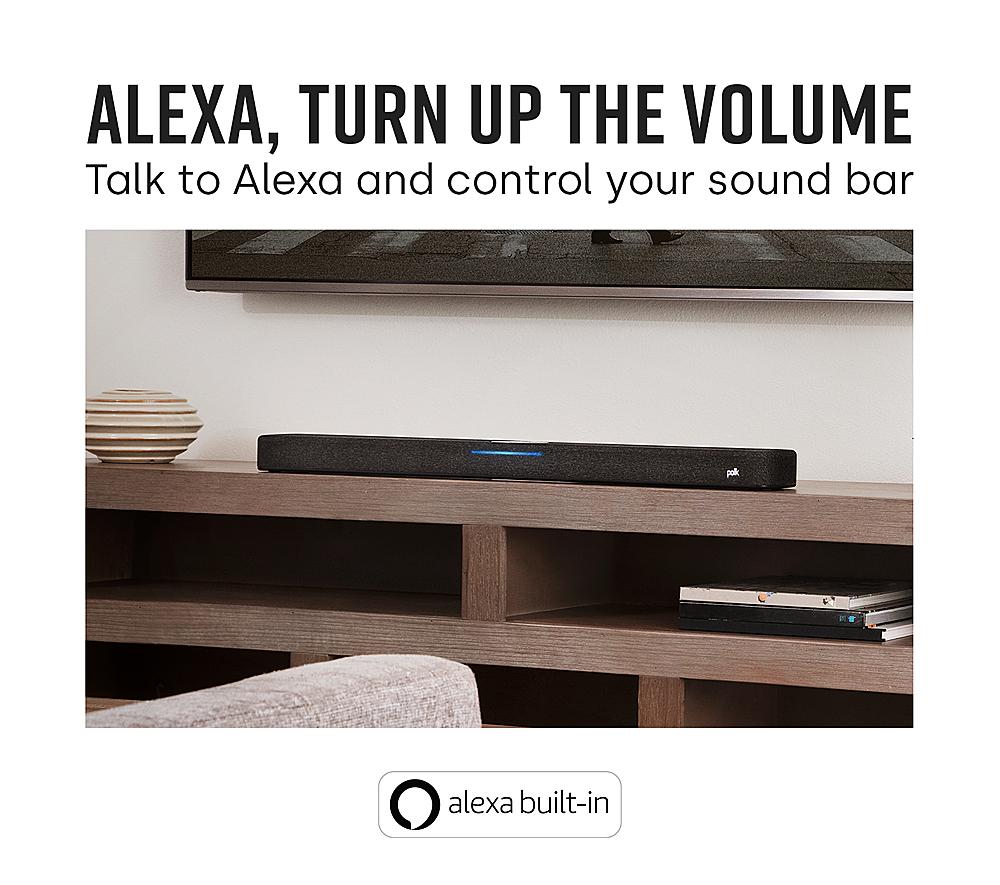
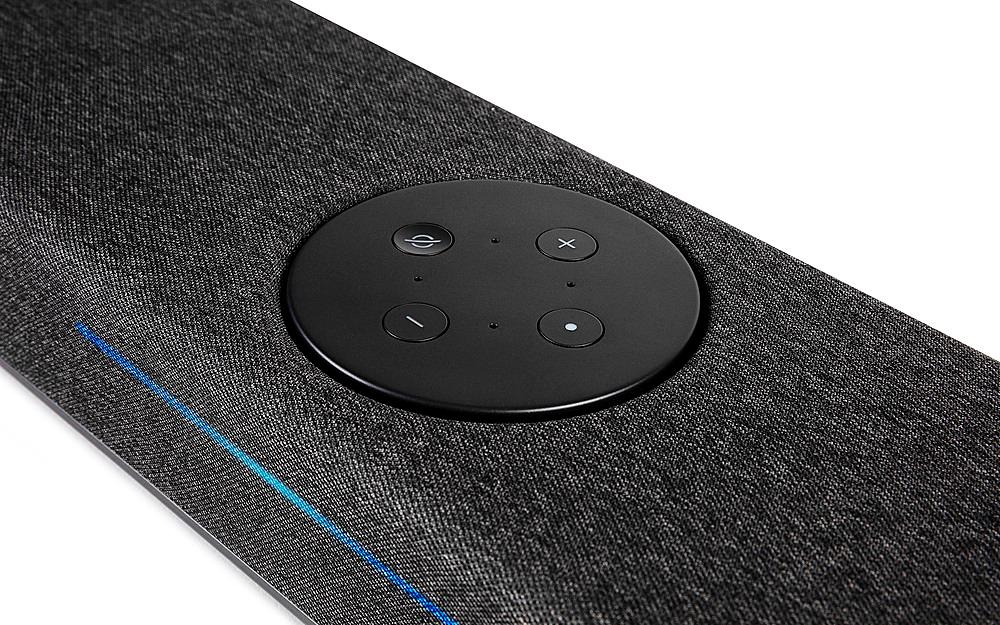
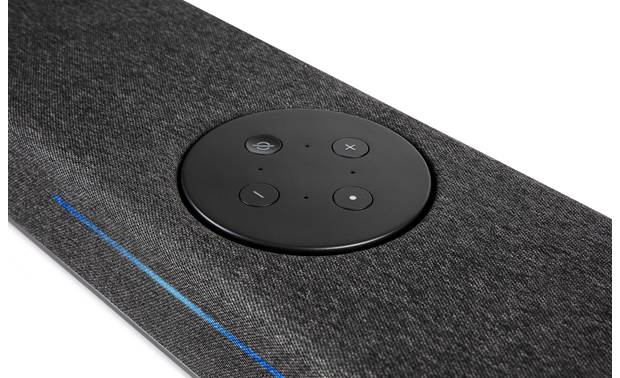
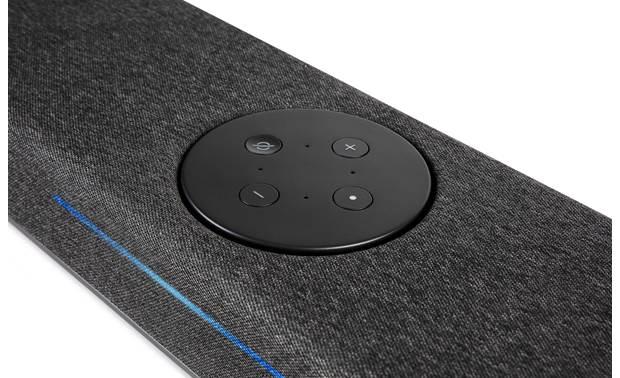
Here's where these products diverge most dramatically. The Polk Audio React includes built-in Amazon Alexa with four far-field microphones, essentially functioning as a high-quality Echo device that also happens to be your soundbar. You can ask it to play music, control smart home devices, set timers, or even make calls to friends and family in supported regions.
The integration is surprisingly seamless—you can say "Alexa, play jazz music" and it'll start streaming from your preferred service, or "Alexa, set the soundbar to movie mode" to adjust the audio profile. The four-microphone array means it can hear you even when music is playing at reasonable volumes, though it struggles during very loud passages (as do most voice-controlled devices).
Surprisingly, the Amazon Fire TV Soundbar Plus doesn't include built-in Alexa, despite Amazon's branding. This seems like an oversight, especially given that their main competitor includes this feature at a lower price point. You'll need a separate Echo device for voice control, though the soundbar does integrate well with Fire TV remotes for basic functions.
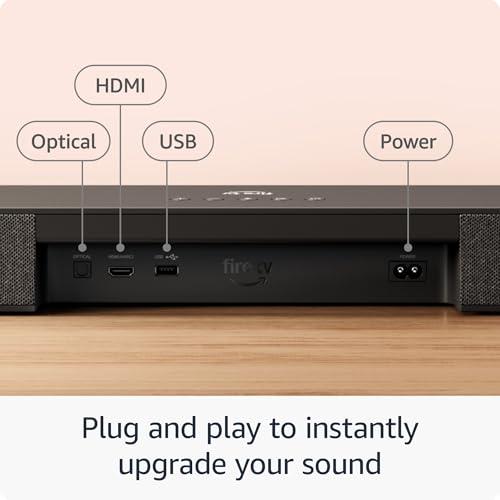
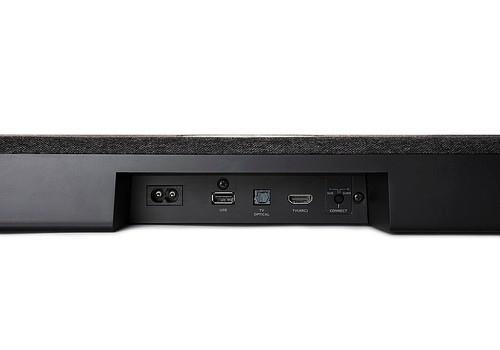
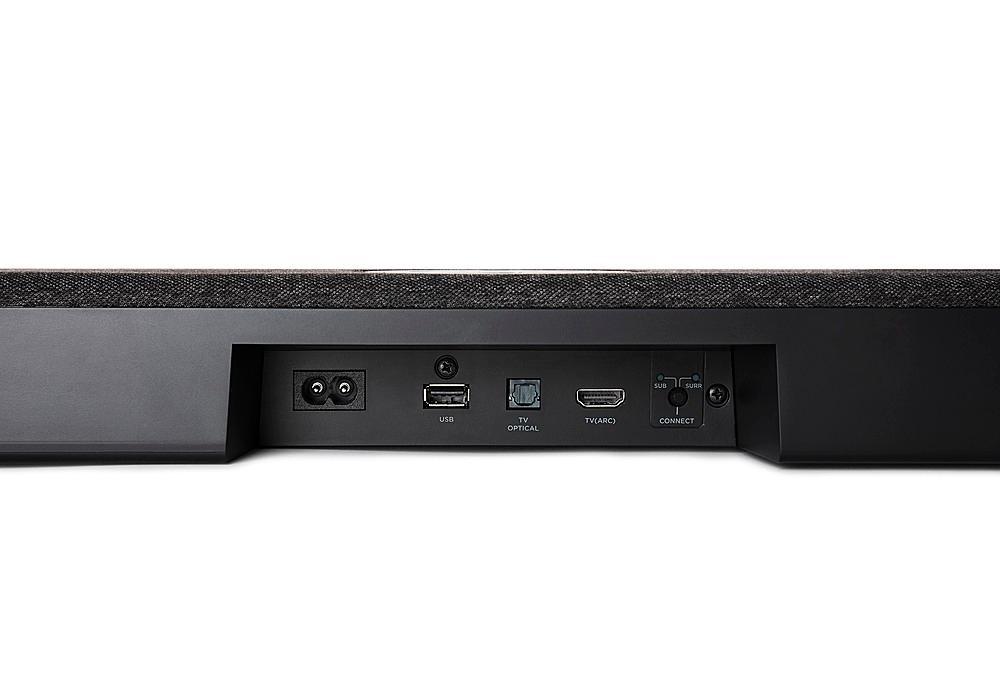
The Amazon system includes HDMI eARC (enhanced Audio Return Channel), which supports higher bandwidth audio formats compared to standard ARC. Think of eARC as a wider pipe for audio data—it can carry lossless audio formats that regular HDMI ARC cannot handle. This matters if you have a collection of Blu-ray discs with high-quality soundtracks or use streaming services that offer premium audio options.
The Polk React uses standard HDMI ARC, which handles most common audio formats but can't pass through the highest-quality lossless audio. For most users streaming Netflix or watching cable TV, this limitation won't matter. But if you're particular about audio quality or have a collection of premium content, the Amazon system's eARC support provides future-proofing benefits.
Both systems include optical digital inputs and Bluetooth connectivity. The Polk supports Bluetooth 4.2 with AAC codec support for improved quality when streaming from Apple devices, while the Amazon system uses standard Bluetooth 5.0.
The Polk React shines here with built-in support for Spotify Connect and various music services through Alexa integration. You can start music on your phone and transfer playback to the soundbar seamlessly, or simply ask Alexa to play specific artists or playlists. The multi-room capability means you can group it with other Alexa devices for whole-home audio.
The Amazon Fire TV Soundbar Plus requires manual Bluetooth pairing for music streaming and lacks Wi-Fi connectivity for direct streaming service access. This feels like a missed opportunity, especially given Amazon's ecosystem of music services and smart home products.
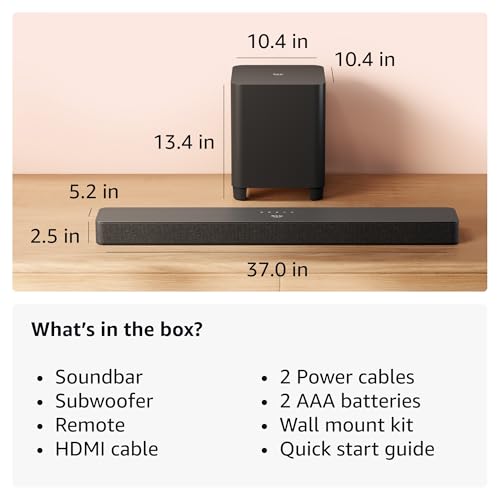
The Amazon Fire TV Soundbar Plus is notably larger at 37 inches wide, designed primarily for 50-65 inch TVs. The wireless subwoofer adds another component to place in your room, which can be both an advantage (flexible subwoofer placement for optimal bass response) and a disadvantage (more boxes to accommodate).
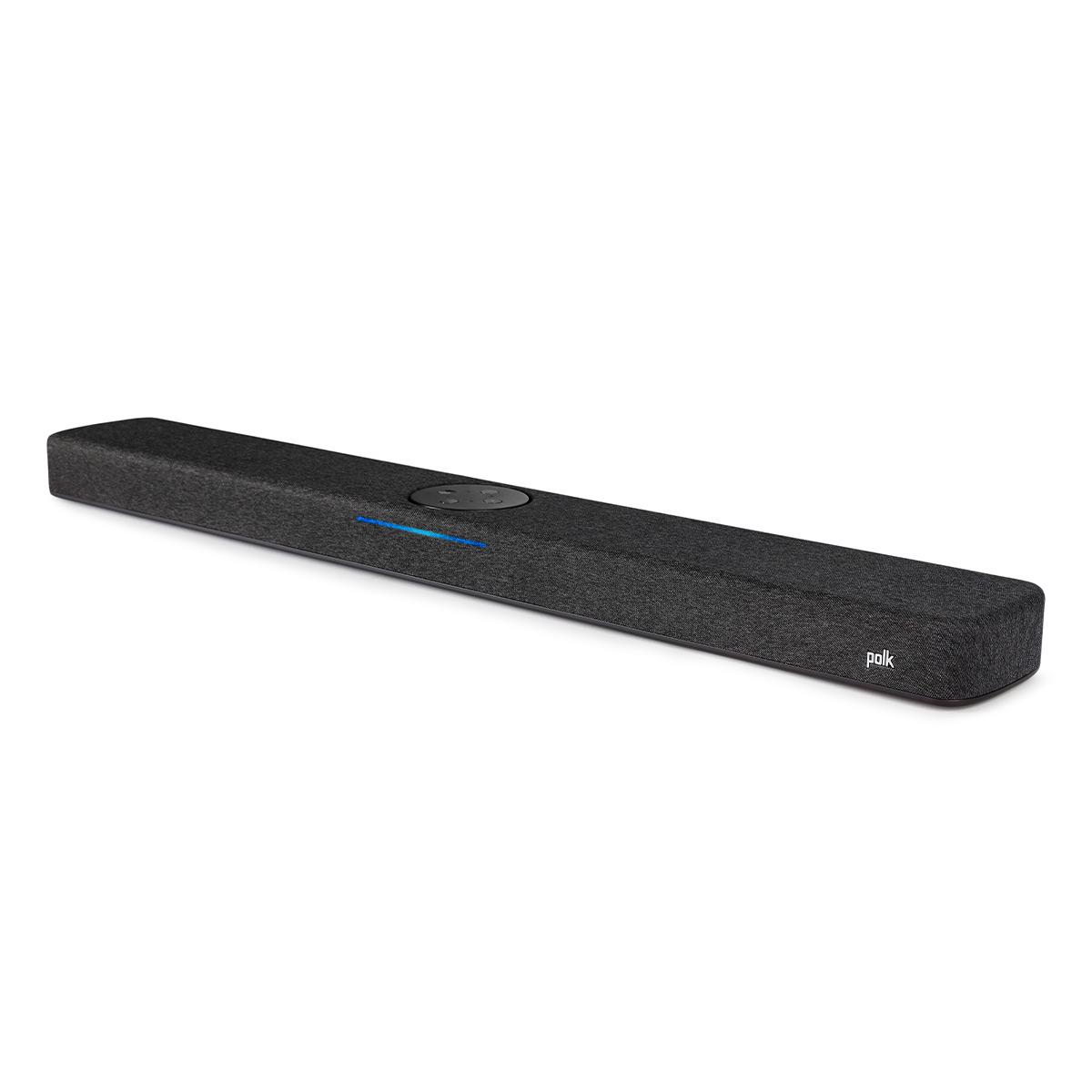
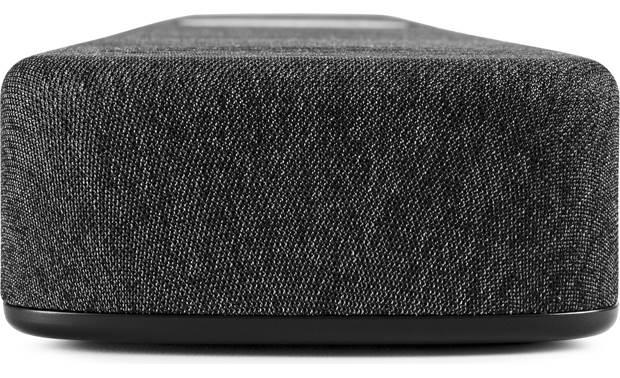
The Polk React measures 34 inches wide with a slim 2.25-inch height profile, making it more universally compatible with various TV sizes and entertainment centers. Its compact design means it's less likely to block your TV's infrared sensor or overwhelm smaller spaces.
Both feature understated designs that won't clash with most décor, though the Amazon system's larger footprint makes it more of a visual presence in your room.
The Amazon system offers genuine plug-and-play simplicity. The main soundbar and wireless subwoofer come pre-paired from the factory—you literally just plug them in and they connect automatically. However, this simplicity comes at the cost of advanced configuration options. You'll adjust settings via the included remote with basic bass and treble controls on a 1-9 scale.
The Polk React requires initial setup through the Alexa app, which takes a few minutes but unlocks more sophisticated configuration options and ongoing voice-based adjustments. Once configured, you can fine-tune settings, create custom presets, and adjust the VoiceAdjust feature to your preferences.
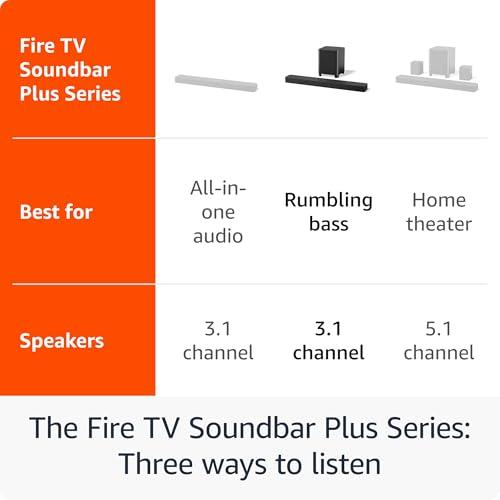
Both systems offer expansion paths, but with different philosophies. The Amazon Fire TV Soundbar Plus can grow into a 5.1-channel system by adding optional rear speakers, maintaining wireless connectivity throughout. This creates a complete surround system while keeping cable clutter to a minimum.
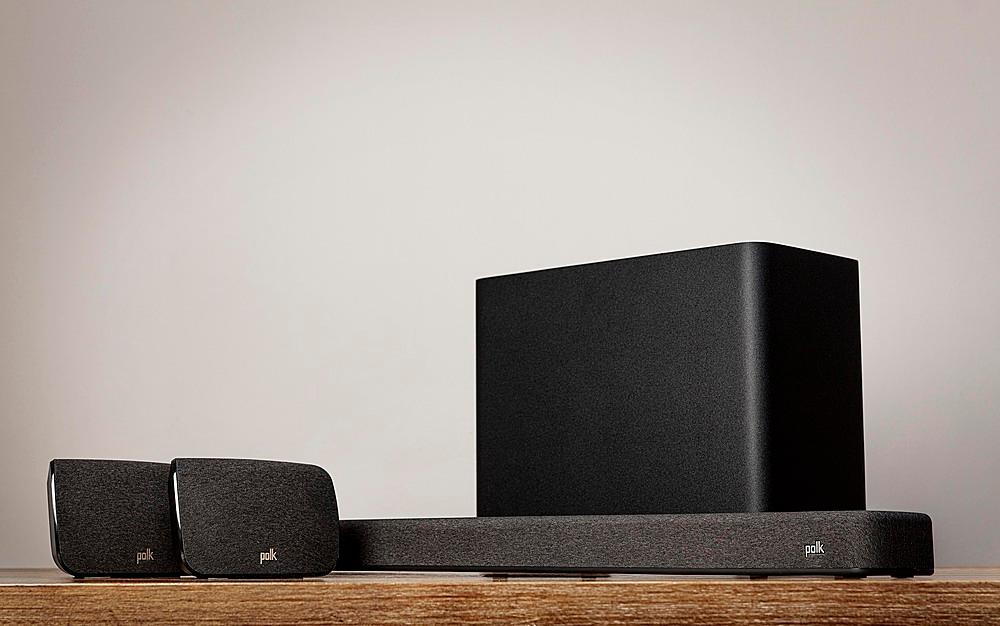
The Polk React takes a more modular approach. You can add the React Sub for enhanced bass response, SR2 rear speakers for surround sound, or both for a complete 5.1 setup. This flexibility allows you to spread costs over time and tailor the system to your specific needs and room requirements.
However, when you add up the cost of all Polk components to match the Amazon system's included features, the total investment often equals or exceeds the Amazon system's upfront cost. The advantage is flexibility—you can stop at any point when the system meets your needs.
The Amazon system works optimally within Amazon's ecosystem, offering enhanced features when paired with Fire TV devices. If you're already invested in Fire TV streaming devices, the integration provides convenient unified control and potential audio optimization features.
The Polk React emphasizes universal compatibility, working well with any TV brand or source device. This makes it suitable for mixed-brand setups or households that frequently change equipment.
For typical family use—watching Netflix shows, news, and occasional movies—both systems provide substantial improvements over TV speakers. The Polk React excels with dialogue-heavy content and offers the convenience of voice control for music and smart home functions. The Amazon system provides more immediate impact for movie watching and gaming.
In my experience testing both systems, the Amazon configuration feels more "complete" out of the box for entertainment-focused users, while the Polk system grows on you as you discover its smart features and dialogue clarity improvements.
For apartment dwellers or those with noise considerations, both systems include night modes that compress dynamic range to keep loud scenes from overwhelming quiet dialogue while maintaining reasonable volume levels.
Choose the Amazon Fire TV Soundbar Plus if you want immediate audio gratification, primarily watch movies and action content, own Fire TV devices, or prefer complete systems without future upgrade decisions. Its included subwoofer and higher power handling make it better suited for larger rooms and users who want impactful audio from day one.
Select the Polk Audio React if dialogue clarity is your primary concern, you want built-in smart features and voice control, prefer flexibility in system building, or have budget constraints that favor lower upfront costs. Its VoiceAdjust technology and universal compatibility make it ideal for mixed content viewing and integration with existing equipment.
Consider your viewing habits carefully. Action movie enthusiasts and gamers will appreciate the Amazon system's immediate bass impact and dynamic range capabilities. TV series bingers and news watchers will find the Polk's dialogue optimization and smart features more compelling daily drivers.
At the time of writing, both systems represent solid value in their respective approaches to budget home audio improvement. The choice ultimately comes down to whether you prefer immediate satisfaction with included components or gradual system building with smart features and universal compatibility.
| Amazon Fire TV Soundbar Plus with Subwoofer | Polk Audio React Sound Bar with Alexa Built-In |
|---|---|
| Audio Channels - Determines surround sound capability and dialogue clarity | |
| 3.1 channels (left, center, right + subwoofer) | 2.1 channels (stereo + virtual center) |
| Subwoofer Configuration - Critical for bass impact in movies and music | |
| Wireless subwoofer included + integrated subs in soundbar | No subwoofer included (optional React Sub available separately) |
| Smart Features - Voice control and streaming convenience | |
| No built-in voice assistant (Fire TV remote integration only) | Built-in Alexa with 4 far-field microphones |
| Audio Format Support - Affects quality with premium content sources | |
| Dolby TrueHD, virtualized Dolby Atmos, DTS:X | Dolby Digital, DTS (no lossless format support) |
| HDMI Connectivity - Determines audio bandwidth and future-proofing | |
| HDMI eARC (enhanced Audio Return Channel) | HDMI ARC (standard Audio Return Channel) |
| Dialogue Enhancement - Essential for clear speech in movies/TV | |
| Dialogue enhancer (1-5 scale adjustment) | VoiceAdjust technology (independent vocal level control) |
| Physical Dimensions - Affects TV compatibility and room aesthetics | |
| 37" W x 5.2" H x 2.5" D (designed for 50-65" TVs) | 34" W x 2.25" H x 4.8" D (universal TV compatibility) |
| Expandability Options - Future upgrade flexibility | |
| Add wireless rear speakers for 5.1 surround | Add React Sub and/or SR2 rear speakers modularly |
| Music Streaming - Convenience for daily music listening | |
| Bluetooth only (manual pairing required) | Bluetooth + Spotify Connect + Alexa music services |
| Setup Complexity - Time and effort to get optimal sound | |
| Plug-and-play (components pre-paired, basic remote controls) | Alexa app setup required (enables advanced features and voice control) |
| Power and Volume - Room-filling capability and dynamic range | |
| Higher maximum output, better dynamics with separate subwoofer | Adequate for most rooms, limited without optional subwoofer |
| Value Approach - How you get the most for your investment | |
| Complete system upfront (immediate bass satisfaction) | Modular building (start basic, upgrade components over time) |
The Amazon Fire TV Soundbar Plus with Subwoofer delivers significantly better bass out of the box since it includes a wireless subwoofer plus integrated subwoofers in the main soundbar. The Polk Audio React relies on passive radiators for bass and requires purchasing the separate React Sub to match the Amazon system's low-frequency impact.
Only the Polk Audio React has built-in Alexa with four far-field microphones, allowing hands-free voice control. Surprisingly, the Amazon Fire TV Soundbar Plus doesn't include built-in Alexa despite the Amazon branding, though it integrates well with Fire TV remotes and separate Echo devices.
The Polk Audio React excels at dialogue clarity with its proprietary VoiceAdjust technology, which lets you independently control vocal levels without affecting background music or effects. The Amazon Fire TV Soundbar Plus offers dialogue enhancement through its center channel and adjustable dialogue enhancer, but with less precise control.
Both systems are expandable. The Amazon Fire TV Soundbar Plus can add wireless rear speakers for 5.1 surround sound. The Polk Audio React offers modular expansion with separate subwoofer and rear speaker options, allowing you to build the system gradually based on your budget and needs.
The Amazon Fire TV Soundbar Plus offers true plug-and-play setup with pre-paired components—just plug everything in and it works. The Polk Audio React requires initial setup through the Alexa app, which takes a few minutes but unlocks advanced features and voice control capabilities.
The Amazon Fire TV Soundbar Plus supports advanced formats including Dolby TrueHD and virtualized Dolby Atmos, though without physical up-firing speakers. The Polk Audio React supports standard Dolby Digital and DTS formats but doesn't handle lossless audio codecs or Atmos processing.
Value depends on your priorities. The Amazon Fire TV Soundbar Plus provides better immediate value with its included subwoofer and complete system approach. The Polk Audio React offers lower entry cost with flexible upgrade options, though adding all components may cost more than the Amazon system initially.
The Polk Audio React offers superior music streaming with built-in Spotify Connect, Alexa music services, and Bluetooth connectivity. The Amazon Fire TV Soundbar Plus only supports Bluetooth streaming, requiring manual device pairing without Wi-Fi or direct streaming service access.
The Amazon Fire TV Soundbar Plus handles larger rooms and higher volumes better thanks to its separate subwoofer and higher power handling. The system maintains better composure during loud action sequences and provides more dynamic range for movie watching.
Both soundbars work with virtually any TV brand through HDMI or optical connections. However, the Amazon Fire TV Soundbar Plus offers enhanced integration features when paired with Fire TV devices, while the Polk Audio React emphasizes universal compatibility across all brands and systems.
For dedicated home theater use, the Amazon Fire TV Soundbar Plus provides more impactful audio with its included subwoofer, advanced audio format support, and better dynamic range handling. The Polk Audio React excels for mixed TV watching with superior dialogue clarity and smart features.
The Amazon Fire TV Soundbar Plus measures 37 inches wide and is designed for 50-65 inch TVs, plus requires space for the wireless subwoofer. The Polk Audio React at 34 inches wide with a slim profile offers more universal compatibility with various TV sizes and entertainment center configurations.
We've done our best to create useful and informative comparisons to help you decide what product to buy. Our research uses advanced automated methods to create this comparison and perfection is not possible - please contact us for corrections or questions. These are the sites we've researched in the creation of this article: rtings.com - cordbusters.co.uk - techradar.com - youtube.com - t3.com - hometechnologyreview.com - youtube.com - hometechnologyreview.com - whathifi.com - developer.amazon.com - manuals.plus - dolby.com - techradar.com - crutchfield.com - popsci.com - youtube.com - tomsguide.com - bestbuy.com - polkaudio.com - crutchfield.com - forum.polkaudio.com - soundunited.com - youtube.com

Privacy Policy
Terms and Conditions - Affiliate Policy
Home Security
© Copyright 2008-2026.
11816 Inwood Rd #1211, Dallas, TX 75244