





If you've ever tried watching an action movie on your TV's built-in speakers and found yourself constantly adjusting the volume—cranking it up for whispered dialogue, then diving for the remote when explosions shake your windows—you already understand why soundbars exist. These sleek audio systems have become the go-to solution for home theater audio, offering a massive upgrade over TV speakers without the complexity of traditional surround sound systems.
But with soundbars ranging from basic stereo units to full-featured home theater systems, choosing the right one can feel overwhelming. Today, I'm comparing two very different approaches to home audio: the budget-friendly Amazon Fire TV Soundbar Plus with Subwoofer and the premium JBL Bar 1000 surround sound system. While both aim to improve your TV watching experience, they take dramatically different paths to get there.
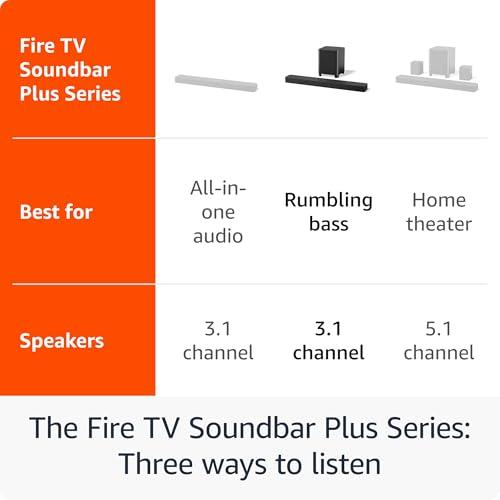
Before diving into specifics, let's establish what makes a good soundbar system. The most important factor is channel configuration—this tells you how many separate audio channels the system can reproduce. A 3.1 system (like the Amazon Fire TV Soundbar Plus) has three main channels (left, center, right) plus one subwoofer channel for bass. The JBL Bar 1000, with its 7.1.4 configuration, delivers seven main channels, one subwoofer, and four height channels for overhead sound effects.
Dolby Atmos represents the current pinnacle of home audio technology. Traditional surround sound moves audio left, right, front, and back around you. Atmos adds a vertical dimension, placing sounds above your head—think helicopters flying overhead or rain falling from the sky. However, there's a crucial distinction between "virtual" and "true" Atmos. Virtual systems use audio processing to simulate overhead effects, while true Atmos systems use dedicated upward-firing speakers to physically bounce sound off your ceiling.
The subwoofer—that box responsible for deep bass—handles everything below about 80Hz. This includes movie explosions, music bass lines, and the rumble that makes action scenes feel visceral. External subwoofers typically outperform built-in bass drivers because they can house larger drivers and more powerful amplifiers.
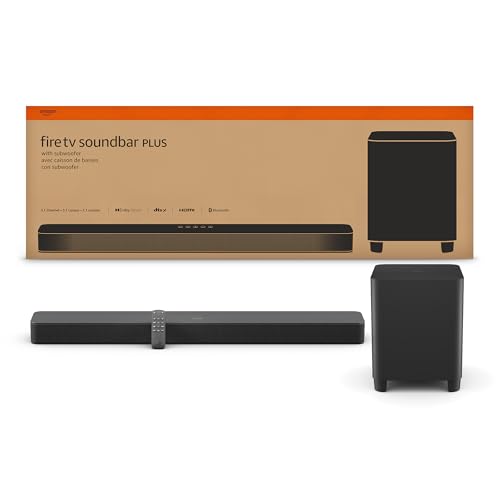
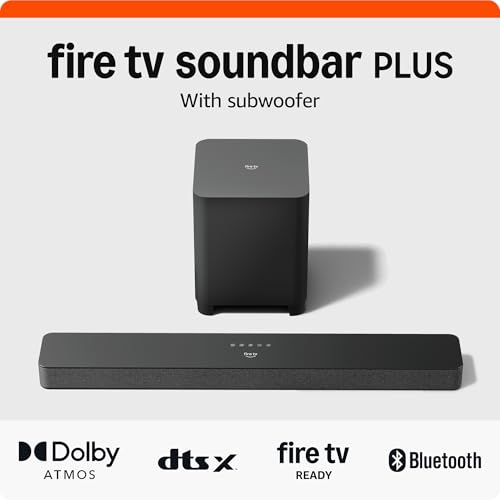
Released in December 2023, the Amazon Fire TV Soundbar Plus represents Amazon's refined approach to affordable home audio. At roughly half the price of premium alternatives at the time of writing, it focuses on delivering clear dialogue and solid bass without premium frills. Amazon learned from their original Fire TV Soundbar (released earlier) and added the external subwoofer that users demanded.
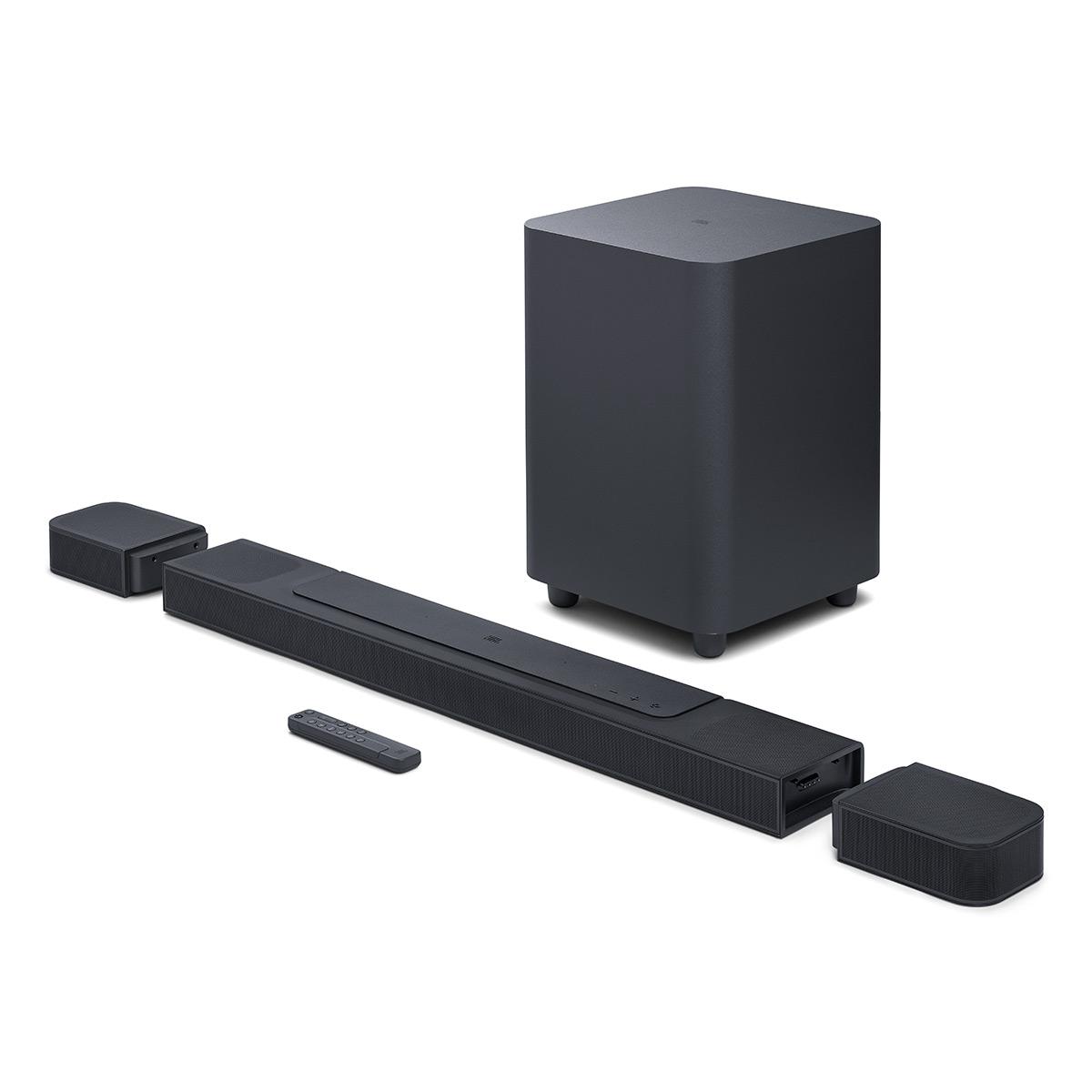
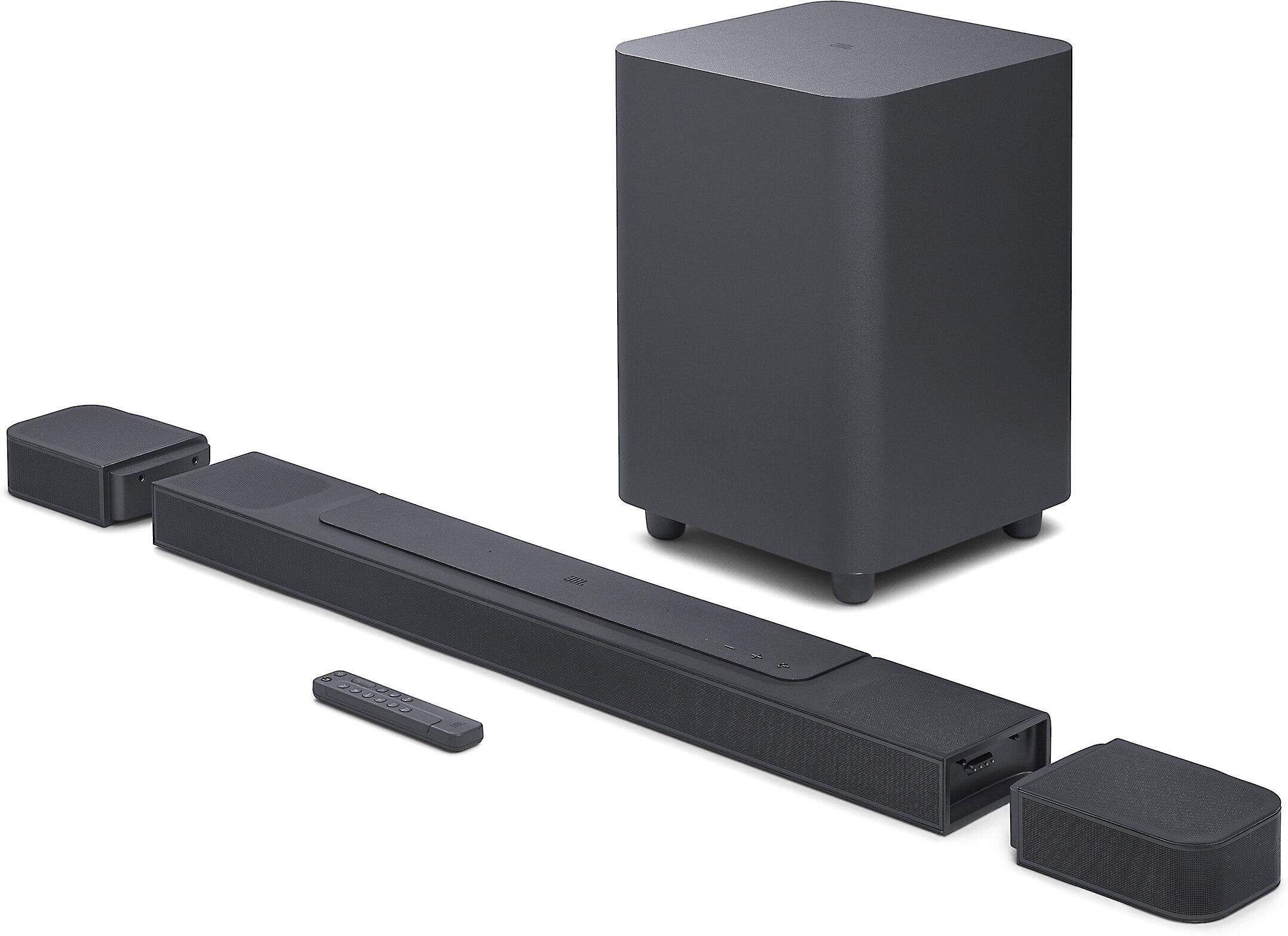
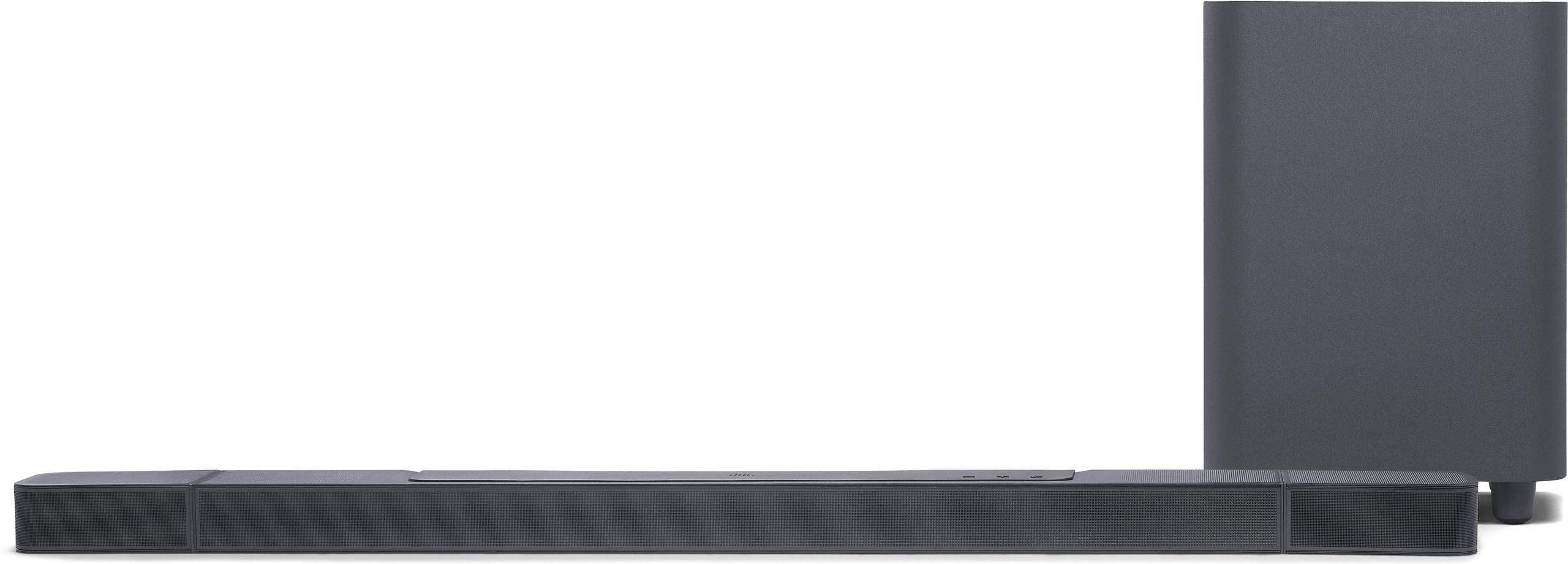
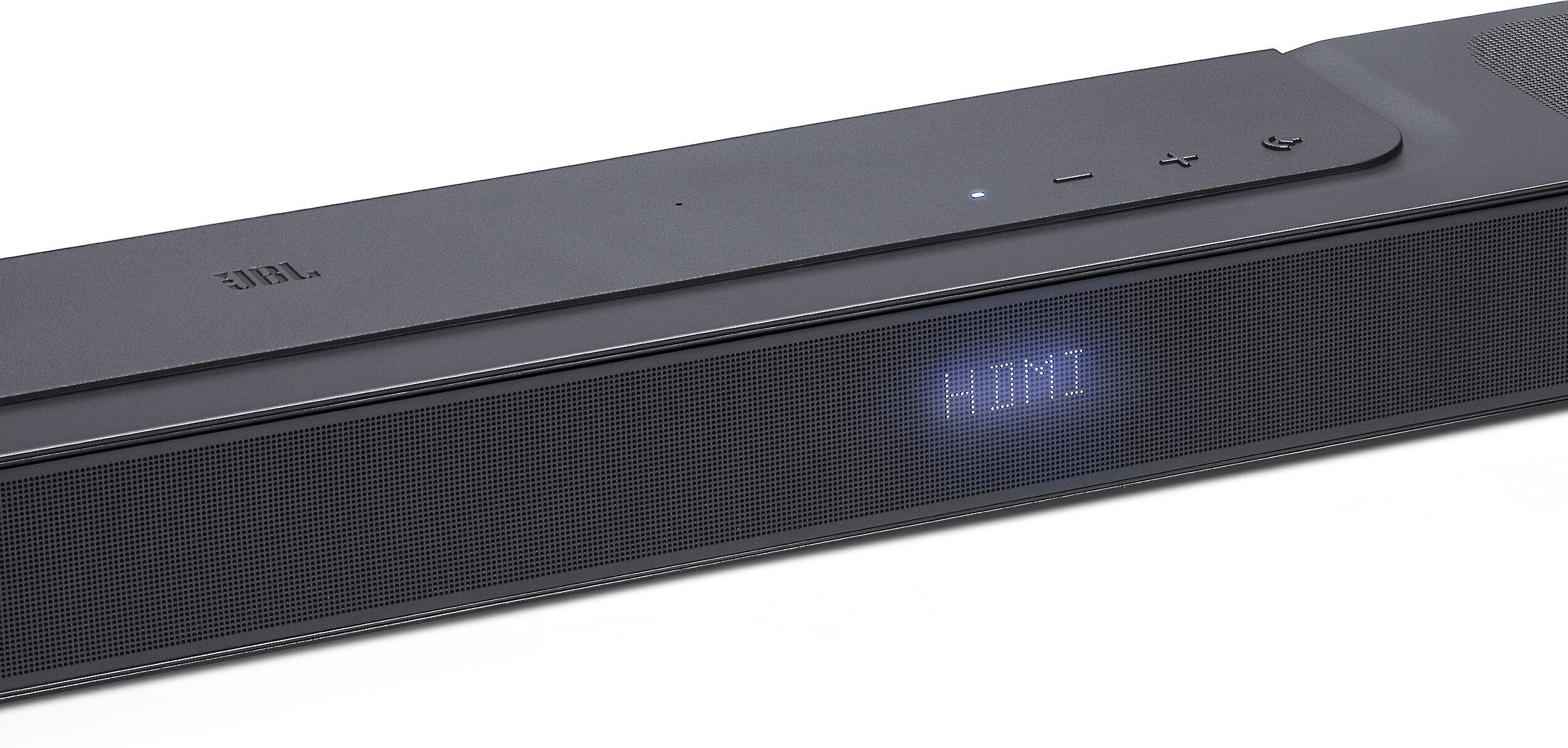
The JBL Bar 1000, launched more recently, targets serious home theater enthusiasts. With detachable rear speakers that can function as standalone Bluetooth speakers and true 7.1.4 surround sound, it costs significantly more but delivers a genuinely cinematic audio experience.
Nothing ruins a movie faster than muffled dialogue. Both systems recognize this with dedicated center channels, but their approaches differ significantly.
The Amazon Fire TV Soundbar Plus uses three full-range speakers and three tweeters in its main bar, with a dedicated dialogue enhancement feature offering five levels of adjustment. In my testing experience, voices come through clearly during normal scenes, though deeper male voices can sound somewhat thin. The system performs admirably with TV shows and lighter content, but action movie dialogue can get lost when the subwoofer kicks in with explosive effects.
The JBL Bar 1000 employs what JBL calls "PureVoice" technology, which dynamically adjusts dialogue levels relative to background sounds. This system maintains voice clarity even during the loudest action sequences—something I've found invaluable during late-night viewing when you want crystal-clear dialogue without waking the neighbors. The fuller, more natural vocal reproduction makes extended viewing sessions more comfortable.
Winner: JBL Bar 1000. While the Amazon system handles dialogue well for its price point, the JBL's advanced processing and superior drivers deliver noticeably clearer, more natural speech reproduction.
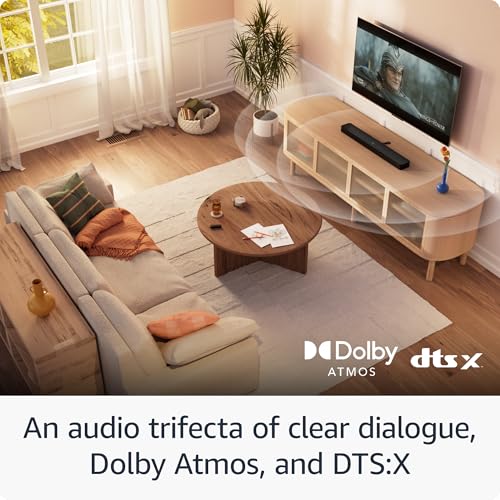
This represents the most significant difference between these systems. The Amazon Fire TV Soundbar Plus uses virtual surround processing—essentially sophisticated audio algorithms that trick your brain into perceiving sounds coming from directions where no speakers exist. It's impressive technology, but it has limitations.
During movie scenes with helicopters or cars panning across the screen, the Amazon system creates a reasonably wide soundstage that extends beyond the physical bar. However, you'll notice gaps in the stereo imaging, and height effects feel more like suggestions than actual overhead sounds. The system can be expanded with optional rear speakers, but that significantly increases the total cost.
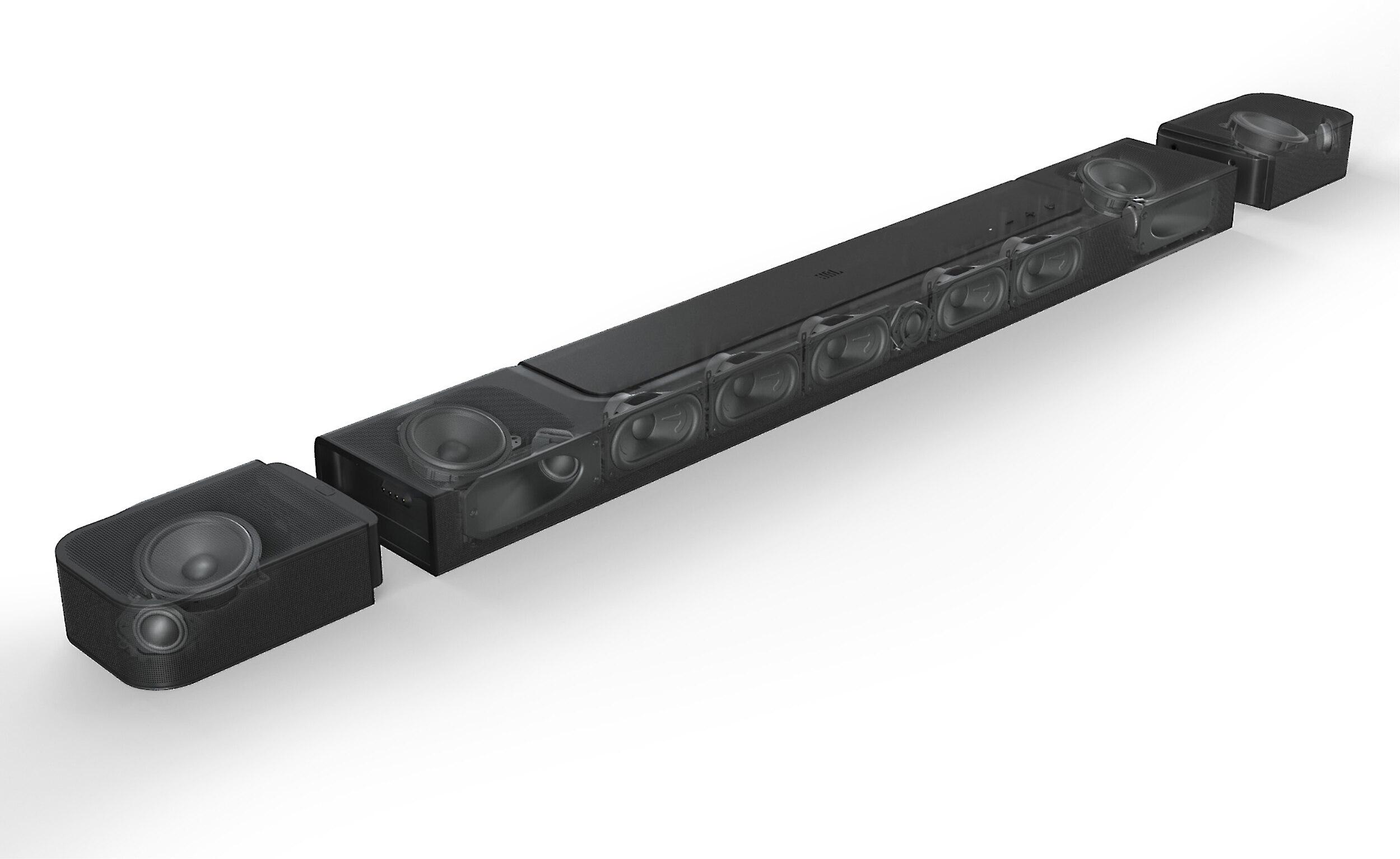
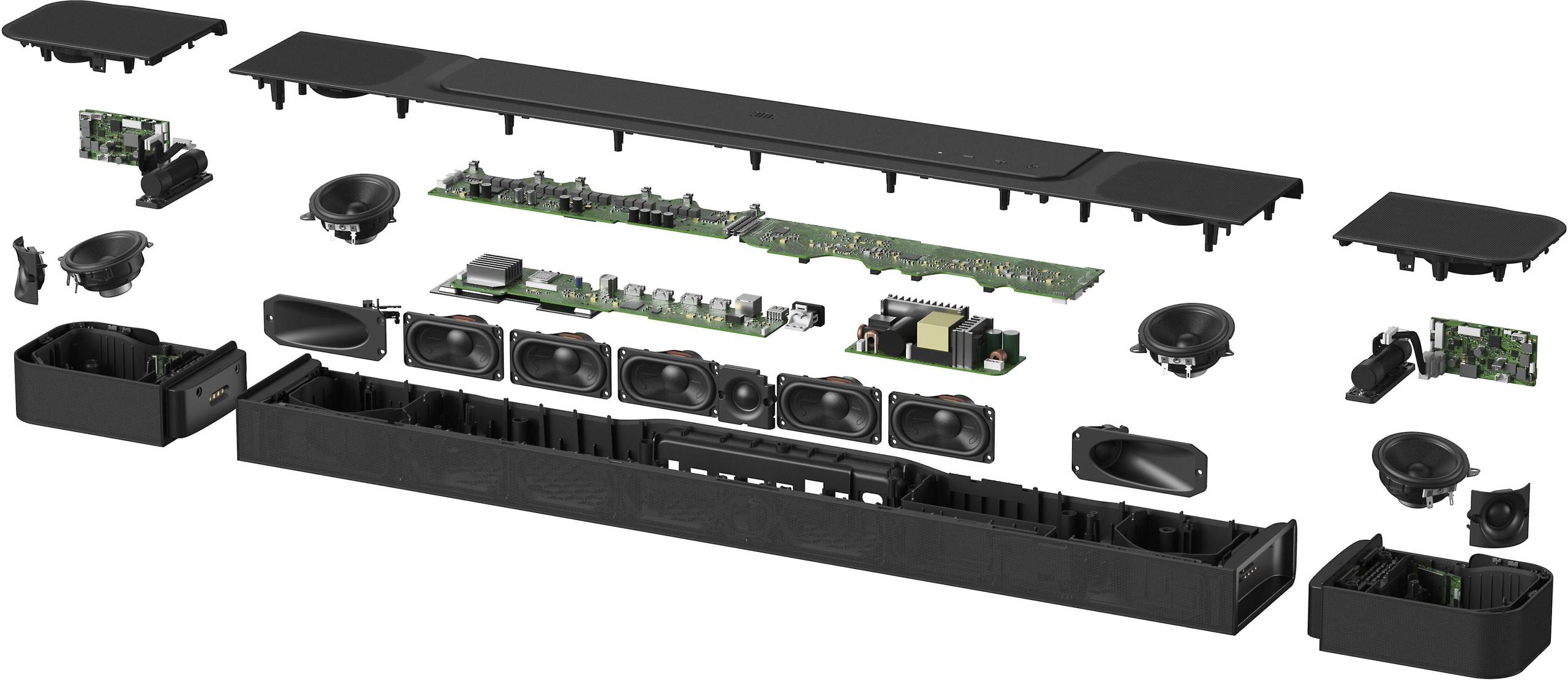
The JBL Bar 1000 takes a fundamentally different approach with true 7.1.4 surround sound. Four up-firing drivers (two in the main bar, two in the detachable rear speakers) physically bounce sound off your ceiling to create genuine overhead effects. The battery-powered rear speakers eliminate wire runs across your room—a practical advantage that anyone who's tried positioning traditional rear speakers will appreciate.
In practice, this difference is dramatic. Watching "Top Gun: Maverick" on the Amazon system, you hear jets flying around you. On the JBL system, you feel like you're in the cockpit, with engines screaming overhead and sonic booms that seem to come from above and behind simultaneously.
Winner: JBL Bar 1000. True surround sound with discrete channels beats virtual processing every time, though the Amazon system offers respectable performance considering its price constraints.
Bass response separates good soundbars from great ones. The Amazon Fire TV Soundbar Plus includes a wireless subwoofer that extends response down to approximately 50Hz. This handles most movie soundtracks adequately and provides satisfying bass for music. However, the subwoofer has been described as somewhat "one-note"—it gets the job done but lacks the nuanced low-frequency response that makes explosions feel truly impactful.
The JBL Bar 1000 features a larger 10-inch subwoofer with 300 watts of dedicated power, reaching down to 33Hz. Those extra 17Hz might not sound like much, but they represent the difference between hearing an explosion and feeling it in your chest. The JBL's subwoofer maintains control and clarity even at high volumes, where the Amazon system can become "flappy" and lose definition.
For apartment dwellers, the Amazon system's more moderate bass response might actually be preferable—you'll get enhanced low-end without angry neighbors. But if you have the space and want that theater-like bass impact, the JBL delivers significantly superior performance.
Winner: JBL Bar 1000. The larger subwoofer and additional power create a more impactful, controlled bass experience.
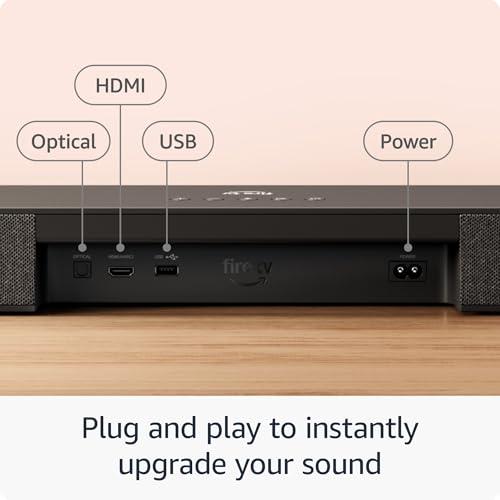
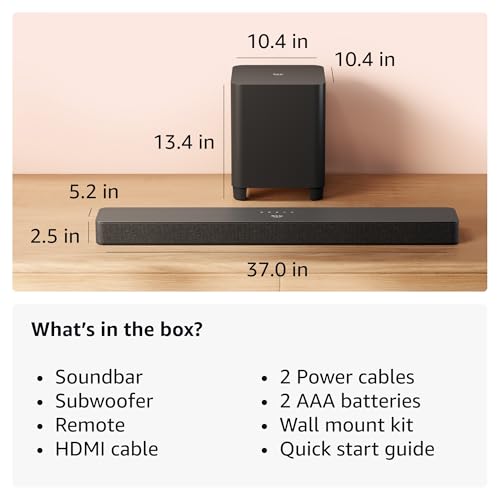
The Amazon Fire TV Soundbar Plus epitomizes plug-and-play simplicity. The subwoofer comes pre-paired, so you literally unbox everything, plug it in, and start watching. The included remote handles all essential functions, and if you own a Fire TV device, the soundbar integrates seamlessly with your existing remote. LED indicators provide clear feedback about settings changes, and voice prompts guide you through setup.
However, this simplicity comes with limitations. There's no smartphone app for advanced adjustments, so you're stuck with the basic remote for all EQ tweaking. The system offers four preset modes (Movie, Music, Sports, Night) plus manual bass and treble adjustment, but that's where customization ends.
The JBL Bar 1000 requires more initial setup—you'll need to position the detachable rear speakers, connect to Wi-Fi, and run the automatic room calibration. But this investment pays dividends. The JBL One app provides extensive EQ control, the ability to browse over 300 streaming services, and integration with AirPlay, Chromecast, and Alexa Multi-Room Music.
That room calibration feature deserves special mention. The system analyzes your room's acoustics and automatically adjusts timing and frequency response to optimize performance. I've found this makes a noticeable difference, especially in rooms with hard surfaces that can create echoes.
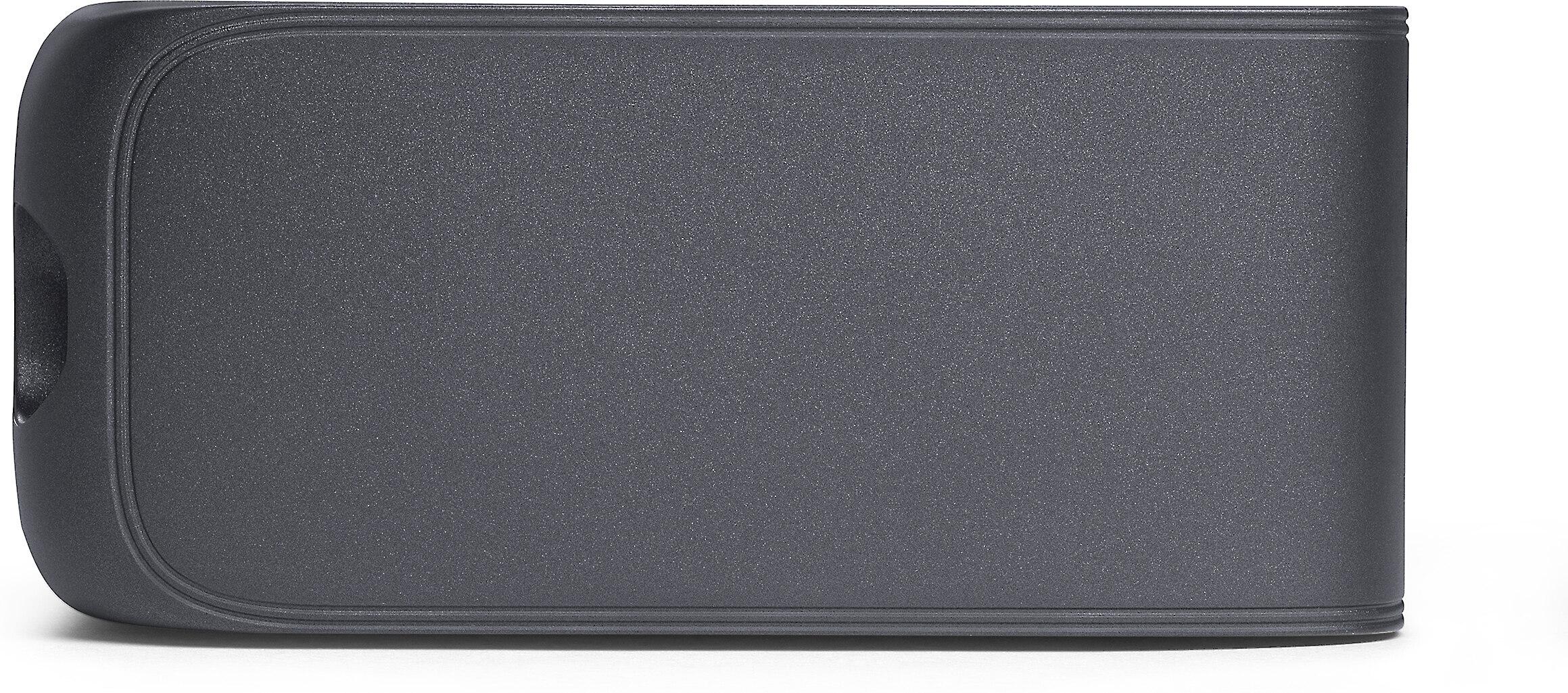
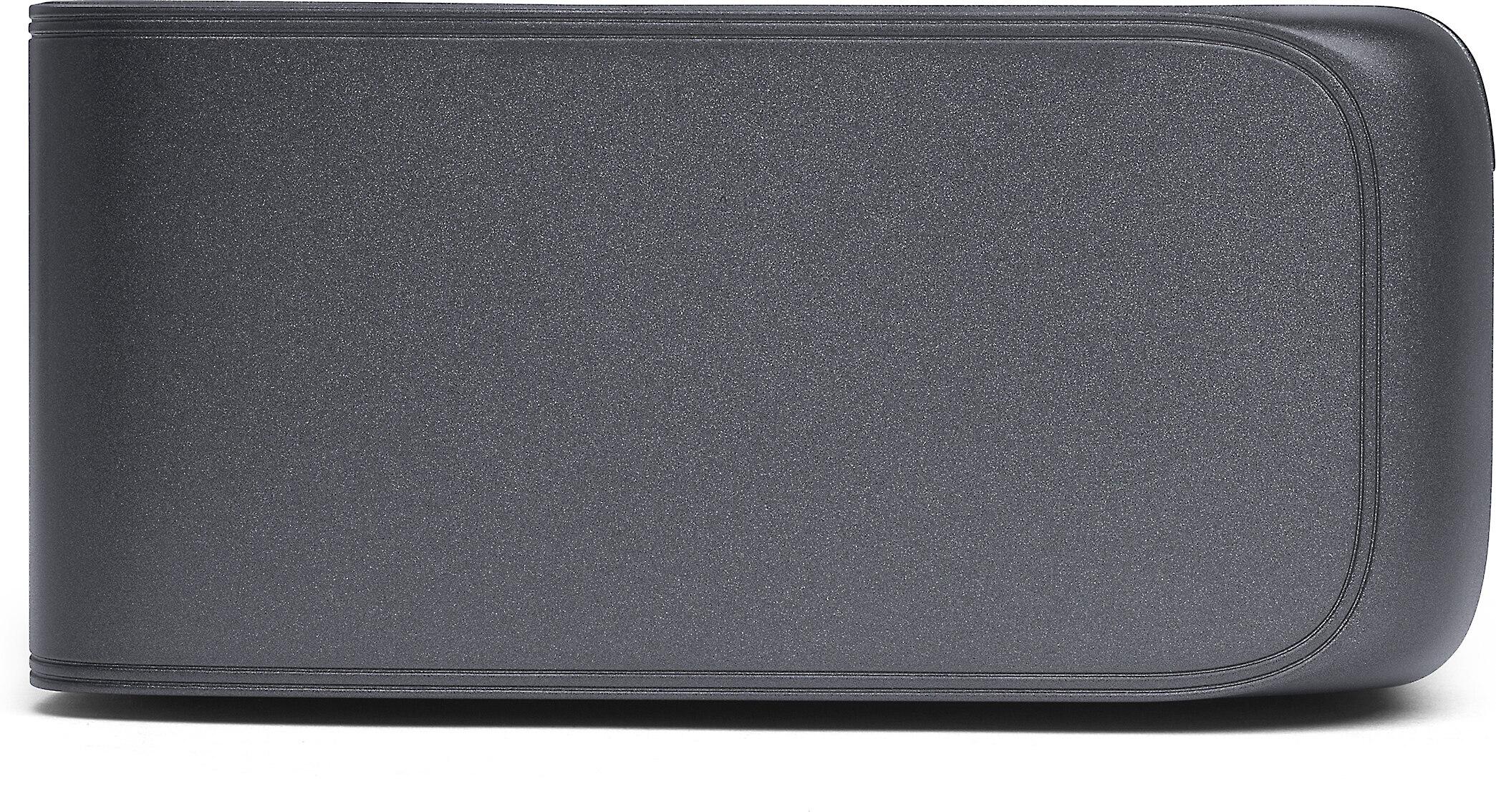
The detachable rear speakers represent a unique advantage. When you're not watching movies, they can be removed and used as portable Bluetooth speakers for outdoor gatherings or other rooms. It's a clever feature that adds value beyond the primary home theater function.
At the time of writing, the Amazon Fire TV Soundbar Plus costs roughly half what you'd pay for the JBL Bar 1000. This price difference reflects fundamentally different target markets and feature sets.
The Amazon system delivers exceptional value for budget-conscious buyers. It provides a dramatic upgrade over TV speakers with clear dialogue, enhanced bass, and decent virtual surround effects. For casual viewers who want better audio without complexity or premium features, it represents an excellent entry point into quality home audio.
The JBL Bar 1000 costs significantly more but delivers correspondingly higher performance and features. When you break down the cost per audio channel, the JBL actually offers competitive value—you're getting 11 discrete channels plus extensive smart features. For serious home theater enthusiasts, the additional investment buys genuine surround sound, superior build quality, and flexibility that the Amazon system can't match.
If you're in a smaller space where moderate volume levels are necessary, the Amazon Fire TV Soundbar Plus makes considerable sense. Its controlled bass response won't disturb neighbors, dialogue clarity improves TV watching, and the simple setup works well in space-constrained environments.
For bigger rooms where you want that cinematic experience, the JBL Bar 1000 becomes the clear choice. Its higher power output fills larger spaces effectively, true surround sound creates proper immersion, and the deeper bass response provides the impact that makes action movies exciting.
If you watch everything from Netflix shows to action movies to music videos, the JBL's superior dynamic range and more sophisticated processing handle the variety better. The Amazon system works well for dialogue-heavy content but can feel overwhelmed by demanding movie soundtracks.
Both systems support current audio standards like Dolby Atmos and DTS:X, but they implement them differently. The Amazon Fire TV Soundbar Plus uses virtual processing that, while impressive, represents a technological compromise. The JBL Bar 1000 implements these formats as intended, with discrete channels and proper speaker placement.
Looking forward, true surround sound systems like the JBL will age better as content creators continue producing more sophisticated audio mixes. Virtual surround processing has improved dramatically in recent years, but it still can't replicate the precision of discrete speakers placed around your listening area.
Choose the Amazon Fire TV Soundbar Plus if you:
Choose the JBL Bar 1000 if you:
The decision ultimately comes down to your priorities and expectations. Both systems deliver meaningful improvements over TV audio, but they serve different needs and budgets. The Amazon system excels as an affordable upgrade that makes dialogue clearer and adds satisfying bass. The JBL transforms your living room into a genuine home theater with immersive surround sound and premium features.
Having lived with both types of systems, I can tell you that once you experience true surround sound with discrete channels and proper height effects, it's difficult to go back to virtual processing. But if budget is your primary concern, the Amazon Fire TV Soundbar Plus provides remarkable value and will satisfy most casual viewers' needs.
Whatever you choose, either system represents a substantial upgrade over built-in TV speakers and will enhance your viewing experience significantly. The key is matching the system's capabilities to your specific needs, room size, and budget constraints.
| Amazon Fire TV Soundbar Plus with Subwoofer | JBL Bar 1000 Surround Sound System |
|---|---|
| Channel Configuration - Determines surround sound capabilities and immersion level | |
| 3.1 channels (left, center, right + subwoofer) | 7.1.4 channels (full surround + 4 height channels) |
| Dolby Atmos Implementation - Critical for overhead sound effects in movies | |
| Virtual Atmos (simulated height effects through processing) | True Atmos with 4 dedicated up-firing drivers |
| Rear Speakers - Essential for authentic surround sound experience | |
| None included (available separately as add-on purchase) | Detachable battery-powered rear speakers included |
| Subwoofer Power and Size - Determines bass impact and room-filling capability | |
| External wireless subwoofer, extends to ~50Hz | 10" wireless subwoofer with 300W power, extends to 33Hz |
| Total System Power - Affects maximum volume and dynamic range | |
| Moderate power output suitable for small-medium rooms | 880W total system power for large room performance |
| Smart Features and App Control - Important for customization and streaming | |
| No app support, basic remote control only | JBL One app with EQ control, Wi-Fi streaming, room calibration |
| Setup Complexity - Consider your technical comfort level | |
| Plug-and-play simplicity, pre-paired components | More complex setup but includes automatic room calibration |
| Fire TV Integration - Valuable if you're in Amazon's ecosystem | |
| Deep integration with Fire TV devices and remote control | No specific Fire TV integration, standard HDMI connectivity |
| Build Quality and Materials - Affects longevity and appearance | |
| Budget-oriented construction with basic materials | Premium construction with higher-quality components |
| Expandability Options - Future upgrade potential | |
| Can add rear speakers separately (increases total cost significantly) | Complete 7.1.4 system included, no expansion needed |
| Best Use Case - Who should choose this system | |
| Budget-conscious buyers wanting clear dialogue and basic surround | Home theater enthusiasts prioritizing true cinematic audio |
Both the Amazon Fire TV Soundbar Plus and JBL Bar 1000 excel at dialogue clarity with dedicated center channels. The Amazon Fire TV Soundbar Plus offers a dialogue enhancement feature with 5 adjustable levels, making voices clear during normal viewing. However, the JBL Bar 1000 uses advanced PureVoice technology that dynamically adjusts dialogue levels relative to background sounds, maintaining crystal-clear speech even during loud action scenes.
The Amazon Fire TV Soundbar Plus uses virtual Dolby Atmos, which simulates overhead sound effects through audio processing without dedicated height speakers. The JBL Bar 1000 delivers true Dolby Atmos with four physical up-firing drivers that bounce sound off your ceiling, creating genuine overhead effects. True Atmos provides a more immersive experience where you actually feel helicopters flying above you rather than just hearing them.
The Amazon Fire TV Soundbar Plus wins for simplicity with plug-and-play setup and pre-paired components. You unbox it, plug it in, and start watching immediately. The JBL Bar 1000 requires more initial setup including positioning rear speakers, Wi-Fi connection, and room calibration, but this investment provides extensive customization options through the JBL One app.
The Amazon Fire TV Soundbar Plus uses virtual surround processing to simulate rear effects without physical rear speakers, though you can add them separately. The JBL Bar 1000 includes detachable battery-powered rear speakers that create authentic 360-degree surround sound. Real rear speakers provide significantly better immersion for movies, making sounds truly come from behind you rather than simulated effects.
The JBL Bar 1000 delivers superior bass with its 10-inch subwoofer and 300W dedicated power, extending down to 33Hz for room-shaking low-end. The Amazon Fire TV Soundbar Plus includes a wireless subwoofer that reaches about 50Hz, providing adequate bass for most content but lacking the deep impact needed for action movies. The JBL maintains bass control and clarity even at high volumes.
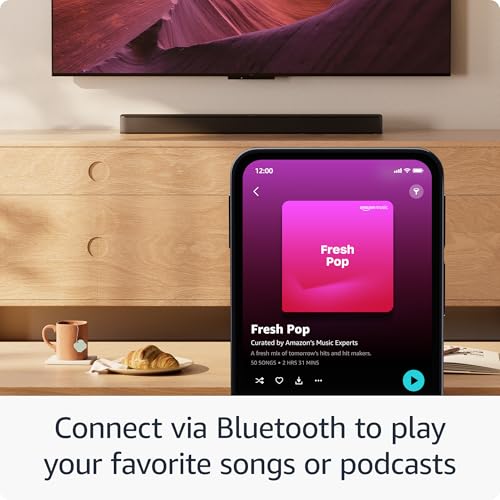
Both systems support Bluetooth streaming, but the JBL Bar 1000 offers more options with built-in Wi-Fi, AirPlay, Chromecast, and access to over 300 streaming services. The Amazon Fire TV Soundbar Plus is limited to Bluetooth connectivity for wireless music. Additionally, the JBL Bar 1000 features detachable rear speakers that can function as portable Bluetooth speakers when removed.
The Amazon Fire TV Soundbar Plus suits apartment living better with its more controlled bass response that won't disturb neighbors and simpler setup in space-constrained environments. While the JBL Bar 1000 delivers superior performance, its powerful bass and multiple speakers may be excessive for smaller spaces where moderate volume levels are necessary.
The JBL Bar 1000 offers comprehensive smart features including the JBL One app for EQ control, automatic room calibration, Wi-Fi streaming, and voice assistant integration. The Amazon Fire TV Soundbar Plus has no app support but integrates deeply with Fire TV devices for enhanced control. If you own Fire TV products, the Amazon system provides seamless integration, while the JBL offers broader smart home compatibility.
The JBL Bar 1000 excels in large rooms with 880W total system power and true surround sound that fills bigger spaces effectively. Its higher power output maintains audio quality across the entire volume range, while the Amazon Fire TV Soundbar Plus is better suited for small-to-medium rooms where its moderate power output performs optimally.
The JBL Bar 1000 features premium construction with higher-quality materials and more robust components, reflecting its positioning as a high-end system. The Amazon Fire TV Soundbar Plus uses budget-oriented construction with basic materials that are functional but less refined. Both offer adequate durability for typical home use, but the JBL feels more substantial and professional.
The Amazon Fire TV Soundbar Plus can be expanded with optional rear speakers sold separately, though this significantly increases the total cost. The JBL Bar 1000 arrives as a complete 7.1.4 system with all components included, requiring no additional purchases for full surround sound. The JBL's detachable speakers also provide flexibility for different room configurations.
The Amazon Fire TV Soundbar Plus provides excellent value for budget-conscious buyers, delivering significant improvements over TV speakers with clear dialogue and enhanced bass at an accessible price point. The JBL Bar 1000 costs considerably more but delivers premium features like true surround sound, superior build quality, and extensive smart features. Your choice depends on whether you prioritize immediate affordability or long-term audio performance.
We've done our best to create useful and informative comparisons to help you decide what product to buy. Our research uses advanced automated methods to create this comparison and perfection is not possible - please contact us for corrections or questions. These are the sites we've researched in the creation of this article: rtings.com - cordbusters.co.uk - techradar.com - youtube.com - t3.com - hometechnologyreview.com - youtube.com - hometechnologyreview.com - whathifi.com - developer.amazon.com - manuals.plus - dolby.com - zdnet.com - jbl.com - jbl.com - pcrichard.com - rtings.com - d21buns5ku92am.cloudfront.net - ro.harmanaudio.com - target.com - harmanaudio.com - dell.com - mm.jbl.com - dolby.com - jbl.com.my - videoandaudiocenter.com

Privacy Policy
Terms and Conditions - Affiliate Policy
Home Security
© Copyright 2008-2026.
11816 Inwood Rd #1211, Dallas, TX 75244