

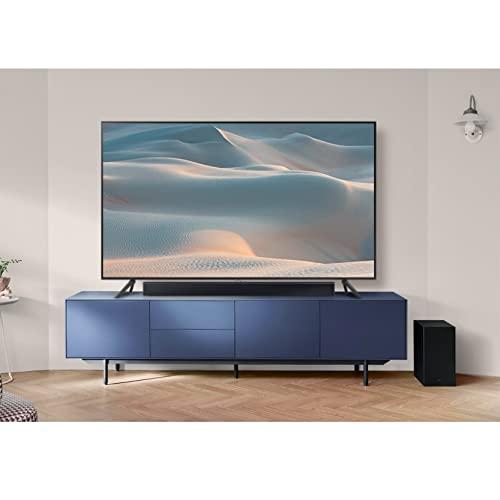
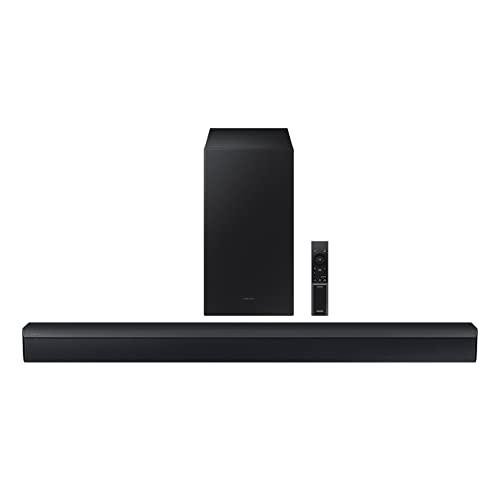

If you've ever found yourself cranking up your TV volume during dialogue scenes, then scrambling for the remote when action sequences blast your eardrums, you understand why soundbars exist. Built-in TV speakers have gotten thinner along with our TVs, leaving most people struggling to hear clear dialogue and missing the impact that good audio brings to movies and music.
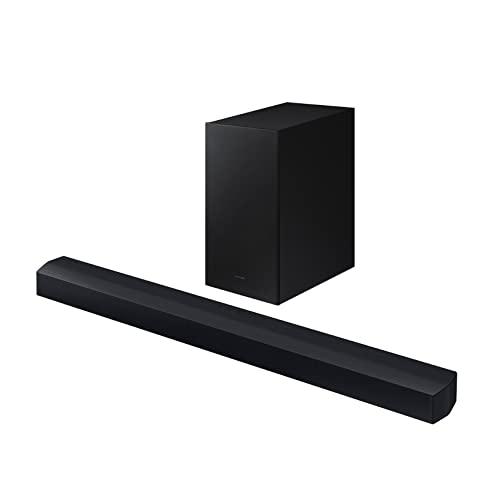
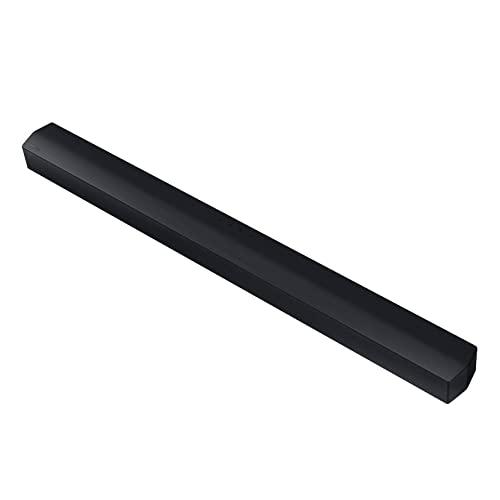
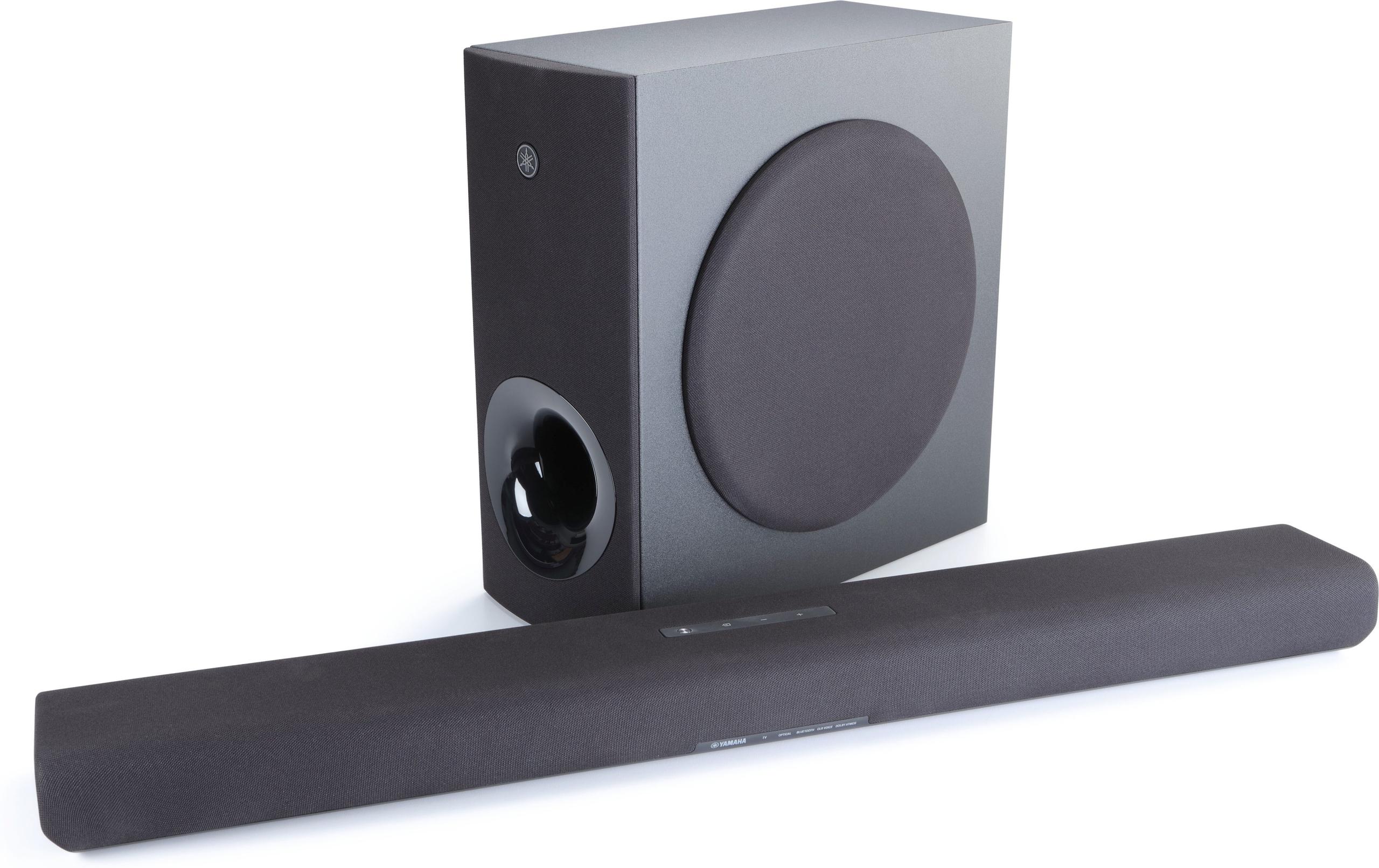
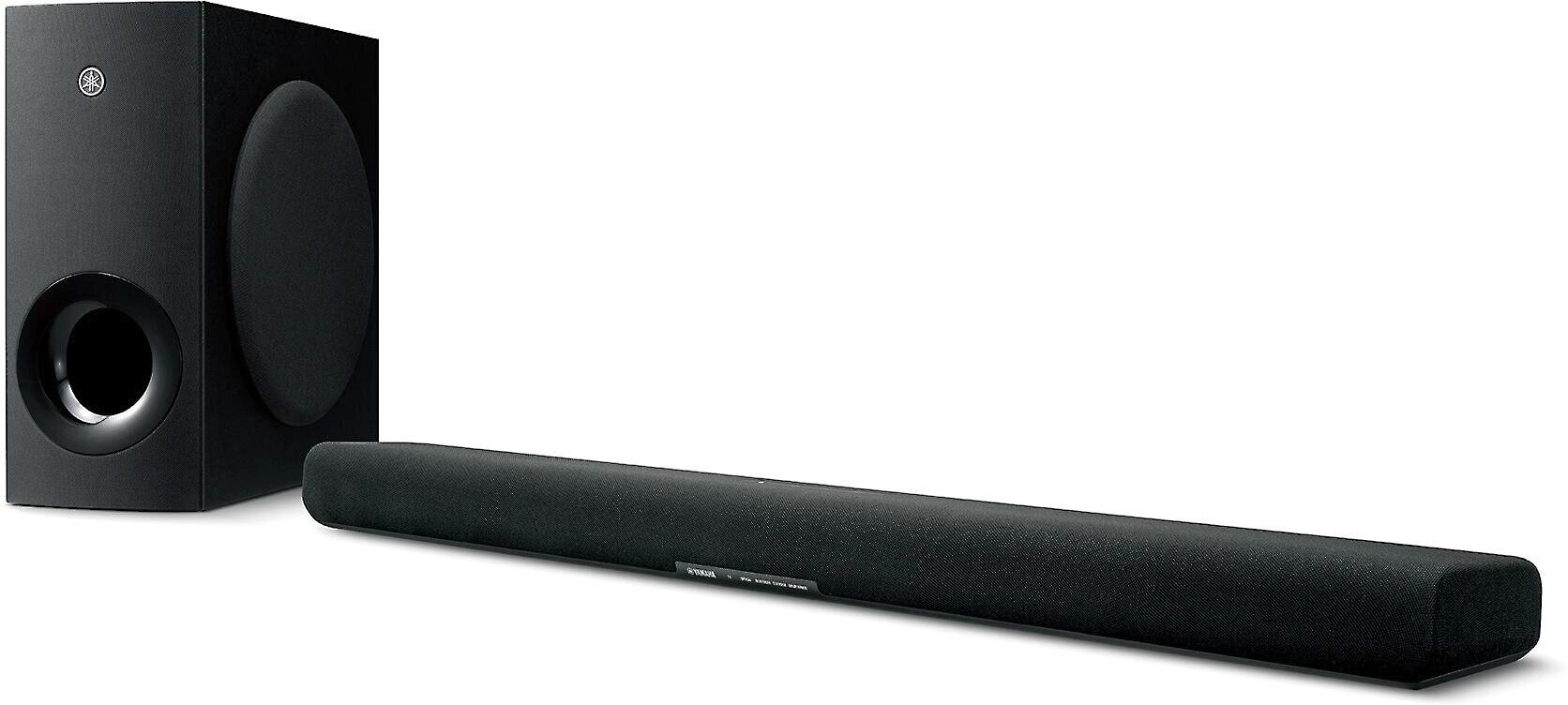
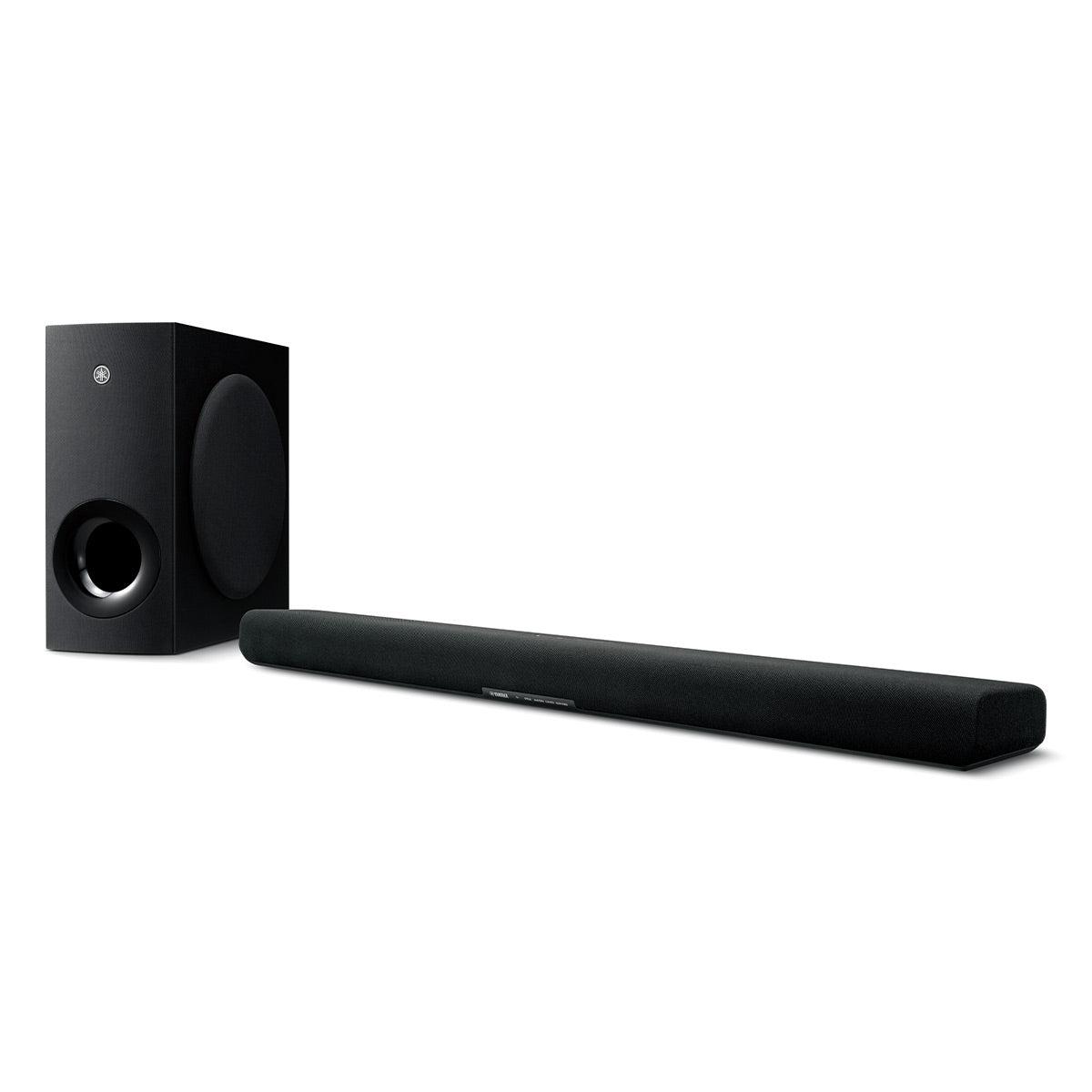
The 2.1-channel soundbar category represents the sweet spot for most people—you get dedicated left and right speakers plus a subwoofer for bass, creating a significant upgrade over TV audio without the complexity of full surround sound systems. Today we're comparing two popular options: the budget-friendly Samsung HW-C450 and the slightly more expensive Yamaha SR-B40A.
Before diving into specifics, let's clarify what makes a good 2.1 soundbar. The "2.1" refers to two main speakers (left and right) plus one subwoofer (.1) dedicated to low-frequency sounds like explosions, music bass lines, and rumbling effects. This configuration handles the most important job of any soundbar: making dialogue crystal clear while adding the bass impact your TV simply cannot produce.
The key considerations when shopping include power output (measured in watts, indicating how loud and dynamic the sound can be), driver size (larger speakers generally move more air and sound fuller), virtual surround processing (software tricks that make stereo sound seem wider), and connectivity options. Room size matters enormously—a soundbar that sounds great in a bedroom might feel weak in a large living room.
Both the Samsung HW-C450 and Yamaha SR-B40A were released in 2023, representing current-generation technology in the entry-level market. Since their release, both manufacturers have refined their virtual surround algorithms and improved wireless connectivity, making these models more reliable than earlier budget soundbars that often suffered from connection drops and inconsistent processing.
The most dramatic difference between these soundbars is power output, and it's not subtle. The Samsung HW-C450 delivers 65 watts total—25 watts for the main soundbar and 40 watts for the subwoofer. The Yamaha SR-B40A cranks out 320 watts total, with the main unit handling significantly more power than Samsung's entire system.
This isn't just about volume levels. Higher wattage means the soundbar can handle dynamic range—the difference between whisper-quiet dialogue and thunderous explosions—without compression or distortion. In practical terms, the Samsung works well in rooms up to about 150 square feet (think a typical bedroom or small apartment living area), while the Yamaha has enough power reserves for medium-sized living rooms up to 250 square feet without breaking a sweat.
During quiet movie scenes, both soundbars perform similarly for dialogue clarity. But when the action ramps up, the power difference becomes obvious. The Samsung HW-C450 starts to compress the audio as you push the volume, meaning loud sounds get squished and quiet details disappear. The Yamaha SR-B40A maintains its composure at higher volumes, preserving both the subtle atmospheric details and the big dramatic moments that make movies engaging.
Here's where things get interesting from a technical standpoint. Samsung and Yamaha approach audio engineering very differently, and you can hear it in the final product.
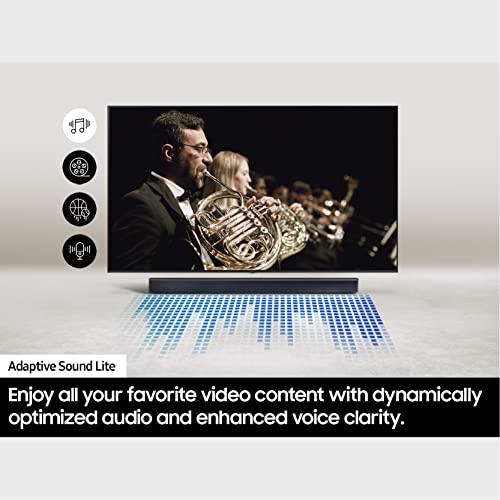
The Samsung HW-C450 uses what's called "content-adaptive processing"—its Adaptive Sound Lite feature analyzes incoming audio and automatically adjusts the sound profile. When you're watching the news, it emphasizes midrange frequencies where voices live. During action movies, it boosts bass and widens the soundstage. This approach works well for casual viewing, making everything sound reasonably good without manual adjustment.
Samsung's Voice Enhance mode deserves specific mention because dialogue clarity is often the primary reason people buy soundbars. This feature boosts the frequency range where human voices naturally sit (roughly 300-3000 Hz), making conversations easier to understand even when background music or effects are present. It's not subtle processing—you'll notice voices pop forward in the mix—but it's effective for TV dialogue.
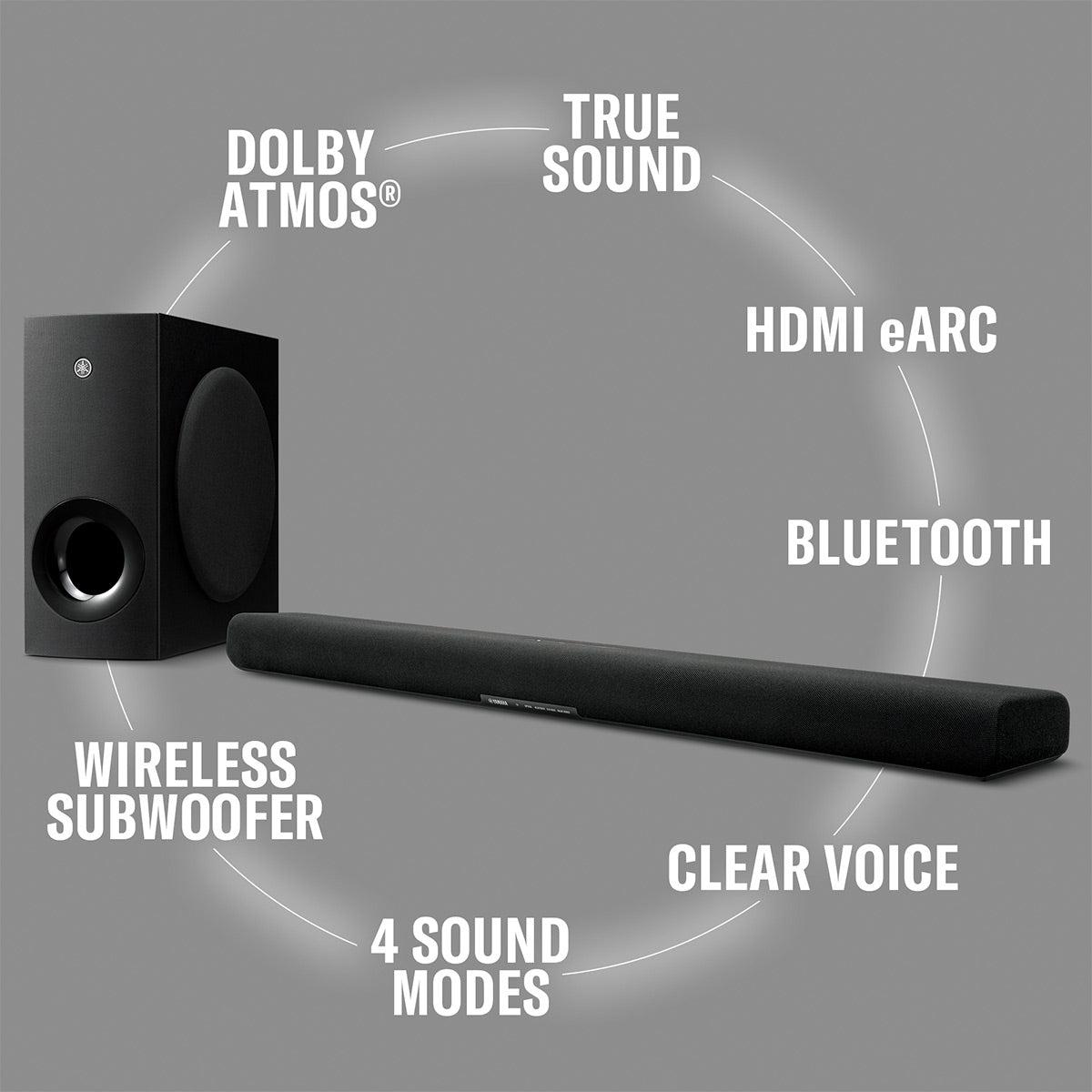
The Yamaha SR-B40A takes a completely different approach rooted in the company's century-plus experience building musical instruments and professional audio gear. Instead of aggressive content-specific processing, Yamaha emphasizes what they call "True Sound"—natural, balanced audio reproduction that stays faithful to how the content was originally mixed.
This philosophy shows up in music listening especially. The Samsung HW-C450 treats music as just another type of content to process and optimize, which can make some songs sound artificial or overly enhanced. The Yamaha SR-B40A reproduces music with better stereo imaging (instruments seem positioned in specific locations rather than just "left" or "right"), more natural tonal balance, and preserved dynamic range that lets you hear the difference between loud and soft passages.
Yamaha's Clear Voice technology handles dialogue differently than Samsung's approach. Rather than dramatically boosting voice frequencies, it uses more sophisticated processing to separate vocals from background elements, making speech clearer without the slightly artificial "forward" sound you get from basic frequency boosting.
Both soundbars use virtual surround processing—software that tricks your brain into perceiving width, depth, and even height from just two speakers plus a subwoofer. But they use different technologies with noticeably different results.
The Samsung HW-C450 employs DTS Virtual:X, which creates 3D spatial effects through precise timing and phase manipulation. It analyzes stereo audio and creates delayed, filtered copies of certain frequency ranges, sending them to your ears at slightly different times to simulate sounds coming from beside or behind you. Samsung's Surround Sound Expansion mode takes this further, widening the perceived soundstage so music and effects seem to extend beyond the physical soundbar.
The Yamaha SR-B40A uses virtual Dolby Atmos processing, which approaches the problem differently. Instead of just creating width and depth, it attempts to simulate height effects—sounds that seem to come from above or move vertically through the room. This works better for movies with Atmos soundtracks, where helicopters fly overhead or rain falls from above.
In practice, both systems create a noticeable improvement over basic stereo sound, but the Yamaha's implementation feels more natural and less artificially processed. The Samsung's virtual effects can sometimes feel "echoey" or exaggerated, especially with certain types of content, while the Yamaha maintains better coherence between the processed surround effects and the direct sound from the speakers.
The subwoofer makes or breaks any 2.1 system, and these two take notably different approaches to low-frequency reproduction.
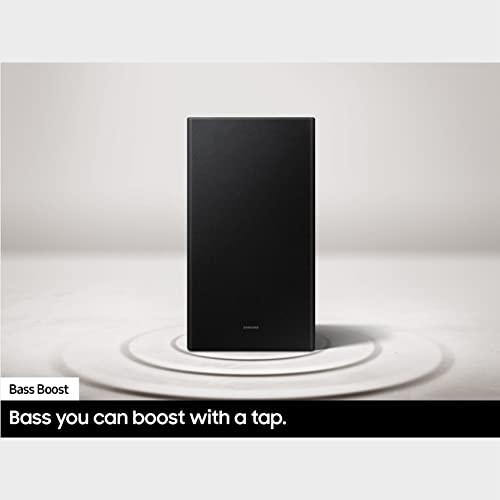
The Samsung HW-C450 includes a wireless subwoofer that connects automatically to the main soundbar—no cables required between the units. Samsung doesn't publish the exact driver size, but based on the enclosure dimensions and power rating, it's likely a 5-6 inch driver. The tuning emphasizes convenience and apartment-friendly bass levels. Samsung's Bass Boost mode can add more low-end punch when you want it, but the overall approach prioritizes not overwhelming small rooms or annoying neighbors.
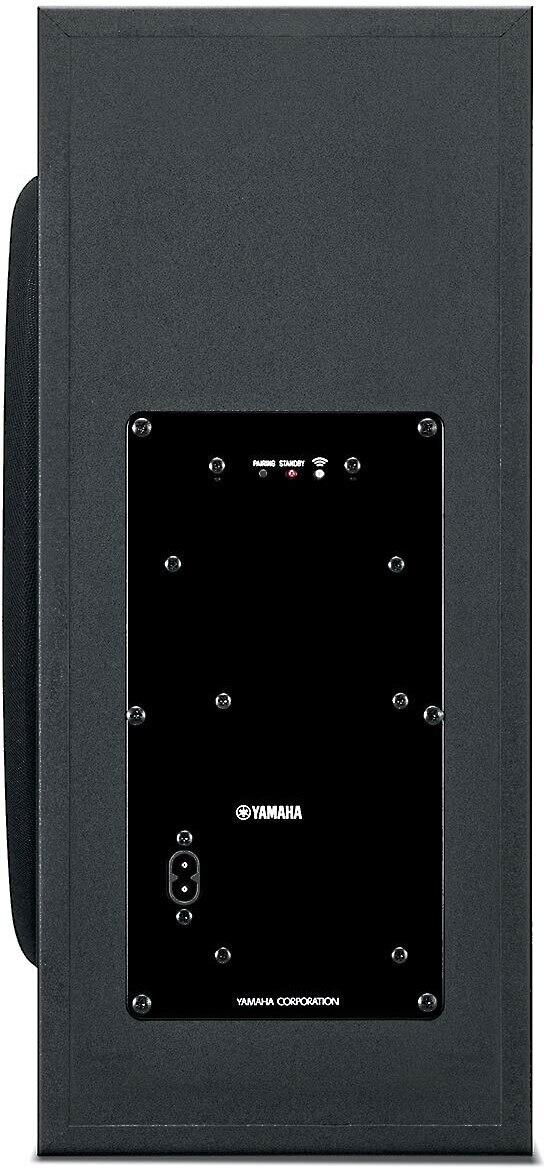
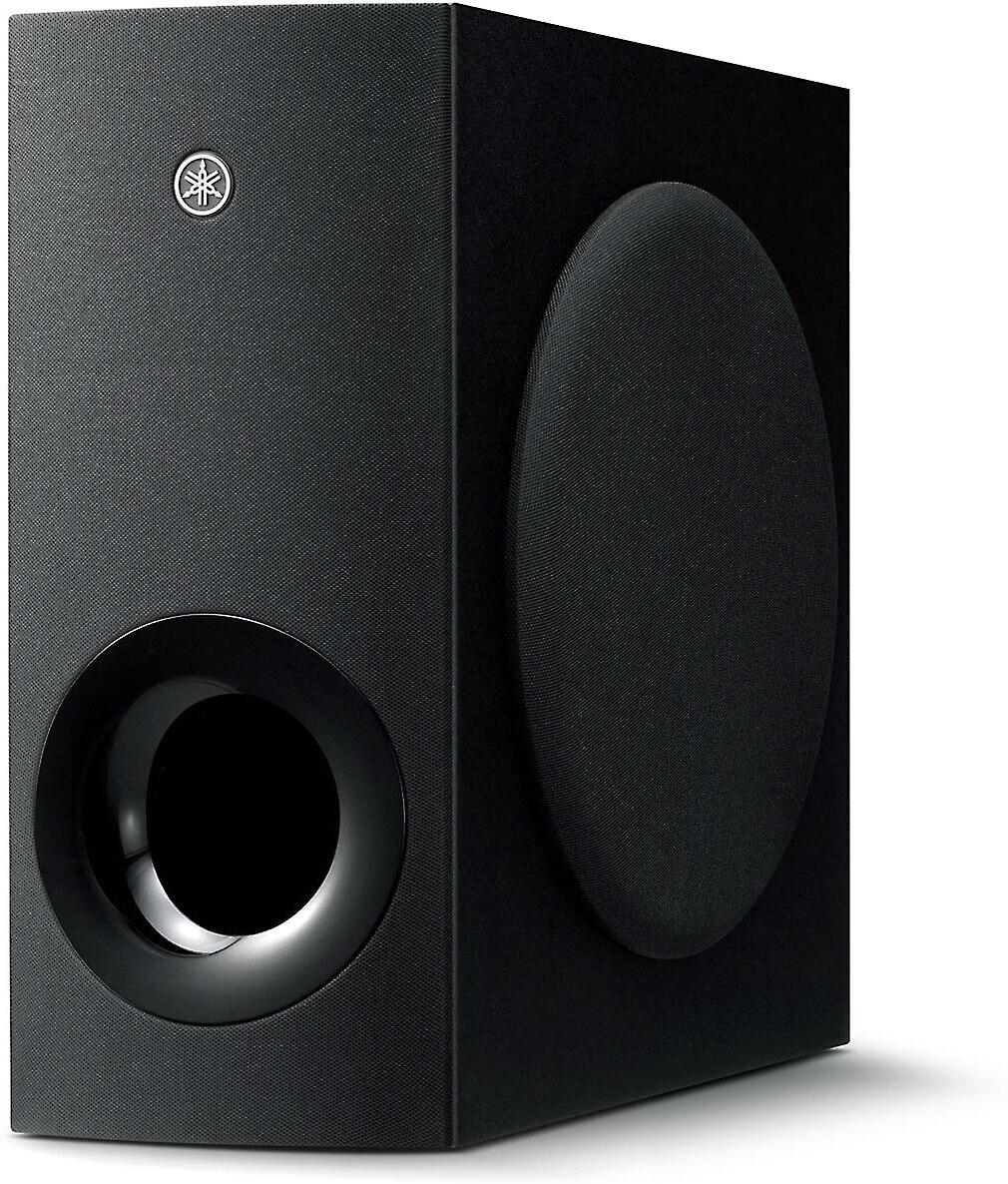
The Yamaha SR-B40A includes a 6.25-inch subwoofer driver with dedicated 100-watt amplification. The larger driver and more powerful amp mean it can move more air and reproduce deeper bass notes with better control. Yamaha tunes their subwoofers to integrate musically with the main speakers rather than just providing boom for movie effects.
This difference becomes obvious when listening to music with substantial bass content. The Samsung's subwoofer provides adequate thump for movie explosions but can sound loose or muddy with complex bass lines in jazz or electronic music. The Yamaha maintains better definition and timing, so you can follow individual bass notes rather than just hearing a general rumble.
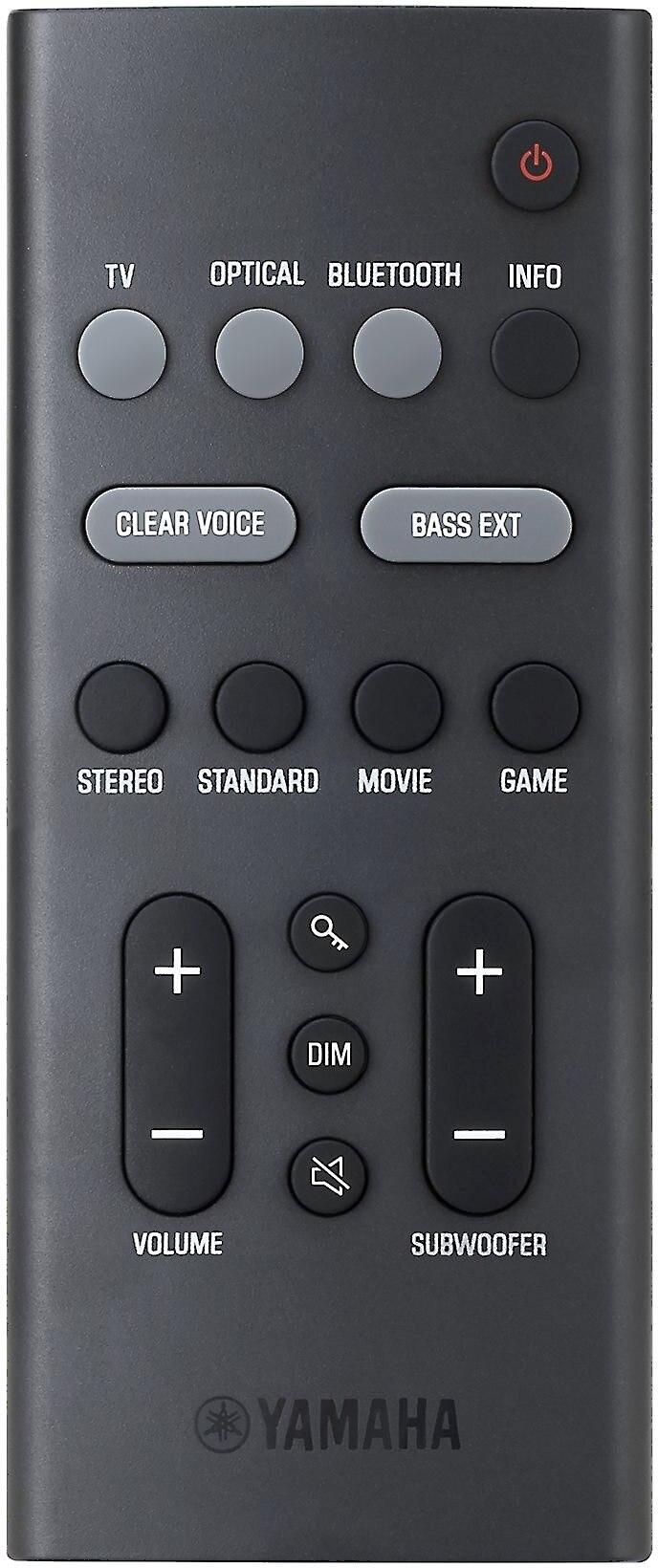
The Yamaha's Bass Extension feature deserves mention—it's a toggle that extends the low-frequency response even deeper when you want maximum impact, but you can turn it off for more controlled bass when needed. This flexibility proves valuable across different content types and room acoustics.
Gaming audio has become increasingly important as more people use soundbars for console and PC gaming. Both systems address gaming needs but with different strengths.
The Samsung HW-C450 includes a dedicated Game Mode that reduces background processing to minimize audio delay (latency) and emphasizes directional audio cues. This mode removes some of the content-adaptive processing that might make explosions sound more cinematic but less precise for competitive gaming. The Night Mode pairs well with gaming since it compresses dynamic range, keeping explosions from being too loud while ensuring you can still hear footsteps and other subtle cues.
The Yamaha SR-B40A approaches gaming through better fundamental audio quality rather than specific processing modes. The higher power output and more precise driver control mean you can hear subtle audio details that might get lost in less capable systems. The lower inherent latency from Yamaha's processing algorithms makes audio sync better with fast-paced gameplay.
For competitive gaming where directional audio cues matter (hearing which direction footsteps are coming from in shooters), both systems provide noticeable improvement over TV speakers, but neither can match dedicated gaming headsets for pure positional accuracy. The Yamaha's better dynamic range and detail retrieval gives it an edge for immersive single-player games where audio atmosphere matters more than competitive precision.
Connection options significantly impact daily usability, and here the products diverge meaningfully.
The Samsung HW-C450 keeps connectivity simple: one optical digital input, Bluetooth for wireless streaming, and a USB port for playing music files directly from flash drives. This simplicity means easy setup but limits flexibility with multiple devices. The lack of HDMI connectivity, particularly HDMI ARC (Audio Return Channel), means you can't control the soundbar with your TV remote or take advantage of higher-quality digital audio formats that require HDMI bandwidth.
Samsung does offer excellent integration with Samsung TVs through features like One Remote Control (use your TV remote for basic soundbar functions) and Auto Power Link (soundbar turns on and off with your TV). If you own a Samsung TV, this ecosystem integration provides genuinely convenient daily operation.
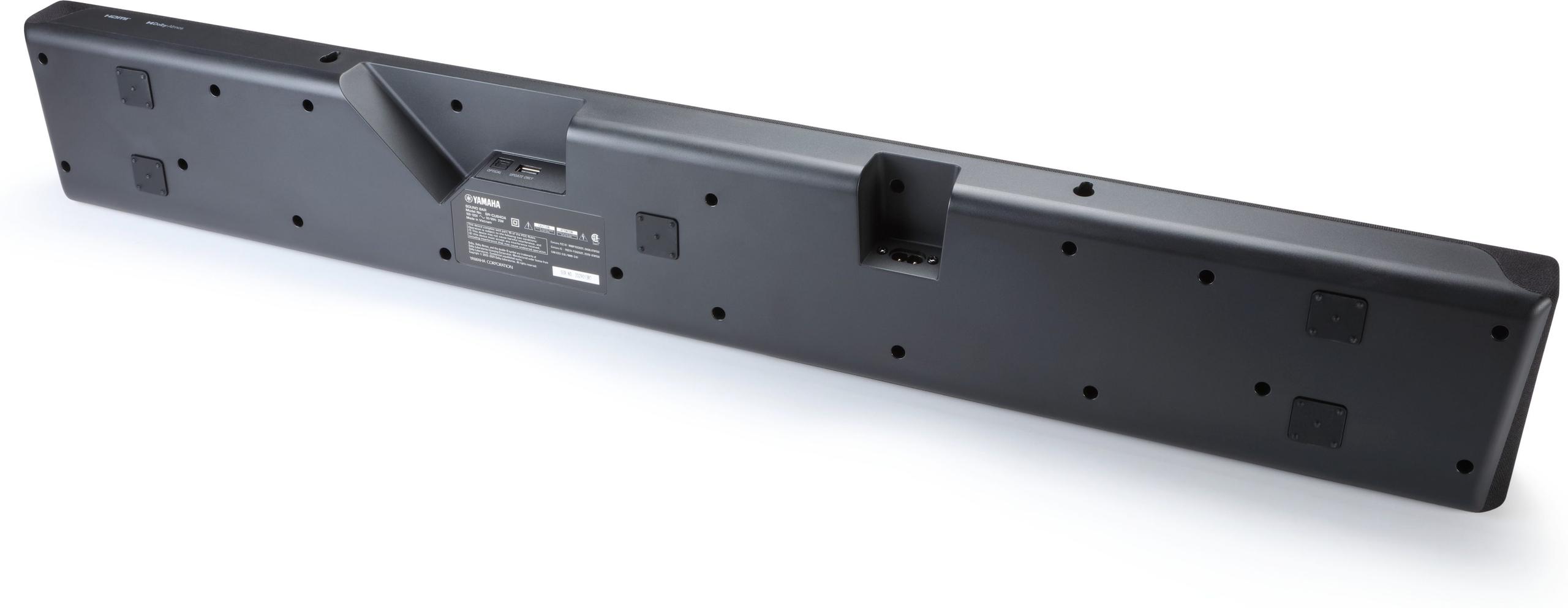
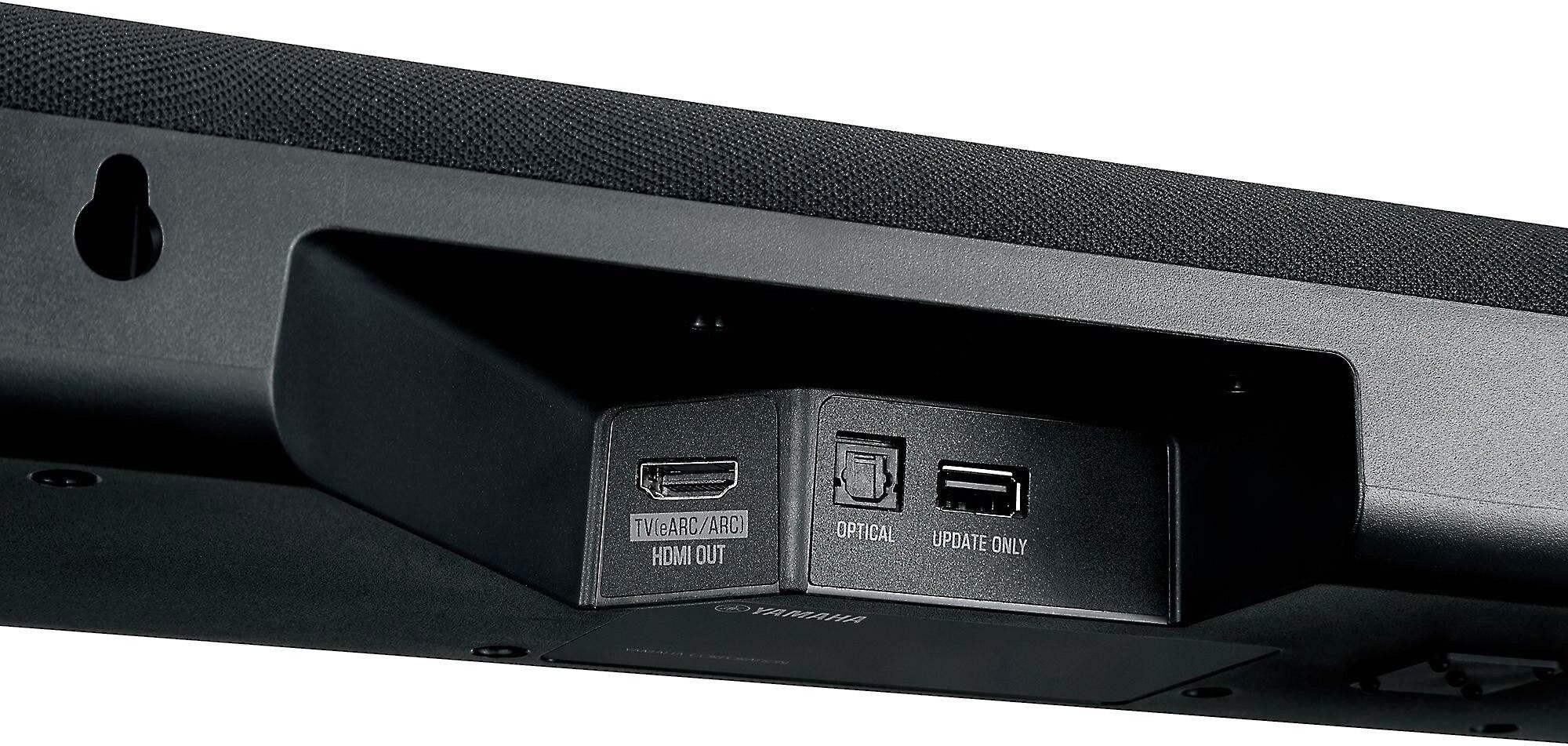
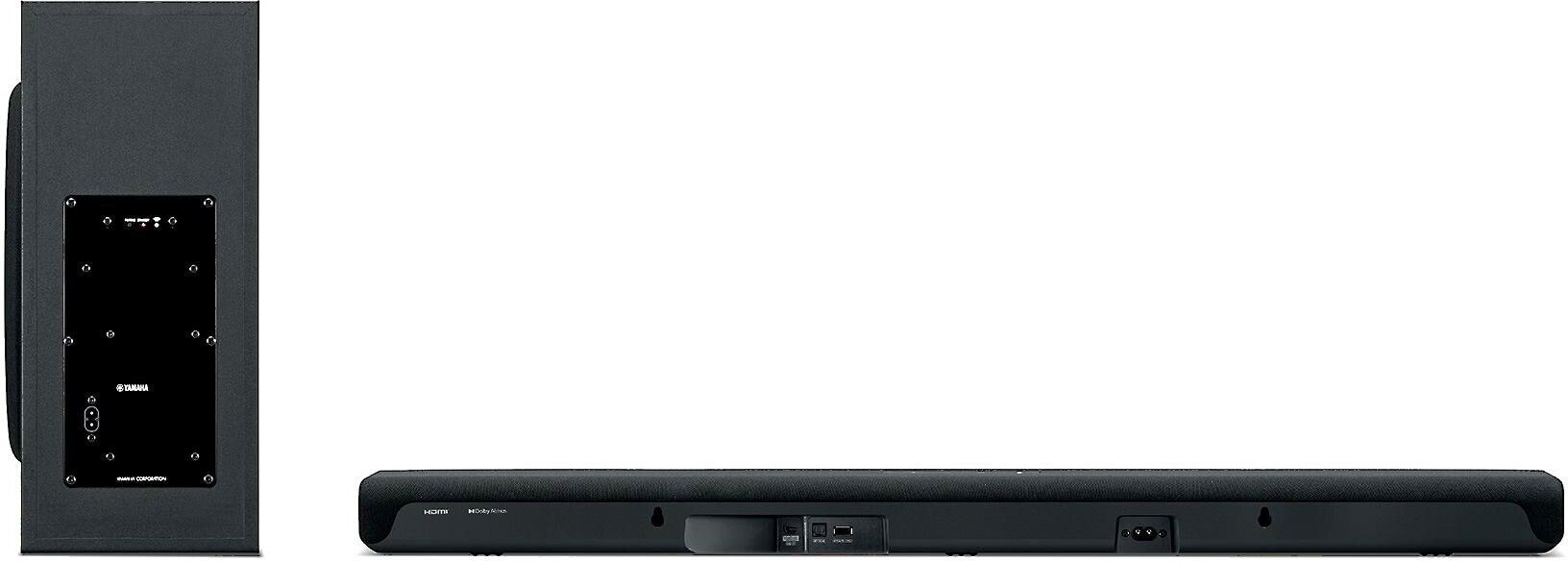
The Yamaha SR-B40A includes HDMI eARC (enhanced Audio Return Channel) alongside optical input and Bluetooth 5.1. HDMI eARC supports higher-quality audio formats and enables two-way communication between your TV and soundbar for better remote control integration regardless of TV brand. Bluetooth 5.1 provides more stable wireless connections and better battery life for connected devices compared to older Bluetooth versions.
The Yamaha's Sound Bar Remote app offers tone control adjustments you can't access from the basic remote, letting you fine-tune the sound to your room and preferences. While not as comprehensive as high-end audio apps, it provides enough control to optimize performance in different rooms or for different content types.
At the time of writing, the Samsung HW-C450 typically costs about $100-150 less than the Yamaha SR-B40A, positioning it clearly as the budget entry point. This price difference represents about 40-50% savings, which significantly impacts the value equation.
For the Samsung's price point, you're getting essential soundbar functionality that meaningfully improves TV audio, wireless subwoofer convenience, and enough processing features to handle different content types adequately. The cost-per-feature ratio is excellent if your needs align with its capabilities.
The Yamaha commands its premium through substantially higher power output, better audio engineering, more flexible connectivity, and superior build quality. The price difference translates to roughly 5x more power output and noticeably better audio quality across all content types. From a performance-per-dollar perspective, the Yamaha delivers more value despite the higher upfront cost.
For dedicated home theater use, the differences become more pronounced. Movie watching demands dynamic range, clear dialogue, and impactful bass—areas where the power and engineering advantages of the Yamaha SR-B40A provide clear benefits.
During quiet dialogue scenes, both soundbars perform similarly. But movies live in the dramatic contrasts—the whispered conversation followed by the car crash, the subtle atmospheric tension building to the explosive climax. The Samsung handles these transitions adequately in smaller rooms but starts to compress and lose detail as volume increases. The Yamaha maintains composure and clarity through these dynamic swings, preserving both the intimate moments and the spectacular ones.
For movie marathons or serious viewing sessions, the Yamaha's more natural processing becomes less fatiguing over time. The Samsung's content-adaptive processing, while clever, can sometimes feel inconsistent as it continuously adjusts to different scenes within the same movie.
Choose the Samsung HW-C450 if:
The Samsung represents an excellent first soundbar that provides genuine improvement over TV audio without complexity or high cost. It handles basic needs well and offers room to grow by adding wireless rear speakers later.
Choose the Yamaha SR-B40A if:
The Yamaha offers better future-proofing and performs well across more use cases. Its superior power and audio engineering provide the foundation for satisfying long-term use.
Both soundbars successfully solve the fundamental problem of poor TV audio, but they target different points on the performance and price spectrum. The Samsung HW-C450 delivers essential improvements at an accessible price, making it ideal for budget-conscious buyers or smaller rooms. The Yamaha SR-B40A provides substantially better performance across all metrics, justifying its premium for users who can afford the additional investment.
The decision ultimately comes down to room size, budget flexibility, and how much you value audio quality. If you're unsure, consider your largest intended use case—if you might move to a bigger room or want to use the soundbar for music listening, the Yamaha's additional capability and power provide better long-term value despite the higher initial cost.
| Samsung HW-C450 | Yamaha SR-B40A |
|---|---|
| Total Power Output - Determines maximum volume and room size compatibility | |
| 65W total (25W main + 40W sub) - Good for small rooms | 320W total - Handles medium to large rooms with authority |
| Audio Processing Technology - Affects sound quality and immersion | |
| DTS Virtual:X with content-adaptive modes | Virtual Dolby Atmos with True Sound engineering |
| Subwoofer Configuration - Critical for bass impact and music quality | |
| Wireless subwoofer, smaller driver, Bass Boost mode | 6.25" wireless subwoofer with 100W dedicated power |
| HDMI Connectivity - Essential for modern TV integration | |
| No HDMI (optical input only) - Limits audio format support | HDMI eARC/ARC - Full integration with modern TVs |
| Dialogue Enhancement - Key feature for TV watching | |
| Voice Enhance mode with frequency boosting | Clear Voice technology with advanced vocal separation |
| Gaming Features - Important for console and PC gaming | |
| Game Mode with noise reduction and Night Mode | Lower latency processing optimized for responsive gaming |
| Bluetooth Technology - Affects wireless streaming quality and stability | |
| Bluetooth 4.2 with SBC codec | Bluetooth 5.1 with SBC and AAC codecs |
| Samsung TV Integration - Valuable for Samsung TV owners | |
| One Remote Control, Auto Power Link, ecosystem features | Basic HDMI CEC integration works with all TV brands |
| Music Performance - Important if you stream music regularly | |
| General-purpose tuning with content adaptation | Superior stereo imaging and natural sound reproduction |
| Physical Dimensions - Consider your TV stand and room setup | |
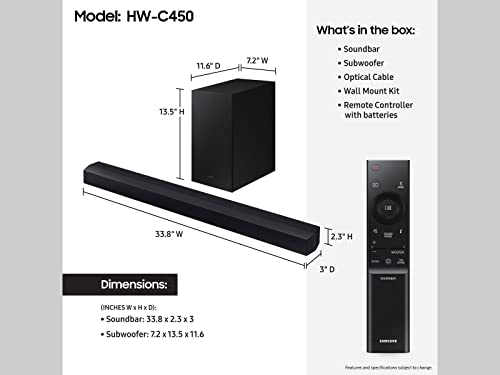
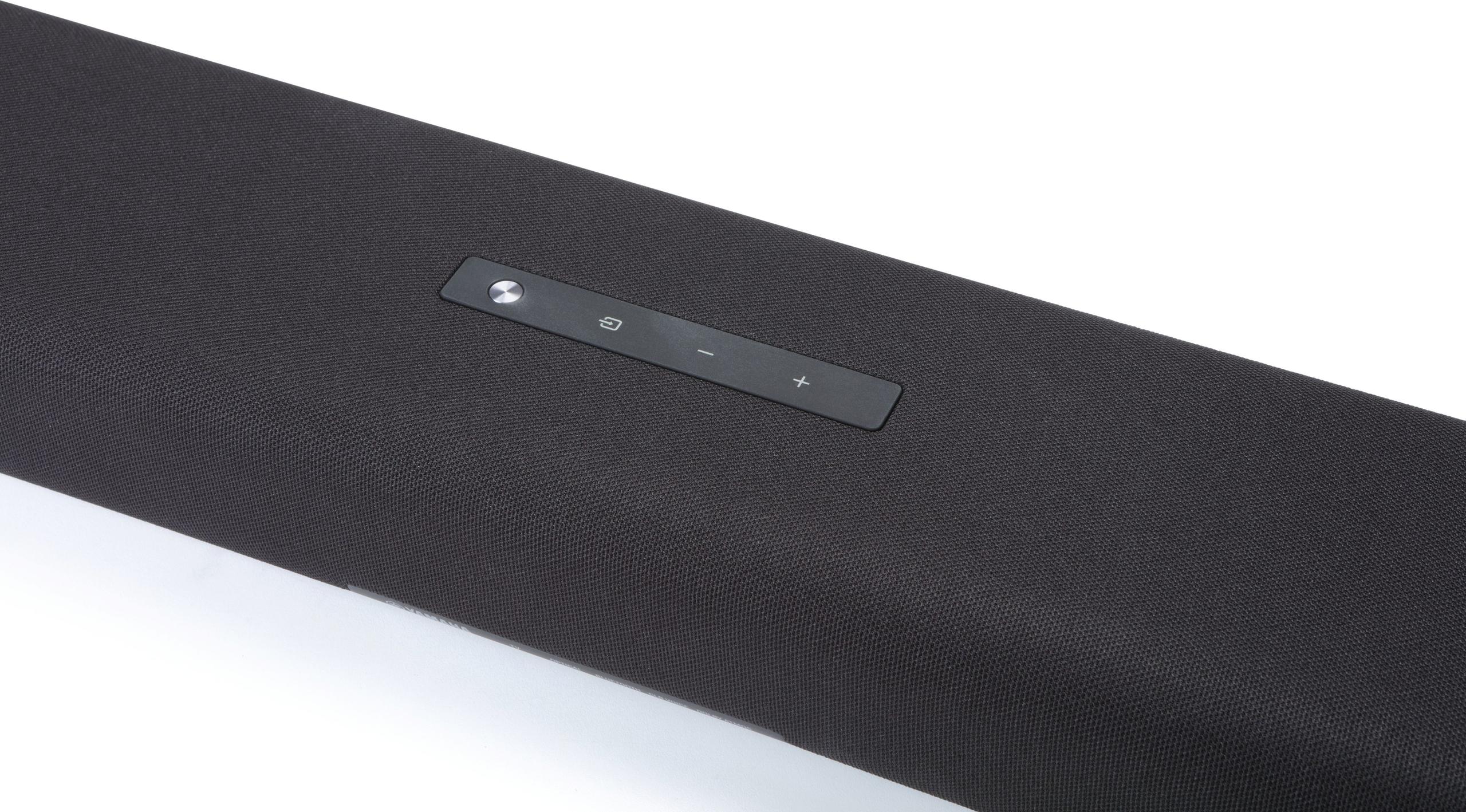
| Compact: 859 x 59 x 75mm main unit, 4.5kg subwoofer | Larger: 910 x 68 x 133mm main unit, 8.1kg subwoofer |
| Price Positioning - Budget vs premium entry-level | |
| Most affordable option in category | Premium entry-level with significantly better performance |
| Best Use Case - Who should choose this soundbar | |
| Small rooms, budget-conscious buyers, Samsung TV owners | Medium rooms, music listeners, long-term satisfaction seekers |
The Samsung HW-C450 is better suited for small rooms like bedrooms or apartments. Its 65W power output provides adequate volume without overwhelming compact spaces, and its smaller subwoofer won't produce excessive bass that bothers neighbors. The Yamaha SR-B40A has 320W of power, which may be overkill for very small rooms but offers more headroom if you plan to move to a larger space.
The biggest difference is power output and audio quality. The Samsung HW-C450 delivers 65W total power with basic virtual surround processing, while the Yamaha SR-B40A provides 320W with superior audio engineering and virtual Dolby Atmos. This translates to the Yamaha handling larger rooms and delivering better sound quality for both movies and music.
The Yamaha SR-B40A has significantly better bass performance with its 6.25-inch subwoofer and 100W dedicated amplification. It produces deeper, more controlled bass that works well for both movies and music. The Samsung HW-C450 includes a wireless subwoofer with Bass Boost mode, but it's more suitable for basic TV audio improvement rather than serious bass impact.
Both soundbars work with any TV brand, but the Samsung HW-C450 offers special integration features with Samsung TVs like One Remote Control and Auto Power Link. The Yamaha SR-B40A uses standard HDMI eARC and optical connections that provide good integration with all TV brands, making it more universally compatible for advanced features.
The Yamaha SR-B40A is better for gaming due to its lower latency processing and superior dynamic range, which helps you hear subtle audio cues in competitive games. The Samsung HW-C450 includes a dedicated Game Mode that reduces background noise, but the Yamaha's higher power and better audio clarity provide more immersive gaming experiences overall.
The Yamaha SR-B40A is significantly better for music listening, offering natural sound reproduction, better stereo imaging, and balanced frequency response that preserves musical detail. The Samsung HW-C450 can play music adequately but uses content-adaptive processing that may alter the original sound, making it less ideal for serious music enjoyment.
The Yamaha SR-B40A has superior connectivity with HDMI eARC/ARC, optical input, and Bluetooth 5.1, providing more flexibility and higher-quality audio formats. The Samsung HW-C450 offers optical input, Bluetooth 4.2, and USB playback, but lacks HDMI connectivity, which limits its compatibility with modern audio formats and TV integration features.
The Samsung HW-C450 uses DTS Virtual:X processing with Surround Sound Expansion to create wider soundstage effects. The Yamaha SR-B40A features virtual Dolby Atmos processing that attempts to simulate height effects and provides more natural-sounding virtual surround. Both improve upon basic stereo, but the Yamaha's implementation is generally more convincing and less artificial-sounding.
The Samsung HW-C450 offers excellent value for budget-conscious buyers who need basic TV audio improvement in small spaces. The Yamaha SR-B40A provides better long-term value with 5x more power, superior audio quality, and more advanced features, justifying its higher price for users who want performance that won't require upgrading soon.
The Yamaha SR-B40A is much better for home theater use with its higher power output, better dynamic range, and virtual Dolby Atmos processing that enhances movie watching. The Samsung HW-C450 can improve TV audio for casual viewing but lacks the power and sophistication needed for serious home theater applications in larger rooms.
Both the Samsung HW-C450 and Yamaha SR-B40A offer simple plug-and-play setup with automatic wireless subwoofer pairing. The Samsung provides slightly easier integration with Samsung TVs through ecosystem features, while the Yamaha's HDMI connection offers more universal compatibility and one-cable setup with any modern TV.
For first-time soundbar buyers on a tight budget with small rooms, the Samsung HW-C450 provides an excellent introduction to better TV audio without complexity. However, if you can stretch your budget, the Yamaha SR-B40A offers significantly better performance that will satisfy longer-term and provide room to grow into larger spaces or more demanding audio needs.
We've done our best to create useful and informative comparisons to help you decide what product to buy. Our research uses advanced automated methods to create this comparison and perfection is not possible - please contact us for corrections or questions. These are the sites we've researched in the creation of this article: e-catalog.com - alibaba.com - smart.dhgate.com - greentoe.com - requiremints.com - versus.com - bhphotovideo.com - rtings.com - soundmachine.com.mt - samsung.com - samsung.com - youtube.com - bhphotovideo.com - newegg.com - images.samsung.com - bestbuy.com - samsung.com - youtube.com - jsappliance.com - gadgetsleo.com - youtube.com - saraappliance.com - walmart.com - crutchfield.com - visions.ca - shop.usa.yamaha.com - bestbuy.com - bestbuy.com - usa.yamaha.com - my.yamaha.com - europe.yamaha.com - adorama.com - usa.yamaha.com - digitalhomecreations.com - europe.yamaha.com - sundownone.com

Privacy Policy
Terms and Conditions - Affiliate Policy
Home Security
© Copyright 2008-2026.
11816 Inwood Rd #1211, Dallas, TX 75244