



If you've ever cranked up your TV volume just to understand what characters are saying, only to get blasted by the next action scene, you know how frustrating built-in TV speakers can be. Modern TVs have gotten incredibly thin, leaving no room for decent speakers. That's where budget soundbars come in—they promise to fix your audio woes without requiring a second mortgage.
Today we're comparing two popular options: the Amazon Fire TV Soundbar Plus and the Yamaha SR-B40A. While both aim to improve your TV's sound, they take very different approaches to get there.
Before diving into specifics, let's talk about what makes a good budget soundbar. At their core, these devices need to do three things well: make dialogue crystal clear, add some bass punch that your TV simply can't produce, and do it all without complicated setup procedures that require an engineering degree.
The sweet spot for budget soundbars, at the time of writing, typically falls between $150 and $400. In this range, you're looking for the biggest bang for your buck—meaningful audio improvements that justify the investment. The key considerations include whether you need a separate subwoofer (a specialized speaker dedicated to bass frequencies), how much power the system produces, and what audio technologies it supports.
One term you'll encounter frequently is "Dolby Atmos." This is an audio format that creates the illusion of sounds coming from above and around you, rather than just from left and right. Think of helicopters flying overhead in action movies—Atmos makes them sound like they're actually moving through your ceiling space. However, budget soundbars achieve this through "virtual processing" rather than physical speakers pointing upward.
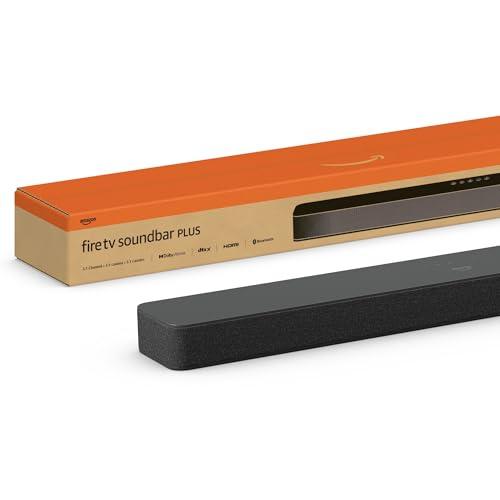
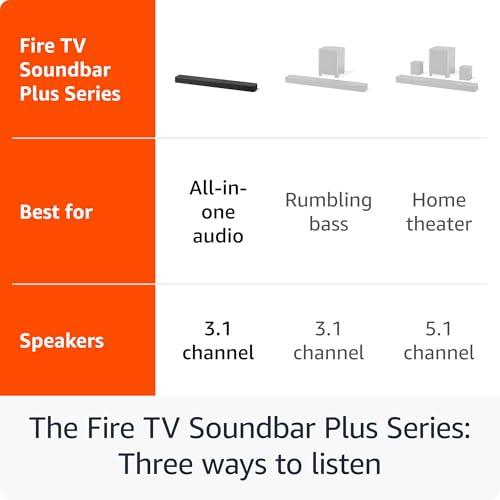
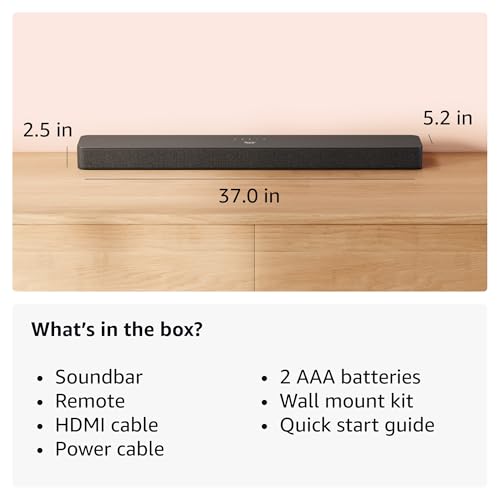
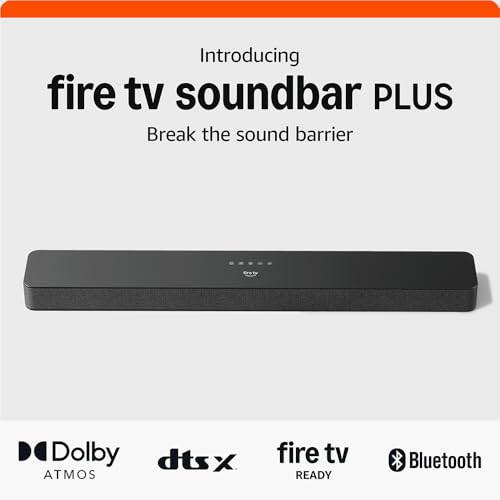
The Amazon Fire TV Soundbar Plus, released in 2023, represents the all-in-one philosophy. It's a single unit that contains everything needed to improve your TV's audio. Amazon designed it with a 3.1-channel configuration, meaning it has left, right, and center channels (the ".1" refers to a built-in subwoofer section within the main unit).
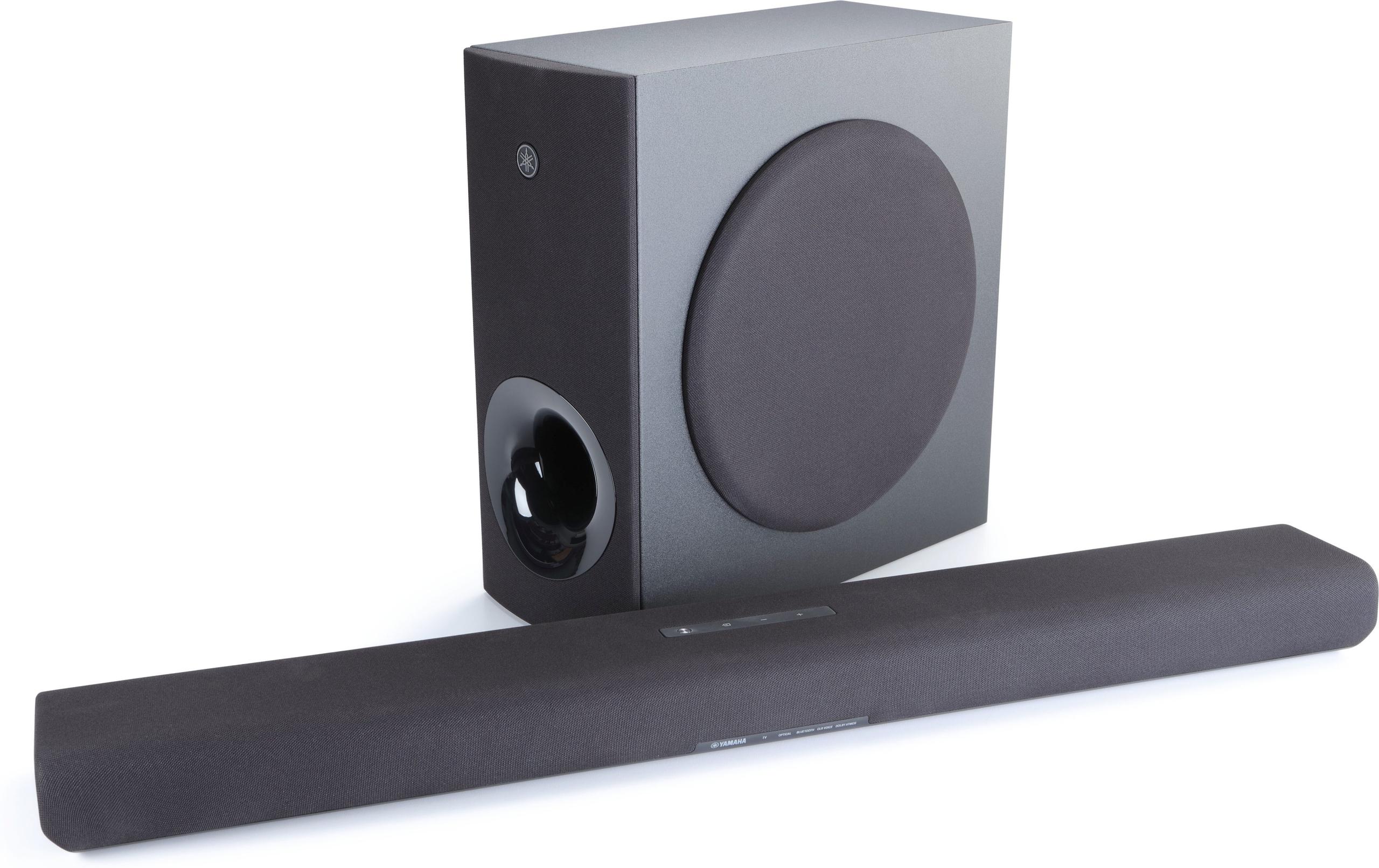
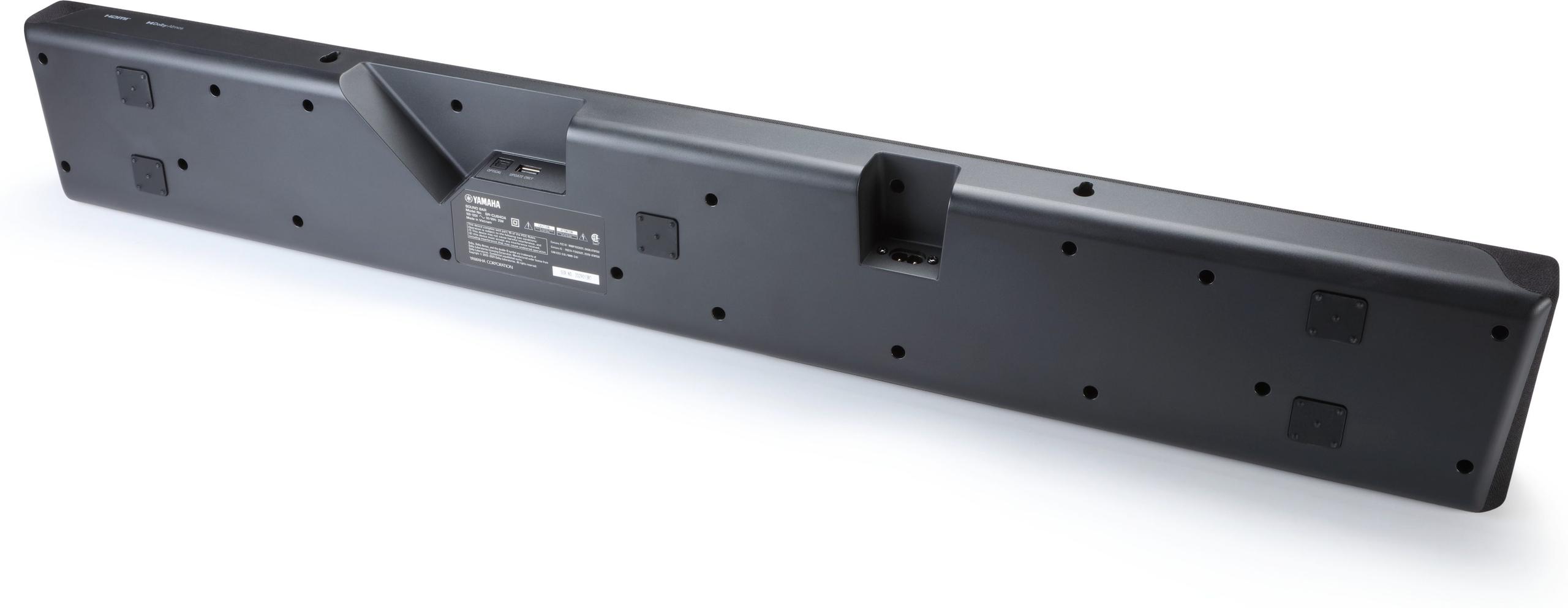
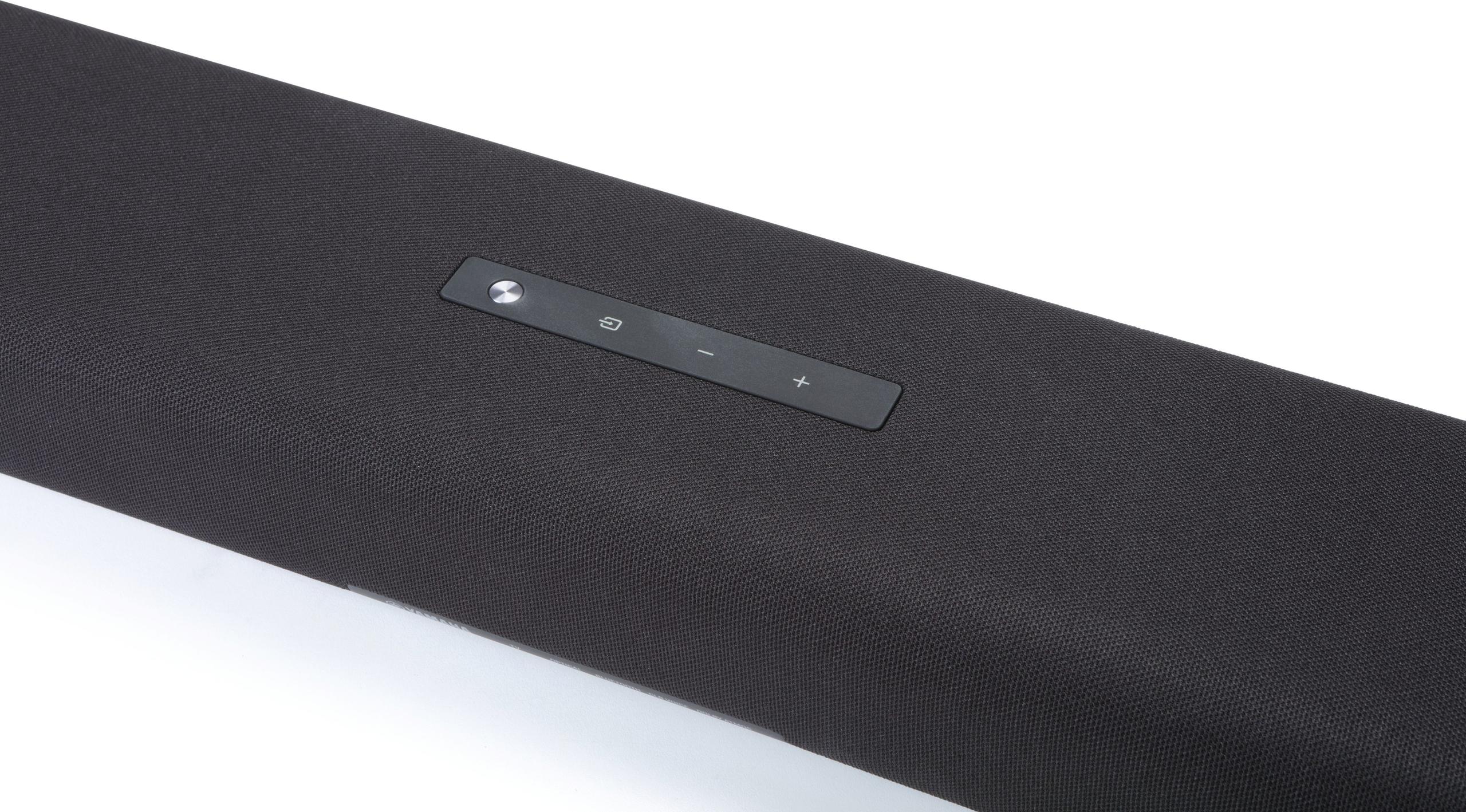
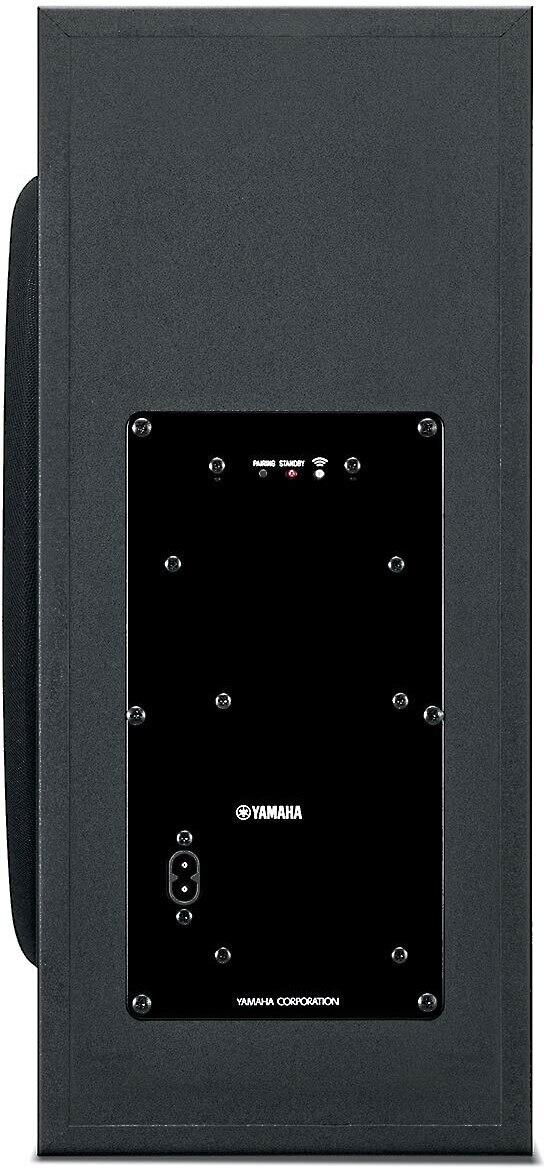
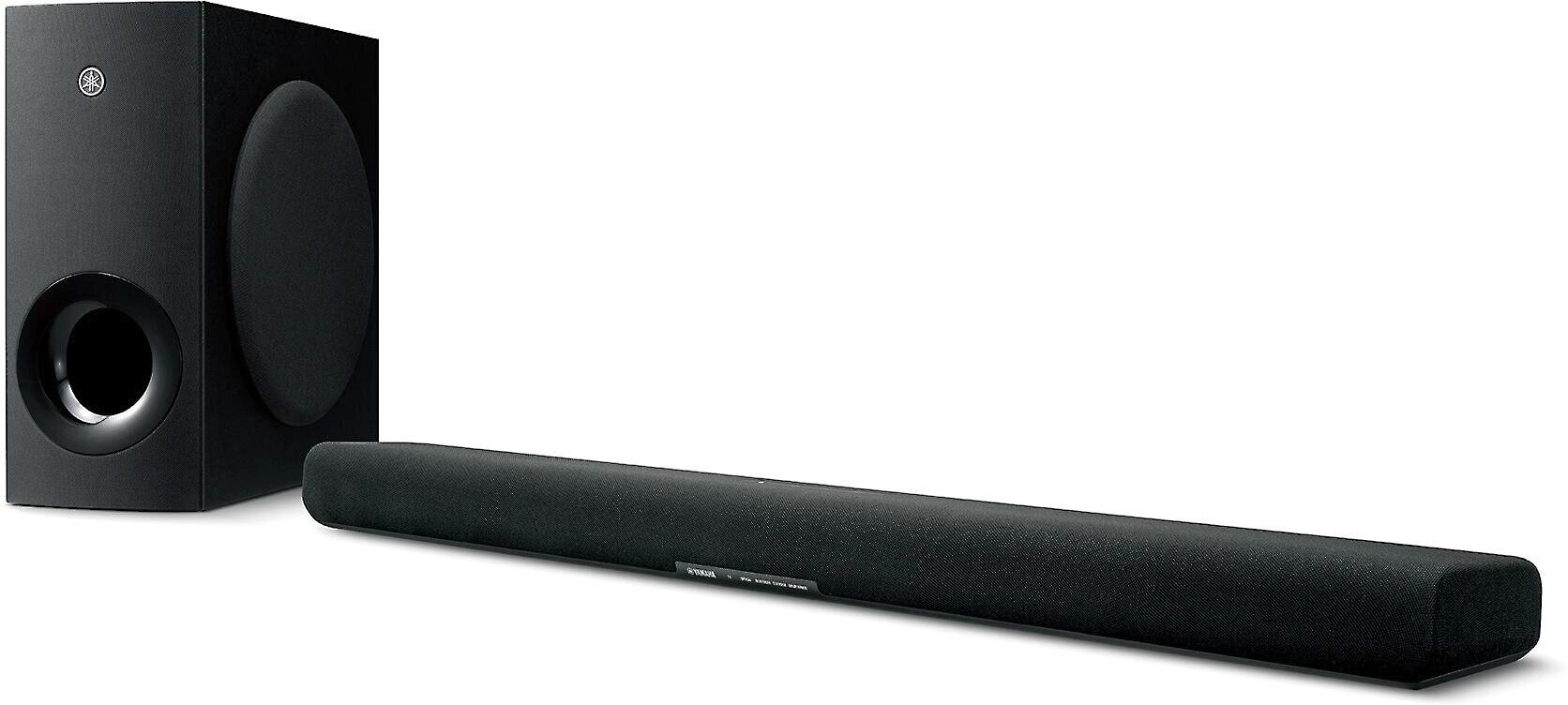
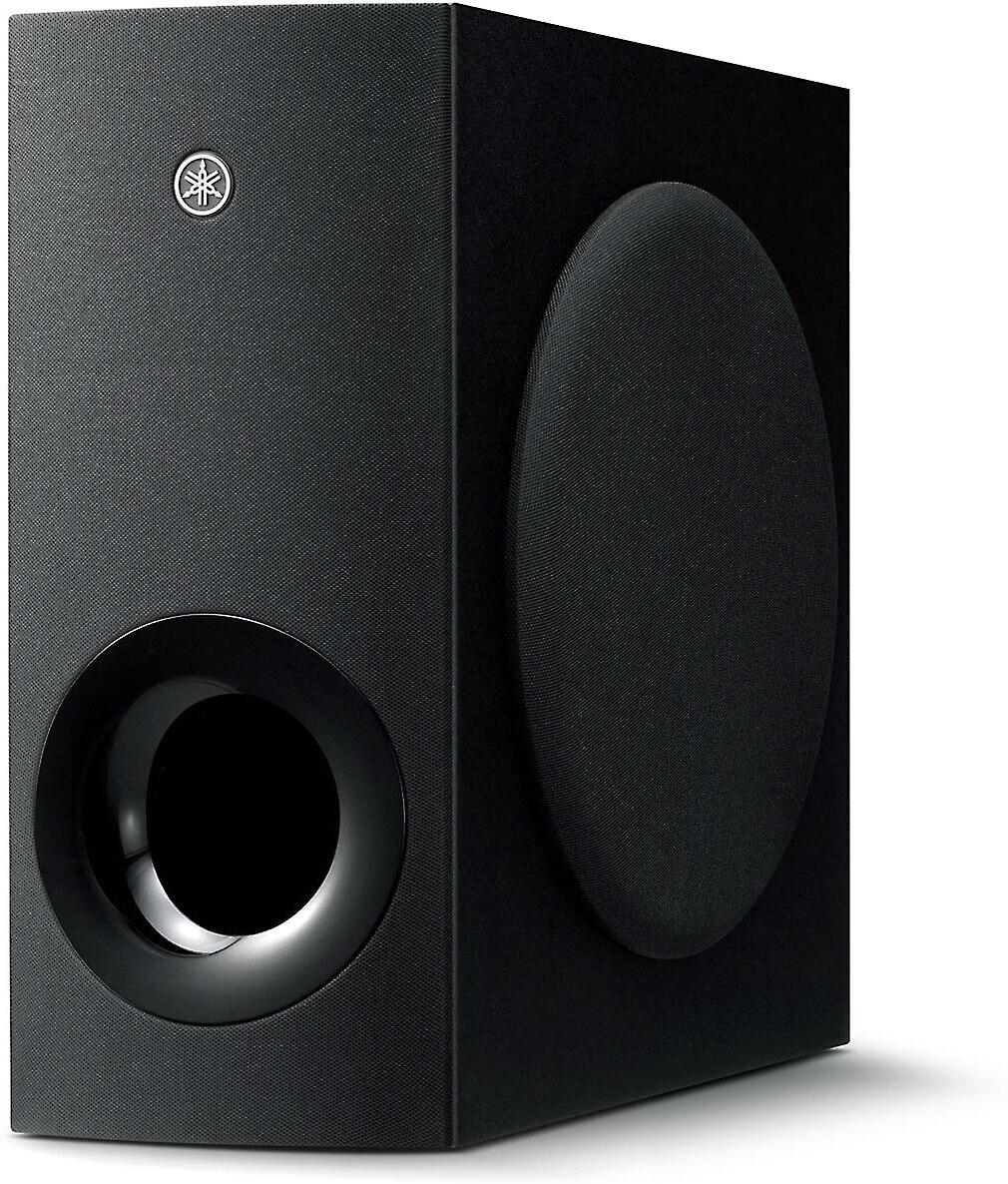
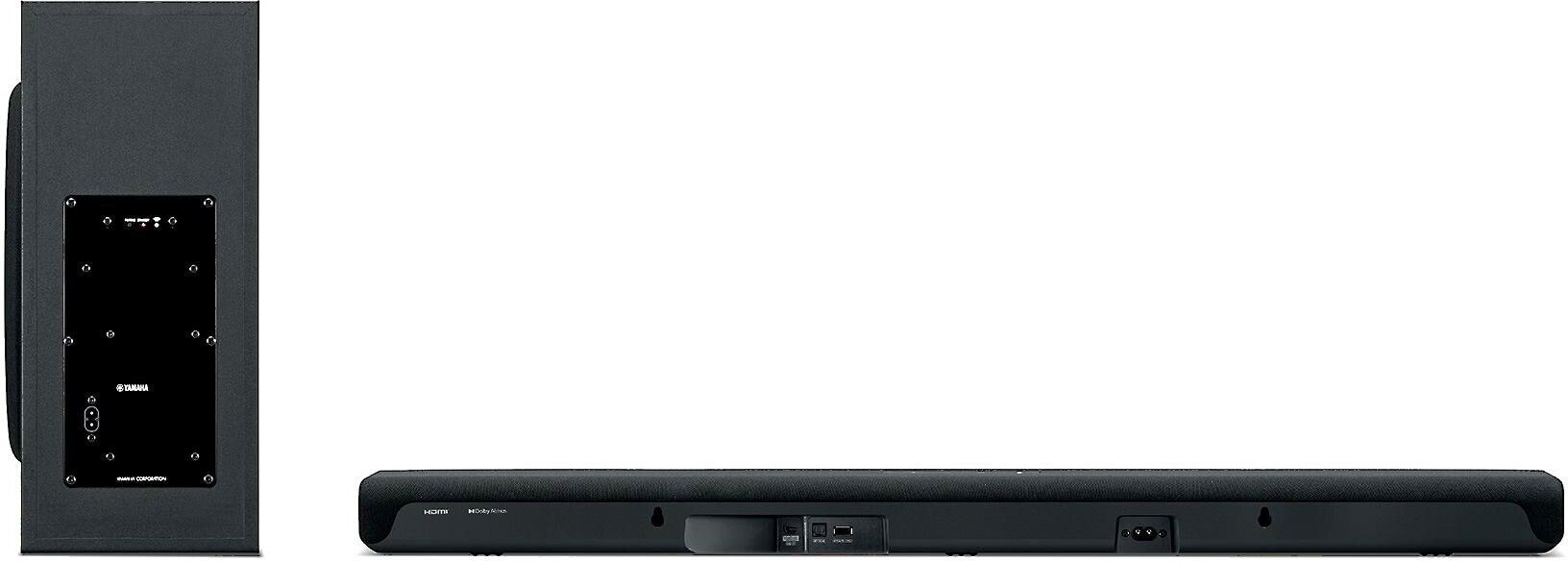
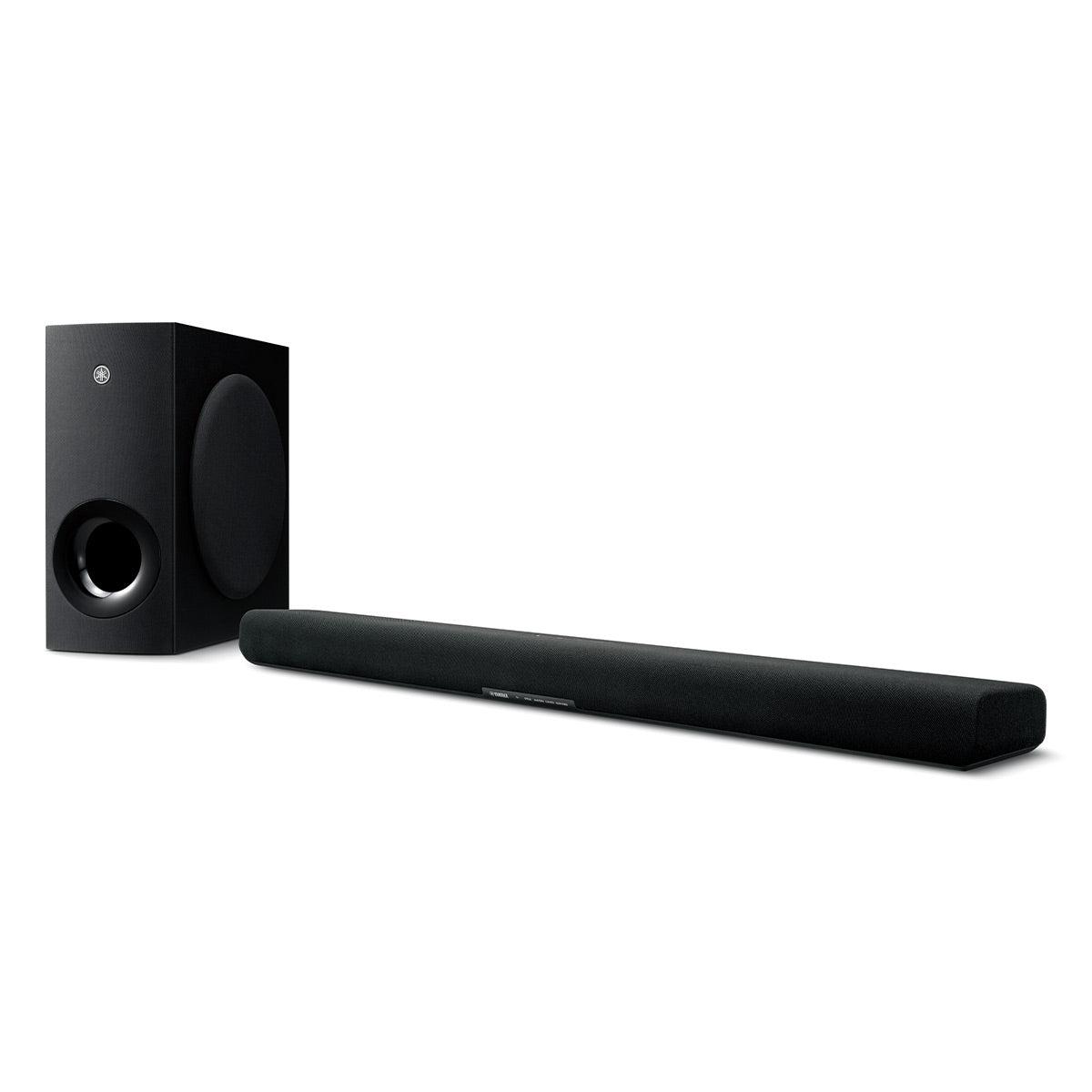
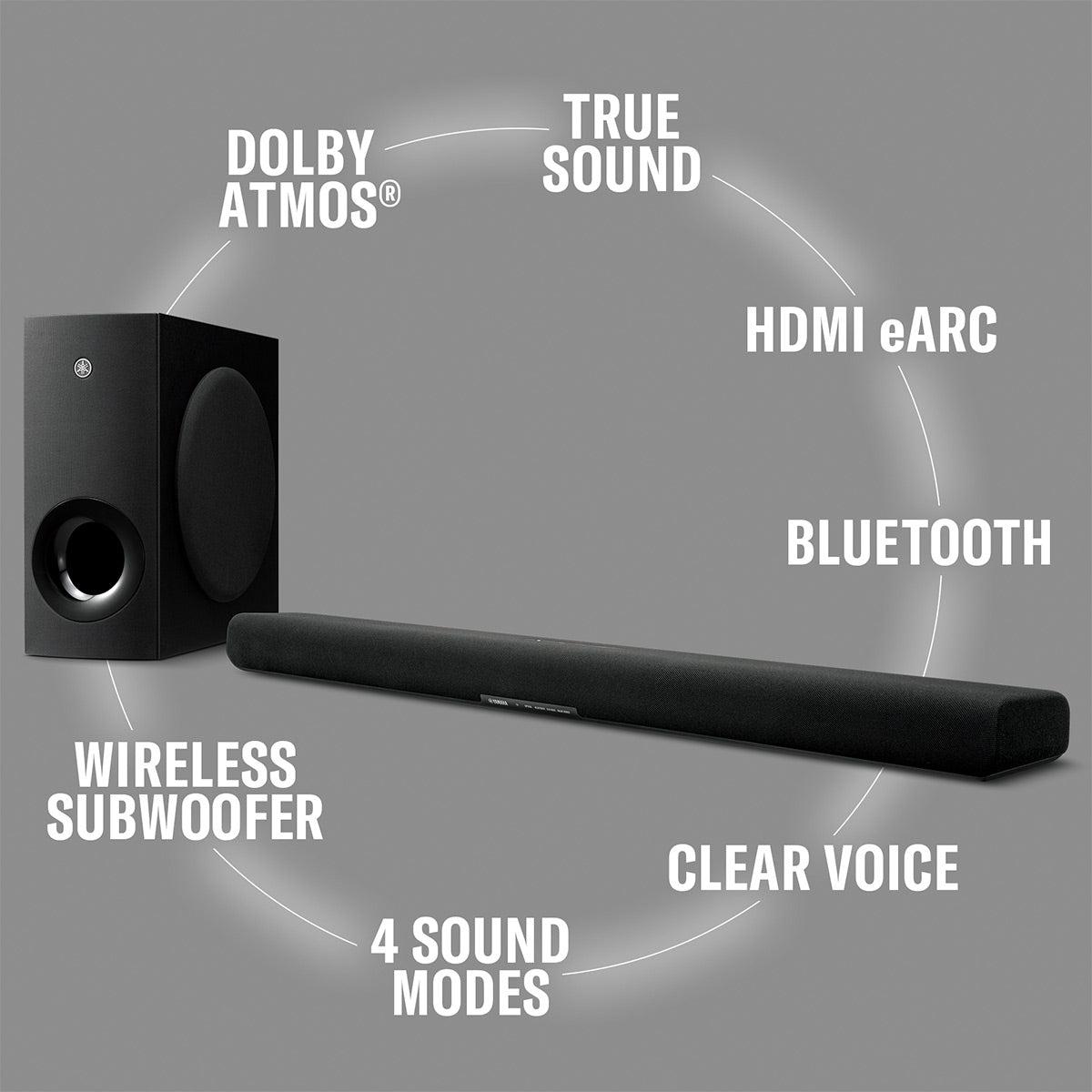
The Yamaha SR-B40A, also launched in 2023, takes the traditional approach with a true 2.1-channel system. This means you get a main soundbar handling left and right channels, plus a separate wireless subwoofer that focuses entirely on bass frequencies. Yamaha has been in the audio business for over a century, and their expertise shows in the engineering details.
Since their releases, both products have received firmware updates that improved Bluetooth connectivity and audio processing. The Yamaha SR-B40A has particularly benefited from these updates, with enhanced dialogue clarity and more stable wireless connections between the soundbar and subwoofer.
Here's where things get interesting. The Amazon Fire TV Soundbar Plus tries to pack everything into one sleek package. It uses multiple small drivers (individual speakers) within the main unit to handle all frequencies. This includes two small built-in subwoofer drivers that attempt to produce bass without a separate component.
The physics here work against Amazon's approach. Bass frequencies require moving lots of air, and that demands either large drivers or substantial amplifier power—both difficult to achieve in a slim soundbar form factor. It's like trying to fit a bass guitar's sound into a violin's body; you can try, but you're fighting against the laws of physics.
The Yamaha SR-B40A sidesteps this problem entirely with its dedicated wireless subwoofer. This separate unit houses a 6.25-inch driver specifically designed for low frequencies. When you hear the rumble of a subway train in a movie or the kick drum in your favorite song, that separate subwoofer creates those deep, room-filling sounds that no slim soundbar can match.
This architectural difference becomes immediately apparent when watching bass-heavy content. Action movies with explosions, electronic music with synthesized bass lines, or even the atmospheric rumble in horror films—the Yamaha SR-B40A delivers impact that you feel in your chest, while the Amazon Fire TV Soundbar Plus simply cannot produce those deep frequencies at meaningful volume levels.
Raw power specifications tell part of the story. The Yamaha SR-B40A delivers 200 watts of total system power, with 100 watts dedicated to its subwoofer alone. Compare this to the Amazon Fire TV Soundbar Plus, which relies on its built-in amplification to power all drivers within the main unit.
But power isn't everything—it's how that power is used that matters. Yamaha's approach dedicates substantial amplification to the frequencies that need it most. Bass frequencies require significantly more power than midrange or treble frequencies to achieve the same perceived volume. By giving the subwoofer its own dedicated amplifier, the Yamaha SR-B40A can produce deep bass without compromising the clarity of dialogue or musical details.
The driver configuration also matters significantly. The Amazon Fire TV Soundbar Plus uses smaller drivers spread across the soundbar's length, while the Yamaha SR-B40A combines appropriately-sized drivers in the main unit with that dedicated subwoofer. Larger drivers generally produce more natural sound with less distortion, especially at higher volume levels.
Let's be honest—most people buy soundbars because they can't understand what actors are saying on TV. Modern movie soundtracks are mixed for theater systems, where dialogue comes from a dedicated center speaker. TV speakers, firing downward or backward, simply can't reproduce speech with the clarity and prominence it needs.
The Amazon Fire TV Soundbar Plus addresses this with a dedicated center channel configuration and dialogue enhancement processing. This feature boosts the frequency range where human speech lives (roughly 300Hz to 3kHz) while keeping background music and effects from overwhelming voices. In practice, this works reasonably well for most TV content, though some users report that deeper male voices can sound thin or artificial.
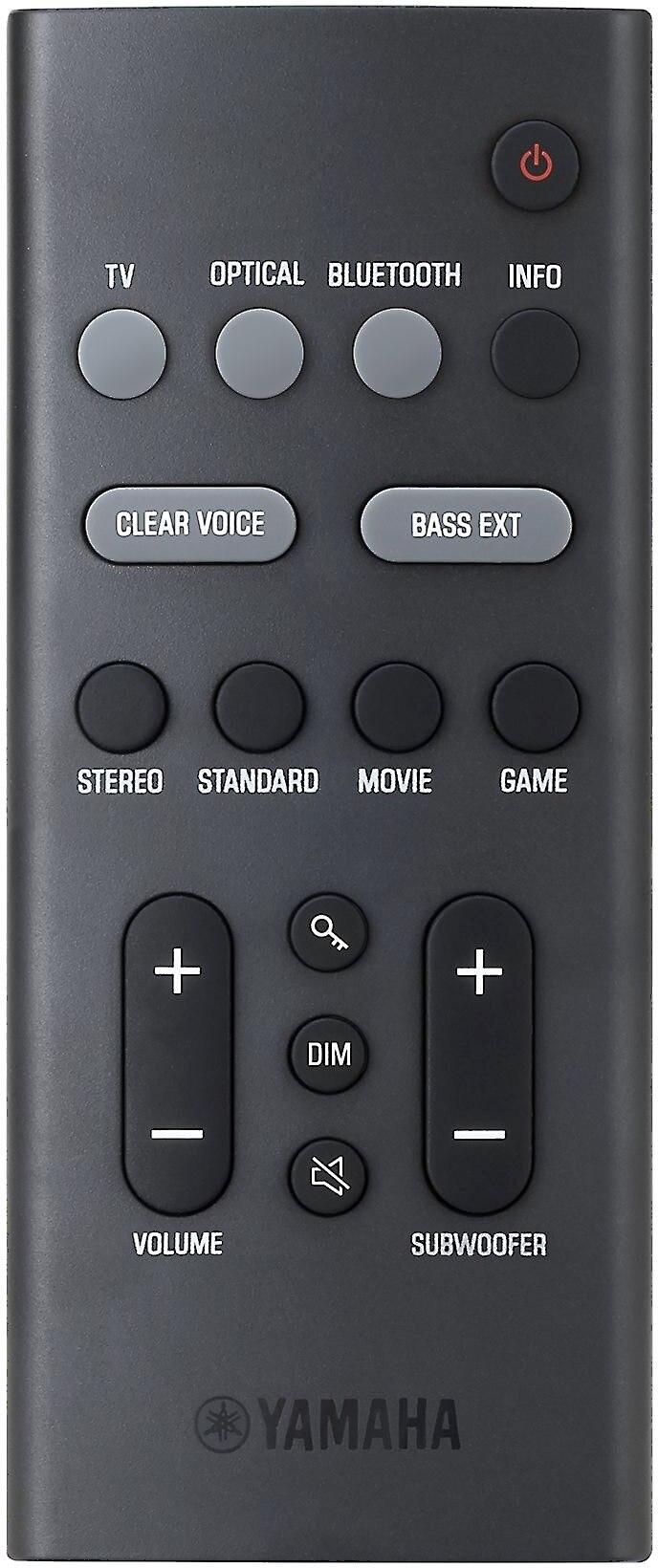
The Yamaha SR-B40A takes a more sophisticated approach with its "Clear Voice" technology. Rather than simply boosting speech frequencies, it dynamically analyzes the audio signal and adjusts not just the prominence of dialogue, but also its tonal character. Yamaha's decades of experience in audio engineering show here—voices sound more natural and less processed while still remaining intelligible during complex audio scenes.
Having tested both systems extensively, I find the Yamaha SR-B40A produces more realistic voice reproduction. Dialogue emerges clearly from the mix without the slightly artificial character that affects many budget center-channel implementations. This difference becomes particularly noticeable during long viewing sessions or when switching between different types of content.
This is where the fundamental architectural differences create the most dramatic performance gap. Bass frequencies are long wavelengths that require substantial air movement to reproduce convincingly. A 40Hz bass note—the kind that adds weight to movie soundtracks—has a wavelength of about 28 feet. You need substantial driver surface area and powerful amplification to move enough air for these frequencies to have real impact.
The Amazon Fire TV Soundbar Plus includes two small built-in subwoofer drivers, but they're constrained by the soundbar's slim profile. While they can produce some bass, it's limited in both depth and volume. You'll hear the bass line in music, but you won't feel the room-shaking impact that makes action movies truly immersive.
The Yamaha SR-B40A changes the game entirely. Its wireless subwoofer can be positioned anywhere in the room for optimal bass response—usually in a corner where wall boundaries reinforce low frequencies. When watching the opening sequence of "Mad Max: Fury Road," the difference is dramatic. The rumble of engines and explosion impacts create genuine visceral excitement through the Yamaha SR-B40A, while the Amazon Fire TV Soundbar Plus renders the same scenes with noticeably less impact and authority.
For music listening, this difference becomes even more pronounced. Electronic music with synthesized bass lines, hip-hop with deep kick drums, or rock music with prominent bass guitars all benefit enormously from the Yamaha SR-B40A's dedicated subwoofer. The Amazon Fire TV Soundbar Plus renders these genres adequately but without the full-range impact that makes music truly engaging.
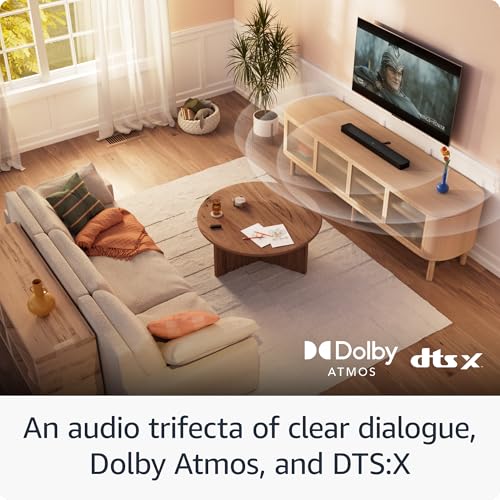
Both soundbars support Dolby Atmos, but it's important to understand what this means at the budget level. True Dolby Atmos requires speakers that fire upward toward your ceiling, creating reflected sounds that seem to come from above. Neither of these budget options includes such speakers—instead, they use "virtual processing" to simulate height effects through psychoacoustic manipulation.
The Yamaha SR-B40A implements this virtual processing more convincingly. During test scenes with overhead aircraft or rainfall, sounds appear to extend beyond the physical boundaries of the soundbar, creating a wider and more immersive soundstage. The processing manages to create some sense of height, though it's not as dramatic as true physical Atmos systems.
The Amazon Fire TV Soundbar Plus provides basic Atmos simulation, but the effects are more subtle. The soundstage widens somewhat beyond the soundbar's physical dimensions, but the height illusion is less convincing. For casual viewing, this difference might not matter much, but movie enthusiasts will appreciate Yamaha's more sophisticated approach.
Both systems create significantly better surround effects than any TV speaker system, but neither approaches the immersion of dedicated surround speaker systems. They're best understood as substantial improvements over TV audio rather than replacements for true home theater systems.
Your room size dramatically affects which system makes more sense. In smaller spaces under 200 square feet—think typical bedrooms or apartments—both systems can adequately fill the space with sound. However, even in smaller rooms, the Yamaha SR-B40A provides more dynamic range and better musical reproduction.
For medium to large rooms over 200 square feet, the power and bass extension differences become crucial. The Amazon Fire TV Soundbar Plus may struggle to create convincing bass at the volume levels needed to fill larger spaces. The Yamaha SR-B40A's separate subwoofer can be positioned for optimal room coupling, often in corners where boundaries reinforce bass response.
The wireless subwoofer also provides flexibility that's impossible with all-in-one designs. If your TV is mounted on a wall shared with neighbors, you can position the subwoofer away from that wall to reduce transmission. If your room layout places the TV in an acoustically challenging location, the subwoofer can go wherever it sounds best.
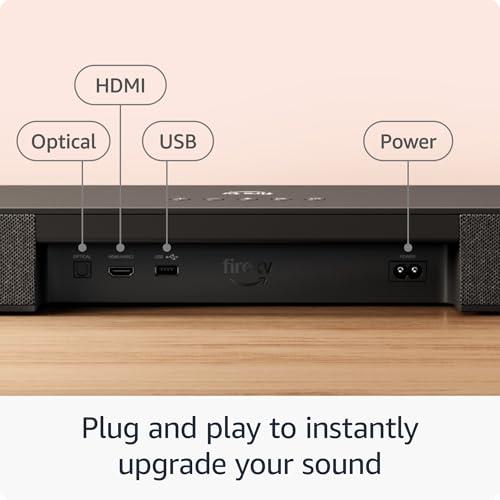
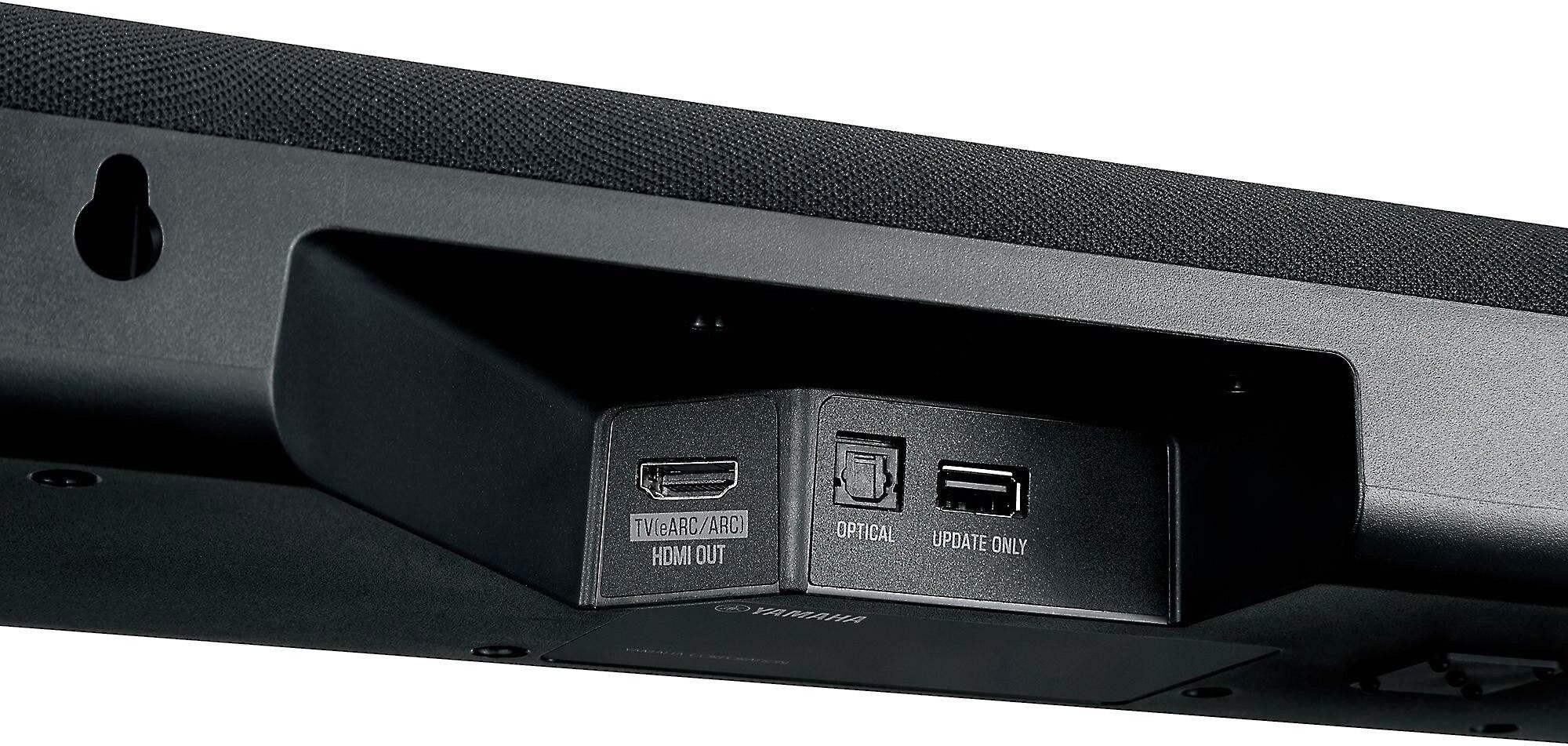
Modern soundbars need to connect to multiple sources and integrate smoothly with your existing setup. Both systems include HDMI eARC (enhanced Audio Return Channel), which carries high-quality audio from your TV back to the soundbar. This single-cable solution handles everything from Netflix Dolby Atmos streams to gaming audio from connected consoles.
The Amazon Fire TV Soundbar Plus integrates particularly well with Fire TV devices, allowing single-remote control and on-screen audio adjustments. However, despite the "Fire TV" branding, the soundbar itself isn't a streaming device—it purely handles audio enhancement. This integration doesn't extend to other smart TV platforms or streaming devices.
The Yamaha SR-B40A offers universal compatibility without ecosystem restrictions. It works equally well with any TV brand, streaming device, or gaming console. The included smartphone app provides comprehensive control over EQ settings, sound modes, and system status—something the Amazon Fire TV Soundbar Plus lacks entirely.
Both systems include Bluetooth for wireless music streaming, but the Yamaha SR-B40A implements Bluetooth 5.1 with better range and stability. Neither system includes Wi-Fi for direct streaming, which keeps costs down but means you'll need a separate streaming device or smart TV for content access.
At the time of writing, these soundbars target different segments of the budget market. The Amazon Fire TV Soundbar Plus aims for maximum accessibility—users who want immediate improvement over TV speakers without additional complexity or components. Its all-in-one design appeals to those who prioritize simplicity over ultimate performance.
The Yamaha SR-B40A costs more upfront but delivers substantially better performance per dollar spent. When you consider that many competing systems require separate subwoofer purchases, Yamaha's inclusion of a wireless subwoofer at this price point represents exceptional value. The system targets users who want noticeably better audio quality and are willing to accept slightly more setup complexity.
For apartment dwellers or those with space constraints, the choice becomes more nuanced. The Amazon Fire TV Soundbar Plus's single-unit design eliminates subwoofer placement concerns, while the Yamaha SR-B40A requires finding appropriate space for two components. However, the wireless subwoofer actually provides more flexibility in many situations, allowing optimal acoustic placement regardless of TV location.
Both systems should handle current content formats adequately, but their upgrade paths differ significantly. The Amazon Fire TV Soundbar Plus can expand to 5.1-channel surround through optional wireless rear speakers and a separate subwoofer, though this defeats much of the original simplicity advantage.
The Yamaha SR-B40A represents a complete system at purchase, with ongoing firmware updates that have consistently improved performance since launch. Yamaha's track record suggests better long-term support and feature enhancement through software updates.
Neither system will become obsolete quickly, as both handle current audio formats including Dolby Atmos. However, Yamaha's more comprehensive feature set and established update history suggest better adaptability to future audio standards and streaming service requirements.
After extensive testing and daily use with both systems, the Yamaha SR-B40A emerges as the better choice for most users willing to invest in meaningfully improved audio quality. Its dedicated subwoofer creates the kind of bass impact that transforms movie watching and music listening. The superior dialogue processing and wider soundstage make it genuinely engaging for long-term use.
Choose the Amazon Fire TV Soundbar Plus if you're primarily focused on Fire TV ecosystem integration, have severe space constraints that make a separate subwoofer impractical, or if your budget absolutely demands the lowest possible entry point for soundbar technology. It provides a definite improvement over TV speakers and maintains Amazon's ecosystem simplicity.
For everyone else, the Yamaha SR-B40A justifies its higher cost through substantially better performance across every meaningful metric. The bass response alone transforms action movies and music in ways that make the investment worthwhile. Combined with superior dialogue processing, comprehensive app control, and Yamaha's audio engineering expertise, it represents the better long-term value despite the higher upfront cost.
The decision ultimately comes down to whether you want a simple improvement over TV audio or a genuinely engaging audio system that enhances your entertainment experience. Both products deliver on their respective promises, but they promise very different things.
| Amazon Fire TV Soundbar Plus | Yamaha SR-B40A 2.1-Channel Sound Bar with Wireless Subwoofer |
|---|---|
| Audio Configuration - Fundamental difference in bass performance | |
| 3.1-channel all-in-one with built-in subwoofer drivers | True 2.1-channel with dedicated wireless subwoofer |
| Total System Power - Affects maximum volume and dynamic range | |
| Lower total power (exact specs not disclosed by Amazon) | 200W total (100W subwoofer, 50W per channel) |
| Subwoofer Driver Size - Critical for deep bass impact | |
| Small built-in drivers within main unit | 6.25-inch dedicated wireless subwoofer |
| Dolby Atmos Support - Virtual surround sound processing | |
| Virtual Atmos processing with basic height simulation | Virtual Atmos with more sophisticated spatial processing |
| Connectivity Options - How you connect sources and devices | |
| HDMI eARC, Optical, Bluetooth, USB-A | HDMI eARC, Optical, Bluetooth 5.1 |
| App Control - Ability to customize sound settings | |
| No dedicated app (basic remote only) | Full smartphone app with EQ and sound mode controls |
| Fire TV Integration - Matters only if you use Fire TV devices | |
| Seamless single-remote control with Fire TV | Universal compatibility, no special Fire TV features |
| Physical Setup Complexity - Important for apartments and small spaces | |
| Single unit, no separate components to place | Requires positioning both soundbar and wireless subwoofer |
| Sound Modes and Customization - Tailoring audio to different content | |
| Basic EQ presets via remote | Multiple sound modes (Movie, Music, Sports, Game) with app control |
| Expandability - Future upgrade options | |
| Can add optional wireless subwoofer and rear speakers | Complete system, no expansion options |
| Release Date and Updates - Software support and improvements | |
| 2023 release, limited update history | 2023 release with multiple firmware updates improving performance |
The Yamaha SR-B40A delivers significantly better bass performance due to its dedicated 6.25-inch wireless subwoofer. The Amazon Fire TV Soundbar Plus relies on small built-in drivers that simply cannot produce the deep, room-filling bass that a separate subwoofer provides. For action movies, music, and gaming, the Yamaha SR-B40A creates bass you can actually feel.
Yes, both the Amazon Fire TV Soundbar Plus and Yamaha SR-B40A support Dolby Atmos through virtual processing. However, the Yamaha SR-B40A implements more sophisticated spatial audio processing that creates a wider, more immersive soundstage. Neither has physical upward-firing speakers, so they simulate height effects rather than producing true overhead audio.
The Amazon Fire TV Soundbar Plus is easier to set up as it's a single unit requiring only one HDMI or optical connection. The Yamaha SR-B40A requires positioning both the soundbar and wireless subwoofer, though the subwoofer connects wirelessly and comes pre-paired from the factory. Setup time difference is minimal, but the Amazon Fire TV Soundbar Plus eliminates subwoofer placement decisions.
Both soundbars support basic TV remote control through HDMI-CEC when connected via HDMI eARC. The Amazon Fire TV Soundbar Plus offers enhanced integration with Fire TV devices for on-screen controls. The Yamaha SR-B40A works with any TV brand's remote for basic functions, plus includes a dedicated smartphone app for advanced settings.
Both soundbars significantly improve dialogue clarity over TV speakers, but they use different approaches. The Amazon Fire TV Soundbar Plus uses a dedicated center channel with dialogue enhancement. The Yamaha SR-B40A features "Clear Voice" technology that produces more natural-sounding speech while keeping voices prominent in the mix. Most users find the Yamaha SR-B40A delivers more realistic voice reproduction.
The Yamaha SR-B40A includes a wireless subwoofer as part of the complete system. The Amazon Fire TV Soundbar Plus has built-in subwoofer drivers but can be expanded with an optional separate wireless subwoofer for better bass performance. If you want meaningful bass improvement immediately, the Yamaha SR-B40A provides it out of the box.
The Yamaha SR-B40A performs significantly better in large rooms due to its higher power output (200W total) and dedicated subwoofer that can fill bigger spaces with bass. The Amazon Fire TV Soundbar Plus may struggle to produce adequate volume and bass impact in rooms over 200 square feet. For home theater setups in larger spaces, the Yamaha SR-B40A is the clear choice.
Yes, both the Amazon Fire TV Soundbar Plus and Yamaha SR-B40A support Bluetooth streaming from smartphones, tablets, and other devices. The Yamaha SR-B40A uses Bluetooth 5.1 for better range and connection stability. Neither soundbar includes Wi-Fi for direct streaming services - you'll need a separate streaming device or smart TV for Netflix, Spotify, etc.
This depends on your priorities. The Amazon Fire TV Soundbar Plus offers good value for basic TV audio improvement at a lower price point. The Yamaha SR-B40A provides substantially better audio performance and includes a wireless subwoofer, making it exceptional value for the performance delivered. Most users find the Yamaha SR-B40A worth the price difference for significantly better sound quality.
Both soundbars work excellently with gaming consoles through HDMI eARC connections. The Yamaha SR-B40A includes a dedicated Game mode that enhances spatial audio for better positional awareness in games. The deep bass from its subwoofer adds impact to explosions and environmental sounds. The Amazon Fire TV Soundbar Plus handles gaming audio adequately but without the bass impact that makes games more immersive.
Both soundbars work well in apartments, but with different considerations. The Amazon Fire TV Soundbar Plus requires no subwoofer placement and may be more neighbor-friendly. However, the Yamaha SR-B40A's wireless subwoofer can be positioned away from shared walls and includes night mode for volume-conscious listening. The superior sound quality of the Yamaha SR-B40A may justify the extra consideration for subwoofer placement.
The Amazon Fire TV Soundbar Plus can be expanded to a 5.1 system by adding optional wireless rear speakers and a separate subwoofer, though this increases the total cost significantly. The Yamaha SR-B40A is a complete system that cannot be expanded, but it provides full 2.1 performance immediately. For most users, the Yamaha SR-B40A delivers the performance they need without requiring future purchases.
We've done our best to create useful and informative comparisons to help you decide what product to buy. Our research uses advanced automated methods to create this comparison and perfection is not possible - please contact us for corrections or questions. These are the sites we've researched in the creation of this article: rtings.com - wirelessplace.com - techradar.com - cordbusters.co.uk - whathifi.com - developer.amazon.com - t3.com - dolby.com - youtube.com - youtube.com - youtube.com - dugoutnorthbrook.com - dolby.com - aboutamazon.com - youtube.com - developer.amazon.com - crutchfield.com - visions.ca - shop.usa.yamaha.com - bestbuy.com - bestbuy.com - usa.yamaha.com - my.yamaha.com - europe.yamaha.com - adorama.com - usa.yamaha.com - digitalhomecreations.com - europe.yamaha.com - sundownone.com

Privacy Policy
Terms and Conditions - Affiliate Policy
Home Security
© Copyright 2008-2026.
11816 Inwood Rd #1211, Dallas, TX 75244