


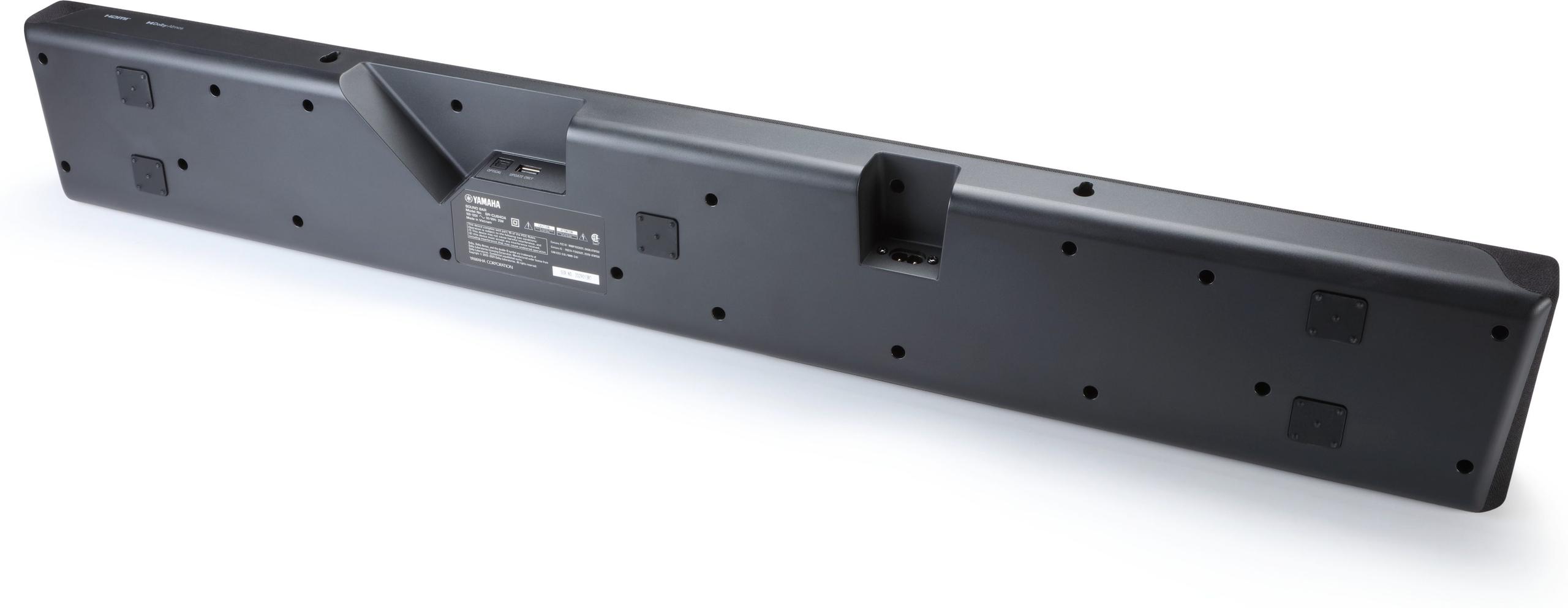
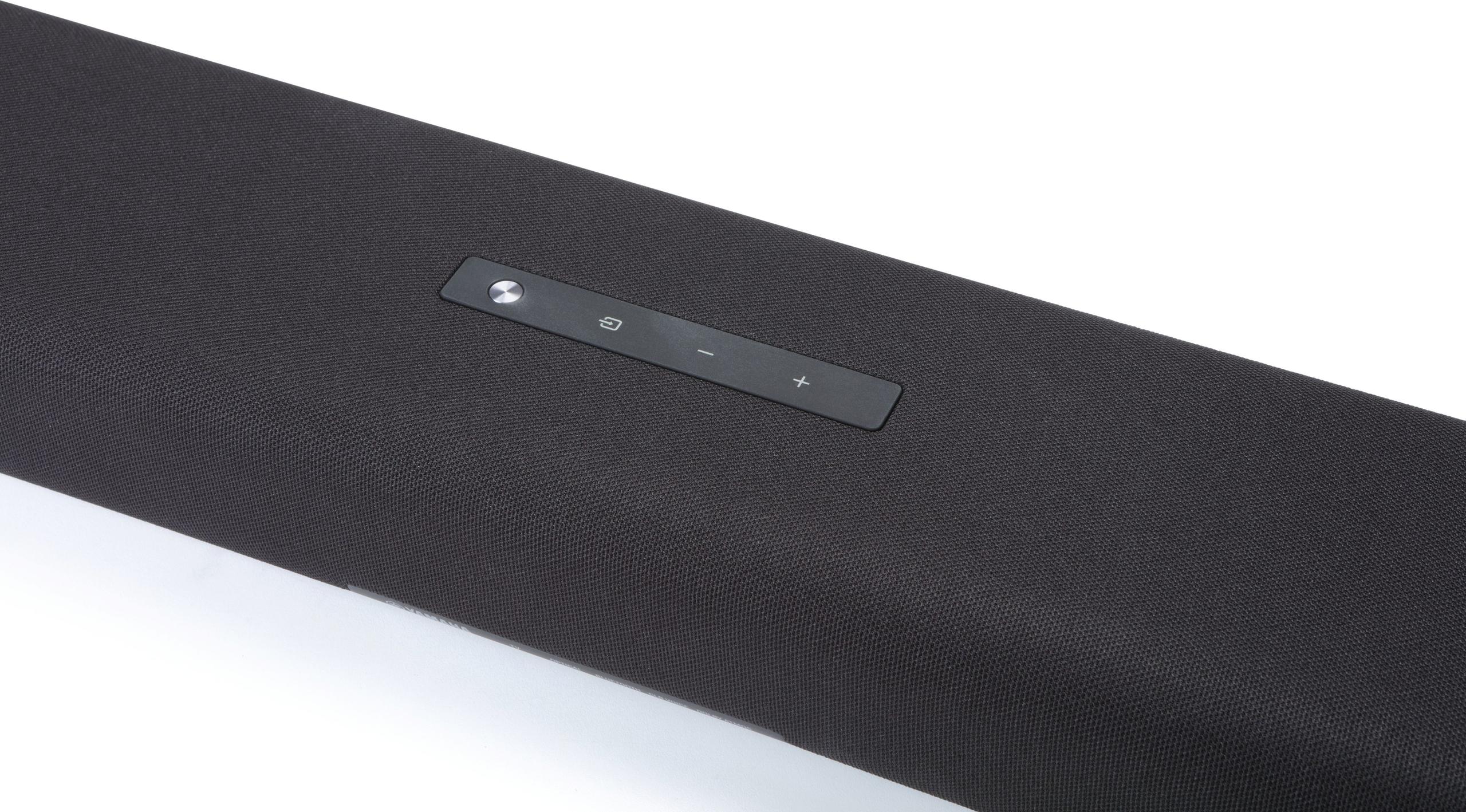
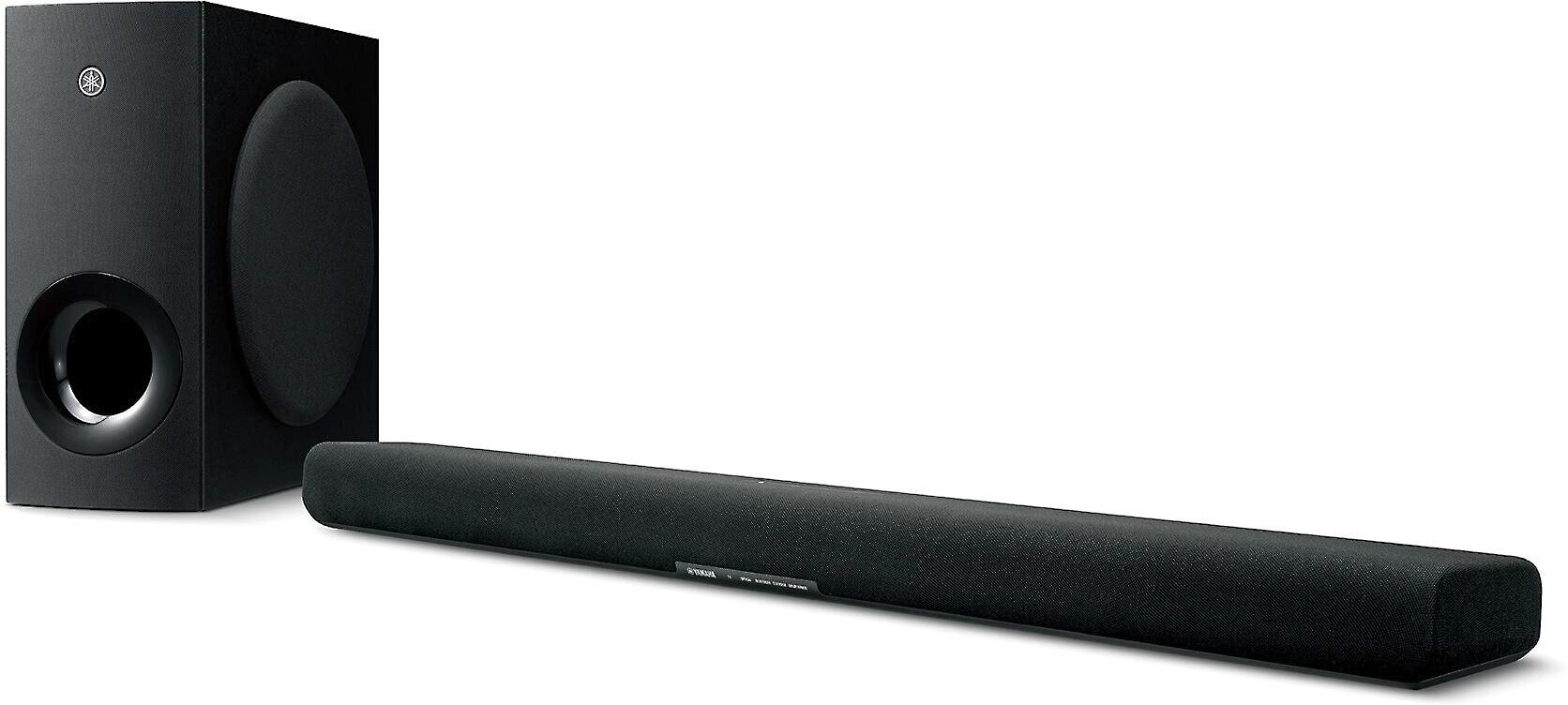
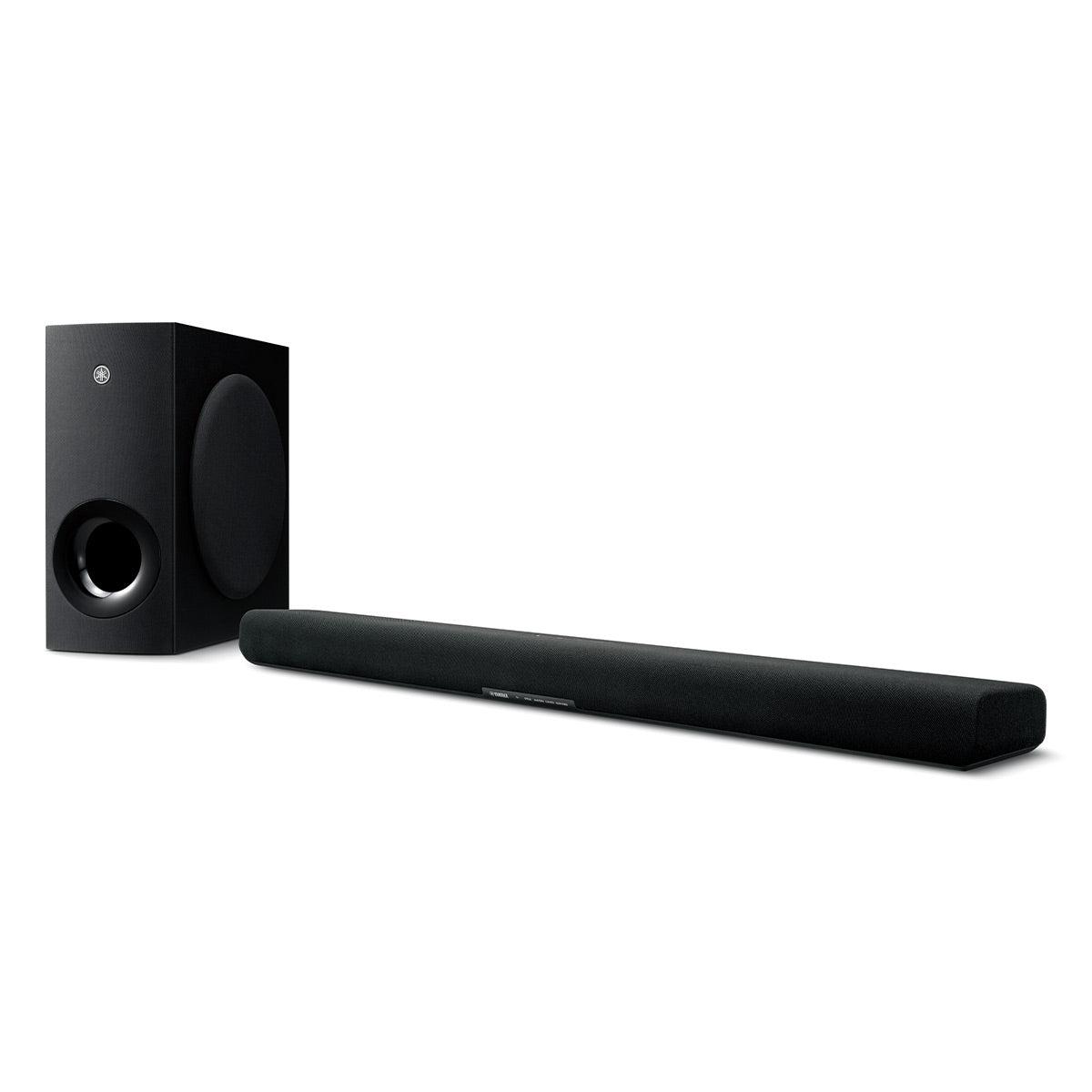
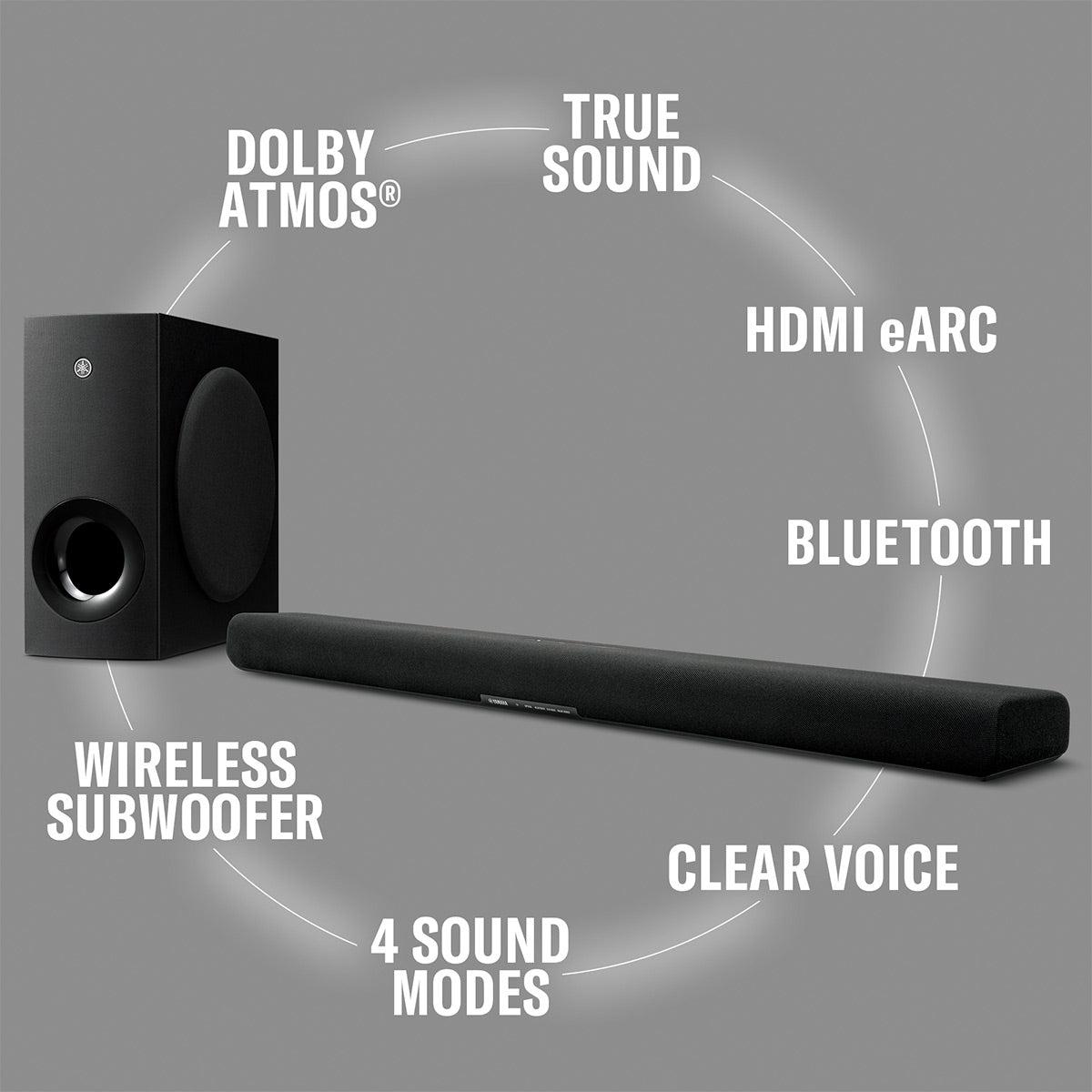
When your TV's tinny built-in speakers finally drive you to madness during the latest Marvel movie, you'll find yourself staring at two very different approaches to better home audio. The soundbar market has evolved dramatically since 2020, splitting into camps that prioritize either maximum immersion or maximum convenience. Today we're comparing two systems that perfectly represent this divide: the Ultimea Aura A40 U2601 and the Yamaha SR-B40A.
The fundamental question isn't just "which sounds better?" but rather "which approach fits your life?" One demands your time and rewards you with cinema-quality surround sound at a budget price. The other respects your schedule and delivers professional audio engineering with zero hassle. Let's dive into what makes each tick.
Before we get into the specifics, it helps to understand how soundbars create that "surround sound" experience you're chasing. Traditional home theater systems used five or seven separate speakers placed around your room—that's where terms like "5.1" and "7.1" come from. The first number indicates main speakers, while ".1" refers to a dedicated subwoofer (the box that makes things go boom).
Modern soundbars use two main approaches to recreate this effect. Virtual surround processing uses clever audio algorithms and precisely angled drivers to bounce sound off your walls, tricking your brain into thinking sounds come from behind you. It's impressive technology, but physics limits how convincing this illusion can be.
The alternative is true surround systems that actually include separate speakers you position around your room. These create authentic directional audio because sounds literally do come from different locations. The tradeoff? You'll be running speaker wires and finding places to mount extra boxes.
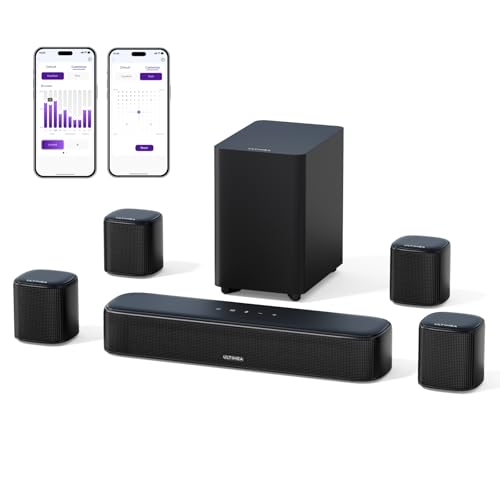
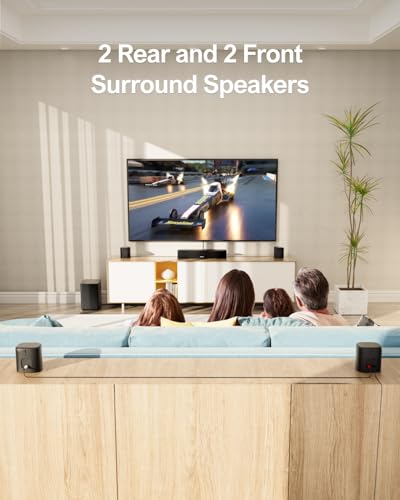
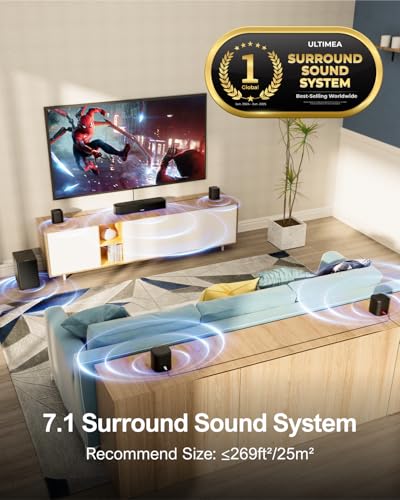
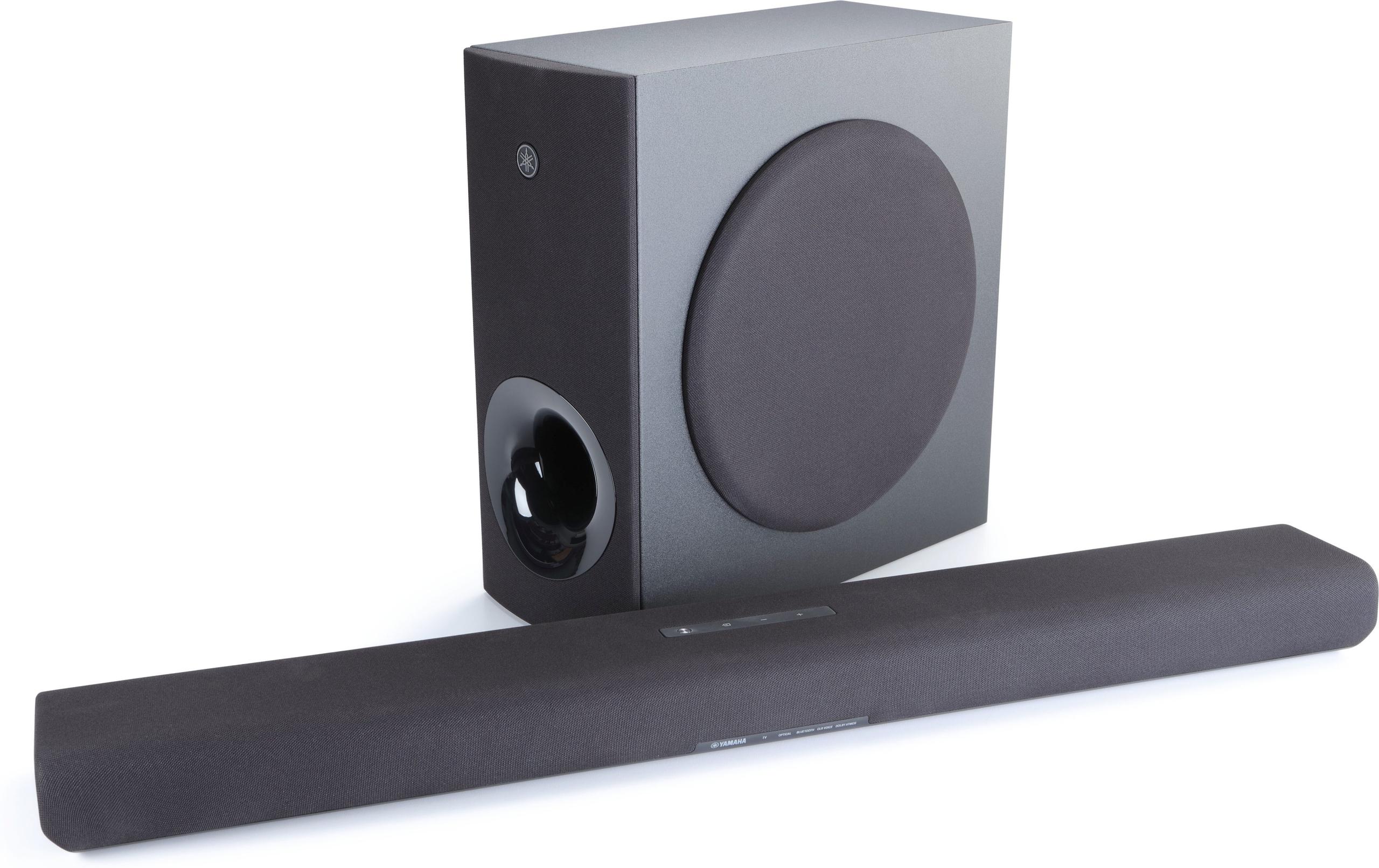
The Ultimea Aura A40, released in 2023, represents the true surround approach with four dedicated surround speakers plus a main soundbar and subwoofer. The Yamaha SR-B40A, also from 2023, takes the virtual route with sophisticated Dolby Atmos processing in a streamlined 2.1 setup.
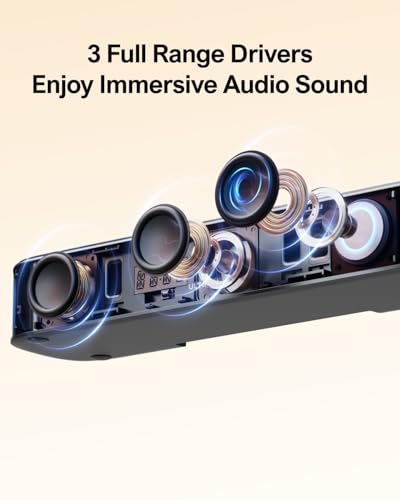
At first glance, the Ultimea Aura A40 seems almost too good to be true. You get seven speakers total—three in the main bar, four surrounds, plus a subwoofer—for significantly less than most premium single soundbars cost. But there's no magic here, just a company willing to prioritize performance over convenience.
The most impressive aspect of the Ultimea Aura A40 is how it handles complex audio scenes. When a helicopter circles overhead in an action movie, you actually hear it move around your room rather than just getting a vague sense of movement. This happens because the system uses SurroundX technology—Ultimea's proprietary processing that optimizes how audio signals get distributed to each physical speaker.
Our research into user experiences reveals consistently positive feedback about dialogue clarity, even during chaotic action sequences. The system maintains distinct voice separation when explosions and music would normally drown out conversations. This comes down to having dedicated drivers handling different frequency ranges, rather than asking a few speakers to do everything.
The BassMX technology deserves special mention. Rather than just boosting low frequencies (which often creates muddy, overwhelming bass), it optimizes the subwoofer's 4-inch driver to produce controlled, impactful low-end. Users report that explosions feel physical without becoming obnoxious, and music maintains punch without losing detail.
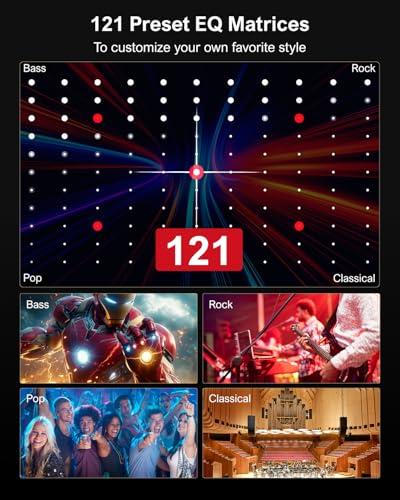
Here's where the Ultimea Aura A40 truly shines. The system includes 121 preset EQ matrices covering everything from classical music to heavy metal, plus a full 10-band equalizer for manual tweaking. Most soundbars offer maybe three or four basic modes; this system treats you like an adult who might have opinions about how their audio should sound.
The ULTIMEA Smart App provides granular control over every aspect of performance. You can adjust surround speaker intensity across six different levels, fine-tune bass response, and even enable OTA (over-the-air) firmware updates that add new features over time. This last point matters more than you might think—audio processing algorithms improve constantly, and having a system that can evolve prevents obsolescence.
For gaming, the directional accuracy proves invaluable. Users consistently report being able to pinpoint enemy footsteps in competitive shooters and feeling genuinely immersed in single-player adventures. The Game mode optimizes frequency response for typical gaming audio, emphasizing the ranges where gunfire, explosions, and environmental effects live.
Let's be honest about what you're signing up for with the Ultimea Aura A40. This isn't a "plug and play" experience. You'll spend at least 30 minutes running cables to four different speaker locations, and finding good mounting spots requires some planning. The front speakers need to flank your TV, while the rear pair should sit behind your primary seating area.
The system includes 6-meter rear surround cables and 2-meter front cables, which handles most living room configurations, but you might need cable management solutions to keep things tidy. The reward for this effort is authentic 360-degree audio that no virtual processing can quite match.
Yamaha entered the budget soundbar market relatively recently, but they brought decades of audio engineering expertise with them. The SR-B40A represents everything the company learned from professional audio equipment, distilled into a consumer-friendly package.
The Yamaha SR-B40A uses True Sound engineering—a combination of driver design, cabinet acoustics, and digital processing that Yamaha developed for their professional monitor speakers. While it only has drivers in the main bar, each component is precisely tuned to work together.
The Dolby Atmos processing deserves explanation. Atmos isn't just marketing speak; it's a sophisticated algorithm that analyzes incoming audio and redistributes it to create height and width effects. The SR-B40A uses this to create a surprisingly wide soundstage that extends well beyond the physical soundbar boundaries.
User feedback consistently praises the system's tonal balance. Unlike many budget soundbars that either sound harsh (too much treble) or muddy (too much bass), the SR-B40A maintains what audio engineers call neutral response—it reproduces content as intended without coloration.
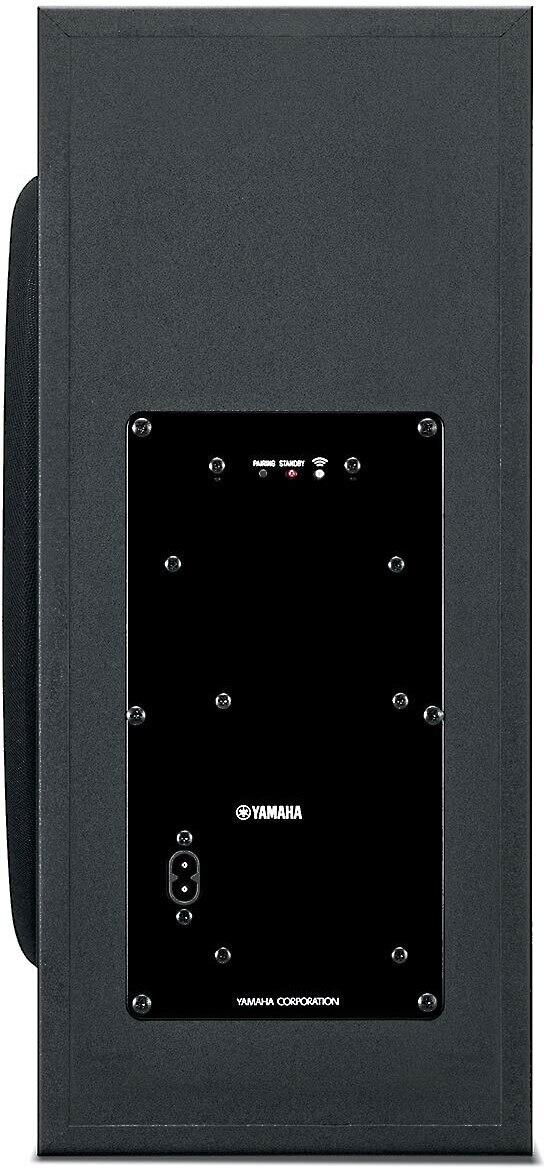
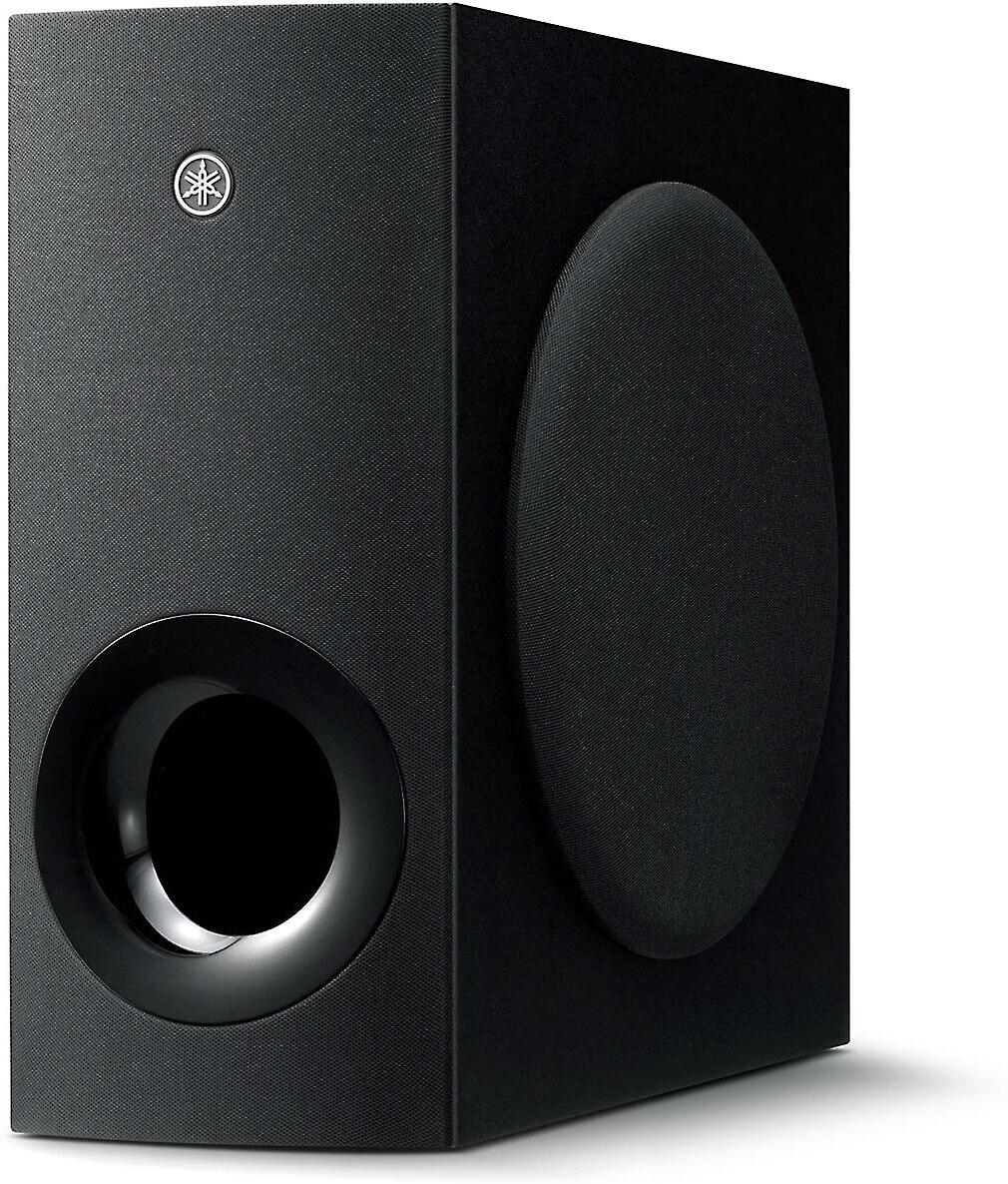
The wireless subwoofer uses YST II technology (Yamaha's Advanced YST), which optimizes the 6.25-inch driver for both impact and control. Users report impressive rumble during action scenes without the boomy, one-note bass that plagues cheaper systems.
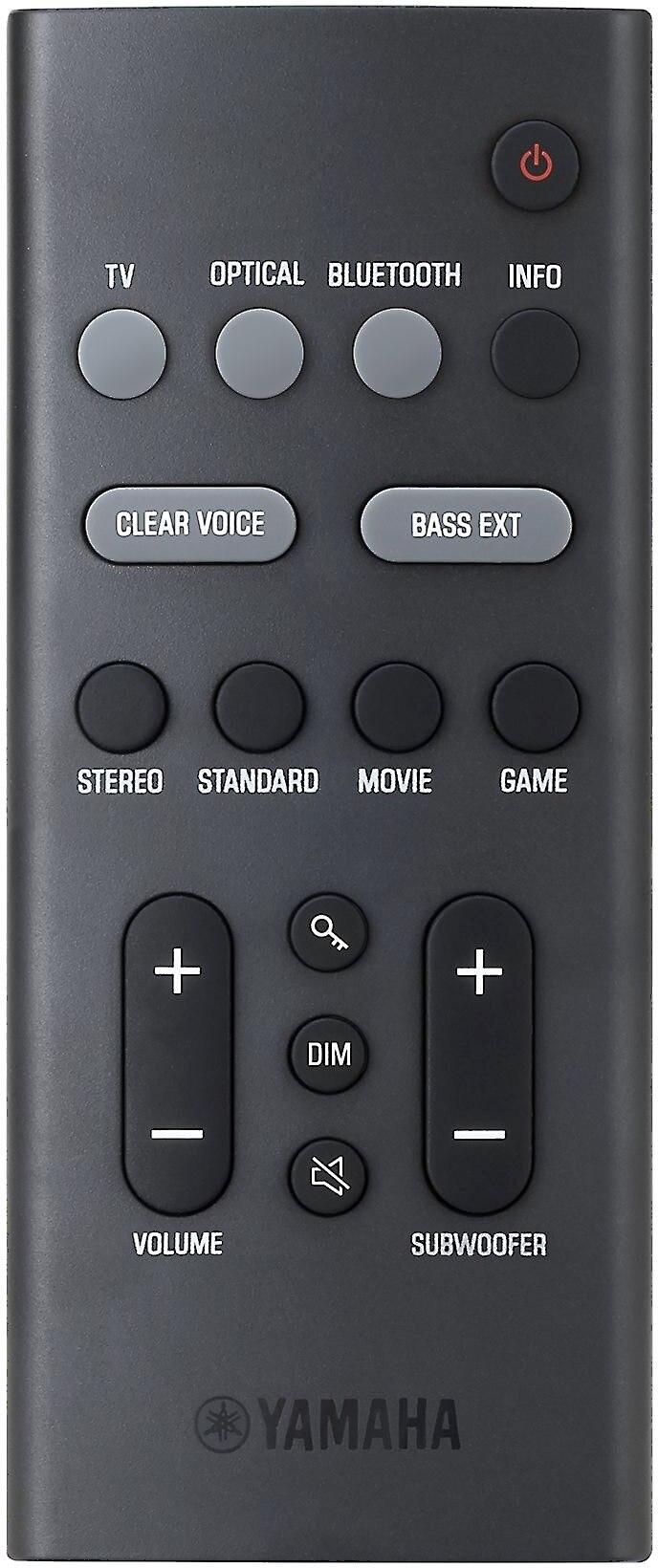
Modern TV shows and movies often mix dialogue lower than older content, assuming you have a proper sound system. The SR-B40A addresses this with Clear Voice technology, which analyzes incoming audio and boosts the frequency ranges where human speech lives (roughly 85Hz to 255Hz).
However, our research reveals mixed results here. While voices do become more audible, some users report a slightly artificial quality when Clear Voice is enabled. The technology works, but it's not magic—it can't create center channel performance from a stereo soundbar.
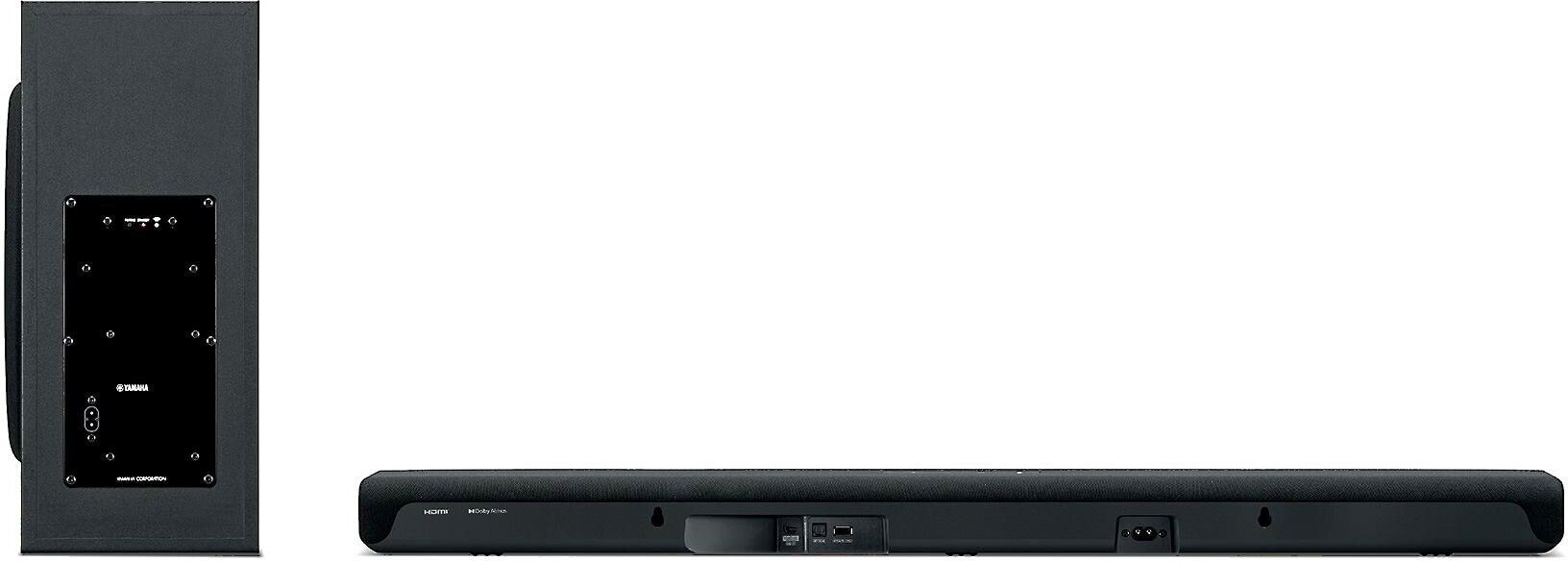
The SR-B40A's biggest practical advantage is its wireless subwoofer. The sub connects to the main bar through internal WiFi—not your home network—which means zero configuration required. You literally just plug both units into power, and they find each other automatically.
This matters more than you might expect. Subwoofer placement significantly affects bass quality, and wireless operation lets you experiment with different locations without cable constraints. Finding the sweet spot where bass feels full but not boomy often requires some trial and error.
When comparing soundbars, certain metrics matter more than others. Peak power ratings (like the Aura A40's 330 watts) can be misleading because they often represent brief bursts rather than sustained output. More important is dynamic range—how well a system handles the difference between quiet dialogue and explosive action scenes.
The Ultimea Aura A40 excels here because its multiple speakers can handle different tasks simultaneously. While the main bar focuses on dialogue and mid-range effects, the surround speakers handle ambient sounds and directional effects, preventing the muddy overlap that occurs when fewer speakers try to do everything.
Frequency response tells us what range of sounds each system can reproduce. The Aura A40's specified 65Hz to 18kHz covers the full range of human hearing, with that 65Hz low-end being particularly impressive for a system in this price category. Most budget soundbars struggle to reproduce true low-frequency content, rolling off around 80-100Hz.
Signal-to-noise ratio (SNR) measures how much unwanted background noise a system produces. The Aura A40's ≥75dB specification is solid for this price point, though not exceptional. Higher-end systems typically achieve 90dB or better, but the difference is rarely audible in home environments with ambient noise.
For home theater use specifically, dialogue intelligibility becomes crucial. Our research suggests the Aura A40 maintains better speech clarity during complex scenes, likely due to having dedicated drivers for different frequency ranges. The SR-B40A relies more heavily on processing, which can sometimes create artifacts.
Both systems handle gaming well, but differently. The Ultimea Aura A40 provides genuine positional accuracy that proves invaluable in competitive gaming. When an enemy reloads behind you in Counter-Strike, you'll hear it from the actual rear speakers rather than a processed approximation.
The Yamaha SR-B40A takes a different approach, using Game mode processing to emphasize frequencies where gaming audio typically lives. While it can't match true surround for directionality, it often produces more impactful explosions and gunfire due to Yamaha's professional audio tuning.
For music listening, preferences split along predictable lines. The Aura A40 offers extensive EQ customization, letting you tailor sound signature to different genres. Electronic music benefits from the adjustable bass response, while acoustic content shines with the system's clarity modes.
The SR-B40A provides more consistent musical performance out of the box. Yamaha's True Sound engineering tends to favor accuracy over excitement, which some listeners prefer for longer listening sessions. The system handles everything from jazz to metal competently without requiring constant adjustment.
At the time of writing, these systems occupy different value territories. The Ultimea Aura A40 costs significantly less while providing substantially more hardware—eight speakers versus the SR-B40A's more modest driver count. This represents exceptional value if you're willing to invest setup time.
The Yamaha SR-B40A commands a price premium that reflects both brand positioning and convenience features. You're essentially paying extra for wireless operation, established audio engineering, and the confidence that comes with a recognized brand name.
For budget-conscious buyers seeking maximum performance, the Aura A40 is almost unbeatable. The combination of true surround speakers, extensive customization, and app-based control typically costs much more from established brands.
However, the SR-B40A's higher price buys significant convenience and reliability. If your time is valuable and you prefer guaranteed compatibility, the premium becomes justifiable.
Choose the Ultimea Aura A40 if you're building a dedicated home theater setup, enjoy tweaking audio settings, and can accommodate the installation requirements. This system rewards patience with genuinely immersive surround sound that punches well above its price point. Gamers particularly benefit from the authentic directional audio.
The Yamaha SR-B40A makes more sense for mainstream users who want immediate improvement over TV speakers without complexity. Apartment dwellers, casual viewers, and anyone prioritizing simplicity will appreciate the wireless setup and consistent performance.
For home theater enthusiasts, the Aura A40 provides a stepping stone toward more expensive dedicated systems while delivering much of the experience at a fraction of the cost. However, the SR-B40A offers more predictable results across different room configurations and content types.
Both systems succeed at their intended goals, but they're solving different problems. The Ultimea Aura A40 maximizes performance per dollar while demanding your time and attention. The Yamaha SR-B40A prioritizes convenience and reliability while commanding a premium price.
In my view, most users underestimate how much they'll appreciate true surround sound once they experience it properly. The Aura A40 delivers this experience at an almost absurd value, making the setup investment worthwhile for anyone serious about home entertainment.
However, if you've struggled with tech setup in the past or simply want something that works immediately, the SR-B40A's premium price buys real peace of mind. Yamaha's audio engineering ensures you'll get good sound without becoming an amateur acoustician.
The decision ultimately comes down to whether you view your soundbar as an audio hobby or a simple utility upgrade. Both approaches have merit—just make sure you choose the one that matches your actual lifestyle rather than your aspirations.
| Ultimea Aura A40 U2601 Soundbar System | Yamaha SR-B40A 2.1-Channel Sound Bar with Wireless Subwoofer |
|---|---|
| Channel Configuration - Determines surround sound authenticity | |
| 7.1 virtual surround with 4 physical surround speakers | 2.1 channel with Dolby Atmos virtual processing |
| Total Speaker Count - More speakers typically mean better sound separation | |
| 8 speakers (3 soundbar + 4 surround + 1 subwoofer) | Limited drivers in main bar + wireless subwoofer |
| Peak Power Output - Affects maximum volume and dynamic range | |
| 330W total system power | Approximately 120W-200W system power |
| Subwoofer Type - Impacts bass quality and setup flexibility | |
| 4-inch wired subwoofer with BassMX technology | 6.25-inch wireless subwoofer with YST II technology |
| Setup Complexity - Major factor in user experience | |
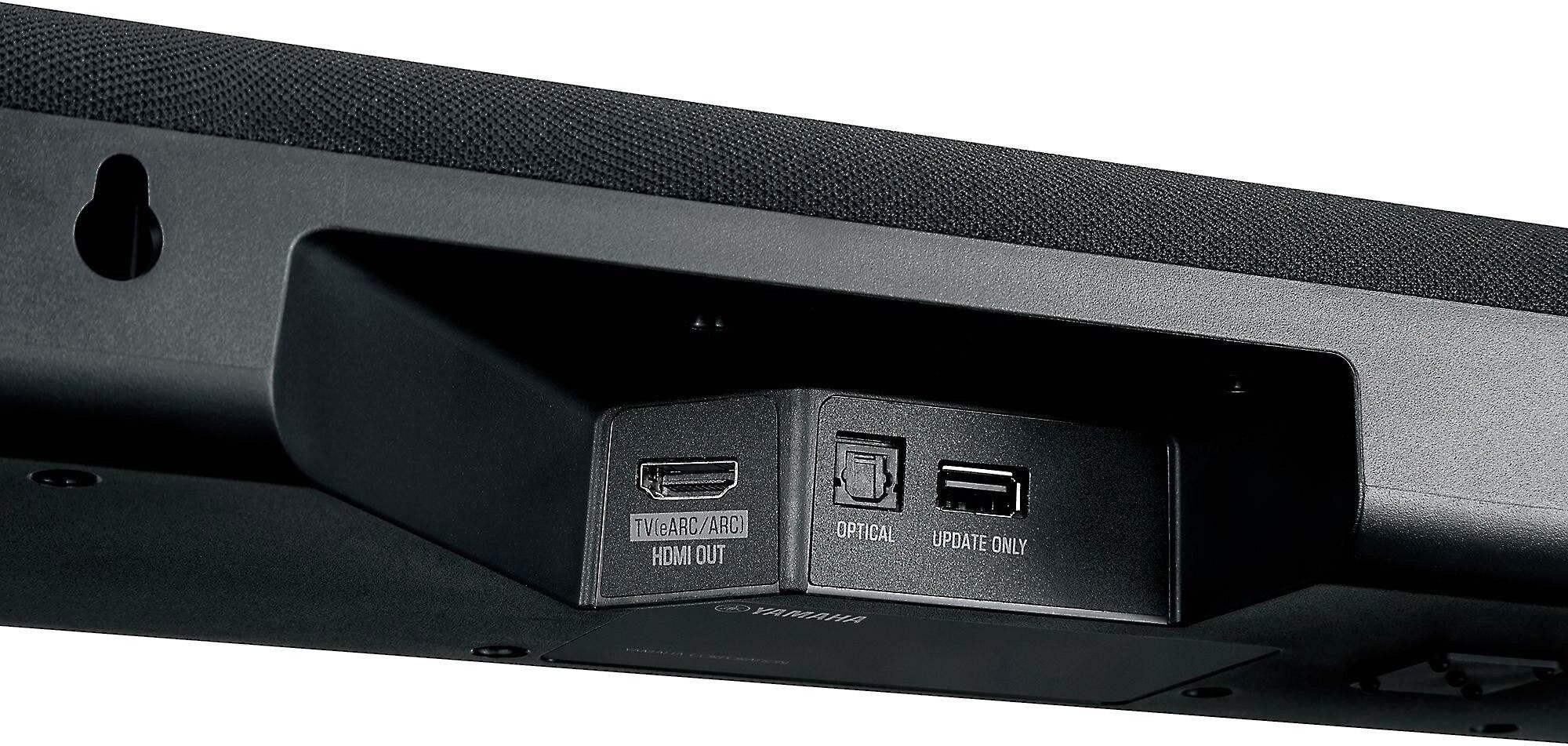
| Complex: requires running cables to 4 surround speaker positions | Simple: single HDMI connection, wireless subwoofer auto-pairs |
| Audio Customization - Important for fine-tuning sound preferences | |
| 10-band equalizer, 121 preset matrices, 6 listening modes, adjustable surround levels | Basic tone controls, 4 sound modes, Clear Voice technology |
| App Control Features - Modern convenience and ongoing updates | |
| ULTIMEA Smart App with OTA firmware updates and full system control | Sound Bar Remote app with basic adjustments |
| Primary Connectivity Options - Affects compatibility with your devices | |
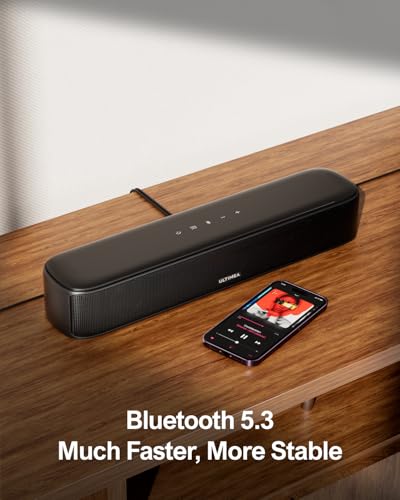
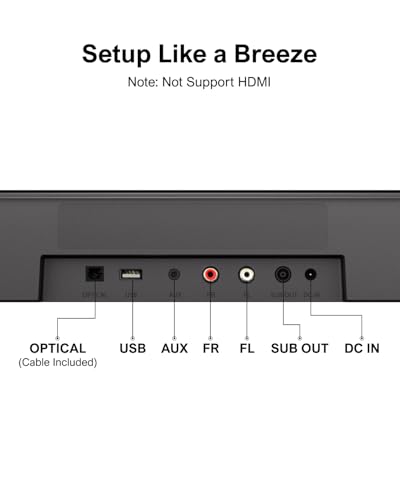
| Bluetooth 5.3, Optical, AUX, USB (no HDMI) | HDMI eARC/ARC, Bluetooth 5.1, Optical |
| Frequency Response Range - Determines audio reproduction accuracy | |
| 65Hz – 18kHz (excellent low-end extension for price point) | Not specified (typical Yamaha engineering standards) |
| Ideal Room Size - Helps determine if system matches your space | |
| 108-270 sq ft (medium to small living spaces) | Compact spaces, apartment-friendly wireless design |
| Brand Heritage - Affects reliability expectations and support | |
| Newer audio brand focused on value-oriented home theater | Established 130+ year audio engineering company |
| Target User Profile - Who benefits most from each approach | |
| Home theater enthusiasts, gamers, customization-focused users | Mainstream users, apartment dwellers, simplicity-focused buyers |
The Ultimea Aura A40 is superior for dedicated home theater use because it includes four physical surround speakers that create authentic 360-degree sound placement. Movies with helicopter scenes, explosions, and ambient effects sound dramatically more immersive compared to the Yamaha SR-B40A's virtual surround processing. However, the Yamaha SR-B40A offers better convenience with its wireless setup and reliable Dolby Atmos processing.
The key difference is surround sound approach: the Ultimea Aura A40 uses four actual surround speakers positioned around your room for true directional audio, while the Yamaha SR-B40A creates virtual surround effects using advanced processing from just the main soundbar. This makes the Ultimea Aura A40 more immersive but harder to set up.
Both offer excellent bass but in different ways. The Yamaha SR-B40A features a larger 6.25-inch wireless subwoofer with YST II technology that delivers consistent, impactful bass right out of the box. The Ultimea Aura A40 has a 4-inch wired subwoofer with BassMX technology that can be extensively customized through the app for deeper, more controlled bass when properly tuned.
Yes, the Ultimea Aura A40 requires significantly more setup time. You'll need to run speaker cables to four different positions around your room and mount the surround speakers, taking 30+ minutes. The Yamaha SR-B40A connects with just one HDMI cable to your TV, and the wireless subwoofer pairs automatically—setup takes under 5 minutes.
The Ultimea Aura A40 excels for gaming because its physical surround speakers provide precise directional audio, making it easier to locate enemies and environmental sounds in competitive games. The system also includes a dedicated Game mode. While the Yamaha SR-B40A has Game mode processing, it can't match the positional accuracy of actual surround speakers.
The Ultimea Aura A40 offers extensive customization with a 10-band equalizer, 121 preset EQ matrices, six listening modes, and adjustable surround levels through the ULTIMEA Smart App. The Yamaha SR-B40A provides basic tone controls and four sound modes (Stereo, Standard, Game, Movie) through its app, but far less granular control than the Ultimea Aura A40.
The Yamaha SR-B40A is much better for apartments because it's completely wireless (except for power), requires no permanent installation, and won't violate lease agreements. The Ultimea Aura A40 requires running cables around your room and mounting speakers, which may not be practical or allowed in rental situations.
The Yamaha SR-B40A includes HDMI eARC/ARC for the best TV integration and can be controlled by your TV remote. The Ultimea Aura A40 lacks HDMI connections entirely, relying on optical, AUX, USB, and Bluetooth 5.3. For modern smart TVs, the Yamaha SR-B40A offers more convenient connectivity.
Both systems handle dialogue well but differently. The Ultimea Aura A40 maintains excellent natural dialogue separation even during complex action scenes due to its multiple speakers. The Yamaha SR-B40A uses Clear Voice technology to enhance speech, though some users report it can sound slightly artificial. Overall, the Ultimea Aura A40 provides more consistent dialogue clarity.
The Ultimea Aura A40 is more versatile for music due to its extensive EQ options and multiple listening modes that can be tailored to different genres. The Yamaha SR-B40A provides more consistent, professionally-tuned sound that works well across all music types without adjustment, reflecting Yamaha's audio engineering expertise.
The Ultimea Aura A40 offers exceptional hardware value with eight speakers and extensive features, plus OTA firmware updates for ongoing improvements. The Yamaha SR-B40A provides value through convenience, brand reliability, and consistent performance without requiring optimization. Your definition of "value" depends on whether you prioritize maximum features or hassle-free operation.
Neither system offers traditional expansion options like adding more speakers. However, the Ultimea Aura A40 receives OTA firmware updates that can add new features and improve performance over time. The Yamaha SR-B40A is more of a complete, static system that relies on Yamaha's initial engineering rather than ongoing software improvements.
We've done our best to create useful and informative comparisons to help you decide what product to buy. Our research uses advanced automated methods to create this comparison and perfection is not possible - please contact us for corrections or questions. These are the sites we've researched in the creation of this article: walmart.com - newegg.com - youtube.com - ultimea.com - youtube.com - device.report - ultimea.co - manuals.plus - homestudiobasics.com - youtube.com - bestbuy.com - community.ultimea.com - manuals.plus - eu.ultimea.com - navesapeugeot.com.br - bestbuy.com - images.thdstatic.com - provantage.com - ultimea.com - bestbuy.com - crutchfield.com - visions.ca - shop.usa.yamaha.com - bestbuy.com - bestbuy.com - usa.yamaha.com - my.yamaha.com - europe.yamaha.com - adorama.com - usa.yamaha.com - digitalhomecreations.com - europe.yamaha.com - sundownone.com

Privacy Policy
Terms and Conditions - Affiliate Policy
Home Security
© Copyright 2008-2026.
11816 Inwood Rd #1211, Dallas, TX 75244