



When your TV's built-in speakers just aren't cutting it anymore, you're probably looking at soundbars to transform your living room into a proper home theater. But choosing between different soundbar systems can feel overwhelming, especially when you're comparing products with completely different approaches to audio.
Today we're diving deep into two popular options that represent fundamentally different philosophies: the Amazon Fire TV Soundbar Plus 5.1 Channel System and the Yamaha SR-B40A 2.1-Channel Sound Bar. One gives you a full surround sound setup with multiple speakers, while the other focuses on premium audio quality from fewer components.
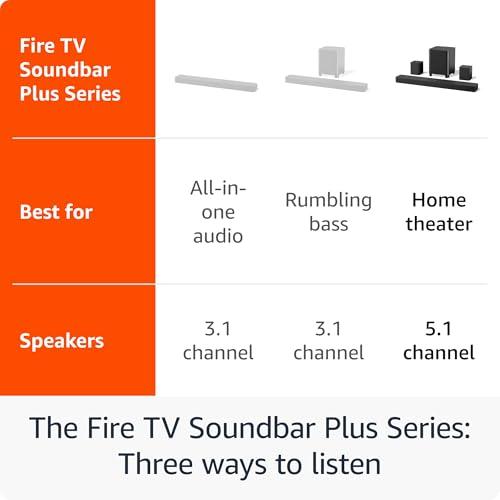
Before we jump into the comparison, let's talk about what makes soundbars tick. The number before the decimal point tells you how many main speakers the system has, while the number after indicates subwoofers. So a 5.1 system has five main speakers (left, right, center, and two rear surrounds) plus one subwoofer, while a 2.1 system has just left and right speakers plus a subwoofer.
The key considerations for any soundbar purchase include channel configuration (more channels generally mean better spatial audio), audio format support (compatibility with modern formats like Dolby Atmos), bass performance, connectivity options, and how well the system matches your room size and budget.
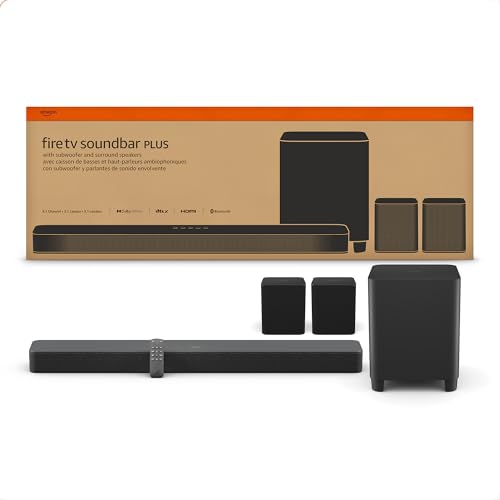
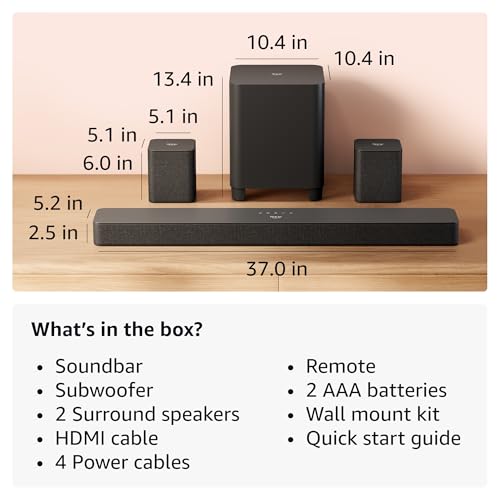
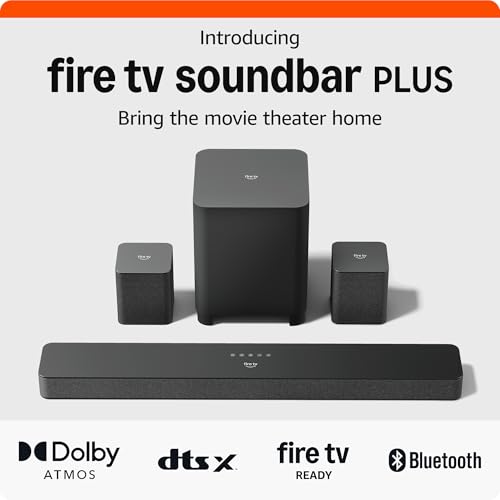
The Amazon Fire TV Soundbar Plus, released in 2023, represents Amazon's ambitious entry into true multi-channel home theater. It's a complete 5.1 system that includes the main soundbar handling left, right, and center channels, a wireless subwoofer for deep bass, and two separate satellite speakers that you place behind your seating area for genuine surround sound.
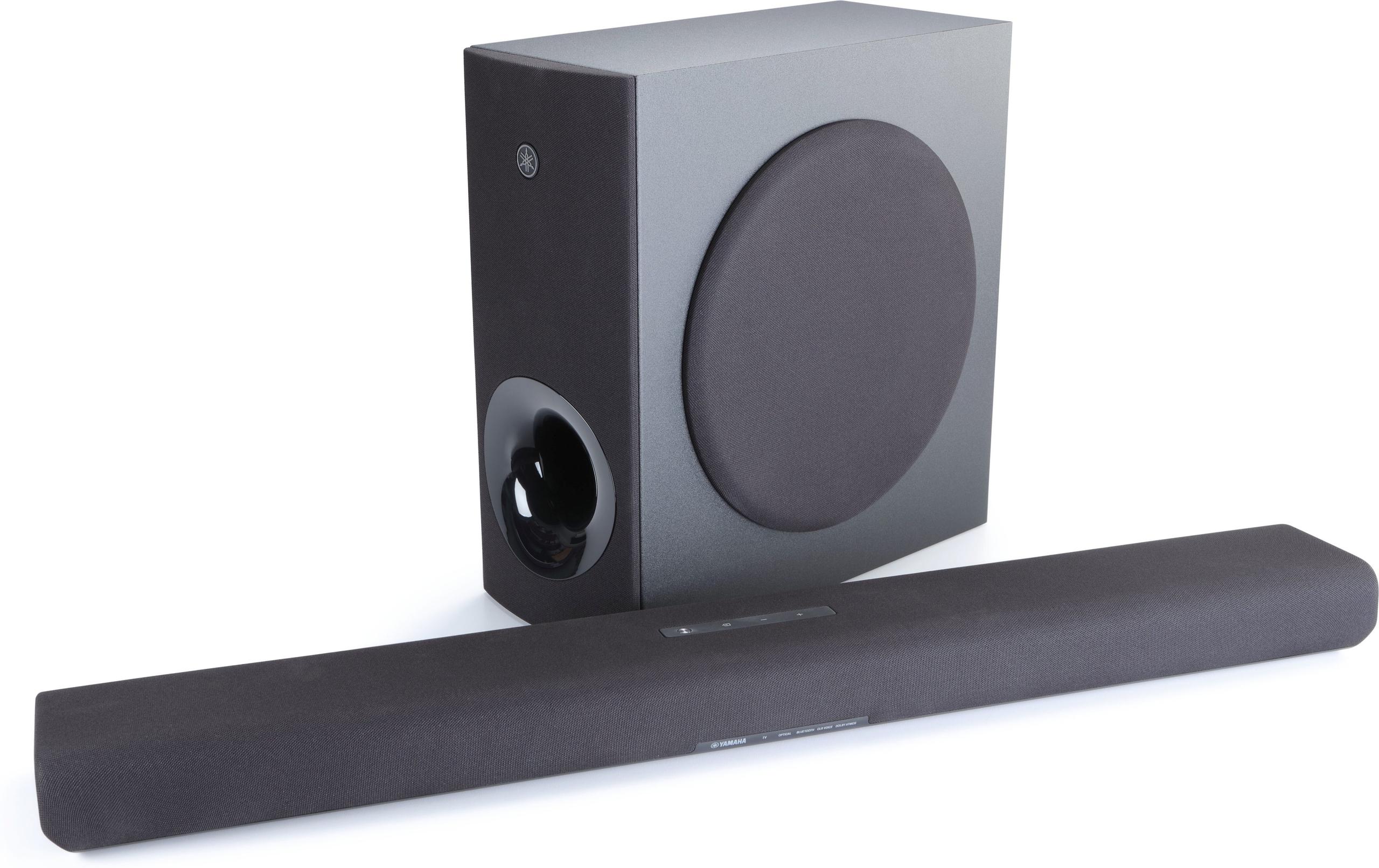
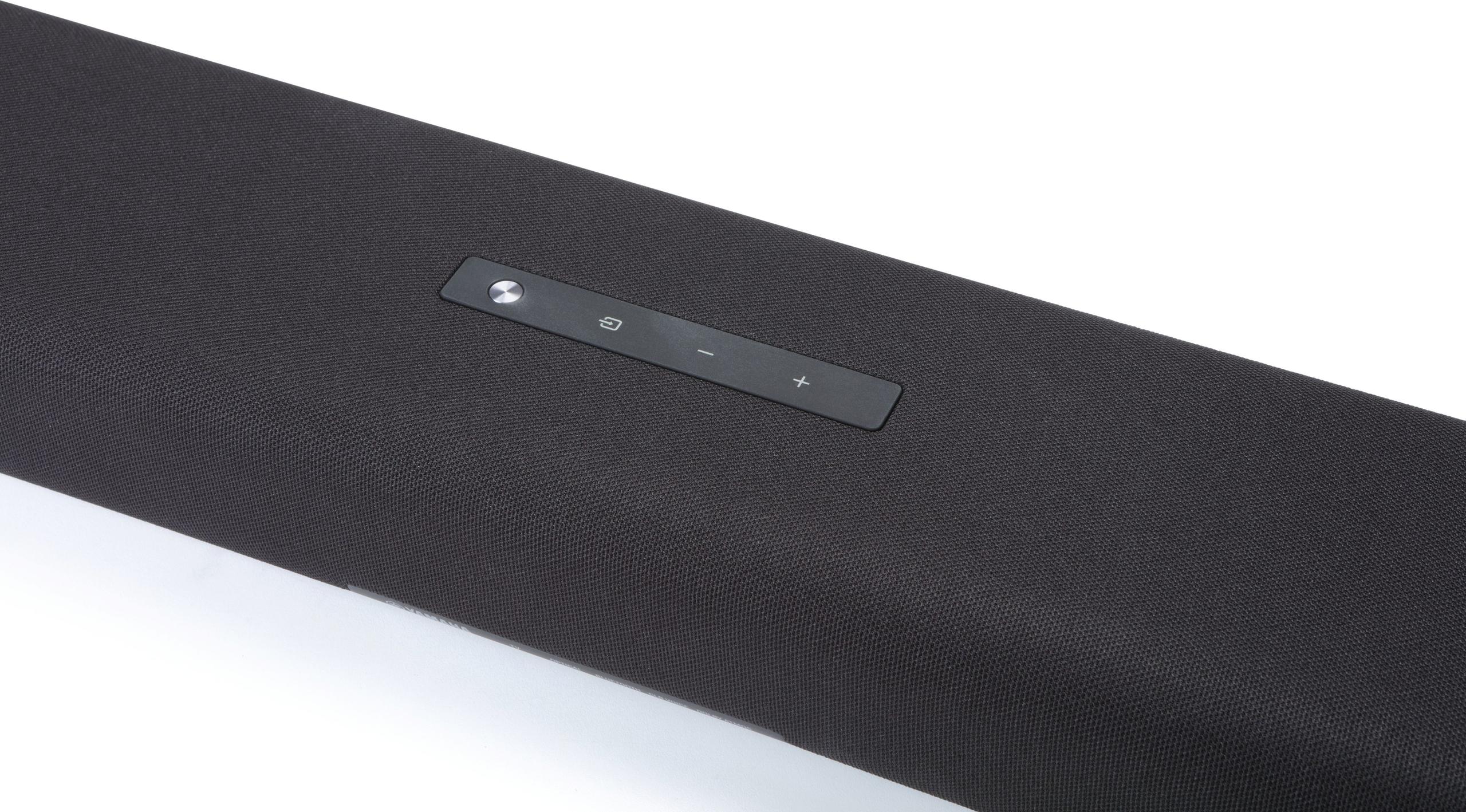
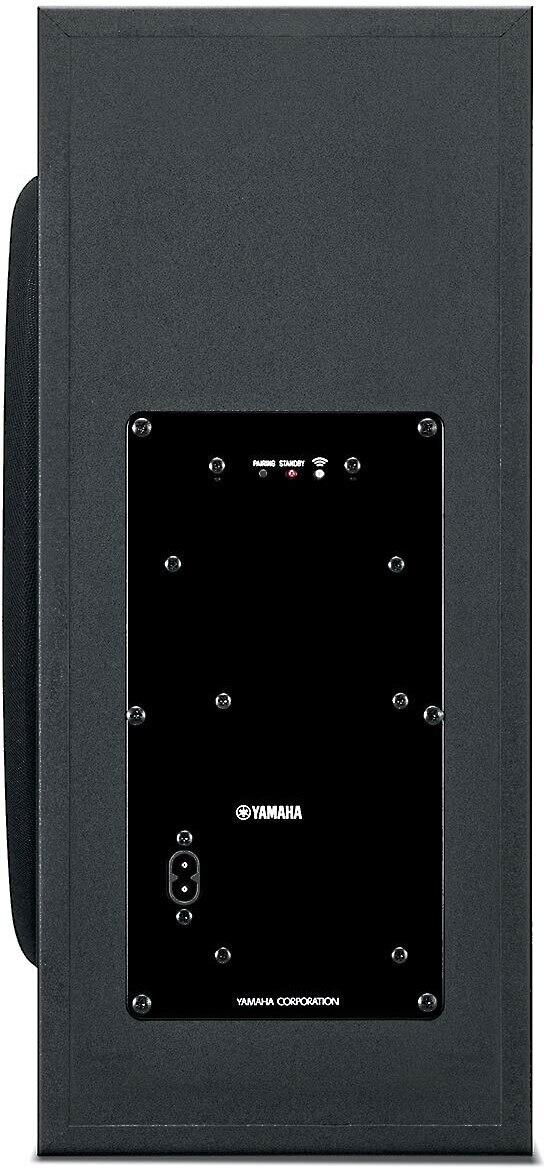
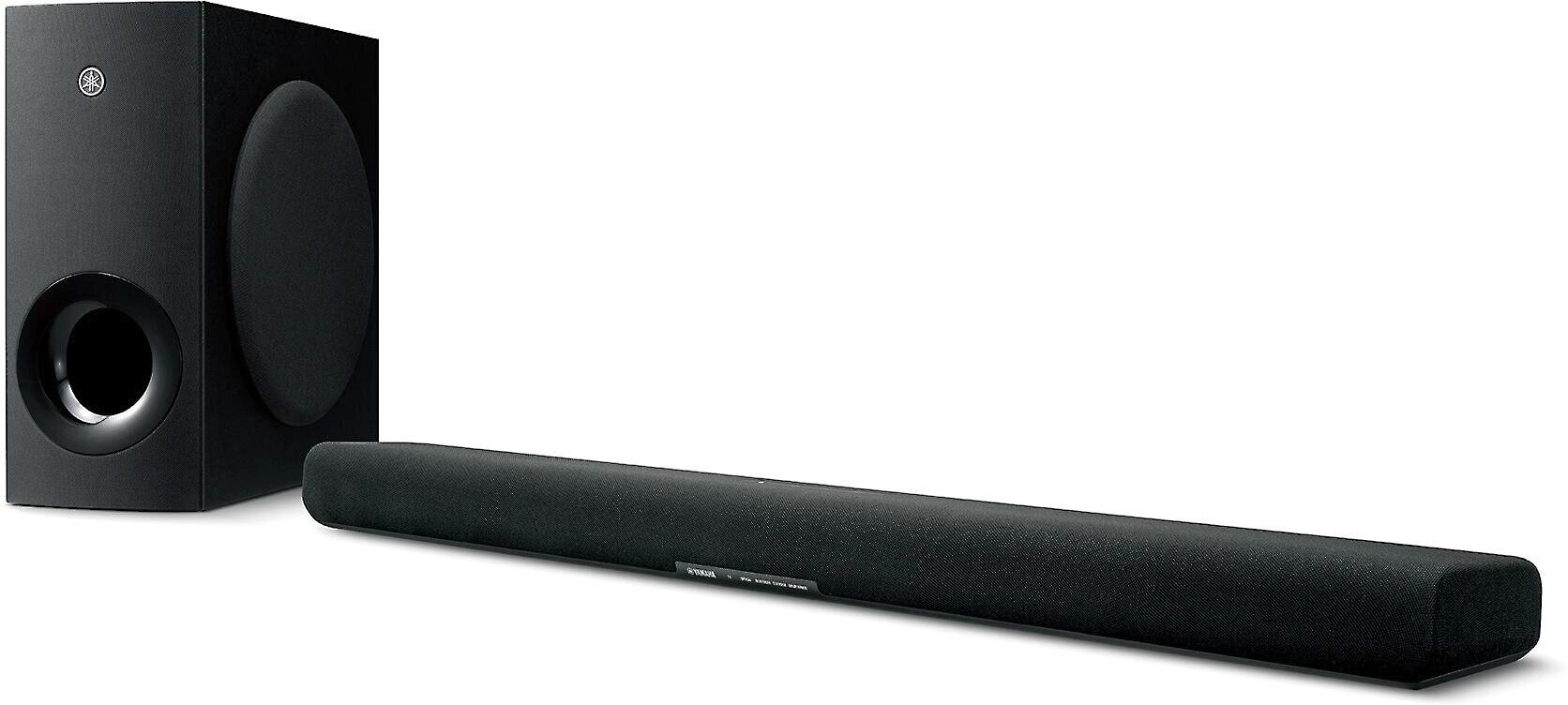
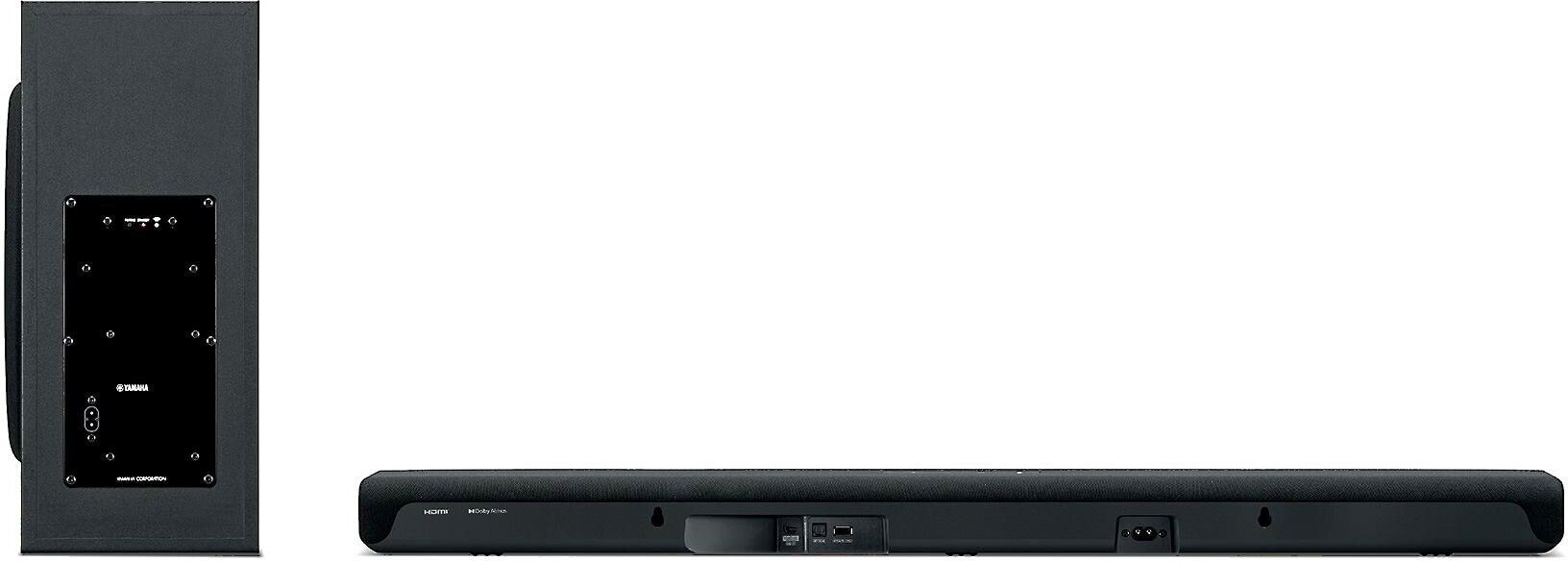
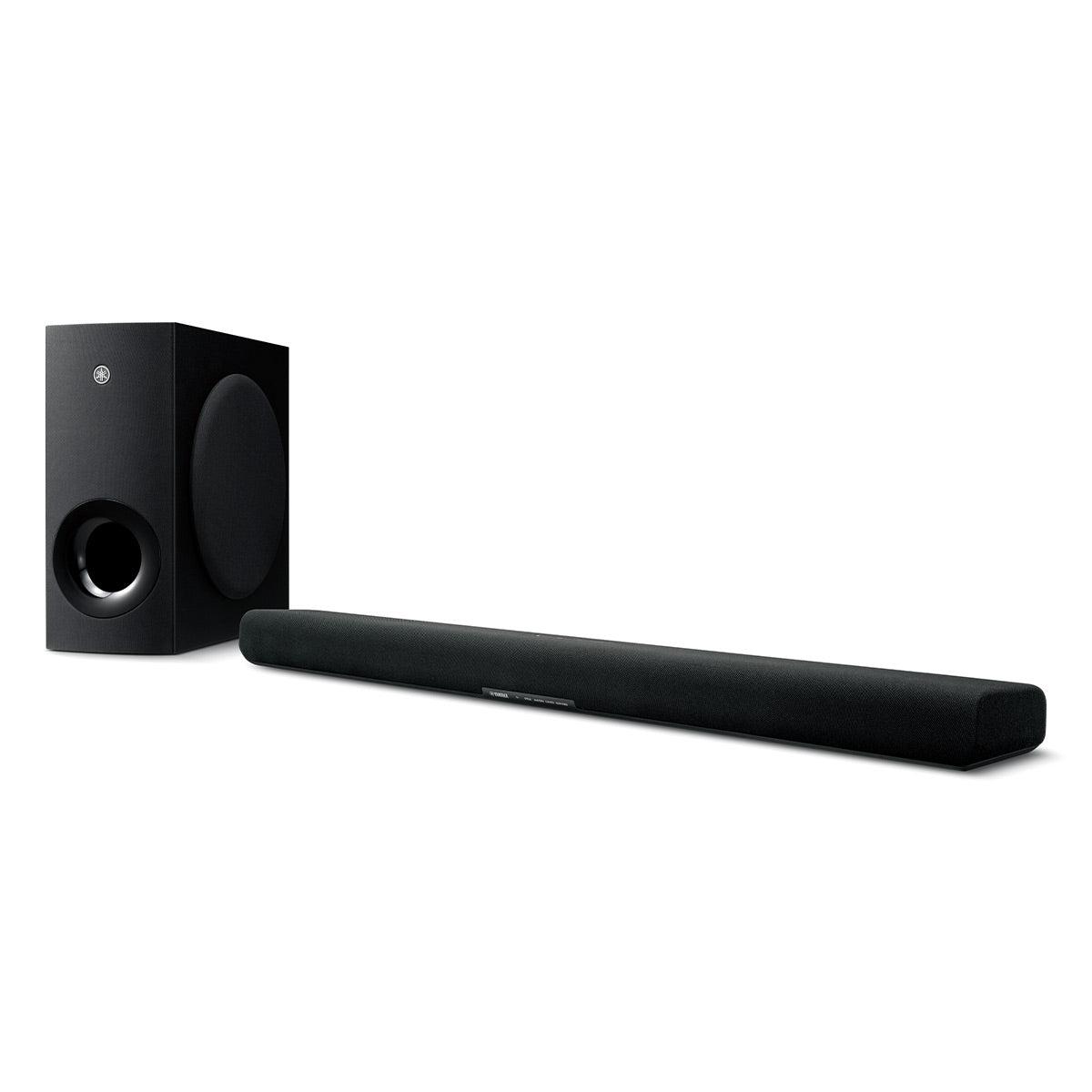
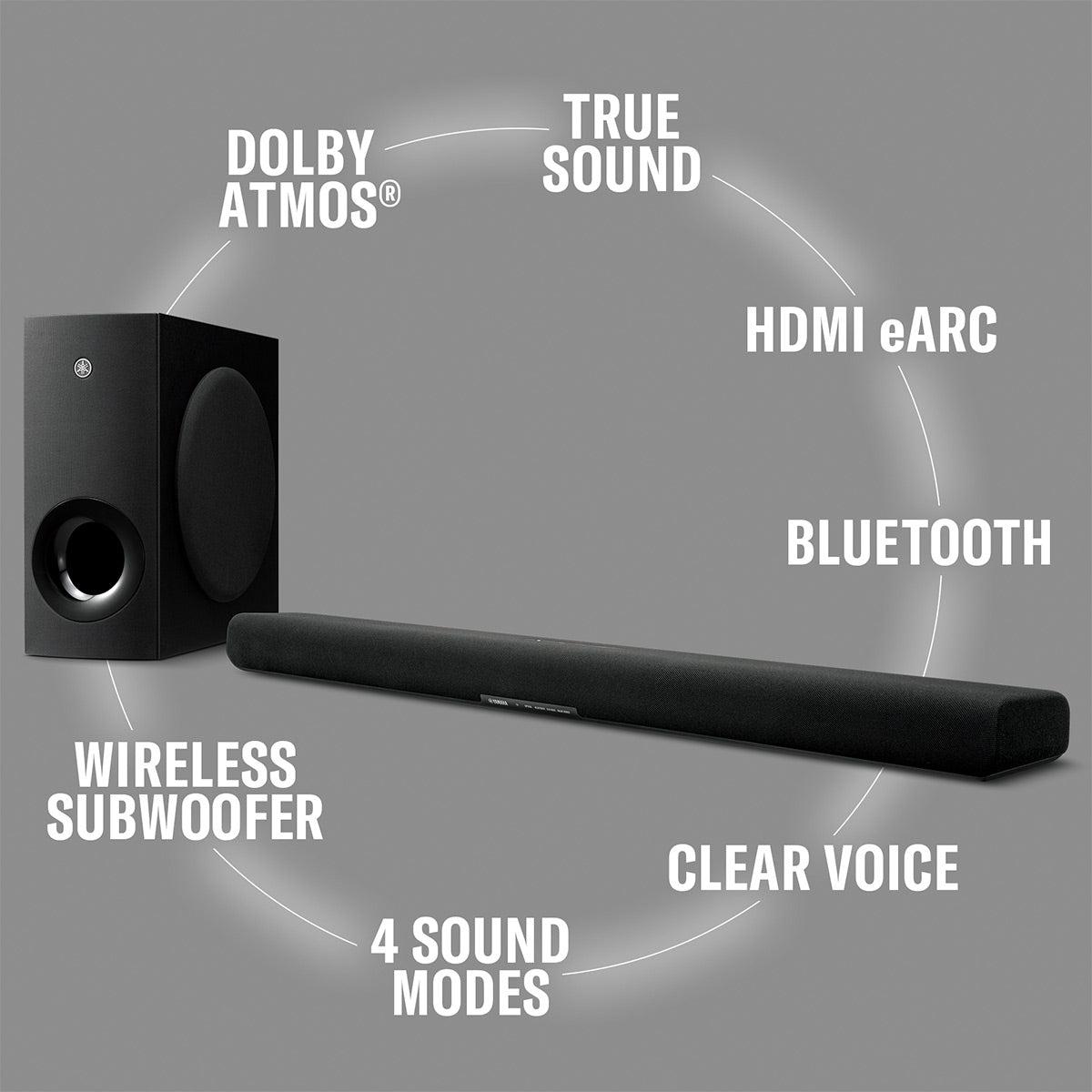
The Yamaha SR-B40A, on the other hand, takes a more traditional approach with just two components: a main soundbar and wireless subwoofer. Yamaha has been refining soundbar technology for years, and this model focuses on extracting the best possible audio quality from a simpler setup.
This fundamental difference shapes everything about how these systems perform and where they excel.
Here's where the biggest performance gap emerges. The Amazon Fire TV system delivers what audiophiles call "true" surround sound because it has physical speakers positioned around your room. When a helicopter flies from left to right in a movie, you'll hear it move through actual space as the sound travels from the rear left satellite to the front right channel.
The rear satellite speakers in the Amazon system create what's called a "lateral surround" experience. This means sounds can genuinely come from behind and beside you, not just from the front wall where your TV sits. For action movies, this creates a much more immersive experience where explosions seem to happen around you rather than just in front of you.
The Yamaha SR-B40A uses something called "virtual surround processing" to simulate this effect. The soundbar uses advanced digital signal processing (DSP) to trick your brain into thinking sounds are coming from locations where there aren't actually speakers. Yamaha's implementation is quite sophisticated—their "True Sound" engineering creates convincing height effects and can make the soundstage seem wider than the physical soundbar itself.
However, virtual surround has limitations. While it can create impressive width and some sense of height, it can't truly place sounds behind you the way physical rear speakers can. For casual viewing, many people find virtual surround perfectly satisfactory, but movie enthusiasts typically prefer the authentic positioning that real surround speakers provide.
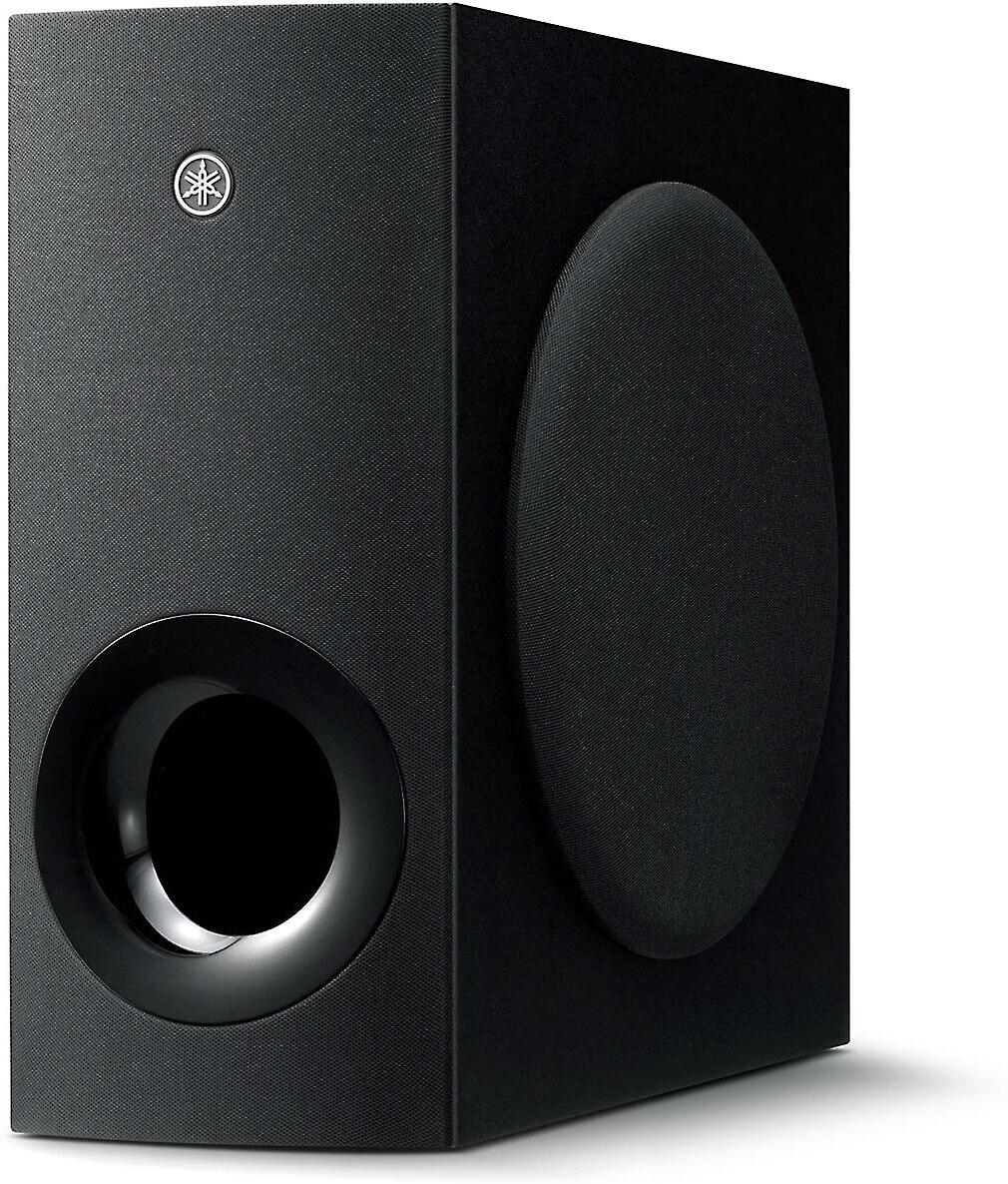
This is where the Yamaha SR-B40A flexes its muscles. The system includes a substantial 6.5-inch subwoofer driver housed in a cabinet that measures roughly 16 inches on each side. In our research of user and expert reviews, this subwoofer consistently receives praise for delivering what one reviewer called "brute force" bass performance that competing products couldn't match.
The larger driver size allows the Yamaha's subwoofer to move more air, creating deeper, more impactful low-frequency sound. This translates to more realistic explosions in action movies, fuller music reproduction, and that satisfying rumble during dramatic moments that you feel in your chest.
The Amazon Fire TV system's subwoofer, while adequate, doesn't quite reach the same level of bass authority. Testing has shown it can reach lower frequencies than some competitors, but the overall impact and control don't match what Yamaha achieves with their larger driver. Some users report that at high volumes, the Amazon's bass can overpower dialogue during intense action sequences.
For music listening, this bass difference becomes even more pronounced. The Yamaha excels at reproducing the full range of instruments, from the deep thump of electronic music to the rich resonance of acoustic bass guitars.
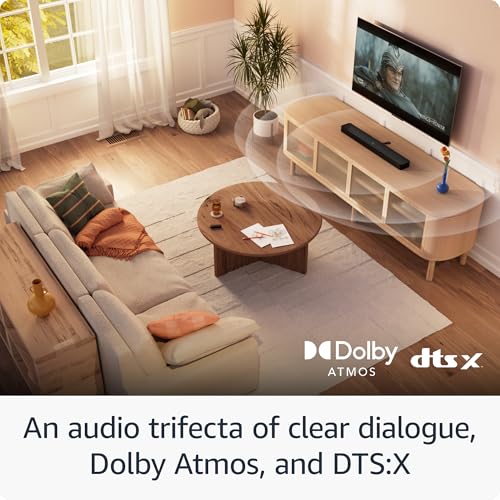
Here's where the Amazon Fire TV Soundbar Plus takes a commanding lead. The system supports an impressive array of audio formats, including lossless Dolby TrueHD, DTS-HD Master Audio, Dolby Atmos, and DTS:X. This comprehensive format support means you can enjoy high-quality audio from Blu-ray discs, streaming services, and gaming consoles without worrying about compatibility.
The DTS format support is particularly important because many Blu-ray movies use DTS for their audio tracks. Without this support, you'd miss out on the filmmaker's intended audio experience for a significant portion of your movie collection.
The Yamaha SR-B40A has a notable limitation here: it only supports Dolby formats and cannot decode DTS audio. For many users, this might not be immediately apparent, but it represents a significant content limitation. If you have a collection of movies that use DTS soundtracks, you won't get the full audio experience.
Both systems support Dolby Atmos, the increasingly popular "object-based" audio format that adds height information to soundtracks. However, neither system has dedicated upward-firing speakers, so the Atmos effect is virtualized through digital processing rather than physically projected above your listening position.
Both systems recognize that clear dialogue is crucial for an enjoyable viewing experience, but they approach it differently. The Amazon Fire TV system includes a dedicated center channel in its main soundbar specifically for dialogue reproduction, plus an adjustable dialogue enhancement feature. This setup follows traditional home theater principles where a dedicated center channel handles most speech content.
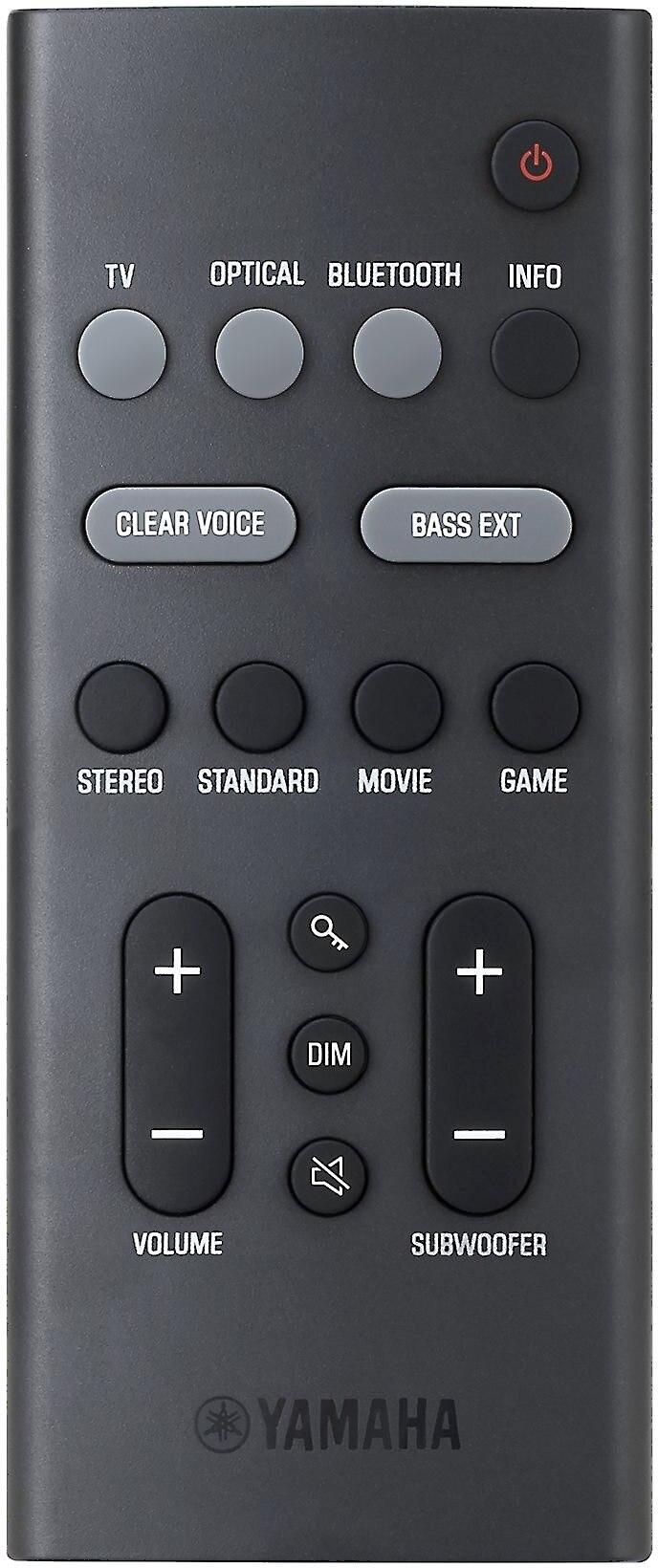
The Yamaha SR-B40A uses what they call "Clear Voice" technology to make speech more audible even when background music and sound effects are competing for attention. In practice, both approaches work well for TV shows and movies, though the Amazon's dedicated center channel provides slightly more natural dialogue reproduction.
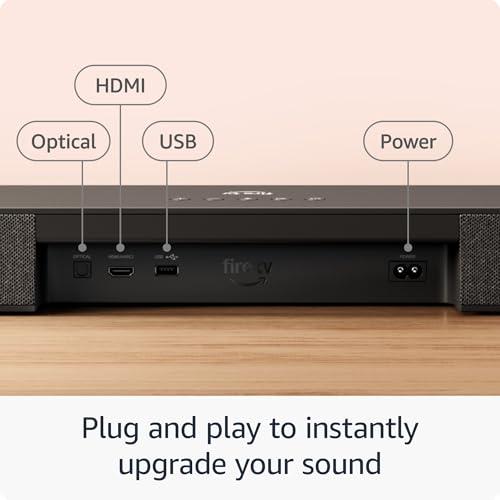
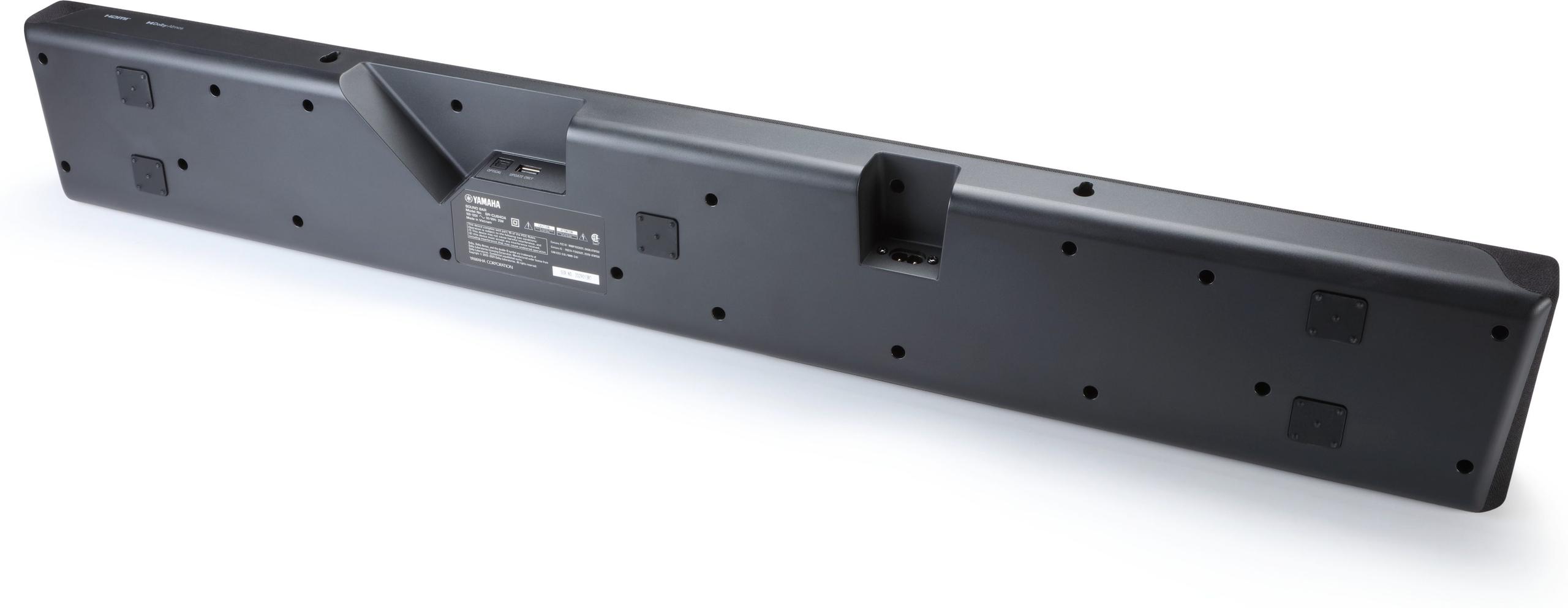
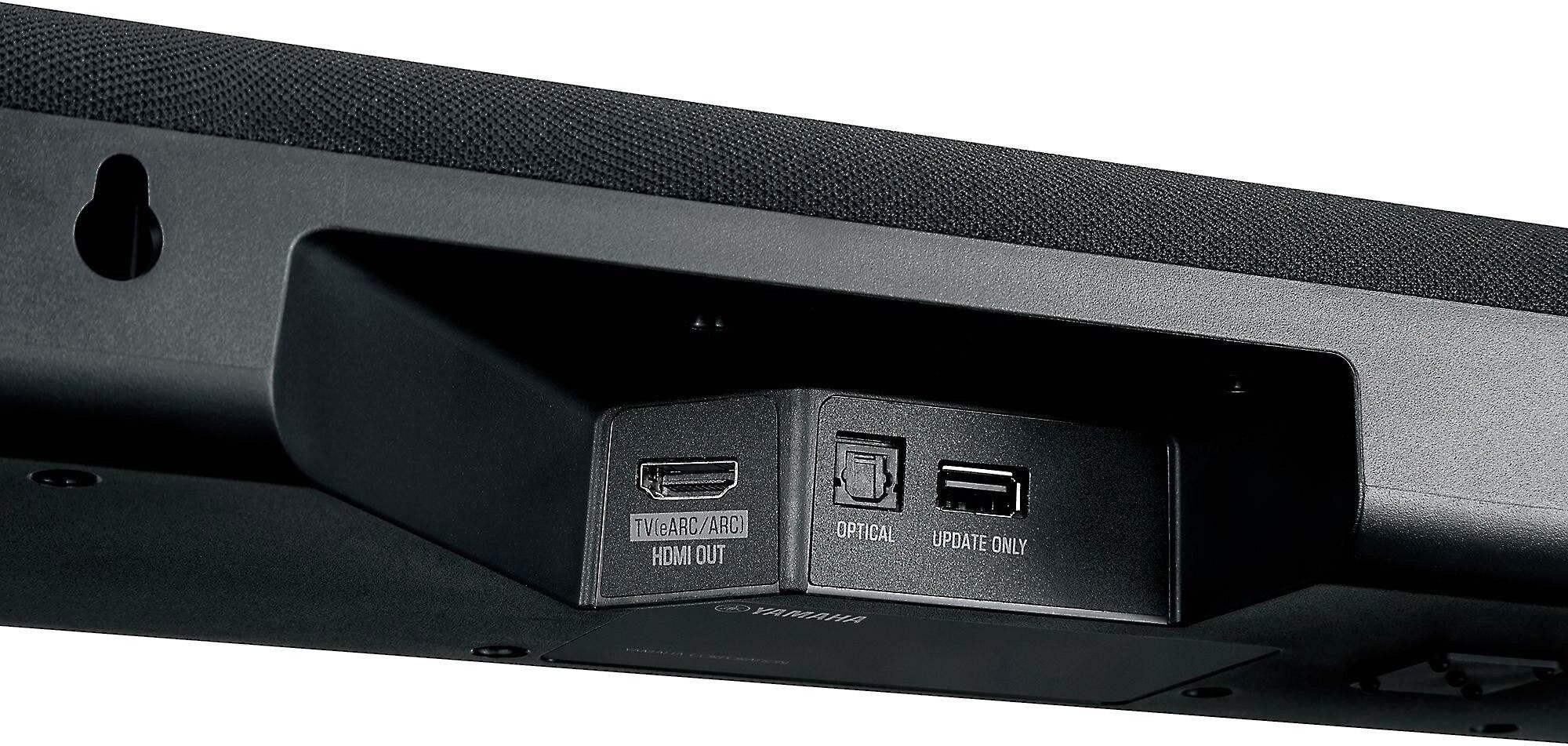
Both soundbars offer HDMI eARC (Enhanced Audio Return Channel), which allows them to receive high-quality audio from your TV and be controlled by your TV's remote. They also include optical digital inputs for older TVs and Bluetooth for wireless music streaming from phones and tablets.
The Amazon Fire TV system offers a unique advantage for users already invested in Amazon's ecosystem. When connected to compatible Fire TV devices, the soundbar integrates directly with the TV's settings menu, allowing you to adjust audio settings using the Fire TV remote and access soundbar controls through the TV's interface. This integration makes daily use more seamless for Fire TV owners.
The Yamaha SR-B40A provides its own dedicated smartphone app for advanced control and customization, plus multiple preset sound modes including specific settings for movies, music, games, and bass-enhanced content.
The Amazon Fire TV system's five-piece configuration requires more planning and space. You'll need to position the main soundbar below or above your TV, place the subwoofer somewhere along the front wall (it's wireless, so you have flexibility), and find suitable locations for the two rear satellite speakers behind your seating area.
While all components are pre-paired for easy setup, you're dealing with four separate devices that need power outlets and strategic placement. The rear speakers need to be positioned at ear level when you're seated, which might require speaker stands or wall mounting.
The Yamaha SR-B40A simplifies this considerably with just two components: the main soundbar and subwoofer. This makes it ideal for smaller rooms, apartments, or situations where running speaker wire or finding space for rear speakers isn't practical.
While both systems are designed primarily for TV and movie audio, their music reproduction capabilities differ significantly. The Yamaha SR-B40A excels here, thanks to Yamaha's decades of experience in audio equipment manufacturing. The system's stereo imaging—how well it creates the illusion of instruments positioned across a sound stage—is notably more precise and natural.
For music listening, the Yamaha's superior bass performance and cleaner midrange reproduction make it the clear winner. If you frequently stream music through your soundbar via Bluetooth or plan to use it as your primary music system, the Yamaha provides a more satisfying experience.
The Amazon Fire TV system, while competent for music, is optimized more for movie and TV content. Its strength lies in creating an immersive surround sound experience rather than audiophile-quality stereo reproduction.
At the time of writing, these systems occupy similar price ranges, but they offer different value propositions. The Amazon Fire TV Soundbar Plus provides more hardware—literally four separate speakers plus a subwoofer—making its cost per component quite attractive for a complete 5.1 system.
The Yamaha SR-B40A costs somewhat less while focusing on audio quality over quantity. You're paying for Yamaha's engineering expertise and superior bass performance rather than additional speakers.
For pure hardware value, the Amazon system wins by providing a complete surround sound setup. For audio quality per dollar, the Yamaha offers superior engineering and components.
In a dedicated home theater setting, the Amazon Fire TV system provides a more authentic cinematic experience. The physical rear speakers create true surround effects that virtual processing simply cannot replicate. When watching action movies, sci-fi films, or any content with complex soundtracks, the difference is immediately apparent.
The system's comprehensive format support also means you can take full advantage of high-quality Blu-ray soundtracks and streaming content from services like Disney+ and Netflix that offer Dolby Atmos.
However, the Yamaha SR-B40A shouldn't be dismissed for home theater use. Its virtual surround processing is quite convincing, and the superior bass performance adds significant impact to movie soundtracks. For smaller rooms or casual viewing, many users find the Yamaha's simulated surround effects perfectly satisfactory.
Since the Amazon Fire TV system launched in 2023, Amazon has continued refining its Fire TV integration features and format support. The system represents Amazon's learning from their earlier, simpler soundbar offerings and their push into more serious home theater territory.
Yamaha's soundbar technology has evolved more gradually, building on years of experience in audio engineering. The SR-B40A incorporates lessons learned from previous models while maintaining Yamaha's focus on audio quality fundamentals.
The Amazon Fire TV Soundbar Plus makes the most sense if you have a medium to large room where you can properly position rear speakers, you primarily watch movies and TV shows rather than listening to music, and you want the most immersive audio experience possible within this price range. It's also the obvious choice if you're already invested in Amazon's Fire TV ecosystem.
The system requires more planning and space but rewards you with genuine surround sound positioning that virtual processing can't match. If you're setting up a dedicated home theater or family room where movie nights are a priority, this system delivers the experience you're looking for.
The Yamaha SR-B40A is ideal for users who prioritize audio quality over channel count, have space constraints that make rear speakers impractical, or listen to significant amounts of music through their soundbar. It's also perfect for apartments, smaller living rooms, or any situation where you want great sound without the complexity of multiple components.
The Yamaha excels in situations where you want to significantly improve your TV's audio without committing to a full surround sound setup. Its superior bass performance and natural stereo reproduction make it particularly appealing for varied content consumption.
These two systems represent different philosophies in soundbar design, and both succeed at what they're trying to accomplish. The Amazon Fire TV Soundbar Plus delivers on the promise of immersive surround sound at an accessible price, while the Yamaha SR-B40A focuses on extracting maximum audio quality from a simpler setup.
Your choice ultimately depends on your priorities: immersive surround sound experience versus premium stereo quality, system complexity versus simplicity, and room size considerations. Both systems will dramatically improve your TV's audio compared to built-in speakers, but they'll do it in distinctly different ways.
For most users setting up a home theater, the Amazon's true surround sound capabilities provide a more engaging experience. For those prioritizing audio quality, simplicity, or music performance, the Yamaha's superior engineering and bass performance make it the smarter choice.
| Amazon Fire TV Soundbar Plus 5.1 Channel System | Yamaha SR-B40A 2.1-Channel Sound Bar with Wireless Subwoofer |
|---|---|
| Channel Configuration - Determines surround sound authenticity | |
| True 5.1 channels with physical rear speakers | 2.1 channels with virtual surround processing |
| Audio Format Support - Future-proofs your investment | |
| Dolby Atmos, DTS:X, Dolby TrueHD, DTS-HD MA | Dolby Atmos only (no DTS format support) |
| Number of Components - Affects setup complexity and room requirements | |
| 4 separate units (soundbar + subwoofer + 2 rear speakers) | 2 units (soundbar + subwoofer) |
| Subwoofer Driver Size - Directly impacts bass depth and power | |
| Standard size (specifications not detailed) | 6.5-inch driver for superior bass performance |
| Smart Features - Enhances daily usability | |
| Deep Fire TV integration with on-screen controls | Dedicated smartphone app with sound mode presets |
| Connectivity Options - Determines device compatibility | |
| HDMI eARC, Optical, USB-A, Bluetooth 5.0 | HDMI eARC, Optical, Bluetooth 5.1 |
| Setup Requirements - Consider your room layout and placement flexibility | |
| Requires rear speaker positioning behind seating area | Simple 2-component placement along front wall |
| Music Performance - Important if you stream music frequently | |
| Adequate for casual music listening | Excellent stereo imaging optimized for music |
| Best Use Case - Who should choose this system | |
| Medium-large rooms prioritizing movie immersion | All room sizes prioritizing audio quality and simplicity |
The Amazon Fire TV Soundbar Plus 5.1 Channel System delivers superior surround sound with physical rear speakers that create authentic 360-degree audio positioning. The Yamaha SR-B40A uses virtual surround processing to simulate surround effects, which is convincing but cannot match the immersive experience of actual rear speakers placed behind your seating area.
A 5.1 system like the Amazon Fire TV Soundbar Plus has five main speakers (left, right, center, two rear surrounds) plus a subwoofer, providing true surround sound. The Yamaha SR-B40A 2.1 system has only left and right speakers plus a subwoofer, relying on digital processing to create surround effects from the front-facing soundbar.
For dedicated home theater use, the Amazon Fire TV Soundbar Plus 5.1 Channel System excels with genuine surround sound positioning and comprehensive audio format support including DTS. The Yamaha SR-B40A offers excellent dialogue clarity and bass performance but lacks the immersive surround experience that enhances action movies and dramatic content.
The Yamaha SR-B40A delivers superior bass with its larger 6.5-inch subwoofer driver that provides deeper, more controlled low-frequency response. While the Amazon Fire TV Soundbar Plus includes adequate bass performance, it doesn't match the impact and authority of Yamaha's larger subwoofer design.
The Yamaha SR-B40A excels for music with natural stereo imaging and superior bass reproduction optimized for musical content. The Amazon Fire TV Soundbar Plus 5.1 Channel System is adequate for casual music listening but is primarily optimized for movie and TV audio rather than audiophile music reproduction.
The Yamaha SR-B40A offers simpler setup with just two wireless components that can be placed along your front wall. The Amazon Fire TV Soundbar Plus requires more planning as you need to position four separate components including rear speakers behind your seating area, though all components come pre-paired.
Yes, both the Amazon Fire TV Soundbar Plus 5.1 Channel System and Yamaha SR-B40A support Dolby Atmos, but through virtual processing rather than dedicated upward-firing speakers. However, the Amazon system also supports DTS:X and other advanced formats, while the Yamaha only supports Dolby formats.
The Yamaha SR-B40A is ideal for small rooms due to its compact two-component design and excellent virtual surround processing that doesn't require rear speaker placement. The Amazon Fire TV Soundbar Plus needs adequate space for rear speakers and works best in medium to large rooms where proper surround speaker positioning is possible.
Both soundbars support HDMI eARC for TV remote control, but the Amazon Fire TV Soundbar Plus 5.1 Channel System offers deeper integration with Fire TV devices through on-screen menus. The Yamaha SR-B40A provides standard HDMI control plus a dedicated smartphone app for advanced settings and sound mode adjustments.
The Amazon Fire TV Soundbar Plus provides excellent value by including four separate speakers in a complete 5.1 system. The Yamaha SR-B40A costs less while focusing on premium audio quality over speaker quantity, making it better value for users prioritizing sound quality and simplicity over surround speaker count.
Both soundbars work excellently with gaming consoles through HDMI connections. The Amazon Fire TV Soundbar Plus 5.1 Channel System provides more immersive gaming audio with physical surround speakers for directional audio cues. The Yamaha SR-B40A offers a dedicated Game mode and lower audio latency that some gamers prefer for competitive gaming.
Choose the Amazon Fire TV Soundbar Plus 5.1 Channel System if you want authentic surround sound with physical rear speakers and have adequate room space. Select the Yamaha SR-B40A if you prioritize superior audio quality and bass performance in a simpler setup, or if space constraints make rear speakers impractical for your home theater configuration.
We've done our best to create useful and informative comparisons to help you decide what product to buy. Our research uses advanced automated methods to create this comparison and perfection is not possible - please contact us for corrections or questions. These are the sites we've researched in the creation of this article: rtings.com - cordbusters.co.uk - techradar.com - developer.amazon.com - t3.com - hometechnologyreview.com - youtube.com - hometechnologyreview.com - whathifi.com - hometechnologyreview.com - hometechnologyreview.com - youm.design - hometechnologyreview.com - dolby.com - crutchfield.com - visions.ca - shop.usa.yamaha.com - bestbuy.com - bestbuy.com - usa.yamaha.com - my.yamaha.com - europe.yamaha.com - adorama.com - usa.yamaha.com - digitalhomecreations.com - europe.yamaha.com - sundownone.com

Privacy Policy
Terms and Conditions - Affiliate Policy
Home Security
© Copyright 2008-2026.
11816 Inwood Rd #1211, Dallas, TX 75244