

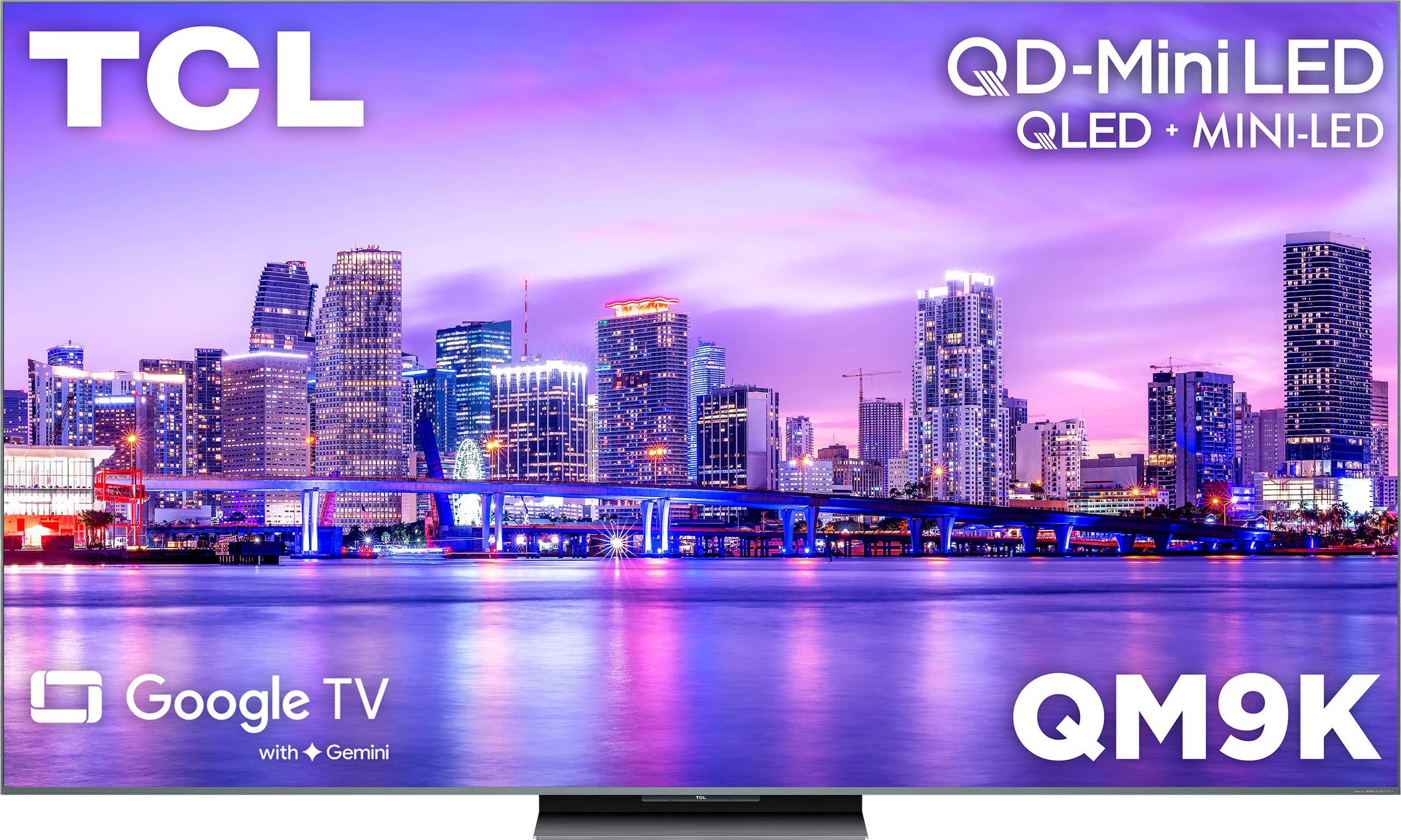
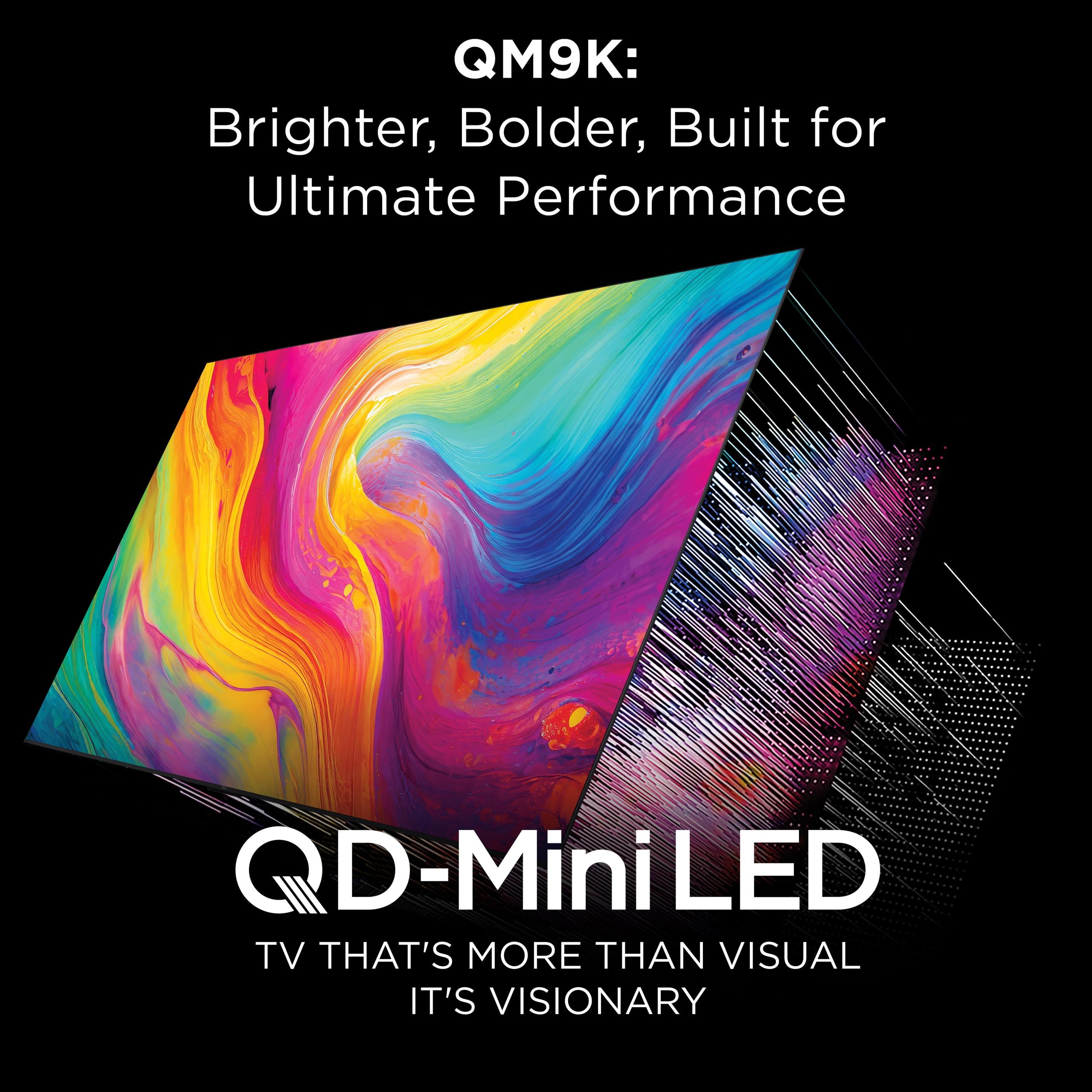
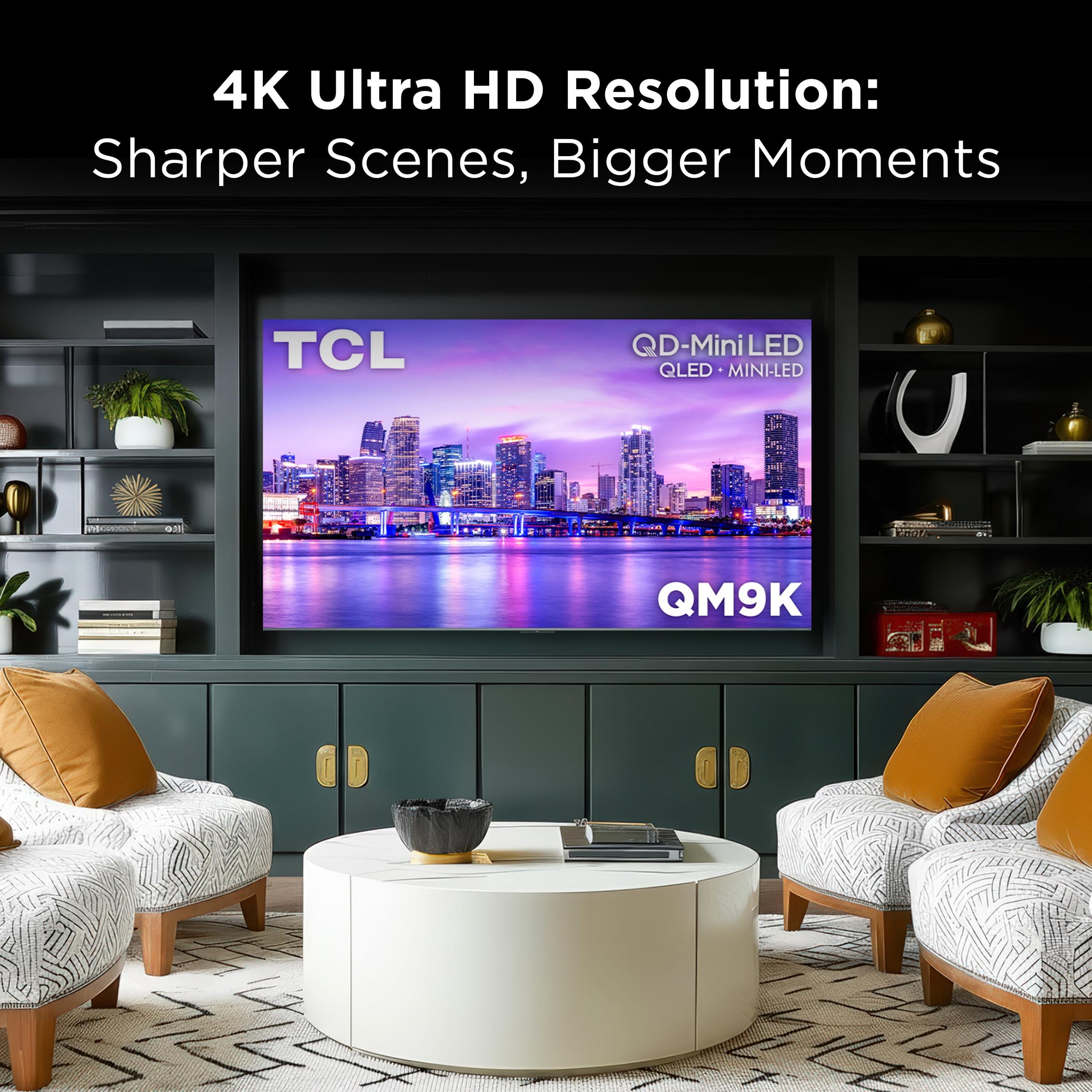
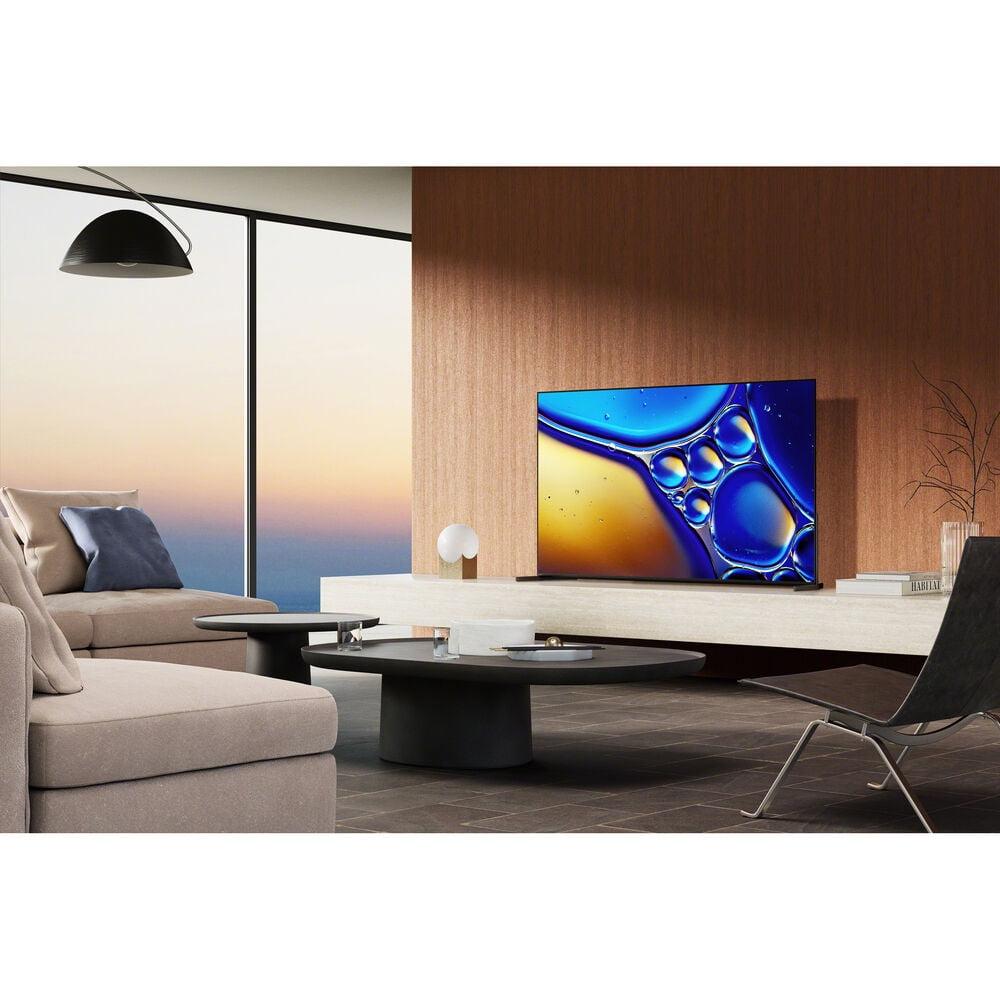
Choosing a premium 65-inch TV in 2025 means navigating two fundamentally different display technologies that each excel in different ways. The TCL QM9K represents the pinnacle of Mini-LED technology with extreme brightness and gaming prowess, while the Sony BRAVIA 8 II showcases the latest QD-OLED innovation with perfect blacks and cinematic accuracy. Both launched in 2025 with significant technological improvements over their predecessors, but they take completely different approaches to delivering exceptional picture quality.
At the time of writing, these TVs sit in different price tiers, with the TCL QM9K positioned as a high-performance value flagship and the Sony BRAVIA 8 II commanding a substantial premium for its OLED technology and Sony's renowned processing. The price difference is significant enough to influence most buying decisions, making this comparison as much about value as it is about pure performance.
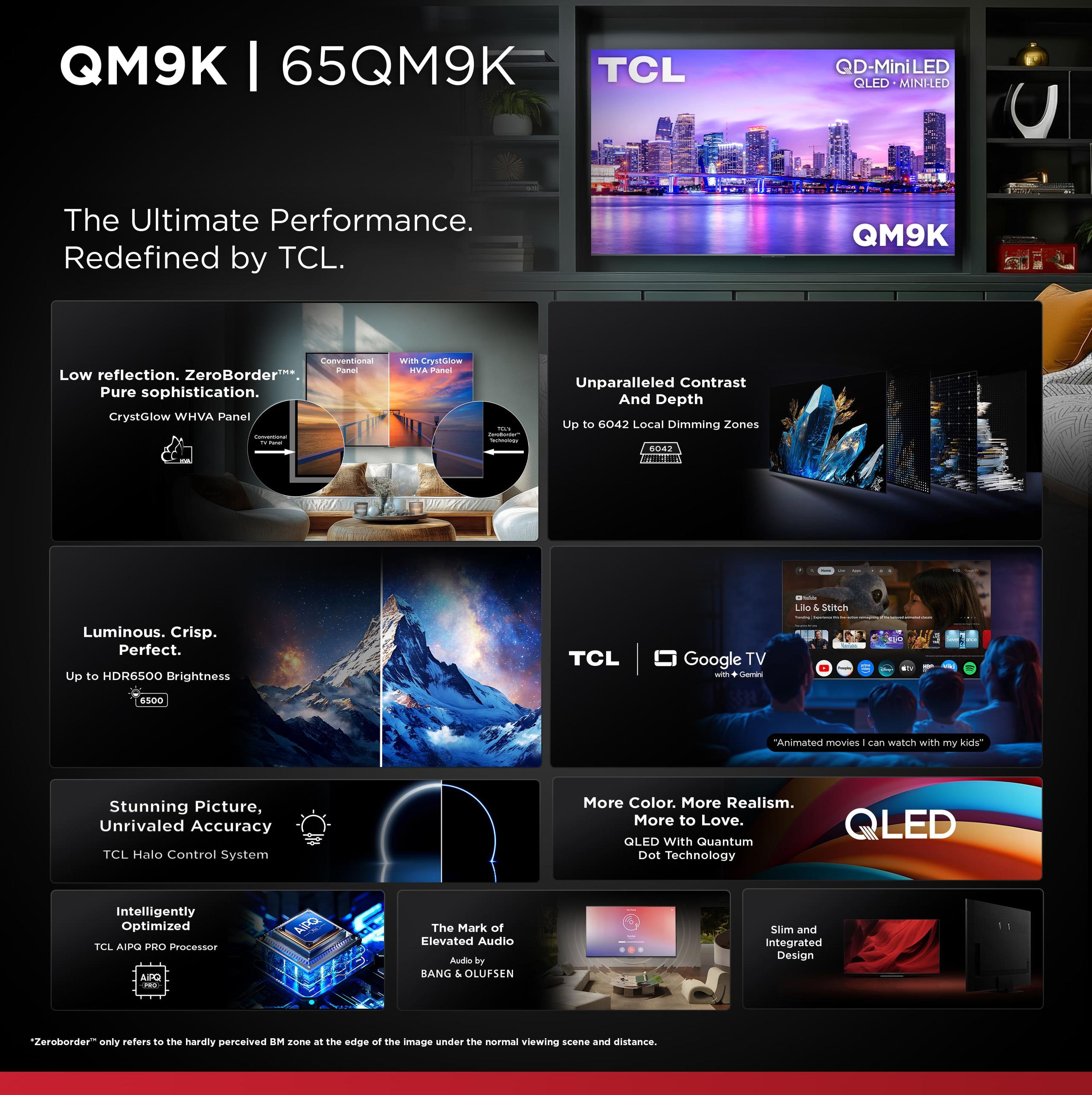
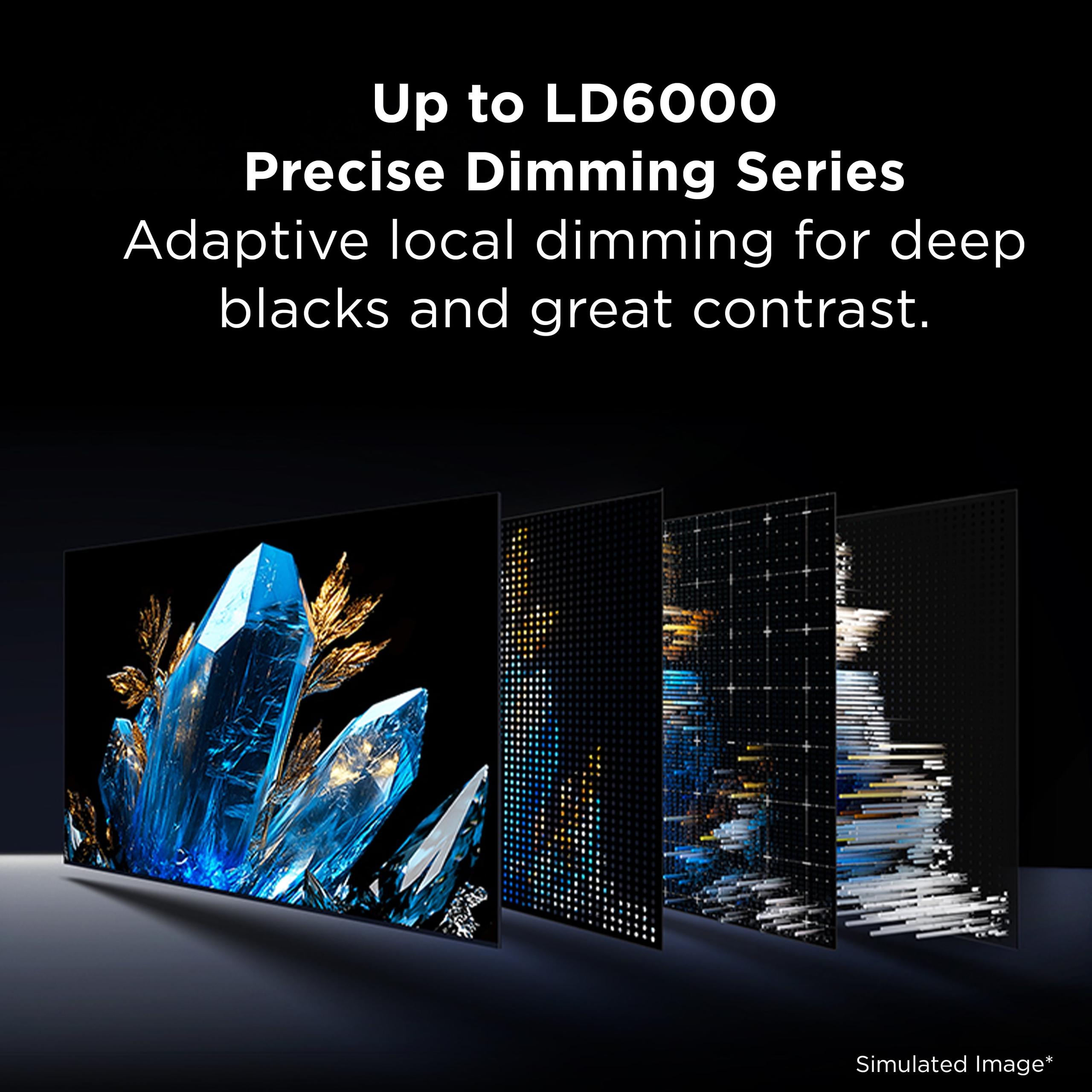
The most fundamental difference between these TVs lies in how they create light and color. The TCL QM9K uses Mini-LED technology, which places thousands of tiny LED lights behind a traditional LCD panel. These LEDs are organized into up to 6,000 local dimming zones—think of these as independently controllable sections that can brighten or dim to create contrast. When a scene has a bright star against a dark sky, the zones behind the star light up while surrounding zones dim down. It's like having thousands of tiny flashlights working together to illuminate only the parts of the picture that need light.
The Sony BRAVIA 8 II, on the other hand, uses QD-OLED technology where each individual pixel creates its own light. There are over 8 million pixels, and each one can turn completely on or completely off independently. When displaying that same star against a dark sky, the pixels showing the star emit light while the surrounding pixels turn completely off, creating true black. It's the difference between using a flashlight in a dark room versus having millions of tiny candles that you can light or extinguish individually.
Both approaches use quantum dots—microscopic crystals that convert light into pure, accurate colors—but apply them differently. The TCL QM9K uses quantum dots to enhance the LED backlight, while the Sony BRAVIA 8 II uses them to convert blue OLED light into red and green for a wider color range.
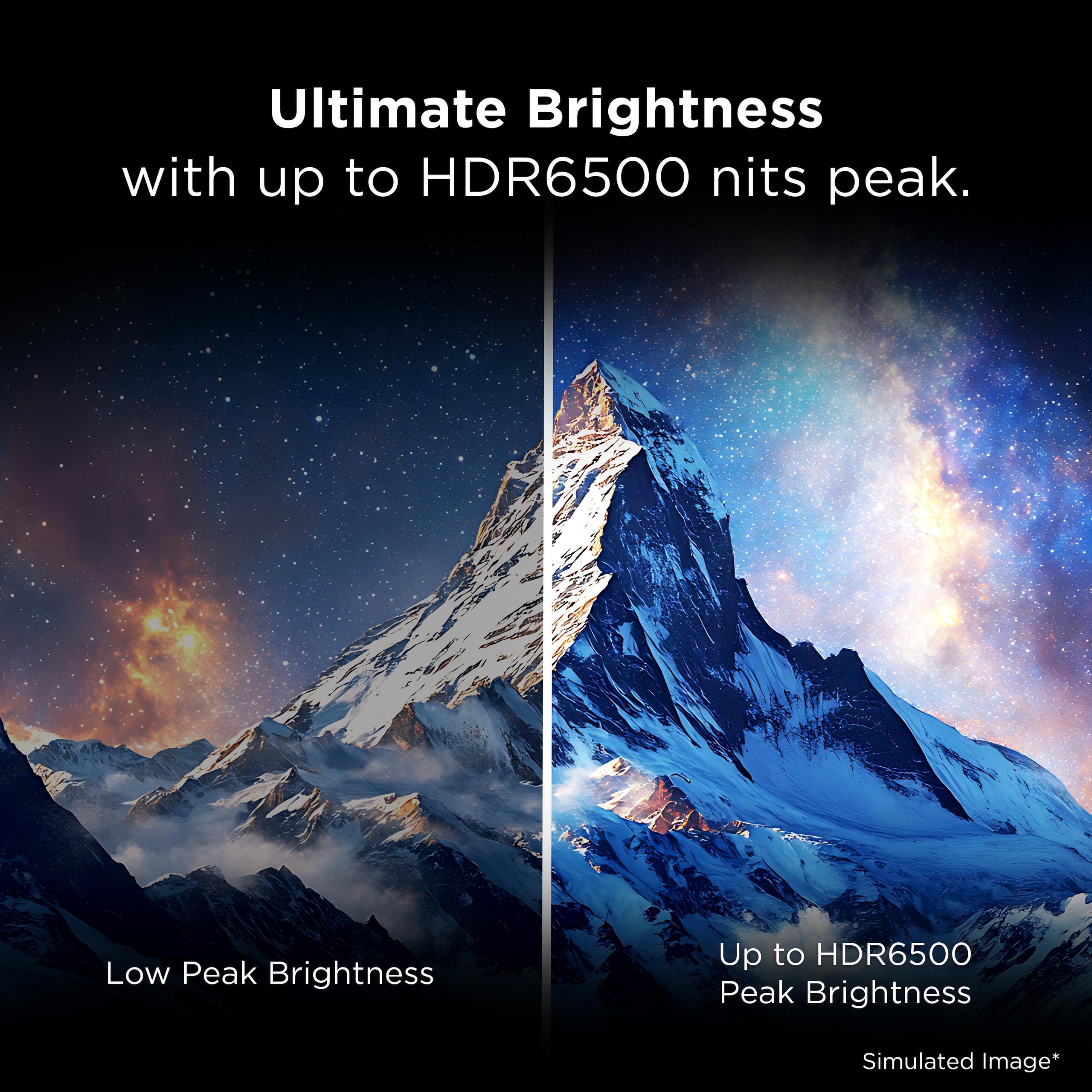
The TCL QM9K absolutely dominates in raw brightness capability, reaching peak levels of 6,500 nits in small highlights. To put this in perspective, a typical sunny day outdoors measures around 10,000 nits, while most standard TVs peak at 400-600 nits. This extreme brightness means HDR (High Dynamic Range) content—like the gleam of sunlight on water or the explosion of a lightsaber—truly pops off the screen even in bright living rooms.
The Sony BRAVIA 8 II reaches approximately 1,880 nits peak brightness, which Sony claims is 25% brighter than their previous flagship OLEDs. While this sounds modest compared to the TCL, OLED's brightness is more targeted and efficient. Since OLED pixels can turn completely off, bright objects appear to float against pure black backgrounds, making even moderate brightness levels appear more impactful than they would on other display types.
Through our research into expert reviews and user feedback, the brightness difference becomes most apparent in bright rooms. The TCL QM9K maintains its visual impact even with windows open and lights on, while the Sony BRAVIA 8 II performs best in controlled lighting conditions. However, in dimmed home theater environments, the Sony's targeted brightness combined with perfect blacks often creates a more dramatic and realistic image than the TCL's raw brightness advantage suggests.
This is where the fundamental technology differences become most apparent. The Sony BRAVIA 8 II achieves perfect blacks—when pixels turn off, they emit zero light, creating an infinite contrast ratio. This means stars in space appear to float in true darkness, and dark movie scenes reveal subtle shadow details without any backlight bleeding through.
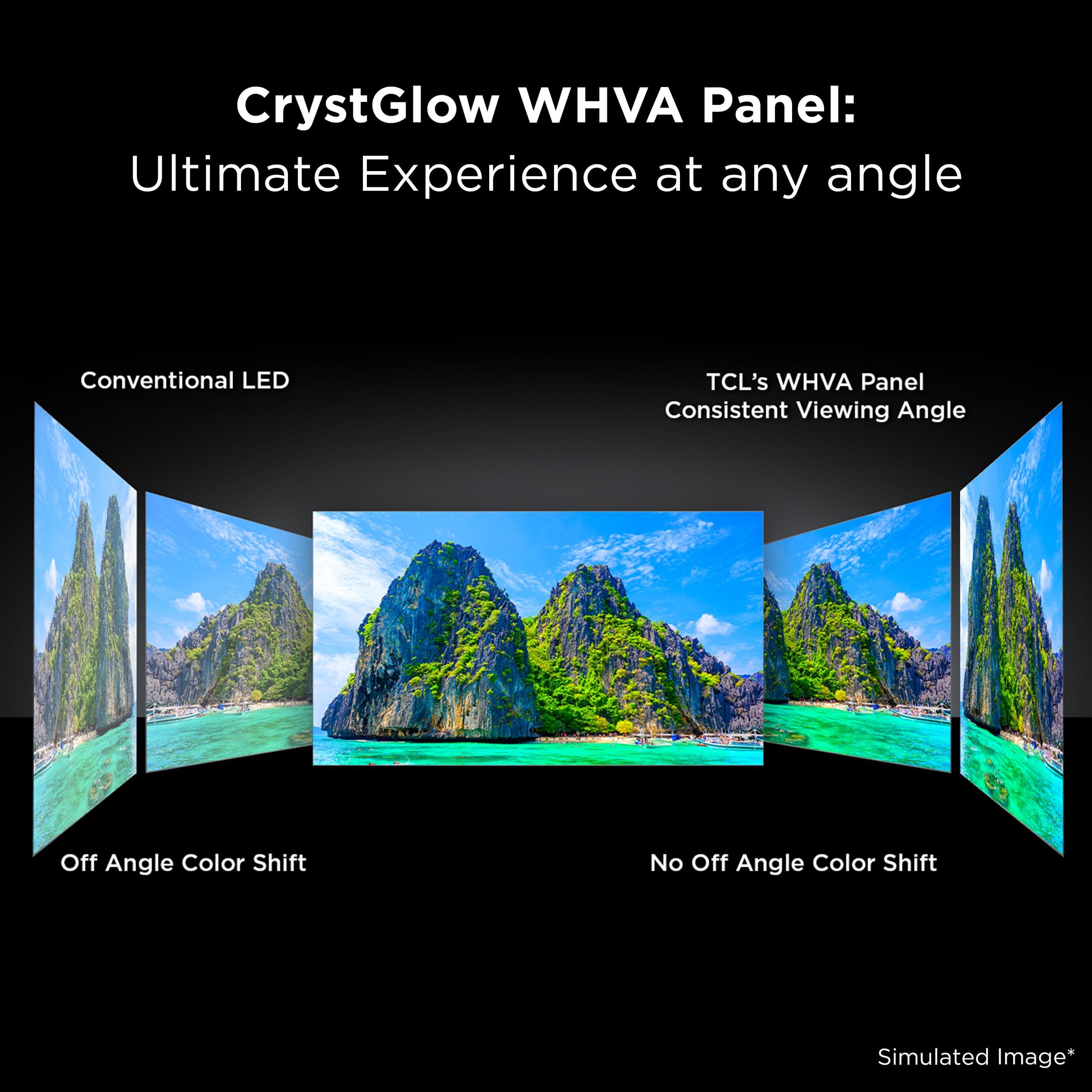
The TCL QM9K uses its 6,000 local dimming zones and advanced Halo Control System to approximate this performance. The system includes sophisticated algorithms and hardware improvements like a CrystGlow WHVA panel and 23-bit backlight controller to minimize blooming—the unwanted glow around bright objects in dark scenes. While it can't achieve true blacks like OLED, the results are impressively close, with our research indicating minimal haloing in most content.
The practical difference shows up most in dark room viewing. The Sony BRAVIA 8 II creates an almost three-dimensional image where bright objects seem to leap off a perfectly black background. The TCL QM9K delivers excellent contrast but with slightly raised black levels—dark areas appear very dark gray rather than true black. For most viewers in typical viewing conditions, both deliver satisfying contrast, but movie enthusiasts in dedicated home theaters will appreciate the OLED's perfection.
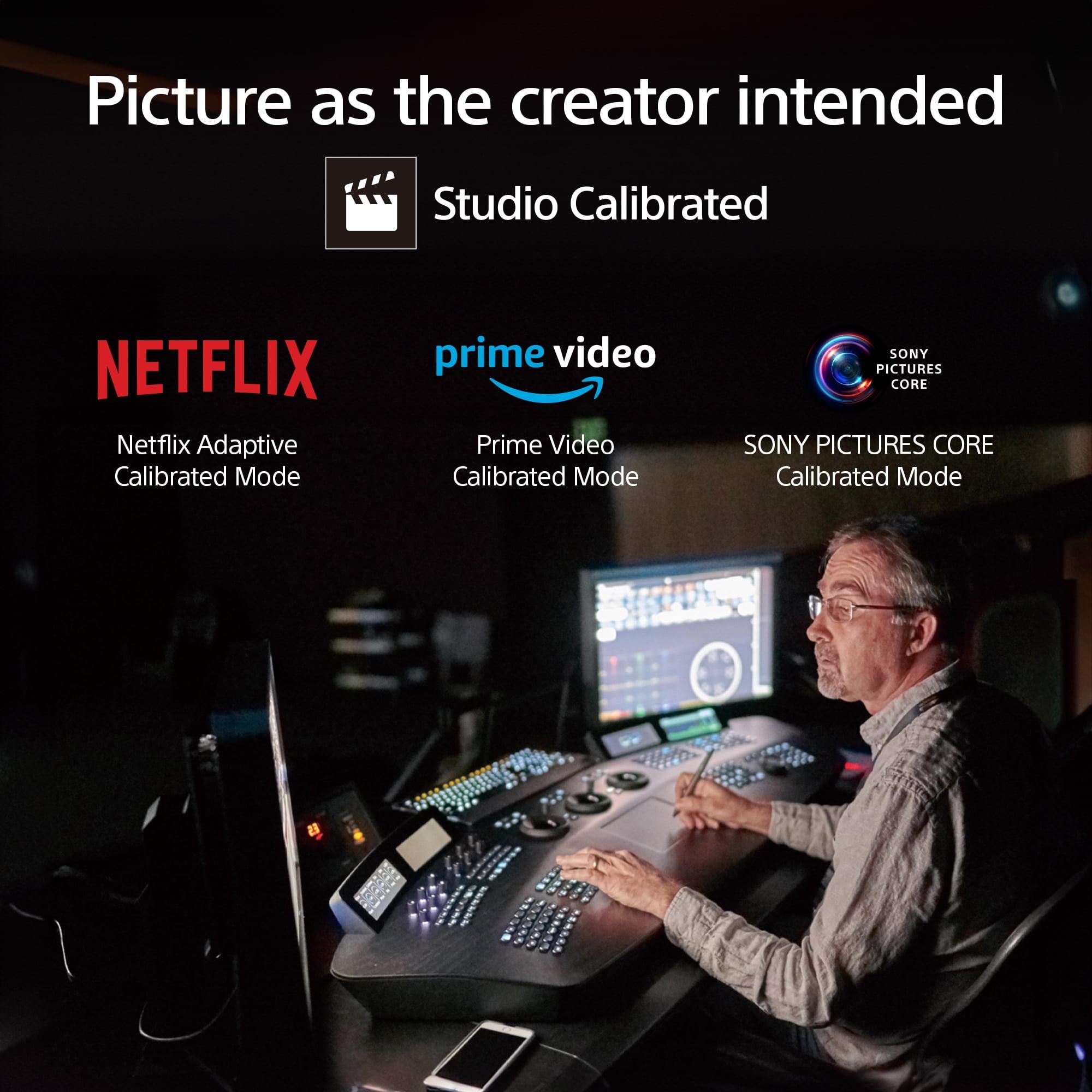
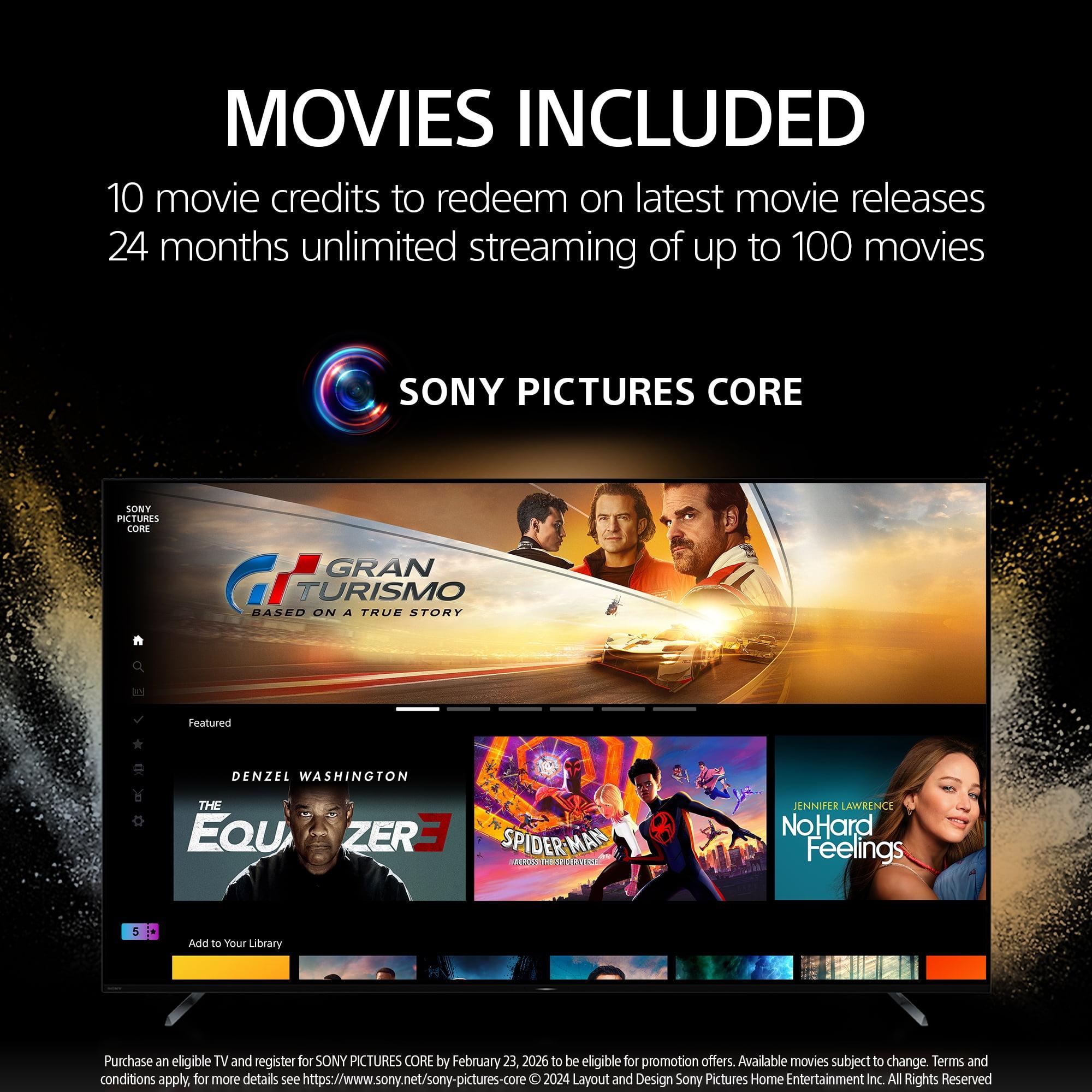
Color performance reveals another philosophical divide between these displays. The Sony BRAVIA 8 II prioritizes accuracy and naturalism through its XR Triluminos Max technology and studio-calibrated picture modes. These modes are specifically tuned for Netflix, Prime Video, and Sony Pictures Core to display content exactly as filmmakers intended. Colors appear natural and believable—skin tones look realistic, grass appears genuinely green rather than artificially vibrant, and sunset scenes have authentic warmth.
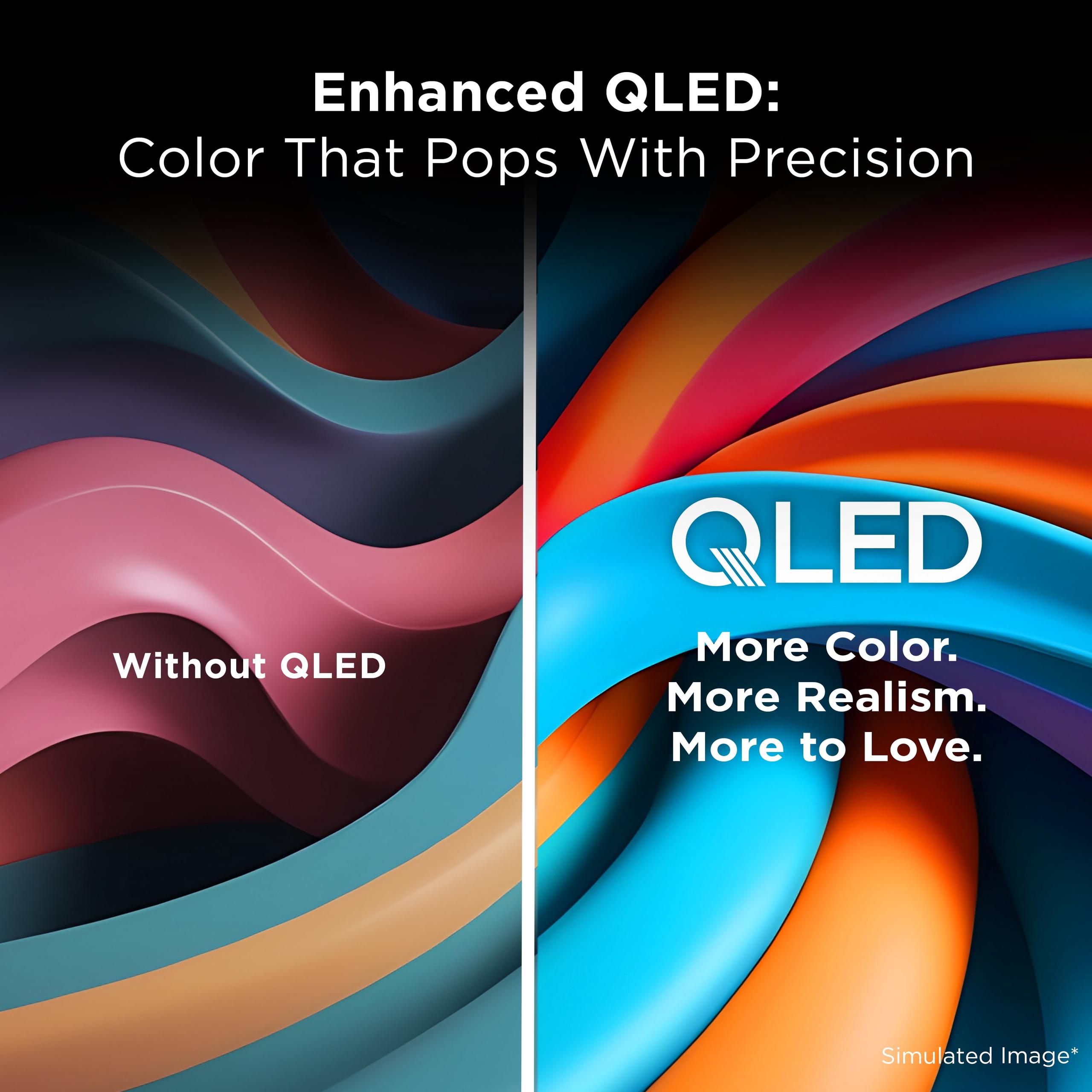
The TCL QM9K takes a more spectacular approach with its Enhanced QLED system, delivering incredibly vibrant and punchy colors that cover 97% of the DCI-P3 color space used in movies. Our research indicates some out-of-box color accuracy issues, particularly in HDR content, but the overall color volume—how bright and saturated colors can appear—is exceptional. This creates more "wow factor" in many scenes but may sacrifice some naturalism for impact.
For home theater purists who want to see movies as directors intended, the Sony BRAVIA 8 II offers superior accuracy. For those who prefer more vibrant, eye-catching imagery, the TCL QM9K delivers more spectacular results, especially in well-lit rooms where its superior brightness helps colors maintain their saturation.
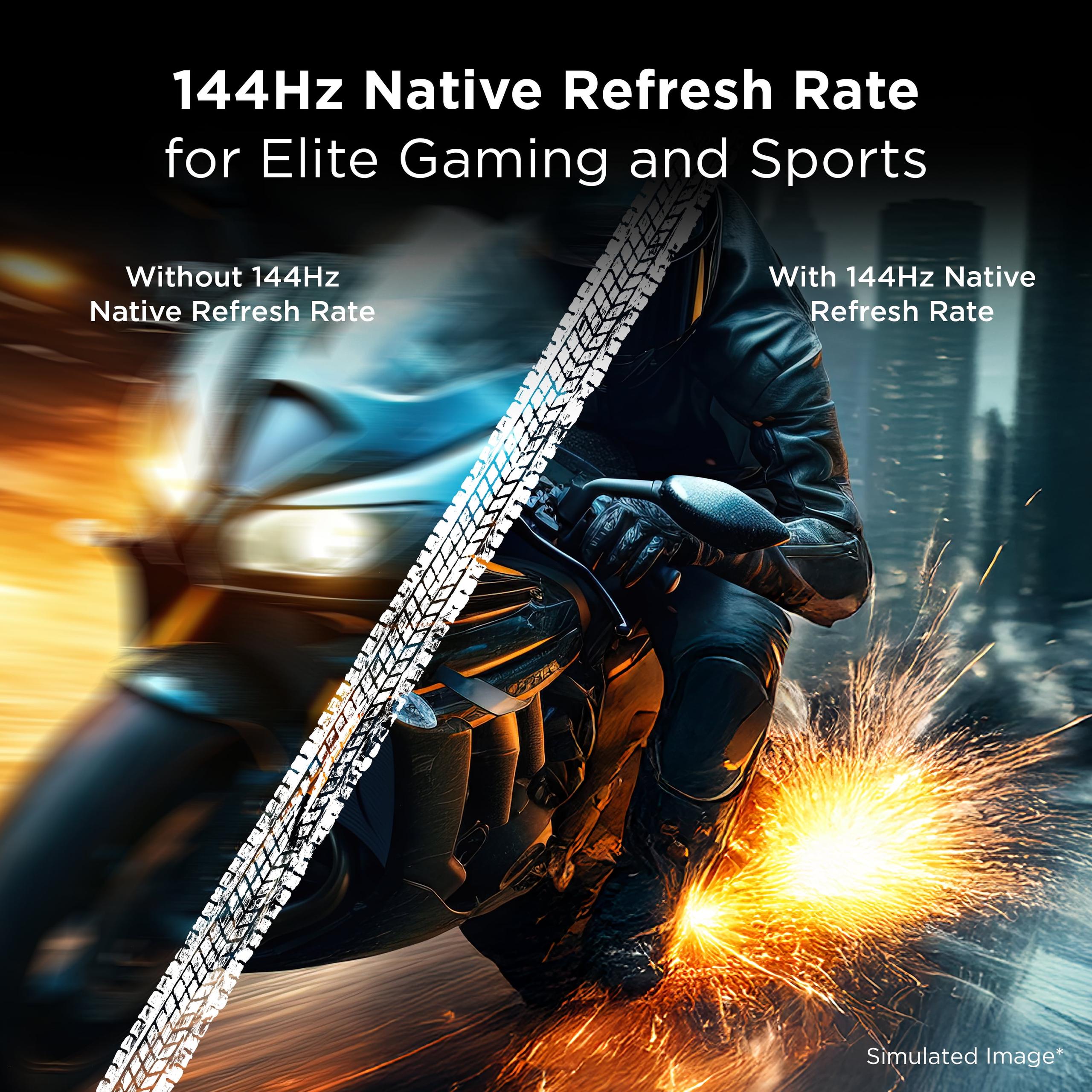
Gaming represents one of the TCL QM9K's strongest advantages. Its 144Hz native refresh rate with Game Accelerator 288 technology supports up to 288Hz variable refresh rate at 1080p and 1440p, with 144Hz at 4K. This means incredibly smooth motion in competitive gaming, especially beneficial for first-person shooters, racing games, and sports titles where every frame matters.
The TV's 5.3ms input lag—the delay between pressing a controller button and seeing the action on screen—ranks among the fastest available. Combined with AMD FreeSync Premium Pro support, it eliminates screen tearing and stuttering that can disrupt competitive gaming. The TCL QM9K also supports Auto Game Mode, which automatically switches to optimized settings when it detects gaming consoles.
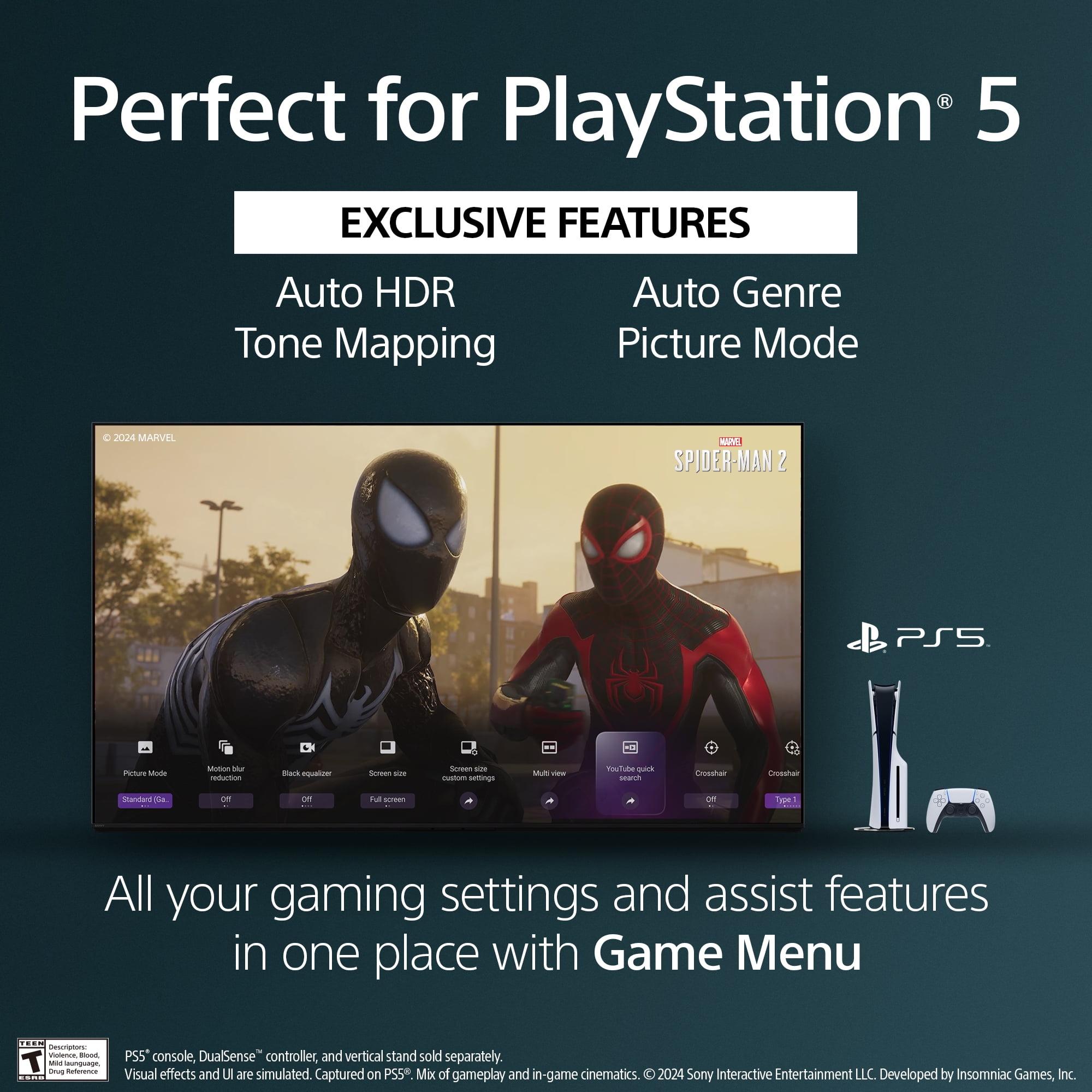
The Sony BRAVIA 8 II offers a respectable 8.5ms input lag and 120Hz refresh rate with VRR and ALLM support. While not quite as fast as the TCL, it benefits from OLED's naturally fast pixel response times, which eliminate motion blur better than most LCD-based displays. The Sony also includes special PlayStation 5 optimizations and exclusive BRAVIA XR gaming features for Sony console owners.
Our evaluation of user feedback suggests competitive gamers and those with high-end gaming PCs will prefer the TCL QM9K's higher refresh rates and lower input lag. Console gamers, particularly PlayStation owners, might appreciate the Sony BRAVIA 8 II's superior motion clarity and integration features, despite the slightly higher latency.
Audio quality represents one of the Sony BRAVIA 8 II's most innovative features. Its Acoustic Surface Audio+ technology uses actuators behind the OLED panel to turn the entire screen into a speaker. This creates positional audio where sound appears to come from exactly where action occurs on screen—dialogue seems to come from actors' mouths, explosions emanate from their visual location, and ambient sounds fill the appropriate screen areas.
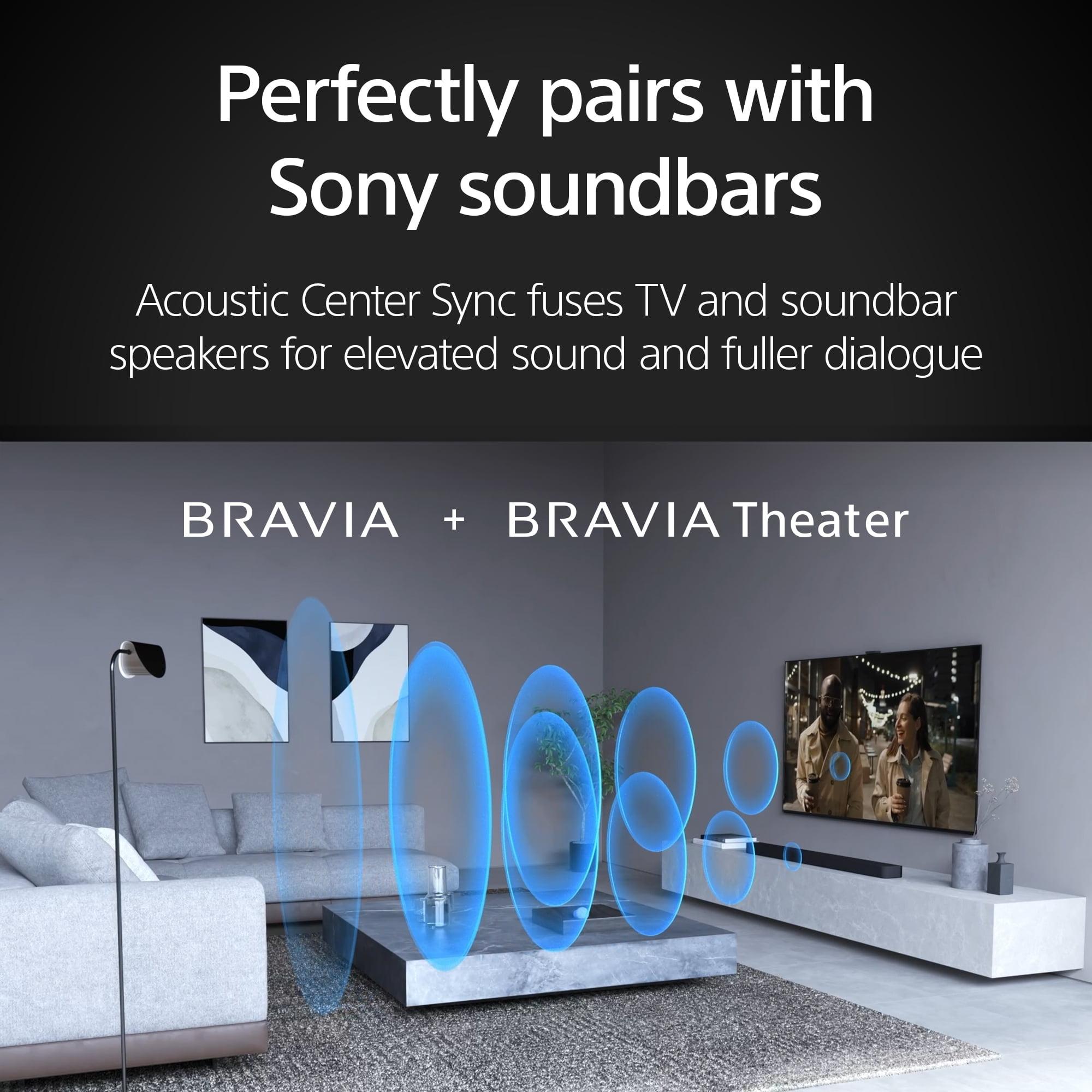
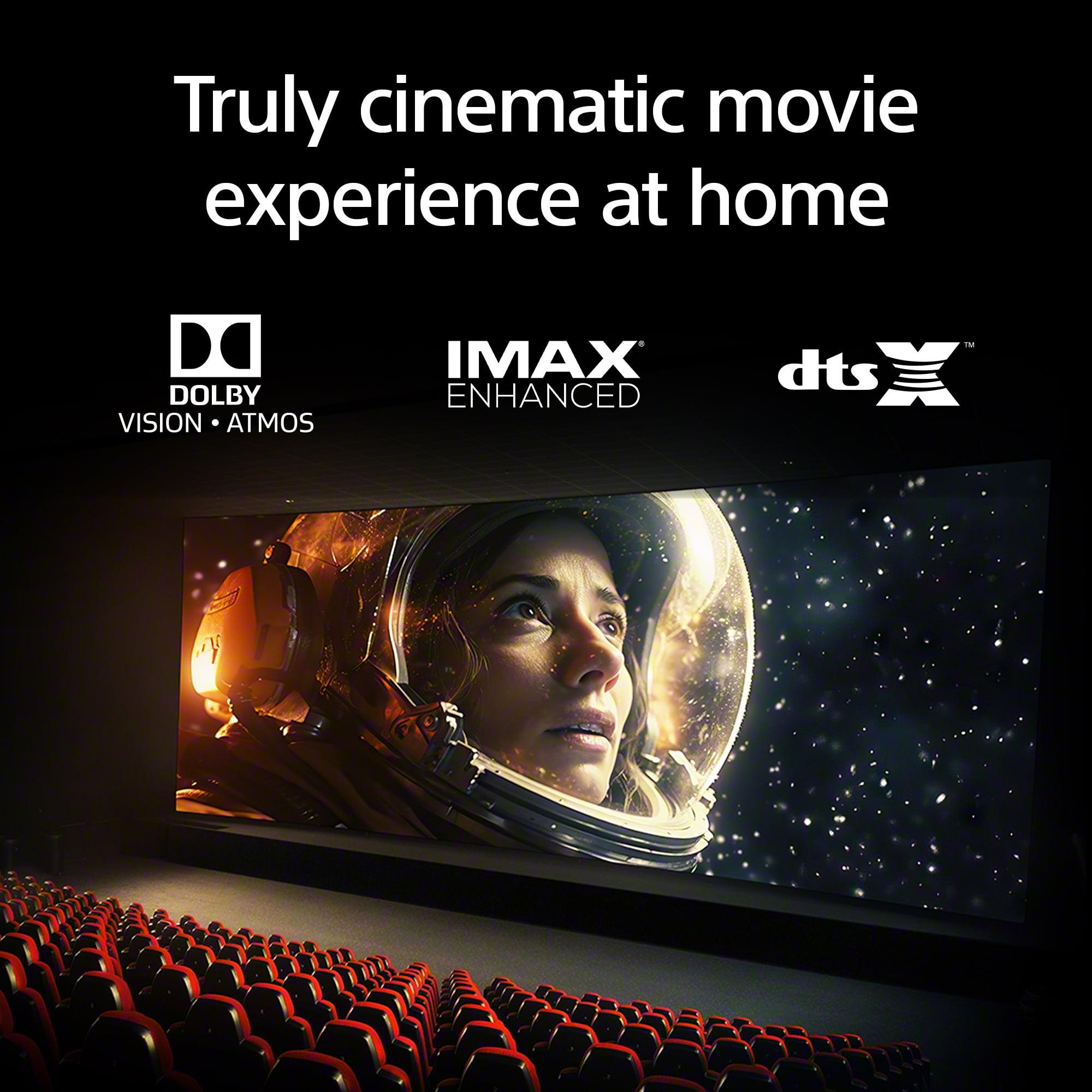
The system supports both Dolby Atmos and DTS:X for three-dimensional surround effects, while Voice Zoom 3 uses AI to enhance dialogue clarity even during loud action sequences. When paired with compatible Sony soundbars, the TV can function as a dedicated center channel through Acoustic Center Sync, creating a more cohesive surround sound system.
The TCL QM9K features audio tuned by Bang & Olufsen with a 2.1.1 channel configuration including a built-in subwoofer on the 65-inch model. While more traditional in approach, it delivers solid bass response and clear dialogue with Dolby Atmos support. The sound quality is good for a thin TV but doesn't match the Sony's innovative positional audio capabilities.
For those planning to use a dedicated sound system, both TVs offer similar connectivity options. However, the Sony's unique ability to integrate as a center channel speaker gives it an advantage in custom home theater setups.
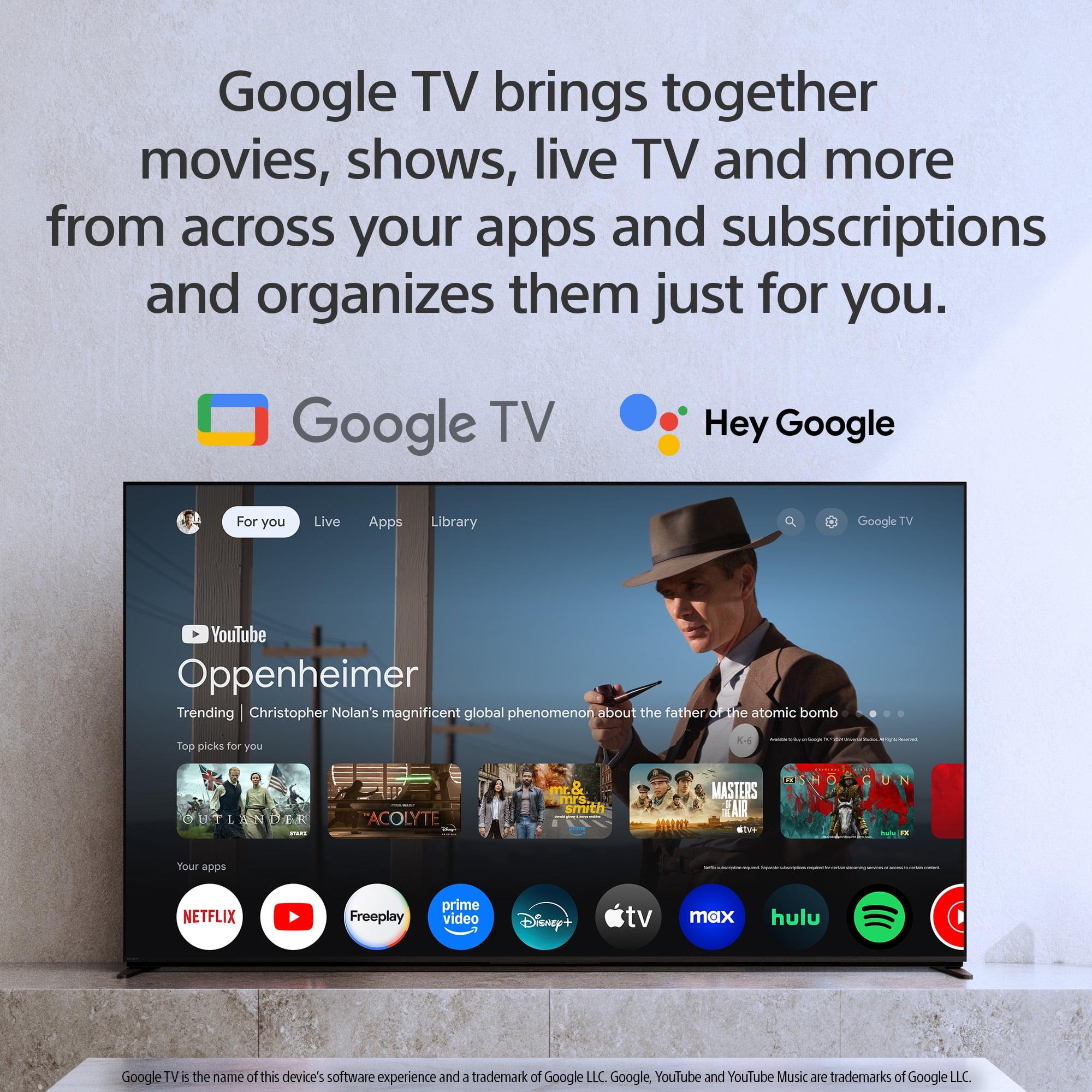
Both TVs run Google TV, but their processing approaches differ significantly. The Sony BRAVIA 8 II uses Sony's XR Processor with AI Scene Recognition, which analyzes content in real-time and adjusts picture settings based on what type of scene is being displayed. Watching a nature documentary triggers different optimizations than a dark thriller or bright sports broadcast.
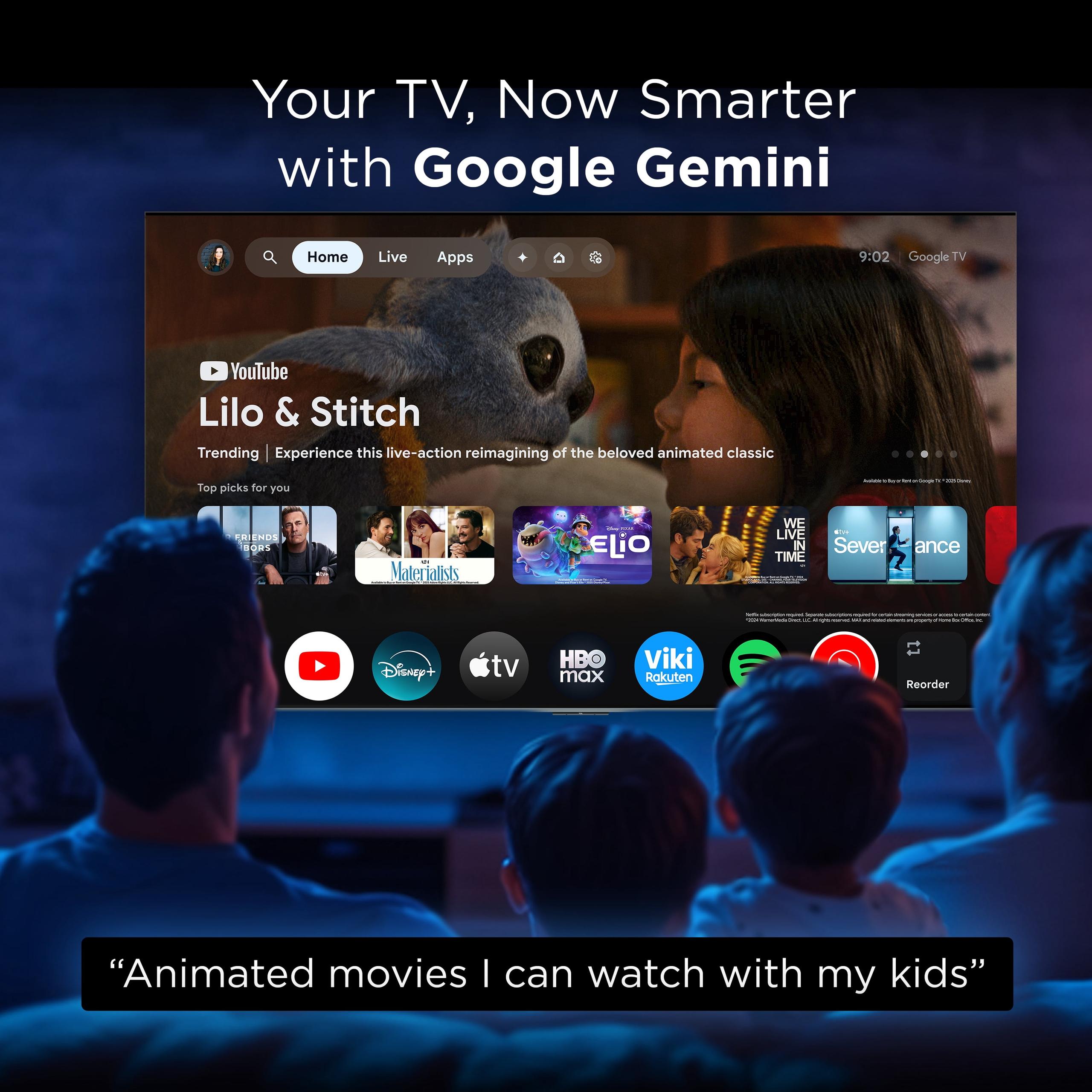
The TCL QM9K features the AIPQ PRO Processor with integrated Google Gemini AI assistance. This provides more sophisticated voice control and contextual search capabilities, along with real-time scene optimization for color, contrast, and clarity. The TV also includes a presence sensor that automatically turns the display on or off and adjusts ambient lighting based on whether someone is in the room.
Our research into user experiences suggests the Sony's processing feels more refined and consistent, while the TCL's AI features feel more cutting-edge and interactive. Both handle app performance well, though the Sony's interface tends to feel more polished in day-to-day use.
In bright family rooms with lots of windows, the TCL QM9K maintains its visual impact throughout the day. Its extreme brightness cuts through ambient light, making it excellent for watching sports, news, or colorful content with family members seated at various angles. The anti-reflective coating helps minimize distracting reflections from lights and windows.
The Sony BRAVIA 8 II excels in controlled lighting environments, particularly dedicated home theaters or media rooms with blackout curtains. Its perfect blacks and accurate colors create an almost cinematic experience that makes movie watching feel more immersive and realistic. The wider viewing angles ensure good picture quality from side seating positions.
For gaming scenarios, the TCL QM9K better accommodates competitive gaming sessions with its higher refresh rates and lower input lag, while the Sony BRAVIA 8 II provides more cinematic single-player gaming experiences with superior motion clarity and atmospheric contrast.
At the time of writing, the price difference between these models is substantial—the TCL QM9K offers flagship performance at a significantly lower cost than the Sony BRAVIA 8 II. This makes the TCL an exceptional value proposition for buyers who want premium features without the premium price.
However, long-term considerations favor different approaches. The TCL QM9K has no burn-in risk and maintains its brightness over time, making it worry-free for varied usage patterns including gaming with static HUD elements or news channels with persistent logos. The Sony BRAVIA 8 II carries the typical OLED burn-in consideration with static content but offers superior color accuracy retention and processing that may age better as content standards evolve.
Choose the TCL QM9K if you have a bright living space, prioritize gaming performance, want maximum bang for your buck, or need a TV that excels across varied lighting conditions and content types. Its extreme brightness, high refresh rates, and competitive pricing make it ideal for active households where the TV serves multiple purposes throughout the day.
Select the Sony BRAVIA 8 II if you have a dedicated viewing space with controlled lighting, prioritize cinematic accuracy, value innovative audio technology, or are willing to pay a premium for the refinement that comes with Sony's processing expertise and OLED's perfect contrast. It's the choice for movie enthusiasts and those who want reference-quality picture performance.
Both represent excellent examples of their respective technologies in 2025, with improvements over previous generations making them standout choices in their price segments. The decision ultimately comes down to your specific viewing environment, usage priorities, and value preferences rather than one being objectively better than the other.
| TCL 65" QM9K QD-Mini LED Smart TV | Sony BRAVIA 8 II 65" QD-OLED 4K Google TV 2025 |
|---|---|
| Display Technology - Fundamentally different approaches to creating light and contrast | |
| QD-Mini LED with up to 6,000 local dimming zones | QD-OLED with 8+ million self-illuminating pixels |
| Peak Brightness - Critical for bright rooms and HDR impact | |
| Up to 6,500 nits (excellent for daytime viewing) | Up to 1,880 nits (25% brighter than previous Sony OLEDs) |
| Black Levels - Most important for dark room viewing and contrast | |
| Excellent blacks with minimal blooming via Halo Control System | Perfect pixel-level blacks (infinite contrast ratio) |
| Native Refresh Rate - Higher numbers mean smoother motion and gaming | |
| 144Hz native with Motion Rate 480 | 120Hz native with XR OLED Motion |
| Gaming Input Lag - Lower is better for competitive gaming | |
| 5.3ms (exceptional for competitive play) | 8.5ms (very good for console gaming) |
| Gaming Features - Advanced capabilities for next-gen consoles | |
| Game Accelerator 288 (up to 288Hz VRR), AMD FreeSync Premium Pro | 4K@120Hz, VRR, ALLM, PlayStation 5 optimizations |
| Color Accuracy - Important for cinematic viewing experience | |
| Enhanced QLED with some out-of-box accuracy issues | Studio-calibrated modes for Netflix, Prime Video, Sony Pictures |
| Audio Technology - Built-in sound quality and innovation | |
| Audio by Bang & Olufsen, 2.1.1 channel with subwoofer | Acoustic Surface Audio+ (screen becomes speaker), Voice Zoom 3 AI |
| Smart Processing - AI features and picture optimization | |
| AIPQ PRO Processor with Google Gemini AI assistance | XR Processor with AI Scene Recognition |
| Viewing Environment - Best use case scenarios | |
| Optimized for bright rooms and varied lighting conditions | Best in controlled lighting/dedicated home theater setups |
| Burn-in Risk - Long-term reliability consideration | |
| No burn-in risk (Mini-LED technology) | Potential OLED burn-in with static content |
| Value Positioning - Performance for the price point | |
| High-end features at competitive flagship pricing | Premium OLED experience with Sony processing refinement |
The TCL QM9K is significantly better for bright rooms due to its much higher peak brightness of 6,500 nits compared to the Sony BRAVIA 8 II's 1,880 nits. The TCL's Mini-LED technology maintains picture quality even with windows open and lights on, while the Sony performs best in controlled lighting conditions.
The TCL QM9K uses Mini-LED technology with thousands of tiny LED backlights behind an LCD panel, offering extreme brightness but slightly raised black levels. The Sony BRAVIA 8 II uses OLED technology where each pixel creates its own light, delivering perfect blacks and infinite contrast but with lower peak brightness.
The TCL QM9K is better for competitive gaming with its 144Hz native refresh rate, 5.3ms input lag, and Game Accelerator 288 supporting up to 288Hz VRR. The Sony BRAVIA 8 II offers good gaming with 120Hz and 8.5ms input lag, plus special PlayStation 5 optimizations for console gamers.
The Sony BRAVIA 8 II has superior black levels with perfect pixel-level blacks since OLED pixels can turn completely off. The TCL QM9K delivers excellent contrast through its 6,000 local dimming zones and Halo Control System, but cannot achieve true blacks like OLED technology.
Both TVs offer impressive audio. The Sony BRAVIA 8 II features innovative Acoustic Surface Audio+ that turns the screen into a speaker with positional audio effects. The TCL QM9K includes Bang & Olufsen-tuned audio with a 2.1.1 channel system and built-in subwoofer for solid traditional sound.
The Sony BRAVIA 8 II excels in dedicated home theaters with its perfect blacks, accurate colors, and studio-calibrated picture modes that display content as filmmakers intended. The TCL QM9K works well too but shines more in bright, multi-purpose living spaces.
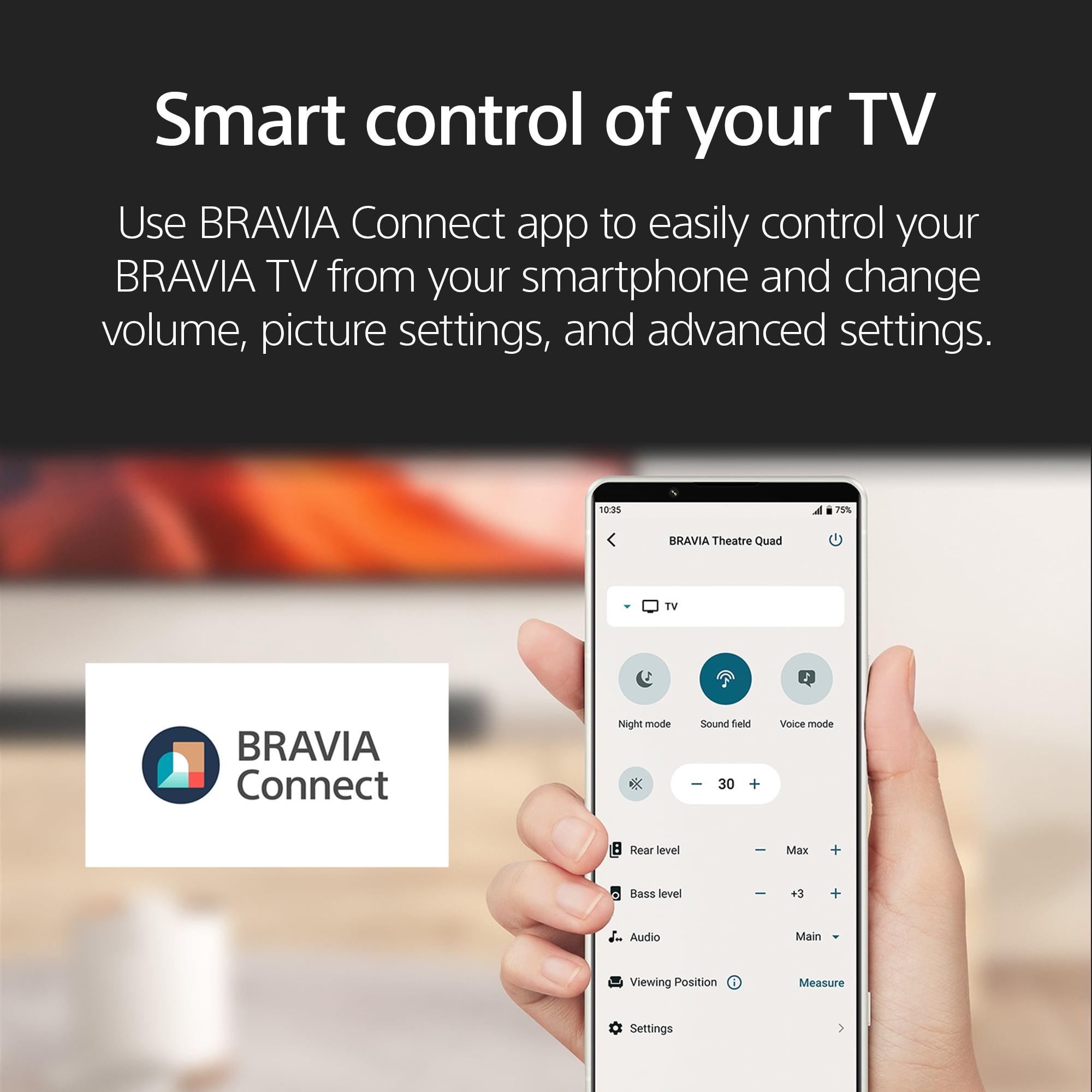
Both TVs run Google TV with similar app ecosystems. The TCL QM9K includes Google Gemini AI assistance and presence sensors for automatic adjustments. The Sony BRAVIA 8 II features Sony's XR Processor with AI Scene Recognition that optimizes picture settings based on content type.
The TCL QM9K provides exceptional value with flagship Mini-LED performance at a competitive price point. The Sony BRAVIA 8 II commands a premium for its OLED technology and Sony's processing expertise, justified for those prioritizing cinematic picture quality.
The TCL QM9K has no burn-in risk due to its Mini-LED LCD technology, making it worry-free for gaming or news channels with static elements. The Sony BRAVIA 8 II has potential OLED burn-in risk with prolonged static content, though modern OLEDs have improved burn-in resistance.
The Sony BRAVIA 8 II offers superior color accuracy with XR Triluminos Max and studio-calibrated modes for streaming services. The TCL QM9K delivers more vibrant, punchy colors with excellent HDR brightness but may sacrifice some accuracy for visual impact.
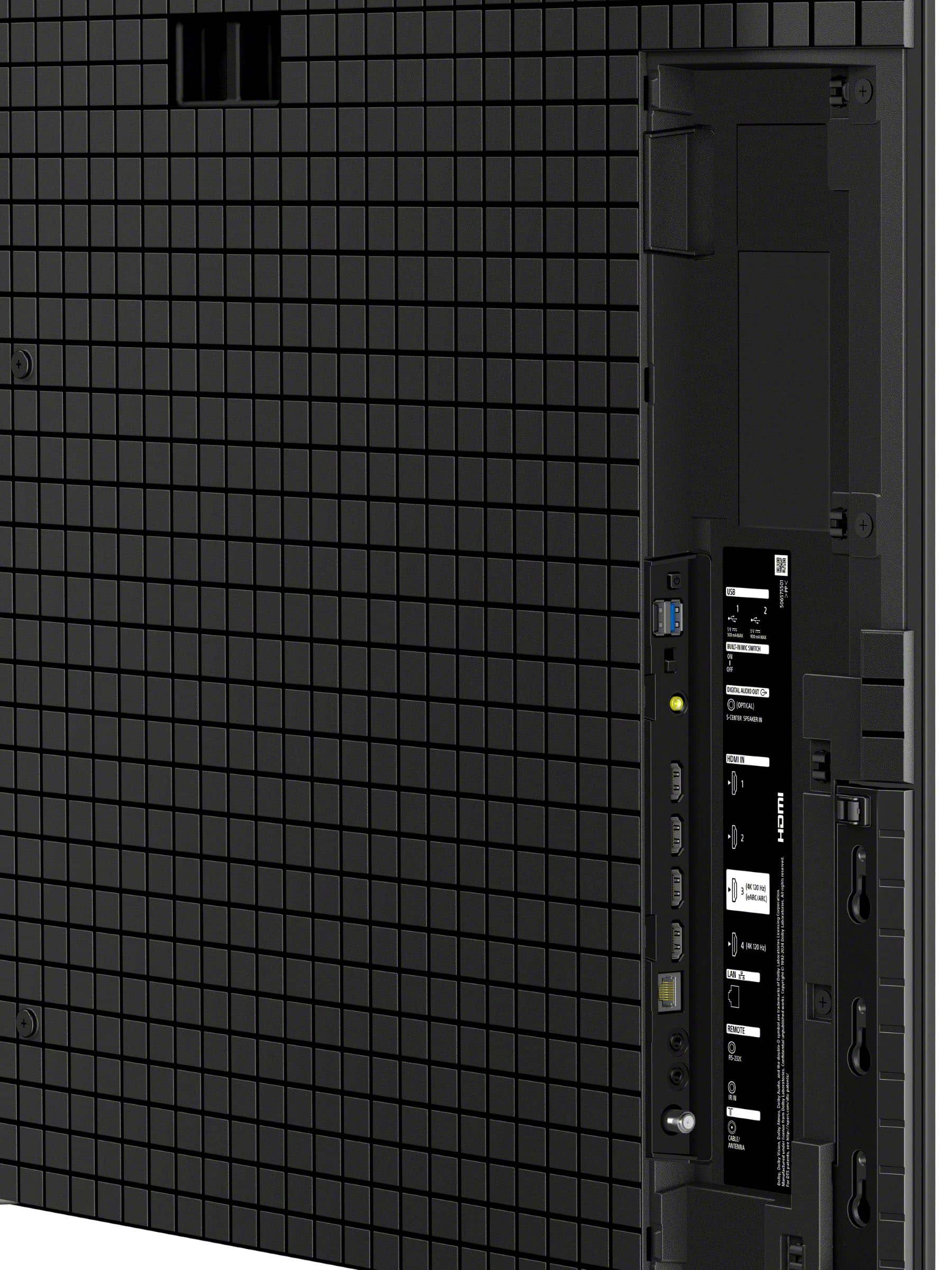
Both offer similar connectivity with HDMI 2.1 ports, Wi-Fi 6, and Bluetooth. The TCL QM9K includes 4 HDMI ports with one eARC and Chromecast built-in. The Sony BRAVIA 8 II provides full HDMI 2.1 bandwidth on all ports and supports both Google Cast and Apple AirPlay 2.
Choose the TCL QM9K if you have a bright room, prioritize gaming performance, want excellent value, or need versatility across different lighting conditions. Select the Sony BRAVIA 8 II if you have a dedicated viewing space, prioritize cinematic accuracy, value premium processing, or want the best possible contrast performance.
We've done our best to create useful and informative comparisons to help you decide what product to buy. Our research uses advanced automated methods to create this comparison and perfection is not possible - please contact us for corrections or questions. These are the sites we've researched in the creation of this article: rtings.com - bestbuy.com - youtube.com - youtube.com - youtube.com - techaeris.com - displayspecifications.com - pcrichard.com - residentialsystems.com - us.tcl.com - displayspecifications.com - valueelectronics.com - woodruffappliance.com - tcl.com - pcrichard.com - tcl.com - techradar.com - tcl.com - us.tcl.com - youtube.com - youtube.com - bestbuy.com - youtube.com - techradar.com - rtings.com - bestbuy.com - whathifi.com - rtings.com - hometechnologyreview.com - youtube.com - hometechnologyreview.com - hometechnologyreview.com - hometechnologyreview.com - valueelectronics.com - smarthomesounds.co.uk - electronics.sony.com - valueelectronics.com - bestbuy.com - youtube.com - displayspecifications.com - hometechnologyreview.com - flatpanelshd.com

Privacy Policy
Terms and Conditions - Affiliate Policy
Home Security
© Copyright 2008-2026.
11816 Inwood Rd #1211, Dallas, TX 75244