

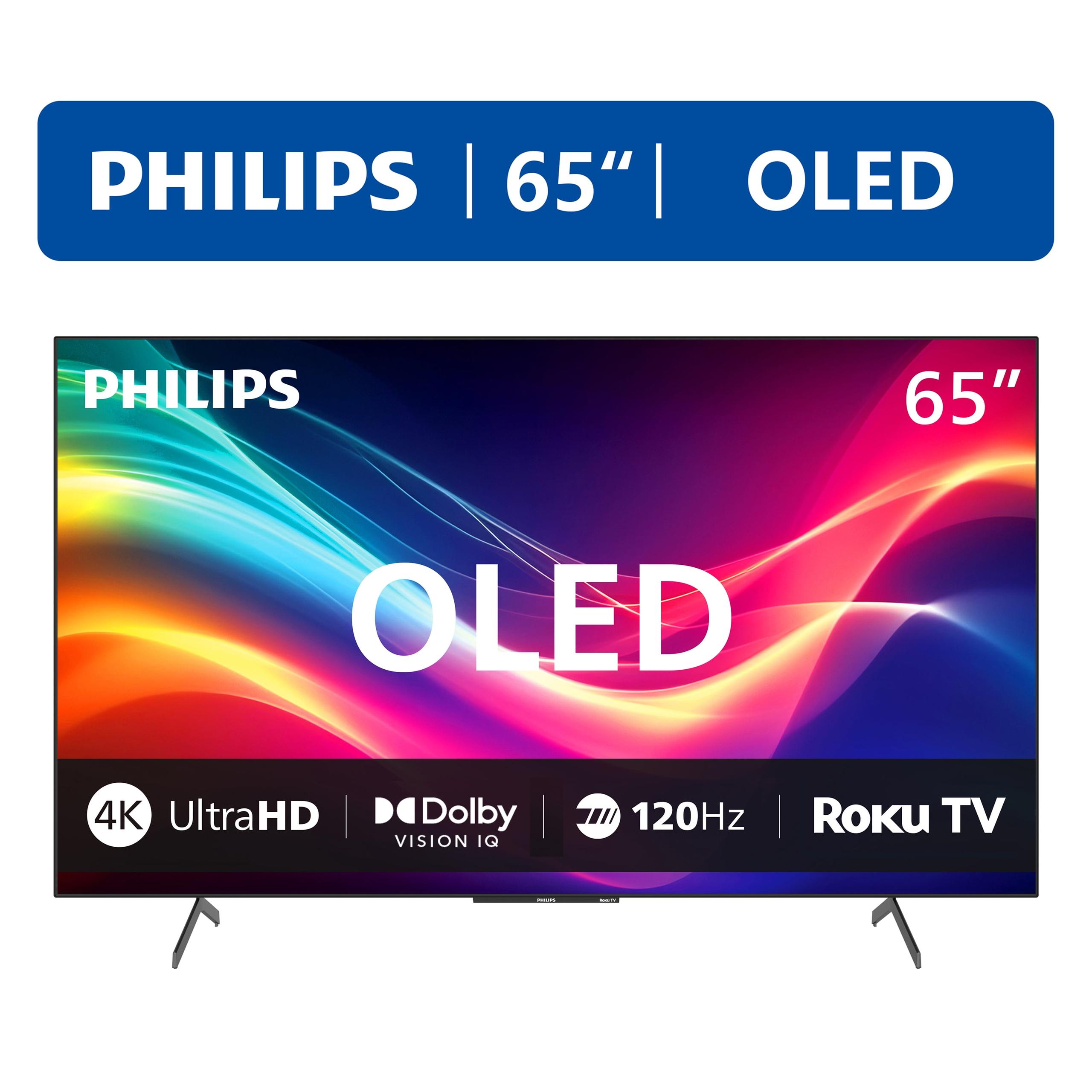
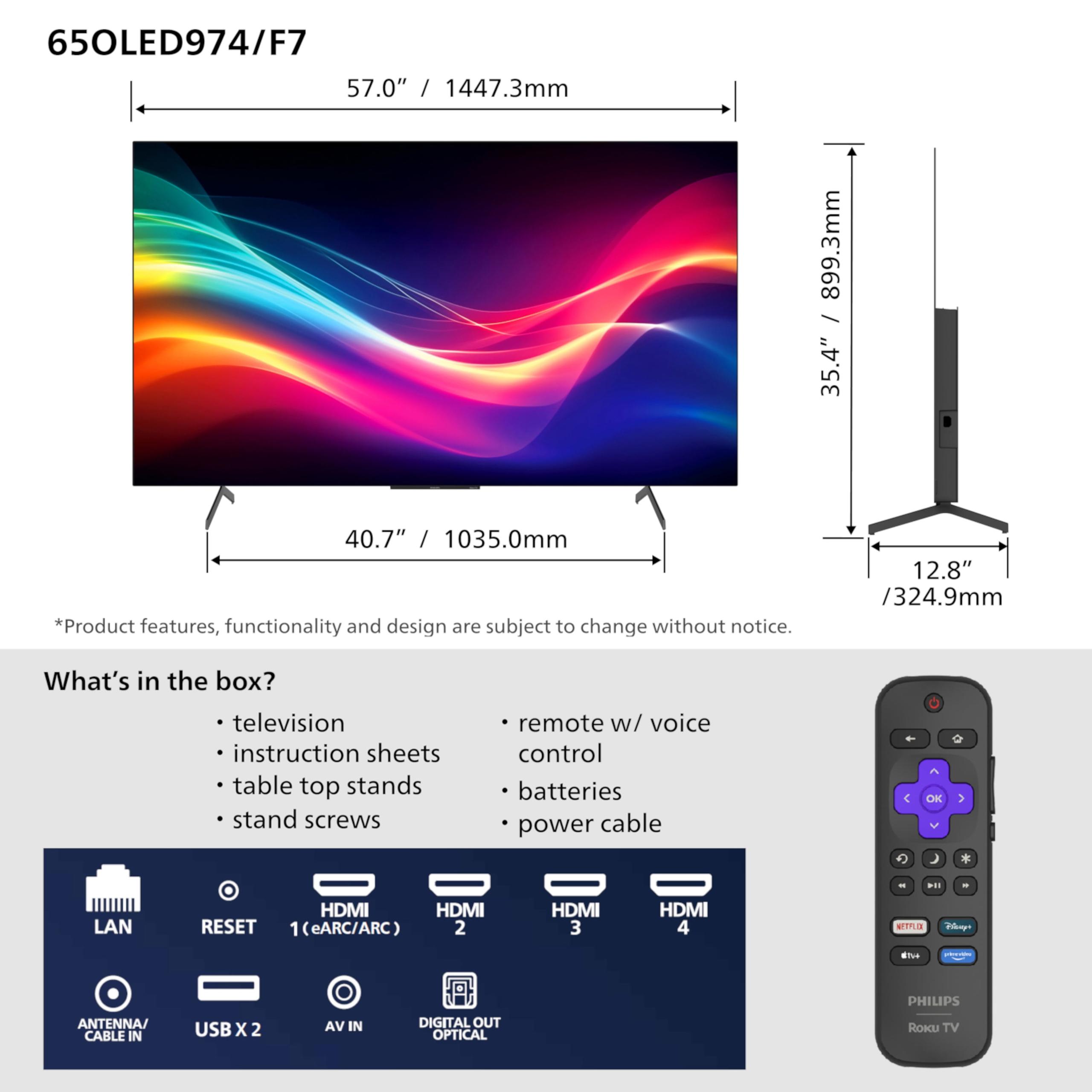
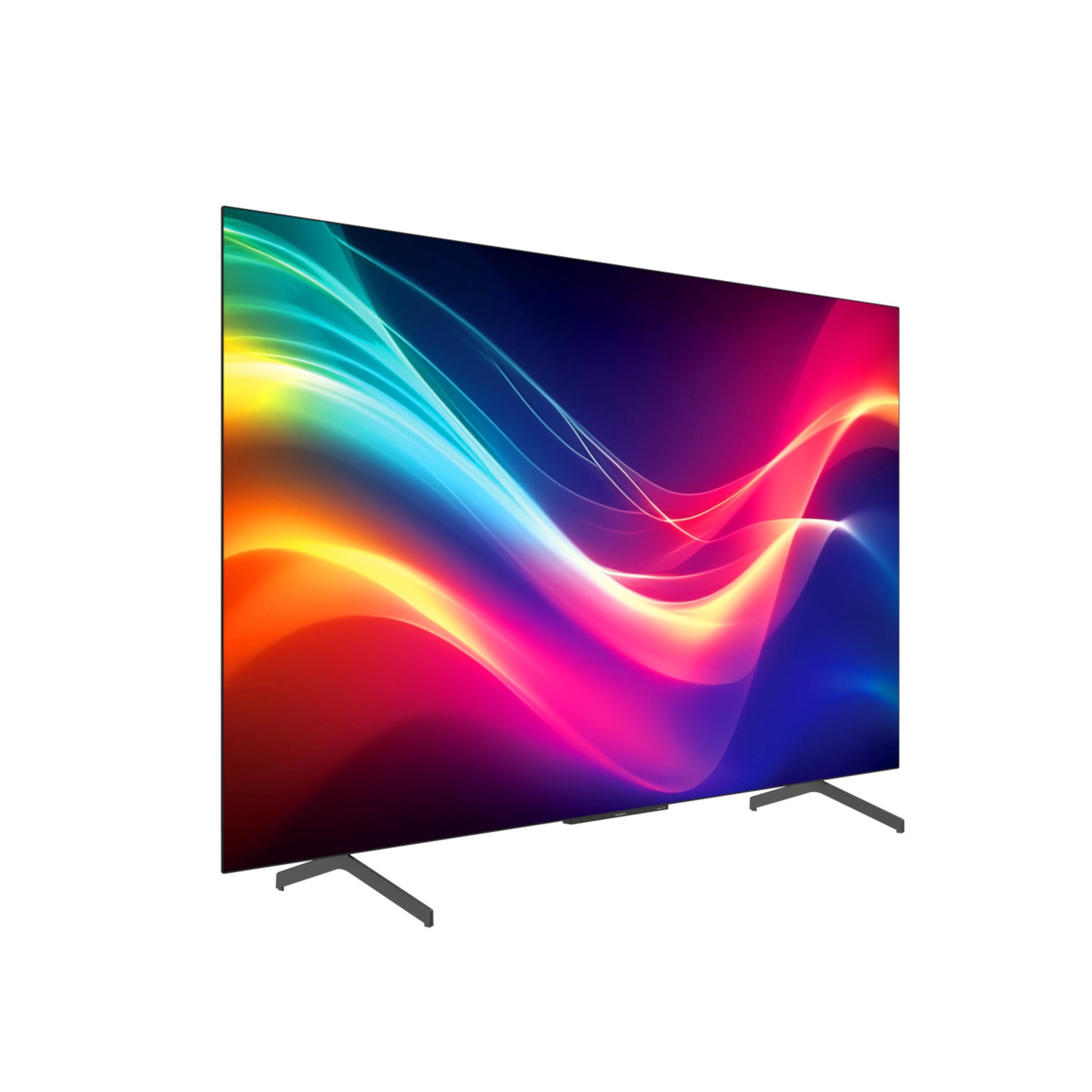
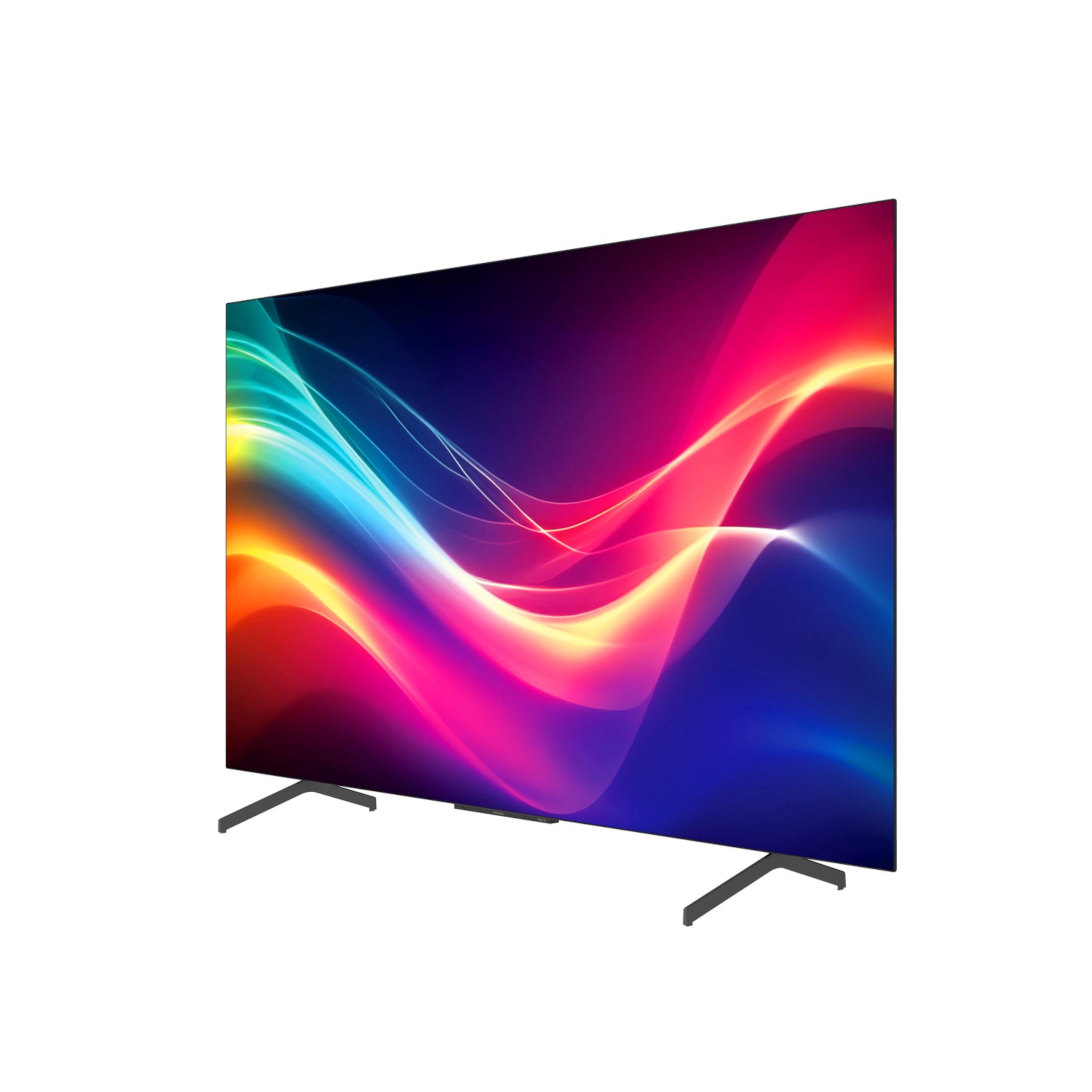
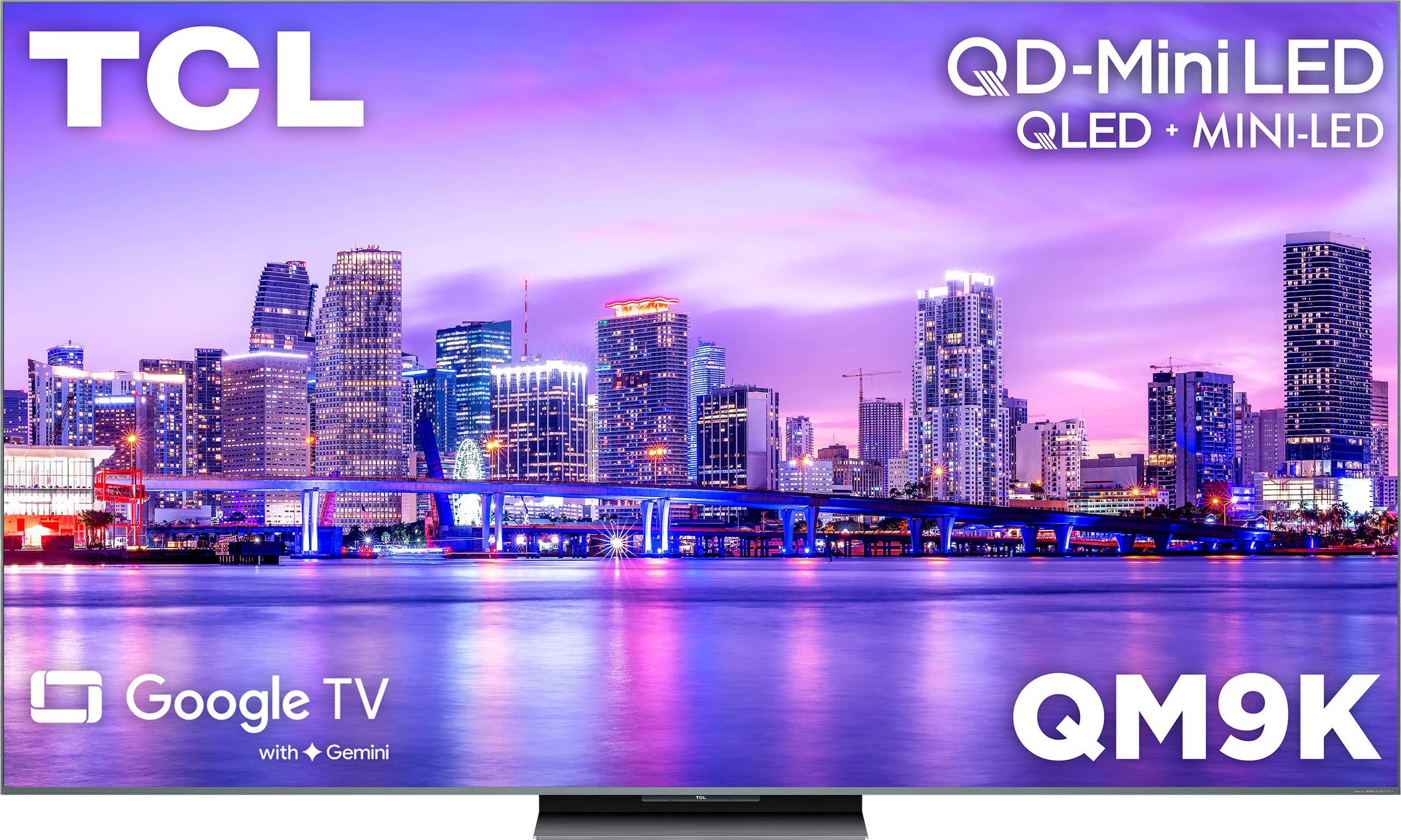
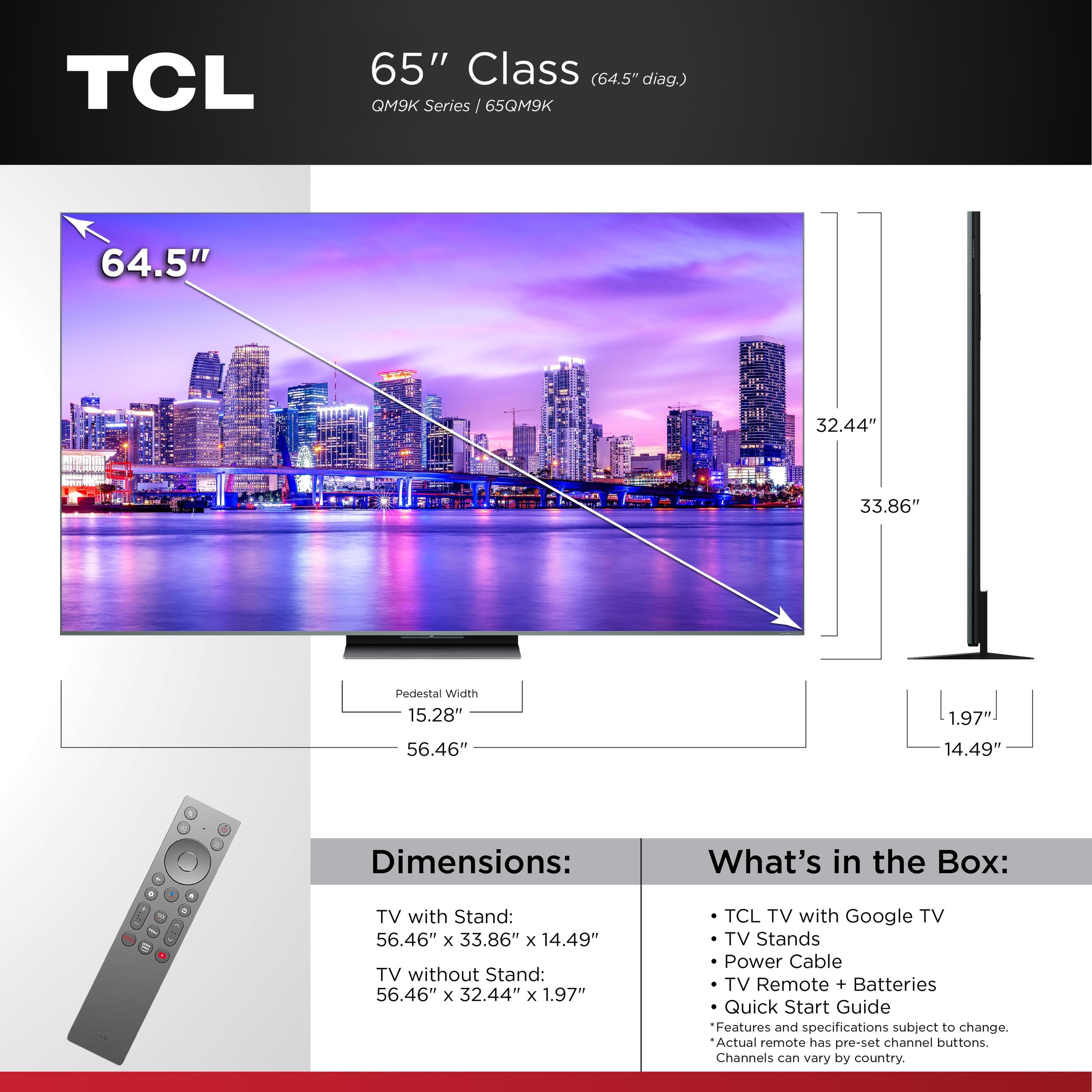
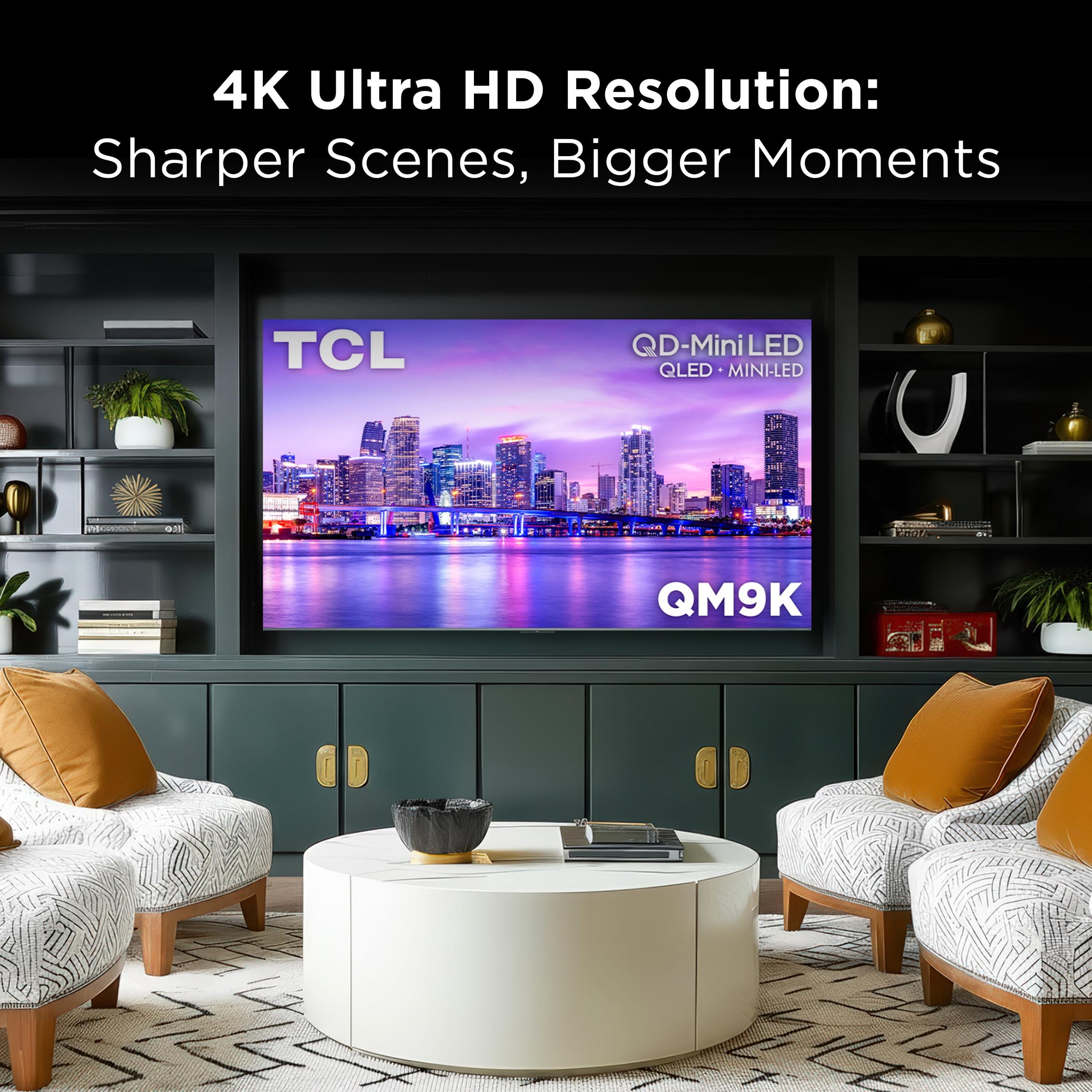
When you're shopping for a premium 65-inch TV, you're entering a world where display technology makes all the difference. Two standout options represent completely different approaches to creating stunning visuals: the Philips 65OLED974/F7 with its OLED panel and the TCL 65" QM9K featuring QD-Mini LED technology.
Both TVs launched in recent years as manufacturers pushed the boundaries of what's possible in home entertainment. The Philips 65OLED974/F7 represents the continued refinement of OLED technology that's become more affordable since its premium debut, while the TCL QM9K showcases how Mini LED backlighting has evolved to challenge OLED's dominance in contrast performance.
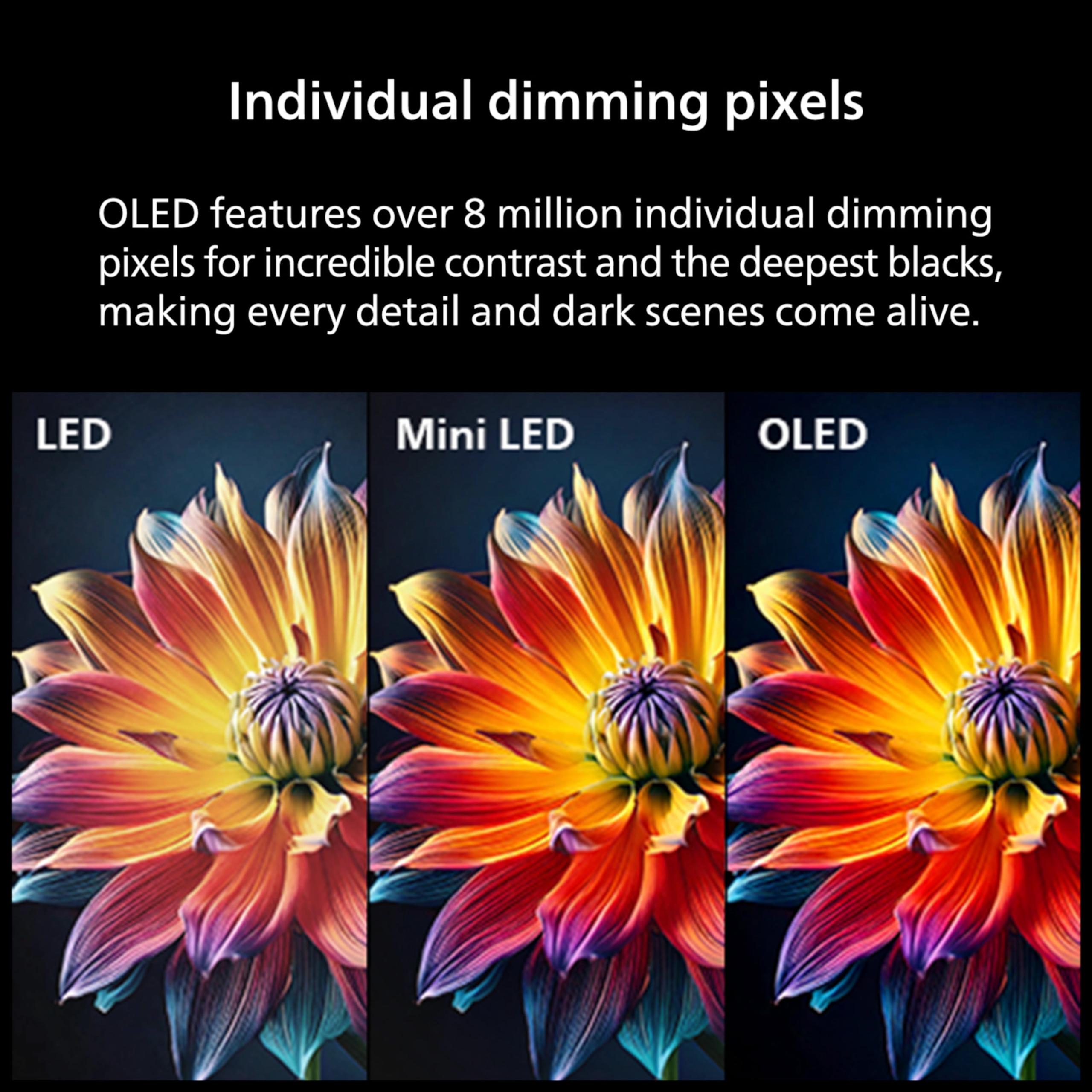
The fundamental difference between these TVs lies in how they create light and darkness. OLED (Organic Light-Emitting Diode) technology means each pixel produces its own light—imagine having 8.3 million tiny light bulbs that can turn completely off for perfect black. When you see a starfield in a space movie, those black areas are truly black, not just very dark gray.
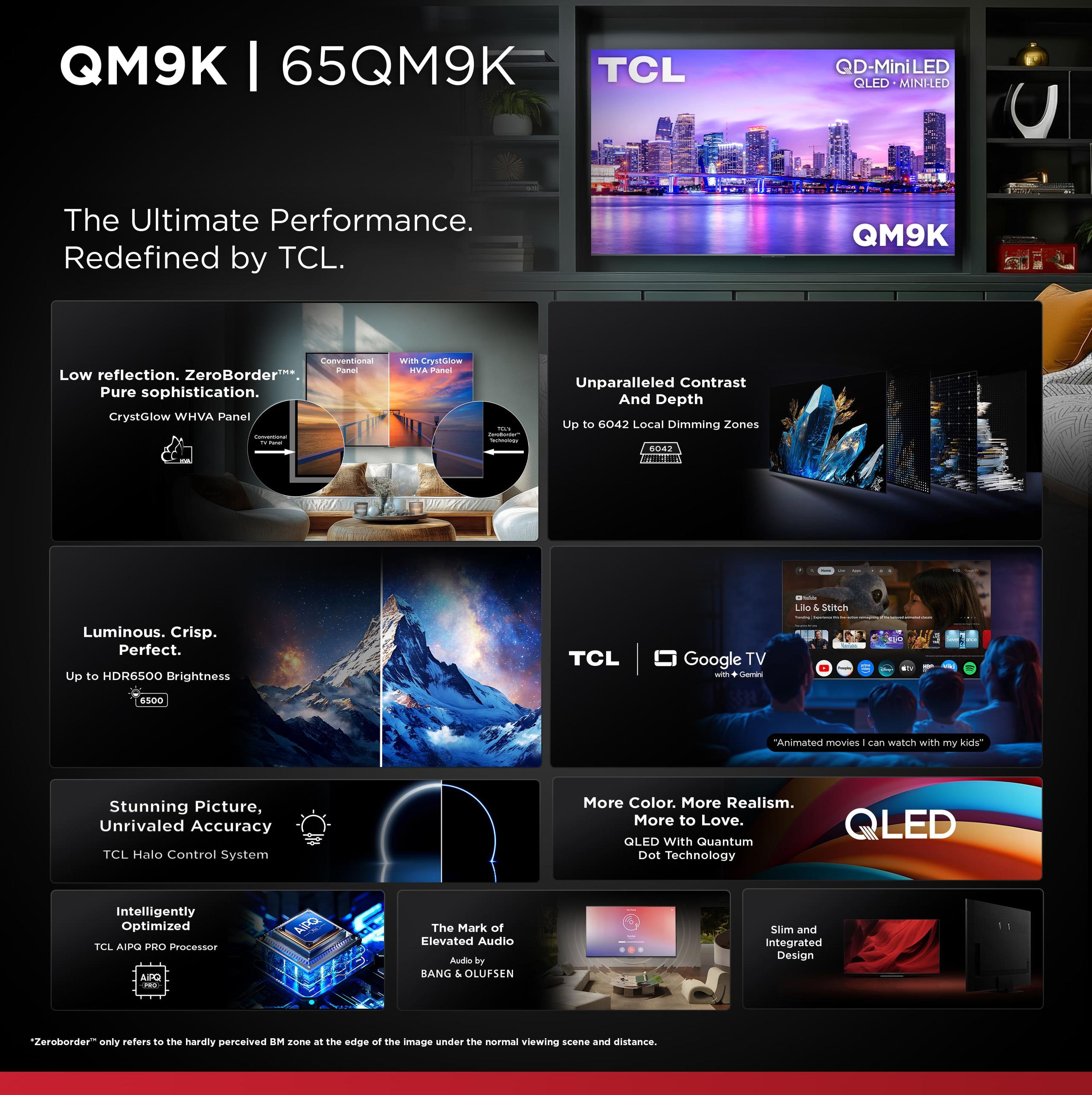
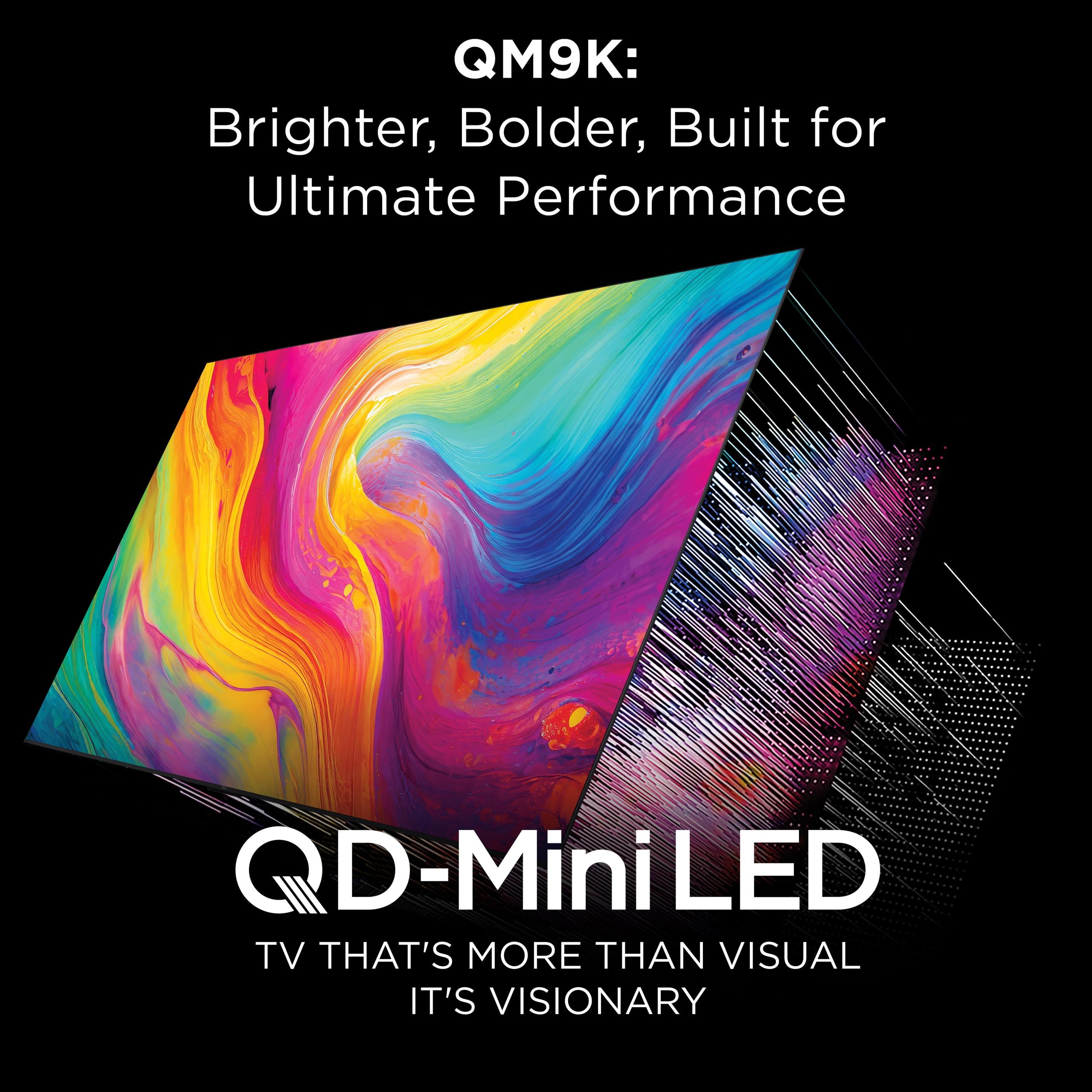
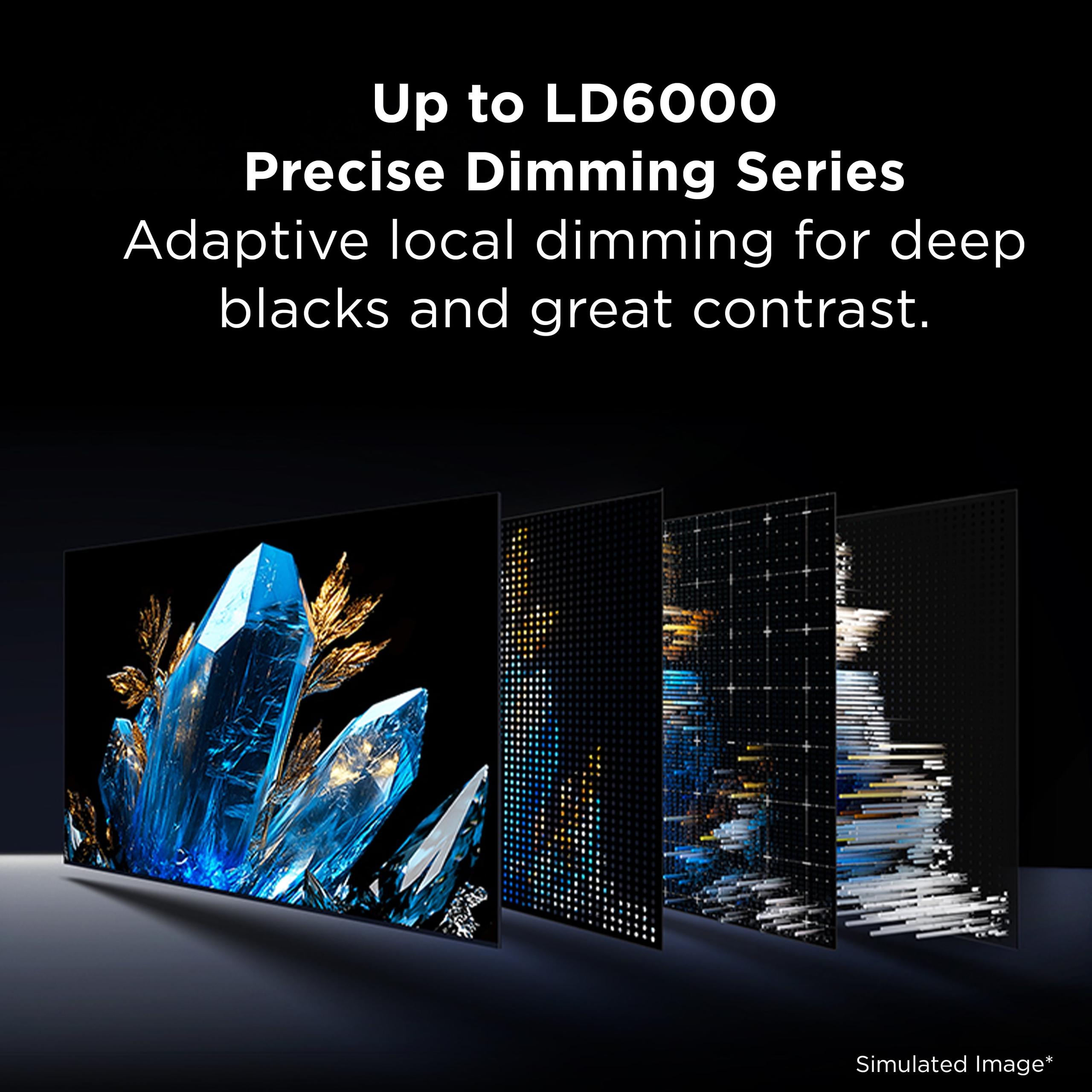
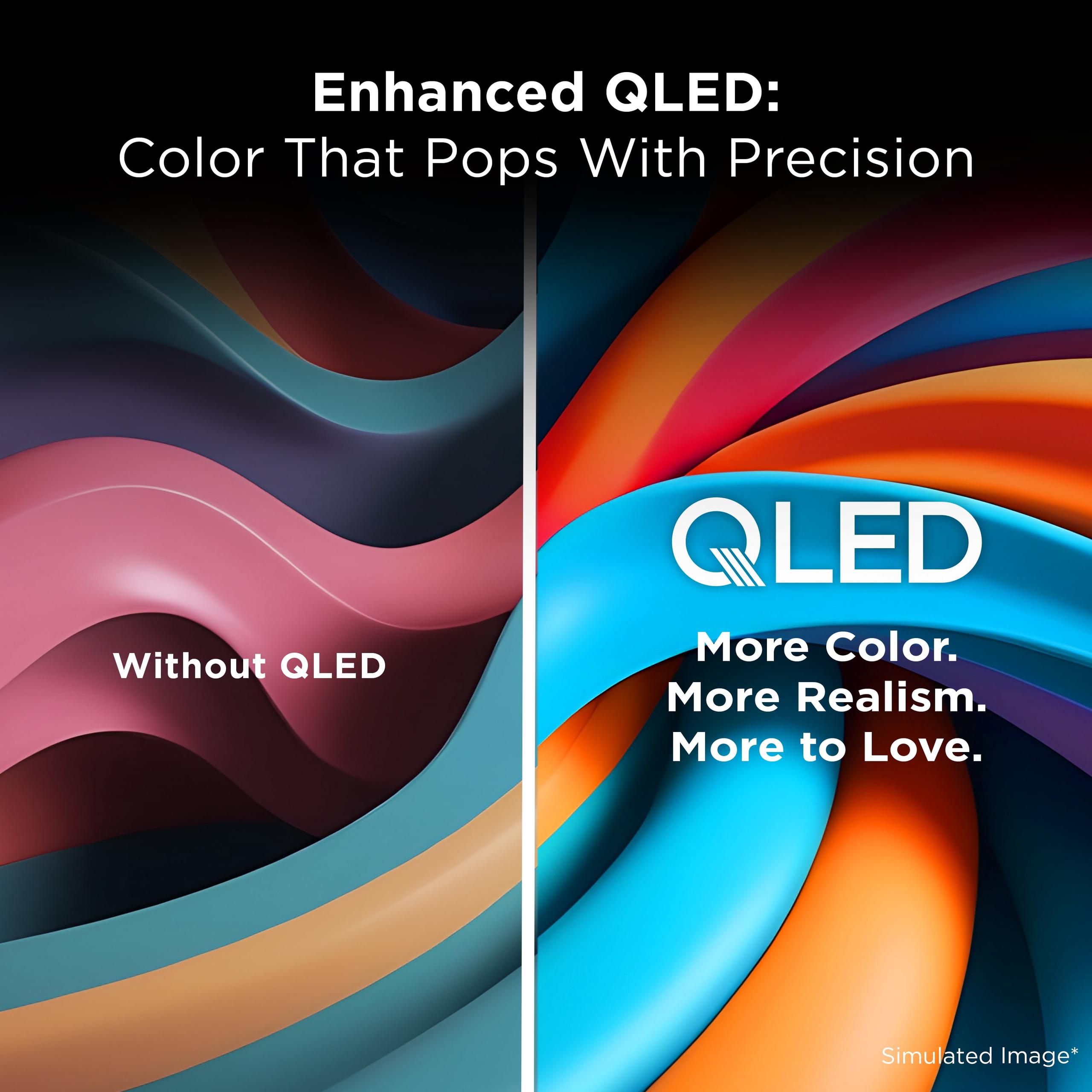
QD-Mini LED, on the other hand, uses thousands of tiny LED lights behind a traditional LCD panel enhanced with Quantum Dots—microscopic crystals that convert light into incredibly pure, vibrant colors. The TCL QM9K packs up to 6,000 individual dimming zones, each controlling a small section of the screen to create contrast that approaches OLED levels while achieving much higher brightness.
Think of it this way: OLED is like having perfect control over every single light in a massive stadium, while QD-Mini LED is like having thousands of spotlights that work together to create the same effect, but with much more powerful bulbs.
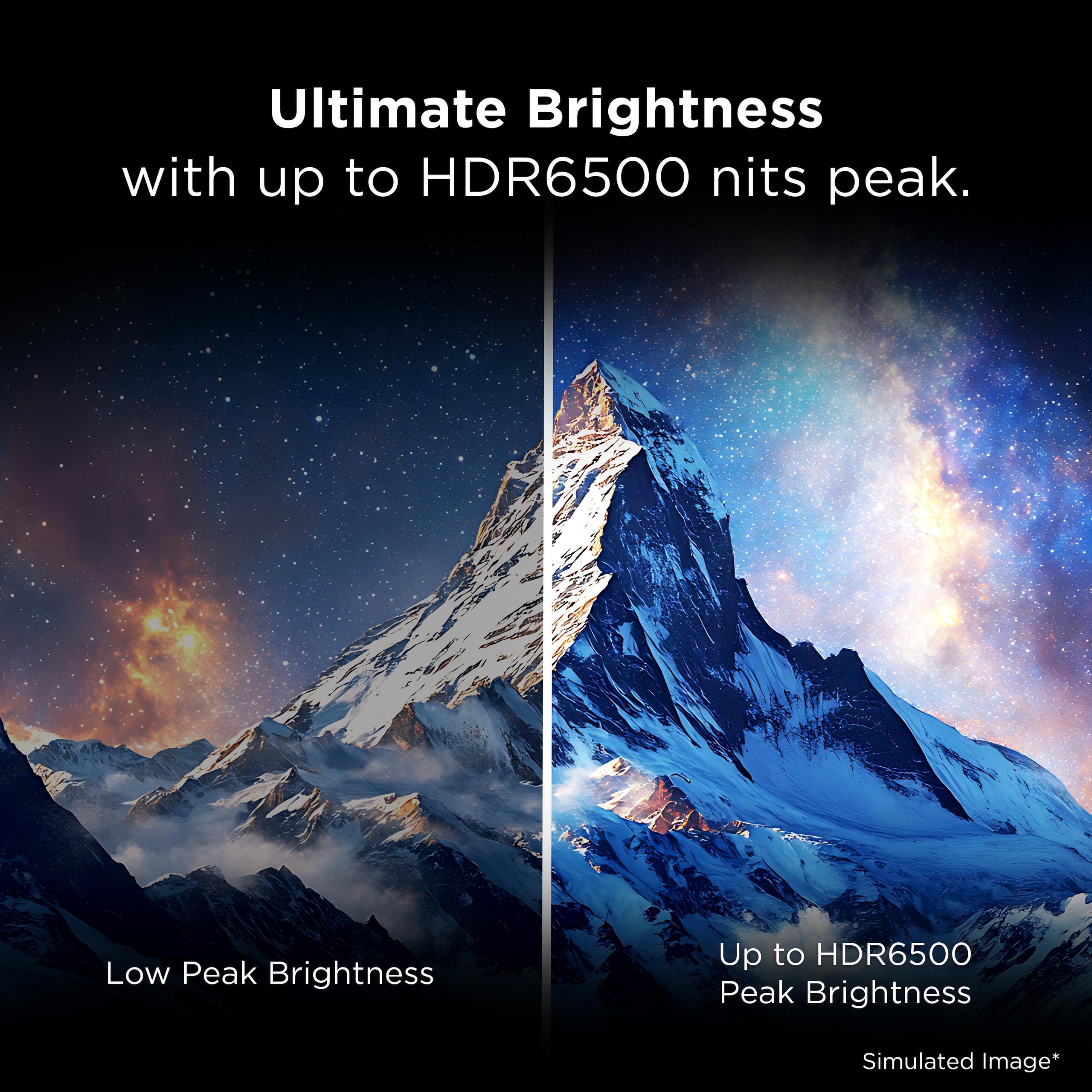
Here's where the TCL QM9K absolutely dominates. With peak brightness reaching 6,500 nits (a measure of light intensity), it can make HDR highlights genuinely dazzling. When lightning strikes in a movie or sunlight reflects off water, you'll see it with an intensity that makes you squint—exactly as the director intended.
The Philips 65OLED974/F7, by comparison, struggles with brightness. Our research into expert and user reviews consistently shows this as OLED's biggest weakness. In a bright living room with windows, the Philips simply can't compete with ambient light. HDR content that should pop with brilliant highlights instead appears muted and underwhelming.
This brightness difference fundamentally changes how each TV performs in your home. The TCL QM9K excels in family rooms, kitchens, or any space with natural light, while the Philips OLED demands a more controlled environment to show its strengths.
Peak Brightness Impact on HDR: HDR (High Dynamic Range) content is mastered expecting displays that can hit 1,000-4,000 nits for highlights. The TCL's 6,500-nit capability means it can properly reproduce these scenes, while the Philips compresses them into a dimmer range, losing the intended visual impact.
Where the Philips 65OLED974/F7 takes its revenge is in black level performance. Each pixel can turn completely off, creating what's called an "infinite contrast ratio." When you watch a movie with dark scenes—think horror films or space epics—the OLED delivers an almost theater-like experience where black areas disappear into the bezel.
The TCL QM9K fights back with its sophisticated local dimming system. Those 6,000 zones can dim independently, and TCL's "Halo Control System" includes advanced algorithms to minimize blooming—the annoying light leak around bright objects against dark backgrounds. While it can't achieve true black like OLED, the difference has narrowed significantly compared to older LED TVs.
Based on professional reviews, the TCL shows minimal haloing in most content, though you might notice slight blooming in extreme test patterns or specific scenes with small bright objects against pure black backgrounds. For most viewers, this trade-off for significantly higher brightness proves worthwhile.
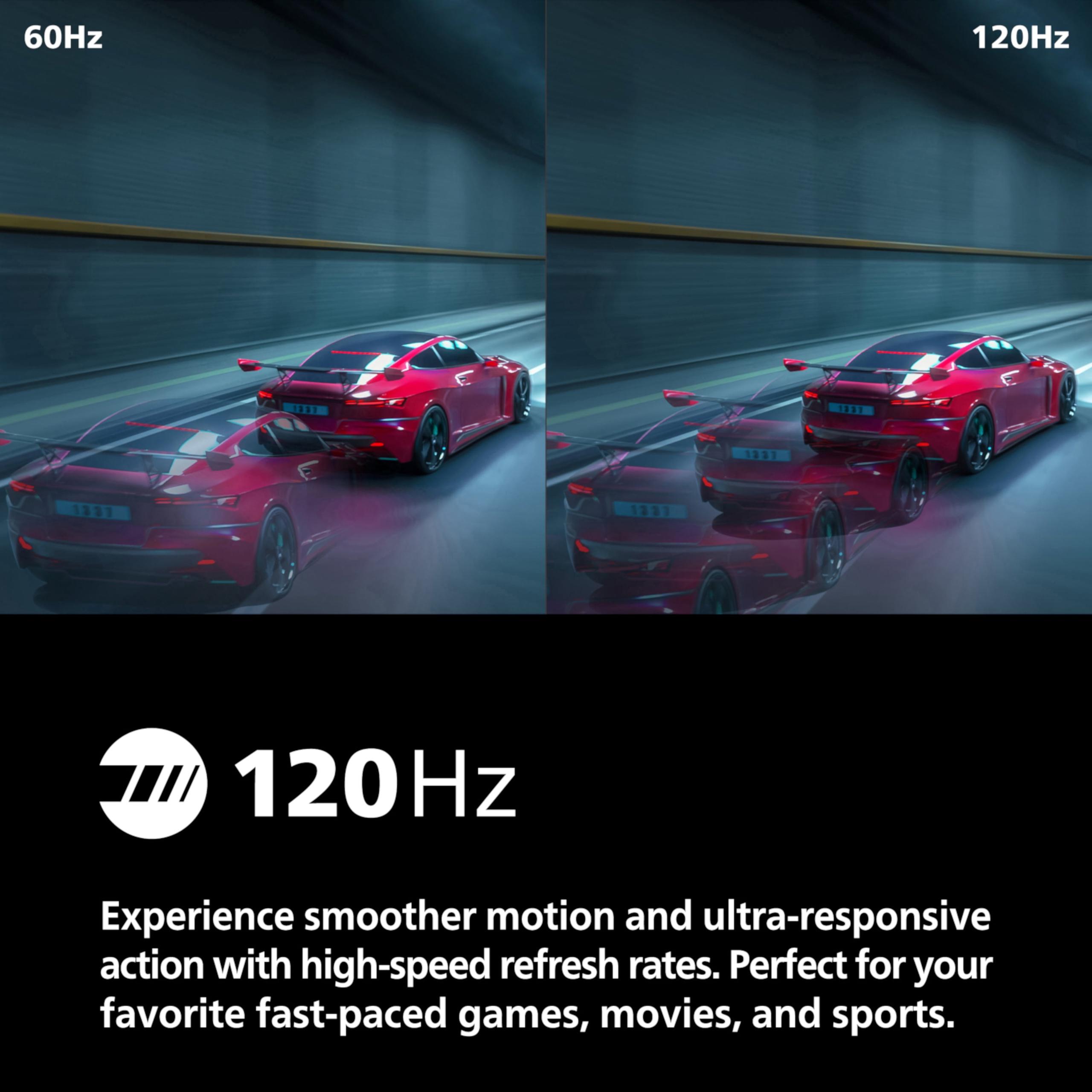
Modern gaming demands low input lag (the delay between pressing a button and seeing the action) and high refresh rates (how many times per second the image updates). Both TVs excel here, but with different strengths.
The Philips 65OLED974/F7 offers 120Hz native refresh rates with nearly instantaneous pixel response times. When characters dash across the screen in fast-paced games, OLED's instant pixel switching eliminates motion blur entirely. Your gaming experience feels incredibly responsive, especially in competitive titles where every millisecond matters.
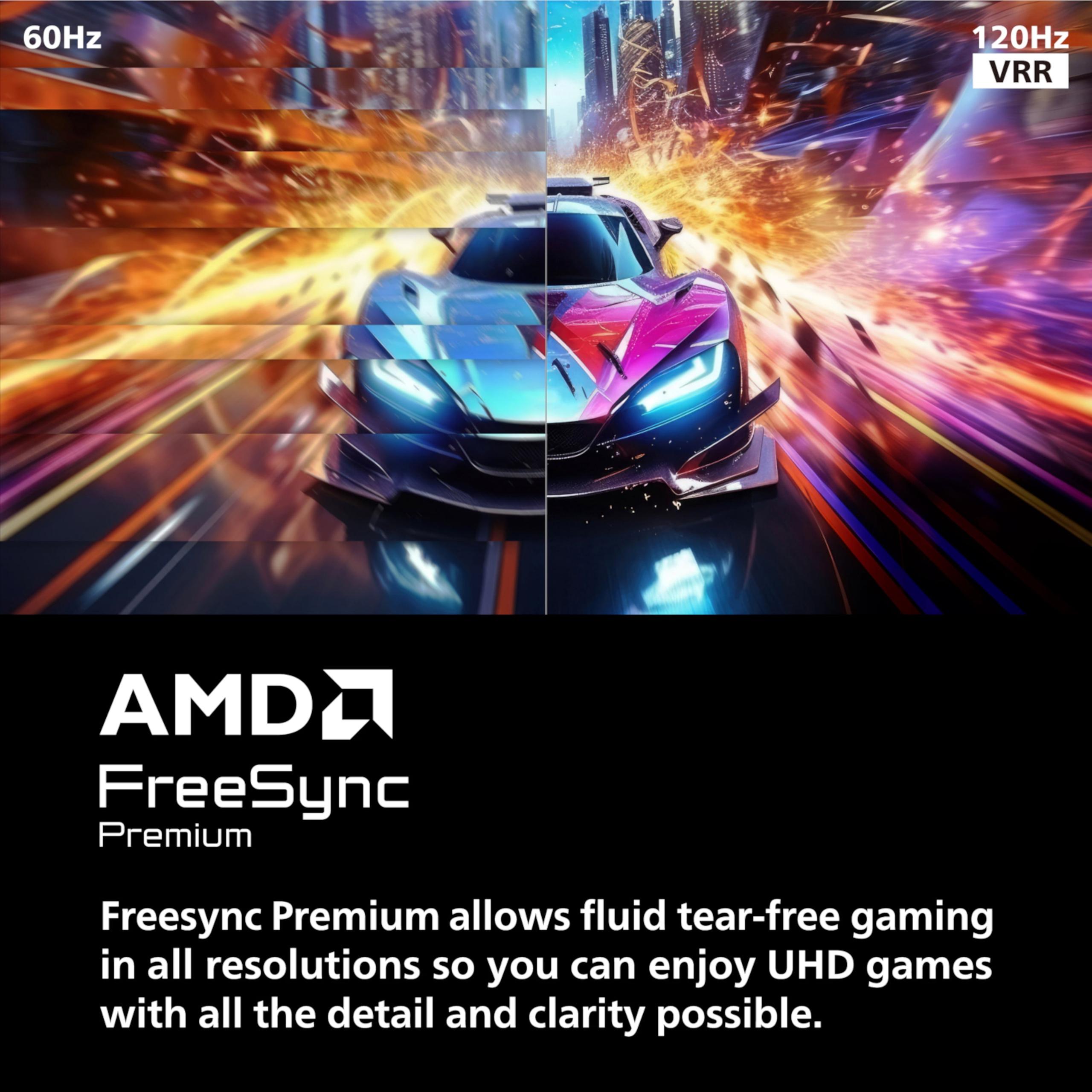
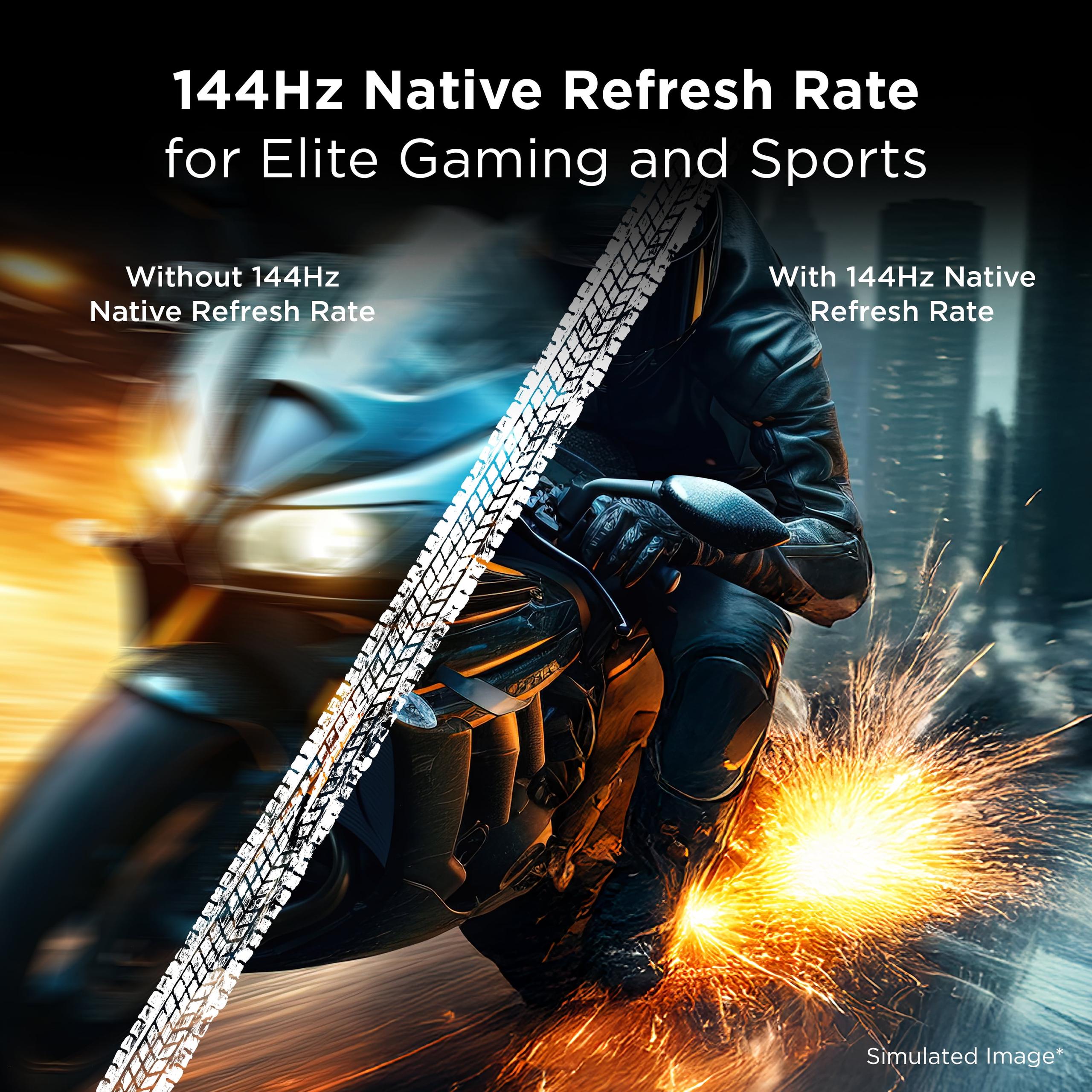
The TCL QM9K pushes gaming even further with 144Hz native refresh rates and something called "Game Accelerator 288," which can handle up to 288Hz at lower resolutions like 1080p. For PC gaming or future consoles, this provides even smoother motion. The TV includes AMD FreeSync Premium Pro, which synchronizes the display refresh rate with your graphics card to eliminate screen tearing.
What this means for gaming: If you primarily game in dark rooms and value perfect motion clarity, the Philips OLED delivers an almost holographic sharpness. If you game in brighter spaces or want cutting-edge refresh rates, the TCL provides superior versatility and future-proofing.
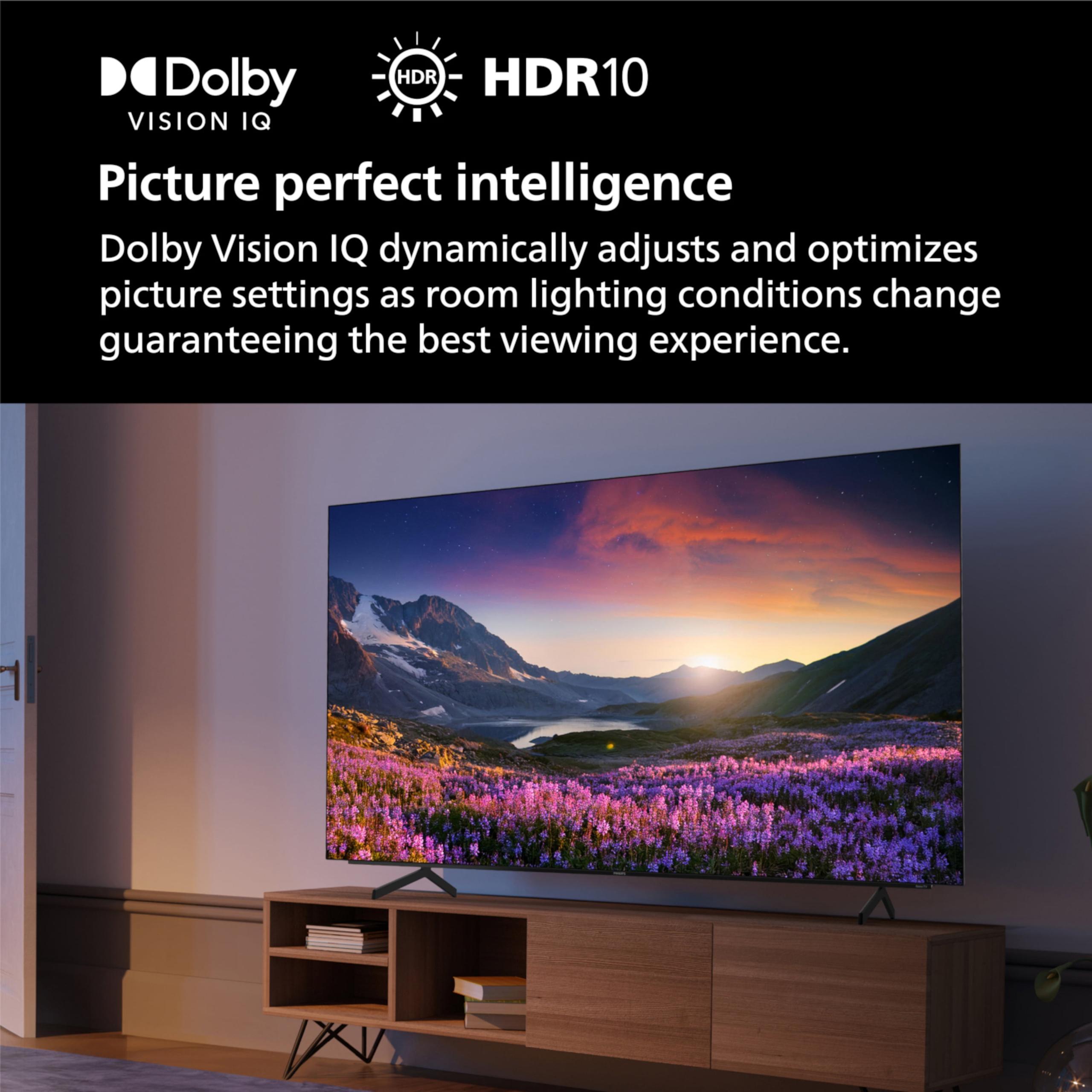
Color reproduction separates good TVs from great ones. The Philips 65OLED974/F7 excels at color accuracy straight out of the box, particularly for SDR (Standard Dynamic Range) content. Colors look natural and properly saturated without appearing over-processed or artificial.
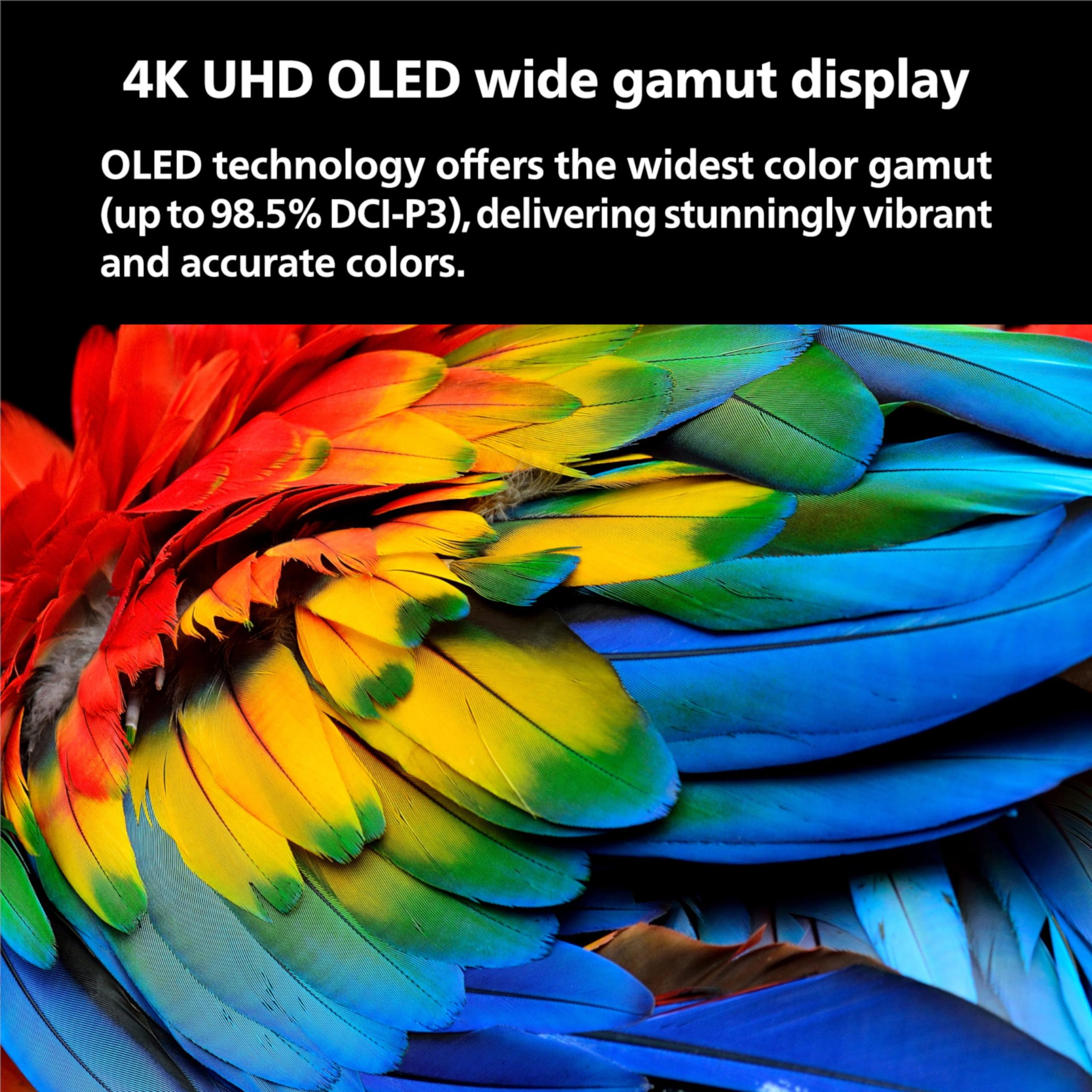
The TCL QM9K takes a different approach with its Quantum Dot enhancement, achieving what's called superior "color volume"—the ability to maintain color accuracy even at very high brightness levels. Those microscopic Quantum Dots act like color filters, producing incredibly pure reds, greens, and blues that remain vibrant even when the TV is pumping out thousands of nits.
In practical terms, the Philips gives you more accurate colors for most content, while the TCL gives you more spectacular colors for HDR content. Neither approach is wrong—it depends on whether you prioritize accuracy or impact.
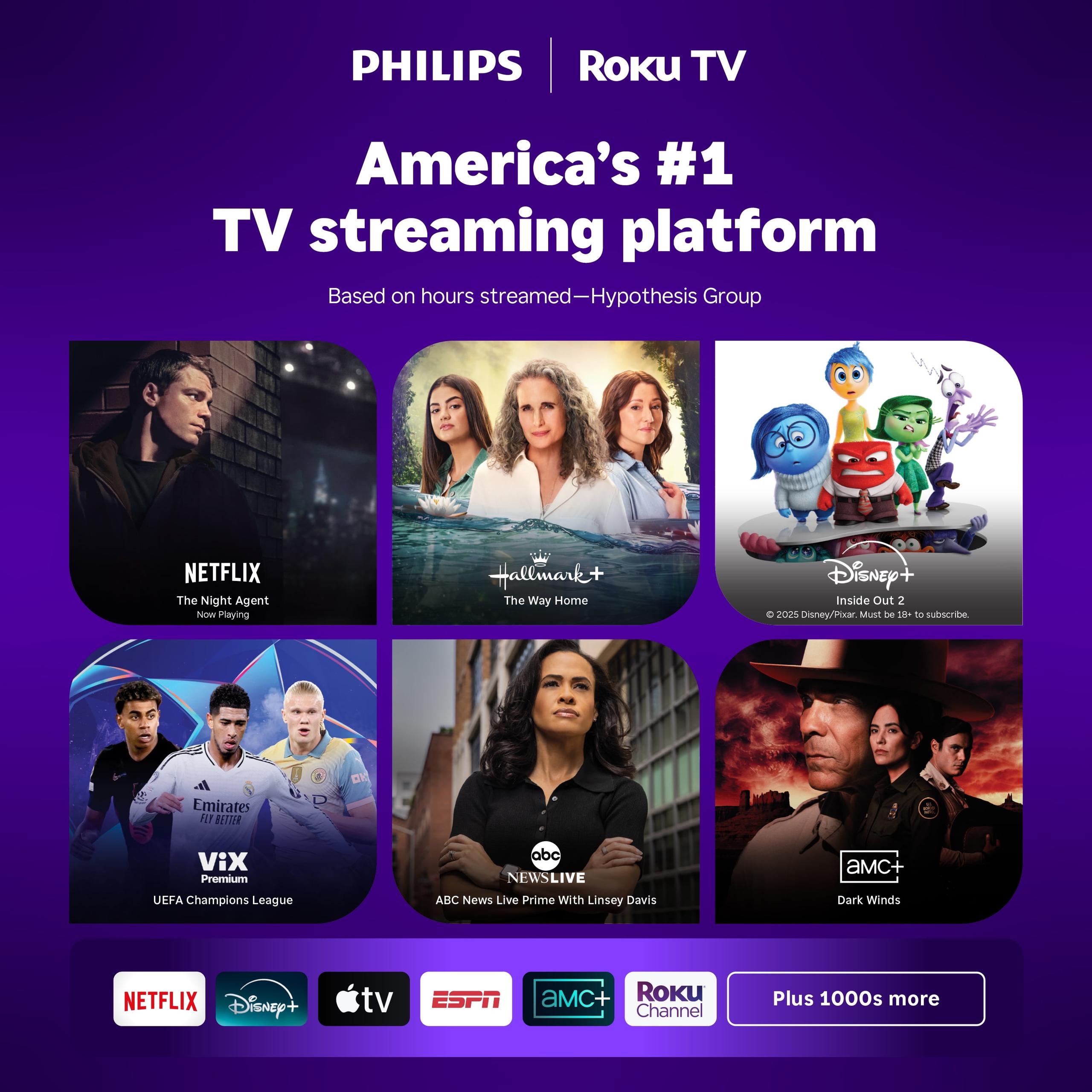
The Philips 65OLED974/F7 runs Roku TV, known for its straightforward interface and excellent app selection. Roku's strength lies in its simplicity—you can find content quickly without navigating complex menus. The included voice remote handles basic commands effectively, and the platform rarely feels sluggish.
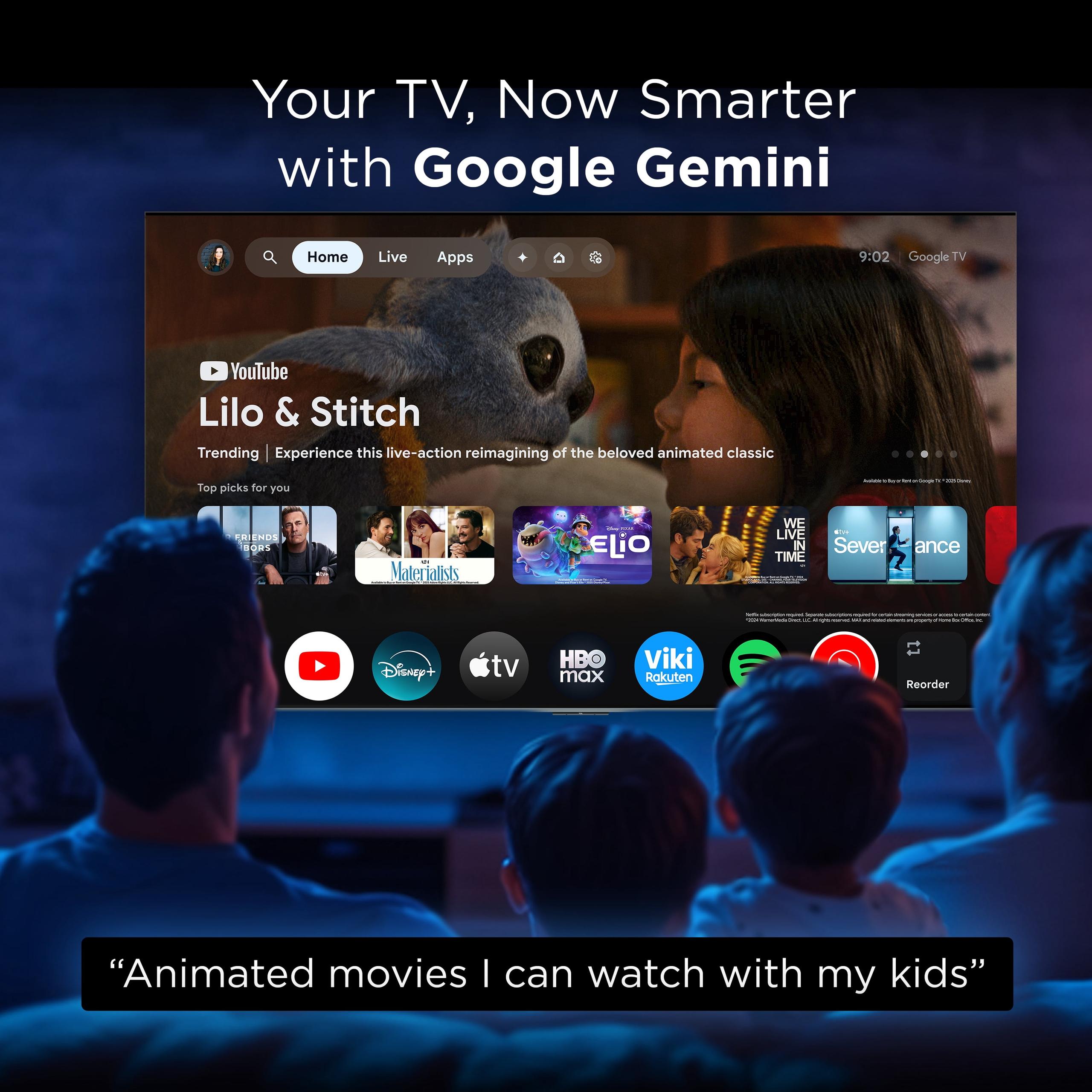
The TCL QM9K features Google TV enhanced with Google Gemini AI. This creates a more sophisticated experience with contextual recommendations, advanced voice control, and features like presence sensing that automatically adjusts the display based on whether you're in the room. The AI integration can understand complex voice commands and provide more nuanced responses than traditional smart TV platforms.
For families who want something that just works, Roku TV on the Philips offers fewer complications. For tech enthusiasts who enjoy exploring advanced features, the TCL's Google TV platform provides more capabilities to discover.
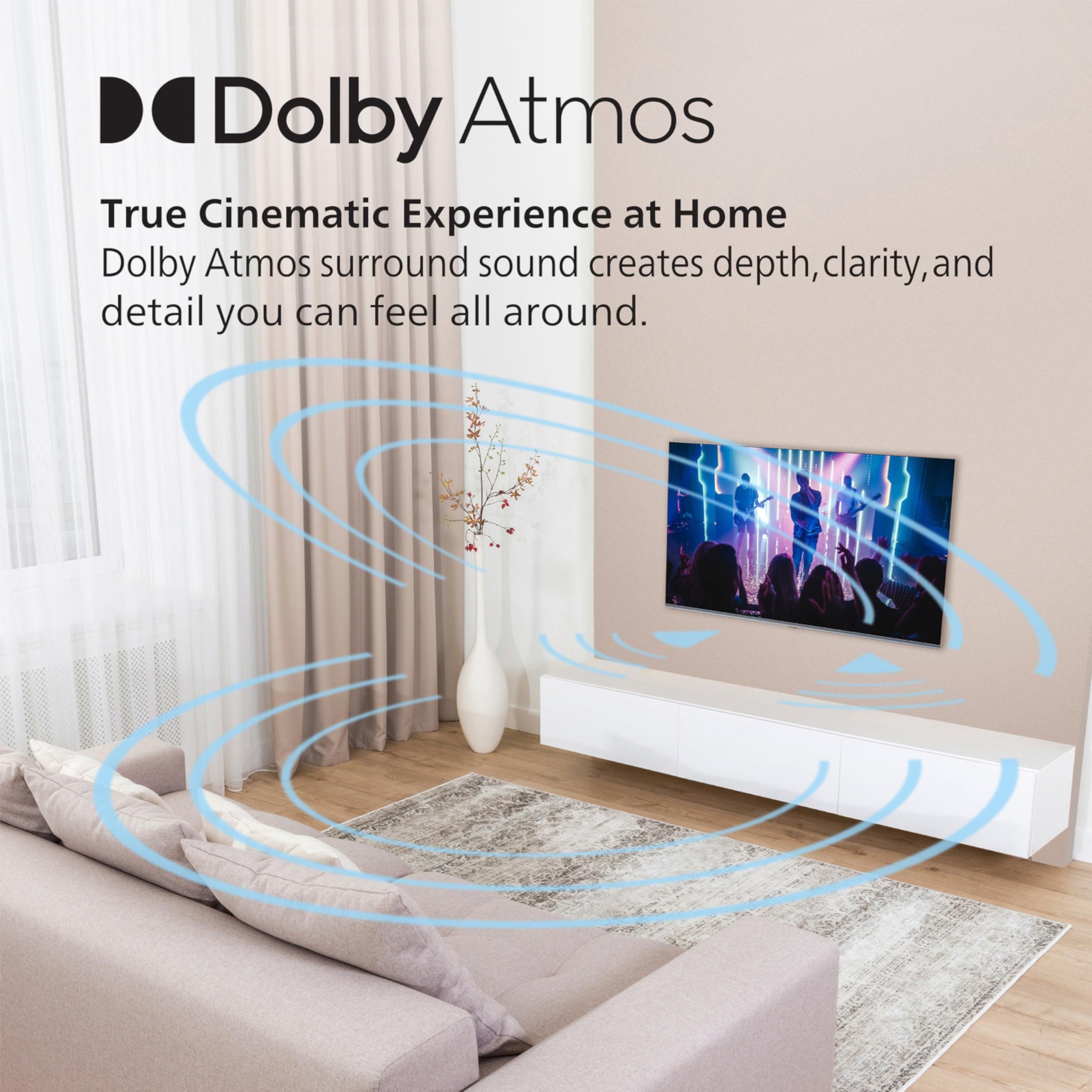
Neither TV should be your primary audio solution for serious home theater use, but they handle built-in audio differently. The Philips 65OLED974/F7 includes a 2.1 speaker system with Dolby Atmos support, creating more spatial audio than typical TV speakers.
The TCL QM9K features audio tuning by Bang & Olufsen with a 2.1.1 channel system that includes upward-firing drivers for enhanced Dolby Atmos effects. The additional ".1" represents those height channels that bounce sound off your ceiling.
Both TVs benefit significantly from external sound systems. OLED's ultra-thin profile makes soundbar placement easier, while the TCL's enhanced built-in audio might delay your need for external speakers.
At the time of writing, the Philips 65OLED974/F7 typically costs significantly less than comparable OLED TVs from major brands, making it an exceptional value for anyone wanting OLED technology without premium pricing. You're getting perfect blacks and infinite contrast at a price point that historically wouldn't touch OLED performance.
The TCL QM9K represents premium Mini LED technology at competitive pricing compared to other high-end TVs with similar brightness and feature sets. While more expensive than budget options, it delivers flagship performance that justifies the investment for many users.
The value equation depends entirely on your priorities. Need perfect blacks on a budget? The Philips delivers unmatched bang for buck. Want cutting-edge brightness and gaming features with room versatility? The TCL provides premium performance across more use cases.
Your room's lighting conditions should heavily influence this decision. The Philips 65OLED974/F7 transforms dark rooms into personal theaters with its infinite contrast, but struggles in spaces with significant ambient light. If you primarily watch TV in the evening with controlled lighting, OLED's advantages shine.
The TCL QM9K excels in mixed lighting conditions. Whether it's a bright Saturday afternoon sports game or a dark evening movie, the TV adapts effectively. Its brightness capabilities mean you won't need to close blinds or dim lights to enjoy proper contrast.
Consider your actual viewing habits: Do you mainly watch TV at specific times with controlled lighting, or throughout the day in various conditions?
For sports and action content, motion handling becomes critical. The Philips OLED provides incredibly sharp motion due to its near-instantaneous pixel response. Fast-moving objects maintain clear edges without the trailing blur common in other technologies.
The TCL QM9K includes sophisticated motion processing called "Motion Rate 480" which uses frame interpolation to smooth motion, though this can sometimes create the "soap opera effect" that makes movies look artificially smooth. However, its processing also excels at cleaning up lower-quality content from streaming services.
Professional tip: OLED's natural motion clarity often requires fewer processing adjustments, while Mini LED benefits from fine-tuning motion settings based on content type.
For dedicated home theater environments, the Philips 65OLED974/F7 delivers an experience closer to commercial cinema displays. The combination of perfect blacks, accurate colors, and sharp motion creates immersive viewing that draws you into the content rather than reminding you you're watching a TV.
The TCL QM9K excels in multi-purpose spaces where the TV serves various entertainment needs beyond just movie watching. Its brightness advantage means HDR content maintains impact even in sub-optimal lighting conditions.
Choose the Philips 65OLED974/F7 if:
Choose the TCL QM9K if:
The reality is that both technologies have matured significantly since their early days. The TCL's local dimming has evolved to minimize traditional LED weaknesses, while OLED pricing has become more accessible. Your choice ultimately depends on matching the technology's strengths to your specific viewing environment and preferences.
Neither TV will disappoint if chosen for the right application. The Philips OLED excels in creating that premium theater experience when conditions allow, while the TCL QM9K provides premium performance across a broader range of real-world situations. Consider where and how you actually watch TV, not just how you imagine you might use it, and let that guide your decision.
| Philips 65OLED974/F7 | TCL 65" QM9K |
|---|---|
| Display Technology - Fundamentally different approaches to creating contrast | |
| OLED with self-emitting pixels for perfect blacks | QD-Mini LED with up to 6,000 local dimming zones |
| Peak Brightness - Critical for HDR impact and bright room viewing | |
| Poor brightness performance, unsuitable for bright rooms | Exceptional 6,500 nits peak brightness, overcomes any glare |
| Contrast Performance - What makes dark scenes look cinematic | |
| Infinite contrast ratio with perfect blacks | Excellent contrast with deep blacks and minimal blooming |
| Gaming Refresh Rate - Higher numbers mean smoother gameplay | |
| 120Hz native with low input lag | 144Hz native, up to 288Hz at 1080p with Game Accelerator |
| HDR Format Support - Determines which premium content looks its best | |
| Dolby Vision IQ, HDR10, HLG | HDR ULTRA with Dolby Vision IQ, HDR10+, up to HDR6500 |
| Smart TV Platform - Your daily interface experience | |
| Roku TV with simple, reliable interface | Google TV with Google Gemini AI and advanced features |
| Color Accuracy - How natural and realistic colors appear | |
| Excellent out-of-the-box SDR accuracy | Good color volume but may need calibration for accuracy |
| Motion Handling - Critical for sports and action content | |
| Near-instantaneous pixel response, minimal blur | Motion Rate 480 with MEMC, some blur in dark-to-bright scenes |
| Best Room Environment - Where each TV truly excels | |
| Dark or controlled lighting rooms only | Any lighting condition, especially bright rooms |
| Audio System - Built-in sound quality | |
| Dolby 2.1 system with Dolby Atmos | Bang & Olufsen tuned 2.1.1 with upward-firing drivers |
| HDMI 2.1 Gaming Features - Modern console compatibility | |
| 4K @ 120Hz, VRR support on select ports | 4K @ 144Hz, AMD FreeSync Premium Pro, Auto Game Mode |
| Viewing Angles - How picture quality holds up from the sides | |
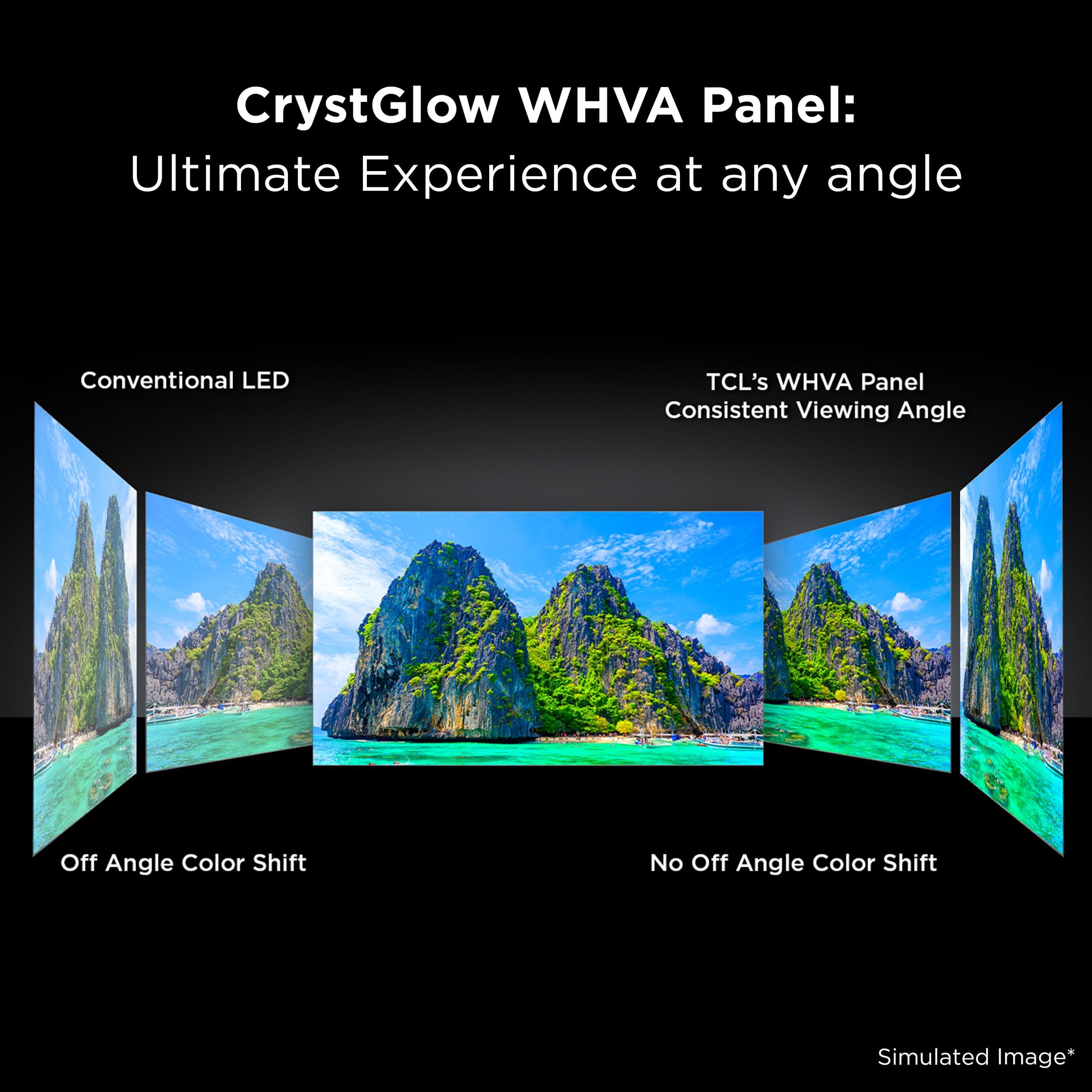
| Excellent 176° viewing angles maintain quality | Good viewing angles but image washes out from extreme sides |
| Value Proposition - Performance per dollar at typical pricing | |
| Exceptional OLED value with perfect blacks on budget | Premium Mini LED performance with versatility across use cases |
The TCL 65" QM9K is significantly better for bright rooms with its exceptional 6,500 nits peak brightness that easily overcomes glare from windows or overhead lighting. The Philips 65OLED974/F7 struggles in bright environments due to poor peak brightness performance and is best suited for controlled lighting or dark rooms only.
OLED technology in the Philips 65OLED974/F7 uses self-emitting pixels that can turn completely off for perfect blacks and infinite contrast. QD-Mini LED in the TCL 65" QM9K uses thousands of tiny LED backlights with up to 6,000 local dimming zones behind a Quantum Dot-enhanced LCD panel, achieving excellent contrast while delivering much higher brightness levels.
Both TVs offer excellent gaming, but the TCL 65" QM9K has a slight edge with 144Hz native refresh rates, Game Accelerator 288 supporting up to 288Hz at 1080p, and AMD FreeSync Premium Pro. The Philips 65OLED974/F7 provides 120Hz gaming with nearly instantaneous pixel response for incredibly sharp motion, making it excellent for competitive gaming.
This depends on your room lighting. The TCL QM9K delivers more impactful HDR with brilliant highlights that truly pop thanks to its 6,500 nits peak brightness. The Philips OLED offers superior shadow detail and perfect blacks for cinematic contrast, but HDR highlights appear dim and lack impact compared to the TCL.
The Philips 65OLED974/F7 uses Roku TV, which offers a simple, reliable interface that's easy to navigate with excellent app selection. The TCL 65" QM9K features Google TV with Google Gemini AI integration, providing more advanced features like presence sensing, contextual recommendations, and sophisticated voice control for users who want cutting-edge smart capabilities.
The Philips 65OLED974/F7 achieves perfect blacks with infinite contrast since each pixel can turn completely off. The TCL QM9K delivers excellent contrast with deep blacks through its 6,000 local dimming zones and advanced Halo Control System that minimizes blooming, though it can't match OLED's perfect black performance.
The TCL 65" QM9K is generally better for sports due to its exceptional brightness that fights daytime glare and Motion Rate 480 technology for smooth motion. The Philips OLED provides incredibly sharp motion clarity but struggles in bright rooms where sports are often watched, making the TCL more practical for most sports viewing scenarios.
The Philips 65OLED974/F7 excels at color accuracy out of the box, especially for SDR content, with natural-looking colors that don't require calibration. The TCL 65" QM9K offers superior color volume with incredibly vibrant, saturated colors that remain accurate even at high brightness levels, thanks to its Quantum Dot enhancement covering 97% of the DCI-P3 color gamut.
For dedicated home theaters with controlled lighting, the Philips 65OLED974/F7 provides a more cinematic experience with perfect blacks, infinite contrast, and accurate colors that create immersive viewing. The TCL QM9K works better in multi-purpose rooms where you can't always control lighting, offering impressive performance across various viewing conditions.
The Philips 65OLED974/F7 features a Dolby 2.1 speaker system with Dolby Atmos support for spatial audio. The TCL 65" QM9K includes a Bang & Olufsen tuned 2.1.1 system with upward-firing drivers for enhanced Dolby Atmos effects. Both benefit from external sound systems, but the TCL's audio system is slightly more sophisticated.
The Philips 65OLED974/F7 typically offers exceptional value for OLED technology at a competitive price point, making perfect blacks and infinite contrast accessible to more buyers. The TCL QM9K provides premium Mini LED performance with flagship features like high brightness and advanced gaming capabilities, representing good value for users who need versatility across different lighting conditions.
Choose the TCL 65" QM9K if your living room has windows or mixed lighting throughout the day, as its exceptional brightness ensures great picture quality in any condition. Select the Philips 65OLED974/F7 if you can control lighting in your living room and prioritize perfect blacks and cinematic contrast for movie watching, especially if budget is a key consideration.
We've done our best to create useful and informative comparisons to help you decide what product to buy. Our research uses advanced automated methods to create this comparison and perfection is not possible - please contact us for corrections or questions. These are the sites we've researched in the creation of this article: rtings.com - versus.com - versus.com - rtings.com - samsclub.com - versus.com - youtube.com - usa.philips.com - bestbuy.com - usa.philips.com - consumerreports.org - usa.philips.com - documents.philips.com - tvoutlet.ca - displayspecifications.com - business.walmart.com - displayspecifications.com - ecoustics.com - walmart.com - rtings.com - bestbuy.com - youtube.com - youtube.com - youtube.com - techaeris.com - displayspecifications.com - pcrichard.com - residentialsystems.com - us.tcl.com - displayspecifications.com - valueelectronics.com - woodruffappliance.com - tcl.com - pcrichard.com - tcl.com - techradar.com - tcl.com - us.tcl.com - youtube.com - youtube.com - bestbuy.com - youtube.com

Privacy Policy
Terms and Conditions - Affiliate Policy
Home Security
© Copyright 2008-2026.
11816 Inwood Rd #1211, Dallas, TX 75244