

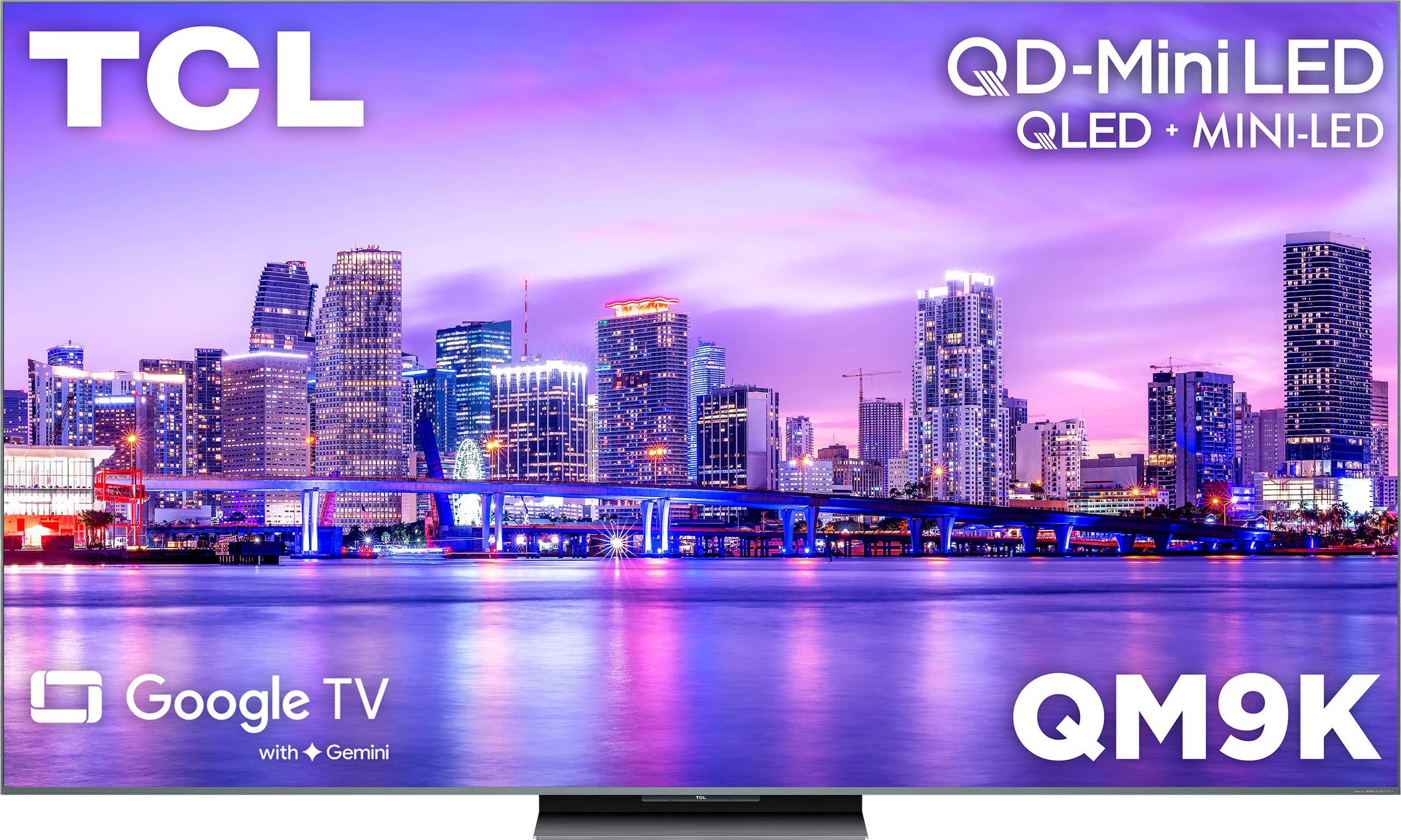
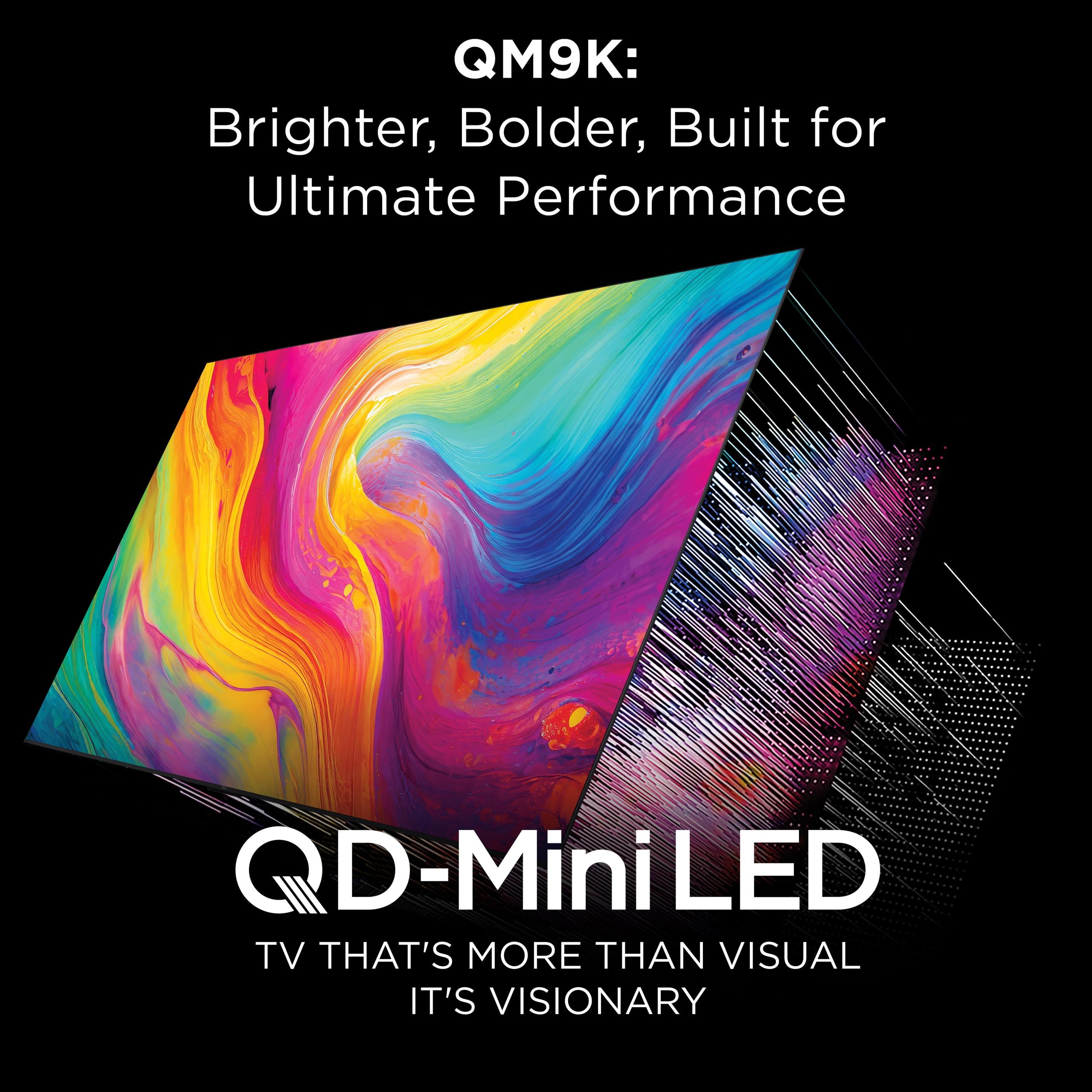
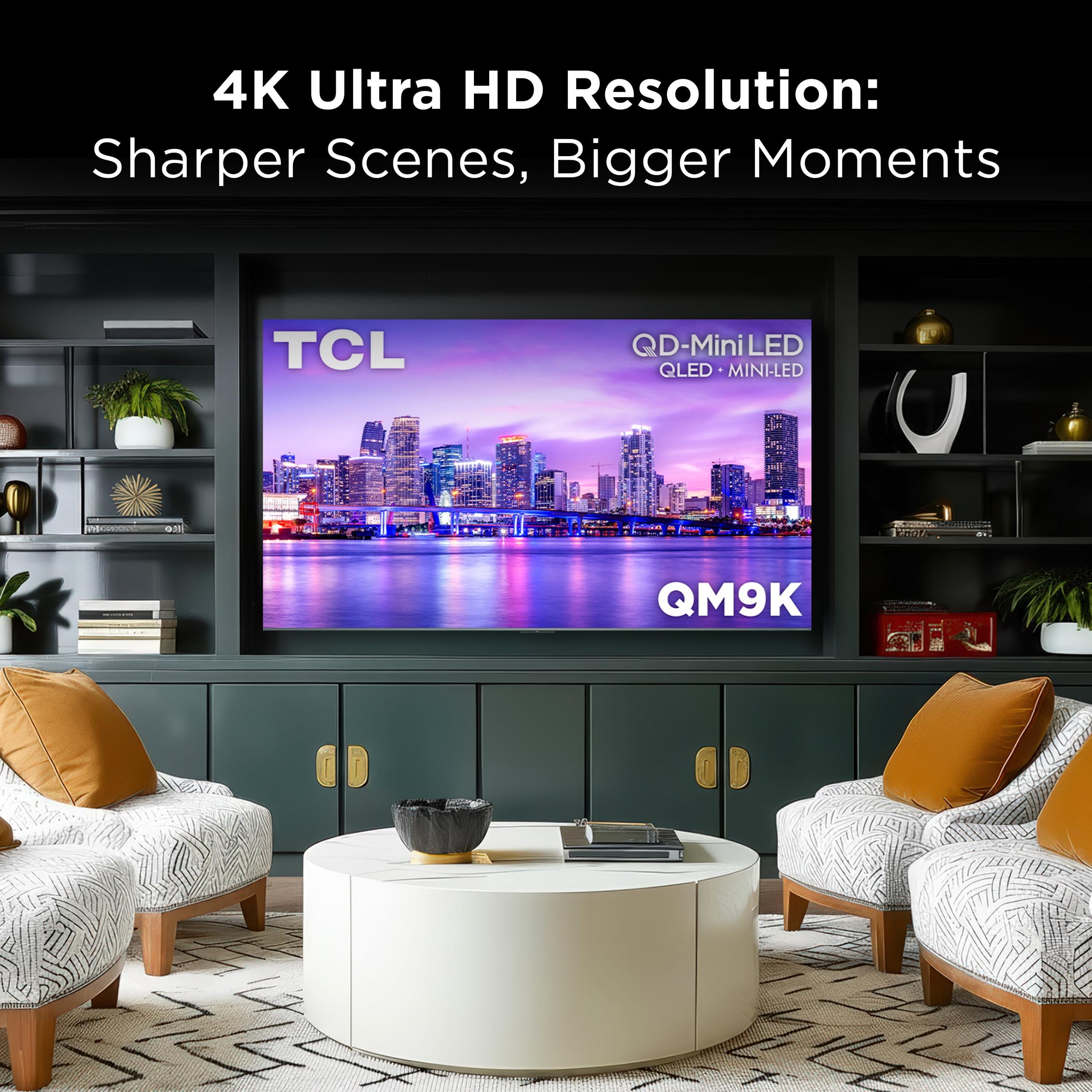
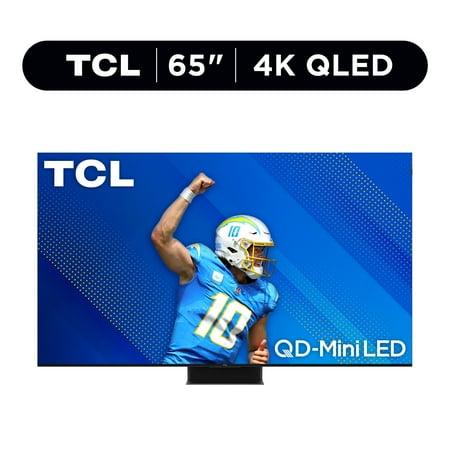




When you're shopping for a premium TV in 2025, the mini-LED category offers some of the most compelling options available. These displays sit in the sweet spot between traditional LED-LCD TVs and expensive OLED screens, delivering incredible brightness for HDR content while maintaining deep blacks through sophisticated local dimming technology. TCL has established itself as a leader in this space, and their current lineup presents an interesting choice: the flagship TCL QM9K released in 2024, or the more affordable TCL QM8 that debuted the same year.
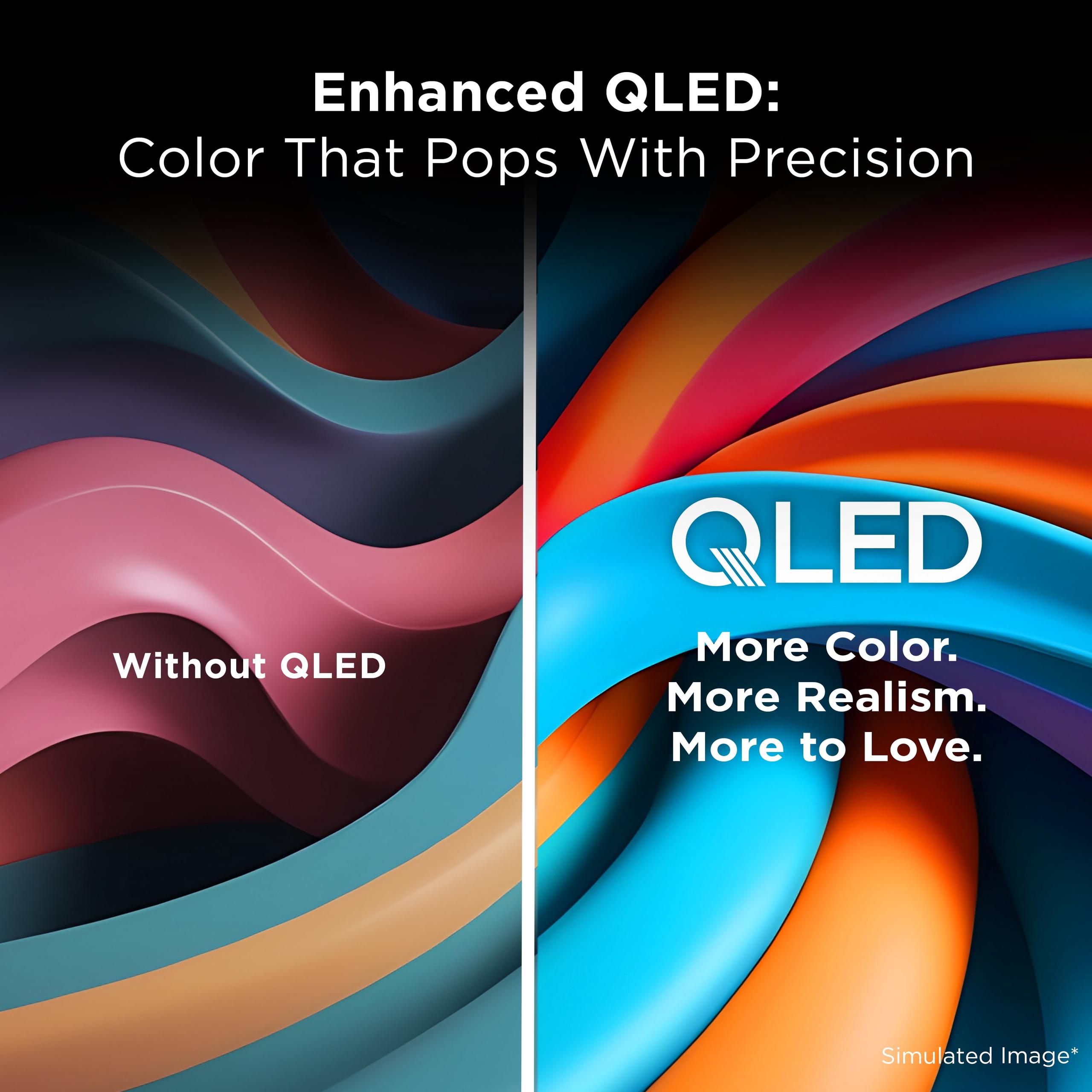
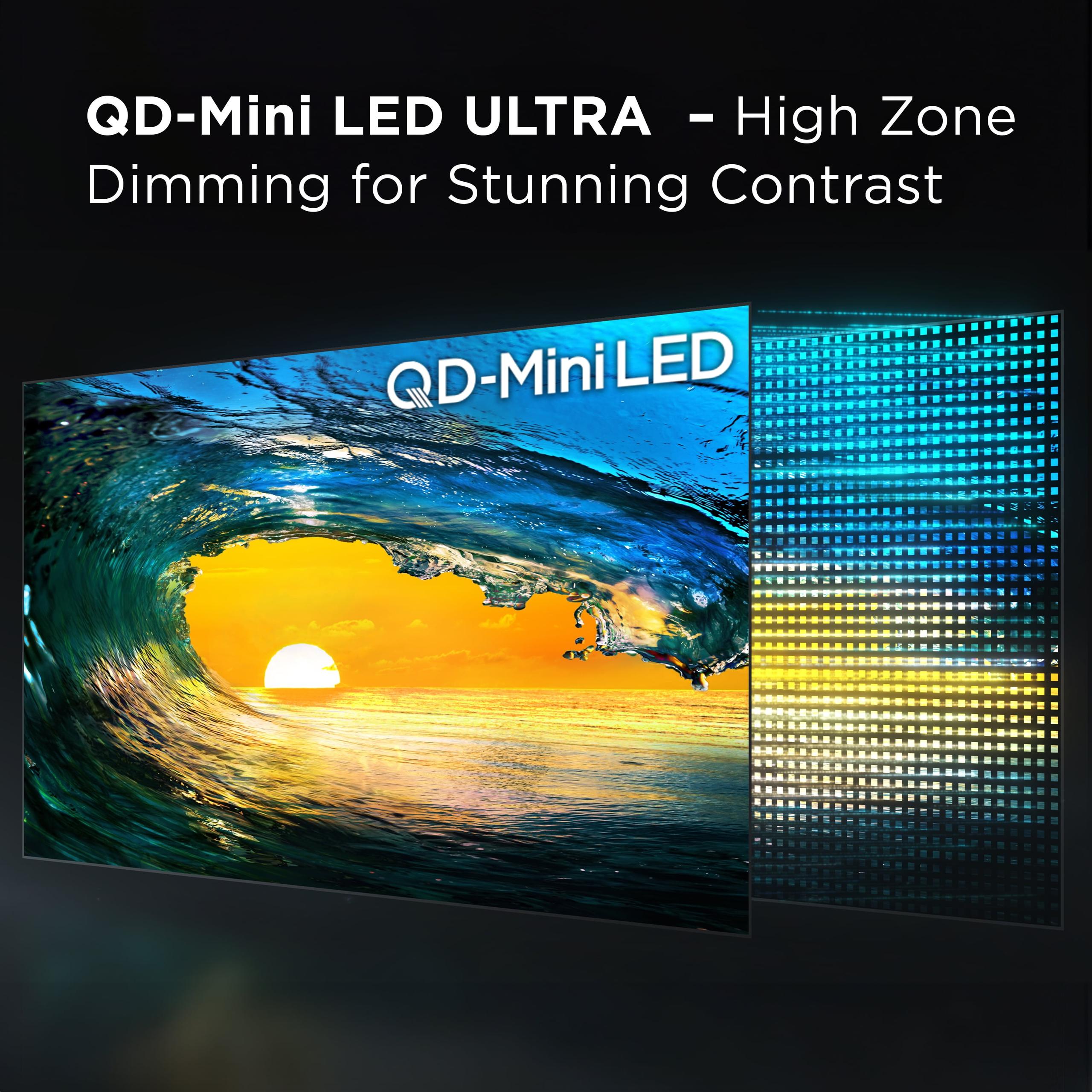
Before diving into the comparison, it's worth understanding what makes mini-LED TVs special. Traditional LED-LCD TVs use large LED zones behind the screen for backlighting, which can create "blooming" - unwanted light spilling around bright objects against dark backgrounds. Mini-LED technology uses thousands of tiny LEDs instead, allowing for much more precise control over which parts of the screen are lit up.
Both the TCL QM9K and TCL QM8 use this technology, but with different levels of sophistication. The number of "local dimming zones" - essentially how many individual areas the TV can control separately - directly impacts picture quality. More zones mean better contrast and less blooming, but also higher costs.
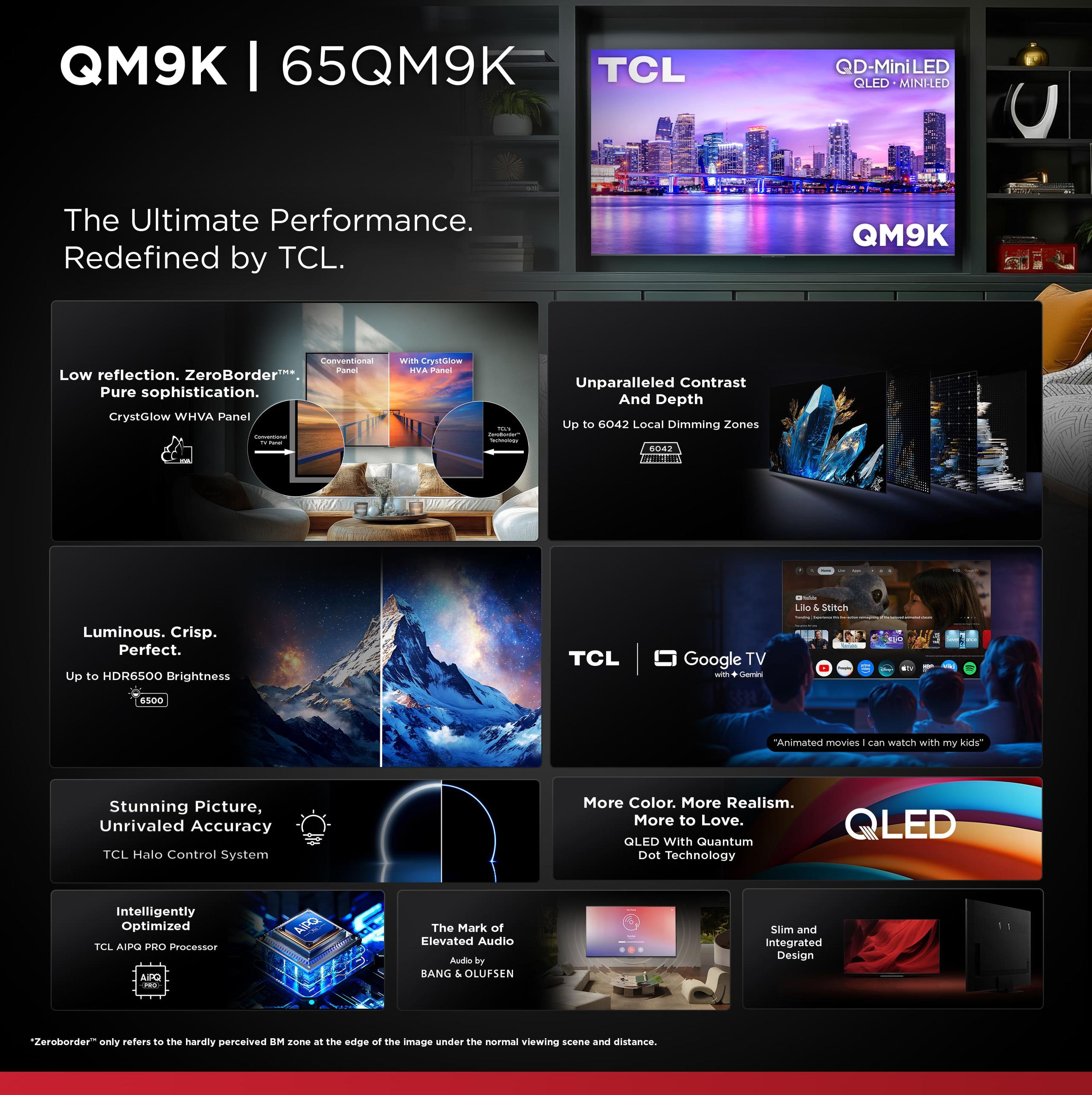
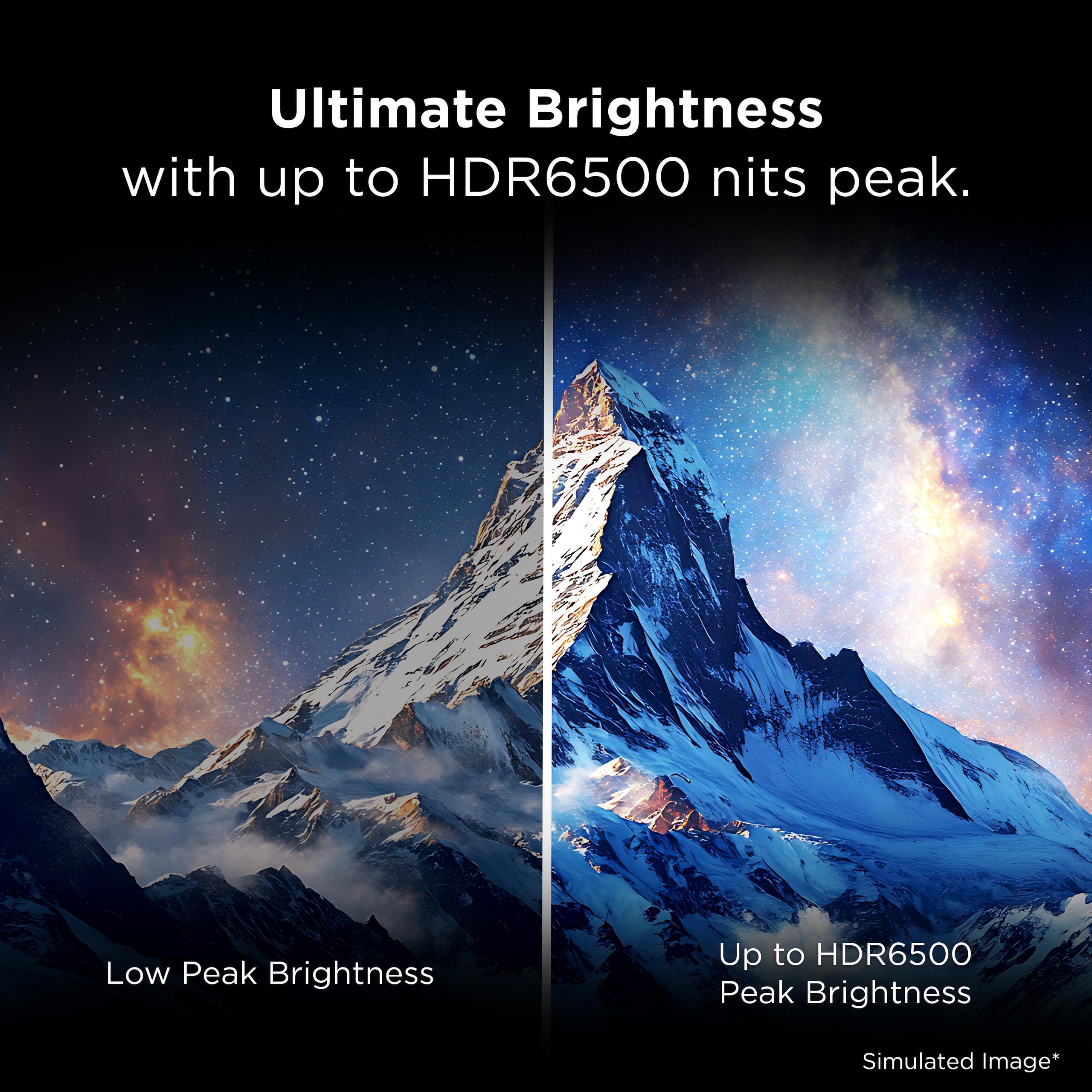
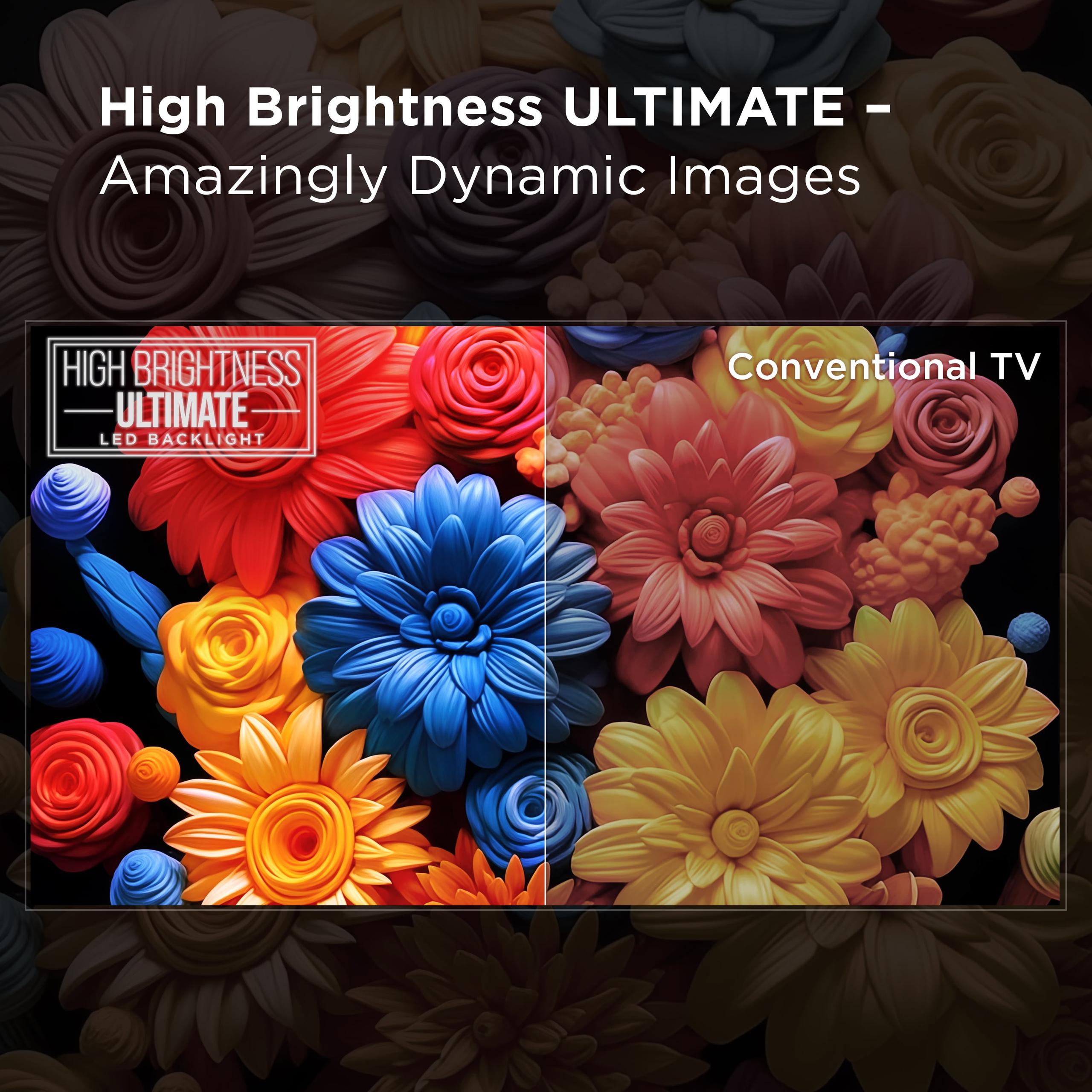
The most significant difference between these TVs lies in their brightness capabilities. The TCL QM9K claims a peak brightness of 6,500 nits, while the TCL QM8 reaches 5,000 nits. To put this in perspective, most standard content is mastered at 100-400 nits, while HDR (High Dynamic Range) content can peak at 1,000-4,000 nits depending on the format.
However, marketing claims don't always match real-world performance. Based on our research into professional reviews and measurements, the QM9K typically delivers around 4,000-4,400 nits in actual testing scenarios. This is still significantly brighter than most competing TVs and noticeably superior to the QM8's peak output.
Why does this matter? In bright rooms with lots of windows, higher peak brightness helps the TV overcome ambient light and maintain vibrant colors. More importantly for HDR content, those extra nits translate to more impactful specular highlights - think sunlight glinting off water or the glowing elements in a Marvel movie. The QM9K maintains better color saturation at peak brightness levels, while the QM8 begins losing some color intensity as it approaches its maximum output.
That said, for most home viewing environments, the QM8's 5,000-nit capability is more than adequate. The meaningful brightness advantage of the QM9K primarily shows up during daytime viewing or in rooms with significant ambient light.
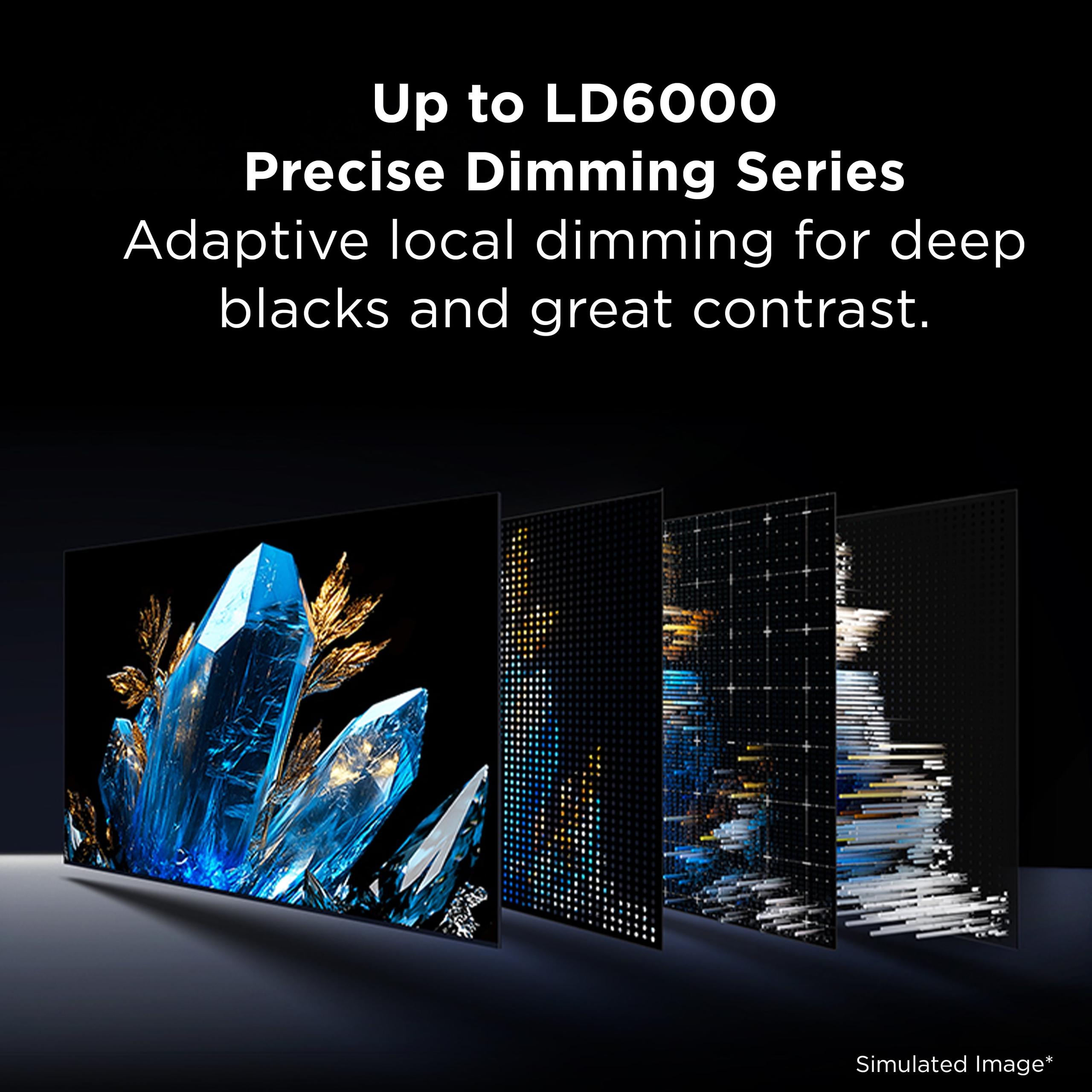
The contrast between the darkest blacks and brightest whites defines much of what we perceive as "picture quality." This is where local dimming zone count becomes crucial. The TCL QM9K features over 6,000 local dimming zones, while the TCL QM8 uses fewer zones - though TCL doesn't specify the exact count for the latter.
In practical terms, this translates to noticeably superior black uniformity on the QM9K. During dark movie scenes or fade-to-black moments, the QM9K delivers cleaner, more uniform blacks across the entire screen. The TCL QM8, while still impressive for its price range, may occasionally show faint patches of light leakage or clouding in very dark content, though this varies between individual panels.
The QM9K also incorporates TCL's advanced "Halo Control System," which includes several technologies working together: a Super High Energy LED Microchip, Condensed Micro Lens, and what they call "Micro OD" (reduced optical distance between the LEDs and the screen). These improvements help minimize the "halo effect" - the slight glow that can appear around bright objects on dark backgrounds.
For home theater enthusiasts who frequently watch movies in darkened rooms, the QM9K's superior zone count and halo control deliver a noticeably more cinematic experience. The QM8 still provides excellent contrast for everyday viewing, but dedicated movie watchers will appreciate the QM9K's precision.
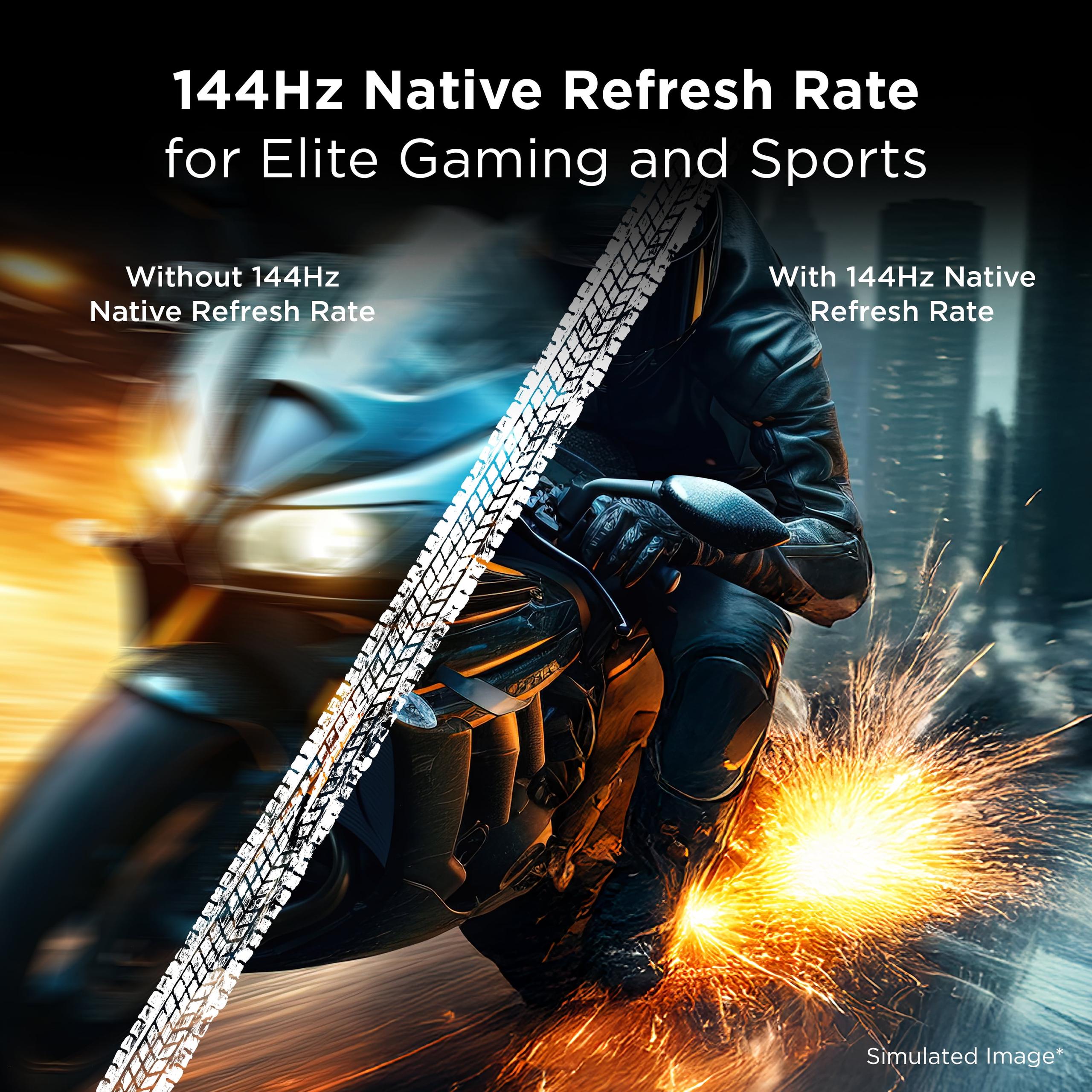
Both TVs excel for gaming, but with different capabilities that matter for different types of gamers. The TCL QM9K supports 144Hz refresh rates at 4K resolution, while the TCL QM8 maxes out at 120Hz. For context, most current-generation consoles (PlayStation 5, Xbox Series X) primarily output at 120Hz, making both TVs future-ready for console gaming.
The 144Hz advantage of the QM9K primarily benefits PC gamers with high-end graphics cards capable of pushing frame rates above 120fps at 4K resolution. The QM9K also features "Game Accelerator 288," which can handle up to 288Hz at lower resolutions like 1080p or 1440p - useful for competitive esports gaming where every millisecond counts.
Input lag - the delay between pressing a button and seeing the action on screen - is crucial for responsive gaming. Both TVs deliver excellent performance here, with the QM8 actually measuring slightly faster in some tests, though the difference is imperceptible during actual gameplay.
Variable Refresh Rate (VRR) technology, which synchronizes the TV's refresh rate with your gaming device's output to eliminate screen tearing, works excellently on both models. They support multiple VRR formats including FreeSync Premium Pro, ensuring compatibility with both AMD and NVIDIA graphics cards as well as modern consoles.
For most gamers, the QM8's 120Hz capability and excellent input lag provide everything needed for an exceptional gaming experience. The QM9K's 144Hz becomes worthwhile primarily for enthusiast PC gamers with top-tier hardware.
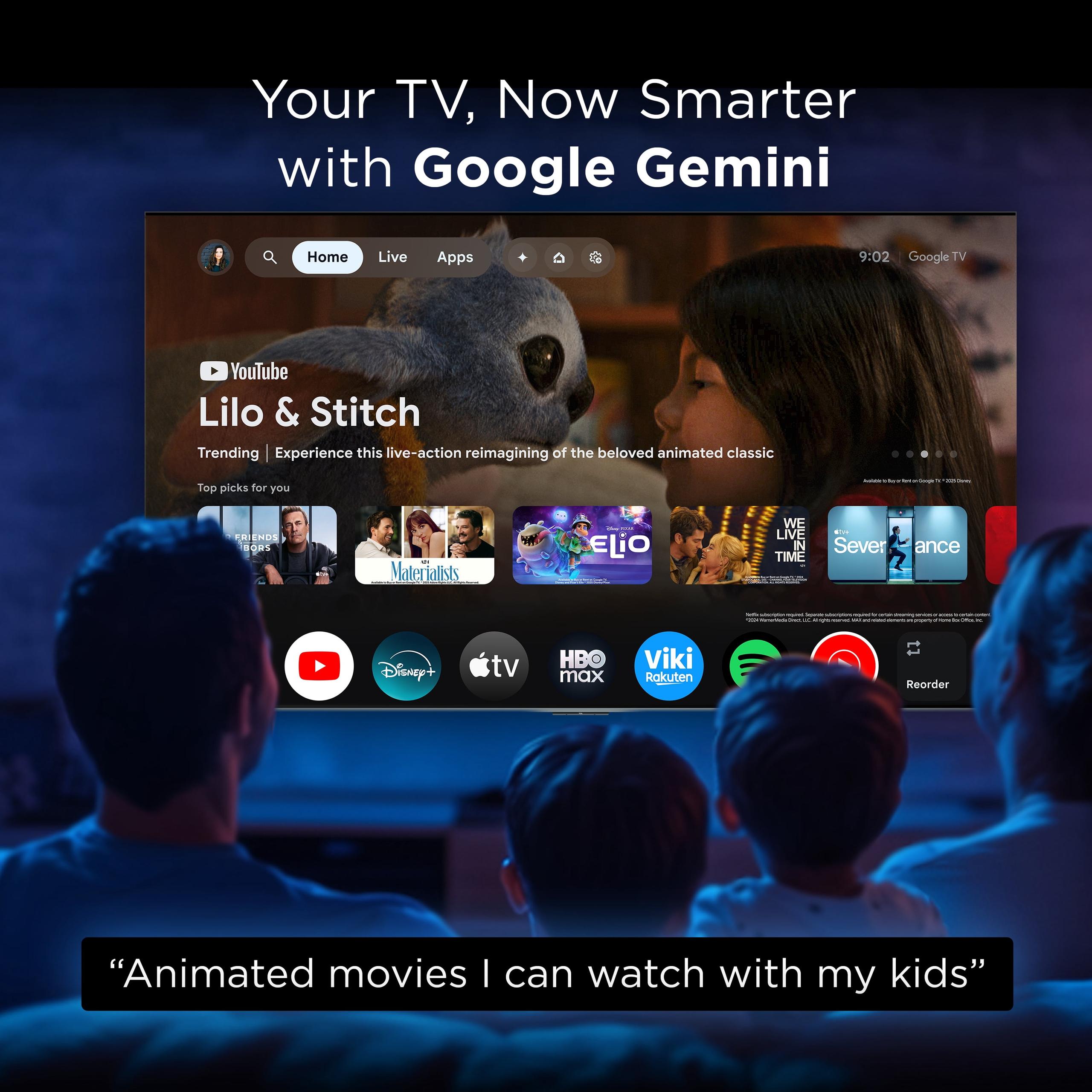
The smart TV experience differs significantly between these models. The TCL QM9K runs Google TV 14 with integrated Google Gemini AI, while the TCL QM8 uses an earlier Google TV version with more basic functionality.
The QM9K's Gemini integration provides more sophisticated voice control and contextual search capabilities. You can ask complex questions like "show me action movies from the 1990s with good reviews" and get relevant results. The TV also includes an mmWave presence sensor that detects when you're nearby, automatically adjusting the display or showing ambient information widgets.
These AI features represent nice conveniences rather than essential functionality. The QM8's standard Google TV interface handles streaming apps, voice commands, and content discovery perfectly well for most users. Both TVs support major streaming platforms, Dolby Vision, and integrate with smart home ecosystems.
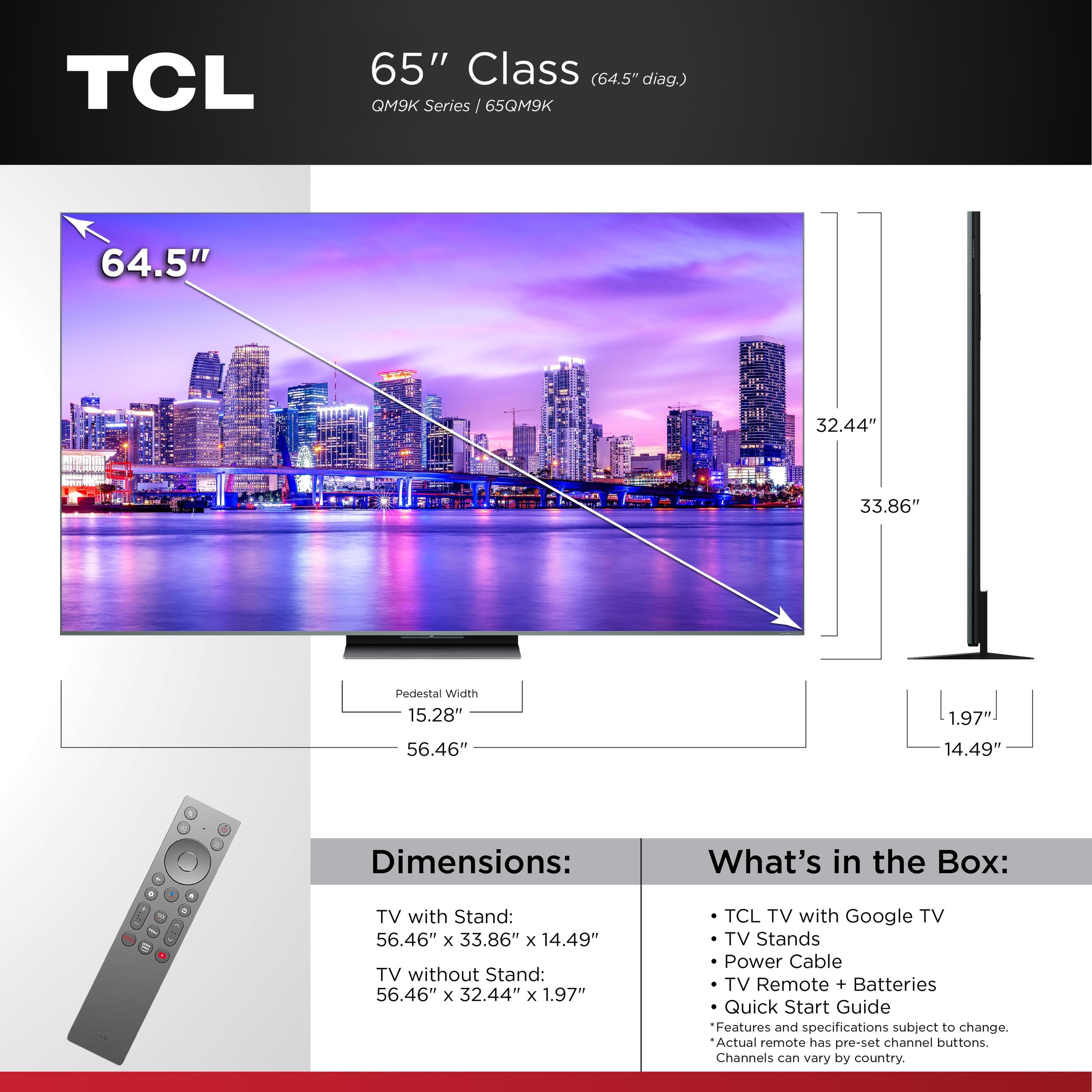
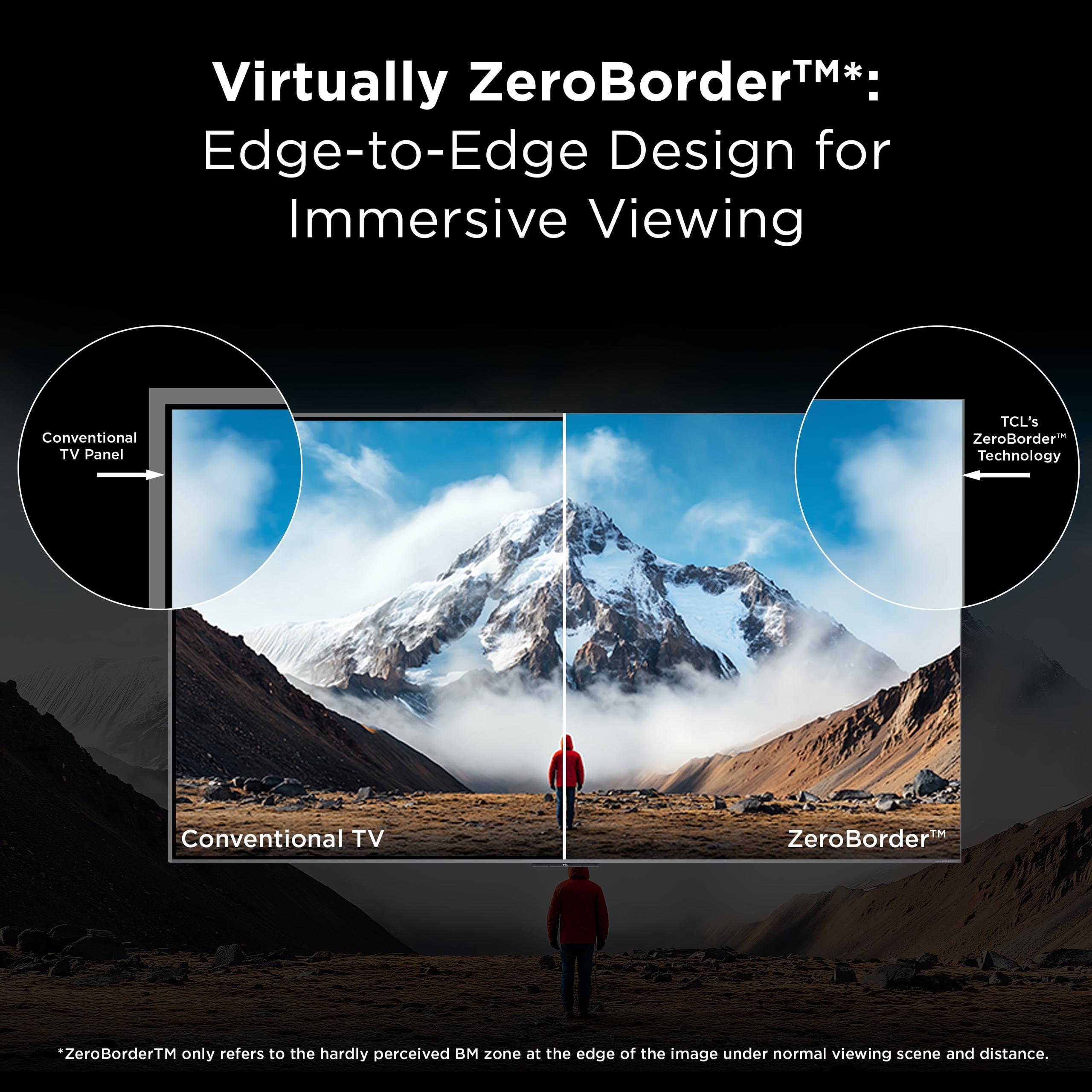
Both TVs share TCL's premium design language with thin bezels and height-adjustable stands, but there are subtle differences worth noting. The QM8 includes an anti-reflective screen coating that handles direct light sources and glare more effectively than the QM9K. This makes the QM8 particularly well-suited for bright living rooms or spaces with large windows.
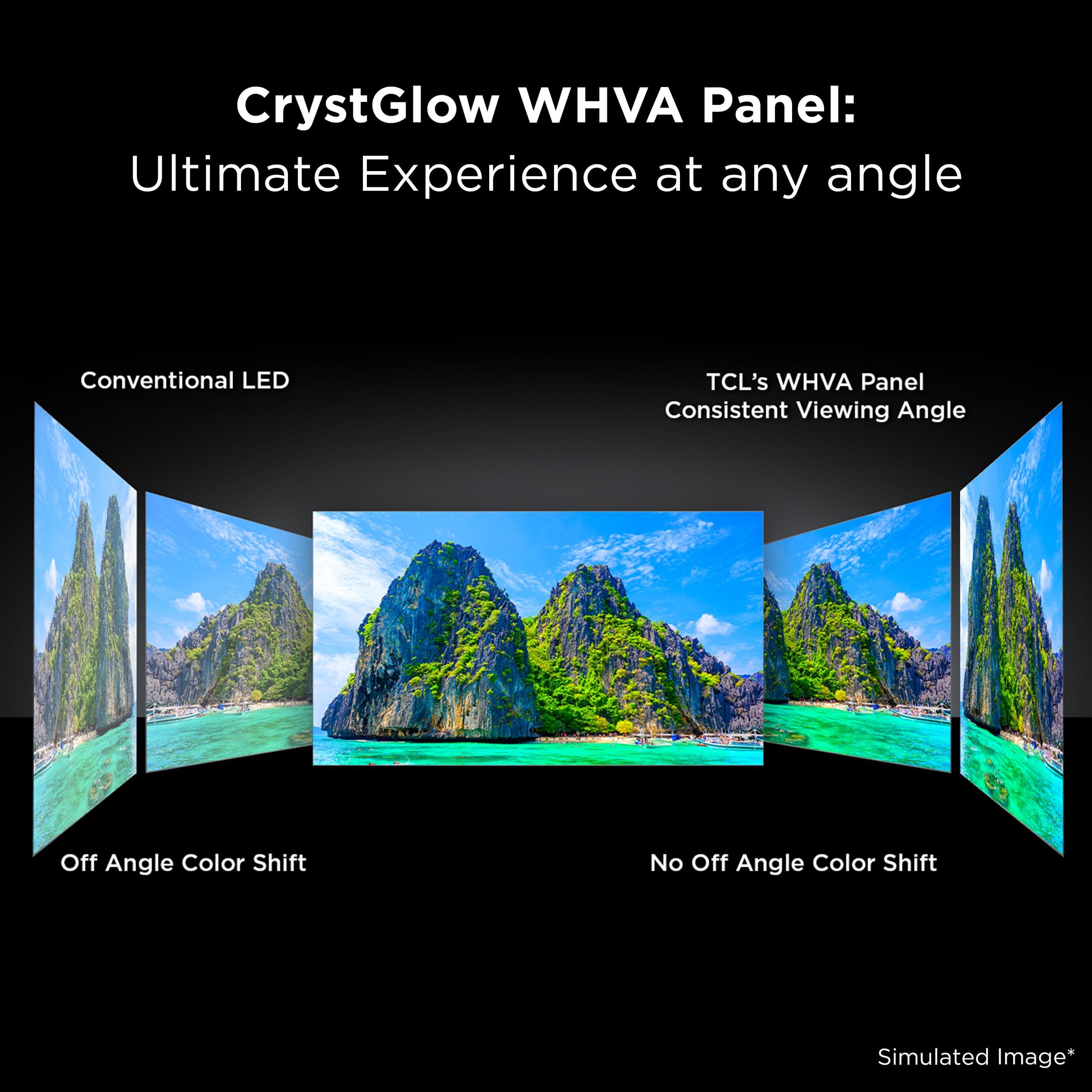
The QM9K features what TCL calls a "CrystGlow WHVA" panel with enhanced materials and construction, contributing to its superior contrast performance. However, this panel technology is slightly more reflective than the QM8's coating, requiring more careful consideration of room lighting and window placement.
Both TVs feature audio systems tuned by Bang & Olufsen, though with different configurations. The QM9K includes a 2.1.1 channel system with Dolby Atmos support, while the QM8 features an ONKYO 2.1.2 channel system with up-firing speakers and a built-in subwoofer.
In practice, both deliver significantly better audio than typical TV speakers, with clear dialogue and respectable bass response. However, serious home theater enthusiasts will likely pair either TV with a dedicated sound system to fully capitalize on their visual capabilities.
At the time of writing, the TCL QM8 costs roughly half the price of the QM9K, making value assessment crucial for most buyers. The QM8 delivers approximately 85-90% of the QM9K's performance for about 50% of the cost.
The QM9K's advantages - superior brightness sustainability, better black uniformity, 144Hz gaming, and AI integration - represent meaningful but incremental improvements rather than revolutionary upgrades. For most viewing scenarios, including standard HDR content consumption and console gaming, the performance difference proves less dramatic than the price gap suggests.
The QM8 excels in cost-effectiveness while maintaining excellent mini-LED performance. Its anti-glare coating actually provides advantages in certain room setups, and 120Hz gaming capability satisfies the vast majority of current gaming content.
For dedicated home theater setups, the choice depends on your priorities and room characteristics. The TCL QM9K delivers superior performance for dark-room movie watching, with better black uniformity and more precise local dimming creating a more cinematic experience. Its higher peak brightness also ensures HDR highlights have maximum impact.
However, the QM8 remains highly capable for home theater use. Its excellent contrast performance and anti-glare coating make it more versatile for rooms that serve multiple purposes. Many home theater enthusiasts find the QM8's performance entirely satisfactory while appreciating the cost savings that can be invested in audio equipment or other room improvements.
The TCL QM9K makes sense for buyers who want the absolute best mini-LED experience and can justify the premium cost. This includes home theater enthusiasts prioritizing maximum picture quality, competitive PC gamers needing 144Hz refresh rates, and tech enthusiasts who value cutting-edge features like AI integration.
The TCL QM8 represents exceptional value for buyers seeking premium mini-LED technology without flagship pricing. It's ideal for families wanting excellent picture quality for mixed content consumption, console gamers who don't need beyond 120Hz, and anyone prioritizing cost-effectiveness without sacrificing core performance.
Choosing between the TCL QM9K and QM8 ultimately comes down to budget priorities and specific use cases. The QM8 offers remarkable value, delivering flagship-level performance in most scenarios while costing significantly less. The QM9K provides incremental but meaningful improvements that justify its premium primarily for enthusiast users with specific needs.
For most households, the QM8 provides more than adequate performance with excellent value retention. The money saved compared to the QM9K can be invested in audio equipment, streaming subscriptions, or simply kept in your pocket. However, if budget allows and you prioritize having the absolute best mini-LED experience available, the QM9K's improvements deliver genuine benefits that enhance daily viewing.
Both TVs represent strong choices within the mini-LED category, offering the brightness and contrast advantages that make this technology so appealing. Your decision should align with your specific viewing habits, room characteristics, and budget priorities rather than chasing flagship features that may not impact your actual viewing experience.
| TCL 65" QM9K QD-Mini LED Smart TV | TCL 65" QM8 Mini-LED Smart TV |
|---|---|
| Peak HDR Brightness - Critical for bright rooms and impactful HDR highlights | |
| 6,500 nits claimed (~4,400 nits measured) | 5,000 nits peak |
| Local Dimming Zones - More zones = better contrast and less blooming | |
| 6,000+ zones with Halo Control System | Fewer zones (unspecified count) |
| Gaming Refresh Rate - Higher rates benefit competitive PC gaming | |
| 144Hz native (4K), Game Accelerator 288Hz | 120Hz native (4K), Game Accelerator 240Hz |
| Smart TV Platform - AI features vs standard functionality | |
| Google TV 14 with Gemini AI & presence sensor | Google TV (earlier version) with basic features |
| Panel Technology - Affects contrast and reflection handling | |
| CrystGlow WHVA panel (superior blacks, more reflective) | QD-Mini LED with anti-reflective coating |
| Audio System - Built-in sound quality | |
| 2.1.1 channel Bang & Olufsen with Dolby Atmos | ONKYO 2.1.2 channel with subwoofer |
| Release Year - Newer often means better features | |
| 2024 flagship model | 2024 mid-to-upper tier model |
| Target Buyer - Who gets the most value from each | |
| Home theater enthusiasts, competitive gamers, tech enthusiasts | Value-conscious buyers wanting premium mini-LED performance |
| Best Use Case - Where each TV excels most | |
| Dark room movie watching, bright room viewing, 144Hz gaming | Mixed-use living rooms, console gaming, budget-conscious home theater |
The TCL QM8 offers exceptional value, delivering about 85-90% of the TCL QM9K's performance at roughly half the cost. For most buyers, the QM8 provides excellent mini-LED picture quality without the flagship premium, making it the better value choice unless you specifically need the QM9K's advanced features.
The TCL QM9K runs Google TV 14 with Gemini AI integration, presence sensors, and advanced voice control. The TCL QM8 uses an earlier Google TV version with standard streaming and voice features. Both support major apps and smart home integration, but the QM9K offers more sophisticated AI capabilities.
The TCL QM9K excels in dedicated home theater setups with superior black uniformity, more precise local dimming, and better dark room performance. However, the TCL QM8 still provides excellent home theater picture quality at a much lower cost, making it a compelling choice for most home theater enthusiasts.
The TCL QM9K features a 2.1.1 channel Bang & Olufsen system with Dolby Atmos, while the TCL QM8 has an ONKYO 2.1.2 channel system with built-in subwoofer. Both offer significantly better sound than typical TV speakers, though serious home theater users will likely add external audio systems to either TCL model.
Both use mini-LED technology, but the TCL QM9K features a CrystGlow WHVA panel with enhanced contrast and more sophisticated zone control. The TCL QM8 uses standard QD-mini LED technology with fewer zones but includes practical features like anti-glare coating. The QM9K represents the more advanced technology.
Choose the TCL QM9K if you want the absolute best mini-LED performance, need 144Hz for PC gaming, prioritize advanced AI features, or frequently watch movies in dark rooms where superior black uniformity matters most. Otherwise, the TCL QM8 delivers excellent performance at much better value for most users.
We've done our best to create useful and informative comparisons to help you decide what product to buy. Our research uses advanced automated methods to create this comparison and perfection is not possible - please contact us for corrections or questions. These are the sites we've researched in the creation of this article: rtings.com - bestbuy.com - youtube.com - youtube.com - youtube.com - techaeris.com - displayspecifications.com - pcrichard.com - residentialsystems.com - us.tcl.com - displayspecifications.com - valueelectronics.com - woodruffappliance.com - tcl.com - pcrichard.com - tcl.com - techradar.com - tcl.com - us.tcl.com - youtube.com - youtube.com - bestbuy.com - youtube.com - rtings.com - rtings.com - techradar.com - tcl.com - the-gadgeteer.com - nfm.com - ecoustics.com - careyscommunications.com - pcrichard.com - tcl.com

Privacy Policy
Terms and Conditions - Affiliate Policy
Home Security
© Copyright 2008-2026.
11816 Inwood Rd #1211, Dallas, TX 75244