

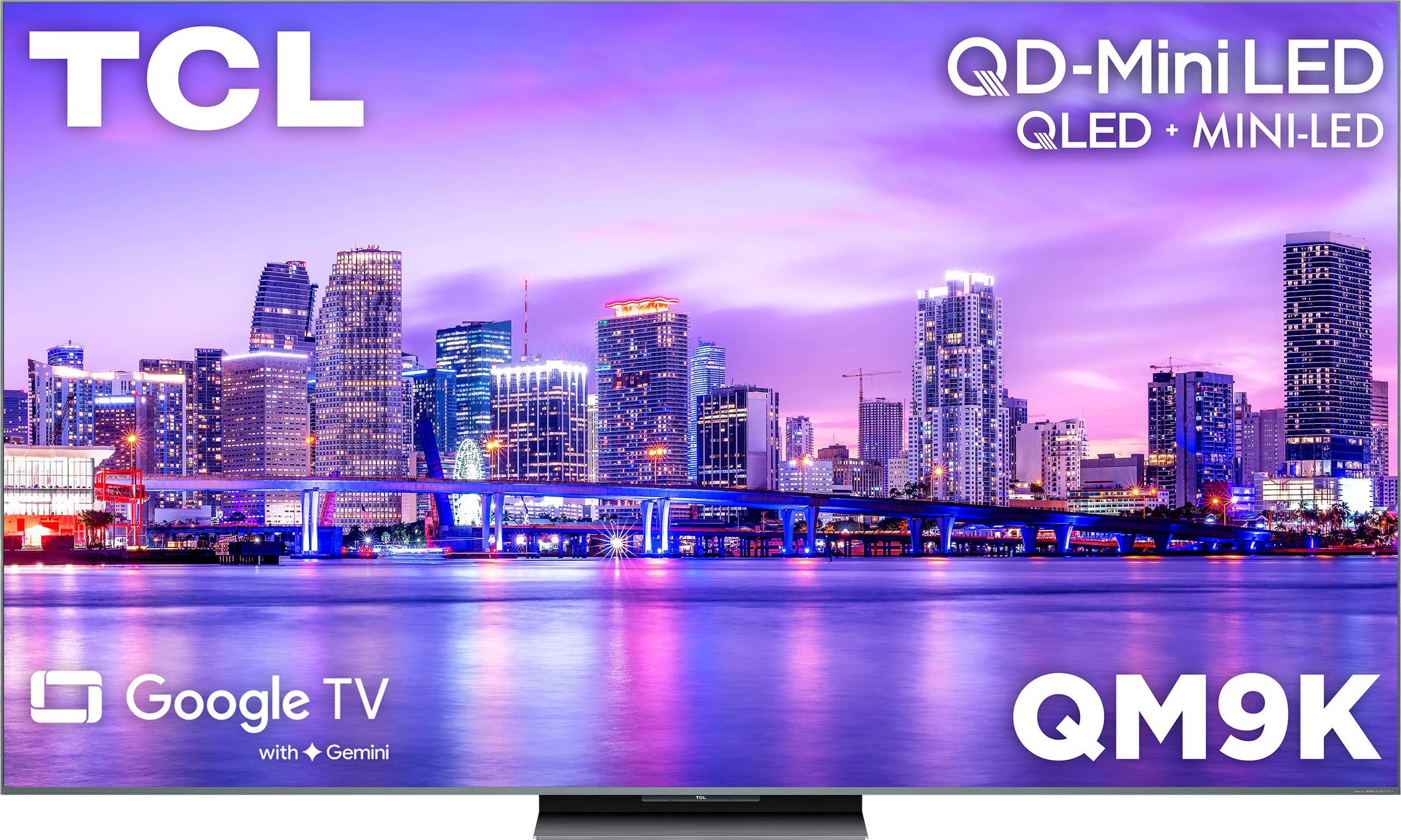
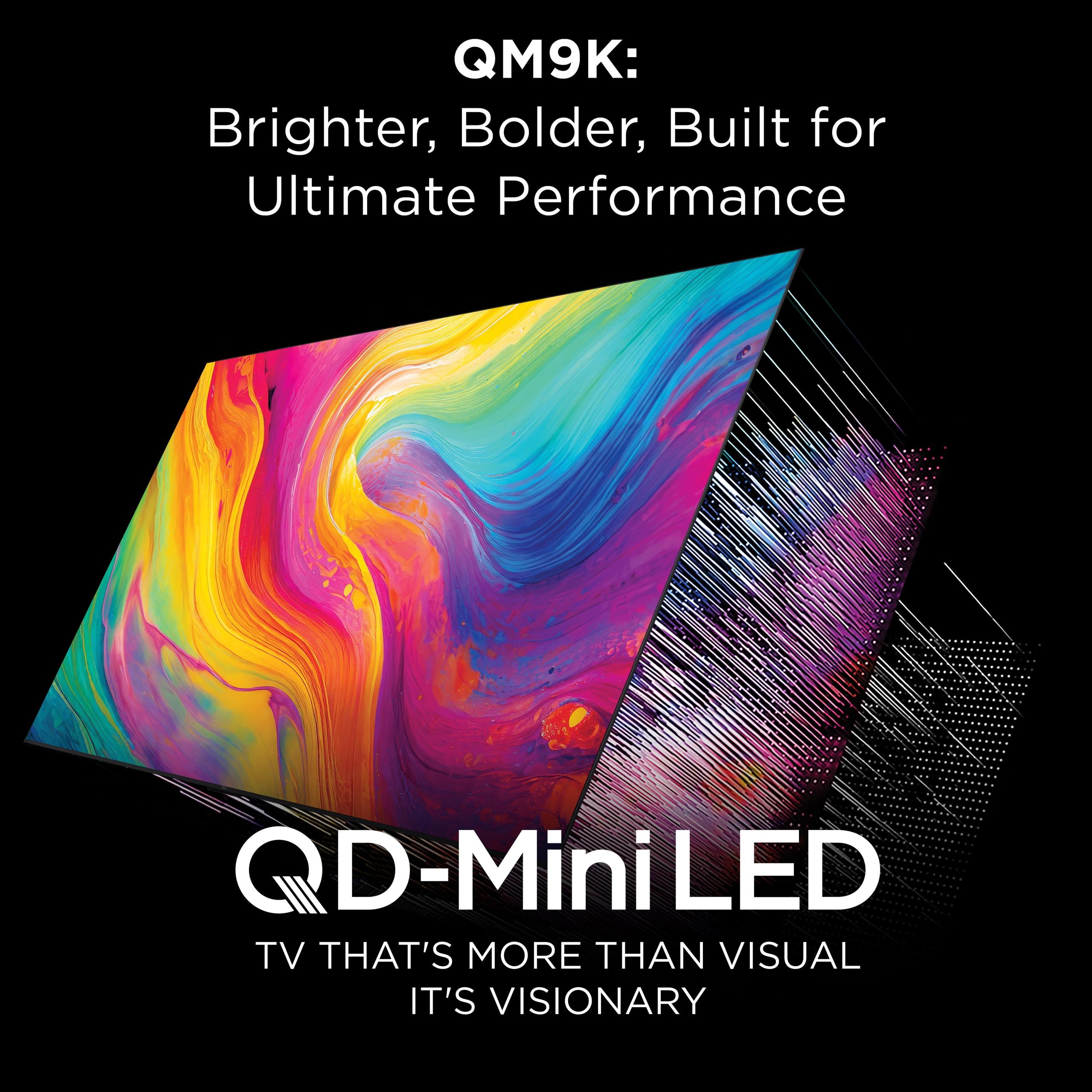
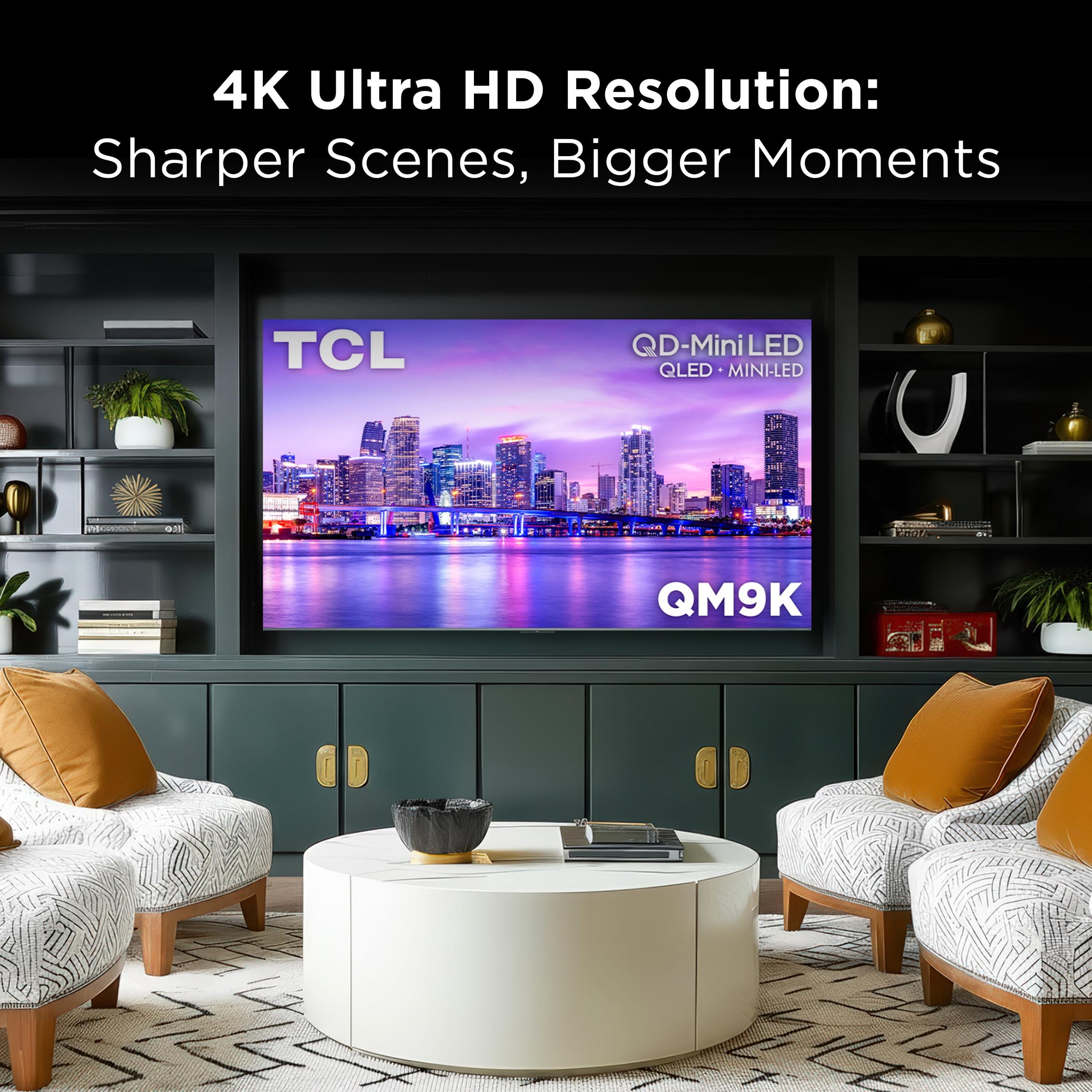


If you're shopping for a premium TV in 2025, Mini LED technology has become the sweet spot that combines the best of both worlds. These displays offer the deep blacks and high contrast we love about OLED TVs, but with the superior brightness and longevity of traditional LED panels. TCL has emerged as a leader in this space with their QM series, and their two flagship models - the TCL QM9K and TCL QM8K - represent some of the best Mini LED performance you can buy today.
The challenge is deciding between them. Both TVs deliver exceptional picture quality that rivals displays costing thousands more, but they take slightly different approaches. The QM9K is TCL's absolute flagship, released in 2025 with cutting-edge brightness capabilities and the latest smart features. The QM8K, also from 2025, focuses on delivering flagship-level performance at a more accessible price point. At the time of writing, you're looking at roughly a $500 difference between them - a significant consideration when both already represent substantial investments.
Before diving into the comparison, it's worth understanding what makes Mini LED special. Traditional LED TVs use large backlights that illuminate entire sections of the screen, leading to poor contrast when bright and dark elements appear together. OLED displays solve this by turning individual pixels completely off, creating perfect blacks but limiting overall brightness.
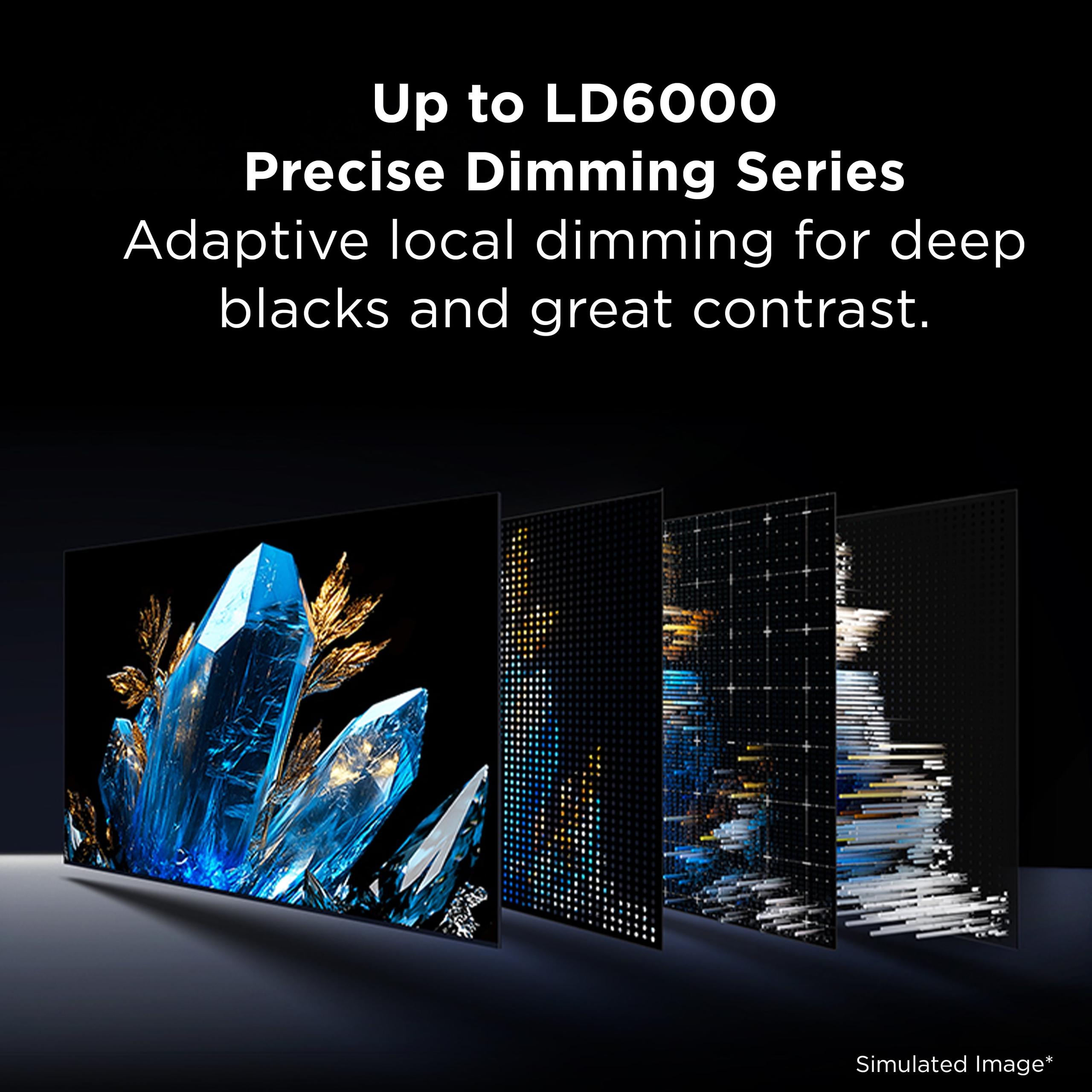
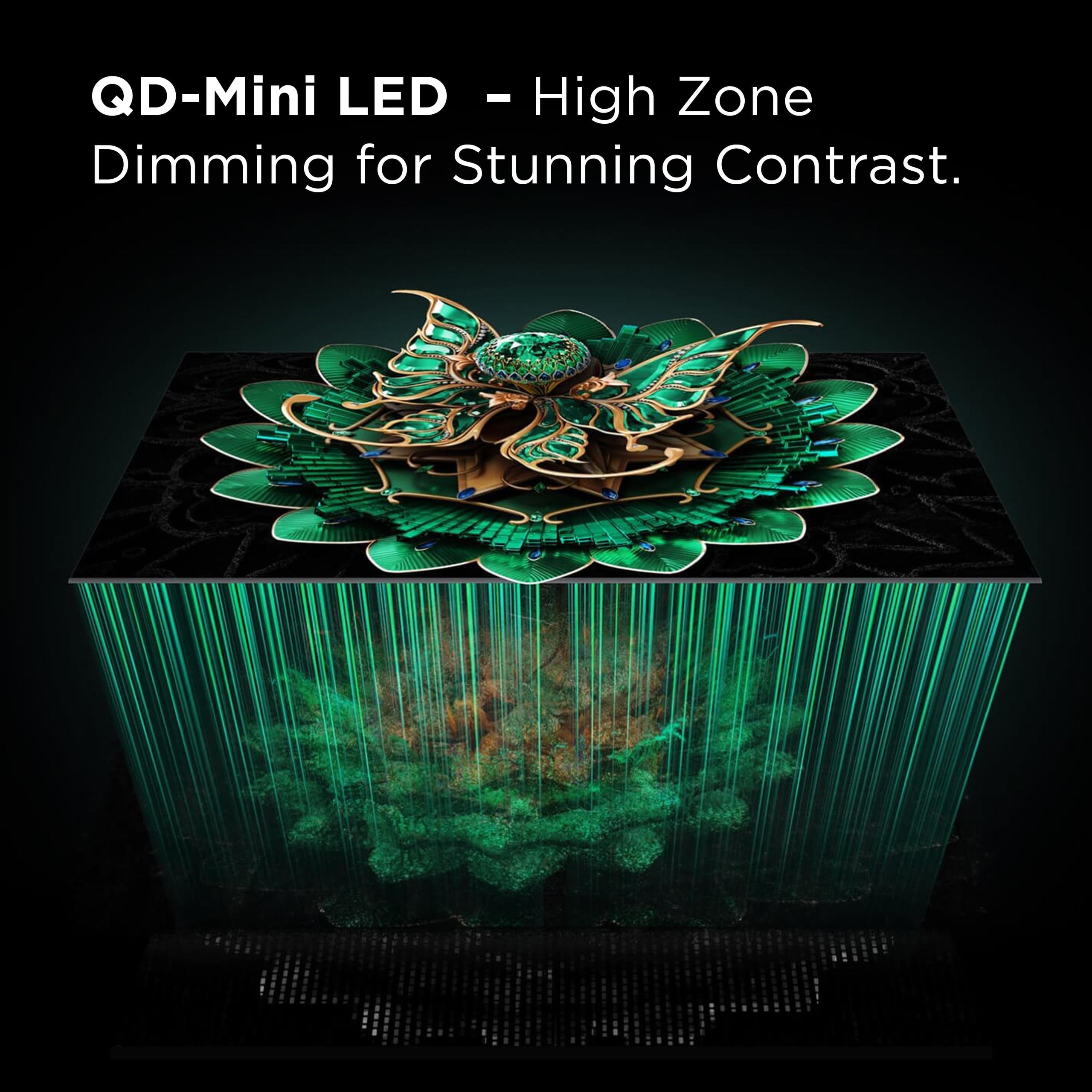
Mini LED bridges this gap by using thousands of tiny LEDs as backlights, controlled in precise zones. This creates what's called "local dimming" - the ability to dim or brighten specific areas of the screen independently. When watching a movie with stars against a black sky, for example, the stars can be brilliantly bright while the surrounding space remains truly black.
The key metrics that determine Mini LED performance include peak brightness (how bright highlights can get), the number of dimming zones (more zones mean more precise control), contrast ratio (the difference between the brightest whites and darkest blacks), and blooming control (preventing bright objects from creating unwanted halos). Both the QM9K and QM8K excel in these areas, but with important differences.
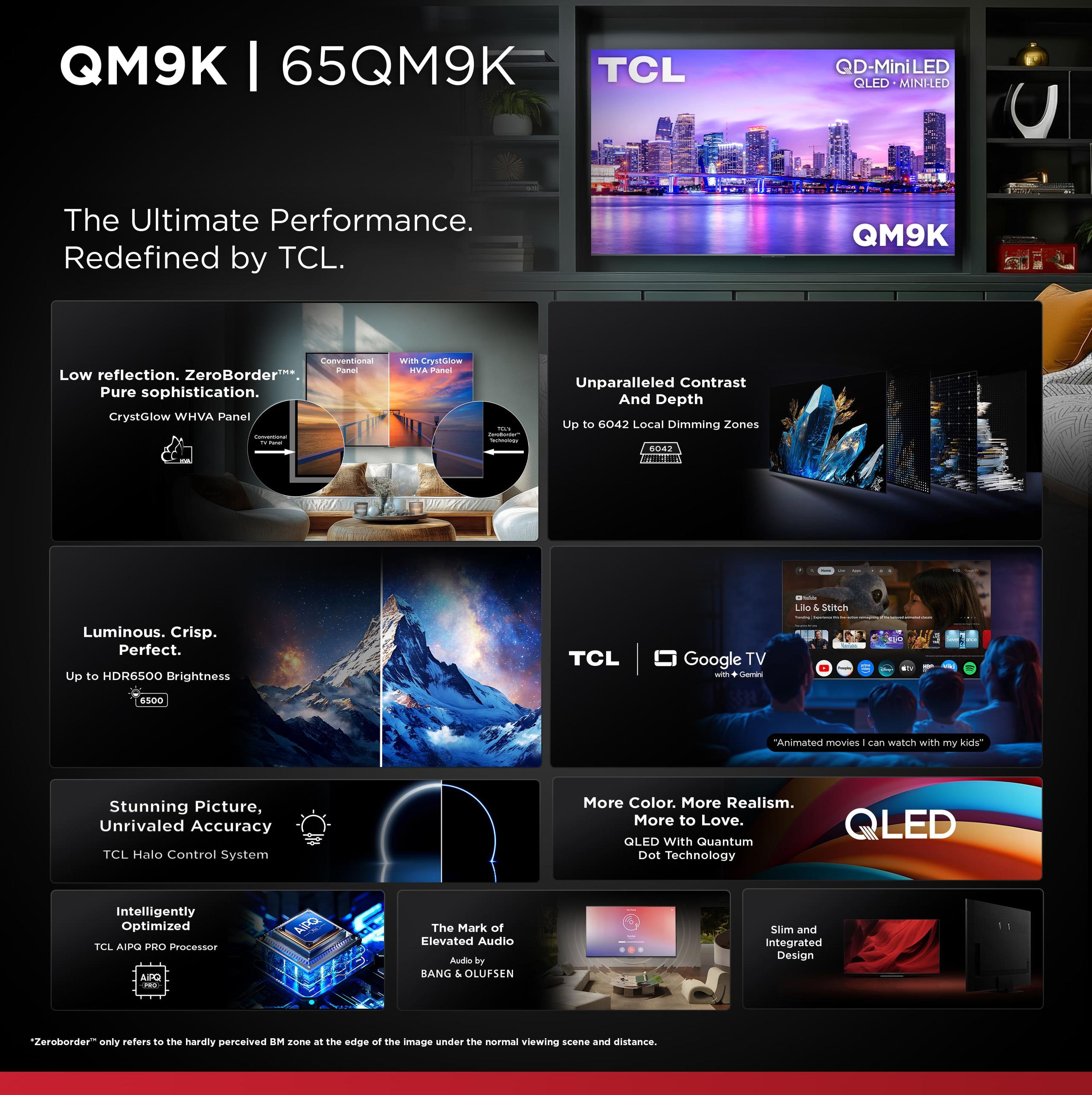
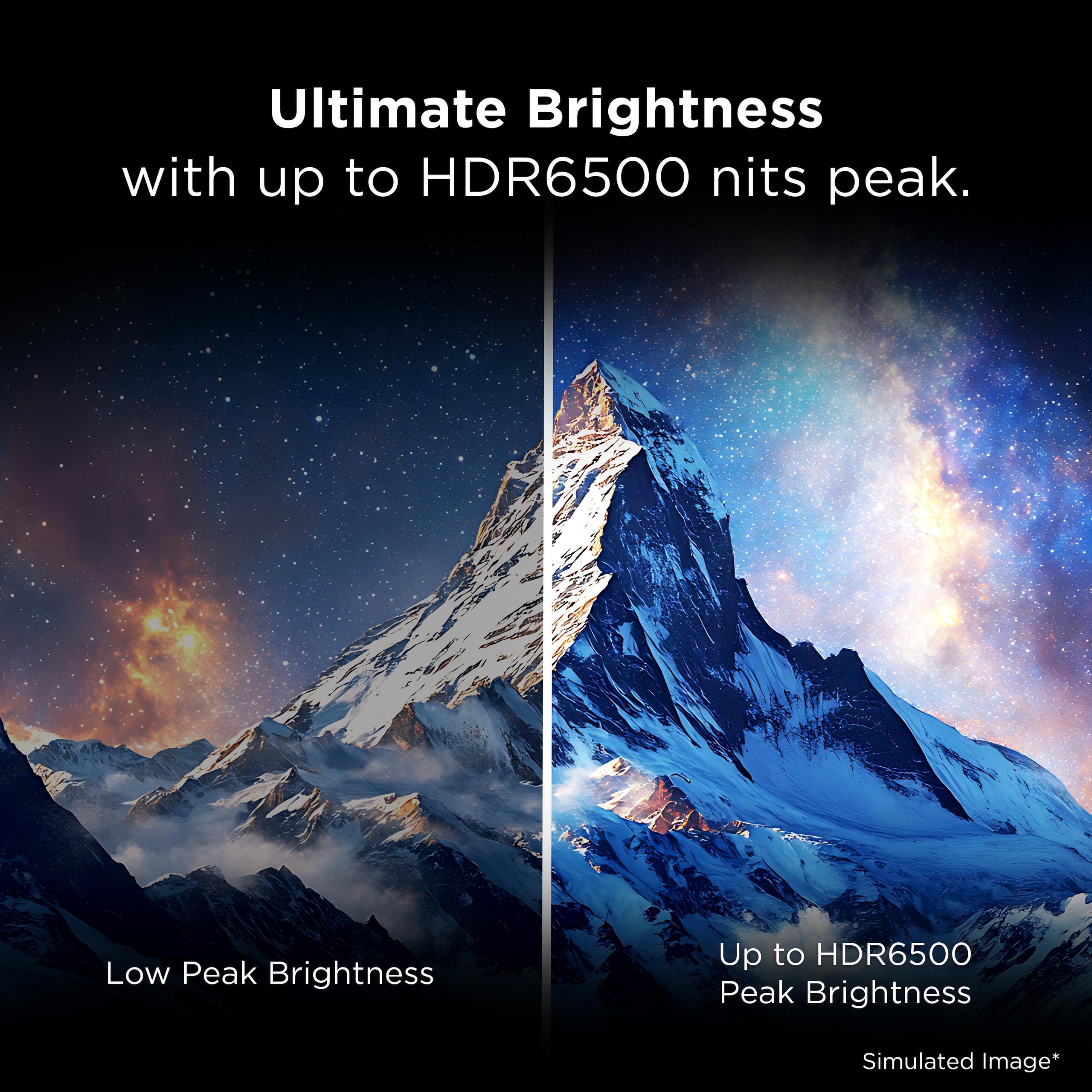
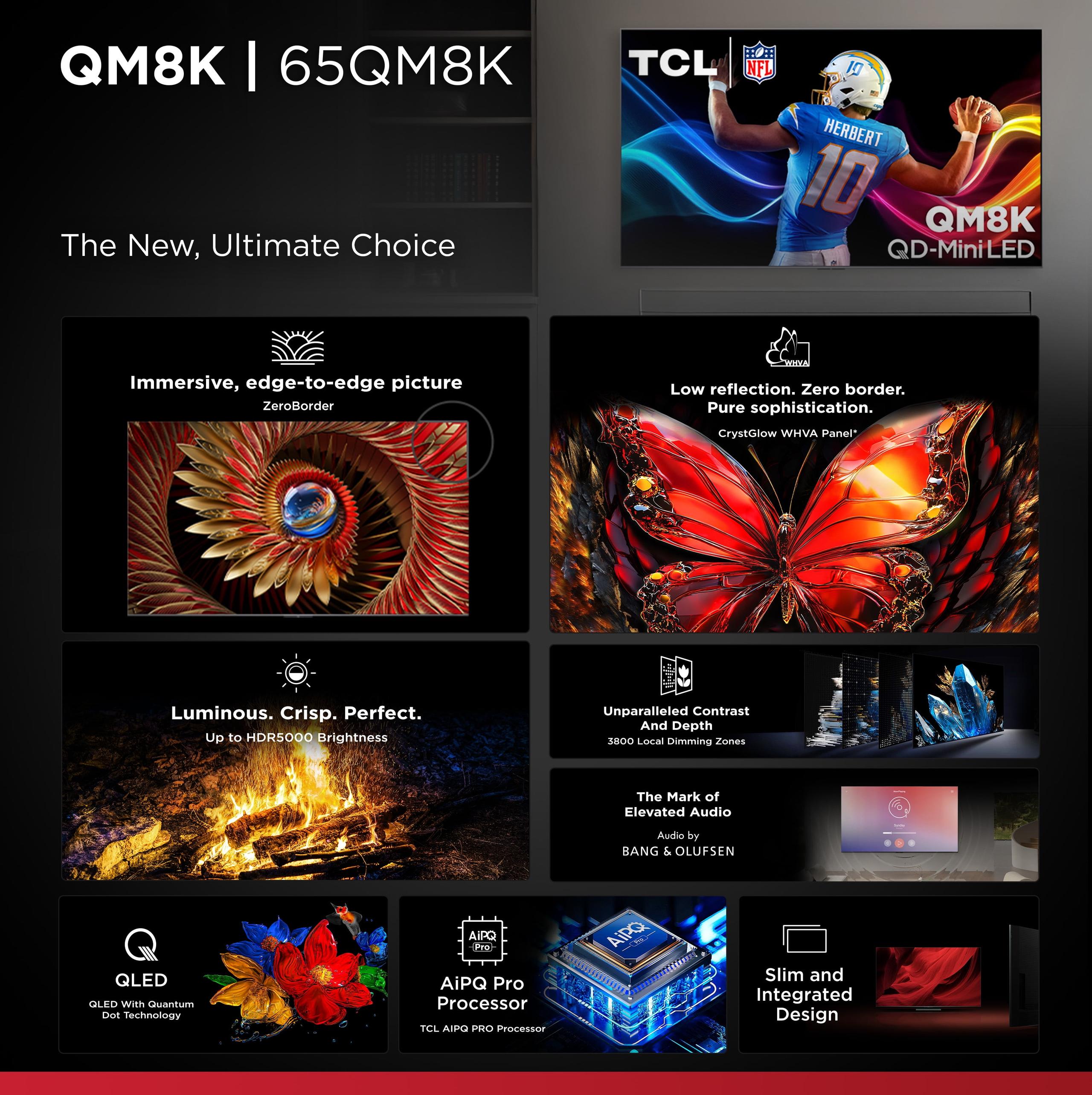
The most significant difference between these TVs lies in their brightness capabilities. The TCL QM9K can reach approximately 6,500 nits of peak brightness, while the QM8K tops out around 5,000 nits. To put this in perspective, typical HDR content is mastered at 1,000-4,000 nits, while SDR content usually peaks around 100 nits.
This brightness advantage becomes most apparent in challenging viewing conditions. If you have a bright living room with large windows or skylights, the QM9K maintains excellent picture quality even in daylight conditions where other TVs would appear washed out. During HDR movie scenes with explosions, reflections off water, or bright outdoor shots, the extra brightness creates a more impactful, realistic viewing experience.
However, the QM8K isn't exactly dim. At 5,000 nits, it still delivers punchy HDR that looks excellent in most viewing scenarios. The difference is more about sustained performance - the QM9K can maintain its peak brightness across larger bright areas for longer periods, while the QM8K may dial back brightness slightly on extensive bright scenes to manage heat and power consumption.
For most viewers in typical home environments, both TVs provide more than enough brightness. The QM9K's advantage becomes most valuable for dedicated home theaters with controlled lighting, where you want absolute peak HDR performance, or in very bright rooms where maximum brightness is necessary to overcome ambient light.
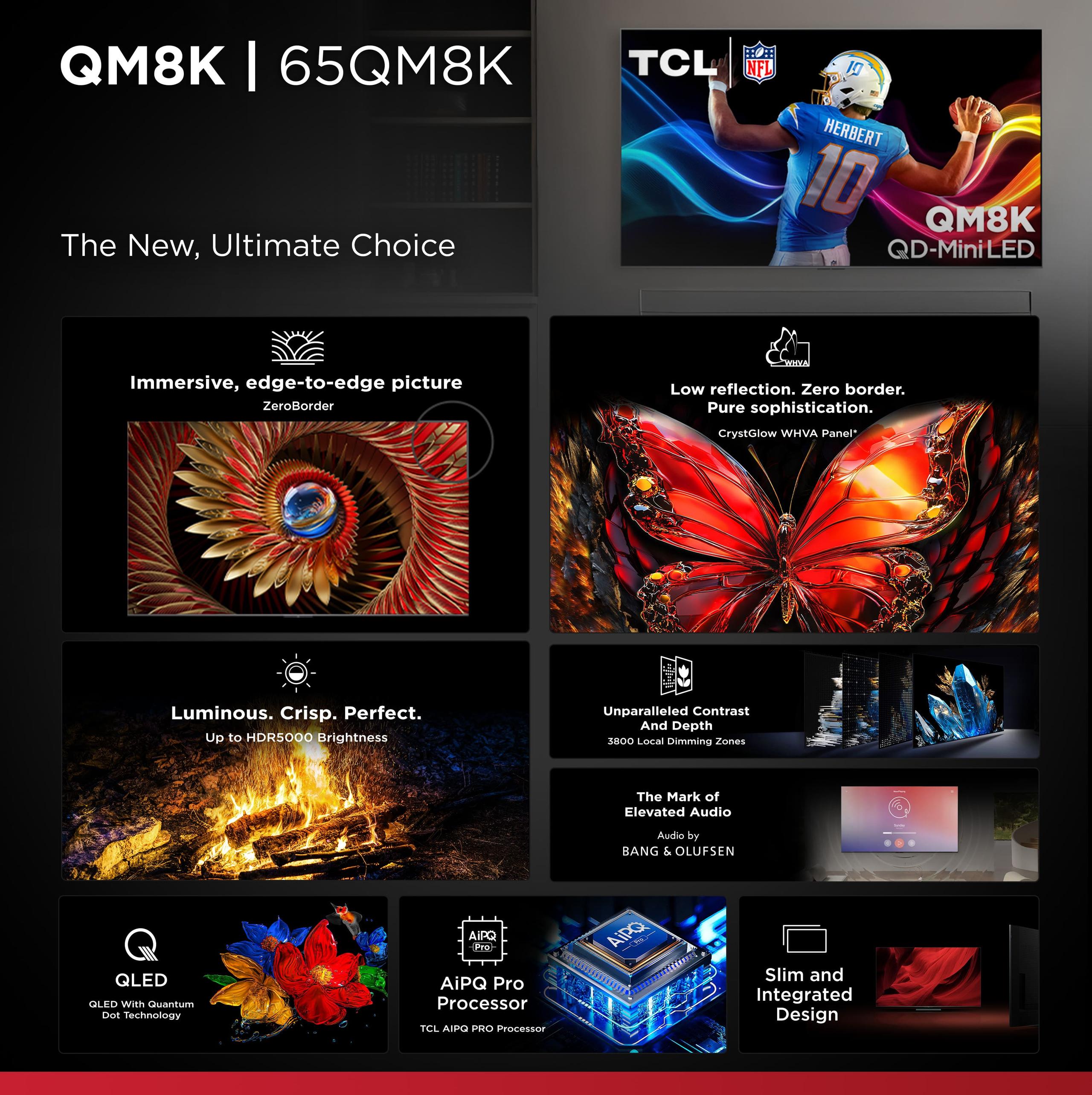
The QM9K features TCL's LD6000 dimming system with approximately 2,900 individually controlled zones, while the QM8K uses the LD3800 system with fewer zones. This might suggest the QM9K has dramatically better contrast, but the reality is more nuanced.
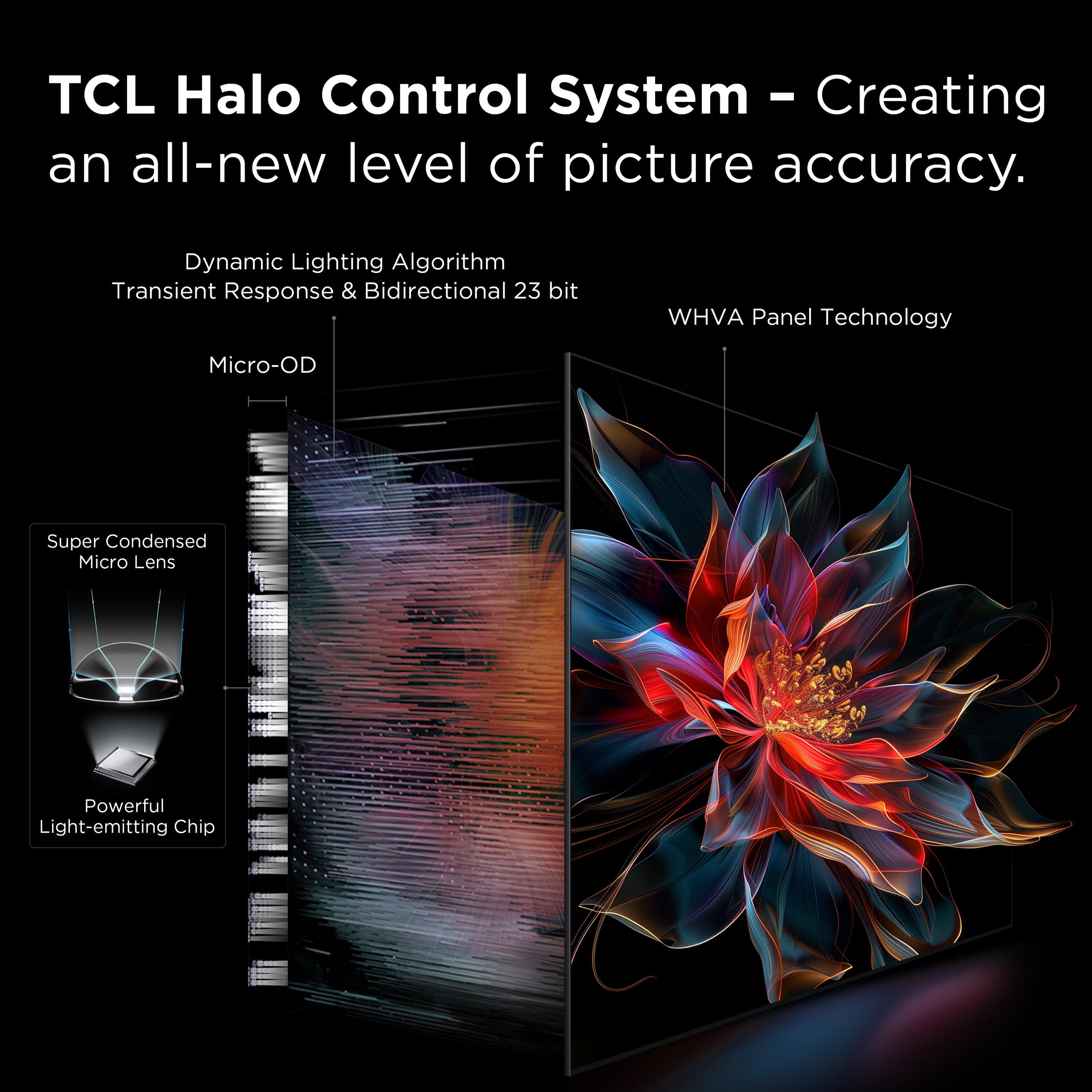
Both TVs use TCL's Halo Control System, which includes several advanced technologies working together. The "Super High Energy LED Microchip" provides more efficient light output, while the "Condensed Micro Lens" focuses light more precisely. The "Micro OD Reduced Optical Distance" places the LEDs closer to the screen for better light control, and the "23-bit Backlight Controller" allows for incredibly precise dimming adjustments.
In practice, both displays deliver excellent black levels and minimal blooming - that annoying halo effect around bright objects against dark backgrounds. The QM8K actually maintains nearly perfect black uniformity when viewed straight-on, while the QM9K shows slightly better black levels when viewed from wide angles. For most content and viewing positions, the difference is subtle.
Where the extra zones help most is with complex scenes containing multiple bright and dark elements. Think of a movie scene with streetlights, car headlights, and neon signs against a dark city backdrop. The QM9K's additional zones can control these elements more independently, reducing the chance that one bright object will slightly illuminate nearby dark areas.
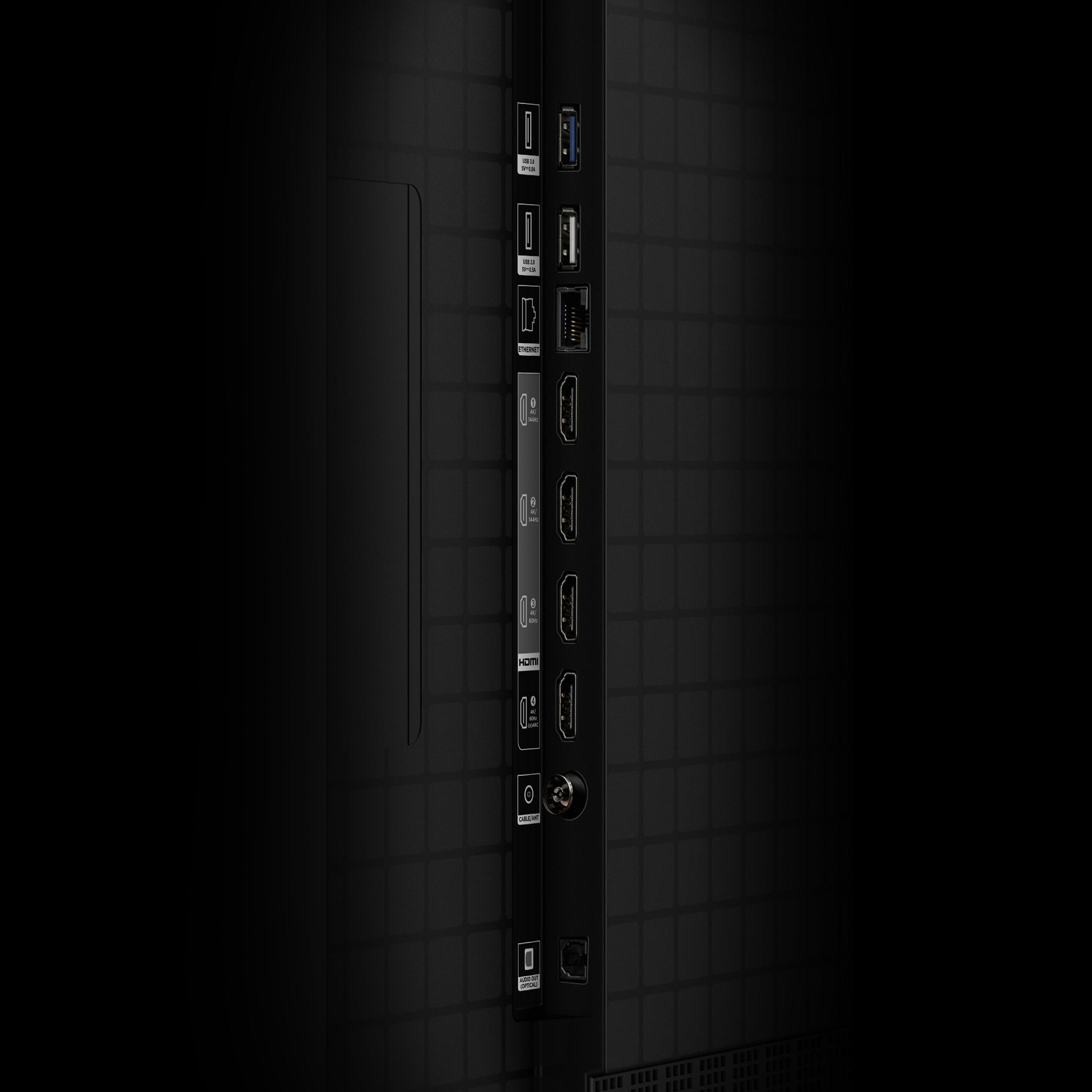
Both TVs are excellent for gaming, supporting all the features modern gamers expect. They both offer 4K resolution at 144Hz refresh rates and can push 1080p content at an impressive 288Hz through TCL's Game Accelerator feature. Variable Refresh Rate (VRR) support eliminates screen tearing, while Auto Game Mode automatically optimizes settings when it detects a gaming console.
Here's where things get interesting - despite being the more premium model, the QM8K actually has a slight edge in pure responsiveness. Input lag, which measures the delay between pressing a controller button and seeing the result on screen, is marginally lower on the QM8K. This difference amounts to just a few milliseconds, but competitive gamers might appreciate every advantage they can get.
Both TVs maintain their excellent picture quality in game mode, unlike some displays that sacrifice color accuracy or brightness to achieve low latency. The local dimming systems continue working effectively, ensuring games with high contrast scenes - think exploring dark caves with bright torches - look spectacular while maintaining responsive control.
The QM9K does have one gaming advantage: it maintains better color saturation at extreme brightness levels. In games with very bright environments or HDR effects, colors stay vivid and accurate even when the display is pushing high brightness levels.
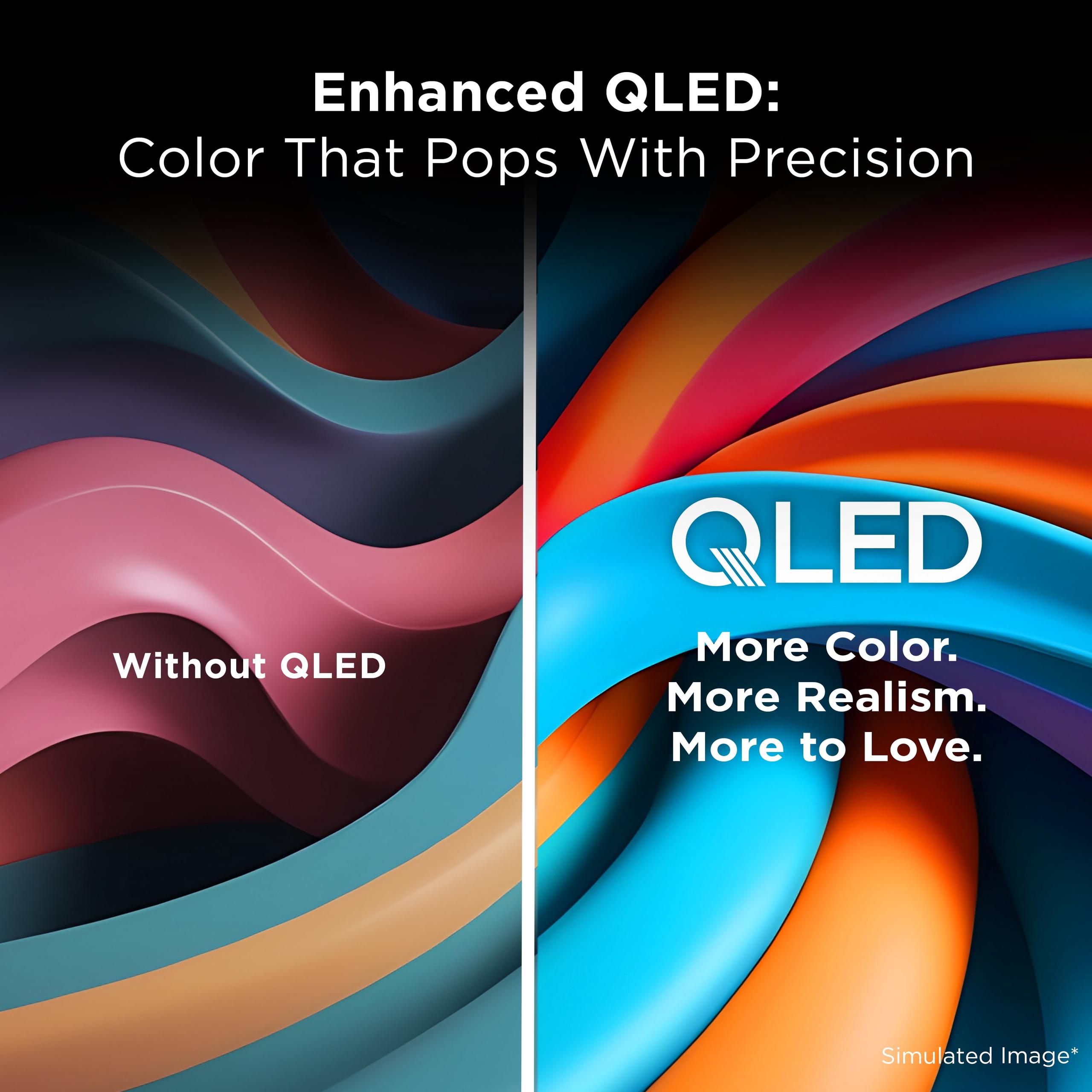
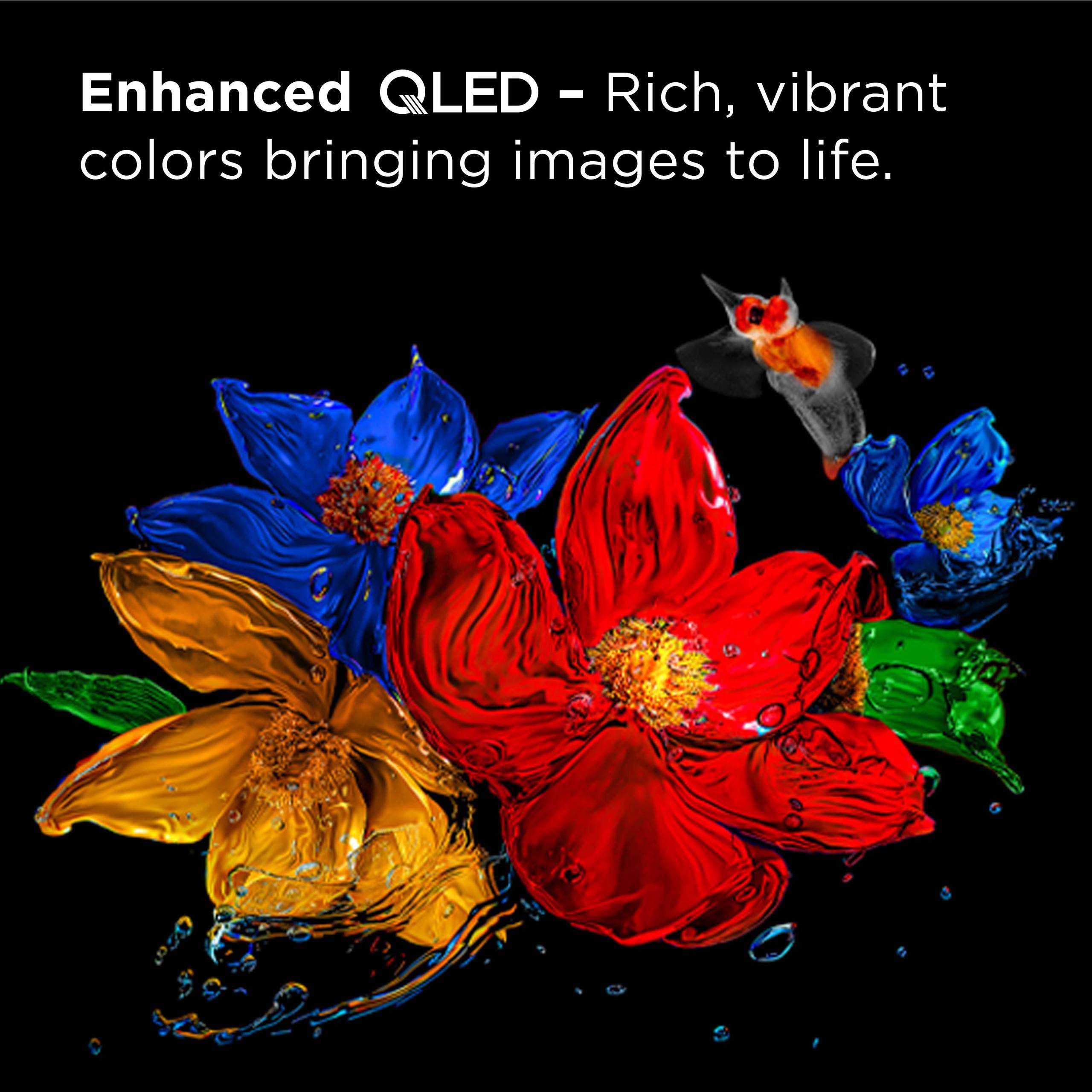
Both TVs cover an impressive 97% of the DCI-P3 color space, which is the standard used for most modern movies and streaming content. This means they can display nearly all the colors that content creators intended. However, the QM9K shows greater color depth and saturation overall, particularly in HDR content.
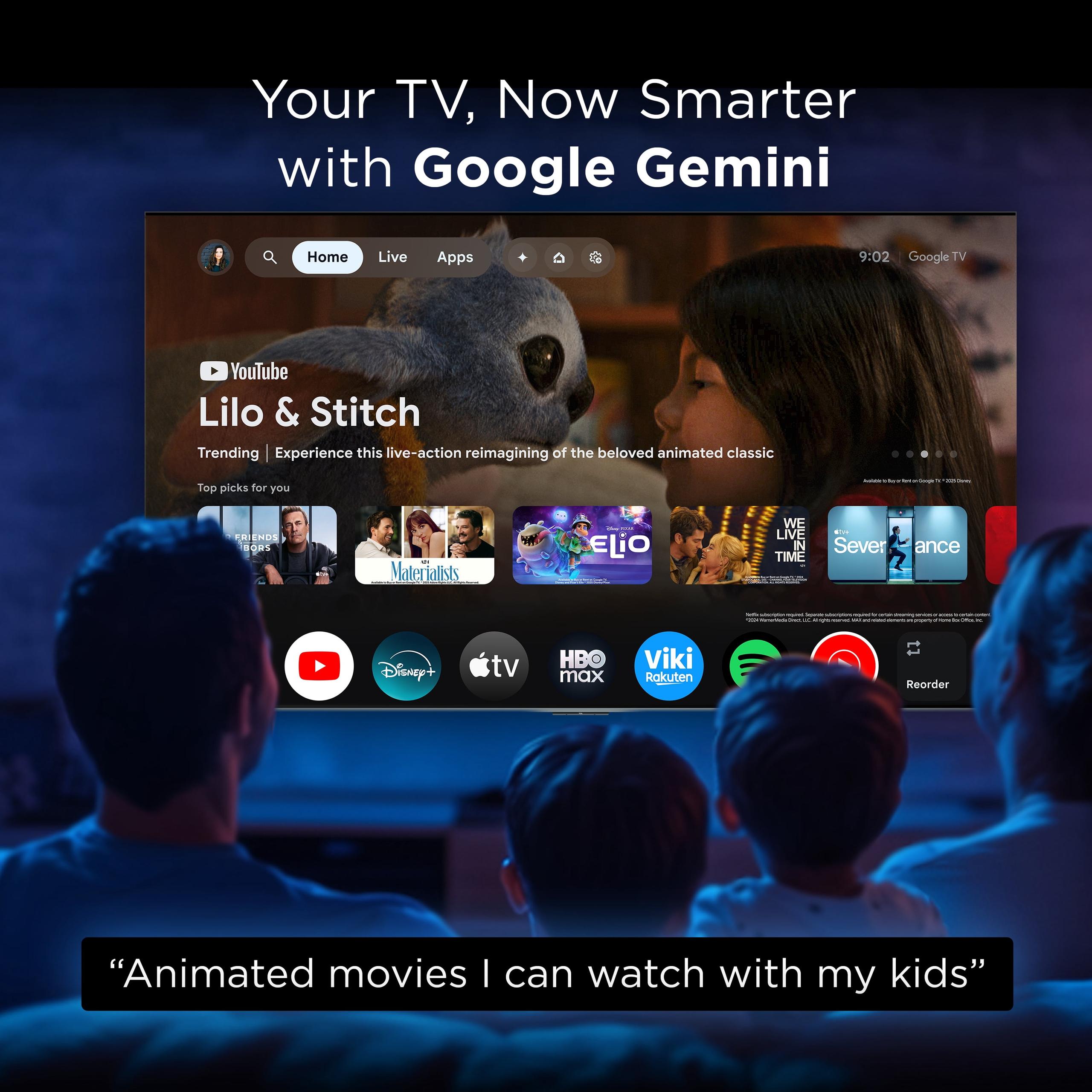
The more significant difference lies in their smart TV platforms. The QM8K runs Google TV version 12, which is stable and offers access to all major streaming apps. The QM9K uses the newer Google TV version 14 with integrated Gemini AI assistant. This means more natural voice commands, better content recommendations, and features like automatically adjusting picture settings based on ambient lighting through its presence sensor.
Both TVs include hands-free voice control, but the QM9K's implementation is more sophisticated. It can understand context better - asking "make this brighter" will adjust the specific setting that makes sense for current content, whether that's overall brightness, gamma, or contrast.
Your room setup plays a crucial role in determining which TV makes more sense. The QM8K includes an anti-reflective screen coating that handles direct light sources better than the QM9K's raw brightness approach. If you have windows directly facing your TV or bright ceiling lights, the QM8K's coating may actually provide a better viewing experience despite lower peak brightness.
For home theater setups with controlled lighting, the QM9K takes full advantage of its superior brightness capabilities. Dark room viewing showcases the precise local dimming and deep blacks both TVs offer, but the QM9K delivers more impactful HDR highlights that create a more cinematic experience.
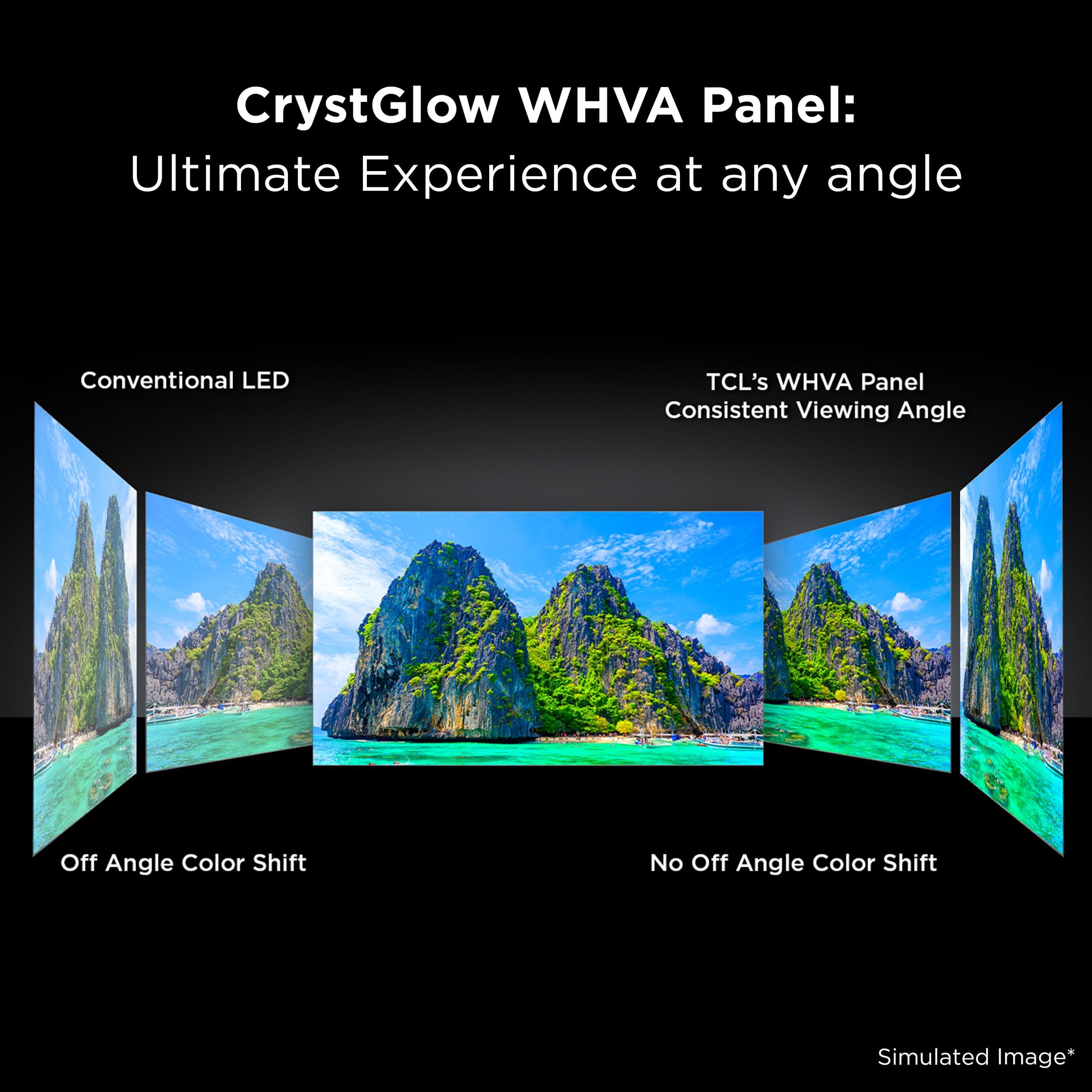
Viewing angles are improved on both models compared to previous generations, thanks to their Wide Viewing Angle (WHVA) panels. The QM9K maintains slightly better black levels when viewed from the side, while the QM8K shows less color washing from wide angles. Neither is as forgiving as an OLED for extreme viewing angles, but both work well for typical family room setups.
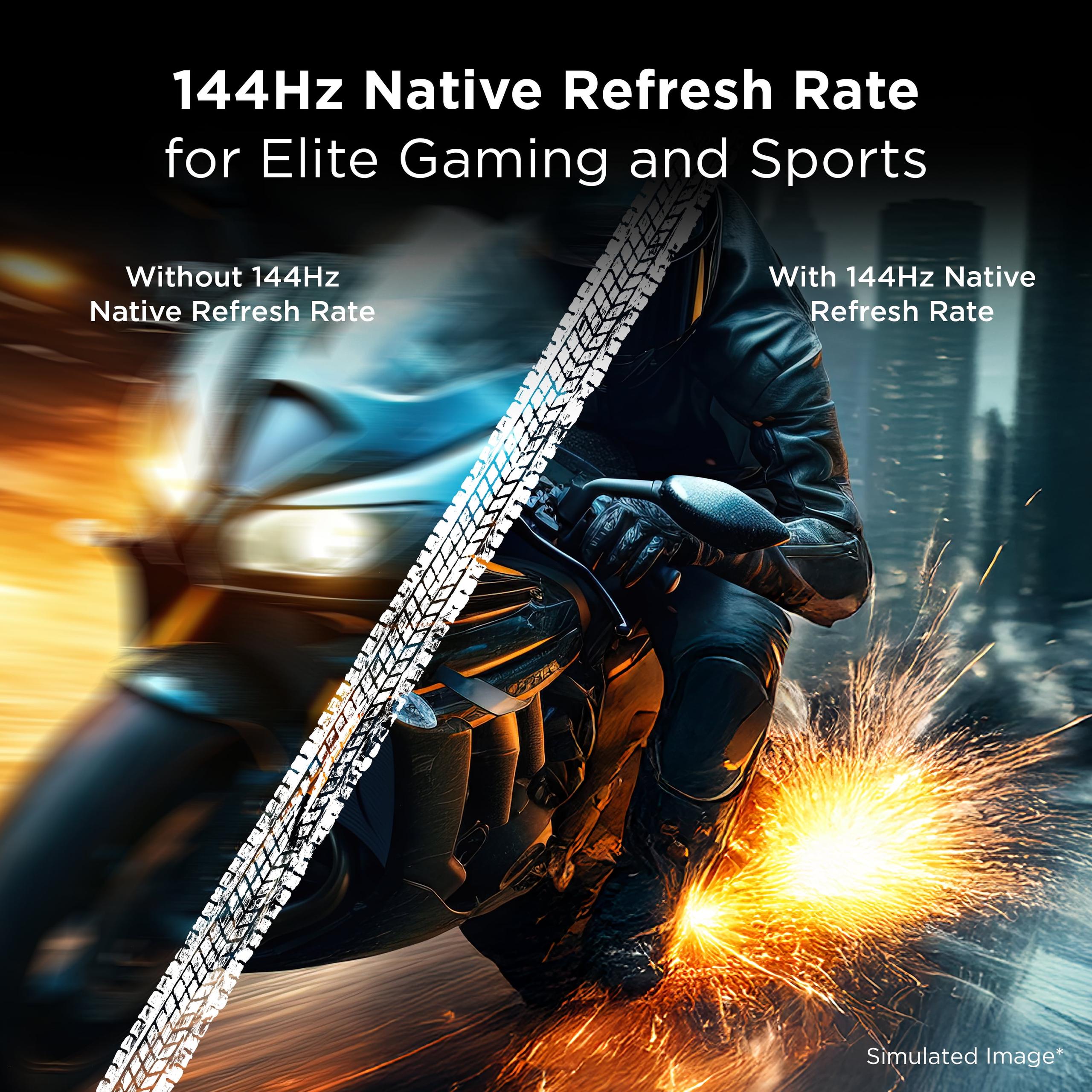
Both TVs excel at motion handling, featuring identical 144Hz native refresh rates and Motion Rate 480 processing. This combination of hardware and software effectively eliminates motion blur in sports and action movies. The MEMC (Motion Estimation, Motion Compensation) frame insertion creates smooth motion without the "soap opera effect" that many motion processing systems produce.
The TCL AIPQ Pro processor in both models uses artificial intelligence to analyze each scene and optimize picture settings automatically. It adjusts contrast, color, clarity, and motion settings based on content type - sports get enhanced motion clarity, while movies receive more film-like processing. This system works transparently in the background and generally makes correct decisions about how to handle different content types.
Both models feature audio systems tuned by Bang & Olufsen, with support for Dolby Atmos and advanced audio processing. The built-in speakers provide clear dialogue and reasonable bass response, though serious home theater enthusiasts will likely pair either TV with a dedicated sound system.
The audio represents one area where the price difference between models doesn't translate to significant performance differences. Both deliver similar sound quality that's quite good for built-in TV speakers but not revolutionary.
At the time of writing, the price difference between these models represents a classic value decision. The QM8K delivers approximately 90% of the QM9K's performance at a significantly lower cost. For most viewers in typical home environments, that remaining 10% may not justify the premium.
The QM9K makes most sense for buyers who specifically need its advantages: maximum brightness for very bright rooms, the latest smart TV features, or absolute peak HDR performance for a dedicated home theater. It's also the better choice for those who want the most future-proof option with the latest processing and AI capabilities.
The QM8K represents better value for the majority of buyers. It delivers flagship-level picture quality, excellent gaming performance, and all the smart features most people need. The money saved could go toward a quality sound system, which would have a more noticeable impact on the overall viewing experience than the brightness difference between these TVs.
Choose the TCL QM9K if you have a very bright room that challenges most TVs, want cutting-edge smart features and AI integration, or are building a dedicated home theater where peak HDR performance matters most. It's also worth considering if you frequently watch HDR content and want the most impactful viewing experience possible.
The TCL QM8K makes more sense for most buyers. It offers exceptional picture quality, excellent gaming capabilities, and proven reliability at a better value. The anti-reflective coating may actually provide better real-world performance in bright rooms, while the slight gaming advantage appeals to competitive players.
Both represent excellent choices that will deliver years of outstanding viewing experiences. Your specific room conditions, viewing habits, and budget priorities should guide the final decision. Either way, you're getting Mini LED performance that rivals much more expensive alternatives, putting premium picture quality within reach of more home entertainment setups.
| TCL 65" QM9K QD-Mini LED Smart TV | TCL 65" QM8K Series QD-Mini LED 4K Smart TV |
|---|---|
| Peak Brightness - Critical for HDR impact and bright room viewing | |
| 6,500 nits (exceptional for any lighting condition) | 5,000 nits (excellent for most home environments) |
| Local Dimming Zones - Controls blooming and contrast precision | |
| ~2,900 zones (LD6000 system, superior fine control) | Fewer zones (LD3800 system, still excellent blooming control) |
| Gaming Input Lag - Essential for competitive gaming responsiveness | |
| 5.3ms (very responsive) | Slightly lower (marginal advantage for competitive play) |
| Smart TV Platform - Affects long-term usability and features | |
| Google TV 14 with Gemini AI (latest features, voice control) | Google TV 12 (proven stability, all major apps) |
| Color Performance - Affects vibrancy and accuracy | |
| Greater saturation depth, maintains color at peak brightness | 97% DCI-P3 coverage, slight color fade at highest brightness |
| Reflection Handling - Important for bright rooms with windows | |
| Raw brightness approach (relies on high nits to overcome glare) | Anti-reflective coating (better handling of direct light sources) |
| Sustained Brightness - Matters for large bright scenes in HDR | |
| Maintains peak brightness longer on extensive bright areas | May reduce brightness slightly on large bright scenes |
| Additional Features - Value-added capabilities | |
| Presence sensor, Ambient Display, enhanced AI processing | Proven performance, better reflection coating |
| Value Proposition - Performance per dollar consideration | |
| Premium pricing for absolute best Mini LED performance | Approximately 90% of QM9K's capabilities at lower cost |
| Best For - Ideal buyer scenarios | |
| Dedicated home theaters, very bright rooms, latest tech enthusiasts | Most buyers wanting flagship performance with better value |
The TCL QM8K may actually perform better in bright rooms despite lower peak brightness, thanks to its anti-reflective screen coating that handles direct light sources better. The QM9K relies on raw brightness to overcome glare, which works well but the QM8K's coating provides more practical benefits.
The TCL QM9K is better for dedicated home theaters with controlled lighting, offering superior sustained brightness for impactful HDR highlights and more precise local dimming. However, the QM8K still delivers excellent home theater performance and the money saved could go toward a quality sound system.
Most buyers should choose the TCL QM8K for its excellent value proposition, delivering flagship Mini LED performance with great gaming capabilities and proven smart features. The QM9K is best for those who specifically need maximum brightness or want cutting-edge features and don't mind paying extra for them.
We've done our best to create useful and informative comparisons to help you decide what product to buy. Our research uses advanced automated methods to create this comparison and perfection is not possible - please contact us for corrections or questions. These are the sites we've researched in the creation of this article: rtings.com - bestbuy.com - youtube.com - youtube.com - youtube.com - techaeris.com - displayspecifications.com - pcrichard.com - residentialsystems.com - us.tcl.com - displayspecifications.com - valueelectronics.com - woodruffappliance.com - tcl.com - pcrichard.com - tcl.com - techradar.com - tcl.com - us.tcl.com - youtube.com - youtube.com - bestbuy.com - youtube.com - tomsguide.com - youtube.com - businessinsider.com - rtings.com - youtube.com - avsforum.com - avsforum.com - bestbuy.com - tcl.com - tcl.com - tcl.com - flatpanelshd.com - romomattressfurniture.com - brandsmartusa.com - pcrichard.com - tvsbook.com - prnewswire.com - tcl.com - tcl.com

Privacy Policy
Terms and Conditions - Affiliate Policy
Home Security
© Copyright 2008-2026.
11816 Inwood Rd #1211, Dallas, TX 75244