


The 2025 TCL QM9K might just be the best TV the company has ever released. From the moment I powered it on, I could tell this was a serious step forward for TCL. The combination of dimming zone enhancements, software development, and TCL’s new CrystGlow WHVA panel makes for the most advanced TV they've released yet.
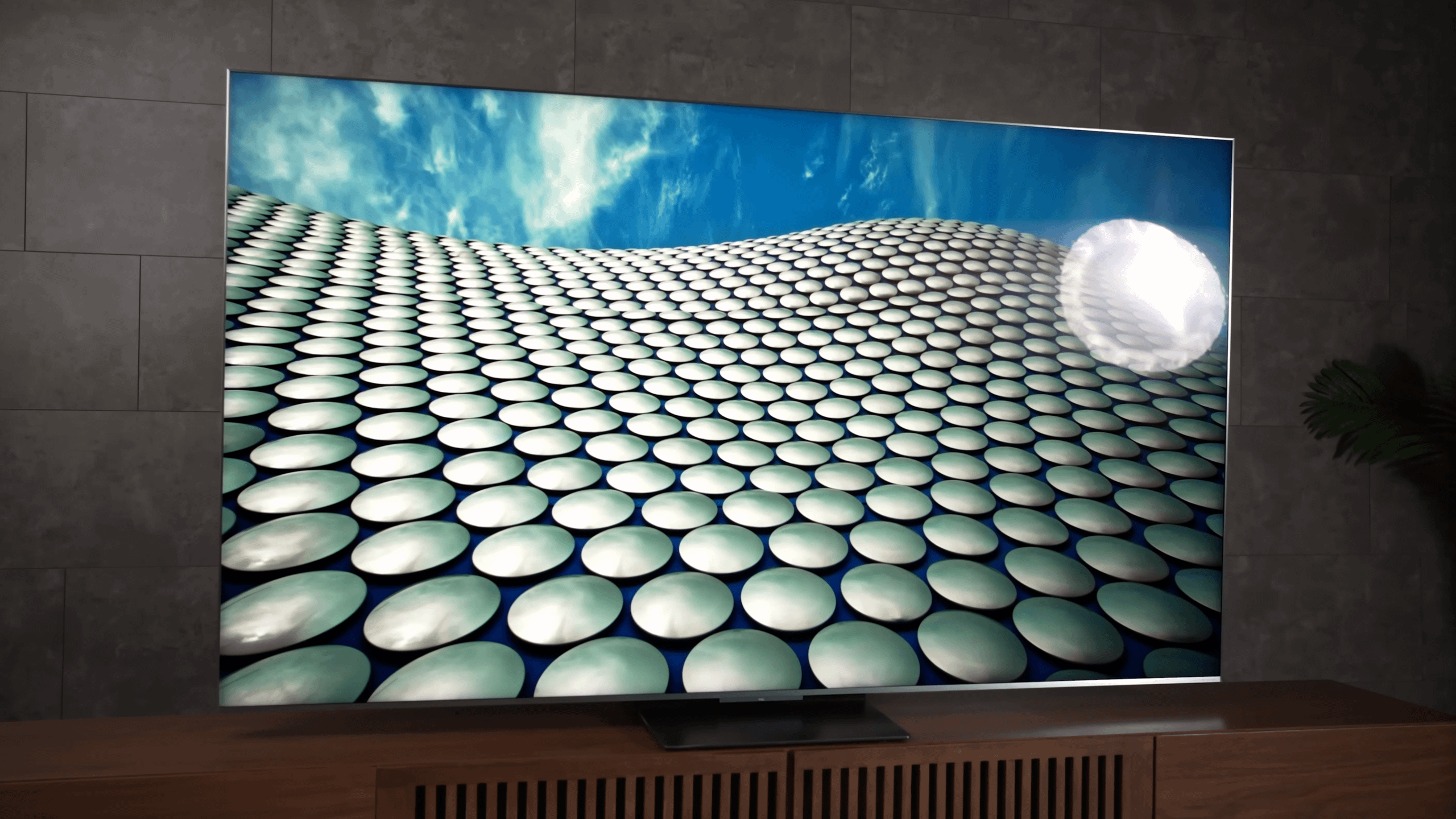
I spent time with the 75-inch version, and I have to say, it’s certainly impressive. On paper, it promises extreme brightness, excellent contrast, and improved viewing angles. But as always, I wanted to see how it performs in real-world conditions — not just in specs sheets.
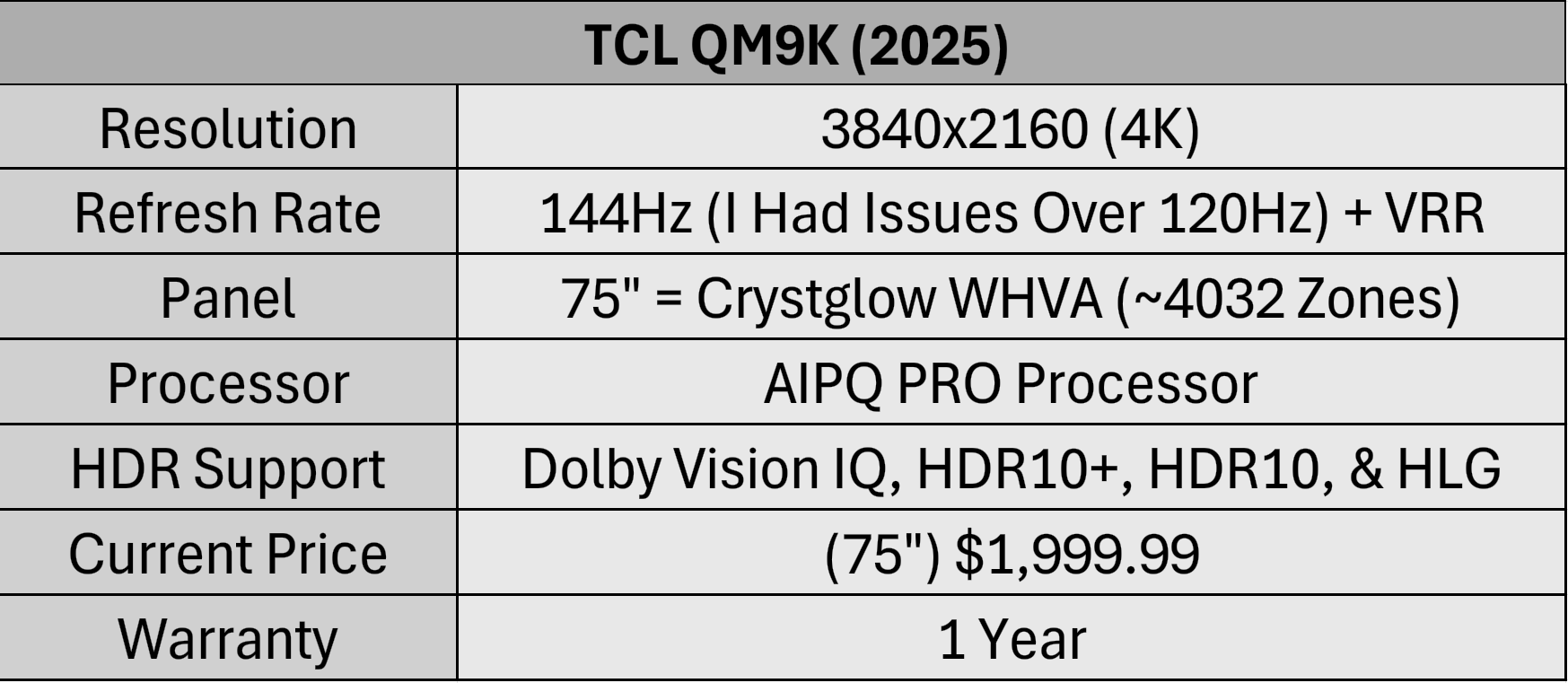
On paper, the QM9K looks impressive: bright HDR performance, a massive number of local dimming zones, Dolby Vision IQ, HDR10+, HDR10, and HLG support. Out of the box, SDR color is excellent, HDR performance is very bright, and the WHVA panel does improve off-angle viewing. Contrast is strong for a mini-LED TV, though it still doesn’t fully match OLED.
Gaming performance is decent, though OLED panels are still superior in motion, and I noticed some quirks with low-quality content flickering and occasional menu freezes. The 75-inch price of $1,999 positions it against entry-level OLEDs, which could influence buying decisions. Overall, this is one of TCL’s most impressive TVs yet — very bright, very capable, and very accurate — but not without its imperfections.
Pros:
Cons:
Disclaimer: This TV was lent to me by TCL for review, but all opinions are my own. Additionally, Home Theater Review may run advertising campaigns with various manufacturers including TCL.
For this review I used an X-Rite i1 Pro spectrophotometer, Color Checker Display Plus colorimeter, Calman Ultimate, Portrait Displays Video Forge Pro 8K pattern generator, a Sony RX100 VII 1000fps camera, an SM208 Screen Luminance Meter, and a Sony Cinema Line FX3 mirrorless video camera. Plus years of display testing experience.
Unboxing the QM9K was straightforward. The setup was largely hassle-free. The physical build feels solid, and the TV has a premium look and feel, especially for a brand that has often been associated with budget-friendly panels.
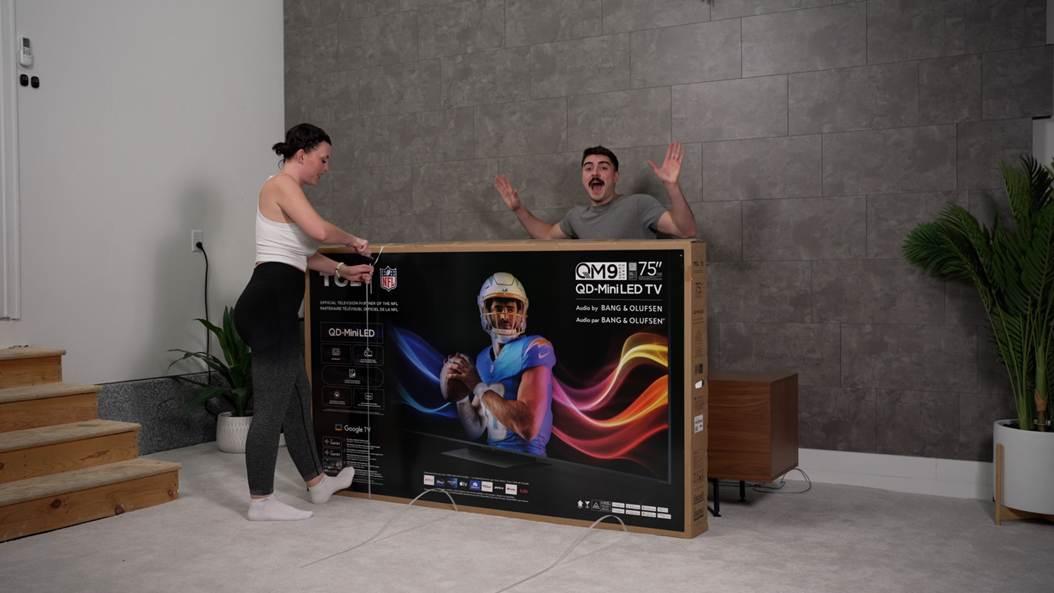
TCL QM9K Unboxing
Connecting it to my home network and pairing it with Google TV OS was quick. Thanks to TCL’s AIPQ processor, navigating menus and opening apps was generally snappy. There were a few rare freezes in the menu, but overall, performance felt smooth. Out of the box, the picture is immediately impressive, with vibrant HDR highlights that pop even before any calibration.
The QM9K delivers some of the best SDR performance I’ve seen on a TCL TV. Colors are vibrant, RGB balance is solid, and near-black performance is surprisingly strong for a VA-based mini-LED panel. Shadow crush is minimal, though it’s still present near the very bottom of the curve.
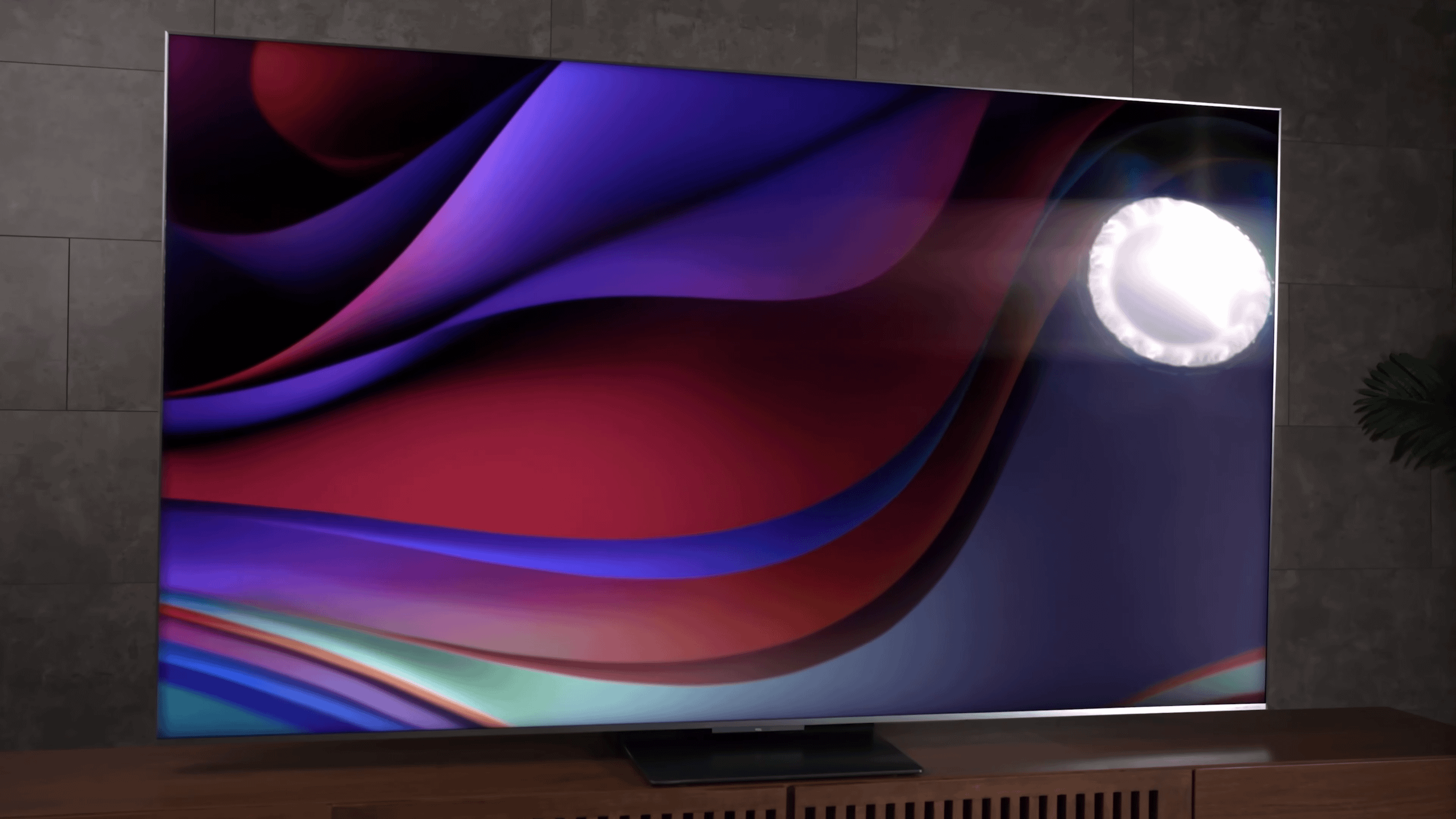
HDR is a bit more complicated. While color gamut coverage is excellent at 79.44% UV, brightness tracking and HDR accuracy aren’t perfect. Some scenes may appear slightly off, though filmmaker mode brings content closer to the creator’s intent. Overall, most viewers will likely be very happy with the color and accuracy, especially in SDR content, where this TV truly shines.
For home theater enthusiasts below are all my Calman results measuring the accuracy of the display. For everyone else, feel free to skip to the TL;DR.
TCL QM9K SDR – FMM Default
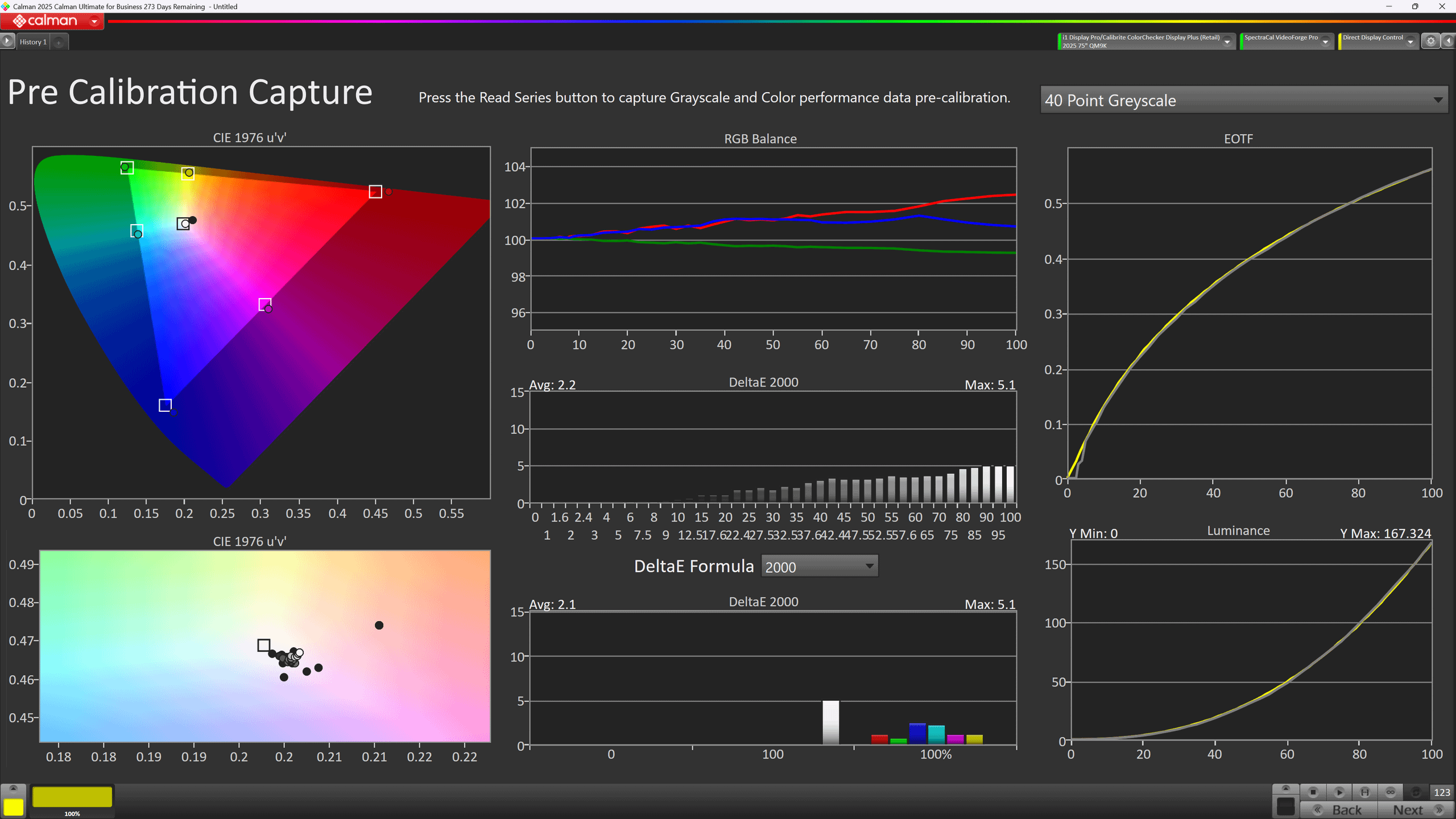
Out of the box, SDR tracking is solid with good EOTF performance and near-black detail, though minor shadow crush is present.
TCL QM9K SDR – FMM Fixed
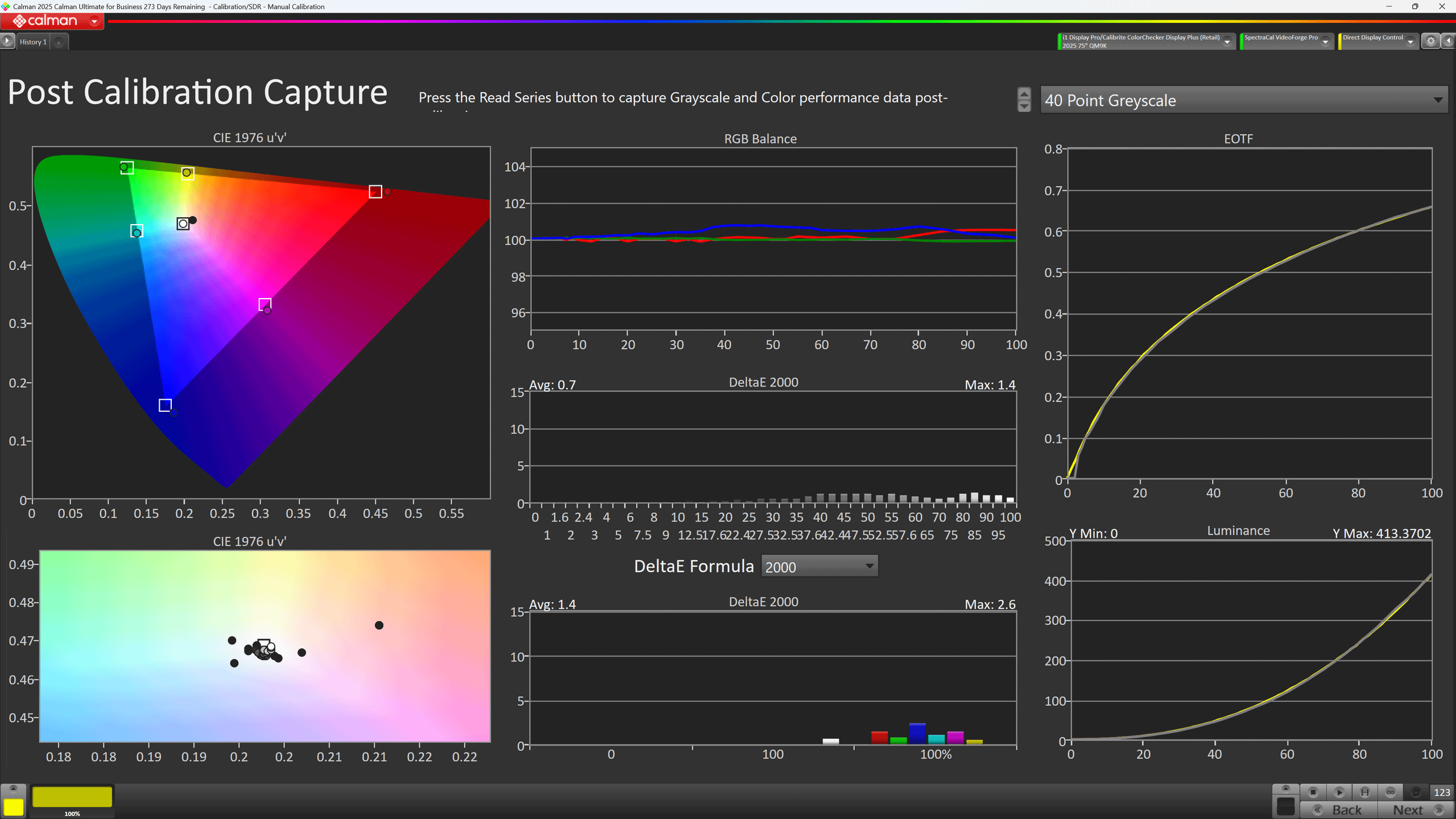
Adjustments improve shadow detail, making SDR accuracy very good overall while keeping RGB balance stable.
TCL QM9K SDR – FMM Color Match
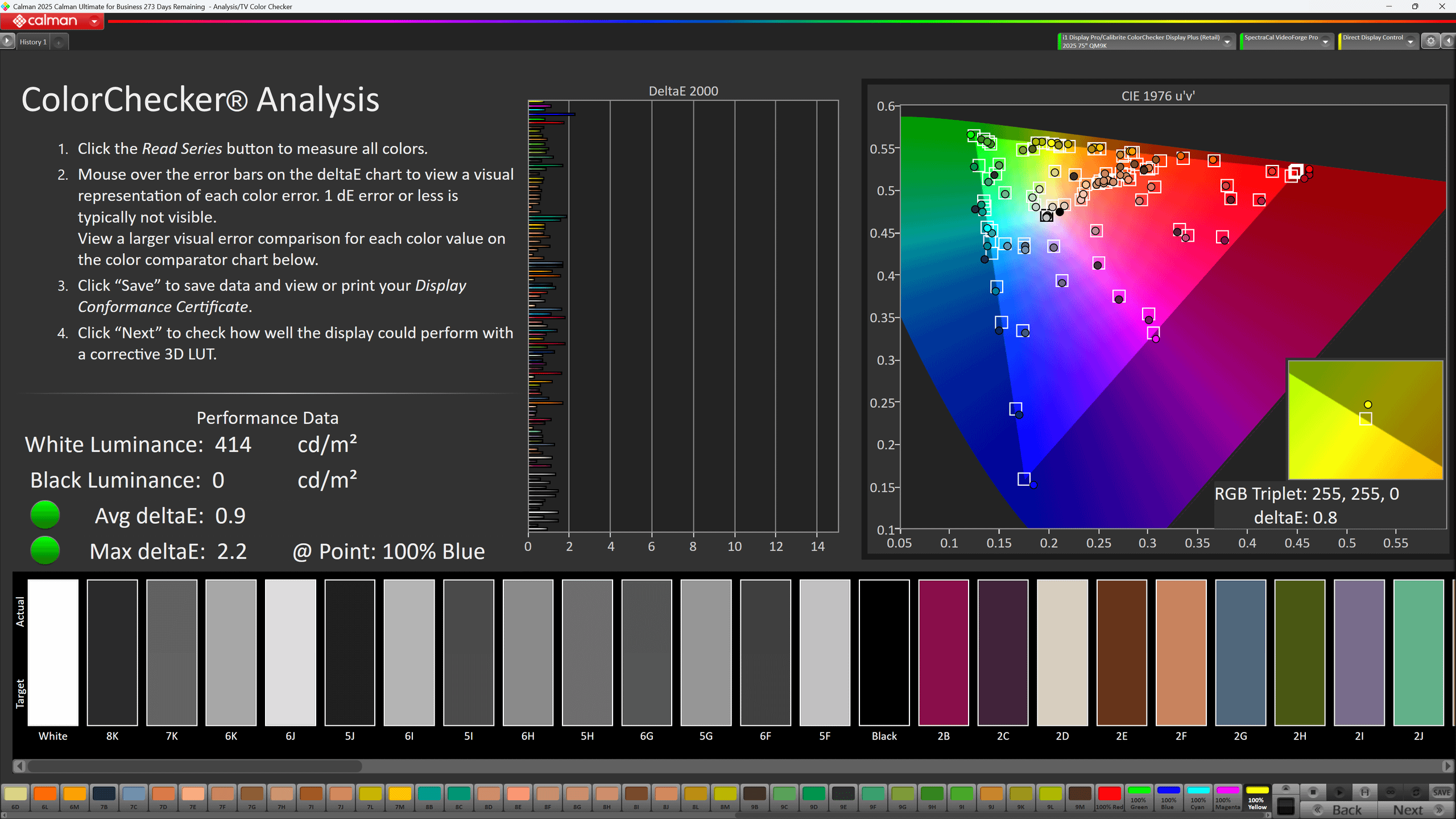
Color checker analysis in SDR shows excellent accuracy with an average delta of just 0.9, among the best I’ve measured.
TCL QM9K HDR – FMM Default
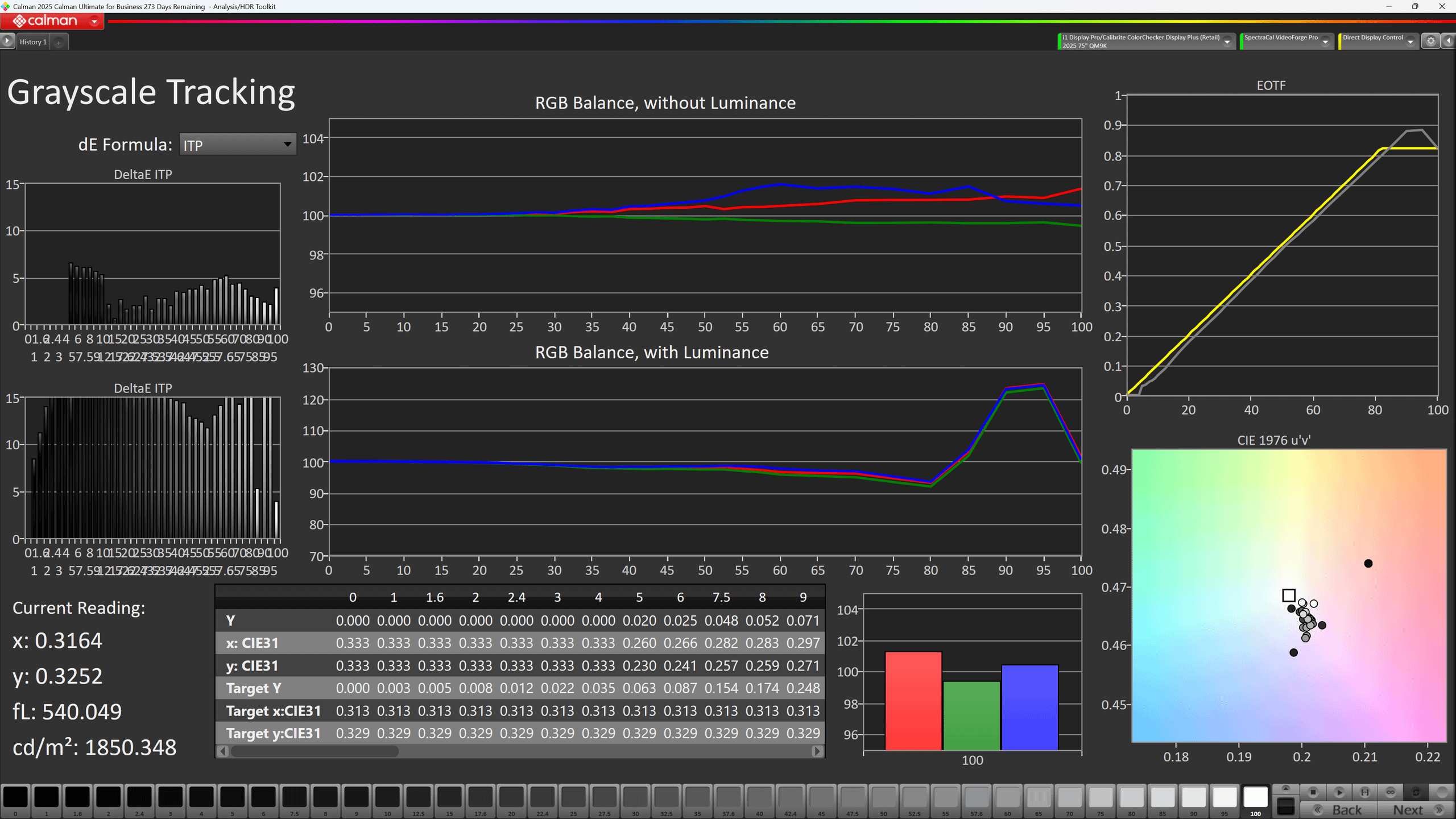
Default HDR in filmmaker mode performs well, though there are some issues with tracking HDR brightness out of the box.
TCL QM9K HDR – FMM ColorChecker
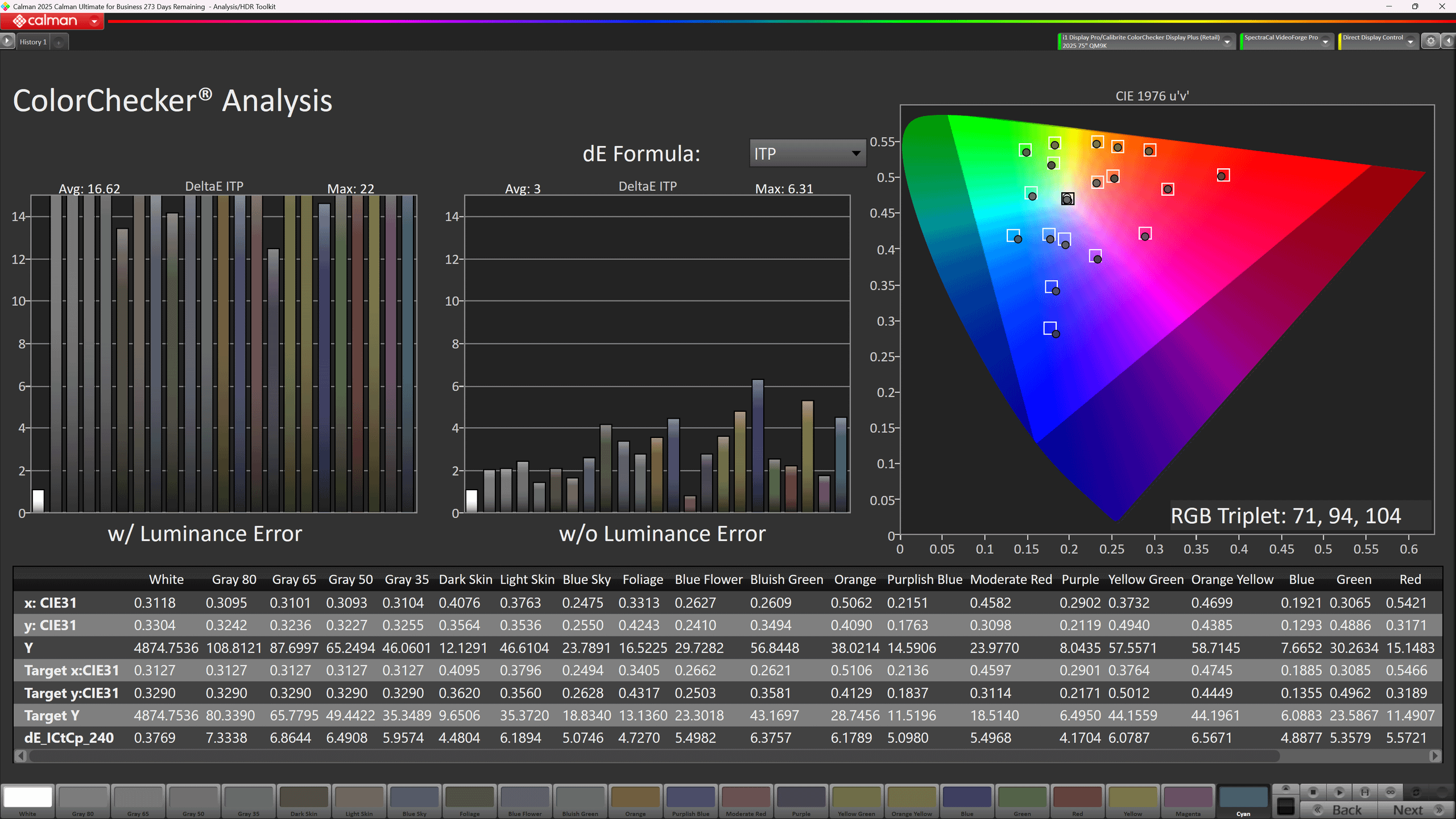
HDR color checker analysis is decent.
TCL QM9K HDR – FMM BT.2020
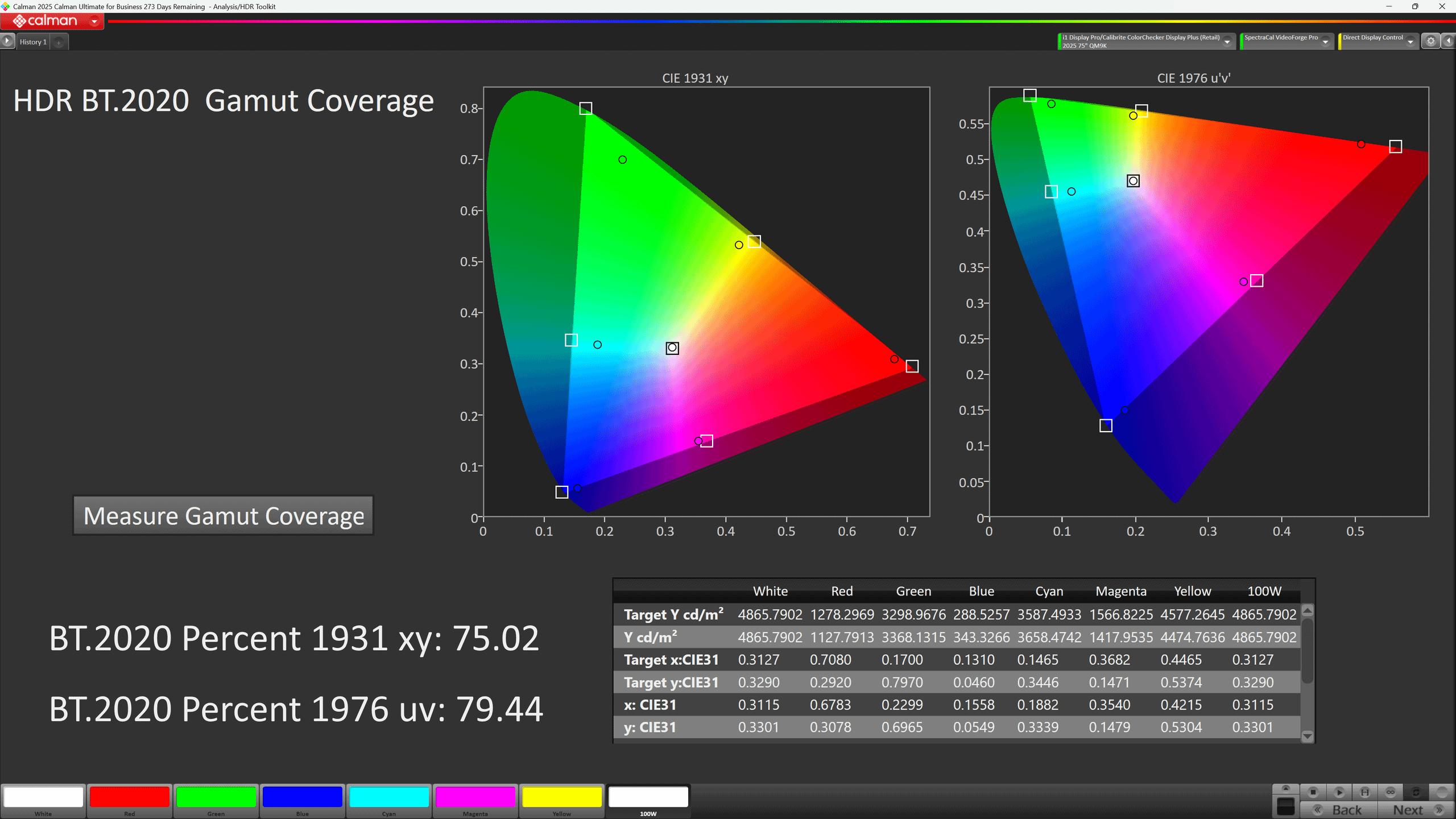
Color gamut coverage is strong, measuring 79.44% UV.
SDR performance is overall great, but it does have some issues with shadow crush. In HDR there are more issues such as slightly raised highlights and undertracking in some areas on my unit, but overall it has decent accuracy and color performance.
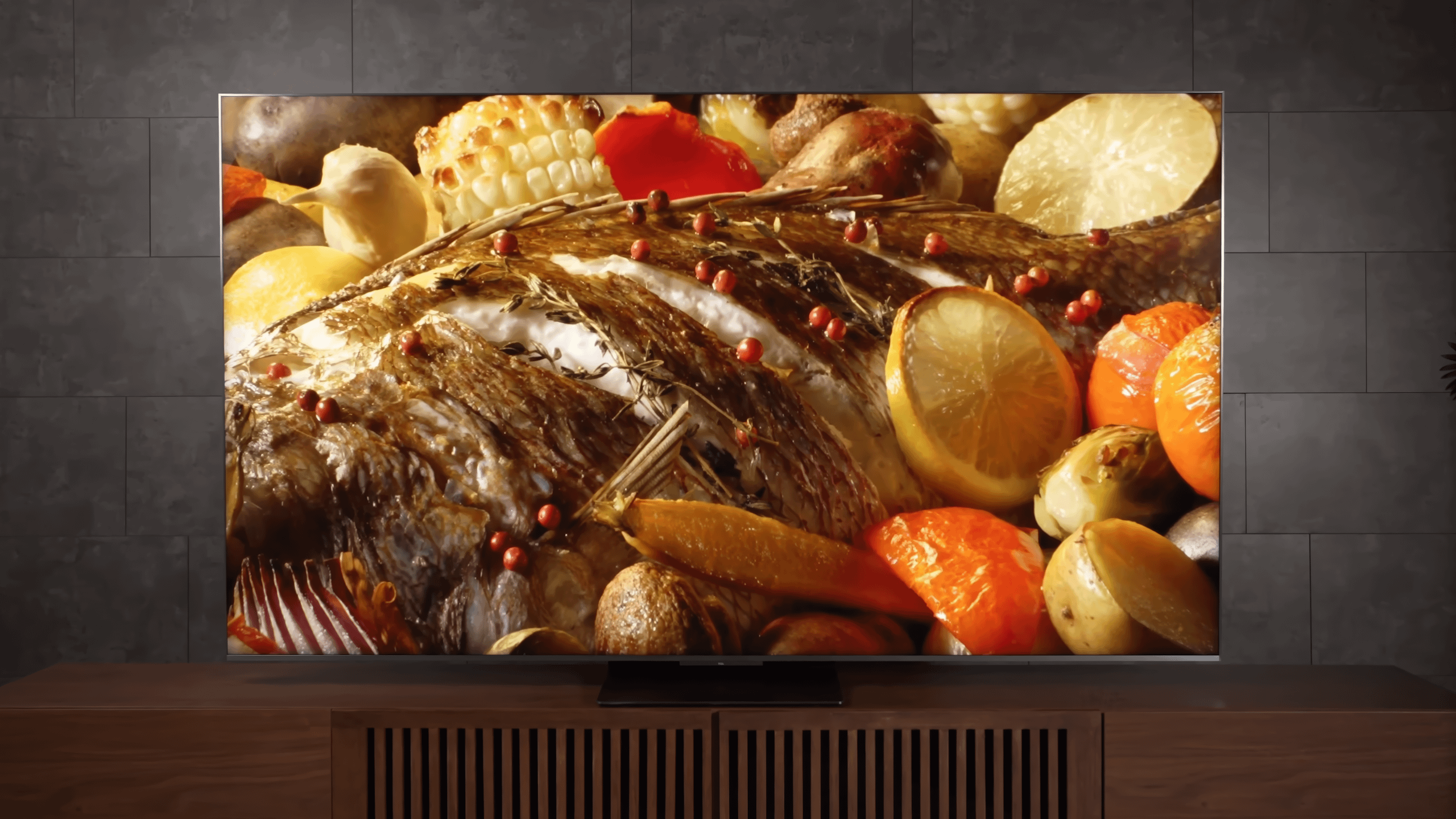
The TCL QM9K is incredibly bright, easily one of the brightest TVs I’ve ever tested.
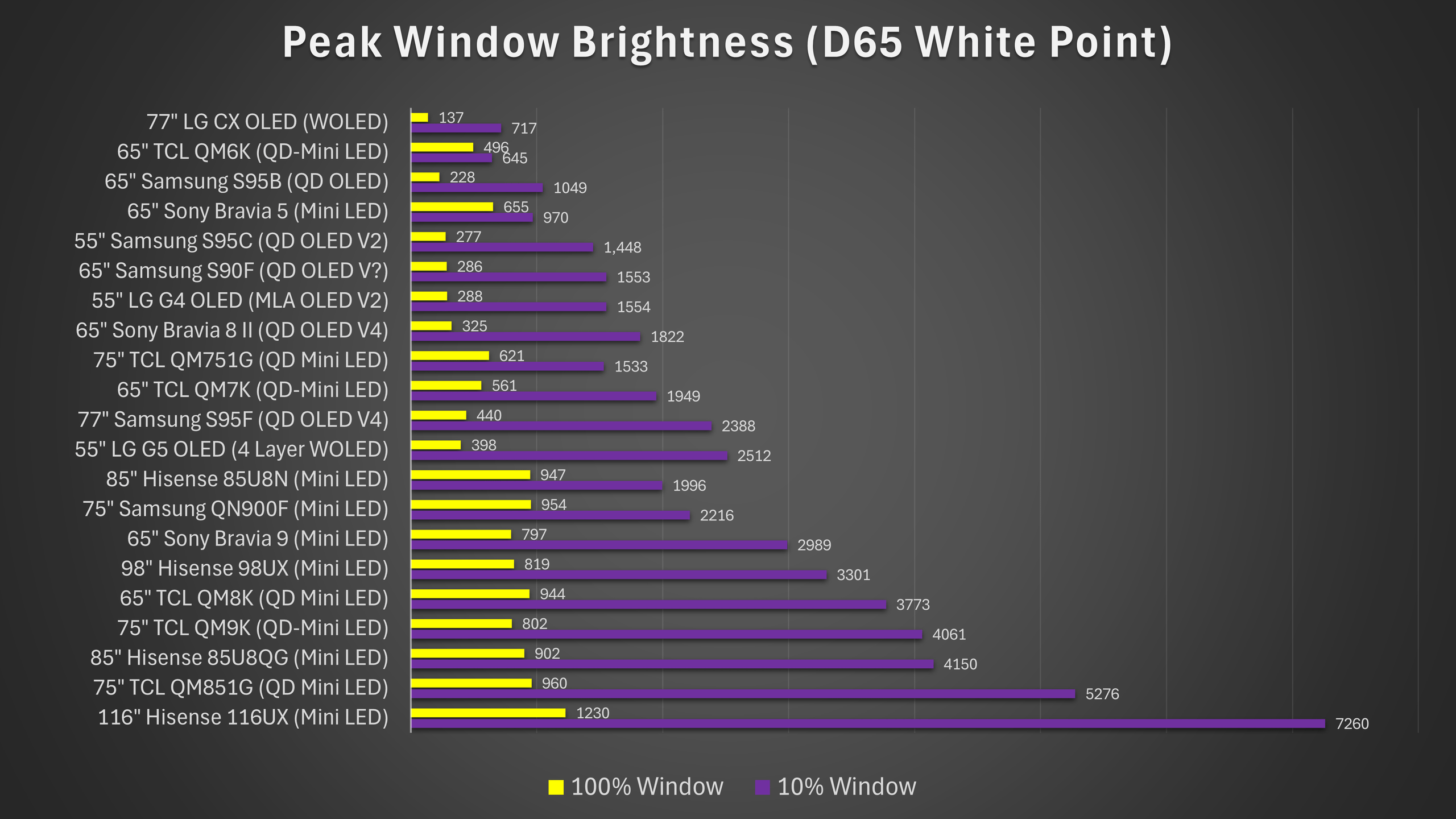
QM9K Brightness Test
In filmmaker mode, I measured window brightness exceeding 4,000 nits, which is exceptional for any display, let alone a mini-LED panel. If you push settings around, you can get it even brighter, making it extremely impactful for HDR content. Full-screen HDR, in particular, is stunning — it’s the kind of brightness that really makes highlights pop, giving movies, shows, and games a vibrancy that’s rare outside of high-end OLEDs or very premium Mini LEDs.
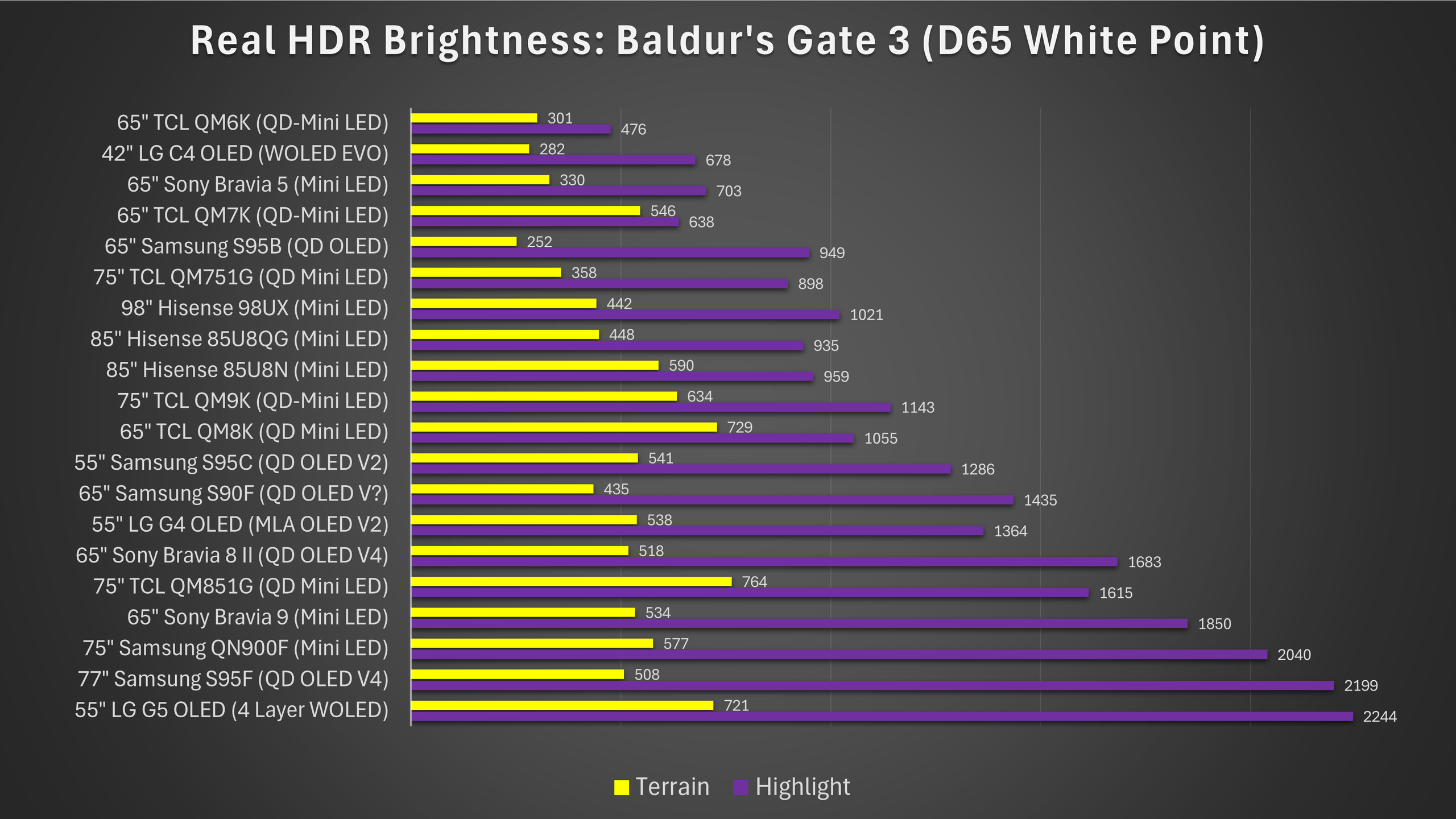
That said, HDR performance isn’t entirely uniform across all content. In some scenarios, such as certain scenes in Baldur’s Gate 3, the QM9K performs closer to a mid-tier mini-LED, not substantially outperforming slightly more affordable models like the QM8K. But this is content-dependent — when the TV has full-screen or large highlight areas, the brightness advantage really shows itself. The combination of brightness and TCL’s AIPQ Processor ensures HDR visuals feel dynamic and punchy.
Contrast and local dimming on the QM9K are extremely good for a mini-LED panel, though they still don’t fully match OLED. The 4,032 local dimming zones are a massive step up over previous TCL models. The theory is simple: the more zones, the better the TV can control contrast and prevent blooming, especially in HDR scenes with small bright highlights. And the QM9K demonstrates that improvement well.
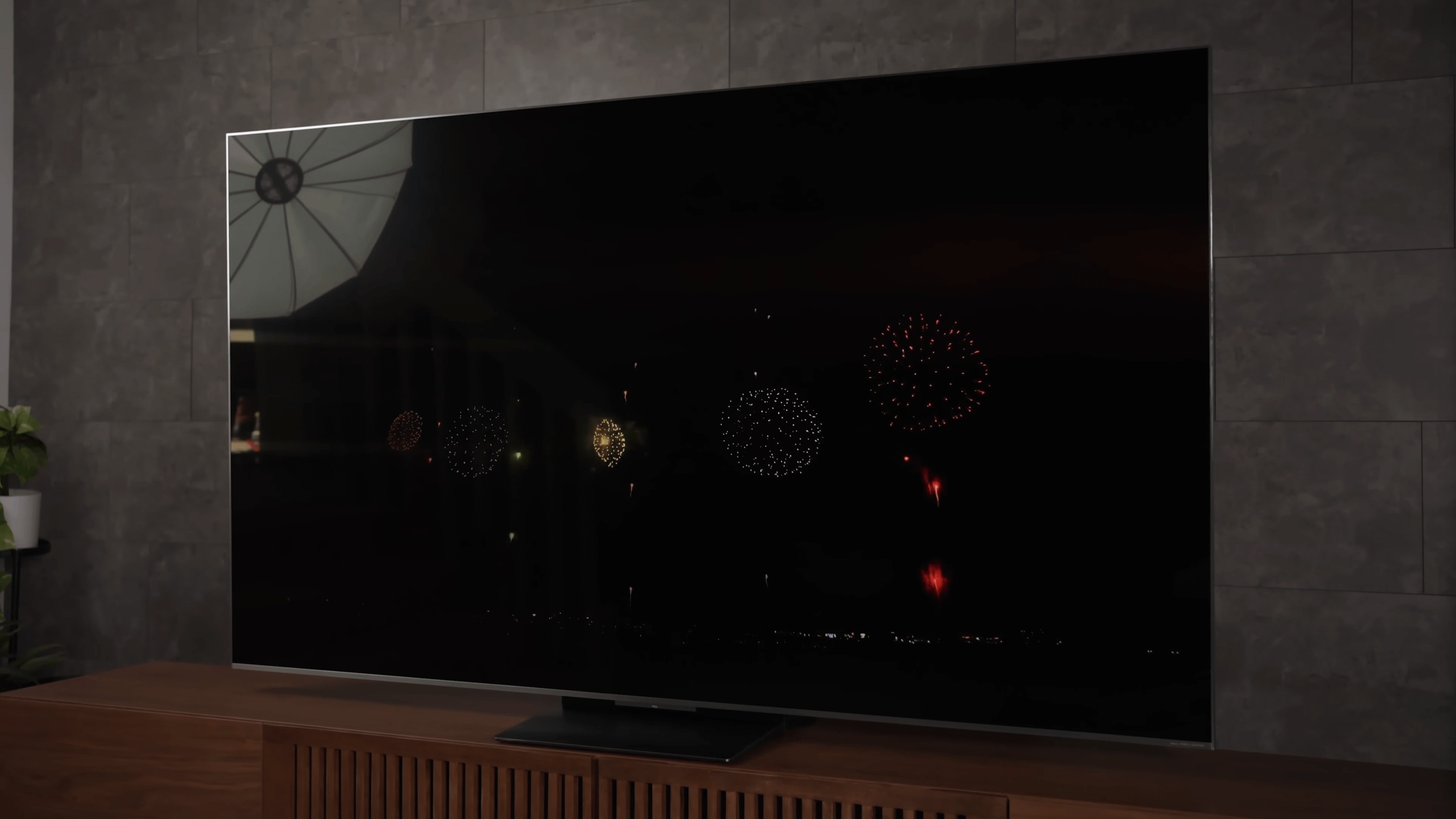
In practice, the improvement follows a diminishing returns curve. Yes, the contrast is excellent and some of the best I’ve seen on a mini-LED, but you don’t get the huge leap you might expect over the slightly cheaper QM8K or even the QM7K.
Blooming is generally hard to notice when you’re sitting straight on, though off-angle or in pitch-black environments, it can become more visible. I like to test with challenging scenes like fireworks — the QM9K handles these reasonably well, but you can still spot some haloing around bright objects.
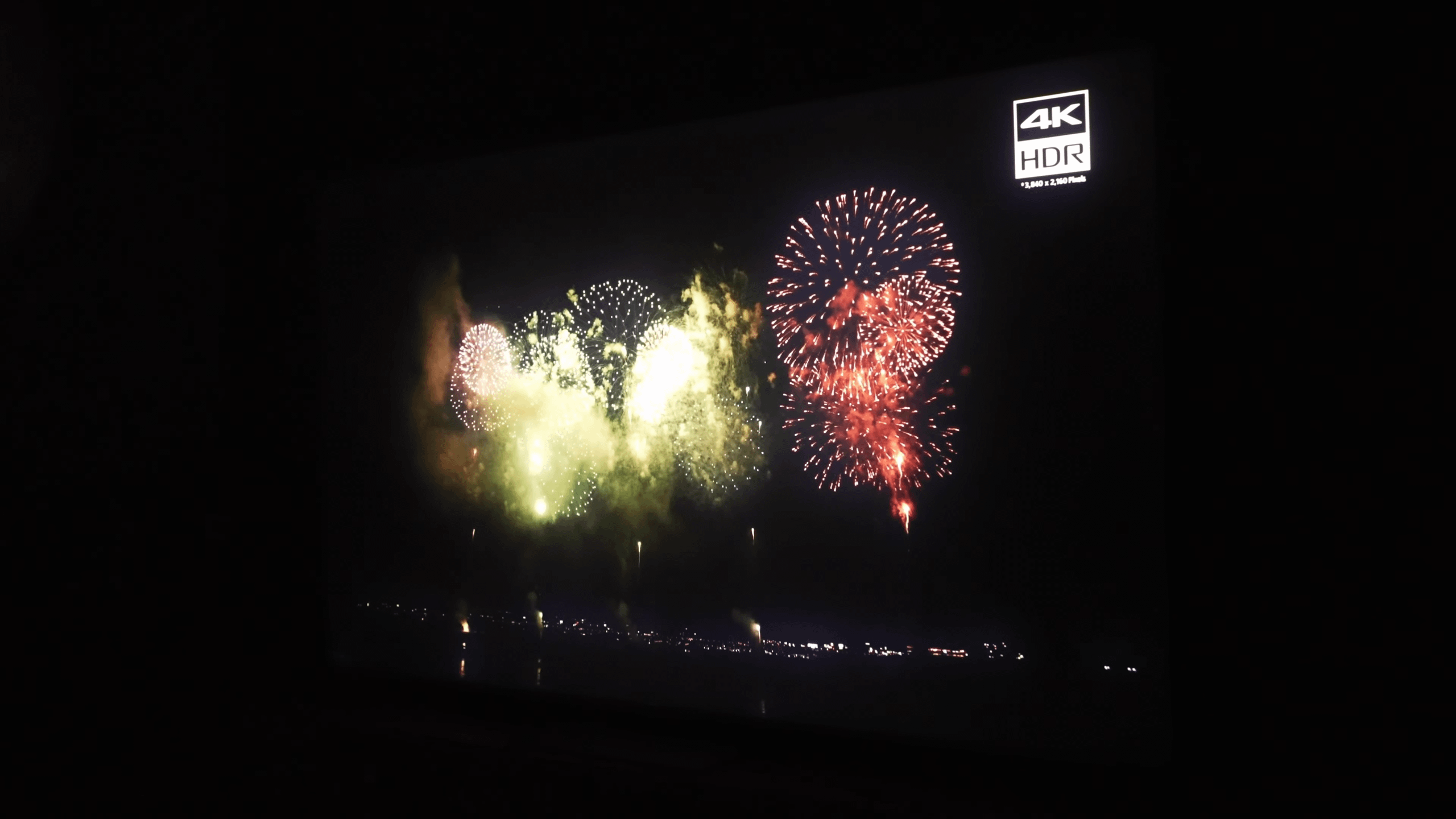
Fireworks scene on the QM9K
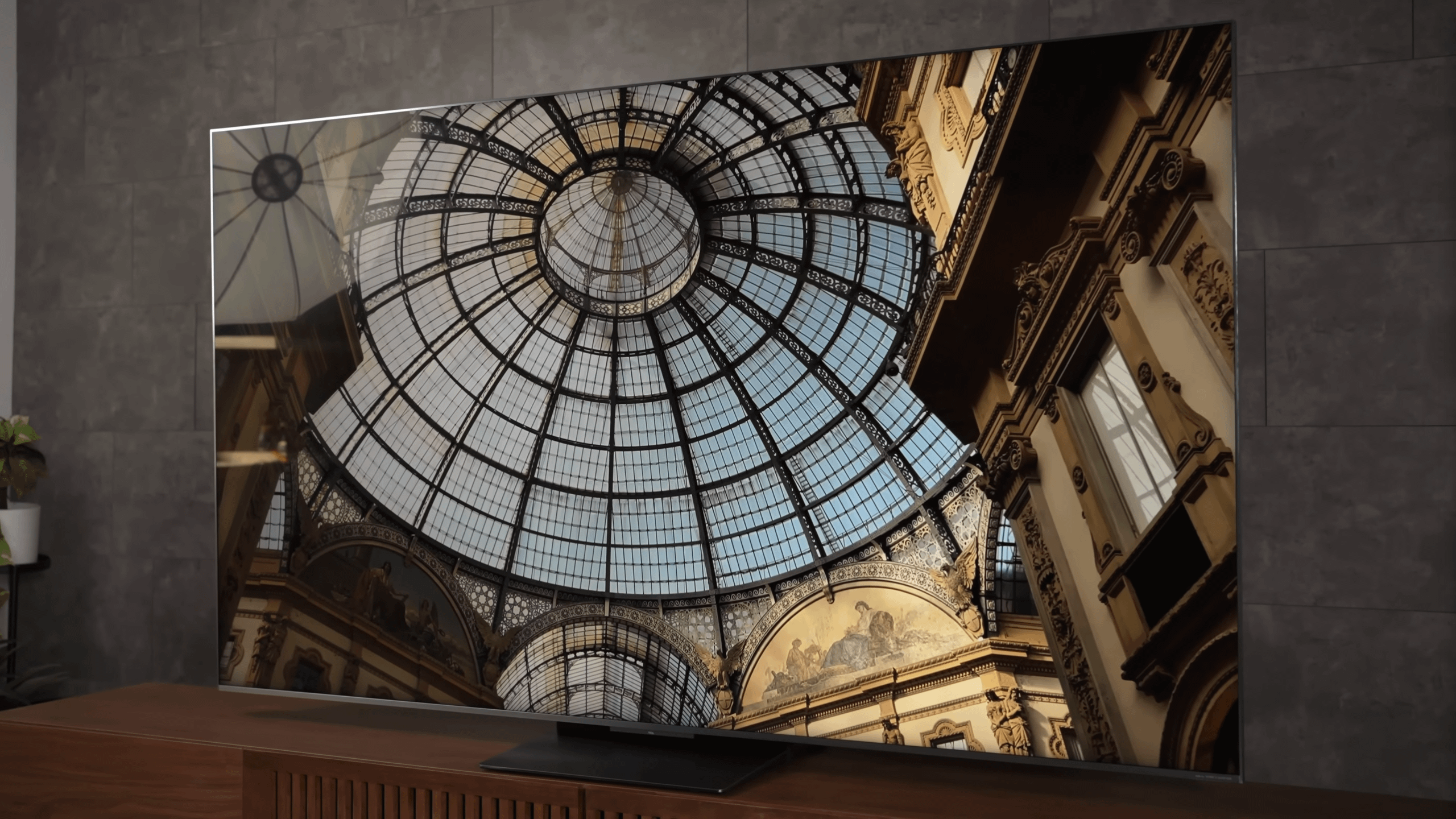
One of the areas where this TV really excels, though, is in bright-room contrast. Unlike OLED or QD OLED, which can lose perceived contrast in well-lit environments, the QM9K maintains punch and clarity even in fully lit rooms.
One of the most striking things about the QM9K is the overall clarity. Text, fine detail, and subtle textures look incredibly precise. Even small fonts on menus or subtitles appear razor-sharp, which is not something I take for granted on a large 75-inch panel.
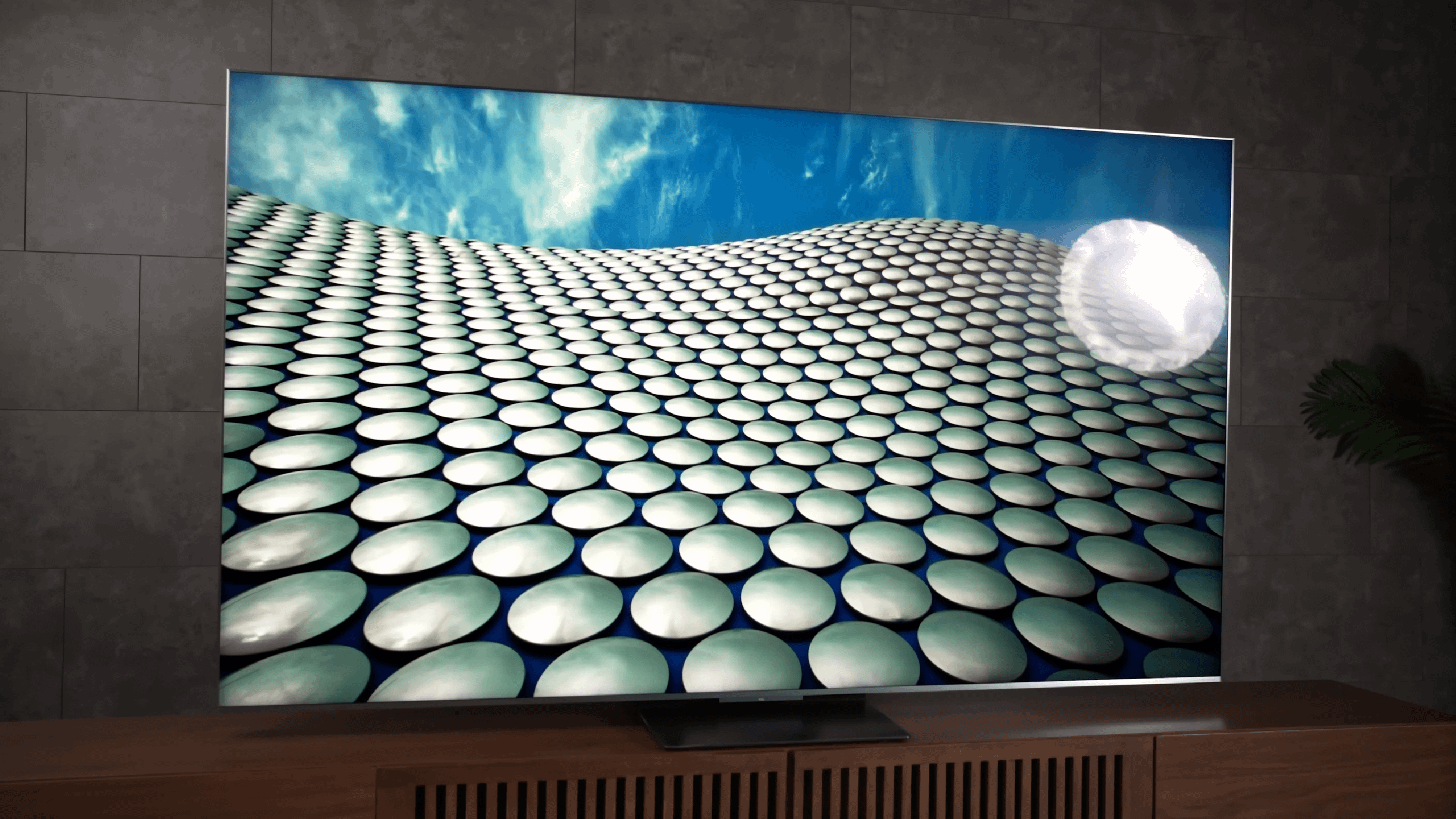
The clarity here rivals much more expensive displays and consistently delivers a crisp, polished image that stands out during both regular use and high-quality content playback.
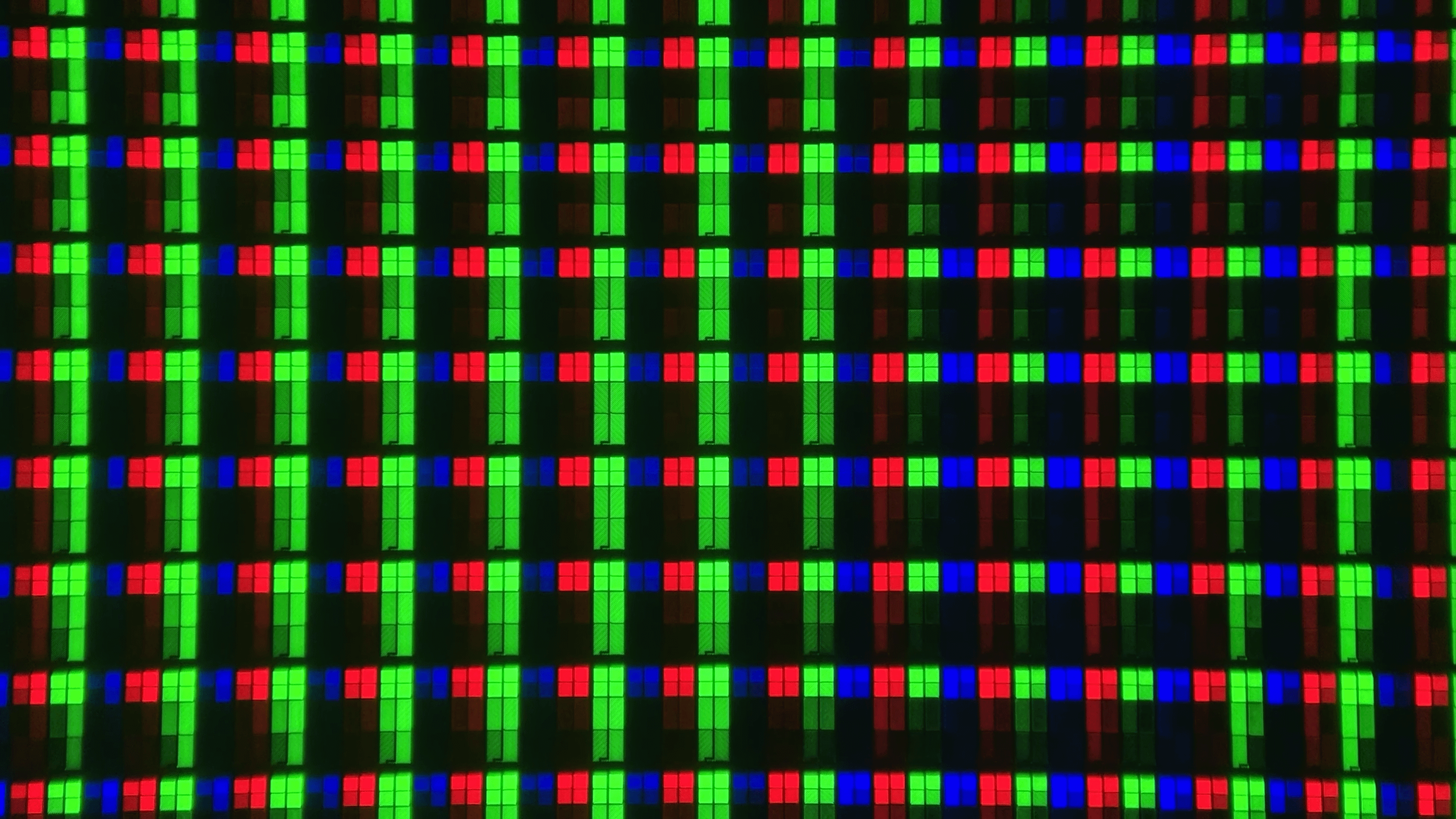
A big part of this clarity comes from the panel’s regular RGB subpixel layout. Because of this, edges remain clean, text is well-defined, and there’s no fringing or softness that you sometimes see on alternative panel structures. It gives the TV a naturally precise look that benefits everything from UI navigation to detailed movie scenes.
In mixed lighting, the combination of the glossy finish and the WHVA panel keeps colors vibrant and contrast consistent across the entire screen. Even when sunlight hits the display indirectly, the picture doesn’t flatten out. Colors stay saturated, black levels remain stable, and the overall brightness feels fairly uniform.
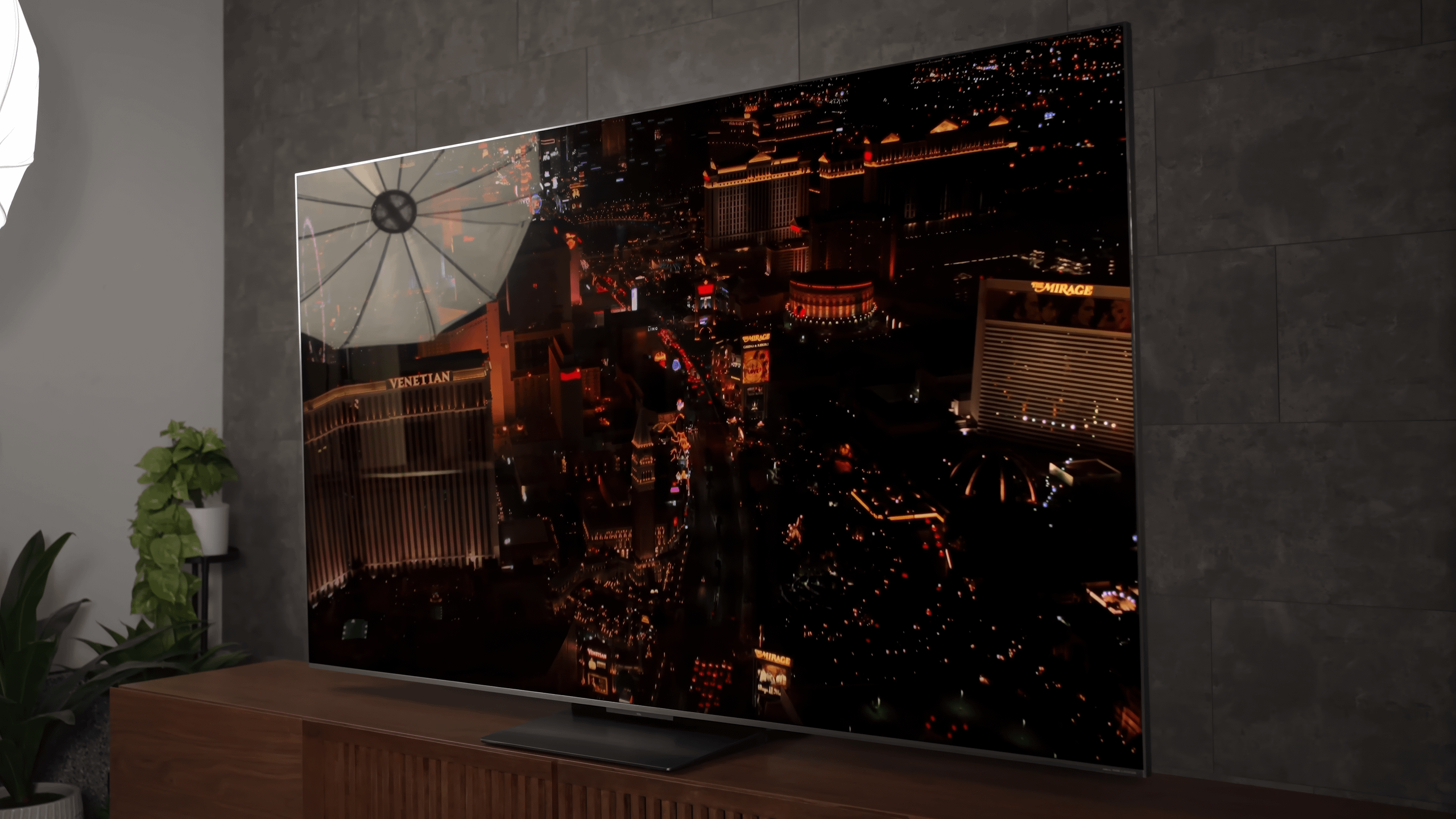
This makes the QM9K extremely versatile for everyday environments. Whether it’s bright daytime viewing, evening TV, or watching movies with the lights off, the presentation holds up without requiring constant adjustments.
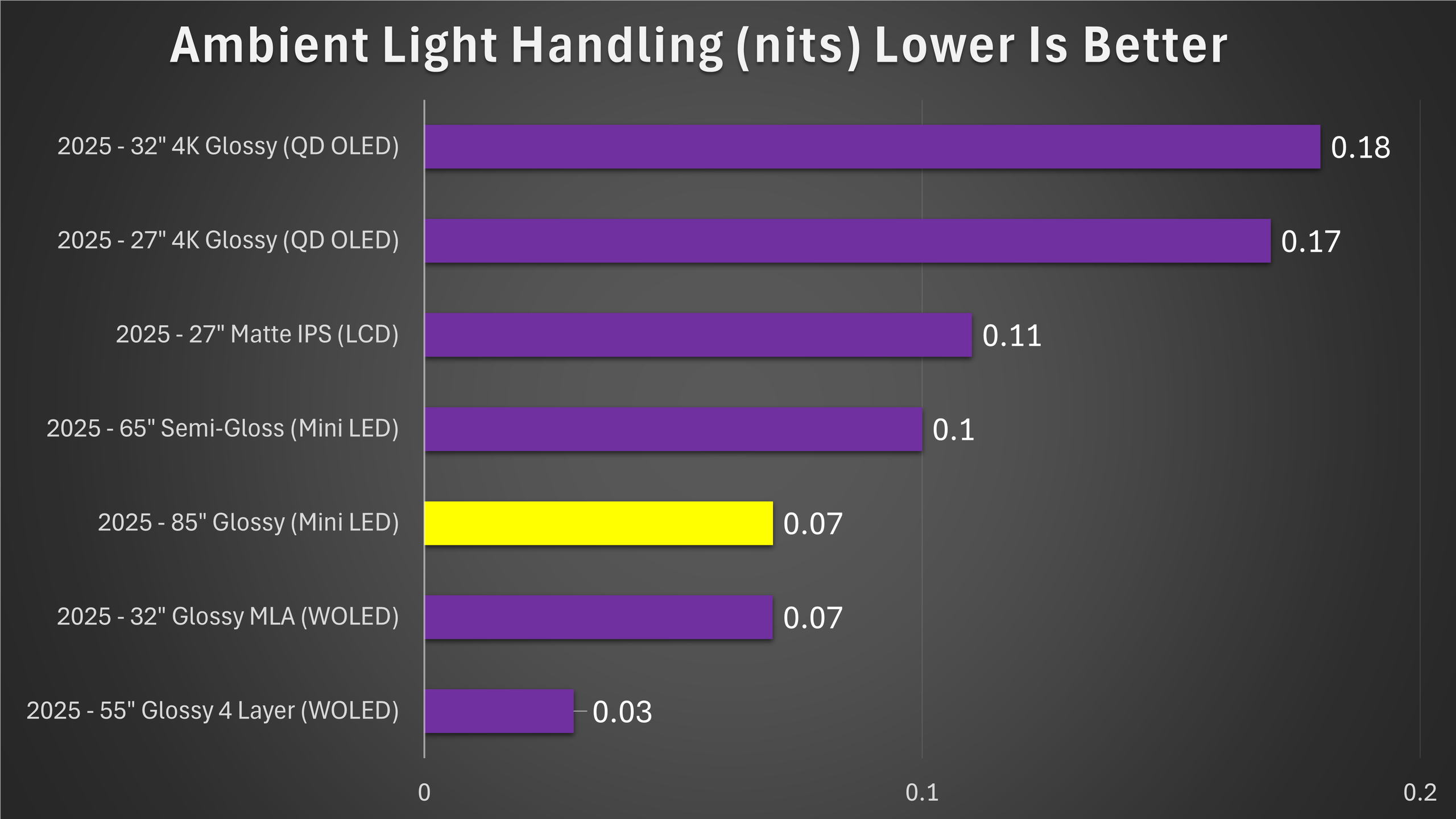
You can expect to see results similar to this when using it in a bright room. Impressively it fairs far better than alternatives like QD OLED.
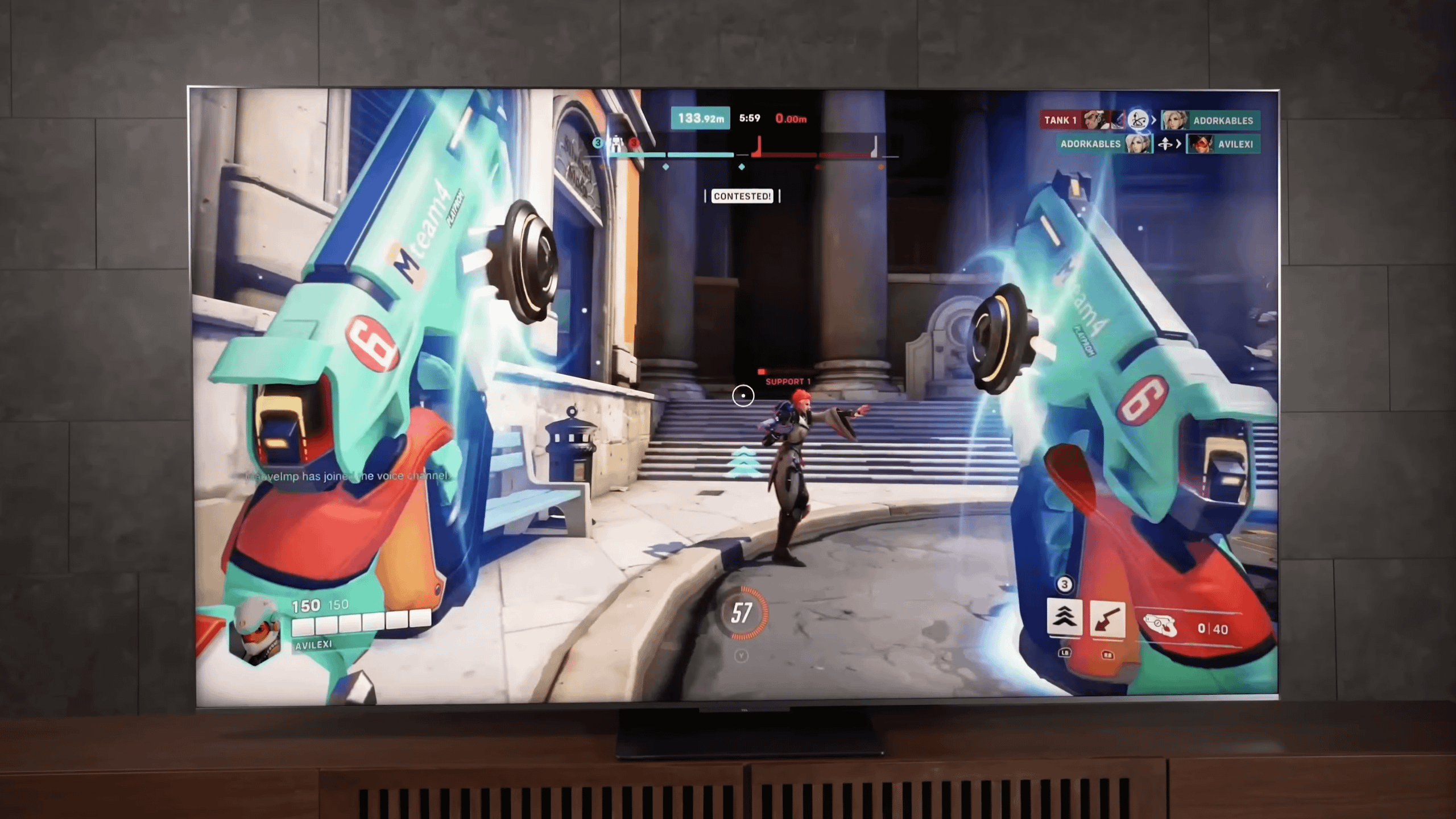
Gaming on the QM9K is solid. Input lag is low, VRR works well, and overall responsiveness feels good for both consoles and PC. It’s more than enough for casual and semi-competitive gaming. Still, the fastest OLEDs offer cleaner motion and better response time.
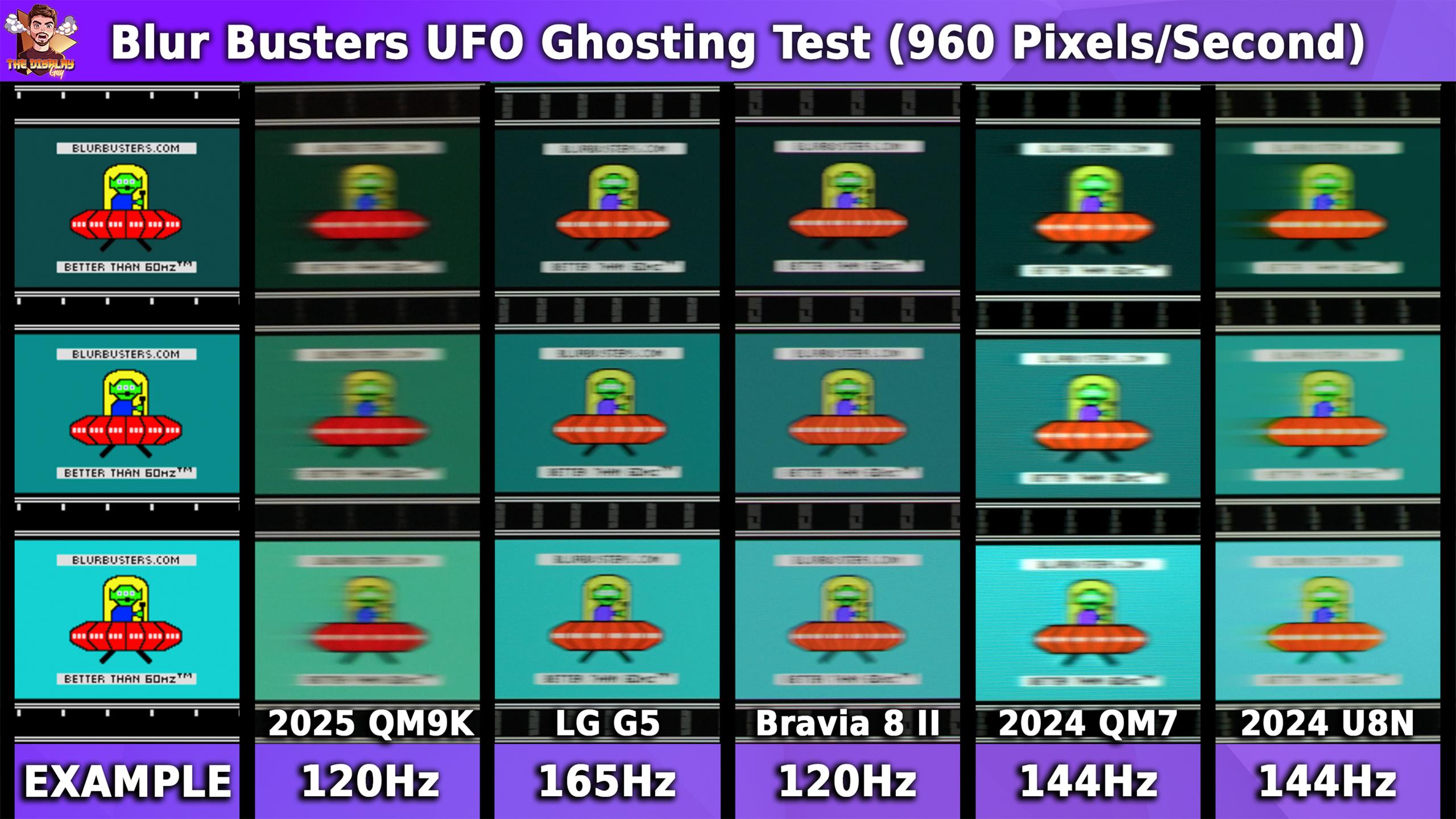
In the UFO motion test, clarity is respectable for a mini-LED panel. There’s some typical LCD blur, but details stay visible and motion remains smooth enough for most games. It doesn’t match OLED, but it performs well considering the panel type.
Total system latency measures around 31 milliseconds, including the PC, which is very respectable and keeps gameplay responsive for most users.
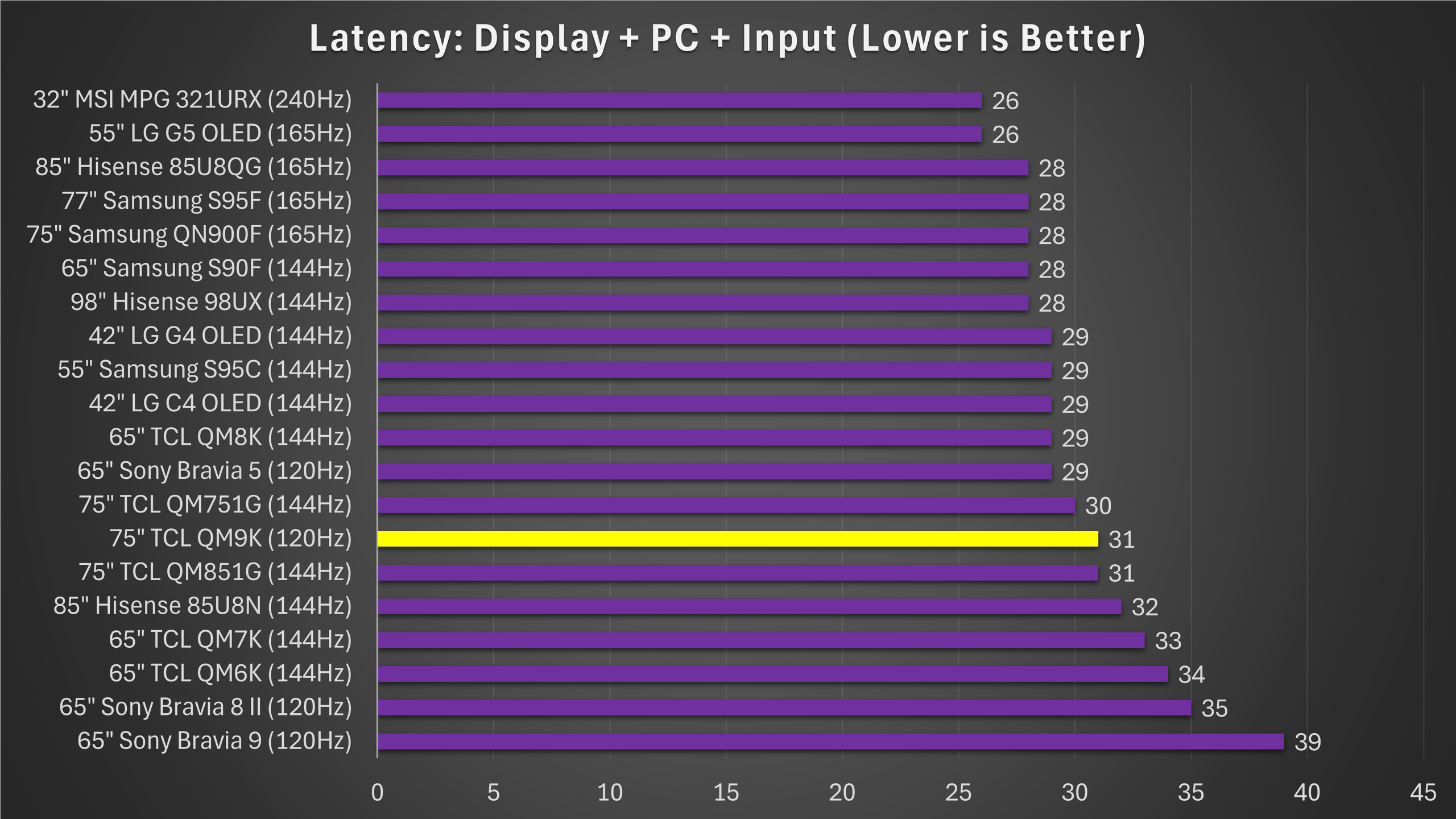
Overall it delivers mediocre gaming performance, but there are no red flags.
Judder reduction works best around levels 4–5, smoothing out low-frame-rate motion decently. Results can be inconsistent at times, and low-bit-rate content only improves slightly. Sony still leads in this area, but TCL’s motion handling is acceptable and usable.
The WHVA panel greatly improves viewing angles over traditional VA. Off-axis color and contrast loss is still present, but for most seating positions, it won’t be an issue.
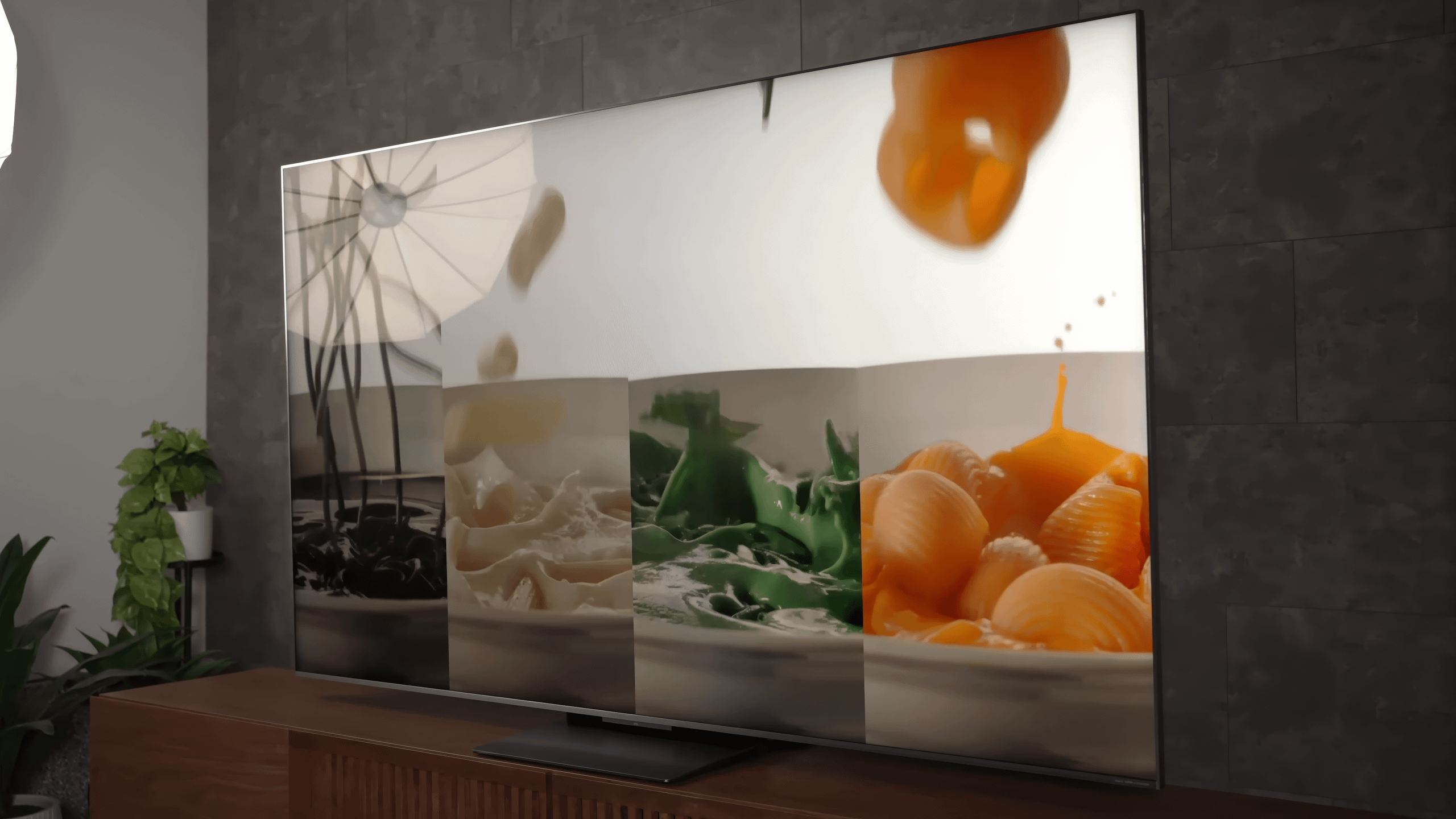
Uniformity is good, and even in bright HDR scenes, color shifts are minimal. Mini-LED blooming may occasionally appear, and viewing angles still fall far short of OLED, but this is typical for this technology.
The built-in speakers offer decent mids and treble, with natural timbre. Bass is limited, so a soundbar or external system is recommended for cinematic impact.
Google TV OS runs smoothly, with fast navigation thanks to the AIPQ processor. That said, I observed occasional menu freezes and flickering on low-quality content.

Firmware updates have yet to resolve these issues, and 144 Hz support on PC remains problematic. Despite these quirks, the interface is quick, and the TV’s feature set is competitive for a flagship mini-LED.
The TCL QM9K is one of the brightest and most impressive HDR TVs TCL has ever made. SDR performance is excellent, HDR performance is outstanding, and WHVA technology improves off-axis color and viewing angles. Contrast is strong for a mini-LED, and clarity and ambient light handling are top-notch.
However, this isn’t a perfect TV. Price is high for a mini-LED, low-quality content can flicker, and occasional menu freezes detract from the experience. Gaming performance is solid but not class-leading, and 144 Hz support is not yet reliable.
If you want a bright, vibrant mini-LED for a living room with lots of ambient light, this is an excellent choice. For dark-room enthusiasts, OLED may still be preferable, and those focused on fast gaming might want to consider OLED as well.
Despite its flaws, the QM9K delivers a flagship experience. With firmware updates and minor fixes, this could easily be one of the top mini-LED TVs available. As it stands, it’s bright, vibrant, and highly capable — proof that TCL can compete with the best in the mini-LED market.




Privacy Policy
Terms and Conditions - Affiliate Policy
Home Security
© Copyright 2008-2026.
11816 Inwood Rd #1211, Dallas, TX 75244