





When your TV's built-in speakers just aren't cutting it anymore, you're faced with a classic dilemma: go simple or go big? The Bose Solo Soundbar Series 2 ($199.99) and LG S60TR 5.1 Channel Soundbar ($299.99) represent two fundamentally different approaches to solving your audio problems, and the choice between them can make or break your entertainment experience.
Before diving into specifics, it's worth understanding what we're actually comparing here. Soundbars have evolved dramatically over the past decade, transforming from simple TV speaker replacements into sophisticated audio systems that can rival traditional home theater setups.
The core challenge any soundbar faces is physics: cramming quality audio into a sleek form factor that won't dominate your living room. Early soundbars from the 2010s were essentially elongated computer speakers, but today's models use advanced driver arrangements, digital signal processing (DSP – essentially smart software that optimizes sound), and wireless connectivity to create surprisingly immersive experiences.
The key technical considerations that separate basic from premium soundbars include channel configuration (how many separate audio streams the system can handle), total power output, driver quality, and connectivity options. These factors directly impact everything from dialogue clarity to bass response to surround sound effects.
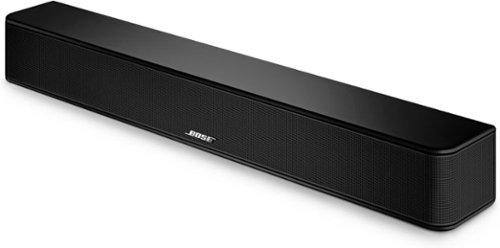
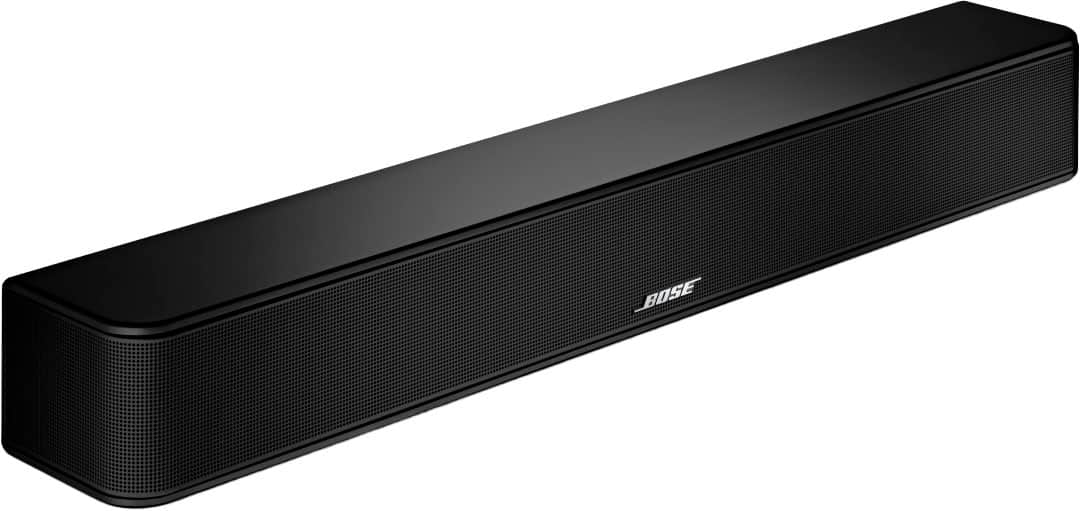
Released in 2017 and still sold today, the Bose Solo Series 2 represents Bose's philosophy that good sound doesn't require complexity. At first glance, its specs seem almost quaint compared to modern alternatives: just two full-range drivers in a 21.6-inch housing, producing 70 watts of total power.
But here's where Bose's engineering expertise shines. Those two drivers are angled outward to create a wider soundstage – the perceived width of audio – than you'd expect from such a compact unit. The company's proprietary DSP includes a dialogue enhancement mode that specifically boosts the frequency range where human voices live (roughly 85Hz to 255Hz), making conversations in movies and TV shows noticeably clearer.
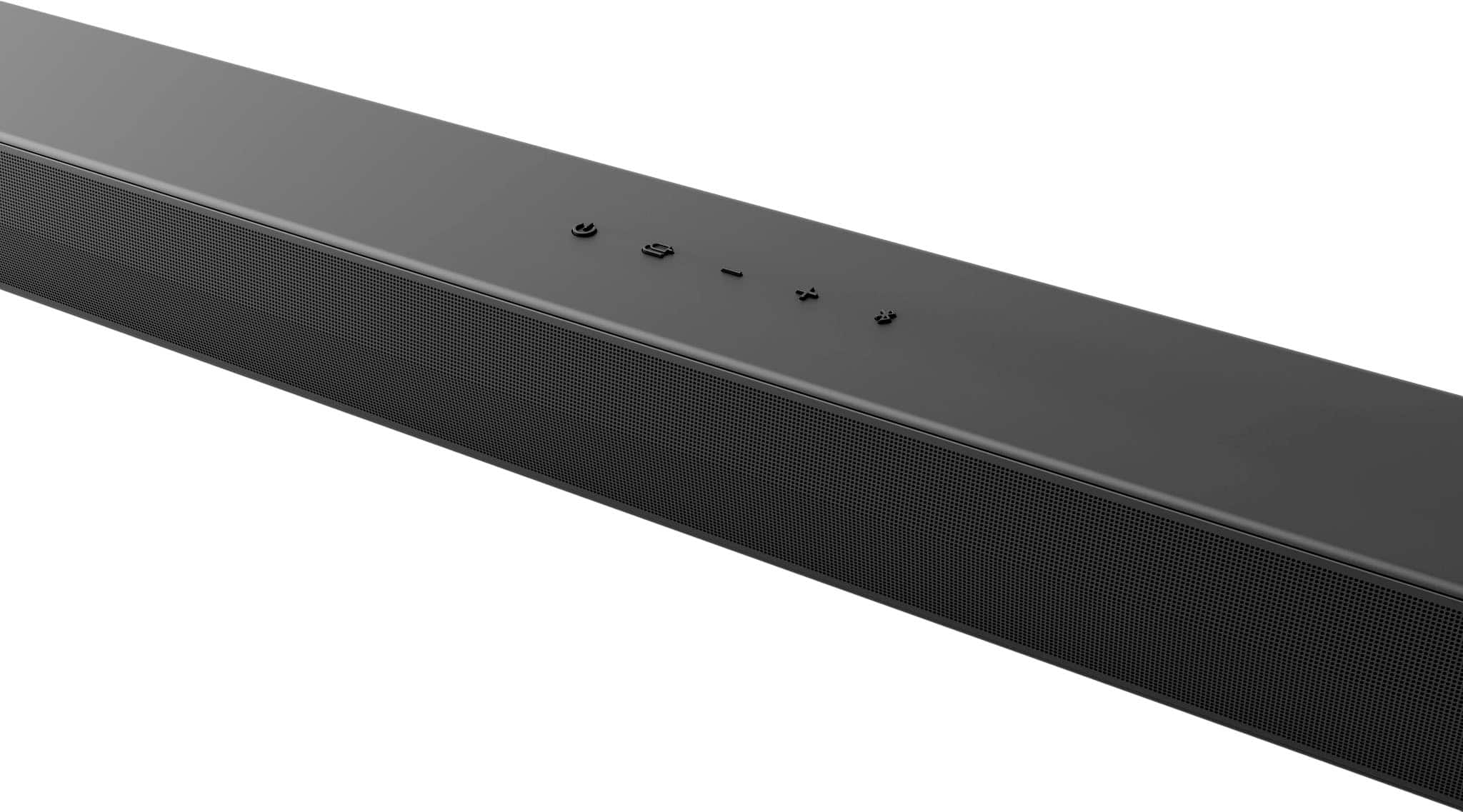
The technical approach is deliberately simple. There's no fancy room calibration software or smartphone app to configure. The remote control handles volume, bass adjustment (within the physical limitations of small drivers), and the dialogue mode toggle. This simplicity extends to connectivity: optical digital input, HDMI ARC (Audio Return Channel – this lets your TV send audio back to the soundbar through the same HDMI cable), and basic Bluetooth 4.0 for music streaming.
From a home theater perspective, the Bose delivers what I'd call "TV audio plus." It's a meaningful upgrade over built-in TV speakers, particularly for dialogue-heavy content like news, sitcoms, or documentaries. The neutral sound signature means voices come through clearly without the muddy, compressed quality you get from most TV speakers.
However, the physical limitations are real. Without a dedicated subwoofer, bass response drops off significantly below 80Hz. For context, movie sound effects like explosions or thunder often reach down to 20-30Hz, so you're missing a substantial portion of the frequency spectrum that creates cinematic impact. The stereo-only configuration also means no surround sound effects – explosions happen in front of you, never behind or to the sides.
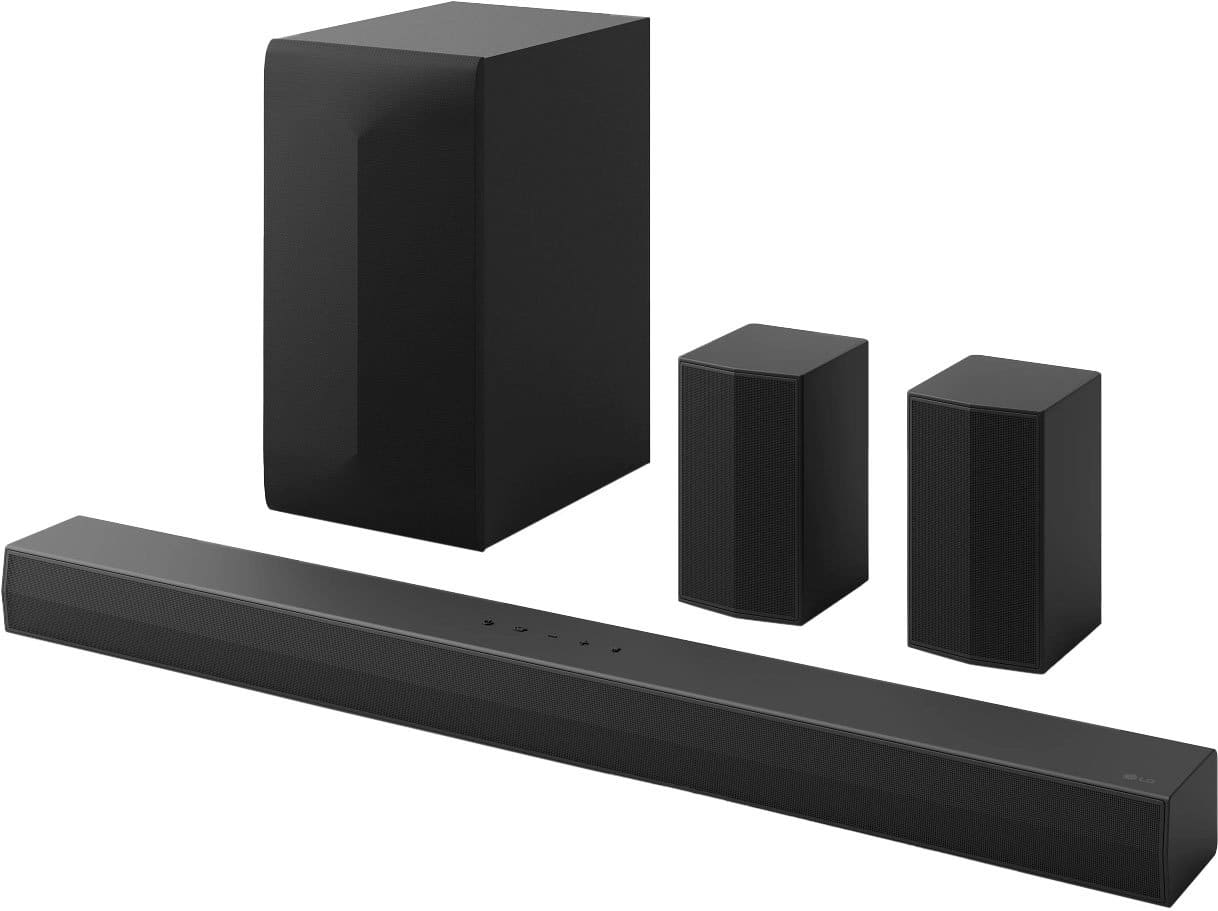
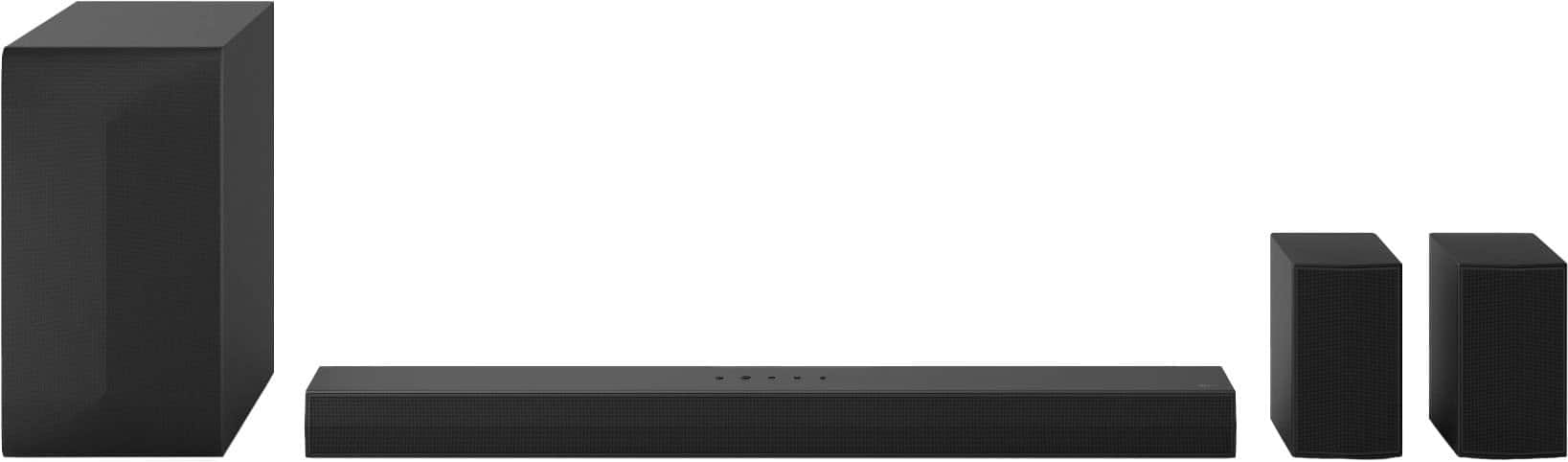
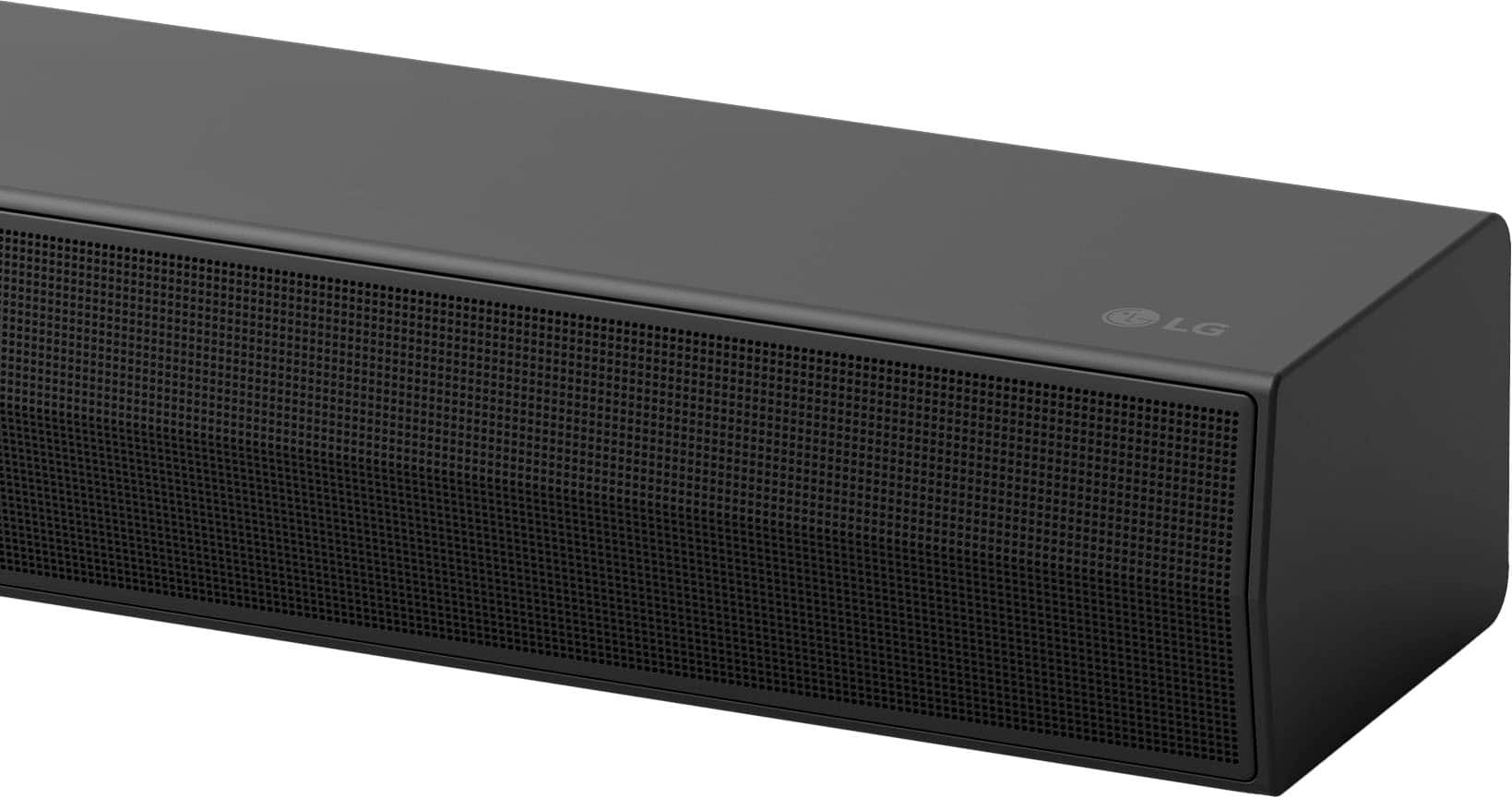
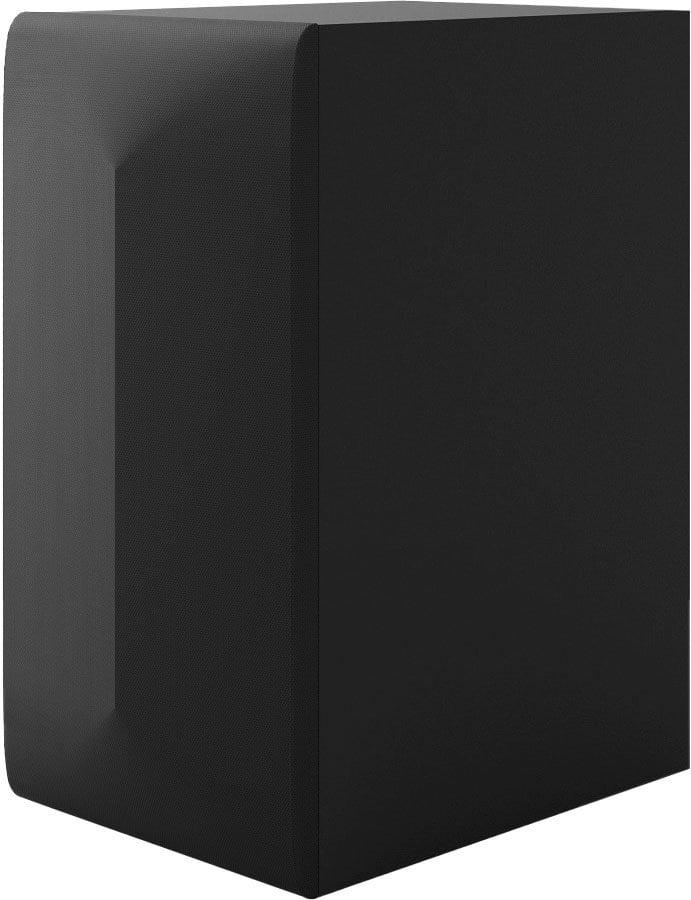
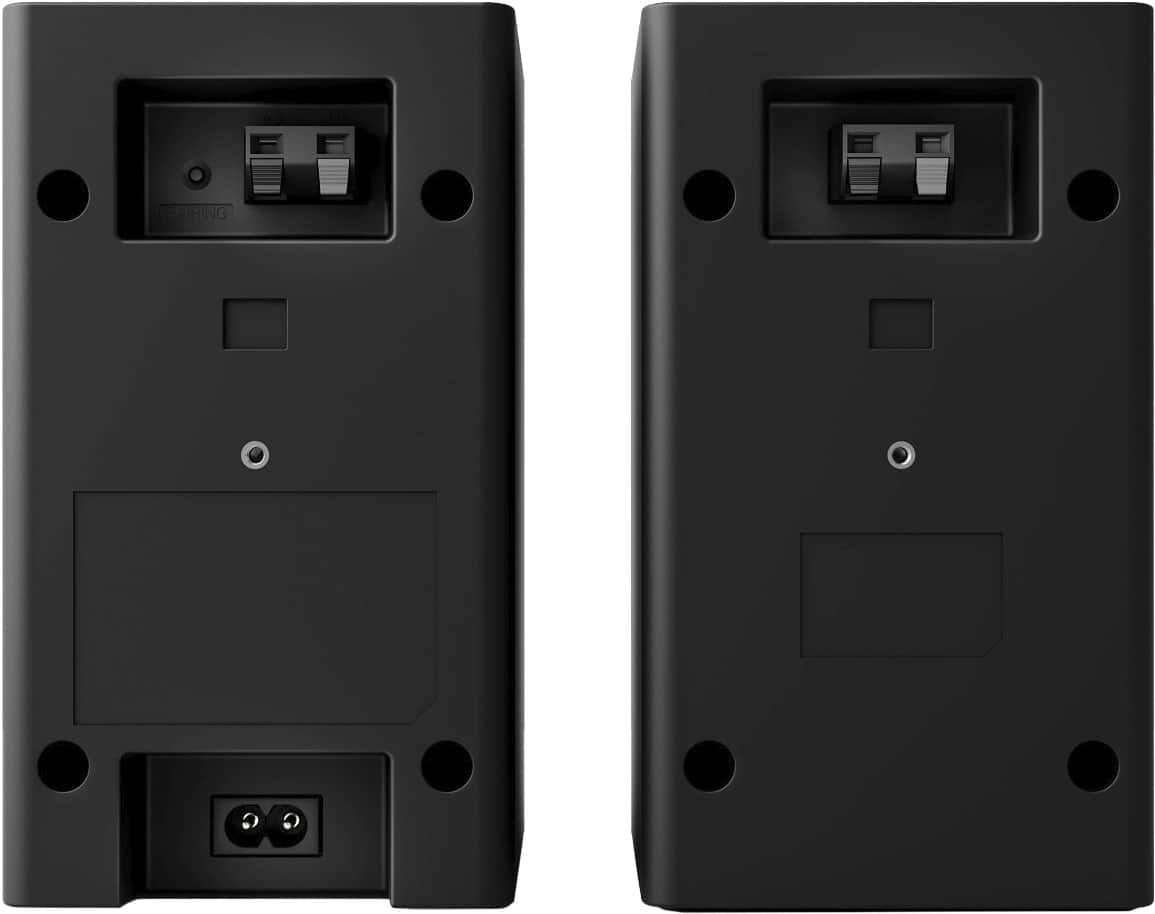
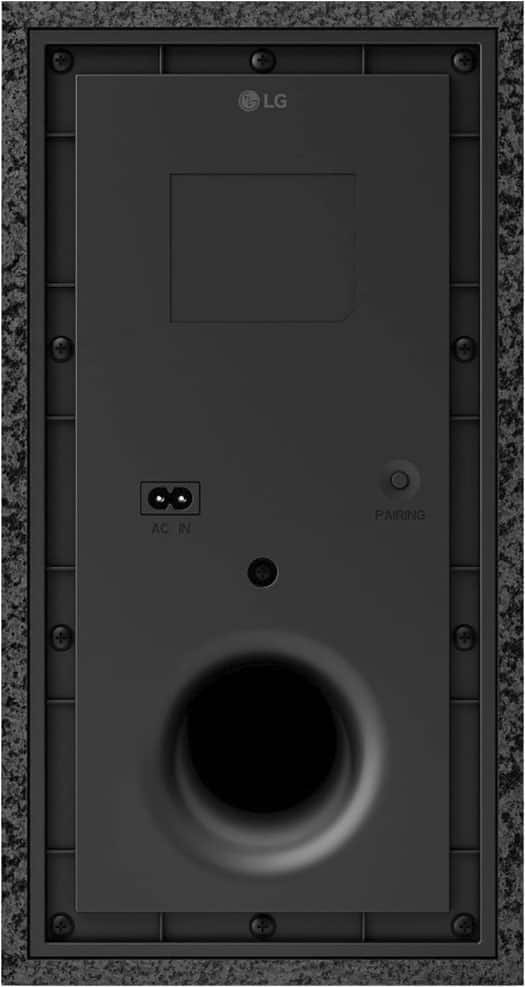
The LG S60TR, released in 2024, represents current thinking about what a mid-range soundbar system should deliver. Rather than asking users to compromise, LG decided to include everything needed for genuine 5.1 surround sound: a main soundbar, wireless subwoofer, and two wireless rear speakers.
The technical specifications tell a different story than the Bose. Total system power reaches 440 watts, distributed across five discrete channels plus a dedicated subwoofer channel (the ".1" in 5.1). The main soundbar handles left, center, and right channels with 40W, 40W, and 40W respectively. The rear speakers contribute 50W each, while the subwoofer delivers a substantial 220W of low-frequency power.
This power distribution matters more than the raw numbers suggest. Having a dedicated center channel means dialogue gets its own speaker, optimized specifically for vocal clarity. The rear speakers create genuine surround effects – when a helicopter flies overhead in a movie, you'll hear it move from front to back across your room. The subwoofer handles everything below about 120Hz, including the deep bass that makes action scenes feel impactful.
LG's AI Sound Pro feature represents modern DSP at work. The system analyzes incoming audio in real-time, identifying whether you're watching dialogue-heavy content, music, or action scenes, then automatically adjusts EQ (equalization – boosting or cutting specific frequencies) to optimize the experience. This happens seamlessly in the background, though you can override it through manual sound modes if you prefer.
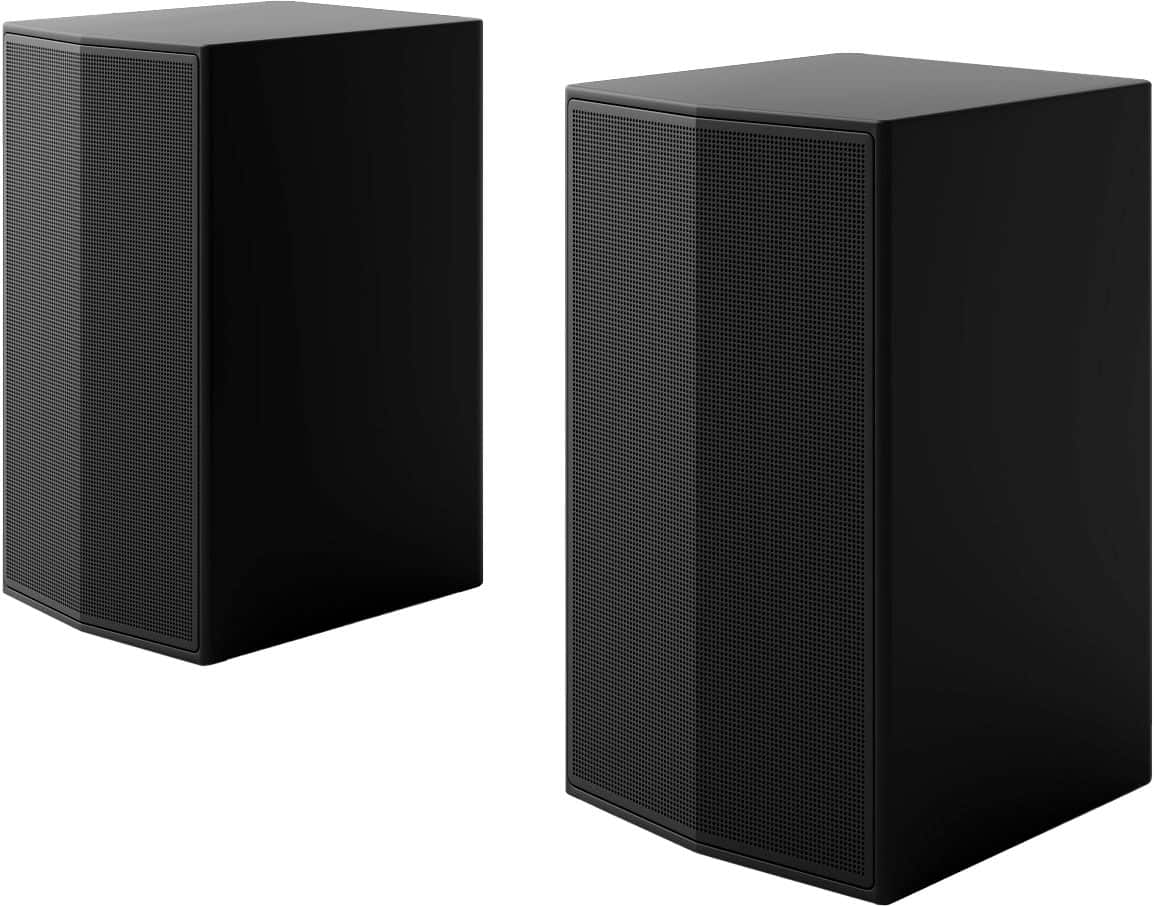
The wireless implementation deserves special mention. While the rear speakers connect to each other with a wire (so technically "semi-wireless"), they communicate with the main soundbar without any cables. This eliminates the biggest setup challenge of traditional surround systems: running speaker wire across your room. You still need power outlets for the rear speakers, but placement becomes much more flexible.
Both systems excel at dialogue, but through different approaches. The Bose Solo Series 2 uses its dialogue enhancement mode to boost midrange frequencies where human voices naturally sit. In practice, this makes news anchors, actors in quiet dramatic scenes, and podcast hosts sound noticeably clearer than through TV speakers.
The LG S60TR takes a more sophisticated approach with its dedicated center channel. Instead of trying to enhance vocals within a mixed stereo signal, it gives dialogue its own 40W speaker optimized specifically for voice reproduction. The difference becomes apparent during complex movie scenes where dialogue, music, and sound effects compete for attention – the LG separates these elements cleanly while the Bose sometimes struggles with busy audio mixes.
From my testing, the Bose works excellently for straightforward content like sitcoms or news programs. But put on a Marvel movie with Hans Zimmer's complex score, and dialogue can get lost in the mix despite the enhancement mode. The LG's center channel keeps voices intelligible even during the most chaotic action sequences.
This is where the systems diverge most dramatically. The Bose's compact drivers simply cannot move enough air to produce meaningful bass below 80Hz. You'll hear the attack and mid-bass punch of kick drums or explosions, but miss the fundamental low frequencies that create physical impact.
The LG's 220W subwoofer changes everything. Properly positioned (usually in a corner or along a wall where room boundaries reinforce bass), it can reproduce frequencies down to around 35Hz. This means you actually feel explosions, gunshots have weight, and electronic music reveals layers of sub-bass that the Bose simply cannot reproduce.
The difference extends beyond volume to dynamics – the range between quiet and loud passages. The LG's separate subwoofer can handle sudden bass transients without distorting or overwhelming the midrange drivers. This creates a more realistic and immersive experience during action sequences or bass-heavy music.
Here's where the fundamental design philosophies create completely different experiences. The Bose creates a wider stereo image through driver placement and processing, but everything still originates from in front of you. It's an improvement over TV speakers, but doesn't create the enveloping experience of true surround sound.
The LG's 5.1 configuration delivers genuine spatial effects. Rear speakers positioned behind your seating area create the sense that sounds originate from all around you. Rain seems to fall throughout the room, crowd noise in sports feels like you're in the stadium, and action scenes place you in the middle of the chaos rather than watching from the outside.
Modern streaming content increasingly includes spatial audio encoding (like Dolby Digital 5.1), which the LG can decode and play properly through its discrete speakers. The Bose receives these signals but must "downmix" them to stereo, losing the directional information that makes surround sound effective.
The Bose works well in smaller spaces – bedrooms, apartments, or compact living rooms up to about 12 feet from your seating position. Its 70W output provides adequate volume for near-field listening, and the compact design won't overwhelm modest rooms visually or acoustically.
The LG's 440W total power scales to much larger spaces. I've tested it effectively in rooms up to about 20 feet deep, where the rear speakers maintain clear communication with the main soundbar and the subwoofer can pressurize the entire space. The wireless rear speakers also solve the biggest practical challenge of surround sound: getting audio to the back of large rooms without running cables.
The technology gap between 2017 and 2024 shows clearly in setup experiences. The Bose Solo Series 2 reflects older design thinking: minimal features, basic remote control, plug-and-play operation. You connect one cable (optical or HDMI), power it up, and you're done. There's something refreshing about this simplicity, especially for users who just want better TV audio without complexity.
The LG S60TR embraces modern expectations around customization and control. The LG Soundbar smartphone app provides detailed EQ adjustment, sound mode selection, and system status monitoring. The WOW interface integration means your TV remote can control soundbar functions directly, reducing remote clutter.
However, initial setup requires more thought. You need to position the soundbar, find appropriate spots for rear speakers with power access, and place the subwoofer where it sounds best in your room. The system walks you through wireless pairing, but it's definitely more involved than the Bose's simple connection process.
At $199.99, the Bose Solo Series 2 represents reasonable value for what it delivers: significantly clearer dialogue and somewhat better overall sound than TV speakers. It's reliable, from a respected brand, and requires minimal setup or maintenance. For users primarily watching dialogue-heavy content in smaller rooms, it's a sensible upgrade.
The LG S60TR at $299.99 offers exceptional value when you consider what you're getting: a complete 5.1 surround system with wireless components that would typically cost $400-500 from other manufacturers. The additional $100 investment buys you genuine surround sound, powerful bass response, and future-proofing as streaming services continue improving their audio quality.
For serious home theater use, the choice becomes clearer. The Bose serves as a TV audio upgrade but doesn't create a cinematic experience. It's perfect for casual viewing but limiting for movie nights or immersive gaming.
The LG transforms your living room into a legitimate home theater space. The surround sound creates immersion that makes movies more engaging, the subwoofer adds physical impact to action sequences, and the overall power handling means you can achieve theater-like volume levels without distortion.
Looking forward, streaming platforms continue investing in spatial audio formats, and gaming consoles increasingly support advanced surround sound. The LG positions you to take advantage of these improvements, while the Bose's stereo limitation becomes more restrictive over time.
Choose the Bose Solo Series 2 if you prioritize simplicity above all else, live in a small space, primarily watch dialogue-heavy content, or want a reliable upgrade without complexity. It's particularly well-suited for bedrooms, apartments, or secondary viewing areas where full surround sound would be overkill.
Choose the LG S60TR if you want a complete audio upgrade, have room for rear speakers, watch diverse content including movies and sports, or can invest the additional $100 for dramatically better performance. It's the better choice for primary living rooms and anyone seeking genuine home theater immersion.
The $100 price difference represents more than incremental improvement – it's the jump from basic TV audio enhancement to a complete surround sound experience. Unless space constraints or absolute simplicity are your top priorities, the LG delivers exceptional value for anyone serious about improving their home entertainment experience.
| Bose Solo Soundbar Series 2 ($199.99) | LG S60TR 5.1 Channel Soundbar ($299.99) |
|---|---|
| Audio Configuration - Determines surround sound capability and immersion level | |
| 2.0 stereo (left/right only) | True 5.1 surround (front L/R, center, rear L/R, subwoofer) |
| Total Power Output - Affects maximum volume and dynamic range | |
| 70W (2×35W drivers) | 440W (distributed across 6 speakers) |
| Bass Response - Critical for movies, music, and gaming impact | |
| Limited (no dedicated subwoofer) | Dedicated 220W wireless subwoofer |
| Room Size Capability - Determines effective coverage area | |
| Small to medium rooms (up to ~650 sq ft) | Medium to large rooms (scales to 20+ feet) |
| Setup Complexity - Time and effort required for installation | |
| Plug-and-play (single cable connection) | Moderate (soundbar + subwoofer + rear speaker positioning) |
| Dialogue Clarity Technology - How well voices cut through other audio | |
| Dialogue enhancement mode (frequency boosting) | Dedicated 40W center channel speaker |
| Connectivity Options - Available input methods and wireless features | |
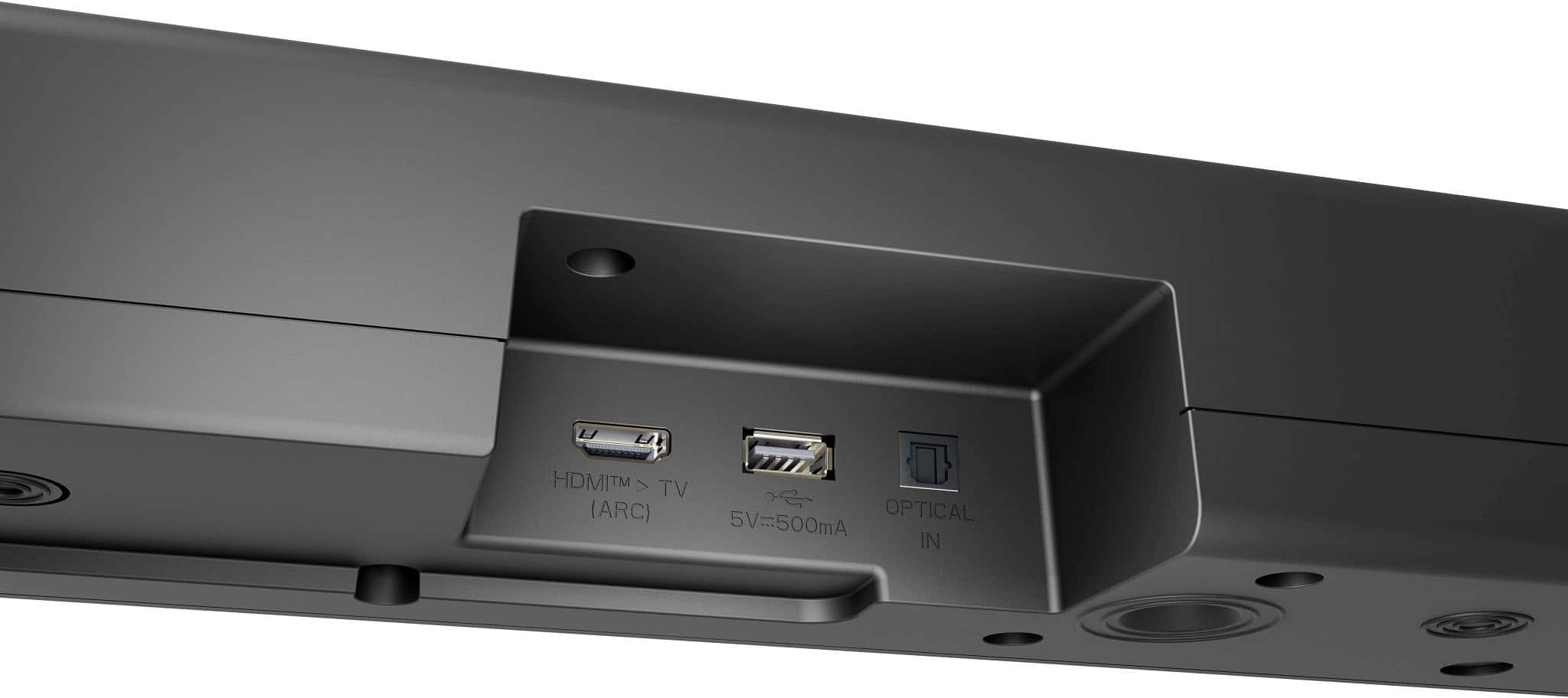
| HDMI ARC, optical, Bluetooth 4.0 | HDMI eARC, optical, USB, Bluetooth 5.3, Wi-Fi |
| Smart Features and Control - App support and customization options | |
| Basic remote only (no app) | LG Soundbar app with EQ, WOW interface, AI Sound Pro |
| Surround Sound Format Support - Compatibility with movie/streaming audio | |
| Stereo only (downmixes surround to 2-channel) | Dolby Audio 5.1, multiple surround formats |
| Physical Footprint - Space requirements and aesthetic impact | |
| Compact: 21.6" × 2.8" × 3.4" (soundbar only) | Larger system: 33.5" soundbar + subwoofer + 2 rear speakers |
| Value Proposition - Performance per dollar spent | |
| Basic TV audio upgrade for the price | Complete surround system at exceptional value point |
| Release Year and Technology Generation - How current the tech is | |
| 2017 design (mature but dated connectivity) | 2024 release (current-gen features and processing) |
The Bose Solo Soundbar Series 2 ($199.99) is better suited for small rooms due to its compact 21.6-inch design and 70W power output that won't overwhelm tight spaces. Its simple stereo configuration works well in bedrooms or small apartments where surround sound would be overkill.
Yes, the LG S60TR 5.1 Channel Soundbar ($299.99) includes a wireless 220W subwoofer plus two wireless rear speakers, creating a complete 5.1 surround sound system. This provides much deeper bass than the Bose Solo Series 2, which has no subwoofer.
Both excel at dialogue but use different approaches. The Bose Solo Series 2 uses dialogue enhancement mode to boost voice frequencies, while the LG S60TR has a dedicated 40W center channel speaker specifically for vocals. The LG performs better during complex movie scenes with mixed audio.
The Bose Solo Soundbar Series 2 costs $199.99, while the LG S60TR costs $299.99 - a $100 difference. The LG provides significantly more hardware (subwoofer and rear speakers) and features for the additional cost.
The Bose Solo Series 2 offers plug-and-play setup with just one cable connection and no app required. The LG S60TR requires positioning the soundbar, subwoofer, and rear speakers, plus using the smartphone app for optimal configuration.
Yes, both support Bluetooth music streaming. The Bose Solo Series 2 uses Bluetooth 4.0, while the LG S60TR features newer Bluetooth 5.3 technology with better range and connection stability.
The LG S60TR 5.1 Channel Soundbar is far superior for home theater use, offering true surround sound with rear speakers, powerful bass from its subwoofer, and support for Dolby Audio formats. The Bose Solo Series 2 only provides stereo sound enhancement.
The LG S60TR supports WOW interface technology, allowing control through your LG TV remote. The Bose Solo Series 2 typically requires its own remote, though some TVs may support basic volume control through HDMI ARC.
The LG S60TR offers more connections including HDMI eARC, optical, USB, Wi-Fi, and Bluetooth 5.3. The Bose Solo Series 2 has basic HDMI ARC, optical input, and Bluetooth 4.0 connectivity.
The Bose Solo Soundbar Series 2 outputs 70W total power through two drivers. The LG S60TR delivers 440W total system power distributed across its soundbar, subwoofer, and rear speakers for much louder, more dynamic sound.
The LG S60TR 5.1 Channel Soundbar is designed for larger spaces with its 440W power output and wireless rear speakers that can be positioned throughout the room. The Bose Solo Series 2 works best in smaller to medium-sized rooms.
Only the LG S60TR has a dedicated smartphone app (LG Soundbar) that provides EQ adjustments, sound modes, and system controls. The Bose Solo Series 2 relies entirely on its included remote control with no app support.
We've done our best to create useful and informative comparisons to help you decide what product to buy. Our research uses advanced automated methods to create this comparison and perfection is not possible - please contact us for corrections or questions. These are the sites we've researched in the creation of this article: rtings.com - bose.com - bose.com - assets.bose.com - bestbuy.com - youtube.com - pistonheads.com - costco.com - googlenestcommunity.com - youtube.com - discussions.apple.com - bestbuy.com - mynavyexchange.com - youtube.com - consumerreports.org - avsforum.com - rentacenter.com - bestbuy.com - homechoicestores.com - oconsommateur.com - lg.com - bestbuy.com - samsung.com

Privacy Policy
Terms and Conditions - Affiliate Policy
Home Security
© Copyright 2008-2026.
11816 Inwood Rd #1211, Dallas, TX 75244