

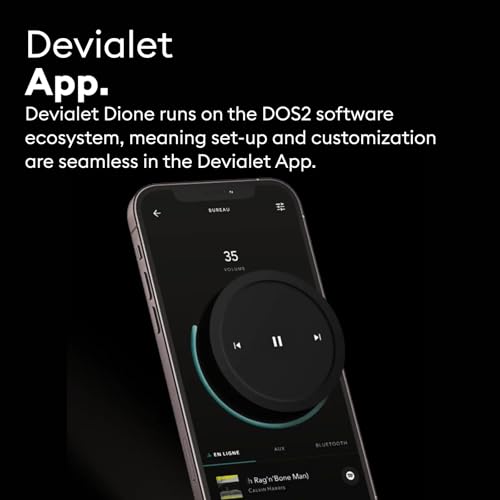
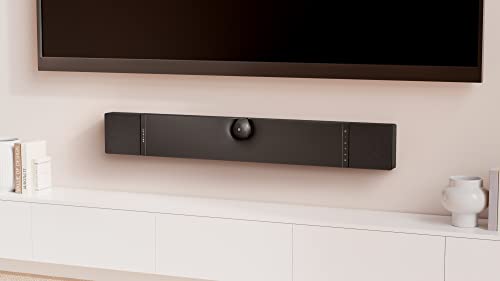
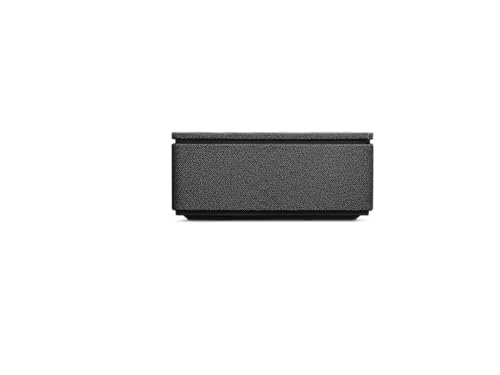
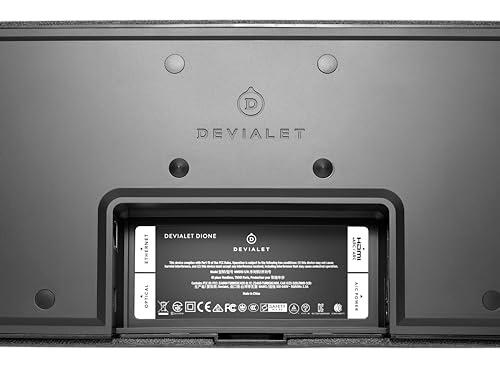

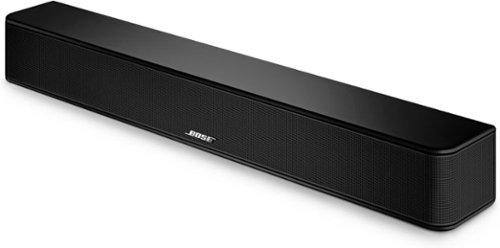
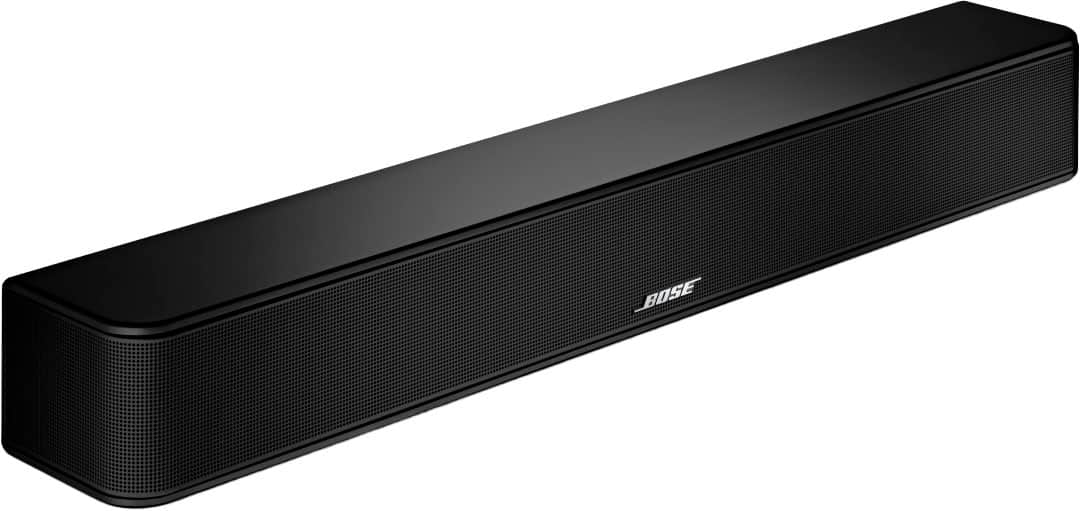
When your TV's built-in speakers sound like they're coming from a tin can, it's time for a soundbar. But choosing between options can feel overwhelming—especially when you're comparing products from completely different price tiers. Today, we're diving deep into two soundbars that represent opposite ends of the market: the premium Devialet Dione and the budget-friendly Bose Solo Soundbar Series 2.
These aren't really competitors in the traditional sense. One costs about ten times more than the other. But they both promise to solve the same fundamental problem: making your TV sound dramatically better. The question is whether you need a scalpel or a sledgehammer for the job.
Before we get into the nitty-gritty, let's talk about what soundbars actually do. Think of them as a horizontal row of speakers designed to sit below your TV. The basic idea is simple: instead of relying on your TV's tiny, downward-firing speakers, you get larger drivers (the actual speaker components) pointed directly at you.
But here's where things get interesting. Modern soundbars range from simple stereo boxes that just make things louder to sophisticated systems that create the illusion of speakers all around your room. The fancy ones use digital signal processing—essentially computer algorithms—to bounce sound off your walls and trick your brain into hearing effects coming from behind and above you.
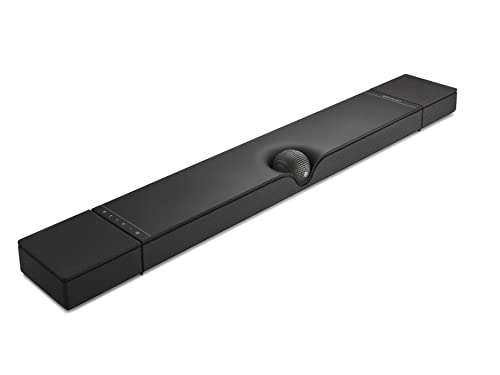
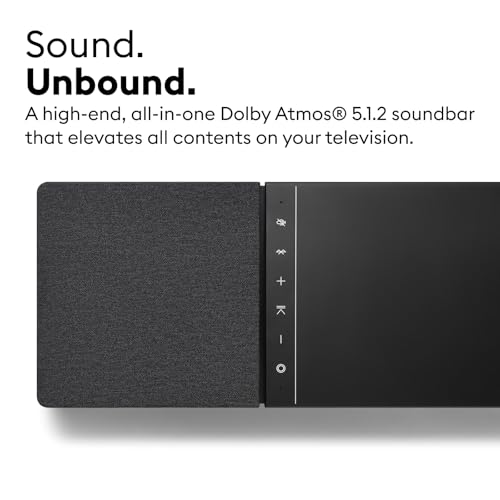
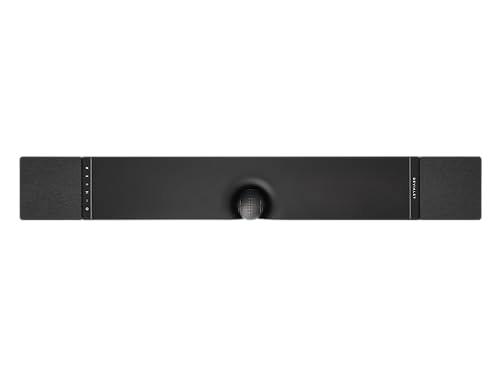
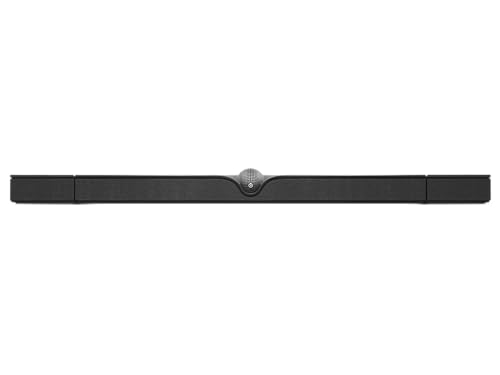
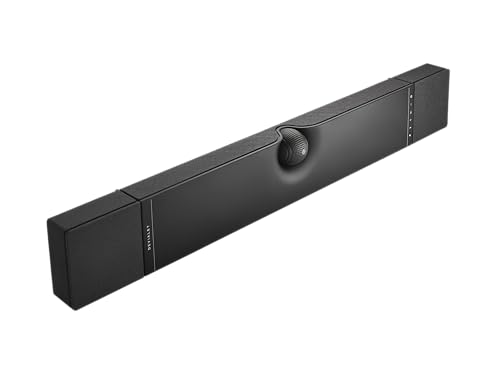
The Devialet Dione, released in 2022, represents the cutting edge of this technology. It's what audio engineers call a "5.1.2 system," meaning it simulates five speakers around you (front left, center, front right, surround left, surround right), one subwoofer for bass, and two height channels for overhead effects. All of this comes from a single bar packed with 17 individual drivers.
The Bose Solo Series 2, which hit the market around 2024, takes a much simpler approach. It's a basic stereo soundbar—just left and right channels—focused on making dialogue clearer and adding some basic bass punch. No surround sound tricks, no height effects, just better-than-TV audio at an accessible price point.
This is where the Devialet Dione shows why it costs what it does. Inside that sleek aluminum enclosure, you'll find nine full-range aluminum drivers handling mid and high frequencies, plus eight dedicated aluminum subwoofers in what Devialet calls a "push-push" configuration. This means pairs of woofers face each other and work in opposition, canceling out vibrations that would otherwise rattle the cabinet.
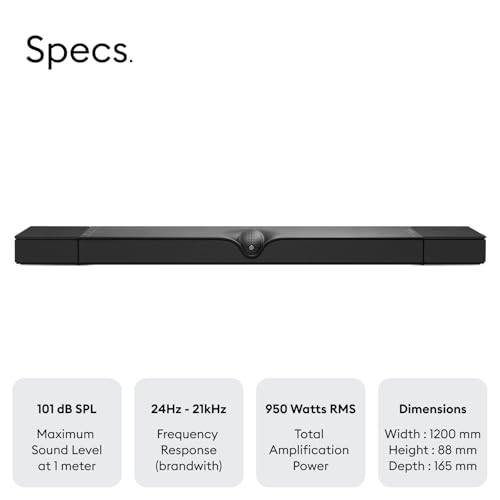
The result? The Dione can produce frequencies as low as 24 Hz—that's deep enough to rattle your chest during movie explosions. For context, most budget soundbars struggle to reproduce anything below 80 Hz effectively. Human hearing typically bottoms out around 20 Hz, so the Dione is getting close to the theoretical limit of what we can perceive.
The Bose Solo Series 2, by contrast, uses two full-range drivers in a much simpler stereo arrangement. There's no dedicated bass system, which means it relies on those small drivers to handle everything from deep bass to crisp highs. Physics dictates that this approach involves compromises—you can't ask a small driver to move lots of air for bass while also reproducing delicate high frequencies perfectly.
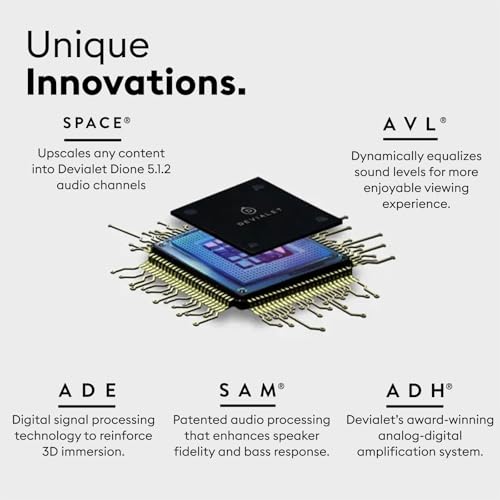
Here's where things get really interesting with the Devialet Dione. It runs something called the Devialet Intelligence Processor—essentially a specialized computer chip designed specifically for audio processing. This chip handles multiple proprietary technologies simultaneously.
SAM (Speaker Active Matching) technology continuously monitors what each driver is doing and corrects for any nonlinearities in real-time. Think of it as auto-correct for your speakers, ensuring that what comes out matches what was recorded as closely as possible. SPACE technology takes mono or stereo content and intelligently distributes it across all 17 drivers to create an immersive soundfield, even from sources that weren't originally recorded in surround sound.
The Bose Solo Series 2 keeps things much simpler. Its processing focuses on dialogue enhancement—boosting the frequency ranges where human voices live to make them easier to understand. There's also basic bass adjustment, but we're talking about simple equalization rather than the complex spatial processing happening in the Dione.
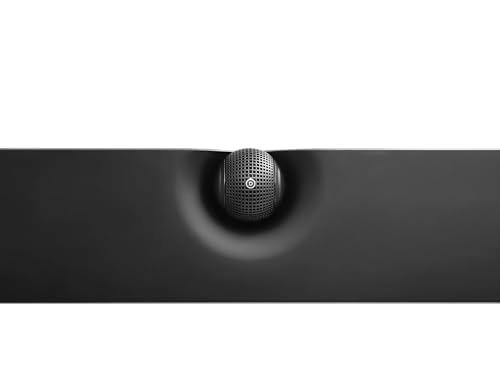
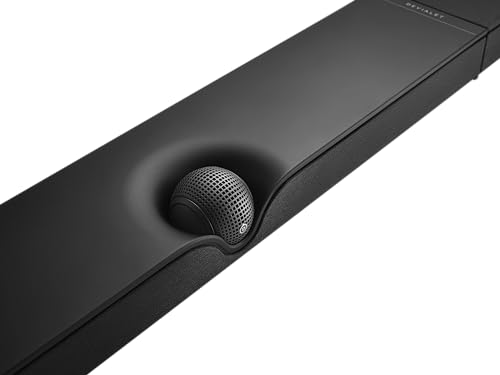
One of the Devialet Dione's most distinctive features is its ORB—a spherical center channel that can physically rotate 180 degrees. This isn't just for show. Whether you place the soundbar flat on a TV stand or mount it vertically on a wall, the ORB ensures the center channel (where most dialogue comes from) always points toward your listening position.
This level of mechanical and acoustic engineering is virtually unheard of in consumer audio products. It's the kind of detail that speaks to Devialet's audiophile heritage and helps explain the premium pricing.
Based on our research into professional measurements and user experiences, the bass performance difference between these soundbars is dramatic. The Devialet Dione doesn't just include bass—it delivers reference-quality low-end that rivals dedicated subwoofer systems.
Those eight built-in subwoofers can move serious air. Users consistently report being surprised by how much bass the Dione produces, with many saying it eliminates the need for a separate subwoofer entirely. This matters enormously for movies, where the low-frequency effects (explosions, engine rumbles, dinosaur footsteps) add physical impact to the experience.
The Bose Solo Series 2 can't compete here, and it doesn't try to. Its compact drivers can provide some bass enhancement compared to TV speakers, but don't expect to feel anything rumbling in your chest. For dialogue-heavy content like news or talk shows, this limitation doesn't matter much. For action movies, it's a significant compromise.
Interestingly, both soundbars excel at dialogue clarity, but through different approaches. The Dione uses its dedicated ORB center channel and sophisticated processing to create a stable, focused vocal image that remains clear even in complex movie mixes. The result is dialogue that seems to come directly from the screen, properly positioned within the soundstage.
The Bose Solo Series 2 achieves good dialogue clarity through its dedicated dialogue enhancement mode, which emphasizes the frequency ranges where human voices are most intelligible. While it lacks the spatial positioning of the Dione, it does make conversations significantly easier to follow compared to TV speakers.
For anyone who finds themselves constantly reaching for the remote to adjust volume during movies—turning it up for whispered dialogue, then down when the action kicks in—both of these soundbars will be revelatory, just at very different price points.
This is where the gap between these products becomes a chasm. The Devialet Dione creates a genuinely convincing surround sound experience from a single bar. Its ADE (Advanced Dimensional Experience) technology uses sophisticated beamforming—directing sound waves in specific patterns—to bounce audio off your room's walls and create the illusion of speakers behind and above you.
When watching a movie with proper Dolby Atmos mixing, the Dione can place individual sounds with startling precision. Rain seems to fall from overhead, helicopters track convincingly across the ceiling, and ambient effects surround you naturally. It's not identical to a full speaker system, but it's remarkably close.
The Bose Solo Series 2 doesn't attempt any surround sound processing. What you get is enhanced stereo—wider than TV speakers, but fundamentally still just left and right channels. This works fine for music and simple content, but movies with complex soundtracks will feel flat by comparison.
Setting up the Bose Solo Series 2 is refreshingly simple. Connect the included optical cable to your TV, plug in the power cord, and you're done. The compact design fits under virtually any TV, and at under four pounds, it won't stress your TV stand. The remote handles all necessary adjustments, and there are no complicated menus to navigate.
The Devialet Dione requires more consideration. At 26 pounds and nearly four feet wide, it's a substantial piece of equipment that needs proper support. However, once positioned, its room calibration system automatically measures your space's acoustics and optimizes the sound accordingly. This self-tuning capability means it adapts to different rooms and placements, something the Bose simply can't do.
Both soundbars can be wall-mounted, but the Dione's orientation-aware processing gives it a significant advantage. Mount it vertically, and it automatically adjusts its channel mapping and beamforming patterns to maintain proper surround sound imaging.
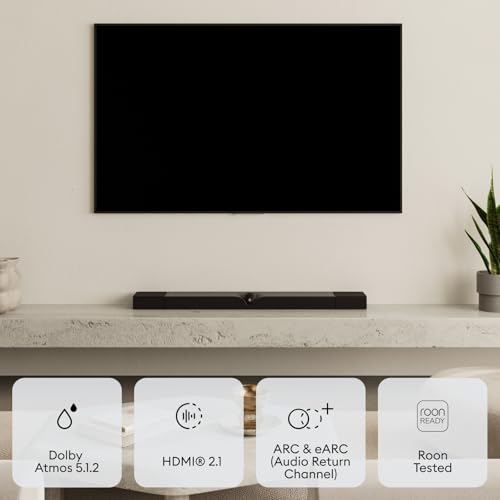
The Devialet Dione offers comprehensive connectivity with HDMI 2.1 eARC support, allowing high-bandwidth audio from modern TVs and sources. Its wireless capabilities include AirPlay 2, Bluetooth 5.0, and Spotify Connect, making it easy to stream music from any device. However, it notably lacks built-in voice assistants or multiroom capabilities.
The Bose Solo Series 2 keeps connectivity basic but functional. Optical and coaxial digital inputs handle TV connections, while Bluetooth allows wireless streaming from phones and tablets. There's no HDMI, which limits compatibility with some modern sources, but for basic TV enhancement, the included connections are adequate.
While both soundbars are designed primarily for TV enhancement, their music performance reveals interesting characteristics. The Devialet Dione shines here, thanks to its audiophile-grade components and sophisticated processing. Its flat frequency response and low distortion make it genuinely suitable for critical music listening.
The Dione's SPACE technology can create an enveloping experience from stereo music sources, though purists might prefer its dedicated music mode, which preserves the original stereo imaging. The built-in subwoofer array provides exceptional bass extension for music genres that demand it.
The Bose Solo Series 2 handles music adequately for casual listening, with the dialogue enhancement mode actually working well for vocal-heavy genres. However, the limited bass response and basic stereo imaging make it less engaging for music than for TV content.
At the time of writing, these products serve completely different market segments. The Bose Solo Series 2 typically costs under $300, making it an accessible upgrade for anyone frustrated with TV audio quality. It delivers exactly what budget-conscious buyers need: clearer dialogue, some bass enhancement, and reliable operation without complexity.
The Devialet Dione, priced in the multiple thousands, targets audio enthusiasts who view sound quality as a priority rather than an afterthought. Its cost approaches that of high-end separate audio systems, but it delivers comparable performance in a single, elegant package.
For most people, the Solo Series 2 represents outstanding value. It solves the primary problem—poor TV audio—without breaking the budget or requiring technical expertise. The Dione makes sense for those who consider audio quality essential to their entertainment experience and can justify the premium for reference-grade performance.
In a dedicated home theater setup, the Devialet Dione can serve as the foundation of a high-end system. Its room calibration and sophisticated processing make it suitable for larger spaces, while the 101 dB maximum output provides cinema-level dynamics. However, its lack of expandability means you're committed to the single-bar approach—there's no option to add rear speakers or upgrade components later.
The Bose Solo Series 2 works better as a stepping stone solution. It's perfect for someone testing whether improved audio enhances their viewing experience before potentially investing in a more comprehensive system. Its modest output and basic processing make it better suited to smaller rooms and casual viewing.
The decision between these soundbars ultimately comes down to your priorities and budget constraints. Choose the Bose Solo Series 2 if you want noticeably better TV audio without spending significantly or dealing with complexity. It's ideal for small to medium rooms, dialogue-heavy content, and anyone who prefers simple, reliable operation.
The Devialet Dione makes sense if audio quality is a genuine priority and you can justify the substantial investment. It's perfect for music lovers who also want exceptional movie sound, audiophiles seeking single-box convenience, or anyone who appreciates premium engineering and materials.
Consider your long-term plans too. The Solo Series 2 is an endpoint solution—what you buy is what you get. The Dione is also an endpoint, but a much more capable one that can grow with increasingly sophisticated content and higher-resolution sources.
Both soundbars will dramatically improve your TV audio experience compared to built-in speakers. The question is whether you want good enough or genuinely excellent, and whether the price difference justifies the performance gap for your specific needs and listening habits.
| Devialet Dione | Bose Solo Soundbar Series 2 |
|---|---|
| Audio Configuration - Determines surround sound capability and immersion level | |
| True 5.1.2 Dolby Atmos with height channels | Basic 2.0 stereo (left and right only) |
| Driver Array - More drivers typically mean better sound separation and power | |
| 17 custom drivers (9 full-range + 8 subwoofers) | 2 full-range drivers |
| Bass Extension - Critical for movie impact and music enjoyment | |
| 24Hz-21kHz with built-in subwoofer array | Limited bass response, no dedicated subwoofers |
| Power Output - Affects maximum volume and dynamic range | |
| 950W RMS amplification system | Not specified (typical entry-level power) |
| Processing Technology - Advanced features that enhance audio quality | |
| SAM®, SPACE®, ADE® with room calibration | Dialogue enhancement and basic bass adjustment |
| Connectivity Options - More options mean better integration with modern devices | |
| HDMI 2.1 eARC, Optical, AirPlay 2, Bluetooth 5.0, Wi-Fi, Ethernet | Optical, Coaxial, Bluetooth 4.0 (no HDMI) |
| Expandability - Whether you can add speakers or subwoofers later | |
| All-in-one design, cannot add external components | All-in-one design, cannot add external components |
| Physical Dimensions - Size affects placement options and room compatibility | |
| 47" wide, 26 lbs (substantial, needs strong TV stand) | 21.6" wide, 3.72 lbs (compact, fits under most TVs) |
| Setup Complexity - How easy it is to get optimal sound | |
| Automatic room calibration, orientation-aware mounting | Simple plug-and-play setup |
| Unique Features - Distinctive capabilities that set each product apart | |
| Rotating ORB center channel, push-push subwoofer design | Dialogue enhancement mode, ultra-compact form factor |
| Target Audience - Who each product is designed for | |
| Audiophiles and home theater enthusiasts | Budget-conscious users wanting basic TV audio improvement |
| Price Category - Helps set expectations for performance vs. cost | |
| Premium luxury tier (multiple thousands) | Budget-friendly tier (under $300) |
The Devialet Dione is significantly better for movies due to its true 5.1.2 Dolby Atmos system that creates immersive surround sound with height effects. The Bose Solo Series 2 only offers basic stereo enhancement, making it suitable for dialogue clarity but lacking the cinematic experience that action movies and blockbusters demand.
The primary difference is audio complexity and performance level. The Devialet Dione features 17 drivers with built-in subwoofers and advanced surround sound processing, while the Bose Solo Series 2 uses just 2 drivers in a simple stereo configuration focused on basic TV audio improvement.
The Devialet Dione has dramatically superior bass performance with eight dedicated aluminum subwoofers that extend down to 24Hz, eliminating the need for an external subwoofer. The Bose Solo Series 2 has limited bass capability from its small full-range drivers and cannot produce deep, impactful low frequencies.
Neither the Devialet Dione nor the Bose Solo Series 2 can be expanded with additional subwoofers or speakers. Both are designed as complete, all-in-one solutions, though the Dione's built-in subwoofer system makes external bass unnecessary.
The Bose Solo Series 2 is much easier to set up with simple plug-and-play operation using the included optical cable. The Devialet Dione requires more consideration for placement due to its size and weight, though it does feature automatic room calibration once positioned.
Only the Devialet Dione supports true Dolby Atmos with dedicated height channels and surround sound processing. The Bose Solo Series 2 does not support Dolby Atmos and is limited to basic stereo audio enhancement.
This depends on your budget and needs. The Bose Solo Series 2 offers excellent value for basic TV audio improvement at an affordable price point. The Devialet Dione provides exceptional audio quality and features but at a premium price that's only justified for serious audio enthusiasts.
Yes, both support Bluetooth connectivity, though with different capabilities. The Devialet Dione features Bluetooth 5.0 plus AirPlay 2 and Spotify Connect for high-quality wireless streaming. The Bose Solo Series 2 offers Bluetooth 4.0 for basic wireless audio streaming.
The Devialet Dione is significantly better for music with its audiophile-grade components, wide frequency response, and dedicated music mode that preserves stereo imaging. The Bose Solo Series 2 can handle casual music listening but lacks the bass extension and detail for serious music enjoyment.
The Devialet Dione includes HDMI 2.1 eARC for the best audio quality from modern TVs, though it also has optical input as backup. The Bose Solo Series 2 relies on optical and coaxial connections only and does not include HDMI inputs.
The Bose Solo Series 2 is better suited for small spaces due to its compact 22-inch width and simple setup requirements. The Devialet Dione is quite large at 47 inches wide and may overwhelm smaller rooms, though it does offer superior sound quality when space allows.
The Devialet Dione can effectively replace a traditional 5.1 speaker system for many users, offering comparable surround sound and bass performance from a single bar. The Bose Solo Series 2 is designed only to improve upon TV speakers and cannot replicate a full surround sound experience.
We've done our best to create useful and informative comparisons to help you decide what product to buy. Our research uses advanced automated methods to create this comparison and perfection is not possible - please contact us for corrections or questions. These are the sites we've researched in the creation of this article: rtings.com - crutchfield.com - devialet.com - ooberpad.com - bhphotovideo.com - kjwestone.co.uk - whathifi.com - devialet.com - devialet.com - sound-advice.online - kjwestone.co.uk - device.report - tmraudio.com - devialet.com - devialetchat.com - projectorscreen.com - soundandvision.com - bestbuy.com - youtube.com - av.com - audiofi.ca - devialet.com - blog.son-video.com - audioconnection.com.au - baybloorradio.com - cdn.abicart.com - smarthomesounds.co.uk - e-piphany.co.za - cloneyaudio.com - devialet.com - catalog.asbis.ee - av.com - soundandvision.com - youtube.com - comparisontabl.es - rtings.com - bose.com - bose.com - assets.bose.com - bestbuy.com - youtube.com - pistonheads.com - costco.com - googlenestcommunity.com - youtube.com - discussions.apple.com

Privacy Policy
Terms and Conditions - Affiliate Policy
Home Security
© Copyright 2008-2026.
11816 Inwood Rd #1211, Dallas, TX 75244