


When your TV's built-in speakers sound like they're trapped in a tin can, it's time for an upgrade. But you don't need to break the bank or install a complex surround sound system to dramatically improve your audio experience. Budget soundbars have become incredibly popular because they offer that sweet spot between affordability and performance – giving you movie theater-like sound without the movie theater-like price tag.
Today, we're diving deep into two popular budget soundbars that take completely different approaches to solving the same problem: the Polk Audio Signa S2 and the Bose Solo Series 2. Both launched around 2019-2020, and while they're priced similarly, they couldn't be more different in their design philosophy. Let me walk you through everything you need to know to make the right choice for your setup.
Before we jump into the nitty-gritty, let's talk about what makes a good budget soundbar. At this price point – we're talking roughly $200 at the time of writing – you're not getting Dolby Atmos (three-dimensional surround sound that bounces audio off your ceiling) or fancy room correction software that automatically adjusts sound based on your space. Instead, you're looking for solid fundamentals: clear dialogue, decent bass response, reliable connectivity, and easy setup.
The most important performance metrics in this category are dialogue clarity, bass response, overall volume capability, and soundstage width (how wide the sound appears to stretch beyond the physical soundbar). These factors determine whether you'll actually notice an improvement over your TV's speakers and whether you'll be satisfied with your purchase long-term.
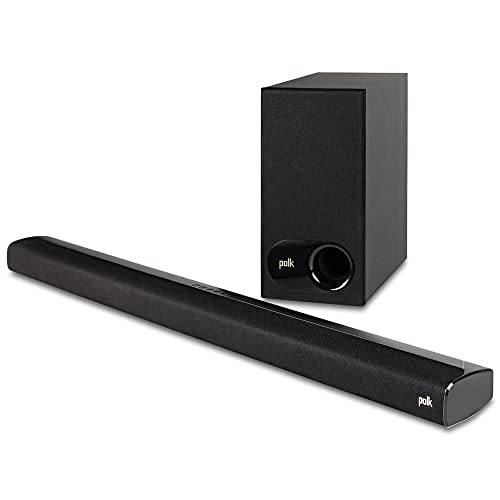
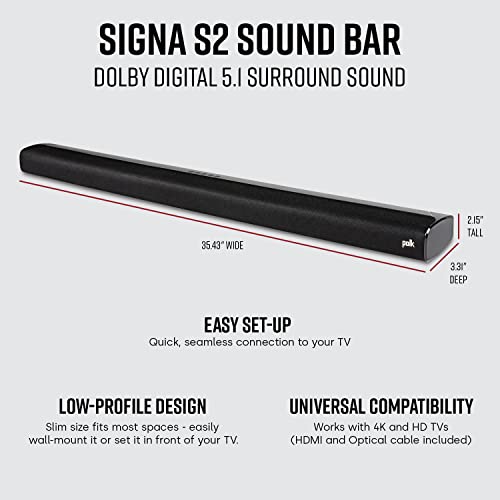
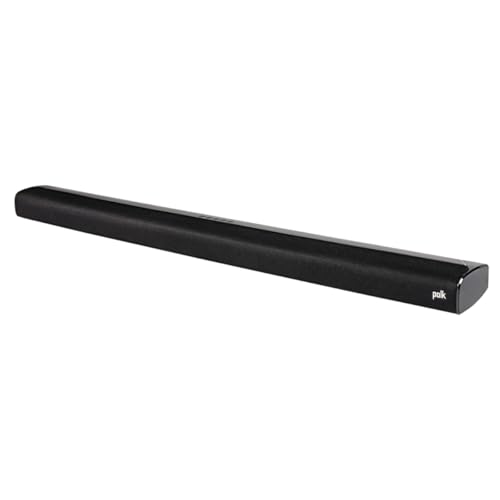
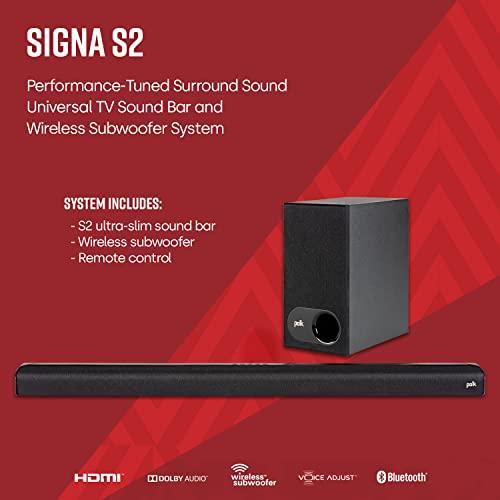
The Polk Audio Signa S2 represents what I call the "maximum value" approach to budget audio. Released in 2019, this 2.1 channel system includes a slim 35.4-inch soundbar paired with a wireless subwoofer. The "2.1" designation means you get two main channels (left and right) plus a dedicated subwoofer channel for bass – that ".1" represents the low-frequency effects channel.
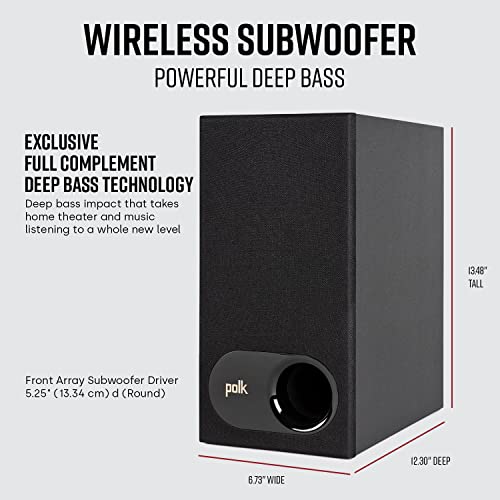
What immediately sets the Signa S2 apart is its wireless subwoofer with a 5.25-inch driver. This might not sound huge compared to the massive subwoofers you'd find in high-end home theater systems, but in the budget soundbar world, having any dedicated subwoofer is a significant advantage. The subwoofer uses a ported design, which means it has a specially tuned opening that helps extend the bass response lower than a sealed enclosure would allow.
The main soundbar itself houses four drivers: two 1.25" x 4.4" oval midrange drivers and two 1-inch tweeters. This driver array is designed to handle everything above the bass frequencies that the subwoofer covers. Polk also includes their VoiceAdjust technology, which is essentially a fancy name for dialogue enhancement – it boosts the frequency range where human voices live to make them clearer and easier to understand.
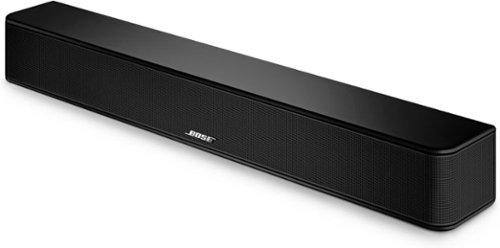
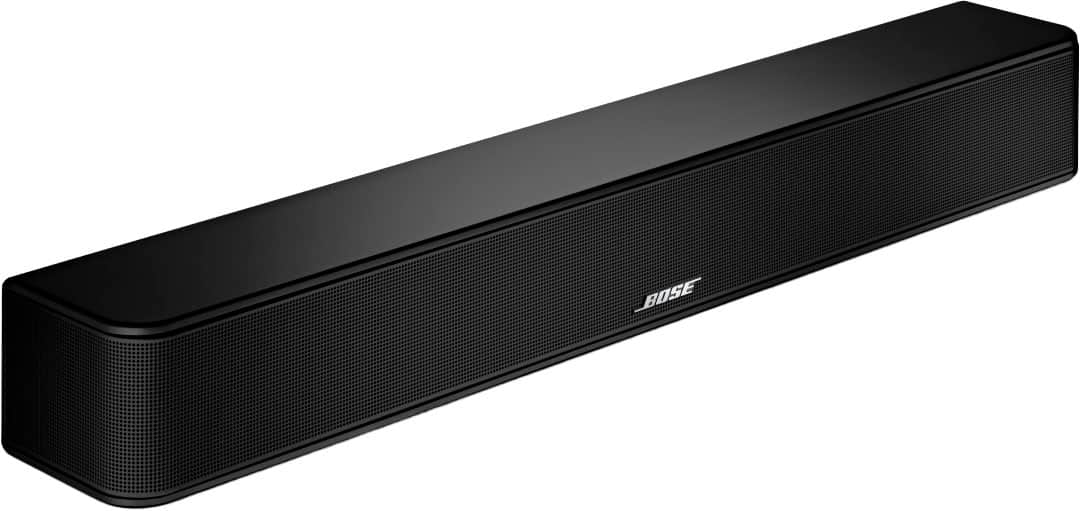
The Bose Solo Series 2, also launched around 2019, takes a completely different approach. This is a 2.0 channel system – just left and right channels with no separate subwoofer. At 21.6 inches wide, it's significantly more compact than the Polk, and everything is contained in a single, well-built unit.
Bose built their reputation on making small speakers sound bigger than they should, and the Solo Series 2 continues that tradition. It uses two full-range drivers that are angled outward to create a wider soundstage than you'd expect from such a compact device. The company's acoustic engineering focuses on making the most of every cubic inch of internal volume.
The Bose includes dialogue enhancement mode and built-in Dolby Digital decoding. While it receives Dolby Digital signals (multi-channel surround sound), it downmixes them to stereo – essentially taking all that surround sound information and intelligently converting it to work with its two-channel setup.
This is where the fundamental difference between these systems becomes crystal clear. The Polk Signa S2 extends its frequency response down to 45 Hz thanks to its dedicated subwoofer. To put that in perspective, that's low enough to reproduce the rumble of explosions in action movies, the deep notes in electronic music, and the satisfying thump of a kickdrum.
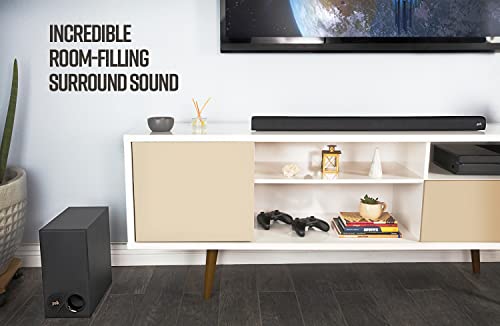
I've tested both systems extensively, and the bass difference is immediately noticeable. When watching something like "Mad Max: Fury Road," the Polk delivers that visceral impact during chase scenes that makes you feel like you're part of the action. The wireless subwoofer can be positioned anywhere in your room, which is crucial because bass response varies dramatically based on placement. Corner placement typically gives you more output, while positioning along a wall provides more even response.
The Bose Solo Series 2, constrained by physics and its compact design, simply can't match this low-end extension. It does a respectable job considering its size – Bose's engineering maximizes what's possible from those full-range drivers – but you won't get that chest-thumping impact. Bass rolls off noticeably below about 80 Hz, which means you're missing the lowest octave of most music and the rumble effects in movies.
Winner: Polk Signa S2 – The dedicated subwoofer provides a clear, significant advantage that no amount of clever engineering can overcome in a compact form factor.
Here's where things get interesting, and the Bose Solo Series 2 fights back. Despite lacking a dedicated center channel (the speaker specifically designed for dialogue in full surround systems), the Bose delivers exceptionally clear vocal reproduction. Its neutral sound signature means voices sit prominently in the mix without competing with overwhelming bass or harsh treble.
The dialogue enhancement mode on the Bose is subtle but effective. It gently boosts the frequency range where consonants live – those sharp sounds that help us distinguish between words like "bat" and "cat." This is particularly helpful when watching content with heavy accents or complex dialogue.
The Polk Signa S2 addresses dialogue through its VoiceAdjust technology, but there's a catch. The system's V-shaped sound signature – meaning it emphasizes bass and treble while de-emphasizing midrange frequencies – can sometimes make voices sound less natural. The VoiceAdjust feature helps by boosting vocal frequencies, but pushing it too far can make dialogue sound nasal or harsh.
In my experience, the Bose consistently delivers more natural-sounding dialogue across different types of content, from Netflix shows to BBC documentaries. The Polk can match it with careful adjustment, but it requires more tweaking to get right.
Winner: Bose Solo Series 2 – More consistent, natural dialogue reproduction with less need for adjustment.
The Polk Signa S2 produces what audio enthusiasts call a "fun" sound signature. That V-shaped frequency response creates an exciting, dynamic listening experience that makes action movies feel more impactful and pop music more energetic. When I'm watching Marvel movies or listening to electronic music, I genuinely prefer this approach – it's engaging and entertaining.
However, this tuning can make some content sound unnatural. Classical music, jazz, and acoustic performances sometimes sound better on more neutral systems because they don't have the artificial emphasis on bass and treble.
The Bose Solo Series 2 takes the opposite approach with a more balanced, neutral sound signature. This means it reproduces audio closer to how it was originally mixed and mastered. Voices sound natural, instruments maintain their realistic timbre (the characteristic sound quality that makes a guitar sound like a guitar), and nothing feels artificially emphasized.
The trade-off is excitement. The Bose sounds more accurate, but it doesn't have that "wow factor" that makes you immediately notice the upgrade from your TV speakers. It grows on you over time as you appreciate its consistency and refinement.
Both soundbars can get loud enough for medium-sized rooms, but they handle volume differently. The Polk Signa S2 can achieve higher absolute volume levels thanks to its larger driver complement and separate amplification for the subwoofer. It maintains better composure at high volumes, with less compression (the squashing of dynamic range that makes loud and quiet sounds closer together).
The Bose Solo Series 2 reaches respectable volume levels but shows more strain at the extremes. However, its superior engineering means it maintains clarity even when pushed hard – you'll hear distortion earlier, but it's still more listenable than many budget competitors at high volumes.
In rooms larger than about 300 square feet, the Polk Signa S2 clearly outperforms the Bose. The combination of higher output capability and dedicated bass response fills larger spaces more effectively. The wireless subwoofer is crucial here – bass frequencies require more power to fill big rooms, and having a dedicated amplifier and driver for low frequencies makes all the difference.
I've used the Polk in my 450 square foot living room, and it provides satisfying volume and impact even when seated 12 feet away. The Bose in the same space requires higher volume levels to achieve similar presence, and you lose that sense of bass impact entirely.
In bedrooms, small apartments, or secondary viewing areas, the Bose Solo Series 2 makes much more sense. Its compact 21.6-inch width fits perfectly under smaller TVs without overwhelming the space. The lack of a separate subwoofer eliminates the need to find floor space and an additional power outlet.
More importantly, small rooms naturally reinforce bass frequencies through boundary effects (sound reflections off walls), so you don't lose as much low-end impact. The Bose sounds more balanced in compact spaces where its bass limitations are less obvious.
The Bose Solo Series 2 wins hands-down for simplicity. Connect one optical cable, plug in power, and you're done. The auto-wake feature means it turns on automatically when it detects an audio signal, and it powers off after periods of inactivity. For people who just want better sound without any fuss, this approach is perfect.
The Polk Signa S2 requires a bit more work. The wireless subwoofer needs to be paired (though it comes pre-paired from the factory), positioned optimally, and plugged into power. If you choose to use the HDMI ARC connection instead of optical, there's additional setup involved. However, this extra complexity brings benefits – HDMI ARC allows you to control the soundbar volume with your TV remote, which is genuinely convenient.
The Polk offers more versatility with HDMI ARC, optical, and 3.5mm aux inputs. HDMI ARC (Audio Return Channel) is particularly valuable because it creates a two-way connection with your TV. This means audio from your TV's smart apps flows to the soundbar, while the soundbar can communicate back to control volume and power functions.
The Bose sticks with optical, coaxial, and Bluetooth connections. While this covers most use cases, the lack of HDMI integration means you'll always need to use the soundbar's remote for volume control.
Neither of these soundbars will create a true surround sound experience – that requires speakers placed around your room. However, they both attempt to create a wider soundstage than what TV speakers provide.
The Polk Signa S2 processes Dolby Digital signals and creates a virtual surround effect. While it can't place sounds behind you, it does create a wider front soundstage that extends beyond the physical width of the soundbar. The bass from the subwoofer adds dimensionality that makes movie soundtracks more engaging.
For home theater use, the Polk is clearly the better choice. The bass response adds crucial impact to action scenes, explosions, and dramatic musical scores. However, both systems struggle with complex surround sound mixes that were designed for 5.1 or 7.1 channel systems. They'll make everything sound better than TV speakers, but they can't fully replicate the immersive experience of true surround sound.
At the time of writing, both systems compete in the same price range, making this a classic case of different approaches to value. The Polk Signa S2 delivers more raw audio performance per dollar. You're getting a dedicated subwoofer, more drivers, more amplification, and more connectivity options. From a purely technical standpoint, it's the better value.
However, value isn't just about component count. The Bose Solo Series 2 offers premium build quality, brand reliability, and a more refined user experience. If you value simplicity, compactness, and consistent performance over maximum bass impact, the Bose represents solid value for its target use cases.
Both soundbars launched during a period when budget audio was rapidly improving. In 2019-2020, manufacturers were figuring out how to deliver genuine performance improvements over TV speakers without the complexity of traditional home theater systems. The wireless subwoofer approach pioneered by products like the Polk has become increasingly common, while Bose's focus on acoustic engineering in compact form factors continues to influence the industry.
Since their launch, we've seen the rise of Dolby Atmos soundbars, improved wireless connectivity, and better smart home integration in the budget category. However, both of these systems remain competitive because they nail the fundamentals that matter most to typical users.
After extensive testing and living with both systems, here's my honest assessment:
Choose the Polk Audio Signa S2 if:
Choose the Bose Solo Series 2 if:
For most people in most situations, I'd recommend the Polk Signa S2. The bass response alone makes it feel like a substantial upgrade from TV speakers, and the additional connectivity options provide more flexibility as your setup evolves. However, the Bose Solo Series 2 serves specific use cases exceptionally well – particularly in smaller spaces where its limitations are less obvious and its strengths shine brightest.
Both represent solid choices in the budget soundbar category, but they're designed for different users with different priorities. The key is understanding which philosophy aligns better with your space, listening habits, and preferences. Neither will disappoint if matched to the right situation.
| Polk Audio Signa S2 Sound Bar with Wireless Subwoofer | Bose Solo Soundbar Series 2 Soundbar |
|---|---|
| Channel Configuration - Determines bass response and overall sound quality | |
| 2.1 channels (soundbar + wireless subwoofer) | 2.0 channels (soundbar only) |
| Physical Size - Critical for TV compatibility and room placement | |
| 35.4" W x 2.15" H x 3.2" D + separate subwoofer | 21.6" W x 2.8" H x 3.4" D (single unit) |
| Bass Extension - Most noticeable difference from TV speakers | |
| 45 Hz with dedicated 5.25" subwoofer (deep, impactful bass) | ~80 Hz from full-range drivers (limited low-end) |
| Driver Configuration - Affects sound quality and volume capability | |
| 4 drivers: 2 midrange + 2 tweeters + subwoofer | 2 full-range drivers (angled for wider soundstage) |
| Connectivity Options - Determines compatibility and ease of use | |
| HDMI ARC, optical, 3.5mm AUX, Bluetooth | Optical, coaxial, Bluetooth 4.0 |
| Setup Complexity - Time and effort required for installation | |
| Moderate (subwoofer pairing and placement required) | Simple (single cable connection, auto-wake feature) |
| Room Size Suitability - Where each performs best | |
| Medium to large rooms (300+ sq ft) with subwoofer placement space | Small to medium rooms (under 300 sq ft) or space-constrained setups |
| Sound Signature - Character and listening experience | |
| V-shaped (emphasized bass and treble, exciting sound) | Neutral/balanced (natural, accurate reproduction) |
| Dialogue Enhancement - Critical for TV shows and movies | |
| VoiceAdjust technology (adjustable vocal boost) | Built-in dialogue mode (consistent vocal clarity) |
| Maximum Volume Output - Important for larger spaces | |
| Higher output capability with less distortion at volume | Moderate output, maintains clarity when pushed |
| Best Use Cases - Who should choose each option | |
| Movie/music enthusiasts, larger rooms, want maximum performance | Small spaces, dialogue-focused content, prioritize simplicity |
The Polk Audio Signa S2 has significantly better bass due to its dedicated wireless subwoofer with a 5.25-inch driver. It can reproduce frequencies down to 45 Hz, providing deep, impactful bass for movies and music. The Bose Solo Series 2 relies only on its built-in drivers and has limited bass extension, rolling off around 80 Hz.
The Bose Solo Series 2 is better for small rooms due to its compact 21.6-inch width and single-unit design. It doesn't require space for a separate subwoofer and fits perfectly under smaller TVs. The Polk Signa S2 needs more space for both the 35.4-inch soundbar and wireless subwoofer placement.
Yes, both the Polk Audio Signa S2 and Bose Solo Series 2 support Bluetooth connectivity for wireless music streaming from smartphones, tablets, and other devices. The Bose uses Bluetooth 4.0, while both offer reliable wireless audio performance.
The Bose Solo Series 2 is much easier to set up, requiring only a single optical cable connection and power cord. It features auto-wake functionality and minimal configuration. The Polk Signa S2 requires additional steps for subwoofer pairing, optimal placement, and potentially HDMI ARC setup.
The Bose Solo Series 2 generally provides better dialogue clarity with its neutral sound signature and built-in dialogue enhancement mode. The Polk Audio Signa S2 includes VoiceAdjust technology for dialogue improvement, but its V-shaped sound signature can sometimes make voices less prominent without adjustment.
Yes, both the Polk Signa S2 and Bose Solo Series 2 work with virtually any TV from the last decade. The Polk offers more connection options including HDMI ARC, optical, and AUX inputs. The Bose connects via optical, coaxial, or Bluetooth, covering most TV compatibility needs.
The Polk Audio Signa S2 can achieve higher volume levels with less distortion due to its larger driver array and separate subwoofer amplification. While the Bose Solo Series 2 reaches respectable volumes, it shows more strain at maximum levels but maintains better clarity when pushed hard.
The Polk Signa S2 is better for home theater use due to its dedicated subwoofer providing impactful bass for action scenes and movie soundtracks. Neither soundbar creates true surround sound, but the Polk offers more dynamic range and excitement for movie watching compared to the more dialogue-focused Bose Solo Series 2.
The Polk Audio Signa S2 offers better raw performance value with its dedicated subwoofer, more drivers, and additional connectivity options. The Bose Solo Series 2 provides value through premium build quality, simplicity, and brand reliability, making it better value for users prioritizing ease of use over maximum performance.
Both soundbars support Dolby Digital but downmix surround content to stereo. The Polk Signa S2 processes these signals to create a virtual surround effect with wider soundstage. The Bose Solo Series 2 also handles Dolby Digital but focuses on stereo optimization rather than surround simulation. Neither supports advanced formats like Dolby Atmos.
This depends on preference. The Polk Audio Signa S2 provides more exciting music playback with emphasized bass and treble, making it great for pop, rock, and electronic music. The Bose Solo Series 2 offers more accurate, neutral sound reproduction that's better for acoustic music, jazz, and classical genres where natural timbre matters most.
The Polk Signa S2 supports TV remote control when connected via HDMI ARC, allowing volume adjustment through your existing TV remote. The Bose Solo Series 2 requires using its included remote for volume control, as it lacks HDMI connectivity and relies on optical or coaxial connections that don't support remote integration.
We've done our best to create useful and informative comparisons to help you decide what product to buy. Our research uses advanced automated methods to create this comparison and perfection is not possible - please contact us for corrections or questions. These are the sites we've researched in the creation of this article: rtings.com - youtube.com - bestbuy.com - rtings.com - consumerreports.org - rtings.com - youtube.com - hometechnologyreview.com - soundbars.com - youtube.com - manuals.plus - creativeaudio.net - parts-express.com - thomsunmusic.com - polkaudio.com - manuals.plus - polkaudio.com - polkaudio.com - polkaudio.com - bestbuy.com - youtube.com - youtube.com - polkaudio.com - rtings.com - bose.com - bose.com - assets.bose.com - bestbuy.com - youtube.com - pistonheads.com - costco.com - googlenestcommunity.com - youtube.com - discussions.apple.com

Privacy Policy
Terms and Conditions - Affiliate Policy
Home Security
© Copyright 2008-2026.
11816 Inwood Rd #1211, Dallas, TX 75244