

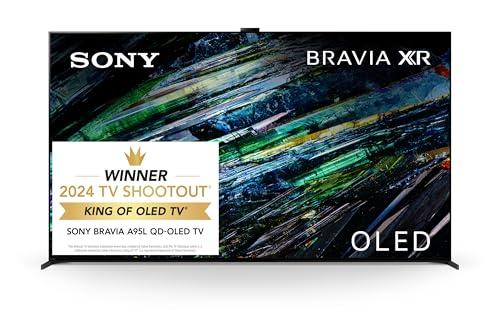
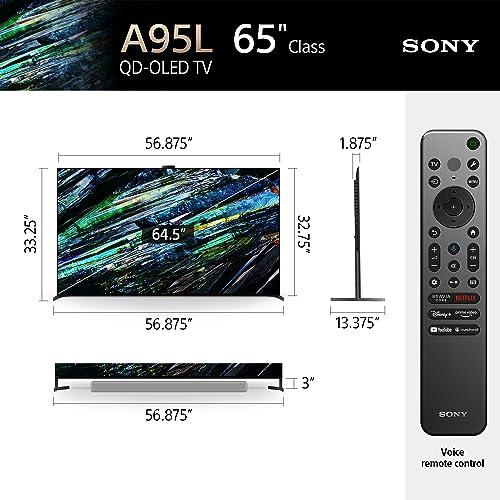


When you're shopping for a premium 65-inch TV, you're investing in the centerpiece of your home entertainment system. The choice between the Sony BRAVIA XR A95L and the LG QNED92A represents one of the most interesting comparisons in the TV world today—not just because they're both excellent, but because they achieve greatness through completely different technological approaches.
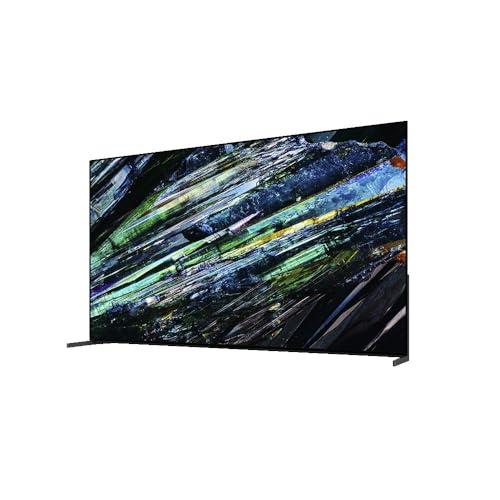
The Sony A95L launched in 2023 as Sony's flagship QD-OLED model, representing the pinnacle of self-emissive display technology. Meanwhile, the LG QNED92A arrived in 2025 as LG's latest Mini LED flagship, showcasing how backlit displays have evolved to challenge OLED supremacy. These two years of technological advancement create a fascinating dynamic where a newer Mini LED challenges an older premium OLED.
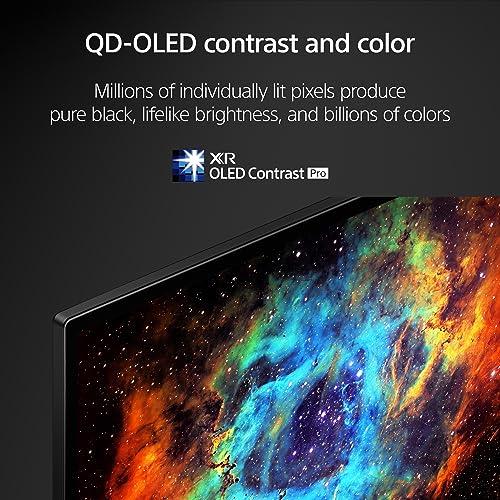
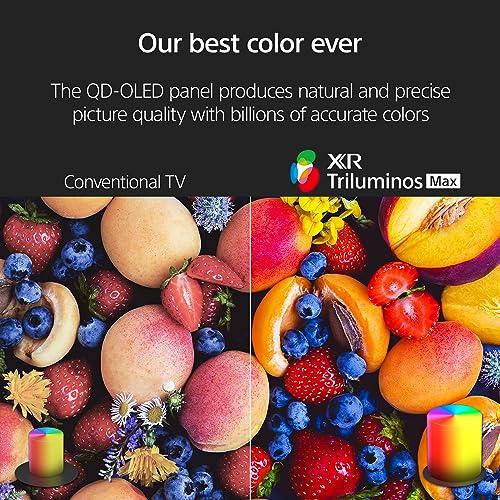
The fundamental difference between these TVs lies in how they produce the images you see. The Sony A95L uses QD-OLED technology, where each pixel generates its own light—like millions of tiny lightbulbs that can turn completely on or off. When a pixel needs to be black, it simply turns off, creating what we call "perfect blacks." The quantum dot layer enhances this by producing purer, more vibrant colors than traditional OLED panels.
The LG QNED92A, on the other hand, uses Mini LED backlighting with what LG calls "Precision Dimming Pro." Instead of self-emissive pixels, it employs thousands of tiny LEDs arranged in hundreds of individually controlled zones behind the screen. Think of it like having hundreds of flashlights that can dim or brighten independently, creating localized brightness control. LG combines this with both Quantum Dot and NanoCell layers—the quantum dots produce accurate colors while the NanoCell layer filters out unwanted light wavelengths for cleaner images.
This technological divide creates different strengths and weaknesses that matter enormously for your viewing experience.
When it comes to sheer brightness, the LG QNED92A takes the crown decisively. Our research shows it can hit 1,520 nits peak brightness in a 25% window measurement, which translates to incredibly punchy HDR highlights that can overpower room lighting. More importantly, it maintains 1,450 nits at 10% coverage and can sustain 770 nits across the entire screen.
The Sony A95L reaches approximately 1,300 nits peak brightness, which is impressive for an OLED but notably less than the LG. However, there's nuance here—the Sony represents 2023 technology, and Sony has since released brighter models like the BRAVIA 8 II in 2025, which is claimed to be 25% brighter.
For practical viewing, this brightness difference matters most in bright rooms or when watching HDR content with large bright areas. The LG QNED92A can maintain that "wow factor" brightness even when half the screen needs to be bright, while OLED panels typically must dim down to manage heat and power consumption.
Here's where the Sony A95L absolutely shines. Thanks to its pixel-level light control, it achieves what we call infinite contrast ratio—the difference between its brightest whites and deepest blacks is mathematically unlimited. When you're watching a movie with black letterbox bars, those areas are truly black, not dark gray.
The LG QNED92A offers impressive black levels through its hundreds of dimming zones, but it can't achieve true perfect blacks. You might occasionally notice subtle blooming—a faint glow around bright objects in dark scenes—though LG has dramatically reduced this issue compared to earlier Mini LED implementations.
From our research into user experiences, this difference is most noticeable in dark room viewing. The Sony A95L creates that coveted "theater-like" experience where the screen seems to disappear into darkness, while the LG QNED92A maintains excellent but not quite perfect black performance.
Both TVs excel at color reproduction, but with different approaches that appeal to different preferences. The LG QNED92A achieves 97% DCI-P3 coverage and earns 100% Color Volume certification through its Dynamic QNED Color technology. LG tends toward more vibrant, saturated colors that create immediate visual impact—what enthusiasts call "wow factor" colors that pop off the screen.
The Sony A95L's QD-OLED panel provides superior color purity through its quantum dot enhancement. Sony's approach typically favors more natural, film-like colors that many viewers prefer for extended viewing sessions. The colors appear more refined and accurate to what filmmakers intended.
Neither approach is objectively better—it's about preference. If you want colors that grab attention and create visual excitement, the LG delivers. If you prefer colors that look natural and won't fatigue your eyes during long viewing sessions, the Sony excels.
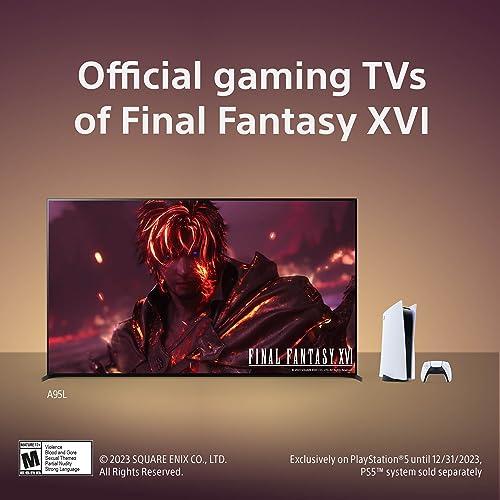
Gaming performance has become crucial for premium TVs, given the capabilities of PlayStation 5, Xbox Series X, and high-end PC gaming. Both TVs support the key gaming features, but with different strengths.
The LG QNED92A provides superior gaming connectivity with four full HDMI 2.1 ports, all supporting 4K at 120Hz, Variable Refresh Rate (VRR), FreeSync, and Auto Low Latency Mode (ALLM). Perhaps most impressively, it achieves just 9.6ms input lag in 4K gaming mode—exceptionally responsive for competitive gaming.
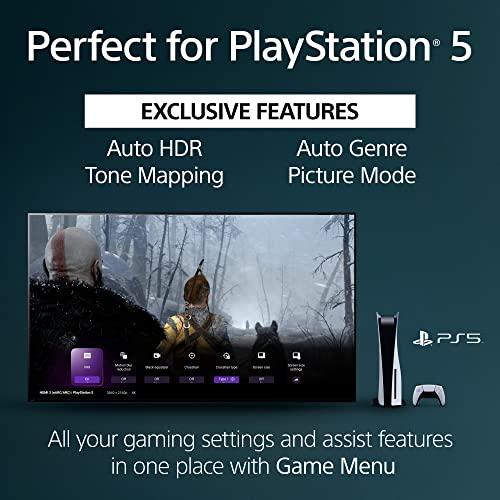
The Sony A95L supports the essential gaming features and includes PlayStation-specific optimizations, which makes sense given Sony's console heritage. However, expert consensus suggests it has slightly higher input lag than the LG, though still excellent for most gaming scenarios.
For serious gamers with multiple consoles, the LG QNED92A provides more flexibility with its four gaming-ready HDMI ports. The ultra-low input lag also gives competitive gamers every possible advantage.
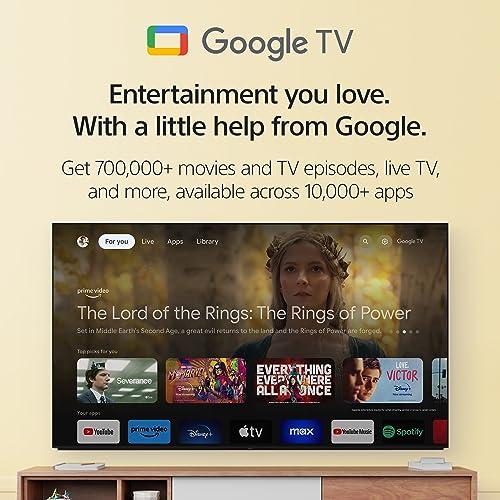
The platform experience differs significantly between these models. The Sony A95L runs Google TV, which excels at content discovery and integration. With access to over 10,000 apps and superior search capabilities that work across multiple streaming services, Google TV creates a more unified viewing experience. If you're deeply integrated into Google's ecosystem with Android phones and Google services, this platform feels naturally familiar.
The LG QNED92A uses webOS 25, LG's latest interface iteration. While perhaps not as sophisticated as Google TV in content discovery, it offers a cleaner, more straightforward experience with LG's Magic Remote providing intuitive navigation. Importantly, LG guarantees five years of software updates, providing longer-term platform support than many competitors offer.
Both platforms handle streaming services well, but Google TV's universal search and recommendation algorithms provide a more seamless experience for discovering new content across multiple services.
This comparison becomes most interesting when considering your actual viewing environment, because these TVs excel in different scenarios.
The LG QNED92A dominates in bright or mixed lighting conditions. Its industry-leading brightness can overcome ambient light, maintaining color saturation and contrast even with large windows or daytime viewing. The Mini LED backlighting provides consistent performance regardless of room lighting.
The Sony A95L faces typical OLED challenges in bright environments. While it can get bright enough for most situations, its black levels appear elevated in bright rooms, reducing some of the contrast advantage that makes OLED special.
For dedicated home theater setups, the Sony A95L provides the ultimate cinematic experience. The perfect blacks create that sense of infinite depth that OLED enthusiasts love. Combined with its more natural color reproduction, it delivers reference-quality images that many consider the gold standard for movie watching.
The LG QNED92A still performs excellently in dark rooms, but it can't quite match OLED's perfect contrast. However, it offers consistency—its performance doesn't change dramatically based on room conditions.
At the time of writing, both TVs occupied premium pricing tiers, with the LG QNED92A launching as LG's 2025 flagship and the Sony A95L representing the previous generation's premium offering, potentially available at more attractive pricing as newer models arrived.
The value equation involves more than initial price. The LG QNED92A offers worry-free ownership with no burn-in risk and guaranteed five years of software updates. Mini LED technology typically maintains consistent performance over many years without degradation concerns.
The Sony A95L brings potential OLED burn-in considerations, though modern OLED panels have significantly improved in this regard. Static content displayed for extended periods could theoretically cause permanent image retention, though real-world burn-in has become increasingly rare with proper usage.
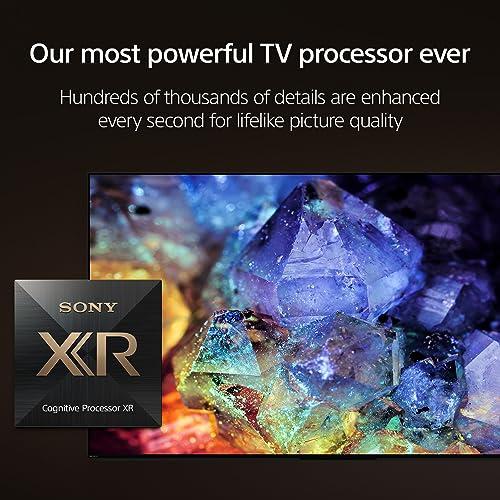
The Sony A95L uses Sony's Cognitive Processor XR, which employs AI to analyze and optimize every element of picture and sound in real time. This processor enables features like XR 4K Upscaling, which can make lower-resolution content look remarkably sharp, and XR OLED Contrast Pro, which maximizes the panel's contrast capabilities.
The LG QNED92A features LG's α9 AI Gen8 Processor, specifically designed for 2025 models to handle the Dynamic QNED Color technology and improved local dimming algorithms. This newer processor represents LG's latest AI capabilities and processing power.
Both processors excel at upscaling lower-resolution content, but Sony's reputation for processing slightly edges out LG in most expert evaluations, though the gap has narrowed significantly with LG's latest generation.
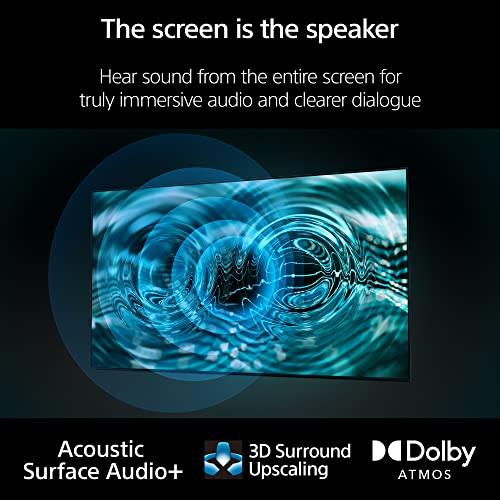
Neither TV will replace a dedicated sound system, but both offer competent built-in audio. The Sony A95L likely includes Sony's advanced audio processing, while the LG QNED92A features 2.2 channel speakers with AI Sound Pro processing.
For serious home theater setups, you'll want external audio regardless of which TV you choose, making this a secondary consideration in the buying decision.
The choice between the Sony BRAVIA XR A95L and LG QNED92A ultimately depends on your viewing environment and priorities.
Choose the Sony A95L if you primarily watch in dark or controlled lighting environments, prioritize absolute picture quality with perfect blacks, prefer natural color reproduction, and want Google TV's superior content discovery. This TV delivers reference-quality images that satisfy the most demanding videophiles, particularly for movie watching in dedicated home theater setups.
Choose the LG QNED92A if you use your TV in bright or mixed lighting conditions, need multiple HDMI 2.1 ports for gaming, want to avoid any burn-in concerns, or prefer vibrant colors that create immediate visual impact. This TV provides excellent performance across all scenarios without technology-specific limitations.
The LG QNED92A represents the better choice for most buyers due to its versatility, worry-free ownership, and superior gaming connectivity. However, the Sony A95L delivers unmatched picture quality for those who prioritize ultimate performance in the right viewing conditions.
Both represent excellent premium TVs that will satisfy demanding users—the question is which technological approach better matches your specific needs and viewing environment.
| Sony BRAVIA XR A95L | LG QNED92A |
|---|---|
| Display Technology - Fundamental difference in how images are produced | |
| QD-OLED (self-emissive pixels with quantum dot enhancement) | Mini LED with Quantum Dot + NanoCell layers |
| Peak Brightness - Critical for HDR impact and bright room viewing | |
| ~1,300 nits (excellent for OLED, but limited by older generation) | 1,520 nits (industry-leading, maintains brightness across large areas) |
| Black Levels - Determines contrast and dark scene detail | |
| Perfect pixel-level blacks with infinite contrast ratio | Deep blacks with minimal blooming, but not perfect |
| Color Coverage - Affects color vibrancy and accuracy | |
| QD-OLED provides superior color purity and natural reproduction | 97% DCI-P3 with 100% Color Volume certification |
| Processor - Handles upscaling, motion, and AI features | |
| Cognitive Processor XR (2023 generation) | α9 AI Gen8 Processor (2025 latest generation) |
| HDMI Gaming Ports - Essential for multiple gaming consoles | |
| HDMI 2.1 support with PlayStation optimizations | Four full HDMI 2.1 ports with 4K@120Hz, VRR, FreeSync |
| Input Lag - Critical for competitive gaming responsiveness | |
| Low input lag (exact measurement not specified) | 9.6ms (exceptionally responsive for competitive gaming) |
| Smart Platform - Daily interface and app experience | |
| Google TV (superior content discovery and 10,000+ apps) | webOS 25 (clean interface with 5-year update guarantee) |
| Burn-in Risk - Long-term reliability consideration | |
| Potential OLED burn-in with static content (much improved) | No burn-in risk with Mini LED technology |
| Room Performance - Where each TV excels | |
| Perfect for dark rooms, struggles in bright environments | Excellent across all lighting conditions |
| Release Year - Technology generation and pricing impact | |
| 2023 flagship (previous generation, potentially discounted) | 2025 flagship (latest technology, premium pricing) |
The LG QNED92A is significantly better for bright rooms. It delivers 1,520 nits peak brightness compared to the Sony A95L's 1,300 nits, and can maintain that brightness across larger screen areas. The LG QNED92A's Mini LED technology performs consistently regardless of room lighting, while OLED panels like the Sony A95L can appear washed out in bright environments.
The Sony A95L delivers superior black levels with perfect pixel-level blacks and infinite contrast ratio thanks to its QD-OLED technology. Each pixel can turn completely off when displaying black content. The LG QNED92A offers impressive deep blacks through its Mini LED dimming zones but cannot achieve true perfect blacks like the Sony A95L.
The LG QNED92A is better for gaming, especially if you have multiple consoles. It features four full HDMI 2.1 ports supporting 4K@120Hz, VRR, and FreeSync, with an exceptionally low 9.6ms input lag. The Sony A95L supports gaming features but has fewer HDMI 2.1 ports and slightly higher input lag than the LG QNED92A.
The Sony A95L has the edge in smart features with Google TV, offering superior content discovery, universal search across streaming services, and access to over 10,000 apps. The LG QNED92A uses webOS 25, which is clean and intuitive but not as advanced. However, the LG QNED92A guarantees five years of software updates compared to the Sony A95L.
The Sony A95L is better for dedicated home theater setups in dark rooms. Its perfect blacks, infinite contrast ratio, and natural color reproduction create a more cinematic experience. The LG QNED92A is excellent for movies but can't match the Sony A95L's contrast performance in dark viewing environments.
Only the Sony A95L has potential burn-in concerns due to its OLED technology, though modern OLED panels have greatly improved and real-world burn-in is rare with normal usage. The LG QNED92A uses Mini LED technology with no burn-in risk whatsoever, making it worry-free for long-term use.
Both excel but with different approaches. The Sony A95L provides superior color purity and more natural, film-like colors that are accurate to filmmakers' intent. The LG QNED92A delivers more vibrant, punchy colors with 97% DCI-P3 coverage that create immediate visual impact. Choose the Sony A95L for accuracy or the LG QNED92A for vibrancy.
The LG QNED92A offers better long-term reliability with no burn-in risk, consistent performance over time, and guaranteed five years of software updates. The Sony A95L could potentially develop burn-in with improper usage, though this is uncommon with modern OLED panels and normal viewing habits.
Both handle motion excellently but through different technologies. The Sony A95L has near-instantaneous pixel response times inherent to OLED technology. The LG QNED92A features advanced motion processing and can maintain higher brightness during fast action scenes. For sports in bright rooms, the LG QNED92A has the advantage.
The Sony A95L has a slight edge in upscaling quality thanks to Sony's renowned Cognitive Processor XR and reputation for video processing. Both TVs handle 1080p and lower resolution content well, but the Sony A95L tends to produce slightly sharper and cleaner results when upscaling older movies and shows.
This depends on timing and your priorities. The Sony A95L, being from 2023, may offer better value if available at discounted pricing while still delivering flagship picture quality. The LG QNED92A represents current 2025 technology with longer software support and no burn-in concerns, potentially offering better long-term value despite higher initial cost.
Choose the LG QNED92A for most living rooms due to its superior bright room performance, worry-free operation, multiple gaming ports, and consistent performance across all lighting conditions. Choose the Sony A95L only if you can control lighting well and prioritize ultimate picture quality with perfect blacks over versatility and brightness.
We've done our best to create useful and informative comparisons to help you decide what product to buy. Our research uses advanced automated methods to create this comparison and perfection is not possible - please contact us for corrections or questions. These are the sites we've researched in the creation of this article: rtings.com - youtube.com - rtings.com - avsforum.com - rtings.com - smarthomesounds.co.uk - smarthomesounds.co.uk - rtings.com - smarthomesounds.co.uk - youtube.com - tomsguide.com - avsforum.com - rtings.com - perfectrec.com - flatpanelshd.com - videoandaudiocenter.com - sonypremiumhome.com - bestbuy.com - sony.com - electronics.sony.com - displayspecifications.com - donstv.com - youtube.com - static.pcrichard.com - smarthomesounds.co.uk - youtube.com - electronics.sony.com - electronics.sony.com - displayspecifications.com - stereoindex.com - youtube.com - youtube.com - digitaltrends.com - abt.com - lg.com - youtube.com - ecoustics.com - hometheaterforum.com - lg.com - valueelectronics.com - listenup.com - pcrichard.com - furnitureconnectionnd.com - avnirvana.com - files.bbystatic.com - lg.com - lgnewsroom.com - techradar.com - bestbuy.com - bestbuy.com - youtube.com - youtube.com

Privacy Policy
Terms and Conditions - Affiliate Policy
Home Security
© Copyright 2008-2026.
11816 Inwood Rd #1211, Dallas, TX 75244