

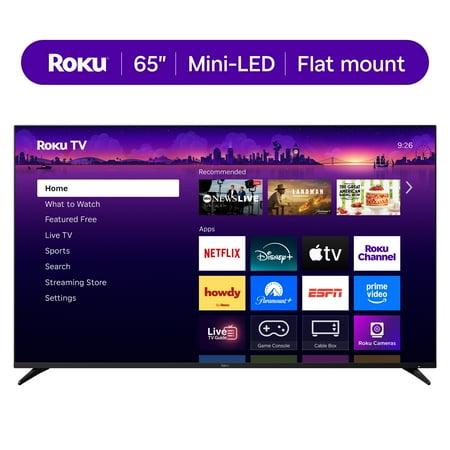
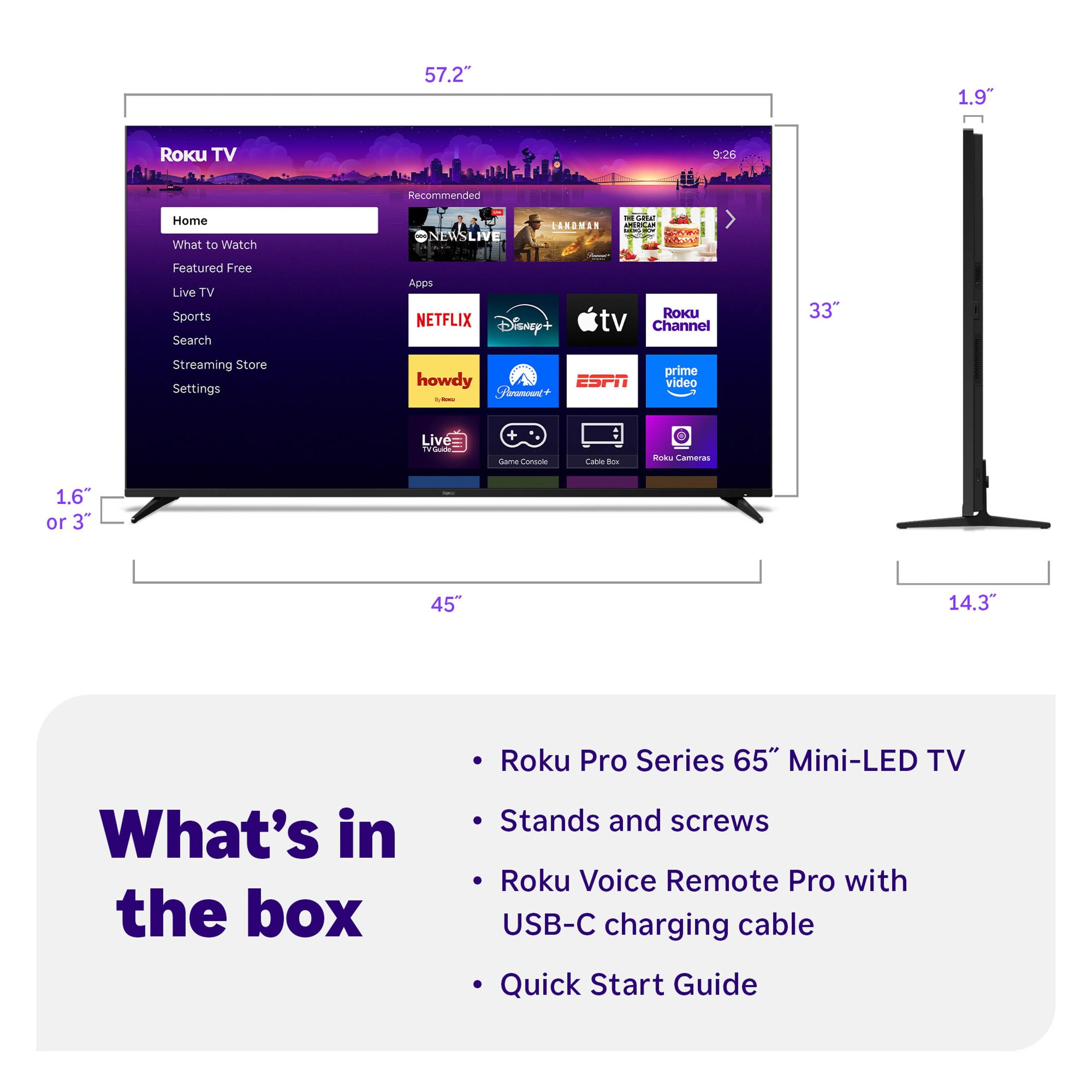
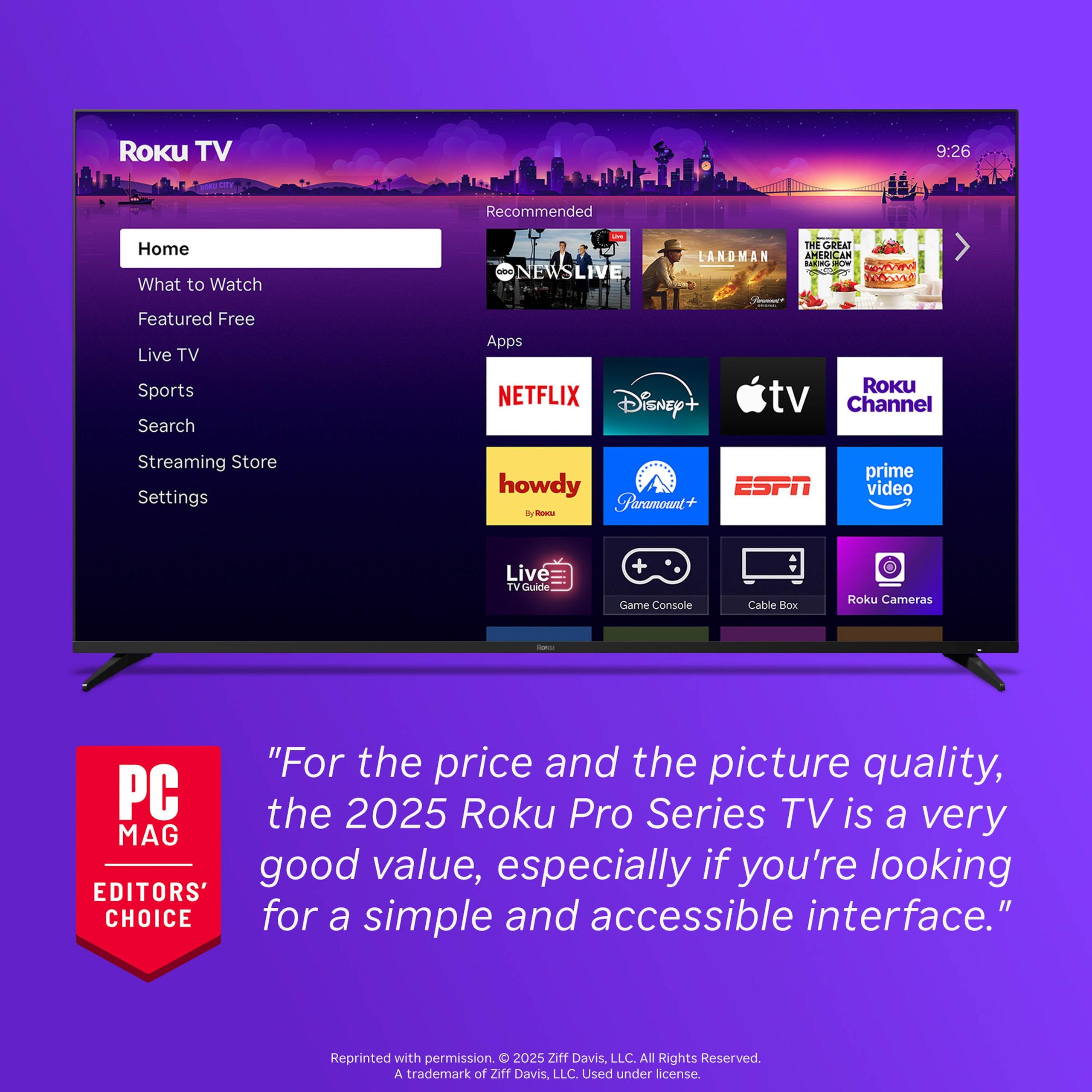
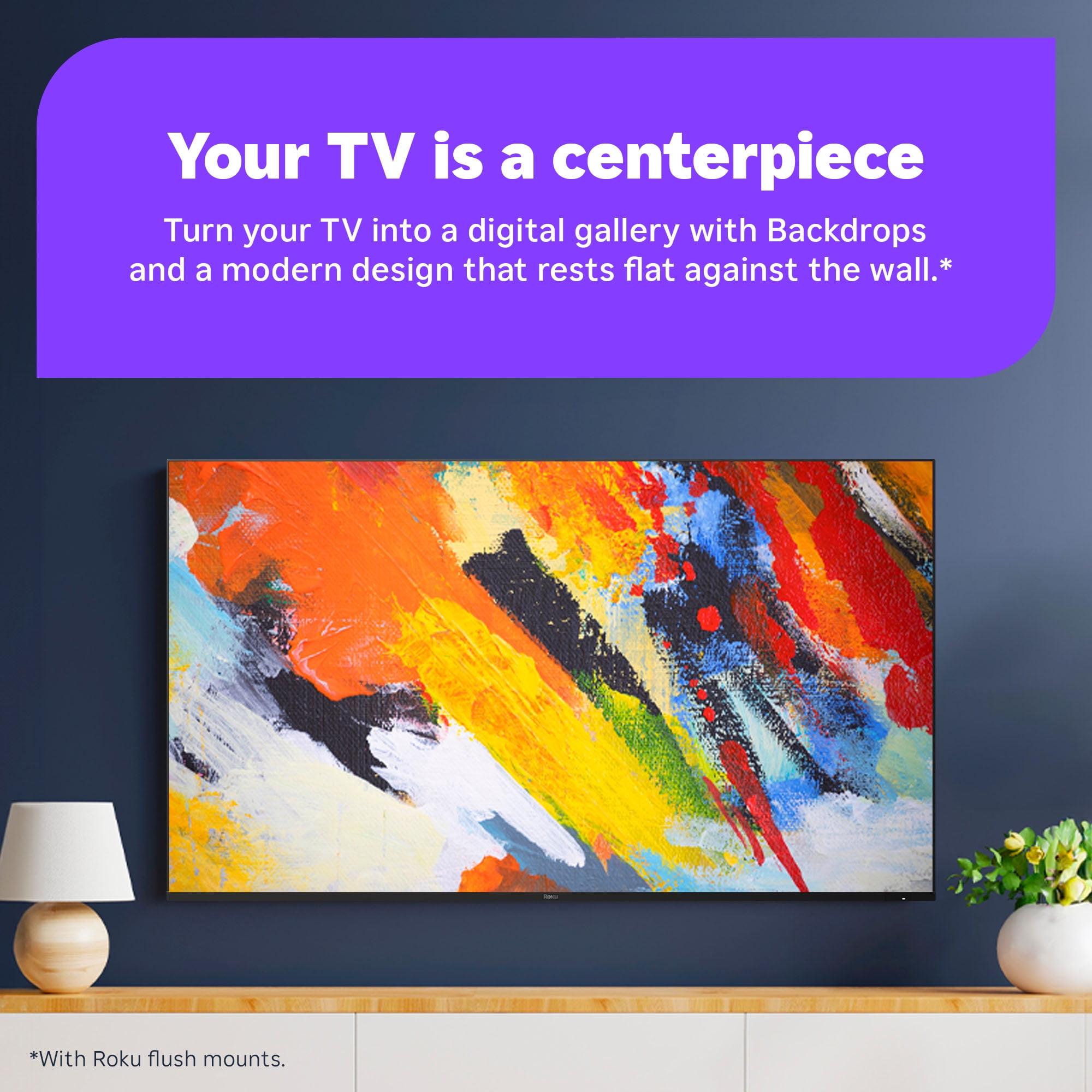
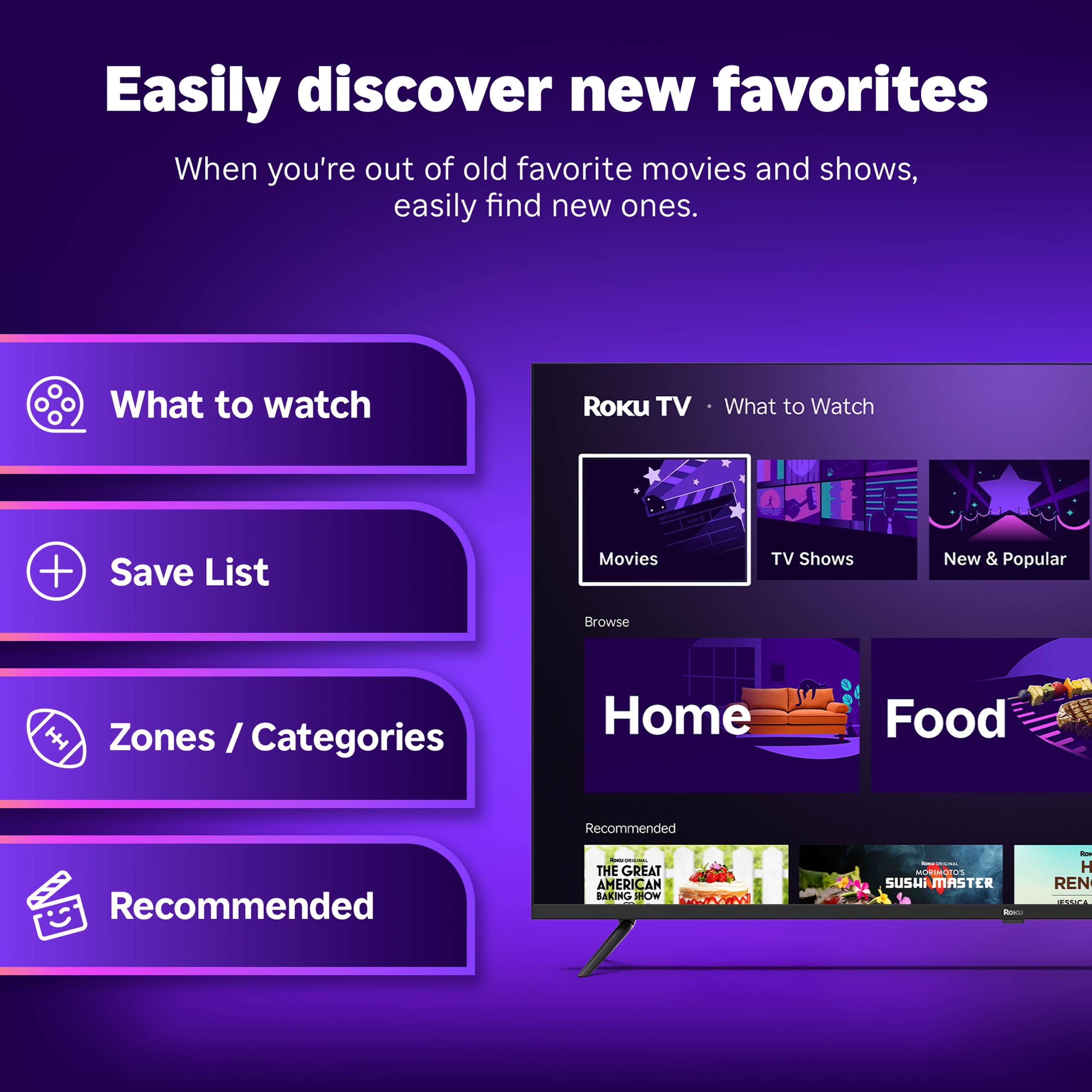
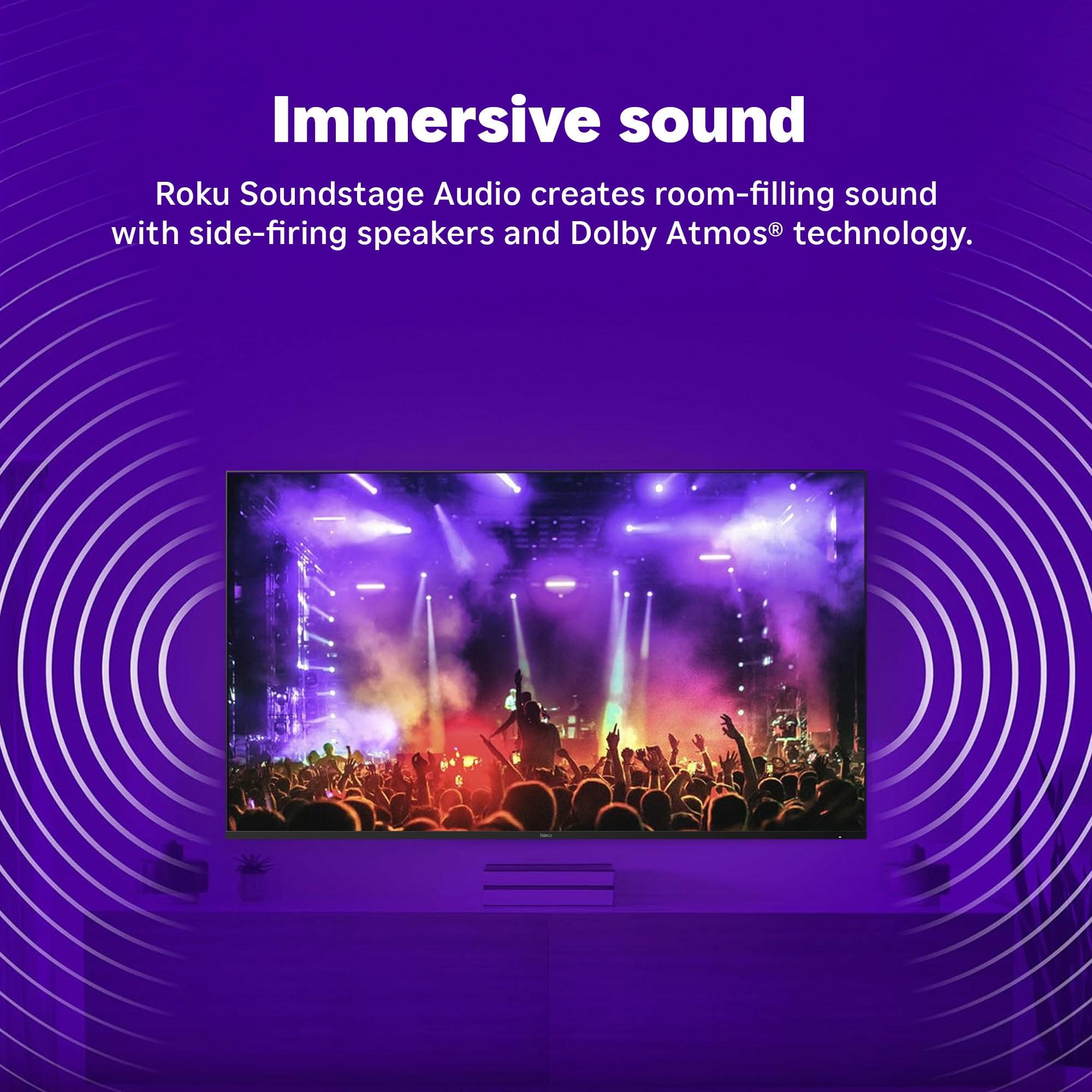
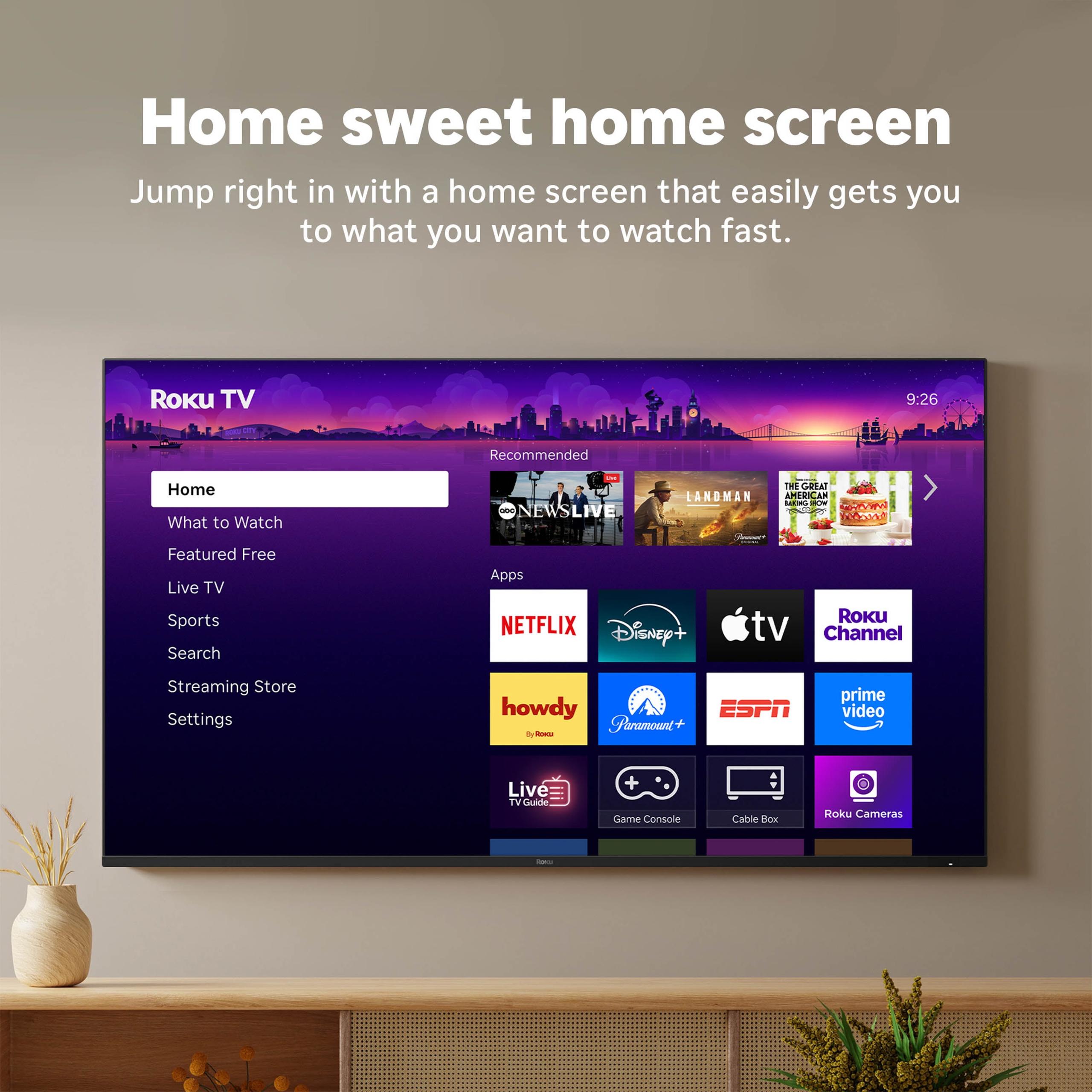
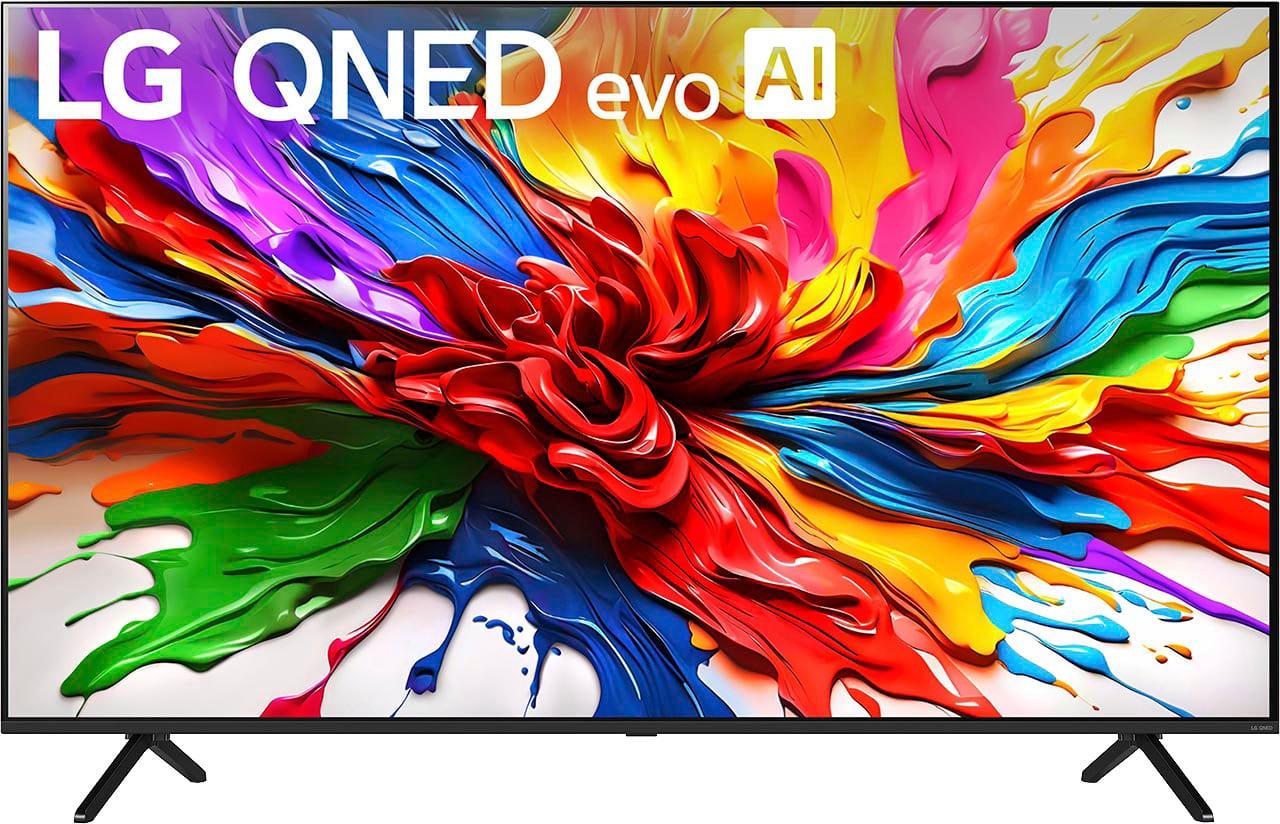
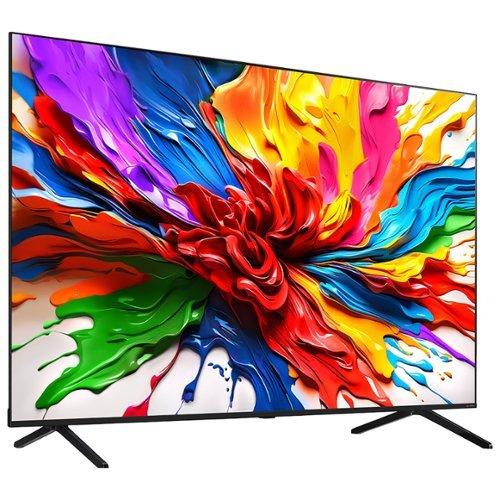
When you're shopping for a premium 4K TV in 2025, two standout options have caught our attention: the Roku 65" Pro Series 2025 and the LG 65" QNED92A QNED evo AI Mini LED. Both represent significant technological leaps from their manufacturers, but they take notably different approaches to delivering exceptional picture quality and smart TV experiences.
Before diving into specifics, let's clarify what makes these TVs "premium." Both models use Mini-LED backlighting—a technology that employs thousands of tiny LEDs behind the screen instead of the traditional edge-lit or basic full-array systems found in budget TVs. Think of it like having thousands of individual flashlights that can turn on and off independently, creating much brighter highlights and deeper blacks than older LED TVs.
The "QLED" designation on both models refers to Quantum Dot technology, which uses microscopic particles to produce more accurate colors. It's like having a filter that makes colors more vivid and pure. However, each manufacturer implements these technologies differently, leading to distinct performance characteristics.
The Roku 65" Pro Series 2025, released in mid-2025, represents Roku's first serious push into premium TV hardware. Historically known for their streaming devices and simple software, Roku has partnered with established TV manufacturers to create what they call their most advanced television yet.
What's immediately striking about Roku's approach is their focus on delivering premium features without the premium complexity. The Smart Picture Max AI system automatically adjusts picture settings scene-by-scene—similar to how Dolby Vision works—but without requiring specific content encoding. This means even regular cable TV or streaming content gets enhanced processing.
The LG 65" QNED92A, also launched in 2025, sits near the top of LG's Mini-LED lineup. LG has been refining their QNED (Quantum Dot + NanoCell) technology for several years, and this latest iteration represents their most mature implementation yet.
LG's philosophy centers on their α8 AI Gen2 processor—essentially a dedicated computer chip that analyzes every frame of video in real-time. This processor doesn't just adjust brightness and color; it identifies objects in scenes (like faces, grass, or sky) and optimizes each element separately. It's remarkably sophisticated technology that would have been unimaginable in TVs just a few years ago.
When evaluating TV picture quality, peak brightness often determines how well a TV performs in bright rooms and how impactful HDR content appears. Our research into professional measurements and user feedback reveals significant differences between these models.
The LG QNED92A achieves exceptional peak brightness levels—reaching approximately 1,520 nits in typical viewing scenarios. To put this in perspective, standard TVs max out around 300-400 nits, while premium models typically hit 1,000+ nits. This brightness advantage makes the LG particularly compelling for rooms with lots of natural light or for viewers who prefer vivid, punchy images.
The Roku Pro Series takes a different approach, focusing on what they call "enhanced dynamic contrast." While specific brightness measurements weren't available in our research, Roku claims 75% higher contrast than their previous generation. User reviews consistently praise the TV's ability to maintain deep blacks while delivering bright highlights—a balance that's crucial for cinematic viewing.
Here's what this means practically: if you're watching a movie scene with both a dark cave and bright sunlight, the LG will likely make that sunlight more blindingly realistic, while the Roku will ensure the cave looks properly dark without washing out the bright areas.
Color reproduction represents another area where these TVs diverge meaningfully. The LG QNED92A achieves what's called "100% color volume"—essentially meaning it can display vibrant colors at any brightness level, from the darkest shadows to the brightest highlights. Professional measurements show it covers 97% of the DCI-P3 color space, which is the standard used for premium HDR content.
The Roku Pro Series emphasizes factory calibration and precision tone mapping. Rather than pushing colors to their maximum saturation, Roku appears focused on accuracy and naturalness. User reviews frequently mention colors that look "lifelike" rather than artificially enhanced.
For most viewers, the difference comes down to preference: do you want colors that pop off the screen (LG) or colors that look exactly as intended by content creators (Roku)? Neither approach is wrong, but they create distinctly different viewing experiences.
High Dynamic Range (HDR) capability has become crucial for premium TV performance. HDR expands both the brightness range and color palette beyond what standard content can display, creating more realistic and immersive images.
Both TVs support Dolby Vision IQ, which automatically adjusts HDR performance based on your room's lighting conditions. However, the Roku Pro Series also includes HDR10+ Adaptive support—a format that provides similar benefits to Dolby Vision but is used by different content providers. The LG QNED92A, surprisingly, lacks HDR10+ support, which could limit compatibility with certain streaming services or disc content.
This format support difference might seem technical, but it has real-world implications. If you frequently watch content on services that prefer HDR10+ (like some Amazon Prime Video titles), the Roku will display these with enhanced dynamic metadata while the LG will default to standard HDR10.
Modern premium TVs must excel at gaming, particularly with PlayStation 5 and Xbox Series X pushing 4K gaming at high frame rates. Both models deliver strong gaming credentials, but with notable differences.
The Roku Pro Series achieves remarkably low input lag—just 5.2 milliseconds at 120Hz. Input lag measures the delay between pressing a controller button and seeing the action on screen. For competitive gaming, especially fast-paced shooters or fighting games, lower input lag provides a genuine competitive advantage.
However, the LG QNED92A counters with superior connectivity, offering four HDMI 2.1 ports versus Roku's two. HDMI 2.1 ports are essential for 4K gaming at 120Hz, and having four means you could connect multiple next-gen consoles, a PC, and a sound system without switching cables.
The LG also supports Variable Refresh Rate (VRR) up to 144Hz, compared to Roku's 120Hz maximum. While few games currently exceed 120Hz on consoles, PC gamers with high-end graphics cards might appreciate the extra headroom.
Both TVs include gaming-focused features like Auto Low Latency Mode (ALLM), which automatically switches to gaming mode when detecting a console, and Variable Refresh Rate support to eliminate screen tearing.
The smart TV experience often determines daily usability more than picture quality specifications. Here, these TVs represent fundamentally different philosophies.
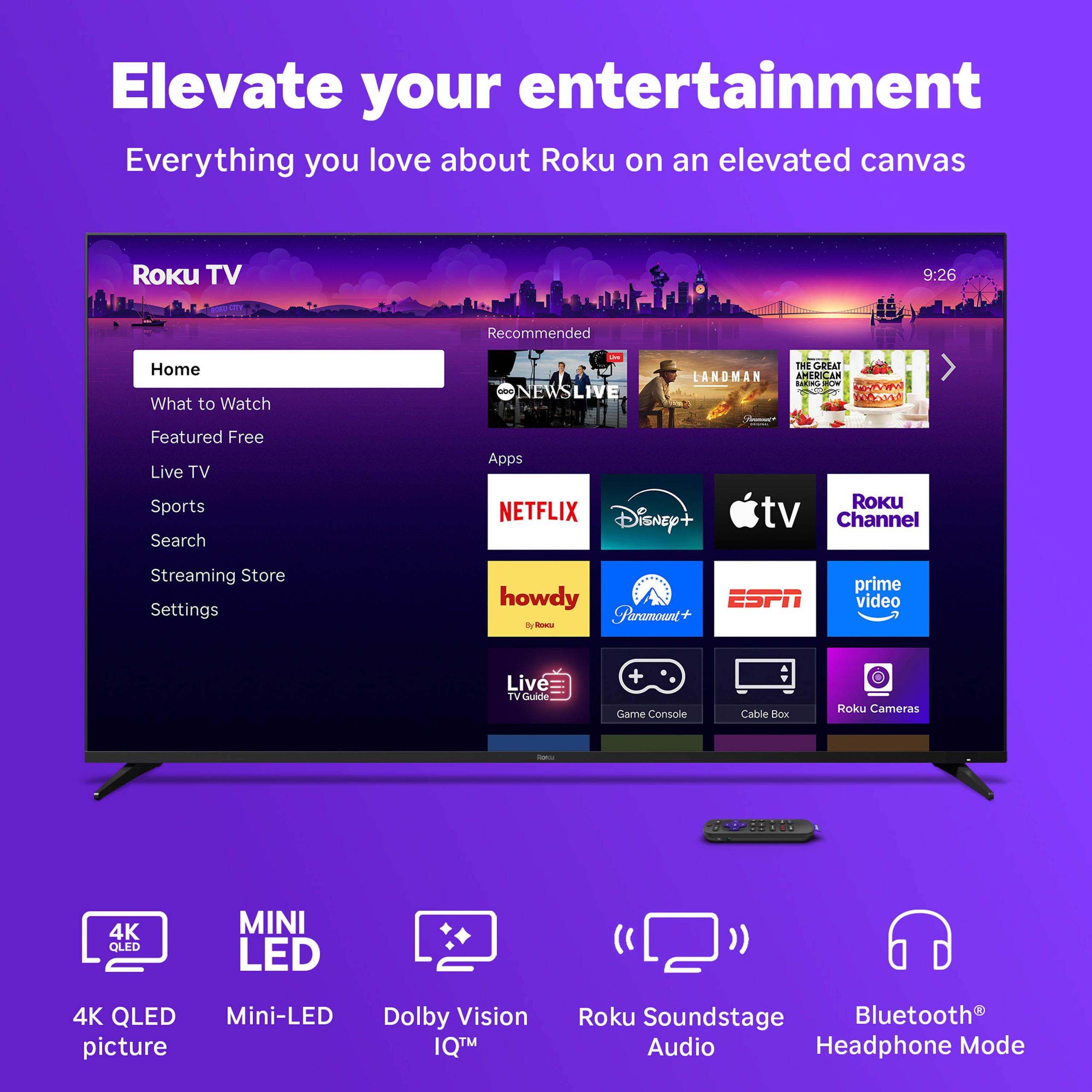
The Roku Pro Series runs Roku TV OS—the same platform that has made Roku streaming devices popular for over a decade. The interface presents all your apps, streaming services, and even live TV channels on a single, unified home screen.
User feedback consistently highlights Roku's reliability and simplicity. The TV reportedly starts up in under a second—a significant improvement over many smart TVs that can take 30+ seconds to boot. The platform rarely crashes or requires troubleshooting, making it ideal for less tech-savvy users or families who just want the TV to work consistently.
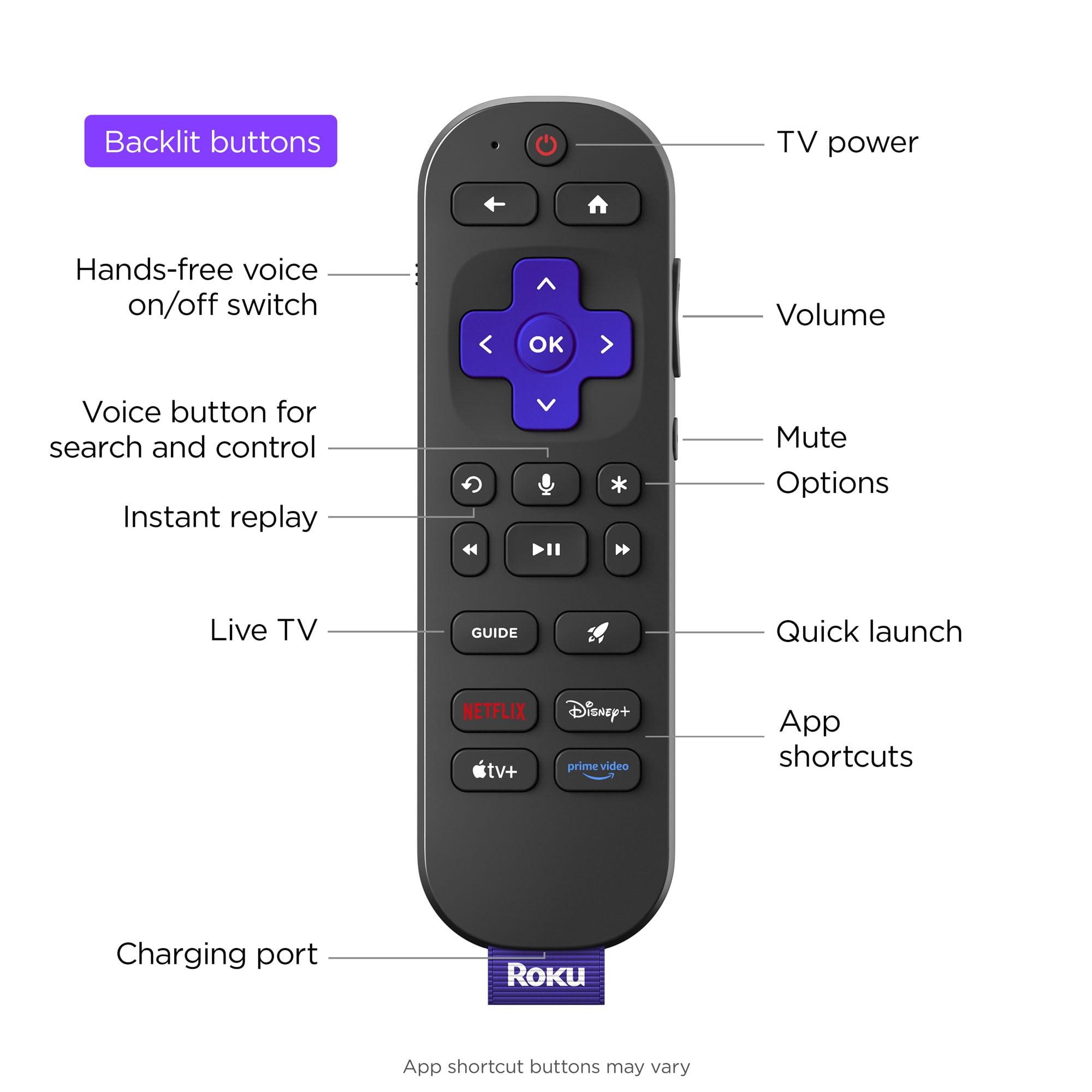
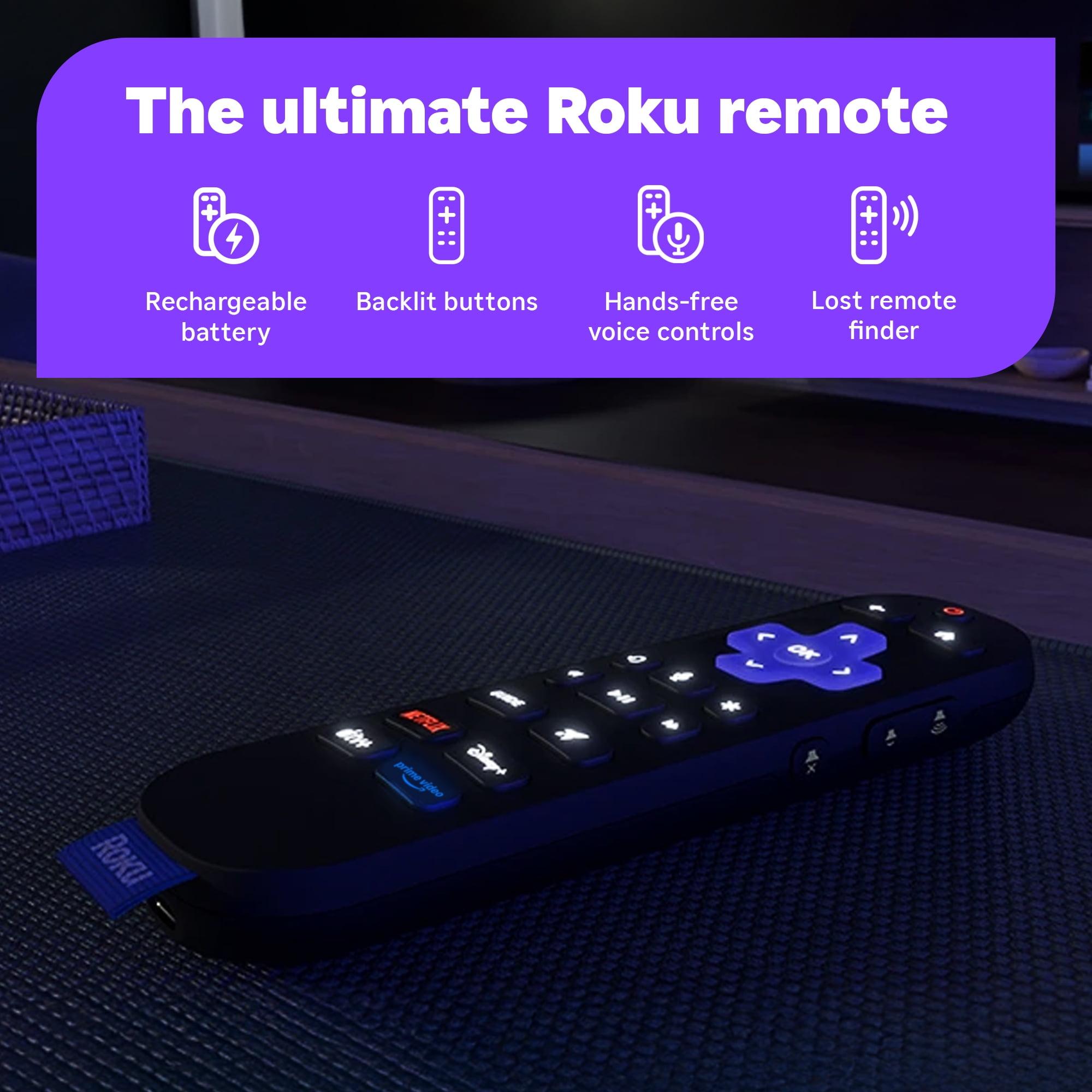
The included Voice Remote Pro features rechargeable batteries, backlit buttons that glow in the dark, and a "find my remote" function activated by pressing a button on the TV itself. These seem like small details, but they address common frustrations that plague TV ownership.
The LG QNED92A runs webOS 25, LG's latest smart TV platform. WebOS offers more advanced features, including hands-free voice control, comprehensive smart home integration, and LG's promise of software updates for five years.
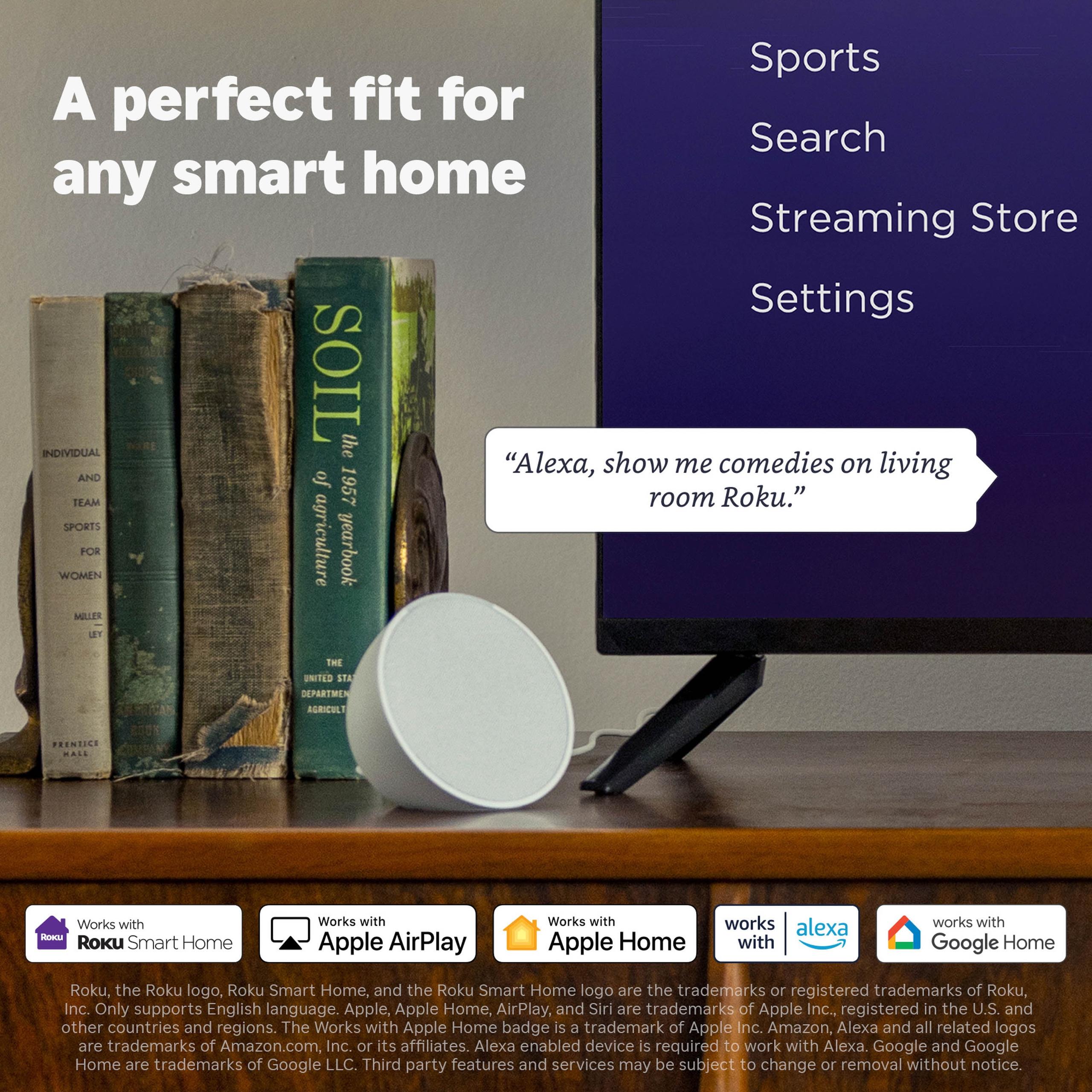
The Magic Remote deserves special mention—it functions like a computer mouse in the air, allowing you to point and click on screen elements. For users comfortable with technology, it's remarkably intuitive. The platform also integrates with virtually every major smart home system: Google Assistant, Amazon Alexa, Apple HomeKit, and Matter compatibility.
LG's commitment to five years of software updates through their Re:New Program addresses a common concern with smart TVs becoming obsolete. At the time of writing, most TV manufacturers provide sporadic updates for 2-3 years before focusing on newer models.
Built-in TV audio has traditionally been an afterthought, but both manufacturers have invested significantly in speaker systems that might eliminate the need for separate soundbars.
The Roku Pro Series features what they call Sound Stage Audio with side-firing Dolby Atmos speakers. User reviews consistently describe the audio as exceptional for a TV, with several mentioning "theater-like bass" that can "rattle walls." This represents a significant departure from typical TV audio, which tends to sound thin and lacks bass response.
The LG QNED92A includes a 2.2 channel speaker system with AI-enhanced processing. While it supports Dolby Atmos and includes sophisticated audio processing, user feedback suggests it doesn't quite match the Roku's raw impact and bass response.
For home theater enthusiasts, this audio difference matters significantly. If you prefer not to deal with additional speakers or soundbars, the Roku appears to offer a more complete audio solution out of the box.
At the time of writing, these TVs occupy different price segments, which significantly impacts their value propositions. The Roku Pro Series positions itself as premium performance at a more accessible price point, while the LG QNED92A commands a premium for its advanced features and brand reputation.
The Roku's approach makes sense for buyers who want excellent picture quality, superior built-in audio, and a reliable smart TV experience without paying for features they might not use. It's particularly compelling for users who prioritize streaming content over extensive gaming or smart home integration.
The LG justifies its higher pricing through advanced AI processing, superior connectivity options, longer software support commitments, and the flexibility to grow with changing technology needs. For tech enthusiasts or users planning to keep their TV for many years, these advantages might justify the additional investment.
For dedicated home theater rooms or serious movie enthusiasts, several factors become particularly important. The Roku Pro Series includes FILMMAKER MODE support and emphasizes accurate color reproduction—both crucial for cinematic viewing. Its superior built-in audio could eliminate the need for additional speakers in smaller rooms.
The LG QNED92A offers higher peak brightness, which might seem advantageous but can actually be problematic in dark viewing environments where accurate blacks and subtle shadow detail matter more than peak highlights. However, its AI processing can automatically adjust for different content types and viewing conditions.
Both TVs handle motion well for film content, though some users report the LG's motion processing can occasionally create artifacts during rapid scene changes. The Roku appears more conservative with motion processing, which typically results in more natural-looking movement.
After extensive research into user experiences, professional reviews, and technical specifications, clear recommendations emerge for different user types.
Choose the Roku 65" Pro Series 2025 if you:
Choose the LG 65" QNED92A if you:
Both TVs represent excellent choices within their respective market segments, but they serve different priorities. The Roku Pro Series delivers premium performance with remarkable value, making it ideal for most buyers who want excellent picture quality and superior audio without complexity or premium pricing.
The LG QNED92A justifies its higher cost through advanced technology, extensive connectivity, and long-term support commitments. It's the better choice for users who want the latest features and don't mind paying for them.
Ultimately, the "right" choice depends on your budget, technical comfort level, and specific usage requirements. Either TV will deliver a significant upgrade from older LED models, but understanding these differences ensures you'll choose the one that best matches your priorities and viewing habits.
| Roku 65" Pro Series 2025 4K QLED TV | LG 65" QNED92A QNED evo AI Mini LED 4K TV 2025 |
|---|---|
| Display Technology - Core backlighting and color system | |
| QLED with Mini-LED backlighting, full array local dimming | QNED (Quantum Dot + NanoCell) with Mini-LED, hundreds of dimming zones |
| Peak Brightness - Critical for HDR impact and bright room viewing | |
| Enhanced dynamic contrast (75% improvement over previous gen) | 1,520 nits peak brightness (excellent for very bright rooms) |
| Processor - Affects picture optimization and smart TV performance | |
| Roku Smart Picture Max AI (scene-by-scene optimization) | α8 AI Gen2 Processor (real-time picture and sound optimization) |
| HDR Format Support - Determines compatibility with premium content | |
| Dolby Vision IQ, HDR10+ Adaptive, HDR10, HLG | Dolby Vision IQ, HDR10, HLG (lacks HDR10+ support) |
| Gaming Input Lag - Essential for competitive gaming responsiveness | |
| 5.2ms at 120Hz (excellent for competitive gaming) | 9.6ms at 4K (very good for most gaming) |
| HDMI 2.1 Ports - Required for 4K@120Hz gaming from consoles | |
| 2 HDMI 2.1 ports (sufficient for most setups) | 4 HDMI 2.1 ports (ideal for multiple gaming devices) |
| Variable Refresh Rate - Eliminates screen tearing in games | |
| Up to 120Hz with AMD FreeSync Premium Pro | Up to 144Hz with AMD FreeSync Premium |
| Built-in Audio System - May eliminate need for soundbar | |
| Sound Stage Audio with side-firing Dolby Atmos (exceptional bass response) | 2.2 channel with α8 AI Sound Pro and Dolby Atmos |
| Smart TV Platform - Daily usability and long-term software support | |
| Roku TV OS 15 (simple, reliable, fast startup) | webOS 25 with 5-year software update guarantee |
| Voice Control - Hands-free convenience and smart home integration | |
| Voice Remote Pro with Apple HomeKit, Alexa, Google Assistant | Magic Remote with hands-free voice, comprehensive smart home support |
| Connectivity - Wi-Fi performance affects streaming reliability | |
| Wi-Fi 6, Bluetooth, Ethernet | Wi-Fi 6E, Bluetooth 5.3, Ethernet (faster wireless) |
| Additional Gaming Features - Cloud gaming and streaming game support | |
| Auto Low Latency Mode, VRR, Game Mode | GeForce NOW, Xbox Cloud Gaming, Game Dashboard, Game Optimizer |
| Software Update Commitment - Long-term value and feature additions | |
| Standard Roku updates (typically 3-4 years) | LG Re:New Program (guaranteed 5 years of updates) |
Both the Roku 65" Pro Series 2025 and LG 65" QNED92A deliver excellent picture quality, but they excel in different areas. The LG QNED92A achieves higher peak brightness (1,520 nits) making it superior for bright rooms and vibrant HDR content. The Roku Pro Series focuses on color accuracy and dynamic contrast, making it better for cinematic viewing in controlled lighting. For home theater use, the Roku's emphasis on natural colors and deep blacks often provides a more film-like experience.
The Roku Pro Series 2025 offers lower input lag at 5.2ms, giving it an edge for competitive gaming. However, the LG QNED92A provides four HDMI 2.1 ports versus Roku's two, plus support for cloud gaming services like GeForce NOW and Xbox Cloud Gaming. If you have multiple gaming devices, the LG QNED92A offers more flexibility, but for pure gaming performance, the Roku Pro Series has the advantage.
The Roku Pro Series 2025 uses Roku TV OS, known for its simplicity, reliability, and fast startup times under one second. The LG QNED92A runs webOS 25 with more advanced features like hands-free voice control and comprehensive smart home integration. Roku is better for users who want straightforward streaming, while LG appeals to tech enthusiasts who want extensive customization and smart home connectivity.
The Roku Pro Series 2025 significantly outperforms the LG QNED92A in audio quality. Users consistently praise the Roku's Sound Stage Audio system for delivering "theater-like bass" that can eliminate the need for a soundbar. The LG QNED92A has a decent 2.2 channel system with AI processing, but it doesn't match the Roku's audio impact for home theater applications.
The Roku Pro Series 2025 uses QLED (Quantum Dot LED) technology focusing on color accuracy and brightness. The LG QNED92A uses QNED (Quantum Dot + NanoCell), which combines quantum dots with LG's NanoCell filtering for wider viewing angles and enhanced color volume. Both use Mini-LED backlighting, but LG's QNED approach typically provides more vibrant colors while Roku's QLED emphasizes natural color reproduction.
The Roku Pro Series 2025 generally offers superior value, delivering premium Mini-LED picture quality, exceptional built-in audio, and reliable smart TV features at a more accessible price point. The LG QNED92A commands a premium for advanced AI processing, extensive connectivity, and longer software support. For most buyers, the Roku Pro Series provides better bang for your buck.
Both TVs support Dolby Vision IQ and standard HDR formats, but the Roku Pro Series 2025 includes HDR10+ Adaptive support that the LG QNED92A lacks. This gives Roku broader compatibility with streaming services. However, the LG QNED92A offers higher peak brightness for more impactful HDR highlights. The Roku provides better format compatibility while the LG delivers brighter HDR performance.
The LG QNED92A offers superior connectivity with four HDMI 2.1 ports, Wi-Fi 6E, and Bluetooth 5.3. The Roku Pro Series 2025 provides two HDMI 2.1 ports and standard Wi-Fi 6. If you need to connect multiple gaming consoles, streaming devices, and sound systems simultaneously, the LG QNED92A offers more flexibility and future-proofing.
The LG QNED92A guarantees software updates for five years through LG's Re:New Program, ensuring long-term compatibility and new features. The Roku Pro Series 2025 typically receives updates for 3-4 years based on Roku's history. For buyers planning to keep their TV for many years, the LG QNED92A offers better long-term software support.
The LG QNED92A excels in bright rooms due to its higher peak brightness capability of 1,520 nits, making it better at overcoming glare and maintaining vibrant colors in daylight. The Roku Pro Series 2025 performs well in bright rooms but focuses more on contrast enhancement than maximum brightness. For rooms with significant natural light, the LG QNED92A provides superior visibility.
Both TVs feature premium build quality with ultra-slim bezels and sturdy stands. The Roku Pro Series 2025 includes a unique remote finder button on the TV and comes with a rechargeable backlit remote. The LG QNED92A features LG's signature minimalist design and Magic Remote with point-and-click functionality. Both support wall mounting with similar VESA patterns, making installation straightforward.
For dedicated home theater use, the Roku Pro Series 2025 often provides the better experience with its superior built-in audio, accurate color reproduction, and FILMMAKER MODE support. The exceptional Sound Stage Audio system may eliminate the need for additional speakers in smaller rooms. The LG QNED92A works well for home theaters requiring maximum brightness or multiple device connections, but the Roku Pro Series typically delivers a more cinematic experience overall.
We've done our best to create useful and informative comparisons to help you decide what product to buy. Our research uses advanced automated methods to create this comparison and perfection is not possible - please contact us for corrections or questions. These are the sites we've researched in the creation of this article: bestbuy.com - rtings.com - techradar.com - youtube.com - roku.com - youtube.com - walmart.com - bestbuy.com - youtube.com - electronicexpress.com - roku.com - pcvarge.com - ecoustics.com - stereoindex.com - youtube.com - youtube.com - digitaltrends.com - abt.com - lg.com - youtube.com - ecoustics.com - hometheaterforum.com - lg.com - valueelectronics.com - listenup.com - pcrichard.com - furnitureconnectionnd.com - avnirvana.com - files.bbystatic.com - lg.com - lgnewsroom.com - techradar.com - bestbuy.com - bestbuy.com - youtube.com - youtube.com

Privacy Policy
Terms and Conditions - Affiliate Policy
Home Security
© Copyright 2008-2026.
11816 Inwood Rd #1211, Dallas, TX 75244