

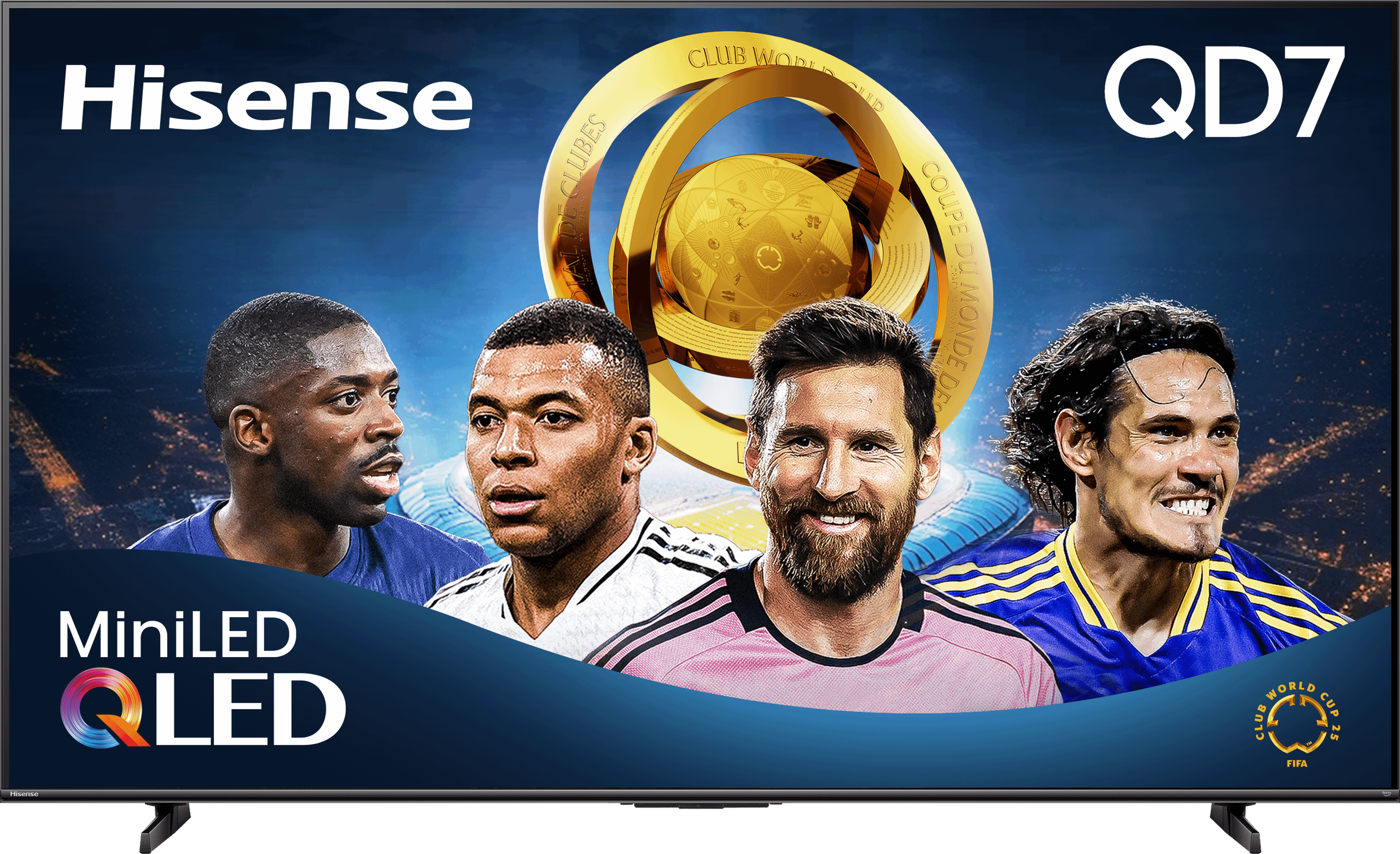
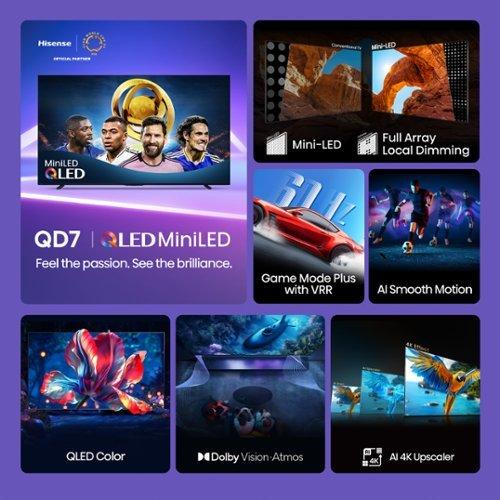
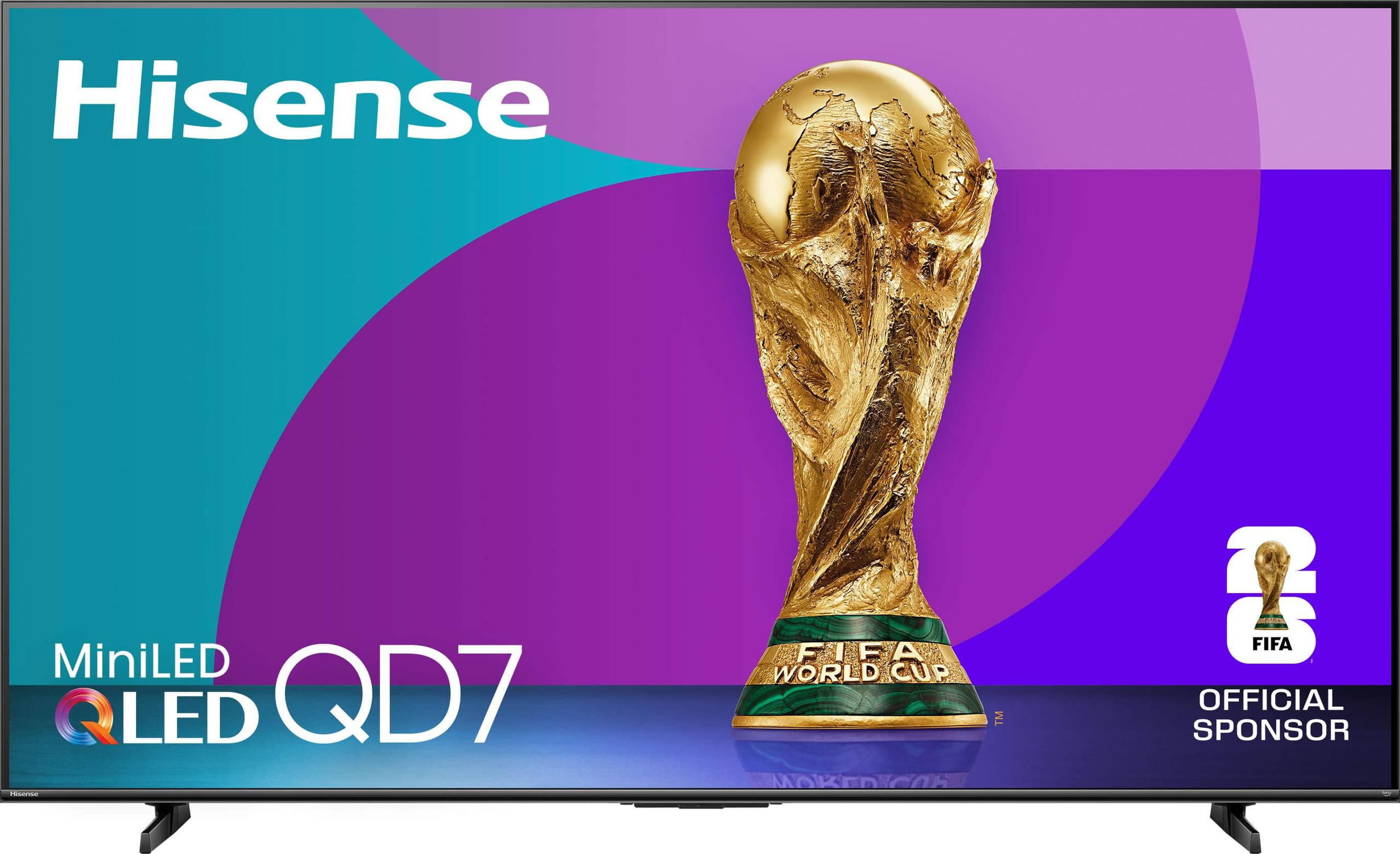
Shopping for a new 65-inch TV can feel overwhelming, especially when you're trying to balance premium features with a reasonable budget. Two TVs that consistently show up in conversations about the sweet spot between performance and value are the Samsung Q8F and the Hisense QD7. Both launched in 2025, representing the latest evolution in their respective manufacturers' approaches to delivering cinema-quality visuals at home.
The TV landscape has changed dramatically over the past few years. What used to require a $3,000+ investment – features like full-array local dimming, quantum dot color, and high refresh rate gaming – now appears in TVs costing significantly less. The Samsung Q8F and Hisense QD7 exemplify this trend, though they take notably different approaches to achieving premium performance.
When you're spending serious money on a 65-inch TV, you're entering territory where picture quality becomes the primary focus. Unlike budget TVs that prioritize basic functionality, premium models in this category compete on several key battlegrounds that directly impact your viewing experience.
Picture quality sits at the top of the hierarchy. This encompasses not just resolution – both TVs deliver 4K – but how well they handle color accuracy, brightness levels, and contrast ratios. The difference between a good and great TV often comes down to how convincingly it can display both a bright explosion scene and subtle shadow details in the same movie.
Gaming performance has become increasingly crucial as PlayStation 5 and Xbox Series X consoles push higher frame rates and variable refresh rates. Features like HDMI 2.1, low input lag, and variable refresh rate (VRR) support – which synchronizes the TV's refresh with the console's output to eliminate screen tearing – are no longer nice-to-haves but essential features.
Smart TV platforms matter more than ever since most people stream the majority of their content. The responsiveness of the interface, app selection, and integration with voice assistants can make or break your daily experience with the TV.
The Samsung Q8F represents Samsung's refined approach to premium TV technology. At the time of writing, it commands a price premium that reflects Samsung's brand positioning and their focus on processing excellence and build quality. It's positioned as an upper mid-range QLED that brings many flagship features to a more accessible price point than Samsung's top-tier models.
The Hisense QD7, meanwhile, takes a more aggressive value approach. At roughly half the price of the Samsung Q8F, it aims to deliver flagship-level display technology without the premium brand markup. Hisense has been steadily improving their TV offerings over the past few years, and the QD7 represents their most compelling attempt yet at challenging the established premium brands.
The most fundamental difference between these TVs lies in their backlighting technology, and it's here where the Hisense QD7 makes its strongest case.
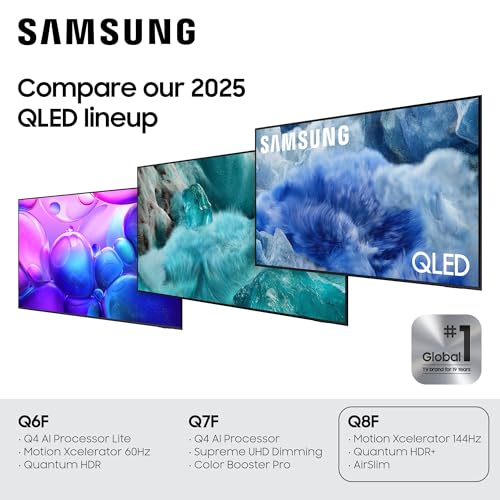
The Samsung Q8F uses what Samsung calls "Dual LED" backlighting. This is essentially an edge-lit system where LEDs positioned around the perimeter of the screen illuminate the entire panel. Samsung enhances this with two different color temperature LEDs to improve color accuracy and includes Supreme UHD Dimming, which divides the screen into zones for better brightness control. While this creates a slim, attractive TV, physics limits how precisely it can control light across different areas of the screen.
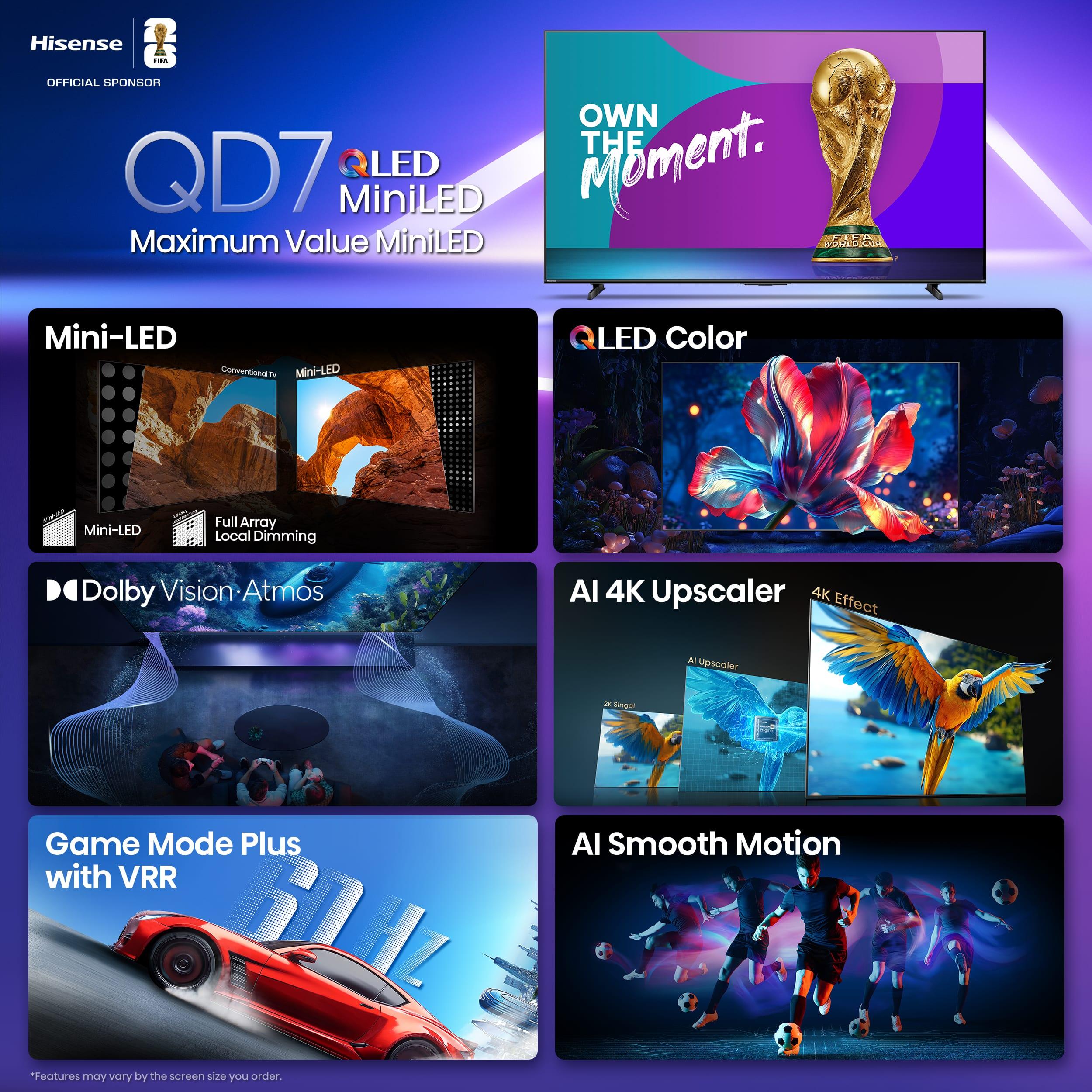
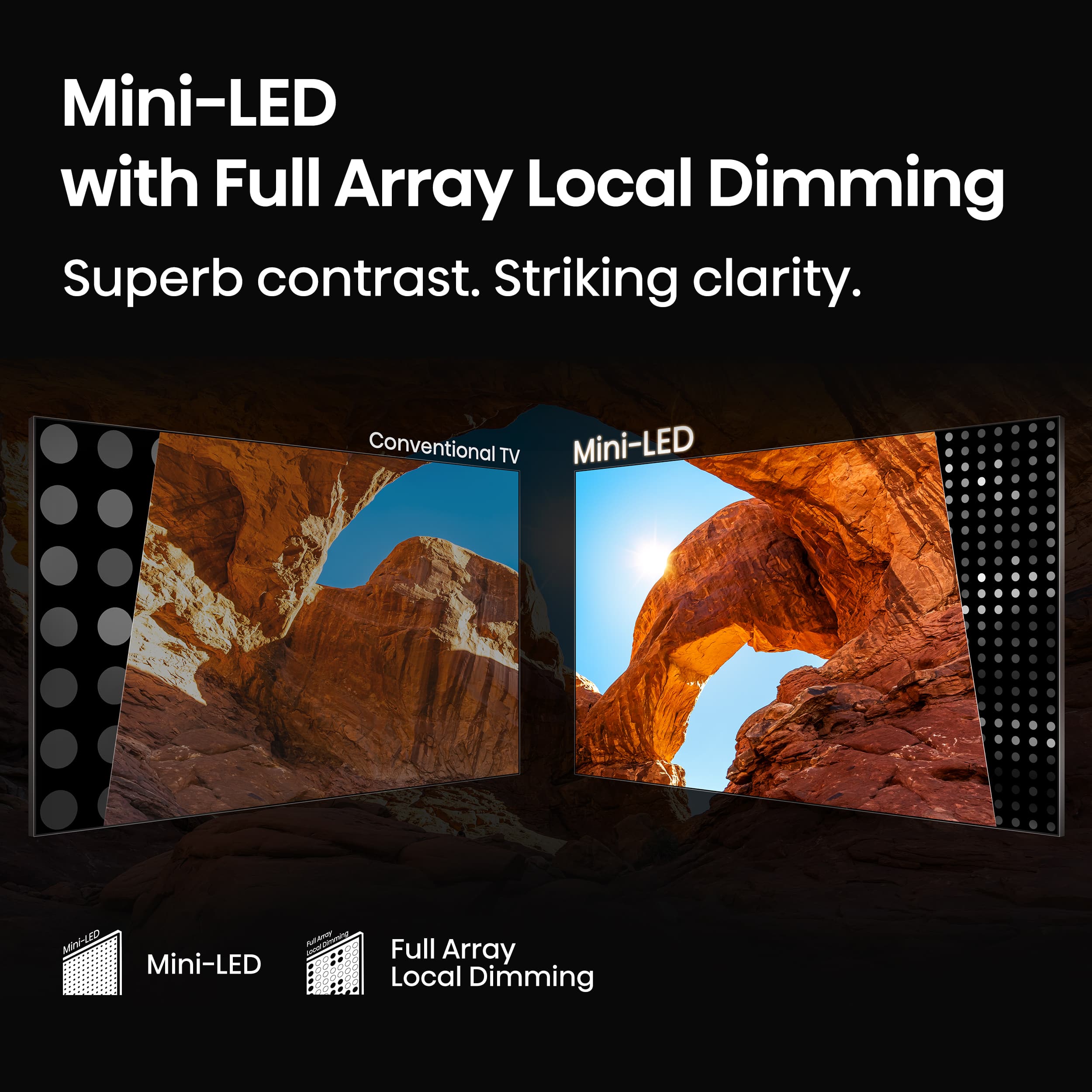
The Hisense QD7 takes a dramatically different approach with Mini-LED backlighting. Instead of edge-mounted LEDs, it uses thousands of tiny LEDs distributed across the back of the panel in a full-array configuration. Each LED can be independently controlled, creating hundreds or potentially thousands of dimming zones. This means when you're watching a movie with bright stars against a dark night sky, the TV can make those stars brilliantly bright while keeping the surrounding areas truly dark.
In practical terms, this translates to a significant advantage for the Hisense QD7 in high-contrast content. Dark movie scenes appear more convincing because the TV can actually turn off LEDs behind black areas rather than trying to block edge-lit illumination. The difference is particularly noticeable when watching content in a darkened room – the hallmark of a home theater setup.
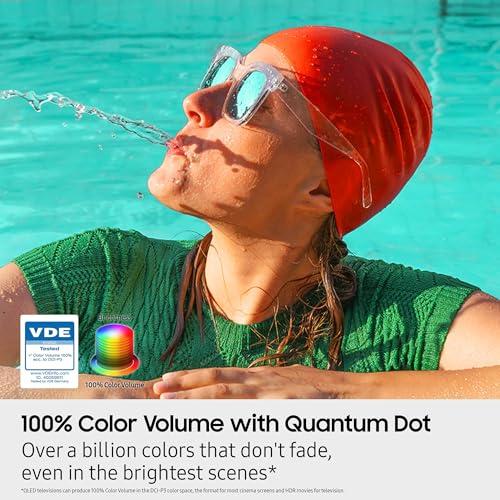
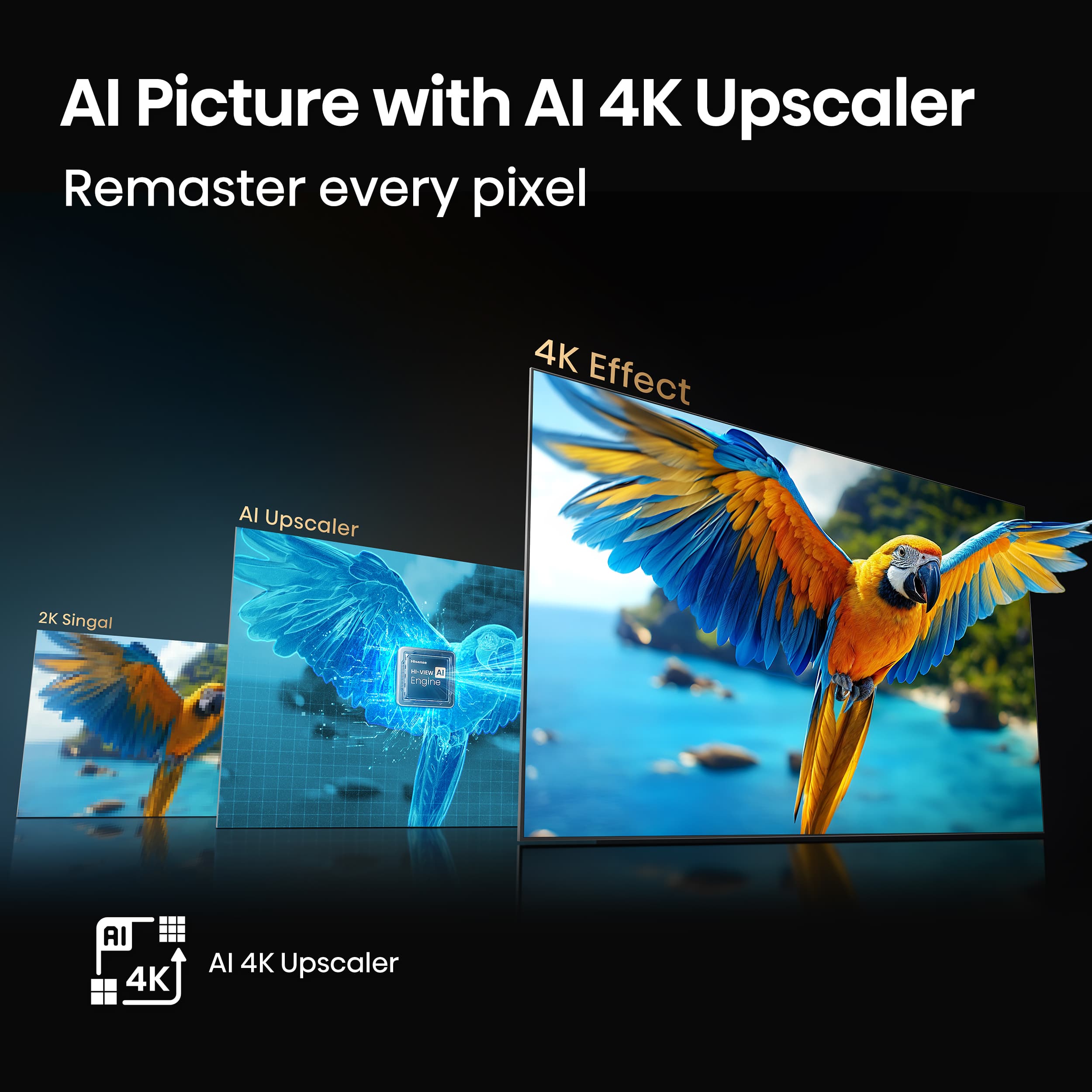
Both TVs employ quantum dot technology, though they implement it differently. Quantum dots are microscopic particles that emit very pure colors when illuminated, allowing TVs to display a wider range of colors than traditional LED-backlit displays.
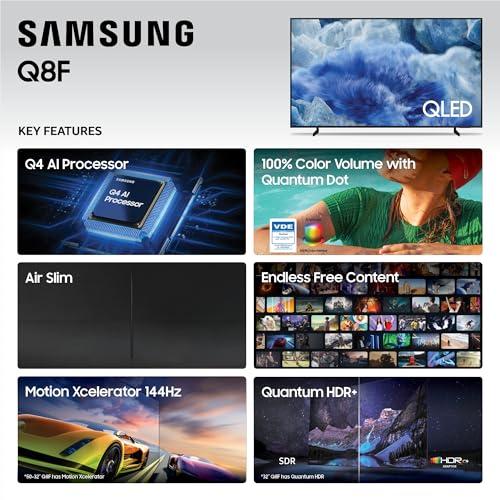
The Samsung Q8F features what Samsung calls "100% Color Volume with Real Quantum Dot Display." Samsung has been refining their quantum dot implementation for years, and their processing algorithms are particularly sophisticated at color mapping. The result is Samsung's characteristic vibrant, punchy color reproduction that many users find immediately appealing.
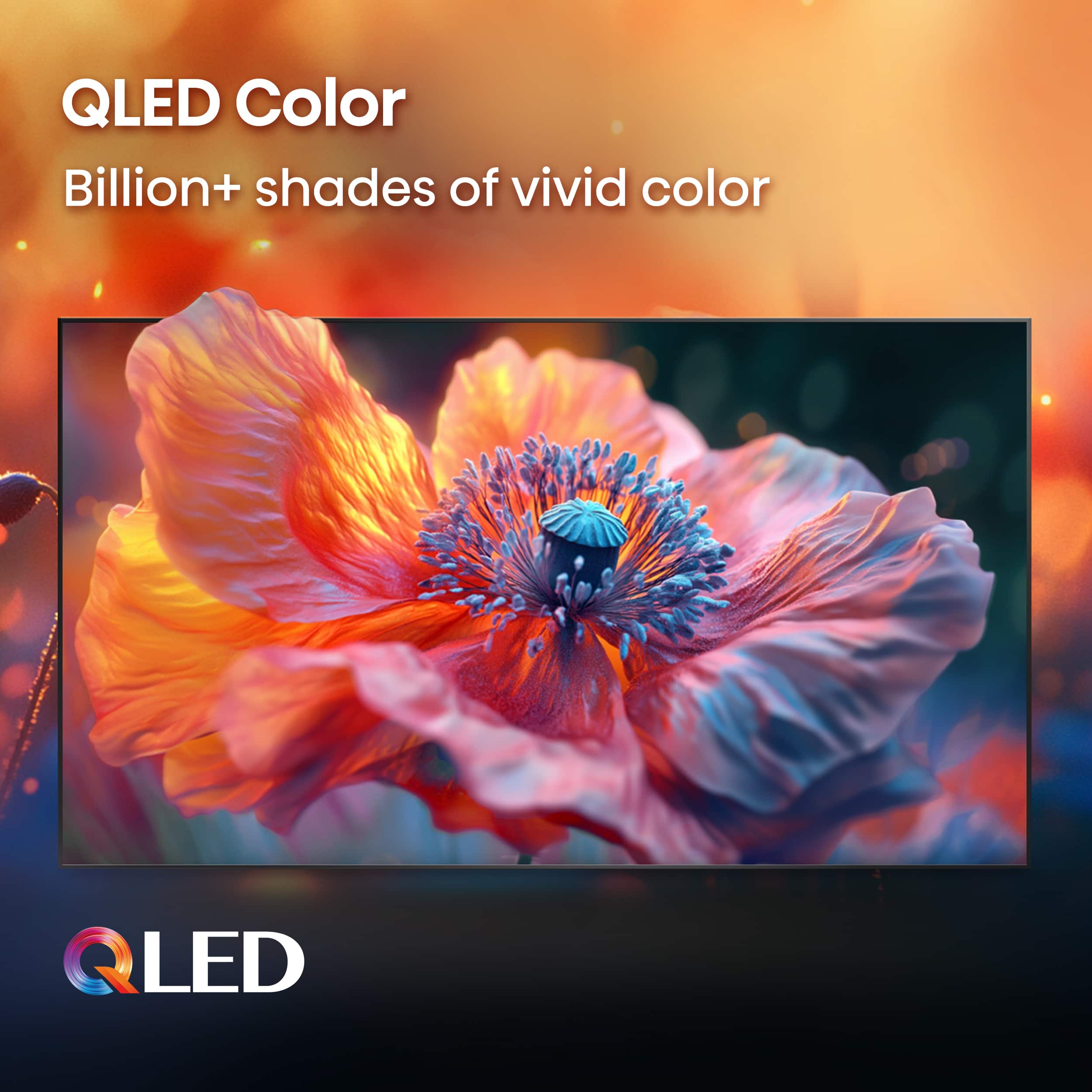
The Hisense QD7 also uses quantum dot technology, claiming to display over one billion shades of color. While Hisense's quantum dot implementation may not be quite as refined as Samsung's mature technology, the difference in real-world viewing is minimal for most content. The Hisense QD7 delivers excellent color accuracy out of the box and responds well to calibration for users who want to fine-tune their picture.
Based on our research of professional calibrations and user feedback, the Samsung Q8F has a slight edge in color processing sophistication, but the Hisense QD7 delivers comparable color performance at its price point.
High Dynamic Range (HDR) content has become the standard for premium streaming and UHD Blu-ray content, but not all HDR implementations are equal.
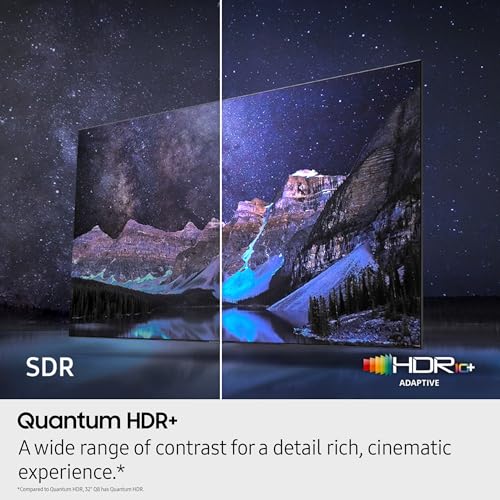
The Samsung Q8F supports HDR10+ and includes Samsung's proprietary Quantum HDR+ processing. HDR10+ uses dynamic metadata, meaning it can adjust brightness and color settings scene-by-scene rather than applying static settings to entire movies. However, Samsung notably omits Dolby Vision support, which has become the dominant HDR format for streaming services like Netflix and Disney+.
The Hisense QD7 takes a more comprehensive approach, supporting Dolby Vision, HDR10, HDR10+, and HLG (Hybrid Log-Gamma, used for broadcast content). This broader format support means you'll get the optimal HDR experience regardless of your content source.
The Mini-LED backlighting in the Hisense QD7 also provides a significant advantage in HDR content. HDR is fundamentally about contrast – the difference between the brightest and darkest elements in a scene. The precise local dimming control of Mini-LED allows the Hisense QD7 to achieve the dramatic contrasts that make HDR content compelling, while the Samsung Q8F's edge-lit design inherently limits its contrast capabilities.
Modern gaming has pushed TV manufacturers to prioritize features that were once niche concerns. Both TVs recognize this shift, but they approach gaming performance differently.
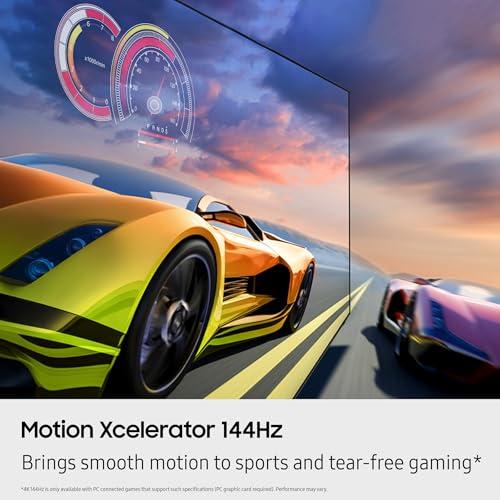
The Samsung Q8F features a 120Hz panel enhanced by Motion Xcelerator 144Hz technology. This processing can interpolate content to higher effective refresh rates, creating smoother motion in both games and movies. For gaming, Samsung includes comprehensive support for variable refresh rate (VRR) through FreeSync Premium, which synchronizes the TV's refresh rate with your console's output frame rate to eliminate screen tearing and stuttering.
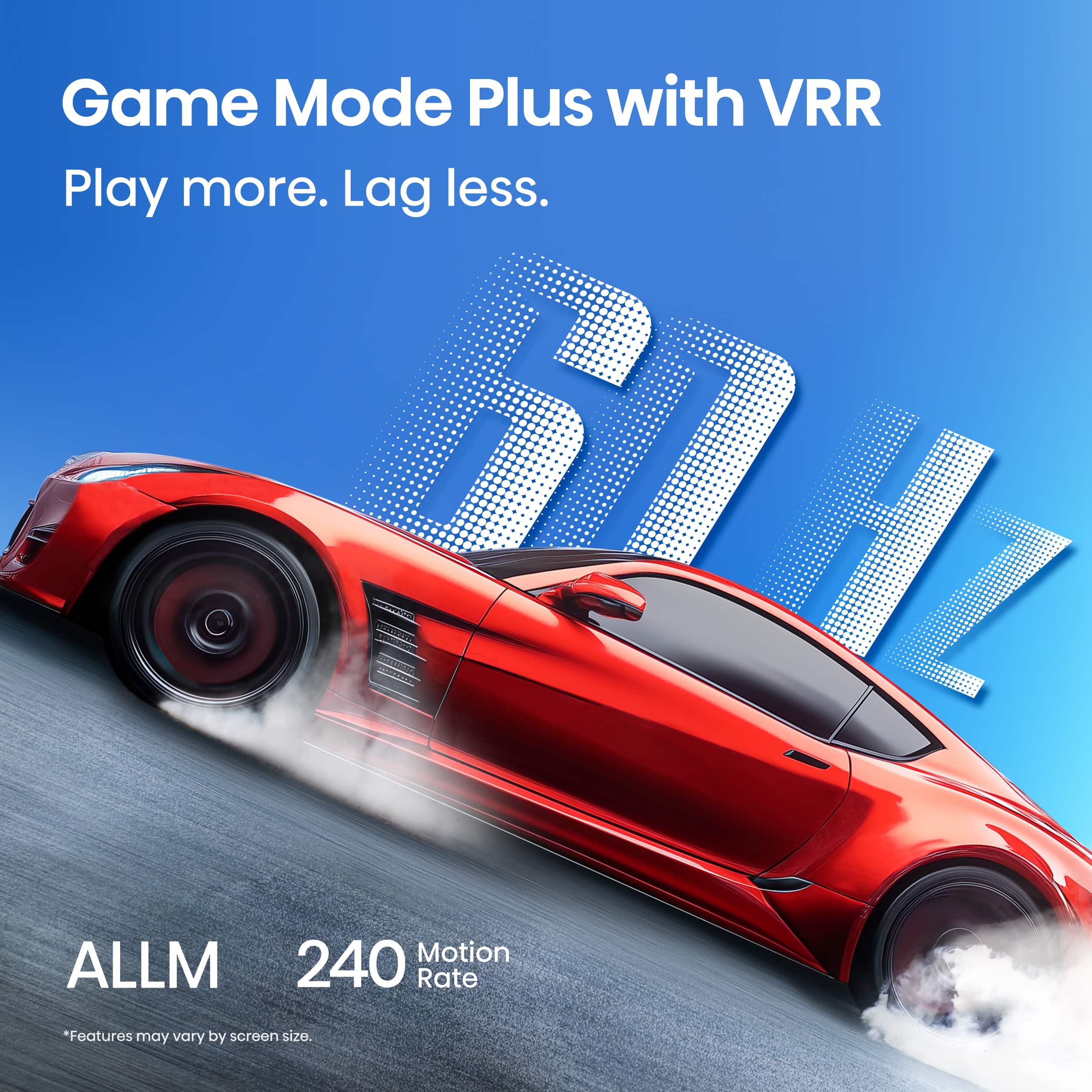
The Hisense QD7 offers a 144Hz native refresh rate, which is higher than the Samsung Q8F's native 120Hz. This higher refresh rate provides inherently smoother motion without relying as heavily on processing algorithms. The QD7 also supports VRR and includes specialized gaming modes that optimize picture settings and minimize input lag.
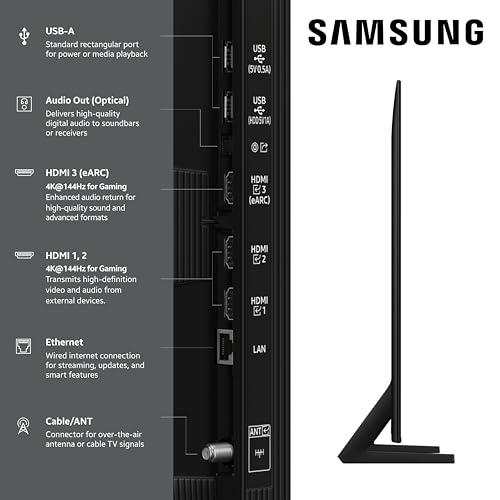
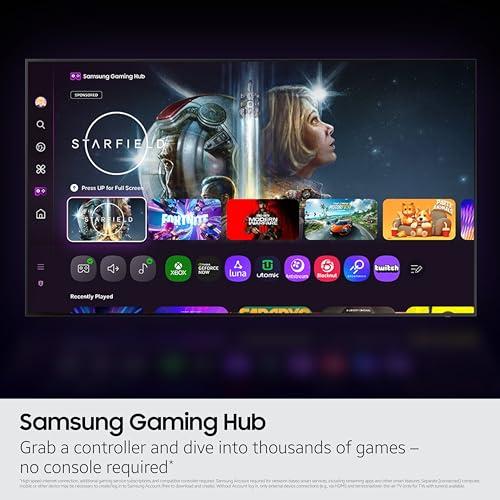
The Samsung Q8F provides four HDMI 2.1 inputs, all capable of handling 4K content at up to 120Hz. This is particularly valuable if you have multiple gaming consoles, a gaming PC, and other high-bandwidth devices. Samsung also includes features like Super Ultra Wide Game View, which can display ultrawide PC gaming content, and Game Motion Plus for enhanced motion processing during gameplay.
The Hisense QD7 includes HDMI 2.1 support with features like Auto Low Latency Mode (ALLM), which automatically switches the TV to its lowest-lag gaming mode when it detects a gaming signal. The QD7's Game Mode Ultra and Game Mode Pro settings provide optimized picture quality for different types of games.
For serious gamers with multiple consoles, the Samsung Q8F's four HDMI 2.1 ports provide more flexibility. However, for most users, the Hisense QD7's gaming performance is excellent and the higher native refresh rate provides a slight advantage in motion clarity.
The choice between smart TV platforms often comes down to personal preference and existing device ecosystems, but there are objective differences in functionality and performance.
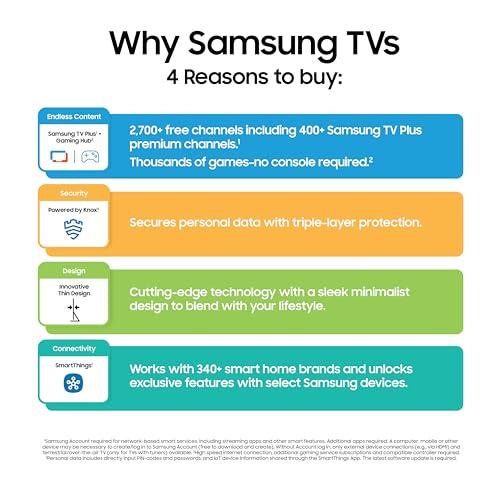
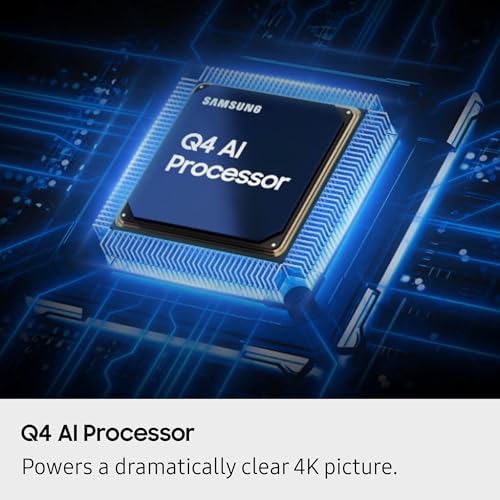
The Samsung Q8F runs Samsung's Tizen operating system, which has matured significantly over the years. Tizen offers smooth navigation, comprehensive app support, and deep integration with Samsung's SmartThings ecosystem. The Q8F includes far-field voice interaction, meaning you can control the TV with voice commands without pressing a button on the remote. Samsung's AI processing also provides features like real-time language translation for certain broadcasts and adaptive picture optimization based on ambient lighting conditions.
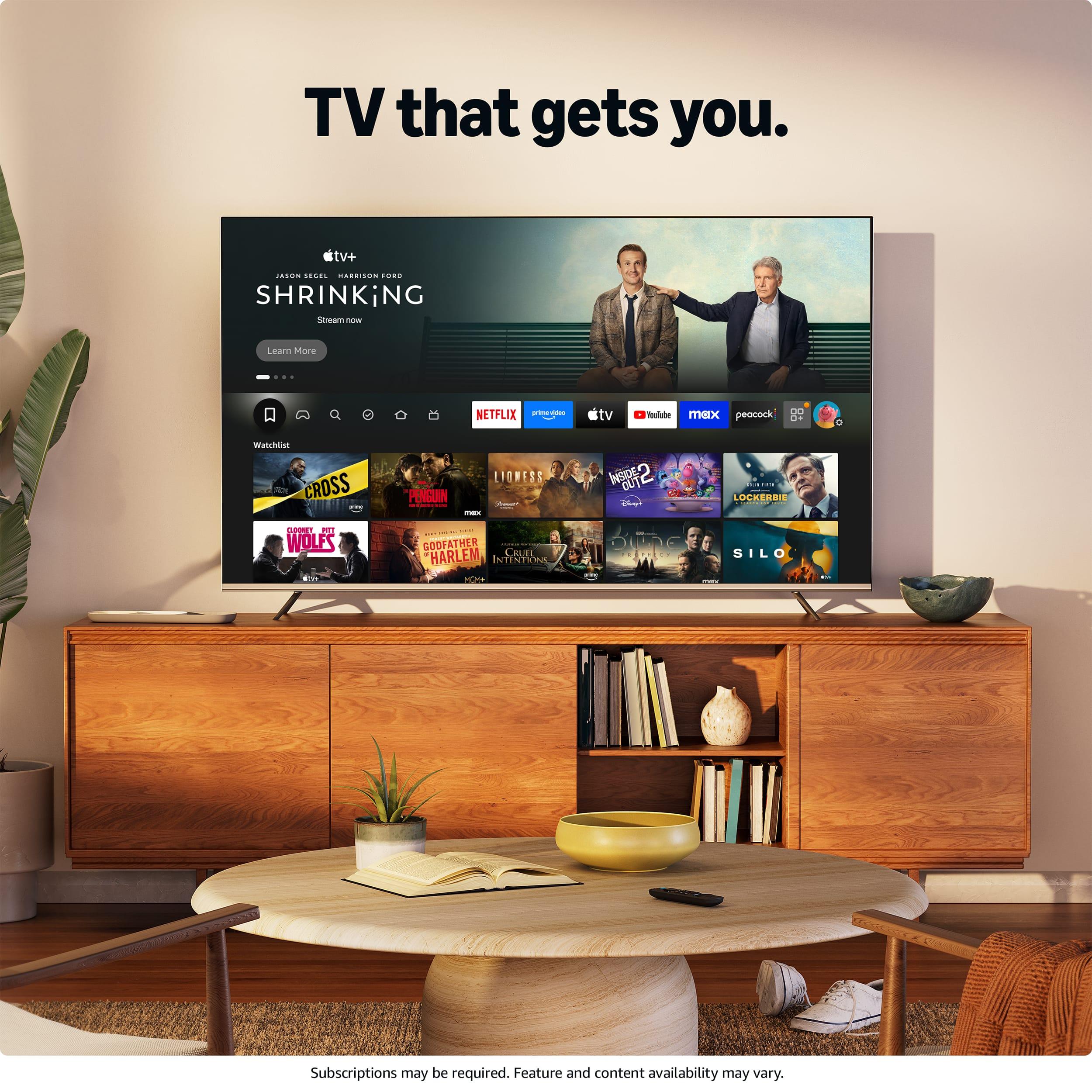
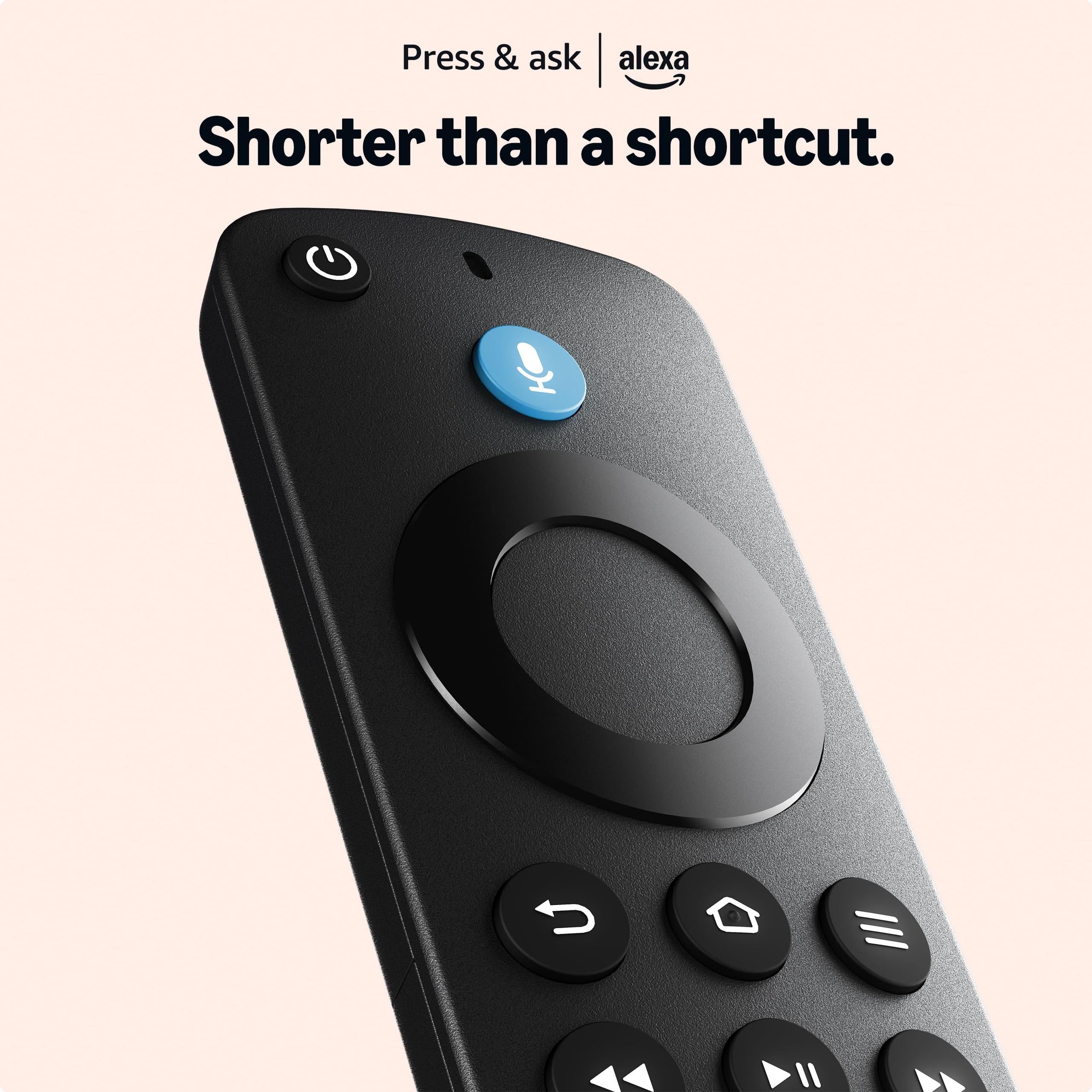
The Hisense QD7 uses Amazon's Fire TV platform with built-in Alexa. Fire TV excels at content discovery and recommendation, leveraging Amazon's vast content database to surface relevant shows and movies. The interface is particularly strong for users already invested in Amazon's ecosystem, providing seamless integration with Prime Video, Amazon Music, and other services.
Both platforms support the major streaming apps, but Fire TV tends to get new apps and updates more quickly due to Amazon's relationships with streaming providers. However, Tizen's smart home integration capabilities are more comprehensive, particularly if you use Samsung appliances or SmartThings-compatible devices.
Neither TV will replace a dedicated sound system, but their built-in audio capabilities differ meaningfully.
The Samsung Q8F features a 20W, 2-channel speaker system enhanced by Object Tracking Sound Lite (OTS Lite), which attempts to match audio positioning with on-screen action. Samsung's Q-Symphony technology allows the TV's speakers to work in harmony with compatible Samsung soundbars rather than being muted, creating a more expansive soundstage.
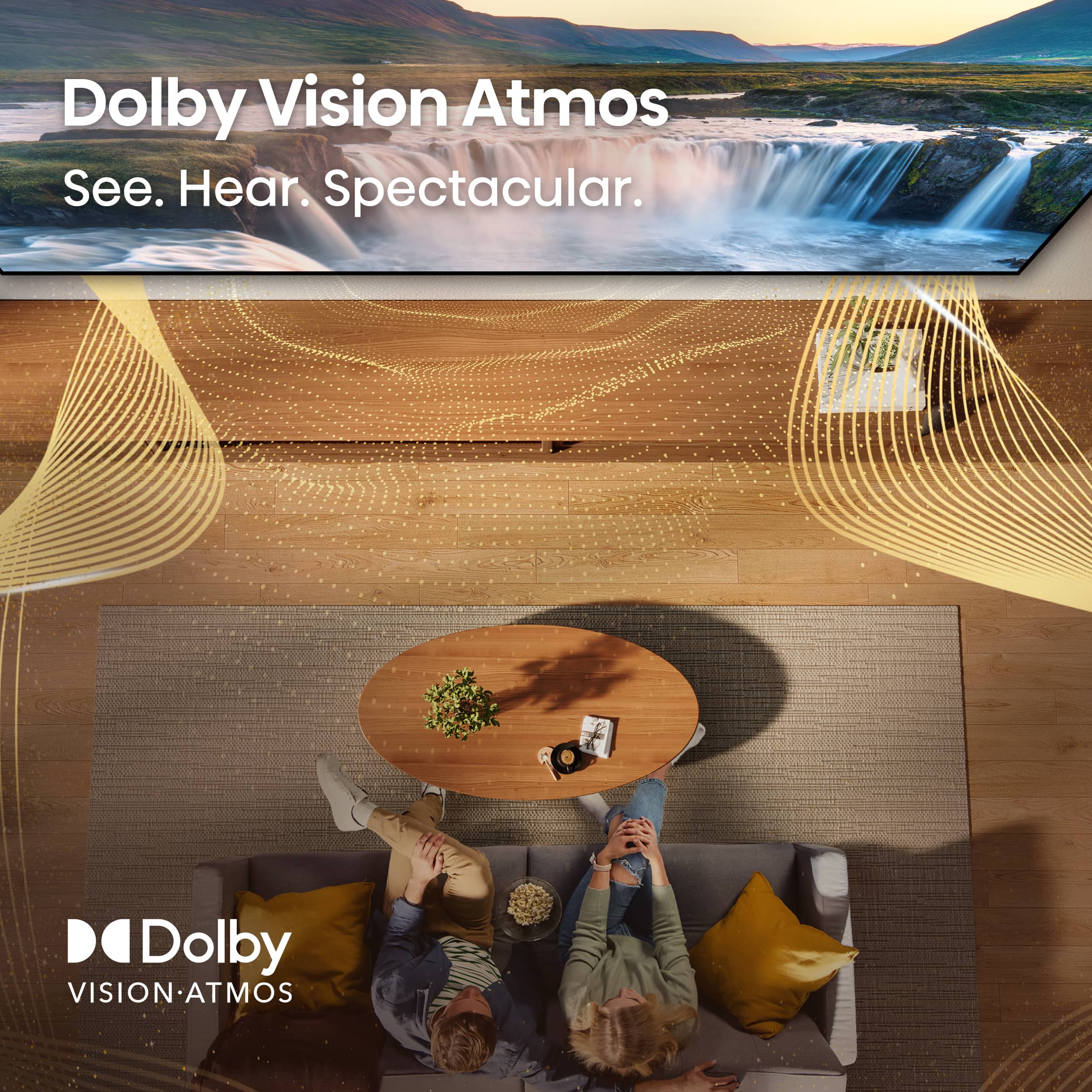
The Hisense QD7 includes Dolby Atmos support, which creates a more three-dimensional audio experience. Dolby Atmos can simulate height effects and create a more immersive soundstage even through the TV's built-in speakers, though the effect is more pronounced with a compatible sound system.
For home theater enthusiasts, the Hisense QD7's Dolby Atmos support provides better compatibility with high-end audio content, while the Samsung Q8F's Q-Symphony feature offers unique advantages if you plan to pair it with Samsung audio equipment.
The premium TV market isn't just about specifications – build quality and design aesthetics play important roles in long-term satisfaction.
The Samsung Q8F showcases Samsung's "AirSlim" design philosophy, featuring an exceptionally thin profile and premium materials. The minimalist bezels and refined stand design reflect Samsung's focus on creating TVs that serve as attractive furniture pieces. The remote control is well-built and includes useful shortcuts, though some users find Samsung's interface navigation could be more intuitive.
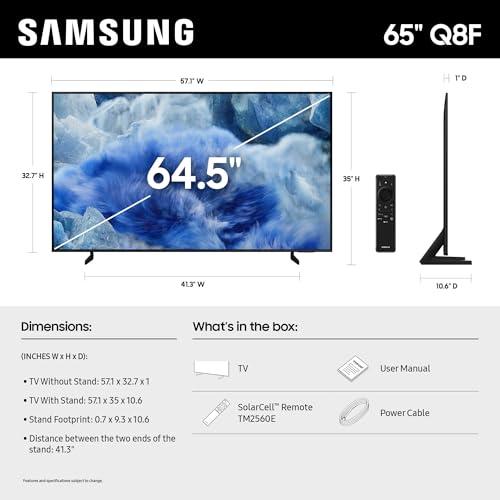
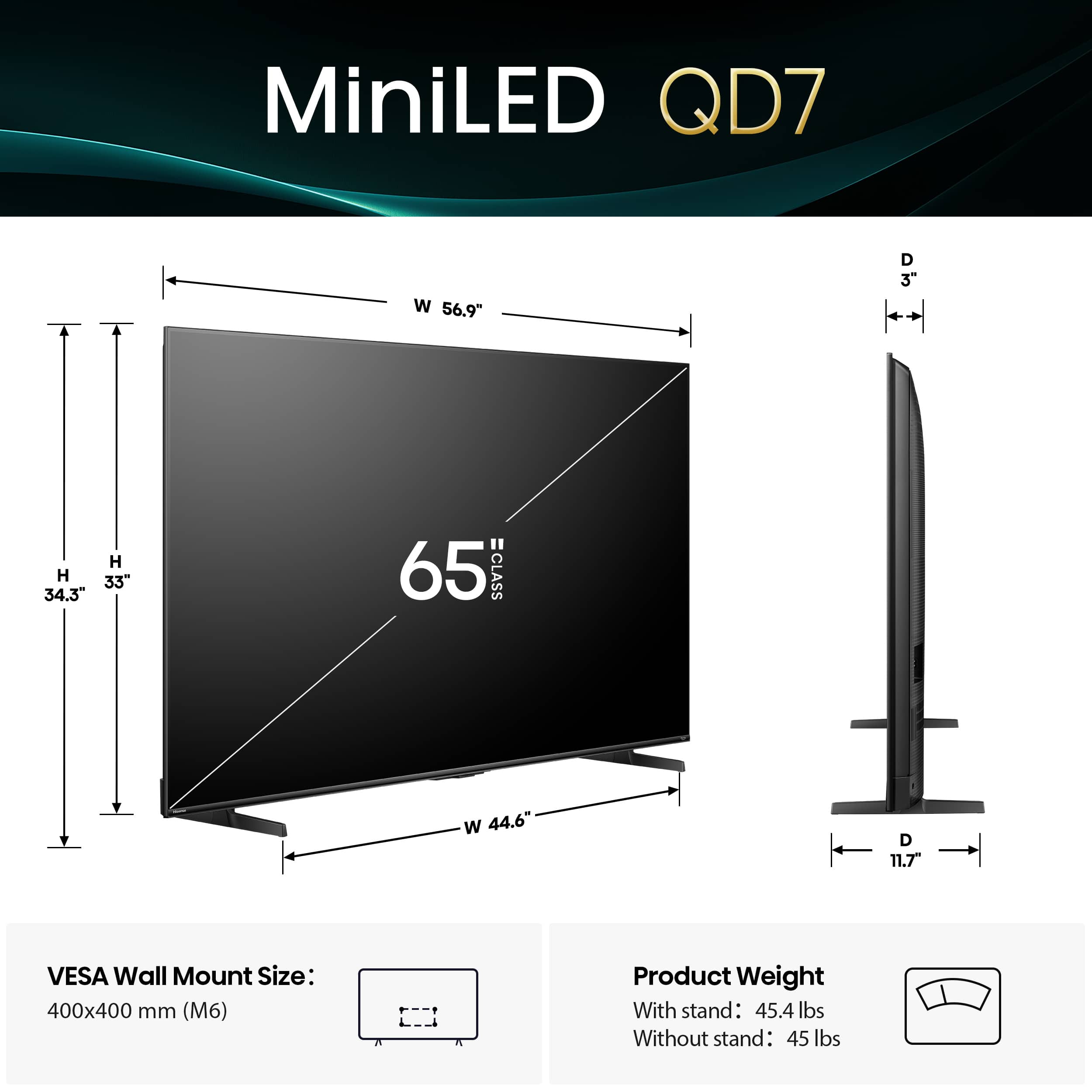
The Hisense QD7 prioritizes function over premium aesthetics. While it's certainly not unattractive, the build quality and materials don't match Samsung's premium approach. The TV is notably heavier than the Samsung Q8F due to its Mini-LED backlight array, which may be a consideration for wall mounting.
However, our research suggests that Hisense's quality control has improved significantly in recent years. While early Hisense models suffered from consistency issues, user feedback for recent QD7 models indicates reliable performance and durability.
At the time of writing, the Hisense QD7 costs roughly half as much as the Samsung Q8F, making value comparison straightforward in some ways and complex in others.
From a pure display technology perspective, the Hisense QD7 delivers superior fundamental performance. Its Mini-LED backlighting provides better contrast ratios, more precise HDR rendering, and reduced blooming compared to the Samsung Q8F's edge-lit design. The broader HDR format support, including Dolby Vision, ensures better compatibility with streaming content.
However, the Samsung Q8F delivers value in different areas. Samsung's superior processing provides more refined color reproduction and motion handling. The build quality is noticeably higher, and Samsung's track record for long-term software updates and reliability is stronger. The additional HDMI 2.1 ports provide more connectivity flexibility for users with multiple high-bandwidth devices.
The question becomes whether Samsung's refinements and brand reliability justify spending nearly twice as much for fundamentally inferior display technology. For many users, especially those prioritizing raw picture quality for movie watching, the answer is clearly no. The Hisense QD7 delivers flagship-level display performance at a mid-range price.
For dedicated home theater setups, several factors become particularly important.
Dark Room Performance: The Hisense QD7's Mini-LED backlighting provides a significant advantage in darkened viewing environments. The ability to achieve true blacks in letterboxed content and high-contrast scenes creates a more cinematic experience.
HDR Content: The Hisense QD7's comprehensive HDR support, particularly Dolby Vision, ensures optimal performance with premium streaming content and UHD Blu-rays.
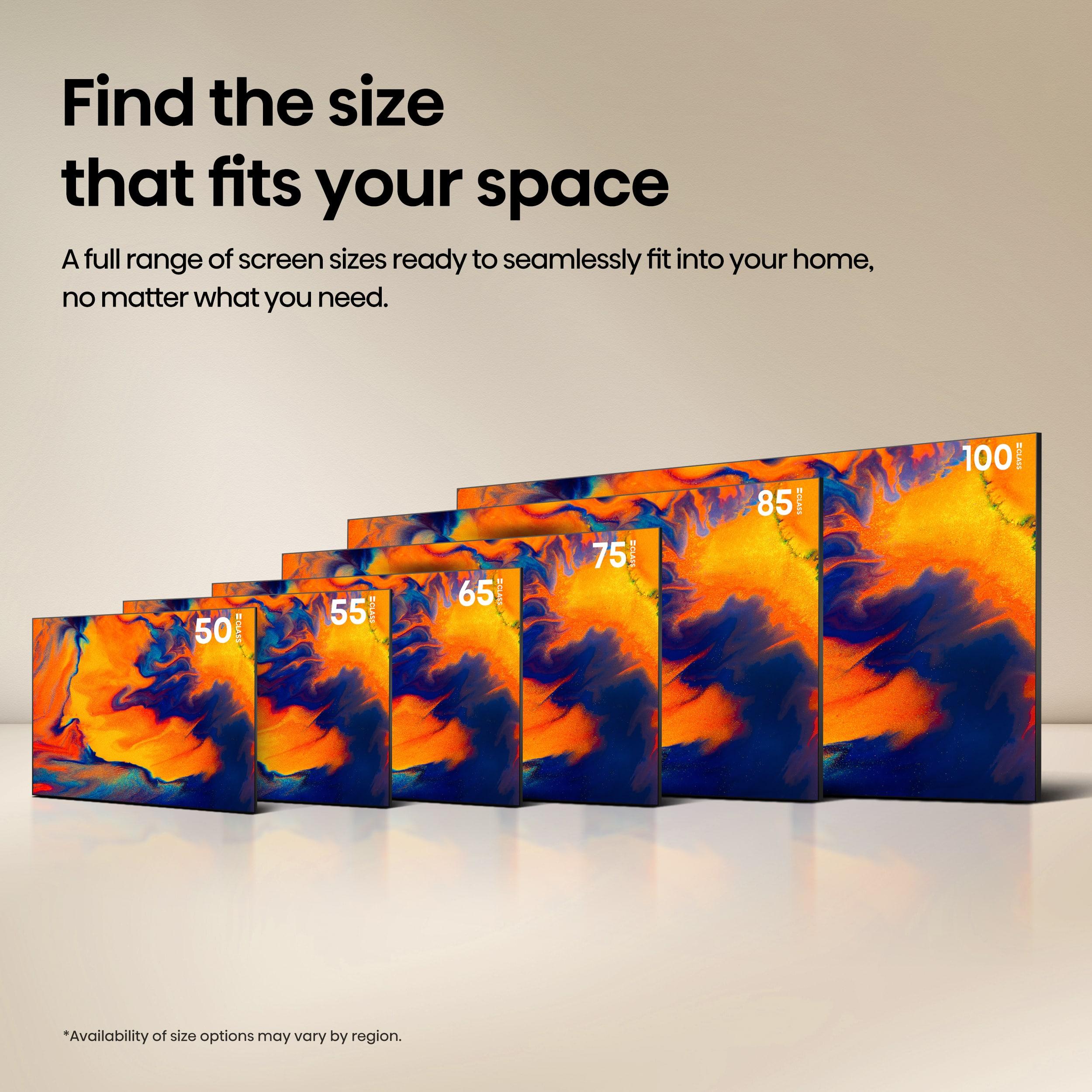
Screen Size and Viewing Distance: At 65 inches, both TVs are well-suited for typical home theater viewing distances of 8-12 feet. The Samsung Q8F's superior processing may provide slight advantages for upscaling lower-resolution content, though both TVs handle 4K upscaling well.
Audio Integration: Serious home theater enthusiasts will likely use external audio systems regardless of TV choice. Both TVs provide adequate connectivity options, though the Hisense QD7's native Dolby Atmos support offers better compatibility with modern audio formats.
The choice between the Samsung Q8F and Hisense QD7 ultimately depends on your priorities and budget constraints.
Choose the Samsung Q8F if:
Choose the Hisense QD7 if:
For most users, especially those building a home theater or prioritizing picture quality, the Hisense QD7 represents exceptional value. Its Mini-LED technology delivers the kind of contrast performance that was previously limited to much more expensive TVs. The comprehensive HDR support ensures you'll get the best possible experience from modern streaming content and UHD Blu-rays.
However, the Samsung Q8F isn't without merit. Samsung's refined processing, superior build quality, and ecosystem integration provide tangible benefits that may justify the premium for users who value these aspects. The additional HDMI 2.1 connectivity is genuinely useful for users with multiple gaming consoles and high-bandwidth devices.
The television market has reached an interesting inflection point where aggressive value brands like Hisense can deliver superior display technology at lower prices than established premium brands. The Hisense QD7 exemplifies this trend, offering Mini-LED performance that would have cost several thousand dollars just a few years ago. For most buyers, it represents the sweet spot between performance and value in today's competitive TV market.
| Samsung 65" QLED Q8F 4K Smart TV 2025 | Hisense 65" QD7 Series Mini-LED 4K Fire TV 2025 |
|---|---|
| Backlighting Technology - Most critical factor for picture quality and contrast | |
| Dual LED edge-lit with Supreme UHD Dimming | Full-array Mini-LED with thousands of dimming zones |
| HDR Format Support - Determines compatibility with streaming content | |
| HDR10+ and Quantum HDR+ (no Dolby Vision) | Dolby Vision, HDR10, HDR10+, HLG (comprehensive support) |
| Native Refresh Rate - Important for smooth gaming and sports | |
| 120Hz with Motion Xcelerator 144Hz processing | 144Hz native refresh rate |
| Gaming Features - Essential for console gaming performance | |
| 4 HDMI 2.1 ports, VRR, ALLM, FreeSync Premium | HDMI 2.1, VRR, ALLM, Game Mode Ultra/Pro |
| Smart TV Platform - Daily interface and app experience | |
| Tizen with Bixby, SmartThings Hub, far-field voice | Fire TV with built-in Alexa voice control |
| Audio Technology - Built-in speaker quality and features | |
| 20W 2CH, OTS Lite, Q-Symphony soundbar integration | Dolby Atmos support with enhanced speakers |
| Color Technology - Affects color accuracy and vibrancy | |
| 100% Color Volume with Real Quantum Dot Display | QLED Quantum Dot with over 1 billion colors |
| Build Quality - Long-term durability and premium feel | |
| AirSlim premium design, lightweight, refined materials | Functional design, heavier due to Mini-LED array |
| Voice Control - Hands-free operation capabilities | |
| Far-field voice interaction (no remote button required) | Alexa built-in (requires remote or wake word) |
| Value Proposition - Performance relative to market positioning | |
| Premium pricing with refined processing and brand prestige | Flagship display technology at aggressive mid-range pricing |
The Hisense 65" QD7 Series Mini-LED 4K Fire TV 2025 delivers superior picture quality for movies, especially in dark rooms. Its Mini-LED backlighting with thousands of dimming zones creates deeper blacks and more precise contrast compared to the Samsung 65" QLED Q8F 4K Smart TV 2025's edge-lit design. The Hisense QD7 also supports Dolby Vision, which is widely used by streaming services like Netflix and Disney+, while the Samsung Q8F lacks this format.
Both TVs offer excellent gaming performance, but they have different strengths. The Samsung 65" QLED Q8F 4K Smart TV 2025 provides four HDMI 2.1 ports compared to fewer on the Hisense QD7, making it better for multiple gaming consoles. However, the Hisense 65" QD7 Series Mini-LED 4K Fire TV 2025 has a higher 144Hz native refresh rate versus 120Hz on the Samsung Q8F. Both support VRR, ALLM, and low input lag for competitive gaming.
The fundamental difference is backlighting technology. The Samsung 65" QLED Q8F 4K Smart TV 2025 uses edge-lit LED backlighting, while the Hisense 65" QD7 Series Mini-LED 4K Fire TV 2025 employs Mini-LED full-array local dimming. This gives the Hisense QD7 significantly better contrast and black levels, making it superior for dark room viewing and HDR content.
The Hisense 65" QD7 Series Mini-LED 4K Fire TV 2025 offers exceptional value, delivering flagship-level display technology at roughly half the cost of premium competitors. While the Samsung 65" QLED Q8F 4K Smart TV 2025 provides refined processing and premium build quality, the Hisense QD7's superior Mini-LED technology and comprehensive HDR support make it the better value proposition for most buyers.
This depends on your ecosystem preferences. The Samsung 65" QLED Q8F 4K Smart TV 2025 runs Tizen with excellent SmartThings integration and far-field voice control. The Hisense 65" QD7 Series Mini-LED 4K Fire TV 2025 uses Fire TV with built-in Alexa, offering superior content discovery and faster app updates. Fire TV generally provides a more streamlined streaming experience, while Tizen excels at smart home integration.
Yes, both the Samsung 65" QLED Q8F 4K Smart TV 2025 and Hisense 65" QD7 Series Mini-LED 4K Fire TV 2025 support 4K resolution and HDR. However, the Hisense QD7 supports more HDR formats including Dolby Vision, HDR10, HDR10+, and HLG, while the Samsung Q8F supports HDR10+ and Quantum HDR+ but lacks Dolby Vision support.
Both TVs handle bright rooms well, but the Hisense 65" QD7 Series Mini-LED 4K Fire TV 2025 has an advantage due to its higher peak brightness capability from Mini-LED backlighting. The Samsung 65" QLED Q8F 4K Smart TV 2025 also performs well in bright conditions thanks to its quantum dot color technology, but the Hisense QD7's superior brightness levels make it slightly better for very bright viewing environments.
The Samsung 65" QLED Q8F 4K Smart TV 2025 offers superior build quality with its AirSlim premium design, refined materials, and lighter weight construction. The Hisense 65" QD7 Series Mini-LED 4K Fire TV 2025 focuses more on functionality than premium aesthetics and is heavier due to its Mini-LED array. Samsung's track record for long-term reliability and software updates is also stronger than Hisense's.
Yes, both the Samsung 65" QLED Q8F 4K Smart TV 2025 and Hisense 65" QD7 Series Mini-LED 4K Fire TV 2025 are excellent for PS5 and Xbox Series X gaming. They both support HDMI 2.1, 4K at 120Hz, VRR, and ALLM. The Samsung Q8F offers more HDMI 2.1 ports for multiple consoles, while the Hisense QD7 provides a higher native refresh rate for smoother motion.
For dedicated home theater use, the Hisense 65" QD7 Series Mini-LED 4K Fire TV 2025 is the better choice. Its Mini-LED backlighting delivers superior contrast and black levels essential for dark room movie watching. The comprehensive HDR support including Dolby Vision ensures optimal performance with premium content. While the Samsung 65" QLED Q8F 4K Smart TV 2025 offers refined processing, the Hisense QD7's display technology provides a more cinematic experience.
The Hisense 65" QD7 Series Mini-LED 4K Fire TV 2025 includes Dolby Atmos support for more immersive three-dimensional audio, while the Samsung 65" QLED Q8F 4K Smart TV 2025 features Object Tracking Sound Lite and Q-Symphony technology for soundbar integration. Both provide decent built-in audio, but the Hisense QD7's Dolby Atmos support offers better compatibility with modern audio content formats.
Choose the Samsung 65" QLED Q8F 4K Smart TV 2025 if you prioritize premium build quality, refined processing, and ecosystem integration with Samsung devices. Choose the Hisense 65" QD7 Series Mini-LED 4K Fire TV 2025 if you want the best picture quality for your money, especially for dark room viewing and HDR content. For most buyers prioritizing value and display performance, the Hisense QD7 is the better choice.
We've done our best to create useful and informative comparisons to help you decide what product to buy. Our research uses advanced automated methods to create this comparison and perfection is not possible - please contact us for corrections or questions. These are the sites we've researched in the creation of this article: bestbuy.com - rtings.com - tomsguide.com - youtube.com - samsung.com - youtube.com - youtube.com - youtube.com - rtings.com - rtings.com - linqcdn.avbportal.com - bestbuy.com - samsung.com - samsung.com - samsung.com - youtube.com - youtube.com - billsmith.com - samsung.com - samsung.com - samsung.com - hometechnologyreview.com - shopjetson.com - certappl.com - samsung.com - theapplianceplug.com - samsung.com - manuals.plus - bestbuy.com - device.report - samsung.com - shopsilica.com - dentonstv.com - bestbuy.com - custrevs.com - youtube.com - bestbuy.com - rtings.com - youtube.com - rtings.com - pcrichard.com - bestbuy.com - pcrichard.com - camelcamelcamel.com - amazonfiretv.blog - hisense-usa.com - hisense-usa.com - hisense-usa.com - bestbuy.com - leaseville.com - youtube.com - bestbuy.com - flatpanelshd.com

Privacy Policy
Terms and Conditions - Affiliate Policy
Home Security
© Copyright 2008-2026.
11816 Inwood Rd #1211, Dallas, TX 75244